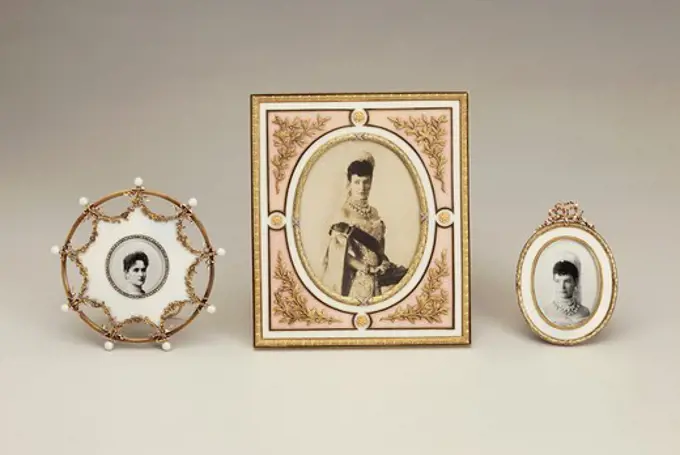
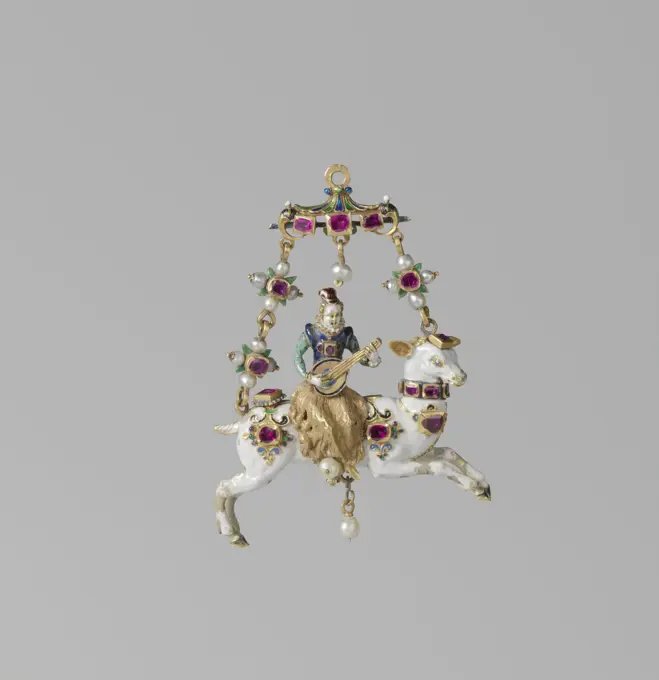
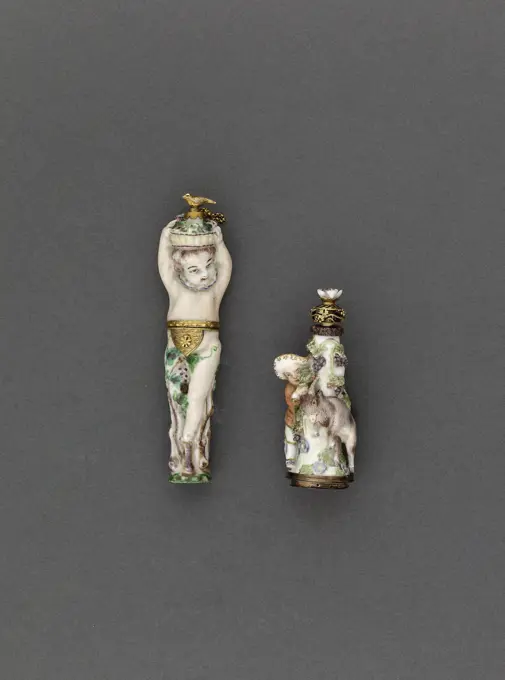
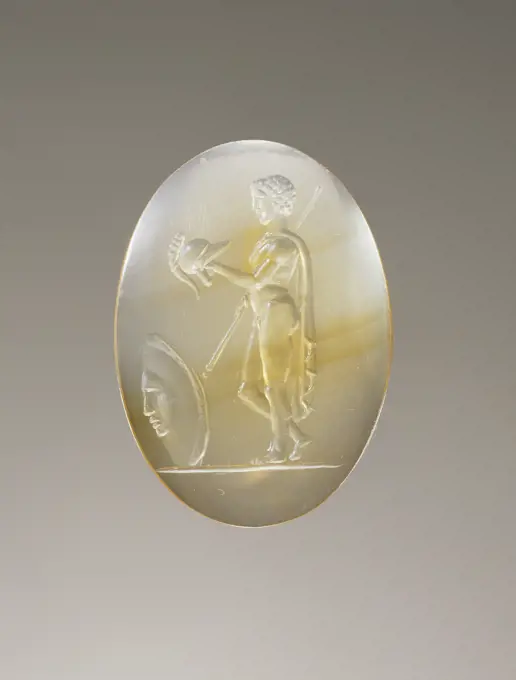
Ornamental Decorative Arts

Exquisite decorative items including a gilded dish, intricate netsuke, and ornate frames featuring medallions, showcasing craftsmanship and historical significance.

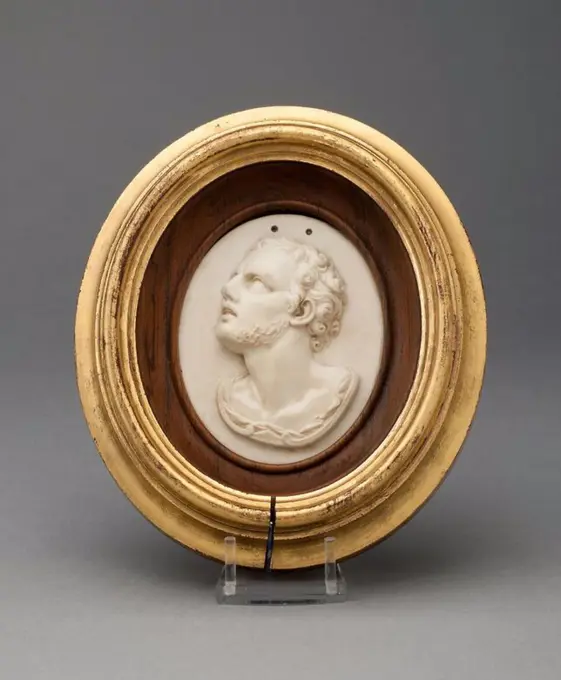
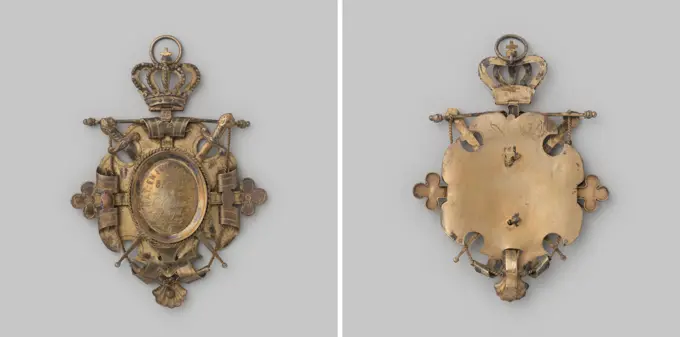
Decorative Frame with Four Portrait Medallions, Representing Stadholders William I (1533-1584), Maurice (1567-1625), Frederick Henry (1584-1647) and William III (1650-1701), anonymous, c. 1850 - c. 1875 Four portraits to the left, caught in one list of oak elap in relief on punched soil and an edge of full -shaped tiflens and cartouch -shaped ends above and below. 5. Willem I, Prince of Orange (1533-1584). In the back engraved 'Saevis Tranquillus in Undis' 6. Maurits, Prince of Orange (1567-1625). In the back engraved 'Je Maintiendray Nieuwpoort 2 July 1600 7. Frederik Hendrik, Prince of Orange (1584-1647). Engraved in the back 'and Hendrick holds the Heirbaan from August. And closes the gate of 't Grondwijk Warh' 8. Willem III, Prince of Orange (1650-1701). In the back engraved, 'Now you see your rights and your laws, O British put orange are on board!' Netherlands ivory Four portraits to the left, caught in one list of oak elap in relief on punched soil and an edge of full -shaped ti
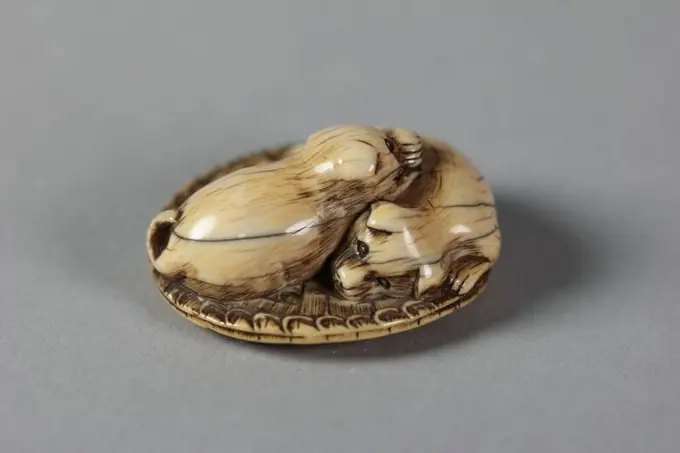
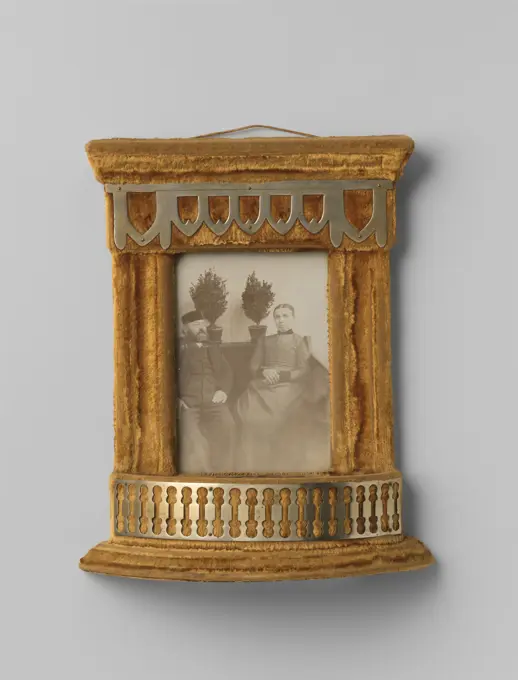
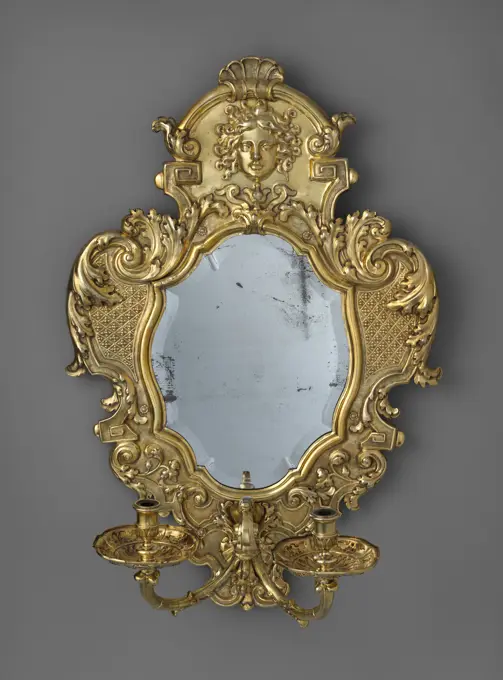
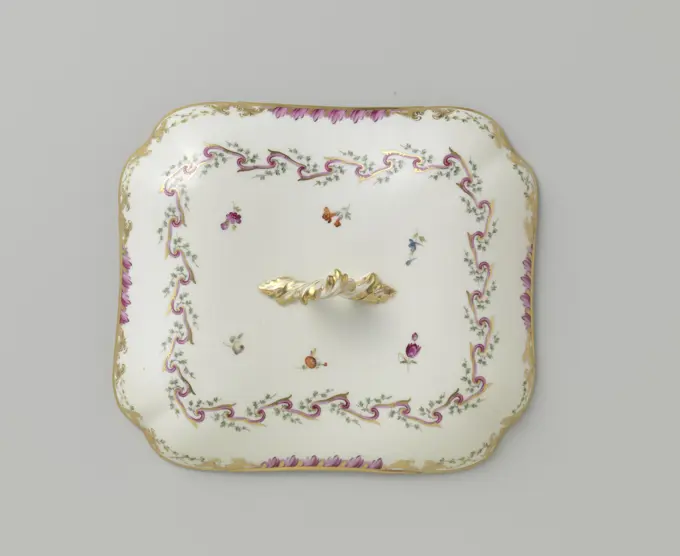
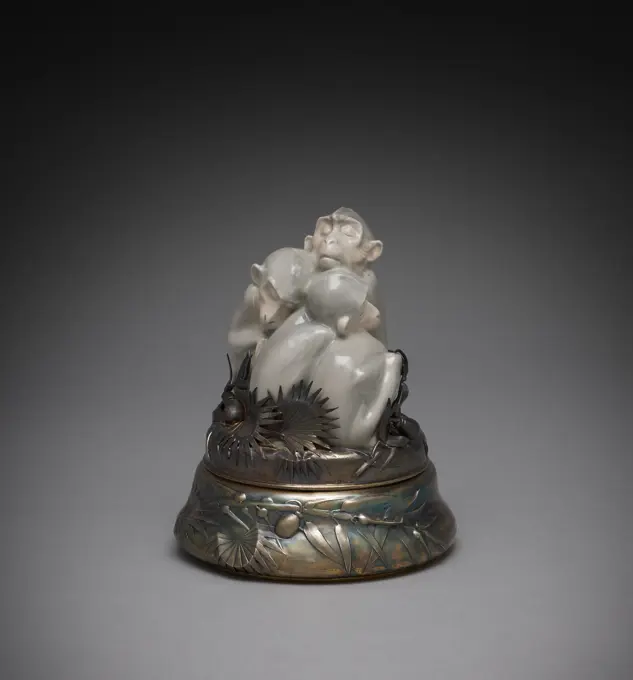
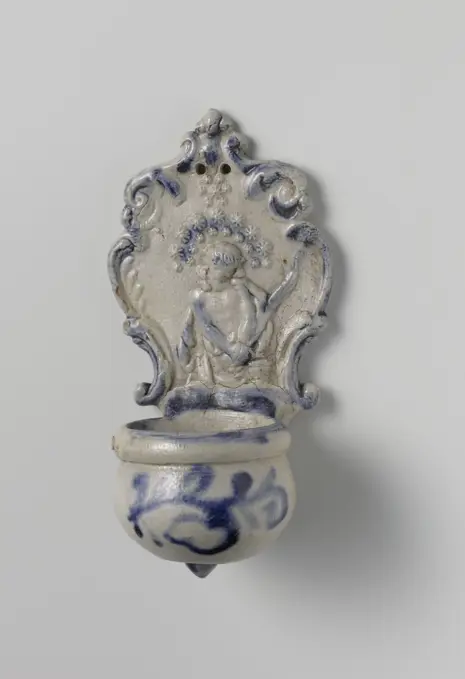
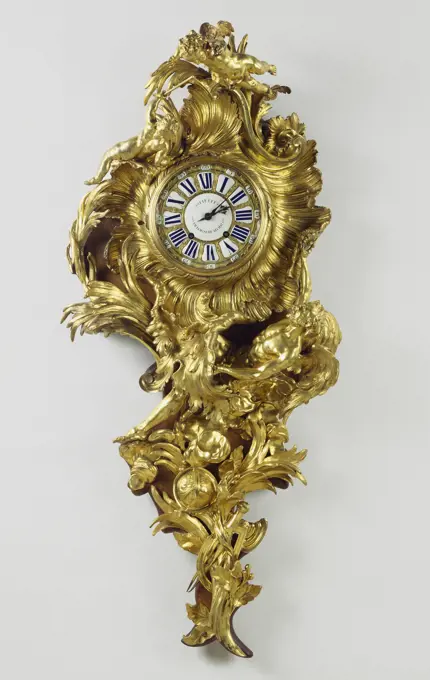
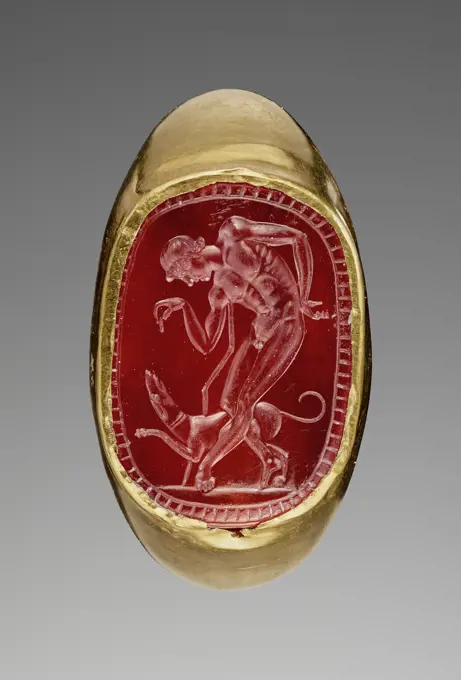
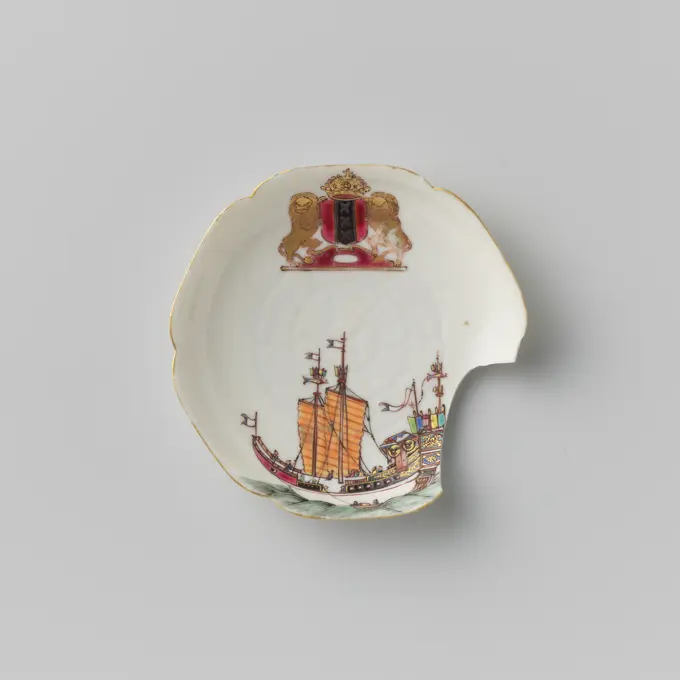
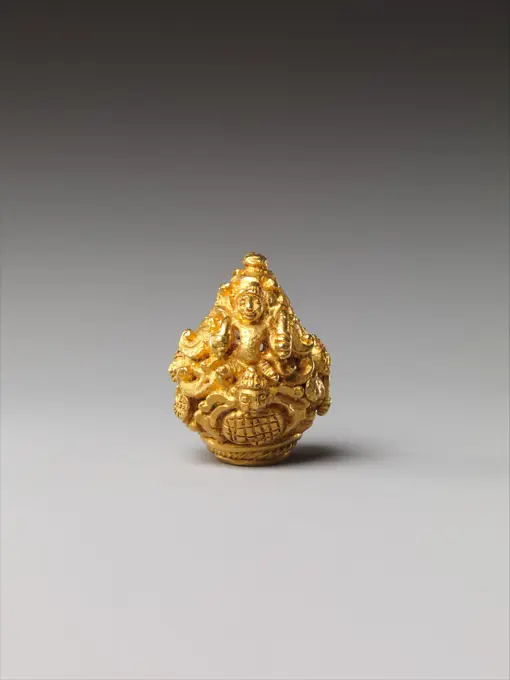
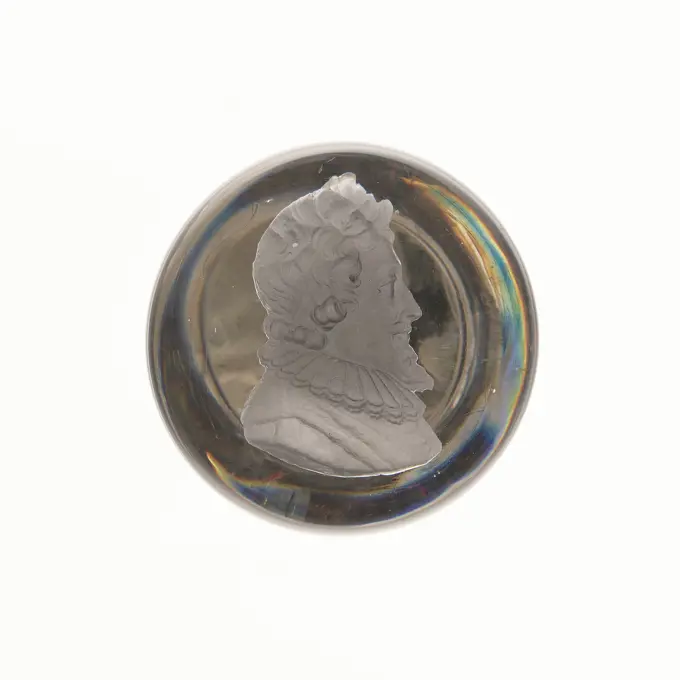
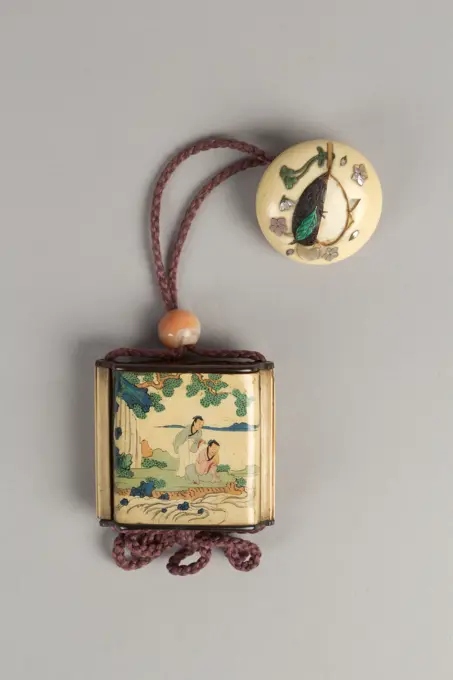
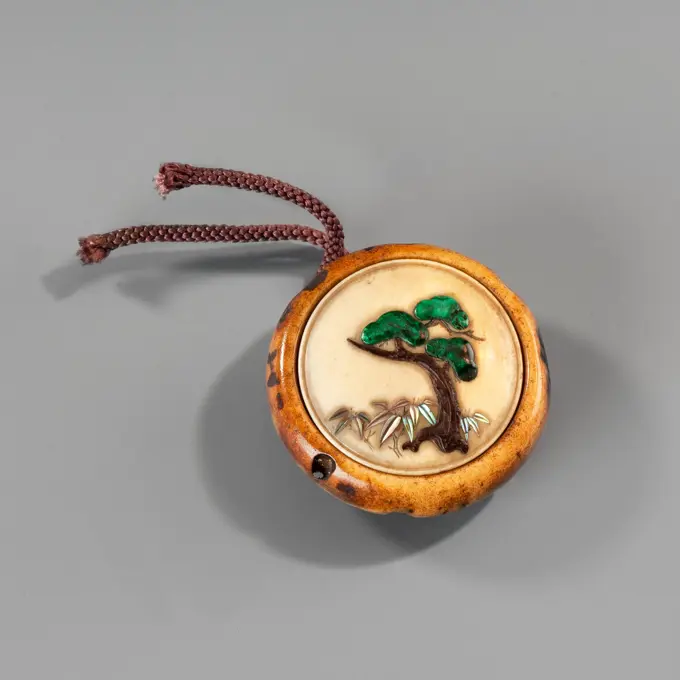
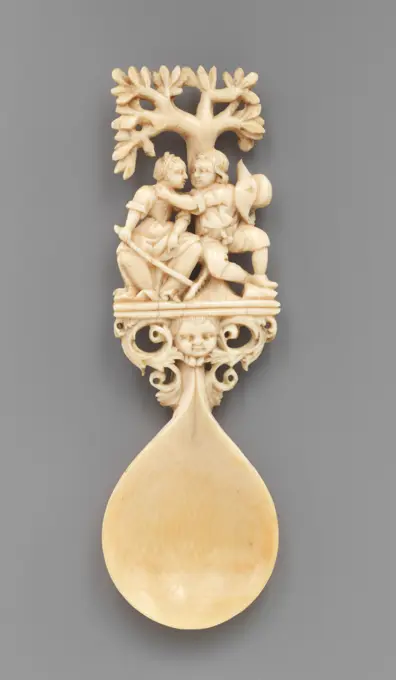
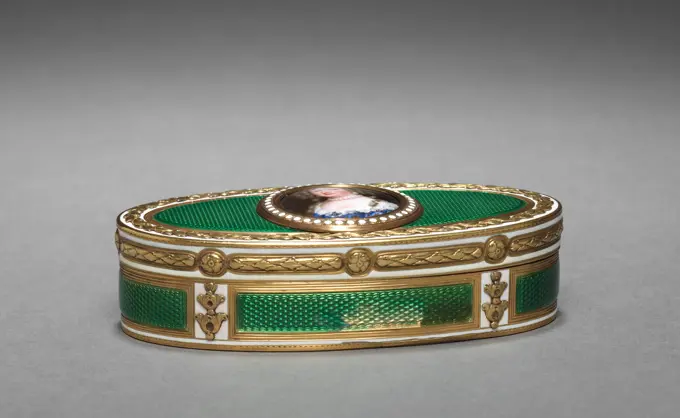
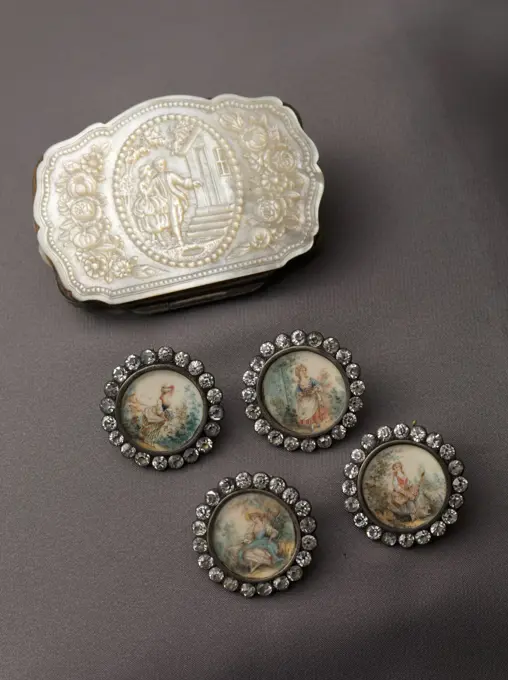
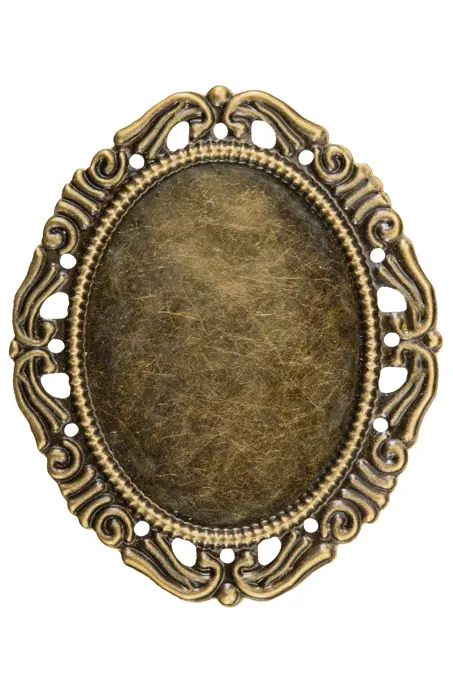
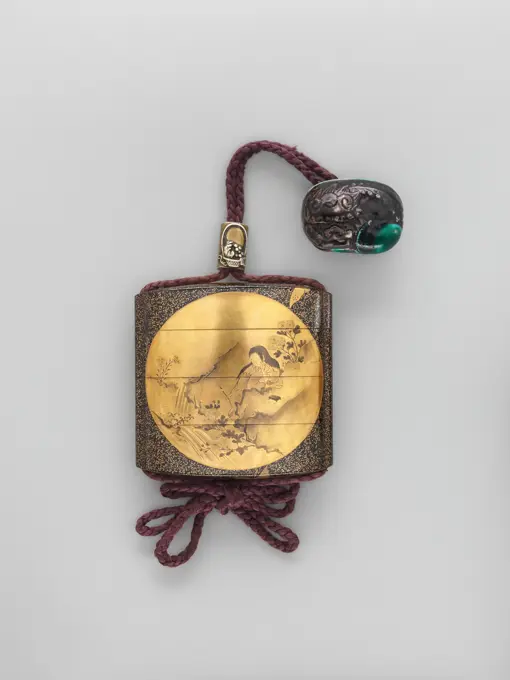
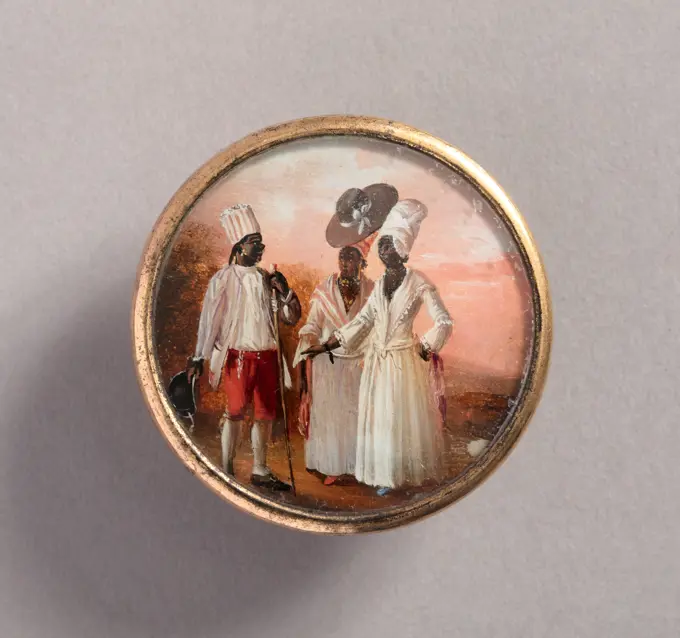
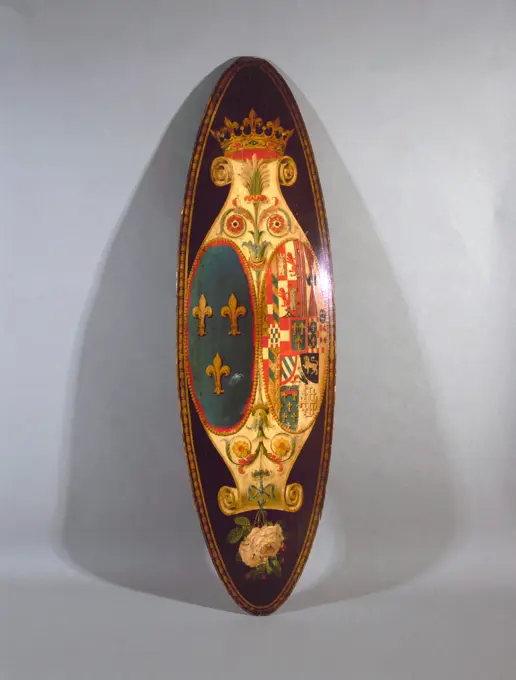
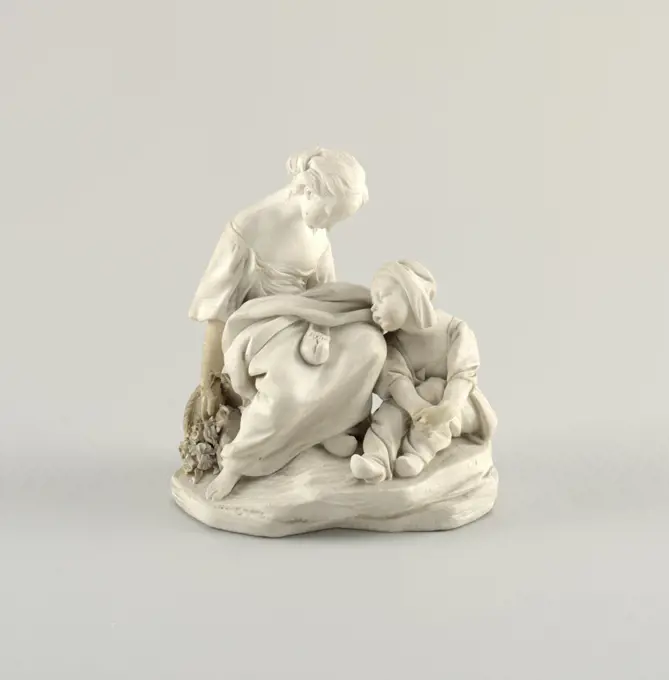
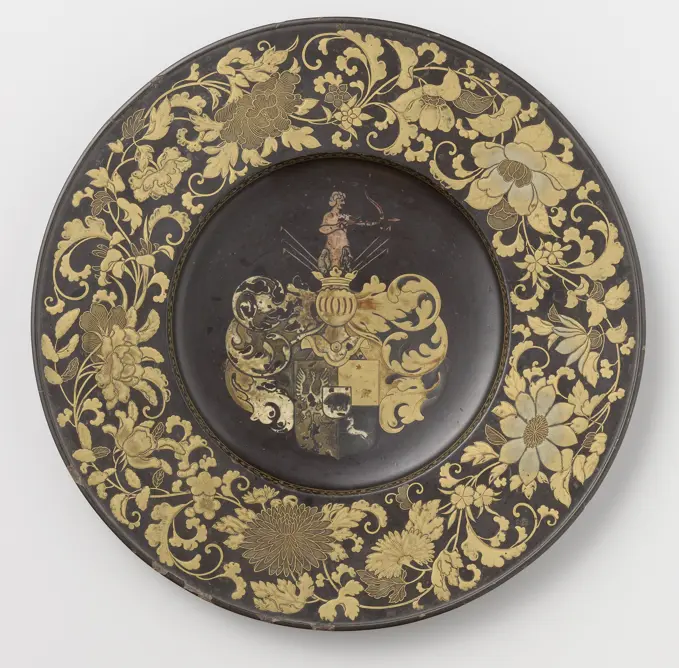
Decorative Dish, anonymous, c. 1650 - c. 1660 plate (dishes) Plate with gilded paintwork and colored paintwork on black stock. The flat edge is decorated with flowers and leaf vines in gold lacquer. In the middle the weapon of Huydecoper with helmet and archer as a helmet sign. The figure, used to the right, is pink, arrow and arch showing remains of red. Around the shield and the helmet Arcanthus leaves in gold, dark gray and dirty white. The downside of the board is orange. Japan wood (plant material). lacquer (coating). gilding (material) lacquering / gildingNetsuke of Two Dogs. Culture: Japan. Dimensions: H. 1 in. (2.5 cm); W. 1 3/4 in. (4.4 cm); D. 1 3/4 in. (4.4 cm). Date: 19th century. Museum: Metropolitan Museum of Art, New York, USA.Decorative Frame with Four Portrait Medallions, Representing Stadholders William I (1533-1584), Maurice (1567-1625), Frederick Henry (1584-1647) and William III (1650-1701), anonymous, c. 1850 - c. 1875 Four portraits to the left, caught in one list of oak elap in relief on punched soil and an edge of full -shaped tiflens and cartouch -shaped ends above and below. 5. Willem I, Prince of Orange (1533-1584). In the back engraved 'Saevis Tranquillus in Undis' 6. Maurits, Prince of Orange (1567-1625). In the back engraved 'Je Maintiendray Nieuwpoort 2 July 1600 7. Frederik Hendrik, Prince of Orange (1584-1647). Engraved in the back 'and Hendrick holds the Heirbaan from August. And closes the gate of 't Grondwijk Warh' 8. Willem III, Prince of Orange (1650-1701). In the back engraved, 'Now you see your rights and your laws, O British put orange are on board!' Netherlands ivory Four portraits to the left, caught in one list of oak elap in relief on punched soil and an edge of full -shaped tiPeace of Nijmegen, in honor of the Princes of Orange. Silver medal. Front: six portraits (Willem I, Maurits, Willem II, Willem III, Frederik Hendrik and Philip Willem) around two joined hands with seven arrows. Downside: fame blowing on two praise stuff under pennant with inscription.Bowl, Enameled tôle, Flat bottom, vertical sides. Black field, decorated in gilt, red, brown and green with Chinese scenes on outside of sides; on bottom, Chinese coolie carrying a yoke., England, ca. 1820, metalwork, Decorative Arts, BowlDouble portrait of an unknown man and woman, Anonymous, 1880 - 1900 photograph. frame   metal. glass. baryta paper. cardboard. textile materials  adult man. adult woman. anonymous historical persons portrayed in a double portraitMountMedallion ca. 1775 French. Medallion 199826Plate with an image of the Ressurection of Christ, anonymous, c. 1740 - c. 1760 Porcelain plate, painted on the glaze in black and gold. On the flat a representation of the resurrection of Christ, with an angel sitting on his grave and in the foreground the soldiers fallen asleep; The edge with a decorative band in the style of the Viennese du-Paquier porcelain. The show is based on a print by Jan Luyken (1649-1712). European performance in Encre de Chine. Chinaprint maker: Amsterdam porcelain. glaze. gold (metal) painting / gilding / vitrification Porcelain plate, painted on the glaze in black and gold. On the flat a representation of the resurrection of Christ, with an angel sitting on his grave and in the foreground the soldiers fallen asleep; The edge with a decorative band in the style of the Viennese du-Paquier porcelain. The show is based on a print by Jan Luyken (1649-1712). European performance in Encre de Chine. Chinaprint maker: Amsterdam porcelain. glaze. gold (metal) paintDish 1650-60 Possibly by Willem Jansz. Verstraeten Dutch Both the colors as well as the grotesque ornament of this piece show clear influence from Italian majolica, especially from the workshop of Orazio Fontana (1510-1571) in Urbino. This type of Dutch pottery has long been attributed to Willem Jansz Verstraeten in Haarlem but is now known to have been made in Delft as well.. Dish 196578Monumental mirror sconce (one of a pair) 1717-18 Peter Rahm Once part of Augustus the Strongs substantial silver-gilt furniture ensemble at Dresden Palace, these monumental reflective wall-lights embodied the power, wealth, and magnificence of their patron, who was Elector of Saxony and King of Poland. During his grand tour of Europe, in 1687, Augustus visited Versailles, where he admired the already-legendary silver furniture of the Sun King shortly before Louis XIV had it melted down. After ascending the throne in 1694, Augustus emulated the French monarchs solar symbolism, including, as here, the powerful and energetic design referencing the sun god Apollo. This allusion would have been especially pronounced when the sconces were in use because the mirrors intensified the flickering golden light of the candle flames.. Monumental mirror sconce (one of a pair). German, Augsburg. 1717-18. Silver, embossed, chiseled, engraved and gilded; mirror glass (19th century replacement); wood fLid, elongated, with a button, belonging to a crockery with a flung ribbon motif with leaf branches, flower bouquets and sprinkled flower branches, manufacture Oud -Loosdrecht, 1780 - in or before 1820 Lid, elongated, with a button, belonging to a porcelain service with a thrilled motif in purple and gold with green leaf branches, flower bouquets and sprinkled flower branches. Borders light golf with decoration in gold with purple leaf motif between which green crossed leaf motif. Marked: M.O.L. and Amstel. Loosdrecht Amsterdam porcelain Lid, elongated, with a button, belonging to a porcelain service with a thrilled motif in purple and gold with green leaf branches, flower bouquets and sprinkled flower branches. Borders light golf with decoration in gold with purple leaf motif between which green crossed leaf motif. Marked: M.O.L. and Amstel. Loosdrecht Amsterdam porcelainMonkey Figure, c. 1900-25. Ingeborg Plockross-Iminger (Danish, 1872-1962), Bing & Grøndahl (Danish, est. 1853). Porcelain, silver-gilt; overall: 20 x 46.6 x 21 cm (7 7/8 x 18 3/8 x 8 1/4 in.). This figure featuring three monkeys was designed by the Danish ceramicist Ingeborg Plockross-Iminger. The figure is displayed with a French silver mount that references Japonisme and Art Nouveau styles that were popular at the end of the 1800s and experienced a resurgence in the 1920s because of increased importation of Japanese goods to the West.Button (Haiti); Attributed to Agostino Brunias (Italian, ca. 1730-1796); Made for Toussaint L'Ouverture; gouache paint on tin verre fixé, ivory (backing), glass, gilt metalPendant for Horse Trappings 15th century Spanish The decoration of this and similar pendants in the Metropolitan Museum's collection (04.3.305, .326, .365, .371, .384, .437) includes heraldic arms, mottoes, and religious expressions. Originally, they were attached to the straps of a horse's bridle, reins, crupper, or saddle.. Pendant for Horse Trappings. Spanish. 15th century. Copper alloy, enamel, gold. Miscellaneous-BadgesHoly water stoup with a relief of Christ, anonymous, c. 1750 - c. 1799 Sea water tray of stoneware with a spherical pelvis and the back plate with modeled, imposed leaf vines. Decorated in cobalt blue. On the back plate in relief a printed and imposed representation of Christ. The pelvis with a leaf vank in blue. Westerwald. Westerwald stoneware. glaze. cobalt (mineral) vitrification Sea water tray of stoneware with a spherical pelvis and the back plate with modeled, imposed leaf vines. Decorated in cobalt blue. On the back plate in relief a printed and imposed representation of Christ. The pelvis with a leaf vank in blue. Westerwald. Westerwald stoneware. glaze. cobalt (mineral) vitrificationKylix fragment Greek, South Italian, Campanian. Kylix fragment. Greek, South Italian, Campanian. Terracotta; red-figure. VasesEarth (terra), anonymous, c. 1600  Soil. Round bronze plaquette, surrounded by a flat edge. The naked, symbolic female figure is seated on the left, the head surrounded and a bunch of flowers in her left hand raised; Her right arm is based on a vase with fruits, behind her a tree trunk. A river landscape in the background with trees and mountains in the offing. Northern Netherlands bronze (metal)Wall Clock (Pendule à Répétition); case possibly after a design by Juste-Aurèle Meissonnier (French, born Italy, 1695 - 1750 (master 1724)), clock movement by Jean-Jacques Fiéffé (French, about 1700 - 1770 (master 1725)); Paris, France; about 1735 - 1740; Gilt bronze, enameled metal, wood carcass, glass; 133.4 x 67.3 x 14.3 cm (52 1,2 x 26 1,2 x 5 5,8 in.)Cameo with Head of a Man 1775-1799 Burslem. Stoneware (jasperware) . Wedgwood Manufactory (Manufacturer)Youth and Dog; Italy; 3rd - 2nd century B.C; Gold; carnelian; 1.8 × 1.3 cm (11,16 × 1,2 in.)Gildeplaat van Wessem, 1599, Anonymous, 1599 Silver guild plate. The Holy Medardus and the weapon of the Van Horne family engraved on this. Around the edge: Santus. Medardus. Patronus Ecclesiæ Wessemensis. Anno 1599. Netherlands silver (metal)   Wessem Silver guild plate. The Holy Medardus and the weapon of the Van Horne family engraved on this. Around the edge: Santus. Medardus. Patronus Ecclesiæ Wessemensis. Anno 1599. Netherlands silver (metal)   Wessem. Funeral shield of driven silver from the Korenmetersgilde in Amsterdam. Driven in the form of a cartouche with lobe ornament. On the shield a wheat meter in the different activities of his profession. On the shield hangs on chains, a banderle. Part of a series of four piecesButton, Gilded metal, enamel, mother-of-pearl-steel bead, Europe, 19th century, costume & accessories, Decorative Arts, ButtonTerracotta bowl 4th-3rd century B.C. Etruscan These bowls are distinguished by their central female heads in high relief. It is not clear if they represent deities, specific individuals, or generic types.. Terracotta bowl. Etruscan. 4th-3rd century B.C.. Terracotta. Late Classical-Hellenistic. VasesMourning Picture (England); hair, cardboard, brass, velvet, glassBertrand Andrieu (1761-1822). Arrival of the king in Paris, October 6, 1789. Etain Doré, 1789. Paris, Carnavalet Museum. Medal, numismaticsReversible brooch ca. 1869 Alexis Falize Among the earliest works of the renowned Parisian jeweler and goldsmith Alexis Falize (1811-1898) were cloisonné enameled brooches, necklaces, bracelets, and chatelaines executed in the Japanese taste. This brooch, therefore, can be placed among those early works. It is likely that the enamelwork was done by Antoine Tard: the skillful use of gold wire to separate differently colored enamels and the distinctive palette of enamel colors testify to his abilities.Other works by Falize and his celebrated firm in the Museum's collection are a gold box in the Persian taste of ca. 1875 (2002.258) and the clock by Lucien Falize (1991.113a-f), one of the cornerstones of the holdings of nineteenth-century decorative arts.. Reversible brooch. French, Paris. ca. 1869. Gold, cloisonné enamelPlaque with Marcus Antonius. Wedgwood Manufactory; England, founded 1759. Date: 1776-1780. Dimensions: 9.5 × 12.7 × 3.7 cm (3 3/4 × 5 × 1 7/16 in.). Stoneware (jasperware). Origin: Burslem. Museum: The Chicago Art Institute, Chicago, USA.Saucer with a Chinese junk and the arms or amsterdam. Dish of porcelain, painted on the glaze in blue, red, pink, green, yellow, black and gold. On the front of the dish an ingrangled flower with an email a Chinese joint with crew on the waves, above the arms of Amsterdam. Shard missing out of the edge. Weapon porcelain with email colors.Stand for écuelle ca. 1743-45 Abraham Drentwett IV. Stand for écuelle 231585Tobacco box late 17th century Dutch The box is oval.Rims are lined and edges molded. Leaf scrolls adorn the borders and sides, and in the center of the front side is an engraved ship. A full-length portrait of John Law, holding a document in his hand, is rendered on the lid. Inscribed below is: Heer Johan Louw (Mr. John Law). On the document is the word: Finantie (Finance). The border incorporates a rebus, the same one that appears on 57.108.24On the underside John Law is represented seated on clouds and wind, with a windmill on his hat. In the background at the left a man with a candle is depicted; a man with a bellows is in the center and above him is a cat with balloons tied to its paws. Inscribed (above the windmill): ik loop met (I walk with). This is meant to be read, rebus-style, with the windmill, thus: "I walk with windmills," an expression meaning "I am crazy." Inscribed above the man with the candle is: brant an't entie (Burn at the end), and on the document on the right: PaSouvenir 1780-81 French, Paris In eighteenth-century Europe, Paris led the production of high-quality luxury goods. Parisian goldsmiths made a wide range of small, personal articles such as snuffboxes; étuis to hold sealing wax, tweezers, or utensils for sewing; souvenirs, which contained thin ivory tablets for note taking; and shuttles for knotting lace. Gold snuffboxes and boxes decorated with portrait miniatures were prized and frequently given as royal gifts, often to ambassadors or members of the court in lieu of cash payments for their services. Coveted and admired, these boxes were produced from a variety of materials. The best were skillfully made of gold and embellished with diamonds, enameled decoration, lacquer, and other luxurious materials. By the middle of the century, the taking of snuff had become an entrenched social ritual, and the snuffbox, too, had become an important social prop. Snuffboxes were considered highly fashionable accessories, with some merchants advertiPortrait of a Gentleman/Mourning Miniature Unknown. Portrait of a Gentleman/Mourning Miniature, late 18th century. Watercolor on ivory with human hair housed in metal locket with glass lenses, Recto (sight): 2 15/16 x 2 3/8 in. (7.5 x 6 cm).  Miniatures commissioned upon the death of a loved one epitomize the sentimental nature of these objects. In this double-sided locket, the finely rendered portrait of the deceased serves as a memento of the sitter, while the mourning scene on the reverse functions to memorialize his life. Mourning miniatures typically combined stock iconographya bereaved figure, tomb, and weeping willowwith individualized inscriptions. To further personalize the object, a lock or plait of the subject’s hair was set into the casework, or chopped hair was mixed into the paint used to depict leaves and grass, as in this example. American Art late 18th centuryMottled yellow jasper scaraboid seal. Culture: Greek. Dimensions: Length: 1 1/16 in. (2.7 cm). Date: 4th century B.C..Bearded herm of Dionysos with thyrsos (fennel stalk topped with ivy). Museum: Metropolitan Museum of Art, New York, USA.List of gilded wood with cutting with mirror, anonymous, 1700 - 1725 List of gilded wood. The sculpture consists of openwork Acanthusbladvoluten. In the middle of the sides, harnesses are incorporated with flags in the middle of the sides and two shields with heads in the middle of the bottom line. The center of the top line shows two bust statues, one to the left and the other to the right. They stand on a pedestal and are placed for crossed flags and between mortars. See also: BK-1959-42-A. Northern Netherlands wood (plant material). gilding (material). looking glasses. amalgam gilding List of gilded wood. The sculpture consists of openwork Acanthusbladvoluten. In the middle of the sides, harnesses are incorporated with flags in the middle of the sides and two shields with heads in the middle of the bottom line. The center of the top line shows two bust statues, one to the left and the other to the right. They stand on a pedestal and are placed for crossed flags and between mortars. Bust With BaseChōryō and Kōsekikō (Inrō/Ojime/Netsuke Ensemble). Japan, mid-19th century. Costumes; Accessories. a) Gold takamakie on togidashi lacquer; b) wood and ivory; c) ivory with stainingPrice medal National and international competition of the mutual Amsterdam screen course, achieved by the association of non -commissioned officers of the Schutterij in Amsterdam, first column price for screens on the Degen, Anonymous, 1885 award medal Gilded silver medal covered by a royal crown with eye and ring.  penning: silver (metal). penning: gilding (material) gildingPilgrim badge: Lyon a MarieTiebackCarnavalet museum, medal collectionCenterpiece (lid), 1838-1848. Charles-Nicolas Odiot (French, 1826-1868). Silver gilt; Made for Louis Philippe (1773-1850), King of France 1830-48.RingEar Ornament in the form of Vishnu Riding Garuda late 9th-early 10th century Indonesia (Java). Ear Ornament in the form of Vishnu Riding Garuda 40127Elizabeth I (1533-1603). Queen of England and Ireland (1558-1603). Cameo attributed to Julien de Fontenay (16th century). C.1575. Sardonyx and gold. The State Hermitage Museum. Saint Petersburg. Russia.Prudence. Artist: Enamel on reverse after a design by Étienne Delaune (French, Orléans 1518/19-1583 Strasbourg). Culture: French, Paris. Dimensions: Overall, with pendant pearl, without bail: 3 3/16 x 1 7/8 in. (8.2 x 4.8 cm); Overall, central commesso (confirmed): 1 9/16 x 1 7/16 in. (4 x 3.6 cm); 40 x 34.7 mm. Date: ca. 1550-60, back: 19th century.One of the four cardinal virtues, Prudence gazes into a mirror while holding a snake--attributes symbolizing, respectively, her self-knowledge and her wisdom. The pendant is an example of the Italian commesso technique, in which carved gemstones are combined with gold and enamel to create figural compositions. The enamel on the reverse, a nineteenth-century addition, is after a design by Étienne Delaune (1518/19-1583). Museum: Metropolitan Museum of Art, New York, USA.Carnavalet museum, medal collection Right the reward walking on the right, the bare chest, the draped legs of a fabric that flies over it, and stretching with the right arm a bay branch; Reverse A medallion registered with four lines followed by a monumental oak.Paperweight 1841-1860 United States. Glass .Case (Inr) with Design of Woman in Building Looking at a Stag (obverse); Two Men By a River with Rocks and Waterfall (reverse) 19th century Japan. Case (Inr) with Design of Woman in Building Looking at a Stag (obverse); Two Men By a River with Rocks and Waterfall (reverse). Japan. 19th century. Ivory, blue, green, yellow and red enamels, ebony lid and bottom; Interior: red lacquer. Edo period (1615-1868). InrBust of Frederica-Albertina, Abbess of Steterburg, Germany Bust; Manufactured by Fürstenberg Porcelain Manufactory (Germany); Modeled by Johann Christof Rombrich (German); Germany; biscuit, porcelain, vitreous enamel, goldGrohman, Henryk (1862-1939) - collection, bamboo, gift (provenance), Japanese (culture), netsuke, pine, Japanese artSword Pommel. Culture: Italian. Dimensions: H. 2 15/16 in. (7.5 cm); Wt. 10 oz. (295 g). Date: 16th century. Museum: Metropolitan Museum of Art, New York, USA.URNA DE JUEVES SANTO-PLATA-ORO-CRISTAL Y AGATA-PROCEDENTE DE ITALIA. Location: ESCUELAS MENORES-MUSEO UNIVERSITARIO. SALAMANCA. SPAIN.Sand spreader, multi-colored painted with landscapes and the arm of Ernst Johann Graaf van Biron (1690-1772) and the mirror monogram of his wife Benigne Gottlieba Trotha. Porcelain sand spreader. Multicolored painted with a sea battle and an equestrian fight in four passes and the arm of Ernst Johann Count of Biron (1690-1772) and the mirror monogram Bgvt of his wife Benigne Gottlieba Trotha. The spreader has been marked.RELICARIO CON HUESO DE S BERNABE APOSTOL. Location: CONVENTO DE LAS CLARISAS / MUSEO DE ARTE SACRO. MONFORTE DE LEMOS. LUGO. SPANIEN. SAN BERNABE APOSTOL.Peasant Lovers early 17th century Flemish. Peasant Lovers. Flemish. early 17th century. Ivory. Natural Substances-IvoryModel for a clamp and a bracket of a book lock with a field with braid work surrounded by rococo ornament, anonymous, c. 1750 - c. 1775 The models driven from plate (Klamp A and bracket B) for molds are equipped with a frame of a field consisting of rococo ornament and flowers, in which braid work and rosettes are engraved. With the smallest model (A) the back with pitch is made smooth. Amsterdam copper (metal) engraving The models driven from plate (Klamp A and bracket B) for molds are equipped with a frame of a field consisting of rococo ornament and flowers, in which braid work and rosettes are engraved. With the smallest model (A) the back with pitch is made smooth. Amsterdam copper (metal) engravingBrooch. Manufacturer: Unger Brothers, American, 1872-1919Snuffbox Mounted With Two Miniatures (France); mother-of-pearl, chased gold, inlaid lacquered tortoiseshell, hand-painted watercolor on ivory, glassAnonymous. "Ceinturon medallion with high -performance trays for an officer's 3rd Republic". Copper. 1870-1940. General Leclerc Museum of Hauteclocque and the Liberation of Paris, Jean Moulin Museum. 158825-28Snuff Box (Tabatière) with Portrait of Marie-Thérèse of Austria, miniature, c. 1676; box, 1775-1776. Jean Petitot (Swiss, 1607-1691), Charles Le Bastier (French). Gold, enamel, and miniature; overall: 2.3 x 4.5 cm (7/8 x 1 3/4 in.).Silver metal wallet and white mother-of-pearl, with floral decor and pearl central medallion representing a couple in the 18th century style. Gouache ivory buttons set back from shepherdesses and peasant women, circulated by twenty rhinestones. Dributing: White mother-of-pearl and silver metal. Buttons: ivory painted with gouache 20 rhinestones, glass, silver metal frame. 1850-1870. Galliera, fashion museum of the city of Paris. Wallet and buttons Accessory, button, circle, female, gouache, painted ivory, silver metal, frame, white mother-of-pearl, wallet, champetre scene, rhinestone, 18th century centuryFiligree in the form of a frame, decorative element for manual work, isolated on white, with clipping path Filigree in the form of a frame, decorative element for manual work, isolated on white, with clipping path Copyright: xZoonar.com/OleksandrxKostiuchenkox 11632676SmileBox, late 1700s. Georges Rémond et Cie (Swiss). Gold and enamel; overall: 2.6 x 8.7 x 5.8 cm (1 x 3 7/16 x 2 5/16 in.).Branches; Koenigliche Porzellan Manufaktur (KPM; Berlin; 1763-1918); XVIII/19th century (1790-00-00-1815-00-00);Box belonging to a bronze medal, Leopold Wiener, 1861 box Round cardboard box with gold -colored edges. The inside is padded. Brussels cardboard.   Antwerp. BelgiumElegant vintage border frame with for weddings, Valentine’s day and other holidays. Decorative element in the style of vintage engraving with Baroque ornament.Jules Wiese. Bracelet. However, silver, enamels, around 1855. Museum of Fine Arts of the city of Paris, Petit Palais. BRACELET ARGENT, BIJOU, BRACELET, EMAIL VERT, MODE FEMININE, OR, PortraitMedal awarded to H. Picard by an association Lille during the literature contest of June 4, 1837 Medal awarded to H. Picard by an association Lille during the literature contest of June 4, 1837. Bronze, 1837.Planets-manager. Cornalet Collection Sites 2013-2016. Numismatic.Toilet bottle (one of a pair) ca. 1760 Chelsea Porcelain Manufactory. Toilet bottle (one of a pair). British, Chelsea. ca. 1760. Soft-paste porcelain. Chelsea Porcelain Manufactory (British, 1744-1784). Ceramics-PorcelainInrō with Chrysanthemum Youth” (Kikujidō) first half of the19th century Japan. Inrō with Chrysanthemum Youth” (Kikujidō) 58589Pendant reliquary with depiction of the Annunciation. Culture: Spanish. Dimensions: Overall: 2 7/8 × 1 3/16 × 7/16 in. (7.3 × 3 × 1.1 cm);Height (without ring): 2 5/8 in. (6.7 cm). Date: 17th century.The tiny enameled-gold figures surrounded by gems represent the Virgin, kneeling at her prie-dieu, and the angel of the Annunciation, with his words of greeting, "AVE MARIA GRATIA PLENA" (Hail, Mary, full of grace), inscribed on the relic case below. Museum: Metropolitan Museum of Art, New York, USA.Watch ca. 1835-40 Watchmaker: Jean François Bautte & Co.. Watch. Swiss, Geneva. ca. 1835-40. Gold, silver, enamel, garnet. HorologyPole screen -. Mirror in a table of brown painted and partially golded wood. Due to the profiled scalloped list, a flower garland has been inserted, which emerges on the corners and in the middle of styles and sills. The upper and sills also exhibit a seedill motif in the middle with a sculpted bird (pelican). The faceted glass is again provided with a low film.Button (Haiti); Attributed to Agostino Brunias (Italian, ca. 1730-1796); Made for Toussaint L'Ouverture; gouache paint on tin verre fixé, ivory (backing), glass, gilt metalHexagonal dish. Culture: Hungarian, Transylvania. Dimensions: Diameter: 9 9/16 in. (24.3 cm). Date: 1696.The center of each dish in this set (acc. nos. 2010.110.42-49) bears an engraved laurel wreath encircling a coat of arms. Small differences in these arms could be the result of different masters working quickly to complete what was probably a much larger set for a wedding that was fast approaching. The bold blossoms in the six corners symbolize both the wish for abundance throughout marriage and the transitory glories of earthly existence. Salgo acquired two of these dishes at a later date from the others, but all eight pieces belonged to the same set of fourteen dishes that were once part of the Andrssy treasury.LiteratureEuropean Silver. Sale cat., Sotheby's, Geneva, November 15, 1983, p. 19, no. 53.European Silver. Sale cat., Sotheby's, Geneva, November 14, 1984, n.p., no. 34.Judit H. Kolba. Hungarian Silver: The Nicolas M. Salgo Collection. London, 199Brandmist brand, a royal supplier to the arms of the house of Berry, anonymous, 19th century. Paris, Carnavalet museum. 23873-4 Weapons, Modeist brand, royal supplier, houseFair of painted cream-white velvet, with golden bracket, anonymous, c. 1835 Track of painted cream-white velvet, with gold bracket. Long and smooth bag with rounded bottom, on which a gold cord brush. The bracket is wide U-shaped, on which three different relief features: pointed leaves, double volutes and, on top, a straight handle with leaves and stars in running pattern. On one side a painting of a vase on foot filled with five violins around a red rose. On the other side a dash of red roses, a tea -free and two violins (Viola Tricolor). Lined with ivory silk. Geneva whole: velvet (fabric weave). Decoration: Oil Paint (Paint). Bracket: Gold (Metal). brush:. Lining: Silk cutting / painting / forging Track of painted cream-white velvet, with gold bracket. Long and smooth bag with rounded bottom, on which a gold cord brush. The bracket is wide U-shaped, on which three different relief features: pointed leaves, double volutes and, on top, a straight handle with leaves and stars in runniLe Sabot Cassé (The Broken Shoe), Sèvres Porcelain Manufactory, French, established 1756 to the present, soft paste biscuit, Two seated figures. Woman with cracked wooden shoe on her lap and arms dejectedly at her side. Sitting at her feet, a child with arms clasped around their knee, gaze fixed on the shoe. Irregular plinth with basket of flowers., France, ca. 1760, ceramics, Decorative Arts, figure, figureSilversmith's art, Italy, 17th century. Silver and gilded bronze Saint George and the Princess, late 1600, attributed to Lorenzo Vaccaro (1655-1706).ABANICO - COMEDIA FRANCESA. Location: MUSEO LAZARO GALDIANO-COLECCION. MADRID. SPANIEN.Mount, bronze, Mount in the form of a basket of fruit. Made of black-patinated bronze., France, ca. 1825, metalwork, Decorative Arts, Mount'Miniature: "Pliny's Pigeons"'. Italy, Late 18th - early 19th century. Dimensions: diam. 8 cm. Museum: State Hermitage, St. Petersburg.Goldsmith's art, France, 19th century. Gold and Faberge' enamel picture frames with photographs of Marie Sophie Frederikke Dagmar, tsarina Maria Feodorovna (Copenhagen, 1847 - Hvidore, 1928) wife to tsar Alexander III of Russia.Tooth Extractor (Tooth Puller), anonymous, c. 1580 painting. plate (dishes) The tooth puller. A woman sits at the stall of a tooth puller on a city square. A verse runs around the round show. See also Nos. SK-A-4465 and SK-A-4467. Southern Netherlands panel. oil paint (paint)  (barber as) dentist. quack extracting teeth or molarsCovered Cosmetic Box with Floret Scrolls 1100-1299 China. Jizhou-type ware; stoneware with olive-brown glaze and underglaze molded decoration .Lluís Masriera / Broche con hojas, 1904. Colección privada. Author: LLUÍS MASRIERA I ROSÉS.Georges-Antoine Croze (master in 1777). Box. Now chopped and enamelled, emerald green, decorated with a painted enamel according to the "flute lesson" of butcher. 1778-1779. Paris, Cognacq-Jay museum. 36974-3 Box, painted email, flute lecon, art object, gold chisel, goldenry, bucolic scene, emerald green, ornneeSouvenir. Culture: French, Paris. Dimensions: 3 1/8 × 2 1/16 in. (7.9 × 5.2 cm);miniatures, oval, each: 7/8 × 11/16 in. (2.2 × 1.7 cm). Date: 1780-81.In eighteenth-century Europe, Paris led the production of high-quality luxury goods. Parisian goldsmiths made a wide range of small, personal articles such as snuffboxes; étuis to hold sealing wax, tweezers, or utensils for sewing; souvenirs, which contained thin ivory tablets for note taking; and shuttles for knotting lace. Gold snuffboxes and boxes decorated with portrait miniatures were prized and frequently given as royal gifts, often to ambassadors or members of the court in lieu of cash payments for their services. Coveted and admired, these boxes were produced from a variety of materials. The best were skillfully made of gold and embellished with diamonds, enameled decoration, lacquer, and other luxurious materials. By the middle of the century, the taking of snuff had become an entrenched social ritual, and the snuffbox, too, haSilversmith's Art, Great Britain 19th century. Silver and enamel visiting cards-holder with a female portrait in miniature in its original case.David d'Angers, Pierre-Jean (n.1788-03-12-D.1856-01-05), Victor Hugo (dummy title), 1828. Bronze medallion. Houses of Victor Hugo Paris - Guernsey.Pendant with lute player on a deer, anonymous, c. 1600 Pendant of gold, email, pearls and rubies. Representing a lute player on a white deer. Germany gold (metal). pearl. ruby (mineral) Pendant of gold, email, pearls and rubies. Representing a lute player on a white deer. Germany gold (metal). pearl. ruby (mineral)Box, Chased, engraved and enameled gold, Gold box decorated with all-over C-scrolls; lid depicting scene of Moors carrying off turbaned woman from burning castle. Inscription in Russian., Paris, France, 1858, containers, Decorative Arts, BoxPORTAPAZ S XVI. Location: CATEDRAL-INTERIOR. Toledo. SPAIN.English anonymous. Studies. Porcelain. 18th century. Paris, Cognacq-Jay museum. 56642-1 Etui, porcelainEngraved Gem; Europe; 1750 - 1850; Chalcedony;