Ornamental Lace Strips

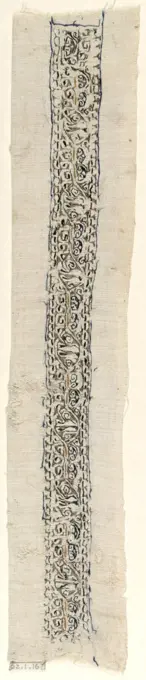
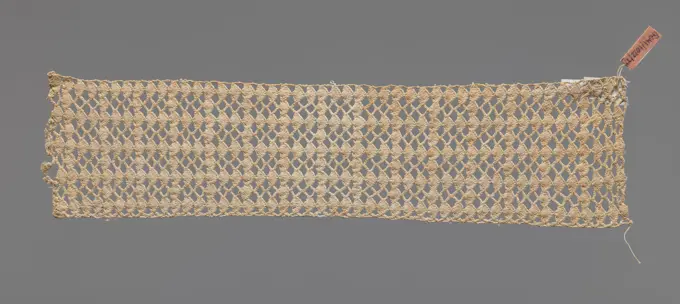
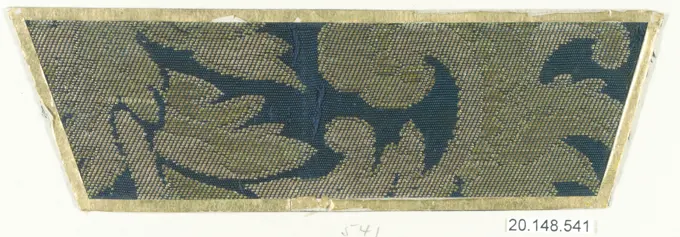
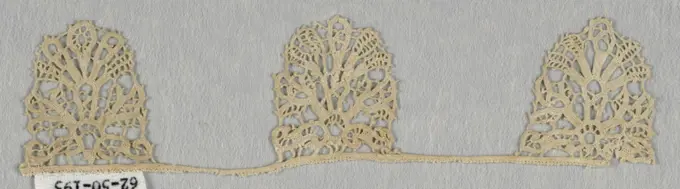
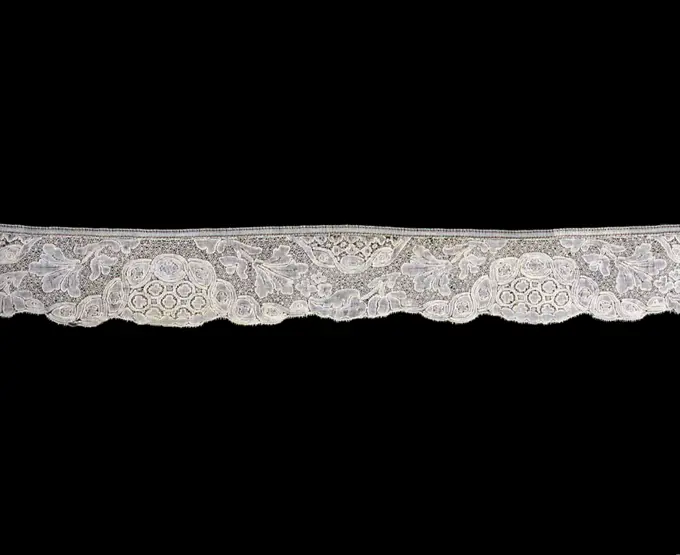
A collection of intricate lace strips showcasing floral motifs, symmetrical designs, and detailed stitching, primarily in natural colors and varying textures.

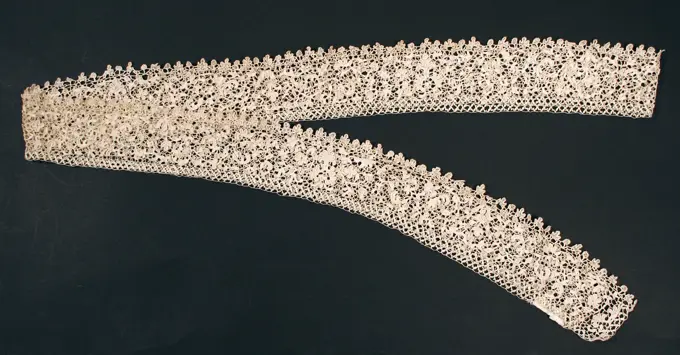
Border, Medium: linen Technique: bobbin lace, Mechlin style, Straight border of Mechlin lace with a design of small square ornaments sprinkled over field has border of detached motifs of flower and leaves above row of flowerheads., Belgium, early 19th century, lace, Border
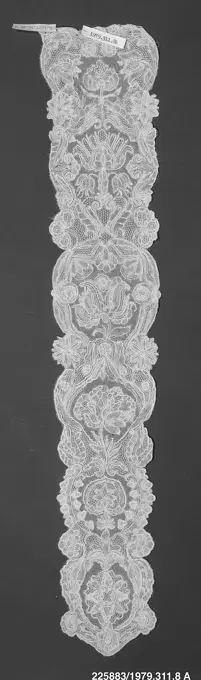
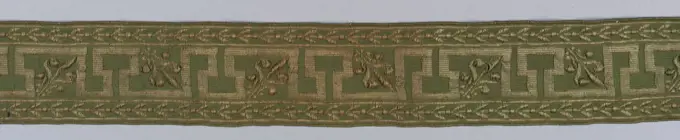
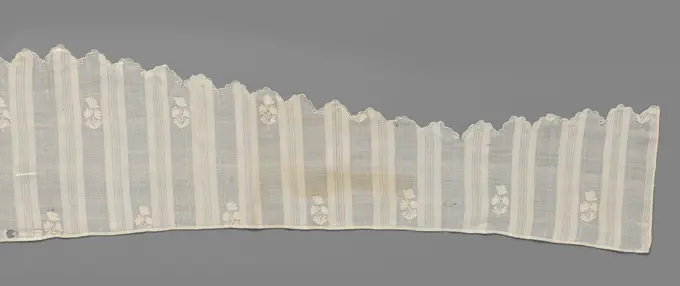
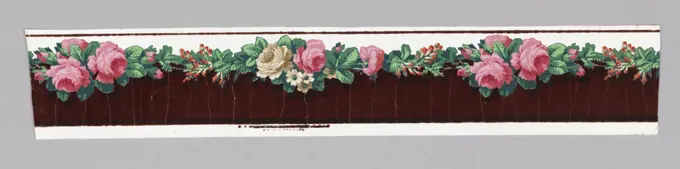
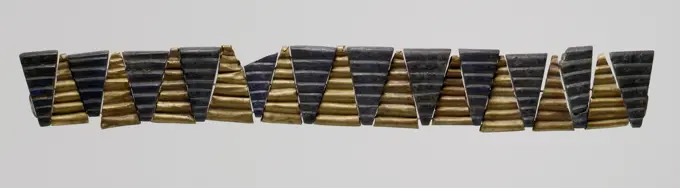
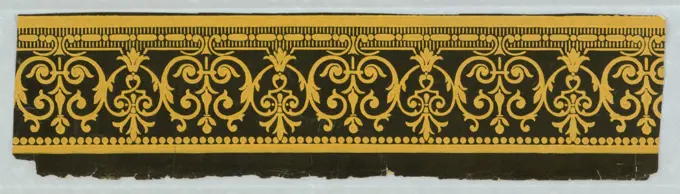
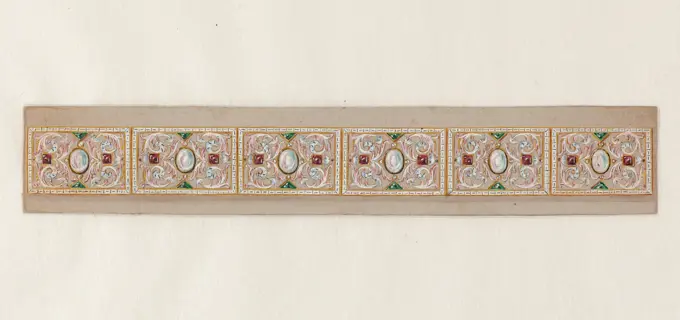
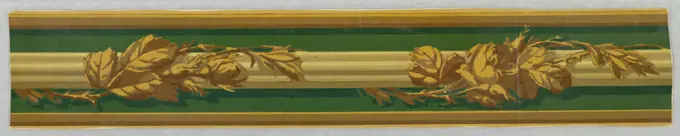
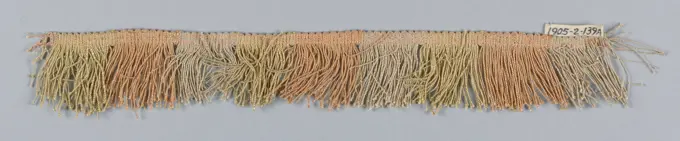
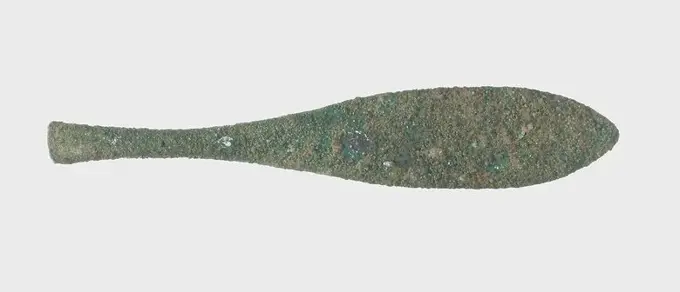
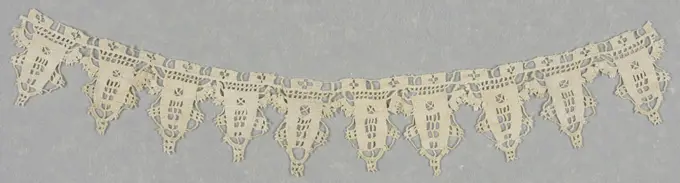
Bobbin Lace Edging, late 18th century. France, Valenciennes, late 18th century. Lace, bobbin; average: 8 x 38.8 cm (3 1/8 x 15 1/4 in.).Band, Embroidery using colored silk on linen plain weave, Repeating design of small scale ovals in a geometric background, 3th century, embroidery & stitching, BandFragment; linen; Bequest of Marian Hague; 1971-50-418Trimming (France); 1909-2-175Trimming (France); silkGalloon 17th-18th century Unknown. Galloon 213815Fringe ca. 1750 British. Fringe 224872Fragment of the lace;  1st half 19th century (1801-00-00-1850-00-00);Embossed Wool; woolTwo leaves, 1500 - 1600 print The leaf vines sprout at both ends of the leaf. The tenders cross each other in the middle and are hung on rings. One of 5 magazines.  paper engravingOranjelint ,, 1775 - 1800 ribbon (material) Ribbon with serrated ends and centrally two medallions with portraits of Wilhelmina (left) and Willem V. The medallions surrounded by branches with orange apples, held together at the bottom by a ribbon. Both ends give a representation of an Oranjeboom in a round container. Below that the inscription: Vivat Oranje. Netherlands silk. paper printingTwo Borders Made 1850-1875 Belgium. Cotton, bobbin straight lace of a type known as Valenciennes with a square Valenciennes mesh ground .Border, Medium: cotton Technique: block printed on plain weave, Continuous curving design of exotic 'indienne' flowers turning alternately right and left; brown guard stripes with a repeating, small-scale cornucopia pattern. In mauve, blue, green, tan, yellow, red, and pinks, with brown and red outlining, on white ground; glazed., England, ca. 1790, printed, dyed & painted textiles, BorderPiece 18th century Japan. Piece 71275Needlepoint (Reticella) Lace Insertion, 16th century. Italy, 16th century. Lace, needlepoint: linen; average: 2.3 x 68.6 cm (7/8 x 27 in.).Piece 18th century Japan. Piece 71535Trimmimg, Medium: metallic, white silk, green silk Technique: bobbin lace, metallic, Band with triangular tab edge. Green silk with metal., Italy or Spain, 16th-17th century, lace, TrimmimgMedieval ornamentSash, early 20th century, 64-1/2 x 15-3/16 in. (163.8 x 38.6 cm), Linen (), metal, metallic thread; needlework, Turkey, 20th centuryPlain yellow paper, anonymous, 1800 - 1900 decorated paper   paper. paint (coating) paintingCord (France); silk, metal thread and cottonLappets (2) mid-18th century Flemish The Metropolitan Museum's great lace collection was started when the Museum became the first among American museums to organize a permanent collection of lace with the acceptance of the McCallum Collection in 1879 and the bequests of Mrs. John Jacob Astor, Mrs. Robert L. Stuart, Mrs. Augustus Cleveland, and Mrs. A. W. Winters shortly thereafter. In 1893 a loan collection of antique laces shown at the World's Columbian Exposition in Chicago was assembled by a committee of New York women headed by Catharine Augusta Newbold. About 1900 Miss Newbold arranged and labeled an exhibition of laces and linenworks lent to the Metropolitan Museum by Mrs. James Boorman Johnstone and the Misses Johnstone. "Her scholarly knowledge of lace technique enabled the Museum for the first time to offer a comprehensive display of lace illustrating its historical development," wrote Miss Frances Morris, then curator of the textile department. Miss Newbold's name occurs agaiValance first half 18th century British. Valance 229274Trimming, Broad trimming (galloon) of dark green cloth, dull, with pattern wefts of gilt framing central band of bold fret with regularly interposed floral sprays and guard band top and bottom with continuous leaf and berry motif. Pattern wefts are bound in fret areas, float in floral areas, giving raised effect., France, early 19th century, trimmings, TrimmingTwo Lengths of Lace. France, late 17th to early 18th century. Textiles; textile lengths. Linen point de France needle laceStrip of machine side with a succession of alternating dense and openwork ovals along the underside, anonymous, c. 1900 - c. 1914 Strip of natural-colored machine side: machine valenciennes side. The repeating pattern consists of an oval with an open -worked center and a narrower sealed oval along the underside of the narrow strip. The motifs are equipped with openwork edges within which a thicker and shiny contour wire runs. The contour thread is a-typical for Valenciennes side. At the top, the ovals are connected by a machine -founded. The silly edge of the scaffold along the underside of the strip is finished with picots: three picots under each circle, six picots among each oval. The top of the strip is straight finished. Calais (possibly) cotton (textile) Strip of natural-colored machine side: machine valenciennes side. The repeating pattern consists of an oval with an open -worked center and a narrower sealed oval along the underside of the narrow strip. The motifs are equipped wNecklace ca. 1981-1295 B.C. Middle Kingdom-Early New Kingdom. Necklace. ca. 1981-1295 B.C.. Blue paste. Middle Kingdom-Early New Kingdom. From Egypt, Memphite Region, Lisht North, Cemetery, debris, MMA excavations. Dynasty 12-18Strip of batist with woven stripes and two rows of embroidered twigs with three flowers each and a wavy border with scoops, anonymous, c. 1800 - c. 1899 Strip of natural -colored batist with woven vertical stripes and embroidery. The embroidery consists of two rows of hanging twigs, each with two heart -shaped leaves and three fan -shaped flowers. The two rows are not complete. The top row is cut halfway, the batist is finished here with a zoompje. The strip is cut in two large waves along the underside, so that some embroidered branches also (partly) disappear. Moreover, along the underside there is a sculpy edge of more or less triangular scallops with five flat embroidered lobes each. In the strip is halfway through a (vertical) seam. The strip may be used or intended as an Engageante. West-Europa linen (material). batiste embroidering Strip of natural -colored batist with woven vertical stripes and embroidery. The embroidery consists of two rows of hanging twigs, each with two hearCap streamers, Medium: linen Technique: bobbin lace, Brussels style, Cap streamer with a design of flowers, leaves and pomegranates. Irregularly scalloped edge and rectangular ends., Belgium, early 18th century, lace, Cap streamers. Linen, bobbin straight lace of a type known as Valenciennes with a five hole mesh groundGimp mid-18th century French. Gimp 214237Bobbin Lace Edging, 18th century. Belgium, Mechelen, 18th century. Lace, bobbin: linen; average: 4.8 x 54.1 cm (1 7/8 x 21 5/16 in.).Stroker van ijzer.An iron stroker, beautifully forged branches, connecting 5 decorated buttons.A piece of obsolete dirty paper isolated on white A piece of obsolete dirty paper isolated on white Copyright: xZoonar.com/AlexanderxKarasevx 2063701Strip 18th century possibly German. Strip 217230Jacobsthal Johann Eduard (1839-1902), ornamental tape (without date): Detail. Pencil on paper, 19.4 x 94.1 cm (including scan edges) Jacobsthal Johann Eduard  (1839-1902): OrnamentbandTrimming, Medium: silk Technique: woven, Trimming fragment in a design of diagonal red and white bands set between zigzag lines in red on a yellow ground; picot edges., France, 19th century, trimmings, TrimmingFactory mark, printed, France, 1765-80, printed, dyed & painted textiles, Factory markRunning Animals Belt, c. 1000 BC. Russia or Turkey, Caucasus, Koban culture, early 11th Century BC. Bronze, hammered and incised; overall: 7.6 x 67.6 x 1.2 cm (3 x 26 5/8 x 1/2 in.).Border (Netherlands); linen; Bequest of Richard Cranch Greenleaf in memory of his mother, Adeline Emma Greenleaf; 1962-50-298Section of Border from Thanka (Religious Picture) Made 1701-1800 China. Silk, warp-float faced 2 1 's' twill weave with plain interlacings of secondary binding warps and supplementary patterning wefts . ManchuBorder, Block-printed, flocked, Horizontal rectangle. Cluster of pink roses alternating horizontally with cluster of pink and white roses and white daisies. Green leaves. Ground at top is white, glazed. Below the flower band the field is dark red flock., France, 1860, Wallcoverings, BorderFragment of an aurifries, with embroidery of silk and gold council, anonymous, c. 1475 - c. 1500 Fragment of an aurifries, with embroidery. The pattern has awashed soil of gold thread on which angels with shields, on which a crown of thorns, select rods, a chalice with hostie, a trumpet, a bucket, a short sword, a cross, a bishopsmijter and a hat. Southern Netherlands (possibly) silk. embroidering Fragment of an aurifries, with embroidery. The pattern has awashed soil of gold thread on which angels with shields, on which a crown of thorns, select rods, a chalice with hostie, a trumpet, a bucket, a short sword, a cross, a bishopsmijter and a hat. Southern Netherlands (possibly) silk. embroideringNecklace ca. 2600-2500 B.C. Sumerian This choker adorned one of the sixty-eight women or young girls laid out in the so-called Great Death Pit at Ur, which was probably part of a royal tomb. The bodies were all ornamented with the most splendid jewelry made of gold, lapis lazuli, and carnelian.The collar consists of alternating triangles, twelve of lapis lazuli and eleven of gold. Each gold triangle is made from a diamond-shaped and corrugated piece of sheet metal that has been folded back on itself to create seven horizontal tubes. The surface of the lapis lazuli triangles is also corrugated, making it look as if they too have seven horizontal perforations, but in fact there are only three perforations through the stones, so that the collar was held together by three rather than seven threads. Collars like these are too short to have fully encircled the neck. They may have been worn as separate items like chokers, extended by cloth straps around the back, or they may have been attacheBorder, Medium: linen Technique: punto in aria needle lace, Border fragment of three pendants in a dense pattern of floral shapes., Italy, late 16th-early 17th century, lace, BorderBorder, Machine-printed and glazed, Repeating design of alternating palmette-like forms composed of scrollwork and foliage, with beading and bead-and-reel along edges. Printed in yellow on black ground., Yellow on black ground, glazed., possibly USA, ca. 1880, Wallcoverings, BorderGlass Fragment 13th century French. Glass Fragment. French. 13th century. Pot metal glass. Made in Paris, France. Glass-StainedTrimming (France); silkTrimming, Medium: silk Technique: woven, Yellow trimming fragment in a design of four-petal flowers separated by linear motifs; picot edges., France, 19th century, trimmings, TrimmingFragment, Medium: silk Technique: damassé (5-harness satin plus 14 twill), Asymmetrical allover foliage pattern of flowers and architectural details. Design on the face in white on a peach-colored ground., France or Italy, mid-18th century, woven textiles, FragmentBand (Italy); silk embroidery on linen foundationTurkish ornamentFragment of a canopy;  around 1610 (1605-00-00-1615-00-00);White eagle (coat of arms), Pogoń (coat of arms), Wazowie (family), Władysław IV Waza (King of Poland - 1595-1648), canopies, coats of arms, purchase (provenance)Six enamelled plates bracelet Auguste fannel (1818-1900). "Six enamelled plates bracelet". Graphite, Gouache, Watercolor on Cartonette Gray, 1870. Museum of Fine Arts of the city of Paris, small palace.Doggersbanklint.Ribbon, on the left ends in three points. In the middle a red weapon behind which crossed guns and Dutch and English ship's flag. Right and left shows of a triton with a shell in the shape of a horn on his mouth and a red-white-blue flag in his left hand, left behind him two shipies in the sea, to the right of him the inscription: Doggerbank (2 x repeated ). In the middle of the flag: Zoutman (repeatedly repeatedly).Edging 16th century Italian, Venice. Edging 221033Crepe/Rep Cloth Fragment, 3rd century. Syria, 3rd century. Tabby, crepe/rep cloth: wool; average: 5.1 x 24.5 cm (2 x 9 5/8 in.).Border, Block-printed on paper, The design consists of a fluted rod wrapped with rose branches against a shaded background and with striped edging. Printed in green, yellow, ochre and brown., H# 144, France, 1870-1900, Wallcoverings, BorderTextile, Medium: cotton, wool Technique: Wrapping and tapestry: slit and interlocked. Note: the character of the bands is determined in part by the very heavy warps and the wrapping of single warps, A) narrow band patterned by birds and bird heads in yellow, ivory and blue. outlined in black on a red background. B) Narrow band patterned by foxes (), a bird, and geometric shapes in yellow, ivory and blue, outlined in black on a red background., Peru, 800-1000, woven textiles, TextileBorder, Medium: linen Technique: grid of withdrawn element work with embroidery and needle lace, reticella style, Border design with varying sizes of squares arranged on a diagonal line. Pointed border., Italy, mid-late 16th century, lace, BorderTextile Fragment 5th century Coptic. Textile Fragment 475265Piece 18th century China. Piece 71538Pleated fan and case, Painted silk leaf, pierced, gilded and painted ivory sticks, paste jewel and metal bail at rivet, Leaf of painted buff silk. Obverse: three medallions, the central one containing landscape scene; ground decorated with brown and red lines and appliquéd with sequins. Reverse: medallion of ribbon and music trophies. Pierced, gilded and painted ivory sticks. White paste jewel and metal bail at rivet. In box painted in similar manner as fan with wreaths of roses, blue ribbon, trophies and green vine, with light blue lining. Marked in gold, Creusy 28 Rue Meslay Paris”., France, late 19th century, costume & accessories, Pleated fan and casePair of lappets Flemish, Brussels 18th centuryGold diadem 4th century B.C. Greek Pediment-shaped gold diadem with palmettes in low relief.Many such diadems, made from thin gold sheets with impressed decoration, have been found in tombs that range in date from the 5th century B.C. to the Roman period.. Gold diadem. Greek. 4th century B.C.. Gold. Classical. Gold and SilverFringe European 19th centuryFringe (Italy); silkVery old empty wooden frame, painted green, isolated on white. Old empty wooden frameBand (from Sleeves of Woman's Robe) Made 1875-1900 China. .Knife. Dimensions: l. 9.5 cm (3 3/4 in). Dynasty: Dynasty 18. Reign: reign of Amenhotep III. Date: ca. 1390-1353 B.C.. Museum: Metropolitan Museum of Art, New York, USA.Auto tire tread grunge element. Car and motorcycle tire pattern, wheel tyre tread track. Black tyre print. Vector illustration isolated on white background.. Auto tire tread grunge element. Car and motorcycle tire pattern, wheel tyre tread track. Black tyre print. Vector illustration isolated on white backgroundTrimming; metallic and silk threadPen Box (Qalamdan) 19th centuryStrip of bobbin with rosettes, anonymous, c. 1830 - c. 1850 On the traly lot, a Mechelen soil (also known as ice soil), there is a row of twigs between scattered forget mineits, of which heavy Margrites depend. The circular arched sculptes are equal and formed by a chain of rosettes. Mechelen side. Belgium linen (material) bobbin lace / Mechlin (lace) On the traly lot, a Mechelen soil (also known as ice soil), there is a row of twigs between scattered forget mineits, of which heavy Margrites depend. The circular arched sculptes are equal and formed by a chain of rosettes. Mechelen side. Belgium linen (material) bobbin lace / Mechlin (lace)Border (England); block-printed; 83 x 14 cm (32 11/16 x 5 1/2 in.)Fringe European 19th centuryBorder, Machine-printed, mica flakes, Flitter frieze with brightly colored floral motifs having the appearance of a poinsettia. Printed in green, blue and orange with red berries, outlined in gold and silver mica flakes., USA, 1880-1920, Wallcoverings, BorderBorder, Block-printed on handmade paper, Three small clusters of leaves and buds linked by a stylized stem alternating with one large lily-like flower., H# 575, France, 1800-1820, Wallcoverings, BorderTrimming (France); silkKnife Handle (Kozuka). Culture: Japanese. Dimensions: L. 3 13/16 in. (9.7 cm); W. 9/16 in. (1.4 cm); thickness 1/4 in. (0.6 cm); Wt. 1.2 oz. (34 g). Date: ca. 1615-1868. Museum: Metropolitan Museum of Art, New York, USA.Flounce (Incomplete) Made 1720-1739 Flanders. Linen, bobbin part lace of a type known as Brussels with a plaited bar ground .Textile, Medium: cotton Technique: printed on plain weave, Horizontal and vertical parallel lines made of tiny white dots on a brown ground forms regular squares., USA, 1870-80, printed, dyed & painted textiles, TextileFringe (Spain); silkillustration of English tales, folk tales, and ballads. OrnamentFragment early 17th century Italian. Fragment 230146Trimming 18th century Italian. Trimming 129867Border (France); block-printed, flocked, gilt; 67.5 x 14 cm (26 9/16 x 5 1/2 in.)Ribbon (USA); silk, cottonBag, 19th century, 22 7/8 x 3 3/8 in. (58.1 x 8.57 cm) (including tassels), Silk, cotton, metal; sprang, crochet; knitted, Turkey, 19th centuryBelt (Hohos,Ulos)Border, Block-printed on handmade paper, Orange and green acanthus leaves twist around a horizontal orange rod. Printed on gray glazed ground., France, 1820, Wallcoverings, BorderBorder, Medium: linen Technique: needle lace (punto in aria), Border of pendants of triangular shapes., Italy, late 16th century, lace, BorderBlue silk ribbon, trimmed with a white piping, c. 1600 - c. 1999 Blue ribbon trimmed along both long sides with a white (or faded orange) piping. West-Europa silk Blue ribbon trimmed along both long sides with a white (or faded orange) piping. West-Europa silkFan Holder 18th-19th century China. Fan Holder 68847Border, Louis XVI or Trianon; Desfosse; Manufactured by Desfossé et Karth (France); France; block-printed paper; 82.5 x 28.5 cm (32 1/2 x 11 1/4 in.)Nameplate belonging to the 'Schuttersmaaltijd' by Bartholomeus van der Helst, c. 1648 The nameplate is a rectangular plate of black painted wood, with lobe motif frame that splits the board into three compartments. The names of the names of the portrayed people on the militia meal of Bartholomeus van der Helst were applied (including the name of Captain Cornelis Jan Wits and Vaandrich Jacob Banning).  wood (plant material) The nameplate is a rectangular plate of black painted wood, with lobe motif frame that splits the board into three compartments. The names of the names of the portrayed people on the militia meal of Bartholomeus van der Helst were applied (including the name of Captain Cornelis Jan Wits and Vaandrich Jacob Banning).  wood (plant material)Ribbon, Medium: silk, metallic Technique: woven, 17th century, woven textiles, RibbonPiece 18th century Japan. Piece 71980Livery Trimming (Italy); silkBand (Spain); silk