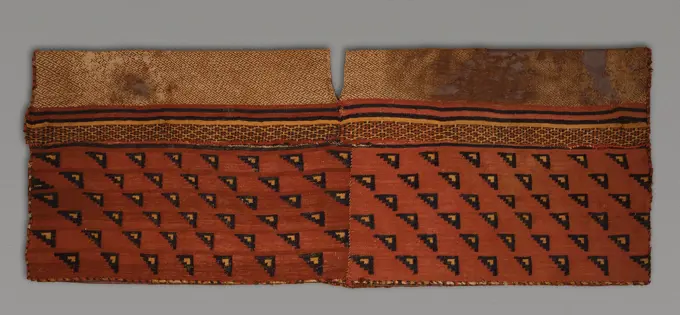
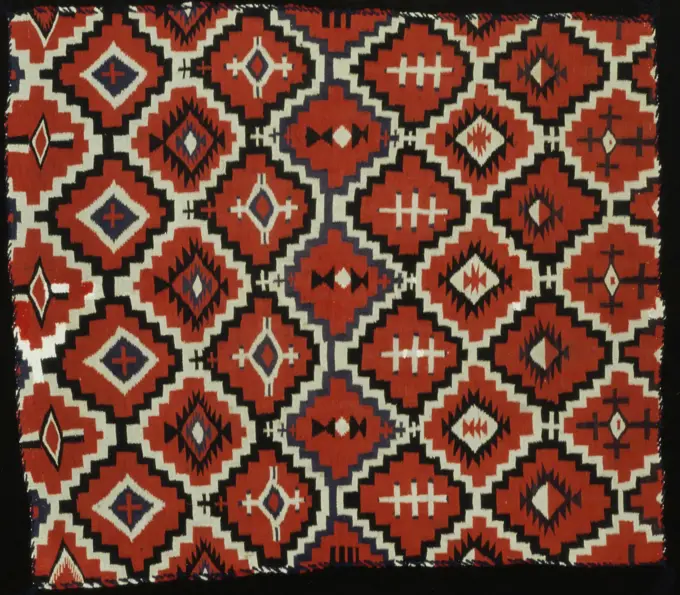
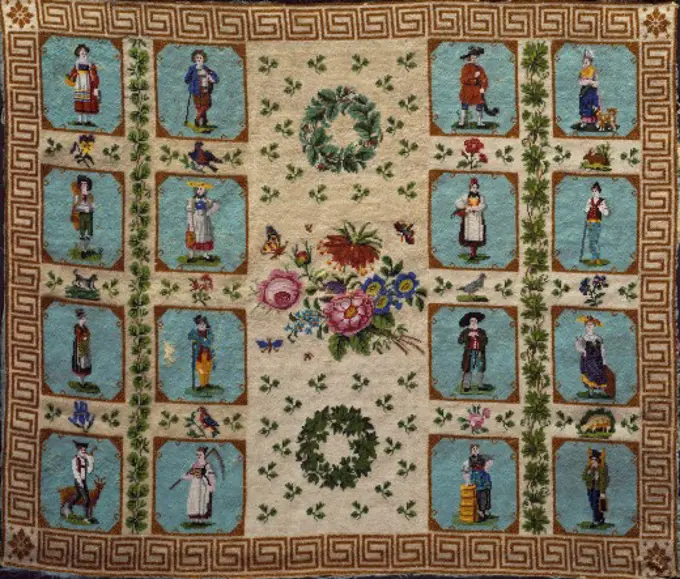
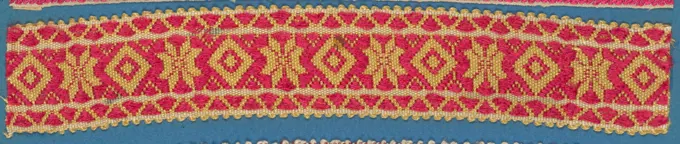
Ornamental Textile Fragments

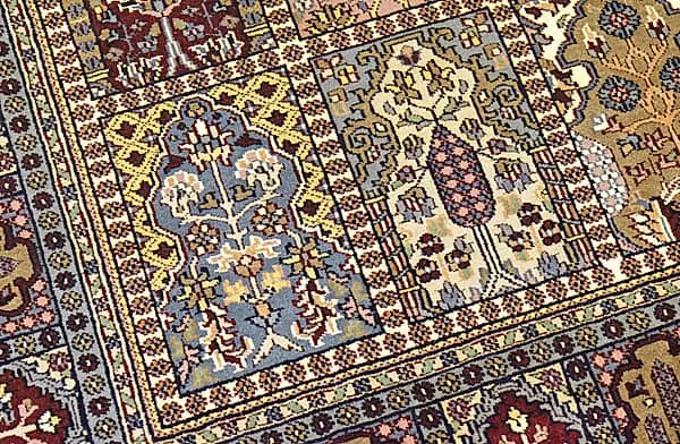
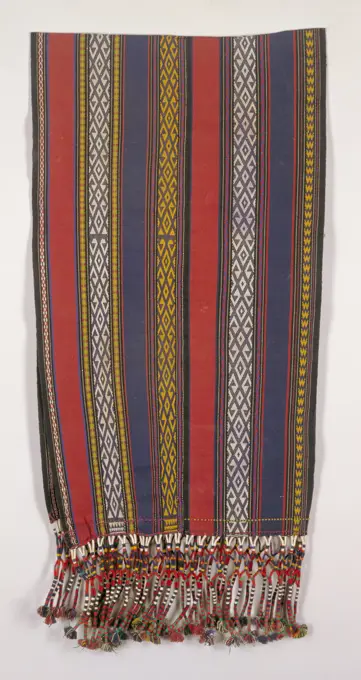
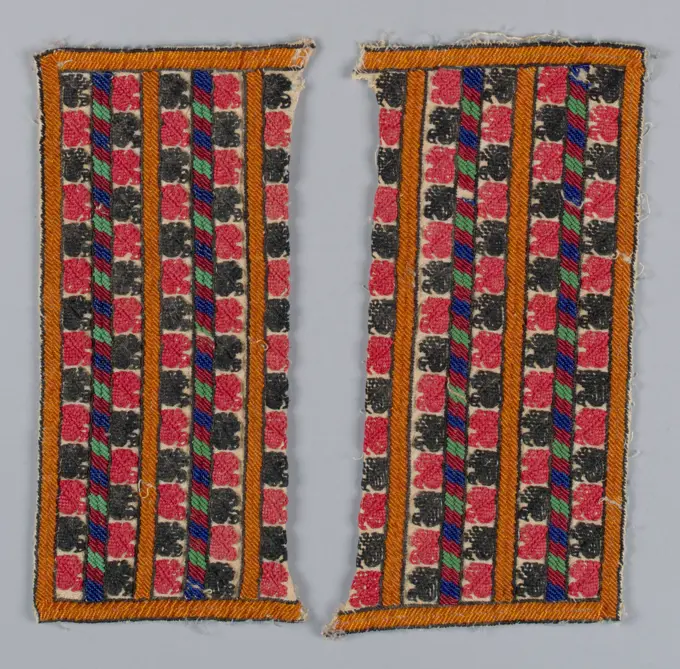
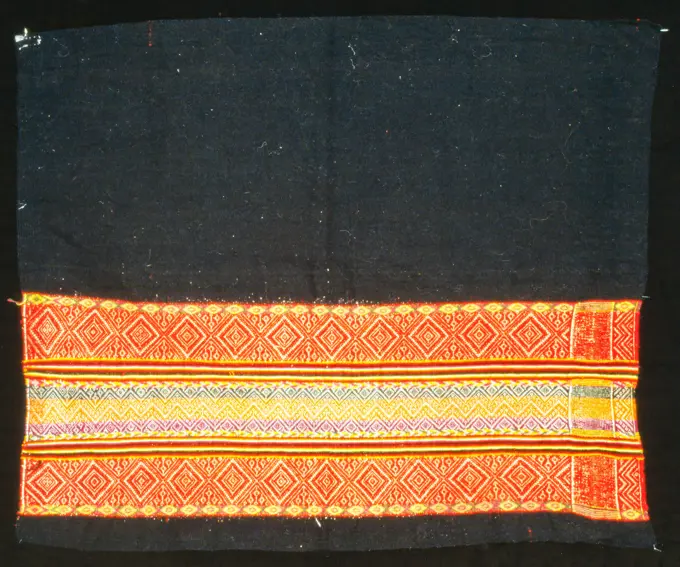
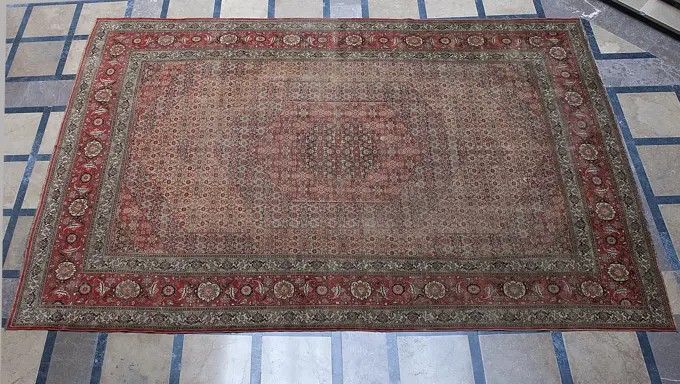
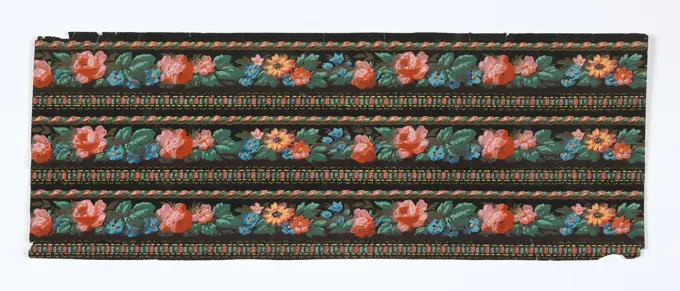
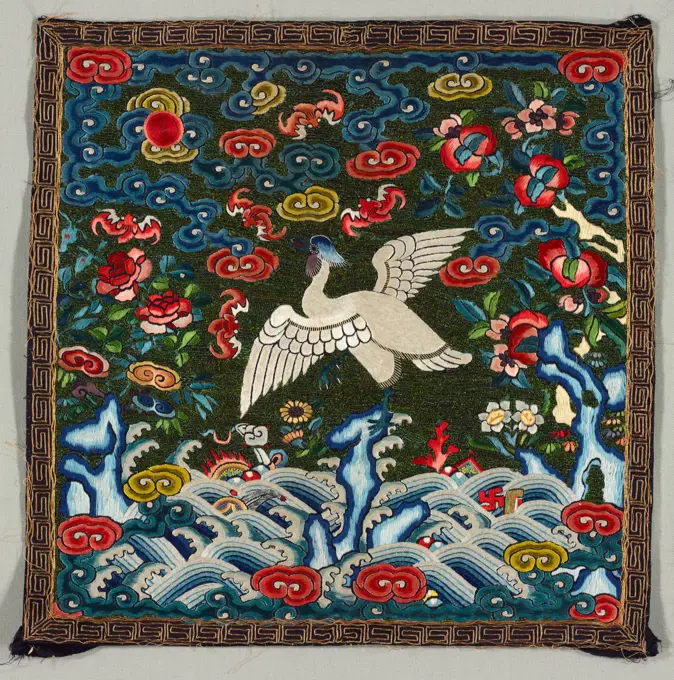
Fragments of Eastern carpets and textile designs, rich in patterns and colors, showcasing intricate floral motifs and traditional weaving techniques from various regions.

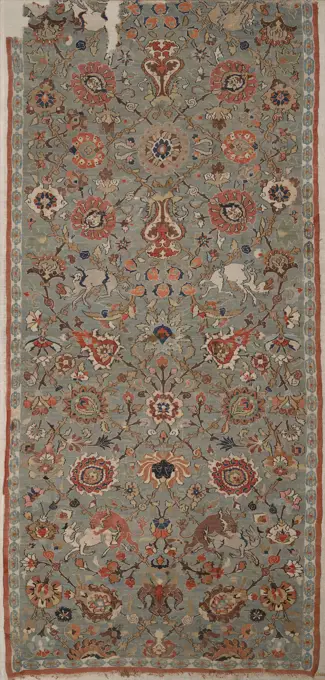
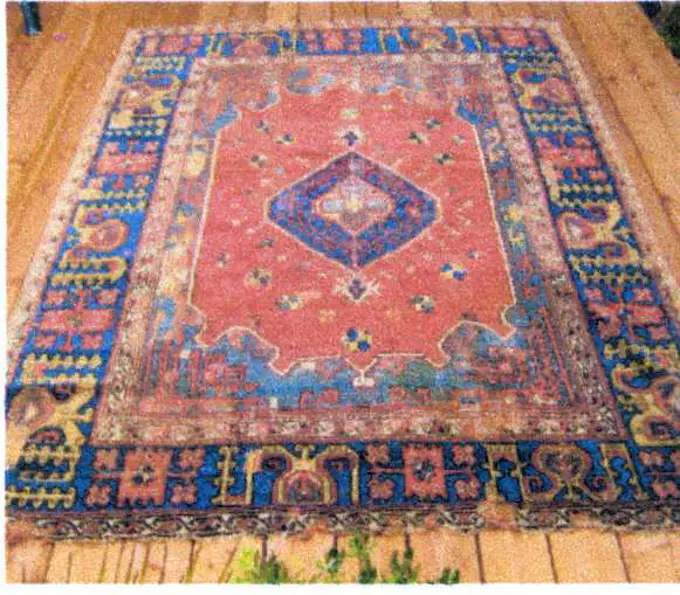
Four fragments of an Eastern carpet, Anonymous, 1500 - 1550 Eastern carpet, arabesk dress, lotto carpet. Four fragments of what was originally a larger carpet. In midfield a pattern of flowing lines and flexibly shown leaf motifs. The middle edge is decorated with kufic oraments. Little Asia wool Eastern carpet, arabesk dress, lotto carpet. Four fragments of what was originally a larger carpet. In midfield a pattern of flowing lines and flexibly shown leaf motifs. The middle edge is decorated with kufic oraments. Little Asia wool
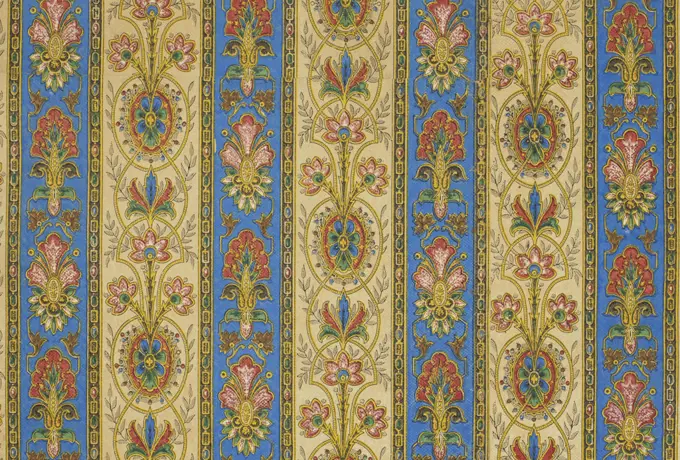
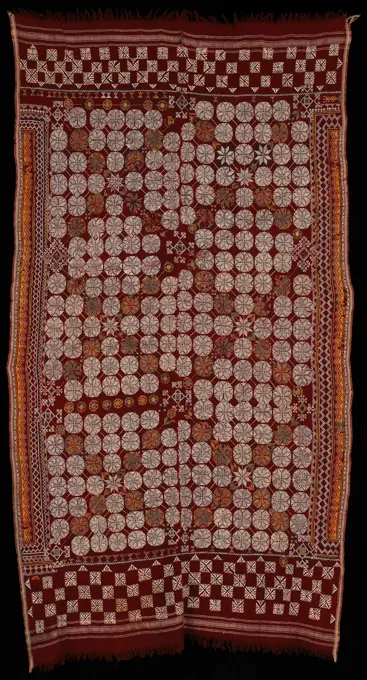
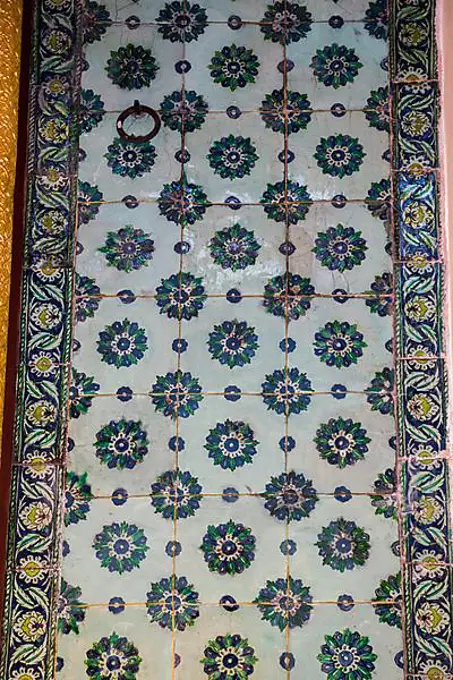
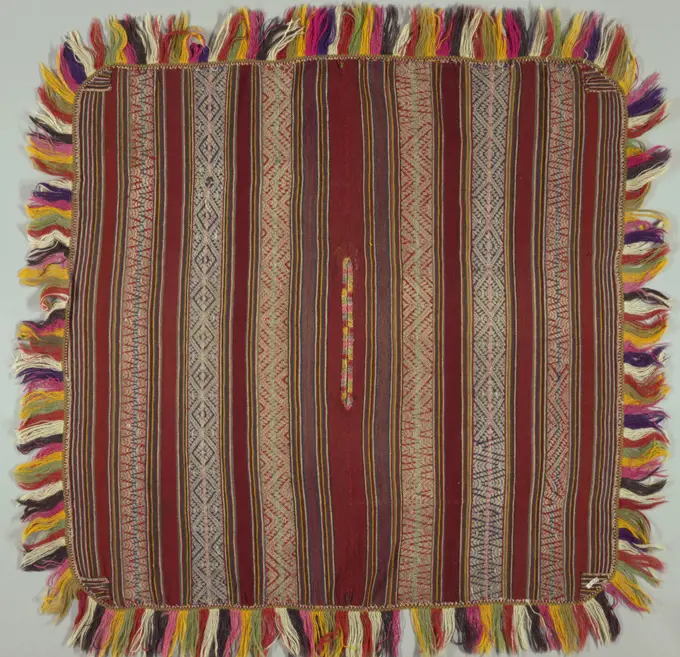
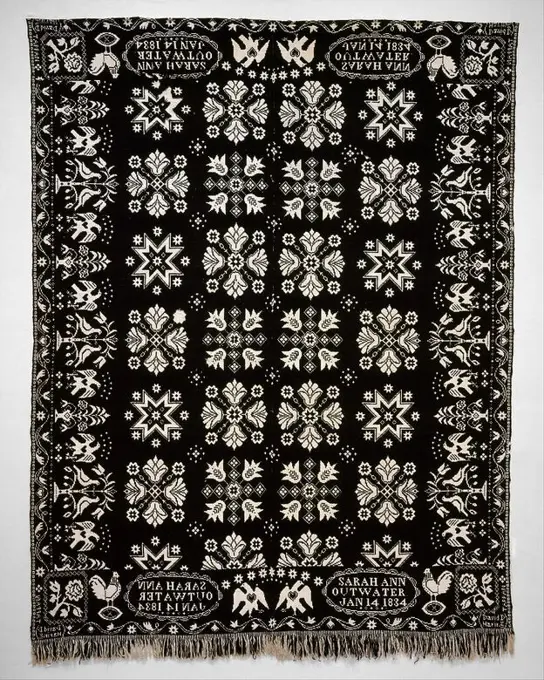
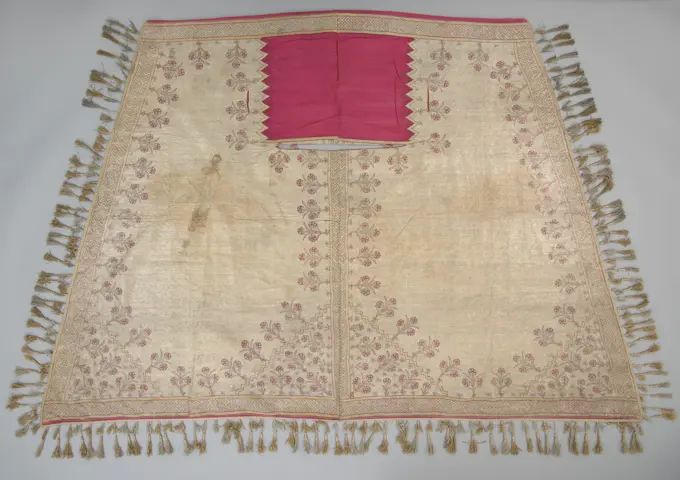
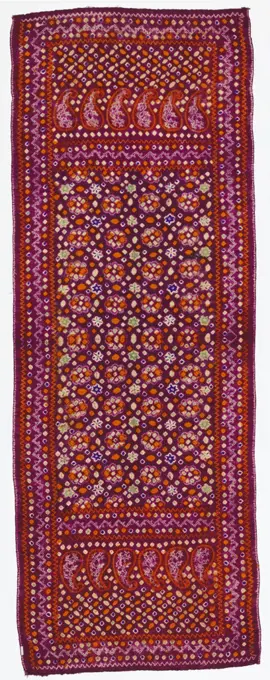
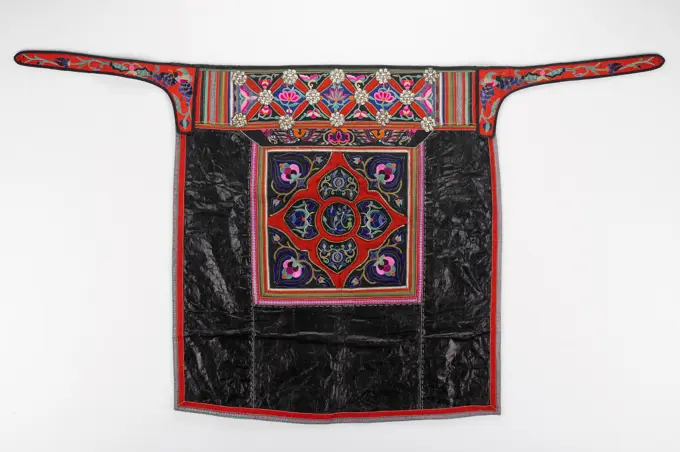
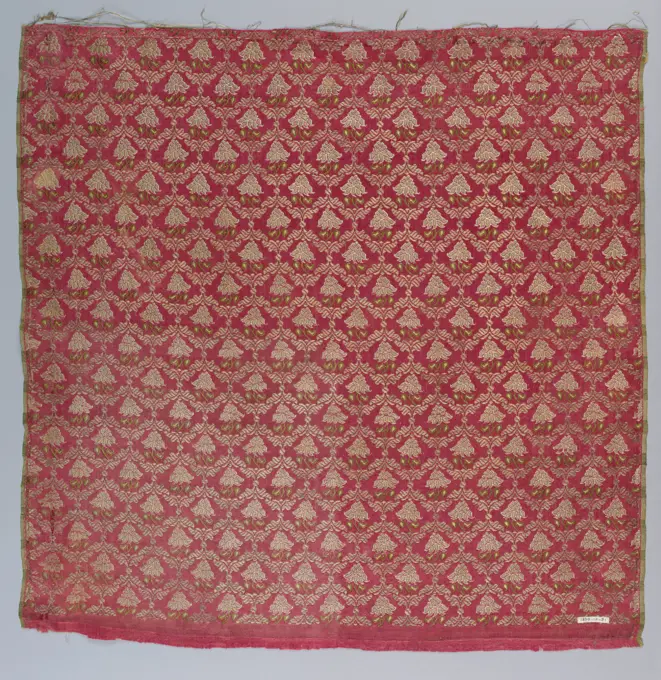
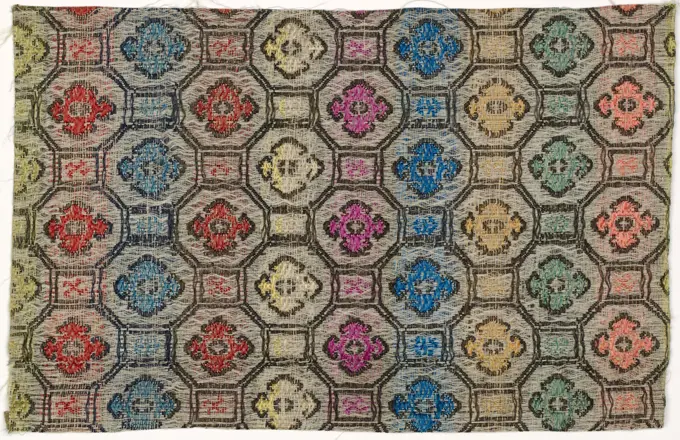
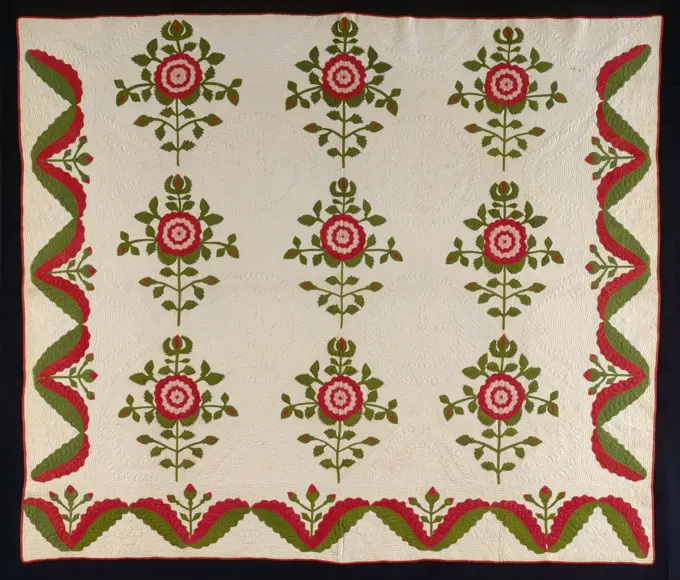
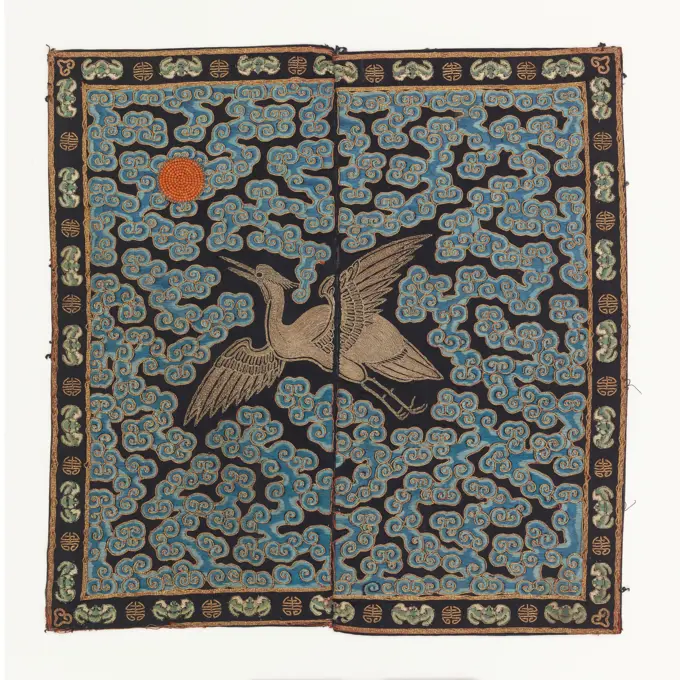
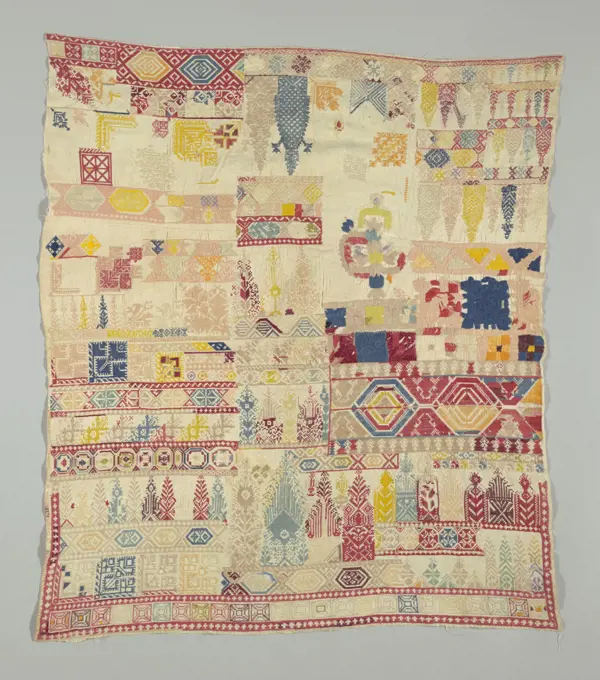
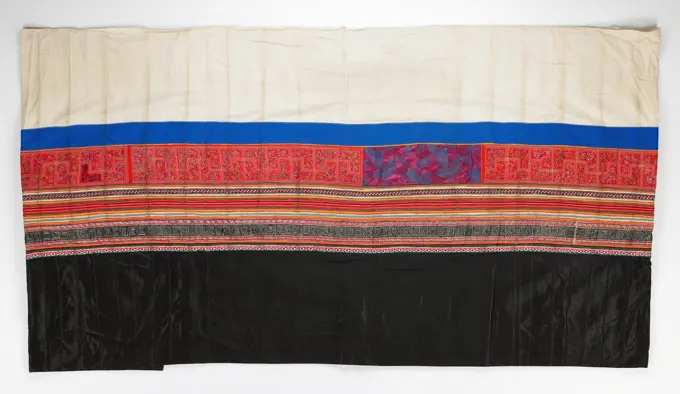
Furniture cover. Culture: British. Dimensions: Overall: 65 9/16 × 42 1/2 in. (166.5 × 108 cm). Maker: Anonymous. Date: 1600-1620.This embroidered cover probably served to decorate a small table, cabinet or other piece of furniture. The repeating border design of deep scallops is also seen on embroidered clothing and patterns for white linen lace, as well as furnishing textiles like this cover. The embroidery is executed in two colors of metal-wrapped thread: silver and gold (which was made of gilded silver), and the motifs include flowers common to English gardens of the period: irises, lilies, pansies and pomegranate fruits flanked by peacocks, with a caterpillar appearing on every third repeat of the design. Museum: Metropolitan Museum of Art, New York, USA.Sash early 19th century Javanese people. Sash 85681Coverlet ca. 1850 American This double cloth coverlet is woven with undyed cotton and red and blue wool in two panels and seamed at the center. It is patterned with rows of floral clusters alternating with rows of single flowers, each within a cartouche. The piece is hemmed along the top border and has a natural fringe on the left and right sides and along the bottom edge.. Coverlet. American. ca. 1850. Wool, cotton, woven. Possibly made in Maryland, United States; Probably made in West Virginia, United States; Possibly made in Virginia, United States; Possibly made in Ohio, United StatesLampas fragment with foliate medallions, 1300-1499. Spain, Granada, Nasrid period. Lampas: silk; average: 36.8 x 21.6 cm (14 1/2 x 8 1/2 in.).Savonnerie-Timpijt with flower and acanthus pattern, Manufacture de la Savonnerie (attributed to), c. 1650 Savonnerie-Timpijt with flower and acanthus pattern. On a blue-black stock there is a two-sided symmetrical system of acanthus vines with flowers in blue, white, yellow, pink and green. A dense dash of flowers in the heart is surrounded by a thick flower wreath, which is wound in four places with a hanging bow. There is a few horn-shaped curved acanthus leaf skills on the width axis; On the length axle hangs a bell-shaped shell (), from which two pairs of flowers-occupied Acanthus vranks, ending in Volute and crowned on the ashes by a vase with Keizerskroon. Midfield is framed by a narrow zigzag band with outdoor short and long campanes with brushes of blue. The edge has, again on Blauw-Zwart Fond, on the corners of Rolwerk-Cartouches, which are placed diagonally and are fitted with cracks; On the middle of the long sides is an oval medallion surrounded with split rolling work, whTextile Fragment unknown. Textile Fragment 445669Saddle bag decorated with grid work in which cross flowers, Jaffi Volk, c. 1800 - c. 1900 Saddle bag of knotted wool, Jaffi Kurdistan-Mosul. Midfield is a small square that is divided into windows with a grid, in which cross flowers. Quadruple edge; The wide checkered edge with rosette flowers. At the top of a chatter. The back is made of flat tissue with stripes. Kurdistan Necklace and impact: Wool Saddle bag of knotted wool, Jaffi Kurdistan-Mosul. Midfield is a small square that is divided into windows with a grid, in which cross flowers. Quadruple edge; The wide checkered edge with rosette flowers. At the top of a chatter. The back is made of flat tissue with stripes. Kurdistan Necklace and impact: WoolTextile Fragment 18th century. Textile Fragment. 18th century. Silk and metallic thread; brocaded. Made in Iran. Textiles-BrocadesSampler (Southern Spain); cotton embroidery, linen foundation; 20 x 61 cm (7 7/8 x 24 in.); Bequest of Mrs. Henry E. Coe; 1941-69-241Bedcover, Medium: silk, gilded paper on silk core, metallic thread Technique: embroidered on satin weave, Large bedcover of white satin embroidered in allover floral pattern in brilliant colored silks and metallic thread. Design, symmetrically arranged, shows curving vines, flowerheads both flat and in profile, around a large cental motif of a series of half circle and petal-shaped forms. Brilliant long tailed birds in foliage; a wide border of vine and flower design. The work is in long floating stitches of silk thread couched down with metal or silk; each element edged with gold thread, which appears to be gilded paper around a silk core. Stems of gold thread couched down. Cover consists of four pieces of silk and is lined with thin, faded pink Chinese silk in a geometric design., China, 18th century, embroidery & stitching, BedcoverDesign for a carpet, anonymous, c. 1854 - c. 1864  Manufacturer: Deventeramsterdam paper. gouache (paint) brush  Manufacturer: Deventeramsterdam paper. gouache (paint) brushLength ca. 1850s French, Mulhouse. Length 229855Fragment (USA)Printing Block. Indonesia, Eastern Java, Gresik, 19th century. Tools and Equipment; printing equipment. Wood with pigmentCartouchekleed, anonymous, 1800 - 1900 Cartouch dress. Midfield: brown -red stock with double cross with pointed top and foot, in cognackoleur with green circumference and filled with two blocks provided for hooks and on the inside with connected windows. Edges: in two types: the standing differently from the horizontal edge. 1. A rust -brown edge runs for the sides, on which star flowers stand between yellow, checkered crosses. 2. Upper and upper edges in terrarood with yellow double hooks placed in squares. East-Great Asia (Possible) wool Cartouch dress. Midfield: brown -red stock with double cross with pointed top and foot, in cognackoleur with green circumference and filled with two blocks provided for hooks and on the inside with connected windows. Edges: in two types: the standing differently from the horizontal edge. 1. A rust -brown edge runs for the sides, on which star flowers stand between yellow, checkered crosses. 2. Upper and upper edges in terrarood with yellow double hoCurtain paper, Jeffrey & Company, 1836-1930 London, England, Machine-printed paper, embossed. Components a/p mounted on muslin, components s,t machine stitched threads, r) metal rings, s) brass eyes, 'a/q': Embossed in small-scale diamond-diaper pattern, vertical stripes: alternating white and bright blue backgrounds with short repeat floral and leaf patterns, symmetrical along vertical axes; strong multicolors, especially red, outlined in yellow. Stripes separated by black band between yellow lines, with string-of-beads pattern; 'r/u': tie backs of blue background striped, hemmed ends folded into points, metal fittings 'v' Narrow blue background strip with nail holes., a/s) originally, part of paper hung as two pairs of curtains, part hung on wall with nails. Purshased, Paris, 1964, backed with muslin and hung by donor on apt. walls. holes in e, g, o., v) In margin printed twice; in blade: Registry mark of 29 July, 1872 (image in leger), London, England, 1872, Wallcoverings, Curtain pKelkvelum, c. 1800 - c. 1900 Kelkvelum of with silver shot red side on which a polychrome decoration of silk embroidery: in the middle a jet wreath in which the letters IHS, along the edges of flowers with flowers and leaves and diagonally in the corners of flower branches. Lining yellow side. Note: other number N11B or M11B   silk. embroidering Kelkvelum of with silver shot red side on which a polychrome decoration of silk embroidery: in the middle a jet wreath in which the letters IHS, along the edges of flowers with flowers and leaves and diagonally in the corners of flower branches. Lining yellow side. Note: other number N11B or M11B   silk. embroideringDress, Ikat fabric, from SOEMBA. Rug of oriental textile; Ikat fabric. The rug consists of three sewns sewn. The pattern has lanes in red-brown, blue and cream. Along the top and bottom is frills of the warp threads.Woman's wedding veil (Odhani), 20th century, 88 x 44 1/2 in. (223.52 x 113.03 cm), Wool, cotton; embroidery, India, 20th centuryAncient Ottoman time Handmade Turkish Tiles with floral patternsPoncho, Medium: wool Technique: plain weave with warp-patterned stripes, Shoulder poncho of two lengths of striped wool with bound slit for opening. In red, pink, purple, blue, yellow, and white wool and cotton on brown wool wefts, doubled. Multi-colored deep fringe on four sides., Peru, 18th-19th century, woven textiles, PonchoTraditional Turkish hand made carpet and rugsSampler (Netherlands); silk embroidery on linen foundationCarpet with Flowers andAnimalsSample Book (USA); horsehairBorder (Italy); linen, silkFragment, Medium: silk, cotton, mirrored glass Technique: embroidered on twill weave, Yellow ground embroidered with a highly formalized floral pattern in magenta, white, blue, black, and beige silks and round pieces of mirrored glass. Fragment is rectangular with a pointed top., Punjab, India, 19th century, embroidery & stitching, FragmentTextile Fragment 5th century. Textile Fragment 444120Beadwork Panel (England); beads, linenApron, 31 x 61 1/2 in. (78.74 x 156.21 cm), Cotton, ChinaSample, Medium: cotton Technique: printed on plain weave, USA, 1850-1900, printed, dyed & painted textiles, SampleCoverlet. Culture: American. Dimensions: 98 3/8 x 75 in. (249.9 x 190.5 cm). Maker: David Daniel Haring (1800-1889). Date: 1834.This dark blue wool and undyed cotton double cloth coverlet is woven in two panels and seamed at the center. Floral and star motifs typically found in Haring's work decorate the central field. The left and right borders have images of eagles with outspread wings alternating with vases of flowers and pairs of birds in trees. From left to right along each panel of the top and bottom borders, there is a rooster standing on an egg, the inscription cartouche, and an eagle. The Haring trademark of a rose with four leaves on its stem appears in each corner block. There is natural fringe along the bottom edge. Museum: Metropolitan Museum of Art, New York, USA.Thai textile, ThailandPanel Made 1875-1900 China. .Przeszo Przyszoci unknownCeremonial shoulder cloth (Selendang), Medium: silk, metallic yarns, dye Technique: Tied resist patterning on plain weave, Woven silk textile with tied resist pattern showing a repeating pattern of flower, star, diamond shapes in purple and orange. Border stripe at either side of the main field with chevron and diamonds. These stripes are worked in weft ikat. At each end of the cloth are further bands of ikat designs.Gold braiding along the selvages and gold fringes along both ends., Bali, Java, 19th century, printed, dyed & painted textiles, Ceremonial shoulder cloth (Selendang)Detail of geometric design on carpet, Turkey, Asia Minor, EurasiaDowry bag, Second quarter of the 20th century, 30 1/2 x 25 15/16 in. (77.47 x 65.88 cm) (open, without tie), Cotton, silk; needlework, India, 20th centuryBaby Carrier, 34 1/2 x 31 11/16 in. (87.63 x 80.49 cm) (without straps), Cotton, silver, metalic thread and strips; needlework, ChinaTunic Fragment 12th-15th century Chimú. Tunic Fragment 312616Womans Ceremonial Skirt (Tapis)Cotton baptismal rug of mechanical side with geometric pattern and acanthus leaves, anonymous, c. 1850 - c. 1899 Cotton baptismal rug of natural -colored machine side. Square model, with a geometric pattern of squares and windows in the middle. There is a wide edge with accolades of stretched acanthus leaves around midfield. The rug is finished with a regular wavy scrap edge, with one half rosette flowers with two leaves in a shell. Netherlands cotton (textile) Cotton baptismal rug of natural -colored machine side. Square model, with a geometric pattern of squares and windows in the middle. There is a wide edge with accolades of stretched acanthus leaves around midfield. The rug is finished with a regular wavy scrap edge, with one half rosette flowers with two leaves in a shell. Netherlands cotton (textile)Fragment (India); silk, metallicSleeve, 1700s. Greece, Dodecanese Islands, 18th century. Embroidery: silk on cotton tabby ground; overall: 51.5 x 27.3 cm (20 1/4 x 10 3/4 in.).Coverlet, Medium: wool, cotton Technique: double cloth, Blue and white coverlet with a central field of close-set horizontal and vertical repeats of flat, stylized groups of large-scale roses and leaves with rosettes in the interspaces. Bottom border with double-headed eagles alternating with Independence Hall; scattered stars of three-lobed leaves. Inscription at left end: 'American Independence Declared July 4, 1776.' Borders on both sides with spread eagle alternating with monkeys and double column., USA, 1800-1850, woven textiles, CoverletHandkerchief 1830-60 American. Handkerchief 121990Ceremonial Shoulder Cloth (Selendang); silk, metallic yarns, dye; 1961-115-36Fragment, 1800s. China , 19th century. Silk; overall: 17 x 11 cm (6 11/16 x 4 5/16 in.).Handmade woven rug, oriental craft in Jaipur, Rajasthan, IndiaRain Cover, c. 1930, 49 x 23in. (124.5 x 58.4cm), wool (), Turkey, 20th centuryConciliate belt; Manufaktura Karol Stanis Awa Radziwi A (S UCK; Pasów Factory; Ca 1767-1790), Madze Anski, Jan (fl. Ante 1757-Ca 1800); 1767-1780 (1767-00-00-1780-00-00);Madżarski, Jan ( -A 1800), Tkacz, Radziwiłł, Karol Stanisław (1734-1790), Vilnius Voivode, Słuck, Persjarnia, bipartite heads, metal thread, bilateral belts, index belts, Lite belts, Polish belts, purchase (provenance )Piece 18th-19th century Japan. Piece. Japan. 18th-19th century. Silk. Textiles-WovenPair Of Cuffs; cotton embroidery on linen foundation, glass beadsHalf Aksu (skirt), 1965-1975, 33 1/2 x 39 in. (85.1 x 99.1 cm), Wool, Bolivia, 20th centuryShawl ca. 1870. Shawl 450573Woman's Shawl. Peru, South Coast, Ica, 1470-1534. Textiles; textile lengths. Camelid fiber and cotton, interlocked tapestry, plain weave with supplementary weft and loop stitch embroideryCarpet for sale in the Souk, Marrakech, Morocco.Embroidery Tatreez pattern, Palestinian fashion vector ornamentFragment; linen; 1897-8-325Rug, 20th century, 38 1/2 x 33 3/4 in. (97.8 x 85.7 cm), United States, 20th centuryBand, Medium: silk, metallic thread Technique: embroidered, Fragment of an embroidered band with intersecting arcs alternating with rosettes. Intersection between arcs also filled with small rosettes, Europe, 17th century, embroidery & stitching, BandTurkish Carpet Islamic ArtKamarband, Third quarter of the 19th century, 33 1/2 x 3 1/2 in. (85.09 x 8.89 cm), Silk, cotton; cross-stitch, Uzbekistan, 19th centuryEmbroidery with glass beads on cloth, composed of 16 squares decorated with figures in traditional Greek costume, as well as floral, plant and animal motifs. Italy, 19th century.Band 16th-17th century Italian. Band 216482Trimming (France); silkNeedlework Bed Hanging in the Bizarre style (right half), 1710-20. France, 18th century. Needlework, tent and cross stitch embroidery on canvas; silk, wool; overall: 182.6 x 83.2 cm (71 7/8 x 32 3/4 in.).Baby Carrier, 27 x 21 3/4 in. (68.58 x 55.25 cm), Cotton; needlework, ChinaBed cover, ChinaPair of Cuffs, 20th century, 18 1/4 x 6 3/4 in. (46.4 x 17.1 cm), Cotton, silk, China, 20th centuryFragment (Peru); cotton, woolFragment early 19th century Romanian, Banat district. Fragment. Romanian, Banat district. early 19th century. Metal thread. Textiles-EmbroideredQuilt, 'California Rose'. Mary Orr Archer (United States, California, Stockton, active mid-19th century). United States, California, circa 1860. Textiles; quilts. Pieced, quilted and appliquéd cottonRank Badge (China); silk and metallic embroidery on silk foundation, coral beadsBaby Carrier Panel, 17 1/4 x 15 3/4 in. (43.82 x 40.01 cm), Cotton, ChinaSampler (Germany); silk embroidery on linen foundationNecktie -in iran antique carpet textile  handmade beautiful arabic ornamentCarpet 17th-18th century. Carpet 456973Israel, Jerusalem. Unesco. A carpet on sale in the market.Ralph Atkinson, Coverlet, 1937 CoverletSampler, Medium: silk and cotton embroidery on plain weave cotton foundation Technique: cross, stem, double-running, satin, eyelet, back, scotch, and buttonhole embroidery stitches, Sampler with many bands of geometric patterns, in purples, blues, greens, yellows, pinks, and reds. One section at the left side is much coarser in quality, and may have been worked by a different hand., possibly Morocco, 18th century, embroidery & stitching, SamplerTraditional ikat weavings, Bena Village, Flores, Indonesia, Southeast Asia, AsiaVarious carpets in a carpet production, Cappadocia, Central Anatolia, Turkey, AsiaTatreez ornament template 17Skirt, ChinaCA, Guatemala. Handloomed.Carpet;  2. PO. 19th century (1851-00-00-1900-00-00);carpentryNakshi kantha, a type of embroidered quilt, is a centuries-old Bengali art tradition of the Bengal region, notable in Bangladesh and Indian states of West Bengal, Tripura and part of Assam. The basic material used is thread and old cloth. The colourful patterns and designs that are embroidered resulted in the name "Nakshi Kantha", which was derived from the Bengali word "naksha", which refers to artistic patterns.These items are preserved at the "Bangladesh Folk and Karur art Museum". Bangladesh.Morocco, Medina, Essaouira, Cloths, Fabrics, AfricaCarpet weaving, handicrafts in Madurai, South India, India, AsiaConciliate belt;  2nd half 18th century (1751-00-00-1800-00-00);Bandana (USA); cottonHandmade traditonal rugs in close-upBorder (France); roller printed on machine-made paper; 47.5 x 17.5 cm (18 11/16 x 6 7/8 in.)in iran antique carpet textile  handmade beautiful arabic ornamentArlene Perkins and Charlotte Winter, Applique Bedspread, c 1941 Applique BedspreadCotton canvas bag beaded with multicolor jet forming a Deco pattern, tortoise clasp and frame, 1928-1930, fashion accessories, Italy, 20th century.Morocco, Fes. An overhead view of a salesclerk rolling up carpets that had been displayed for customers on the floor of the shop.Rank Badge (buzi), 1736-95. China, Qing dynasty (1644-1911), Qianlong reign (1736-1795). Silk, satin weave; silk, gold metal thread, and peacock feather embroidery; overall: 31.1 x 31.1 cm (12 1/4 x 12 1/4 in.). Rank badges (also called rank insignia or Mandarin squares) were used in China during the Ming (1368-1644) and Qing (1644-1911) dynasties to demonstrate the wearers rank. In 1391 new clothing regulations directed court officials to wear decorative squares indicating their rank—birds for civil officials and animals for military officials. During the Qing dynasty rank badge design was regulated, and certain creatures were associated with specific ranks. Qing badges depict a representation of the universe with a landscape and a central creature, surrounded by clouds and facing the sun. The sun represented the emperor and this composition showed the officials loyalty to him. An officials wife wore rank badges that mirrored her husbands. Most of the examples in CMAs collection