Ornate Decorative Plates

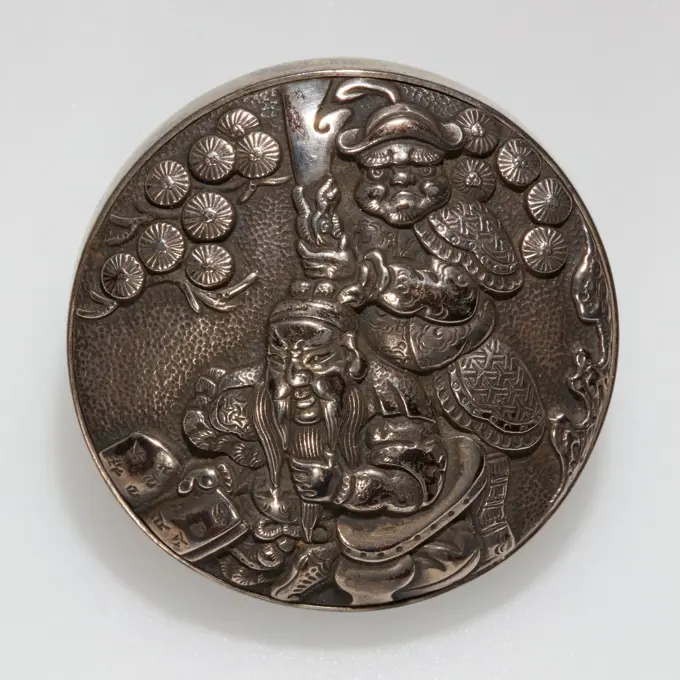
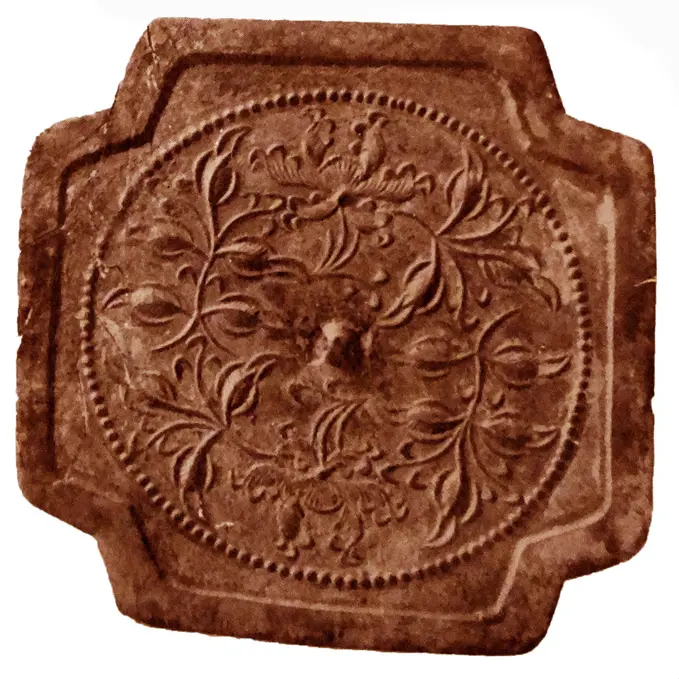
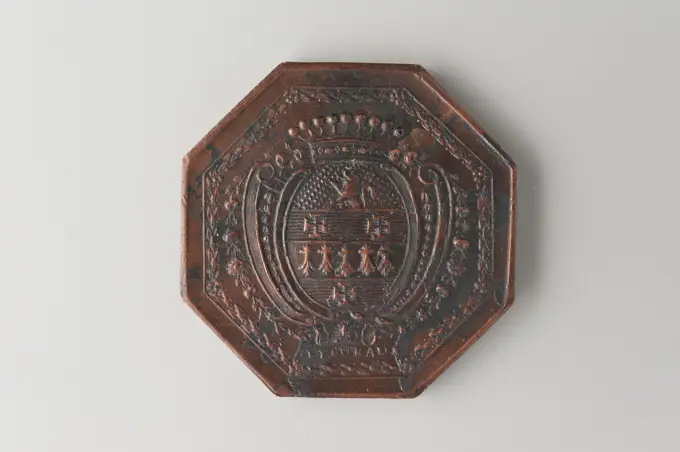
Antique-style plates and disks featuring intricate designs, including floral and animal motifs, captured in rich bronze and gold tones.

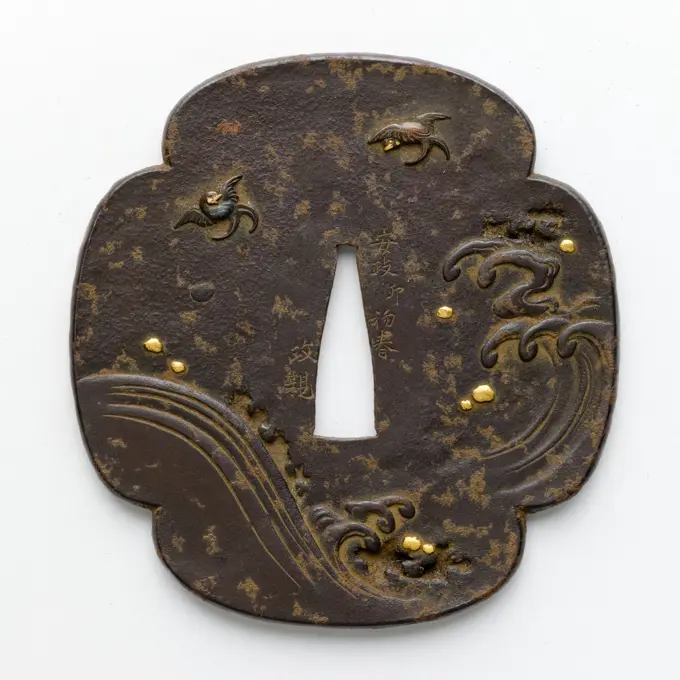
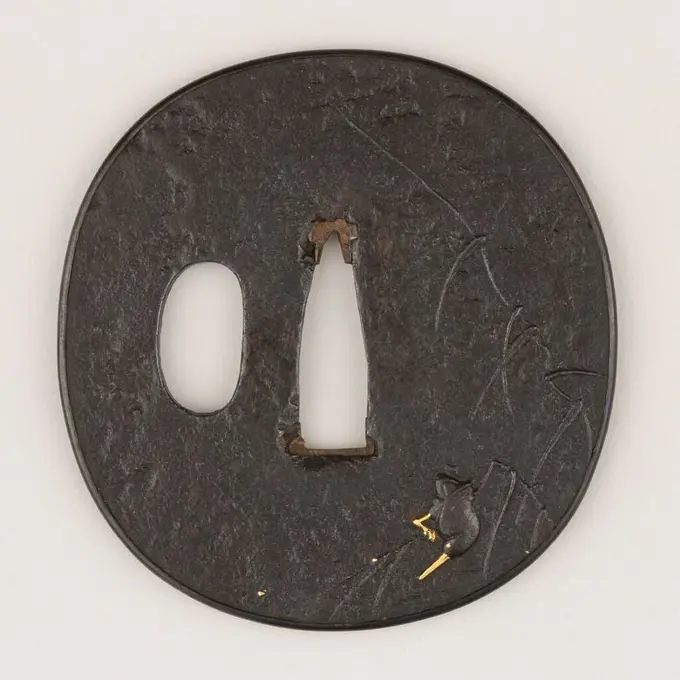
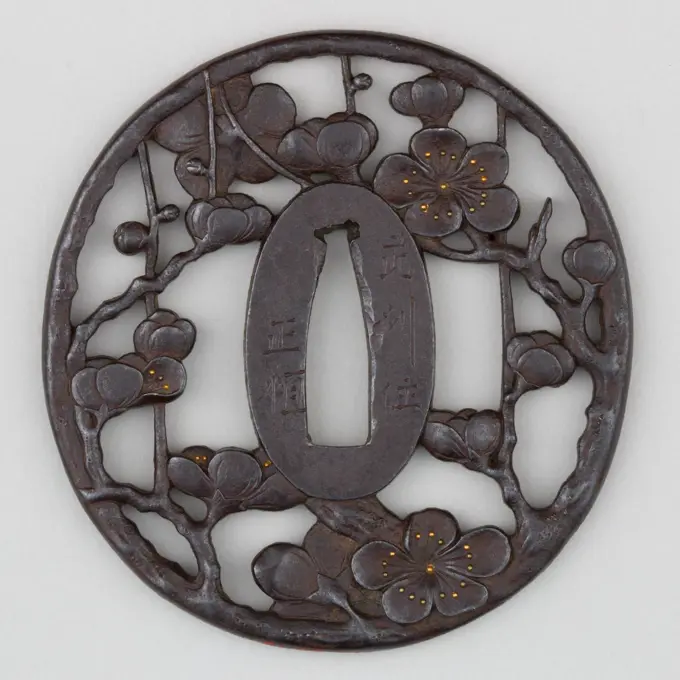
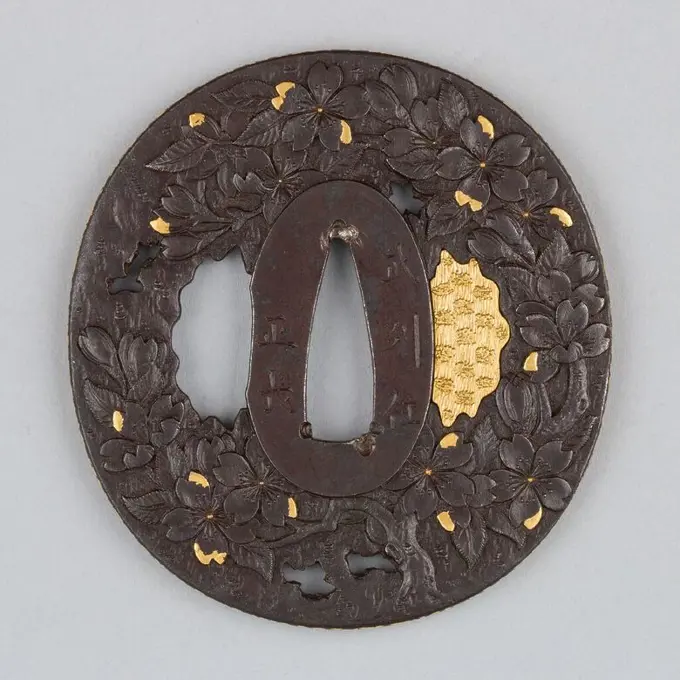
Hand guard, anonymous, 1600 - 1900 Oval tsuba in the shape of a frog with silver eyes and a copper tongue; The ryo-hitsu are filled with gold, which is processed like the iron (Ishime surface). Japan iron (metal). gold (metal). silver (metal). copper (metal) Oval tsuba in the shape of a frog with silver eyes and a copper tongue; The ryo-hitsu are filled with gold, which is processed like the iron (Ishime surface). Japan iron (metal). gold (metal). silver (metal). copper (metal)
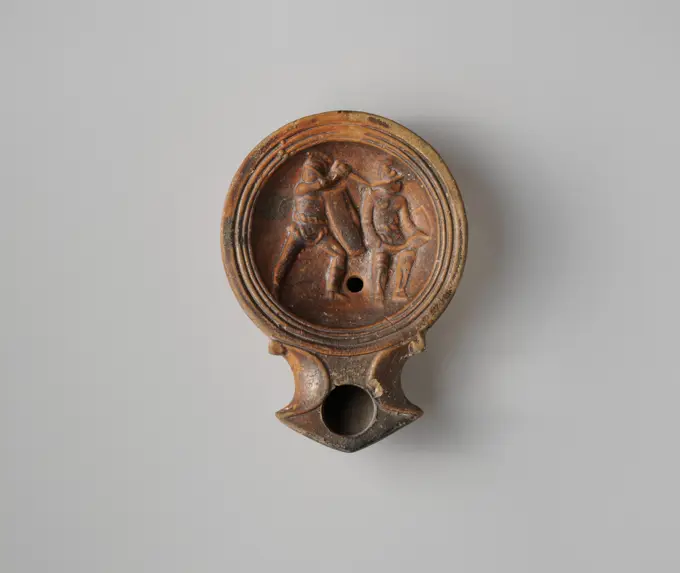
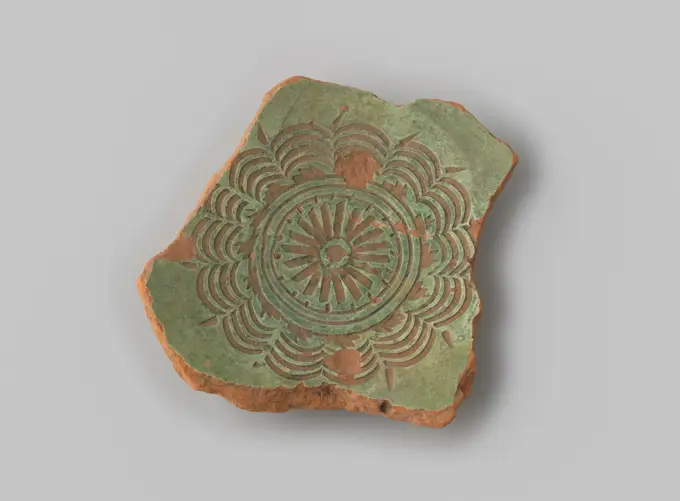
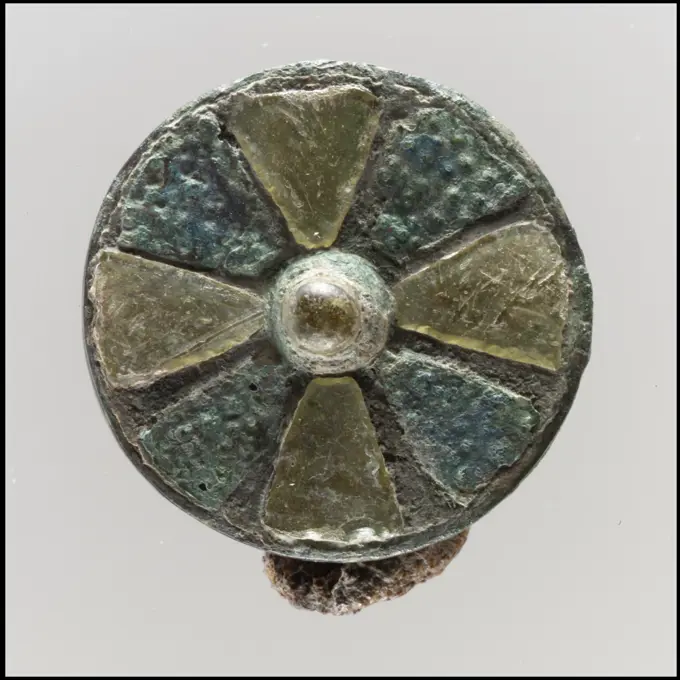
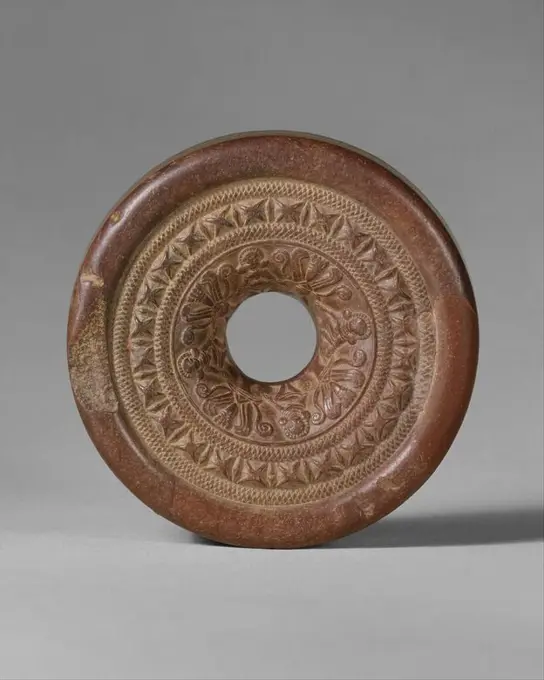
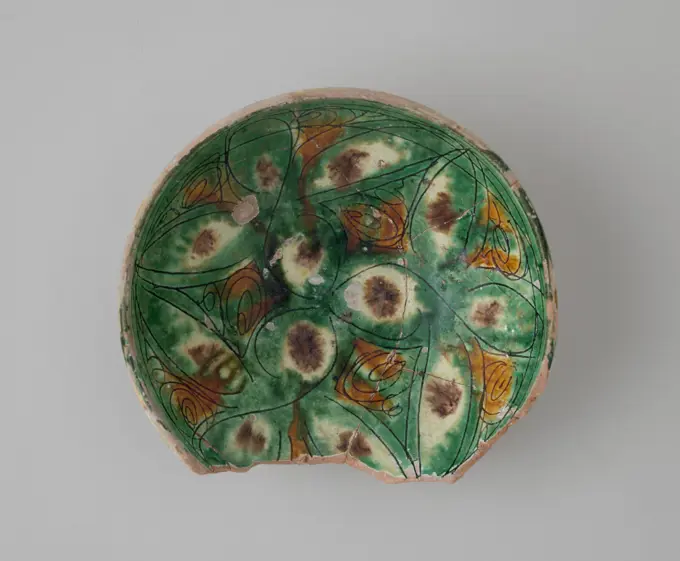
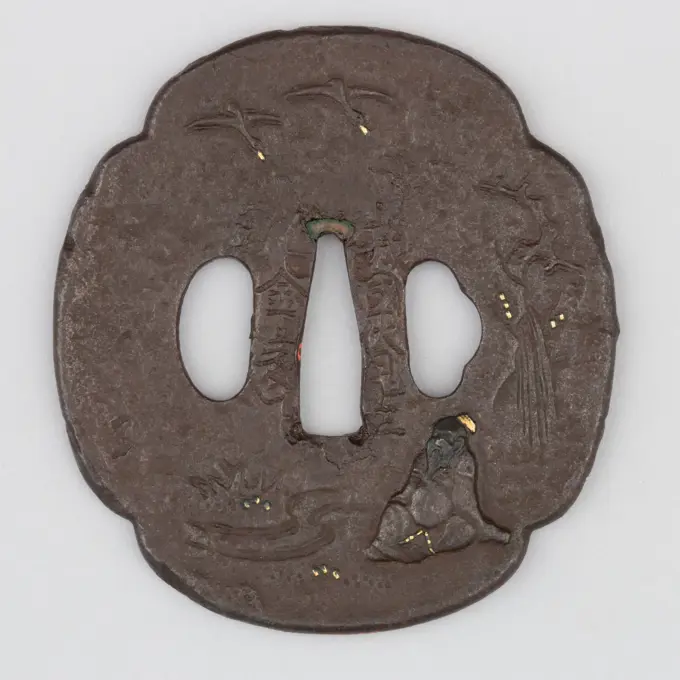
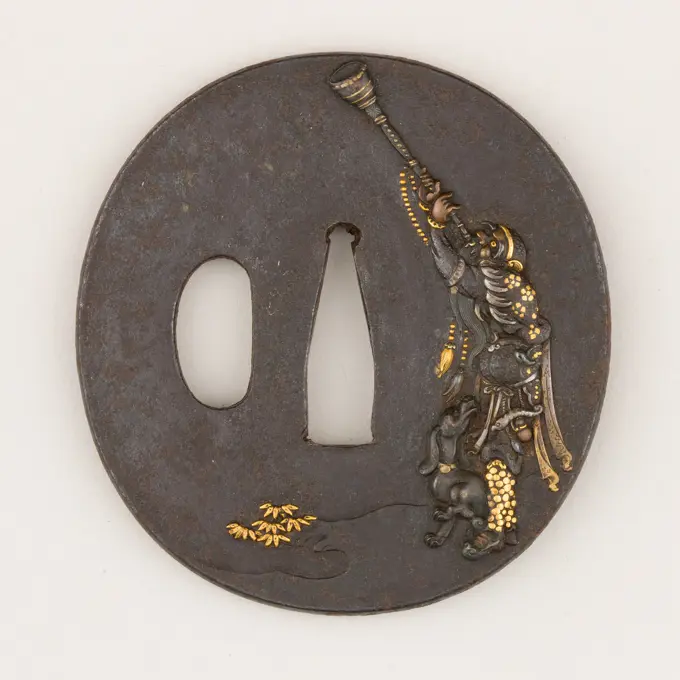
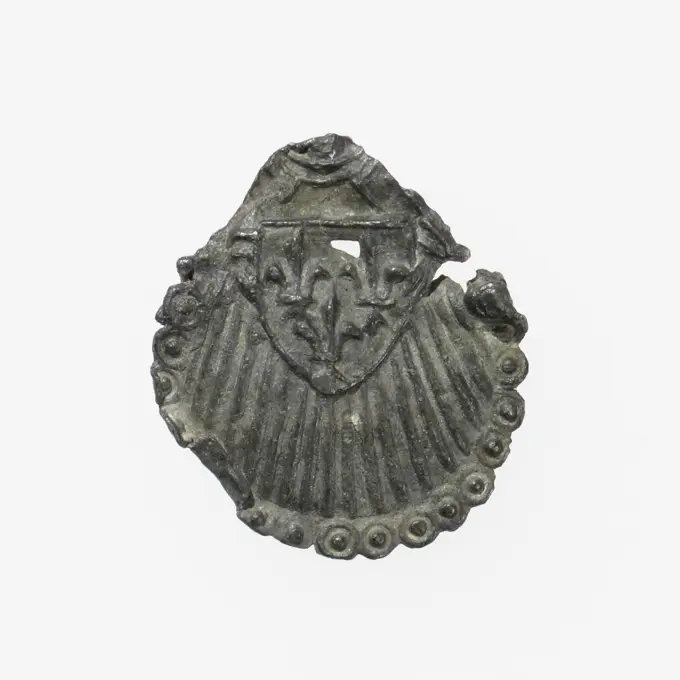
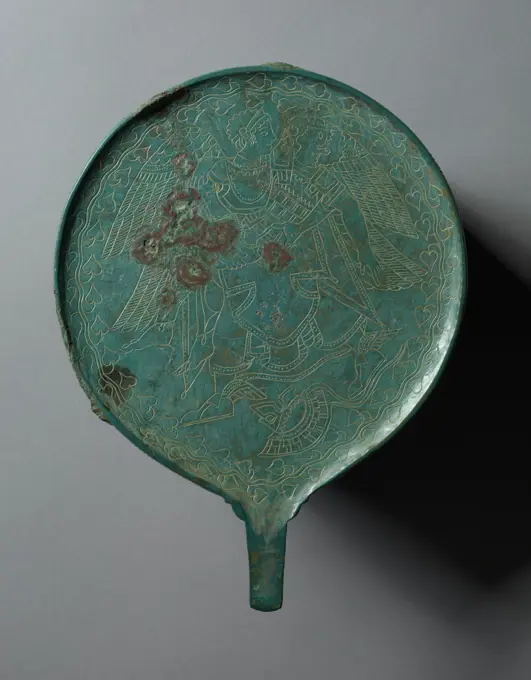
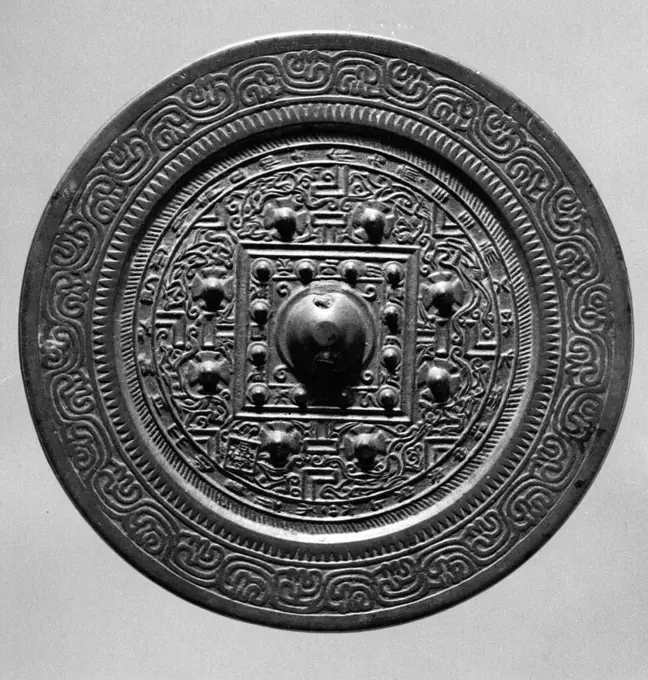
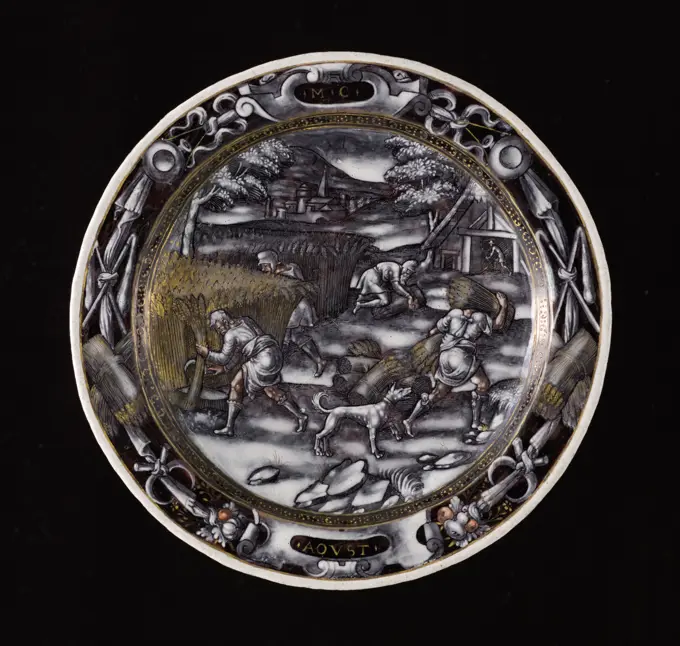
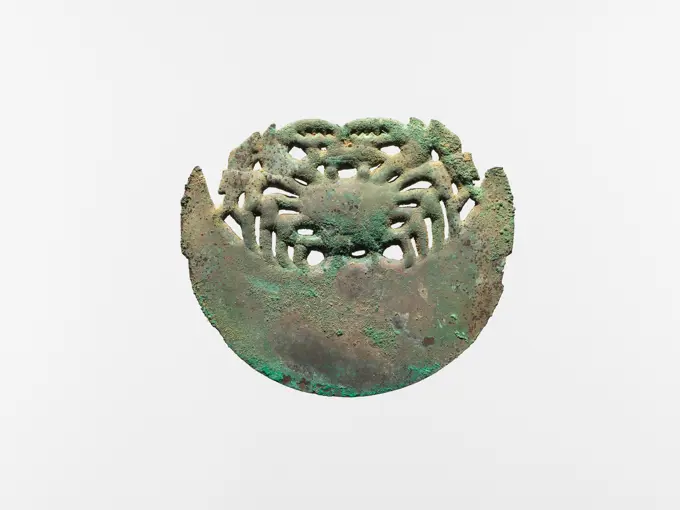
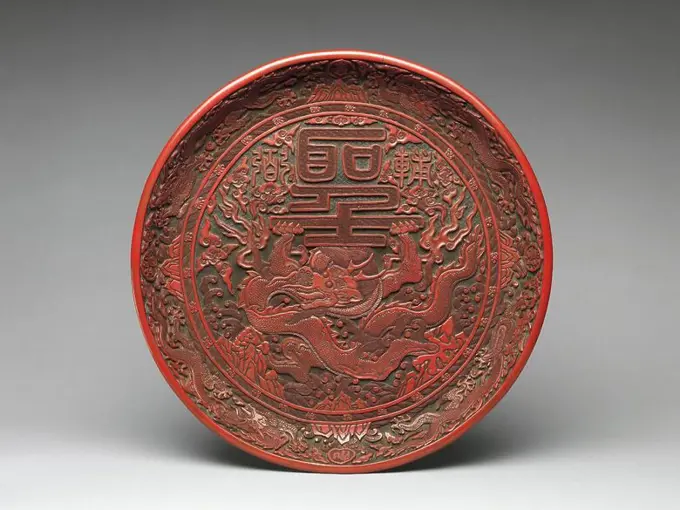
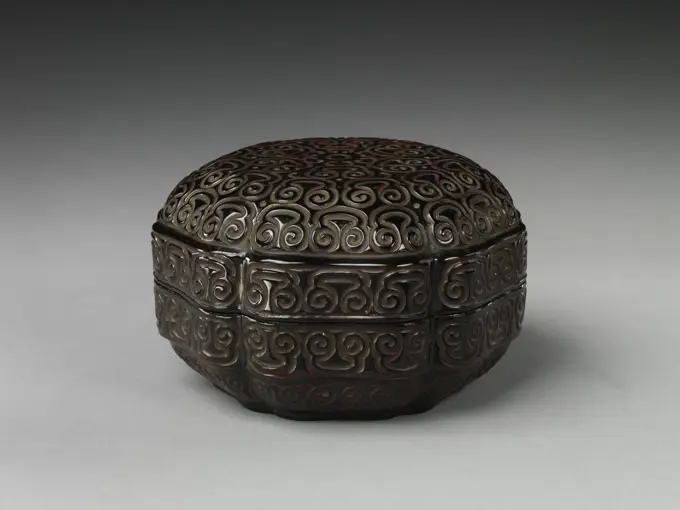
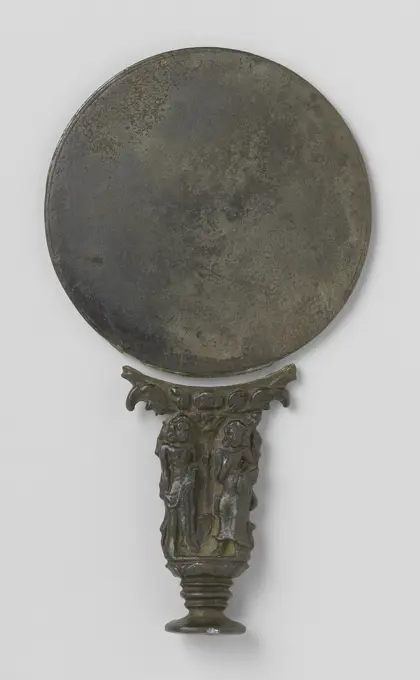
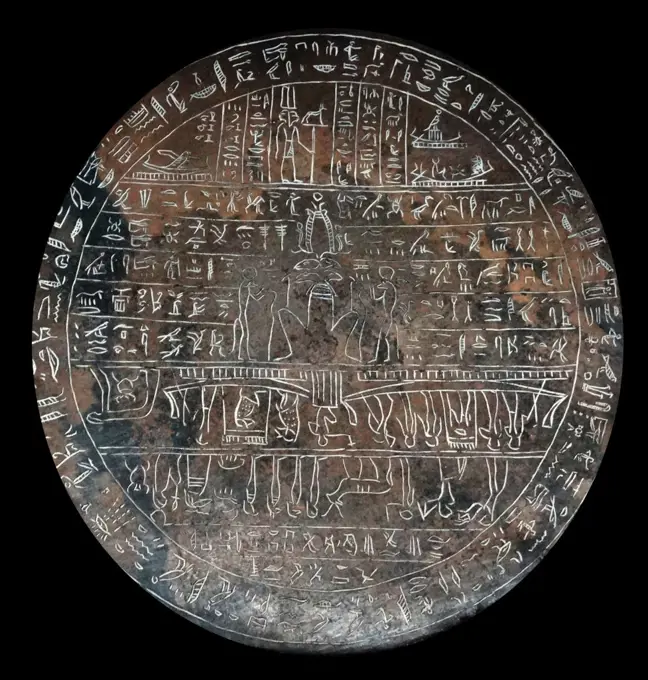
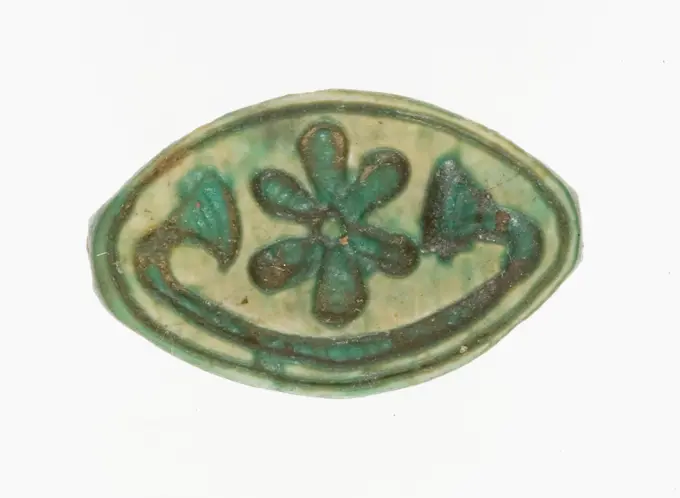
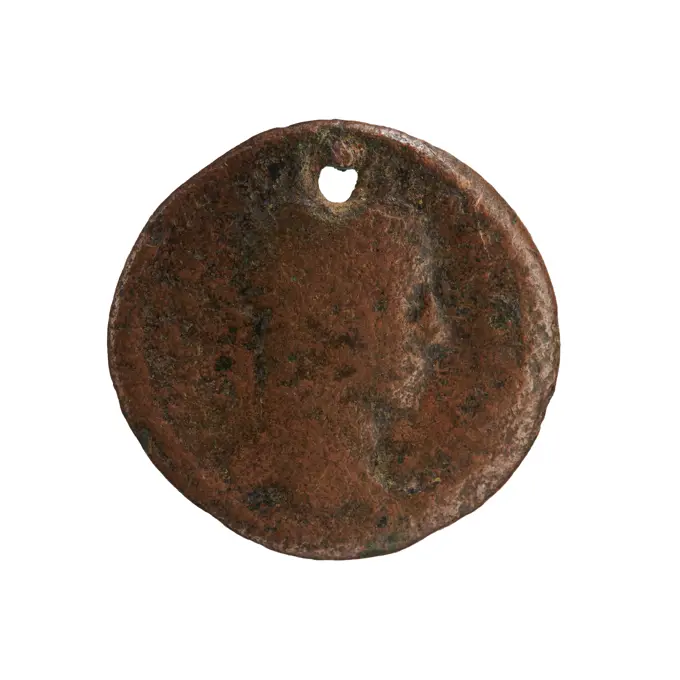
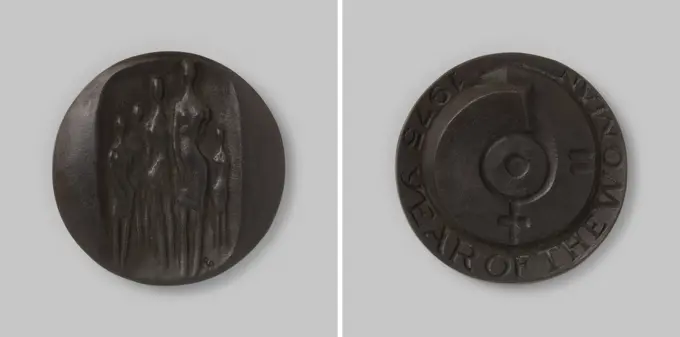
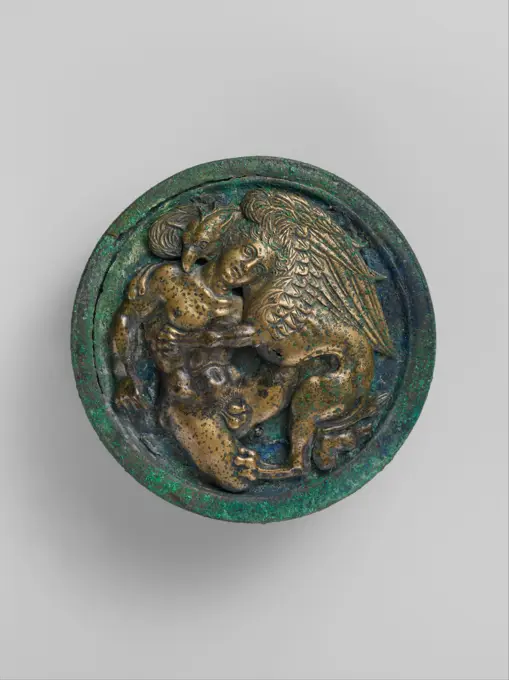
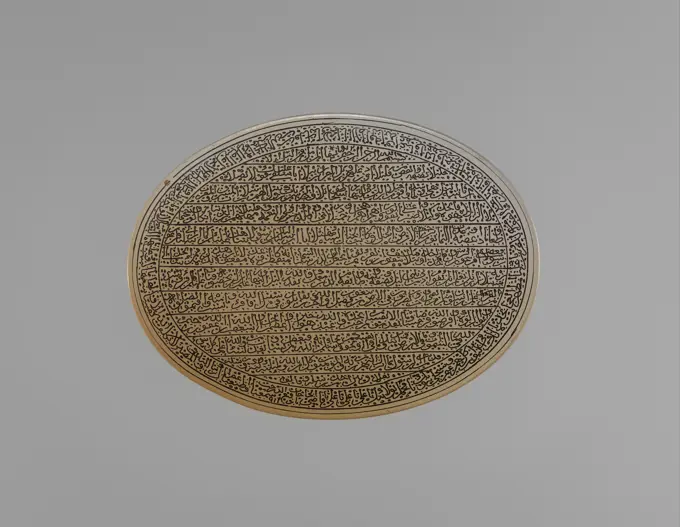
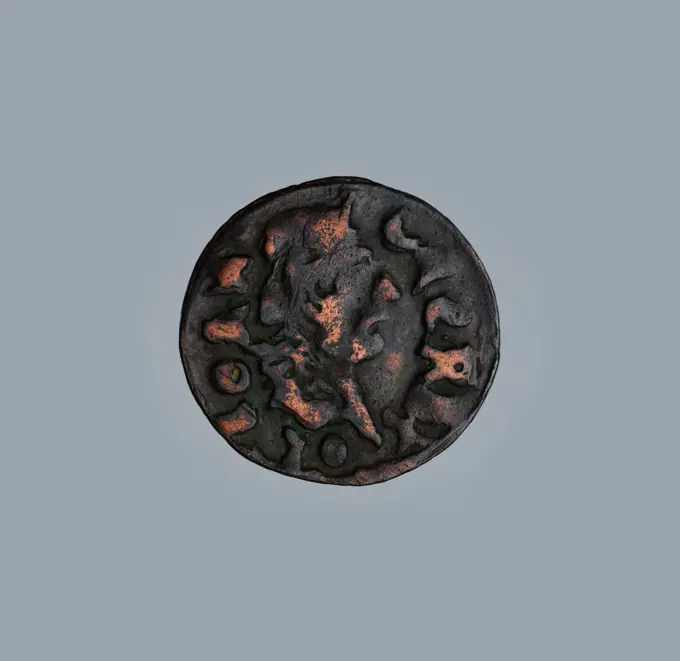
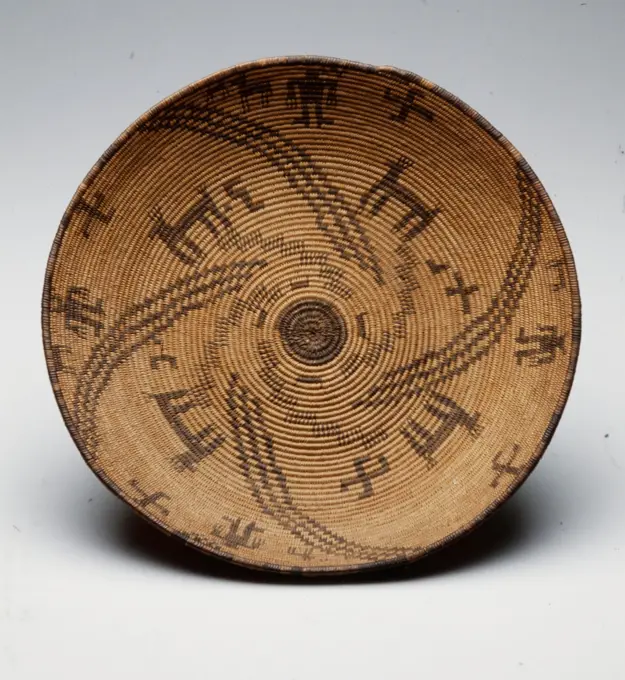
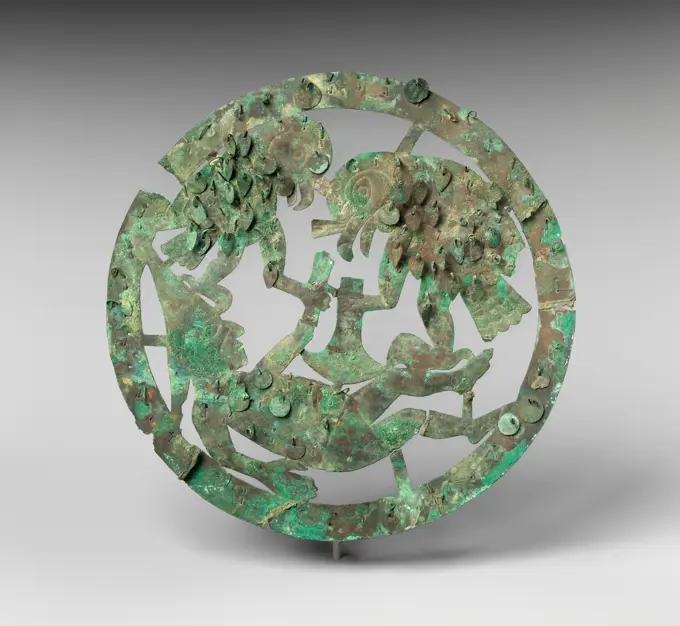
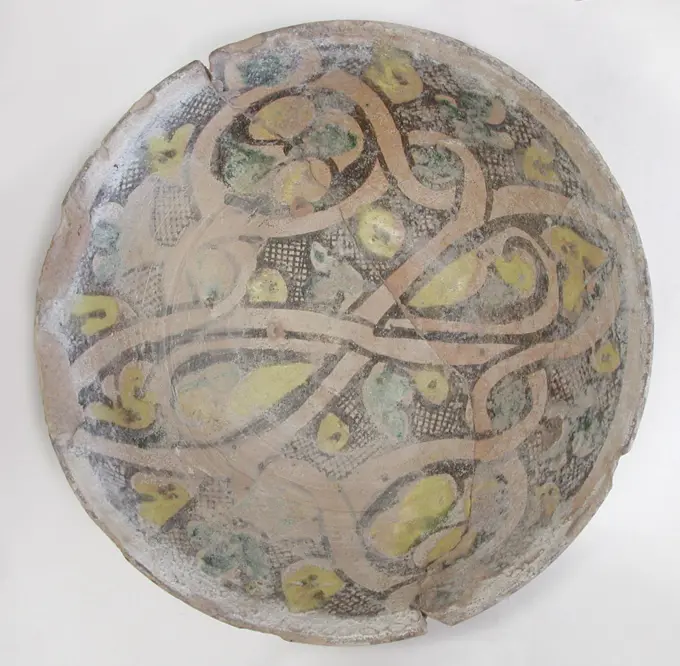
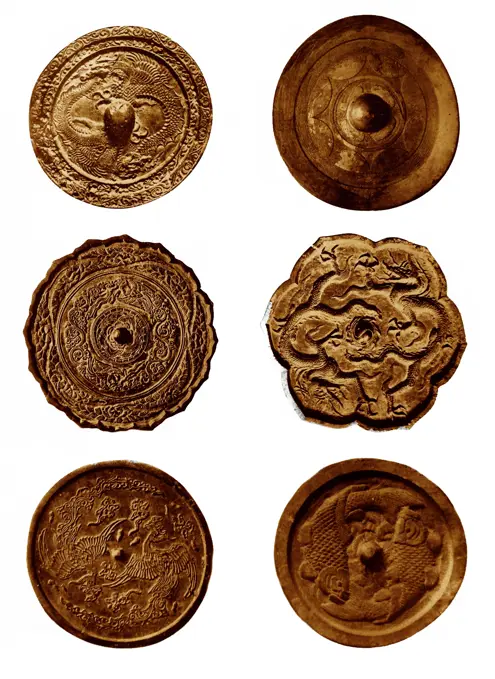
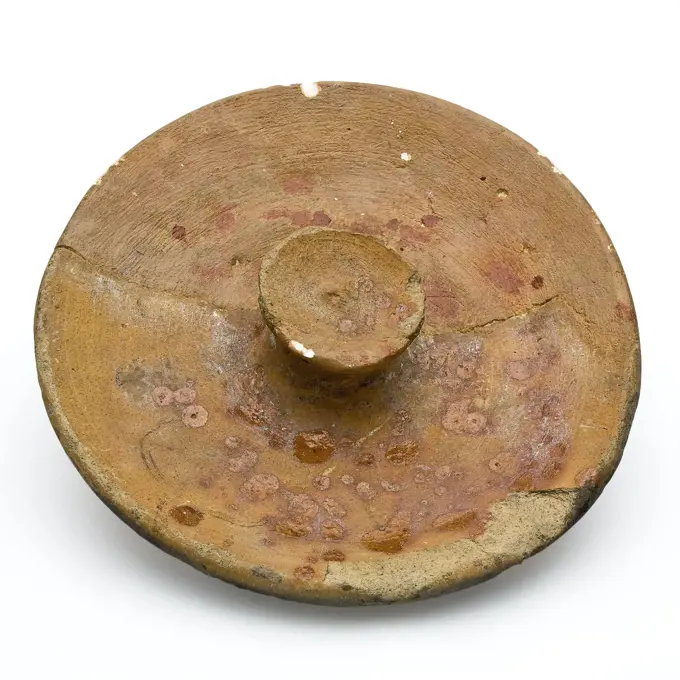
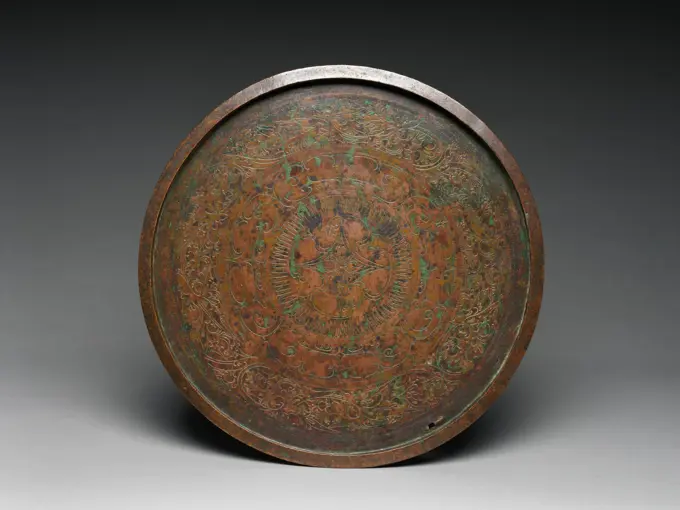
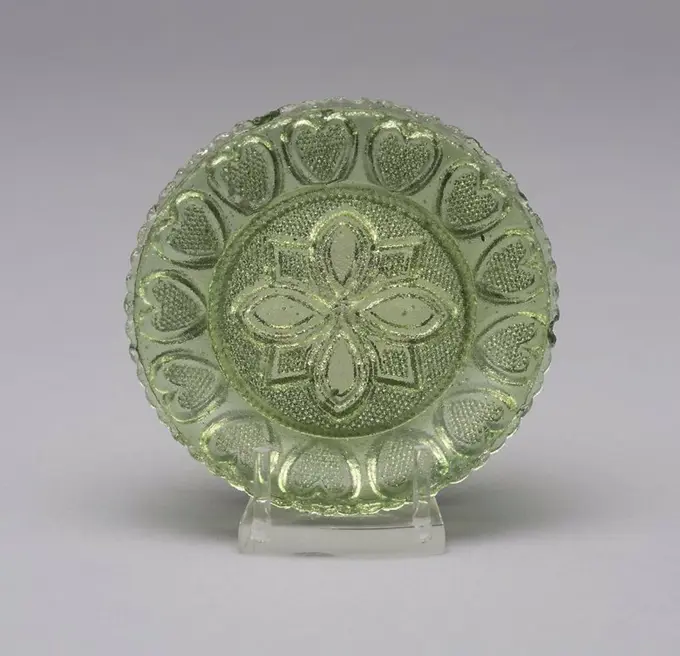
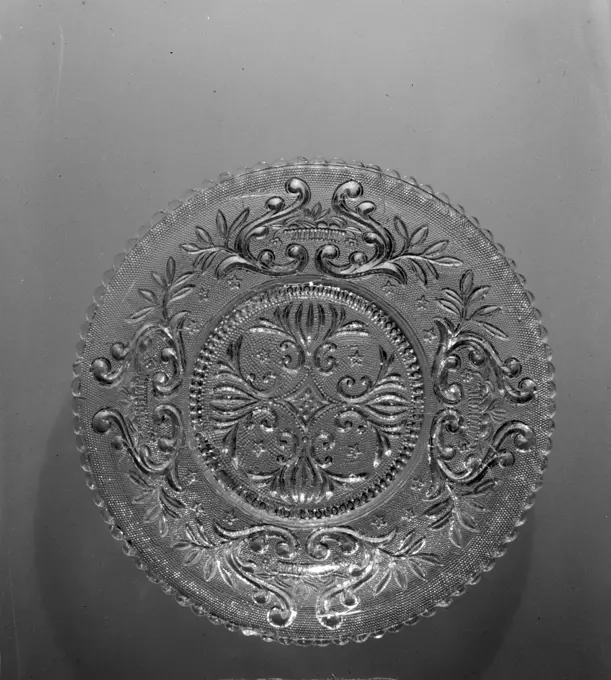
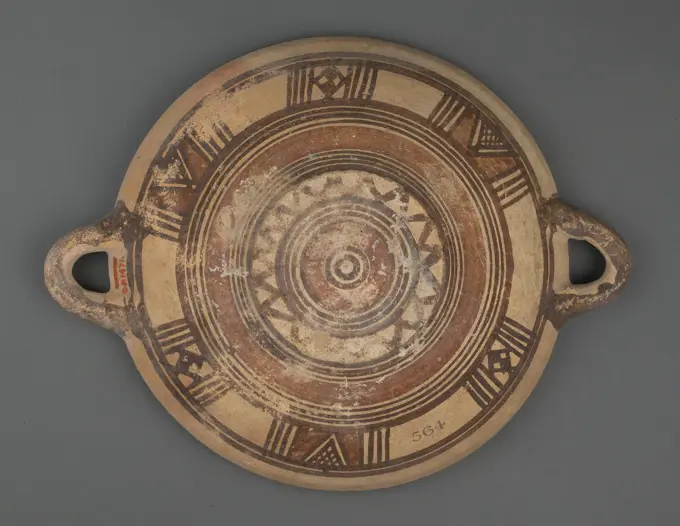
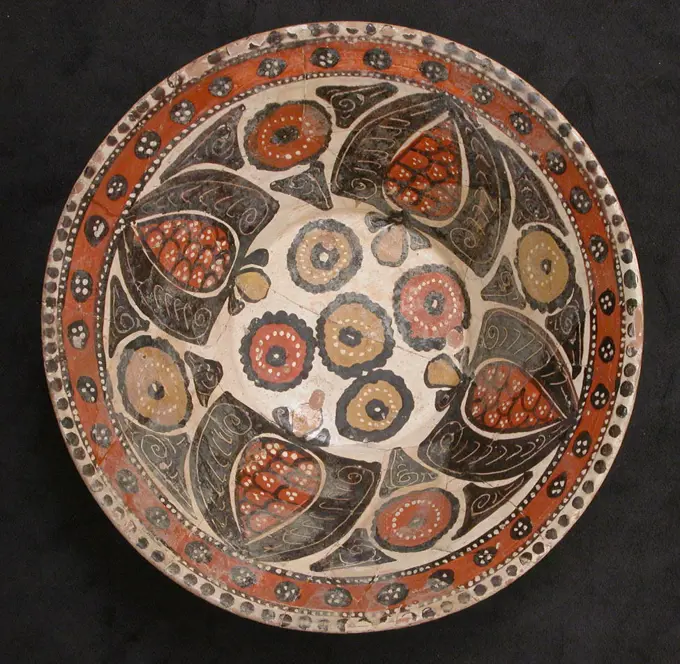
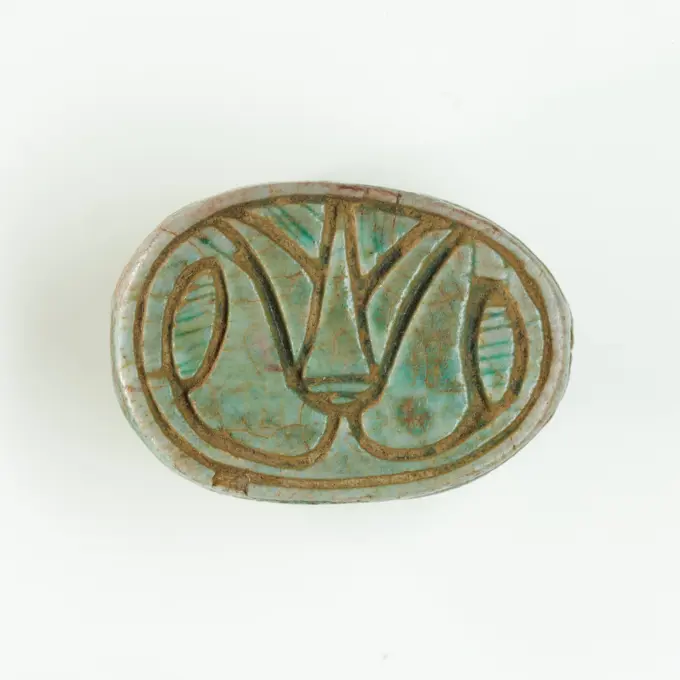
Jar Cover ca. 1800 Mexican. Jar Cover. Mexican. ca. 1800. Tin-glazed earthenware. Made in MexicoCarnavalet Museum, Medals CollectionHalf of desk disc with portrait: emperor otto. OTHO. SecVNDVs. Imperator. AVG (Otto II (955-983), German emperor)Terracotta oil lamp 1st half of 1st century A.D. Roman Loeschcke Type 1A. Mold-made. Deep, concave discus: two gladiators fighting; the one on the left, who lunges forward to right but with head turned back left over his right shoulder, wearing a crested helmet, holding a large rectangular shield at his left side, and aiming a short sword or dagger in his raised right hand at his opponent; the gladiator on the right faces right, away from his attacker, wearing a crested helmet and greaves, with his curved sword and smaller shield lowered; a single filling hole towards bottom between the gladiators, and a band of lines and grooves on almost horizontal shoulder. Volutes flanking nozzle, with large wick hole. Incised base ring, and flat base.Intact.. Terracotta oil lamp. Roman. 1st half of 1st century A.D.. Terracotta; mold-made. Early Imperial. TerracottasHenri Michel Antoine Chapu. Medal The artist's father. Metal, bronze. November 1861. Museum of Fine Arts of the City of Paris, Petit Palais. 57546-17 Avers, bronze, medal, metal, numismatics, father, profile, portraitExcerpt with red shard, with a flower in sgrafitto technology in green glaze, anonymous, 1200 - 1899  Italy earthenware  Italy earthenwareDeep Dish. Culture: Spanish. Dimensions: Overall: 3 15/16 × 19 3/16 in. (10 × 48.7 cm). Date: ca. 1430. Museum: Metropolitan Museum of Art, New York, USA.Square shield;  k. 18th century (1791-00-00-1800-00-00);Hexagonal box with inverted corners. Culture: China. Dimensions: Diam. 7 3/16 in.(18.3 cm); H. 4 3/8 in. (11 cm). Date: 14th-15th century. Museum: Metropolitan Museum of Art, New York, USA.Engraved Gem; 2nd century; Lapis lazuli; 1.8 × 1.4 × 0.3 cm (11,16 × 9,16 × 1,8 in.)Disk Brooch 6th century Frankish Garnets, worked in the cloisonné technique, featured prominently in the luxury jewelry of the Franks. Jewelers would solder small compartments arranged in geometric patterns onto the surface of a metal disk. In those cells, or cloisons, they would place a textured piece of gold foil, which would show through the thin translucent garnet that would then be set on top.. Disk Brooch 465584 Frankish, Disk Brooch, 6th century, Copper alloy cloisons, side and back; glass and patterned copper alloy, Overall: 1 3/8 x 13/16 in. (3.5 x 2 cm). The Metropolitan Museum of Art, New York. Gift of J. Pierpont Morgan, 1917 (17.193.259)Bronze mirror ca. 350-300 B.C. Etruscan At base, man-boar, one of Odysseus' men. Bronze mirror 248154Account token with circles, XIV-XVe centuries Anonymous. "Account token with circles, XIV-XVe centuries". Copper.Ring Stone. Culture: North India. Dimensions: Diam. 2 5/16 in. (5.9 cm). Date: 1st-2nd century B.C..Ring stones, richly decorated with raised reliefs of female figures typically alternating with plant forms and other auspicious motifs, represent an enigmatic category of early Indian sculpture. Both the women and the flowering and fruit-bearing trees are presumably associated with fecundity. Such ring stones may have functioned as jewelers' molds, with malleable gold sheet being hammered into the form. Here, the miniature carving shows affinities with Near Eastern seals and early Greek mold-made ceramics, supporting this theory. The ear ornaments worn by the figures are well known in this period, especially in ivory. Museum: Metropolitan Museum of Art, New York, USA.Tsuba. Signed: Masachika; Yasuchika School of Tsuchiya (Nara school), Japan. Copper inlaid, gold, 1855. Paris, Cernuschi museum. Assessment, armaments, Asian art, Japanese art, weapon custody, art object, metallic object, armament piece, tsubaTwo Imitation Splashware Bowls 9th-10th century. Two Imitation Splashware Bowls 456211Sword Guard (Tsuba) 18th century Japanese A tsuba is a sword guard and part of a sword mounting. It is mounted between the swords blade and grip to protect the users hands.. Sword Guard (Tsuba) 33395Play fair of yellow -green velvet, embroidered in silver wire and pink silk with a weapon with two -headed eagle and red white heart shield, anonymous, c. 1700 - c. 1720 Play fair of yellow -green velvet, embroidered in silver wire and pink silk with a Habsburgs weapon. Model: flat round bottom around which a wavy raised edge with holes for a drawstring (missing). Equipped with new dark brown lining. Decoration: The 24 bulges or ribs are decorated with stacked ornaments, of leaf or floral motifs filled with servetwork in various techniques, from silver wire. A horizontal line of silver thread runs on three-quarter height. The top is covered with a passion of silver thread. The bottom is circled with a narrow border silver passion within which a weapon with a double -headed eagle under the crown. The eagle carries a heart shield with two red and a white lane. A scepter and a sword in the left-wing claw. Austria (possibly) whole: velvet (fabric weave). lining:. Embroidery: Silver thread.Bronze mirror with a Siren between the mirror and the handle tang. Italy, c. 480 BC.British Museum. London, UK.Bit Boss. Culture: probably Netherlandish. Dimensions: Diam. 3 3/16 in. (8.1 cm); Wt. 2.5 oz. (72 g). Date: first half 17th century.The domed center of this ornamental boss is adorned with radiating ribs in openwork, circled by a rim composed of a frieze of palmettes.This object belongs to a large group of bosses using a series of rims and centers combined in different ways. The exact center of production of these bosses is still unclear. If the motifs used are Italian, the scale of the production and the process of combining a series of rims and center recalls contemporary German practices. Some of them, however, are identical or very similar to bosses seen in several early 17th-century Netherlandish paintings, a likely origin for the manufacture of these objects. Museum: Metropolitan Museum of Art, New York, USA.Compartmented Seal with Birds. Northern Afghanistan, 2000-1500 B.C.. Tools and Equipment. BronzeSword guard (Tsuba) Depicting a Tartar (靼人図鐔) ca. 1615-1868 Japanese This tsuba shows a figure with a hound, playing a trumpet. The garments and instrument identify the person as a Tartar (Japanese: dattan) and Tartars, particularly whilst hunting, were a popular theme in Japanese art in the late 16th and early 17th century. The reverse shows a pine and broad-leaf bamboo (sasa).. Sword guard (Tsuba) Depicting a Tartar (靼人図鐔) 25724Sword Guard (Tsuba) ca. 1615-1868 Japanese A tsuba is a sword guard and part of a sword mounting. It is mounted between the swords blade and grip to protect the users hands.. Sword Guard (Tsuba) 34369Round Plaque. Culture: Vicús. Dimensions: Diam. 3 3/16 in. (8.1 cm). Date: 3rd century B.C.-A.D. 2nd century. Museum: Metropolitan Museum of Art, New York, USA.Bowl 11th-12th century. Bowl. 11th-12th century. Stonepaste; glazed and slip-painted. Attributed to Iran. CeramicsManju netsuke depicting Chinese scholar, c. 1840s, Unknown, 1 11/16 × 1 11/16 × 1 in. (4.29 × 4.29 × 2.54 cm), Metal, Japan, 19th centuryPilgrim's Badge 15th century French. Pilgrim's Badge. French. 15th century. Lead. Metalwork-LeadFinal plate from the A beltNail Plate 15th century German. Nail Plate 468905Mirror with Engraved Scene: Thesan and Memnun (Eos and Memnon), c. 470-460 BC. Italy, Etruscan, 5th Century BC. Bronze; diameter: 14.4 cm (5 11/16 in.); overall: 19.8 cm (7 13/16 in.).Mirror with game board design 1st-2nd century China. Mirror with game board design. China. 1st-2nd century. Bronze. Eastern Han dynasty (25-220). MirrorsSword Guard (Tsuba). Culture: Japanese. Dimensions: H. 2 13/16 in. (7.1 cm); W. 2 11/16 in. (6.8 cm); thickness 3/16 in. (0.5 cm); Wt. 3.5 oz. (99.2 g). Date: 17th century. Museum: Metropolitan Museum of Art, New York, USA.Plaque with Human Head. China. Date: 2500 BC-2000 BC. Dimensions: 4.4 × 8.9 × 0.9 cm (1 3/4 × 3 1/2 × 3/8 in.). Jade. Origin: China. Museum: The Chicago Art Institute, Chicago, USA.Calendar Plate for August (Harvesting). Martial Courteys (France, Limoges, circa 1544-1592). France, Limoges, circa 1565-1575. Furnishings; Serviceware. Grisaille enamel, flesh tones, touches of color, and gold on copperCopper Mace Head 3rd century B.C.-A.D. 2nd century Vicús. Copper Mace Head 315482Crescent Ornament 6th-7th century Moche (Loma Negra). Crescent Ornament. Moche (Loma Negra). 6th-7th century. Copper. Peru. Metal-OrnamentsTray with dragon and Chinese characters. Culture: China. Dimensions: H. 2 in. (5.1 cm); Diam. 14 1/2 in. (36.8 cm). Date: 1522-1566.This tray is one of the finest products of the official workshops of the Jiajing era. It was probably made in the early part of the reign before Daoist imagery began to dominate at court. The dragon in the center holds up the Chinese character sheng, which means "divine" or "imperial majesty." The characters above it (fu on the right and bi on the left) generally signify "to add" or "to support." While they can be used to refer to the emperor's chief ministers, in this case they may refer to the dragon, a well-known symbol of imperial authority. Museum: Metropolitan Museum of Art, New York, USA.Large cup opening rtrac ". GRS covered brown. Song time (). Paris, Muse Cernuschi. Asian art, extreme-East art, Vietnamese art, ceramic, cut, gres, dishesSharf of white -baking earthenware, with a foot ring, on the flat with a painting in blue of a tulip that grows up from the ground up; Below the letters Anno and left and right of the flower 16 and 4 3, on the edge of the shard blue stripes, anonymous, 1600 - 1650  Northern Netherlands earthenware. glaze majolica  Northern Netherlands earthenware. glaze majolicaSword Guard (Tsuba). Culture: Japanese. Dimensions: H. 2 7/8 in. (7.3 cm); W. 2 3/4 in. (7 cm); thickness 3/16 in. (0.5 cm); Wt. 3.2 oz. (90.7 g). Date: 18th century. Museum: Metropolitan Museum of Art, New York, USA.Round Plaque 3rd century B.C.-A.D. 2nd century Vicús. Round Plaque 315580Hexagonal box with inverted corners 14th-15th century China. Hexagonal box with inverted corners. China. 14th-15th century. Carved black lacquer with red layers. early Ming dynasty (1368-1644). LacquerSPIEGEL, Anonymous, 1200 - 1500 Mirror in three parts: mirror, handle and back mirror are cast separately. Handle is processed two -sided, performances of `Asceet` and` Man and Woman '. Indonesia bronze (metal) Mirror in three parts: mirror, handle and back mirror are cast separately. Handle is processed two -sided, performances of `Asceet` and` Man and Woman '. Indonesia bronze (metal)Sword Guard (Tsuba) 17th century Japanese A tsuba is a sword guard and part of a sword mounting. It is mounted between the swords blade and grip to protect the users hands.. Sword Guard (Tsuba) 30074Round Plaque 3rd century B.C.-A.D. 2nd century Vicús. Round Plaque 315516Bone spindle whorl Cypriot ca. 1600-1050 BCE With circles. View more. Bone spindle whorl. Cypriot. ca. 1600-1050 BCE. Bone. Late Bronze AgeBronze Hypocephali inscribed disc, placed beneath the heads of mummies during the Late Period and Ptolemaic era. The texts written on them are taken from spell 162 of the Book of the Dead and were intended to provide life giving heat to ensure the resurrection of the dead. 380-343 BCCowroid Seal Amulet Inscribed with a Decorative Motif ca. 1479-1458 B.C. New Kingdom Most of the amulets found in the foundation deposits of Hatshepsut's funerary temple were scarabs, but a hand full were carved in the shape of a cowrie shell. Like this one, the backs of most of these cowroids have been incised with a decorative pattern that suggests the setting of a swivel ring bezel (see 36.3.46). Others (27.3.180) have also been inscribed with the image of a bolti fish (a tilapia), and two have been carved with the image of a falcon, with its wings outstretched and wearing an atef-crown (27.3.164, 27.3.396).The decoration on the base of this cowroid includes a central rosette and what appears to be a papyrus skiff which may represent the boat that transports the sun across the sky.. Cowroid Seal Amulet Inscribed with a Decorative Motif. ca. 1479-1458 B.C.. Steatite (glazed). New Kingdom. From Egypt, Upper Egypt, Thebes, Deir el-Bahri, Temple of Hatshepsut, Foundation Deposit 9 (I), AS (with a hole); Aleksander Sewer (208-235; Roman emperor 222-235); 231 (231-00-00-231-00-00);Years of the woman 1975, 1975 medal Year of the woman 1975. Bronze cast medal. VZ: 5 Women, dressed in dresses in dresses. KZ: Female symbol that breaks binding, around which Dischanging. Netherlands bronze (metal) castingBronze mirror from Koryo (Goreyo) (Goreyo) dynasty (918-1392).Bowl 12th-13th century. Bowl 452002Military Department Badge N.K.N.PLATO METALIZADO. Location: MUSEO PROVINCIAL. LUGO. SPAIN.Sword Guard (Tsuba). Culture: Japanese. Dimensions: H. 2 3/4 in. (7 cm); W. 2 1/2 in. (6.4 cm); thickness 7/16 in. (1.1 cm); Wt. 4.4 oz. (124.7 g). Date: ca. 1615-1868. Museum: Metropolitan Museum of Art, New York, USA.Engraved Gem. UnknownGilt Button, 1800-1820. Made in Birmingham, maker unknownPierre Roche (1855-1922). "The German submarine". Medal. 1917. Museum of Fine Arts of the City of Paris, Petit Palais. Back, Great War, War 1418, 1914-1918 war, medal, first world war, backSpindle Whorl 10th-early 16th century Mexican. Spindle Whorl 307720Carnavalet museum, medal collectionRound Plaque. Culture: Vicús. Dimensions: Diam. 2 1/16 in. (5.3 cm). Date: 3rd century B.C.-A.D. 2nd century. Museum: Metropolitan Museum of Art, New York, USA.Virgin and Child with Young Saint John the Baptist 16th century After a composition by Francisco Beccerril Spanish The composition featuring the Virgin (whose head is missing) with the Christ child and Saint John the Baptist would have been set on the back side of a silver cross, at the intersection of its two arms. The figural position is a separate element that has been attached to a wreathed backing, in a technique known from other Beccerril works.. Virgin and Child with Young Saint John the Baptist. After a composition by Francisco Beccerril (Spanish (Cuenca), 1494-1572). Spanish, Cuenca. 16th century. Silver, partially gilded. Metalwork-SilverTsuba, Tetsu, Manji tsunagi: a conventional link pattern or diaper of 'Manji' the clock-wise swastika, a symbol of eternal happiness, 1748-50, metalwork, Decorative Arts, TsubaSword Guard (Tsuba) with Plovers in Waves, c. 1615-1868. Japan, possibly Edo period (1615-1868). Iron; diameter: 7 cm (2 3/4 in.).Plate. Culture: German. Dimensions: Overall: 18 1/4 x 3 in. (46.3 x 7.6 cm). Date: late 15th century. Museum: Metropolitan Museum of Art, New York, USA.Commemorative badge of a member of the Academic Sports AssociationSword Guard (Tsuba) 18th century Japanese A tsuba is a sword guard and part of a sword mounting. It is mounted between the swords blade and grip to protect the users hands.. Sword Guard (Tsuba) 34922Sword Guard (Tsuba) late 18th century Kawamura Tsuneshige A tsuba is a sword guard and part of a sword mounting. It is mounted between the swords blade and grip to protect the users hands. The decoration on this example is very well done, being skillfully executed and imaginitive in its design. It can be considered one of Tsuneshige's masterpieces. The Nara school, to which Tsuneshige belonged, is not generally known for the quality of its work, making the high quality of this piece all the more exceptional.. Sword Guard (Tsuba) 35645Panel 14th-15th century. Panel 445127Two-Handled Bowl with Fish. Culture: Italian. Dimensions: Overall: 3 15/16 x 13 1/16 x 11 7/8 in. (10 x 33.2 x 30.2 cm). Date: 1400-1430.With its delicate palette of greens and browns and its bold, almost whimsical design, the style of this dish derives from earlier works associated with Orvieto. Museum: Metropolitan Museum of Art, New York, USA.Neolithic Amulet 2500 B.C-A.D. 700 Neolithic. Neolithic Amulet. Neolithic. 2500 B.C-A.D. 700. Stone. Miscellaneous-StoneBronze lid and upper part of an oil flask 4th century B.C. Praenestine The relief on this elegantly worked roundel depicts a nude youth being attacked by a griffin. It relates to legends, first mentioned by the ancient Greek writer Herodotus, of the people called Arimasps who lived east of the Black Sea.Their land was rich in gold, but the gold was guarded by fierce griffins. The subject became popular during the Hellenistic period, especially for terracottas produced in Tarentum. It is likely that these South Italian models inspired the Central Italian adaptation on this bronze.. Bronze lid and upper part of an oil flask 248464Hypokephalos kapłana Amenhotepa. unknown, authorAmulet 18th century This oval-shaped agate gemstone has been inscribed with verses from the Quran and bears the names of the Prophet Muhammad and his cousin and son-in-law ʿAli, which are written in ghubar or dust-like tiny script. It may have originally been set into a jewel—perhaps a bazuband (armband) or a pendant—and worn on the body as a talisman, where the holy verses would have protected the wearer.. Amulet 458263False coin, crown shilIIng, John II Casimir (1649 1668)Basket, early 20th century, 3 3/4 x 15 3/4 in. (9.53 x 40.01 cm), Plant fibers, United States, 20th centurySword Guard (Tsuba) with Chinese Landscape, c. 1615-1868. Japan, possibly Edo period (1615-1868). Iron; overall: 8.4 x 7.7 cm (3 5/16 x 3 1/16 in.).False Coin, Penny, 1013 1025, Mieszko II (1025 1031)Bowl with flaming solar disk design late 14th-15th century North-central Thailand, Sukhothai kilns This bowl with a flaming solar-disk symbol at the center of its interior, often termed a chakra (Skt: wheel, associated with the Buddhas teachings), is a classic product of the earliest glazed ceramic industry in Thailand, This industry emerged in the course of the 14th century, as witnessed by the Turiang shipwreck located of the east coast of Malaysia and dated to the 1370s. Later shipwreck cargoes demonstrate that the Sukhothai kilns remained active well into the 15th century.. Bowl with flaming solar disk design. North-central Thailand, Sukhothai kilns. late 14th-15th century. Stoneware with iron-brown underglaze décor. CeramicsDisk 6th-7th century Moche (Loma Negra) The imagery of this disk depicts a Moche warrior sacrificed by two condors. Both condors” are shown in profile; the one on the left raises the victim’s left arm while the on the right wields a crescent knife, known as a tumi. Composed of hammered sheet metal, portions of the background were cut away to create the scene, encircled within a border. Originally, this work was silver in color. Expertly crafted thin layers of silver were added to the surface of the copper sheet substrate. The green color visible today is a result of corrosion and the copper metal’s exposure to the elements over time. Small holes on the perimeter suggest that this disk may have been attached to a ceremonial shield or a ceremonial banner, paraded and displayed in religious rituals. The Moche flourished between A.D. 200 and A.D. 850 on Peru’s north coast, and are well-known for their accomplishments in the visual arts, particularly vividly painted murals and reliefs on mBuffware Bowl late 8th-first half 9th century. Buffware Bowl 449318False coin, bracteate, sieciechSword Guard (Tsuba). Culture: Japanese. Dimensions: H. 2 7/8 in. (7.3 cm); W. 2 5/8 in. (6.7 cm); thickness 3/16 in. (0.5 cm); Wt. 3.9 oz. (110.6 g). Date: mid-18th century. Museum: Metropolitan Museum of Art, New York, USA.Model for a bracket of a book lock with rococo ornament in which flowers are included, anonymous, c. 1750 - c. 1775 The model driven from plate for a mold is equipped with rococo ornament in which flowers are included. Amsterdam copper (metal) The model driven from plate for a mold is equipped with rococo ornament in which flowers are included. Amsterdam copper (metal)Bronze Mirrors from 10th~14th century Koryeo Dynasty, KoreaEarthenware lid with recessed button as handle, red shard, lid closure soil found ceramic earthenware, hand-turned baked Lid red earthenware sunken button some splashed lead glaze on the top. Curved lid with hollow shape Under the knob recessed soul at the bottom archeology Capelle aan den IJssel House at Capelle castle indigenous pottery cooking kitchen storage utensils tableware Soil discovery: canal south side house in Capelle ± 1395-1500 Capelle aan den IJssel 1963.Offering tray (talam) 12th-14th century Indonesia In medieval Javanese Hindu ritual, large metal offering trays were regularly employed for the preparation of ritual utensils and paraphernalia. The term used in Old Javanese is tahas, and they are referred to in modern Javanese and Indonesian as talam. Both variant terms can be sourced to the Tamil word for the same utensil, tattam. Fragmentary bronze trays of this type, together with other metal temple utensils, have been excavated from a mid-10th century shipwreck in the Java Sea in the past decade, affirming their antiquity. The traditions and ritual practices of Central Java (8th to 10th century) were largely preserved in the following centuries in the Hindu-Buddhist centres of East Java, up to the coming of Islam in the 15th century. This offering tray has a pronounced raised rim and engraved designs on the interior. In the center of the décor is a diamond surrounded by bands of decoration beginning with solar radiate prongs, encirKylix ca. 490-480 B.C. Attributed to the Painter of the Paris Gigantomachy. Kylix 255689Cup plate. American; Midwest. Date: 1830-1840. Dimensions: diam. 8.4 cm (3 5/16 in.). Pressed glass. Origin: Midwest. Museum: The Chicago Art Institute, Chicago, USA.Hat 18th century probably British. Hat 98233Bowl 1835-40. Bowl. 1835-40. Lacy pressed glassExcerpt (foot) with red shard, in sgraffito technology is slightly sloppy in the middle within a green circle, resembling iϯs, in the edge of ocher -colored glaze, anonymous, 1200 - 1899  Italy earthenware  Italy earthenwareWooden beermat drink coasterBowl 850-750 B.C. Cypriot. Bowl. Cypriot. 850-750 B.C.. Terracotta. Cypro-Geometric III . VasesKajmany, Elżbieta II (1952 ), 10 cents, Llantrisant; 1996 mennica Llantrisant, Maklouf, Raphael David , Devlin, StuartPanel 14th-15th century. Panel 445117Bowl 10th century. Bowl 452026Coin dated A.H. 366/ A.D. 976. Coin. dated A.H. 366/ A.D. 976. Silver. From Iran, Nishapur. CoinsSALA COLON-ASTROLABIO ARABE. Location: MUSEO NAVAL / MINISTERIO DE MARINA. MADRID. SPAIN.Scarab ca. 1550-1295 B.C. New Kingdom The base of this scarab has been inscribed with a lotus flower and two buds.. Scarab. ca. 1550-1295 B.C.. Steatite (glazed). New Kingdom. From Egypt. Dynasty 18