Ornate Decorative Plates

Antique-style plates and disks featuring intricate designs, including floral and animal motifs, captured in rich bronze and gold tones.

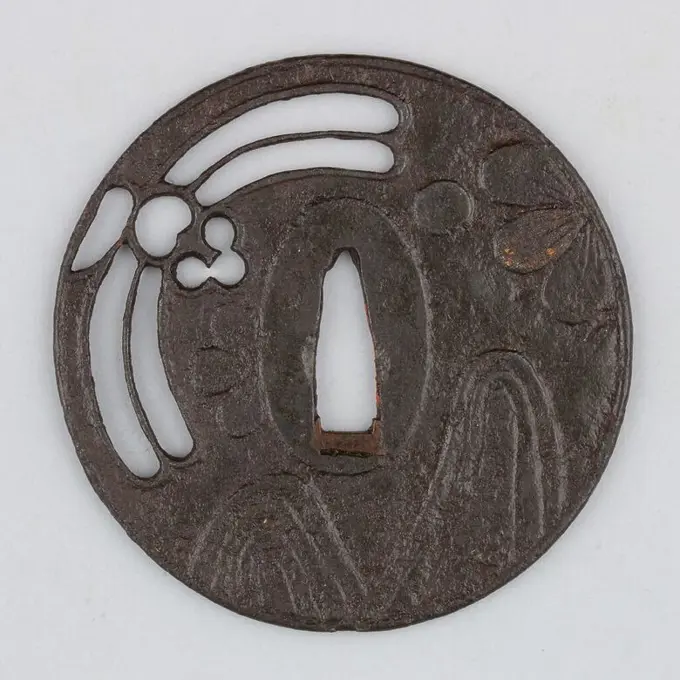
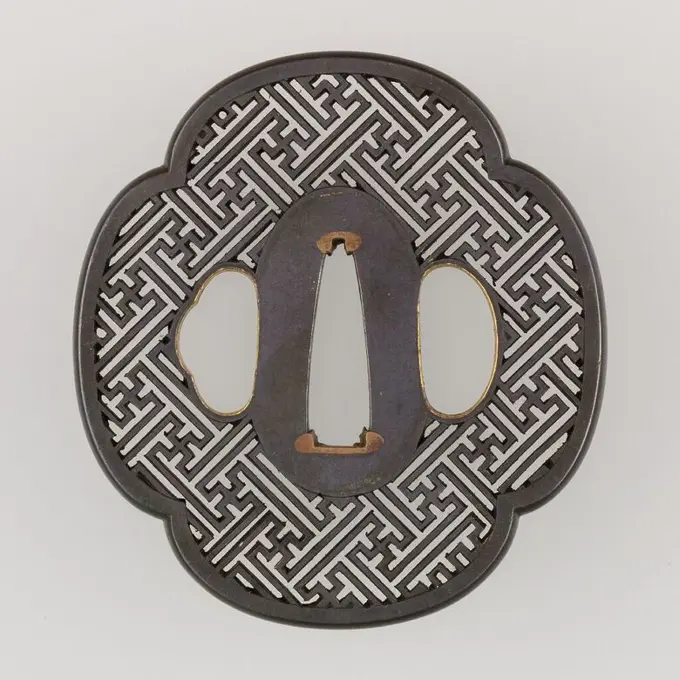
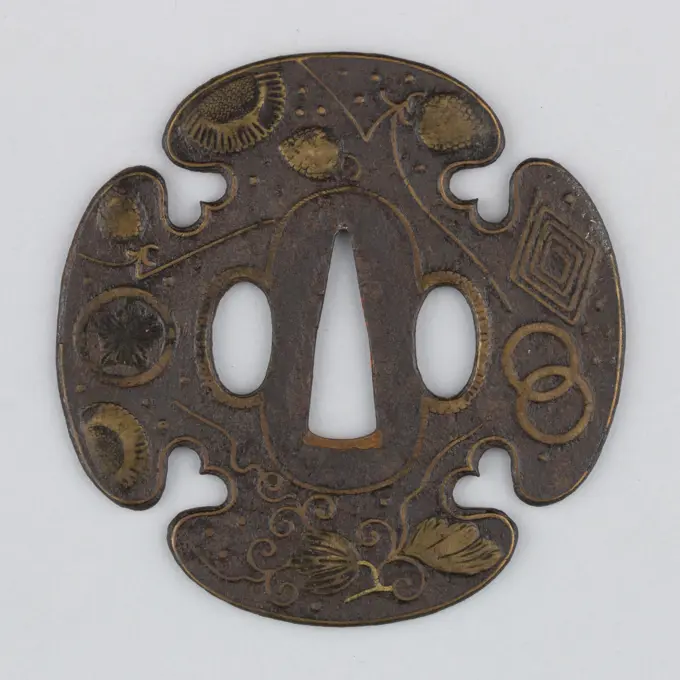
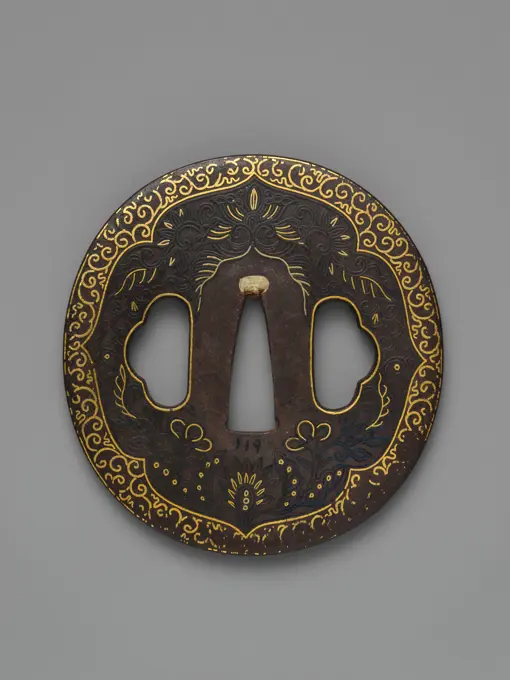
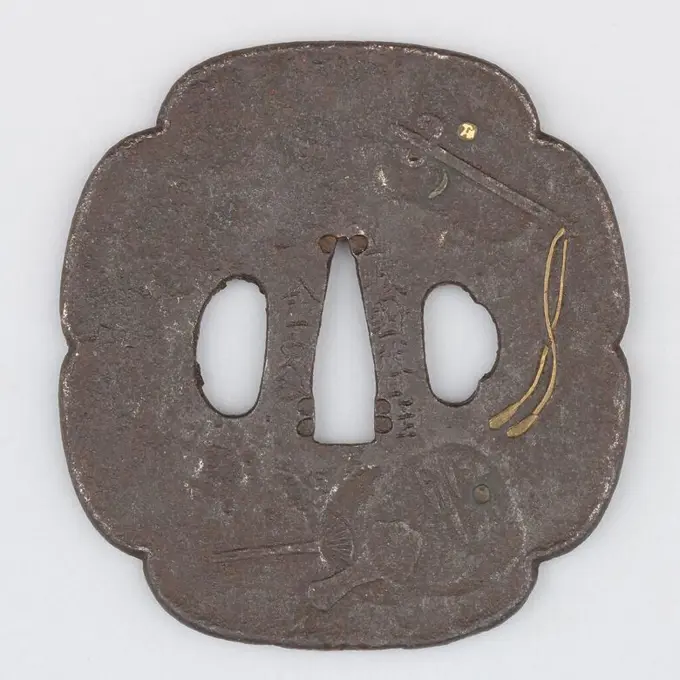
Hand guard, anonymous, 1600 - 1900 Oval tsuba in the shape of a frog with silver eyes and a copper tongue; The ryo-hitsu are filled with gold, which is processed like the iron (Ishime surface). Japan iron (metal). gold (metal). silver (metal). copper (metal) Oval tsuba in the shape of a frog with silver eyes and a copper tongue; The ryo-hitsu are filled with gold, which is processed like the iron (Ishime surface). Japan iron (metal). gold (metal). silver (metal). copper (metal)
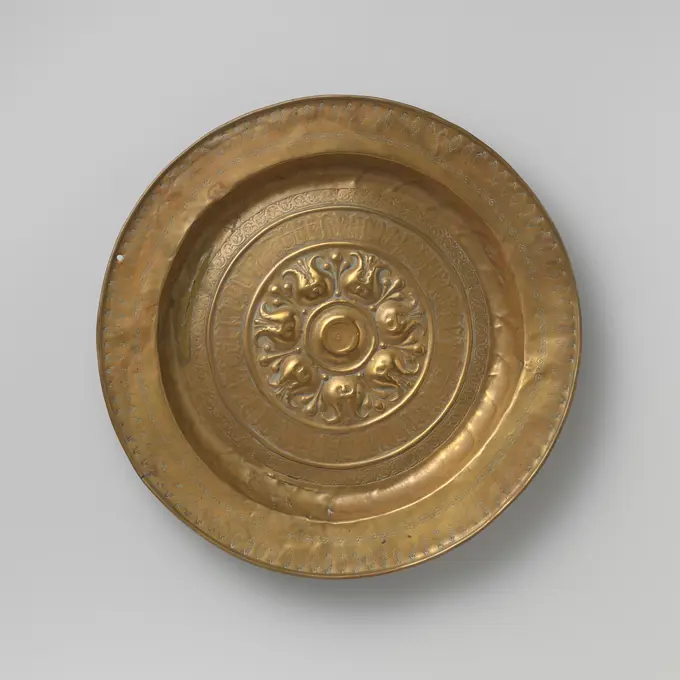
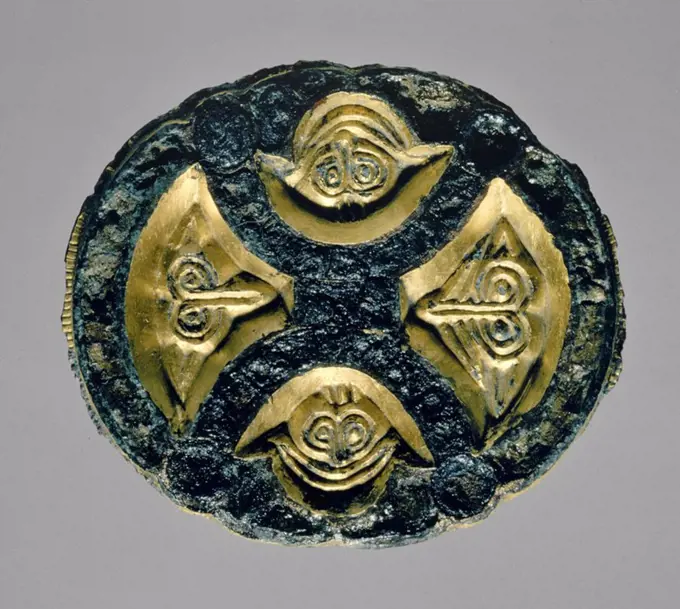
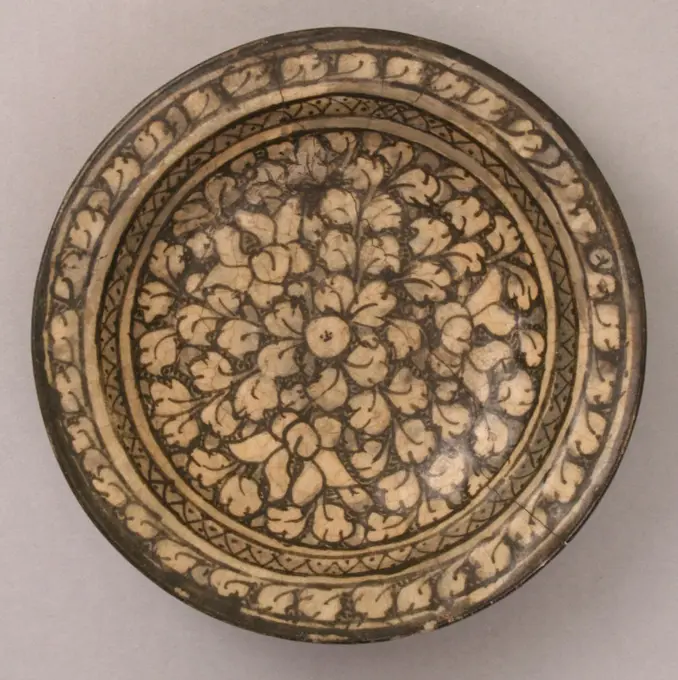
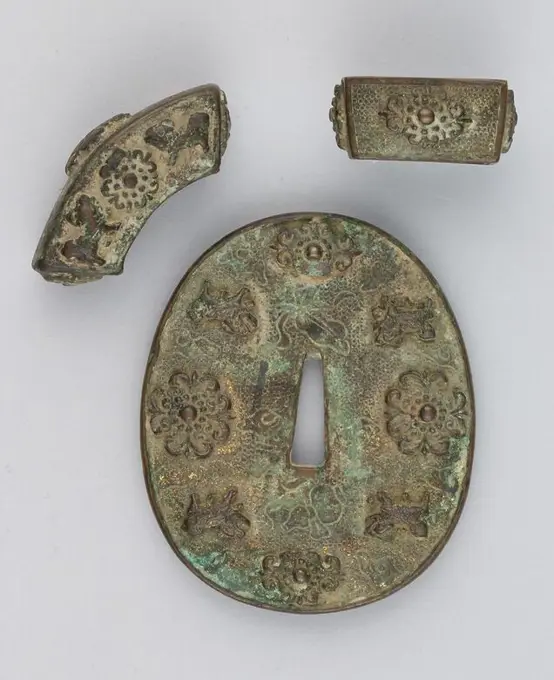
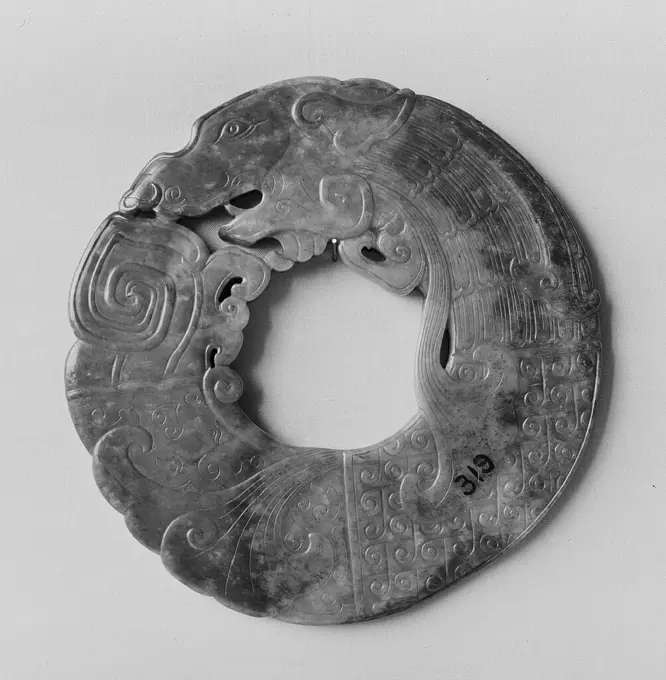
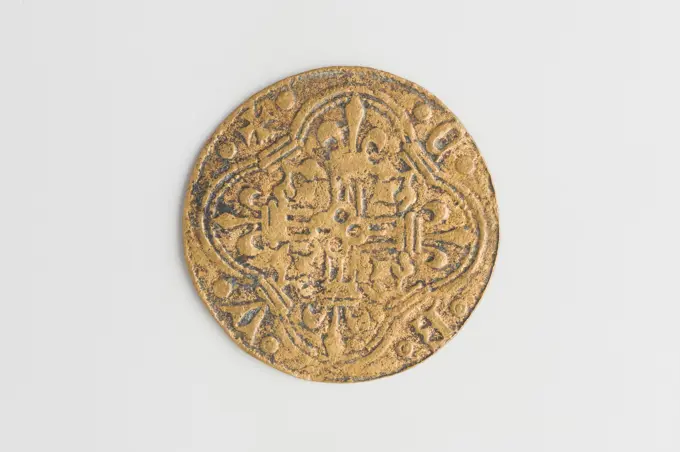
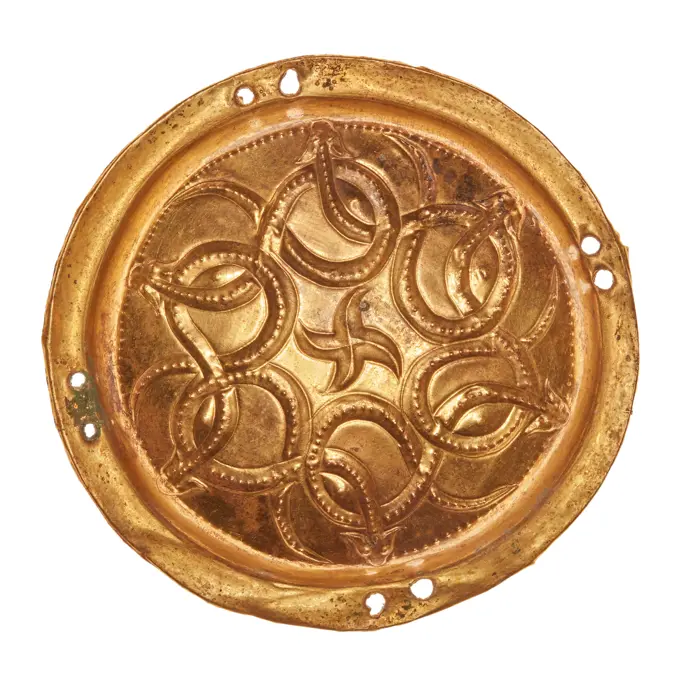
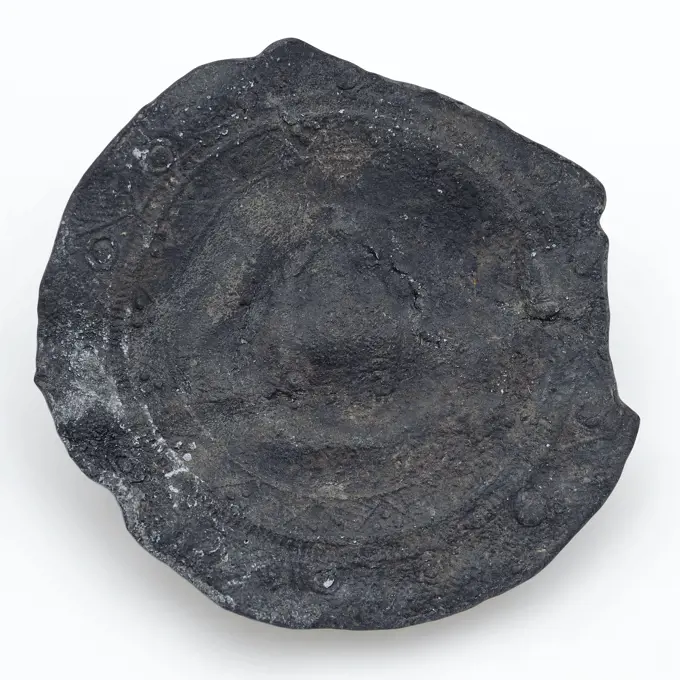
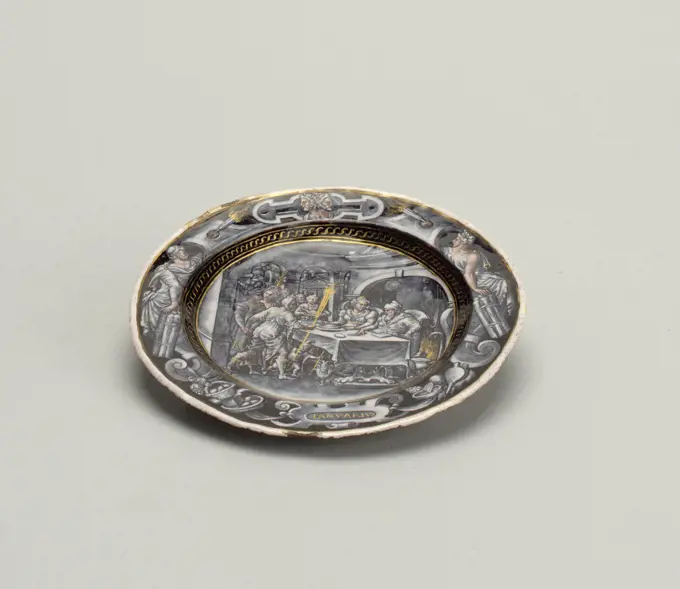
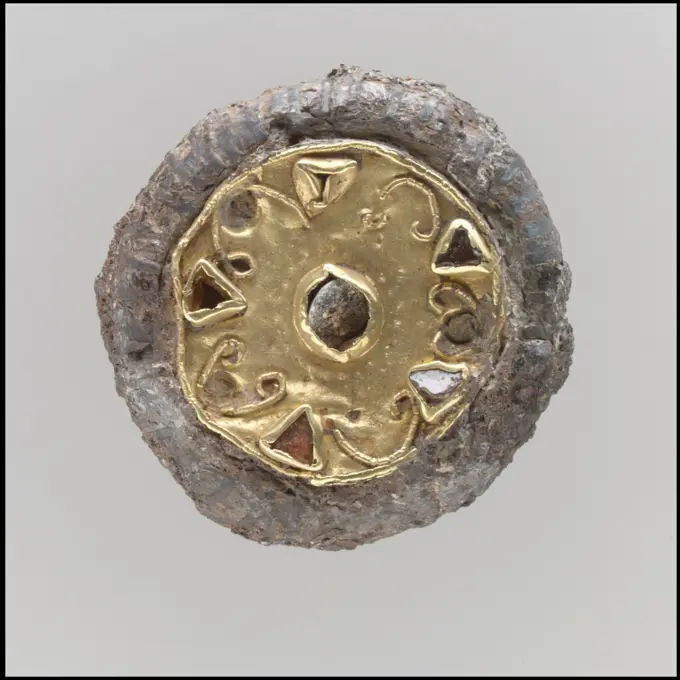
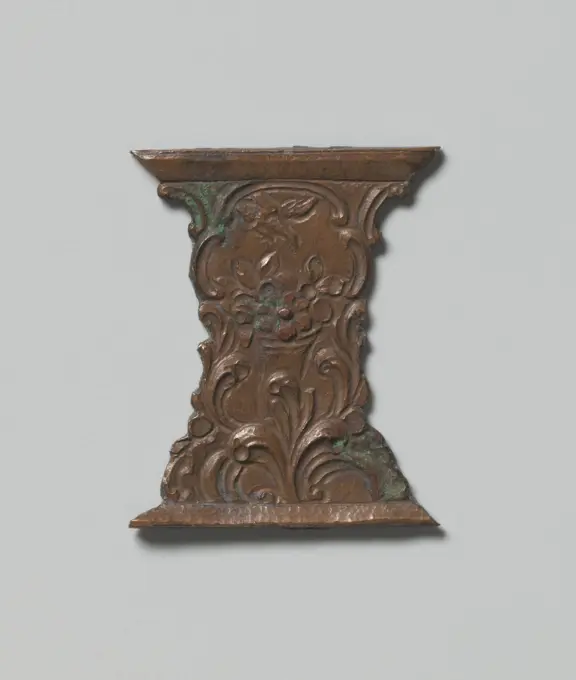
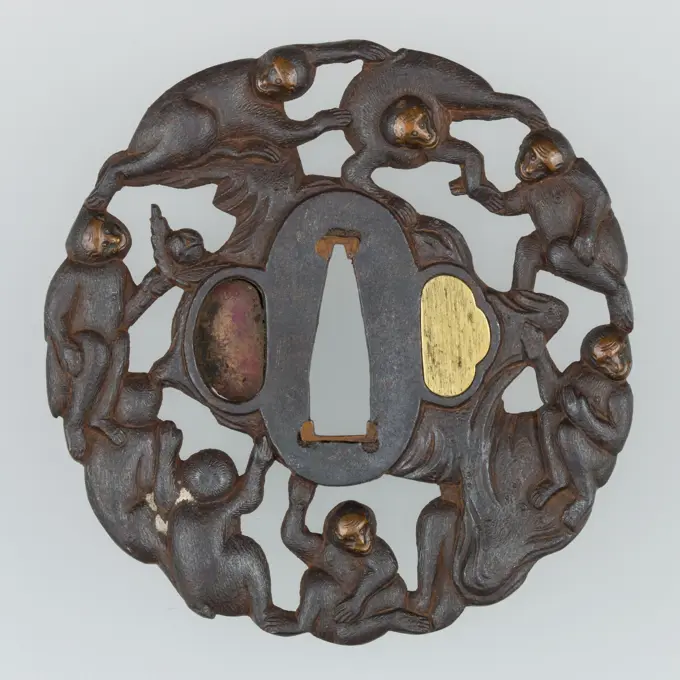
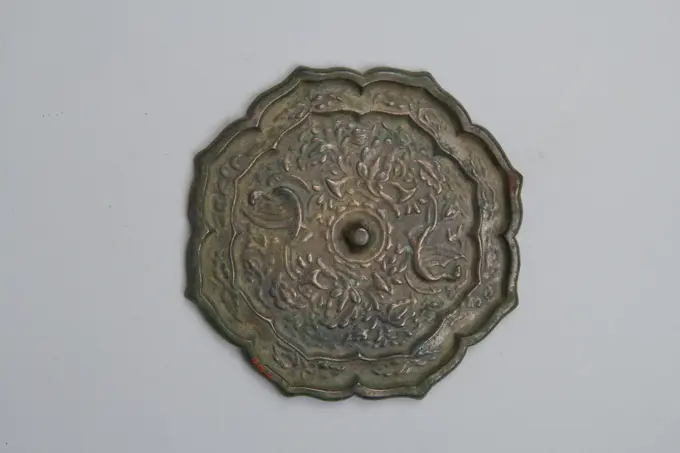
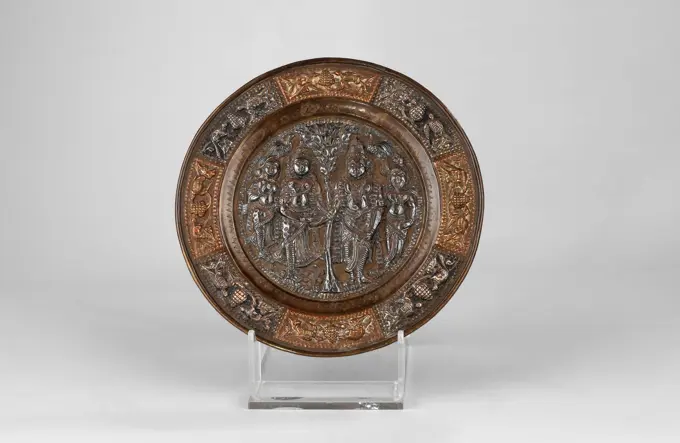
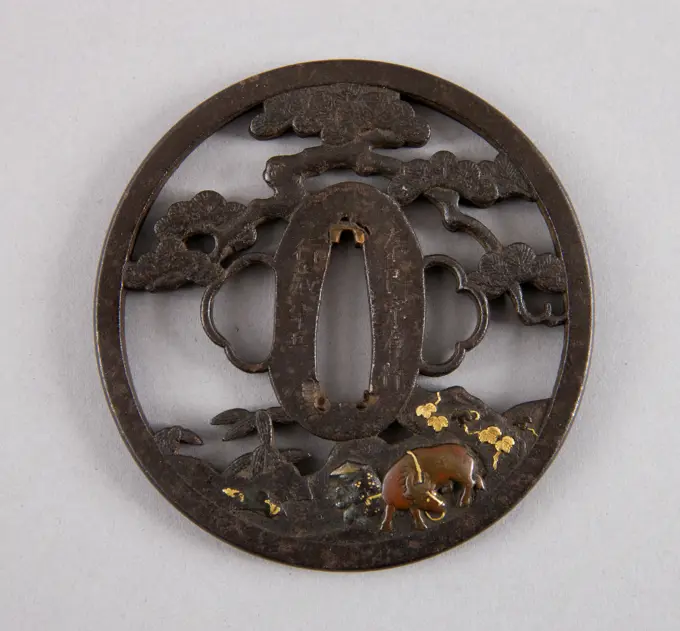
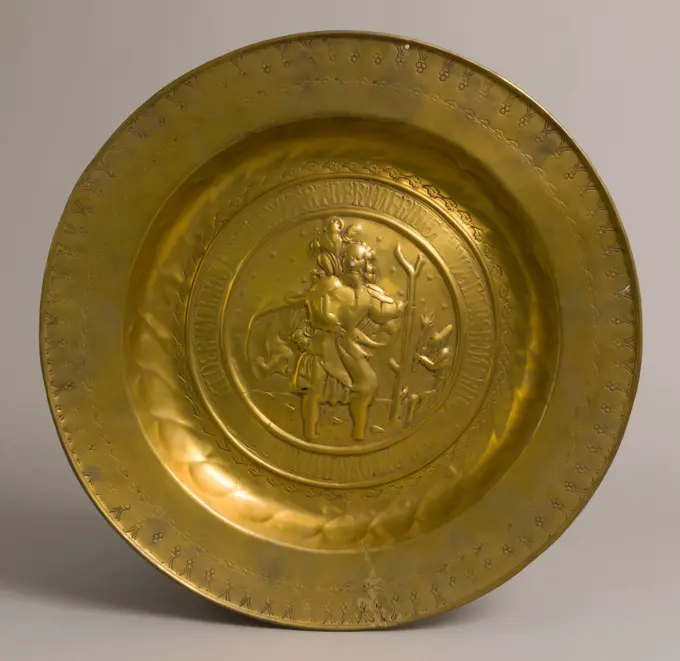
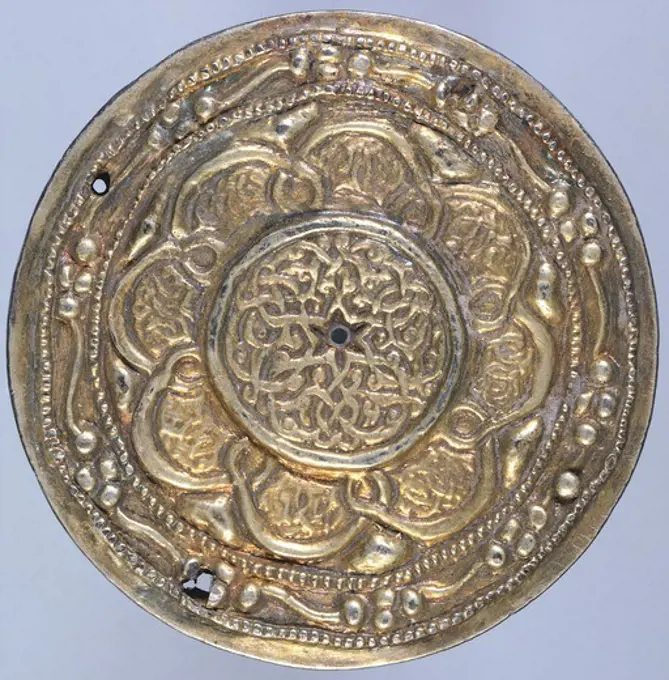
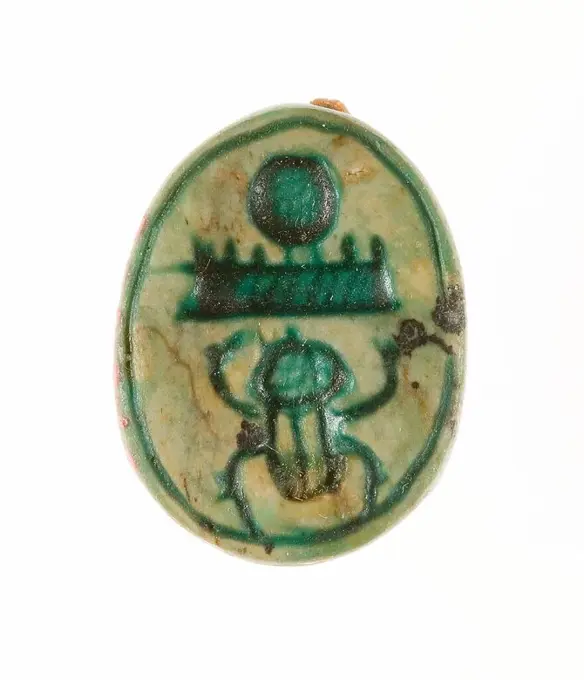
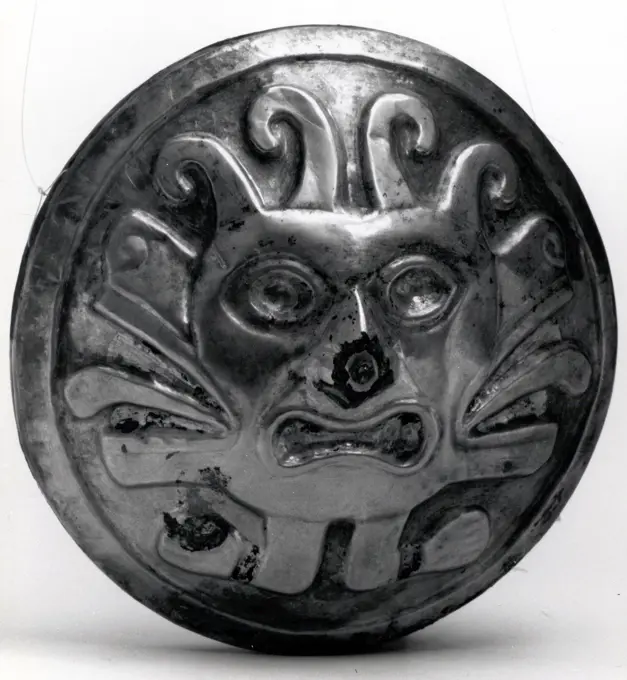
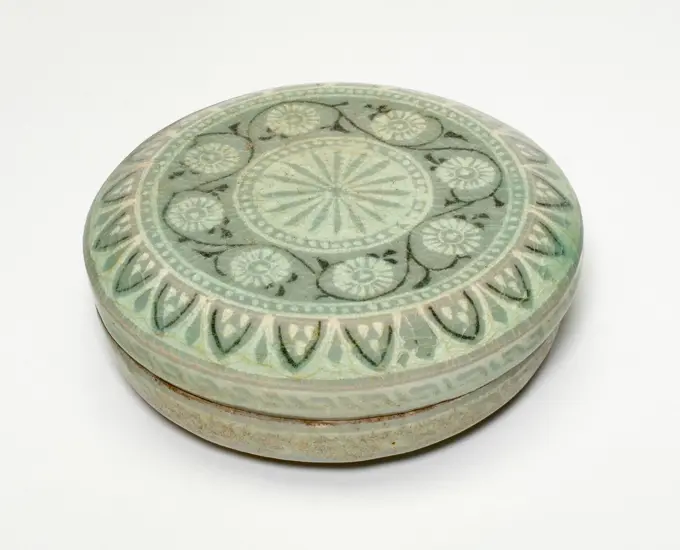
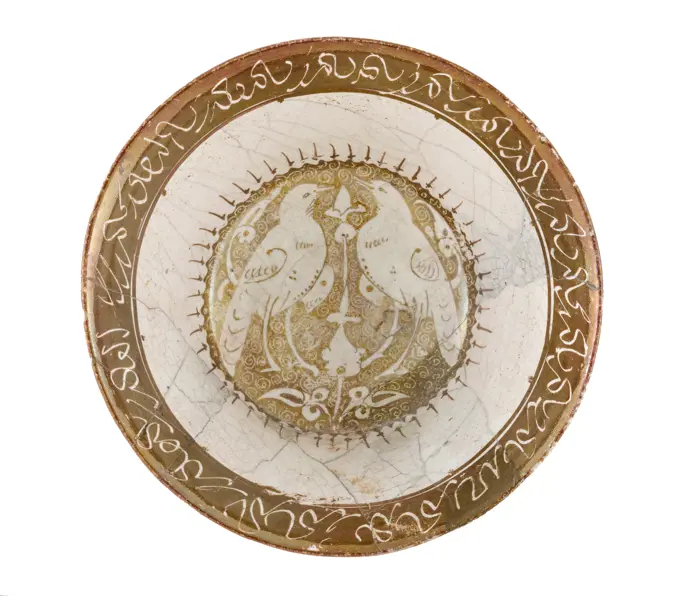
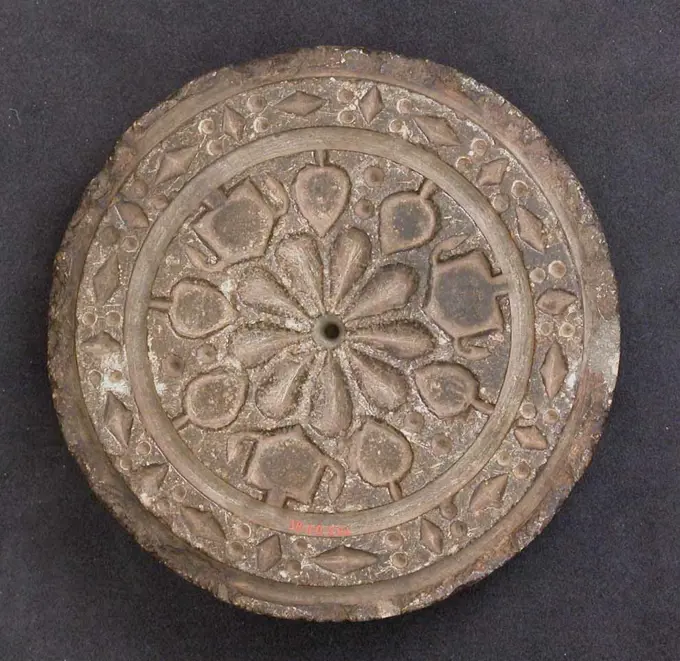
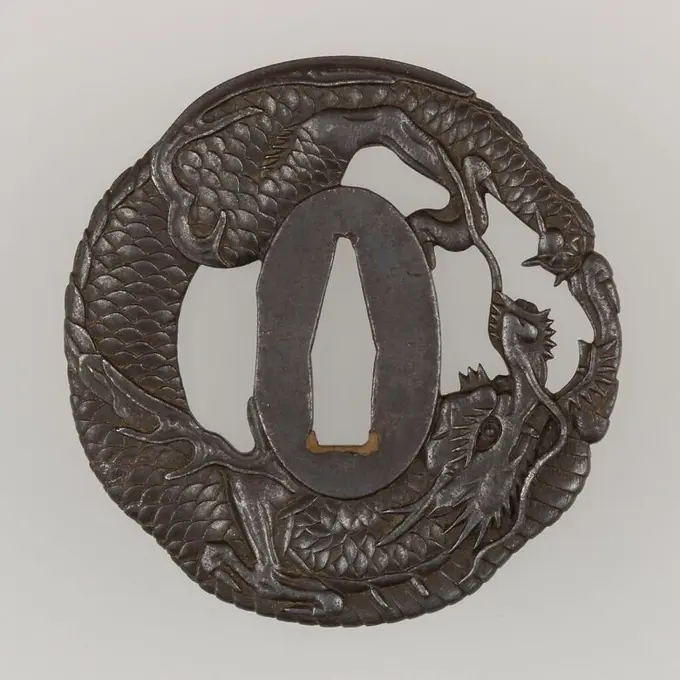
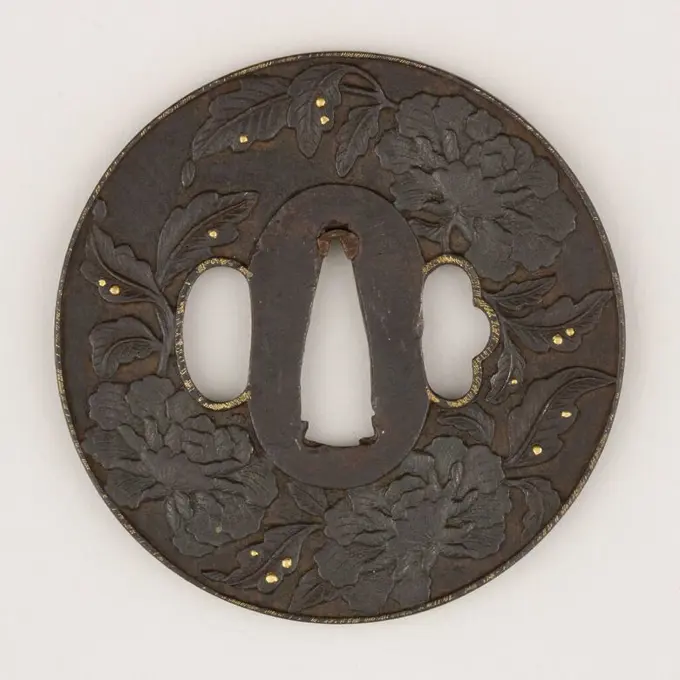
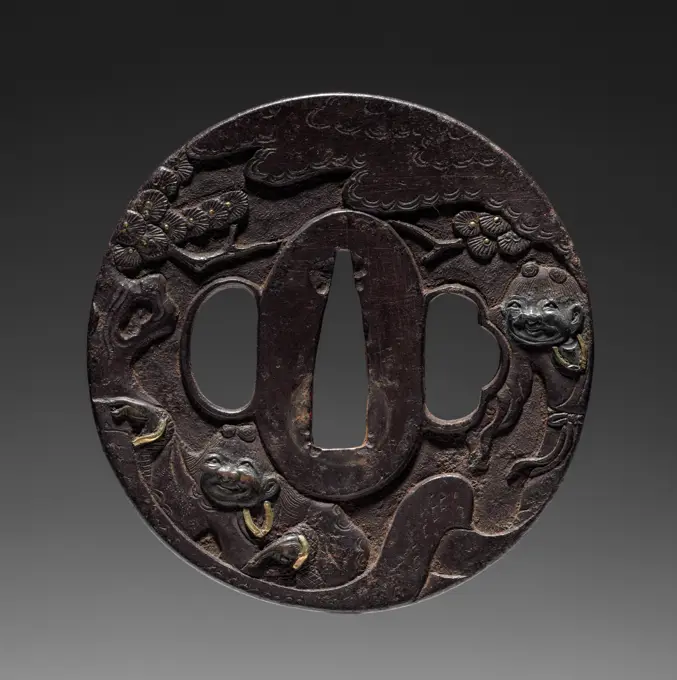
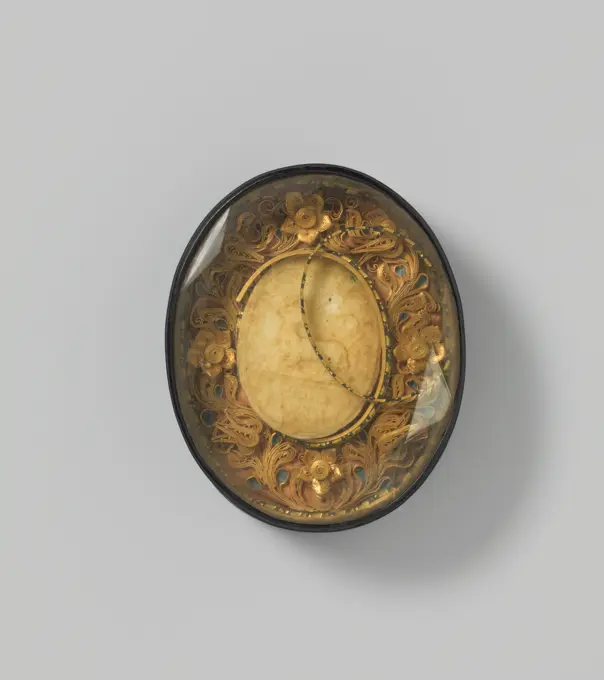
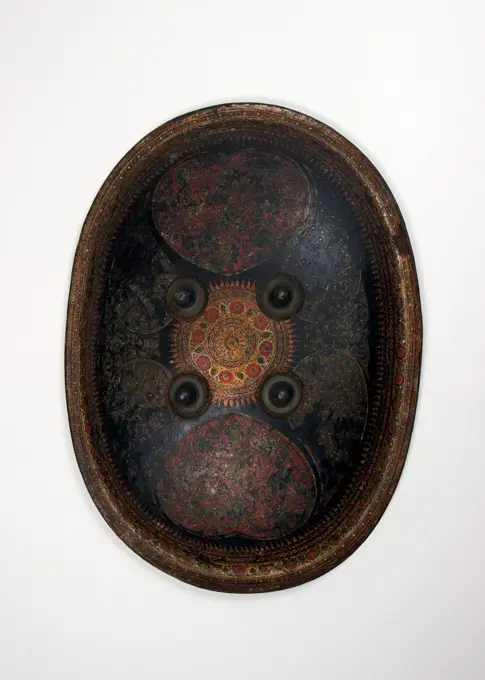
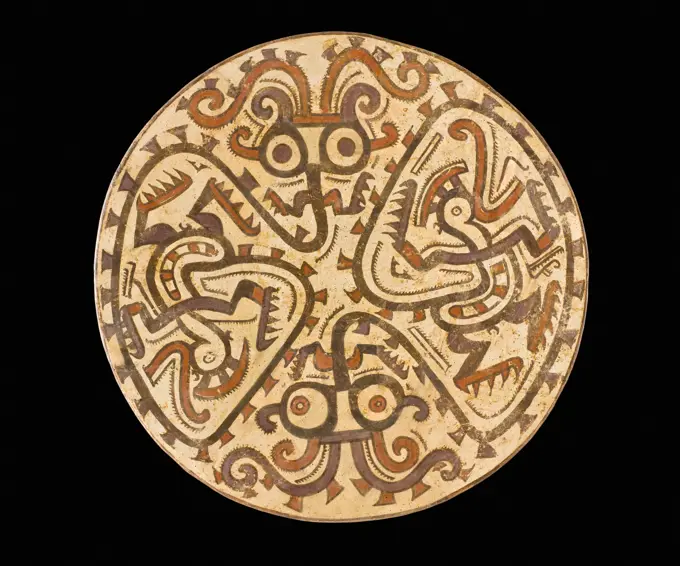
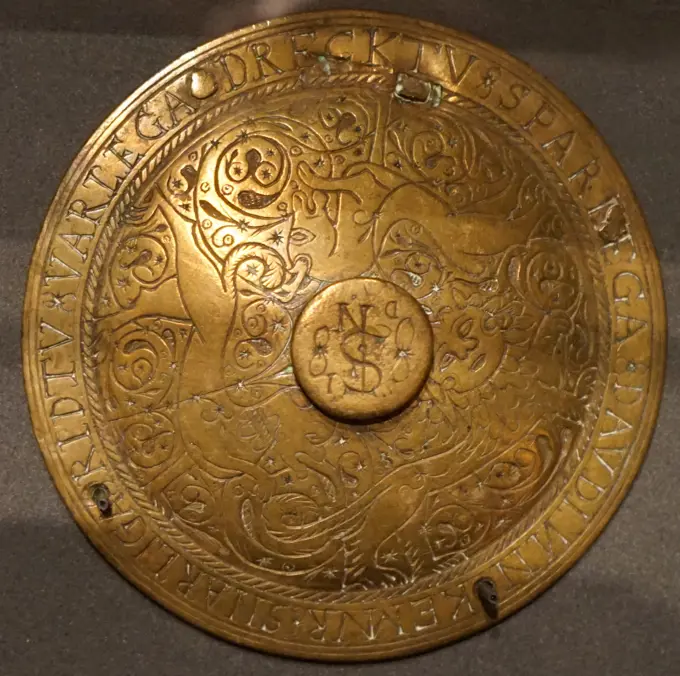
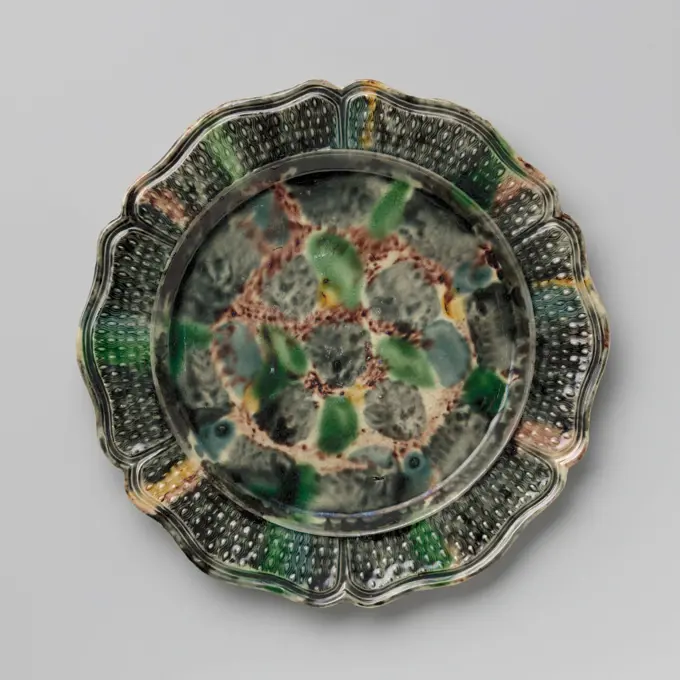
. Mirror with a button in the shape of a turtle. Midfield is decorated with birds and chrysanthemums.Disk. Artist: Royal Bronze-casting Guild (Igun Eronmwon)Dish chalical flowers. In the flat de saucer, which has the center point in the middle, are punched using stamp forms: a Umbo, which is surrounded by a repeat of seven times the motifs of a chalical flower and a stylized bunch with three fruits or leaves, Voorst An edge with the GOTT SEI MIT UNS () (repeated four times). 25 fish blowing are driven in the wall of the dish. Furthermore, the edge of the dish is decorated with a ring of punched ornament consisting of rosettes and leaves in the middle and out of leaves against the edge. The edge of the dish is beaten around iron wire. The hole in the edge was made later. The center point has become a small opening.Carnavalet Museum, Medals CollectionBoss from a Horse Breast Collar. Culture: Ottoman or Tatar. Dimensions: Diam. 2 7/16 in. (6.2 cm); Wt. 2.5 oz. (72 g). Date: late 17th - 18th century.This boss, decorated all over with flowers and foliage, adorned the cross-section of the three straps of a horse breast collar (straps preventing the saddle from slipping backwards). This example is a simpler version of the luxury bosses attached to some Ottoman deluxe tacks, usually made of silver and gold. Museum: Metropolitan Museum of Art, New York, USA.Spiegel, anonymous, c. 1100 - c. 1185 Mirror with a button in the shape of a turtle. Midfield is decorated with birds and chrysanthemums. Japan bronze (metal) Mirror with a button in the shape of a turtle. Midfield is decorated with birds and chrysanthemums. Japan bronze (metal)Badge or Harness Pendant ca. 1400 Spanish Heraldry, or coat-of-arms, were vitally important in Europe throughout the Middle Ages and the Renaissance. Heraldic emblems were used to identify noble families, cities, regions, and even countries. In addition to being displayed on shields and flags, heraldry was incorporated into architectural decoration on the interior and the exterior of buildings, on furniture, works of art, clothing, and horse equipment. Harness pendants, like this example, would have been attached to a headstall, bridle, or other straps making up the tack of a horse ridden by a nobleman or noblewoman, or a member of their household. Many harness pendants also have decoration that is simply ornamental, or have symbols that are not specifically heraldic in nature.. Badge or Harness Pendant. Spanish. ca. 1400. Copper, gold, enamel. Miscellaneous-BadgesBronze brooch with gold Lombard 7th century. Museum: Civic Museum, UDINE, ITALIA.Half of Dam disk with portrait: Leontia ,, 1525 - 1575 Leontona. Phoc. Emperor. VX (Leontine, Vouw van Phocas) Nuremberg boxwood Leontona. Phoc. Emperor. VX (Leontine, Vouw van Phocas) Nuremberg boxwoodHand guard, anonymous, 1600 - 1900 Oval tsuba in the shape of a frog with silver eyes and a copper tongue; The ryo-hitsu are filled with gold, which is processed like the iron (Ishime surface). Japan iron (metal). gold (metal). silver (metal). copper (metal) Oval tsuba in the shape of a frog with silver eyes and a copper tongue; The ryo-hitsu are filled with gold, which is processed like the iron (Ishime surface). Japan iron (metal). gold (metal). silver (metal). copper (metal)Dish 14th century. Dish 447132Beer protection guild of Amsterdam, Gildepenning by Jacob Barentsz Zluyter, Anonymous, c. 1650 - c. 1800 medal Brass oval guild pin. Front: Crowned barrel inside blower. Tours side: inscription Binnenbladerkrans Amsterdam brass (alloy) engraving  AmsterdamFragment of a Bowl 14th-15th century. Fragment of a Bowl 445478Sword Guard (Tsuba). Culture: Japanese or Chinese. Dimensions: Sword guard (Tsuba): H. 3 3/16 in. (8.1 cm); W. 2 11/16 in. (6.8 cm); thickness 5/16 in. (0.8 cm); Wt. 5.8 oz. (164.4 g)Fuchi: H. 5/8 in. (1.6 cm); L. 1 1/2 in. (3.8 cm); thickness 1 in. (2.5 cm); Wt. 1.4 oz. (39.7 g)Kashira: H. 13/16 in. (2.1 cm); L. 2 1/16 in. (5.2 cm); thickness 15/16 in. (2.4 cm); Wt. 2.7 oz. (76.5 g). Date: 13th century or later. Museum: Metropolitan Museum of Art, New York, USA.Badge. Culture: Spanish. Dimensions: H. 3 in. (7.6 cm); W. 2 5/8 in. (6.7 cm); Wt. 2 oz. (56.7 g). Date: 14th century. Museum: Metropolitan Museum of Art, New York, USA.Plate with a Seated Woman 1495-1505 Southern Netherlands. Brass .Sword Guard (Tsuba). Culture: Japanese. Dimensions: H. 3 1/2 in. (8.9 cm); W. 3 3/8 in. (8.6 cm); thickness 3/16 in. (0.5 cm); Wt. 5 oz. (141.7 g). Date: ca. 1615-1868. Museum: Metropolitan Museum of Art, New York, USA.Carnavalet Museum, Medals CollectionCircular Pierced Tablet. Culture: China. Dimensions: H. 5 in. (12.7 cm); W. 3/8 in. (1 cm). Museum: Metropolitan Museum of Art, New York, USA.ClaspDish 14th century. Dish 445986Sword Guard (Tsuba) with Traveler, c. 1615-1868. Japan, possibly Edo period (1615-1868). Iron; diameter: 6.8 cm (2 11/16 in.).Carnavalet Museum, Medals CollectionCover;  19th century (1801-00-00-1900-00-00);Silver mint brooch in the shape of a flower, c. 1940 - c. 1950 Silver mint brooch in the shape of a flower with silver brochure with a ball closure. Central a coin with the sculptor of Wilhelmina, around seven smaller coins with the sculptor of Wilhelmina. Netherlands silver (metal) Silver mint brooch in the shape of a flower with silver brochure with a ball closure. Central a coin with the sculptor of Wilhelmina, around seven smaller coins with the sculptor of Wilhelmina. Netherlands silver (metal)Sword Guard (Tsuba). Culture: Japanese. Dimensions: Diam. 3 1/4 in. (8.3 cm); thickness 1/8 in. (0.3 cm); Wt. 3.1 oz. (87.9 g). Date: 15th century. Museum: Metropolitan Museum of Art, New York, USA.Carnavalet museum, medal collectionAS; Antoninus Pius (86-161; Roman emperor 138-161); 140-144 (140-00-00-144-00-00);Unidentified ruler, bracteate; the turn of the 13th and 14th centuriesPokrywka. unknown, authorSword Guard (Tsuba) 17th-18th century Japanese A tsuba is a sword guard and part of a sword mounting. It is mounted between the swords blade and grip to protect the users hands.. Sword Guard (Tsuba) 30060Ornament, one of a pair, 221-206 BCE, 2 1/2 in. (6.35 cm) (diameter), Gold, China, 3rd century BCESmall pewter dish on stand, toys, embossed, dish crockery holder toy relaxant miniature soil find tin metal, cast pewter dish. Toys. Stand ring Embossed in the shoulder and across the flag. Decoration consists of bands divided into triangular surfaces in which grid decor or dots Large dots along the edge Decoration is cast in archeology Rotterdam railway tunnel indigenous tin child child's play game Soil discovery: trajectory rail tunnel Rotterdam.Mirror, 1615-1868. Japan, Edo period (1615-1868). Bronze; diameter: 4.6 cm (1 13/16 in.).Ianvarivs (January), Martial Courteys, French, died 1592, Grisaille enamel, flesh tones, touches of color, and gold on molded copper, Circular plate, decorated en grisaille, with flesh tones and heightened in gold, showing a scene of a couple banqueting; captioned 'Ianvarivs.', Limoges, France, 1565-75, enamels, Decorative Arts, Plate, PlateSword Guard (Tsuba), 1615-1868. Japan, Edo period (1615-1868). Iron; overall: 7 x 6.4 cm (2 3/4 x 2 1/2 in.).Disk Brooch ca. 550-650 Frankish. Disk Brooch 464814 Frankish, Disk Brooch, ca. 550650, Gold, wire, paste, iron core, cabochon, Overall: 1 1/8 x 3/8 in. (2.9 x 1 cm). The Metropolitan Museum of Art, New York. Gift of J. Pierpont Morgan, 1917 (17.191.124)Sword Guard (Tsuba). Culture: Japanese. Dimensions: H. 2 7/8 in. (7.3 cm); W. 2 5/8 in. (6.7 cm); thickness 3/16 in. (0.5 cm); Wt. 3.1 oz. (87.9 g). Date: 18th century. Museum: Metropolitan Museum of Art, New York, USA.Circular Dish. France, 1889-1890. Furnishings; Accessories. Glazed earthenwareModel for a bracket of a book lock with rococo ornament, flowers and a bird, anonymous, c. 1750 - c. 1775 The model driven from plate for a mold is equipped with rococo ornament, in which flowers and a bird. Amsterdam copper (metal) The model driven from plate for a mold is equipped with rococo ornament, in which flowers and a bird. Amsterdam copper (metal)Oval Brooch 900-1000 Viking Large ornamental brooches were worn in pairs by women as dress fasteners. The interlacing animal forms across the surface were originally brightly gilded.. Oval Brooch. Viking. 900-1000. Copper alloy, gilt. Made in Scandinavia. Metalwork-CopperOne sided stamp, medal with the Cathedral in Reims unknownSword Guard (Tsuba) Depicting Group of Monkeys in a Peach Tree (猴摘桃透鐔) ca. 1615-1868 Japanese This tsuba shows a group of eight monkeys in and around a peach tree, with one monkey actually holding a peach in his hand. The faces of each of the monkeys are inlaid in copper. Both hitsu-ana (openings for scabbard accessories) have been plugged with gilt copper plugs of which one has come off. Monkeys fetching peaches is a common subject in Chinese and Japanese art. A Chinese legend has it that Su Wukong (Japanese: Son Gokū, 孫悟空), better known as Monkey King, steals the Peaches of Immortality guarded by the Queen Mother of the West (Chinese: Xiwangmu, Japanese: Seiōbō) and consumes them.. Sword Guard (Tsuba) Depicting Group of Monkeys in a Peach Tree (猴摘桃透鐔) 35177Carnavalet museum, medal collection Right bust to the left of Louis-Napoléon Bonaparte; Reverse registration on five lines in a crown of bay leaves and oak.Lyly sown account token with cross Prince of Blood?, Stockings Middle Ages Anonymous. Lily's sown account token with cross Blood Prince?, Stock Middle Ages. Brass.Mirror Korea. Mirror. Korea. Bronze. Goryeo dynasty (918-1392). MirrorsDecorative plate from Tanjore. unknown, craftsmanDouble Dukaat, in the form of an emergency coin from Magdeburg, in memory of the siege, Anonymous, 1551 - 1641 coin. siege coin Diamond -shaped emergency coin worth 2 ducats. Front: in round stamp: Standing St. Maurits with banner in the left and coat of arms in the right hand between letters S and M; In corners, with clock: Letters C, E, B and I. Rail side: in round stamp: Standing St. Maurits with banner in the left and coat of arms in the right hand between letters S and M within Pearl Border Left and right corner: year. Virginburg gold (metal) striking (metalworking)  VirginburgTsuba  a man with a buffalo under pine Muneari, schoolDish early 16th century German. Dish. German. early 16th century. Brass. Metalwork-BrassCarnavalet museum, tokens collectionOrnamental plaque for harnesses. Jewellery. Mongolian Civilization, 13th-14th Century.Boss from a Horse Breast Collar late 17th-18th century Ottoman or Tatar This boss, decorated all over with flowers and foliage, adorned the cross-section of the three straps of a horse breast collar (straps preventing the saddle from slipping backwards). This example is a simpler version of the luxury bosses attached to some Ottoman deluxe tacks, usually made of silver and gold.. Boss from a Horse Breast Collar. Ottoman or Tatar. late 17th-18th century. Copper alloy, gold, tin. Equestrian Equipment-Horse TrappingsIvory disk with rosette ca. 1600-1050 B.C. Cypriot Ivory was imported to Cyprus from the Near East or Egypt. The rosette was a popular decorative motif originally inspired by designs on Syrian and Phoenician minor arts and textiles.. Ivory disk with rosette. Cypriot. ca. 1600-1050 B.C.. Ivory. Late Bronze AgeSword Guard, late 1700s. Japan, Edo period (1615-1868). Iron (Myochin type); average: 7.6 x 8.3 cm (3 x 3 1/4 in.).Coin; Iran; 632 - 651; SilverSword Guard (Tsuba) ca. 1615-1868 Japanese A tsuba is a sword guard and part of a sword mounting. It is mounted between the swords blade and grip to protect the users hands.. Sword Guard (Tsuba) 34449Dish early 16th century German. Dish. German. early 16th century. Brass. Metalwork-BrassButton from the wreck of the East Indians Hollandia, Anonymous, 1700 - in or before 1743 button Knoop. (1) sim. NG 1978-58H169 (3.1d) Netherlands bone (material)   SecondSword Guard (Tsuba) 18th century-early 19th century Japanese A tsuba is a sword guard and part of a sword mounting. It is mounted between the swords blade and grip to protect the users hands.. Sword Guard (Tsuba). Japanese. 18th century-early 19th century. Iron, silver, copper, gold, copper-gold alloy (shakud?). Sword Furniture-TsubaSword Guard (Tsuba) 18th century probably Vietnamese A tsuba is a sword guard and part of a sword mounting. It is mounted between the swords blade and grip to protect the users hands.. Sword Guard (Tsuba) 29987Bowl with Griffin, 1100s. Northwest Iran, Garrus district, Seljuk period, 12th century. Earthenware with underglaze slip-painted decoration; overall: 6.6 x 16.7 cm (2 5/8 x 6 9/16 in.).Round Plaque. Culture: Vicús. Dimensions: Diameter 3-1/16 in. (7.8 cm). Date: 3rd century B.C.-A.D. 2nd century. Museum: Metropolitan Museum of Art, New York, USA.Disk Brooch ca. 550-650 Frankish. Disk Brooch. Frankish. ca. 550-650. Copper alloy, silvered , partial gilt, gold foil, amethyst. Metalwork-Copper alloyScarab Inscribed with the Throne Name of Thutmose III. Dimensions: L. 1.6 cm (5/8 in); w. 1.2 cm (1/2 in); h. 0.6 cm (1/4 in). Dynasty: Dynasty 18, early. Reign: Joint reign of Hatshepsut and Thutmose III. Date: ca. 1479-1458 B.C.. Museum: Metropolitan Museum of Art, New York, USA.Bead 3rd-6th century Moche. Bead 309958Covered Cosmetic Box with Chrysanthemum Flower Heads 1235-1265 Korea. Celadon-glazed stoneware with underglaze inlaid decoration of black and white clays .Sword Guard (Tsuba) with Dragon in Cloud, c. 1615-1868. Japan, possibly Edo period (1615-1868). Iron; diameter: 8.4 cm (3 5/16 in.).Bit Boss. Culture: German, possibly Augsburg. Dimensions: Diam. 2 7/8 in. (7.3 cm); Wt. 2.6 oz. (74 g). Date: late 16th - early 17th century.The central part of this bit boss is adorned with a Roman battle among horsemen and foot soldiers, as well as a nude man wrestling with two lions. Above them, a sun in splendor appears among the clouds.The composition is probably based on a bronze plaquette, The Lion Hunt, made by Moderno (Galeazzo Mondella), ca. 1500 (see 18.70.5). German bronze founders would regularly use Italian medals or plaquettes as models for their works, including bosses, like this one, which decorated the sides of horse bits. They also produced similar decorative elements for powder flasks, staff weapons or even pistols. This Lion Hunt type was among the most popular designs, and could be combined with different types of rims (see also 42.50.163 and 42.50.180). Museum: Metropolitan Museum of Art, New York, USA.Bowl. Iran, Kashan, early 13th century. Ceramics. Fritware, overglaze luster-paintedTABLE OF CONSTELLATIONS 18th CENTURY. Location: MUSEO ARQUEOLOGICO NACIONAL-COLECCION. MADRID. SPAIN.Sword Guard (Tsuba) Depicting Biting Lion Heads (Shikami) and Arabesques () 19th century Japanese The rim area of this Nanban-style tsuba is decorated with arabesques and forms a cartouche which shows the symmetrical gold and shakud design of demon heads and fern-like flowers on the obverse and an asymmetrical gold and shakud design of flowers on the reverse. The edges of the hitsu-ana (openings for scabbard accessories) are highlighted in gold and the rim shows traces of a gold nunome-zgan décor.. Sword Guard (Tsuba) Depicting Biting Lion Heads (Shikami) and Arabesques (). Japanese. 19th century. Iron, gold, copper-gold alloy (shakud). Sword Furniture-TsubaCarnavalet museum, medal collection Right between two drums, ss of bayonet rifles surmounted by two flags, the one on the right decorated with a rooster; Reverse registration on five lines.Die () 9th-11th century. Die () 449489MountMeasuring instrument, perhaps for measuring races, consisting of a round wooden disc with a rotating pointer on a lead axle, anonymous, c. 1590 - c. 1596 measuring instrument Measuring instrument (price meter) consisting of a round wooden disc with a rotating pointer on a lead axle. On the upper and bottom, a distribution into compass regions is scratched, the main regions and intermediate heads are indicated with a star-shaped figure. Perhaps this was an instrument for measuring races on a sea map or making a sketch of the route followed and mapping a sea area. It could also have been a compass judge for finding the corner between true and magnetic compass direction. The pointer has been broken down.  Disc: Wood (Plant Material). AS: Lead (Metal) cutting / scoring / casting  Nova Zembla. Saving HuysButton from the wreck of the East Indians Hollandia, Anonymous, 1700 - in or before 1743 button Knoop. (1) concentric moulding (1.6d, 0.3t) Netherlands bone (material)   SecondSword Guard (Tsuba). Culture: Japanese. Dimensions: Diam. 2 3/4 in. (7 cm); thickness 3/16 in. (0.5 cm); Wt. 3.3 oz. (93.6 g). Date: 18th century. Museum: Metropolitan Museum of Art, New York, USA.MountSword Guard (Tsuba) 17th-18th century Japanese A tsuba is a sword guard and part of a sword mounting. It is mounted between the swords blade and grip to protect the users hands.. Sword Guard (Tsuba) 643314Sword Guard (Tsuba). Culture: Japanese. Dimensions: Diam. 3 1/8 in. (7.9 cm); thickness 3/16 in. (0.5 cm); Wt. 4.3 oz. (121.9 g). Date: ca. 1615-1868. Museum: Metropolitan Museum of Art, New York, USA.For a long time;  16th century (1490-00-00-1510-00-00);False Coin, Penny, Mieszko II (1025 1031)Grahal-Manzara. Carnavalet 2013-2016 collection sites. Numismatics.Carnavalet museum, tokens collectionGilt silver kylix late 5th century B.C. Greek The hero Bellerophon rides Pegasos, the winged horse, as he battles the Chimaera, a mythical creature with the heads of a lion and goat and a tail in the form of a snake. According to legend, Bellerophon and Pegasos both hailed from the region around Corinth, and the myth of their battle with the Chimaera first appears in Greek art on Corinthian painted pottery of the eighth century B.C.. Gilt silver kylix 646263Sword Guard (Tsuba) with Hanshan and Shide, c. 1615-1868. Japan, possibly Edo period (1615-1868). Iron; diameter: 7 cm (2 3/4 in.).Agnus Dei in the frame of gold filigrein, c. 1400 - c. 1950 Agnus Dei, seal of wax with lamb Gods, and inscription: Clemens XI 1 () 1701. The seal is caught in a frame whose outer edges are filled with gold filigrein. Wooden oval pouch with glasses on the edges sharpened lid.  seal: wax filigree Agnus Dei, seal of wax with lamb Gods, and inscription: Clemens XI 1 () 1701. The seal is caught in a frame whose outer edges are filled with gold filigrein. Wooden oval pouch with glasses on the edges sharpened lid.  seal: wax filigree. Almost round tsuba with a vase of a vase in positive silhouette.Shield (Dhàl) 18th-19th century Indian. Shield (Dhàl) 31914Almond-Shaped Seal: Coronation of the Virgin with a Kneeling Monk, 1300s. England or Germany, Gothic period, 14th century. Gilded bronze; overall: 3.9 x 2.6 cm (1 9/16 x 1 in.).Teardrop-shaped Jar. Panama, Conte/Macaracas style from Bahia Honda, Veraguas, 600-800 CE. Ceramics. Slip-painted ceramicCDK Unknown, Higo school, HayashiMas van de Sultanah Inayat Shah Van Atjeh, Sumatra ,, 1678 - 1688 coin Gold coin. Front: three -faced inscription in Arabic characters. Reverse: three -faced inscription in Arabic characters. Aceh gold (metal) striking (metalworking)Saddle ornaments, crupper bosses and plaques, 17th-18th century, Icelandic, engraved with prayers and decoration.Sword Guard (Tsuba). Culture: Japanese. Dimensions: H. 3 3/8 in. (8.6 cm); W. 3 1/8 in. (7.9 cm); thickness 3/16 in. (0.5 cm); Wt. 4.9 oz. (138.9 g). Date: possibly 17th century. Museum: Metropolitan Museum of Art, New York, USA.Plate ca. 1850 Japan. Plate. Japan. ca. 1850. Pottery, decorated in five colors (Hizen ware, Kutani type). Edo period (1615-1868). CeramicsPlate of multicolor hard-baked pottery; Staffordshire. Plate of multicolored hard-baked pottery, with a scalloped edge. The edge is embossed with six fields of corrugated railing. The plate is covered with blue gray lead glaze with stains in green, yellow and manganese. The back is dotted in manganese. Four signs belong to the board (BK-1987-41-A to BK-1987-41-E).Coin Weight 11th century. Coin Weight 453535Circular incurrence of climbing side with rosette and eight spokes. Circular open-edge doily, possibly an incurrence, of natural colosside. The pattern consists of a rosette made up of three concentric circles, with eight spokes. Between the two outer circles, a concatenation of arcs has been made, as petals of the rosette, with each arc through a spoke. The circles are made in shape stroke with two ribs, the spokes and bowets with braids. The braids with which the arcs are made are equipped with picots.