Ornate Decorative Tiles

Colorful decorative ceramic tiles featuring floral and geometric motifs. Rich in historical detail, perfect for artistic or architectural themes.
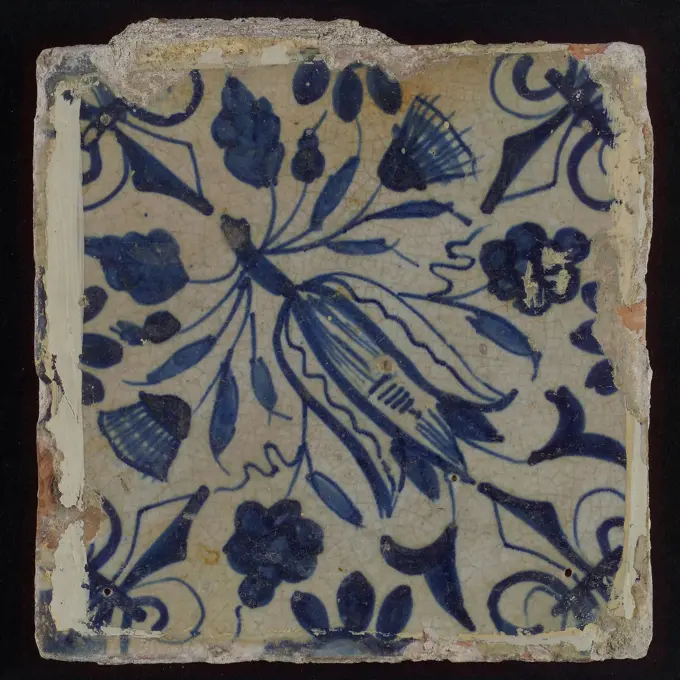
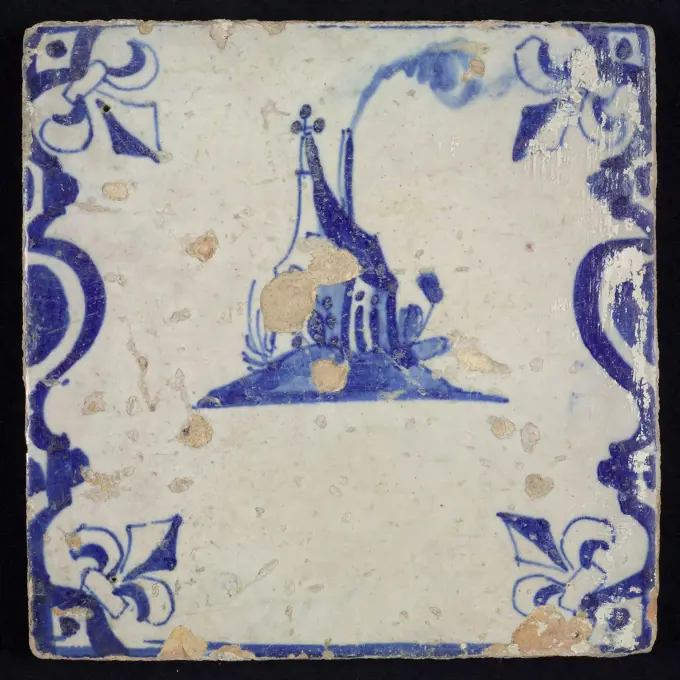
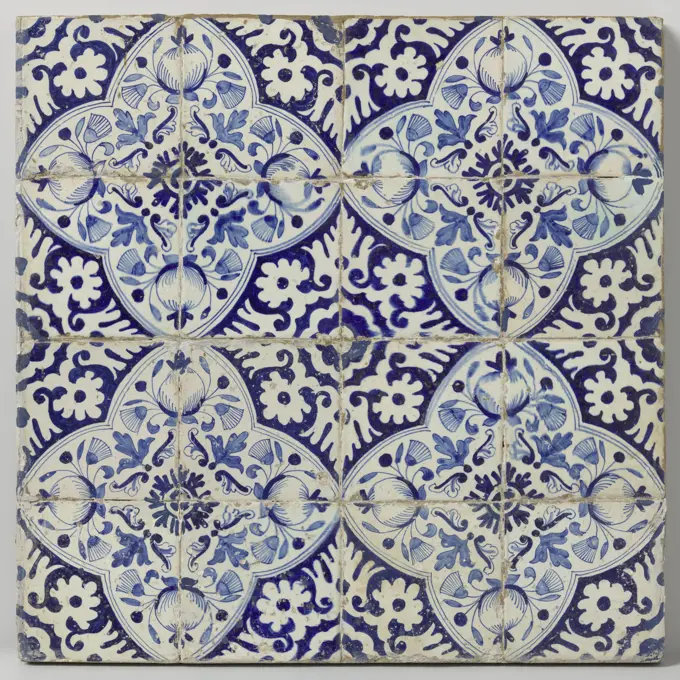
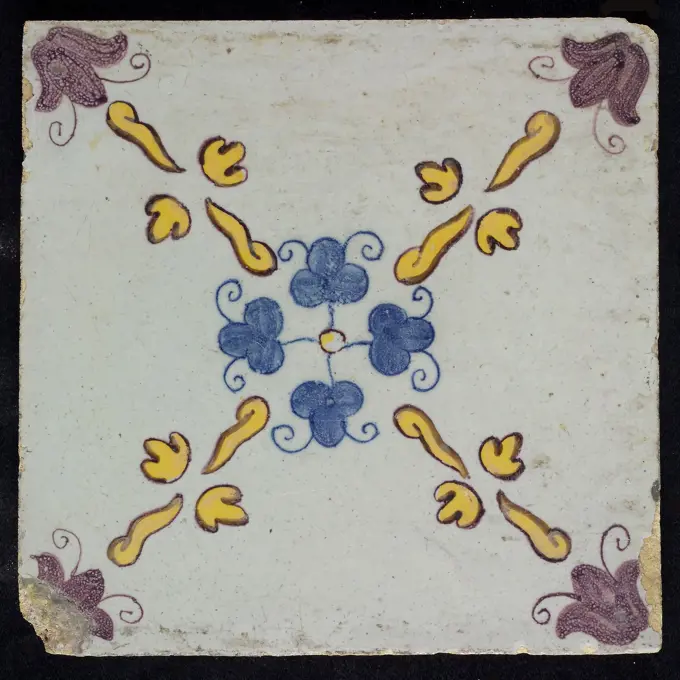
Ornament tile, diagonally placed tulip with rosette, corner pattern french lily, wall tile tile sculpture ceramic earthenware enamel, baked 2x glazed painted Two-tone tile blue on white background Bellevue Rotterdam Hillegersberg-Schiebroek Hillegersberg Zuid Kleiweg Originating from the former Huize Bellevue Kleiweg 427 Rotterdam.
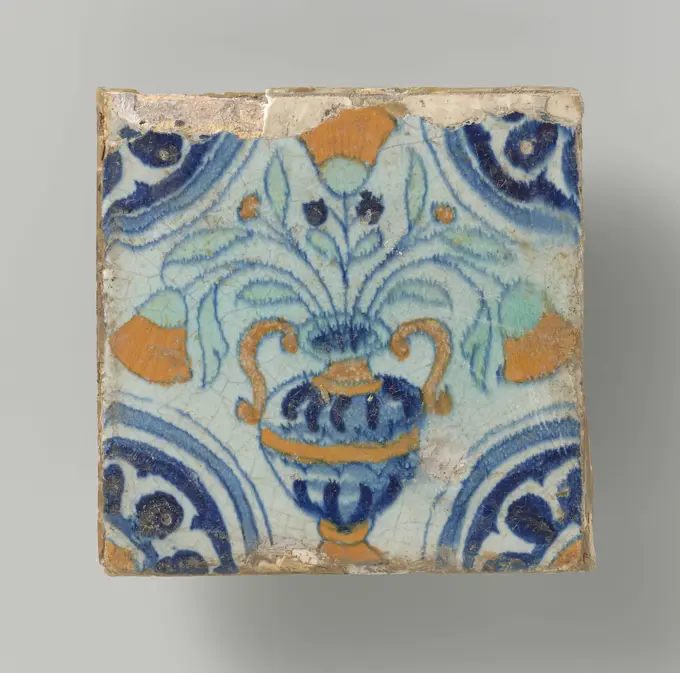
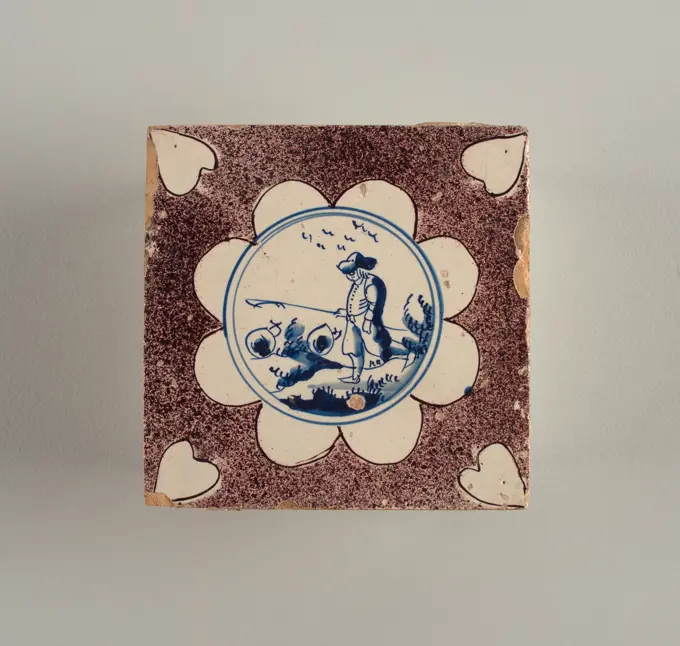
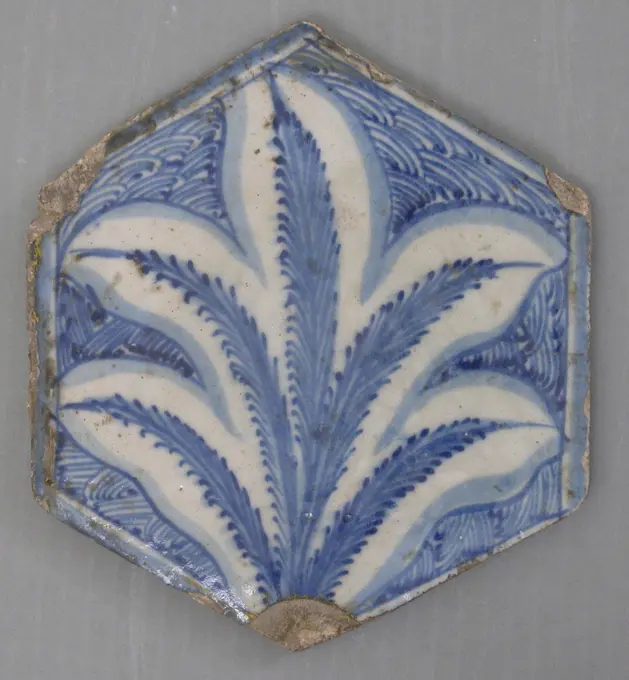
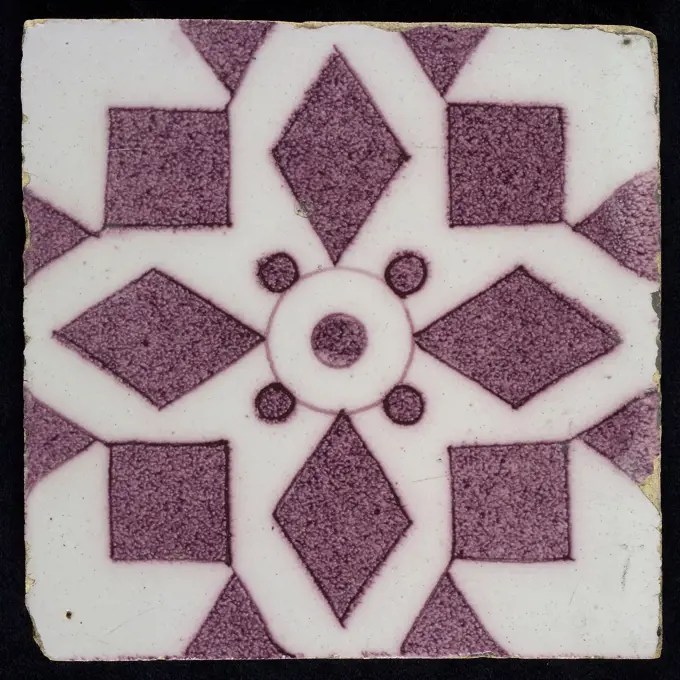
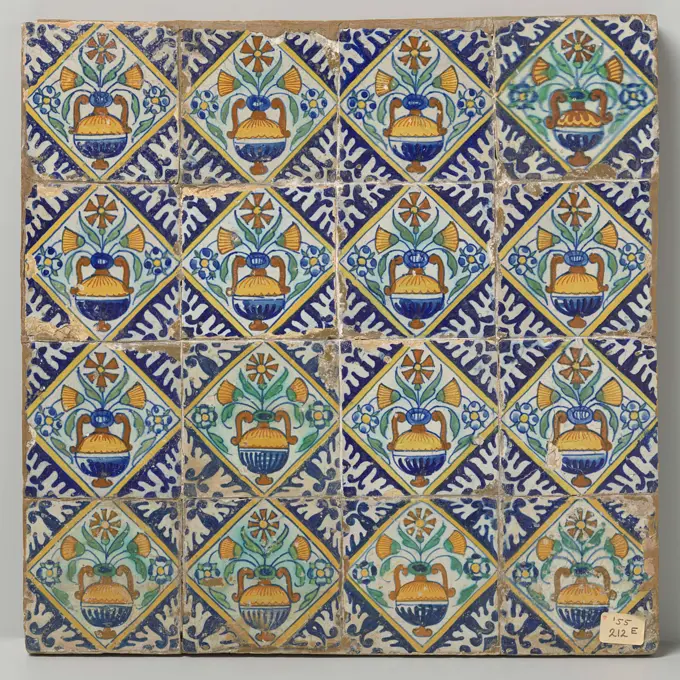
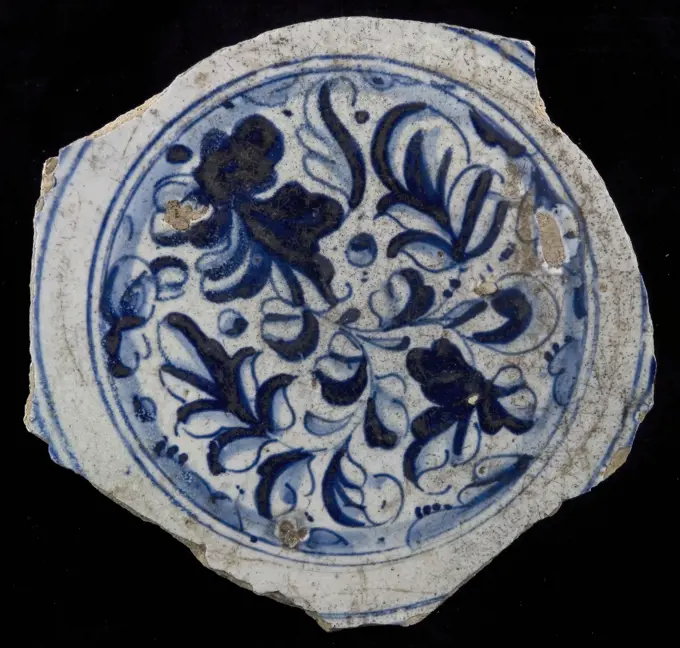
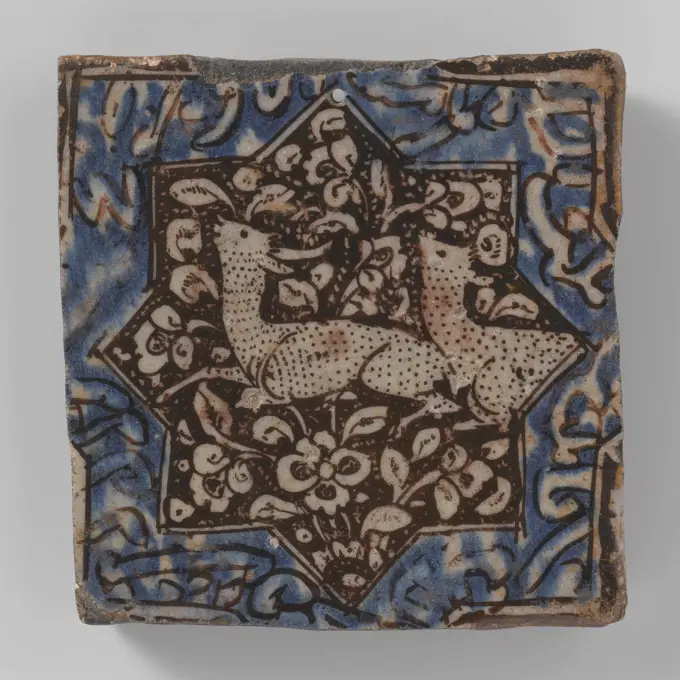
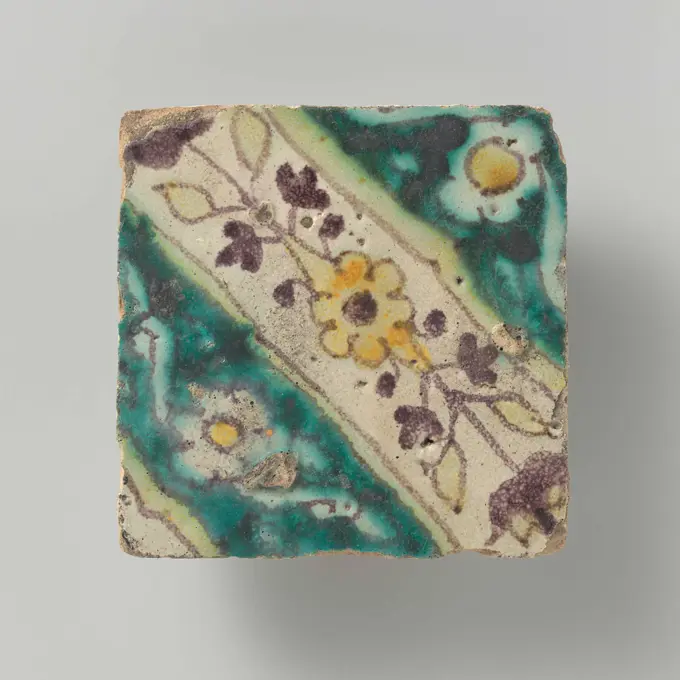
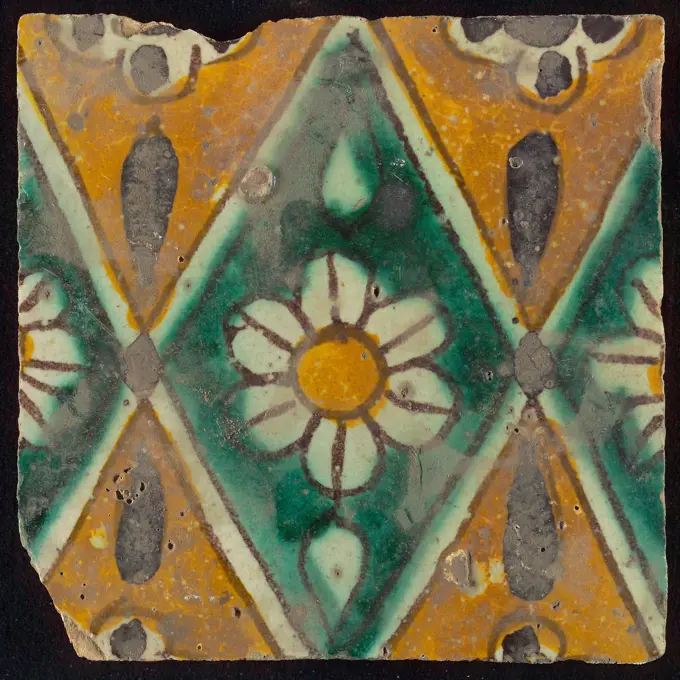
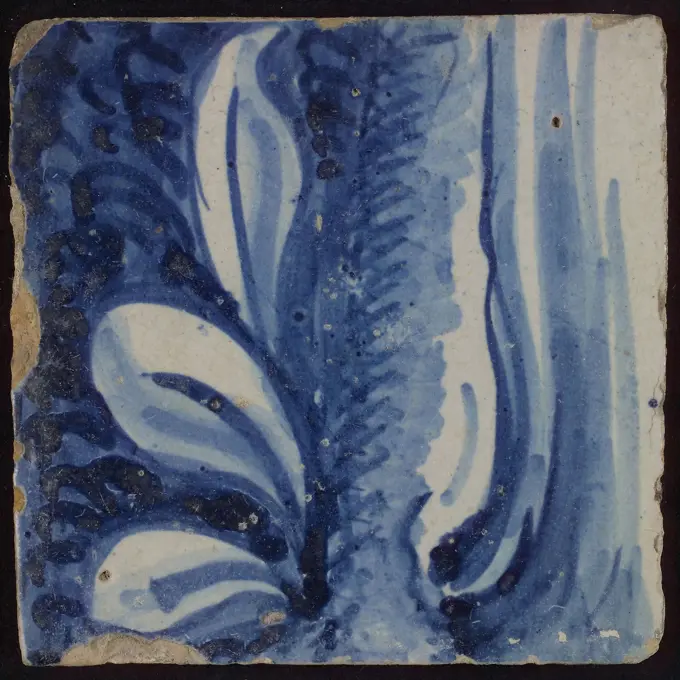
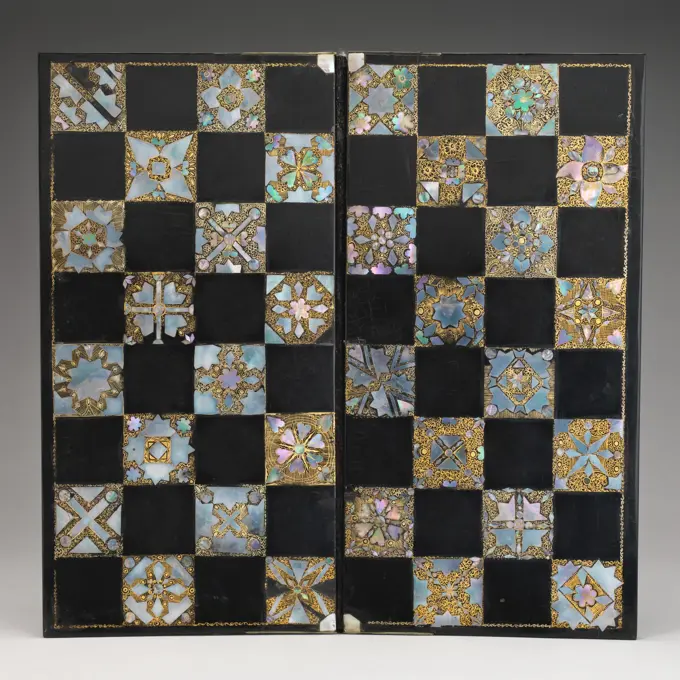
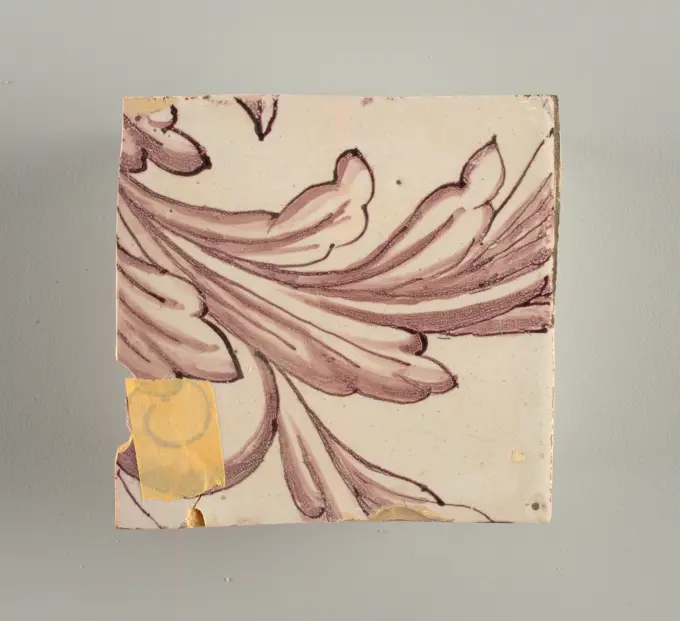
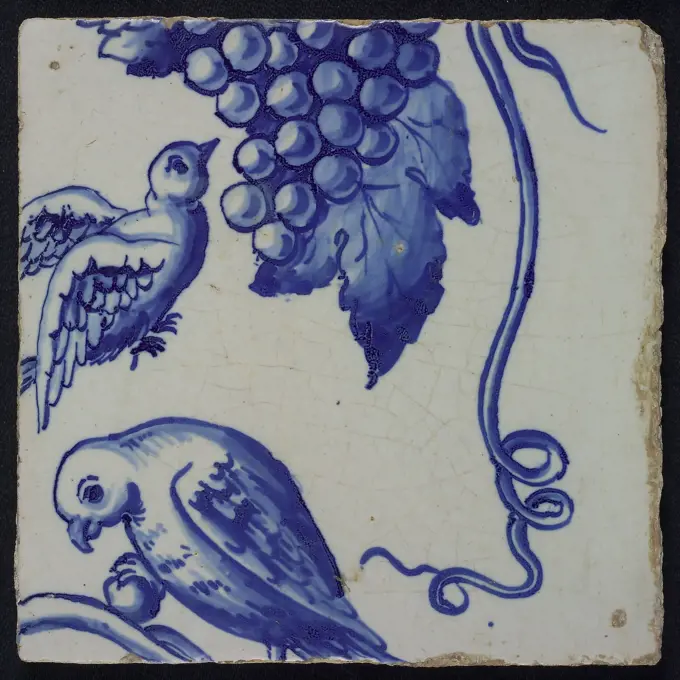
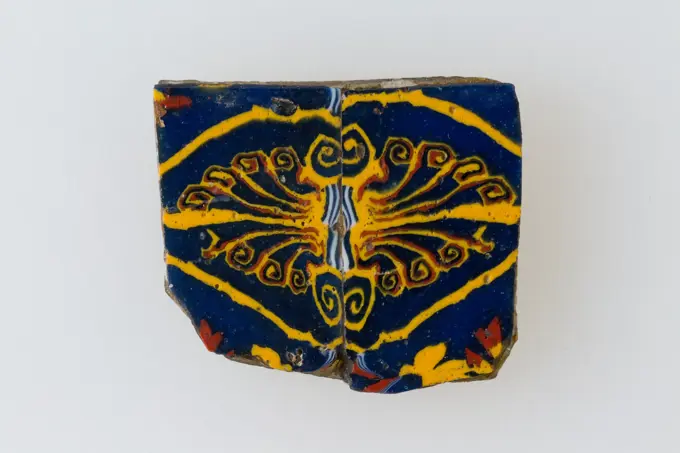
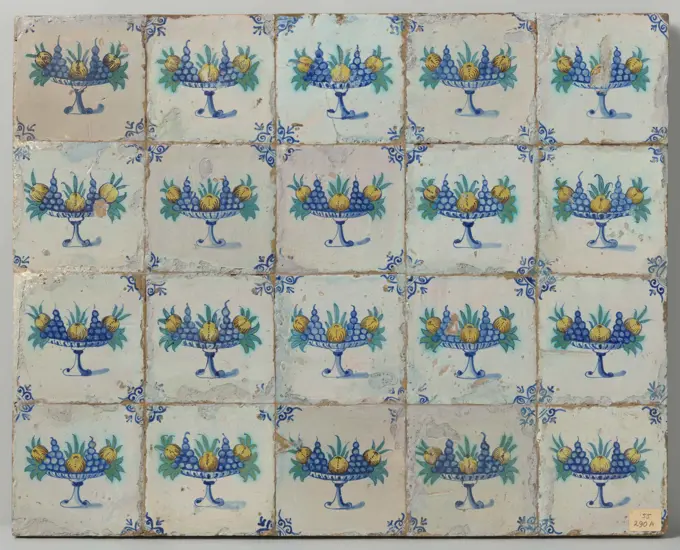
Ornament tile, diagonally placed tulip with rosette, corner pattern french lily, wall tile tile sculpture ceramic earthenware enamel, baked 2x glazed painted Two-tone tile blue on white background Bellevue Rotterdam Hillegersberg-Schiebroek Hillegersberg Zuid Kleiweg Originating from the former Huize Bellevue Kleiweg 427 Rotterdam.Four tiles, Glazed moulded earthenware, Moulded in low relief, with white, blue, green and brown glazed, forming an octagonal motif, with conventionalized floral and foliate forms., Andalusia, Spain, late 16th century, tiles, Decorative Arts, Four tilesTile, orange, brown, green, and blue on white, flowerpot in square, corner pattern palm, wall tile tile sculpture ceramic earthenware glaze, baked 2x glazed paintedTile with flowerpot. Part of a field of four tiles (2 x 2), see BK-1955-223-b.Tile, orange, brown, green, and blue on white, flowerpot in square, corner pattern palm, wall tile tile sculpture ceramic earthenware glaze, baked 2x glazed paintedWall Facing (Holland); tin-glazed earthenware, underglazeTile, blue on white, central flower within star shape, three-piece around, half rosette, corner pattern lily, wall tile tile sculpture ceramic earthenware glaze, baked 2x glazed painted 'Haarlem tile'. Yellow ruddy and red shard square Two or four nail holes. AIb3 HaarlemTile, Anonymous, 1620 - 1640 Tile with blue painted Chinese symbols within a four -pass frame. In the corners, a flower turn. Netherlands earthenware. tin glaze majolica Tile with blue painted Chinese symbols within a four -pass frame. In the corners, a flower turn. Netherlands earthenware. tin glaze majolicaTile, blue on white, central flower within star shape, three-piece around, half rosette, corner pattern lily, wall tile tile sculpture ceramic earthenware glaze, baked 2x glazed painted 'Haarlem tile'. Yellow ruddy and red shard square Two or four nail holes. AIb3 HaarlemField of four tiles, Anonymous, 1640 - 1660 Field of 4 tiles (2 x 2) each with a multicolored (blue, yellow, red-orange and green) painted flower on a ground within an oval with lilies. In the corners, a three -way tip. Netherlands earthenware. tin glaze majolica Field of 4 tiles (2 x 2) each with a multicolored (blue, yellow, red-orange and green) painted flower on a ground within an oval with lilies. In the corners, a three -way tip. Netherlands earthenware. tin glaze majolicaTile, Anonymous, 1720 - 1760 Tile with a multicolored (blue, red and green) vase with flowers with a bird framed on either side of an octagon in green. In the corners, a carnation. England earthenware. tin glaze majolica Tile with a multicolored (blue, red and green) vase with flowers with a bird framed on either side of an octagon in green. In the corners, a carnation. England earthenware. tin glaze majolicaSprinkled ornament tile, center double circle, double eight-pointed blue star, against background of two white eight-pointed stars, dotted purple corners, black outline, wall tile tile sculpture ceramic earthenware glaze, baked 2x glazed paintedTile (Netherlands); earthenware; 1937-68-6Wall Facing (Netherlands); tin-glazed earthenware, underglazeTile tableau with Prince Maurits. Loose tile belonging to the tile tableau with Prince Maurits.Tile 18th century. Tile 447251Field of sixteen tiles with flower pots, anonymous, c. 1580 - c. 1625 Field of sixteen tiles (4 x 4) each with a multicolored (blue, orange, green and yellow) flowerpot within a squared frame. In the corners, ornament in Vultechniek. Netherlands earthenware. tin glaze majolica Field of sixteen tiles (4 x 4) each with a multicolored (blue, orange, green and yellow) flowerpot within a squared frame. In the corners, ornament in Vultechniek. Netherlands earthenware. tin glaze majolicaHexagonal Tile 15th century The design of this tile was strongly influenced by Chinese models, in both composition and color. The Egyptian taste for blue-and-white botanical designs was filtered through Iranian versions from the Ilkhanid period (1256-1353). It is known that Iranian artists moved westward at the beginning of the fifteenth century.. Hexagonal Tile 451901Field of four tiles with flower pots, anonymous, c. 1640 - c. 1660 Field of four tiles (2 x 2) each with a multicolored (blue, green, yellow and orange) painted flowerpot. Along the edges half a rosette and in the corners, a lily. Netherlands earthenware. tin glaze majolica Field of four tiles (2 x 2) each with a multicolored (blue, green, yellow and orange) painted flowerpot. Along the edges half a rosette and in the corners, a lily. Netherlands earthenware. tin glaze majolicaWall Facing (Netherlands); tin-glazed earthenware, underglaze; 5 tiles tall, various wideScene tile, blue with landscape with cottage with wind vane and plume of smoke, between balusters, corner motif lily, wall tile tile sculpture ceramic earthenware glaze, baked 2x glazed paintedTile, flower pot in blue on white, corner motif lily, wall tile tile sculpture ceramic earthenware glaze, baked 2x glazed paintedWall Facing (Netherlands); tin-glazed earthenware, underglaze; 5 tiles tall, various wideTile (Holland); tin-enamelled earthenwareSix tiles, c. 1599 - c. 1699 Six multicolored tiles of which 4 with the same ornament and the 2 others different. Netherlands earthenware. tin glaze majolica Six multicolored tiles of which 4 with the same ornament and the 2 others different. Netherlands earthenware. tin glaze majolicaSidewall Sample; machine-printed on paper; 22.5 x 22.5 cm (8 7/8 x 8 7/8 in.)Aalmis, van Traa, Ornament tile, sprinkled purple ornament tile with geometric pattern, wall tile tile sculpture ceramic earthenware glaze, baked 2x glazed painted Yellow shard square two nail holes. Purple sprinkled on white Aalmis AelmisField of sixteen tiles with flower pots. Field of sixteen tiles (4 x 4) each with a multicolored (blue, orange, green and yellow) flowerpot within a square frame. In the corners, ornament in filling technology.Tile. Cuenca tile, painted in white, green, tan and blue. In a circle a rosette with fanning leaves and a flower-shaped heart. Ship parts in the corners.Field of four tiles with leaves and band work, anonymous, c. 1600 - c. 1625 Field of four tiles (2 x 2) multicolored (blue and yellow) painted with leaves and tire work. Portugal (possibly) earthenware. tin glaze majolica Field of four tiles (2 x 2) multicolored (blue and yellow) painted with leaves and tire work. Portugal (possibly) earthenware. tin glaze majolicaTile Wall Facing (Netherlands); tin-glazed earthenware, underglazeField of sixteen tiles with birds, anonymous, c. 1640 - c. 1660 Field of sixteen tiles (4 x 4) each with a multicolored (blue, green, yellow, orange and purple) bird on a branch with berries. In the corners, an ox head.  earthenware. tin glaze majolica Field of sixteen tiles (4 x 4) each with a multicolored (blue, green, yellow, orange and purple) bird on a branch with berries. In the corners, an ox head.  earthenware. tin glaze majolicaFragment Lampet dish from V.O.C. ship De 'Witte Leeuw', Anonymous, Before 1613  Fragment Lampet dish from V.O.C. ship De 'Witte Leeuw', 45 present. Five shards glued together. Jingdezhen bone china (material)   Sint-HelenaPlate ca. 1870-80 Bohemian. Plate 207917Panel; tin-glazed earthenware, underglaze manganese decoration; Overall: H: 147.3 x W: 85.1 cm (58 x 33 1/2 in.)Randtegel with rosette in window and tulips, anonymous, c. 1600 - c. 1630 Randtegel with a multicolored (blue and yellow) painted rosette in a window with a tulip on both sides. Netherlands earthenware. tin glaze majolica Randtegel with a multicolored (blue and yellow) painted rosette in a window with a tulip on both sides. Netherlands earthenware. tin glaze majolicaField of sixteen tiles with pomegranates and marigolds in four four passes, anonymous, c. 1580 - c. 1620 Field of sixteen tiles (4 x 4) with multicolored (blue, orange, green and yellow) painted granaatas and marigolds within a four -pass, formed from four tiles. The four passes are surrounded by ornament in Vultechniek. Netherlands earthenware. tin glaze majolica Field of sixteen tiles (4 x 4) with multicolored (blue, orange, green and yellow) painted granaatas and marigolds within a four -pass, formed from four tiles. The four passes are surrounded by ornament in Vultechniek. Netherlands earthenware. tin glaze majolicaTile Wall Facing (Netherlands); tin-glazed earthenware, underglazeF.J. Kleyn, Ornament tile, clovers, Rotterdammer cross rose, corner pattern flower, wall tile tile sculpture ceramic earthenware glaze, baked 2x painted glazed Square yellow shard two nail holes colored cloverleaf. Multicolored: purple yellow and blue on white background Rotterdam tile bakery Piet HeijnField of sixteen tiles with flower pots, anonymous, c. 1580 - c. 1625 Field of sixteen tiles (4 x 4) each with a multicolored (blue, orange, green and yellow) flowerpot within a squared frame. In the corners, ornament in Vultechniek. Netherlands earthenware. tin glaze majolica Field of sixteen tiles (4 x 4) each with a multicolored (blue, orange, green and yellow) flowerpot within a squared frame. In the corners, ornament in Vultechniek. Netherlands earthenware. tin glaze majolicaField of four tiles with pattern of grape bunches, tulips, pomegranates and stars, anonymous, c. 1600 - c. 1625 Field of four tiles (2 x 2) with a multicolored (blue, green, yellow, orange and purple) pattern formed by four tiles with pomegranates, grape bunches and tulips around a star. Netherlands earthenware. tin glaze majolica Field of four tiles (2 x 2) with a multicolored (blue, green, yellow, orange and purple) pattern formed by four tiles with pomegranates, grape bunches and tulips around a star. Netherlands earthenware. tin glaze majolicaWall Facing (Holland); tin-glazed earthenware, underglazeTile, flowerpot in blue on white, corner motif of ox's head, wall tile tile sculpture ceramic earthenware glaze, baked 2x glazed paintedTile, orange, brown, green, and blue on white, flowerpot in square, corner pattern palm, wall tile tile sculpture ceramic earthenware glaze, baked 2x glazed paintedTile; tin-enamelled earthenwareOrnament tile with bunch of grapes, corner motif lily, wall tile tile sculpture ceramic earthenware glaze, baked 2x glazed painted Square red shard two nail holes. Multicolored: blue green yellow orange on white fond.Wall facing, Tin-glazed earthenware, underglaze, Horizontal rectangle. Thirty-seven tiles wide and twenty-one high with opening for door or window nineteen and one-half tiles high and twelve wide. To left and right of opening, centered canopy above. Left, woman representing Hope, right, a sculputure urn. Centered above opening, a mascaron. Arabesque design of foliage., Possibly Delft, Netherlands, Possibly Rotterdam, Holland, ca. 1725, tiles, Decorative Arts, Wall facingFragment majolica dish, blue on white, -foglie leaf motifs, dish plate crockery holder earth discovery ceramics earthenware glaze, Wines baked archeology Rotterdam City Center Stadsdriehoek Wijnstraat Posthoornstraat decorate food TABodemfondst beerput Wijnstraat Rotterdam.Tile with a blue painted pastoral show. Tile with a blue painted pastoral show inside a scallop circle surrounded by purple splashing. In the corners, a saved heart shape. Horse at a group of 23 tiles.Plate with geometric decor. Blackboard (fragment) of blue painted faience, painted with a geometric decor "Small Spirals". The plate is a soil find.Floor plate. Square tiler fragment of quartz fritgoed decorated with two deer between flower drinks in a star-shaped cartouche in brown luster and blue on white background of glaze. This is a bond with (psuedo) script. The tile was originally eighty.Field of sixteen tiles with fruit bowls, anonymous, c. 1640 - c. 1660 Field of sixteen tiles (4 x 4) each with a multicolored (blue, green, yellow and orange) fruit bowl on foot with a lily in the corners. Two separate tiles (BK-1955-286-A-1 and BK-1955-286-a-2). Netherlands earthenware. tin glaze majolica Field of sixteen tiles (4 x 4) each with a multicolored (blue, green, yellow and orange) fruit bowl on foot with a lily in the corners. Two separate tiles (BK-1955-286-A-1 and BK-1955-286-a-2). Netherlands earthenware. tin glaze majolicaTile. Multicolored (blue, green, yellow, purple and orange) tile with a butterfly above a landscape inside a square. In the corners, ornament in filling technology.Ornament tile, checkerplate motif, small windows, floor tile tile sculpture ceramic earthenware glaze, Blue on white with dark blue brushed checkered pattern.Tile 14th-15th century. Tile 447632Tile (England); tin-enamelled earthenwareTile Wall Facing (Holland); tin-glazed earthenware, underglazeOrnament tile, purple on white, vertical decor with two flowers in the middle lane, diamond pattern with quarter flower pattern in outer lanes, wall tile tile sculpture ceramic earthenware glaze, baked 2x glazed paintedTile, Tin-enamelled earthenware, Square tile. Decorated in 'Fazackerley colors' on white ground. Subject a blue vase with flowers in blue, yellow, manganese and brown; leaves sage green, with black veins., Bristol, England, mid-18th century, tiles, Decorative Arts, TileFour tiles with rosettes. Four tiles (2 x 2) each with a blue painted rosette decorated with leaves. In the corners, a three point.Tile. Tile painted with a flower drink diagonally placed.Red brass batter, decorated with engraved plants and insects, batter ground find copper metal, beaten engraved Copper fittings decorated with engraved flowers plants and insects. Small hole high in the middle archeology native product leather decorate batterDisk Brooch second half 2nd century Roman. Disk Brooch 465078 Roman, Disk Brooch, second half 2nd century, Champlev enamel, copper alloy, Overall: 1 11/16 x 7/16 in. (4.3 x 1.1 cm). The Metropolitan Museum of Art, New York. Gift of J. Pierpont Morgan, 1917 (17.191.36)Field of sixteen tiles with flower pots. Field of sixteen tiles (4 x 4) each with a multicolored (blue, orange, green and yellow) flowerpot within a square frame. In the corners, ornament in filling technology.Animal tile, bird on branch on plot to the left between balusters in blue on white, corner pattern French lily, wall tile tile material ceramics pottery glaze, baked 2x glazed painted Square. Blue on white fond bird on branch. Baluster ornament with french lilies.Field of six tiles with birds. Field of six tiles (2 x 3) each with a multicolor (blue, green and orange) painted bird on a ground, one of which tile with an archer. Along the edges half a rosette and in the corners, a lily.Floor tile, brown draft, green and yellow on white ground, central green oblique glass in which white flower with yellow heart, half yellow diamonds, half green diamonds, floor tile tile footage ceramic earthenware glaze, d 2.3Two tiles with blue leaves, tile picture footage fragment ceramics pottery glaze, d 1.3Chessboard British 19th century View more. Chessboard. British. 19th century. Lacquer, papier maché, mother-of-pearl. Chess SetsTile Wall Facing (Netherlands); tin-glazed earthenware, underglazeTile, Anonymous, 1700 - 1800 Tile of earthenware, painted in blue, green, yellow and manganese, blue oval in which symmetrical leaf motif. Parts of rosettes in the corners. With BK-1977-118-B in modern wooden frame. Spain earthenware Tile of earthenware, painted in blue, green, yellow and manganese, blue oval in which symmetrical leaf motif. Parts of rosettes in the corners. With BK-1977-118-B in modern wooden frame. Spain earthenwareFragment majolica dish with polychrome fruit, rim in Wanli style, dish plate crockery holder soil find ceramic earthenware glaze tin glaze lead glaze, hand turned fried glazed painted fried Fragment of majolica dish with table laden with fruit. Orange apples pomegranates for possible other fruit and bunch of grapes. Polychrome decor Over the shoulder and the flag dark blue tape border painted in the style of the wanli period. underside covered with greenish lead glaze Cooked on prunes. Stand ring pierced. Traces of use archeology serve serve foodOrnament tile, diagonal decor with point star, wall tile tile sculpture ceramic earthenware glaze, baked 2x glazed painted Yellow shard square two nail holes blue on white.Plaque from a Reliquary Shrine ca. 1185 German Among the most splendid objects in the great churches of Cologne are large architectural shrines containing relics associated with local saints. These ambitious goldsmiths works are among the greatest artistic achievements of their time. Refined decorative fragments like the small rectangular plaques shown here are often all that remain of these monumental objects, as many were dismantled or even destroyed following the secularization of church property in this region in the first decade of the nineteenth century. During later efforts to restore shrines, some fragments were replaced and the originals sold to collectors and museums.. Plaque from a Reliquary Shrine 464199 German, Plaque from a Reliquary Shrine, ca. 1185, Champlev? and cloisonn? enamel, copper alloy, gilt, Overall: 3 3/8 x 1 1/8 x 1/8 in. (8.6 x 2.8 x 0.3 cm). The Metropolitan Museum of Art, New York. Gift of J. Pierpont Morgan, 1917 (17.190.2140)Tile with pomegranates in Vierpas, Anonymous, c. 1640 - c. 1660 Tile with multicolored (blue, orange, green and yellow) painted pomegranates within a four -pass. In the corners, a wing leaf. Netherlands earthenware. tin glaze majolica Tile with multicolored (blue, orange, green and yellow) painted pomegranates within a four -pass. In the corners, a wing leaf. Netherlands earthenware. tin glaze majolicaTile- Diamond Interlace, c 1700. Holland/ Netherlands, 18th century. Glazed ceramic; overall: 12.4 x 12.4 cm (4 7/8 x 4 7/8 in.).Four tiles of earthenware, Anonymous, 1700 - 1800 Four tiles of earthenware (in modern wooden frame). Painted in blue, yellow, orange, green and manganese. Five diagonal strips on each tile, separated by yellow accolade -shaped tires. On the middle strip a rosette with flowers on either side on a white stock. The strips on the right with a flower drink saved in a green stock. Spain earthenware Four tiles of earthenware (in modern wooden frame). Painted in blue, yellow, orange, green and manganese. Five diagonal strips on each tile, separated by yellow accolade -shaped tires. On the middle strip a rosette with flowers on either side on a white stock. The strips on the right with a flower drink saved in a green stock. Spain earthenwareSidewall (France); distemper colors; 86 x 62.5 cm (33 7/8 x 24 5/8 in.)wall tile tile sculpture ceramics pottery glaze, baked 2x glazed painted Square. Blue dromedary on white background. Baluster ornament with french lilies.Field of sixteen tiles with hunters and animals. Field of sixteen tiles (4 x 4) each with a blue painted animal or hunter on a ground (one with a portrait) within a circle with a scalloped edge. In the corners, a meander. One loose tile (BK-1955-185-A-1).Wall Facing (Holland); tin-glazed earthenware, underglazeField of four tiles with animals. Four tiles (2 x 2) each with a multi-colored (blue, orange purple and green) painted animal on a ground inside a circle with scalloped edge. In the corners, Meander ornament.Tile with pigeon on branch, anonymous, c. 1700 - c. 1800 Tile decorated with a pigeon on a twig. Germany earthenware. lead glaze Tile decorated with a pigeon on a twig. Germany earthenware. lead glazeTile with a weapon family d'Este, consisting of a flower surrounded by a ring wound through leaf raft, in a square. Tile with the multicolored (blue, purple, yellow and green) coat of arms of the d'Este family consisting of a flower surrounded by a ring wound through leaf raft, in a square.Tile with angel head. Tile with a multicolored (blue, yellow and green) painted cherub head in a circle surrounded by acanthus leaves. In the corners, a quarter of rosette.White tile with blue still life of vegetables, wall tile tile sculpture ceramic earthenware glaze, baked 2x glazed paintedTile late 15th century. Tile. late 15th century. Stonepaste; polychrome painted under transparent glaze. Attributed to present-day Pakistan, Multan. Ceramics-TilesOkład ikony Matki Boskiej Włodzimierskiej (). nieznany warsztat prowincjonalny (1600-1970), factoryTile, J. & J. G. Low Art Tile Works, 1877 - 1883, Glazed stoneware, Molded, square tile, white clay; impressed on reverse with inscription: 'J. & J.G. Low, Patent Art Tile, Works, Chelsea, Mass. U.S.A.' Face of tile impressed with all-over pattern of stylized daisies deep, honey-brown glaze., Chelsea, Massachusetts, USA, late 19th century, tiles, Decorative Arts, TileTile, multi -colored decorated with an ornament of braided stars, anonymous, c. 1400 - c. 1600 Tile, multi-colored decorated in Cuenca technology with an ornament of braided stars. Spain earthenware. tin glaze Tile, multi-colored decorated in Cuenca technology with an ornament of braided stars. Spain earthenware. tin glazeFragment of a Bowl 9th-10th century. Fragment of a Bowl. 9th-10th century. Earthenware; reddish body with white slip and black decoration under yellow glaze. Found Iran, Nishapur. CeramicsField of sixteen tiles with animals, anonymous, c. 1620 - c. 1640 Field of sixteen tiles (4 x 4) each with a blue painted animal on a ground (one with a hunter) within a circle. In the corners, meander ornament. Netherlands earthenware. tin glaze majolica Field of sixteen tiles (4 x 4) each with a blue painted animal on a ground (one with a hunter) within a circle. In the corners, meander ornament. Netherlands earthenware. tin glaze majolicaFlowerpot, in purple on white, small flower pot inside circle, corner pattern meanders, wall tile tile sculpture ceramic earthenware glaze, baked 2x glazed paintedBlue tile of pilaster with 39 tiles, piece of bunch of grapes and two birds, tile pilaster footage fragment ceramics pottery glaze, Five blue tiles with bunches of grapes leaves birds and butterfly of pilaster with 39 tiles tree of bunches of grapes between which birds insects foot unknown, in black paint F 30.Tunic Fragment 7th-9th century Wari. Tunic Fragment 308014Inlay, palmette 100 BC-100 AD Ptolemaic Period-Roman Period A mosaic glass technique allowed multiples of an image to be created: a figural or design composition was made by bundling colored glass canes, which were then drawn out into a long bar. The bar was then sectioned at right angles, probably by striking the bar with appropriate tools, to produce small inlay tiles. The tile would then be smoothed and polished on the face intended to appear outwards.. Inlay, palmette. 100 BC-100 AD. Glass. Ptolemaic Period-Roman Period. From EgyptTile/tile fragment, Glazed earthenware, Spain or Italy, 17th century, tiles, Decorative Arts, Tile/tile fragmentField of twenty tiles with fruit scales. Field of twenty tiles (4 x 5) each with a multicolored (blue, green, yellow, purple and orange) fruit bowl. In the corners of oxkoppen.Fittings for a door plate made of iron, anonymous, 1600 - 1699 Fittings for a door plate made of iron iron, with openwork ornaments. Abstracted tiflines and leaves braided by accolade forms volutes. The top is crowned with a French lily. Immediately below a kind of French lily. At the bottom you can recognize a reverse French lily shape with square opening in the middle for a door pen. There are also two square openings on the upper corners. West-Europa iron (metal). tin (metal) forging Fittings for a door plate made of iron iron, with openwork ornaments. Abstracted tiflines and leaves braided by accolade forms volutes. The top is crowned with a French lily. Immediately below a kind of French lily. At the bottom you can recognize a reverse French lily shape with square opening in the middle for a door pen. There are also two square openings on the upper corners. West-Europa iron (metal). tin (metal) forging