Ornate Porcelain Plates

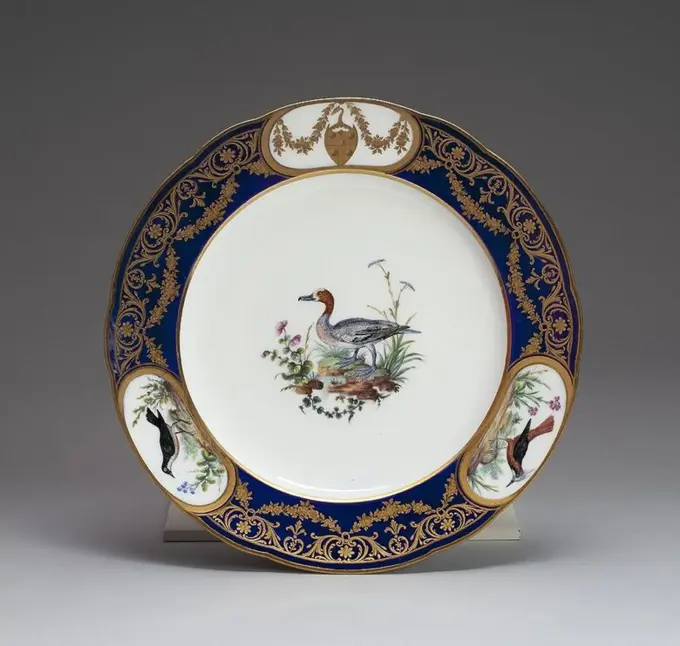
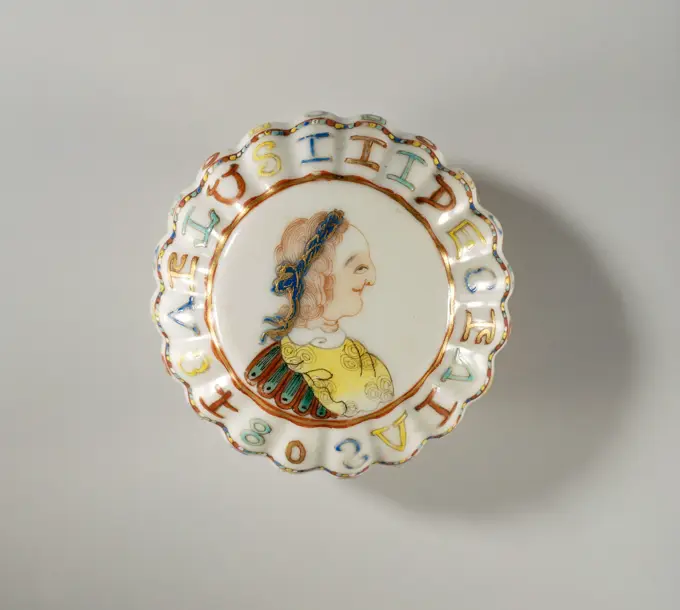
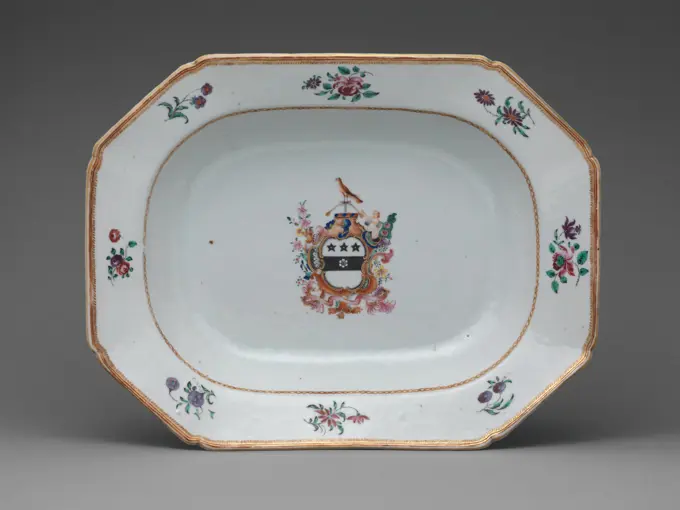
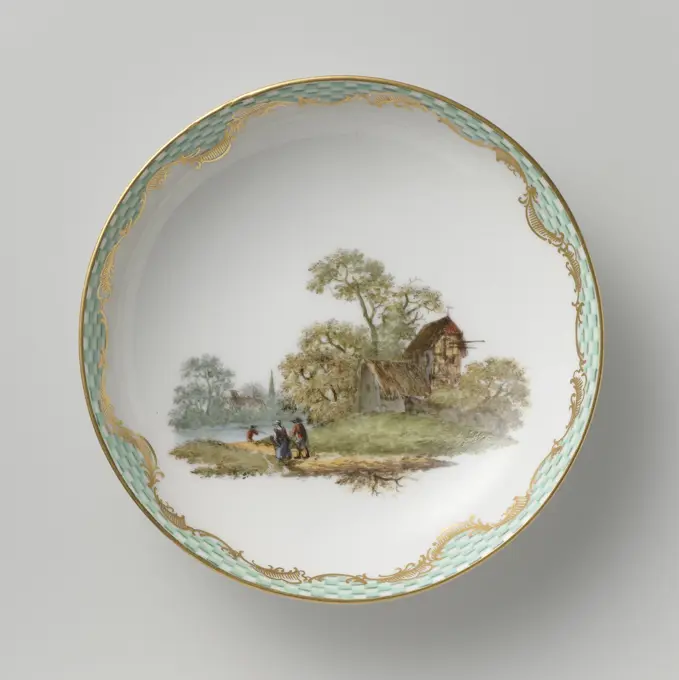
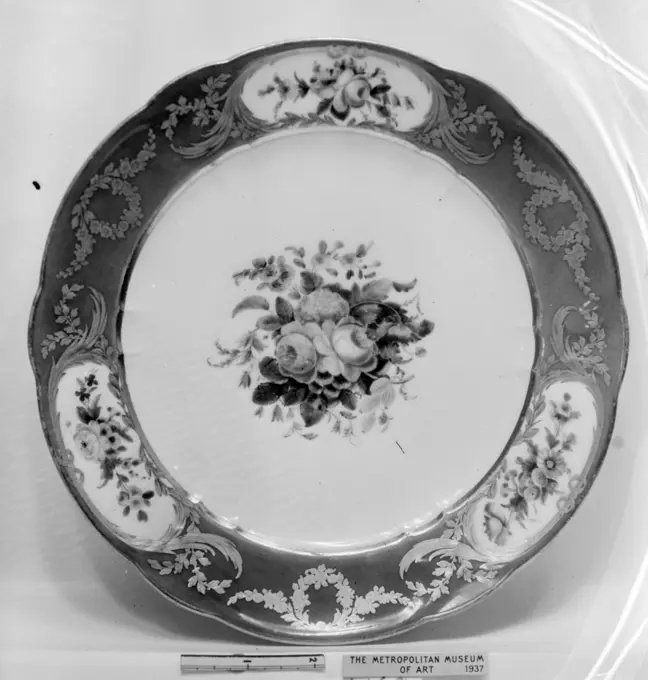
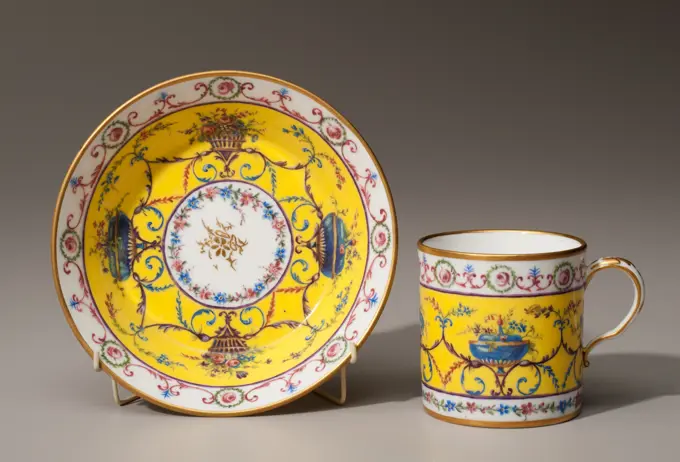
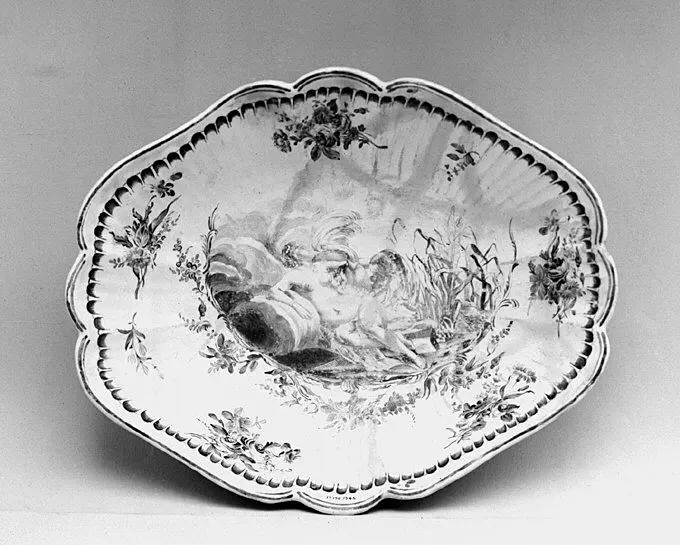
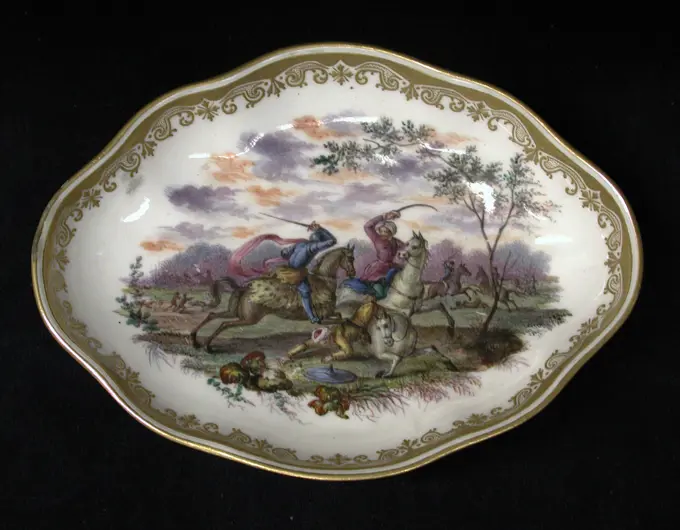
Elegant porcelain plates featuring elaborate decorations, coats of arms, and vibrant colors, reflecting artistic heritage and craftsmanship from past centuries.

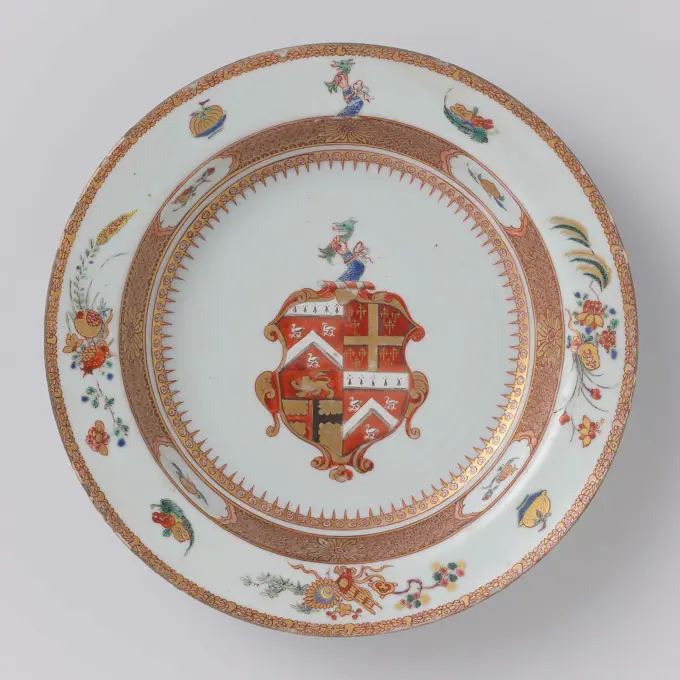
A plate from the scenes adoration of this family (shepherds);  18th century (1701-00-00-1800-00-00);
A plate from the scenes adoration of this family (shepherds); 18th century (1701-00-00-1800-00-00);
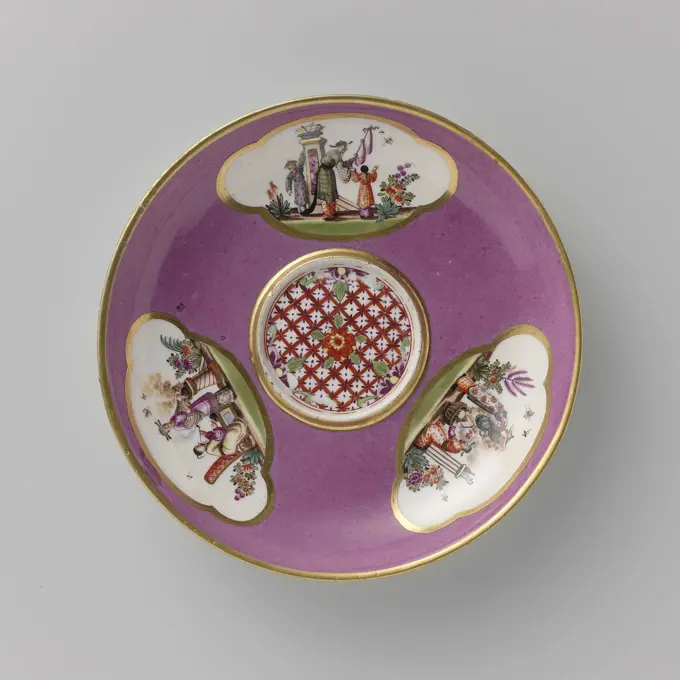
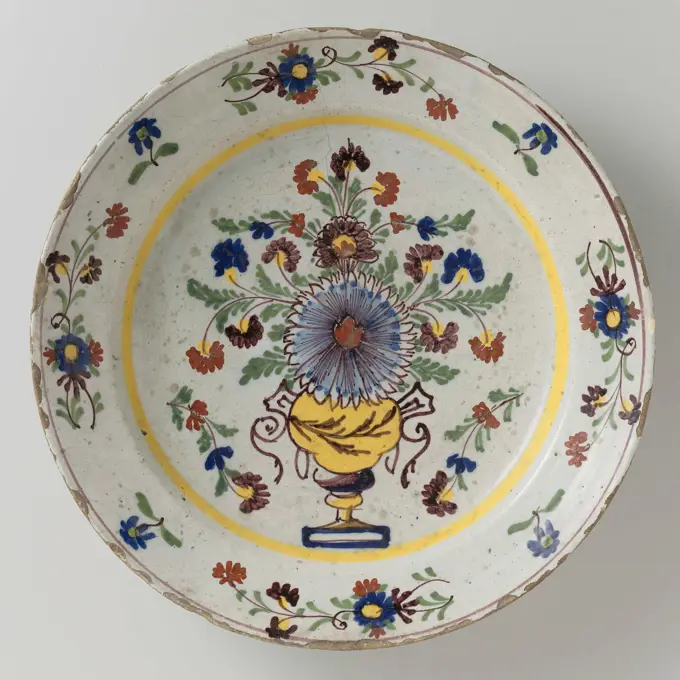
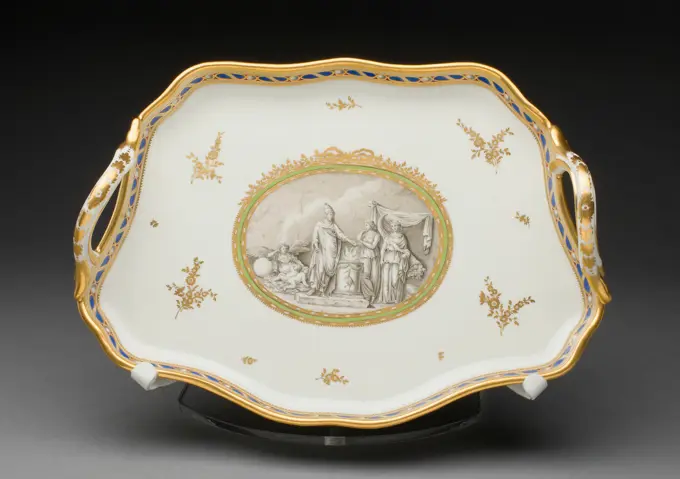
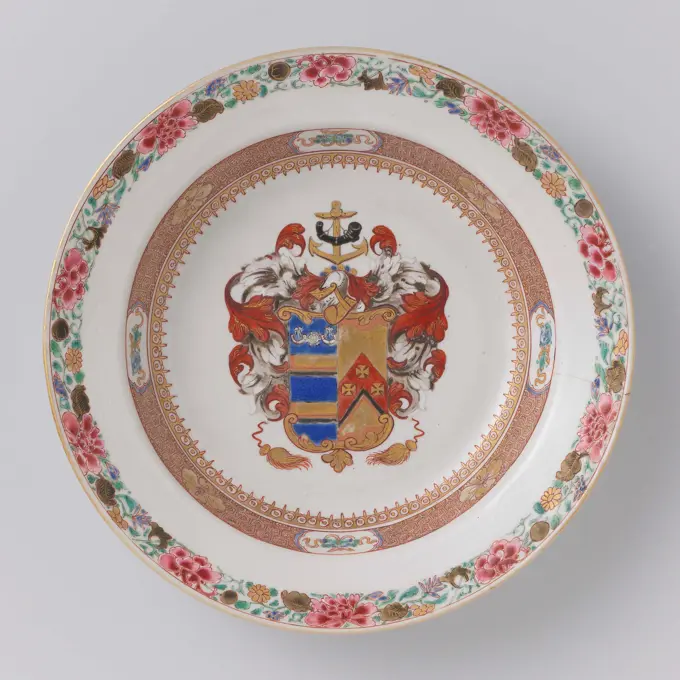
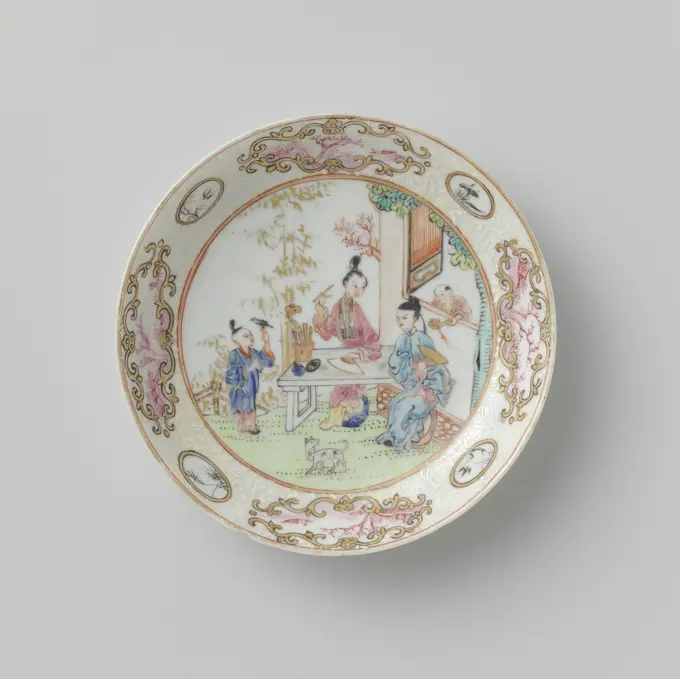
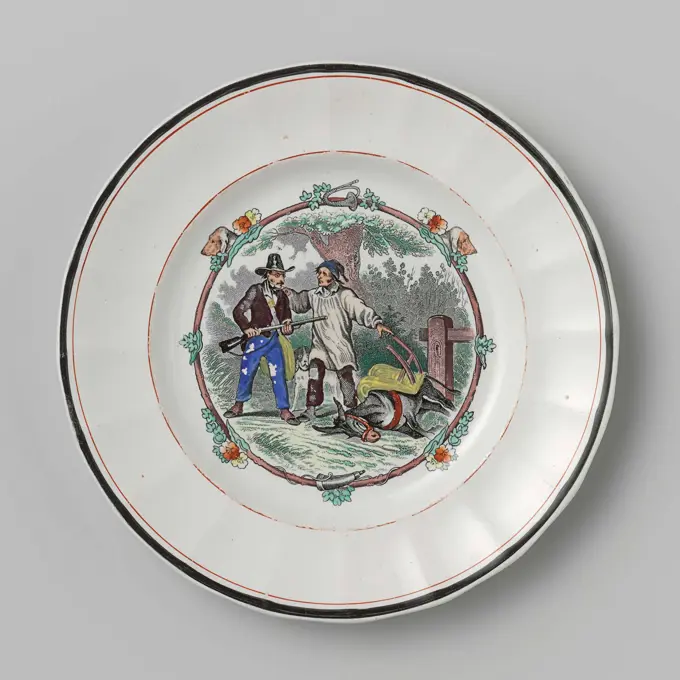
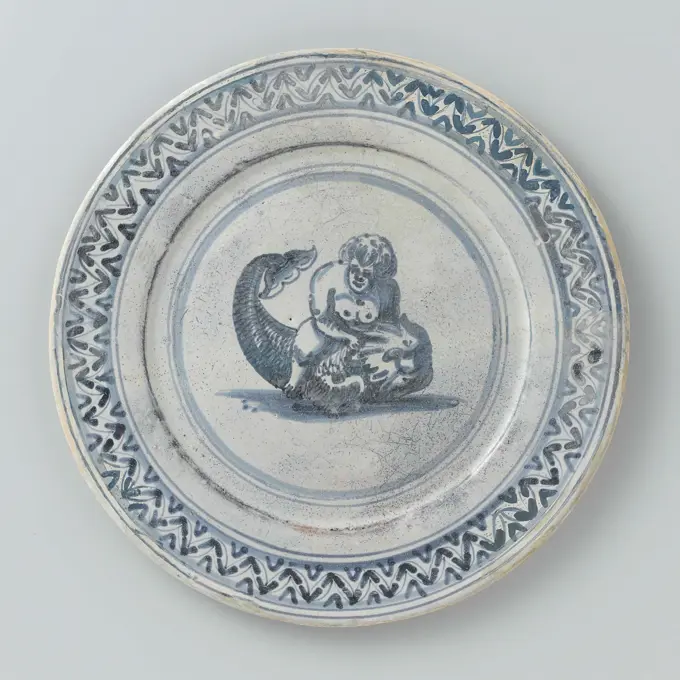
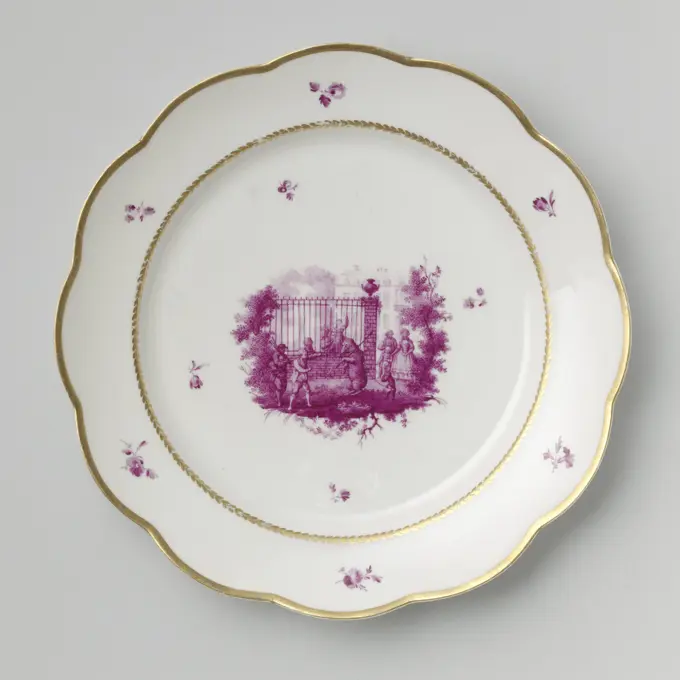
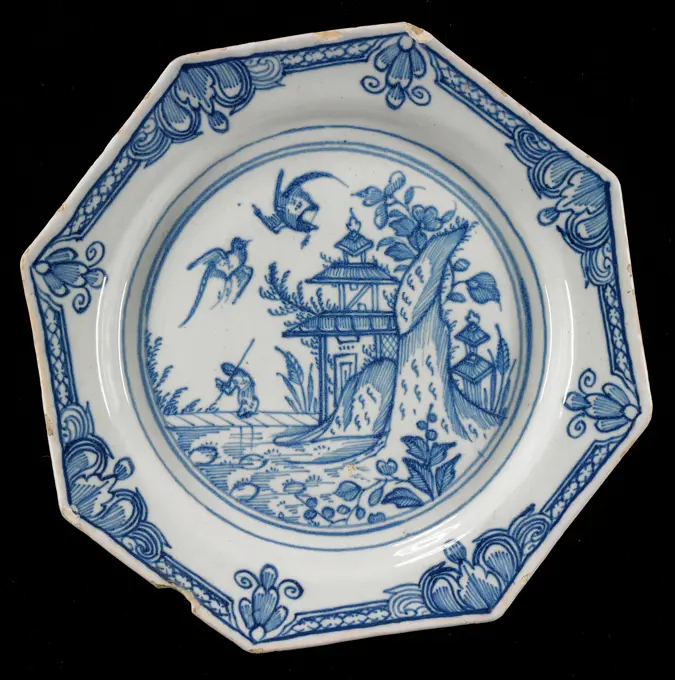
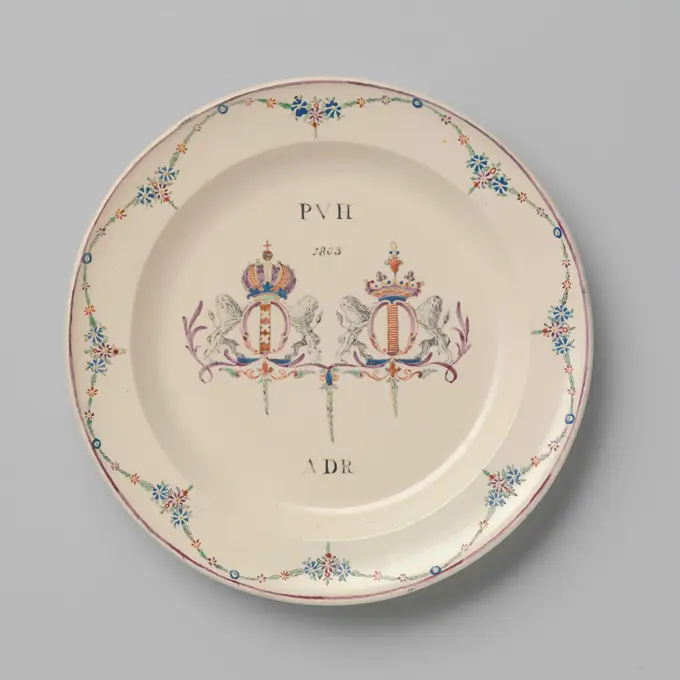
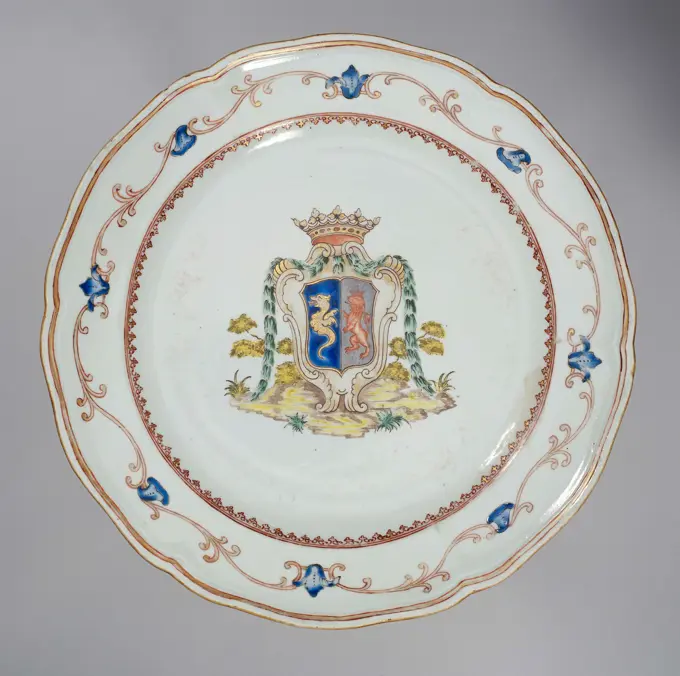
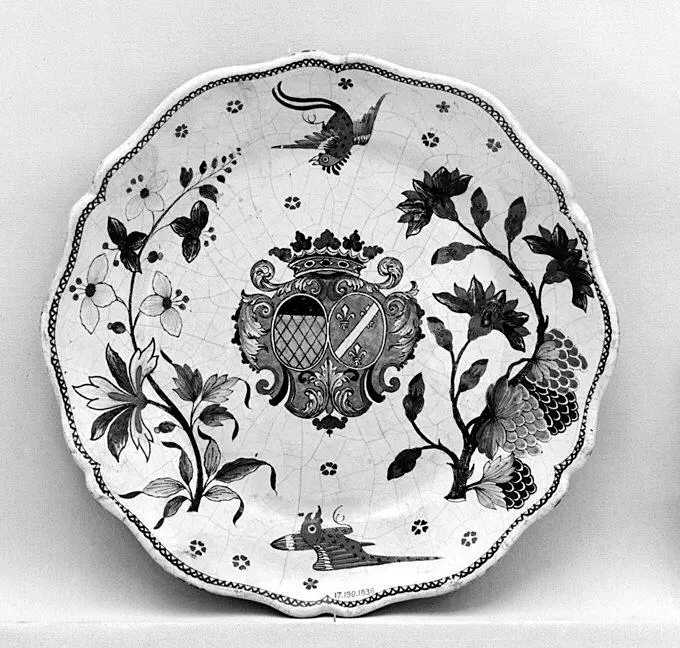
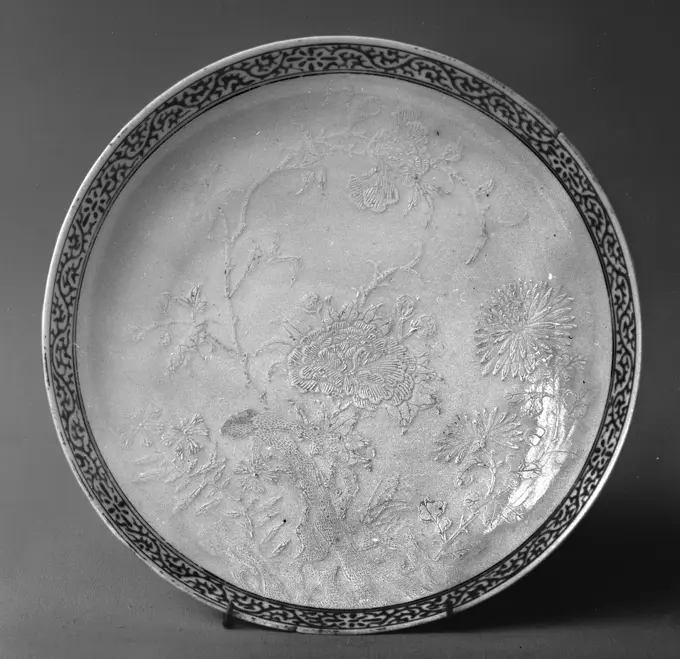
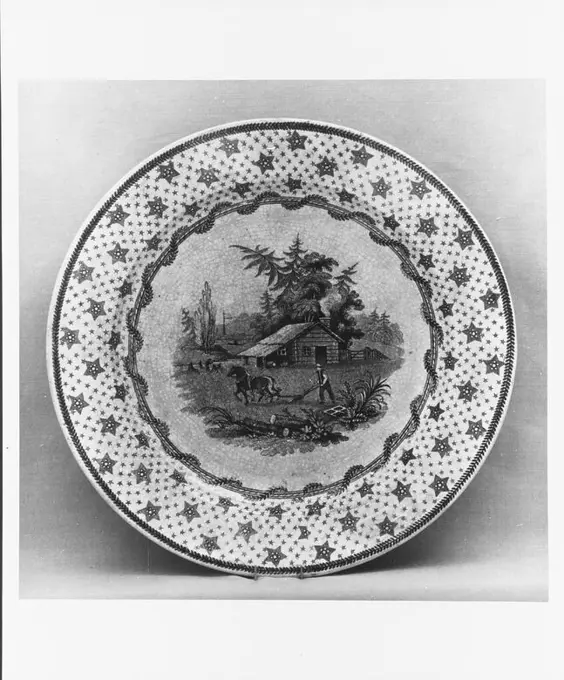
. Porcelain soup plate, painted on the glaze in blue, red, green, yellow, black and gold. On the Flat Families Sayer, Woodhave and Brooke Coat of Arms, with an arm that holds a dragon head; To the weapon a Spearhead border. On the wall a honeycomb pattern with a stylized lotus, interrupted by lobby cartouches with a fruit branch (pomegranate, peach). On the edge again the helmet mark, fruit branches, lucky symbols (Ruyi-Scepter, lotus stalk) at the 'three friends of the winter' (pine, prunus, bamboo), finger lemon on an artimisia leaf and a piece of fruit in a bowl; On the edge also a narrow band with a decorative pattern. Four flower branches on the back. Old label on the bottom with 'sayer'. Some chips and a crack in the edge. Weapon porcelain with email colors.Plate with the arms of the province of Zeeland, anonymous, c. 1700 - c. 1724 Porcelain plate, painted on the glaze in blue, red, green, black and gold. On the flat Het Wapen van Zeeland, with the inscription 'Zeelandt', with a flower branch with a bird on either side, two insects above the weapon and a flower branch under the weapon; The wall and edge are divided into twelve petal -shaped compartments alternately filled with a sitting man in a landscape, a standing woman in a landscape or flower vases; The edge with servetwork. Decoration probably from later date. Weapon porcelain with email colors. China porcelain. glaze. gold (metal) painting / gilding / vitrification Porcelain plate, painted on the glaze in blue, red, green, black and gold. On the flat Het Wapen van Zeeland, with the inscription 'Zeelandt', with a flower branch with a bird on either side, two insects above the weapon and a flower branch under the weapon; The wall and edge are divided into twelve petal -shaped compar. Round dish of faïence. Dish with a shepherds scene in Louis XIV edge on the flat in blue. Multicolored edge decoration on black ground with putti and four medallions.Platter Made 1750-1760 Jingdezhen. Hard-paste porcelain, polychrome enamels and gilding .Dish with a shepherd scene, anonymous, c. 1740 - c. 1775 Round dish from Faïence. Dish with a shepherd scene within Louis XIV Rand on the flat in blue. Multicolored edge decoration on black soil with putti and four medallions. Delft . Round dish from Faïence. Dish with a shepherd scene within Louis XIV Rand on the flat in blue. Multicolored edge decoration on black soil with putti and four medallions. Delft .A plate from the scenes adoration of this family (shepherds);  18th century (1701-00-00-1800-00-00);Dish with lion hunt n. Tempesta, Pierre Clérissy, 1680 - 1715 Dish painted in blue with on the flat riders with spears and a lion representing the lion yacht to a print by Antonio Tempesta. Moustiers-Sainte-Marie . Dish painted in blue with on the flat riders with spears and a lion representing the lion yacht to a print by Antonio Tempesta. Moustiers-Sainte-Marie .Small plate. unknown, craftsmanToy soup plate - Georgeville D'après Francis Morley, 1845-1850bord, anonymous, c. 1750 - c. 1780 Round plate of multi -colored painted faience. A flower vase and two birds are painted on the flat and a Chinese motif on the edge. The board includes three identical signs with the invnrs. BK-KOG-2424-B, BK-KOG-2424-C and BK-KOG-2424-D. Delft earthenware. tin glaze. Round plate of multi -colored painted faience. A flower vase and two birds are painted on the flat and a Chinese motif on the edge. The board includes three identical signs with the invnrs. BK-KOG-2424-B, BK-KOG-2424-C and BK-KOG-2424-D. Delft earthenware. tin glaze.Plate MieleówPlate, the flat painted with a landscape with houses, anonymous, c. 1760 - c. 1770 Round plate of painted faience. The board has a light blue stock. On the flat, a landscape with houses is painted in blue and white flowers on the edge. The board includes three identical signs (BK-NM-11334-A, BK-NM-11334-B and BK-NM-11334-C). Bristol earthenware. tin glaze. Round plate of painted faience. The board has a light blue stock. On the flat, a landscape with houses is painted in blue and white flowers on the edge. The board includes three identical signs (BK-NM-11334-A, BK-NM-11334-B and BK-NM-11334-C). Bristol earthenware. tin glaze.. Subdamer painted porcelain. The dish is covered with a violet fond. The foot ring and the edge are gold-plated and in the middle the dish has a raised ring with a golden edge. Within this ring is a red network with purple flowers on the edge and a red in the middle. The CShotel is decorated with three Höroltt-chinoiseries within shoving four passes. The dish has been marked.. Round dish of multicolored faience painted. On the flat is a vase with flowers and on the edge have been painted on the edge. The dish comes with an identical dish with Invnr. BK-NM-13354-b.Dish, anonymous, c. 1740 - c. 1770 Dish of earthenware in blue painted on tinglaze, a brown trim around the edge. On the flat a national scene. On the Rand six medallions with national performances between Lambrequins. Delft . Dish of earthenware in blue painted on tinglaze, a brown trim around the edge. On the flat a national scene. On the Rand six medallions with national performances between Lambrequins. Delft .Versailles peace. Plate, blue painted with image of a standing sword to which ribbon with inscription. In the background sun with inscription and clouds. Rear v.z.v. Two holes and iron wire to hang plate. Signature.Oval underpotel with the presentation of sitting woman, anonymous, c. 1750 Oval lobed underput with decoration in polychrome and gold from landscape with sitting to the left -sitting woman in purple costume and gray -rande hat. In the background a building, trees and scrub. Four times in turn a flower branch and an insect. Delft earthenware Oval lobed underput with decoration in polychrome and gold from landscape with sitting to the left -sitting woman in purple costume and gray -rande hat. In the background a building, trees and scrub. Four times in turn a flower branch and an insect. Delft earthenwareDish, multi -colored painted with a landscape with figures., Meissener Porzellan Manufaktur, 1777 Round dish of painted porcelain. The dish is painted with landscapes in which figures and along the edge a wide strip of green braid. The dish is marked. Float porcelain Round dish of painted porcelain. The dish is painted with landscapes in which figures and along the edge a wide strip of green braid. The dish is marked. Float porcelainBord, anonymous, 1710 - 1740 Fowence board. Multicolored painted to Japanese kakiemon example. Delft . Fowence board. Multicolored painted to Japanese kakiemon example. Delft .Plate with the arms of the Van Gellicum family, anonymous, c. 1710 - c. 1730 Plate of porcelain, painted in underly glaze blue and on the glaze red and gold. On the flat the weapon of the Van Gellicum family surrounded by leaf vines; To the weapon a band with flower ranks; Flowering plants behind a fence on the edge and at rocks; The rear with four loose flowers. A crack in the edge. Weapon porcelain in Chinese Imari. China porcelain. glaze. cobalt (mineral). gold (metal) painting / gilding / vitrification Plate of porcelain, painted in underly glaze blue and on the glaze red and gold. On the flat the weapon of the Van Gellicum family surrounded by leaf vines; To the weapon a band with flower ranks; Flowering plants behind a fence on the edge and at rocks; The rear with four loose flowers. A crack in the edge. Weapon porcelain in Chinese Imari. China porcelain. glaze. cobalt (mineral). gold (metal) painting / gilding / vitrificationTray (part of a Coffee Service) 1765-1775 Vienna. Hard-paste porcelain, monochrome black (Schwartzlot), polychrome enamels, and gilding . Vienna State Porcelain Manufactory (Manufacturer). Porcelain soup plate, painted on the glaze in blue, red, pink, green, black and gold. On the flat the arms of the families Mertins and Peck. The weapon is surrounded by leaf refrences, the helmet sign is an anchor. On the wall a tire with honeycomb pattern with flowers interrupted by four lobby cartouches with lucky symbols (Ruyi-scepter, book rolls) and a Spearhead border. On the edge a bond with flower drinks. Two cracks in the edge, one of which restored with a cram. Weapon porcelain with email colors.Saucer with two women and two boys in a fenced garden near a pavilion, anonymous, c. 1750 - c. 1774 Porcelain dish, painted on the glaze in blue, red, pink, green, yellow, black and gold. On the flat a fenced garden with trees, bamboo and two women with fan, sat at a table with objects, one holds a brush; A boy stands next to the table with a bird, the other hangs out of the window of a pavilion with a Ruyi-Scepter in his hand; A dog in front of the table; On the Rand Ranken in Bianco Sopra Bianco with round cartouches with a branch or whimsically formed cartouches with a landscape. Some chips in the edge; A crack in the wall and one in the bottom. Famle Rose/ Mandarin. China porcelain. glaze. gold (metal) painting / gilding / vitrification Porcelain dish, painted on the glaze in blue, red, pink, green, yellow, black and gold. On the flat a fenced garden with trees, bamboo and two women with fan, sat at a table with objects, one holds a brush; A boy stands next to the table with a birdSaucer (part of a service) 1770-85 Chinese, for British market. Saucer (part of a service) 201209Wedding or anniversary plate for the Dutch market, c. 1750, 1 1/16 x 9 1/4 in. (2.7 x 23.5 cm), Porcelain, China, 18th centuryPlate with a representation of two men and a dead donkey on the flat. Pottery plate with black transfer decor and upper glaze muffle colors. On the flat a representation of a hunter and a man who points to his dead donkey. Around the scene a trunk with flowers and leaves, between which hunter attributes. The edge of the board with orange-red and black fillets.Chinese, Rouge box, 1736-96, porcelain.Platter, Tin-glazed earthenware, Oval platter with scalloped edges. Monochrome green decoration shows flora and fauna with a standing figure, dog, a plumed bird, and two flying insects at center., ca. 1745, ceramics, Decorative Arts, platter, platterPlate with the arms of Holland, anonymous, c. 1700 - c. 1724 Porcelain dish with scalloped edge, painted on the glaze in blue, red, green, yellow, black and gold. On the flat Het Wapen van Holland, with the inscription 'Holland', with a flower branch with bird on either side, two insects above the weapon and a flower branch under the weapon; The wall and edge are divided into twelve petal -shaped compartments alternately filled with a sitting man in a landscape, a standing woman in a landscape or flower vases; The edge with servetwork. Two flower branches on the back. Some chips in the edge. Weapon porcelain with email colors. China porcelain. glaze. gold (metal) painting / gilding / vitrification Porcelain dish with scalloped edge, painted on the glaze in blue, red, green, yellow, black and gold. On the flat Het Wapen van Holland, with the inscription 'Holland', with a flower branch with bird on either side, two insects above the weapon and a flower branch under the weapon; The wall a. Pottery board painted in blue on tining acid with an unknown arm in the flat, possible from a member of an unknown sex of Egmond. Above a crowned mirror monogram J.V.e. The edge decorated with leafwork.Dish, multi -colored painted with chinoiseries, Meissener Porzellan Manufaktur, c. 1725 - c. 1730 Dish with handles, made of painted porcelain. Along the inside of the mouth rim runs a lace ornament in gold. The hadcases run pointy. The dish is decorated with a Höroldt chinoiseries within a four-pass. Vertical red yellow striped fields are painted around the four passes. Indianic blumes are painted on the back. The top of the handles is decorated with an ornament in gold. The dish is marked. Float porcelain Dish with handles, made of painted porcelain. Along the inside of the mouth rim runs a lace ornament in gold. The hadcases run pointy. The dish is decorated with a Höroldt chinoiseries within a four-pass. Vertical red yellow striped fields are painted around the four passes. Indianic blumes are painted on the back. The top of the handles is decorated with an ornament in gold. The dish is marked. Float porcelainDish;  around 1850-1880 (1850-00-00-1880-00-00);. Plate of faience. Blue painted with a lady on horseback with falcon and hunting dog. A counterfeit from approximately 1850-1880.Seven plates from the service of Stadtholder William v. These seven plates are from a 435-part service owned by Stadtholder William v of Orange. The service was produced in Meissen between 1772 and 1774, possibly on commission for the Dutch East India Company (VOC). The plates bear scenes of various Dutch cities and buildings, as well as views of Java and Ceylon, then important Company territories.Dish. Meissen porcelain manufactory Meissen, c. 1735 Hard Paste Porcelain. Round plate of multi-colored padded faience, with a basket of flowers in the colors blue, green, yellow and red and on the edge a multicolored Chinese motif. Four identical signs with the Invnrs are among the board. BK-KOG-2428-A, BK-KOG-2428-B, BK-KOG-2428-D and BK-KOG-2428-e.Plate ca. 1845-ca. 1853 Probably Joseph Heath. Plate. British (American market). ca. 1845-ca. 1853. Earthenware, transfer-printed. Made in Staffordshire, Stoke-on-Trent, England. Round plate of blue painted faience. On the flat is a naked figure, painted on a dolphin and along the edge a geometric band. The plate is a soil find.Saucer. China, Ming Dynasty, 17th century. Furnishings; Serviceware. Porcelain with underglaze blue painted decorationBowl with Scene of Daoist Immortals. Culture: China. Dimensions: H. 5 3/8 in. (13.7 cm); Diam. 22 1/2 in. (57.2 cm); Diam. of foot: 16 in. (40.6 cm). Date: 17th century.The color palette of cloisonné, an enamel decoration that usually features vibrant turquoises and blues, is well suited to depicting the magical landscape of Daoist immortals. Here, a supernatural being, attended by servants, arrives at a pavilion on a billowing cloud. Museum: Metropolitan Museum of Art, New York, USA.Dish or plate with dancing bear, manufacture Oud-Loosdrecht, c. 1774 - c. 1784 Plate () From porcelain. Painted in beet red with a bear in the middle of the flat that has to show his skills to bystanders. Behind it a big fence. With edges of gold. Loosdrecht porcelain Plate () From porcelain. Painted in beet red with a bear in the middle of the flat that has to show his skills to bystanders. Behind it a big fence. With edges of gold. Loosdrecht porcelainPlate China. Plate 50689Plate. Sèvres Porcelain Manufactory; French, founded 1740; Painted by Etienne Evans (French, active 1752-1806). Date: 1792. Dimensions: Diam. 24.4 cm (9 9/16 in.). Soft-paste porcelain, dark blue ground, polychrome enamels, and gilding. Origin: Sèvres. Museum: The Chicago Art Institute, Chicago, USA. Author: Manufacture nationale de Sevres.Dish ca. 1736-38 Design attributed to Cornelis Pronk Dutch The Dutch East India Company, which dominated the export of Chinese porcelains to Europe in the seventeenth and early eighteenth centuries, commissioned the Dutch artist Cornelis Pronk (1691-1759) to supply designs that could be copied on porcelain intended for export. This design of a lady with a parasol was one of Pronks most popular compositions, and was employed by Japanese porcelain painters as well.. Dish. Chinese, for Dutch export. ca. 1736-38. Hard-paste porcelain. Ceramics-Porcelain-ExportSaucer, c. 1723. Meissen Porcelain Factory (German). Porcelain; overall: 2.2 x 12.3 cm (7/8 x 4 13/16 in.).Nappy - George L. Ashworth & Brothers, 1862-1968 George L. Ashworth & Brothers, 1862-1968Dish for a ewer (bacile da versatore) ca. 1520-30 Italian, Deruta. Dish for a ewer (bacile da versatore). Italian, Deruta. ca. 1520-30. Maiolica (tin-glazed earthenware). Ceramics-PotterySaucer with a woman, man and child in a fenced garden, anonymous, c. 1750 - c. 1774 Porcelain dish, painted on the glaze in blue, red, pink, green, purple, black and gold. On the flat a man, wife and child on a rug at a table in a fenced garden with rocks and plants; The edge with leaf vines. Wand has been broken. Famle Rose. China porcelain. glaze. gold (metal) painting / gilding / vitrification Porcelain dish, painted on the glaze in blue, red, pink, green, purple, black and gold. On the flat a man, wife and child on a rug at a table in a fenced garden with rocks and plants; The edge with leaf vines. Wand has been broken. Famle Rose. China porcelain. glaze. gold (metal) painting / gilding / vitrificationDish with a weapon, Willem Jansz. Verstraeten, c. 1650 - c. 1660 Round dish of multi -colored painted faience, with a weapon with five lilies on the flat. On the edge, leaf vines and birds are painted in the colors yellow, purple and blue. Haarlem earthenware. tin glaze. Round dish of multi -colored painted faience, with a weapon with five lilies on the flat. On the edge, leaf vines and birds are painted in the colors yellow, purple and blue. Haarlem earthenware. tin glaze.. Dish of porcelain. Part of a series of Twaafl pieces. Painted with figures in a landscape in beet red and golden piping.Covered box with a portrait of Charles III of Spain, anonymous, c. 1875 - c. 1899 Box with lid made of porcelain with ribbed wall, painted on the glaze in blue, red, pink, turquoise, yellow, black and gold. On the outer wall the incomplete inscription 'Hispan et Ind Rex A 8 Reho'; A decorative band around the outer edge; A yellow flower on the bottom of the box; Within the foot ring of the box the coat of arms of Karel III. Possibly a 19th-century European copy (Samson, Paris). European performance in email colors. ChinaParis porcelain. glaze. gold (metal) painting / gilding / vitrification Box with lid made of porcelain with ribbed wall, painted on the glaze in blue, red, pink, turquoise, yellow, black and gold. On the outer wall the incomplete inscription 'Hispan et Ind Rex A 8 Reho'; A decorative band around the outer edge; A yellow flower on the bottom of the box; Within the foot ring of the box the coat of arms of Karel III. Possibly a 19th-century European copy (Samson, Paris). E. Dish of porcelain with ribbed wall and scalloped edge, painted on the glaze in blue, red, pink, green, yellow and black. On the flat of the dish a lady and a gentleman on a terrace for a table and a room screen, the Lord is kneeling and embraces the lady; The wall with a continuous floral. European performance in email colors.Charger. 'Metal Pot' Factory (Holland, Delft, 1670-1721)Cornelius van der Kloot (Holland, Delft; active circa 1667-1729). The Netherlands, Delft, circa 1720. Furnishings; Serviceware. Earthenware with tin glaze and enamelPlate 1700-1800 Dutch. Plate. Dutch. 1700-1800. Earthenware. Made in Delft, South Holland, NetherlandsPlatter 1785-90 Chinese, for American market This object belongs to a large dinner service (10.149.1-.248) bearing the Townley family coat-of-arms. The service, probably ordered by Justice Samuel Chase (1741-1811) of Annapolis, Maryland, displays the enamel-painted arms of Margaret Townley, Chase's aunt.. Platter 6540Dish, multi -colored painted with a landscape with figures., Meissener Porzellan Manufaktur, 1777 Round dish of painted porcelain. The dish is painted with landscapes in which figures and along the edge a wide strip of green braid. The dish is marked. Float porcelain Round dish of painted porcelain. The dish is painted with landscapes in which figures and along the edge a wide strip of green braid. The dish is marked. Float porcelainSoup Plate from the Hope Service Made for the Duke of Clarence 1787-1797 Worcester. Soft-paste porcelain with blue enamel, monochrome gray, and gilding . Worcester Royal Porcelain Company (Manufacturer)Urn, Glazed earthenware, transfer-printed decoration, Plate with brown transfer print with hand-colored glaze in yellow, green and blue. Design shows flaming urn framed by geometric pattern. Grotesque border., England, 19th century, ceramics, Decorative Arts, Plate, PlatePlatter from a dinner set of Count Aleksander J. Sułkowski, Sulima coat of arms. Koenigliche Porcellain Fabrique, Meissen (1710-1763), factoryDish, multi -colored painted with a landscape with figures., Meissener Porzellan Manufaktur, 1777 Round dish of painted porcelain. The dish is painted with landscapes in which figures and along the edge a wide strip of green braid. The dish is marked. Float porcelain Round dish of painted porcelain. The dish is painted with landscapes in which figures and along the edge a wide strip of green braid. The dish is marked. Float porcelainTea service with tray (déjeuner Bolvry). The Sèvres factory succeeded in making true hard-paste porcelain containing kaolin (white clay) only in 1769. Many new patterns were developed for this kind of porcelain. The painted decoration of this service was influenced by patterned calico fabric (chintz) from India and by enamel from China.. Plate painted multi-colored with an unknown family coat of arms with a unicorn and a cow. Along the edge a band consisting of spirals, flowers, shell motifs and lambrequins.Plate, 1737, 1 x 8 1/4 x 8 1/4 in. (2.54 x 20.96 x 20.96 cm), Glazed ceramic, England, 18th centuryPlate - "Damn and Waterworks, Philadelphia". Dated: c. 1936. Dimensions: overall: 20.3 x 25.4 cm (8 x 10 in.) Original IAD Object: 9 7/8" in diameter. Medium: black and white photograph. Museum: National Gallery of Art, Washington DC. Author: Helmut Hiatt.Cup and saucer ca. 1770 Worcester factory. Cup and saucer 198413Saucer With Figures in a Landscape with Trees, Rocks and Pavilions. Scale of porcelain with braco-shaped wall and edge, painted in underglaze blue. On the flat a landscape with a rider and two running people between rocks and trees. In the background two pavilions and clouds. The inner edge is with a blue band. Marked on the bottom with the six character mark of Emperor Chenghua. Four preen on the bottom. Arita, blue-white.Cup and saucer ca. 1790 Worcester factory. Cup and saucer. British, Worcester. ca. 1790. Soft-paste porcelain. Worcester factory (British, 1751-2008). Ceramics-Porcelain. Dish of painted porcelain. A lace-like ornament walks in gold along the foot edge. The dish is decorated with a Höroltt chinoiseries within a four-pass with a golden edge and surrounded by pearl luster fields and belt and leafwork. Presented are two figures and a child in a garden. The dish has been marked.Plate of hard-baked pottery, with a multicolored decoration on the glaze .. around blackboard Englishstered earthenware, with a Dutch multicolored decoration. The decoration consists of the weapons of Amsterdam and Delft and a border with garlands. At the weapons are in black the PVH and ADR monograms and the year 1803.Cup and saucer 1790-1800 Chinese, probably for British market. Cup and saucer 195538Dish 1760-70 Chinese, for Continental European market. Dish 201240Plate;  Mielów (faience and porcelain factory; 1804-); after. 19th century (1800-00-00-1900-00-00);Plate from Olympic Games” Series, The Discus”.   Maker: Thomas Mayer, British, active 1826-38. Dish of faience from a series of the five senses: the tastePlate with arms of van Herzeele, c. 1740, 9 in. (22.86 cm), Porcelain, China, 18th century. Porcelain plate, painted on the glaze in blue, red, pink, green, black and gold. On the flat the coat of arms of the Neufville family. The weapon consists of four towers and a golden Sint Andreaskruis with an anchor in the middle. The shape of the shield is in Louis XIV style. The weapon is surrounded by a coverage of leaf raft. To the weapon a Spearhead border. On the wall napkin with flour rinks. On the edge four fruit branches, three flower groups, the helmet mark and a decorative band. The back with four flower branches. A crack in the soil; A chip in the edge. Weapon porcelain with email colors.Plate ca. 1730 Vienna. Plate 206059Plate;  1775-1780 (1775-00-00-1780-00-00);Soup plate (part of a service) 1760-70 Chinese, for Danish market. Soup plate (part of a service) 201047Scale, leaf shaped. Scale of porcelain, leaf-shaped scallops, on one side with an acanthus sheet embossed. Edge and leaf with golden trim. Part of a crockery, painted in sepia with landscapes or topographical faces.Saucer With Two Figures in a Water Landscape and a Flowering Tree. Dish of porcelain with straight wall, painted on the glaze in red, black and gold. On the flat of the dish two people next to a flowering tree and a fence in a river landscape; The border with curlwork. Milk and blood.Dish ca. 1730 British, Bristol. Dish 196556Two Dishes, Het Porian, c. 1685 - c. 1690 Scale of Faïence. Multicolored painted with Chinese figures. Delft . Scale of Faïence. Multicolored painted with Chinese figures. Delft .Plate. Culture: Mexican. Dimensions: Diam. 8 5/8 in. (21.9 cm). Date: ca. 1800. Museum: Metropolitan Museum of Art, New York, USA.Blackboard with golden piping around edge and flat and painting in sepia. Porcelain plate, with golden piping around edge and flat. Part of a crockery in Sepia painted with landscapes or topographical faces. Note: Edge damage and crack.Decorative plate; Imperial Porcelain Factory in St. Petersburg (1744-1917); 1825-1855 (1825-00-00-1855-00-00);Saucer with a Chinese junk and the arms or amsterdam. Dish of porcelain, painted on the glaze in blue, red, pink, green, yellow, black and gold. On the front of the dish a Chinese jonk with crew on the waves, above the arms of Amsterdam. Weapon porcelain.Plate China. Plate 47555. Porcelain plate with wavy wall, painted on the glaze in blue, red, green, black and gold. On the flat an unidentified family coat of family with a dragon on a blue background and a crowned lion on one half. The helmet mark is a crown and the weapon dependent garlands. The weapon is based on a landscape. A Spearhead border on the wall; The edge with a European band with a shell pattern and tendrils. An unreadable inscription on the back. Weapon porcelain with email colors.Plate ca. 1740 or later French, Rouen Faience, or tin-glazed and enameled earthenware, first emerged in France during the sixteenth century, reaching widespread usage among elite patrons during the seventeenth and early eighteenth centuries, prior to the establishment of soft-paste porcelain factories. Although characterized as more provincial in style than porcelain, French faience was used at the court of Louis XIV as part of elaborate meals and displays, with large-scale vessels incorporated into the Baroque garden designs of Versailles. Earlier examples of French faience attest to the strong influence of maiolica artists from Italy. Later works demonstrate the ways in which cities such as Nevers, Rouen, Lyon, Moustiers, and Marseille developed innovative vessel shapes and decorative motifs prized among collectors throughout Europe. While faience can be created from a wide mixture of clays, it is foremost distinguished by the milky opaque white color achieved by the addition of tin Saucer late 18th century China. Saucer. China. late 18th century. Porcelain with incised decoration, painted in overglaze blue enamel. Qing dynasty (1644-1911), Qianlong period (1736-95). CeramicsPlate. Culture: British (American market). Dimensions: Diam. 7 1/2 in. (19.1 cm). Maker: John Ridgway (active ca. 1830-40). Date: ca. 1839-ca. 1840. Museum: Metropolitan Museum of Art, New York, USA.Salver, c. 1765, Whyte & Holmes; Retailer: Louisa and Samuel Courtauld; Silversmith: David Whyte; Silversmith: William Holmes, British, 1 1/2 x 13 1/8 x 13 1/8 in. (3.81 x 33.34 x 33.34 cm), Silver, England, 18th centuryPlate (part of a service) 1777 Sèvres Manufactory French. Plate (part of a service). French, Sèvres. 1777. Soft-paste porcelain. Ceramics-PorcelainSèvres Porcelain Manufactory, Cup and Saucer, c. 1790, soft-paste porcelain.Bowl 1775-1785 Staffordshire. Lead-glazed earthenware (creamware), transfer-printed .Basin 1753-95 French, Sceaux Faience, or tin-glazed and enameled earthenware, first emerged in France during the sixteenth century, reaching widespread usage among elite patrons during the seventeenth and early eighteenth centuries, prior to the establishment of soft-paste porcelain factories. Although characterized as more provincial in style than porcelain, French faience was used at the court of Louis XIV as part of elaborate meals and displays, with large-scale vessels incorporated into the Baroque garden designs of Versailles. Earlier examples of French faience attest to the strong influence of maiolica artists from Italy. Later works demonstrate the ways in which cities such as Nevers, Rouen, Lyon, Moustiers, and Marseille developed innovative vessel shapes and decorative motifs prized among collectors throughout Europe. While faience can be created from a wide mixture of clays, it is foremost distinguished by the milky opaque white color achieved by the addition of tin oxide to Bread Plate Chinese, for American market 1785-90 This object belongs to a large dinner service (10.149.1-.248) bearing the Townley family coat-of-arms. The service, probably ordered by Justice Samuel Chase (1741-1811) of Annapolis, Maryland, displays the enamel-painted arms of Margaret Townley, Chase's aunt. View more. Bread Plate. Chinese, for American market. 1785-90. Porcelain. Made in ChinaOval tray (part of a service) 1743-59 Capodimonte Porcelain Manufactory The gift of the Hans Syz Collection in 1995 endowed the Museum with nearly three hundred examples of European and Asian ceramics meticulously acquired by Swiss-born collector Dr. Syz (1894-1991) to chart the migration of models and patterns from East to West. Documenting a continuous process of influence and adaptation, these pieces provide a discriminating review of the nuances of stylistic change resulting from three centuries of trade.. Oval tray (part of a service) 208500Plate with a European Landscape With Figures, A Cow and A Village. Porcelain plate, painted in underglaze blue. On the flat a European landscape with three Europeans, two with a fence and one cow stuck on a rope. In the background a village. Five preen on the bottom. "Scheveningen sign". Blue White.