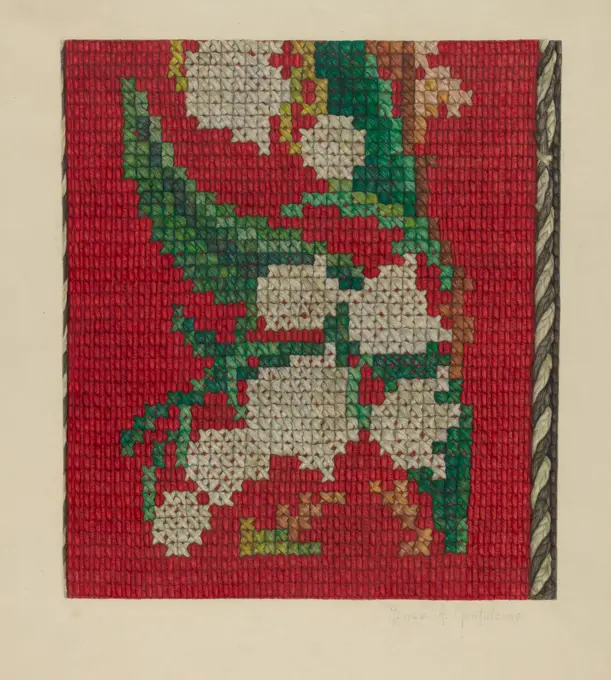
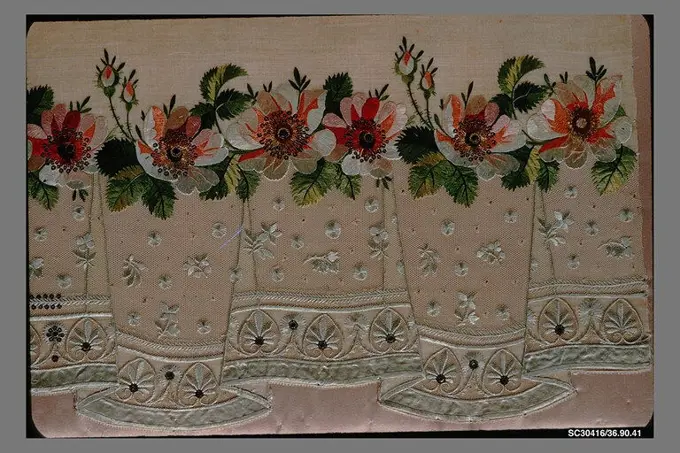
Ornate Textile Fragments

Historical textile remnants featuring floral patterns and intricate designs, showcasing different weaving techniques from the early modern period.
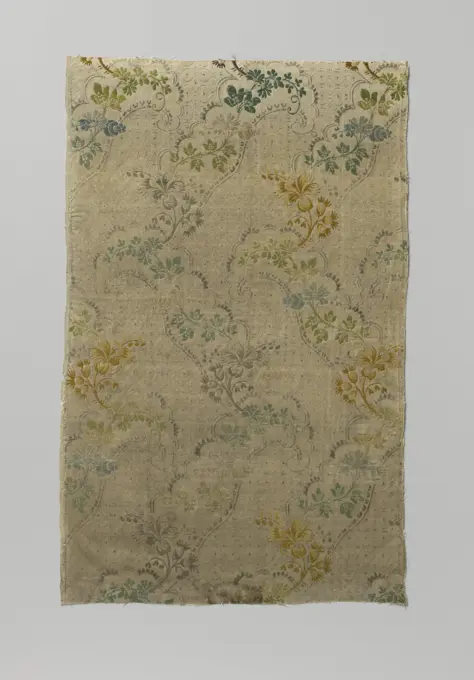
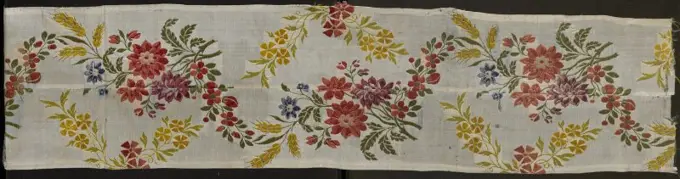
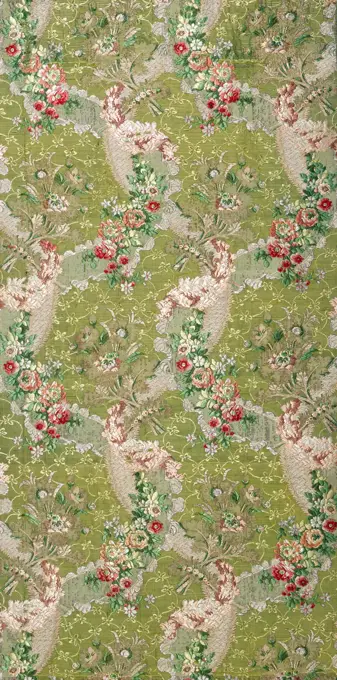
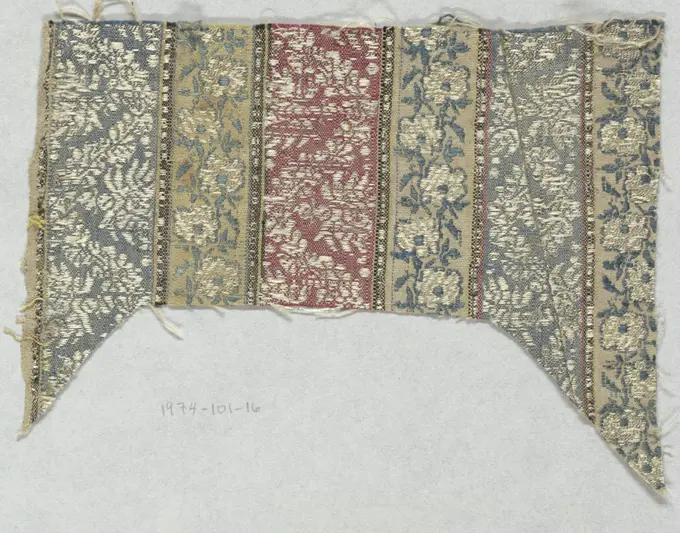
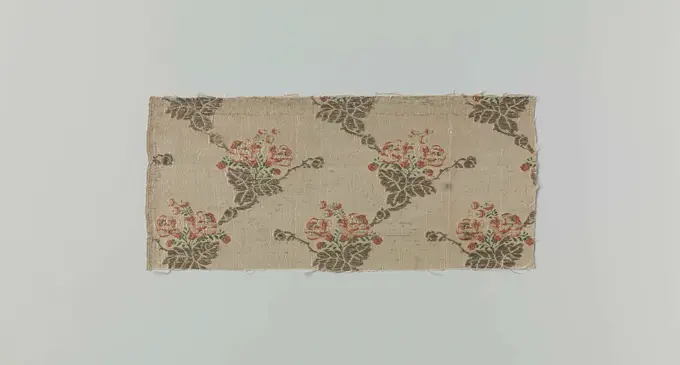
Fragment multicolored brochure silk, c. 1700 - c. 1730 Fragment multicolored silk tissue. The pattern has a gray soil on which wavy, scaly lace -like fields with saved spaces in which a multicolored flower branch. Netherlands silk twill Fragment multicolored silk tissue. The pattern has a gray soil on which wavy, scaly lace -like fields with saved spaces in which a multicolored flower branch. Netherlands silk twill
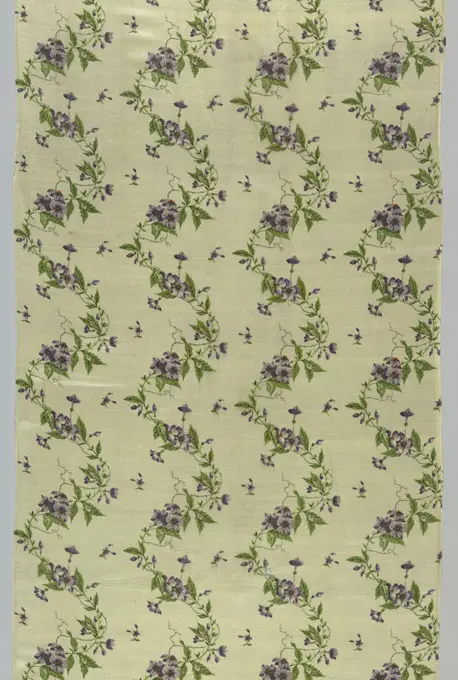
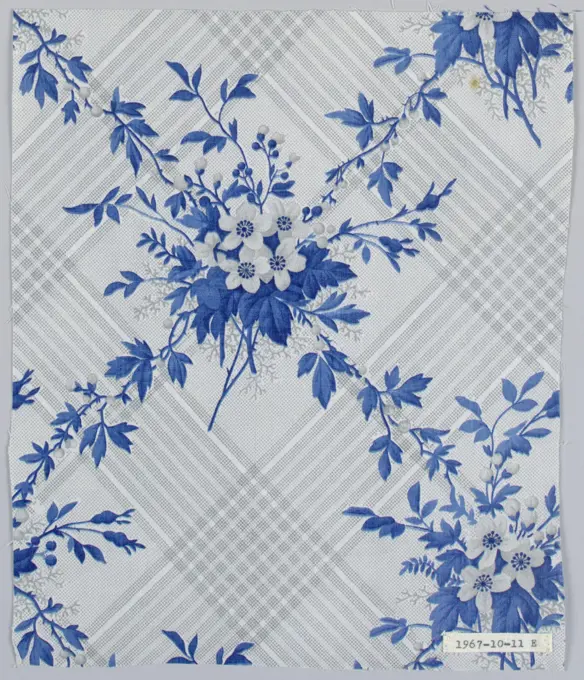
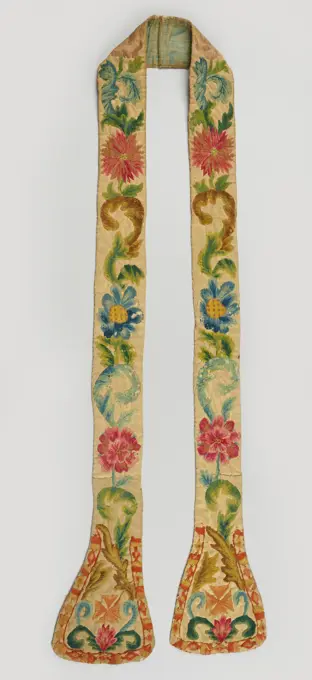
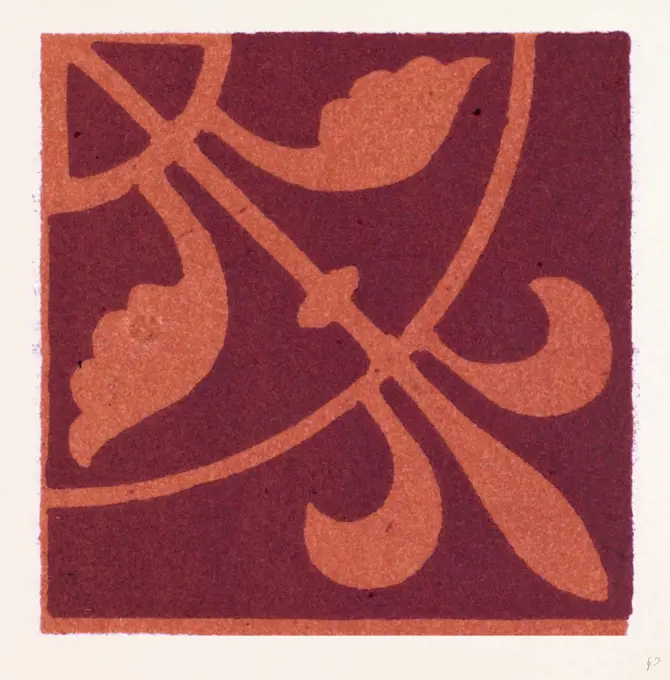
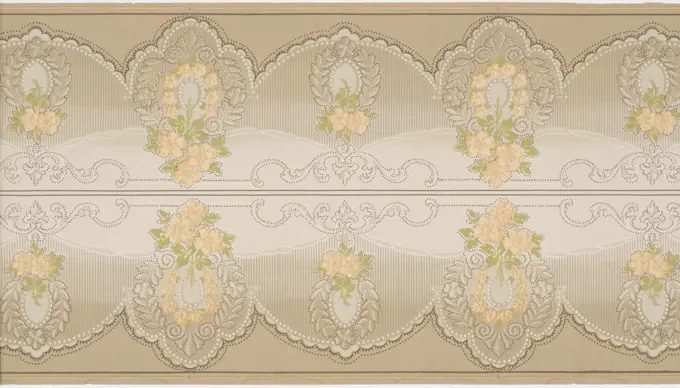
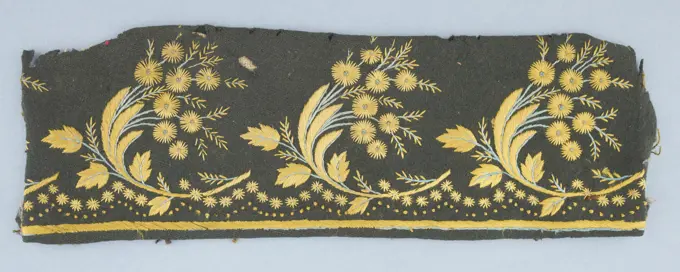
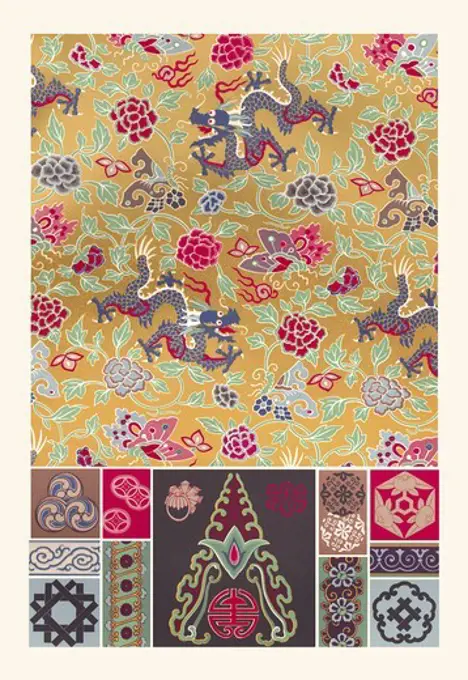
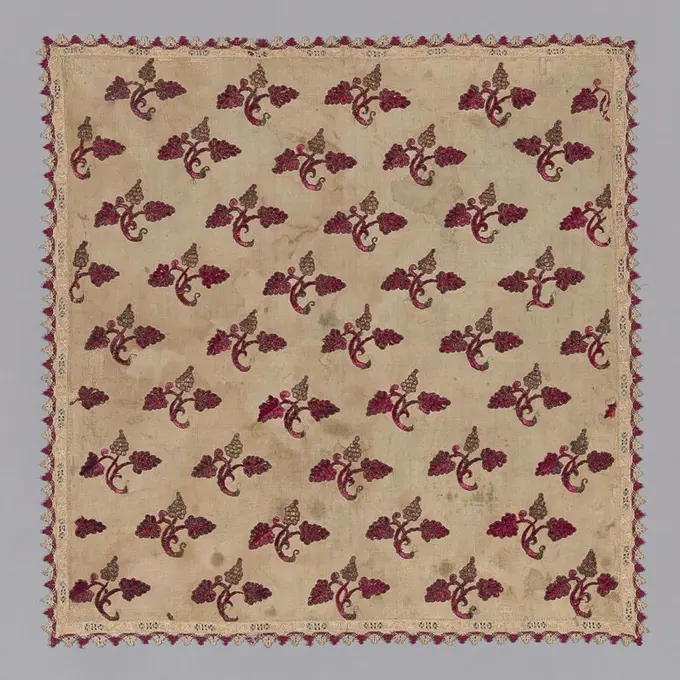
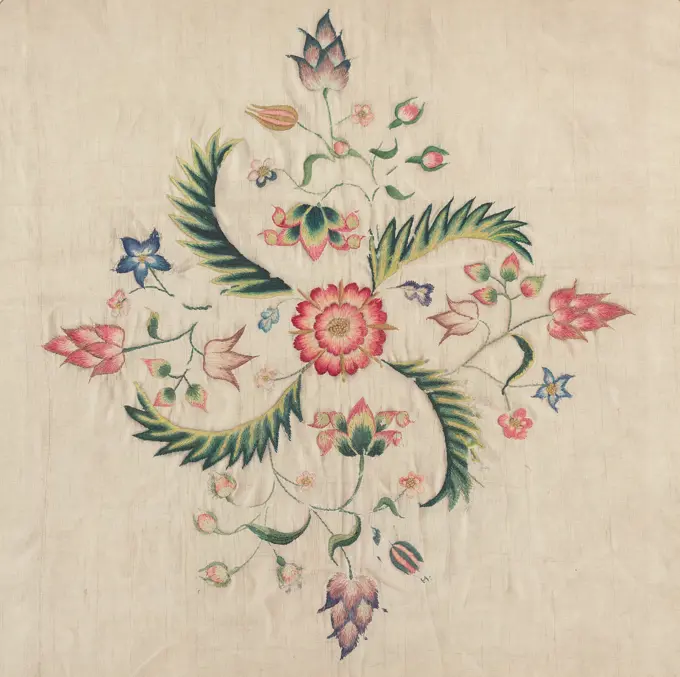
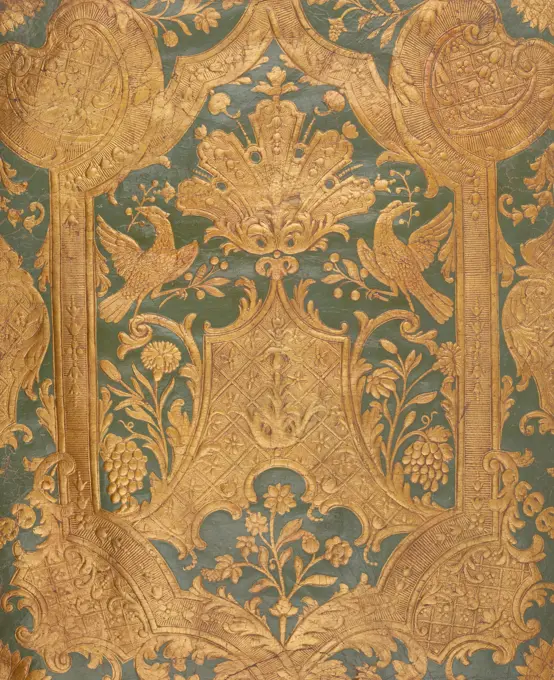
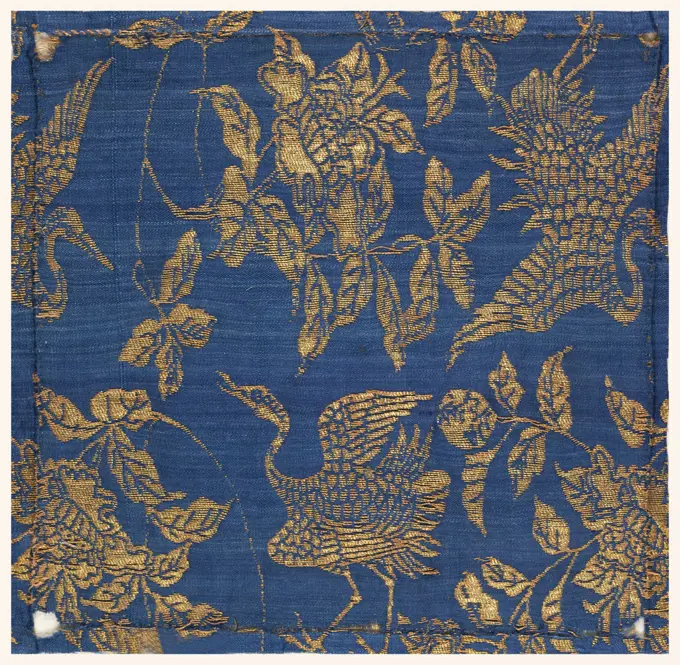
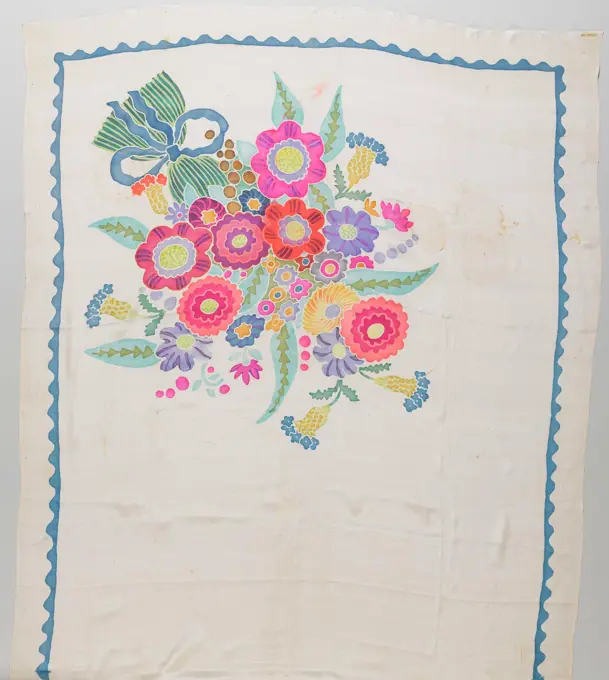
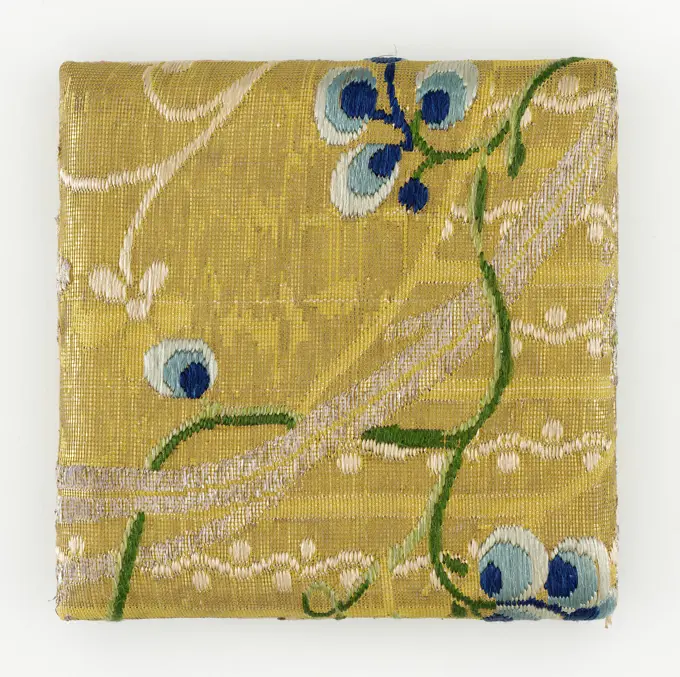
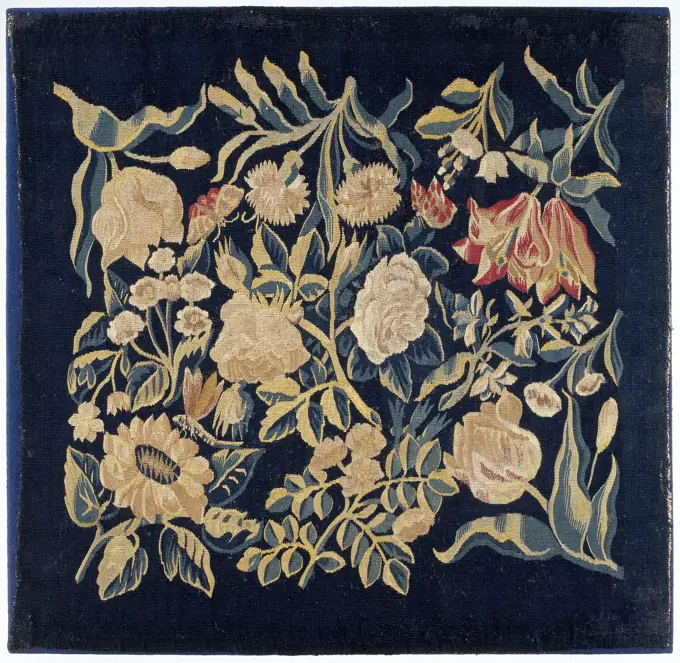
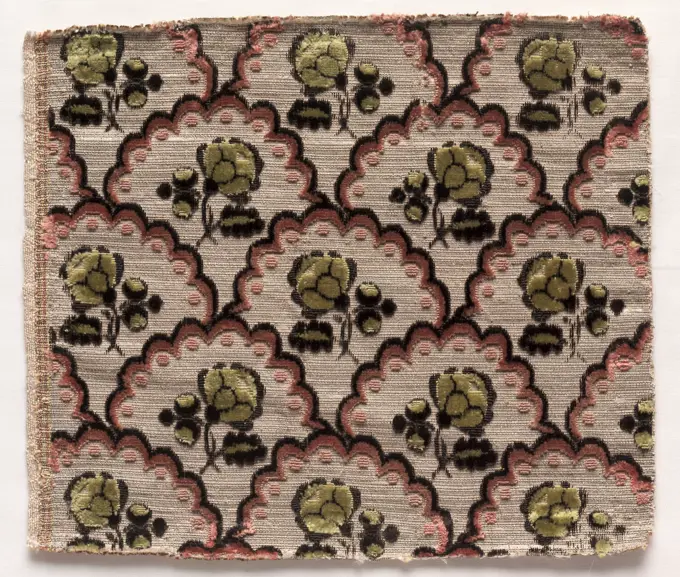
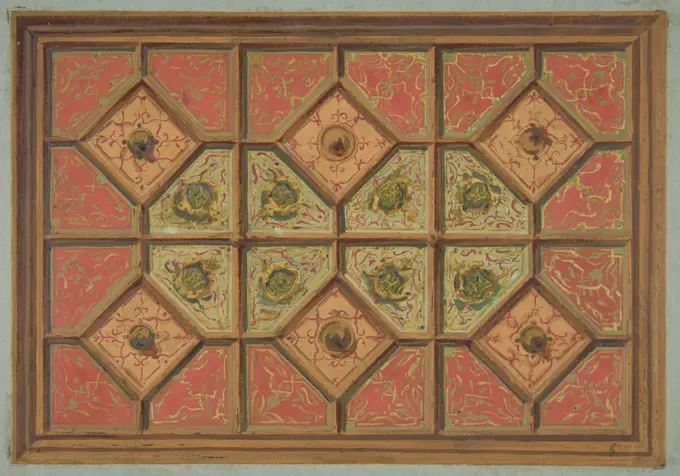
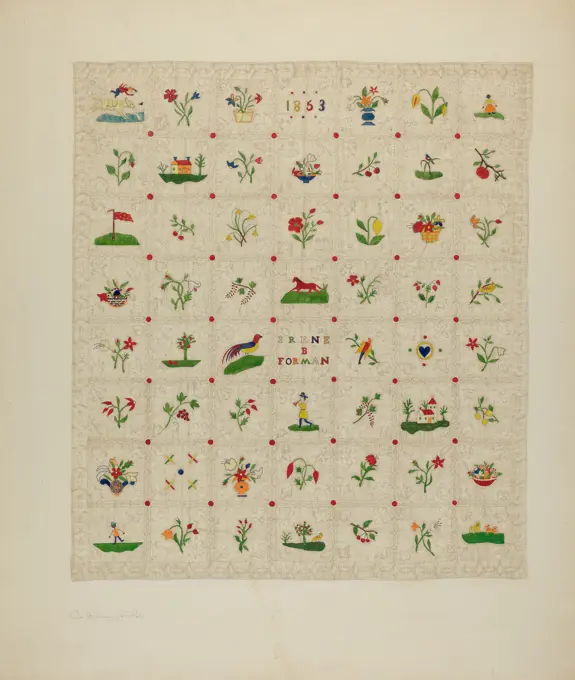
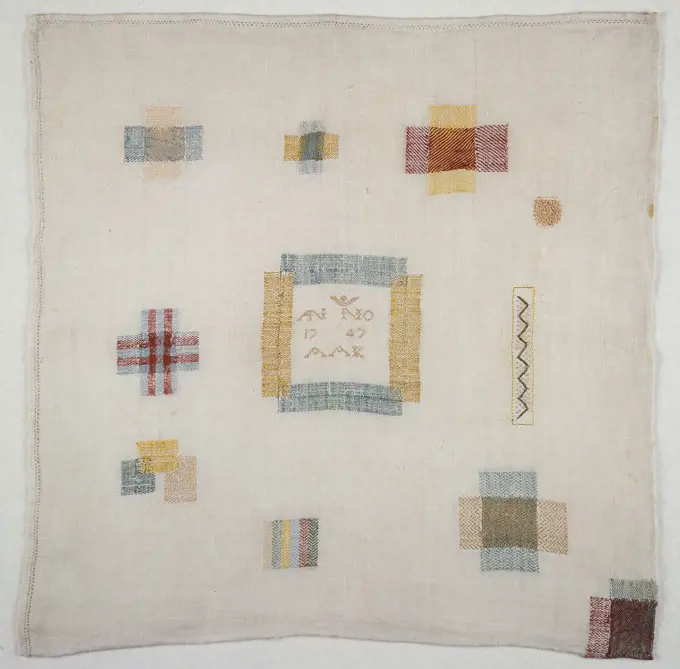
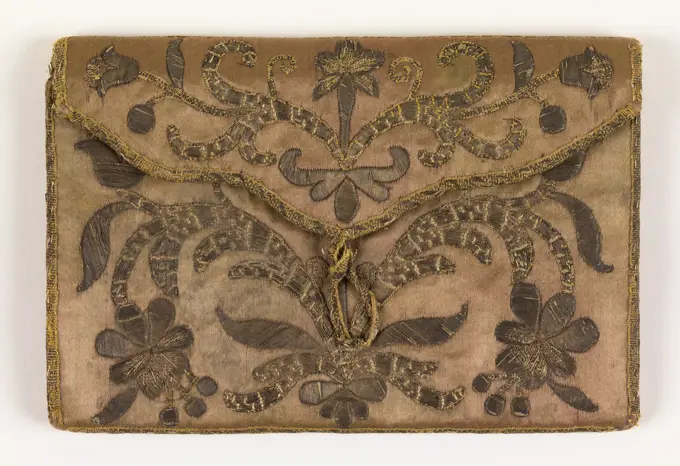
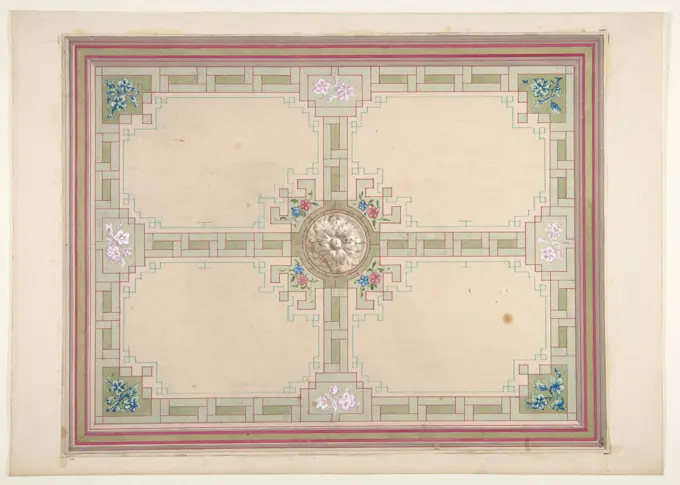
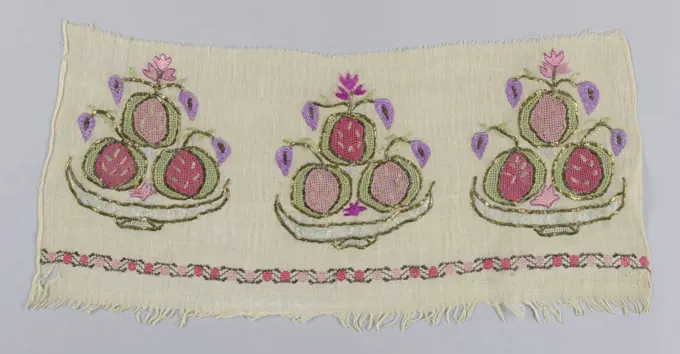
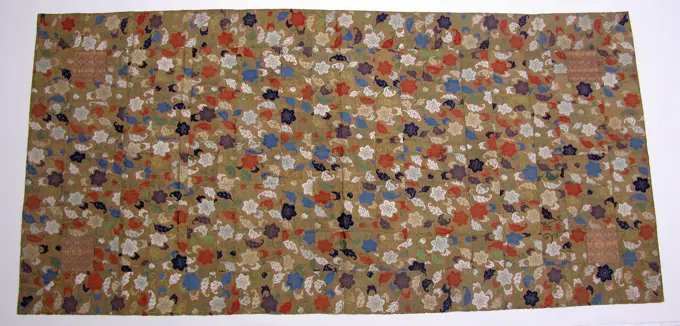
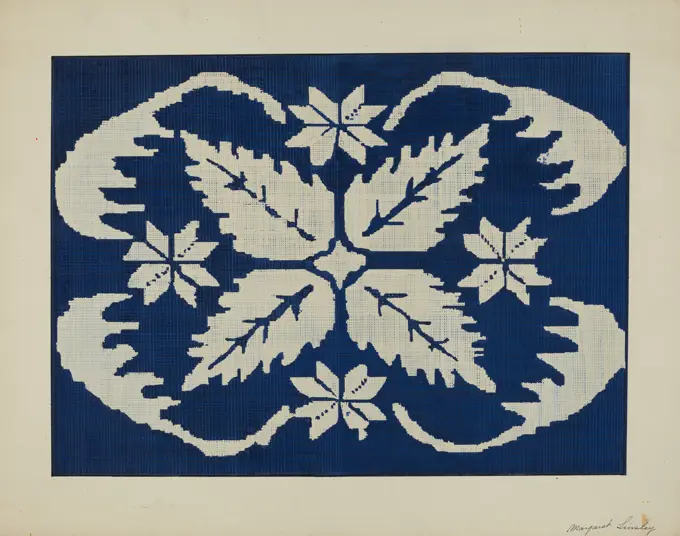
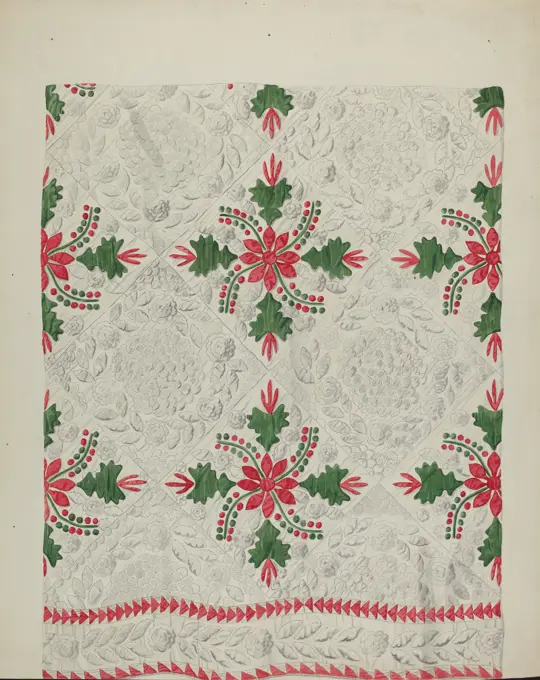
James HC Vail, Quilt, c 1937 QuiltBorder (Greece (Islands)); silk embroidery on linen foundationTextile (England); cottonBandbox Fragment (USA); machine-printed on machine made paper; 85 x 15.5 cm (33 7/16 x 6 1/8 in.) ovalPanel Made 1697-1718 England. Silk, gilt-metal-strip-wrapped silk, warp-float faced 7 1 satin weave with supplementary brocading wefts and self-patterned by ground wefts .Fragment; silk, metallic threadFragments, Medium: warp silk, weft wool Technique: block-printed, Three lengths of a vertically serpentining flowering vine pattern in lavender and green. They were originally part of the skirt of a dress., USA, 1836-40, printed, dyed & painted textiles, FragmentsTextile, Schwartz-Huguenin, Medium: cotton Technique: printed by engraved roller on plain weave, Seven pieces, same design, different colors. A) Ground printed by 'molette' in diamond-shaped design of stripes composed of minute dots in pale blue. Flower clusters in rose and dull greens, printed over background. B) Grey ground and flowers, strong green leaves. C) Grey ground, flowers old rose with green foliage. D) Grey ground, blue flowers, grey foliage. E) grey ground, grey flowers, blue-green foliage. F) lighter grey ground, flowers with strong green foliage. G) Greey ground, blue flowers, green foliage., 1851-63, printed, dyed & painted textiles, TextileSampler, Medium: linen, silk Technique: needle lace, Square sampler with eight small squares of different patterns. Cream silk satin lining., England, ca. 1790, lace, SamplerFragment, Medium: Technique: printed, USA, 19th century, printed, dyed & painted textiles, FragmentStop patch from multicolored silk on linen., 1803 Stop patch with multi -colored embroidery. The embroidery consists of the year in 1803 and a square within which the initials CVC. Netherlands linen (material). silk embroidering Stop patch with multi -colored embroidery. The embroidery consists of the year in 1803 and a square within which the initials CVC. Netherlands linen (material). silk embroideringPair of sleeves, Medium: silk, metallic yarns Technique: plain weave with discontinuous supplementary weft (brocade) Label: silk brocaded with silk and metallic yarns, Pair of sleeves which would have been tied onto an 18th century dress. Left sleeve badly faded. Coral-colored ground with a curving vine with blue and white flowers. Finished at bottom with blue binding and small bow., France, 18th century, costume & accessories, Pair of sleevesSampler Made 1852 Germany. Linen, plain weave; embroidered with wool .Sidewall - Sample (USA); Manufactured by Becker, Smith & Page, Inc.; machine-printed; 67 x 48 cm (26 3/8 x 18 7/8 in.)Chair cover, 1662-1722, L.75-7/8 x W.27-1/2 in., Silk tapestry (kesi), China, 17th-18th century, Because this textile was used as a chair cover, we can see four distinct design areas that conform to the shape of a traditional Chinese chair. The textile would have been draped over the top rail, flowing down the back of the chair and across the seat with an overhang in the front. The motif in the bottom section includes deer, peaches, fungus (known as lingzhi) and cranes - all symbols of long life. The motifs in the square design (the seat of the chair) include lotus and bats, signifying happiness. The celestial dragon on the back of the chair is a symbol the imperial court.Stole, embroidered, white unknownMedieval ornamentPiece 18th-19th century Japan. Piece 67074Ruth M Barnes, Hooked Rug, c 1936 Hooked RugPiece of fabric. unknown, authorBatisten cushion (maternity beater) With Pluguis. Batters cushion with embroidery and shadow work. The pattern has a large kidney-shaped flower with leaves and buttons in the middle. Same flower in every corner between which a row of windows interspersed by two half flowers. The pillow has an open zoom.Frieze, Machine-printed paper, Floral bouquets with ribbon garland and beading. Two borders printed across the width., USA, 1905-1915, Wallcoverings, FriezeFragment (France); cotton; 1944-22-4-bFragment, Medium: cotton Technique: plain weave foundation. Block print for two reds. Yellow applied by block or brush. Resist paste used over areas which were to remain red, yellow and white. Then the fabric immersion dyed in indigo., Brightly colored small flowers on a background of small fine leaves., France, ca. 1800, printed, dyed & painted textiles, FragmentFragment of embroidery unknownOriental Design #1, Designs & Patterns from HistoryFragment late 18th century British. Fragment. British. late 18th century. Cotton. Textiles-PrintedFragment; silk, metallicCover. Italy. Date: 1601-1625. Dimensions: 50.8 x 50.1 cm (20 x 19 5/8 in.)Embroidered: repeat: 9.5 x 9.8-10.8 cm (3 1/4 x 3 7/8-41/4 in.). Linen, plain weave; embroidered with silk and gilt-metal-strip-wrapped silk in back, hem, overcast, satin, and single satin stitches; edged with linen, needle lace worked on a plain weave cut and drawn thread work grid; and linen and silk, bobbin straight lace. Origin: Italy. Museum: The Chicago Art Institute, Chicago, USA.Textile Length. France, circa 1765. Textiles; panels. Silk plain weave with silk supplementary warp and weft patterning, silk and metallic-thread discontinuous supplementary weft patterning (brocade)Martha Elliot, Bed Hanging, 1935 1942 Bed HangingStop patch of multicolored silk and linen on cotton musline., Hendrika van Wijk, 1798 Stop patch with embroidery. The embroidery has the year anno 1798 and various colored stops. Amsterdam linen (material). silk. cotton (textile) embroidering Stop patch with embroidery. The embroidery has the year anno 1798 and various colored stops. Amsterdam linen (material). silk. cotton (textile) embroideringPart of a Bed Set Made 1875-1900 France. Cotton, plain weave; block printed and painted .Textile, Medium: cotton, glazed technique: block printed on plain weave printed by engraved roller on plain weave, Three columns of ferns and branches in three shades of green, and blue, on a machine ground of pink stippled stripes., 1870-1910, printed, dyed & painted textiles, TextileSampler, Medium: silk embroidery on linen foundation Technique: embroidered, Wreath and bands of alphabets and numerals within a floral border. Probably unfinished., Germany, early 19th century, embroidery & stitching, SamplerTextile (England); cottonFragment of cordovan upholstery unknownFragment of embroidery  flower twigs with ribbon unknownFragment, Medium: silk, paper with applied gold foil Technique: plain compound twill, Fragment of woven silk with a peony and crane motif in blue and gold., Japan, 19th century, woven textiles, FragmentChristopher Hobbs, Coverlet, c 1936 Coverlet. Scarf from crepe chine with a white fond, on which a multicolor pattern of flowers, surround with a swinging blue table.Lamb frames of white taf deposited with blue passing. Lice line for on the inside of the sky of a four-poster bed (headboard inside). The lambrem line is made from white taf off with blue passment. This label belongs to the so-called Rosendaelbed.Chasuble Fragments; silk, metallicHat of Vieux Bruxelles Kloskant, Anonymous, c. 1715 - c. 1725 Hatsbol van Kloskant. The pattern consists of a garden vase, which contains a triple branch with three carnations. Decorations in the form of feathered leaves around the vase. Brussels . Brussels bobbin lace Hatsbol van Kloskant. The pattern consists of a garden vase, which contains a triple branch with three carnations. Decorations in the form of feathered leaves around the vase. Brussels . Brussels bobbin laceSidewall (USA); Manufactured by E.S.; machine-printedFragment, Medium: silk Technique: woven, Fragment of blue silk with rows of multicolored curling floral sprigs. Sprigs change direction in alternate rows., Iran, 18th-19th century, woven textiles, FragmentWoman's Compact. France, 20th century, textile from 1760s. Costumes; Accessories. Brocaded silkLeather; leather, stamped, embossed, silvered, varnished,Piece 18th century Japan. Piece 71827Bedspread Made 1701-1725 England. Linen, tabby; backed with coarser linen, embroidery thru top layer only. Embroidered in silk floss.Stitches Back, chain, satin, running cross, herringbone, buttonhole, fishbone, speckling .Gobelin chair cover;  1. PO. 20th century (1901-00-00-1950-00-00);Darning sampler, Medium: silk embroidery on linen foundation Technique: embroidered in running (pattern darning) and cross stitches on plain weave foundation, Nine darning squares with initials and date in the center. One square simulates knitting., 1852, embroidery & stitching, Darning samplerWrapping cloth (uchikui), 19th century, Unknown Ryukyuan, 42 1/2 × 37 1/2 in. (107.95 × 95.25 cm), Cloth: ramie; tsutsugaki (freehand resist), Japan, 19th centuryPiece 18th century Japan. Piece 71824Chasuble;  18th century (1701-00-00-1800-00-00);Textile (England); cottonChair covering with a flower pattern, anonymous, c. 1650 - c. 1660 Tapisserie chair covering. On a blue-black stock there is a square with leaves and flowers. In the middle a pink and a white lunar dry; Red lilies, two pink-orange tulips, a sunflower (or poppy) In orange on the corners. In the middle of the sides in a smaller format a carnation, dune rose and knight spur. Between the flowers a dragonfly and two butterflies Northern Netherlands Ketting: Wool. Entry: Wool. Entry: Silk tapestry Tapisserie chair covering. On a blue-black stock there is a square with leaves and flowers. In the middle a pink and a white lunar dry; Red lilies, two pink-orange tulips, a sunflower (or poppy) In orange on the corners. In the middle of the sides in a smaller format a carnation, dune rose and knight spur. Between the flowers a dragonfly and two butterflies Northern Netherlands Ketting: Wool. Entry: Wool. Entry: Silk tapestrySketchbook, 1759-1773, by John Greenwood Senior. Gift of Mrs Mary Watt, 2002.Sampler 18th century German. Sampler 217902Textile Fragment, 1774-1793. France, late 18th century, Period of Louis XVI (1774-1793). Velvet (cut, uncut, and voided); silk and gold thread; overall: 15.9 x 18.4 cm (6 1/4 x 7 1/4 in.).Border; machine-printed paper; L x W: 75 x 47 cm (29 1/2 x 18 1/2 in.)Ribbon of white ripszijde decorated with brochure work in the form of a field bouquet around which flying birds are depicted, anonymous, c. 1830 - c. 1840 Ribbon of white ripszijde decorated with brooching work in the form of a field bouquet around which flying birds are depicted. Lyon (possibly) whole: Silk. ribbon: Ribbon of white ripszijde decorated with brooching work in the form of a field bouquet around which flying birds are depicted. Lyon (possibly) whole: Silk. ribbon:Fragment, Medium: linen warp, cotton weft Technique: block printed and painted on plain weave, Leaves and feathers facing various directions on a red picotage background., France, 1770-79, printed, dyed & painted textiles, FragmentSample Book, Wallpaper Samples; Manufactured by Sears, Roebuck and Co. (United States); USA; machine-printed on paperSamples, Orinoka Mills, (Philadelphia, Pennsylvania, USA), a. pink ground with bright pink and green, b. pink ground with bright pink and gold, USA, ca. 1910, woven textiles, SamplesFragment; silk, metallic woven; Warp x Weft: 70.4 x 13.7 cm (27 11/16 x 5 3/8 in.)Lodden, William Morris, (British, 1834-1896), Merton Abbey, Medium: cotton, linen Technique: indigo discharge and block-printed on plain weave, Flowers, leaves and curving vines in pink, yellow, blue and green with black outlines on a white ground., Wandsworth, England, 1884, printed, dyed & painted textiles, Textile, TextileDesign for the painted decoration of a coffered ceiling incorporating the initial: H 1830-97 Jules-Edmond-Charles Lachaise French. Design for the painted decoration of a coffered ceiling incorporating the initial: H 384877Fragment (Japan)Textile; Manufactured by Schwartz-Huguenin; cottonCatherine Fowler, Bedspread, c 1940 BedspreadFragment (England); cottonDarning sampler worked in colored silk on bleached linen, marked AAK 1747, stoplap needlework image linen silk, textile stop embroidery open stitching Square linen stopper with on the top and left border with open hemstones right and under hem edge of 0.4 cm . In the middle is an insertion stop with in the heart an embroidery in cross stitch The stoppers are made in the colors blue orange golden yellow carmine red turquoise green and light blue and irregularly distributed over the patch embroided: ANNO 1747 AAK crafts manual craft educationSampler (Italy); silk embroidery on linen foundationPurse; metal thread on silkFragment gebrocheerde zijde.Fragment of bordered white silk with red and green silk flowers and leaves of gold and silver wire. Self side effect.Fragment (France); crewel wool on cottonDesign for a ceiling with floral accents and Greek key border second half 19th century Jules-Edmond-Charles Lachaise French. Design for a ceiling with floral accents and Greek key border. Jules-Edmond-Charles Lachaise (French, died 1897). second half 19th century. Graphite, gouache, adn watercolor. DrawingsBorder fragment, Medium: cotton, silk, metallic thread Technique: embroidered, Border fragment embroidered in a multicolored design of stylized fruit and flowers in a shallow bowl. Zigzag border with dark and light pink dots., Turkey, 19th century, embroidery & stitching, Border fragmentBuddhist Vestment (Kesa) with Clematis Flowers, Leaves, and Vines 17th century Japan Buddhist vestments were usually made from donated textiles or from garments that were cut into pieces and then assembled into patchwork onfigurations. Such donations constitute shôgon, or adornment of the Buddharealm, an act that results in the accumulation of karmic merit for the donor.This kesa consists of a type of cloth called karaori, in which the design is brocaded in long, floating silk wefts of many colorsnine colors in this fine example. The same kind of cloth was used for a Noh costume also called karaori, usually worn as an outer robe by an actor playing a female role.. Buddhist Vestment (Kesa) with Clematis Flowers, Leaves, and Vines 68311Micro petit point bag in white and beige cloth with floral patterns, Italy, early 20th century.Margaret Linsley, Coverlet Section, c 1940 Coverlet SectionEurope, France, Aix En Provence. Provencial fabricsFrieze (USA); Manufactured by Pittsburg W.P. Co.; machine-printed paper; 91.5 x 49.5 cm (36 x 19 1/2 in.)Sampler. Date/Period: 1757. Sampler. Medium: silk embroidery on linen foundation. Technique: cross, satin, stem and knot stitches on plain weave. Author: UNKNOWN.Textile (USA); birch bark embroidered with dyed porcupine quillsCope hood. Date/Period: 1695-1715. Cope hood. Medium: silk, metallic threads. Technique: 4&1 satin damask patterned by discontinuous supplementary wefts (brocaded damask). Height: 520 mm (20.47 in); Width: 510 mm (20.07 in). Author: UNKNOWN.Textile (France); silkRenee A Monfalcone, Afghan, c 1941 AfghanSampler 19th century Spanish. Sampler 228205Dress border early 19th century French. Dress border 223147Textile; cottonTile, Anonymous, 1700 - 1800 Four tiles of earthenware, painted in blue, yellow, green, orange and manganese, leaf rosette of which the center is formed by an eight -pointed star in blue and white. (In modern wooden frame). Spain earthenware Four tiles of earthenware, painted in blue, yellow, green, orange and manganese, leaf rosette of which the center is formed by an eight -pointed star in blue and white. (In modern wooden frame). Spain earthenwareFrieze (USA); Manufactured by W.H. Mairs & Co.; machine-printed paperVintage Christmas cardPocket book, Medium: silk; paint Technique: painted, Four country scenes with floral borders are painted on silk and trimmed with blue ribbon., France, 18th century, costume & accessories, Pocket bookFragment decorated with butterflies, flowers, and grasses, 19th century, Unknown Ryukyuan, 99 1/2 × 14 3/8 in. (252.73 × 36.51 cm) (overall), Cloth: cotton; bingata (stencil resist with applied pigments), Japan, 19th centurySampler, Medium: silk embroidery on linen foundation Technique: embroidered in cross stitch on plain weave foundation, Assortment of religious and secular motifs including Adam and Eve with the tree and the coat-of-arms of the city of Hamburg. Two alphabets and a set of numerals at the top. Initials and date in central cartouche at top supported by two angels., Hamburg, Germany, 1741, embroidery & stitching, SamplerPart of a rose pattern carpet, anonymous, in or after 1907 - 1929 photomechanical print   paper. cardboard  carpet, rug. flowers ~ ornamentRed and White Table Napkin. Dated: c. 1939. Dimensions: overall: 40 x 41.4 cm (15 3/4 x 16 5/16 in.). Medium: watercolor and graphite on paper. Museum: National Gallery of Art, Washington DC. Author: Arthur G. Merkley.