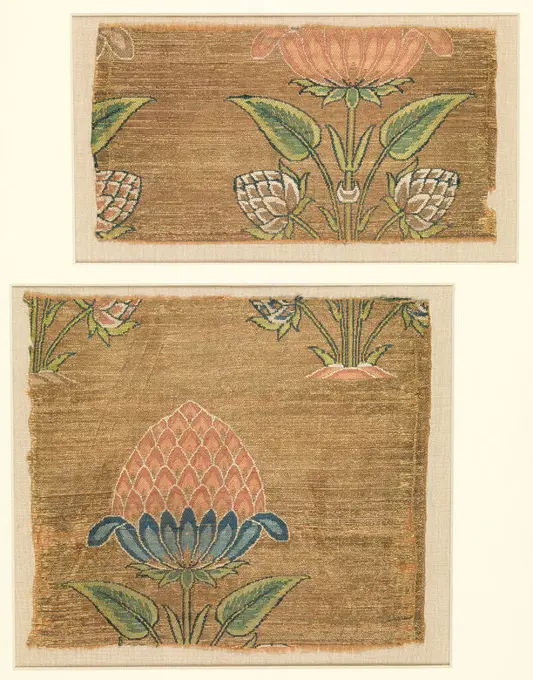
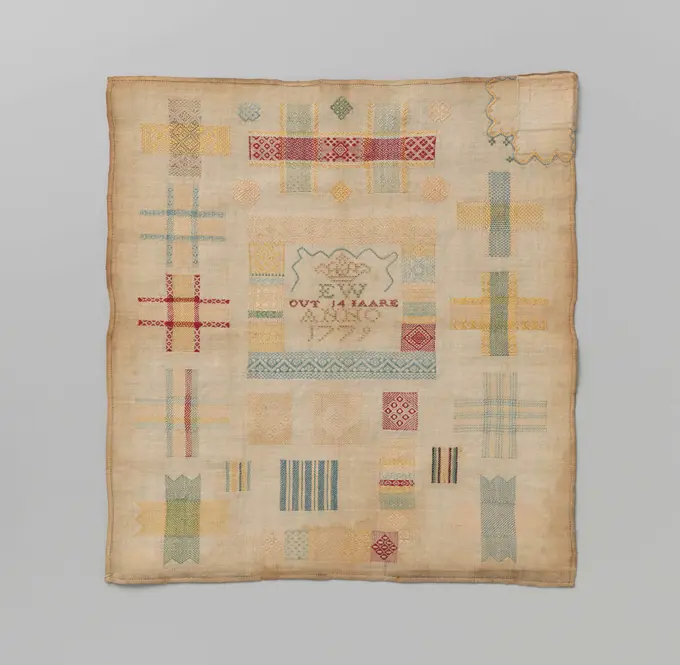
Ornate Textile Fragments

Historical textile remnants featuring floral patterns and intricate designs, showcasing different weaving techniques from the early modern period.
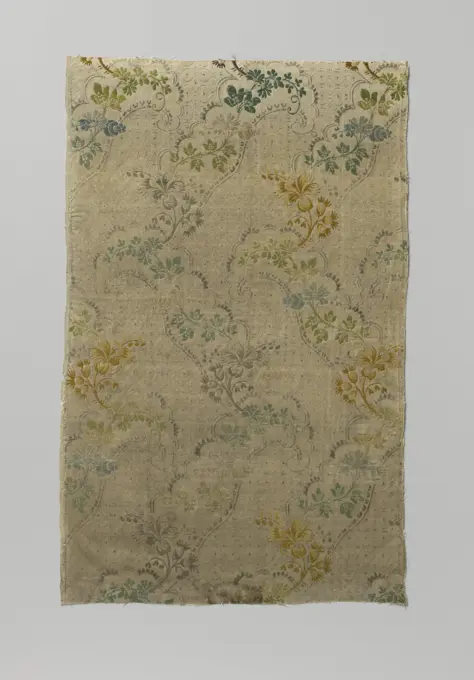
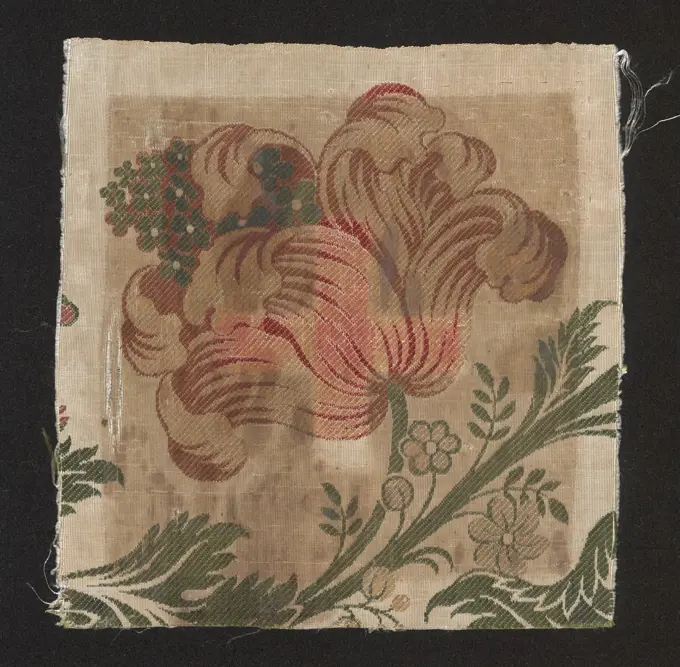
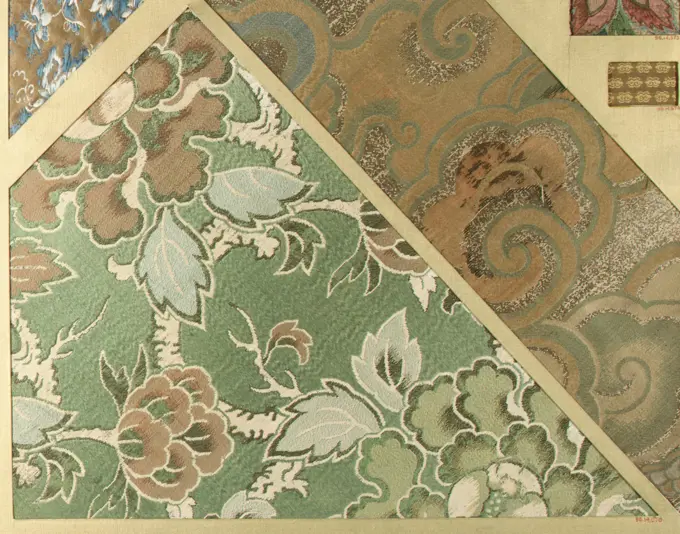
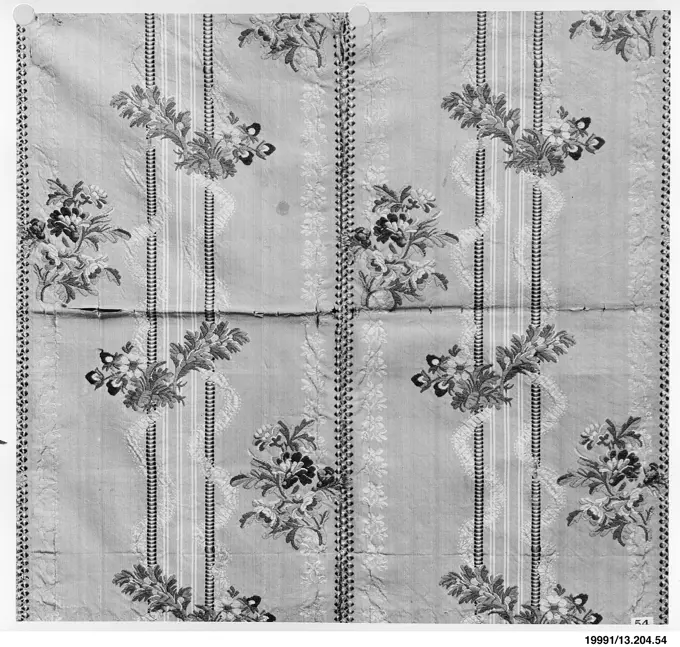
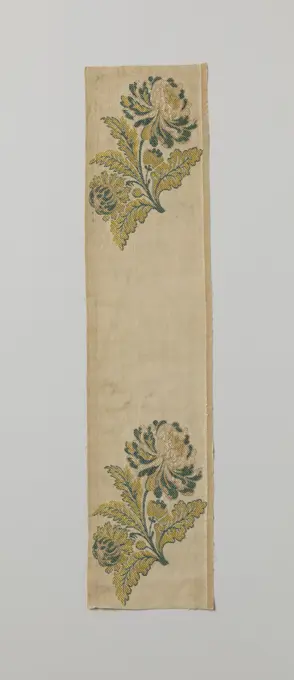
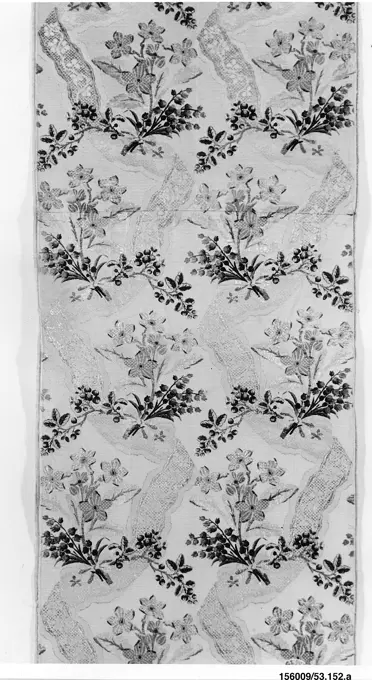
Fragment multicolored brochure silk, c. 1700 - c. 1730 Fragment multicolored silk tissue. The pattern has a gray soil on which wavy, scaly lace -like fields with saved spaces in which a multicolored flower branch. Netherlands silk twill Fragment multicolored silk tissue. The pattern has a gray soil on which wavy, scaly lace -like fields with saved spaces in which a multicolored flower branch. Netherlands silk twill
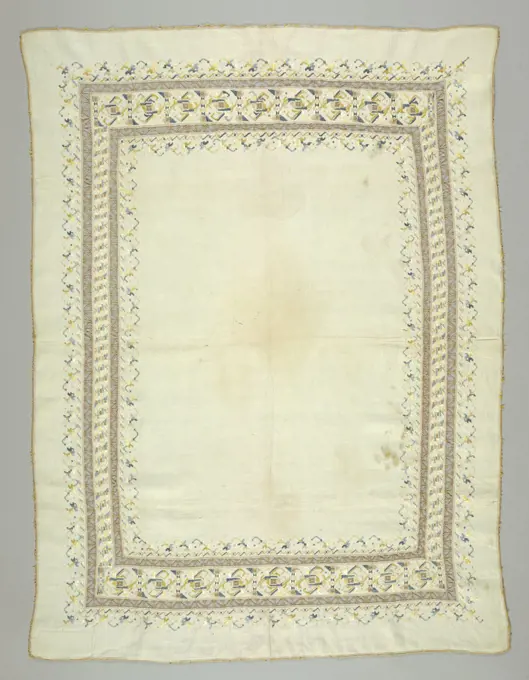
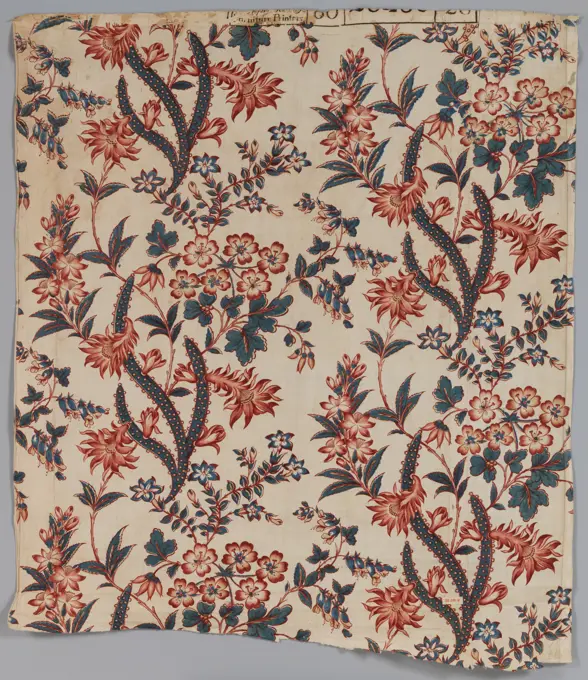
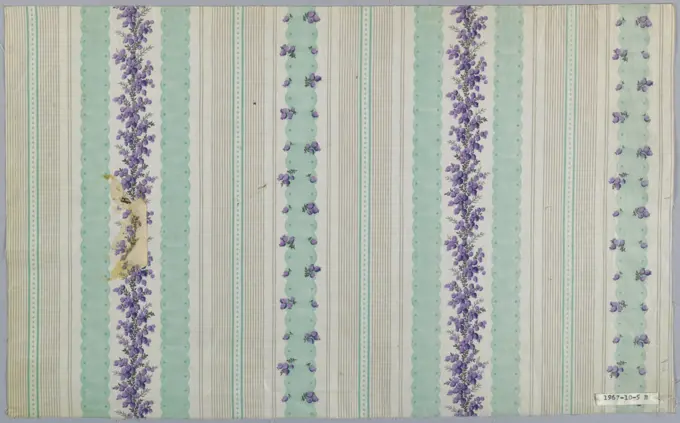
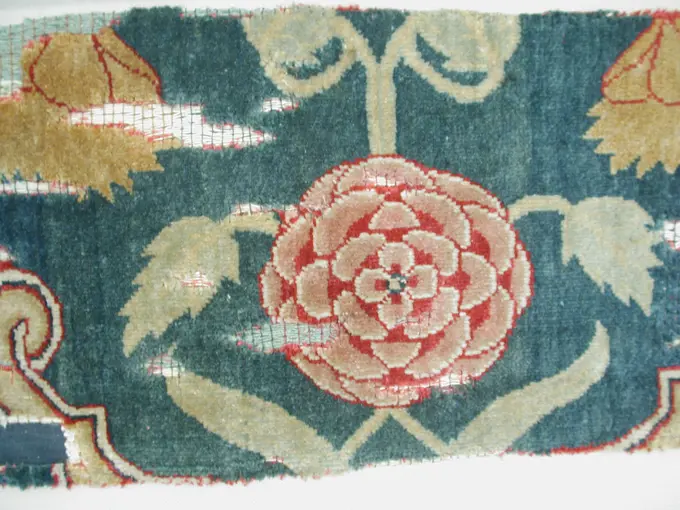
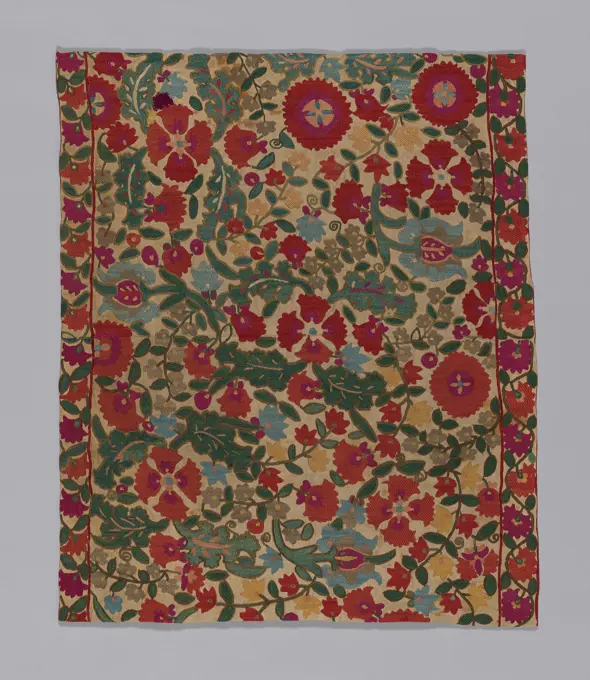
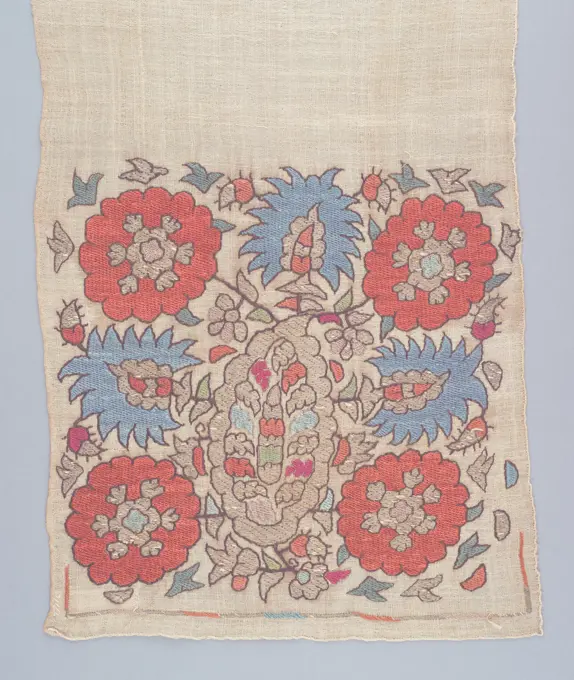
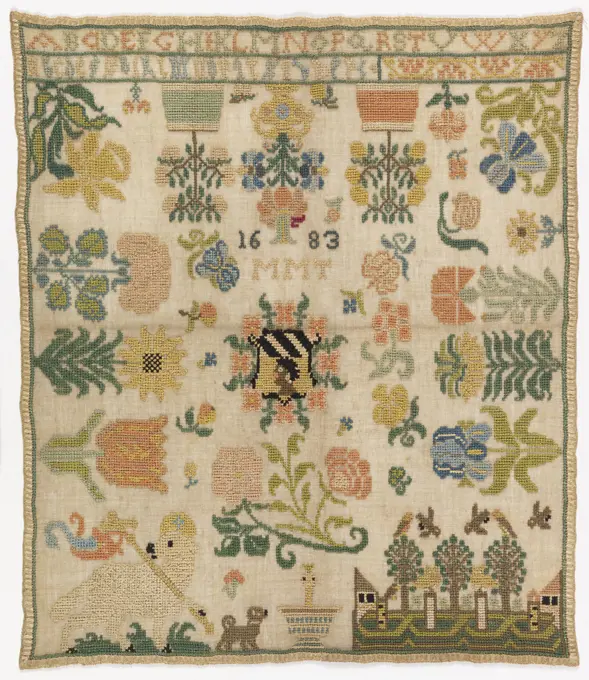
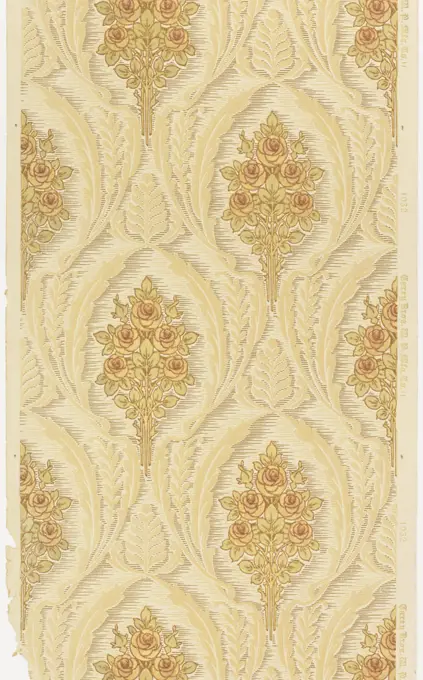
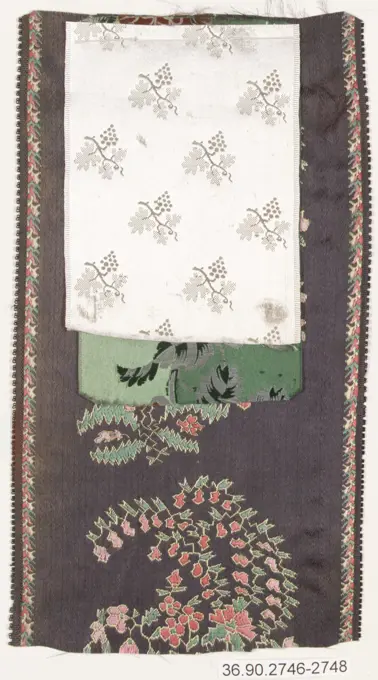
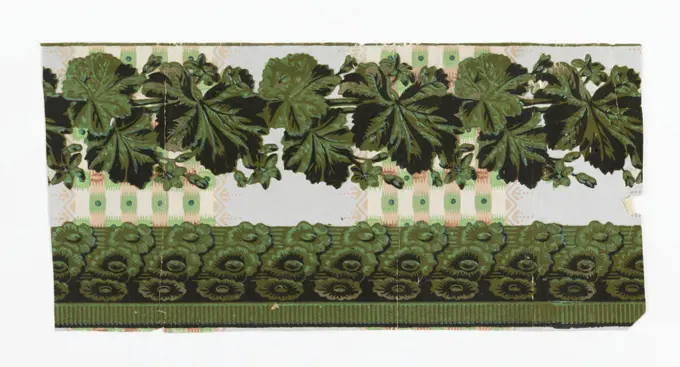
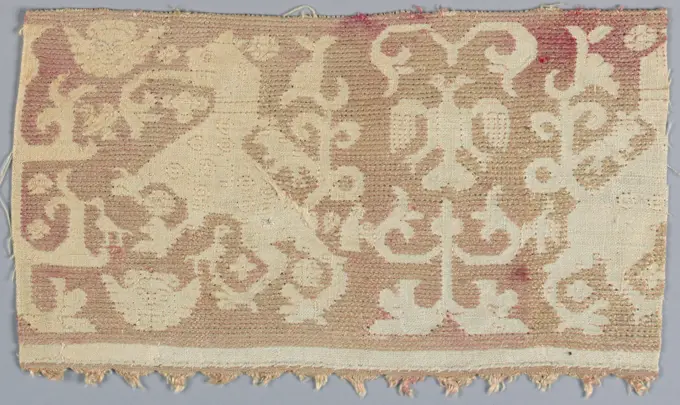
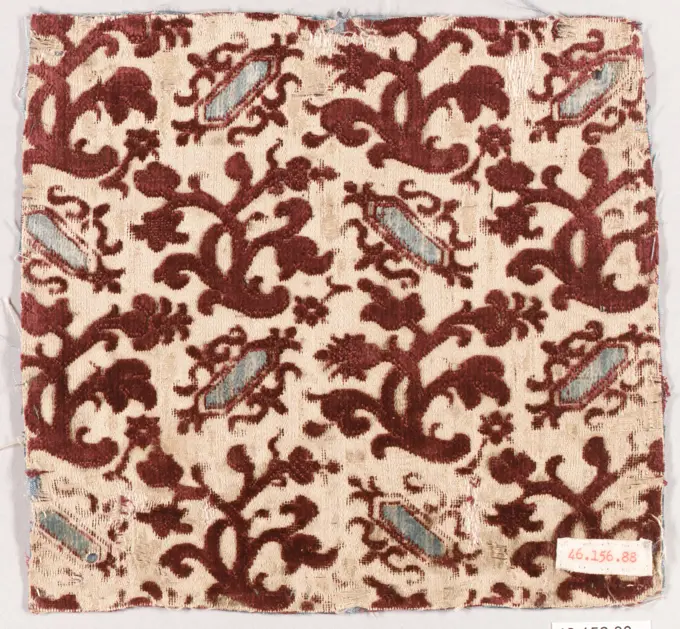
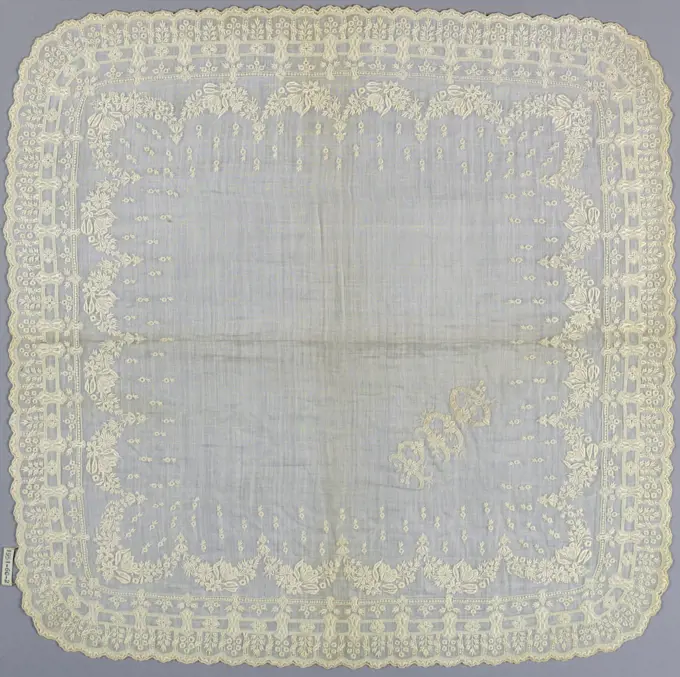
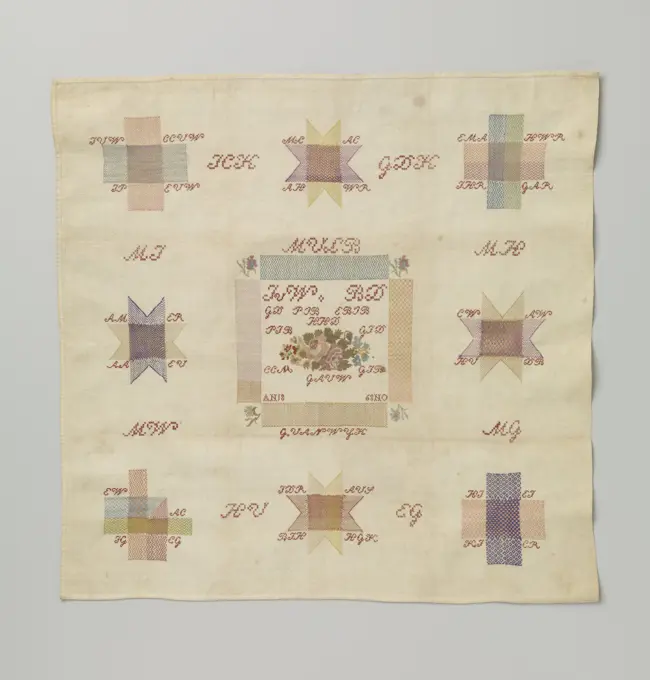
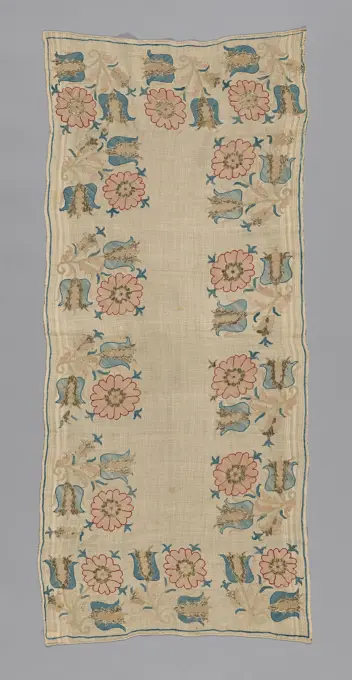
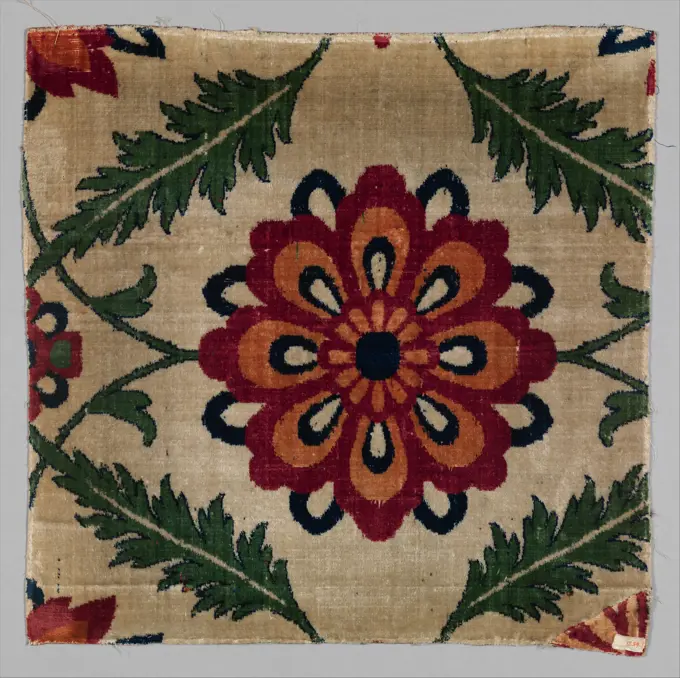
Fragment of a White-Ground Velvet Carpet 17th century Carpets composed of flowers and vines arranged on neutral backgrounds were produced in great numbers during the reign of Shah Jahan in the seventeenth century. This velvet fragment was originally part of such a composition. The large flower in the center relates to the technique of pietra dura in which precious stones, often depicting floral motifs, are inlaid into marble in architectural settings. The discrete shapes of solid, unshaded color that form the flower are reminiscent of one of the techniques seen in the inlaid stones of pietra dura, which was at its peak around the time this textile was produced.. Fragment of a White-Ground Velvet Carpet 446882Piece 18th century() Japan. Piece 66167Textile, Medium: cotton Technique: block printed, with yellow applied by brush, on plain weave, Fragment of printed cotton with half-drop repeat of dahlia-like flowers on a meandering lattice, in many colors on a white ground with black picotage., late 18th century, printed, dyed & painted textiles, TextileCover, Medium: silk on linen Technique: embroidery and openwork, Embroidered cover or 'marriage cloth' with a geometric and floral border in multicolored silks and needle lace insertions (reticella)., Spain, 18th or 19th century, embroidery & stitching, CoverOrnamental tapiser;  beginning of the 19th century (1801-00-00-1840-00-00);Piece 1831-51 Stinton Bros.. Piece. British, Shepley Hall, Lancashire. 1831-51. Cotton. Textiles-PrintedFragments; silk; 1896-28-1-a/cWoven piece ca. 1878 Designed by William Morris British. Woven piece 14945Sampler (England); silk embroidery on linen foundationTextile, Schwartz-Huguenin, Medium: cotton Technique: printed by engraved roller on plain weave; glazed, Two fragments, same design in different colors. A) Ground striped in blue-grey and fine tan stripes; small scale pattern of vine with grey berries. B) Same with green stripes and berries in lavendar. Glazed., Mulhouse, Alsace, France, 1851-63, printed, dyed & painted textiles, TextileTextile, 18th century, 18 3/4 x 21 1/4 in. (47.63 x 53.98 cm), Austria, 18th centuryChintz Fragments (India); cotton; 1973-51-59-a/dTextile (England); cottonFragment; silkFragments (probably China); silk, metallic; Warp x Weft (a): 68.6 × 54 cm (27 in. × 21 1/4 in.) Warp x Weft (b): 68.6 × 54 cm (27 in. × 21 1/4 in.) Warp x Weft (c): 68.6 × 54 cm (27 in. × 21 1/4 in.)Textile Fragment third quarter 17th century. Textile Fragment 453220Fragments, Medium: silk Technique: woven, White flowers on blue ground., 18th century, woven textiles, FragmentsPiece 18th-19th century Japan. Piece. Japan. 18th-19th century. Silk. Textiles-WovenFragment of silk fabric (back of a chasuble)  naturaIIstic flower pattern unknownLength of Silk Damask Textile, early 1700s. Italy, early 18th century. Damask, silk; average: 75.6 x 53.3 cm (29 3/4 x 21 in.).Lace, 19th century. Italy, Abruzzi, Pescocostanzo, l'Aquila, 19th century. Bobbin lace with embroidery; overall: 20.2 x 20.2 cm (7 15/16 x 7 15/16 in.).Fragment of the fabric;  18th century (1701-00-00-1800-00-00);Bojakowski Stanisław, collection, gift (provenance), fabricsPiece 18th-19th century Japan. Piece 66588Fragment. Europe. Date: 1601-1700. Dimensions: 35.1 x 27.7 cm (13 7/8 x 10 7/8 in.). Linen and wool, plain weave; tied and free double cloth. Origin: Europe. Museum: The Chicago Art Institute, Chicago, USA.Pocket (USA); cottonPiece 18th-19th century Japan. Piece. Japan. 18th-19th century. Silk. Textiles-WovenPanel Made 1601-1700 Turkey. Linen, plain weave, embroidered in silk (some darning; pieced in center) . AnonymousPiece 18th-19th century Japan. Piece 66294Sidewall (USA); Manufactured by W.H. Mairs & Co.; machine-printed paper, liquid mica; 93 x 49 cm (36 5/8 x 19 5/16 in.)Fragment early 17th century Italian. Fragment 230480Textile, Medium: cotton Technique: printed by engraved roller and block printed, Two broad stripes, molette printed in blue in minute dot patterns, are separated by a narrower stripe consisting of a pink lattice pattern and small pink and green floral sprays on a white ground. Over-printed on the blue molette ground are natural scale, realistic azalea blossoms and foliage in pink and green., 1851-63, printed, dyed & painted textiles, TextileDesign for a Printed Textile Made 1725-1750 France. Watercolor and pencil on paper .Quilt (England or United States); cotton; Warp x Weft: 79 x 61 cm (31 1/8 x 24 in.) Repeat H: 31 cm (12 3/16 in.)Machine-made openwork samples, Medium: cardboard, linen, silk, metallic Technique: linen embroidery with ground cloth dissolved Examples of embroidery on net produced by the Schiffli machine Metallic embroidery on net Machine-made openwork in imitation of hand-embroidered net Mostly floral and a few geometric patterns, some designs described as 'Spanish' Imitation hand-made filet Machine filet Imitation filet crochet Ploven (burnt-out lace) Fancy curtain lace made on the Levers machines Real filet (handmade) next to Machine-made filet Spotted curtain nets, made chiefly at Nottingham, England and Caudry, France., Samples of machine-made openwork and several examples of hand made lace mounted on boards. They imitate hand-embroidered net, crochet, or needlepoint. All are floral patterns plus a few of early 1920's geometric style., 'Embroidered net' produced by the Schiffli Machine., USA, ca. 1910, lace, Machine-made openwork samplesFragment, Medium: silk, linen Technique: 5-harness satin damask, Large-scale yellow flower and pendant-like leaves in predominantly weft-faced linen weave on a yellow silk satin ground., Italy, 18th century, woven textiles, FragmentLarge Hanging, 20th century copy, L.91-1/8 x W.59-1/4 in., satin, silk, China, 20th centuryFragment late 16th century Italian. Fragment 230217Embroidered IInen sash unknownSleeve cuff, Medium: silk Technique: embroidered on plain weave, China, embroidery & stitching, Sleeve cuffPiece 1775-90 French. Piece 219639Piece 18th-19th century Japan. Piece 67328Handkerchief, late 1800s. England or America, late 19th century. Embroidery; linen; overall: 38.1 x 38.1 cm (15 x 15 in.).Fragment silk tissue with a large poppy, anonymous, 1735 - 1740 on pink long distance Fragment silk tissue with an incomplete, asymmetrical pattern: on a thin wavy branch a poppy with a button-shaped heart grows from turquoise-green and petals in silver, pink and lilac with shadows of aubergine chenille. Right (cut off and a left-wing repeat to be found) a large sliced leaf of silver with turquoise-green edges and eggplant shade from Chenille. Cut off: another flower in creme, white, rust color, steel blue and dark blue chenille. France (possibly) silk. metal thread twill Fragment silk tissue with an incomplete, asymmetrical pattern: on a thin wavy branch a poppy with a button-shaped heart grows from turquoise-green and petals in silver, pink and lilac with shadows of aubergine chenille. Right (cut off and a left-wing repeat to be found) a large sliced leaf of silver with turquoise-green edges and eggplant shade from Chenille. Cut off: another flower in creme, white, rust color, steel Fragment veelkleurig zijdesatijn.Fragment multicolor silk tissue. A green ground has a pattern of white, stylized leaf garlands with bows between which multicolored flower branches.Ceiling Paper (USA); Manufactured by M.H. Birge & Sons Co. (United States); machine-printed paper; 89 x 49.5 cm (35 1/16 x 19 1/2 in.)Piece 17th century Japan. Piece 71862Cushion Cover (Italy); Manufactured by Marco Grassi; silk on linenFragment lamp axle. A fragment of red flowered satin with silver wire.Panel (sleeveband) Made 1875-1900 China. embroidered gauze .Fragment of a bedspread of Eastern textile with embroidery ,, 1690 - 1710 Fragment of a multi-colored tambourated Indo-Persian bedspread, decorated with volutes of ens flowers. Entertained into a trapezoidal chair cover. With a sewn linen strap in the middle of the four sides. India cotton (textile). silk embroidering Fragment of a multi-colored tambourated Indo-Persian bedspread, decorated with volutes of ens flowers. Entertained into a trapezoidal chair cover. With a sewn linen strap in the middle of the four sides. India cotton (textile). silk embroideringPiece of fabric. unknown, authorSampler, Medium: silk embroidery on linen foundation Technique: embroidered in two-sided cross and double running stitches on plain weave foundation, Alphabet at top, plants growing from three edges. In the center a heraldic crest with the head of a blackamoor, date and initials., Bohemia, 1683, embroidery & stitching, SamplerPiece 18th century Japan. Piece 71620Trimming Fragment (France); silkSidewall Sample; machine-printed on paper; 22.5 x 22.5 cm (8 7/8 x 8 7/8 in.)Sidewall, Carey Bros. W.P. Mfg. Co., Philadelphia, Pennsylvania, founded 1882, Machine-printed paper, liquid mica, Rose bouquets set within foliate framework. Bouquets are printed in metallic gold and copper colors. Printed on a striated background, creating a shadow effect., Philadelphia, Pennsylvania, USA, 1905-1915, Wallcoverings, SidewallFragment with curving vine and palmette leaves, 1400s. Spain, Granada. Silk: lampas weave; overall: 29.9 x 20 cm (11 3/4 x 7 7/8 in.); mounted: 39.1 x 28.9 cm (15 3/8 x 11 3/8 in.).Fragment of silk fabric unknownFragment; silk; Warp x Weft: 72 x 53 cm (28 3/8 x 20 7/8 in.)Length 1730s Dutch. Length 229954Ribbon French 19th century View more. Ribbon. French. 19th century. Textiles-TrimmingsHandkerchief; linenBorder, Block-printed and flocked on joined sheets, At top edge, vining foliatte band. Below, a rod with floral twist. At bottom edge, band of dentil. Printed in green flock with black overprint on striped sidewall background., France, ca. 1820, Wallcoverings, BorderBand (Spain); silk on linen; Bequest of Marian Hague; 1971-50-98Eva Wilson, Quilt, c 1937 QuiltFragment Made 1875-1900 Japan. Plain compound cloth, silk and silvered paper; 2 1/2 strips of m.m. .Fragment Made 1601-1625 Europe. Linen and wool, plain weave; tied and free double cloth .Fragment of a Veil 18th century. Fragment of a Veil 447948Piece late 16th century Italian. Piece 227178Fragment brochure silk with a flower branch in yellow and green ,, 1730 A fragment of white silk with a pattern of a flower branch with three stylized flowers, in green, yellow and white. Netherlands silk A fragment of white silk with a pattern of a flower branch with three stylized flowers, in green, yellow and white. Netherlands silkChalice Veil, cloth with covers the chalice.  18th century. Diocesan Museum. Tarragona. Catalonia. Spain.Sidewall, Machine-printed paper, liquid mica, Repeating motif of bouquet of flowers in vase. The vase sits on a medallion, which are joined by foliage swags. Printed in brown on tan ground., USA, 1905-1915, Wallcoverings, SidewallBox associated with the letter bag of M.A. De Ruyter. With red velvet stuck box. The lid with ornaments in gilt. Inside past it with a purple side. Opening loan from purple silk as good as disappeared; Fixing ribbon lid-bottom broken. On the inside lid inscription in gilt: letter bag from the Admiraal de Ruyter / to Z. K. H. Prins Hendrik der Nederlanden / from gratitude .... from A. F. De Bruge / receiver Nederl. Pilotage in Vlissingen 19 Julij 1875.Handkerchief, Medium: linen Technique: buttonhole, knot, and satin stitch embroidery, White linen handkerchief with elaborate embroidered borders. Buttonholed scalloped edge with shield-shaped sections framing minute embroidered flowers. Above are other border designs and festoons of small flowers. Large corner initial embroidered in white: 'P.D.O.', Belgium or France, 1840-1860, embroidery & stitching, HandkerchiefFragment blue velvet brocade with pomegranate motifs. Three pieces set blue silk velvet broker with a pattern of wavy tendrils, rose hips and large pomegranates. For comparable fragments A, B and D TM F.Statue robe. Culture: Italian. Dimensions: L. 42 x W. 120 inches (106.7 x 304.8 cm). Date: mid-18th century. Museum: Metropolitan Museum of Art, New York, USA.Piece 18th century Japan. Piece 71648Piece 18th-19th century Japan. Piece. Japan. 18th-19th century. Silk. Textiles-WovenTextile (France); linen warp, cotton weftPanel Made 1742-1765 Spitalfields. Silk, plain weave with supplementary patterning wefts and supplementary brocading wefts .Fragments; silk, metallicEast type fabric;  XIXW. (1801-00-00-1900-00-00);Frieze, Machine-printed paper, ungrounded, liquid mica, Alternating large and small foliate medalions enclose monochromatic bouquets. Rolling foliate scroll and green beading on bottom. Similar foliate scrolls on top suspending green floral swags. Designed and printed to similate a textile applique, cross stitch, or needle work. Printed in greens and white on green background., USA, 1905-1915, Wallcoverings, FriezeFragment; silk, metallic yarnsMedieval ornamentTowel cover, Medium: cotton on linen Technique: withdrawn element with darned motifs, Towel cover ornamented with two cross borders in zigzag lines with stars. One border topped with a row of conventialized trees worked in cross stitch. Two open seams with embroidery. Band of drawnwork showing people, birds in a tee. Flowers and stars in darning stitch. Remains of fringe at top and bottom., Pennsylvania, USA, 1826, lace, Towel coverStopplap of multicolored silk on cotton, G. van Wyk, 1868 Silk stop patch on cotton. The embroidery has a square in the middle in which a flower bouquet, initials and the year in 1868. Under the square is the name G. van Wyk. Cross and star forms are embroidered around the square between which letters in red. Netherlands cotton (textile). silk embroidering Silk stop patch on cotton. The embroidery has a square in the middle in which a flower bouquet, initials and the year in 1868. Under the square is the name G. van Wyk. Cross and star forms are embroidered around the square between which letters in red. Netherlands cotton (textile). silk embroideringLeaf with flower bouquet with basket with fruits surrounded by tendrils, anonymous, 1700 - 1850  Leaf with a flower bouquet in the middle with a basket with fruits surrounded by tendrils with flowers. Used as a cover.  paper. block printing (relief printing process) ornament derived from plant formsCover (Possibly for a Tray) Made 1701-1800 Turkey. embroidered in repeated tulips. .Pieces (2) 1750-60 French. Pieces (2) 227650Piece 19th century Japan. Piece 67558Ribbon French 19th centuryCeiling Paper (USA); Manufactured by Maxwell & Co., S.A. (United States); machine-printed paper; 80 x 49.5 cm (31 1/2 x 19 1/2 in.)Bedcover (Basket of Flowers Quilt) Made 1850-1870 Kentucky. Silk, plain weave; appliquÈd with silk plain weaves and silk and cotton, plain weaves cut solid velvet; sewn with silk and cotton, and embroidered with silk in chain, herringbone, satin, single back and stem stitches; French knots and couching; edged with silk, plain weave; backed with cotton, plain weave; glazed .Piece 18th-19th century Japan. Piece 66188Textile Fragments. Dimensions: L: 6 in (15.2 cm) x W: 7 in (17.8 cm)L: 3.75 in (9.5 cm) x W: 7 in (17.8 cm). Date: 17th century. Museum: Metropolitan Museum of Art, New York, USA.Piece 18th-19th century Japan. Piece 66446Chasuble made of silk fabric unknownSidewall (Canada); Manufactured by Colin McArthur and Co.; machine-printed paper; 41 x 49.5 cm (16 1/8 x 19 1/2 in.)Linen stoppipe and silk on cotton muslin .. Linen stoppipe and silk on cotton. The embroidery has the crowned initials EW, the text out 14 Iaar and the date in 1779.