Ornate Textile Fragments

Beautiful textile pieces with intricate patterns and colors, representing various cultures and time periods, showcasing artistic textile design.
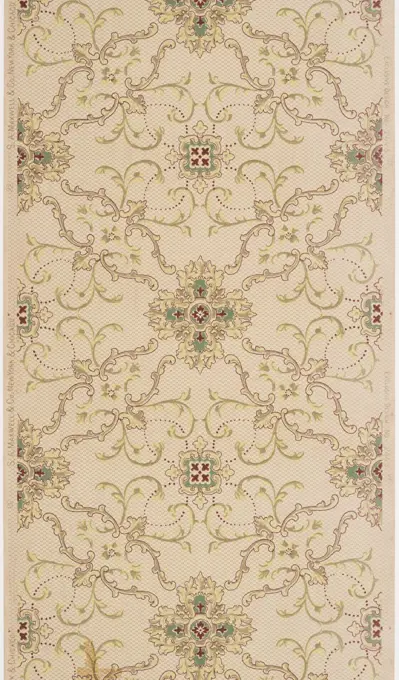
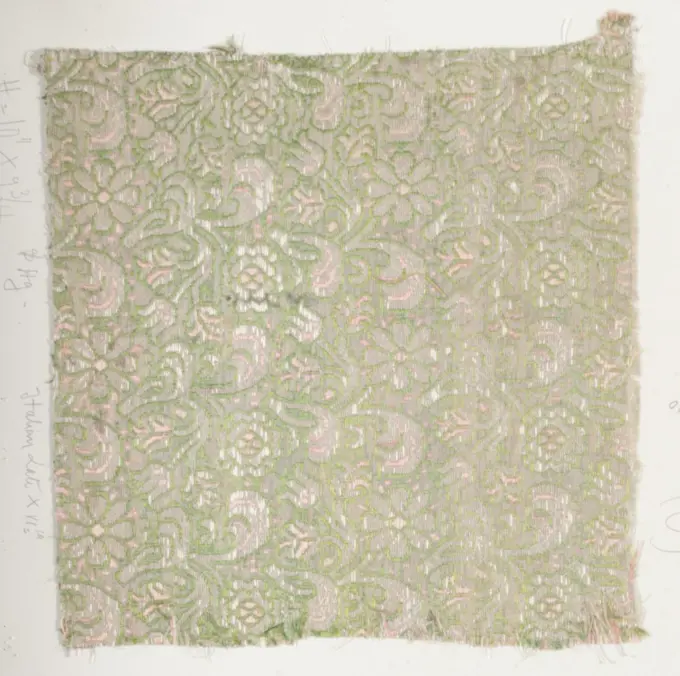
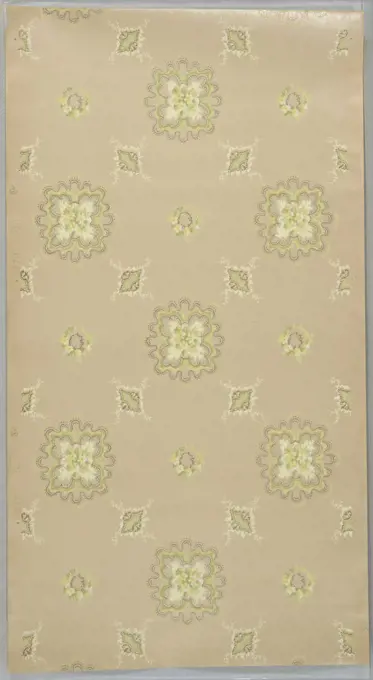
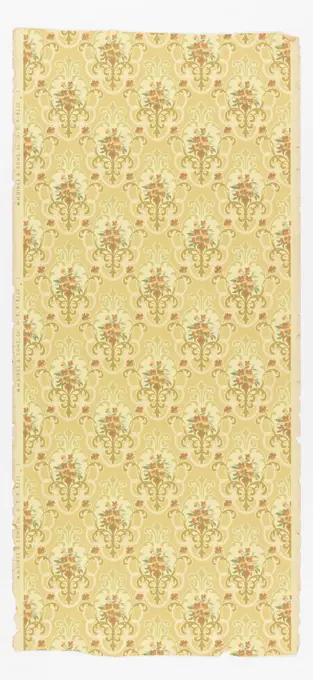
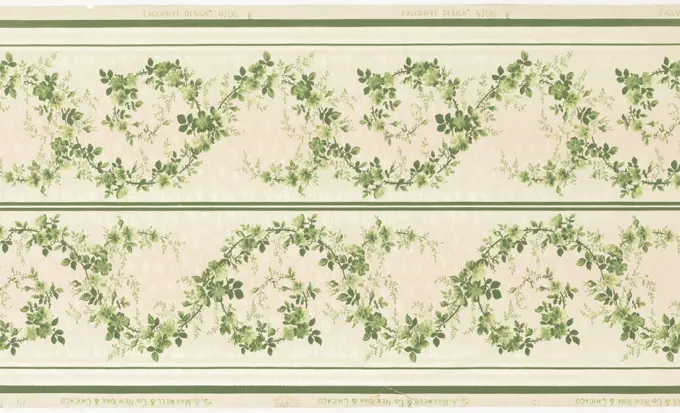
Ceiling paper, Maxwell & Co., S.A., Chicago, Illinois, USA, Machine-printed paper, On tan ground, cross-shaped medallions with anthemions in light green and allover vine-like scrolls., USA, 1905-1915, Wallcoverings, Ceiling paper
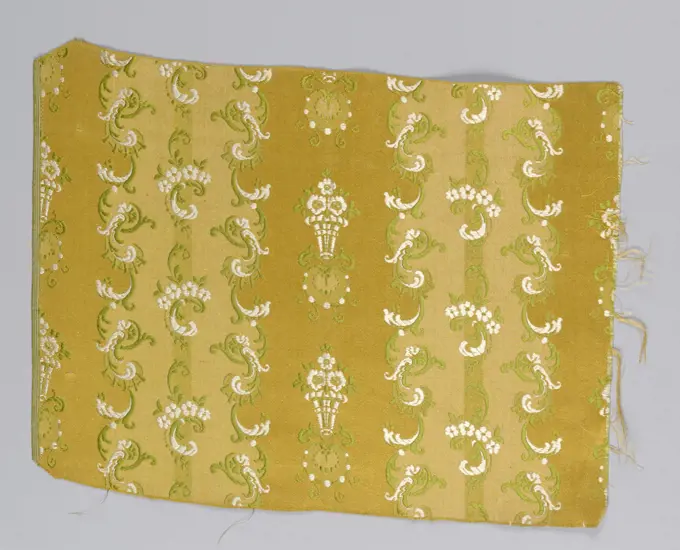
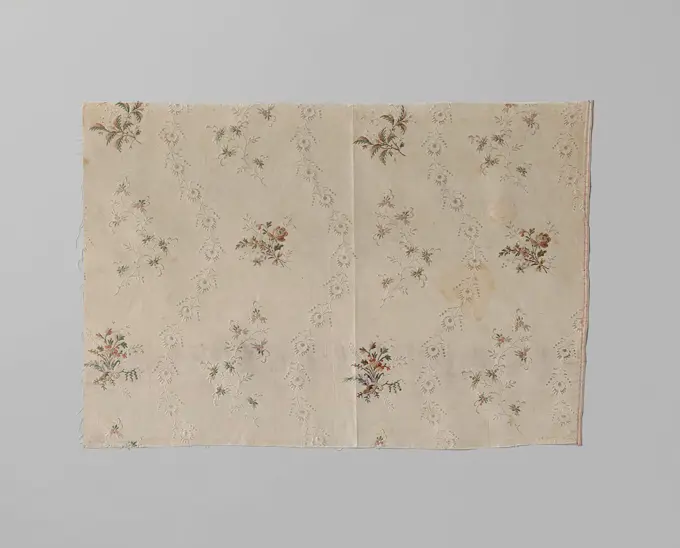
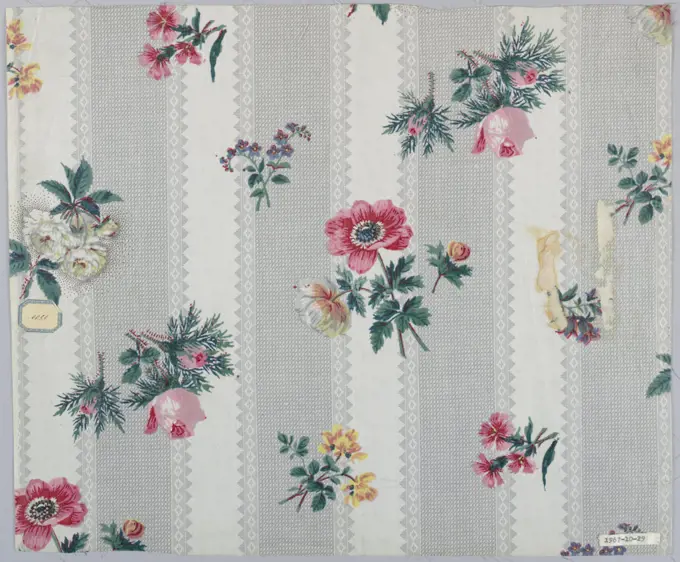
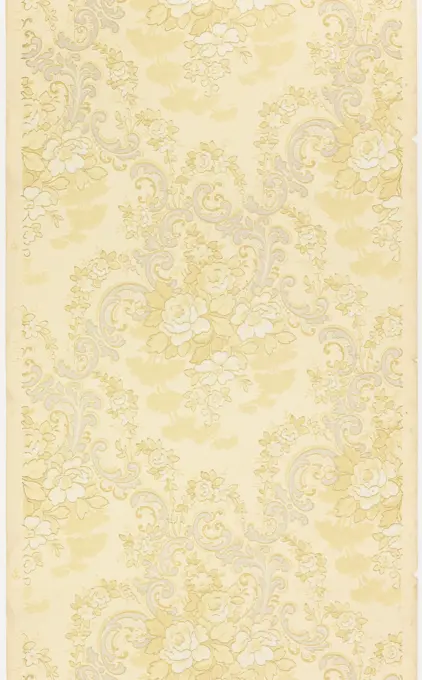
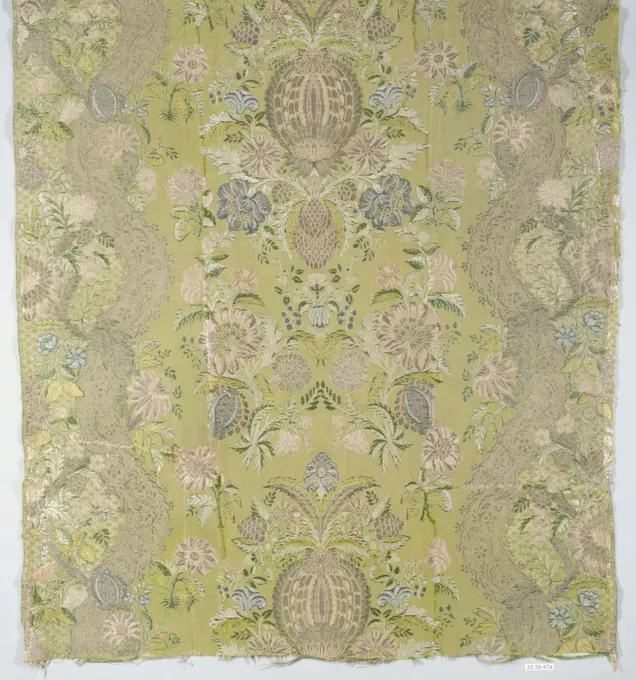
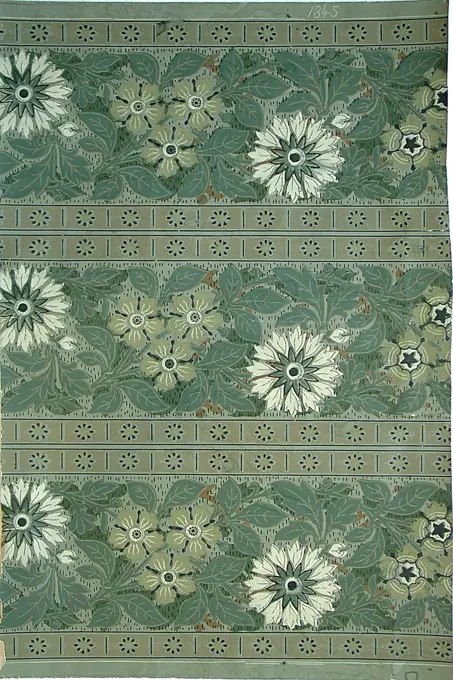
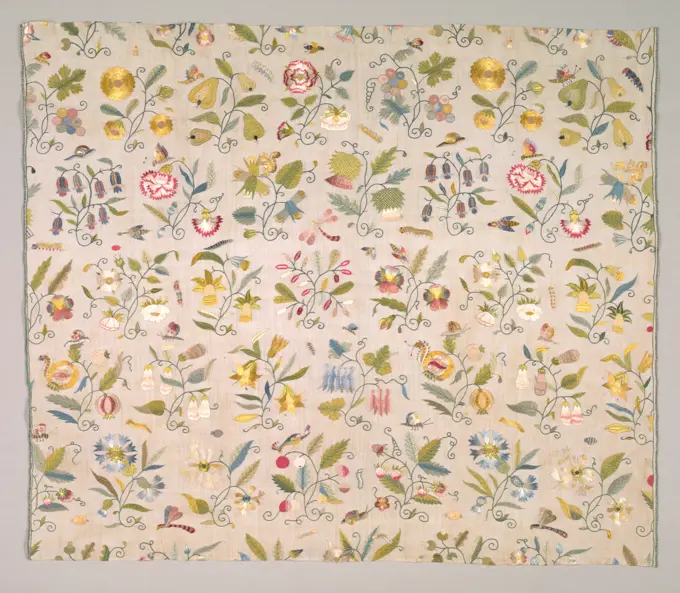
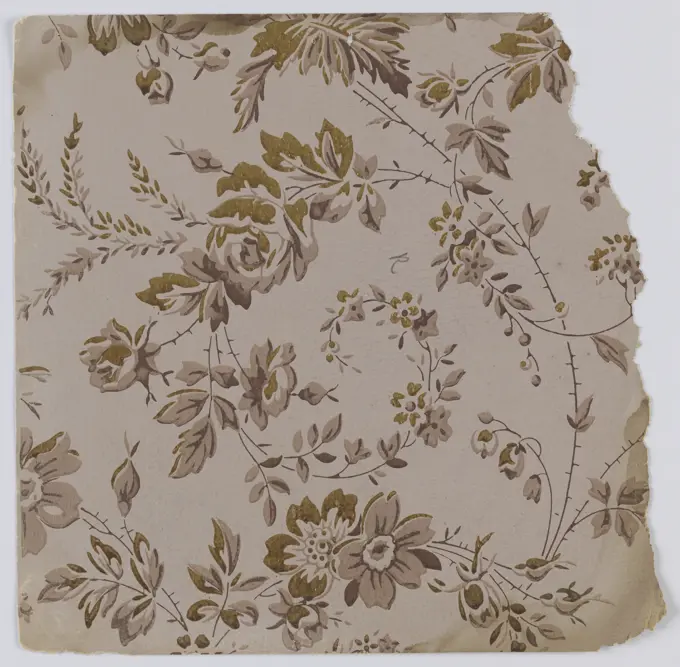
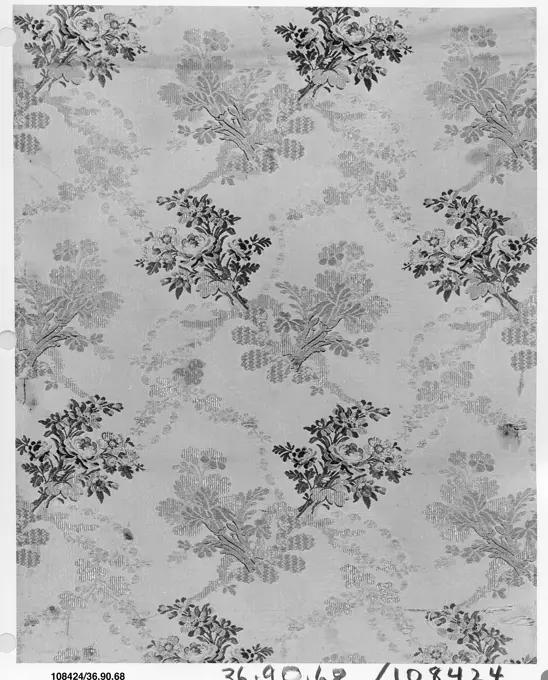
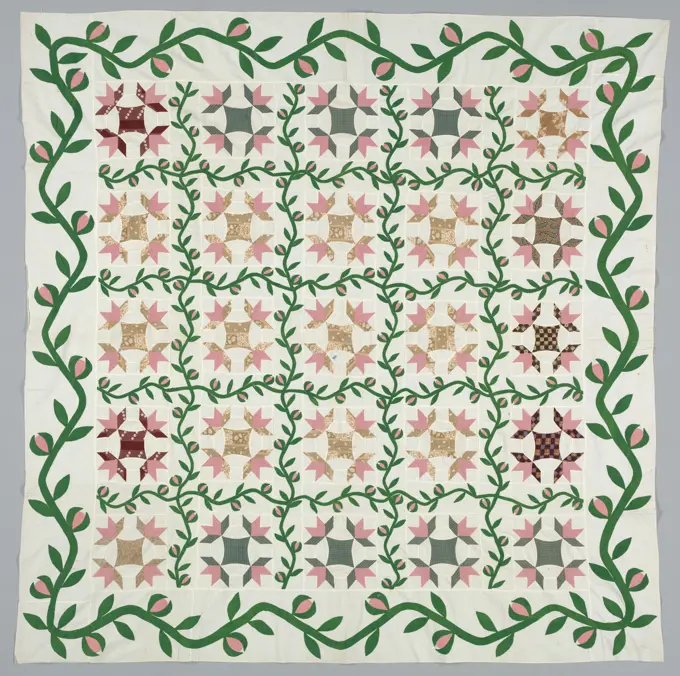
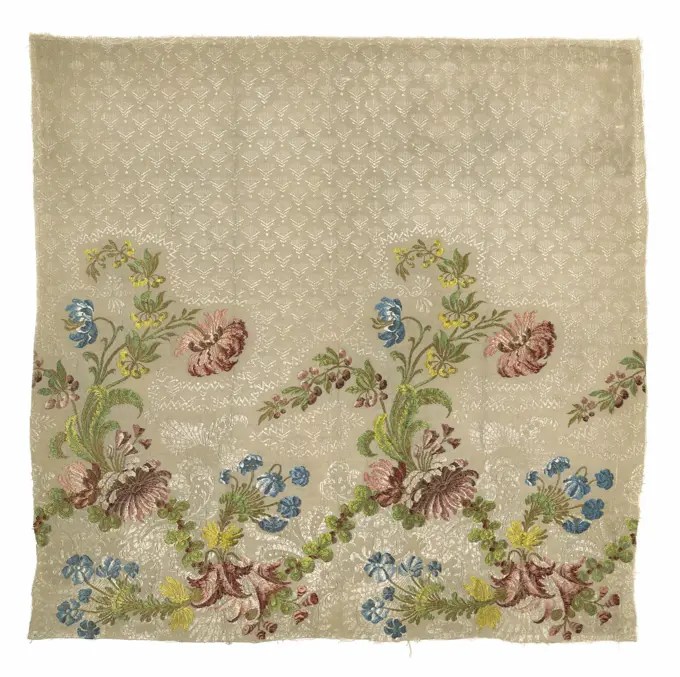
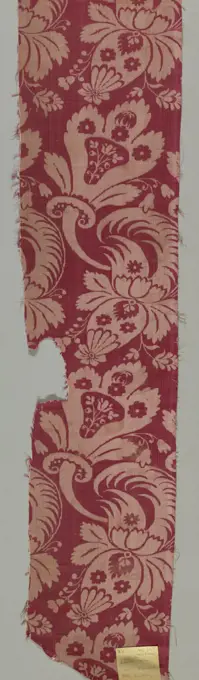
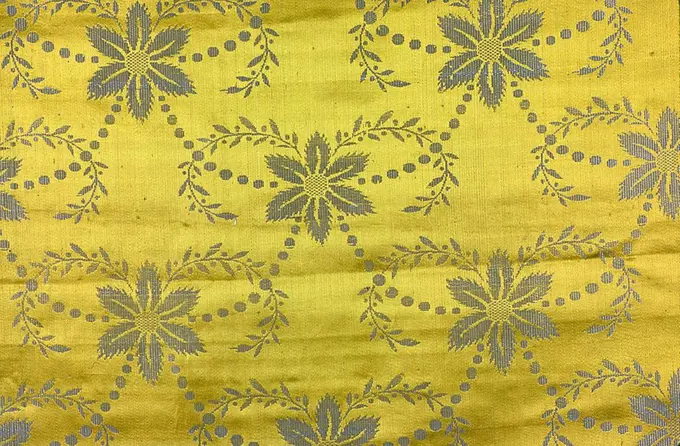
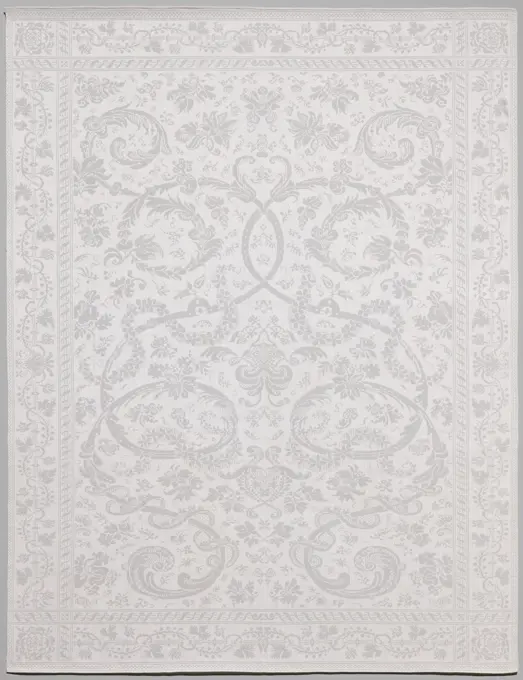
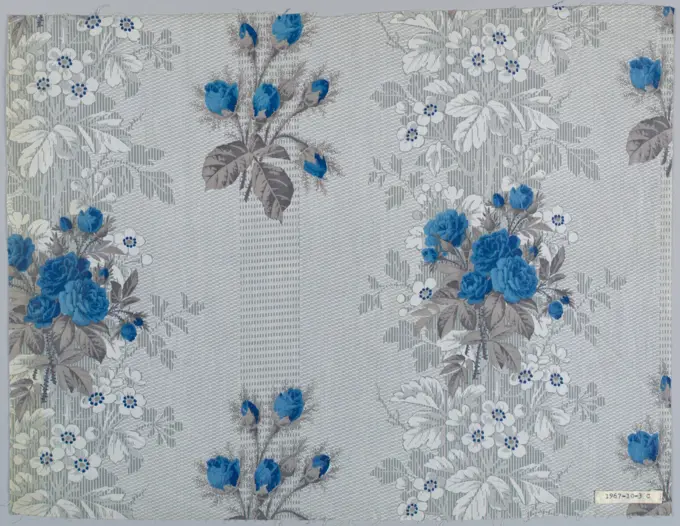
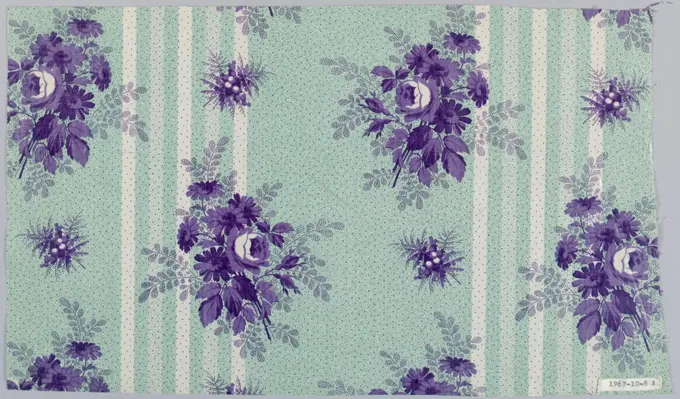
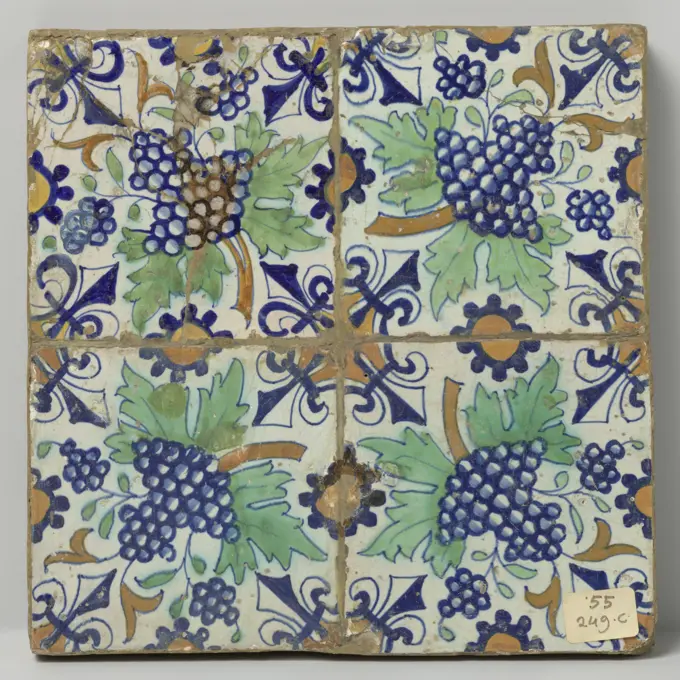
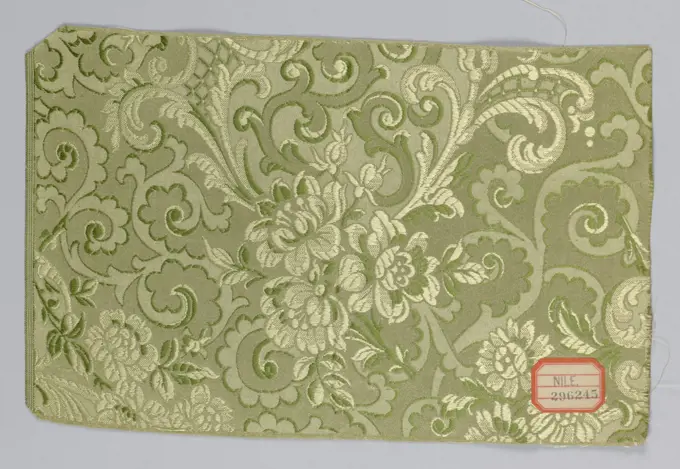
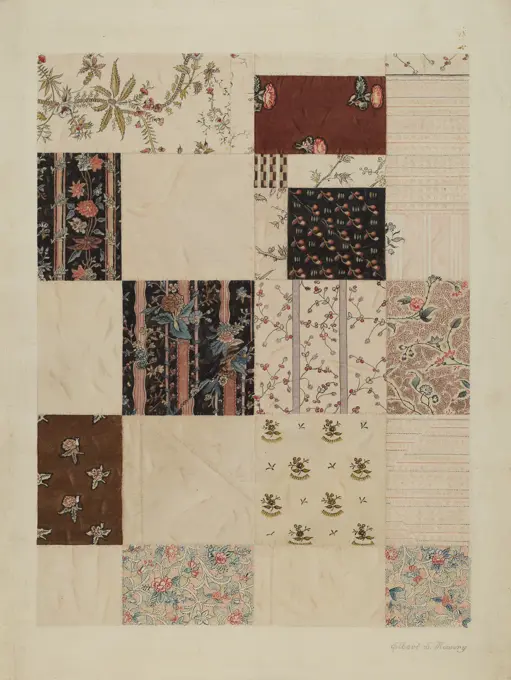
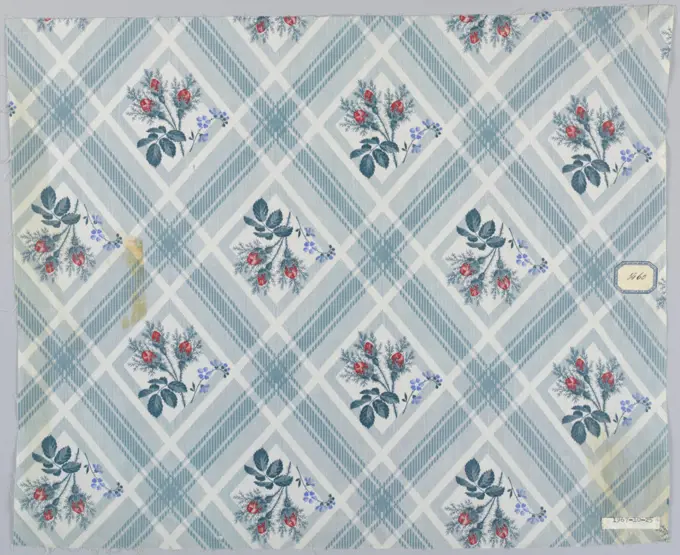
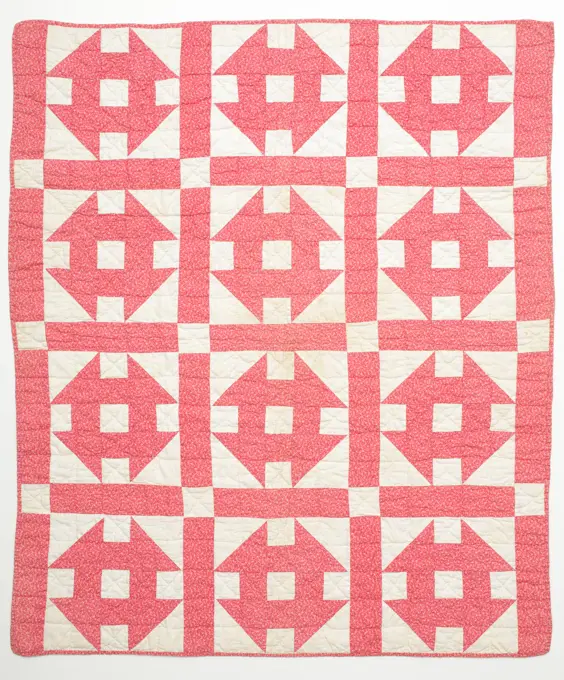
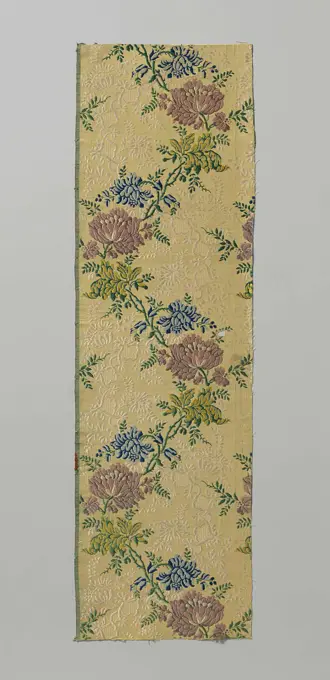
Brocade, 1700s. Iran, 18th century. Silk; overall: 78.5 x 50.8 cm (30 7/8 x 20 in.).Fragment late 16th century Italian. Fragment 230283Textile; Manufactured by Schwartz-Huguenin; cottonFragment Zijdelampas, Anonymous, 1700 Fragment silk tissue. A green soil has a pattern of a wide strap in white, silver, green, pink and red in which a geometric pattern, branches with leaves and branches with fruits. France (possibly) silk. metal thread lampas (textile material) Fragment silk tissue. A green soil has a pattern of a wide strap in white, silver, green, pink and red in which a geometric pattern, branches with leaves and branches with fruits. France (possibly) silk. metal thread lampas (textile material)Fragment side lamps. Fragment silk tissue. A green ground has in white, silver, green, pink and red a pattern of a wide band in which a geometric pattern, branches with leaves and branches with fruits.Ceiling paper, Maxwell & Co., S.A., Chicago, Illinois, USA, Machine-printed paper, On tan ground, cross-shaped medallions with anthemions in light green and allover vine-like scrolls., USA, 1905-1915, Wallcoverings, Ceiling paperFragment, Medium: silk Technique: 5-harness satin damask, Panel of red silk damask with a pattern of ribbon festoons and clusters of flowers., France, mid-late 18th century, woven textiles, FragmentSample, Orinoka Mills, (Philadelphia, Pennsylvania, USA), Yellow/gold warp with green and white wefts., USA, ca. 1910, woven textiles, SampleCeiling Paper (USA); Manufactured by Maxwell & Co., S.A. (United States); machine-printed paper, liquid mica; 86.5 x 49.5 cm (34 1/16 x 19 1/2 in.)Textile, Medium: cotton Technique: block printed, Pale blue ground with a background of a small vine pattern reserved in white, possibly by discharge. Overprinted by block in a pattern of flower clusters in red, dark brown and dark green., France, early 19th century, printed, dyed & painted textiles, TextilePiece ca. 1830 British. Piece. British. ca. 1830. Cotton. Textiles-PrintedCeiling Paper (USA); Manufactured by Janeway & Co. Inc.; machine-printed paper; 82.5 x 49.5 cm (32 1/2 x 19 1/2 in.)Fragment multicolored brochure side. Fragment multicolor silk tissue. A white ground has a pattern of winding stylized flower drinks in white, between which multicolored flower bouquets and flower branches.Textile (England); cottonTextile, Medium: cotton Technique: printed by engraved roller and block printed, Grey ground, molette printed in pattern of checked stripes with geometric borders. Overprinted with random flower sprays - roses, poppies, pinks, and forget-me-nots, in yellow, blue, white, pink and green., 1851-63, printed, dyed & painted textiles, TextileSidewall - Sample, Sunflower, 1887; Designed by Morris & Co. (United Kingdom); Manufactured by Jeffrey & Company (United Kingdom); block-printed paperFragment of broken silk, anonymous, 1690 - 1699 A fragment of a silk tissue. Three vertical tendrils with flowers and leaves in gold and silver and some blue twigs in blue woven on a beige soil. Between the vertical tibaries also in gold, silver and blue. France silk. metal thread damask A fragment of a silk tissue. Three vertical tendrils with flowers and leaves in gold and silver and some blue twigs in blue woven on a beige soil. Between the vertical tibaries also in gold, silver and blue. France silk. metal thread damaskPiece 17th century Italian. Piece 230818Sidewall Sample; machine-printed on paper; 22.5 x 22.5 cm (8 7/8 x 8 7/8 in.)Damask with Leaf and Floral Design, 1700s - 1800s. England, 18th-19th century. Damask; wool; overall: 36.4 x 50.9 cm (14 5/16 x 20 1/16 in.).Textile (France); cottonCeiling paper, Cresswell & Washburn Ltd, Philadelphia, Pennsylvania, 1880 - 1900, Machine-printed paper, ribbed, liquid mica, Irregular circular medallions, rather amoeba-like, with floral quatrefoil center, alternates with a diamond-shaped medallion. A round floral wreath fills the center of the grid formed by these other two medallions. Printed in shades of green, yellow, and metallic gold on tan ground., Philadelphia, Pennsylvania, USA, 1905-1915, Wallcoverings, Ceiling paperFragment multicolored brochure silk, c. 1740 - c. 1760 A fragment silk tissue, with a white soil with a white side pattern with multicolored, winding flower branches. Netherlands silk A fragment silk tissue, with a white soil with a white side pattern with multicolored, winding flower branches. Netherlands silkSampler, Medium: silk and metal-wrapped silk embroidery on cotton foundation Technique: embroidered in satin, stem, and couching stitches on plain weave foundation, Bands of elaborate floral borders in polychrome silks and metal threads., Mexico, 19th century, embroidery & stitching, SamplerTextile, Medium: cotton Technique: printed by block and engraved roller on plain weave, Design of oversized flowers, tulips and roses in shades of red, blue and greens., England, 1875-1900, printed, dyed & painted textiles, TextileSidewall (USA); Manufactured by Cresswell & Washburn Ltd; machine-printed paper, textured, liquid mica; 91 x 49.5 cm (35 13/16 x 19 1/2 in.)Fabric (copy of historic fabric, Textile Department) Nahlik, Adam, Artistic District of the DistrictPink-ground fragment decorated with red maple leaves, little flowers, and diagonal stripes, 18th-19th century, Unknown Ryukyuan, 7 × 3 3/4 in. (17.78 × 9.53 cm) (overall), Cloth: cotton; bingata (stencil resist with applied pigments), Japan, 18th-19th centuryPiece late 17th-early 18th century French, probably Lyons. Piece 222654Fragment, Medium: silk, metal thread Technique: plain weave with discontinuous supplementary weft patterning (brocade), Pale blue-green silk grosgrain with broad ribbon-like serpentine brocaded in silver and gold frisee, ivory and tan silks. Large floral sprays in polychrome silks and metal spring. Ship, with floral sprays tied to mast, in curve of serpentine., Italy, late 18th century, woven textiles, FragmentTextile; cottonBorder (USA); machine-printed; 50 x 33 cm (19 11/16 x 13 in.); 1973-42-44Pouch. End XIXth. GAL2001.175.XTextile, Medium: cotton Technique: printed on twill weave, Length of printed cotton with s-shaped central branch with large exotic flowers and small-scale floral fillings. In golden yellow on a white ground., England, ca. 1890, printed, dyed & painted textiles, TextileFragments, Medium: silk, metallic Technique: woven, Fragments of a fabric symmetrical on a center line., France, 18th century, woven textiles, FragmentsNapkin with representations of three of the four seasons, c. 1650 - c. 1675 Linnamast napkin. Midfield: mirrored pattern and buildings that symbolize three of the four seasons. From top to bottom: 1 putti with grain and sickle; 2 putti with flowers and flower basket; 3 putti on chairs, their hands warming on a fire. Below that branches with oak leaves. Running edges: Double edges with winding flower vines. No horizontal edges. Checkerboard pattern on the four sides. Kortrijk linen (material) damask Linnamast napkin. Midfield: mirrored pattern and buildings that symbolize three of the four seasons. From top to bottom: 1 putti with grain and sickle; 2 putti with flowers and flower basket; 3 putti on chairs, their hands warming on a fire. Below that branches with oak leaves. Running edges: Double edges with winding flower vines. No horizontal edges. Checkerboard pattern on the four sides. Kortrijk linen (material) damaskSidewall (USA); Manufactured by Hobbs, Benton & Heath; machine-printed paper, liquid mica; 90.5 x 49 cm (35 5/8 x 19 5/16 in.)Fragment, Medium: cotton Technique: printed on plain weave, Fragment with a greenish-black ground and a design of tiny allover roses and five-petal flowers in rose, white, yellow and brown., Normandy, France, ca. 1850, printed, dyed & painted textiles, FragmentBedcover Made 1780-1800 United States. During the late 18th and early 19th centuries, England maintained restrictions on the export of textile-related technology and expertise. Copperplate engraving required specialized training, limiting its widespread use. The age-old tradition of printing with blocks continued in the United States. In this bedcover the blocks were used to apply the resist before the textile was dyed with indigo. Prior to the Revolutionary War, indigo cultivation for export was a profitable enterprise in South Carolina, though this would later be supplanted by the cotton industry.. Three panels joined cotton, plain weave; block-printed-resist-dyed; backed with linen, plain weave; edged with cotton, plain weave tape; block-printed-resist-dyed; quilted with linen .Floral Panel, Probably from a Curtain, early 1600s. England, James I Period, early 17th century. Silk, linen; plain weave, embroidery: couch and stem stitches; overall: 67.3 x 79.1 cm (26 1/2 x 31 1/8 in.); mounted: 78.7 x 90.8 cm (31 x 35 3/4 in.).Sidewall Sample; machine-printed on paper; 22.5 x 22.5 cm (8 7/8 x 8 7/8 in.)Fragment (Spain); silkPiece 17th century Japan. Piece 71721Textile (France); Warp x Weft: 141 x 52 cm (55 1/2 x 20 1/2 in.) Repeat H: 51.5 cm (20 1/4 in.)Sidewall (USA); Manufactured by M.H. Birge & Sons Co. (United States); machine-printed on paper; 106.5 x 49 cm (41 15/16 x 19 5/16 in.)Fragment Made 1805-1825 England. Cotton, plain weave; roller printed .Piece mid-18th century French. Piece 223174Napkin with pattern of branches with emperor crown (fritillaria imperialis) and with woven monogram in the corners, Anonymous, 1680 - 1690 White linen damask napkin with branches with emperor crown (Latin: Fritillaria imperialis). Four edges with leaf vines. Woven monogram in the corners. Marked with binding hole letter "AK". Northern Netherlands (Possible) linen (material) damask White linen damask napkin with branches with emperor crown (Latin: Fritillaria imperialis). Four edges with leaf vines. Woven monogram in the corners. Marked with binding hole letter "AK". Northern Netherlands (Possible) linen (material) damaskDesign for wallpaper with leaves and flowers, Theo Nieuwenhuis, 1876 - 1951 print   paper  foliage, tendrils, branches ~ ornament. flowers ~ ornamentTuch mit Blumendekor - Cloth with flowers Tuch mit Blumendekor - Cloth with flowers Copyright: xZoonar.com/lantapixx 7118336Embroidered kerchief trimming unknownTextile; Manufactured by Schwartz-Huguenin; cottonHandkerchief decorated with lace unknownBoetticher Carl (1806-1889), various decorations, fabrics, wallpaper (without date): Detail. Tempera colored and white heighted on paper, 20.2 x 19.9 cm (including scan edges) Boetticher Carl  (1806-1889): Verschiedene Dekorationen, Stoffe, TapetenWallpaper, 1950s, Canada, maker unknown. Gift of Betty Welch, 2009.Frieze, Maxwell & Co., S.A., Chicago, Illinois, USA, Machine-printed paper, liquid mica, Printed two across. Green floral/foliate rinceau design. Printed on background that shades from off-white to pink to off-white. Narrow ribbon-like band below., USA, 1905-1915, Wallcoverings, FriezeCeiling Paper (USA); Manufactured by Janeway & Co. Inc.; machine-printed paper, liquid mica; 85.5 x 49.5 cm (33 11/16 x 19 1/2 in.)Textile (France); silk; Overall: 50 x 48.3 cm (19 11/16 x 19 in.)Quilt Cover, c. 1857. America, 20th century. Pieced cotton; average: 214.6 x 208.3 cm (84 1/2 x 82 in.).Fragments of silk fabric  Silver white vertical belts with a plant ornament between which the motif of the flower river of the wavy unknownFragment multicolored striped silk mexicaine, c. 1750 - c. 1800 Fragment multicolored silk tissue. The white soil has yellow and black stripes between which leaf vines with stripes and dots and bouquets and butterflies.  silk Fragment multicolored silk tissue. The white soil has yellow and black stripes between which leaf vines with stripes and dots and bouquets and butterflies.  silkNapkin van Wit Linnamast ,, 1675 - 1699 White Linnamasten napkin with a pattern of stripped flower branches, brand HB and 20. Flanders (Possible) linen (material) damask White Linnamasten napkin with a pattern of stripped flower branches, brand HB and 20. Flanders (Possible) linen (material) damaskFrieze (USA); Manufactured by Janeway & Co. Inc.; machine-printed paper; 234 x 49.5 cm (92 1/8 x 19 1/2 in.)Fragment Made 1750-1775 France. Silk plain weave with supplementary patterning and brocading wefts .Piece. Culture: French. Dimensions: L. 11 1/4 x W. 10 1/2 inches (28.6 x 26.7 cm). Date: early 19th century. Museum: Metropolitan Museum of Art, New York, USA.Silk fabric, hand-woven with metal threads, Russian Applied Art  Coverlet early 18th century British. Coverlet. British. early 18th century. Silk and metal thread on cotton. Textiles-EmbroideredFragment, Medium: silk Technique: 5-harness satin damask, Fantastic flowers in red and white., Spain, ca. 1705, woven textiles, FragmentPanel Made 1805-1815 Lyon. Silk, warp-float faced 7 1 satin weave with plain interlacings of secondary binding warps and self-patterning ground wefts .Tuch mit Blumendekor - Cloth with flowers Tuch mit Blumendekor - Cloth with flowers Copyright: xZoonar.com/lantapixx 5829759Fragment of silk fabric  lace pattern unknownLinnamast napkin with a flower pattern ,, 1692 - 1700 White Linnamasten napkin with pattern of volutes, brand is 24. Northern Netherlands (Possible) linen (material) damask White Linnamasten napkin with pattern of volutes, brand is 24. Northern Netherlands (Possible) linen (material) damaskTextile (France); Manufactured by Schwartz-Huguenin; cottonTextile, Schwartz-Huguenin, Medium: cotton Technique: printed by engraved roller on plain weave; glazed, Two pieces with same ground, different floral pattern. A) Ground green in striped effect, broad band, narrower white and pale green, probably by 'molette.' Flower clusters in violet printed over ground. B) Same ground, smaller flower clusters in violet. Glazed., 1851-63, printed, dyed & painted textiles, TextileField of four tiles with grape bunches, anonymous, c. 1600 - c. 1625 Field of four tiles (2 x 2) each with a multicolored (blue, green, orange and yellow) painted grapes, placed diagonally. Along the edges, half a rosette and in the corners, a lily. Netherlands earthenware. tin glaze majolica Field of four tiles (2 x 2) each with a multicolored (blue, green, orange and yellow) painted grapes, placed diagonally. Along the edges, half a rosette and in the corners, a lily. Netherlands earthenware. tin glaze majolicaFragment; silk, linenTextile, The Strawberry Thief; Made by Morris & Co. (United Kingdom); England; cottonSamples, Orinoka Mills, (Philadelphia, Pennsylvania, USA), a. green on green, b. dark green on green, USA, ca. 1910, woven textiles, SamplesFragment multicolored silk, anonymous, c. 1700 - c. 1750 Fragment multicolored silk tissue with an orange soil. The pattern has flower bouquets, leaves and renaissance vases in the colors green, white, yellow and gold. Germany silk damask Fragment multicolored silk tissue with an orange soil. The pattern has flower bouquets, leaves and renaissance vases in the colors green, white, yellow and gold. Germany silk damaskMachine-made Openwork Samples (USA); cardboard, linen, silk, metallic; 1971-26-2-36Textile, Medium: cotton Technique: block printed on plain weave, Fragment of heavy white cotton in a small scale detached design of leaf sprays and seed pods in blue, red and dark brown., France, ca. 1790, printed, dyed & painted textiles, TextileElbert S Mowery, Patchwork Quilt, c 1938 Patchwork QuiltTextile (Austria); Designed by Wiener Werkstätte (Austria); silkTextile, Medium: cotton Technique: printed by engraved roller and block printed, Ground, molette printed in blue, of vertical stripes forming large diamond pattern; centering each diamond is a spray of blue forget-me-nots, three red rosebuds and blue leaves (a darker hue of the ground color)., 1851-63, printed, dyed & painted textiles, TextileFragment, Medium: silk, metallic Technique: plain weave patterned by supplementary warp floats and supplementary weft floats, Detatched motifs on ribbed red silk ground., 18th century, woven textiles, FragmentKerchief 1740-70 Russian. Kerchief 173419Napkin with fish and shellfish, anonymous, c. 1600 - c. 1649 Linnamast napkin with fish and shellfish. Midfield: Various fish. Standing edges: fishing and fishing. Lying edges: sea gods. Hoek: Krab. Haarlem linen (material) damask Linnamast napkin with fish and shellfish. Midfield: Various fish. Standing edges: fishing and fishing. Lying edges: sea gods. Hoek: Krab. Haarlem linen (material) damaskChinoiserie floral wreath with flowers. Illustration. Chinoiserie floral wreath with flowers.Sidewall - Sample (USA); machine-printed; 56 x 46.5 cm (22 1/16 x 18 5/16 in.)Elizabethan ornamentSample (USA); Manufactured by Orinoka Mills (United States); 1989-80-53Sidewall (USA); machine-printed and stamped; 29 x 26 cm (11 7/16 x 10 1/4 in.)Textile (England); Manufactured by Arthur Wilcock; cottonPiece 18th century Oberkampf Manufactory French. Piece 221592Childs Quilt, 'Hole in the Barn Door' or 'Monkey Wrench'Fragment veelkleurige gebrocheerde zijde.Fragment multicolor silk tissue. On a yellow soil a white swinging side strip runs that crossing a swinging strip multicolored flower branches.Sidewall Sample; machine-printed paper; 22.5 x 22.5 cm (8 7/8 x 8 7/8 in.)Set of ornaments - circle and rectangular frames, floral borders with tropical flowers and leavesViper Grass, Arthur Wilcock, Medium: cotton Technique: roller-printed on both sides, Tall blue grasses outlined in white interspersed with large pale-blue and yellow flowers. Dark blue ground shows through. Ribbed material., England, ca. 1890, printed, dyed & painted textiles, Textile, TextileTextile (France); printed; Anonymous bequest in memory of Albert and Rebecca Elsberg; 1938-82-1-c