Ornate Textile Patterns

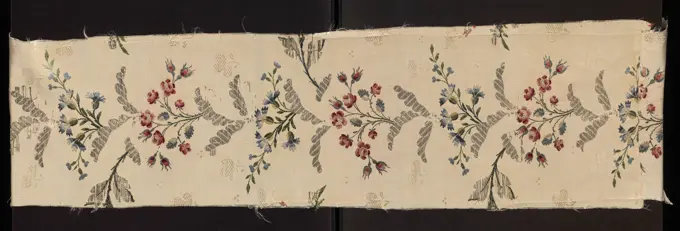
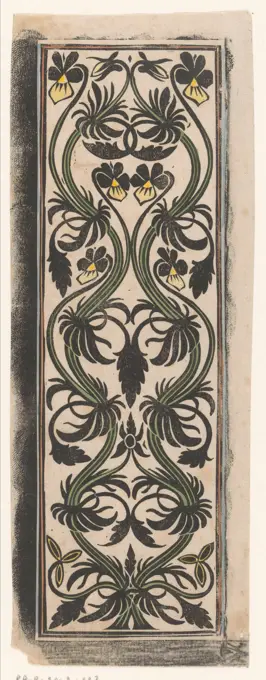
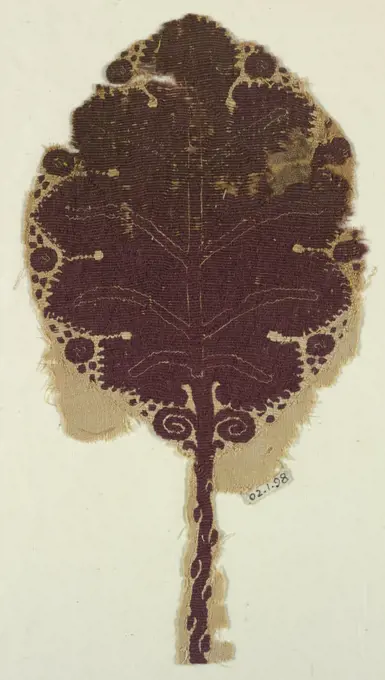
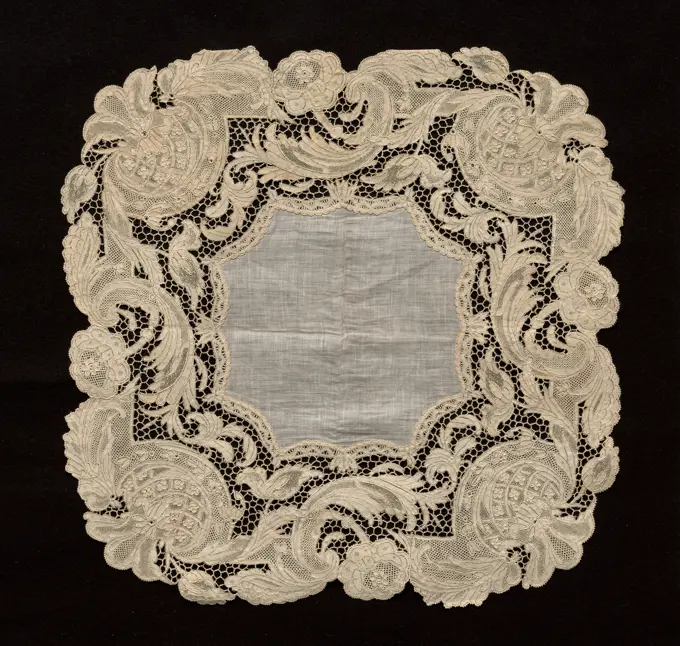
A selection of embroidered and drawn patterns, including floral motifs and elaborate designs, often used for clothing and decorative purposes.

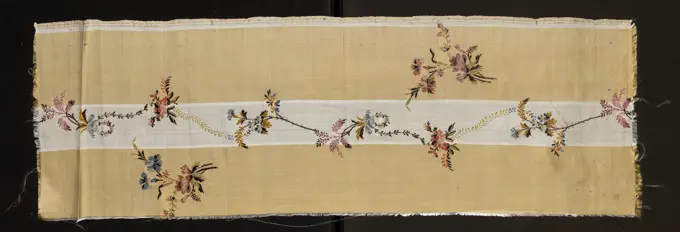
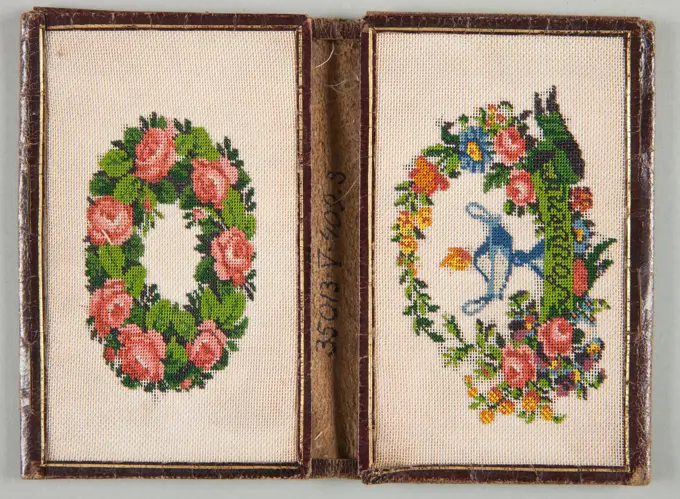
Doily, Medium: cotton, glass beads Technique: embroidery, Rectangular white cotton length hemstitched and fringed on all fours sides. Narrow border design of tiny flowers in blue, pink and green beads. Two short ends have design of stylized blossoming vine in red, blue, yellow and green. Tiny flowers scattered over ground., Mexico, early 19th century, embroidery & stitching, Doily
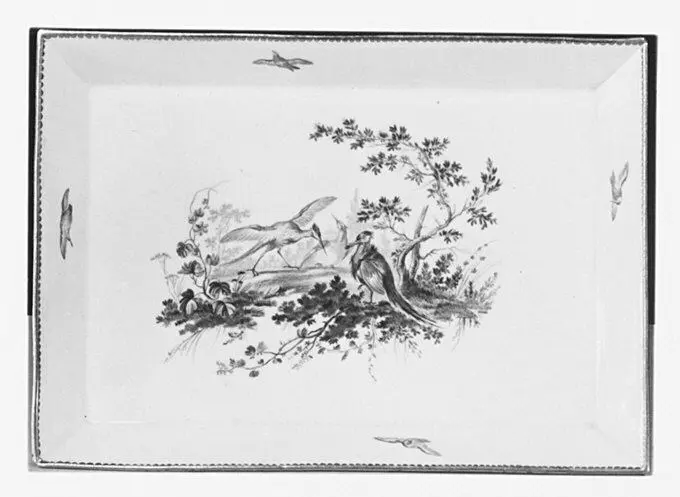
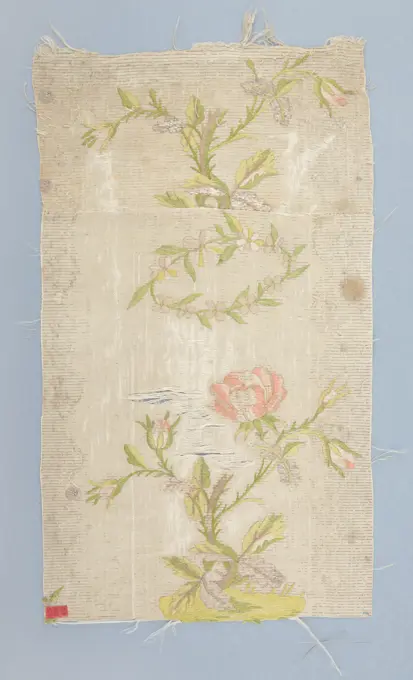
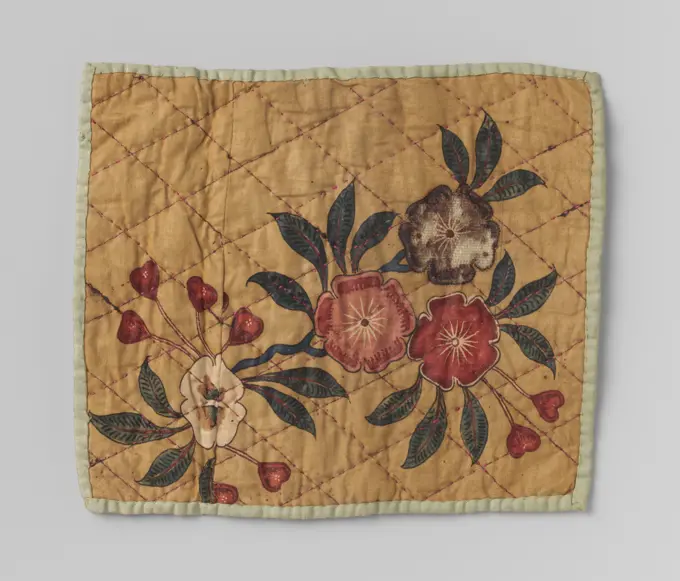
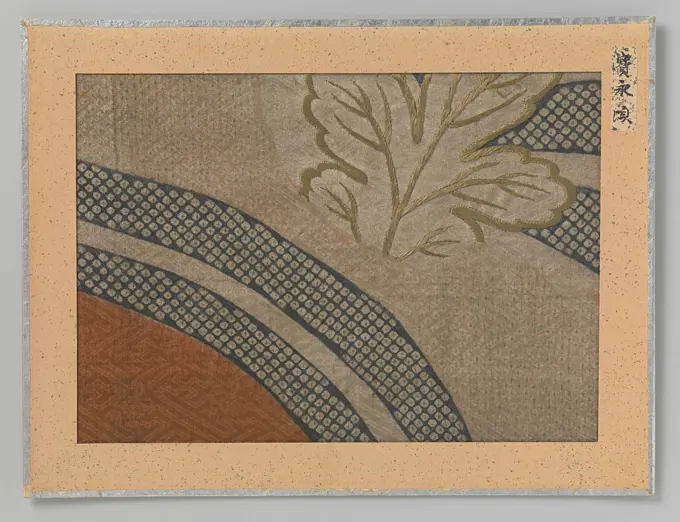
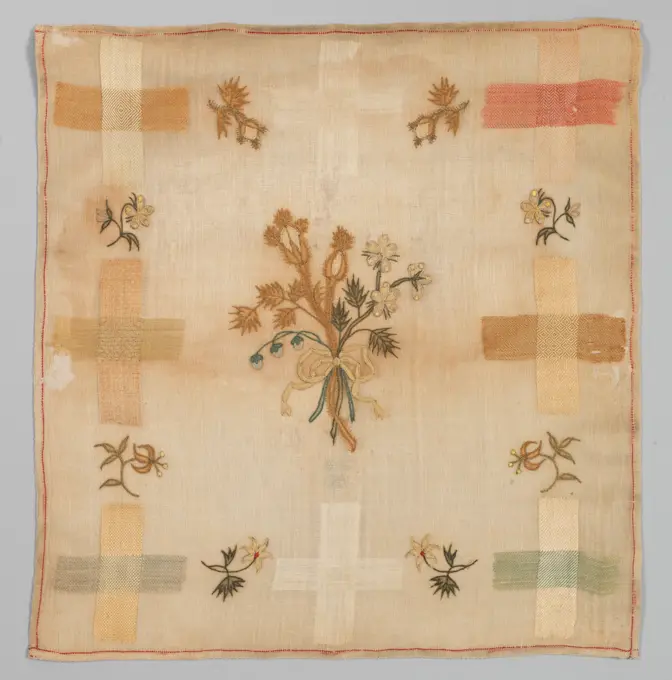
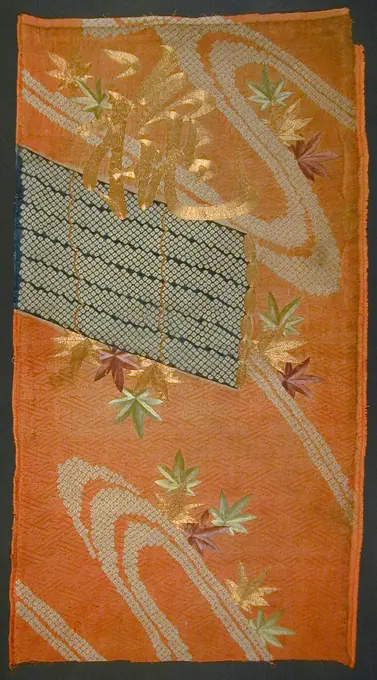
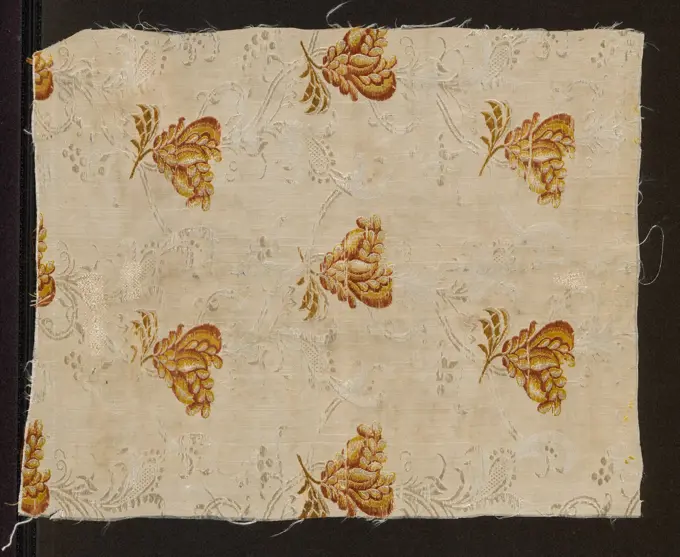
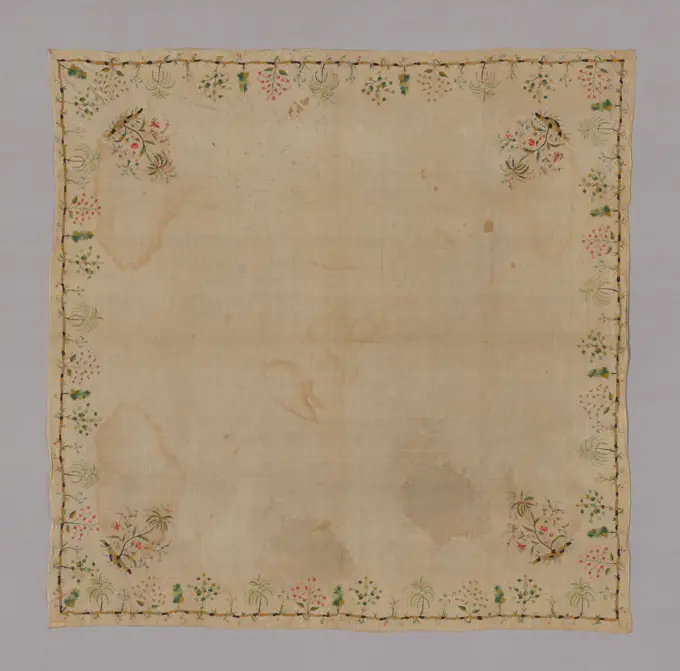
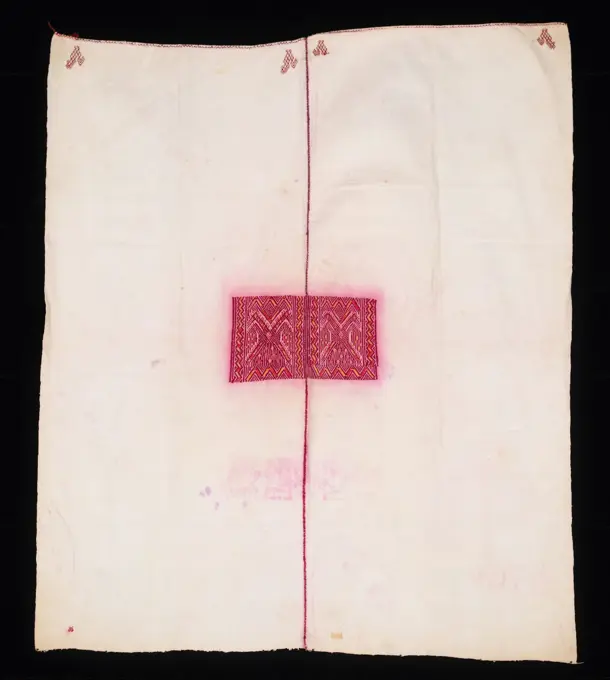
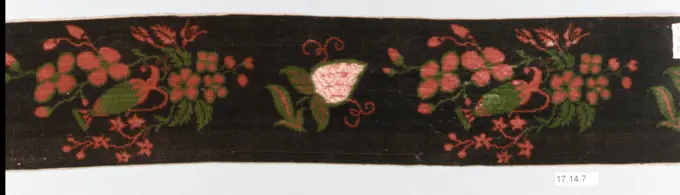
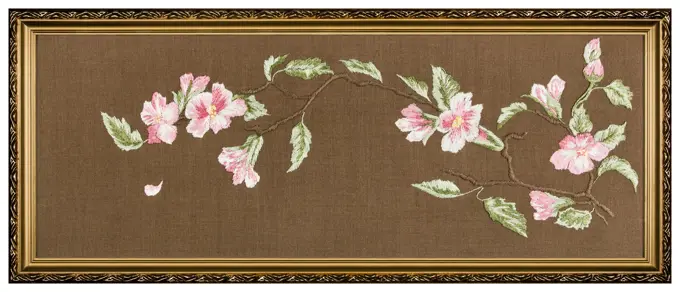
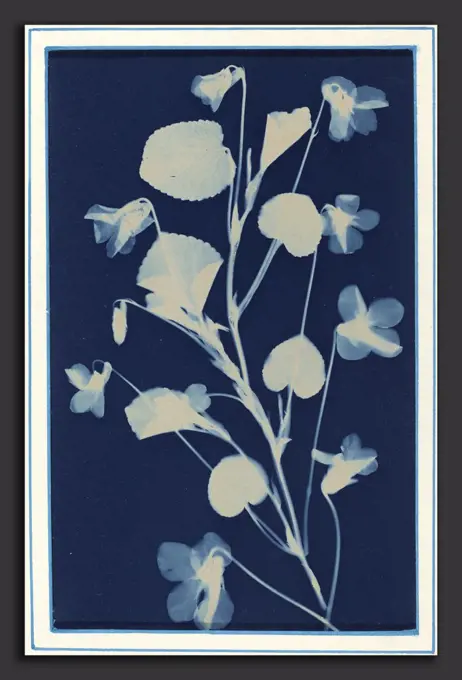
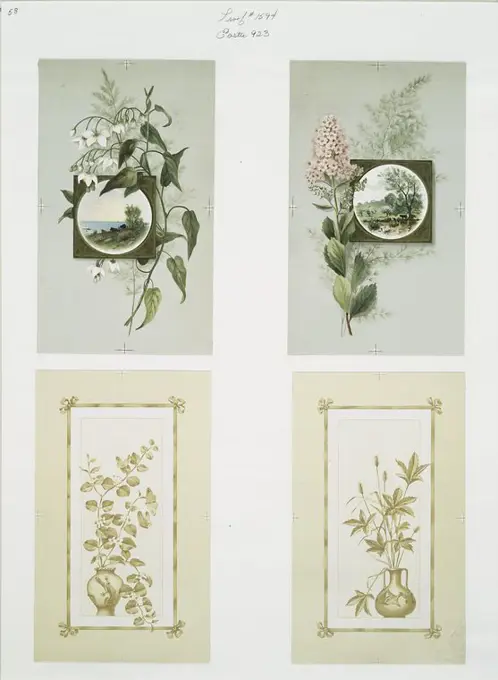
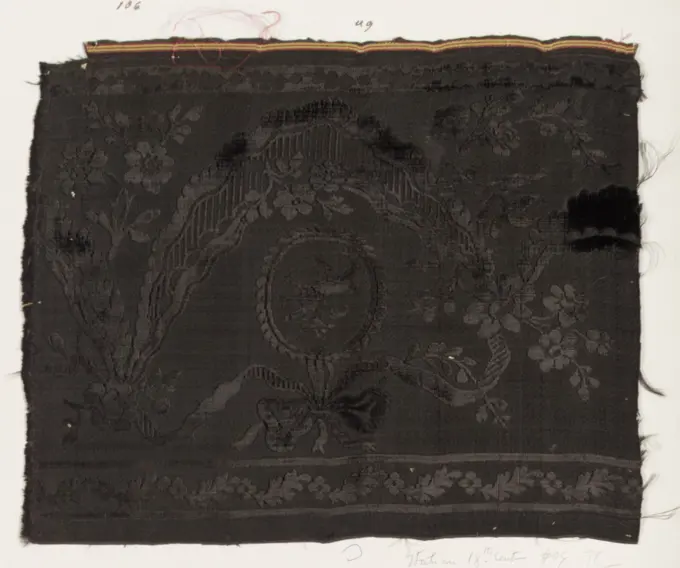
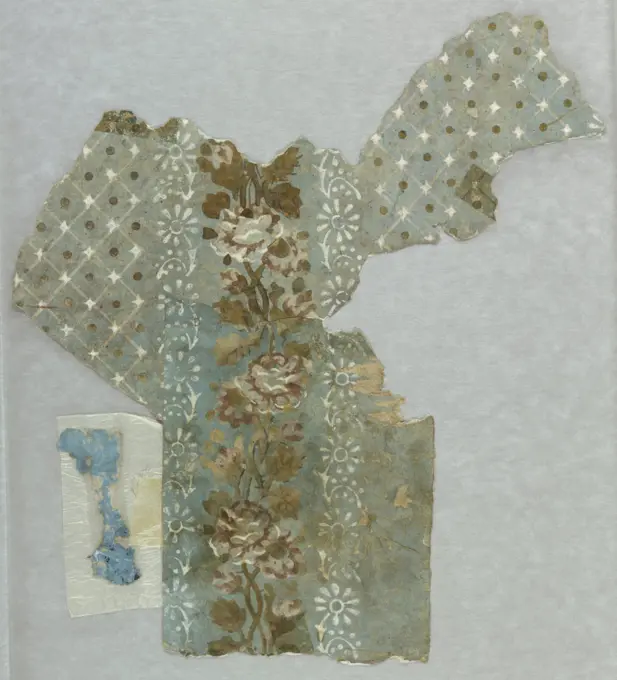
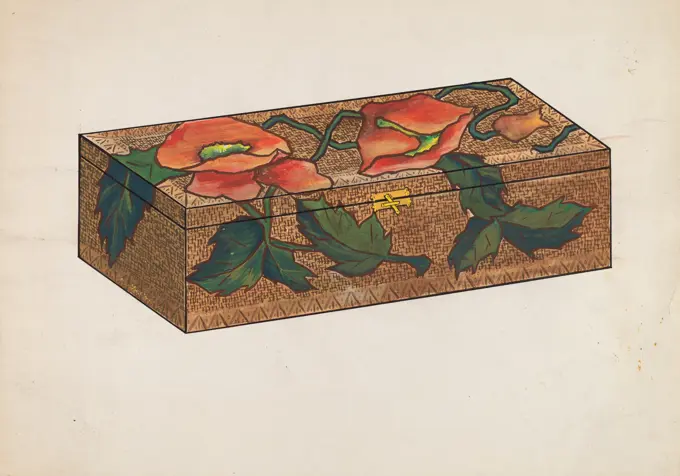
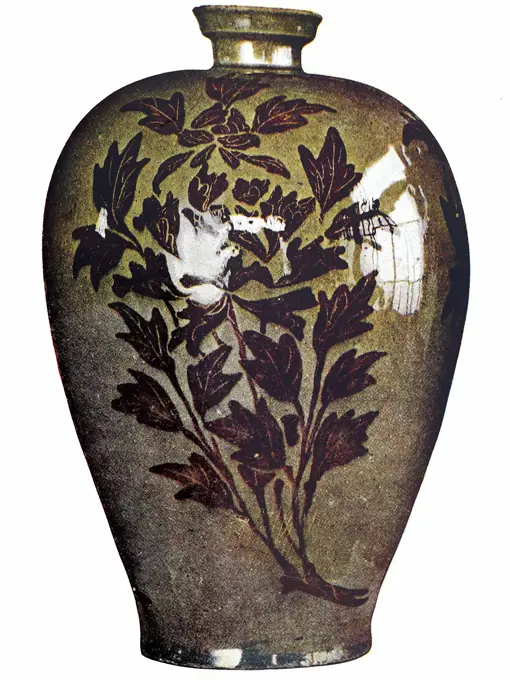
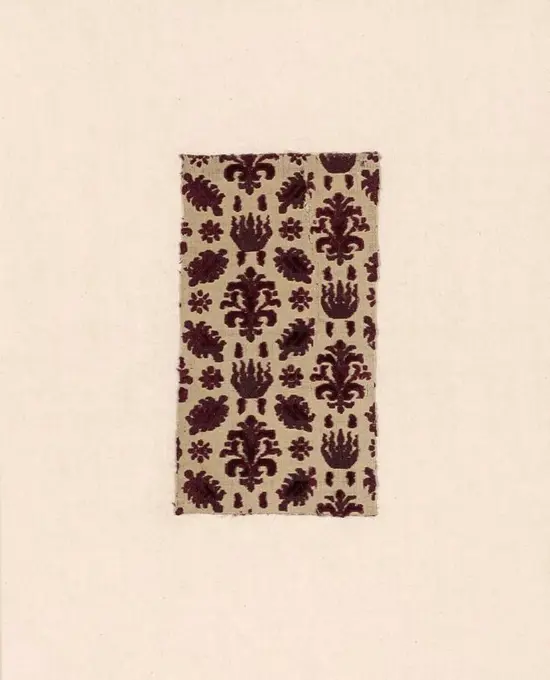
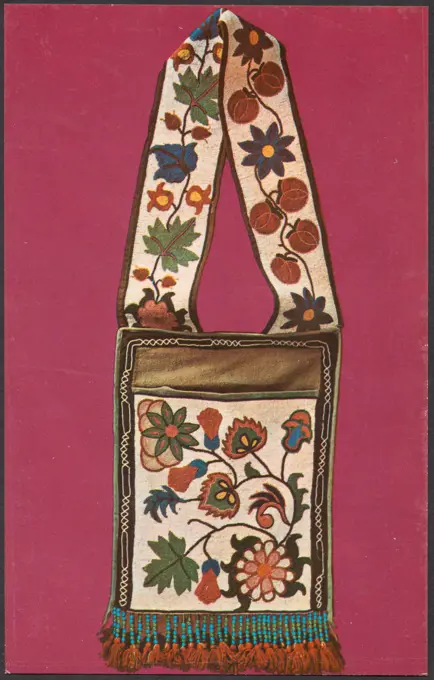
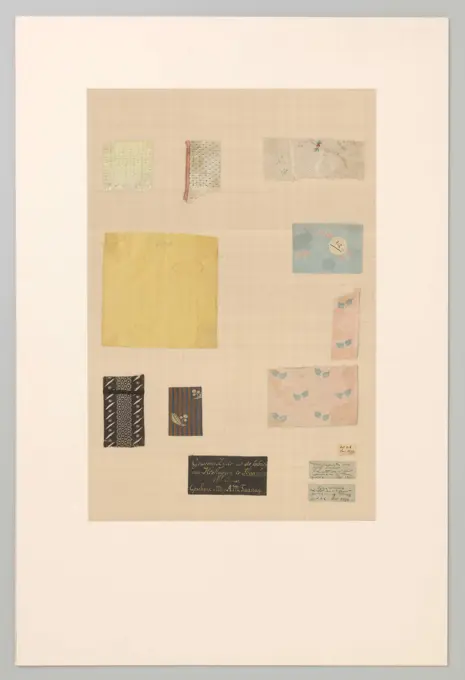
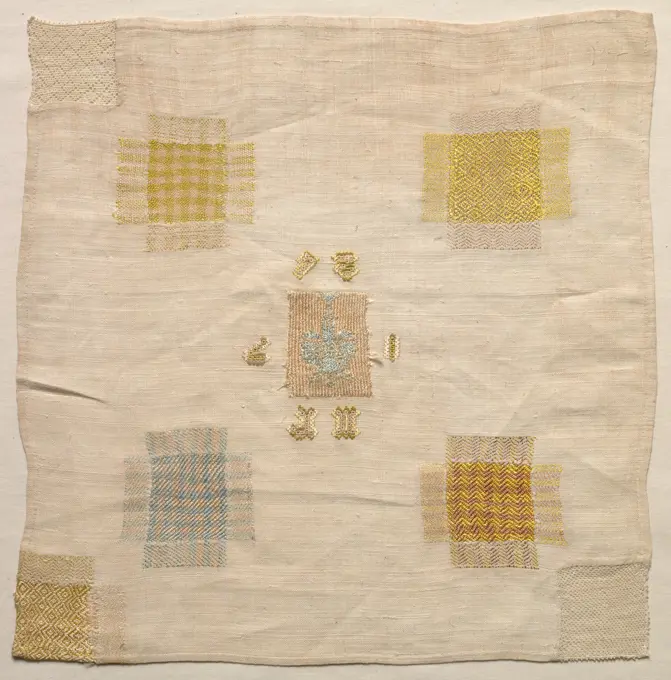
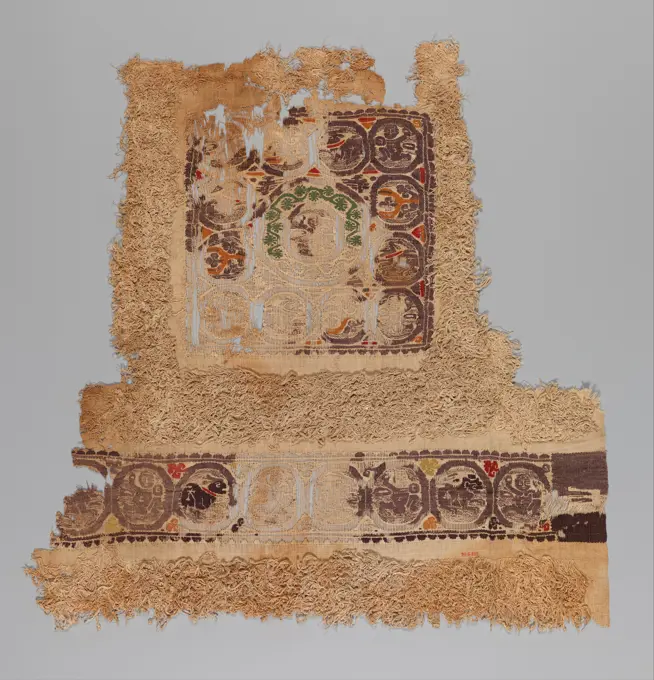
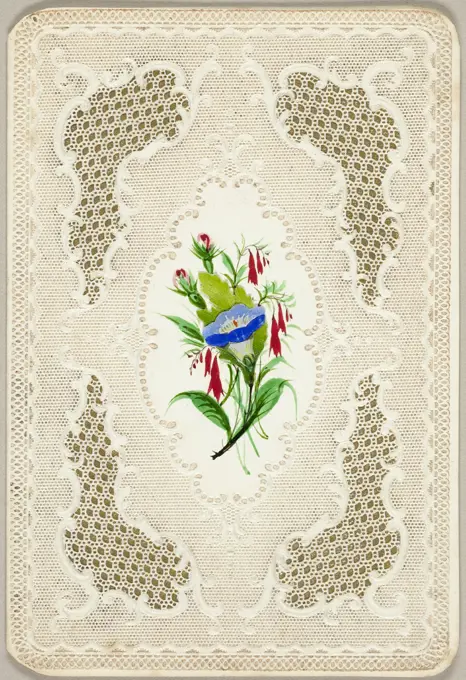
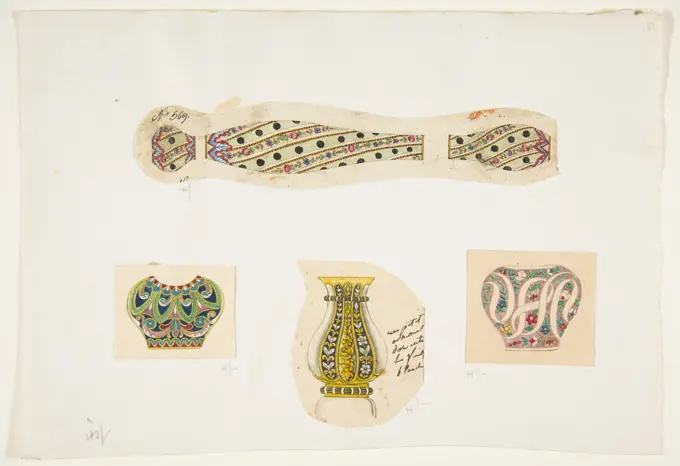
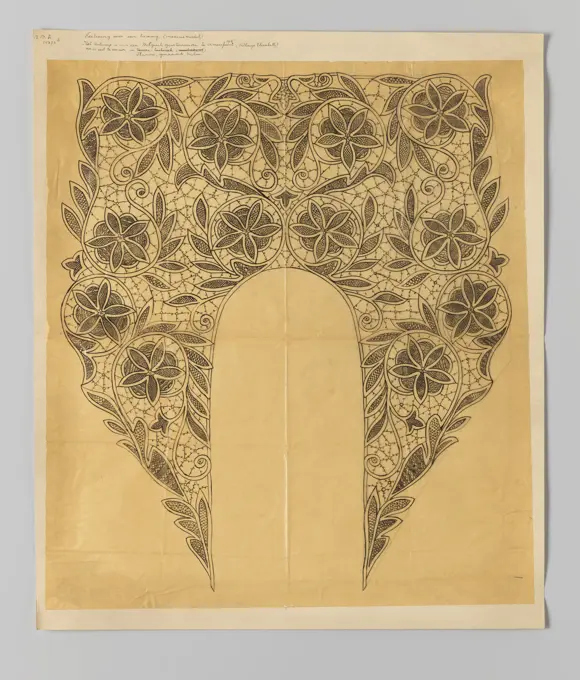
Needle side pattern for a U-shaped collar, Belgian interned (Village Elisabeth, Amersfoort), c. 1915 tools Needle side pattern for a needle side with ink drawn on transparent paper and glued to cardboard. The collar has a U-shaped model in which the bottom on the outside is not round but flattened is, which yields a rectangular rear and with sharp points on the front. The design of the collar was made by a person from Belgium who was interned in the 'Elisabeth-Dorp' camp in Amersfoort in the First World War. Amersfoort paper. ink drawingFragment of embroidery  shrub rose motifs unknownNine golden passings and one silver-colored passing element on cardboard. Cardboard on which ten passes are fixed, one of which is made of silver colored thread and nine of gold-colored wire. Flowers are attached to curly garlands. With one passement (f) it is not flowers, but sickles attached to garlands. With another fragment, the curls are missing and it concerns a slightly wavy rank with leaves and flowers. Fragment (E) is a passing of silver. In addition to the strips, the letters a to j are written on the cardboard.Fragment of embroidery  large motifs of carnation stems with ribbons (part of a chasuble) unknownTextile; silkDoily, Medium: cotton, glass beads Technique: embroidery, Rectangular white cotton length hemstitched and fringed on all fours sides. Narrow border design of tiny flowers in blue, pink and green beads. Two short ends have design of stylized blossoming vine in red, blue, yellow and green. Tiny flowers scattered over ground., Mexico, early 19th century, embroidery & stitching, DoilyAlexander Chudom, Homespun Coverlet, c 1937 Homespun CoverletBlanket with floral motifs, stitched in diamond pattern, anonymous, c. 1750 - c. 1800 A stitched sitsen bedspread; Top cotton with floral motifs (white, pink, red, purple, blue-green on a yellow-brown surface); Bottom of light green silk; intermediate layer of ran wool in diamond pattern stitched through with pink silk thread. India (possibly) cotton (textile). silk. wool A stitched sitsen bedspread; Top cotton with floral motifs (white, pink, red, purple, blue-green on a yellow-brown surface); Bottom of light green silk; intermediate layer of ran wool in diamond pattern stitched through with pink silk thread. India (possibly) cotton (textile). silk. woolEmbroidered Stool Cover. Dated: c. 1939. Dimensions: overall: 39.1 x 57.9 cm (15 3/8 x 22 13/16 in.) Original IAD Object: 18 1/2" high; 18 1/2" wide. Medium: watercolor and graphite on paper. Museum: National Gallery of Art, Washington DC. Author: Carmel Wilson.Textile, Medium: crewel wool on linen Technique: embroidered on plain weave, Cream-colored linen, chain stitch embroidered in multicolor wools. Symmetrical pattern of stiff flower sprays, alternating with small sprays; scalloped edge embroidered in vine pattern in blue and green., France, mid-18th century, embroidery & stitching, TextileFragment textile. Textile fragment, embroidery and Shibori zome on damask.Valentine Greeting, Embossed chromolithograph on double-folded embossed cut paper, On cover, bunch of flowers in the center. Inside, oval frame, left blank, and sticker inscribed: 'I love thee my sweetheart'. Enframement of blue and white embossed paper., United States, ca. 1850, Greeting Card, Greeting CardEmbroidered darning sampler 19th century British. Embroidered darning sampler. British. 19th century. Silk on gauze. Textiles-EmbroideredKosode (Kimono) Fragment with Raft, Water, Maple Leaves, and Chinese Character (Kanji). Japan, Edo period (1615-1868), Genroku era (1688-1704) late 17th to early 18th century. Costumes; principal attire (entire body). Silk figured satin (rinzu), tie-resist dyed (kanoko shibori), with silk and gilt-paper-wrapped-silk thread embroideryFragment, 1700s. Iran, 18th century. Brocade; overall: 44.5 x 16.5 cm (17 1/2 x 6 1/2 in.).Fragment of the fabric;  1740-60 (1740-00-00-1760-00-00);Dąmbska, Grażyna - collection, varia, purchase (provenance)Cover or HandKerchief Made 1850-1875 Turkey. borders embroidered with colored silk floss in flower and tree forms. .Embroidered kerchief trimming unknownPocket, Medium: silk on silk Technique: chain stitch embroidery, Pair of embroidered pockets from a man's waistcoat., France, late 18th-early 19th century, embroidery & stitching, PocketTextile fragment ,, 1789 - 1801 Textile fragment, pressure of flowers and leaves on a light blue background. Japan linen (material) Textile fragment, pressure of flowers and leaves on a light blue background. Japan linen (material)Fragment textile. Textile fragment, embroidery of columns and floral motifs in colors.Fragment with large leaf pattern on red floor. Fragment with large leaf pattern on red floor.Cloth (tzute), first half of the 20th century, 52 x 44 in. (132.08 x 111.76 cm), Cotton, silk (); supplementary weft patterning, Guatemala, 20th centuryFragment of the fabric;  2. PO. 18th century (1740-00-00-1760-00-00);metal thread, fabrics, silk fabrics of the 18th century.Textile Fragment 5th century. Textile Fragment 447338Handkerchief unknownPaper for diploma Beautiful needlework. Black sheet with symmetrical moment embroidered in two types of gold thread.Fragment 17th century Italian. Fragment 230637Fragment; linen; 1933-1-232Vignette with forest violins ..Harvey Thoss, Patchwork Quilting, 1939 Patchwork QuiltingFragment textiel, anonymous, 1716 - 1736 Textile fragment, embroidery with gold thread, Buddhist symbols in brown stock. Japan silk. Textile fragment, embroidery with gold thread, Buddhist symbols in brown stock. Japan silk.Textile fragment. Textile fragment, embroidery and pressure from chrysanthemums on red-brown crepe fond.Cover (Italy); linenOrnament, Medium: warp; S-spun linen, Wefts; S-spun linen, S-spun wool Technique: slit tapestry woven with supplementary weft wrapping, Leaf with circles surrounding outer edge and a straight stem, Egypt, 3rd-4th century, woven textiles, OrnamentJasiek unknownTextile Fragment 18th century. Textile Fragment. 18th century. Silk and metallic thread; brocaded. Country of Origin India. Textiles-BrocadesTile tableau with flower still life, anonymous, c. 1690 - c. 1730 Tile tableau of one hundred and four tiles (13 x 8) with a multicolored (blue, green, yellow, red and purple) painted vase on pedestal with flowers, birds and insects. To the left of the vase a parrot on stick and on the right a chicken. Along the long sides a flower and leaf vank. Netherlands earthenware. tin glaze majolica Tile tableau of one hundred and four tiles (13 x 8) with a multicolored (blue, green, yellow, red and purple) painted vase on pedestal with flowers, birds and insects. To the left of the vase a parrot on stick and on the right a chicken. Along the long sides a flower and leaf vank. Netherlands earthenware. tin glaze majolicaFragment of two parts sewn together. Fragment of two sewn-sewed parts with repeating pattern of stylized sheet to stem.Border Made 1701-1800 England. .Needlepoint (Point de France) Lace Handkerchief, late 19th century. France, Queen Margherita School, late 19th century. Linen center with border of needlepoint lace; average: 34.3 x 34.3 cm (13 1/2 x 13 1/2 in.).Ribbon 18th century French. Ribbon 219871Embroidered picture in the frame, isolated on white background Embroidered picture in the frame, isolated on white background Copyright: xZoonar.com/OleksandrxKostiuchenkox 9750115Bertha Evelyn Jaques, Untitled, American, 1863 - 1941, c. 1900, cyanotypeEaster cards depicting flowers, plants, vases and landscape paintings.. Proofs, Greeting cards. 1865 - 1899. The Miriam and Ira D. Wallach Division of Art, Prints and Photographs: Print Collection. VasesSamples (France); cotton, paperMachine-made Openwork Samples (USA); cardboard, linen, silk, metallic; 1971-26-2-27Stop patch of multicolored silk and linen on linen., Anonymous, 1742 Stop patch of silk and linen on linen. The embroidery already has the crowned initials and the year 1742. Netherlands silk. linen (material) embroidering Stop patch of silk and linen on linen. The embroidery already has the crowned initials and the year 1742. Netherlands silk. linen (material) embroideringChinese ornamentShawl Fragment (Russia); wool and silkvintage greeting cardSquare with a carnation. A window with an email painting of an carnation in mainly blue and orange-red.Fragment (England); Company: Miles & Edwards; Warp x Weft: 32 x 89.5 cm (12 5/8 x 35 1/4 in.); Bequest of Elinor Merrell; 1995-50-23Fragment of the fabric;  2. PO. 18th century (1770-00-00-1785-00-00);Fabrics, purchase (provenance)Tile, Tin-enamelled earthenware, Vertical rectangles. Each tile with identical pattern of two flowers and leaves on continuous scrolling stem. One flower faces the observer and the other is in profile. Manganese violet on white ground., Holland, 18th century, tiles, Decorative Arts, TileEmbroidery, Germany 19th century. Bunch of violets, daisies, gentians and passionflowers embroidery design.Fragment 18th century Italian. Fragment 230267Rhombus with serrated flower. Check with email painting of a serrated flower in yellow, red and blue. Note: Part of the BK-CLXIII-A to R.Sidewall, Block-printed, Floral stripe, with vertical band of flowers between bands of stylized floral motifs. On either side of the stripe is a small diamond trellis pattern, with a four-point star covering the line intersections, and a dot in the center of each diamond. Printed in red, green and white on a blue ground., USA, 1820-50, Wallcoverings, SidewallSebastian Simonet, Glove Box, c 1936 Glove BoxDress of white cotton with in Zaans stitching O.A. The Weapon de Veije. Dress of white cotton with zoans stitching and with frills all around. Edges with ornaments and flowers, in the middle of vases fanning flower branches and, within palm branches, the Wap de Veije and the initials IPDV and MDR (Isaac Petrus de Veije (1733-1818) and Maria de Ruijter (1743-1797), married in 1763.March. Blooming akelei (aquilegia).Ivar Julius and Albert Rudin, Gros Point Needlework  Flowers, c 1939 Gros Point Needlework - FlowersMaterials from Patchwork Bedspread. Dated: c. 1936. Dimensions: overall: 35.6 x 27.9 cm (14 x 11 in.). Medium: watercolor, gouache, and graphite on paperboard. Museum: National Gallery of Art, Washington DC. Author: Frances Lichten.Valentine - Mechanical bouquet, Bride and Groom ca. 1875 Anonymous, German, 19th century. Valentine - Mechanical bouquet, Bride and Groom. Anonymous, German, 19th century. ca. 1875. Heavy card-stock, die cut chromolithographed scraps, gilding, silk threadTextile Fragment 17th century. Textile Fragment 454532Letter Case (France); silk and metallic thread embroidery on silk foundationRibbon and Shield Decoration, Robert Graves Co., New York, New York, Machine-printed paper, Large-scale coats of arms on shield, alternating with fleur de lis. Below this is a folded ribbon motif. Printed in black, white and gold on bright red ground., New York, New York, USA, 1907, Wallcoverings, Frieze, FriezeMarion Gaskill, Beaded Bag, c 1939 Beaded BagFan case, early 19th century, 8 1/2 × 2 × 3/8 in. (21.59 × 5.08 × 0.95 cm), Silk, cardboard, China, 19th centuryBag. Dated: c. 1937. Dimensions: overall: 35.7 x 26.6 cm (14 1/16 x 10 1/2 in.). Medium: watercolor and gouache on paper. Museum: National Gallery of Art, Washington DC. Author: Cornelius Christoffels.Valentine Greeting, Chromolithograph on embossed paper, A bunch of flowers in an oval frame, hinged, and hiding a nine-line poem entitled: 'I love thee'., United States, ca. 1875, Greeting Card, Greeting CardTwo blades with flower straw pattern on a point stock with winding lines, Anonymous, 1750 - 1900  Two blades with flower straw pattern on a point stock with winding lines. With label with inscription: 'H.J.H. Modderman ... nomination " Two separate halves of a cover.  paper. block printing (relief printing process) ornament derived from plant formsSample book. Date/Period: Early 19th century. Sample book. Medium: paper, cardboard, silk, metal-wrapped silk cord, metal foil. Technique: warp-float face with supplementary warp and weft patterning. Author: UNKNOWN.Brush back.Valentine - Mecanical fan ca. 1875 Anonymous, British, 19th century. Valentine - Mecanical fan. Anonymous, British, 19th century. ca. 1875. Heavy card-stock, die cut scraps, chromolithography, gilding, cotton threadvector vintage invitation cardVase, Koryo (Goreyo) Celadon glaze; painted peony design in underglaze iron, Koryo (Goreyo) (Goreyo) dynasty, mid-13th centuryFragment. Italy or Spain. Date: 1625-1650. Dimensions: 22.5 x 12.5 cm (8 7/8 x 5 in.)Warp repeat: 9.2 cm (3 5/8 in.). Silk, plain weave with supplementary pile warps forming cut, uncut, and voided velvet. Origin: Italy. Museum: The Chicago Art Institute, Chicago, USA.Medicine bag with floral design , Bags, Ojibwa Indians, Peabody Museum of Archaeology and Ethnology, Tichnor Brothers Collection, postcards of the United StatesMachine-made Openwork Samples (USA); cardboard, linen, silk, metallic; 1971-26-2-20PortfelikPostcard of Wiener Werkstätte No, Flower basket, Leopoldine Kolbe -, Artist, Wiener Werkstätte, Publishing HouseFragment silk tissue .. Fragment silk tissue. HT pattern has a white ground with blue dots.Darning Sampler, 1784. Netherlands, late 18th century. Embroidery; overall: 26.7 x 26.4 cm (10 1/2 x 10 3/8 in.).Reading Olga Boznańska Payot et Cie bookstore, Editions NilssonTextile Fragment 4th century. Textile Fragment 444318Miniature Dress 12th-13th century Ica. Miniature Dress 312851Chalice cloth or velum made of linen with a peripheral border border and an edge bobbin, anonymous, c. 1600 Chalice cloth or velum made of linen with a rim of natural -colored lace -ups: work with pulled out threads (open sewing). The whole is finished all around with a edge of natural torway. Square model with rounded corners. The work with pulled out threads has a wider track with larger openwork ovals between two narrow jobs with openwork ovals and a wheel on each corner point. The bobbin side consists of a network of diamonds in which the outer edge ends in a zigzag line with a picot edge of fine braided dots. Netherlands (possibly) linen (material) bobbin lace Chalice cloth or velum made of linen with a rim of natural -colored lace -ups: work with pulled out threads (open sewing). The whole is finished all around with a edge of natural torway. Square model with rounded corners. The work with pulled out threads has a wider track with larger openwork ovals between two narrow jobs wiReticule. Dated: c. 1936. Dimensions: overall: 35.7 x 26.8 cm (14 1/16 x 10 9/16 in.). Medium: watercolor, gouache, and graphite on paper. Museum: National Gallery of Art, Washington DC. Author: Ann Gene Buckley.Excerpt bizarre silk, anonymous, c. 1740 - c. 1760 Fragment bizarre silk. Fond of satin in green and beige stripes, on which a pattern of leaves, a parasol, Chinese architecture with a Pagoda-shaped building with a gate in which a lion. (Pattern identical to BK-BR-416-A) Netherlands (possibly)England (possibly)France (possibly) silk. Fragment bizarre silk. Fond of satin in green and beige stripes, on which a pattern of leaves, a parasol, Chinese architecture with a Pagoda-shaped building with a gate in which a lion. (Pattern identical to BK-BR-416-A) Netherlands (possibly)England (possibly)France (possibly) silk.Sampler. Date/Period: Early 19th century. Sampler. Medium: silk embroidery on cotton foundation. Technique: cross stitch on plain weave. Author: UNKNOWN.Untitled Valentine (Flowers) 1840-1850 England. Collaged elements and watercolor on pink accented and embossed ivory wove paper .Border. France or Italy. Date: 1700-1725. Dimensions: 33.9 × 56.1 cm (13 3/8 × 22 1/8 in.). Silk, warp-float faced 3:1 broken warp chevron twill weave with supplementary pile warps forming cut and uncut solid velvet. Origin: France. Museum: The Chicago Art Institute, Chicago, USA.Four Designs for Vases 19th century Anonymous, French, 19th century French. Four Designs for Vases 356091Fragment 16th-17th century Italian. Fragment 230617Miniature Tunic 12th-13th century Ica. Miniature Tunic 312861Tray 1757 Sèvres Manufactory French. Tray 202123Camellia, left a flower in button. Open camellia and flower in button, against white-black background.Christmas and Easter cards depicting mallard ducks, crosses, a decorative pattern and botanical illustrations.. Proofs, Greeting cards. 1865 - 1899. The Miriam and Ira D. Wallach Division of Art, Prints and Photographs: Print Collection. Crosses, Decoration and ornament , Plant forms