Ornate Textiles and Carpets

A variety of intricate textiles and carpets featuring rich patterns, colors, and motifs, including traditional weavings and oriental designs.
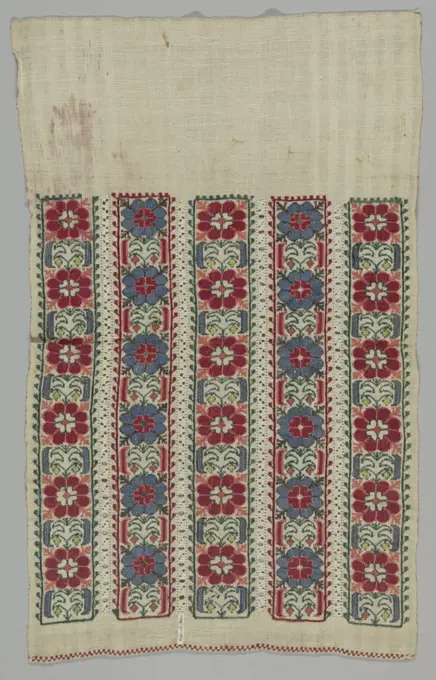
Towel end, Medium: cotton, silk Technique: embroidery and drawnwork on plain weave, Piece of white cotton with five vertical embroidered stripes separated by lines of drawnwork. The stripes are alternately of red flowers, blue leaves, yellow buds and blue flowers, red leaves and orange buds. Ornamental hem of red cross stitch., Turkey, 19th century, embroidery & stitching, Towel end
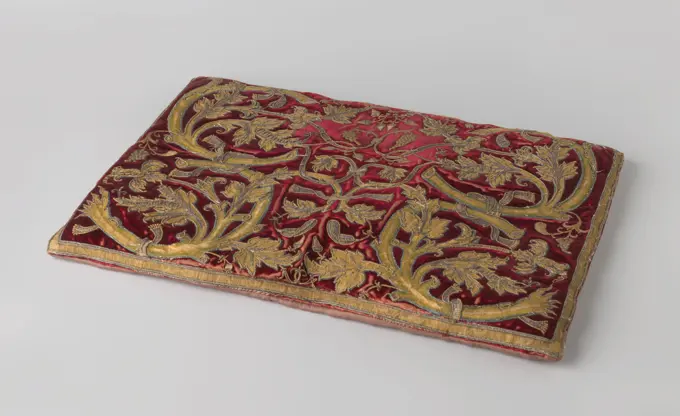
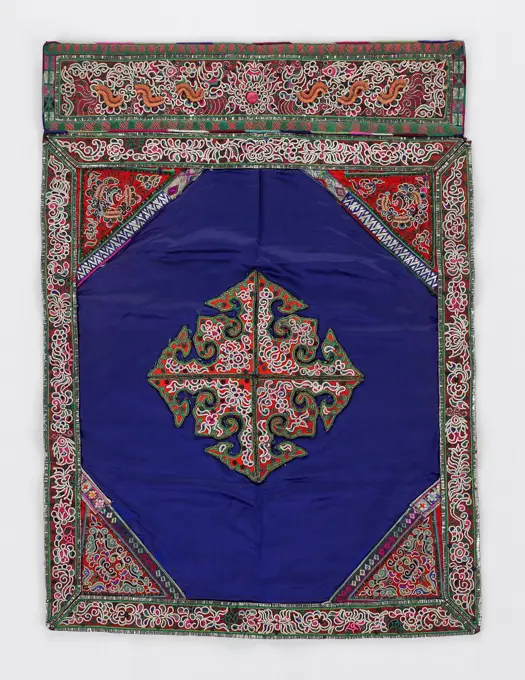
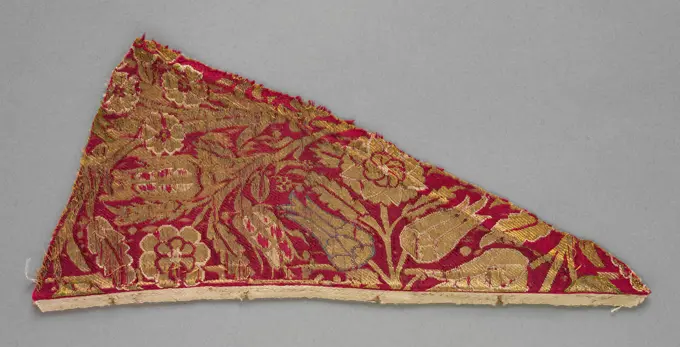
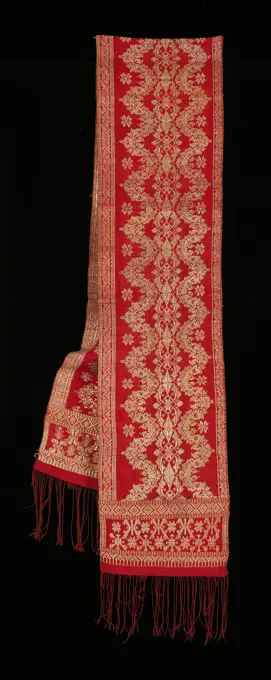
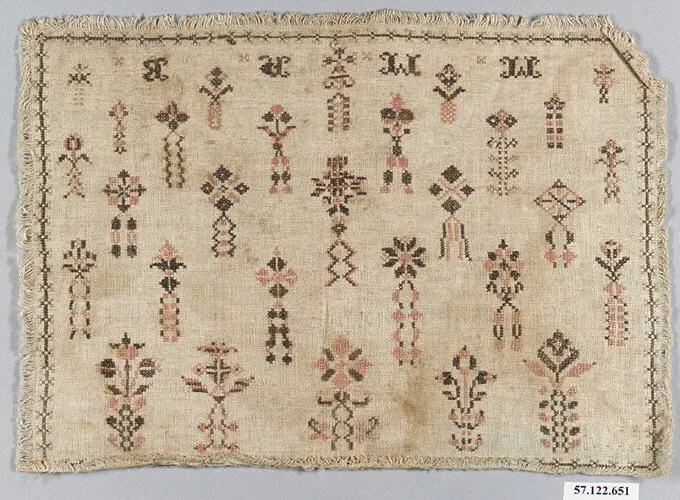
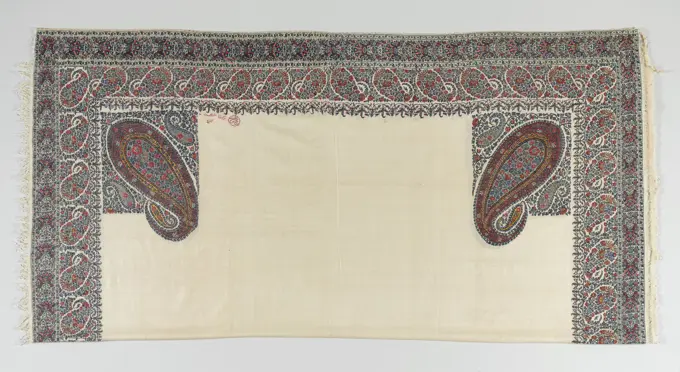
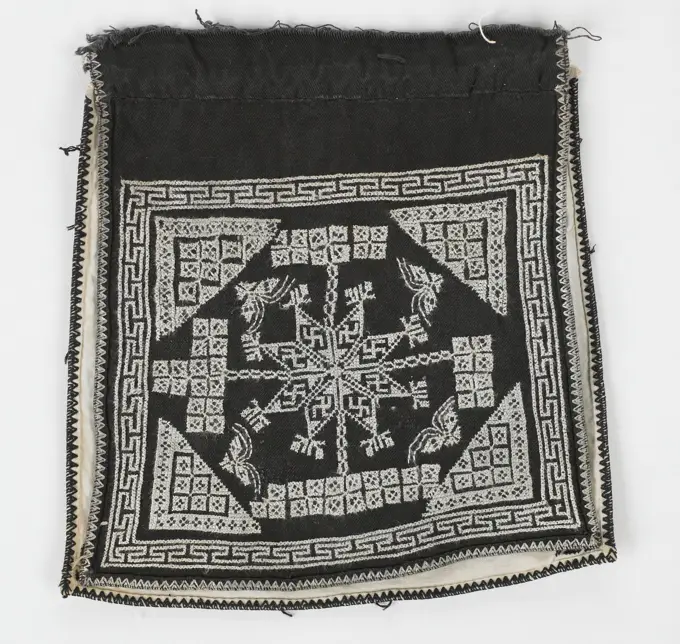
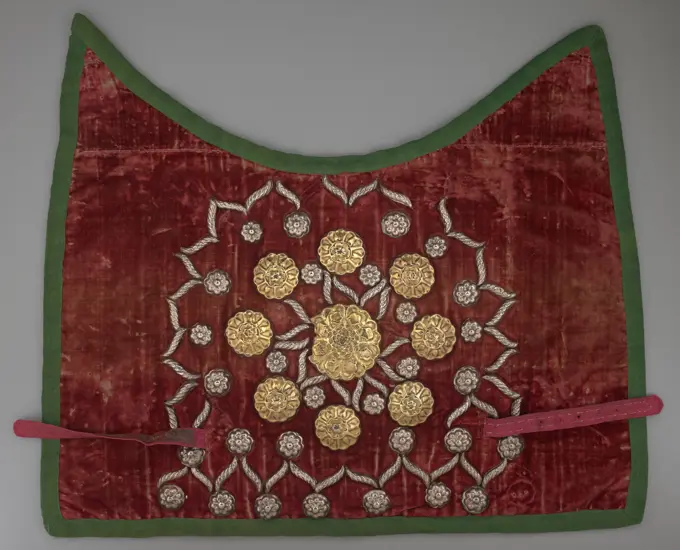
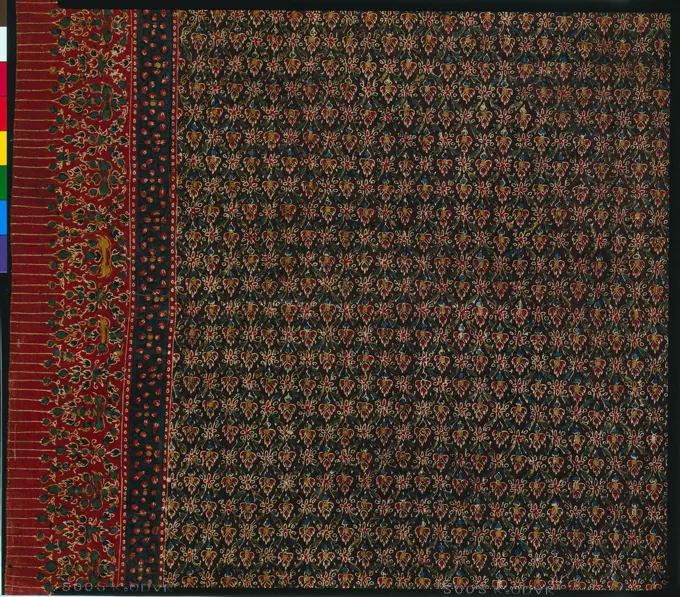
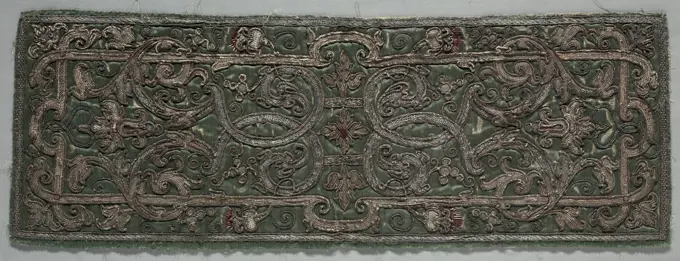
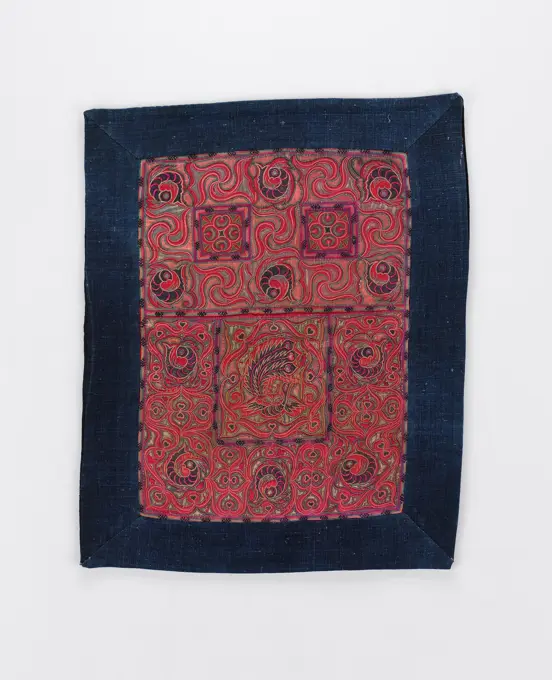
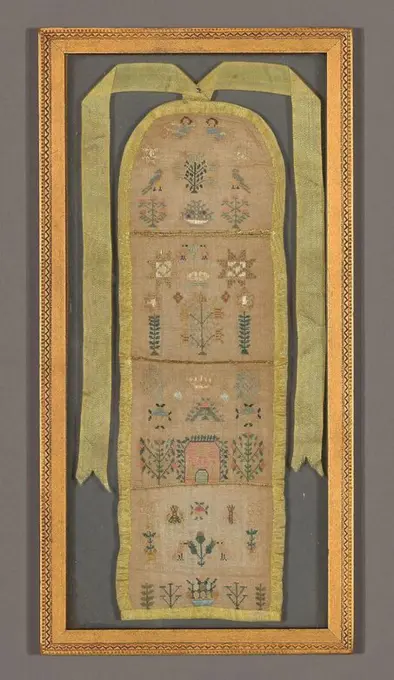
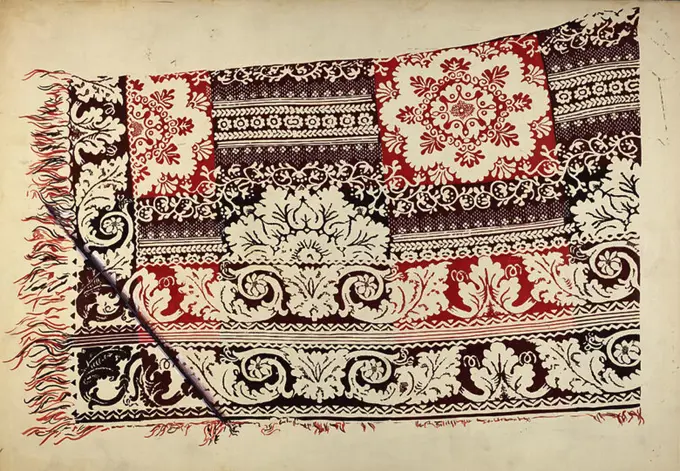
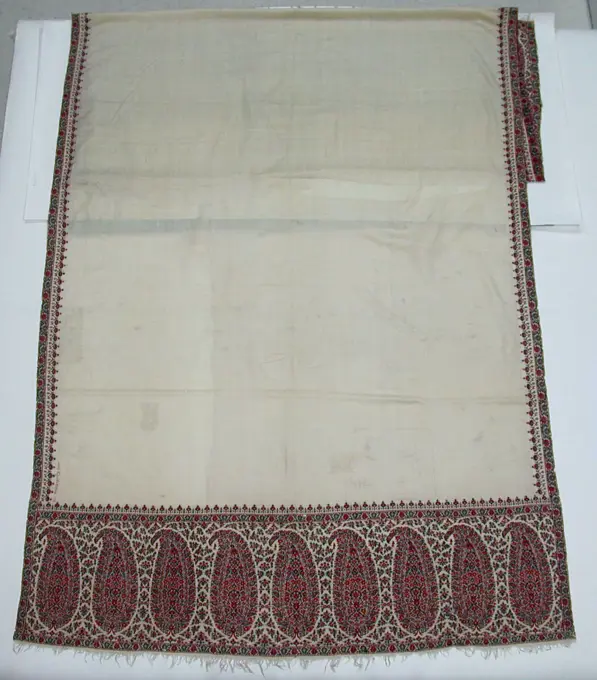
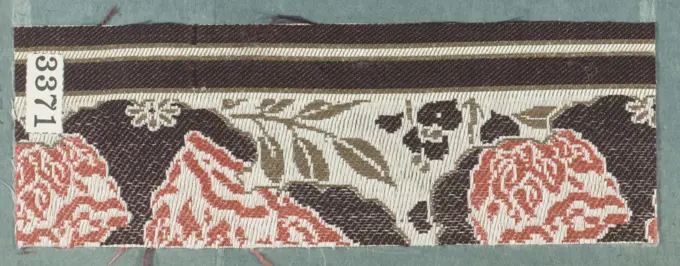
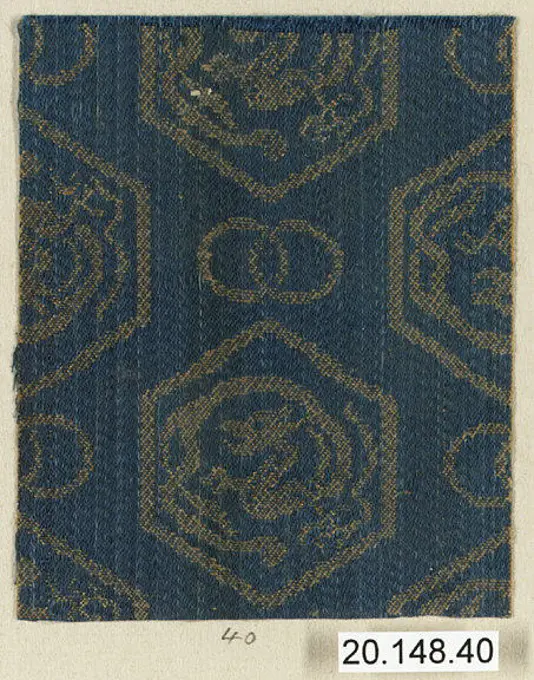
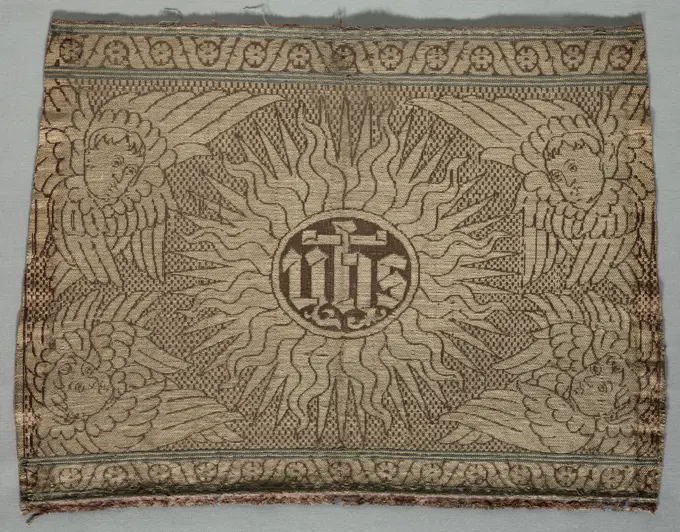
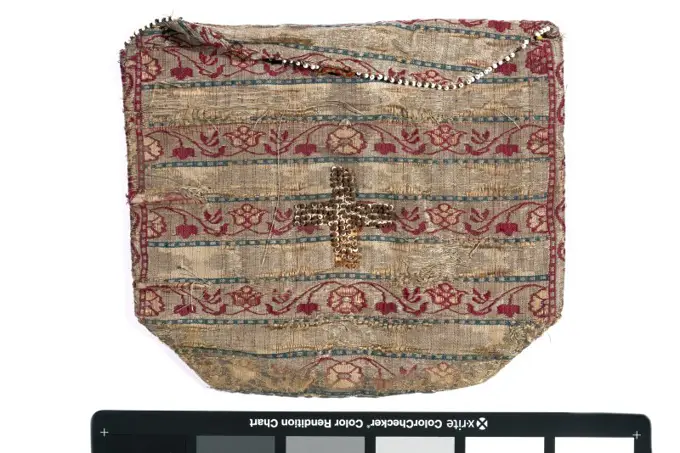
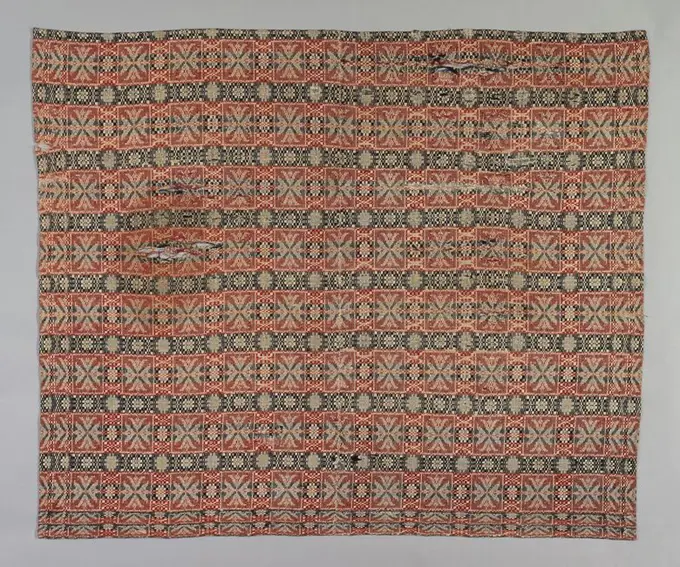
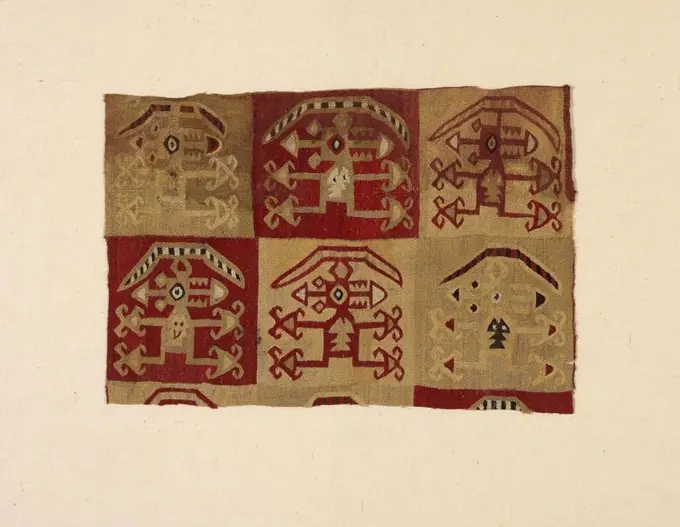
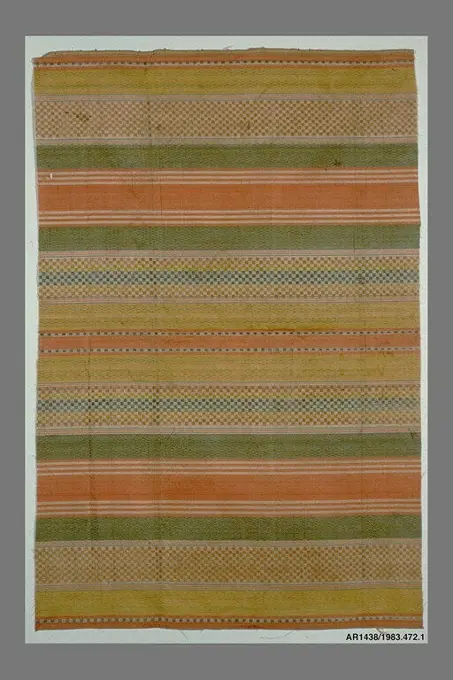
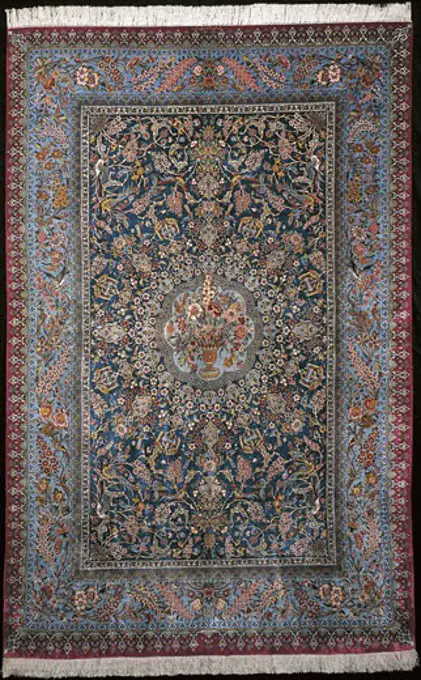
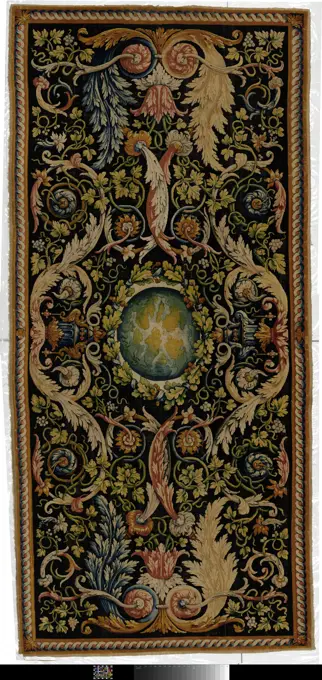
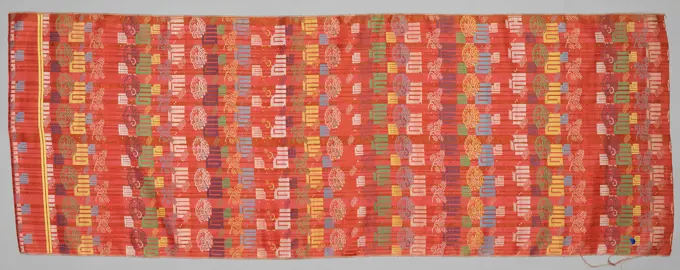
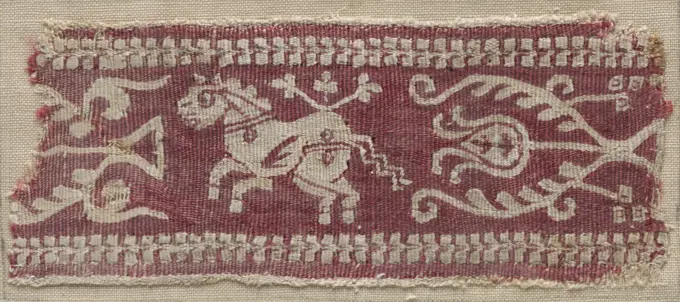
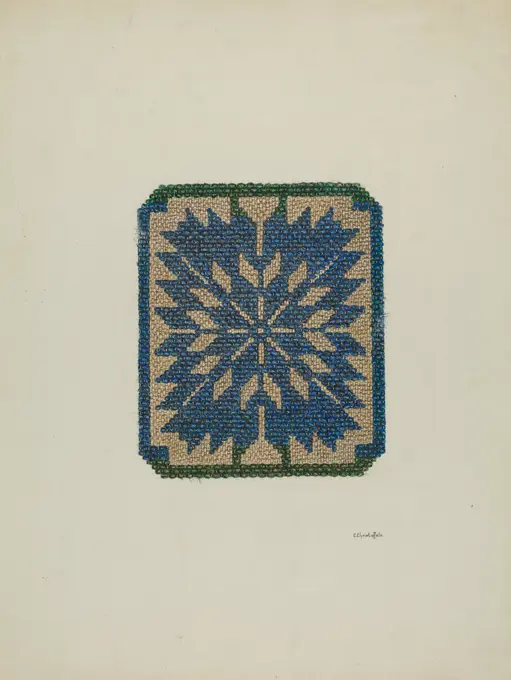
Sprey, Anonymous, c. 1700 - c. 1750 Spread of half-sided fabric with a yellow damask pattern of flowers, finished with a green silk passion. Two corners have been completed. The bedspread is fed with unbleached linen ().  silk. linen (material) embroidering Spread of half-sided fabric with a yellow damask pattern of flowers, finished with a green silk passion. Two corners have been completed. The bedspread is fed with unbleached linen ().  silk. linen (material) embroideringFragment in kasjmiertechniek.A fragment of a scarf ().Wine red velvet seat ridge with application boarding, anonymous, 1500 - 1599 Wine red velvet seat ridge with application boarding. On the short sides are truncated branches wounded by a ribbon. Side branches with acanthus leaf and ending in lily, acorns, corn citizen and grape bunches. Application of gold brocade embroidered with green and yellow side. Gold and blue cord laid along the contours. Silver thread sheets. ItalyFrance velvet (fabric weave). silver thread Wine red velvet seat ridge with application boarding. On the short sides are truncated branches wounded by a ribbon. Side branches with acanthus leaf and ending in lily, acorns, corn citizen and grape bunches. Application of gold brocade embroidered with green and yellow side. Gold and blue cord laid along the contours. Silver thread sheets. ItalyFrance velvet (fabric weave). silver threadBorder Made 401 CE-600 CE Egypt. Linen and wool, slit tapestry weave .Border Made 1805-1810 France. Silk, warp-float faced 7 1 satin weave with twill interlacings of secondary binding warps and patterning wefts .Piece 18th-19th century Japan. Piece 67408Fragment Made 1801-1900 Europe. Silk .Decorative Wall Hanging, 20th century, 25 1/8 x 18 1/4in. (63.8 x 46.4cm), Cotton, silk, embroidery, China, 20th centurySampler, Medium silk on linen Technique: embroidered on plain weave, Sample with a blank central square; border with many geometric bands of multicolored silk on linen., Spain, 18th century, embroidery & stitching, SamplerSampler (England); Made by Elizabeth Saggar (English); linen, silk; Frame H x W x D: 88.9 x 25.4 cm (35 x 10 in.)Bliżej Kultury unknownTextile Fragments, 16th century. Turkey, Bursa, 16th century. Brocaded silk with metal thread weft; average: 42 x 25.5 cm (16 9/16 x 10 1/16 in.).Man's Longyi, mid 20th century, 44 x 33 1/2 in. (111.76 x 85.09 cm), Cotton, Myanmar (Burma), 20th centuryScarf 1850s American. Scarf 119374Sampler (Italy); Embroidered by Elvira Giovacchini (Italian); silk embroidery on cotton foundationDress of wine red velvet, with embroidery of gold thread and silk ,, c. 1600 Dress of wine red velvet, with in the middle a medallion around which in the corners quarter-round decorations and at the top and bottom an edge of Italian embroidery of gold thread and silk. Probably from a four -poster bed. Italy velvet (fabric weave). silk. embroidering Dress of wine red velvet, with in the middle a medallion around which in the corners quarter-round decorations and at the top and bottom an edge of Italian embroidery of gold thread and silk. Probably from a four -poster bed. Italy velvet (fabric weave). silk. embroideringPiece 18th-19th century Japan. Piece 66873Textile; silkTextile 1840-70 Russian. Textile 173429Rug, 20th century, 78 x 43 in. (198.1 x 109.2 cm), United States, 20th centuryShoulder cloth, 20th century, 11-3/4 x 90 in. (29.8 x 228.6 cm), Silk, metallic thread; supplementary weft patterning, Indonesia, 20th centuryLa reliure française depuis l'invention de l'imprimerie jusqu'à la fin du XVIIIe siècle, Binding. 1900 - 1929. bindings (gathered matter components), Book covers. Spencer Collection. Mosaic bindings , Czech Republic , 20th centuryCarpet Made 1850-1900 Morocco. Wool, plain weave with supplementary wrapping wefts forming cut pile through a technique known as Turkish (Ghiordes) knots .Fragments (France); cotton; A. Warp: 61cm (24in.). Weft: 9.5cm (3 3/4in.) B. 49cm (19 1/4in.) by 1.5cm (5/8 in.)Sampler 19th century possibly Swiss. Sampler 228574Fragment, 1700-1720. China, Qing dynasty (1644-1911). Silk, diaper weave; twill ground; overall: 31.8 x 50.8 cm (12 1/2 x 20 in.).Fragment, 1800s. China, 19th century. Silk; overall: 17.8 x 18.5 cm (7 x 7 5/16 in.).Sampler (Spain); medium silk on linen; Bequest of Marian Hague; 1971-50-168Trimming (France); silkTrimming (France); silkSquare scarf with natural wool mirror, in the corners multicolored botas and around a double tire botas and flowers, anonymous, c. 1820 - c. 1830 Square scarf with natural wool mirror, in the corners of Botas and around a double tire of botas and flowers. Mirror necklace: wool, impact: wool, tissue binding: Keper 2: 2. Technology decor: double connection. The characteristic of the ornament of these scarves was that the threads were beaten or connected at the transition from one color to the other. But in addition, the threads were once again beaten around each other or 'double connected' during the next impact. At the back of the tissue, small loops of the times of the threads form at the back of the tissue. These rows with loops are typical of the scarves that were woven in India. It was and very labor -intensive process and initially worked on one and two years on one scarf. Cashmir whole: Wool. Decoration: Wool Square scarf with natural wool mirror, in the corners of Botas and arounIndian Trade Textile(Sarasa)Miao Bag Cover, 20th century, 9 1/2 x 9 3/4in. (24.1 x 24.8cm), Cotton, cross-stitch embroidery, China, 20th centuryPillow cover ca. 1600 British. Pillow cover 228956Marriage mud cloth, 44 1/8 x 58 1/2 in. (112.08 x 148.59 cm), Cotton, MaliSaddle bags, 19th century, L.26 x W.11 in., linen, silk; needlework, Croatia, 19th centuryFragment (Japan)Przeszo Przyszoci unknownLoin Cloth "Pha nung" or Cloth for Wrapped Garment, late 1800s-early 1900s. India, East Coast, late 19th - early 20th century. Tabby weave, mordant resist and batik; cotton; overall: 97.8 x 325.1 cm (38 1/2 x 128 in.).Piece 18th-19th century Japan. Piece 66089Patchwork Bedspread. Dated: 1935/1942. Dimensions: overall: 35.1 x 51.7 cm (13 13/16 x 20 3/8 in.) Original IAD Object: 16" x 20". Medium: watercolor and graphite on paper. Museum: National Gallery of Art, Washington DC. Author: Mina Greene.Border Fragment (Spain); silk, vegetable fiberValance Made 1775-1800 China. Tapestry weave .Band; cotton; Warp x Weft: 21.6 x 6.4 cm (8 1/2 x 2 1/2 in.)Lice line or strip of embroidery application. Lice line or strip of application embroidery on a wine-red velvet fond. The pattern has symmetrical lying S-tanks, together in the middle with a lily and a rose. The rich branched rank is occupied with leaf trips and ends in volutes of Acanthus leaves and silver bonding drinks. The strip is finished with gold passement and goldfring from the bottom. The strip belongs to three strips (BK-17292-A to BK-17292-D).Piece 18th-19th century Japan. Piece 66983Apparel from a Dalmatic, early 1500s. Italy, early 16th century. Embroidery; silk and metallic threads; overall: 19.6 x 54.5 cm (7 11/16 x 21 7/16 in.).Apron, 23 3/4 x 19 in. (60.33 x 48.26 cm), Cotton, silk; needlework, ChinaSampler. Worked by Elizabeth Dudley (English, active c. 1799); England. Date: 1799. Dimensions: 24.2 × 7.8 cm (9 1/2 × 3 in.). Linen, plain weave; embroidered with silk in cross, satin, algerian eye or star stitches, detached buttonhole insertions. Origin: England. Museum: The Chicago Art Institute, Chicago, USA.Woman's shawl, 20th century, 74 7/8 x 18 5/8 in. (190.18 x 47.31 cm) (without fringe), Silk or synthetic; woven fabric, Bangladesh, 20th centuryCoverlet. Dated: c. 1936. Dimensions: overall: 69.4 x 48.3 cm (27 5/16 x 19 in.) Original IAD Object: 80" long; 72" wide. Medium: gouache and graphite on paperboard. Museum: National Gallery of Art, Washington DC. Author: Ralph Atkinson.Shawl second quarter 19th century. Shawl 446164Textile 19th century Japan. Textile 68005Coca Bag 5th-7th century Moche. Coca Bag 316913Piece 17th century China or Japan. Piece 70970Band for Dalmatic, 1500s. Italy, 16th century. Brocade; overall: 34.9 x 48.2 cm (13 3/4 x 19 in.).Piece 18th-19th century Japan. Piece 65804Burse. unknown, authorCoverlet. United States, Probably Pennsylvania. Date: 1820-1830. Dimensions: 152.4 x 180 cm (60 x 70 7/8 in.)Repeat: 17.8 x 15.2 cm (7 x 6 in.). Cotton and wool, plain weave with supplementary wefts in composite point twill weave (multiple shaft, 4 tie-down); two loom widths joined. Origin: Pennsylvania. Museum: The Chicago Art Institute, Chicago, USA.Fragment (Tunic). Provinical Inca; Probably north or central coast, Peru. Date: 1476-1532. Dimensions: 30.5 x 20.6 cm (12 x 8 1/8 in.). Cotton and wool (camelid), slit and single interlocking tapestry weave with eccentric wefts. Origin: Peru. Museum: The Chicago Art Institute, Chicago, USA.Woven aurifries ,, c. 1400 - c. 1500 Woven aurifries, consisting of three sewing strips. The ground is red and has a pattern of stylized golden branches with blue flowers. In the aurifries, text "Ihesus Maria" is woven and a weapon. Cologne textile materials. silver thread Woven aurifries, consisting of three sewing strips. The ground is red and has a pattern of stylized golden branches with blue flowers. In the aurifries, text "Ihesus Maria" is woven and a weapon. Cologne textile materials. silver threadPiece 1780s Italian or French. Piece 229776ALFOMBRA PERSA. Location: PRIVATE COLLECTION. MADRID. SPAIN.Sampler (England); wool on linenPiece 17th century Japan. Piece 71758Tussenzetsel van rode en witte kloskant met concentrische cirkels in vierkante velden.Interesting - colored - red and white - climbing side: Cluny side. The repeating pattern consists of a row of square fields, marked by red lines. In each field, two picoted braids are concentric circles around a red-white diamond in the center. Two leaves are made in shape stroke in each corner point. The red diamond in the center of each field is about in a larger white diamond in linen stroke. This is half in one field and half in the next field. The red wires that the fields are marked and with which the red windows are formed for a red cross in the white windows. Top and bottom are straight finished with a red zigzag by horizontal white wires.Quilt ca. 1810-15 Bannister Hall The Bannister Hall print works was founded ca. 1798 by Richard Jackson and John Stephenson. Between 1809 and 1825 it was owned by Charles Swainson with varying partners. It was the leading firm for woodblock "furniture" chintzes.. Quilt. British, Preston. ca. 1810-15. Cotton. Textiles-PrintedPall, red unknownTextile (Bolivia); wool; Warp x Weft: 96 x 96 cm (37 13/16 x 37 13/16 in.); 1955-157-9Piece 18th-19th century Japan. Piece. Japan. 18th-19th century. Silk. Textiles-WovenTrimming (possibly Spain); silkTop of the pall, embroidered, red unknownValance, 18th century, 6 1/4 x 30 x 18 in. (15.88 x 76.2 x 45.72 cm), Embroidery, England, Queen AnneSan Juan La Laguna, Solola, Guatemala. Colorful traditional woven cloth for sale at a market near Lake Atitlan.Fragment rode brocatel, anonymous, c. 1590 - c. 1610 Fragment red silk with pattern of stylized vase surrounded by leaf vines. Spain (possibly) Ketting an element: Silk. Entry: Linen (Material) broach Fragment red silk with pattern of stylized vase surrounded by leaf vines. Spain (possibly) Ketting an element: Silk. Entry: Linen (Material) broachScarf 1860-65 European. Scarf 119148Close-up of a carpet, IranConciliate belt; Manufaktura Karol Stanisław Radziwiłł (Słuck; Pasów label; Ca 1767-1790), Madżarski, Jan (Tkacz; Słuck, -A 1800); 1767-1780 (1767-00-00-1780-00-00);Untitled, Anni Albers, 1941, rayon, linen, cotton, wool, jute, Bauhaus.Border, Block-printed, Narrow border. Central band containing scroll wave-like motif, below which hang bead swags and foliate swags. Printed in green, orange, ocher, gray and black. Printed three across., USA, 1850-1900, Wallcoverings, BorderSampler (Scotland); Embroidered by Isabell Morison (Scottish); silk and metal-wrapped silk embroidery on wool foundationStrip -Fragment, Medium: silk Technique: satin lampas plain compound satin, Border fragment with two horizontal rows of alternating trefoil and willow branch in brown and yellow on green satin ground., France, ca. 1805, woven textiles, FragmentPiece 18th century Japan. Piece 71359LIBRO-PASTA-DECORACION EN FORMA DE ABANICO CON HIERRO. Location: PRIVATE COLLECTION. MADRID. SPAIN.Border; cotton, metalShawl ("Cadar"), 1800s - early 1900s. India, Cutch, 19th - early 20th century. Embroidery, silk thread on silk ground; overall: 188.9 x 139.7 cm (74 3/8 x 55 in.).Close-up of a Qom fine silk rug, IranRank Badge with Silver Pheasant 19th century China. Rank Badge with Silver Pheasant 68961Carpet. Dimensions: L. 115.25 in. (292.7 cm) W. 77.5 in. (196.8 cm). Date: mid-16th century. Museum: Metropolitan Museum of Art, New York, USA.Savonnerie-Timpijt with globe, Manufacture de la Savonnerie (attributed to), c. 1662 - c. 1664 Savonnerie-Timpijt with globe. On a black stock there is an oval medallion from Beige in the middle in the middle, on which a globe of nuanced blue. On both sides and inside turned a blue urn with ocher yellow acanthuses as a button and foot. They rest on an acanthus rosette of Roserood, which turns into two symmetrical branched volutes, in yellow, violet-white, yellow, roserood and which are wounded with grape bunches by extractor drinks. On the short sides spring from a center piece of acanthus rosettes in yellow, white and red two large symmetrical volutes, which run in finer in color alternating volutes and extraction drinks. Narrow edges of golden yellow, like a red -shaded rons bar, over which two golf straps of each other run from white with blue shade. A palm with golden yellow in the corners. Paris wool Savonnerie-Timpijt with globe. On a black stock there is an oval medallion from BDoily, Flora's Retinue: Bluebelle; Designed by Walter Crane ((English, 1845-1915)); Produced by John Wilson & Sons (United Kingdom); Great Britain; warp: linen; weft: silk; 18 x 18 cm (7 1/16 x 7 1/16 in.) fringed on all sidesBand Fragment 6th-7th century. Band Fragment 445822Lane side with a narrow and wider stripes design with woven flowers over which a design of geometric shapes, oval floral shapes, impellers, flowers and weather refers. Baan silk with a narrow and wider stripes design in brutal and orange-red soil tissue with woven red flowers, "on which" a design of geometric shapes, oval floral shapes, impellers, flowers and impellers, in purple, blue, yellow, white, green and green and yellow. Oriental textile.Textilefragment.   Maker: UnknownChasuble. Italy. Date: 1501-1525. Dimensions: 123.7 x 70.1 cm (48 3/4 x 27 5/8 in.)Warp repeat: 30 cm (11 3/4 in.). Silk, warp-float faced 4:1 satin weave with three and four-color supplementary pile warps forming cut voided velvet; edged with woven tape; lined with silk, plain weave. Origin: Italy. Museum: The Chicago Art Institute, Chicago, USA.Piece 18th-19th century Japan. Piece. Japan. 18th-19th century. Silk. Textiles-WovenHandkerchief, Medium: cotton, wool Technique: plain weave, Handkerchief with brown cotton warp with weft stripes of brown cotton and blue and red wool. Fringe on all four sides, USA, 19th century, woven textiles, HandkerchiefFragment of a Band with Horse, 700s - 900s. Egypt, Umayyad period (661-750) or Abbasid period (750-1258). Tapestry (originally inwoven in tabby ground); wool and linen; overall: 6.5 x 15.3 cm (2 9/16 x 6 in.).Cornelius Christoffels, Coverlet (Section), c 1941 Coverlet (Section)