Ornate Textiles and Carpets

A variety of intricate textiles and carpets featuring rich patterns, colors, and motifs, including traditional weavings and oriental designs.
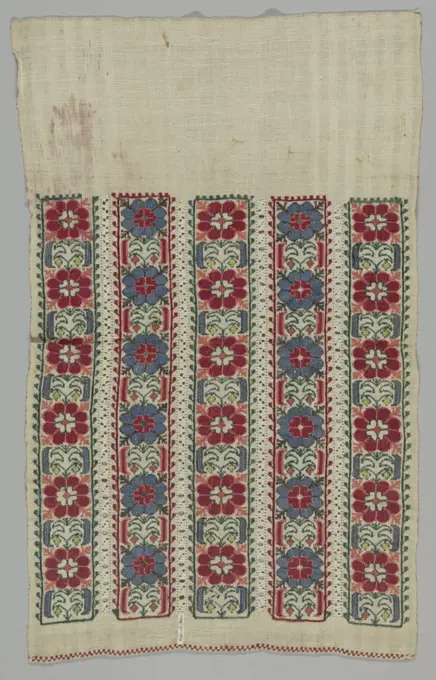
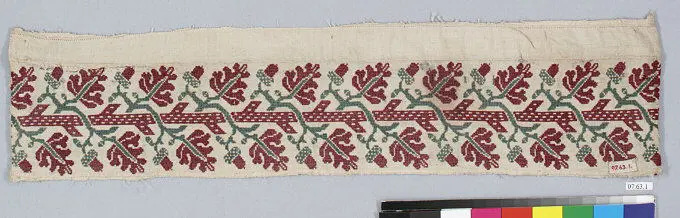
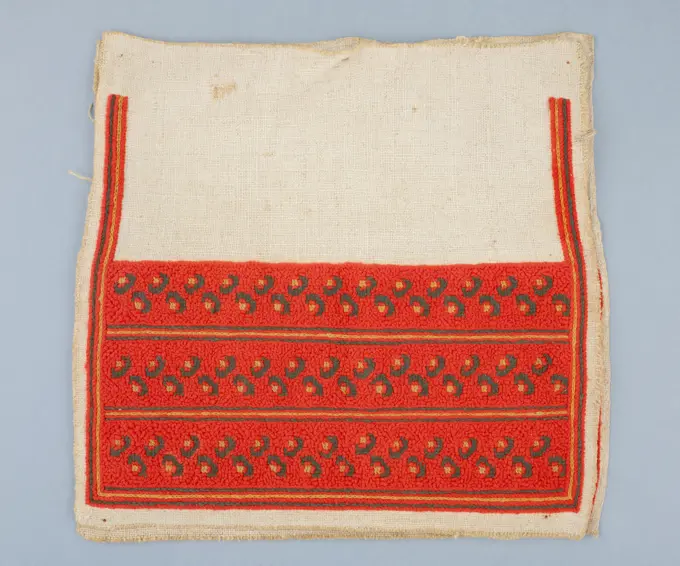
Towel end, Medium: cotton, silk Technique: embroidery and drawnwork on plain weave, Piece of white cotton with five vertical embroidered stripes separated by lines of drawnwork. The stripes are alternately of red flowers, blue leaves, yellow buds and blue flowers, red leaves and orange buds. Ornamental hem of red cross stitch., Turkey, 19th century, embroidery & stitching, Towel end
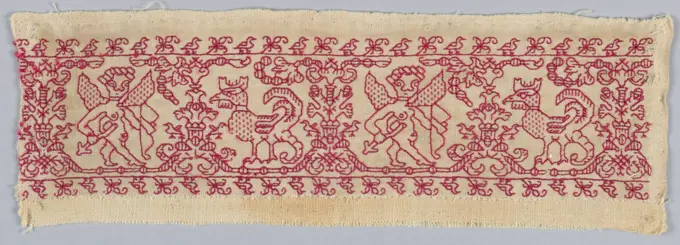
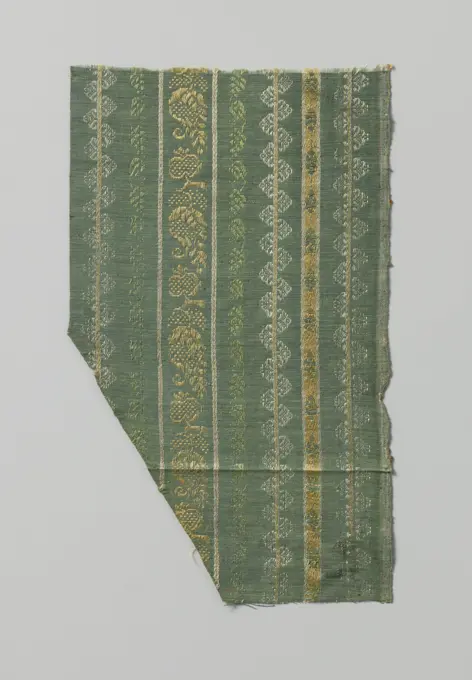
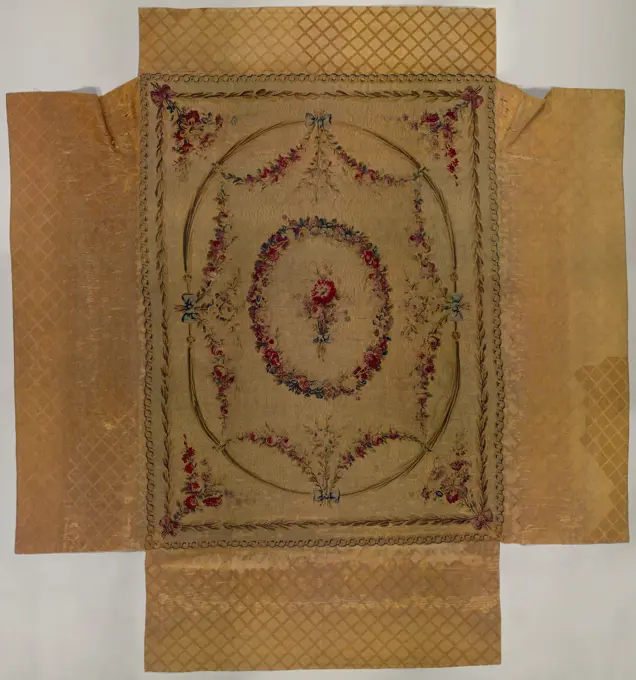
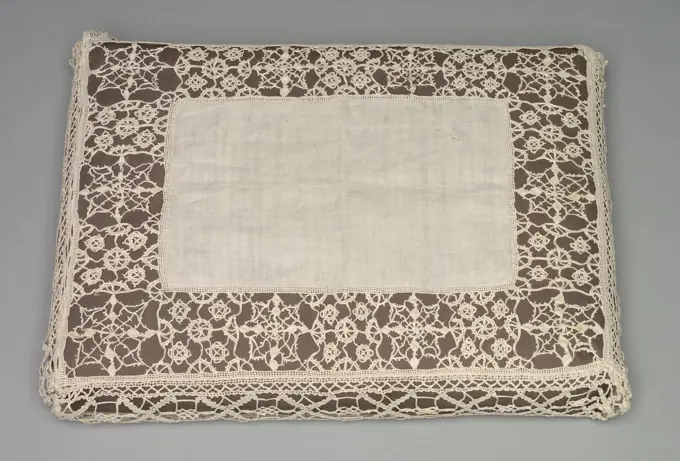
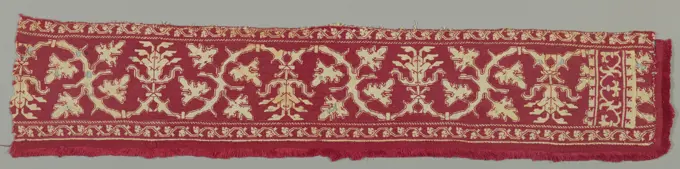
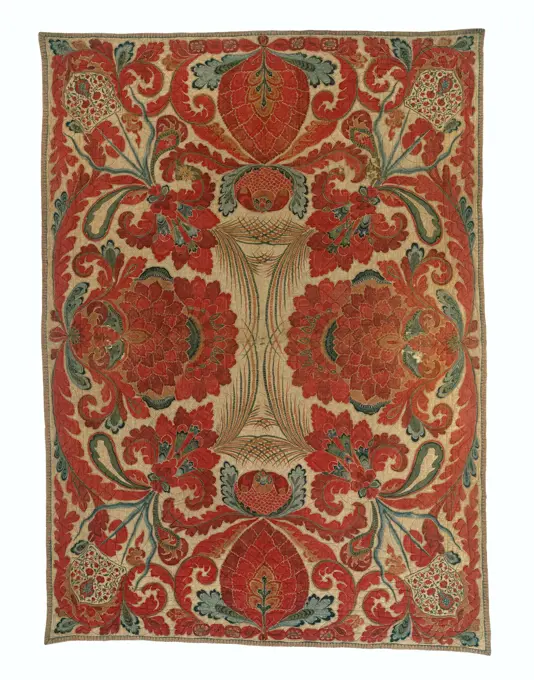
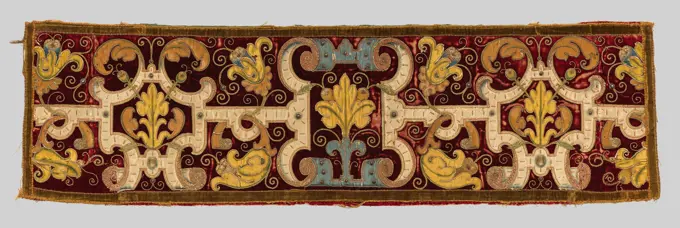
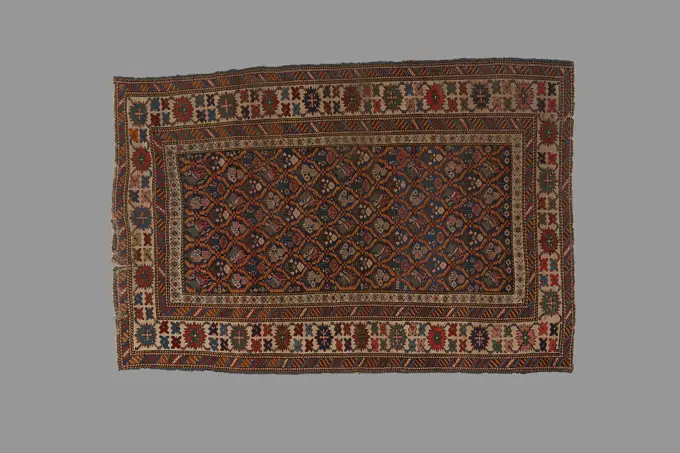
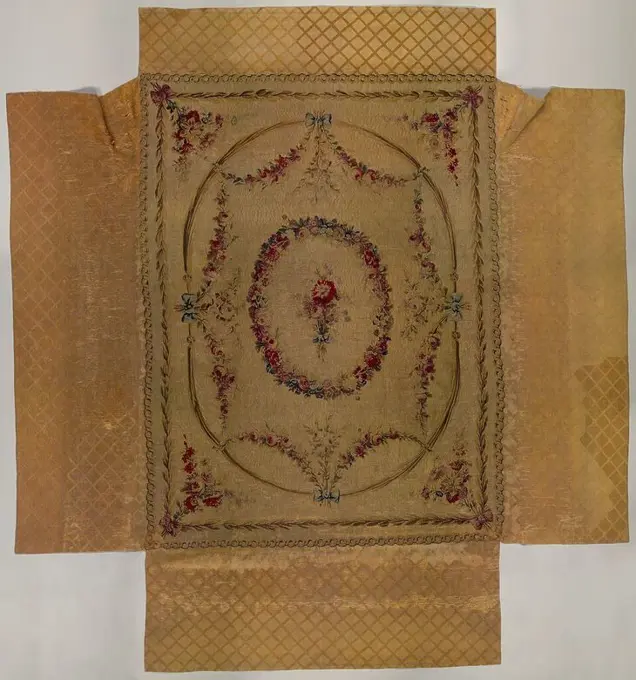
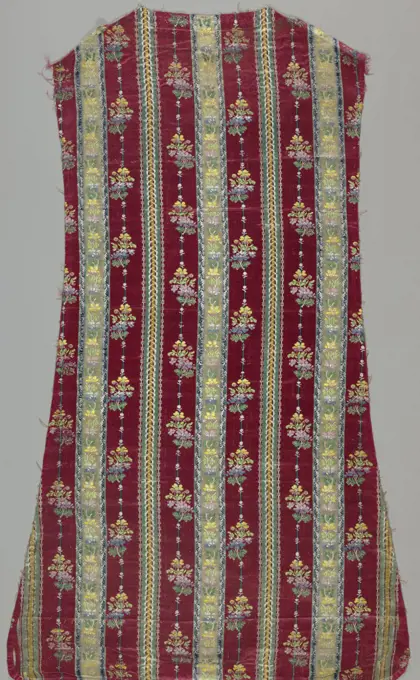
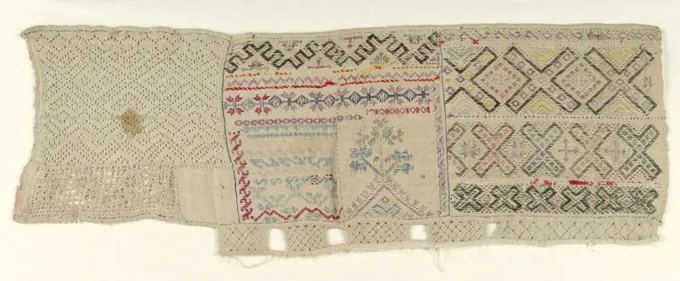
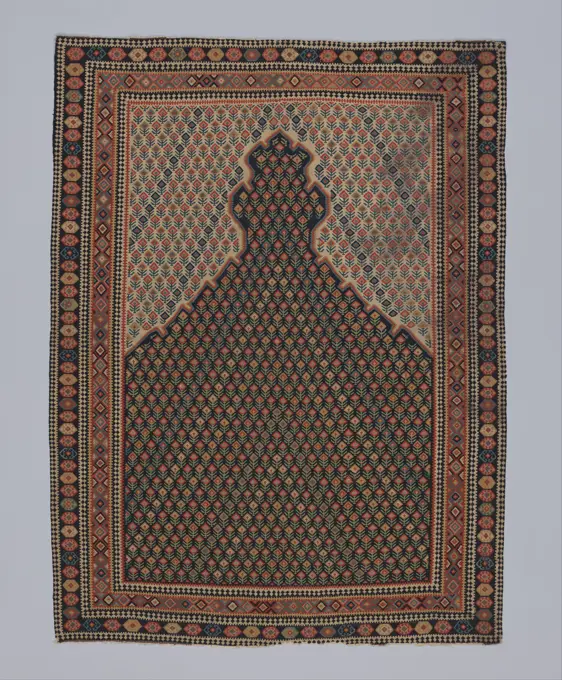
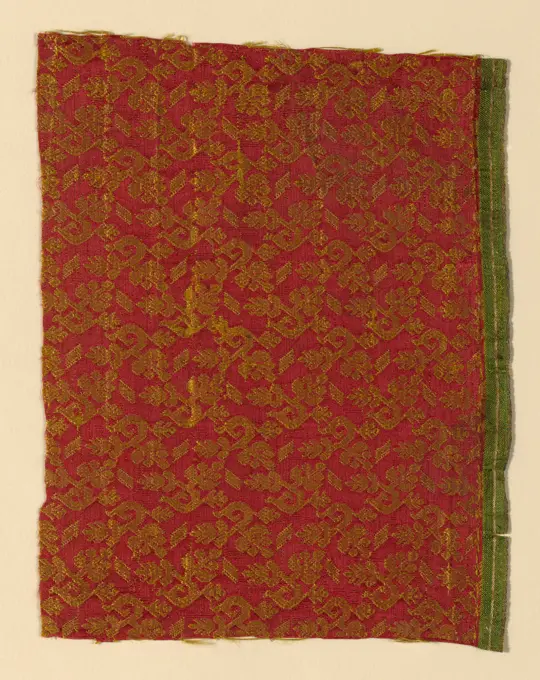
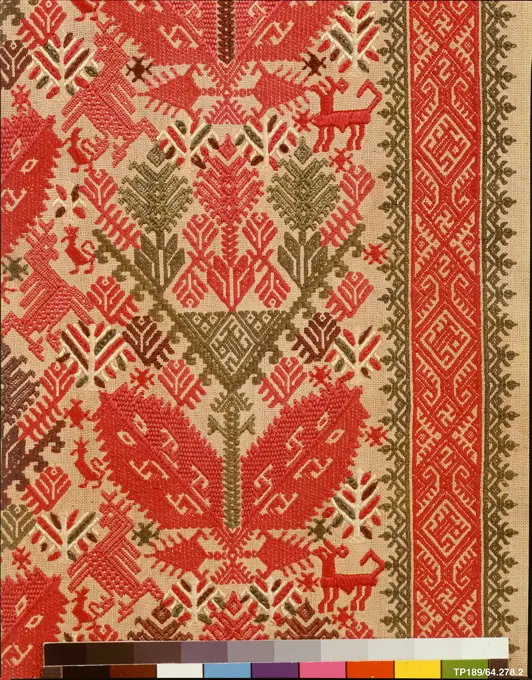
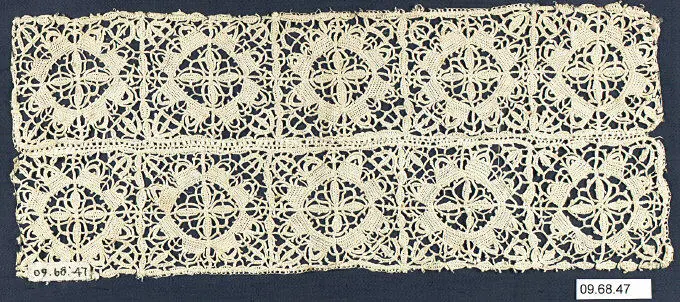
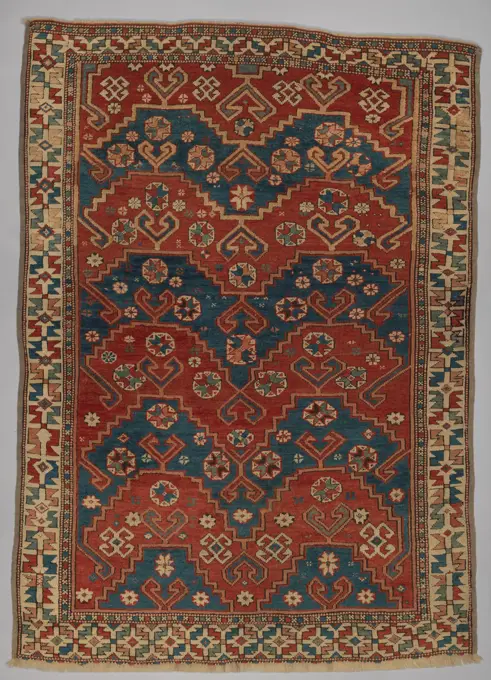
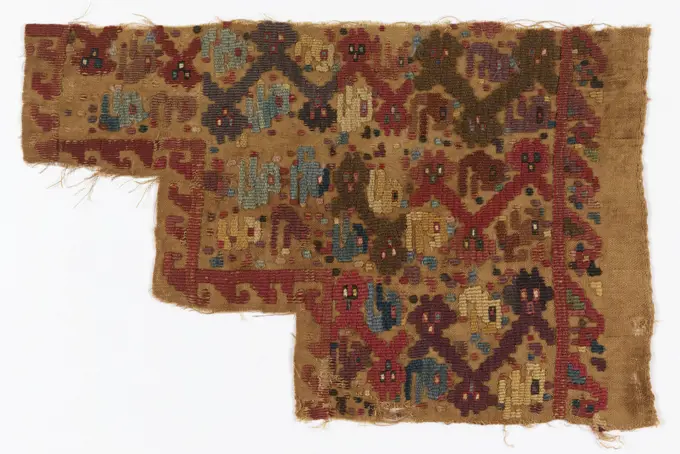
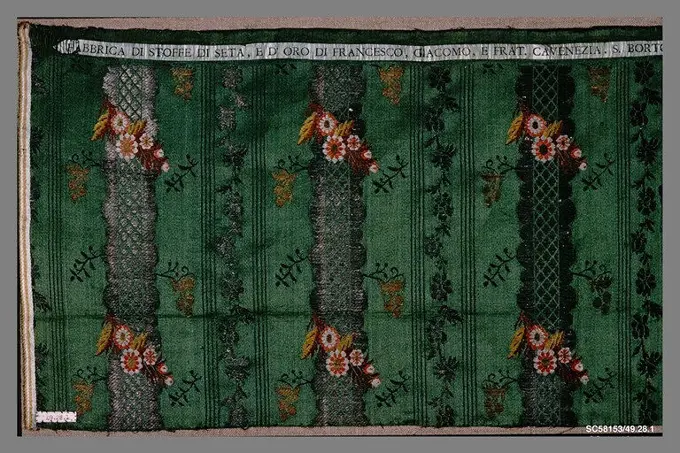
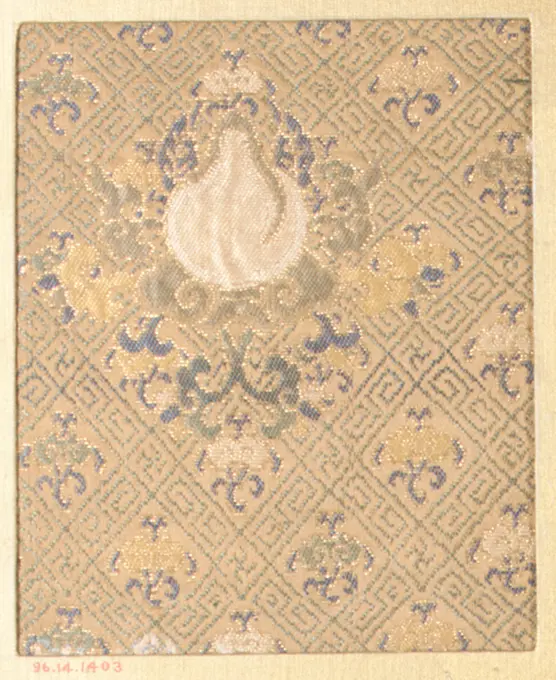
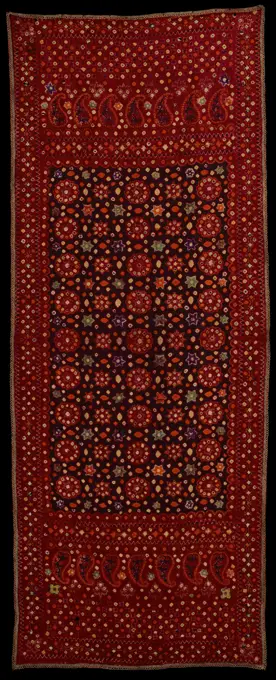
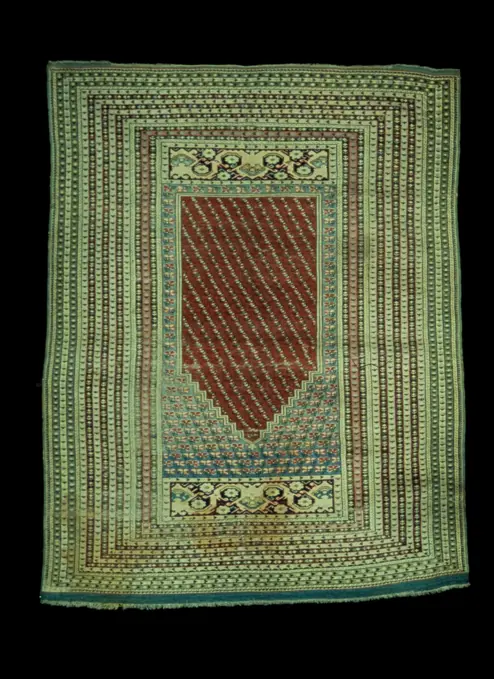
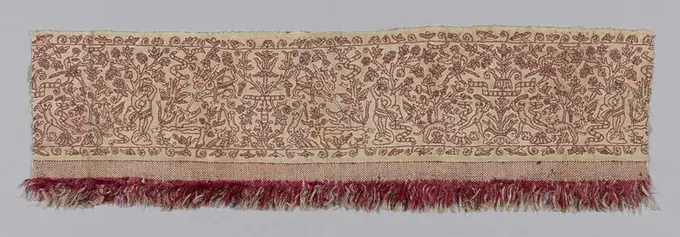
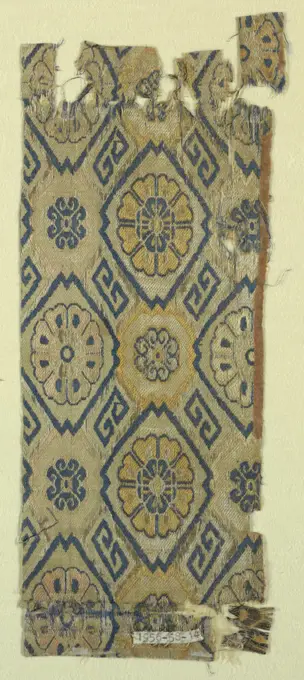
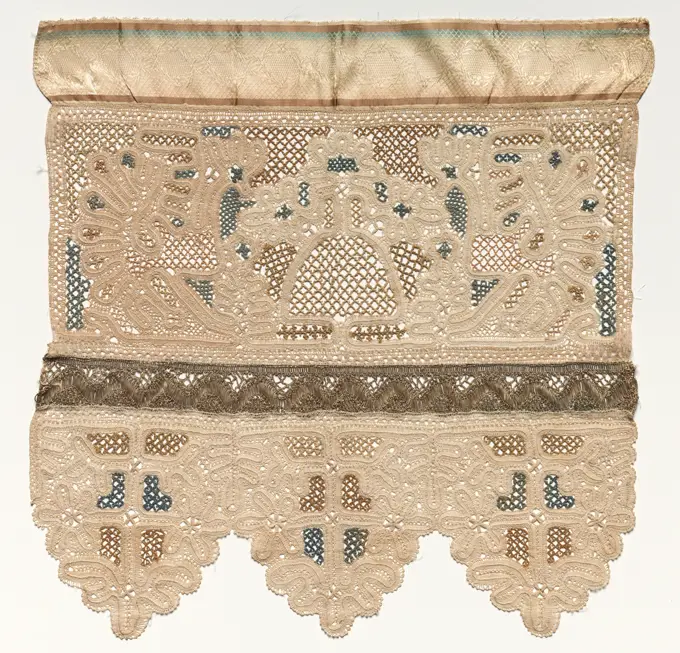
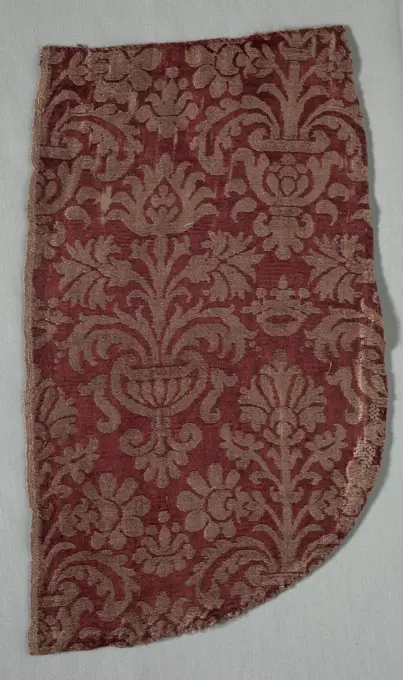
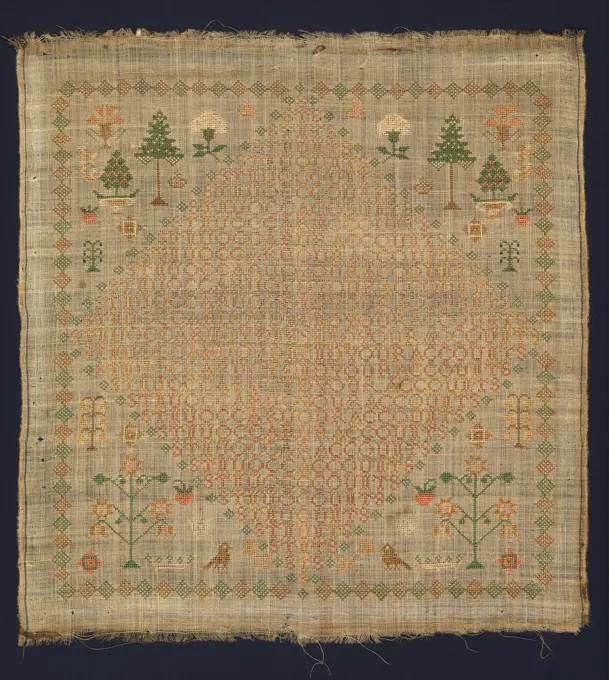
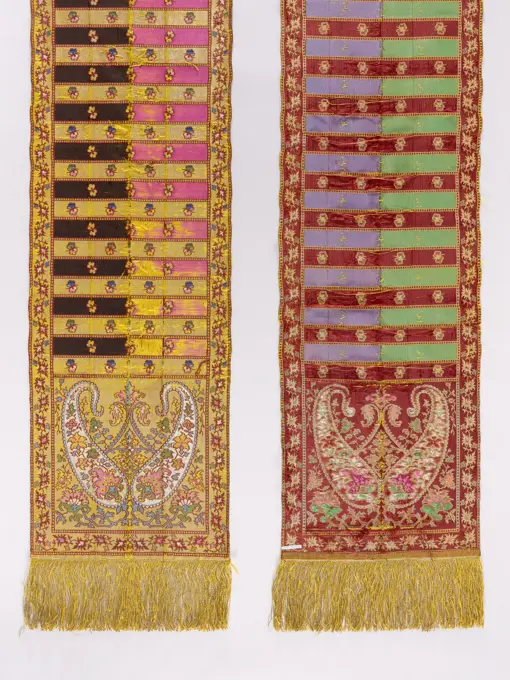
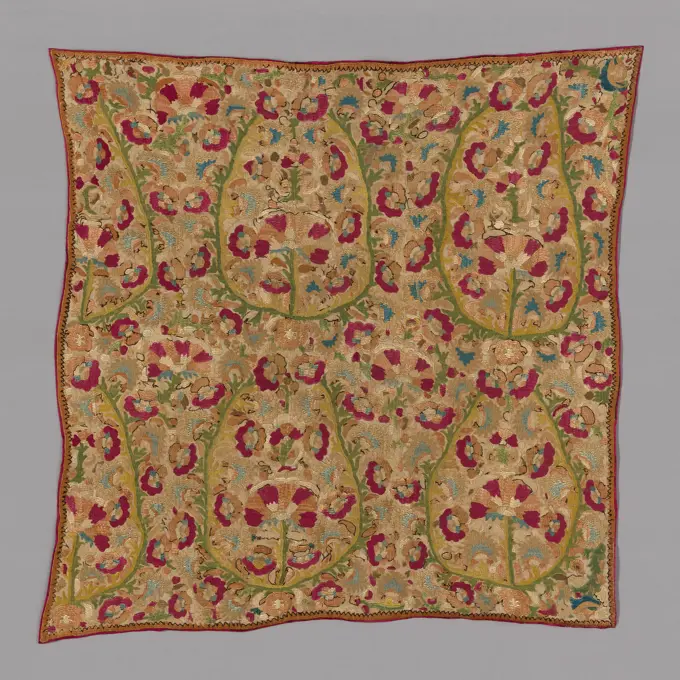
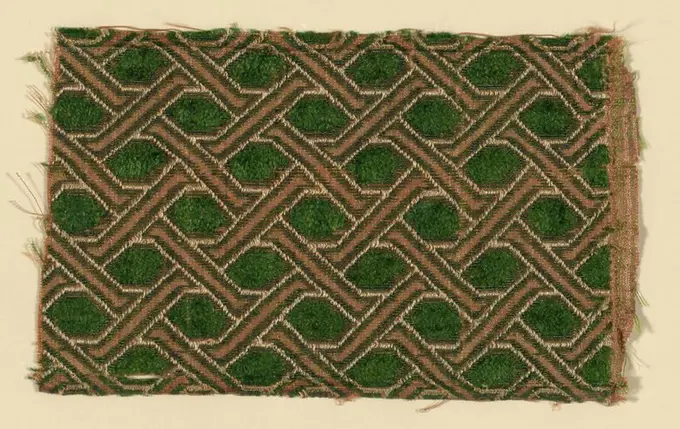
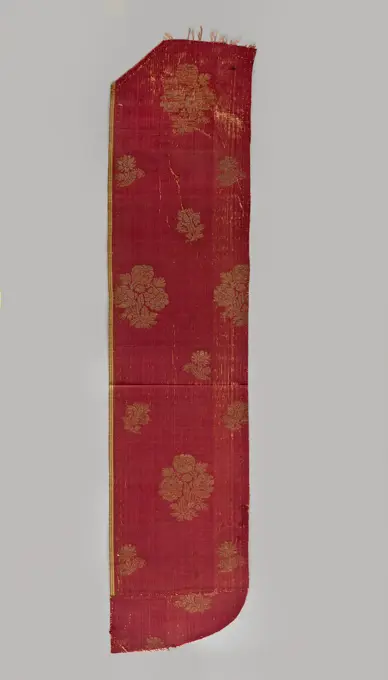
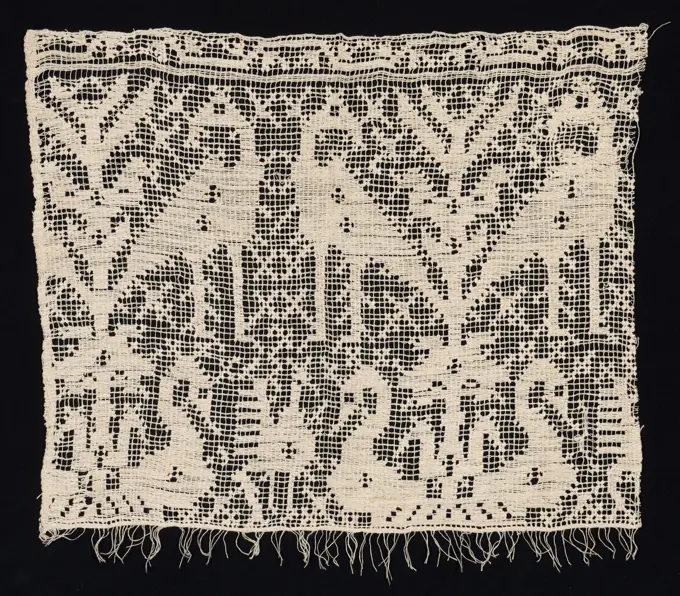
Cover Made 1801-1900 Greece. Cotton, plain weave; pulled thread work embroidered with silk in darning and hem stitches; embroidered in double running, four-sided, overcast and satin stitches .Head shawl, c. 1950-1960, 44 7/8 x 47 9/16 in. (113.98 x 120.81 cm) (without fringe), Silk, metallic thread; brocade, Syria, 20th centuryBand; silk on linen; Bequest of Marian Hague; 1971-50-96Fragment zijdeweefsel, , c. 1740 - c. 1760 Green silk fragment with vertical stripes in yellow, white and pink, between which palmets, vine leaves and swinging ples in white, yellow and light green. Germany (possibly)Turkije (possibly) Necklace: Silk. impact and side thread: Linen (Material) Green silk fragment with vertical stripes in yellow, white and pink, between which palmets, vine leaves and swinging ples in white, yellow and light green. Germany (possibly)Turkije (possibly) Necklace: Silk. impact and side thread: Linen (Material)Table cover, 20th century, 32 x 28 in. (81.28 x 71.12 cm), Cotton; dyed, China, 20th centuryCoverlet for a bed (Lit à la duchesse en impériale) ca. 1780-90 Tapestry made at Beauvais As its full-size domed canopy is suspended from the ceiling rather than supported on posts, this tester bed, which bears the stamp of the menuisier Georges Jacob, is a type called lit à la duchesse en impériale. Its original but now fragile hangings, woven in 1782-83 at the Beauvais tapestry manufactory after designs by Jean-Baptiste Huet (1745-1811), have been replaced by modern silk damask, except for the lining of the interior dome. French eighteenth-century beds tended to be lofty, as it was customary to pile them with three or more mattresses filled with straw, wool, horsehair, or feathers. Tobias Smollett (1721-1771) noted in 1766, French beds are so high, that sometimes one is obliged to mount them by the help of steps.”[1The custom of receiving visitors while reposing in a large and elegantly fitted out bed was practiced in France during the eighteenth century mostly by aristocratic womeOosters tapijt.Oriental carpet of knotted wool, runner format. In midfield diamond-shaped patterns with rosettes and medallions. Around four edges.Needlepoint (Reticella) and Bobbin Lace Pillow Case, 17th century. Italy, Venice, 17th century. Linen center, needlepoint and bobbin lace edging; overall: 7.6 x 40.6 x 29.8 cm (3 x 16 x 11 3/4 in.).Kelim with Herati pattern ,, c. 1900 Kelim rug that shows a fine herati pattern on a black stock and three narrow edges in blue, yellow and blue. Persia (possibly) wool Kelim rug that shows a fine herati pattern on a black stock and three narrow edges in blue, yellow and blue. Persia (possibly) woolBand (Italy); silk on linen; Bequest of Marian Hague; 1971-50-88Fragment, Medium: silk, linen, metal Technique: complementary weft 2/1 twill, Ornamental band with a pattern of interlaced strapwork containing indistinct image of bird with spread wings., Spain, 15th century, woven textiles, FragmentSampler with needle lace and cutwork. Culture: British. Dimensions: H. 18 3/4 x W. 7 inches (47.6 x 17.8 cm). Maker: Sarah Thral. Date: 1644.Made by Sara Thral and dated 1644, this sampler features a banded layout of whitework and reticella, a technique that originated in the late fifteenth century. The technique developed from cutwork and utilized stitches common to embroidery. Threads were pulled from a plain weave linen fabric to create open spaces in which a design was completed and the deconstructed fabric was stabilized primarily with buttonhole stitches. The result is a design based on the grid of the foundation fabric, with open areas throughout and arched and scalloped borders. Subsequently, the technique progressed to the point where the foundation fabric was eliminated and the design was worked over threads temporarily secured to a piece of vellum or paper for stability during the construction of what was called punto in aria (literally, "stitches in air"), or early needle . Blanket from Sits. In the middle of the four sides, on a white fond, a large flower palm with red - two spitsoval and two fan-shaped - on a leaf rosette of blue and red volunteer rank, of which the red partially forms the edge, partly the palm with framed. In the corners a smaller palm with in the form of a fleur de lys and overhoeks placed, to which a coat of arms depends on a white field with fine spiral drinks on a white field, to which red carnations and pomegranates. The middle palmets consist of flower leaves and carmet red and cutting lacquer with very fine nerged drawings in concentric bows. The top is or formed by a pumpkin on leaf rosette or by a fan-shaped leaf rosette. In the middle of fine aigrettes, turning blue and red-yellow. A very narrow edge lies the whole. Stitched, quilted and lined with red cotton.Band 17th century French. Band. French. 17th century. Velvet, silk and metal thread. Textiles-EmbroideredFragment (Japan)Vietnam War weaving, 20th century, 54 1/16 x 26 9/16 in. (137.32 x 67.47 cm), Cotton, Laos, 20th centuryPanel Made 1875-1900 China. embroidered gauze . Han-ChineseAnonymous, Shirvan carpet (dummy title). Carnavalet museum, history of Paris.Strip 17th century Italian. Strip 213226Tablecloth with pattern of, among other things, poppies. Tablecloth, made from partly with silver wire broched silk tissue, consisting of four sewns sewn, deposited with band tissue in which silver thread, lined with modern gray-blue cotton. Dessin: symmetrical ornament consisting of arrangement of three poppies () And veer-shaped leaves, caught in a round of a round flower and small flower drinks on top and bottom and wagging tendrils with feather-shaped leaves and flowers, including poppies () Ter. , in salmon color, pink, écru, light green and silver (turned black) on a green fond.Shoulder cloth, Anonymous, 1900 - 1999 Shoulder cloth with floral and geometric motifs. South Sumatra silk Shoulder cloth with floral and geometric motifs. South Sumatra silkCoverlet for a bed (Lit à la duchesse en impériale). Culture: French, Beauvais. Dimensions: Overall: H. 85 × W. 65 in. (215.9 × 165.1 cm). Factory: Tapestry made at Beauvais. Date: ca. 1780-90.As its full-size domed canopy is suspended from the ceiling rather than supported on posts, this tester bed, which bears the stamp of the menuisier Georges Jacob, is a type called lit à la duchesse en impériale. Its original but now fragile hangings, woven in 1782-83 at the Beauvais tapestry manufactory after designs by Jean-Baptiste Huet (1745-1811), have been replaced by modern silk damask, except for the lining of the interior dome. French eighteenth-century beds tended to be lofty, as it was customary to pile them with three or more mattresses filled with straw, wool, horsehair, or feathers. Tobias Smollett (1721-1771) noted in 1766, "French beds are so high, that sometimes one is obliged to mount them by the help of steps."1The custom of receiving visitors while reposing in a large and eChasuble, Medium: silk Technique: 7&1 satin with complementary weft floats, Blue and green stripes on red satin with small bouquets., late 18th century, woven textiles, ChasubleSampler(Limar)Sampler, Medium: wool and cotton embroidery on linen foundation; linen needle lace Technique: embroidered in running, double running, and satin stitches and withdrawn element work and needle lace edges on plain weave foundation, Horizontal sampler divided into three columns of pattern, with withdrawn element work in white and geometric pattern bands in colored threads. Needle lace at bottom., Spain, 19th century, embroidery & stitching, SamplerBorder Made 1601-1700 Italy. Linen, plain weave; embroidered with silk floss in back, hem and running stitches .Oriental carpet, Anonymous, 1800 - 1900 Oriental carpet of knotted wool, of which the dark blue midfield is decorated with windows with hooks and rosettes. Around five edges of which the widest is also decorated with windows with hooks. Caucasus wool Oriental carpet of knotted wool, of which the dark blue midfield is decorated with windows with hooks and rosettes. Around five edges of which the widest is also decorated with windows with hooks. Caucasus woolBorder Made 1801-1900 Uzbekistan. Linen embroidered in multicolor silk. .Square; cotton"Senneh" Prayer Rug late 18th-early 19th century This tapestry-woven prayer rug is an example of the fine production of Sanandaj, a center in the province of Kurdistan in northwestern Iran. The tapestry technique (kilim) makes it lighter and more fragile than a knotted pile rug, and such objects were often used as decorative wall hangings. The change of colors in the densely patterned rows of flowers enlivens the otherwise simple composition of an arched mihrab, or prayer niche, filled with flowers within and outside the niche.. "Senneh" Prayer Rug. late 18th-early 19th century. Cotton (warp), wool (weft); tapestry-woven. Attributed to Northwestern Iran, Sanandaj. Textiles-RugsSquare Mat, 19th century, L.14-½ X W.13-3/4 in., wool, silk and cotton threads; needlework, India, 19th centuryBand, 17th century, woven textiles, BandPanel. Turkey. Date: 1601-1700. Dimensions: 133.8 x 65.3 cm (52 3/4 x 25 3/4 in.). Silk and gilt-metal strip, warp-float faced broken warp chevron twill weave with supplementary facing wefts and two-color supplementary pile warps forming cut and uncut voided velvet. Origin: Turkey. Museum: The Chicago Art Institute, Chicago, USA.Bid rug of sits with an image of a cypress and buffalo ,, c. 1700 - c. 1800 Bid rug of sits with an image of a mihrab. From a scaly formation, a cypress -shaped tree raises, in which a symmetrical flower branch populated with monkeys, parrots and pheasants. Equal flower branches are populated around the Cypres with birds and squirrels. On either side of the tree is a showing off Paauw with a snake in the mouth. Under the peacocks is a buffalo with young. Eastern textile. In the cotton (textile) printing Bid rug of sits with an image of a mihrab. From a scaly formation, a cypress -shaped tree raises, in which a symmetrical flower branch populated with monkeys, parrots and pheasants. Equal flower branches are populated around the Cypres with birds and squirrels. On either side of the tree is a showing off Paauw with a snake in the mouth. Under the peacocks is a buffalo with young. Eastern textile. In the cotton (textile) printingRugs and Carpets - Iran. 19th century. Tabriz carpetFragment Made 1601-1650 Italy. Simple satin damask .Pair of bed curtains 18th century Greek Islands, Patmos The focal point for textile furnishings in the traditional house in the Cyclades was the bed in an alcove or on a raised mezzanine. The main bed was curtained off, and it was the curtains plus cushions and bolsters that comprised the bulk of domestic fabrics. This panel is embellished with columns and rows of double-leaf and complex triangular forms once considered typical of embroidery attributed to Patmos but now thought to represent Cycladic manufacture.. Pair of bed curtains 229110Towel. Italy, Perugia. Date: 1401-1500. Dimensions: 231.6 x 58.15 cm (91 3/16 x 22 7/8 in.). Linen, bands of weft-float faced diamond twill weave; weft-faced, warp-ribbed plain weave with supplementary patterning wefts. Origin: Perúgia. Museum: The Chicago Art Institute, Chicago, USA.Rank Badge (China); silk and metallic embroidery on silk foundation; A / H x W: 27.5 × 14 cm (10 13/16 × 5 1/2 in.); B / H x W: 27.5 × 14 cm (10 13/16 × 5 1/2 in.)Piece ca. 1600 Italian. Piece 217982Square cashmere scarf with eight -lobe rosette, multicolored and decorated with blossom branches and double vessels, anonymous, c. 1830 - c. 1840 Square cashmere scarf, woven from wool. Symmetrical and angular setting decor on the cross axes. A full pattern with a woven black stock on which a large eight -lobed light green rosette with red, yellow, pale blue flowers. On the field there are open blossom branches inside angular double vessels. Narrow white outside edge. Great Britain (possibly) whole: Wool Square cashmere scarf, woven from wool. Symmetrical and angular setting decor on the cross axes. A full pattern with a woven black stock on which a large eight -lobed light green rosette with red, yellow, pale blue flowers. On the field there are open blossom branches inside angular double vessels. Narrow white outside edge. Great Britain (possibly) whole: WoolShirt. Culture: Chimú. Dimensions: H. 19 1/2 x W. 44 1/2 in. (49.5 x 113 cm). Date: 1300-1470.Male attire in the Chimú period consisted of a relatively wide shirt worn over an elaborate loincloth. The finest examples were produced as sets, complete with a matching turban. Museum: Metropolitan Museum of Art, New York, USA.Karaori (Noh Costume) Made 1775-1825 Japan. Brocaded; two sections sewed together .Carpet first half 19th century. Carpet 452588Man's Tunic. Peru, North Coast, Chimu, 1350-1534. Costumes; principal attire (upper body). Cotton slit tapestry weave with occasional dovetailing and eccentric wefts, with appliquéd plaques of gilded silverImitation Leather (Japan); fiber composition impregnated with tung oil, embossed and painted; 1953-156-5-a,bFragment, Medium: cotton, wool Technique: plain weave with discontinuous supplementary weft patterning (brocade), Fragment, irregularly cut, showing small-scale highly abstract polychrome pattern of cats, geometric shapes and dots on buff ground. Ground is of tightly S-spun undyed weft which is used only where color is needed, interlacing back and forth in color area with 'weft onlay' since pattern weft does not enter teh shed of the ground weft. Loom ending at top of fragment, one selvage on right side., Peru, 12th-14th century, woven textiles, FragmentPiece late 18th century Cavenezia workshop. Piece 227404Piece 18th-19th century Japan. Piece 67116Shoulder cloth (slendang), 20th century, 86 1/4 x 34 7/8 in. (219.08 x 88.58 cm), Silk, metallic threads; dyed, Indonesia, 20th centuryCarpet. Dimensions: Textile: H. 79 in. (200.7 cm)W. 48 in. (121.9 cm)Mount: H. 84 3/4 in. (215.3cm) W. 55 3/4 in. (141.6 cm) D. 1/2 in. (1.3 cm). Date: ca. 1550.This wool carpet presents a large border with repeating large blossoms, framing an extensive surface decorated with repeating chintamanis, the pearl-like spots that were popular in the Ottoman court. A circular medallion occupies the center, with a fleur-de-lis like motif at its top and bottom forming a vertical axis. The design of a central medallion and four corner quarter-medallions is thought to have originated in decorative book bindings. While displaying a Turkish design, the technique and materials of this carpet are actually Egyptian--reflecting the presence of Egyptian carpet weavers in sixteenth-century Ottoman workshops. Museum: Metropolitan Museum of Art, New York, USA.Prayer Rug, 18th century, 74 x 49 in. (187.96 x 124.5 cm), Wool, Turkey, 18th centuryBorder. Italy. Date: 1601-1700. Dimensions: 18.2 x 61 cm (7 1/8 x 24 1/8 in.). Linen, plain weave; embroidered with silk floss in back, double running, hem, and running stitches; cut fringe: warp and cut embroidered fringe. Origin: Italy. Museum: The Chicago Art Institute, Chicago, USA.Anonymous, chiraz carpet. Wool. Carnavalet museum, history of Paris.Fragment (China); silk; Warp x Weft: 62 x 26.5 cm (24 7/16 x 10 7/16 in.); Bequest of Richard Cranch Greenleaf in memory of his mother, Adeline Emma Greenleaf; 1962-58-33Fragment (Dress Fabric) Made 1700-1901 Iran. Persian silk piece. Light silk; small flower spray .Strip 19th century French. Strip 212391Panel Made 1875-1900 China. Forty-four pairs and eight odd pieces of embroidered sleeve, ankle bands, etc. on gauze. . Han-ChineseTextile, China, 18th-19th century, woven textiles, TextileFragment 16th century Italian, Venice or Turkish. Fragment 230483Towel End, c 1700s- 1800s. Russia, Nizhny-Novgorod province, 18th-19th century. Cotton or linen (est.); straight (continuous) bobbin lace (Vologda tape lace). The tape forms figural or plants motifs outlined with gimp (heavy cord) with a polychrome plaited ground linking the tape; applied silk (est.) ribbon and metal thread trim; overall: 45.7 x 42.9 cm (18 x 16 7/8 in.). This Russian lace panel was likely used to embellish the end of a bathing towel. Textiles of this type are valuable for their fine lace making including ancient folk motifs, ritual significance, exemplification of the role of textiles in their society, and in this case, connection to a prominent woman collector, Natalia de Shabelsky, without whom this textile and others like it might have been lost.Poncho (Punchu), 20th century, 64 x 56 in. (162.56 x 142.24 cm) (including fringe), Wool ikat, Bolivia, 20th century, Since the Spanish conquest, sheeps wool has joined alpaca, llama, and vicuña wool as a preferred fiber for weaving. Today, machine-spun yarn has become a symbol of status, but many garments are still made of hand-spun wool. The traditional spinning process takes part in three stages. The raw wool is first spun into a fine strand, and then spun again to create two plies. After it is dyed, it is re-spun very tightly, into what is called a 'crepe twist.' This third and final step produces extremely elastic, fine yarn that creates a warm and durable garment. The zig zag and diamond patterns in this poncho were created by resist-dyeing (ikat).Shawl fragment, Medium: wool Technique: embroidered on twill weave Label: wool embroidery on wool 2/2 twill weave, Shawl fragment embroidered in multicolored wool, divided into sections, and filled with elongated paisley motifs., India, mid- 19th century, embroidery & stitching, Shawl fragmentTextile Fragment, 1500s. Italy, 16th century. Damask, silk; overall: 40.6 x 48.9 cm (16 x 19 1/4 in.).Sampler with an acrostic reading "Send Your Accounts" 1836 British This unusual sampler provided the maker with the opportunity to practice her skill at lettering in cross stitch, albeit with a limited number of alphabetical characters. But the reason behind the choice of an acrostic puzzle, and the phrase "Send Your Accounts" is unknown.. Sampler with an acrostic reading "Send Your Accounts" 228241Fragment; silkFragment (Italy); silk on linen; Bequest of Marian Hague; 1971-50-99Kontusz sash/belt. unknown, authorRabat Swedish, Dalarna 19th centuryPiece 18th century China. Piece 71544Cuff Hungarian 19th centuryMoro Cloth, c 1900s. Philippines, early 20th century. Plain weave hemp, dyed; overall: 157.8 x 78.7 cm (62 1/8 x 31 in.).Fragment of Peruvian fabric unknownTextile, Medium: wool Technique: plain weave with supplementary weft, Rectangular panel with lozenge design surrounded by narrow borders. Colors: red, green, blue, orange, brown, and yellow., Romania, 19th century, woven textiles, TextileLength of Silk Textile, 1700s. Italy, 18th century. Damask, brocaded; silk ; overall: 128 x 54.6 cm (50 3/8 x 21 1/2 in.).Sampler, Medium: wool embroidery, linen foundation Technique: cross, satin, and eyelet stitches on plain weave, Geometric ornament, houses alternate with trees, people surrounded by Greek fret., Norway, 1850-1900, embroidery & stitching, SamplerPiece 18th century Japan. Piece 71287SARONG  battered floral patterns and diagonal stripes and cream motifs for a rust red and burgundy background unknownJewish women unknownTextile with Geometrical Designs. Culture: German. Dimensions: Overall: 1 3/4 × 3 5/8 in. (4.4 × 9.2 cm)Storage (Mat): 5 1/2 × 8 1/2 in. (14 × 21.6 cm). Date: 15th century. Museum: Metropolitan Museum of Art, New York, USA.Skirt (), 1800. India, Cutch, 19th century. Embroidery, silk thread on silk ground; overall: 222.3 x 57.2 cm (87 1/2 x 22 1/2 in.).Border (England); cottonFragment, 17th century; silkCover Made 1701-1800 Turkey. Embroidered with rose spray pattern .Bed curtain border 1800-1850 Russian. Bed curtain border. Russian. 1800-1850. Linen. Textiles-LacesVelvet Fragment, 1375-1399. Italy, last quarter of 14th century. Velvet; silk; overall: 20.3 x 26.7 cm (8 x 10 1/2 in.).Two fragments of the border of an altar cloth of Anna Jagiellons foundation. unknown, authorFragments, Medium: silk, metallic thread Technique: double cloth, Fragments of blue, red and silver conventionalized floral and palm motifs in a field of pointed disks separated by bands of Kufic inscriptions., Kashan, Iran, 16th-17th century, woven textiles, FragmentsBedcover Made 1800-1810 England. Cotton, plain weave; block printed; glazed . Bannister Hall Print Works (Producer)Prayer Rug, c. 1800s. Caucasus, Daghestan, 19th century. Wool and linen; ghiordes knot, extended tabby, fringe; overall: 102.9 x 127 cm (40 1/2 x 50 in.).Carpet. Hispano-Moresque; Spain. Date: 1440-1460. Dimensions: 538.5 x 198.8 cm (212 x 78 1/4 in.). Wool, plain weave with supplementary wefts forming cut pile through a technique known as "Spanish knots". Origin: Spain. Museum: The Chicago Art Institute, Chicago, USA. Author: Islamic.Chasuble with an embroidered column unknownTop of a pillow, decorative doily unknownFragment. Italy. Date: 1625-1675. Dimensions: 11.4 × 18.3 cm (4 1/2 × 7 1/4 in.). Silk, plain weave with supplementary binding wefts and two-color supplementary pile warps forming cut, uncut, and voided velvet. Origin: Italy. Museum: The Chicago Art Institute, Chicago, USA.Ceremonial Cloth (tampan) Made 1825-1875 Indonesia. Cotton, plain weave with supplementary patterning wefts . PaminggirConciliate belt;  18th century (1701-00-00-1800-00-00);Two t shirts unknownFragment of the fabric;  1 PO. XVII century (1600-00-00-1650-00-00);Dąmbska, Grażyna - collection, fabrics, purchase (provenance)Carpet Made 1675-1700 India. Cotton, wool, silk, and gilt-metal-strip-wrapped silk, plain weave with supplementary brocading wefts and supplementary wrapping wefts forming cut pile through a technique known as Sehna (Persian) knots; pieced .Fragment of a Border with Standing and Seated Birds Amidst Vegetation, 1500s. Italy, 16th century. Needle lace, burato (twined ground and darned in one direction); bleached linen (est.); overall: 40.1 x 46.4 cm (15 13/16 x 18 1/4 in.). Three distinct bird species appear in this fragment distinguished through their body, neck, and feather shapes. In the period this lace was created, there was growing interest in the scientific study of birds, called ornithology. Ornithological books and prints depicted accurate records of birds, which deviated from previous fanciful portrayals.