Ornate Textiles

A variety of intricately designed oriental carpets and woven fragments, featuring rich colors and detailed patterns, emphasizing cultural craftsmanship.

Oriental carpet, Anonymous, 1685 - 1700 Eastern carpet, medailla rug. In midfield there are hexagonal medallions, connected by ranks against a brown -red stock. Furthermore, sprinkled windows. The edge is decorated with rosettes. Kaukasus (possibly) wool Eastern carpet, medailla rug. In midfield there are hexagonal medallions, connected by ranks against a brown -red stock. Furthermore, sprinkled windows. The edge is decorated with rosettes. Kaukasus (possibly) wool
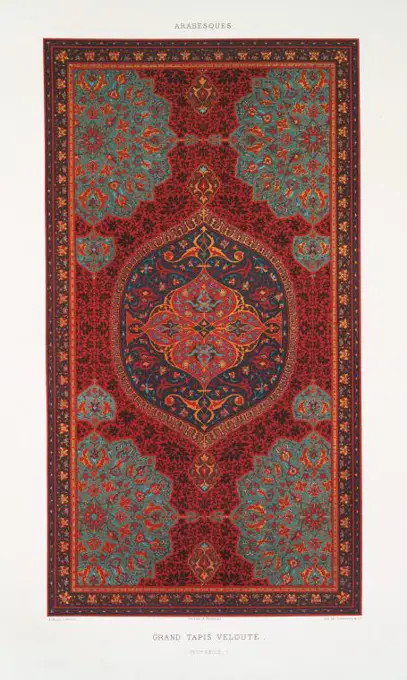
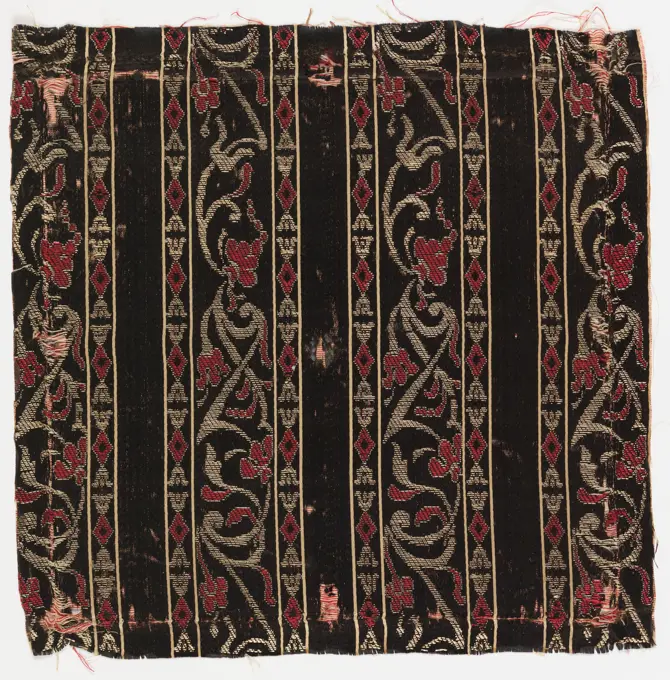
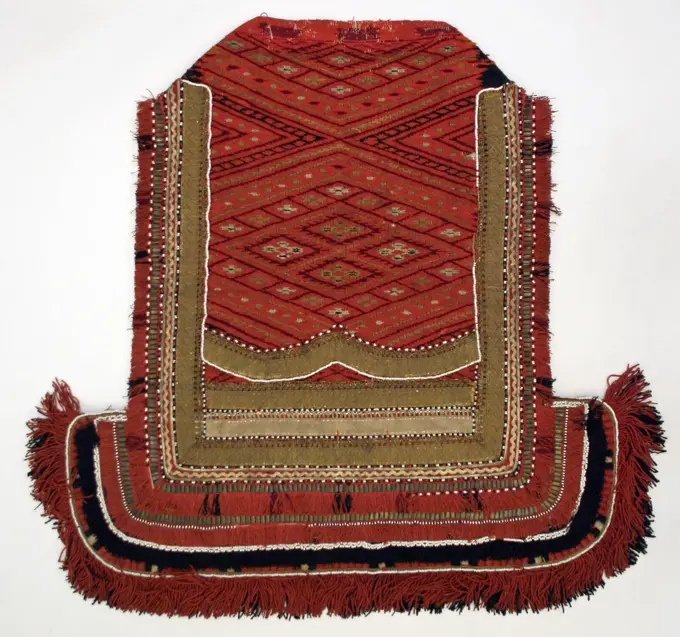
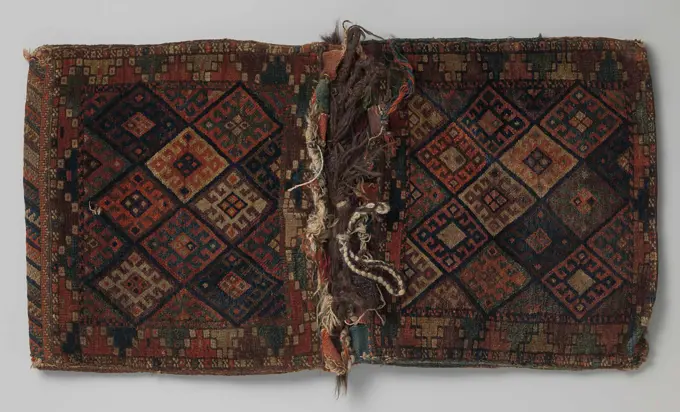
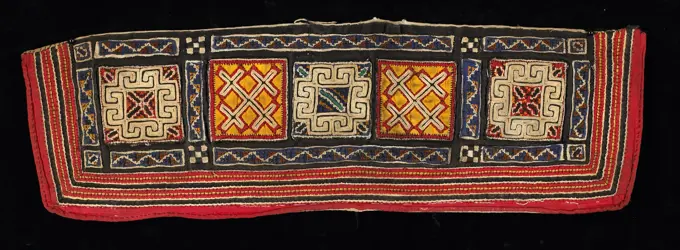
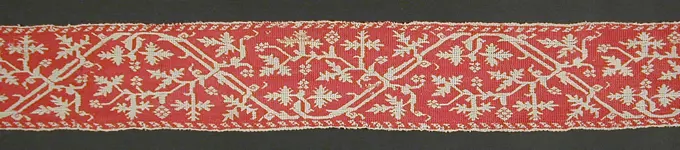
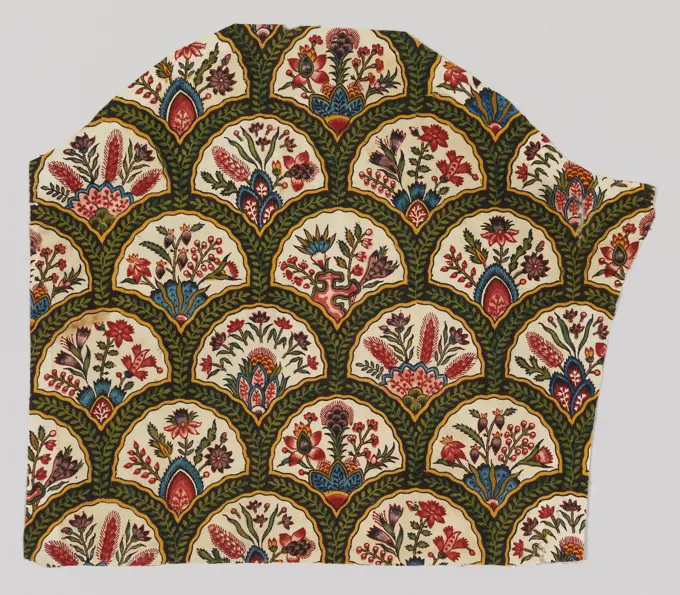
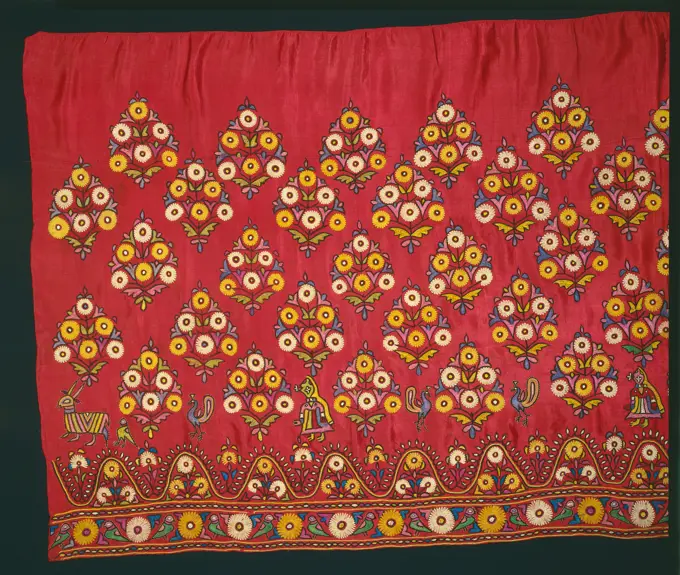
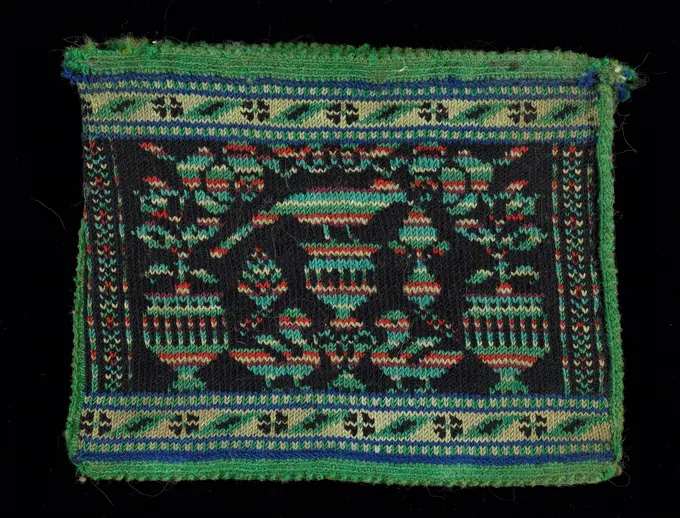
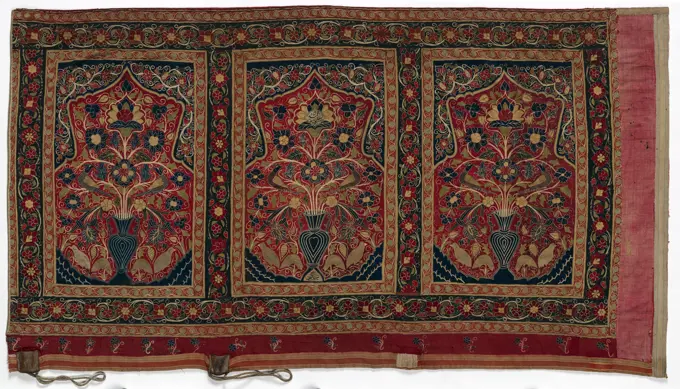
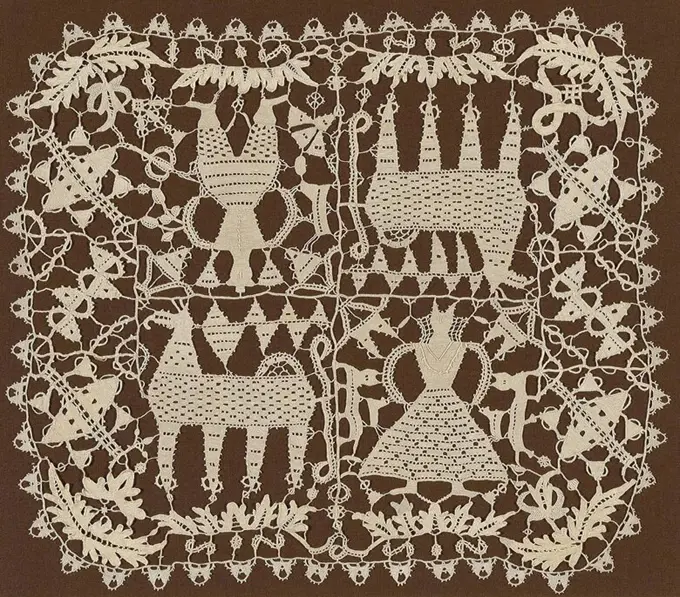
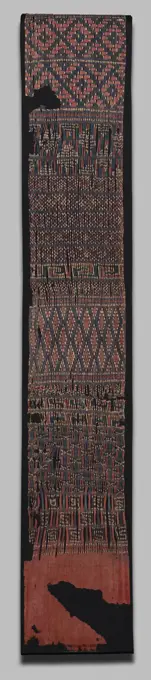
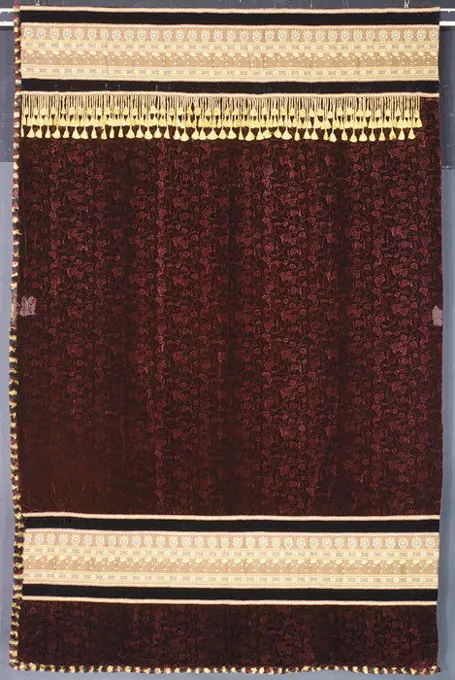
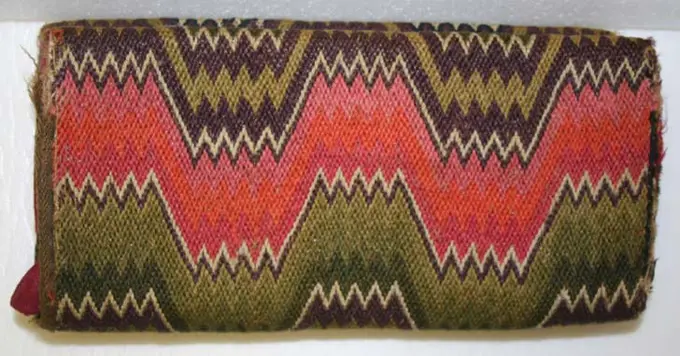
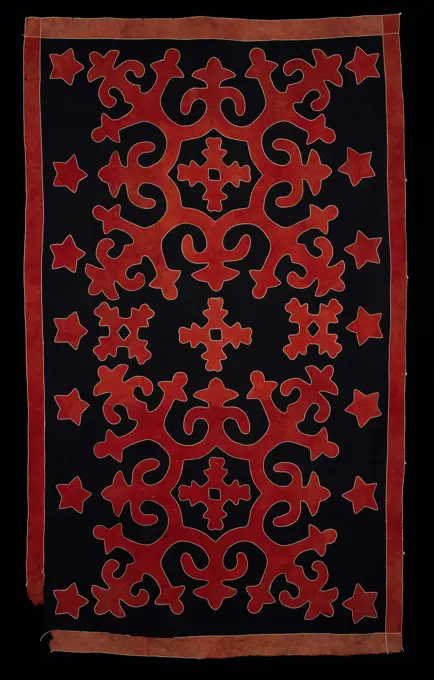
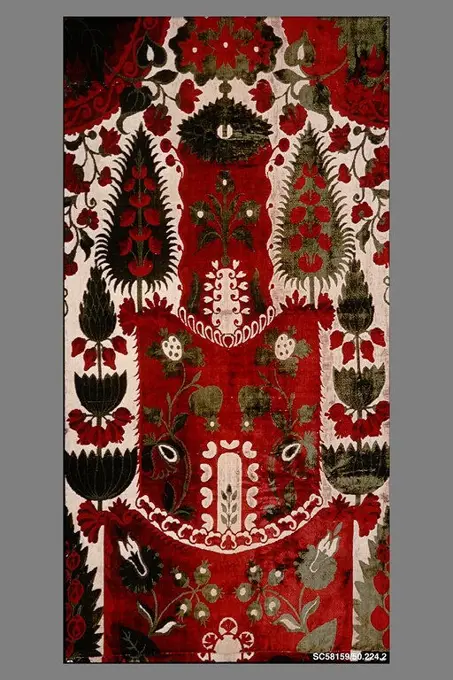
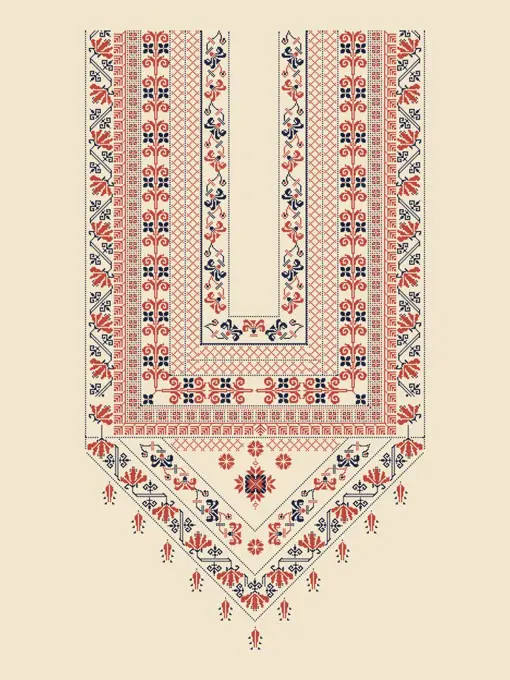
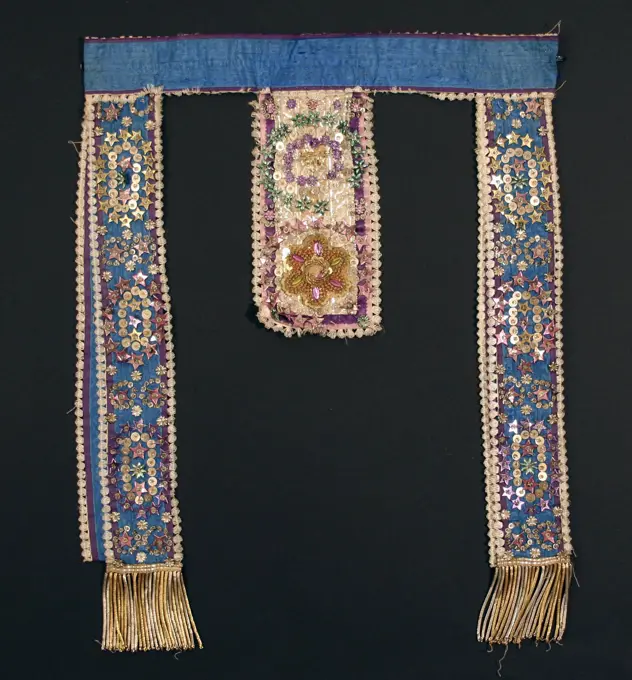
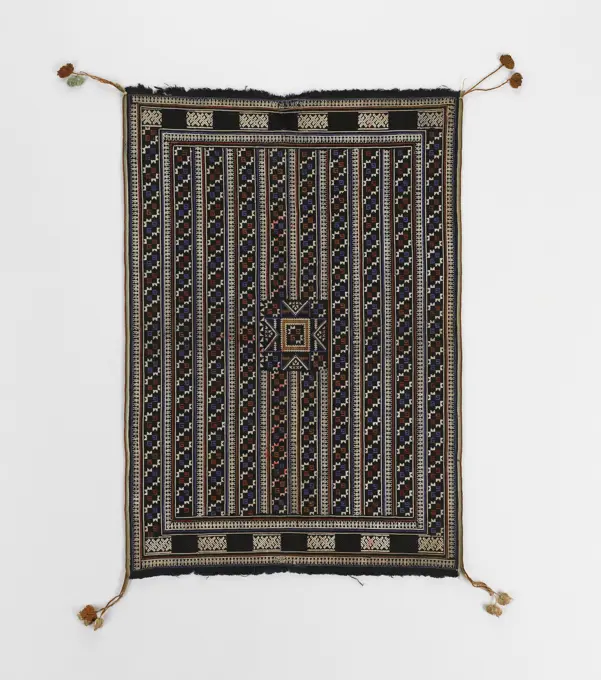
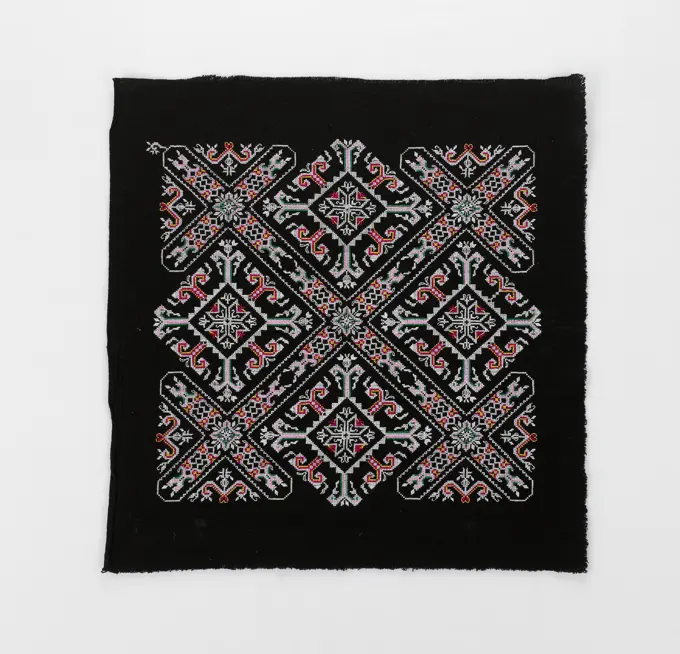
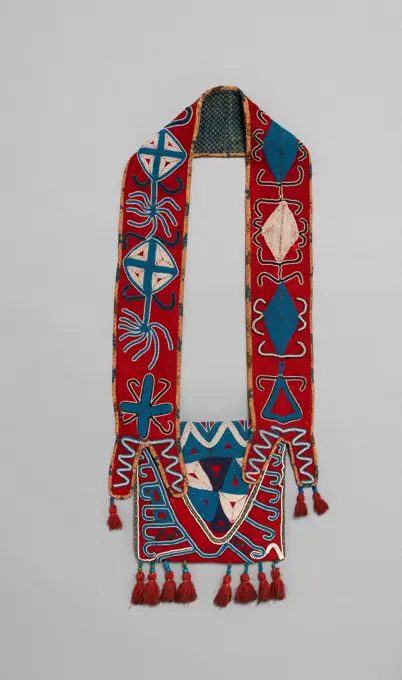
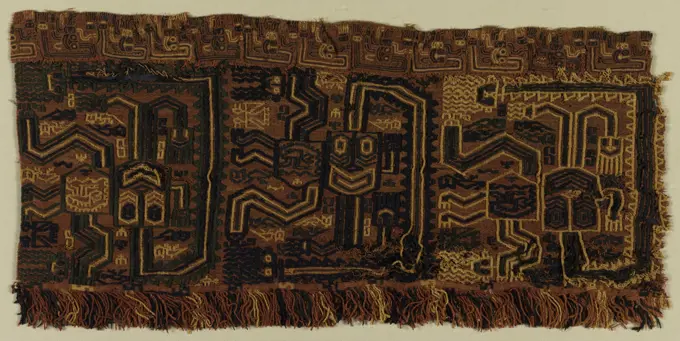
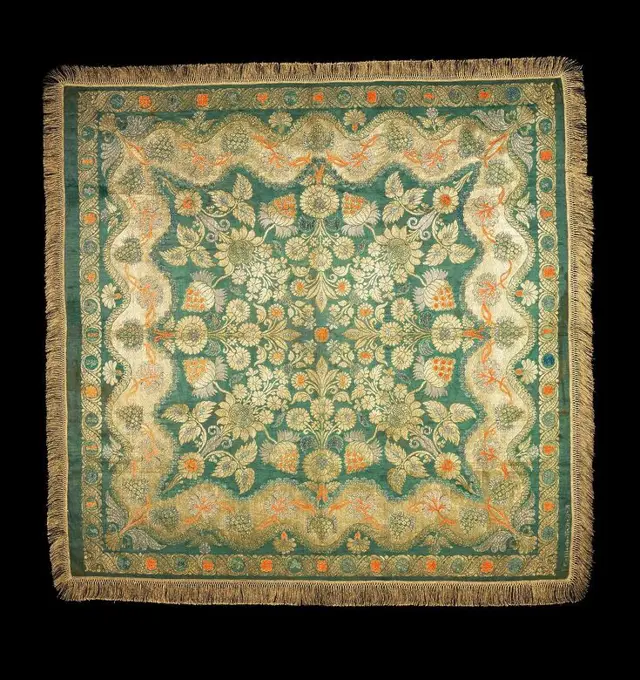
Headscarf. Culture: Russian. Date: first quarter 19th century.This object is from the collection of Natalia de Shabelsky (1841-1905), a Russian noblewoman compelled to preserve what she perceived as the vanishing folk art traditions of her native country. Traveling extensively throughout Great Russia, she collected many fine examples of textile art of the wealthy peasant class. From the 1870s until moving to France in 1902, Shabelsky amassed a large collection of intricately embroidered hand-woven household textiles and opulent festival garments with rich decoration and elaborate motifs. The Brooklyn Museum holdings include many fine examples including the majority of the garments. Portions of Shabelsky's collection are also housed at the Museum of Fine Arts, Boston, the Cleveland Art Museum, and the Russian Museum of Ethnography in St. Petersburg. Museum: Metropolitan Museum of Art, New York, USA.Balustrade Cover. India, Mughal dynasty, 1650-1700. Textiles; covers. Silk cut and voided velvet on metallic-thread twill groundArabesques : grand tapis velouté (XVIIIe. siècle). Prisse d'Avennes, 1807-1879. Prisse d'Avennes, 1807-1879. Prints, Drawings. 1877. The Miriam and Ira D. Wallach Division of Art, Prints and Photographs: Art & Architecture Collection. Architecture, Islamic, Architecture , Egypt , Cairo, Art , Egypt , Cairo, Art, Islamic, Islamic decoration and ornament, Rugs, IslamicEmbroidered spot sampler. Culture: British. Dimensions: H. 16 1/4 x W. 10 3/8 inches (41.3 x 26.4 cm). Date: first half 17th century.Spot samplers feature motifs that are scattered in a seemingly random fashion over the surface of the foundation fabric, usually linen. These samplers are rarely signed or dated, and often include motifs that are only partially worked, leading to the conclusion that this type of sampler was made as a personal stitch reference for its maker, and not for display, as band samplers were signed by student embroiderers. The sampler features flowers, obelisks on pedestals, and an "S" motif, in addition to geometric designs that are of the type that would have been used to decorate small purses, cushions, and other accessories. Museum: Metropolitan Museum of Art, New York, USA.Fragments; silkTextile Fragment 17th century. Textile Fragment 454489Carpet ca. 1800. Carpet 452593Table Cover (Spain); linen, woolApron 19th century Macedonian. Apron 85821Cloth, mid 20th century, 93 1/2 x 59 1/2 in. (237.49 x 151.13 cm) (including fringe), Cotton, Nigeria, 20th centuryRugs and Carpets, Georgia 19th century. Caucasian Kazakh (kazak) rug with several medallions.Kontusz sash. Pracownia Franciszka Masłowskiego (Kraków ; wytwórnia pasów ; 1781-1806), authorTextile panel 1675-1720 Russian. Textile panel 173371Band Made 1201-1400 Egypt. Linen, plain weave; embroidered with silk in cross and long-armed cross stitches .Prayer Carpet Made 1875-1900 Turkey. Wool, plain weave with supplementary wrapping wefts forming cut pile through a techniques known as Ghiordes (Turkish) knots .Loincloth Ends(Sirat)Zadeltas, dubbel, versierd met rasterwerk waarbinnen hakenkruisbloemen.Double saddle bag from knotted wool, Jaffi Kurdistan, formerly Mosul. The fronts are divided into large windows through a grid, on which a cross flower always stands with hooks. Edges with a cubicle silk line. Embroidered and in splits shared beards in flat tissue, intended as a closure with the front applied long-lined goat hair loops. Back of flat tissue with wide stripes.Fragment (Egypt); cottonHanging Rug, 18th century, Di. 51-5/8 x 49-1/4 in., Cotton Lining; velvet, China, 18th centuryRug;  2. PO. 18th century (1760-00-00-1800-00-00);Recovery, collection, kilimShawl, anonymous, c. 1815 - c. 1825 Elongated palms scarf with a mirror of cherry -red silk, decorated with multicolored botas in cotton. Sewn side edges. Necklace Mirror: Silk, impact: Silk. Surface decor: cotton. Tissue binding Mirror: Keper, 2: 2. Technology decor: Lancé, Découpé. Paisley spiegel: wool. speigel: silk. versiering: cotton (textile) twill Elongated palms scarf with a mirror of cherry -red silk, decorated with multicolored botas in cotton. Sewn side edges. Necklace Mirror: Silk, impact: Silk. Surface decor: cotton. Tissue binding Mirror: Keper, 2: 2. Technology decor: Lancé, Découpé. Paisley spiegel: wool. speigel: silk. versiering: cotton (textile) twillSampler (Germany); linen; Warp x Weft: 21 x 15 cm (8 1/4 x 5 7/8 in.); Bequest of Mrs. Henry E. Coe; 1941-69-214Panel (Bed Curtain) Made 1700-1900 Cyclades. Linen, plain weave; embroidered with silk in buttonhole, double running (pattern darning), and satin stitches .Piece 16th-17th century Italian. Piece 223454Band 16th century Italian. Band 215658Gros de Tours fragment, possibly the upper part of a choral mantle, c. 1750 - c. 1785 Gros de Tours fragment, possibly the upper part of a choral mantle. Dessin: rose vendors standing in irregular waves, two of which are awarded ranks in the middle, in two colors of pink, lilac, cream, two colors of blue, green and gold on a salmon -colored stock. The silk tissue consists of five pieces sewn together in a semic circular shape, with a piece of ceris -colored silk lining at the top. At the top a string Waan probably a label of French and Co. has hung.25. Painted piece of paper with the letter V. Condition: good condition. France silk. Gros de Tours fragment, possibly the upper part of a choral mantle. Dessin: rose vendors standing in irregular waves, two of which are awarded ranks in the middle, in two colors of pink, lilac, cream, two colors of blue, green and gold on a salmon -colored stock. The silk tissue consists of five pieces sewn together in a semic circular shape, with a piece oDrawing, Design for a rug; Unknown; Student at Cooper Union Art School; USA; pen and ink, watercolor on paperShirt collar, 1930-1960, 17 x 5 in. (43.18 x 12.7 cm), Cotton; needlework, Vietnam, 20th centuryBand Fragment 4th-5th century. Band Fragment 447335Embroidered Border. Italy, 17th century. Textiles; embroidery. Linen plain weave with silk embroiderySheet with two borders with lace atop a floral garland against a navy background late 18th-mid-19th century Anonymous. Sheet with two borders with lace atop a floral garland against a navy background. Anonymous , Italian, late 18th-mid 19th century. late 18th-mid-19th century. Relief print (wood or metal). PrintsTextile (France); Manufactured by Oberkampf & Cie. (France); cottonShawl Made 1855-1865 Norwich. Silk, twill weave . Clabburn, Sons and Crisp (Producer)Heriz Rug Tapestry/Textiles Storage Bag, 20th century, 17 1/2 x 23 in. (44.45 x 58.42 cm), Wool, nettle fiber; twined construction, United States, 20th centuryMedallion Quilt Elizabeth Welsh (American, active early 19th century). Medallion Quilt, ca. 1830. Cotton, 110 1/2 x 109 in. (280.7 x 276.9 cm).  Elizabeth Welshs use of reverse appliqué, in which the fabric that provides the ground for a design is meticulously cut away from the decorative elements that lie below, shows the care that went into creating this patriotic medallion quilt. Since several nearly identical quilts have been attributed to the Baltimore area, it is likely that Welsh had a connection to this region through friends or relatives. In advance of the national Bicentennial in 1976, this pattern was translated into a popular kit, titled “American Eagle.”  ca. 1830Fragment 16th century Italian. Fragment 230596Panel India. Silk, warp-float faced 7 1 satin weave; embroidered with silk in back, chain, open chain, four-sided, Holbein, Maltese cross, Roumanian, and raised Roumanian stitches; embellished with pieces of mirror; some selvages present .Mud cloth skirt, 20th century, 40 x 55 1/2 in. (101.6 x 140.97 cm), Cotton, Mali, 20th centuryCharles Roadman, Woven Coverlet, 1935 1942 Woven CoverletPanel for a Skirt (Ghagra), late 1800s or early 1900s. India, Cutch, late 19th or early 20th century. Embroidered satin; overall: 76.2 x 186.7 cm (30 x 73 1/2 in.).Table Mat (China); silk; 1899-11-10Baby Carrier, 16 1/2 x 14 1/2 in. (41.91 x 36.83 cm), Cotton, rayon (or silk), metallic tape; needlework, ChinaKokerdoek; Pulse fabric; Field. Kokerdoek met mens- en dierifiguren.Textiles, Italy. White linen cloth of Perugia with blue woollen weft.Tunic Fragment (India); silkRug;  1822 (1822-00-00-1822-00-00);Podole (Ukraine), flowers, plant ornaments, Poland (culture), decorative fabrics, equipment and home equipment, purchase (provenance)Waist Band, 80 x 11 in. (203.2 x 27.94 cm) (without fringe), Cotton, synthetic fibers (), ChinaBag, 19th century, 3 7/8 x 4 3/4 in. (9.86 x 12.07 cm), Wool; knitted, Syria, 19th centuryBand 16th-17th century Italian. Band 216488Patchwork Panel (USA); cottonSampler, Medium: silk and linen embroidery on linen foundation Technique: embroidered in deflected and withdrawn element work, and needle lace stitches on plain weave foundation, Rectangular sampler with many small bands and squares of geometric patterns, in blues, greens, yellows, pinks and reds on white. The right side is dominated by two large areas of deflected element work in red and green., Mexico or Guatemala, 19th century, embroidery & stitching, SamplerKaichidon, 19th-20th century, 18 1/2 x 6 in. (46.99 x 15.24 cm), Silk, wool, cotton; needle chain stitch, Uzbekistan, 19th-20th centuryRug 18th-19th century China. Rug. China. 18th-19th century. Foundation: cotton warp and weft; wool knotting. Qing dynasty (1644-1911). Textiles-RugsSampler, 1849, Scotland, by Jane McLeod. Gift of Janet McLeod Forbes, 2009.The central opening of a gold-thread embroidered bed-tent. Date/Period: 1600 - 1799. Textile document. Height: 1,940 mm (76.37 in); Width: 550 mm (21.65 in). Author: UNKNOWN ARTIST.Shoulder Defense (Sode). Culture: Japanese. Date: late 14th-early 16th century. Museum: Metropolitan Museum of Art, New York, USA.Royal Round Tent made for Muhammad Shah (wall panel with three design units), 1834-48. Iran, Rasht, Qajar period (1779-1925). Rasht work; wool with silk embroidery (chain stitch), cotton, rope, leather, tape; overall: 172.1 x 309.2 cm (67 3/4 x 121 3/4 in.). Royal tents were potent symbols of authority, wealth, and power throughout the greater Middle East. Rulers owned thousands of tents. They were used for shelter, shade, and innumerable functions in tent compounds that were essential for imperial ceremonies, travel, and military campaigns. Distinguished by size with elaborately decorated interior walls and ceilings, tents could be as large as castles. Opulent tents were also presented as imperial gifts. Tents are only known through documents before 1600. For example, in Baghdad in 809, Caliph Harun al-Rashid owned 4,000 ceremonial tents and 150,000 camping tents that were stored in the imperial Abbasid treasury. An astonishing variety and quantity of tents were housed in the royal FCover mid-19th century. Cover 453415Textile from Laos, Indochina, Southeast Asia, AsiaChalice Cover. Italy. Date: 1601-1625. Dimensions: 39.3 x 43.2 cm (15 1/2 x 17 in.). Linen, needle lace worked on a laid thread grid. Origin: Italy. Museum: The Chicago Art Institute, Chicago, USA.Clan Emblem, 13 3/16 x 21 9/16 in. (33.5 x 54.8 cm), Plant fibers, Democratic Republic of CongoSampler, Medium: wool embroidery on cotton foundation Technique: embroidered in satin, cross, long-armed cross, running, double running, and aztec stitch (withdrawn element work with needle-made fillings) on plain weave foundation, Divided into columns of bands, withdrawn element work in flame pattern at right., Mexico, 19th century, embroidery & stitching, SamplerCaucasian Dagestan carpet unknownHead or Waist Wrapper (Mbesa Tali ToBatu)Embroidered travel bag, c. 1910 Embroidered traveler.  textile materials. metal Embroidered traveler.  textile materials. metalBand fragment, Medium: Technique: 1. Plain weave, paired warps, single weft; 2. Weft-faced plain weave, unpaired warps; 3. Plain weave foundation (warp single, weft single), supplementary wefts in weft-faced plain weave on paired warps, branched warps between sections 2 and 3; Sides: cut; Ends: one intact (warp selvage covered by stitching), Fragment of a band, Peru, 700-1100, woven textiles, Band fragmentAlmost square scarf made of wool with a cream-colored stock in which cross and gray-blue stylized cross and star motifs are woven, anonymous, c. 1810 - c. 1830 Almost square scarf made of wool with a cream-colored stock in which cross and gray-blue stylized cross and star motifs are woven. An almost square midfield is surrounded by a cream -colored edge with a spreading motif. West-Europa Scarf: Wool   Amsterdam Almost square scarf made of wool with a cream-colored stock in which cross and gray-blue stylized cross and star motifs are woven. An almost square midfield is surrounded by a cream -colored edge with a spreading motif. West-Europa Scarf: Wool   AmsterdamPortiere ca. 1878-80 Herter Brothers Like the firms of George A. Schastey and Louis C. Tiffany, Herter Brothers offered a full range of services, from designing and fabricating furniture and woodwork to door, window, and floor treatments. The squash-blossom pattern impressed into the portieres velvet reflects the Japanesque style in vogue from the late 1870s through the 1880s, and the design appears on the lining on several examples of Herter furniture. This portiere, originally one of a pair, would have been suspended on a rod in front of pocket doors to help keep out drafts and to provide decorative interest.. Portiere 15552Northwesterly. Anni Albers (American, born Germany, 1899-1994); United States, Connecticut, New Haven. Date: 1957. Dimensions: 38.8 × 59 cm (15 1/4 × 23 1/4 in.). Cotton, rayon, and acrylic, bands of four-color complementary warp plain weave, weft-faced plain weave, weft-faced plain weave of discontinuous wefts, plain weave of discontinuous wefts, and gauze weave; main warp fringe. Origin: Connecticut. Museum: The Chicago Art Institute, Chicago, USA.Scarf. Culture: American. Manufacturer: Echo Scarfs (American, founded 1923). Date: 1948.The pattern of this scarf was taken from a late 18th-, early 19th-century glove in the museum collection. This interest in using museum objects for contemporary creative design endeavors was the original mission behind collecting textiles and costumes for the Industrial Design Department of the Brooklyn Museum, and was the motivating force behind the creation of the Design Lab through the work of Stewart Culin and M.D.C. Crawford. Museum: Metropolitan Museum of Art, New York, USA.American 20th Century, Textile, 1935 1942 TextilePurse 1775-1800 British. Purse 116944Rug, late 19th-early 20th century, 97 7/8 x 59 1/2 in. (248.6 x 151.13 cm) (irregular), Wool, cotton, felt, Turkey, 19th-20th centuryPiece ca. 1700 Italian or British. Piece 227525Vector pattern design with Palestinian traditional embroidery motifBrocade, 1700s - 1800s. India, Benares , 18th-19th century. Brocade, Kimkhwab; silk and cotton; overall: 49.5 x 78.7 cm (19 1/2 x 31 in.).Ribbon 19th century French (Breton). Ribbon 79090Bliżej Kultury unknownShirt, ChinaPatchwork Crib Quilt. Dated: 1935/1942. Dimensions: overall: 29.5 x 22.4 cm (11 5/8 x 8 13/16 in.). Medium: watercolor, graphite, and gouache on paper. Museum: National Gallery of Art, Washington DC. Author: Jules Lefevere.Altar Frontal 19th century French (). Altar Frontal 460963Traditional Berber carpet, MoroccoBandolier Bag, c. 1900, 40 3/4 x 19 5/8 in. (103.51 x 49.85 cm) (without fringe), Beads, cotton, wool, velvet, United States, 19th-20th centuryCeremonial Headpiece, 27 x 17 1/2 in. (68.58 x 44.45 cm) (without tassels), Cotton, silk; needlework, ChinaHanging, c. 1900, 51 x 51 1/2 in. (129.54 x 130.81 cm), Silk, cotton, and metal threads; woven, India, 19th-20th centuryHuaxi Stitching Design, 20th century, 18 1/8 x 19in. (46 x 48.3cm), Cotton, embroidery, China, 20th centurySampler (possibly Morocco); silk and cotton embroidery on plain weave cotton foundationSash Fragments 14th-early 16th century Peruvian. Sash Fragments. Peruvian. 14th-early 16th century. Cotton. Peru. Textiles-WovenShoulder bag ca. 1830 Seminole, Native American Vibrant nineteenth-century shoulder bags, worn by Woodlands men for formal dress, may have been inspired by the eighteenth-century ammunition pouches of British soldiers. The free-flowing imagery of this Seminole example as well as its asymmetrical strapwhen worn, one design appears on the front and another on the backis typical of the period.. Shoulder bag. Seminole, Native American. ca. 1830. Wool cloth, cotton cloth, wool yarn, glass beads, and silk ribbon. Made in Florida, United StatesTextile Fragment 5th-6th century. Textile Fragment 444187Sampler (England); Embroidered by Barbara Hunter; wool embroidery, linen foundationSquare, Medium: cotton Technique: block and machine printed, Square scattered with 'Persian' cone design in multicolor. Field has a red ground with green, blue, yellow, reserve white picotage outlines. Larger cone ornaments in two opposing corners. Border is wide and separate from the field by a narrow yellow strip and has green ground, cone, lead, picotage in red, yellow, blue, reserve white. Cone is in shape said to have evolved 1820-30., France, 1830-1860, printed, dyed & painted textiles, SquareArmband -Baby Carrier, 21 1/2 x 19 1/2 in. (54.61 x 49.53 cm) (without ties), Silk, cotton, metallic threads; needlework, ChinaCoin purse 1780-1810 probably British. Coin purse 156857Fragment, Medium: wool embroidery, cotton foundation Technique: embroidered in stem stitch on plain weave foundation Label: cotton embroidered with wool in stem stitch, Fragment of a mantle border solidly embroidered in tan, red, blue and green. Design shows shaman or deity figures facing in alternating directions, surrounded by birds and animals; with a looped and twisted fringe on one edge., Peru, 600-300 BC, embroidery & stitching, FragmentMan displaying traditional rug for sale, Grand Bazaar Great Bazaar, Istanbul, Turkey, EuropeEyedazzler, c. 1900, 61 3/4 × 39 in. (156.85 × 99.06 cm) (including tassels), Wool, pigments, United States, 20th centuryA weaving made from wool dyed with natural dyes at a weavers home in Teotitlan del Valle, a small town in the Valles Centrales Region near Oaxaca, southern Mexico.