Ornate Textiles

A variety of intricately designed oriental carpets and woven fragments, featuring rich colors and detailed patterns, emphasizing cultural craftsmanship.

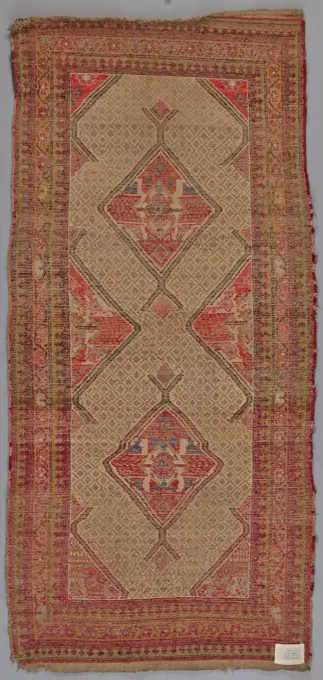
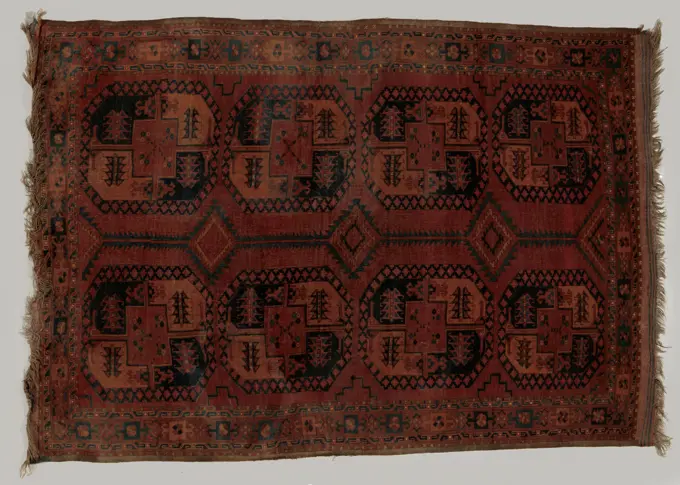
Oriental carpet, Anonymous, 1685 - 1700 Eastern carpet, medailla rug. In midfield there are hexagonal medallions, connected by ranks against a brown -red stock. Furthermore, sprinkled windows. The edge is decorated with rosettes. Kaukasus (possibly) wool Eastern carpet, medailla rug. In midfield there are hexagonal medallions, connected by ranks against a brown -red stock. Furthermore, sprinkled windows. The edge is decorated with rosettes. Kaukasus (possibly) wool
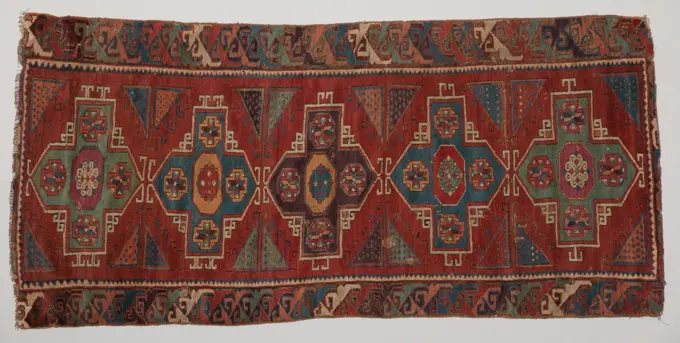
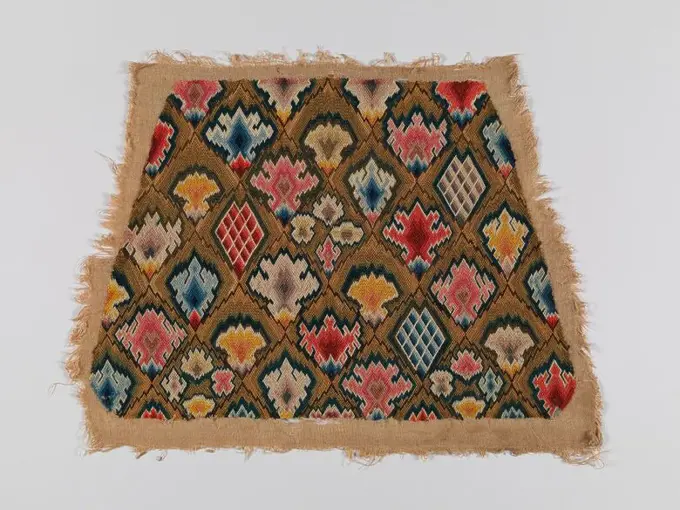
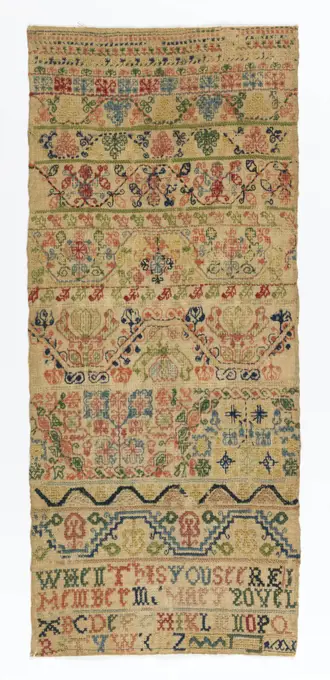
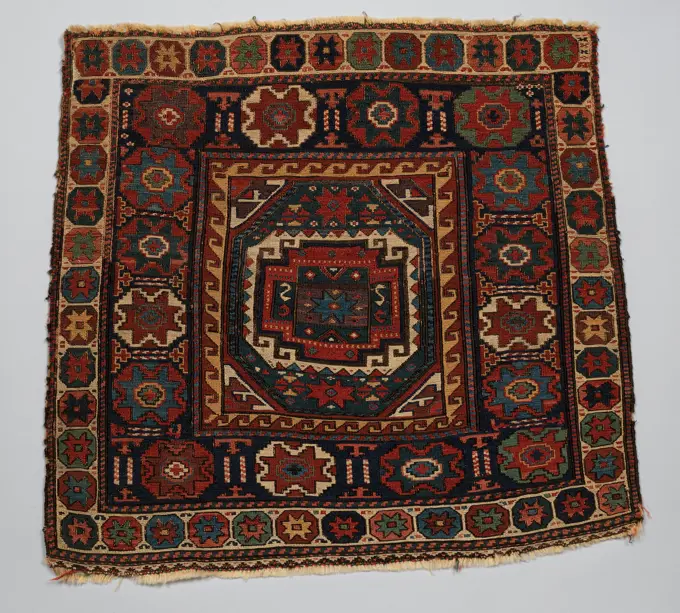
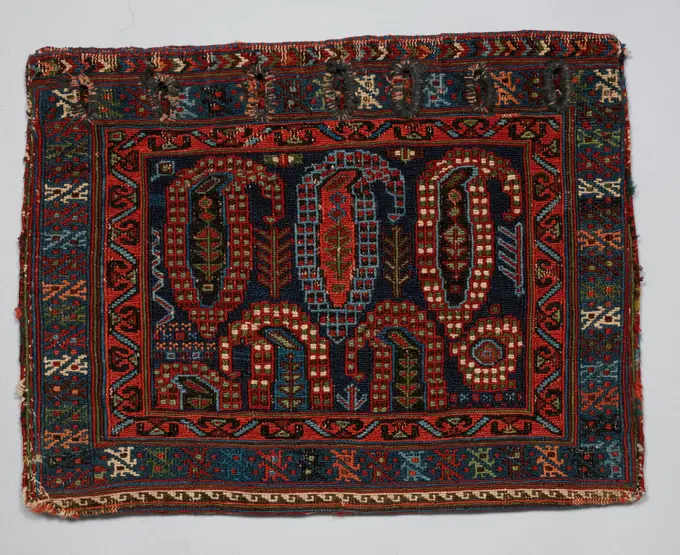
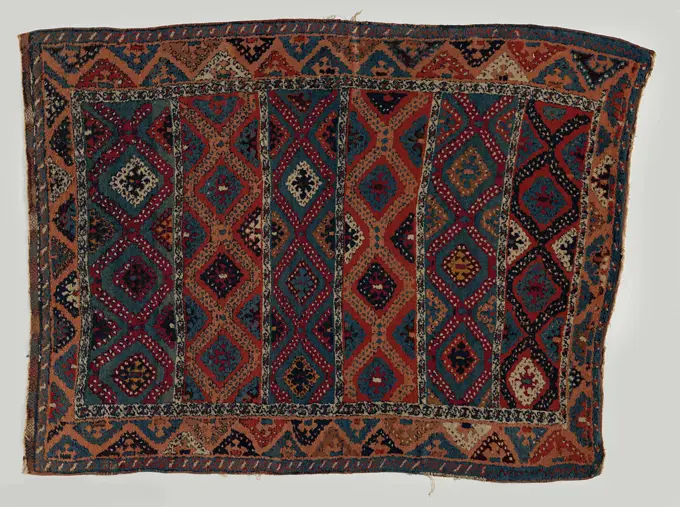
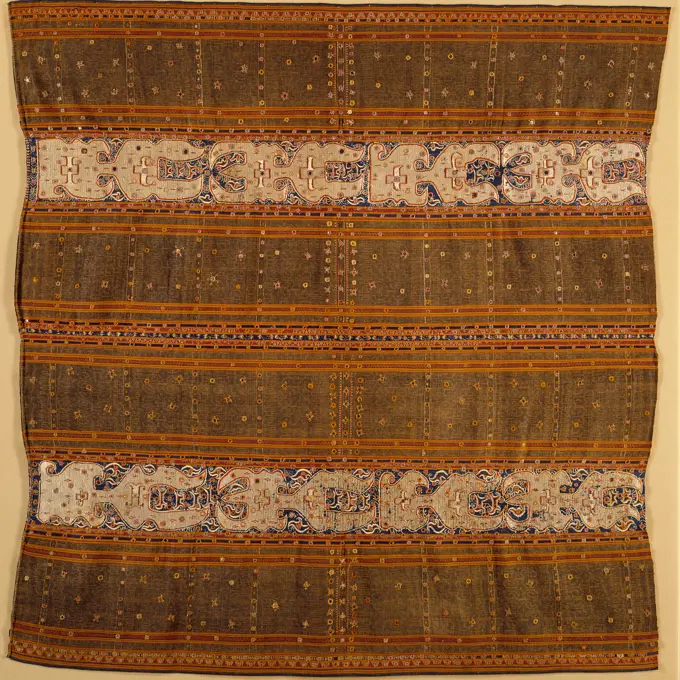
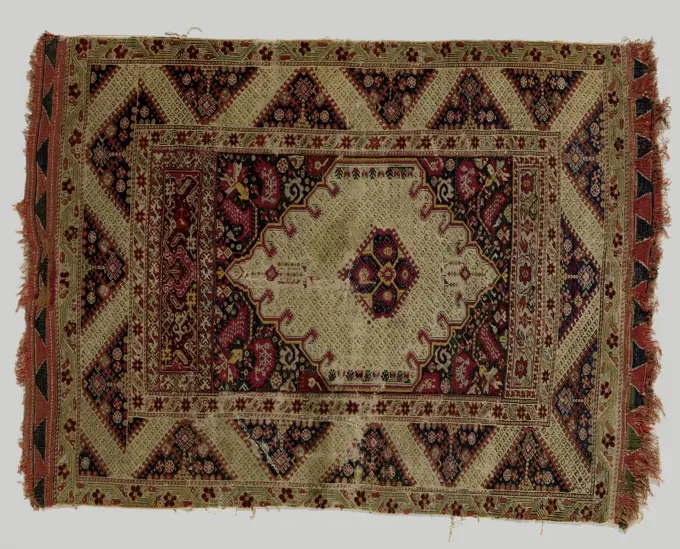
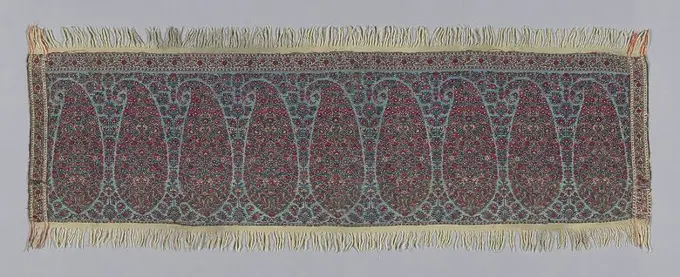
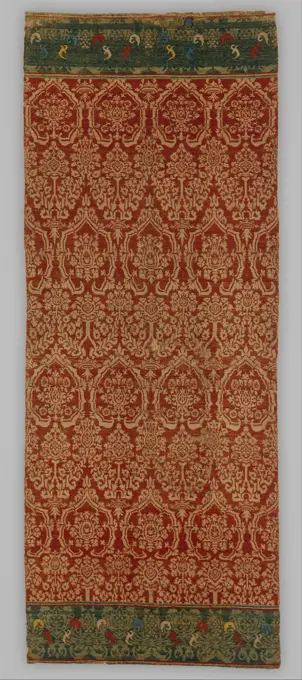
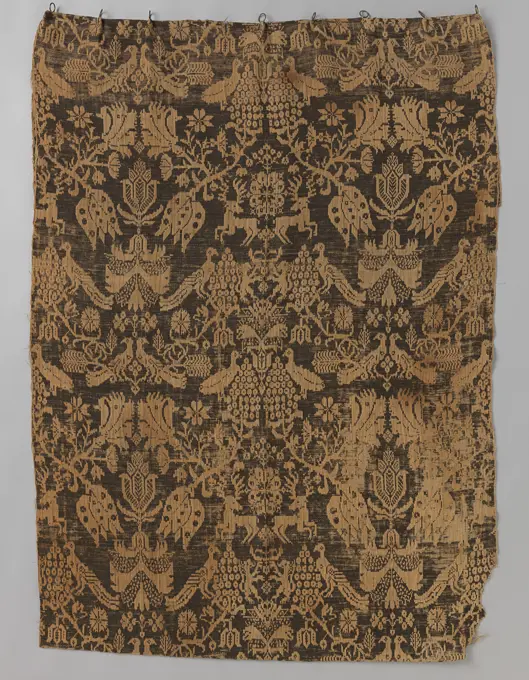
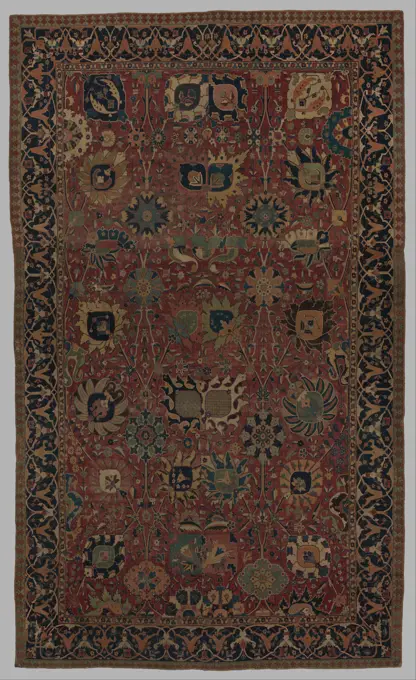
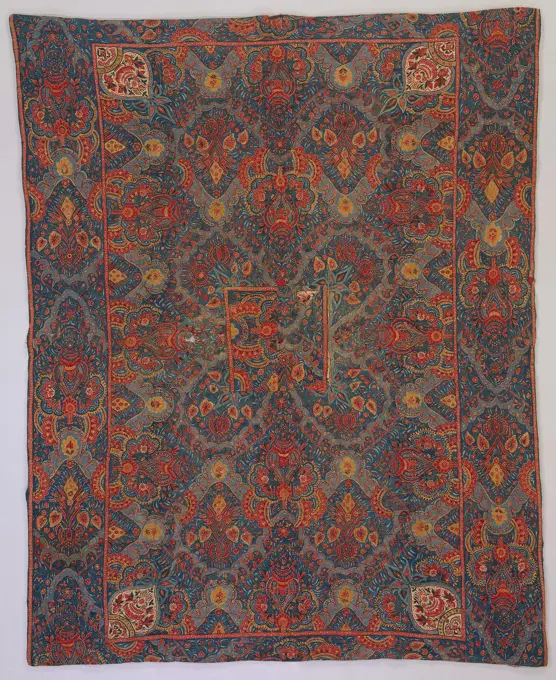
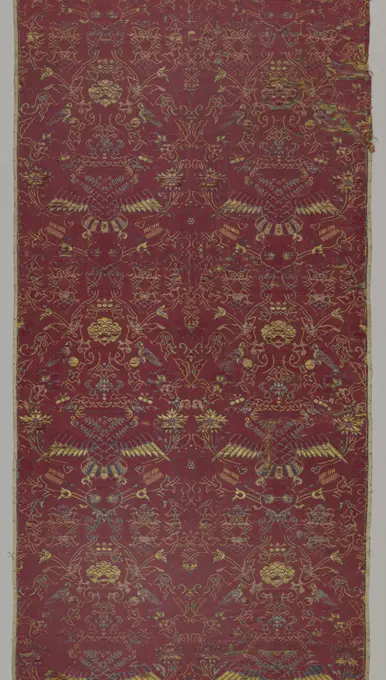
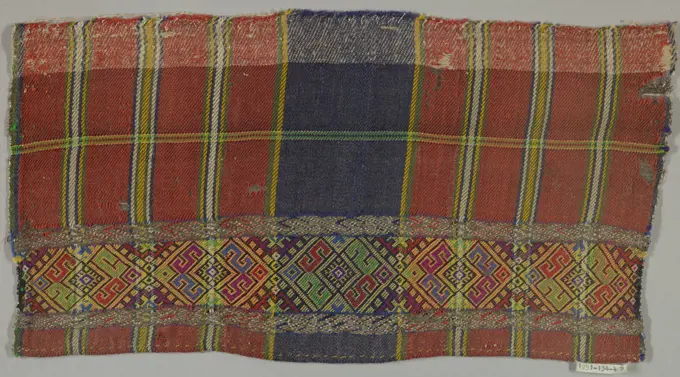
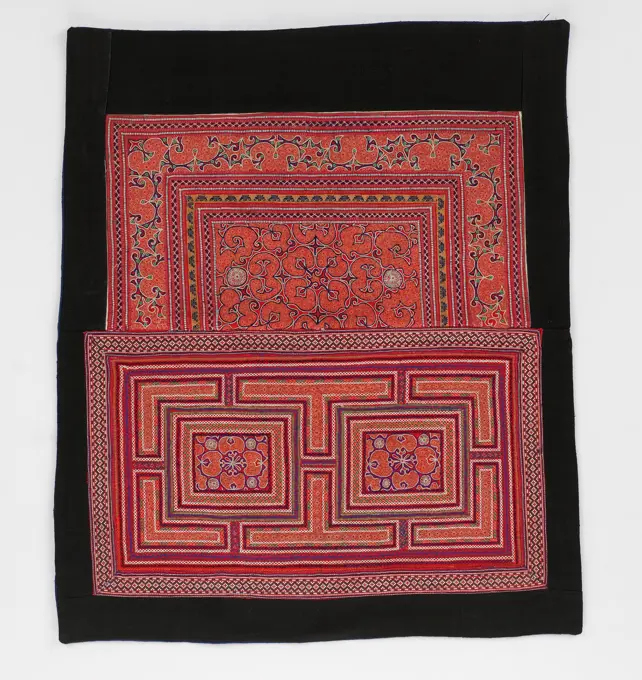
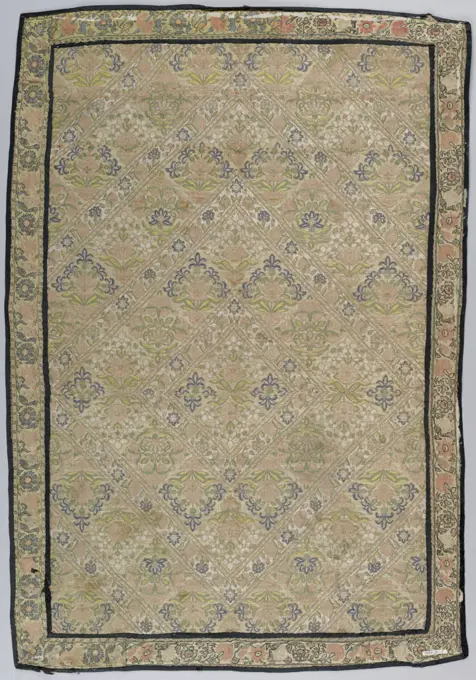
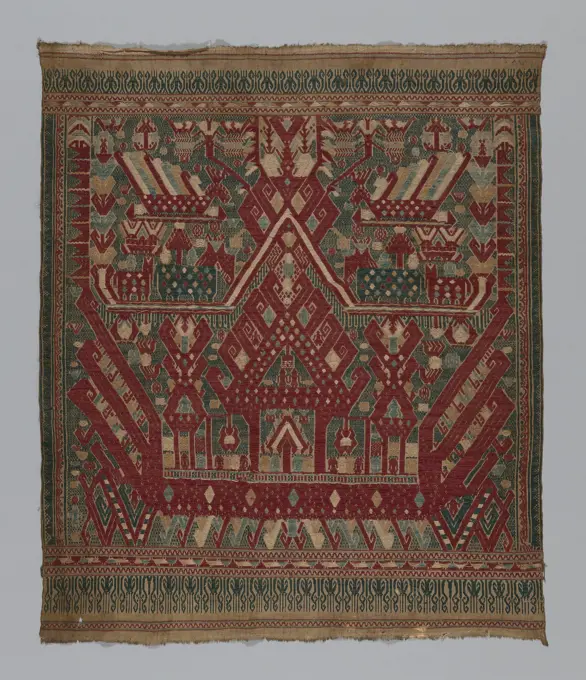
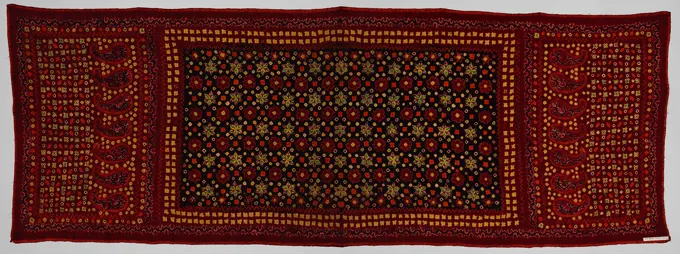
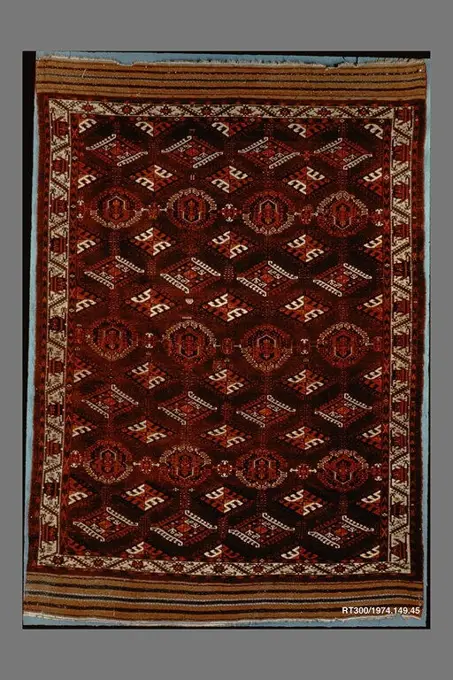
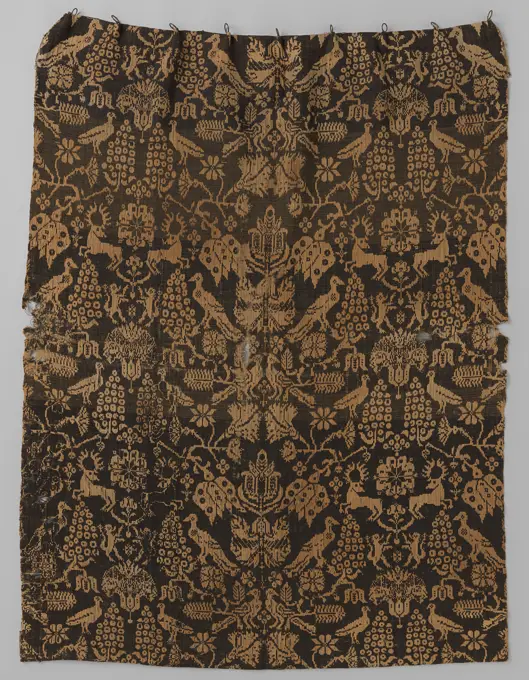
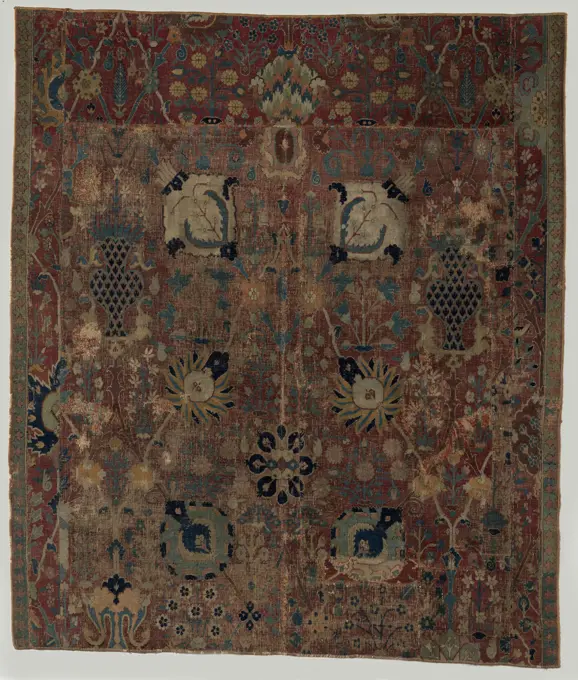
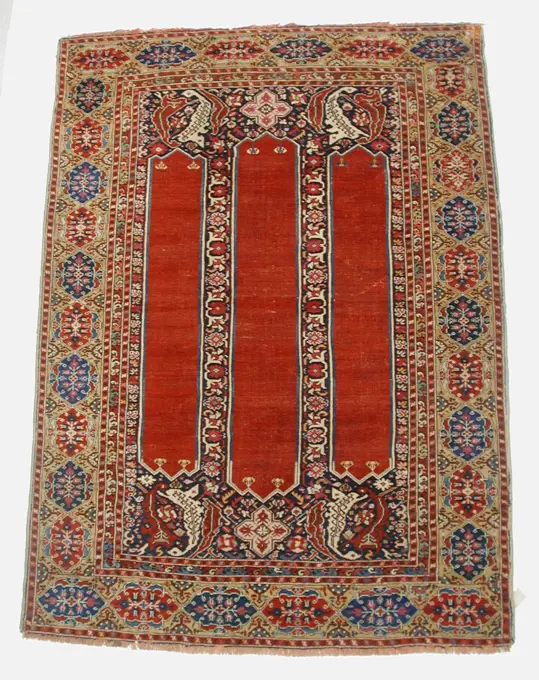
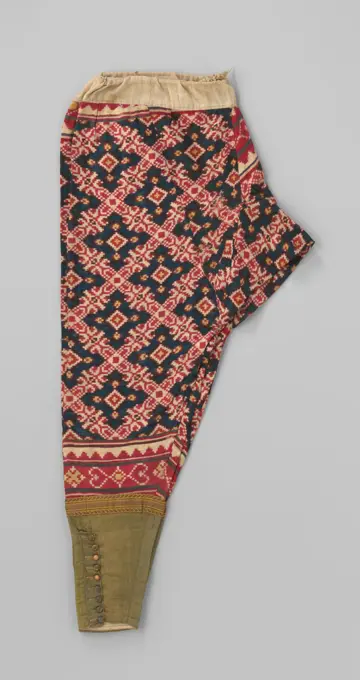
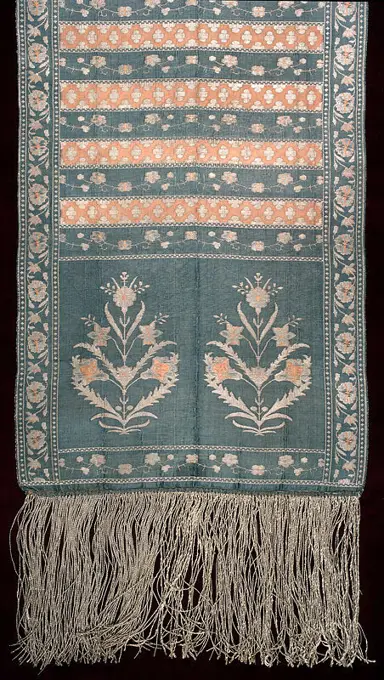
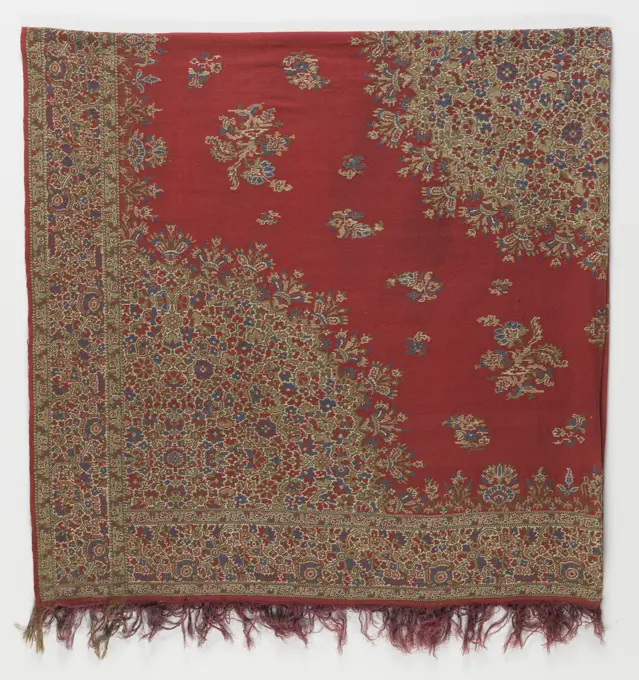
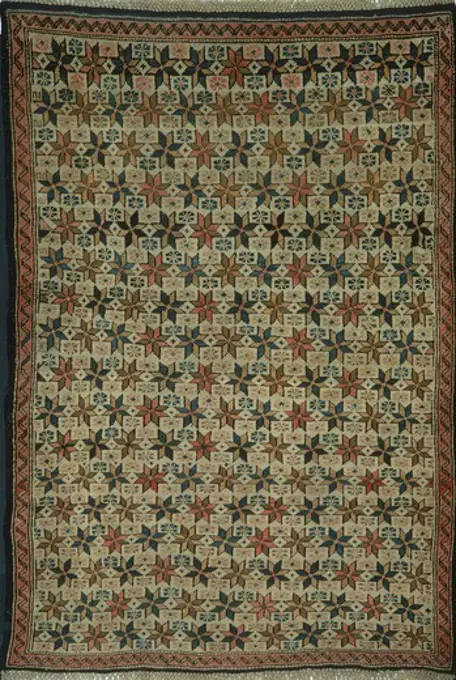
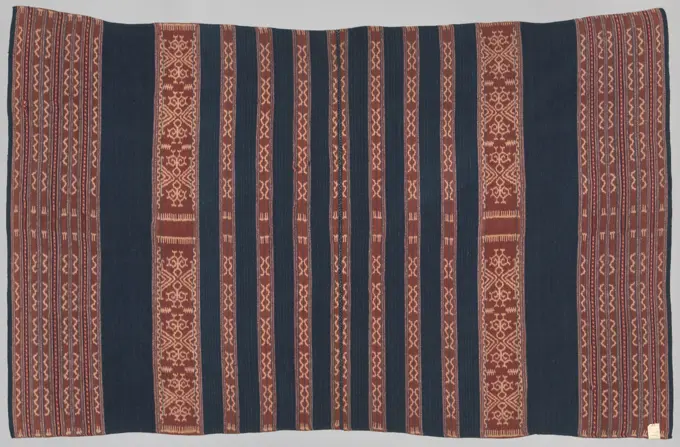
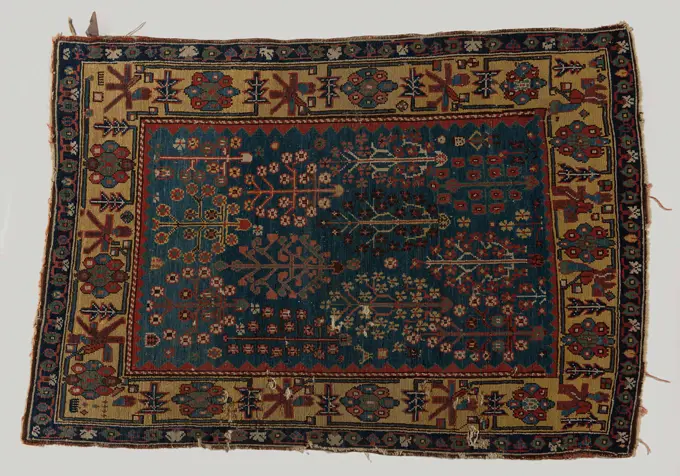
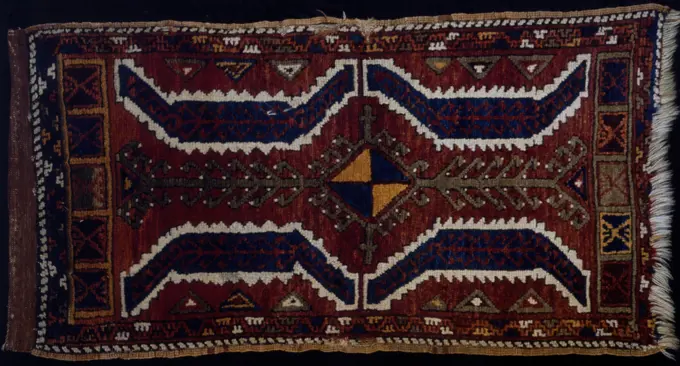
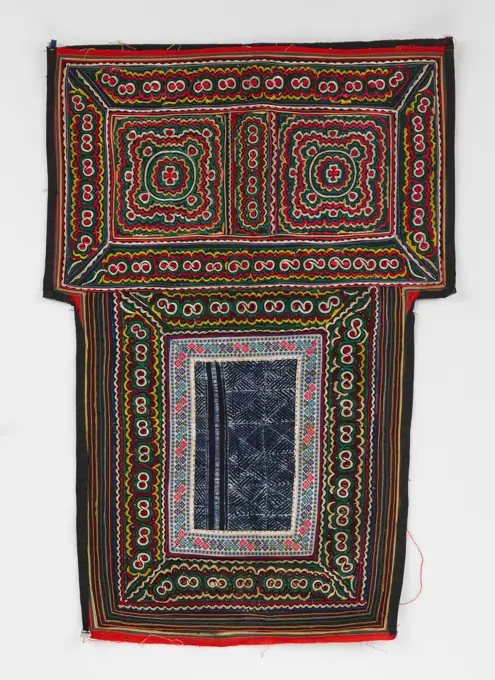
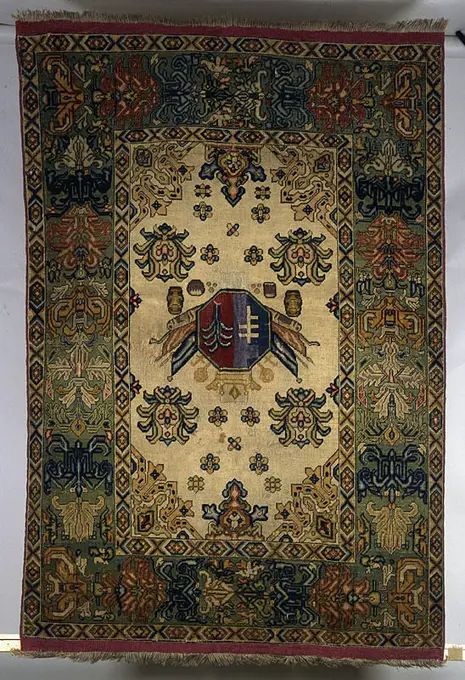
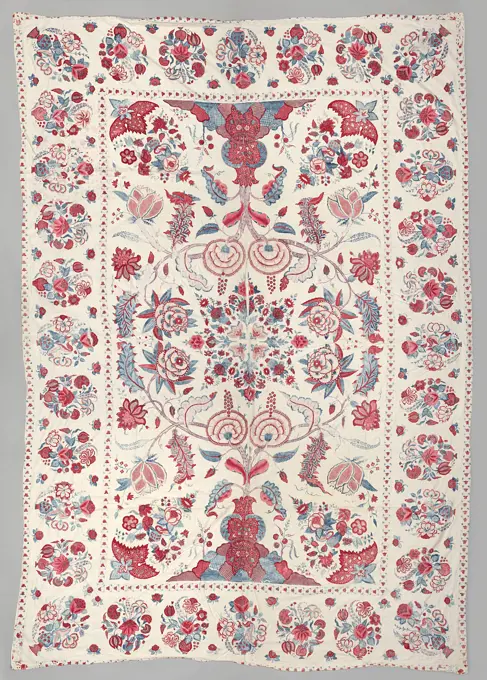
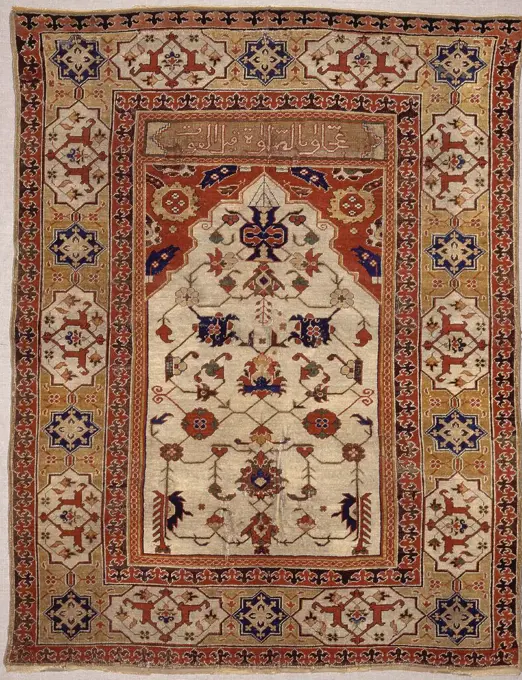
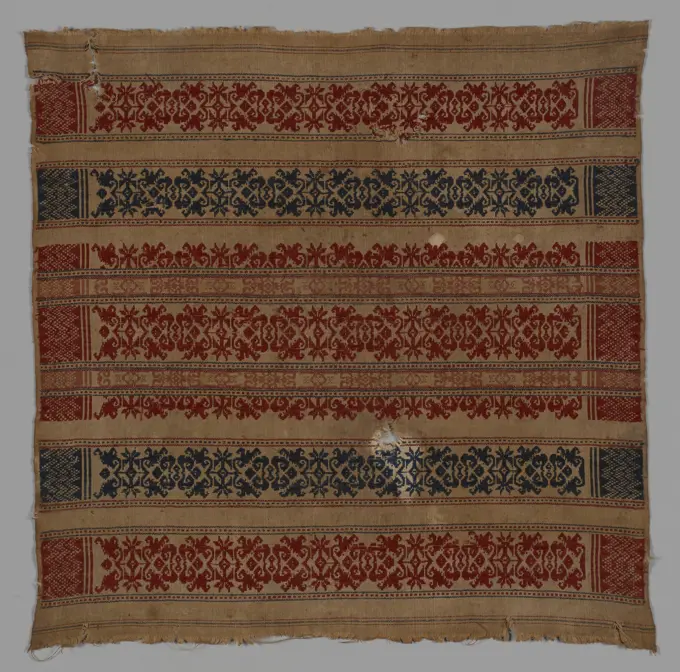
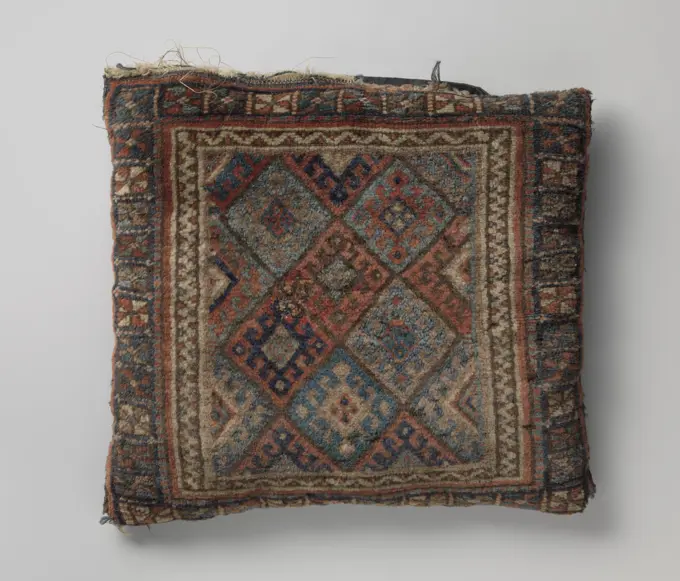
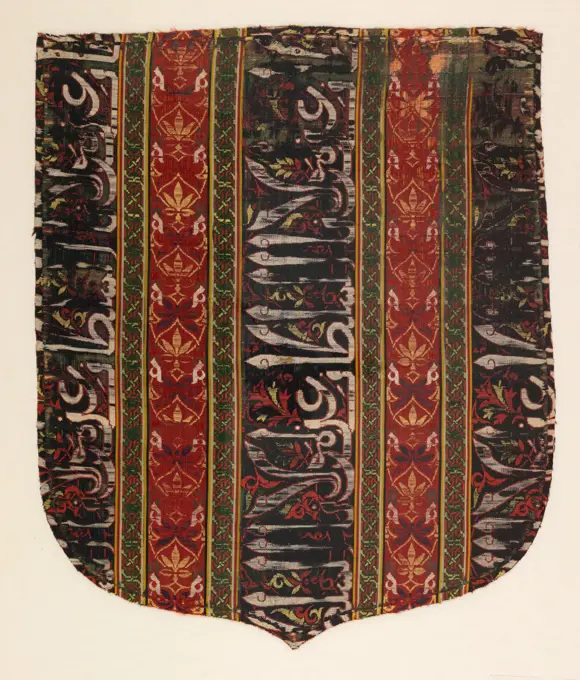
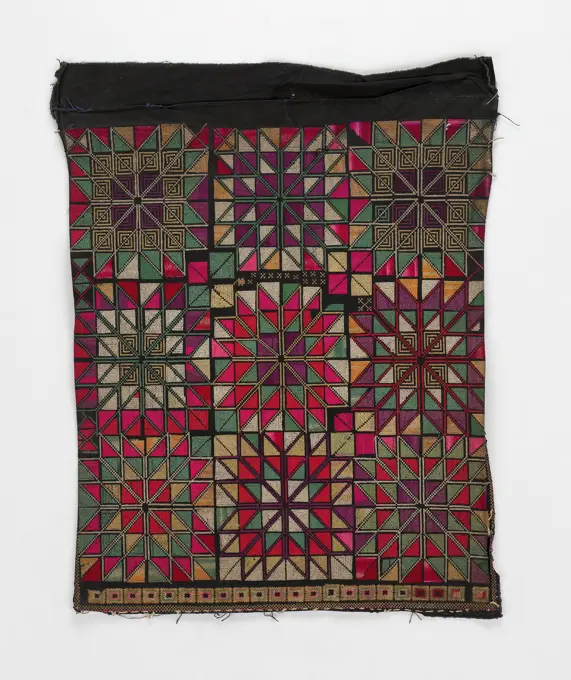
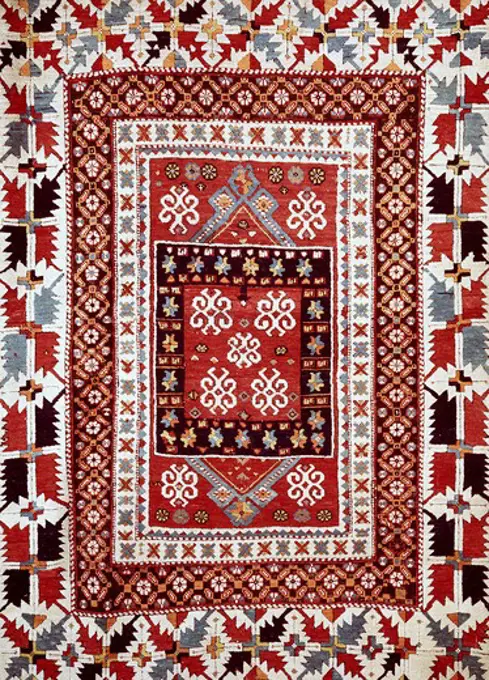
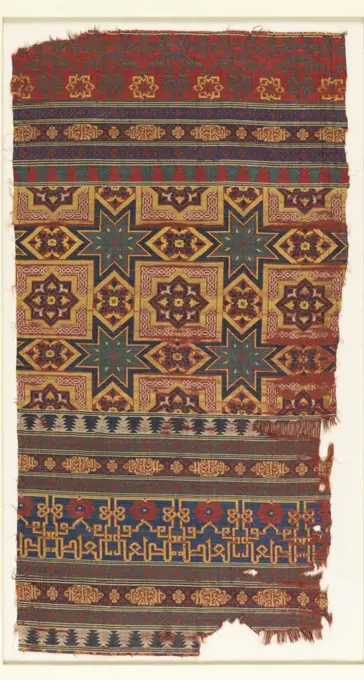
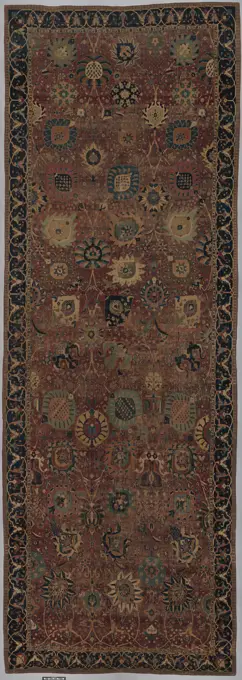
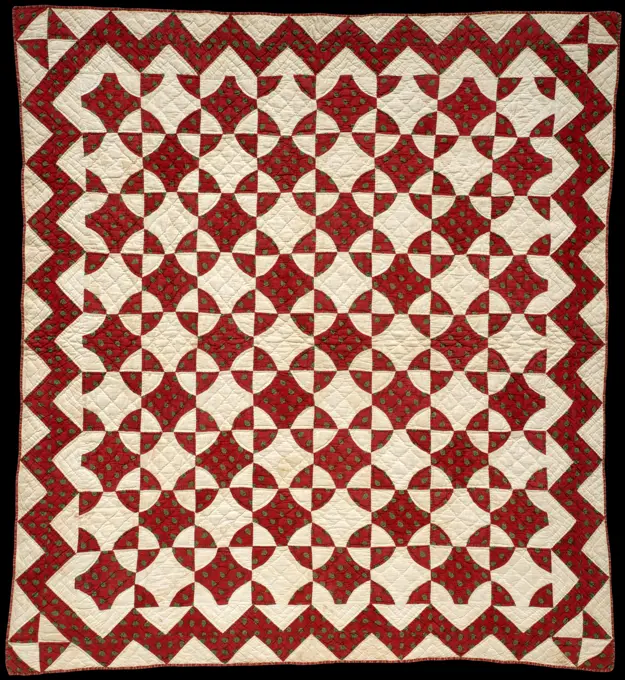
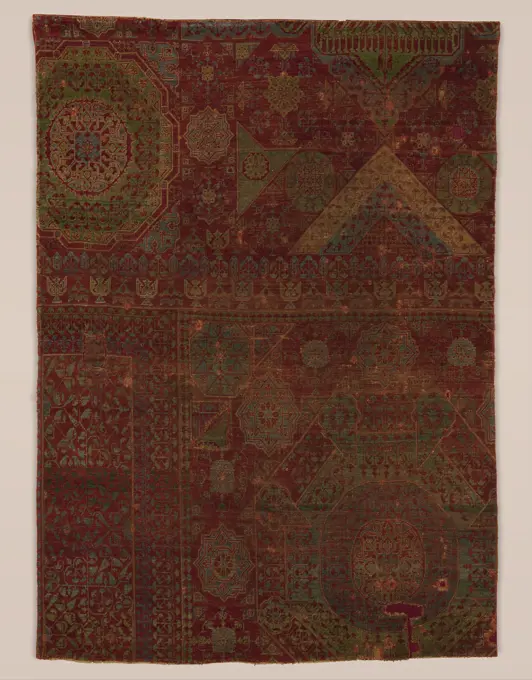
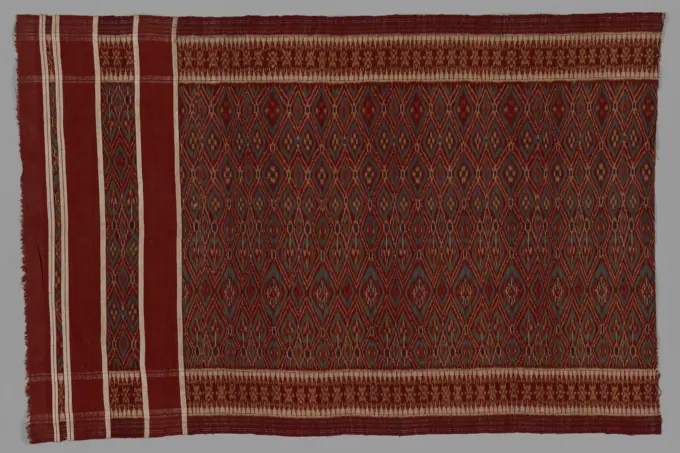
Oriental carpet, Anonymous, 1685 - 1700 Eastern carpet, medailla rug. In midfield there are hexagonal medallions, connected by ranks against a brown -red stock. Furthermore, sprinkled windows. The edge is decorated with rosettes. Kaukasus (possibly) wool Eastern carpet, medailla rug. In midfield there are hexagonal medallions, connected by ranks against a brown -red stock. Furthermore, sprinkled windows. The edge is decorated with rosettes. Kaukasus (possibly) woolFragment of a Ritual Weaving(Cepuk)Oriental carpet. Barred in Kelim technology. In midfield three red Mihrabs, the middle double sided. A job with windows, flanked by shades and hexagons with diabolo stars. Quadruple edges, the widest with a zigzag line that encloses a double blade.Bliżej Kultury unknownPiece early 17th century Spanish. Piece 221567Table Cover (possibly Iran); silk, metallicsCaucasian Karabakh carpet unknownSelendang (Shawl) Indonesia. Heavy cream colored cotton thread woven in two pieces and dyed in the loom by tie-dye process known as ikat; central field of dark blue is divided in center by two borders of red, white, ornamented in blue, red, yellow and cream; each end is finished with fringe dyed red above which are three borders .Eastern carpet ,, 1800 - 1900 Eastern carpet of knotted wool. In midfield a pattern reminiscent of tile work, executed in white stars with flowers interspersed by cross shapes in red and green. Around three edges of which the middle one, the widest is decorated with flower vines. Bijar wool Eastern carpet of knotted wool. In midfield a pattern reminiscent of tile work, executed in white stars with flowers interspersed by cross shapes in red and green. Around three edges of which the middle one, the widest is decorated with flower vines. Bijar wool"Ornamental Lotto" Carpet early 17th century Carpets displaying this striking design of stylized vegetal arabesques in yellow on a red background are often called "Lottos," after a famous altarpiece by the Italian Renaissance painter Lorenzo Lotto that includes a similar textile. The motifs depicted in the center field here have additional hooks and curls that render the overall impression more decorative. "Ornamental Lottos" like this one commonly have a border containing a series of medallions with symmetrical patterns based on the split-palmette. During the sixteenth and seventeenth centuries, Lotto carpets became a popular motif in Dutch and Flemish painting. Artists depicted them on tables in domestic scenes, portraits, and, occasionally, still lifes, as a sign of wealth and good taste... "Ornamental Lotto" Carpet 447570Three Star 'Holbein' Carpet. Date/Period: 1400 - 1450. Carpet. Author: Turkey Unknown.Caucasian Kazak carpet unknownDecorative Band, possibly 1700s or 1800s. Africa, North Africa, Morocco, Azemmour, Moroccan embroiderer. Linen, silk, and dye; average: 79.4 x 28 cm (31 1/4 x 11 in.).Oriental carpet. Oriental carpet, prayer cloth, of knotted wool, decorated with a terra-cotta mihrab, shipped and with toothed top, in which a reverse oil can hang. Clear blue swing with flower branches. Three edges and toothed around midfield.Chair seat cover. Culture: American. Dimensions: 24 × 18 in. (61 × 45.7 cm). Maker: Anna Poor Parsons (American, 1738-1783). Date: ca. 1770.This chair seat cover is fully embroidered with multicolored crewel wools on a plainweave linen base fabric. The pattern is of serrated "flame stitch" lozenges in graduated shades (light to dark) of pinks, reds, yellows, blues, and purples. The background between the lozenges is in shades of green to brown. There few exactly repeated designs, either in shape or color, among the patterned lozenges. The embroidered area is bordered by an approximately 1 inch wide area where the linen base fabric remains unembroidered. Although currently unmounted, the chair seat was removed from a chair and was framed at some point in its history, likely in the first half of the 20th century. Museum: Metropolitan Museum of Art, New York, USA.Sampler, Mary Soveli (), English, Medium: wool embroidery on linen foundation Technique: embroidered in cross, running, back, star, rococo (Queen) and herringbone stitches on plain weave foundation, Bands of pattern ending with the verse: 'When this you see remember me Mary Soveli' and alphabet., England, early 18th century, embroidery & stitching, SamplerFlower Dress ,, 1800 - 1900 Flower rug, supposedly ghiordes or mucurkleed with mirrored, symmetrically built up flower design in red distance. Green/pink edge, unusual type ghorda. Little Asia wool Flower rug, supposedly ghiordes or mucurkleed with mirrored, symmetrically built up flower design in red distance. Green/pink edge, unusual type ghorda. Little Asia woolWoman's wedding mantle (lliclla) with interlace and tocapu design late 16th-early 17th century Peruvian. Woman's wedding mantle (lliclla) with interlace and tocapu design 214310Ceremonial Weaving(Paporitonoling)Textile, Medium: silk Technique: two interconnected structures: 4&1 satin and plain weave (lampas), Curving bands containing blossoms and interlaced shapes in yellow, white, green and rose., Spain, 15th century, woven textiles, TextileEastern carpet, Ersari people, c. 1800 - c. 1975 Oriental carpet, octagon rug, with in midfield so-called Temirdschin-Guls against a red background. The generous are interspersed by simple geometric ornaments that are interconnected along the vertical axis. Rand with gotschahanak motifs. Central Asia Necklace and impact: Wool Oriental carpet, octagon rug, with in midfield so-called Temirdschin-Guls against a red background. The generous are interspersed by simple geometric ornaments that are interconnected along the vertical axis. Rand with gotschahanak motifs. Central Asia Necklace and impact: WoolShoulder cloth; Kain Pelangi. Shoulder draft with floral and geometric motifs.Face of Half a Double Saddlebag (Khorjin) 19th century The Shahsevan, whose name means "those who love the king," are Turkic nomads. Their historical migratory range reaches from the southwest shores of the Caspian Sea to the southern part of Transcaucasia. Art historians have identified Shahsevan weavings, including a variety of small-format bags, only in the past half century. Many Shahsevan weavings from the nineteenth and twentieth centuries, especially those with centralized geometric designs, show a striking relationship with Anatolian carpets from the fifteenth and sixteenth centuries. These older textiles are called Memling carpets, after the fifteenth-century Netherlandish painter who depicted them in his religious works. The khorjin saddlebags from the Mughan plain (on the Caspian Sea in northwestern Iran), such as this piece, continues the Memling design: it features a geometric octagonal medallion motif with stars and angular hooks that develop from the step-like edges. ManOriental carpet, Anonymous, 1800 - 1900 Eastern carpet, stripe rug. Midfield is decorated with stripes and floral running tifles. Multiple edge, the widest of which is decorated with a floral slender. Southwest Perzia Necklace and impact: Wool Eastern carpet, stripe rug. Midfield is decorated with stripes and floral running tifles. Multiple edge, the widest of which is decorated with a floral slender. Southwest Perzia Necklace and impact: WoolSmall Torba Bag ca. 1900-1910 View more. Small Torba Bag. ca. 1900-1910. Wool (warp, weft, and pile); asymmetrically knotted pile (front), brocaded (back). From Iran, Fars. Textiles-Woven-BrocadeStripes rug, Yuruk or Sarkisha. Stripes rug, Yuruk or Sarkisha. Midfield: Six wide transverse stripes and to red, from lacquer red to deep orange-red, and blue are separated by narrow white intermediate lines. On the wide stripes an equal decor of white speckled zigzag lines of dark blue, dark red and apricot color. Inside and there are outside whole and half windows, each with a rosette flower. Edges: Triple. The main drive is light orange with triangles with half floral rosettes. Indoor zoom white; Outside Zoom Blue. Beard: Only at the top of a figurine beard.Prayer cloth with top panels, Ladik. Prayer cloth with top panels, Ladik. Midfield: red mihrab with three-part, in the middle raised façade, crowned crochet. Two oil men and a long flower stalk hang from the top. The swing is in white with red and blue lancet leaves to an announcement branch in many colors. A white "omegaline" above tilting in white border blue grabs into a red upper resource panel, on which light blue (3) and white (2) tulips alternate. Edges: Triple. The main beach is blue, with around and to rosette flowers and sloping tulips in red and white, light red and brown and yellow and red. Brown indoor zoom with rosettes is caught in narrow white tables. The entire field is surrounded by a tricolor listed list; To reduce red; In addition to the mihrab blue and bottom light blue.Woman's Ceremonial Skirt (Tapis). Indonesia, South Sumatra, Lampung, Paminggir people, late 19th century. Costumes; principal attire (lower body). Cotton plain weave with resist-dyed warp (ikat), silk embroidery, mica appliquéCover Made 1601-1725 Turkey. Linen embroidered with multicolor silk. .Baby Carrier, 22 1/2 x 18 1/4 in. (57.15 x 46.36 cm), Cotton, silk; needlework, ChinaHeupdoek, anonymous, 1900 - 1949 Hip cloth with geometric motifs. Sarawak cotton (textile) Hip cloth with geometric motifs. Sarawak cotton (textile)Prayer cloth with double mihrab, Makri or Bergamo. Prayer cloth with double mihrab, Makri or Bergamo. Midfield: double mihrab in light brick red with flattened straightforward façade and a tree of life with large, incised triangular leaves in blue, petroord green and eggplant. The swing is eggplant colored, with a rosette. Borders: two-fold. The main edge is blue with tilted flowers in purple, yellow, red n green. The indoor zoom is yellow with flowers. Beard: at the top and at the top of a beard, reinforced at the top of embroidery sign.Shawl. Shawl with geometric motifs and man figures.Prayer rug for a girl, c. 1775 - c. 1900 Prayer rug for a girl, so-called kis-ghiordes of knotted wool with a double mihrab of white in midfield with a sprinkled filling of small half moons. Rand with white zigzag tires. Ghiordes wool Prayer rug for a girl, so-called kis-ghiordes of knotted wool with a double mihrab of white in midfield with a sprinkled filling of small half moons. Rand with white zigzag tires. Ghiordes woolShawl Border Fragment. India. Date: 1815-1820. Dimensions: 50.8 × 133.7 cm (20 × 52 5/8 in.)Repeat: 32.4 × 14.25 cm (12 3/4 × 5 5/8 in.). Wool, double interlocking 2:2 'S' twill tapestry weave; ends of pieced 2:2 'S' twill weaves; main warp fringe. Origin: India. Museum: The Chicago Art Institute, Chicago, USA.Wall Hanging, with Pomegranate Pattern early 16th century German. Wall Hanging, with Pomegranate Pattern 468431Bed Cordinine of "Beiderwand" tissue in black and white. Bed curtain of Z.G. "Beiderwand" tissue. The pattern in black and white, is infinite and symmetrical on vertical axes, built up. The drawing consists of birds, deer, palmets, carnations, tulips and grape fees. The texture is a double tissue, so on one side the white pattern is black on the other side black on white. The curtain is made of wool and linen.Shawl, 1820-1830, 106 1/2 x 56 in. (270.5 x 142.2 cm), Cotton; printed, India, 19th centuryCarpet 17th century. Carpet. 17th century. Cotton (warp and weft), wool (pile); asymmetrically knotted pile. Attributed to Iran, probably Isfahan or Kerman. Textiles-RugsTextile Fragment. Dimensions: Textile: L. 10 1/4 in. (26 cm)W. 12 3/4 in. (32.4 cm). Date: late 15th-16th century.Geometric designs such as the ones in this fragment are found ornamenting a wide variety of media produced in Nasrid period (1232-1492) Spain, including tile work, woodwork, book binding, and painted stucco. The basic principles of this design include geometric and floral motifs, as well as the classic eight-pointed star, here enclosing a rosette, both of which are nested inside a scalloped medallion. Such bold designs recall the famous wall patterns in the Alhambra palace in Granada. In both the plaster and tile work of the buildings in the palace, interlacery designs are closely related to the star-forms in this weaving. Museum: Metropolitan Museum of Art, New York, USA.. Palempore or canvas of sits with large flower and leafy oriental ornaments in red, light blue and yellow on dark blue fond. Lining red silk.Eat a carpet unknownCushion Cover (Yastik) 19th century. Cushion Cover (Yastik) 447475Textile, Medium: silk Technique: plain compound satin, Two side-by-side repeats featuring a double-headed eagle and flowers in red and yellow., Macao, China, 16th century, woven textiles, TextileTextile, Medium: wool, silk, cotton, linen, silver foil on silk core (1952) Technique: evensided twill; fancy twill on band (1952), Rectangle of plaid with broad central vertical blue band and widely spaced horizontal and vertical stripes in green, yellow, blue, white, on a dark red ground. Horizontal band near bottom with geometrical pattern of diamond S-shapes in cerise, red, yellow, blue, green, purple, white and black twill., Romania, 18th-19th century, woven textiles, TextileBaby Carrier, 26 1/2 x 23 in. (67.31 x 58.42 cm), Cotton; needlework, ChinaTable mat, Medium: silk Technique: plain compound weave, White ground has a concentric framework of diamond shapes set with conventionalized floral branches in pink, blue and green. Serpentine floral border with flower heads and birds. Pieced., Iran, 17th century, woven textiles, Table matTampan (Ceremonial Cloth) Made 1801-1900 Indonesia. Cotton, plain weave with supplementary patterning wefts .Shoulder cloth; Kain Pelangi. Shoulder draft with floral and geometric motifs.Ritual Weaving(Tampan)Sampler, Medium: linen, silk Technique: embroidered, A series of embroidered bands with floral and geometric motifs and two alphabets rendered in different stitches., England, 17th century, embroidery & stitching, SamplerYomut Main Carpet first half 19th century. Yomut Main Carpet 452597Fragment of an oriental carpet, anonymous, c. 1640 - c. 1660 Fragment, elongated square, from a Persian carpet with very short pole. The drawing consists of large windows formed by palmets, in which a stylized ornament from pomegranate and other motifs is composed on solid soil of blue or creamy white. Kirman wool. silk. cotton (textile) Fragment, elongated square, from a Persian carpet with very short pole. The drawing consists of large windows formed by palmets, in which a stylized ornament from pomegranate and other motifs is composed on solid soil of blue or creamy white. Kirman wool. silk. cotton (textile)Uncut handkerchiefs, Medium: cotton Technique: block printed and resist printed on plain weave Label: block printed and resist printed cotton, Rectangular panel with two uncut handkerchiefs printed on it. The field of each handkerchief has an overall pattern white hexagons filled with foliate elements in brown, with white borders with a red and brown flowering vine motif., USA, ca. 1870, printed, dyed & painted textiles, Uncut handkerchiefsStorage Bag Fragment mid-19th century. Storage Bag Fragment 452599Ceremonial Hanging, 53 x 37 in. (134.62 x 93.98 cm), ChinaBed Cordinine of "Beiderwand" tissue in black and white. Bed curtain of Z.G. "Beiderwand" tissue. The pattern in black and white, is infinite and symmetrical on vertical axes, built up. The drawing consists of birds, deer, palmets, carnations, tulips and grape fees. The texture is a double tissue, so on one side the white pattern is black on the other side black on white. The curtain is made of wool and linen.Shemaka Pillow Case, 19th century, L.19-1/2 x W.20 in., wool, cotton, 19th centuryFragment; silk, silver-gilt-wrapped yarnShawl; Hi'i worstes. Shawl with floral motifs.Fragment of Eastern carpet: midfield with lotus flowers and rosettes and vases., Anonymous, 1600 Fragment of an oriental carpet, flowers and vases rug. In midfield, lotus flowers, rosettes and vases wear. The field is filled with plant motifs. Southern Persia (Possible) wool Fragment of an oriental carpet, flowers and vases rug. In midfield, lotus flowers, rosettes and vases wear. The field is filled with plant motifs. Southern Persia (Possible) woolBed cover (suzani), Medium: silk embroidery on cotton foundation Technique: embroidered in chain and Bokhara couching stitches on plain weave foundation Label: cotton, embroidered with silk in chain and Bokhara couching stitches, Bed cover or suzani in cream-colored cotton embroidered with colored silks and lined with warp-printed silk. Small red carnations fill the field, surrounded by a wide border of large, circular red flower heads and scrolling vines. Lined with two different warp print silks, a satin stripe and a ribbed silk with a figural design., Anadolu, Turkey, 19th century, embroidery & stitching, Bed cover (suzani)Carpet with Double-Ended Triple Niche 18th century This carpet represents a later and rather abstract interpretation of the coupled-column prayer rug type (see no. 22.100.62); here, the columns have been omitted and the sense of architectural space is lost through the doubling of the design. The carpet displays a wide variety of floral motifs, some of which recall the classical repertoire of Ottoman art. Most evident are the tulips in the border, while the stylized leaves above and below the red fields resemble the feathery saz or the split-palmette. Further characteristics of the weaving tradition of west-central Anatolia are the rosette-like flowers and the rich palette with deep red in the center, blue, yellow, light green, peach color, undyed white, and brown.. Carpet with Double-Ended Triple Niche 447523Panel (From woman's trousers) Made 1801-1850 Iran. Linen, plain weave, embroidered in silk .Pants from Ikat, Unknown, c. 1850 - c. 1950 The pants close with a cord. On either side of the plain olive -green pipes of silk are 9 gold -colored turquoise patinated convex knots.  textile materials. metal. silk ikat The pants close with a cord. On either side of the plain olive -green pipes of silk are 9 gold -colored turquoise patinated convex knots.  textile materials. metal. silk ikatCeremonial furnishing cloth pha lai yang. Date/Period: 18th century. Textile,handspun cotton, natural dyes and mordants. Height: 933 mm (36.73 in); Width: 2,925 mm (115.15 in). Author: Traded to Thailand.Kontusz sash. Manufaktura Karola Stanisława Radziwiłła (Słuck ; wytwórnia pasów ; ca 1767-1790), manufacture, Madżarski, Jan (fl. ante 1757-ca 1800), manufacturerShawl (Kussaba), 19th century, 73 x 80 in. (185.4 x 203.2 cm), Wool; needlework, India, 19th centurySquare cashmere scarf with a red center, on which small botas, a large round middle medallion, quarter corner circles in blue, green and cream, c. 1820 - c. 1830 Square palm shell with a red center, on which small botas, a large round middle medallion, quarter corner circles in blue, green and cream France (possibly) whole: Wool. whole: Silk Square palm shell with a red center, on which small botas, a large round middle medallion, quarter corner circles in blue, green and cream France (possibly) whole: Wool. whole: SilkBaby carrier, 20th century, 27 1/4 x 24 1/2 in. (69.22 x 62.2 cm), Cotton, embroidery, China, 20th centuryTapestry. unknown, authorRugs and Carpets: Caucasus region - Shirwan carpetBag 7th century Nasca. Bag. Nasca. 7th century. Camelid hair. Peru, Rio Grande de Nasca. Textiles-WovenPhulkari, early 20th century, H.88 x W.47 in., Cotton, silk; needlework, India, 20th centuryOriental carpet ,, 1830 - 1900 Eastern carpet, two -lane flower rug. In midfield, two lanes of anjelieren stand against a partly beige partly pink stock. Multiple edge. At the bottom of a beard. Southwest-Turkestan Necklace and impact: Wool Eastern carpet, two -lane flower rug. In midfield, two lanes of anjelieren stand against a partly beige partly pink stock. Multiple edge. At the bottom of a beard. Southwest-Turkestan Necklace and impact: WoolChaIIce veil, embroidered, red  the Mother of God on crescent moon unknownFragment (Dress Fabric) Made 1675-1725 Iran. Silk, brocaded .kokerdoek, anonymous, before 1940 Rectangular cotton cloth consisting of two panels that form each other's mirror image. The colors are natural for infatted motifs, brown red for the stock of impatted tracks and blue for intermediate tracks. Incatted motifs have been placed on the canvas in horizontal, running in the order of the day. Under are a number of narrowly identified tracks with zigzag motif; Then follows a wide solid blue course; a wide -in -cover track with a main motif (see drawing on map); Then narrowly identified tracks follow with zigzag motif that are separated from each other by wide blue lanes with narrow lighter blue stripes. Maluku cotton (textile) ikat Rectangular cotton cloth consisting of two panels that form each other's mirror image. The colors are natural for infatted motifs, brown red for the stock of impatted tracks and blue for intermediate tracks. Incatted motifs have been placed on the canvas in horizontal, running in the order of the day. Under are a numFragment of Mawa' or Ma'a (Sacred Heirloom Textile). India, Gujarat. Date: 1377-1499. Dimensions: 121.9 x 94.5 cm (48 x 37 3/16 in.). Cotton, plain weave; block printed resist and mordeant dyed. Origin: India. Museum: The Chicago Art Institute, Chicago, USA.Oriental carpet. Oriental carpet of knotted wool whose midfield is decorated with rows of the mir-i-bota, small and variance rows of left and legal. Three decorated narrow edges.Part of a Cap (Benika), 1700s. Algeria. Silk, metal strips on linen tabby ground; embroidery; overall: 41.3 x 38.4 cm (16 1/4 x 15 1/8 in.).Skirt, 11 1/4 x 15 3/8 in. (28.58 x 39.05 cm), Cotton, ChinaRug, 19th century, 42 x 24 in. (106.68 x 60.96 cm), Wool, Turkey, 19th centuryBaby Carrier, 30 1/2 x 21 1/2 in. (77.47 x 54.61 cm), Cotton, silk; needlework, ChinaCarpet with coats of arms of Potocki and Mniszech families. unknown, authorSits spread with blooming tree in vase on rock .. Spread from Sits with blooming tree in vase on rock and with vases with flowers in the edges. Lined.A Bukhara rug, c1800. Artist: Unknown.ALFOMBRA TURCA DE ORACION,USHAK-S XVIII-LLAMADA DE "TRANSILVANIA". Location: INSTITUTO VALENCIA DE DON JUAN-COLECCION. MADRID. SPAIN.Carpet early 19th century. Carpet 447467Ritual Weaving(Tampan)Cover sheet Saddle bag Decorated with windows; outer edge with rectangles and rosette flowers, Jaffi Volk, c. 1850 - c. 1900 Cover sheet of a saddle bag, Jaffi-Kurdistan-Mosul, of which the midfield is decorated with windows. The outer edge is divided into rectangles with rosette flowers. Kurdistan Necklace and impact: Wool Cover sheet of a saddle bag, Jaffi-Kurdistan-Mosul, of which the midfield is decorated with windows. The outer edge is divided into rectangles with rosette flowers. Kurdistan Necklace and impact: WoolHeadcloth (Iket Kepala) Made 1875-1900 Java. The palette and design details of this manís headcloth differ from those of the four pieces shown to the left (1926.24, 1926.22, 1926.5, and 1926.4). Here the overall effect is darker, thanks to the deeper red tone of the soga. Also, there are numerous bracket-like white lines arranged in a radially symmetrical fashion, which suggest mountain peaks. These form a pleasing pattern in their own right and provide welcome contrast to the otherwise somber palette. Such differences may well indicate production at a different central Javanese court.. Cotton, plain weave; hand-drawn wax resist dyed (batik tulis) .Cope Hood Fragment (Spain); silkBand (Italy); silk on linenApron (), ChinaDetails of an Islamic carpetFragment, Medium: silk Technique: two interconnected structures: 31 twill and plain weave (lampas) Label: silk lampas, Fragment of woven silk with horizontal bands of geometric pattern including various interlace patterns, eight-pointed stars, and kufic script in the form of lobed medallions., The script is translated as 'Sucess and prosperity' and 'Beatitude.', Spain, 15th century, woven textiles, FragmentVase Carpet late 16th-early 17th century This richly colored carpet features stylized floral motifs interspersed with scrolling vines. The designation "vase" carpet refers to the distinctive weaving technique used to create this carpet and others like it, many of which feature vase motifs in their designs. The bottom edge of this carpet displays a different design than the rest, suggesting that the weaver decided to alter the planned design about eighteen inches into the weaving process.. Vase Carpet. late 16th-early 17th century. Cotton (warp and weft), silk (weft), wool (weft and pile); asymmetrically knotted pile. Made in Iran, Isfahan or Kirman. Textiles-RugsCrib Quilt, Mill Wheel pattern ca. 1840 American The front of this crib quilt is pieced of printed red cotton with a green figure and plain white cotton fabric. The edge binding is a different red printed cotton. The backing fabric is the same white cotton that was used for piecing the front. The quilt is entirely hand stitched and is quilted following the pieced pattern.. Crib Quilt, Mill Wheel pattern 13650Carpet Fragment last quarter 16th century Associated with the Mamluks in Egypt and Syria, Mamluk-style carpets figured significantly in Mediterranean commerce and appear in Venetian paintings from the sixteenth century. The style of these carpets is characterized by medallions surrounded by a variety of smaller geometric motifs, forming a kaleidoscopic appearance. The palette is limited to red, blue, green, and yellow tones. Documents first refer to Cairo as a center of carpet weaving in the last quarter of the fifteenth century, and production continued until the mid-sixteenth century, shortly after the 1517 Ottoman conquest of Egypt.. Carpet Fragment 452308