Ornate Vintage Decorative Containers

Elegant vintage bowls and boxes made from fine materials, adorned with intricate designs and motifs, reflecting historical craftsmanship.

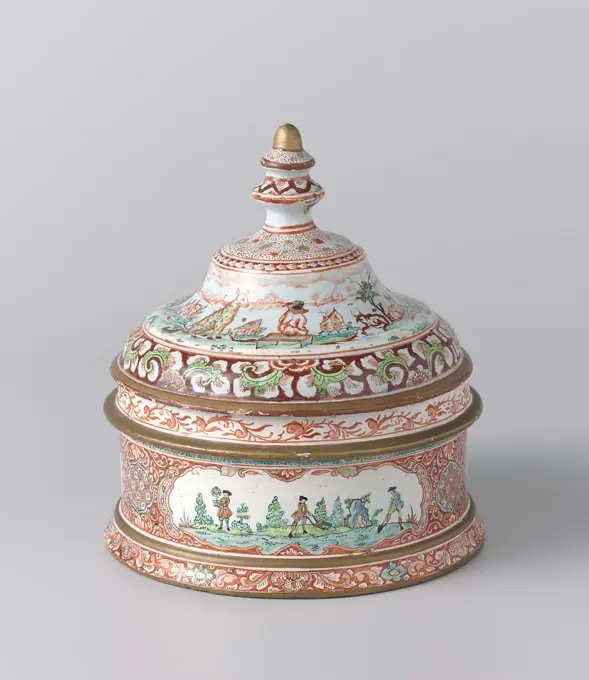
Lid of tea lid from "canton email", anonymous, c. 1750 The lid has a geometric pattern on the side and a flower on top. China copper (metal). The lid has a geometric pattern on the side and a flower on top. China copper (metal).
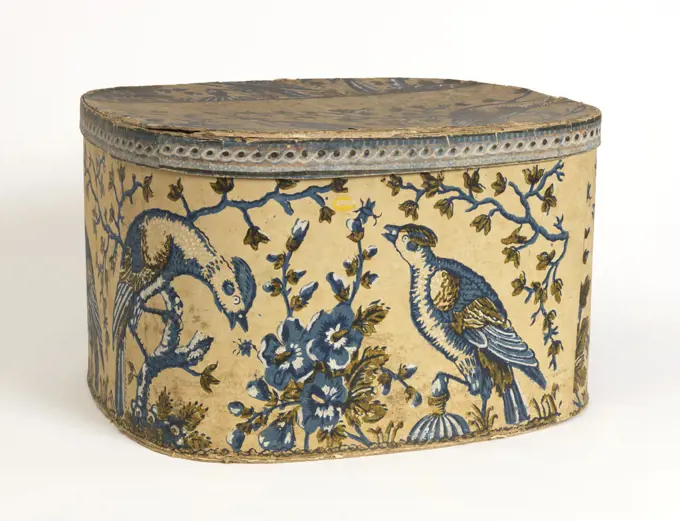
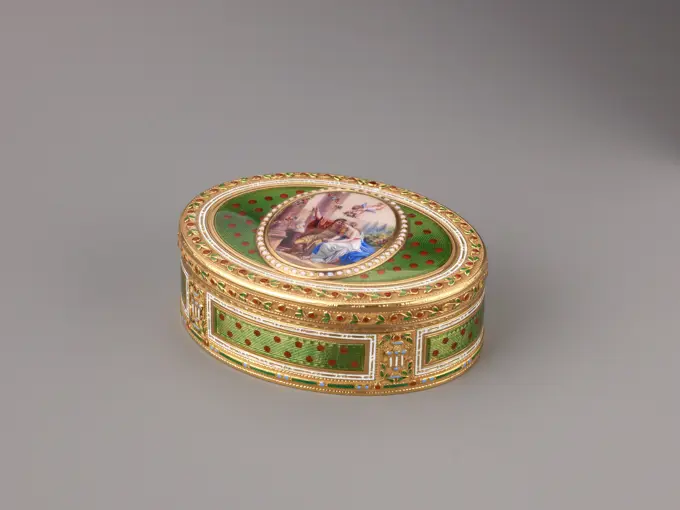
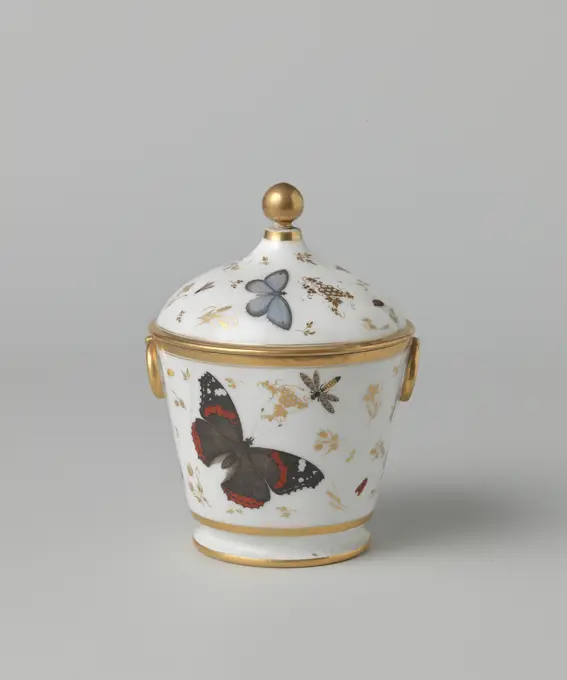
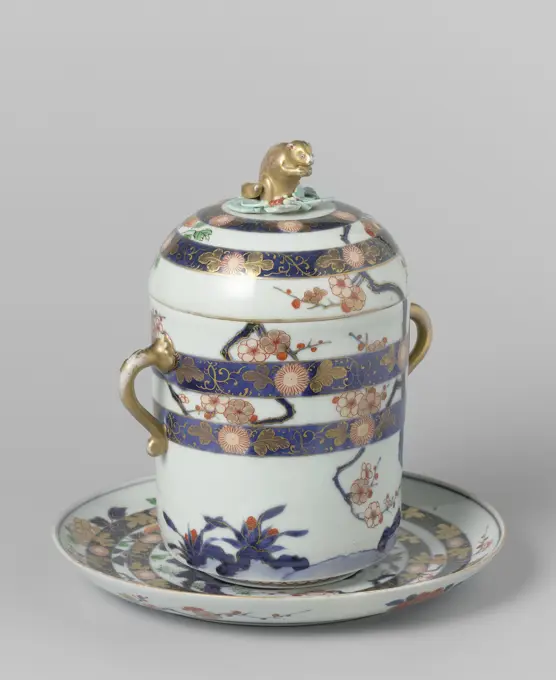
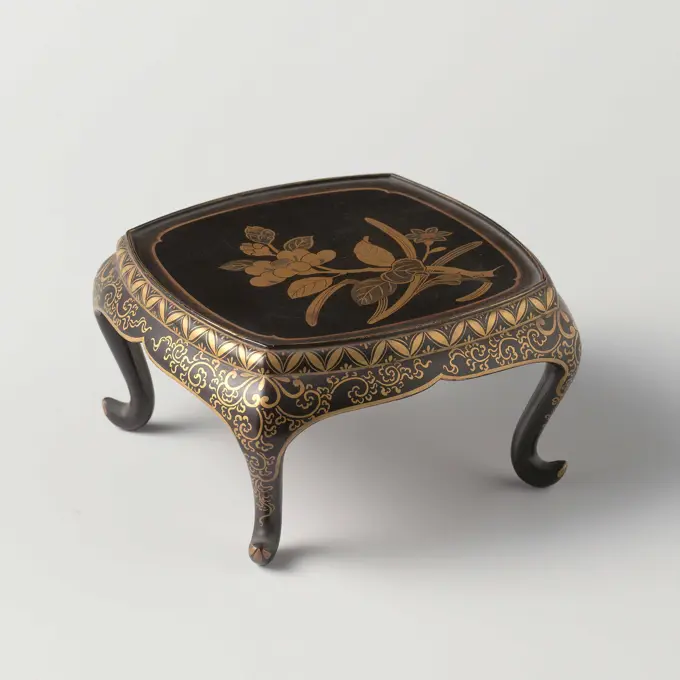
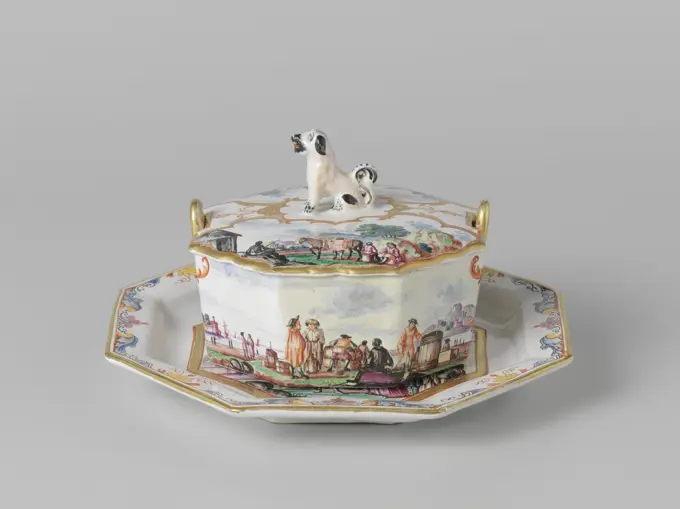
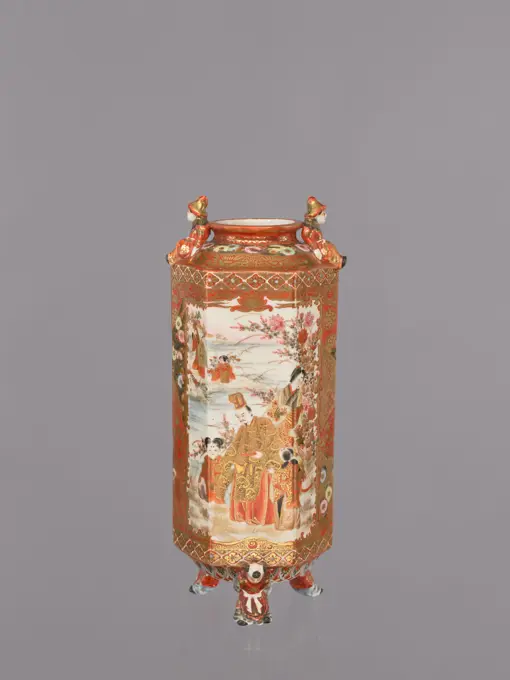
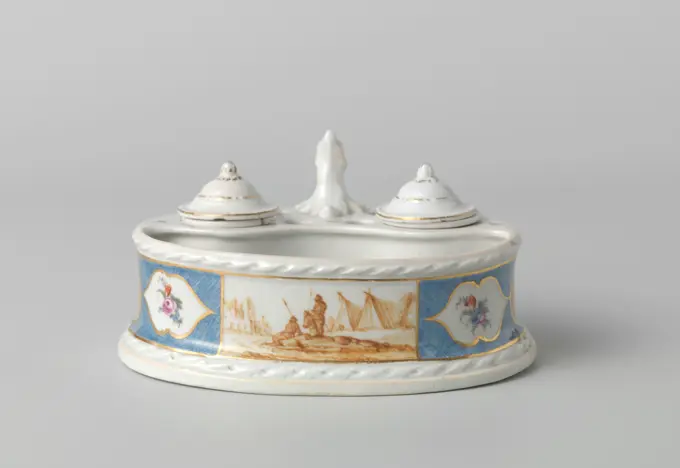
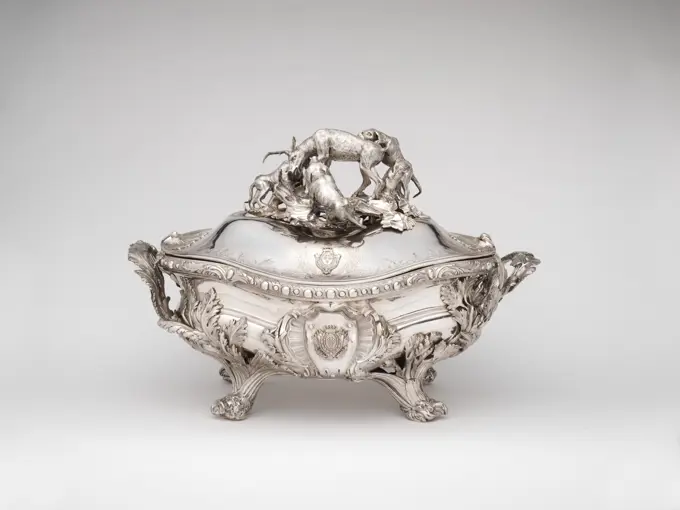
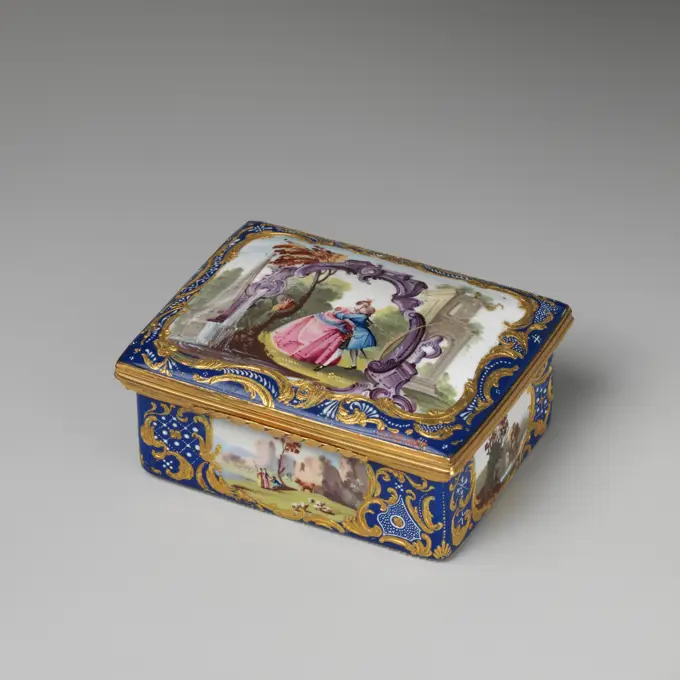
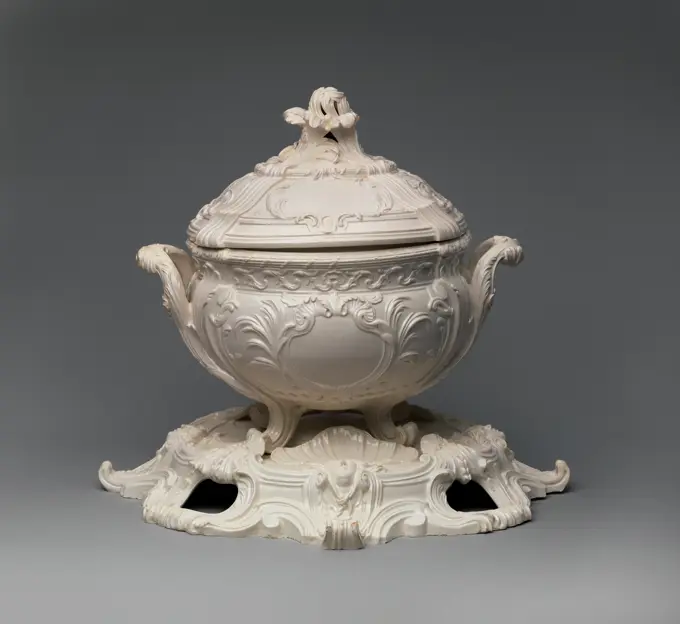
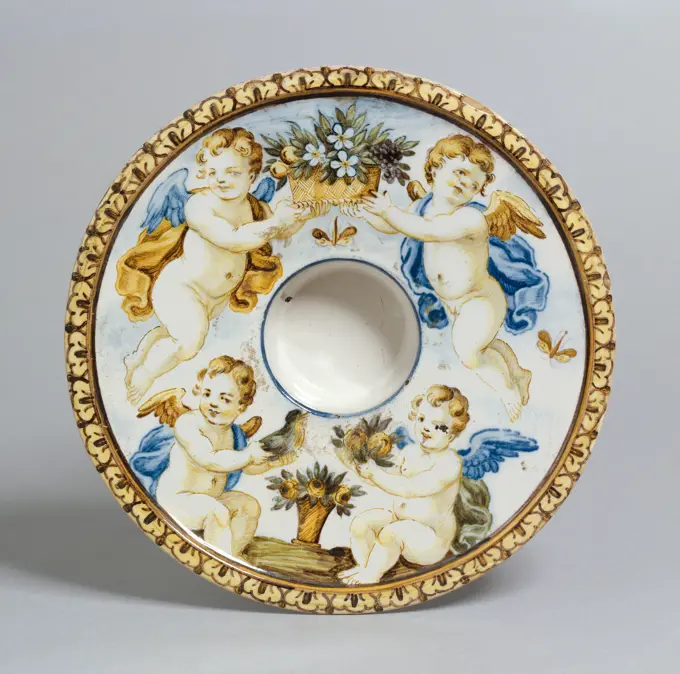
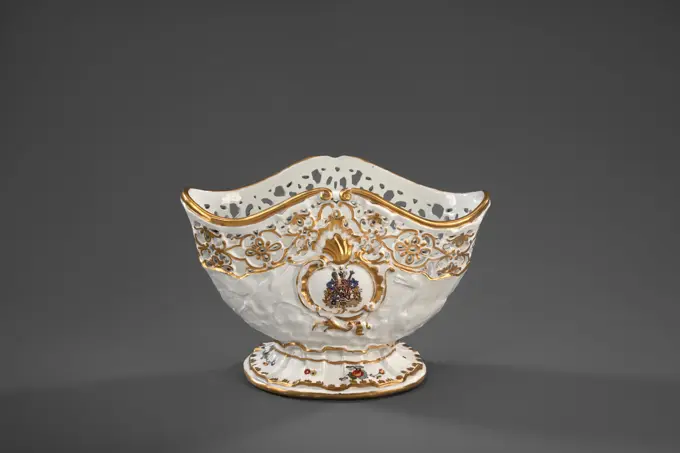
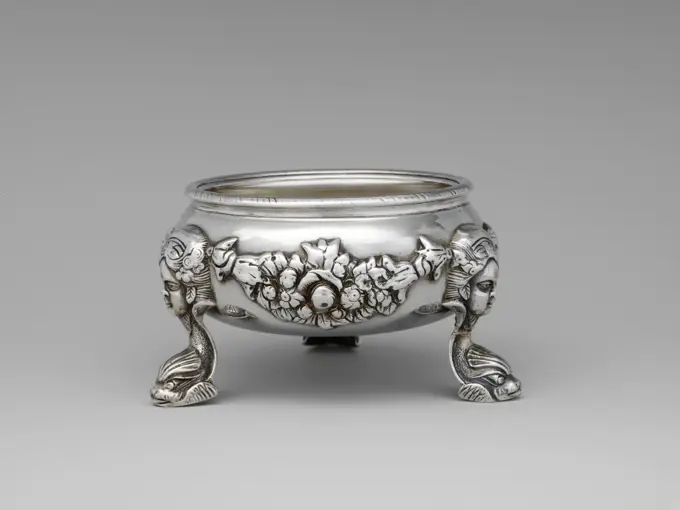
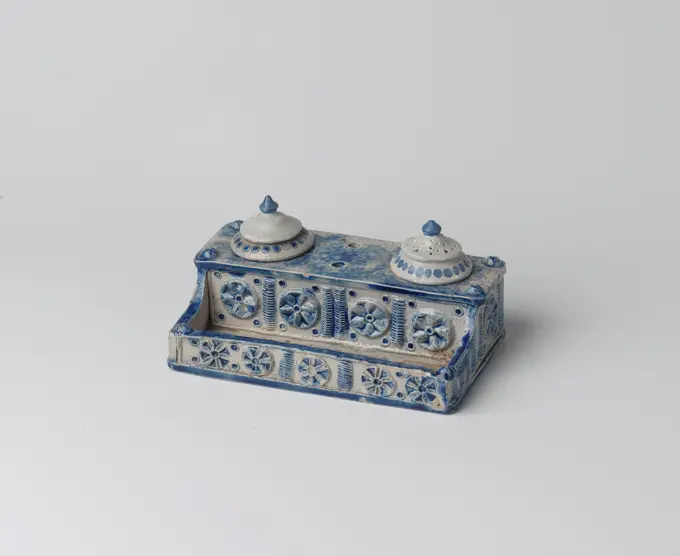
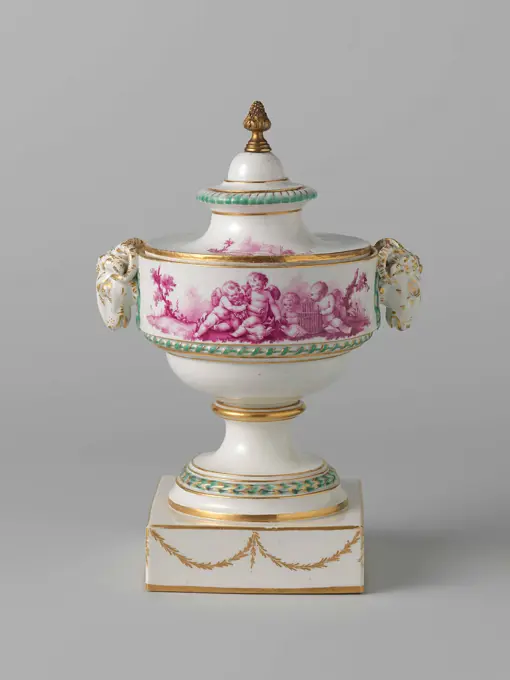
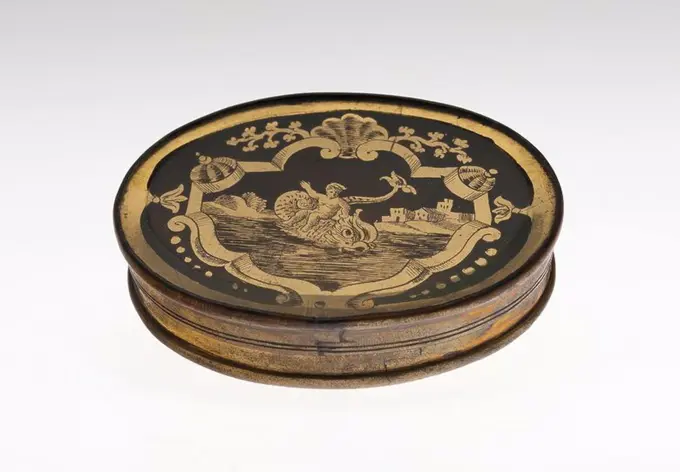
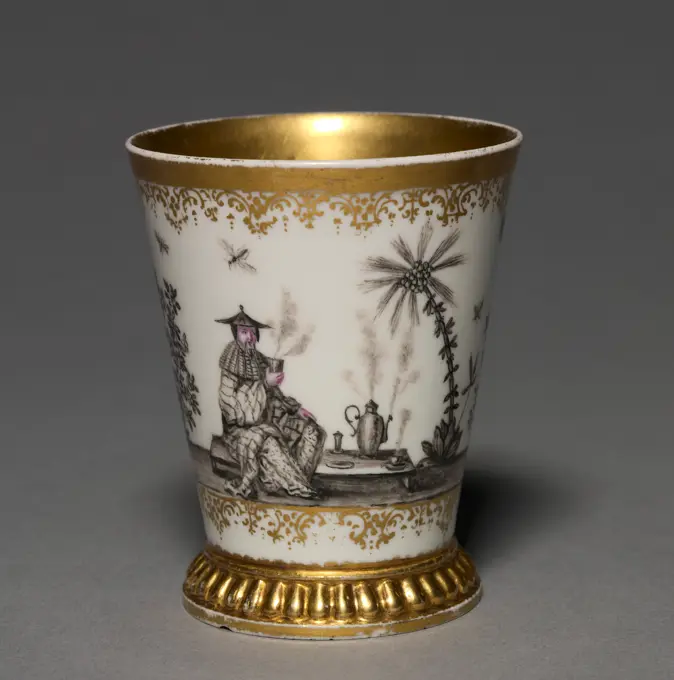
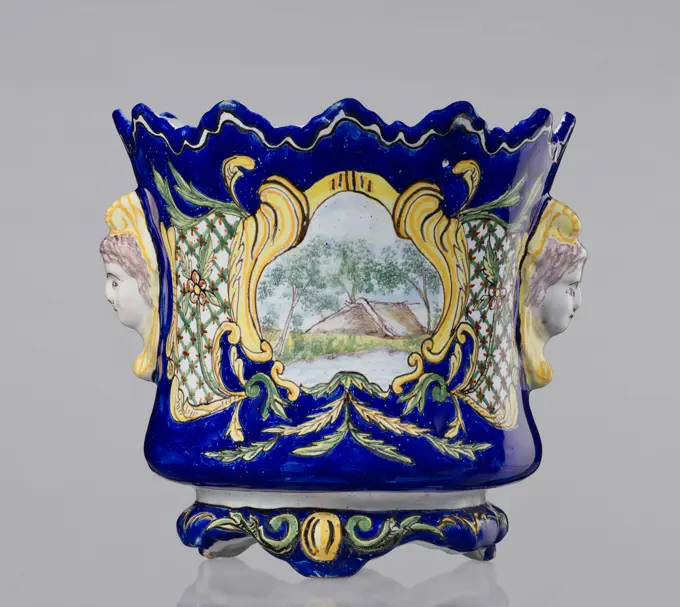
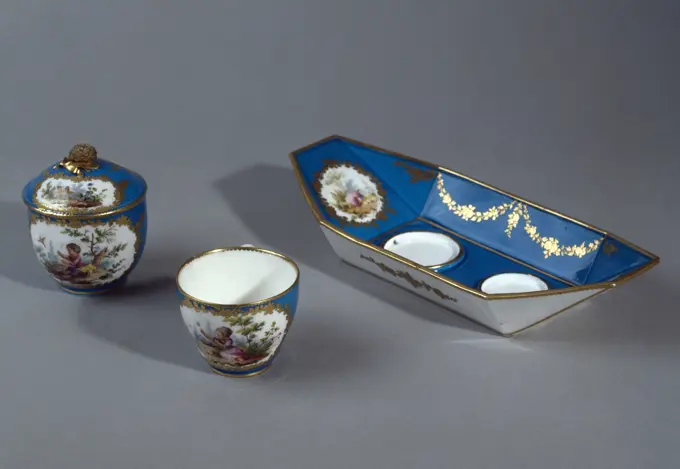
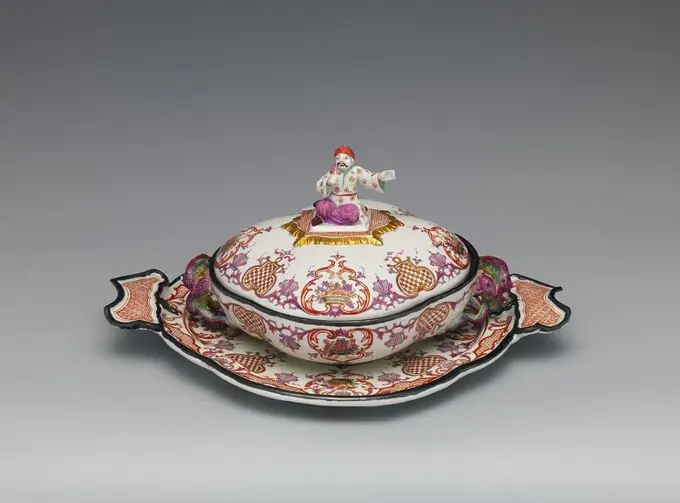
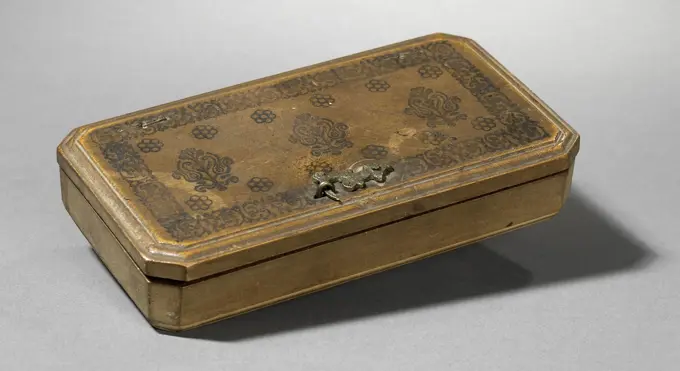
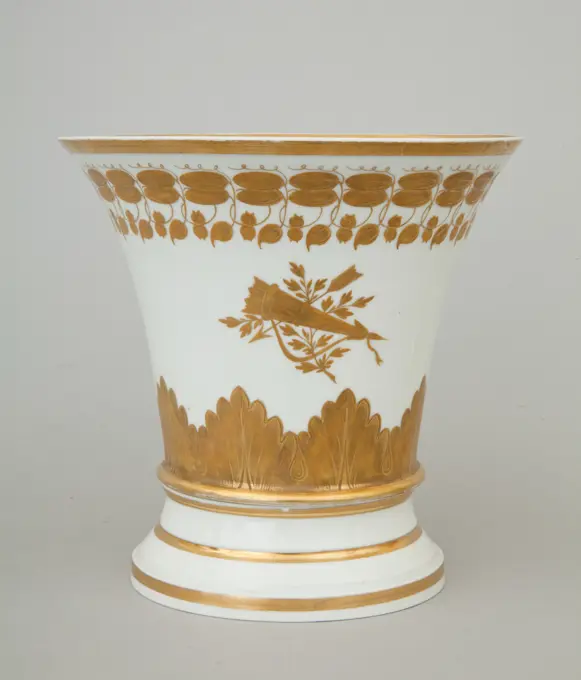
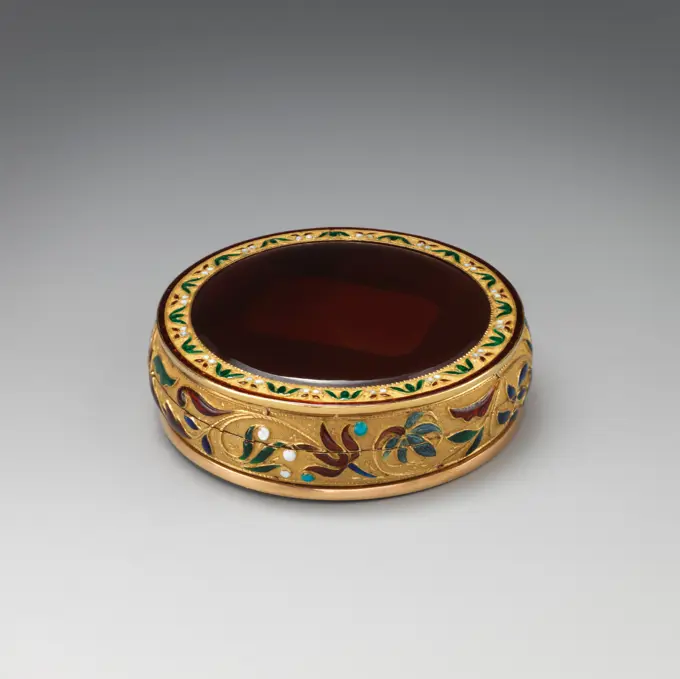
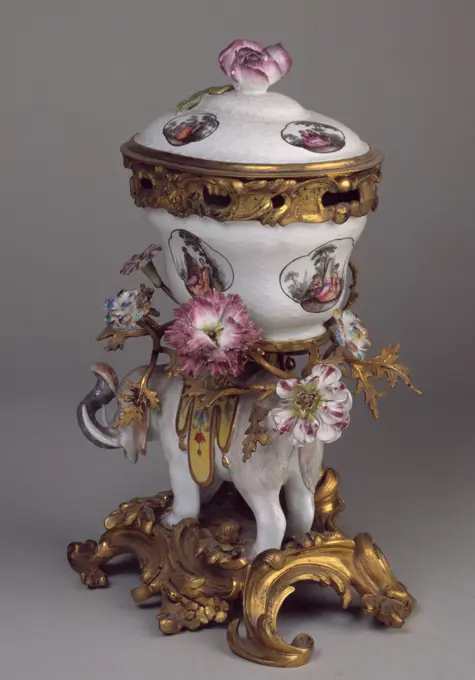
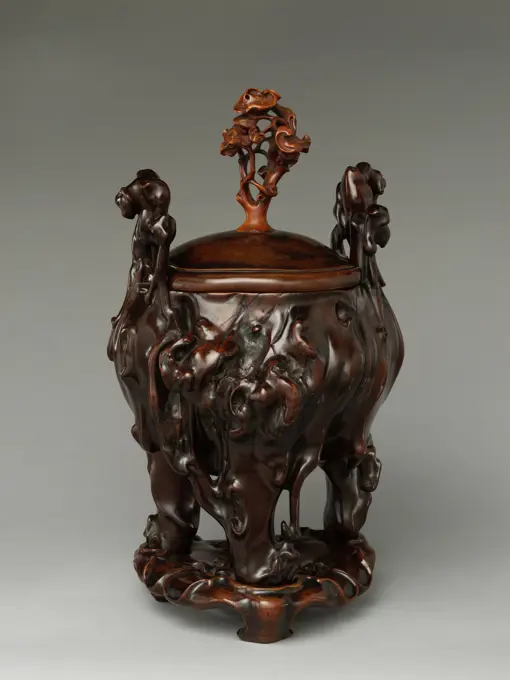
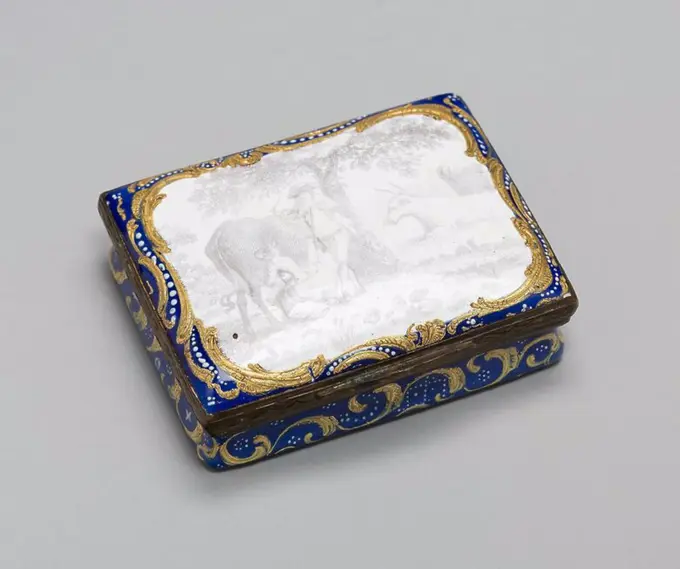
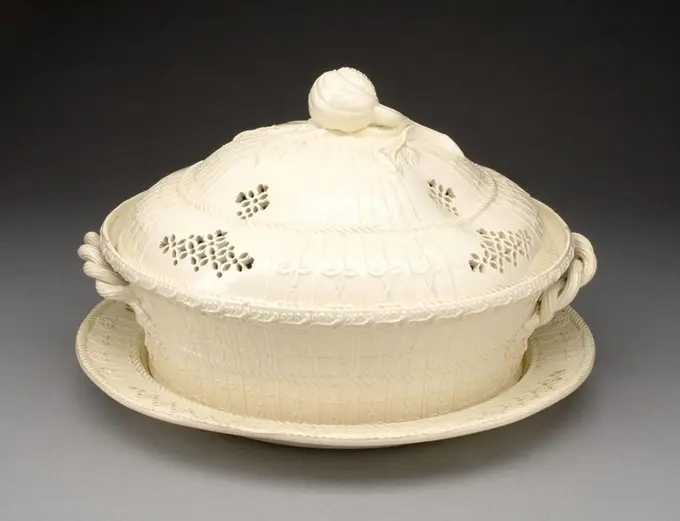
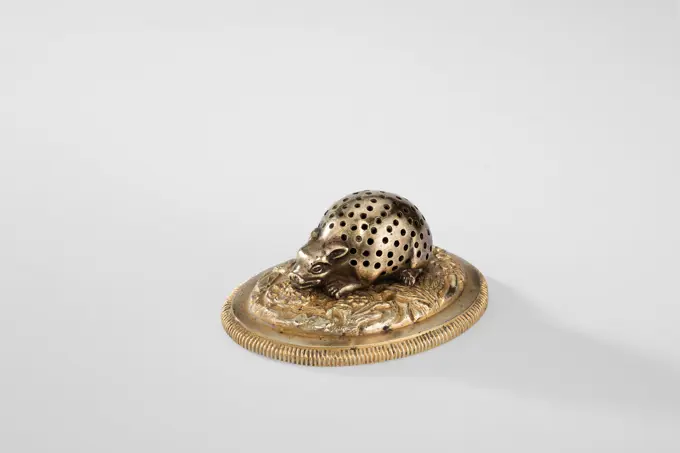
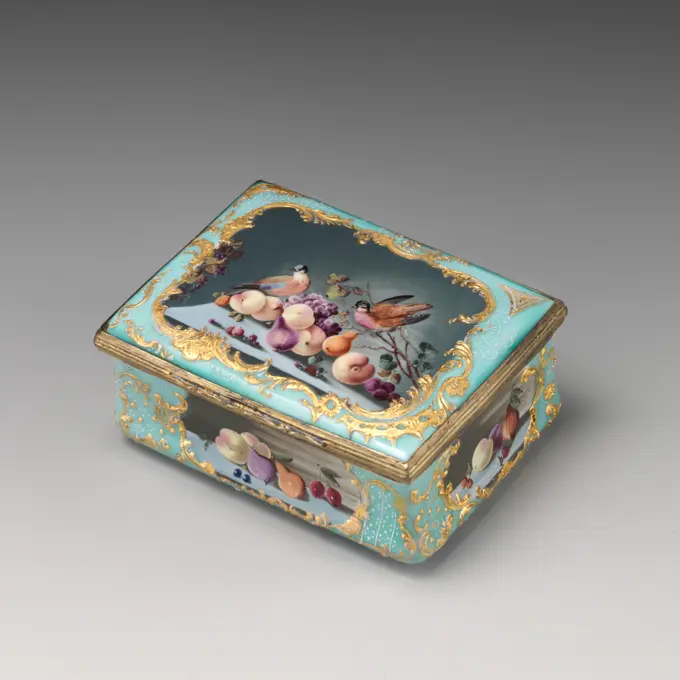
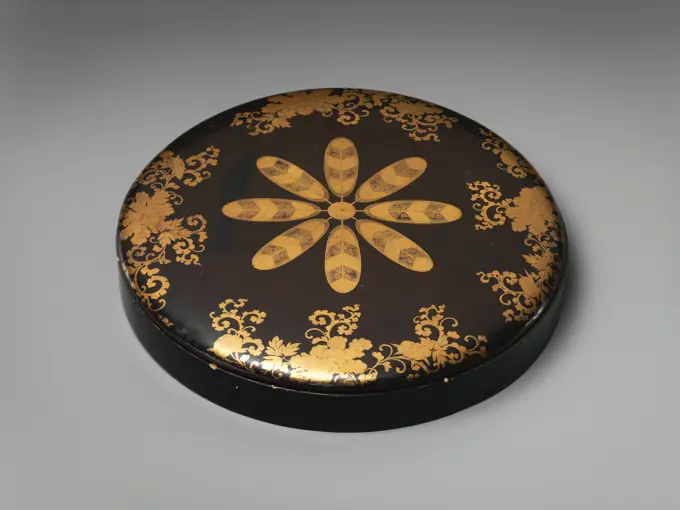
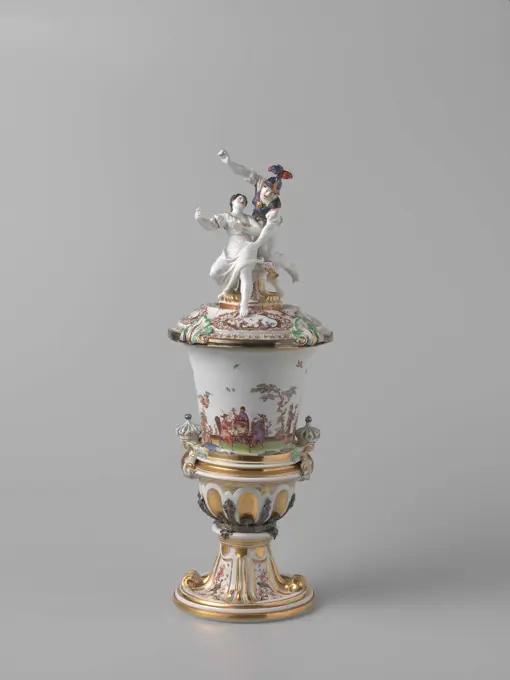
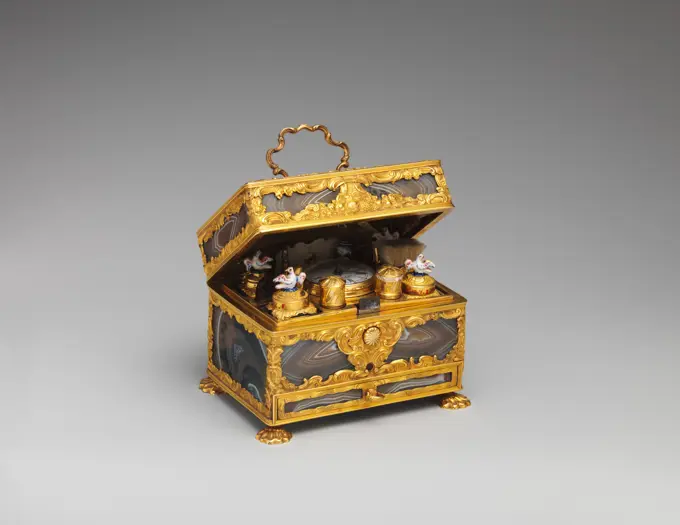
Covered bowl with figures in landscape. Culture: Austrian, Vienna. Dimensions: Overall (confirmed): 6 x 6 3/4 x 6 9/16 in. (15.2 x 17.1 x 16.7 cm). Factory: Vienna. Factory director: Du Paquier period (1718-1744). Date: ca. 1725.The tripod was used in early dynastic China (2nd-1st millennium b.c.) for offerings of food. During the twelfth century, the form was adapted for burning incense. The eighteenth-century Japanese export version was freely adapted at Delft, Meissen, and Vienna, where its "original" purpose was ignored: by eliminating the piercing in the cover and changing the proportions, the incense burner became a bowl for soup or stew, reverting to the tripod's earliest function in China. Museum: Metropolitan Museum of Art, New York, USA.Snuffbox ca. 1785 Swiss The incuse form of the makers mark, a system never used in France, and the appearance of the remaining ones, identify them as “prestige” marks and suggest that the box is one of those made in Switzerland in the last quarter of the eighteenth century in what is considered to be respectful imitation of Parisian boxes. The makers have for the most part remained unidentified; they most probably worked in Geneva, long a center for goldsmithing and enameling associated with the watchmaking industry. No other box with the initials of this maker is known. Although the marks struck on these Swiss boxes were incompatible with French custom and were frequently internally inconsistent, the decorative styles followed Parisian ones closely and accurately. The overall scheme of decoration and the border and enameling details of this box, are so characteristic of the Frenchman Joseph-Étienne Blerzy, about 1781 - 83,(1) that it is quite likely that the design of this box is bas. Round box of stoneware on three short legs, painted on the glaze in blue, red, green, purple, brown, black and gold. Three boxes on the wall: a group of sitting Japanese ladies on a terrace for a pavilion, a group sitting Japanese gentlemen on a terrace for a pavilion, four men and a lady sitting in a landscape. The legs are gilt and modeled from the wall; To the legs a box with napkin. Satsuma.Bowl of a butter dish, faience. Yellow with blue flowers inside.Sugar dot lid decorated with insects. Porcelain lid. Decorated with golden edge, insects in colors and golden spreading flowers. Spherical golden button.Bulb Pot; Probably Royal Worcester (England, GB, United Kingdom); porcelain, polychrome and gilt decorationCovered jar and saucer with flowering plants and floral scrolls, anonymous, c. 1700 - c. 1720 High lid jar on porcelain dish, painted in underly glaze blue and on the glaze blue, red, green, yellow, black and gold. The pot has two S-shaped ears. On the wall of the pot, continuously on the lid, twice a flowering plant on a rock (peony, prunus) interrupted by two tires with flower vines (chrysanthemum). The lid button is modeled in the shape of a squirrel on a leaf with a mountain of grapes (chestnuts). The lid with the same decoration; The outer wall with twice a prunus branch and twice a peon branch. Seven prenes on the bottom. Imari. Japan porcelain. glaze. cobalt (mineral). gold (metal) painting / gilding / vitrification High lid jar on porcelain dish, painted in underly glaze blue and on the glaze blue, red, green, yellow, black and gold. The pot has two S-shaped ears. On the wall of the pot, continuously on the lid, twice a flowering plant on a rock (peony, prunus) interrupted by tLid of tea lid from "canton email", anonymous, c. 1750 The lid has a geometric pattern on the side and a flower on top. China copper (metal). The lid has a geometric pattern on the side and a flower on top. China copper (metal).Tea Service, Manufactuur Oud-Loosdrecht, c. 1774 - c. 1778 Porcelain sugar bowl. Cylindrical, rounded down. On the lid a fruit on branch, as a button. Painted in sepia with figures in a landscape. Along the edges a lilac fries between golden piping. Loosdrecht porcelain Porcelain sugar bowl. Cylindrical, rounded down. On the lid a fruit on branch, as a button. Painted in sepia with figures in a landscape. Along the edges a lilac fries between golden piping. Loosdrecht porcelain. Foot for a square box with four curved paws. Decorated with flower branches and tendrils in gold-hiramakie on a black soil. Note: See also AK-NM-6138.. Meissen porcelain manufactory Meissen, c. 1740 Hard Paste PorcelainKnotted box. Hexagonal knotted box of silver. Serts imaginative representations are engraved on the sides: love, loyalty, caution, flowering, music and fertility.Food Warmer (Veilleuse), c. 1758-1760. Nymphenburg Porcelain Factory (German, founded 1747), probably by Georg Christoph Lindemann (German). Porcelain; overall: 23 x 18.2 x 19.6 cm (9 1/16 x 7 3/16 x 7 11/16 in.).Chest, rectangular, of mother -of -pearl with frame and decoration of gold. On the lid a putto of ivory, driving on a horse of mother -of -pearl, anonymous, c. 1740 Rectangular box of mother -of -pearl with frame and decoration of gold. On the lid a putto of ivory driving on a Pearl Pain. Inside a mother -of -pearl surface with an ornament consisting of three fish in the middle (a fountain). Germany gold (metal). mother of pearl. ivory Rectangular box of mother -of -pearl with frame and decoration of gold. On the lid a putto of ivory driving on a Pearl Pain. Inside a mother -of -pearl surface with an ornament consisting of three fish in the middle (a fountain). Germany gold (metal). mother of pearl. ivoryInkwell Set, 1825-1850. England or America, 19th century. Gilt bronze and glass;Silversmith's Art, England, beginning of 20th century. Sheffield plate inkpot with decoration depicting the Rape of the Sabines, 1900's.Cup with portraits of Philips, count of Flanders and Maria van Hohenzollern-Sigmaringen. The head is painted multi-colored with the portraits of Philips, count of Flanders and his wife Maria von Hohenzollern-Sigmaringen. In addition to the portraits on the heads in biscuit relief Hercules () With the Lion and Europe () With the bull. The ears in the form of a winged figure in biscuit, which holds a glazed coat of arms on the shot with crowned alliance arms of the couple and the meaningful niece Ohne Gott. The head is gold-plated, with an enrolled vermiculé () - pattern. Signature: Scepter with around eagle brand in underglaze blue; Inserted upside down a D. the portraits are signed: a.ambronn. With associated dish (BK-1985-42-a-1).Butter dish and stand, anonymous, 1740 - 1765 Butter fleet (a) with lid (C) multicolored painted. The butter fleet stands on an underpot (B). The button of the lid has the shape of a dog. Delft . Butter fleet (a) with lid (C) multicolored painted. The butter fleet stands on an underpot (B). The button of the lid has the shape of a dog. Delft .Vase. Watano, author, Kutani, manufactureInktpot, Manufactuur Oud-Loosdrecht, c. 1778 - c. 1782 Inkspot. Loosdrecht porcelain Inkspot. Loosdrecht porcelainLid of sand spreader or ink pot, manufacture Oud-Loosdrecht, c. 1778 - c. 1782 Cover with gold piping. Loosdrecht porcelain Cover with gold piping. Loosdrecht porcelainTea Caddy with Cover c 1795 China. PorcelainTobacco jar, anonymous, c. 1730 - c. 1760 Tobacco spot with lid, multi -colored painted with a continuous representation of figures in a landscape. The edges painted with a flower drink. Delft . Tobacco spot with lid, multi -colored painted with a continuous representation of figures in a landscape. The edges painted with a flower drink. Delft .Tureen with cover 1757-59 Edme-Pierre Balzac This tureen belongs to a celebrated silver service that has a long and complex history. Its many components were produced over several decades, and despite the very high quality of all the silver in the service there are no stylistic features that tie the assemblage together. The early history of the service remains obscure; however, it has been suggested recently that a portion may have been purchased by the Saxon court minister Count Heinrich von Brühl (1700-1763), well known for commissioning the so-called Swan porcelain service from the Meissen factory. As the present service was eventually acquired by Louis-Jean-Marie de Bourbon, duc de Penthièvre, and inherited by his grandson Louis-Philippe, duc dOrléans (1773-1850), who was king of the French from 1830 to 1848, it has become known as the Penthièvre-Orléans service and is regarded as the only French royal silver service that survives.This tureen and its mate (now in the Musée du LouvSnuffbox ca. 1760 British, Birmingham, Staffordshire. Snuffbox. British, Birmingham, Staffordshire. ca. 1760. Enameled copper. Enamels-PaintedTureen with cover and plateau ca. 1755-65 () Pont-aux-Choux Faience, or tin-glazed and enameled earthenware, first emerged in France during the sixteenth century, reaching widespread usage among elite patrons during the seventeenth and early eighteenth centuries, prior to the establishment of soft-paste porcelain factories. Although characterized as more provincial in style than porcelain, French faience was used at the court of Louis XIV as part of elaborate meals and displays, with large-scale vessels incorporated into the Baroque garden designs of Versailles. Earlier examples of French faience attest to the strong influence of maiolica artists from Italy. Later works demonstrate the ways in which cities such as Nevers, Rouen, Lyon, Moustiers, and Marseille developed innovative vessel shapes and decorative motifs prized among collectors throughout Europe. While faience can be created from a wide mixture of clays, it is foremost distinguished by the milky opaque white color achieved Handbell, Meissener porcelain manufactory, c. 1735 - c. 1740 Porcelain table bell, multi-colored painted with landscapes and the coat of arms of Ernst Johann Graaf van Biron (1690-1772) and the mirror monogram BGVT of his wife Benigne Gottlieba Trotha, called Von Treyden. The bell is not marked. Float porcelain Porcelain table bell, multi-colored painted with landscapes and the coat of arms of Ernst Johann Graaf van Biron (1690-1772) and the mirror monogram BGVT of his wife Benigne Gottlieba Trotha, called Von Treyden. The bell is not marked. Float porcelainAccording to Carmine Gentili. Putti saucer, Italian majolica of Castelli, 18th century (face). Museum of Fine Arts of the City of Paris, Petit Palais. 27011-18 Angel, Castelli, Ceramic, Child, Faience, Italy, Italian Majolique, Putti saucer. Meissen porcelain manufactory ice cream, c. 1725-1730Hard Paste PorcelainBasket - bottle stand. Kaendler, Johann Joachim (1706-1775), sculptor, Eberlein, Johann Friedrich (1695-1749), sculptor, Koenigliche Porcellain Fabrique, Meissen (1710-1763), factoryDish ca. 1860-66 Chinese, for American market. Dish 3323Snuffbox Jean Frémin French 1756-57 In eighteenth-century Europe, Paris led the production of high-quality luxury goods. Parisian goldsmiths made a wide range of small, personal articles such as snuffboxes; étuis to hold sealing wax, tweezers, or utensils for sewing; souvenirs, which contained thin ivory tablets for note taking; and shuttles for knotting lace. Gold snuffboxes and boxes decorated with portrait miniatures were prized and frequently given as royal gifts, often to ambassadors or members of the court in lieu of cash payments for their services. Coveted and admired, these boxes were produced from a variety of materials. The best were skillfully made of gold and embellished with diamonds, enameled decoration, lacquer, and other luxurious materials. By the middle of the century, the taking of snuff had become an entrenched social ritual, and the snuffbox, too, had become an important social prop. Snuffboxes were considered highly fashionable accessories, with some merchants adTobacco jar.Chestnut vase with bouquets and flower sprays, Fabriek Dominique Denuelle, c. 1839 Kastanjevaas with holder and lid of porcelain with a cylindrical body, spreading edge, four claw feet and two handles in the shape of a lion's head. Painted on the glaze in blue, red, pink, green, yellow, purple, black and gold. Decorated with bouquets of different flowers and sprinkling flowers. The holder has a profile under the edge with which it can be placed in the vase. Cover button in the form of a pineal. Marked on the bottom with 'Denuelle/ Boulevard St. Denis 18/ à Paris'. Paris porcelain. glaze. gold (metal) painting / gilding / vitrification Kastanjevaas with holder and lid of porcelain with a cylindrical body, spreading edge, four claw feet and two handles in the shape of a lion's head. Painted on the glaze in blue, red, pink, green, yellow, purple, black and gold. Decorated with bouquets of different flowers and sprinkling flowers. The holder has a profile under the edge with which it can bCovered Box. Culture: China. Dimensions: H. 3 1/2 in. (8.9 cm); Diam. 4 1/2 in. (11.4 cm). Date: 18th century. Museum: Metropolitan Museum of Art, New York, USA.Tureen, porcelain, gold, China, late 18th century, ceramics, Decorative Arts, tureen, tureenWine cooler Chinese, for Portuguese market 19th centuryVase with flowers, scrolls and birds, anonymous, c. 1800 - c. 1899 Four -sided vase of porcelain with scalloped corners and four claw legs resting on a base. Painted on the glaze in blue, salmon color and gold. On the walls, against a blue background, twice a medallion with shell shapes with flowers saved in a salmon -colored background and twice a garland worn by (horses) Heads, above which a bird. Ranks between these decorations. On the edge a band with tenders and diamond motifs. The side of the basement with leaf vines against a blue background and on the top a similar decoration as on the edge against a salmon -colored background. France porcelain. glaze. gold (metal) painting / gilding / vitrification Four -sided vase of porcelain with scalloped corners and four claw legs resting on a base. Painted on the glaze in blue, salmon color and gold. On the walls, against a blue background, twice a medallion with shell shapes with flowers saved in a salmon -colored background and twice aCache-pot with a Dutch type Manufaktura Majoliki in Nieborów (Nieborów; Wytwórnia; 1881-1899); 1881-1886 (1881-00-00-1886-00-00);flowerpot made of multi -colored fowence, with underpotel, the Lampetkan, c. 1750 - c. 1775 Flowerpot of multicolored painted faience on a yellow stock. The flowerpot consists of a vase and a dish in Louis Xvde style. The flowerpot and the dish are decorated with tulips and daisives and marked with the letters LPK. The flowerpot includes an identical copy with InvNR. BK-NM-11351-A. Delft earthenware. tin glaze. Flowerpot of multicolored painted faience on a yellow stock. The flowerpot consists of a vase and a dish in Louis Xvde style. The flowerpot and the dish are decorated with tulips and daisives and marked with the letters LPK. The flowerpot includes an identical copy with InvNR. BK-NM-11351-A. Delft earthenware. tin glaze.Micro-mosaic, Gold sheet and wire, glass mosaics, A gold oval brooch outlined in blue with an inner image of the Pantheon in Rome. Brooch is part of a set., Rome, Italy, 1800-1825, jewelry, Decorative Arts, Brooch, BroochSwan of multicolored painted porcelain, anonymous, c. 1750 Swan of multicolored painted porcelain, on pedestal with plastic leaf decorations in blue -green, green and yellow. The swan has a ring of gilded bronze around the neck. The swan in marked. maker: Parisporcelain company: MeissenMeissenporcelain company: Vincennesporcelain company: Sèvres porcelain. bronze (metal) gilding Swan of multicolored painted porcelain, on pedestal with plastic leaf decorations in blue -green, green and yellow. The swan has a ring of gilded bronze around the neck. The swan in marked. maker: Parisporcelain company: MeissenMeissenporcelain company: Vincennesporcelain company: Sèvres porcelain. bronze (metal) gildingSalt 1740-45 Charles Le Roux American. Salt 7088Ink stand with flower roundels, anonymous, c. 1750 - c. 1799 Ink set of stoneware with a pen box and two holders for the ink jar and the sand spreader. Partly covered with cobalt blue. All outside sides are decorated with a relief of printed and imposed flower straws surrounded by four circles and separated by a vertical leaf branch. On all corners at the top a modeled 'Klinknagel'. Westerwald. Westerwald stoneware. glaze. cobalt (mineral) vitrification Ink set of stoneware with a pen box and two holders for the ink jar and the sand spreader. Partly covered with cobalt blue. All outside sides are decorated with a relief of printed and imposed flower straws surrounded by four circles and separated by a vertical leaf branch. On all corners at the top a modeled 'Klinknagel'. Westerwald. Westerwald stoneware. glaze. cobalt (mineral) vitrificationOval box with cover. Culture: German, Augsburg. Dimensions: Width: 6 1/4 in. (15.9 cm). Maker: Gottlieb Satzger (ca. 1709-1783, master 1746). Date: 1749-51. Museum: Metropolitan Museum of Art, New York, USA.Bowl and lid, Earthenware, Bulbous two-handled footed bowl. Bowl is white with row of pearls on foot in blue, blue handles, and pearls under rim. Lids finial is six-footed curled element second element on top in blue, yellow, and red., Switzerland, 18th century, ceramics, Decorative Arts, Bowl and lidVase. The broad, straight-sided belly, strict linearity and rams heads on this vase are typical features of Neoclassicism. The Loosdrecht porcelain factory worked increasingly in this style over the course of its existence. This vase is one of a pair that probably graced a chimneypiece.Box. Bohemia, Czech Republic. Date: 1725-1735. Dimensions: 14.6 × 7.3 cm (5 3/4 × 2 7/8 in.). Glass panels mounted with brass. Origin: Bohemia. Museum: The Chicago Art Institute, Chicago, USA.Candyer with lid; Gotzkowsky-Manufaktur; around 1763/65 (1763-00-00-1765-00-00);Beaker, before 1720. Meissen Porcelain Factory (German). Porcelain, interior gilded; diameter: 5.5 cm (2 3/16 in.); overall: 9.1 x 6.9 cm (3 9/16 x 2 11/16 in.).LapBranches; New brothers (porcelain factory; 1818-1850); around 1840 (1835-00-00-1845-00-00);Cache-pot. Nieborów (manufaktura majoliki ; 1881-1899), factorySugar bowl, the ribs alternately blue and white, separated by golden piping. Sugar bowl with lid. Ribbed, the edges serrated. The ribs separated by vertical golden piping. Dark blue caves (Blue du ROI), the ribs white, on which a decoration of leafwork and braid band. The edges gilt, gilt inside serrated. Marked in underglaze blue.Cilidrical covered box in The Shape of a Cricket's Cage. Cylindrical box of porcelain on three legs and held together in the form of a crinkle cage by three modeled cords, ending in a raised button as a lid knob. Painted in underglaze blue and on the glaze red, green, yellow and black. The lower half of the box with waves, birds and flower branches; The upper half has been modeled in railing with a floral drink in each compartment. On the lid railing with loose flowers. Imari.Box. Manufacturer: Pairpoint Manufacturing Company, 1880-1958Sugar canister ca. 1770 British, South Staffordshire. Sugar canister. British, South Staffordshire. ca. 1770. Enamel on copper. Enamels-PaintedSpoon tray with a pheasant on a rock and flower scrolls, anonymous, c. 1725 - c. 1749 Pattipan of porcelain, rectangular and hexagonal with lobed wall, painted on the glaze in blue, pink, green, yellow, black and gold. On the flat a leaf -shaped cartouche surrounded by flower branches, containing a pheasant on a rock in flowering plants; On the flat and wall servetwork in Encre de Chine; The inner edge with a band of flower vines. Underside unglazed. A crack in the wall. European forms with Famle Rose. China porcelain. glaze. gold (metal) painting / gilding / vitrification Pattipan of porcelain, rectangular and hexagonal with lobed wall, painted on the glaze in blue, pink, green, yellow, black and gold. On the flat a leaf -shaped cartouche surrounded by flower branches, containing a pheasant on a rock in flowering plants; On the flat and wall servetwork in Encre de Chine; The inner edge with a band of flower vines. Underside unglazed. A crack in the wall. European forms with Famle RoseAndré-Vincent Vielliard. Boat lunch service, Sèvres Manufacture. Porcelain, 1758. Paris, Cognacq-Jay museum. 35787-8 Boat, Ceramic, Gobelet, Manufacture de Sevres, Lunch service, dishes, dishMulticolored Painted Basket of Faïence. Basket of faïence. Muchic painted with a landscape on the bottom.Small tureen and stand. Culture: Austrian, Vienna. Dimensions: Tureen with cover (.15ab): H. 5-1/8 in. (13 cm.); Diam. 8-1/2 in. (21.6 cm.); Tray (.16): H. 1-1/8 in. (2.9 cm.); W. 11-7/8 in. (30.2 cm.). Factory: Vienna. Factory director: Du Paquier period (1718-1744). Date: 1730-35.Although mostly used to ornament borders, Laub- und Bandelwerk designs could also be the principal decorative motif, as on this small tureen and stand, where the effect is almost that of cagework over the porcelain. Both gilding and silvering--another characteristic feature of Du Paquier porcelain--were employed to further enrich the object, and the cover is crowned with the figure of a Turk seated on a cushion and rug, a favorite motif of the manufactory. Museum: Metropolitan Museum of Art, New York, USA.Box with inscription: 1544 Hans Rensoen van Deventer and his own brand, Unknown, in or before 1544 The rectangular object is composed of eight parts: the bottom and the lid with the two browned finely profiled edges, and the four sides. On the lid and on the front and back, Moresken surround medallions with the heads of a man with a crown, a man with a helmet and a woman with a diadem engraved. The sides are equipped with engraved moresken. On the outside of the soil is engraved: 1544 Hans Rensoen van Deventer and his private label. Neurenberg (possibly) brass (alloy) engraving The rectangular object is composed of eight parts: the bottom and the lid with the two browned finely profiled edges, and the four sides. On the lid and on the front and back, Moresken surround medallions with the heads of a man with a crown, a man with a helmet and a woman with a diadem engraved. The sides are equipped with engraved moresken. On the outside of the soil is engraved: 1544 Hans Rensoen van DeventeCandlestick, multicolored painted with a kakiemon decor, meissener porzellan manufaktur, c. 1730 - c. 1735 Octagonal candlestick of painted porcelain. The candlestick has a vaulted foot and a profiled, baluster -shaped tribe. The painting consists of sprinkling flowers and twice the tiger for bamboo motif and twice a crane. The candlestick is marked. Float porcelain Octagonal candlestick of painted porcelain. The candlestick has a vaulted foot and a profiled, baluster -shaped tribe. The painting consists of sprinkling flowers and twice the tiger for bamboo motif and twice a crane. The candlestick is marked. Float porcelainMint weights with balance, Jacob L'Admiral (II), 1755  12 Copper mint weights with iron balance with copper bowls and 7 remedy weights in wooden box, v.z.v. label. 1 Guiny 8.25 G ½ Guiny 4.11 G 1 Ryder 9.95 G ½ Ryder 4.99 G 1 Ducaat 6.99 G ½ Ducaat 4.48 G 1 Ducaton 11.03 G ½ Ducaton 5.51 G 2 Pistol 13.46 g 1 gun 6.70 g ½ gun 3.34 g 4 gun 26.91 g Amsterdam Box: Wood (Plant Material). Balance: Iron (Metal). Scales + Weight: Copper (Metal)   NetherlandsCache KorzecTerracotta tripod pyxis (box). Culture: Greek, Corinthian. Dimensions: H. of vase 2 5/8 in. (6.7 cm); H. of vase with cover 4 3/4 in. (12.1 cm); H. of cover : 2 5/16 in. (5.9 cm). Date: ca. 620-590 B.C..On each leg, woman between sphinxesOn the lid, woman among animalsThe tripod pyxis is known in Corinth, Attica, and Boeotia where it seems particularly at home. This example has been singled out as one of the best surviving examples from Corinth. Museum: Metropolitan Museum of Art, New York, USA.Sugar Bowl 1781 Sèvres. Bird painting has always been popular at SËvres. The birds (oiseaux) on this sugar bowl are drawn from engravings in Histoire naturelle des oiseaux, an 18th-century natural history treatise by the French naturalist Georges-Louis Leclerc, comte de Buffon (1707ñ1788). These engravings were first used as source material at SËvres in 1781.. Hard-paste porcelain, polychrome enamels, gilding . Manufacture nationale de Sèvres (Manufacturer)Lid, painted multi-colored with a landscape with animals. Lid of faïence, painted multi-colored with a landscape with animals. The lid is donated together with a tobacco jar (B). The lid and the pot originally do not belong together.Circular box 1809-19 French Very popular throughout the eighteenth century, boxes made of precious metal continued to be fashionable after the French Revolution as is well illustrated by this enameled and gold box with its agate stone used for the cover. It is smaller than most snuffboxes and it is possible that it was used for the storage of pastilles or other delicacies.. Circular box. French. 1809-19. Gold, enamel, carnelian. Metalwork-Gold and PlatinumVegetable Dish, Cover And Plate; lead-glazed earthenware ("cream ware")Peach bloom' Vessel for the Scholars Desk, 1662-1722, 3 3/8 in. (8.57 cm), Porcelain with peachbloom glaze, China, 17th-18th centuryJohann-Joachim Kaendler and Peter Reinicke. "Elephant wearing a pot-pourri (seen from behind)". Paris, Cognacq-Jay museum. 25925-15 Behind, Elephant, Meissen Manufacture, object, Pot-PourriWhite with gold teapot and cup in cathedral-shaped holder, teapot tea cup cup crockery holder ceramic porcelain glaze h 11.0, Light construction: church portal neogotic Potty: rectangular base with three-spouts spout and ear. Lid: rectangular with button crown birth neo-gothicSugar spreader, painted with flowers. Sugar spreader Purple painted with flowers. Signature a 2.Four Lobde Tea Pot With Flowering Plants. Four times lobed teapot from porcelain on four short feet, with curved spout and upstream handle and gold-plated bronze frame, painted on the glaze in turquoise, green, yellow, eggplant and black. The wall is divided into four compartments with a cartouche with blooming plants saved in a colored background. In the box to the spout a flourished, yellow background with dots; Bamboo branches in the cartouche. In addition, a turquoise background with curl work with a grasshopper on astertracks in the cartouche. The third box with a green background with pine and dots with piping branches. In the fourth an aubergine background with asters and curly, with a grasshopper in the cartouche on peekanjers at a rock. On the shoulder a bond with leaf raft. The edge with a tire curly. On the lid flower drinks. The spout with bamboo branches and the handle imitates a bamboo roof. Lid has been broken. Famille Verte.Maker Unknown, Chestnut Bowl from the George Washington Memorial Service, c. 1800, porcelain, enamel, and gilding.Tobacco spot, painted with scenes from Landleven, Anonymous, 1769 Tobacco spot with lid and intermediate cover from Faïence, elongated with scalloped corners, painted in blue with medallions with landscapes and flower edge. The lid has a multi -colored sitting figure as a button Delft . Tobacco spot with lid and intermediate cover from Faïence, elongated with scalloped corners, painted in blue with medallions with landscapes and flower edge. The lid has a multi -colored sitting figure as a button Delft .Pair of bases 1787-1805 William Adams. Pair of bases. British, Greengates, Tunstall, Staffordshire. 1787-1805. Jasperware, gilt-bronze mounts. Ceramics-PotteryCasket in the shape of the good fortune ruyi" sceptre with lid. unknown, craftsmanLady with dog. Culture: British, Chelsea. Dimensions: 2 1/8 × 1 3/4 in. (5.4 × 4.4 cm). Factory: Chelsea Porcelain Manufactory (British, 1745-1784, Red Anchor Period, ca. 1753-58). Date: ca. 1755. Museum: Metropolitan Museum of Art, New York, USA.Vase, one of a pair, 16 15/16 x 12 11/16 x 10 3/8 in. (43.02 x 32.23 x 26.35 cm), Glazed porcelainIncense burner China late 18th century This massive tripod incense burner is a rare example of Chinese rootwood carving. Known as natural wood (tianran mu),” such objects sought to evoke a rustic lifestyle by accentuating the irregularities inherent in rootwood in preference to the regular surfaces of most manmade objects. Such natural wood” furnishings were highly appreciated among the literati, who celebrated the notion of living in harmony with nature. Carved out of a single piece of rootwood. Its gnarled exterior preserves the knobbly texture of the root ball’s original contorted growth. But the vessel’s highly polished surface underscores its refinement and suggests that some of the irregularities may have been artfully enhanced to accentuate the sought after rustic appearance. The tripod’s domed cover and stand were both carved from rosewood in irregular shapes that harmonize with the vessel’s form. The knob on the cover, carved from boxwood, takes the shape of a magic fungus (Snuff Box. Bilston or Birmingham, England. Date: 1755-1765. Dimensions: 2.3 × 7.5 × 6 cm (7/8 × 2 15/16 × 2 3/8 in.). Blue and grisalle enamel and gilding on copper with metal mounts. Origin: Bilston. Museum: The Chicago Art Institute, Chicago, USA.Chestnut Basket and Stand. Leeds Pottery; English, founded 1756. Date: 1785-1795. Dimensions: H. 17.8 cm (7 in.); diam. 28 cm (11 in.). Lead-glazed earthenware (creamware). Origin: Yorkshire. Museum: The Chicago Art Institute, Chicago, USA.Pick stand - hedgehog. unknown, foundry companySnuff Box, c. 1750. Attributed to Johannes George Klette, Carl Gustav Klingstedt (Swedish, 1657-1734). Gold-mounted carved bloodstone ; overall: 4.1 x 7.6 x 7.3 cm (1 5/8 x 3 x 2 7/8 in.).Snuffbox ca. 1760-1800 British, Staffordshire. Snuffbox. British, Staffordshire. ca. 1760-1800. Enameled copper. Enamels-PaintedBandbox (USA); block-printed paper, pasteboard support; 38 x 31 x 28 cm (14 15/16 x 12 3/16 x 11 in.)Mirror Box (Kagami-bako) with Feather Crest and Peony Scrolls Japan Originally, the lid of this mirror box was most likely a cover for a three-legged, portable food container (hokai) used by a daimyo (feudal lord) during a procession. The finely executed lid with gold maki-e (sprinkled picture”) decoration is embellished with a family crest (a whorl of eight hawk feathers) surrounded by an elegant peony scroll pattern. The crest belonged to a branch of the Inoue family, lords of Mikawa Province (present-day Aichi Prefecture) and close allies of the Tokugawa shoguns. The lid was later made into a box to hold a large Kamakuraperiod mirror.. Mirror Box (Kagami-bako) with Feather Crest and Peony Scrolls. Japan. Lacquered wood with gold hiramaki-e on black lacquer ground; bronze mirror. Box: Edo period (1615-1868), 18th century; Mirror: Kamakura period (1185-1392). Lacquer. Meissen porcelain manufactory model attributed to Johann Gottlieb Kirchner (1706 after 1738) Meissen, c. 1727Hard Paste Porcelain, Silver applies. Half cylindrical fountain with hinged cover and a tap. On the rear wall there is a cut-away top piece with volutes and a wearing eye. The wall and the lid are decorated with engraving. The fountain has been marked twice with a boar cup.Nécessaire mid-18th century Watchmaker: Joseph Martineau, Sr. This nécessaire, fitted with a drawer below, contains a variety of toilet, sewing, and writing implements as well as a watch. It was part of the collection of English goldsmith work belonging to Admiral Frederic Harris, a noted philatelist and engineer known for his design of floating dry docks. Listen to experts illuminate this artwork's story Listen Play or pause #413. Retail Value. High and Low Supported by Bloomberg Philanthropies We're sorry, the transcript for this audio track is not available at this time. We are working to make it available as soon as possible.. Nécessaire 199768Snuffbox 1753-56 British, London (Battersea). Snuffbox. British, London (Battersea). 1753-56. Enameled copper. Enamels-PaintedPillow ". Terracotta with yellow and green glaze. Paris, Cernuschi museum. Chinese art, Chinese ceramic, yellow glacide, pillow, terracotta, hole, greenCachepot (France); molded and tin-glazed earthenwarePyx , c.1300. Austria, probably Salzburg, 14th century. Silver and gilt silver; diameter: 4.8 x 7.8 cm (1 7/8 x 3 1/16 in.). A pyx is a container designed to hold the consecrated Eucharist wafers between masses. It was probably used by the clergy to administer communion to the sick and dying; its small size made it easily portable. The decoration relates to similar liturgical objects made in the ecclesiastical and artistic center of Salzburg for the cathedral treasury of that city.Toilet box with rocailles in relief, the inside painted with figures in a river landscape, manufacture Oud-Loosdrecht, c. 1778 - c. 1782 Porcelain toilet box. On the body on buttons hanging draperies in relief, around which rocailles are painted in beet red. On the lid a vase -shaped button, around which an oval rosette in relief. Rocailles in beet are painted red around this rosette. The inside of the lid is painted with figures in a river landscape with church tower in beet red. Golden Biezen. Loosdrecht porcelain Porcelain toilet box. On the body on buttons hanging draperies in relief, around which rocailles are painted in beet red. On the lid a vase -shaped button, around which an oval rosette in relief. Rocailles in beet are painted red around this rosette. The inside of the lid is painted with figures in a river landscape with church tower in beet red. Golden Biezen. Loosdrecht porcelainBandbox, Block-printed on paper, pasteboard support, Yellow field, with macaws in blue, brown and white and branches of the same color., USA, ca. 1830, Wallcoverings, BandboxWall Facing (Netherlands); tin-glazed earthenware, underglaze; 5 tiles tall, various wideTwo Heart -Shaped Dish (two of two). Humphrey Chamberlain, Jr. (England, Worcester, 1791-1824). England, 1807-1811. Furnishings; Serviceware. Porcelain