Painted Cups and Bowls

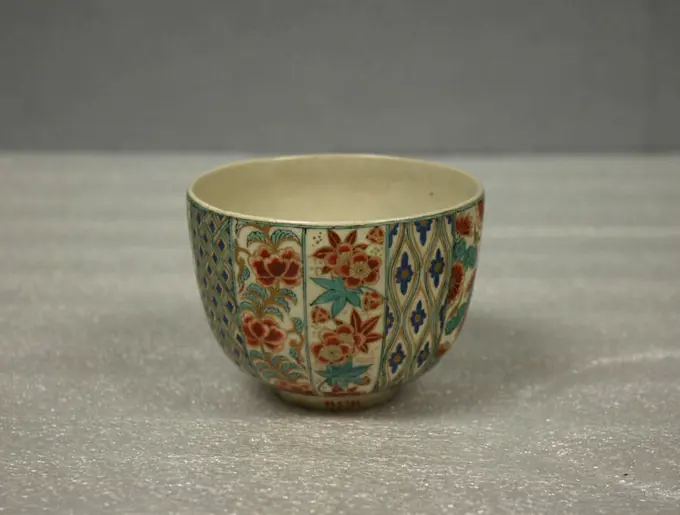
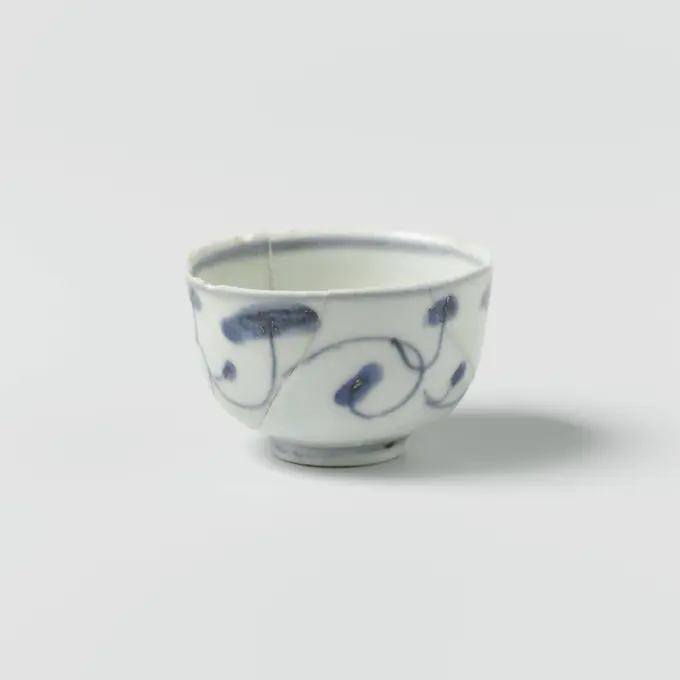
Assorted porcelain cups and bowls featuring artistic floral designs and intricate color patterns, highlighting elegant beverage and dining ware.

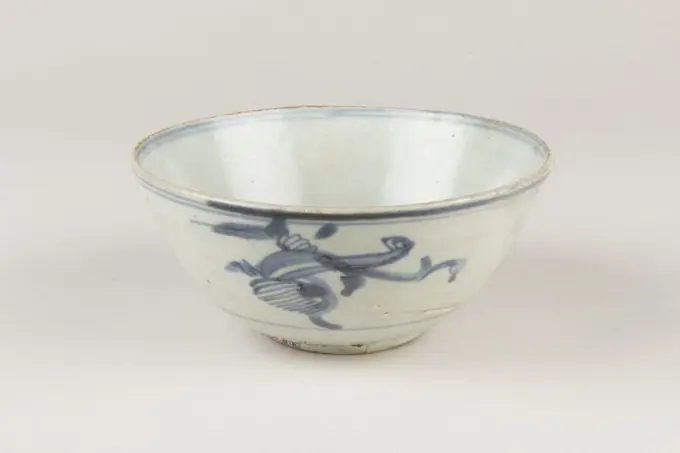
Bowl with the Eight Taoïst Immortals, anonymous, c. 1700 - c. 1724 Come from porcelain with petal-shaped compartments modeled in the wall and scalloped edge, painted in underlaze blue. Around the foot a tire of petal shaped compartments with alternating a flower branch and flour with tendrils, above it the eight Taoist immortal; A sitting man on the bottom; The inner edge with Ruyi motif and curl. Marked on the underside of the bowl with the six-character brand of Keizer Chenghua. Blue White. China porcelain. glaze. cobalt (mineral) painting / vitrification Come from porcelain with petal-shaped compartments modeled in the wall and scalloped edge, painted in underlaze blue. Around the foot a tire of petal shaped compartments with alternating a flower branch and flour with tendrils, above it the eight Taoist immortal; A sitting man on the bottom; The inner edge with Ruyi motif and curl. Marked on the underside of the bowl with the six-character brand of Keizer Chenghua. Blue White. China
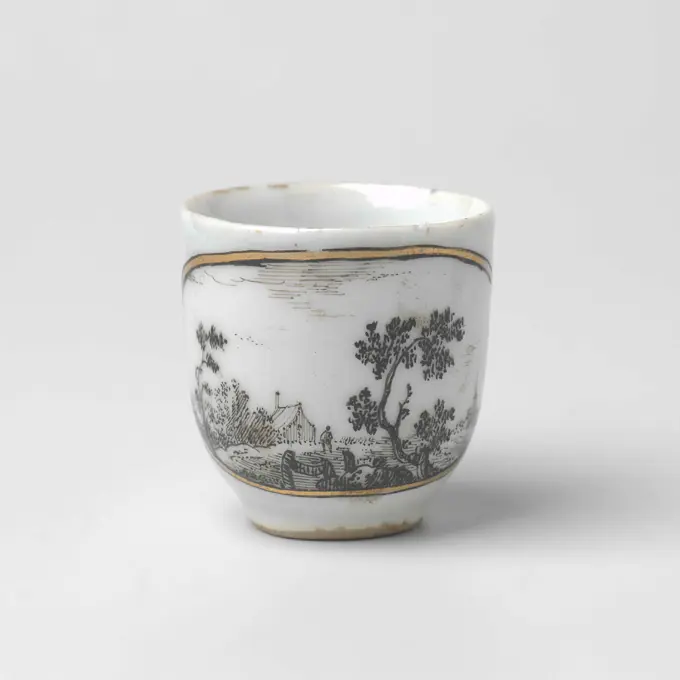
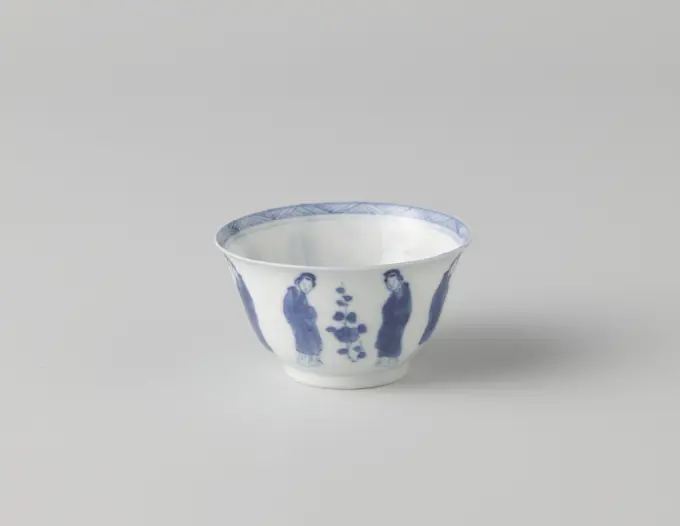
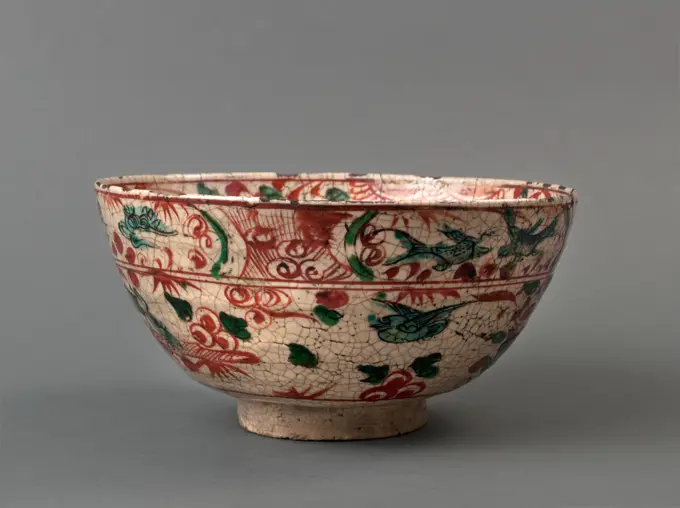
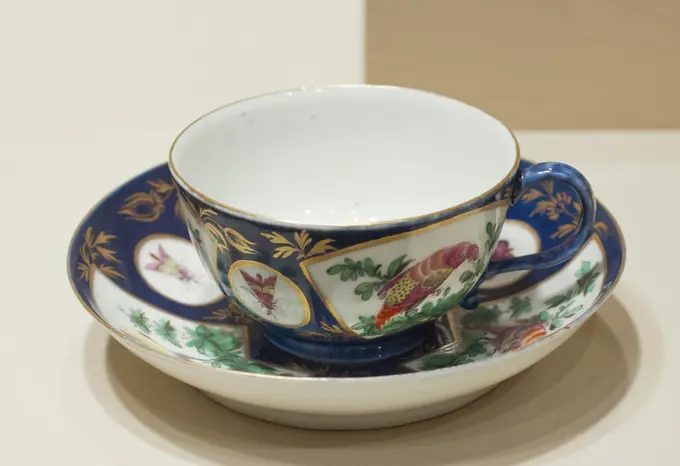
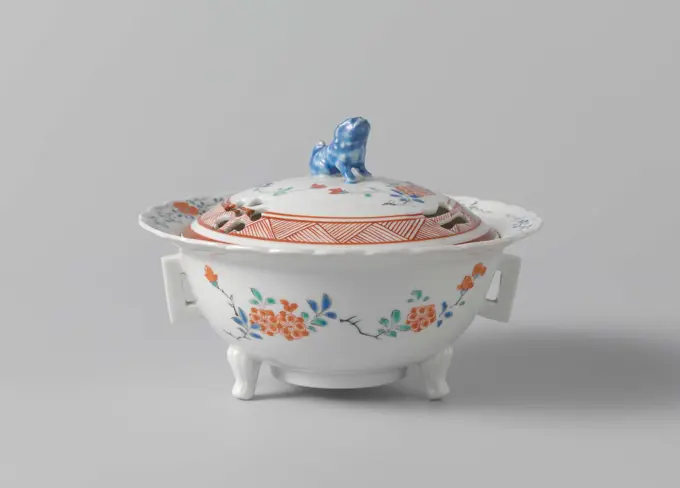
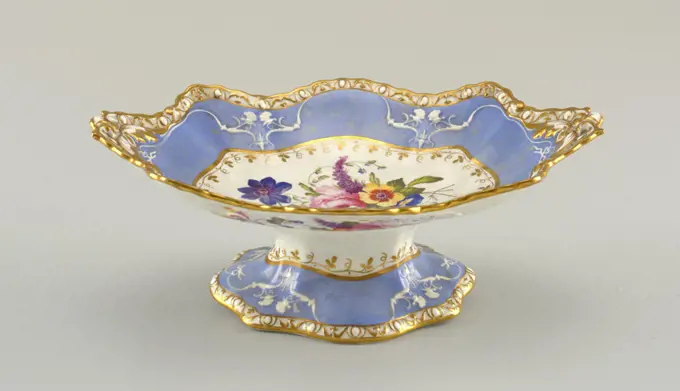
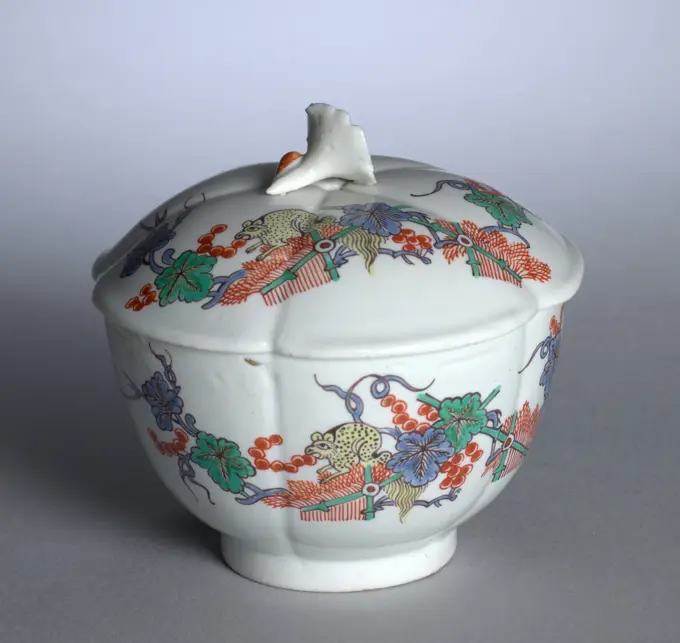
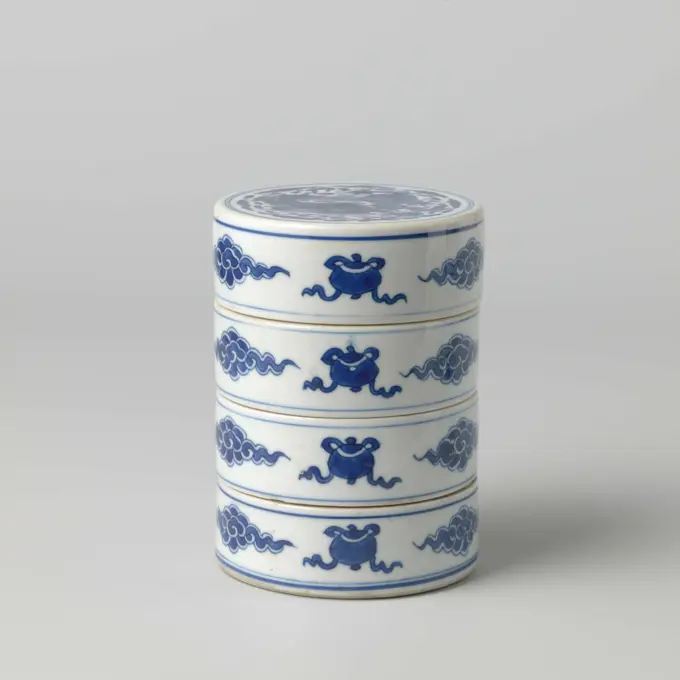
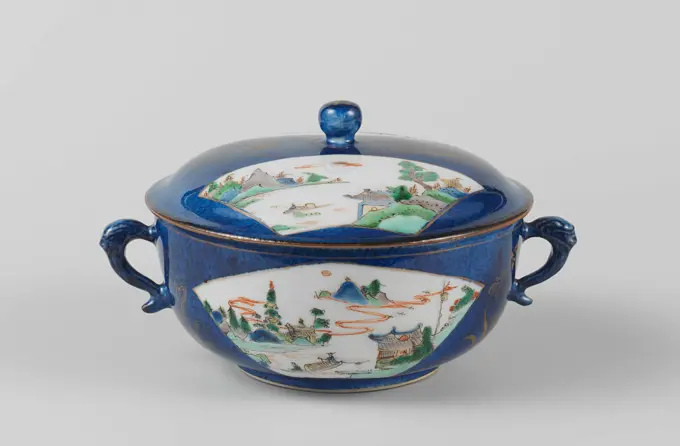
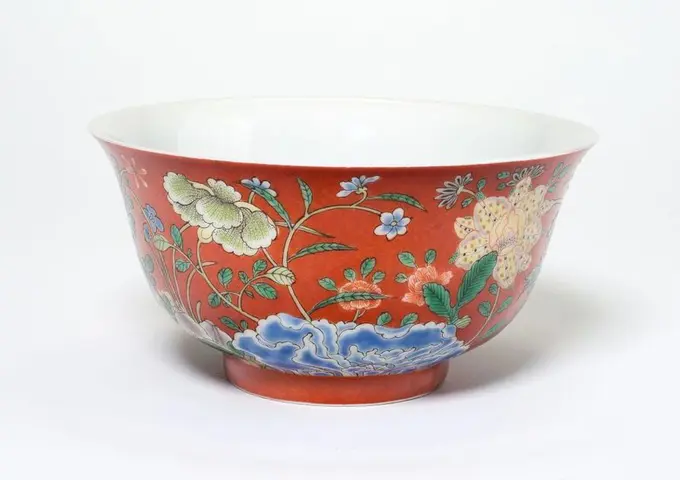
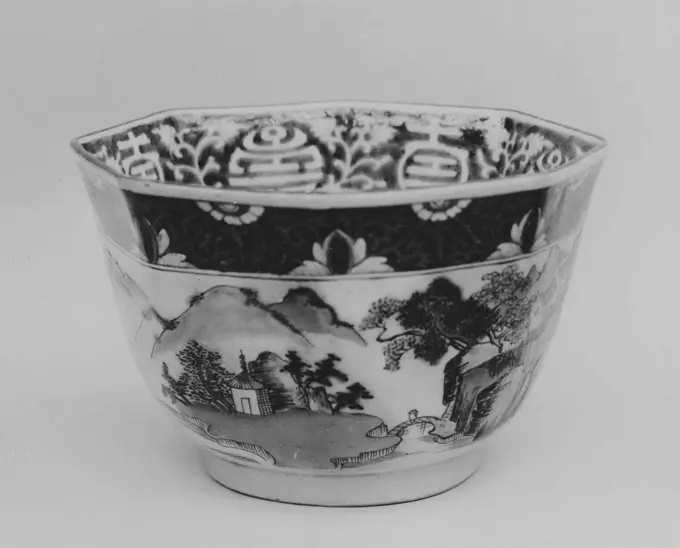
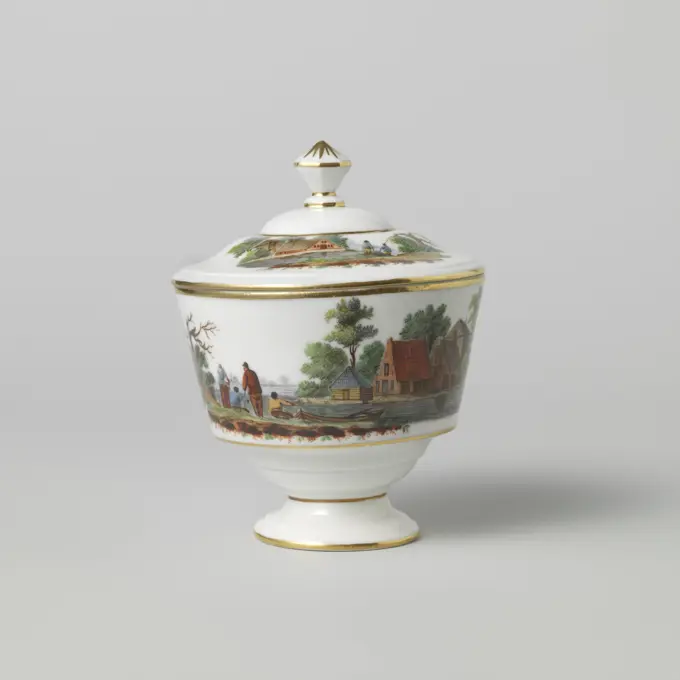
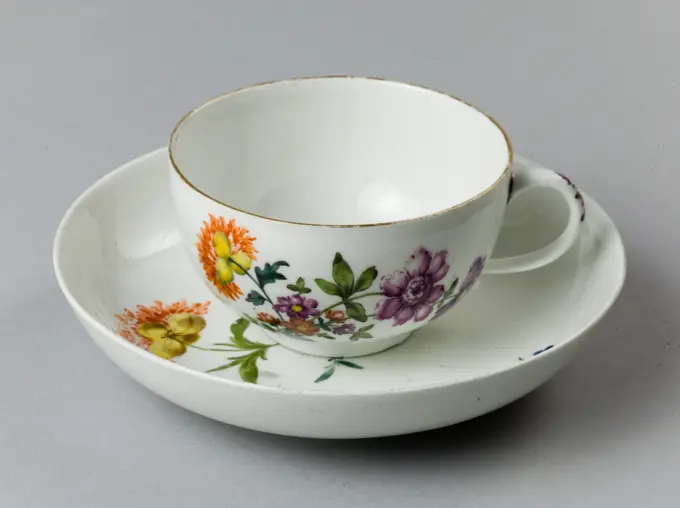
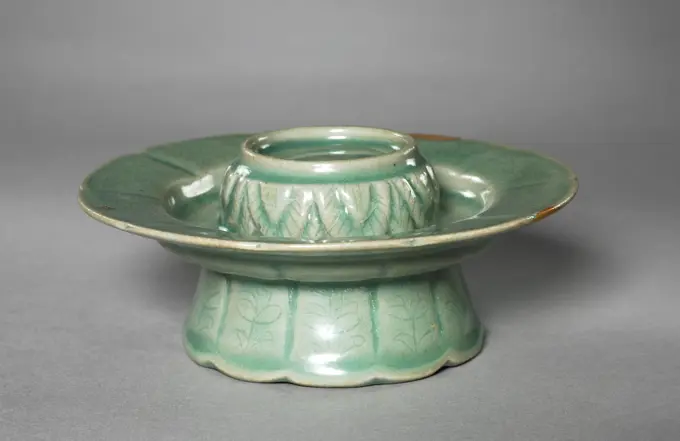
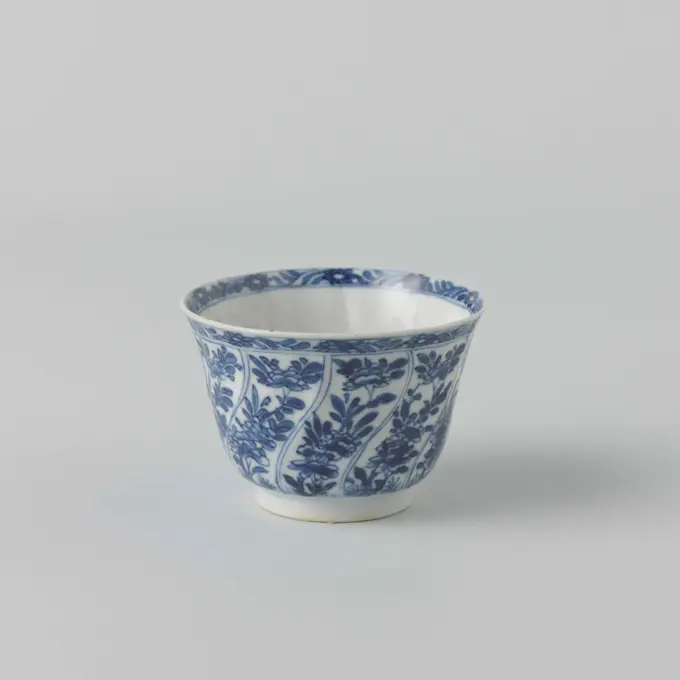
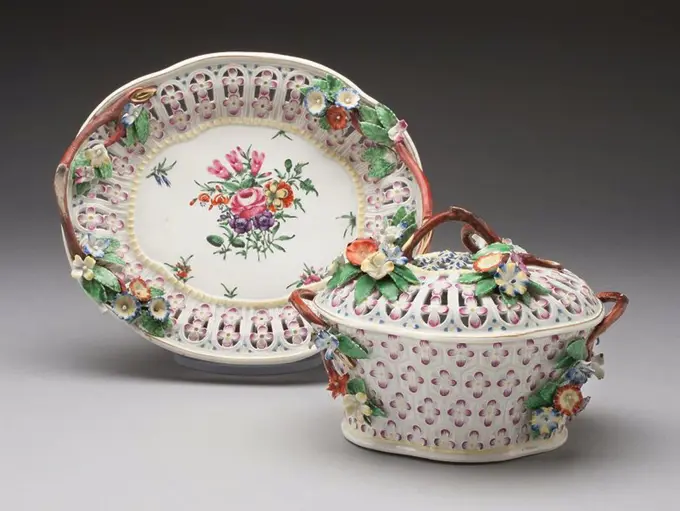
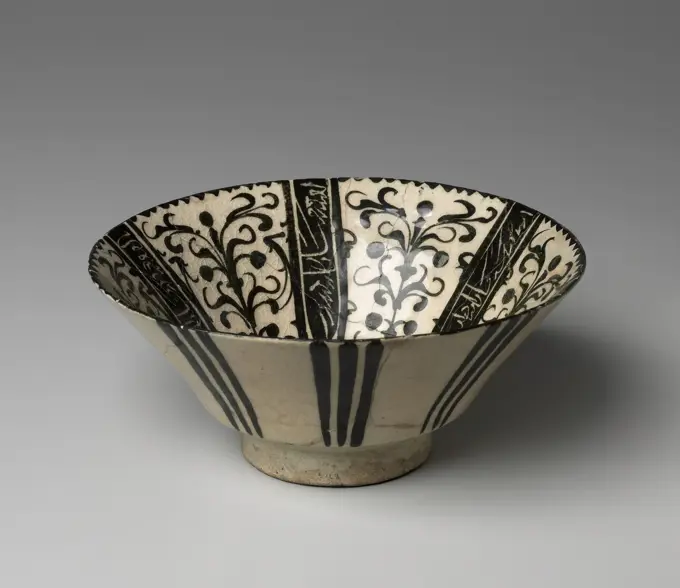
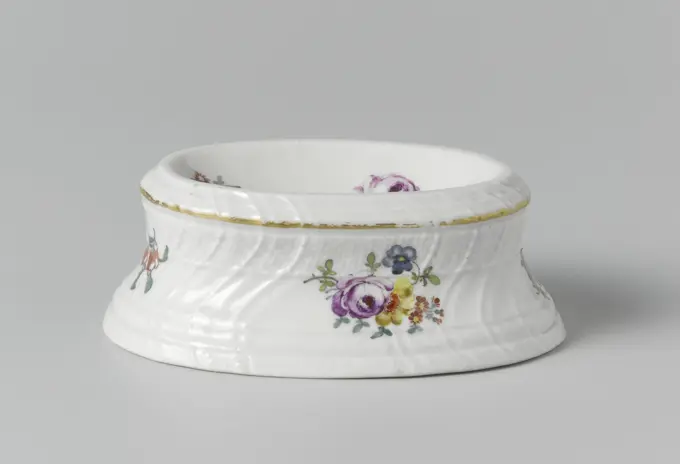
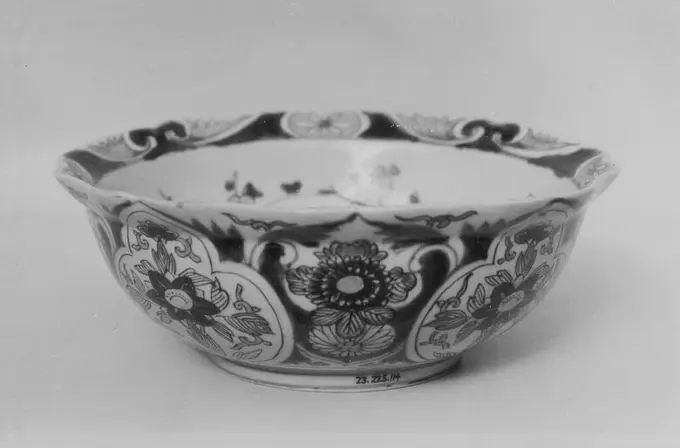
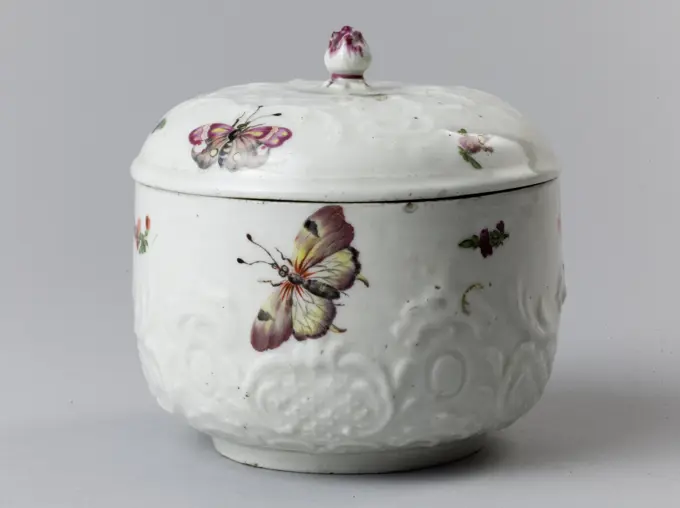
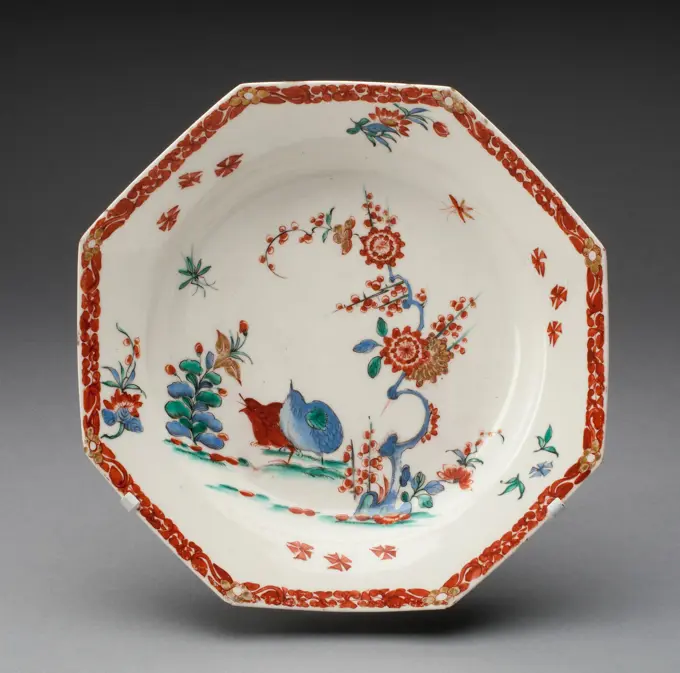
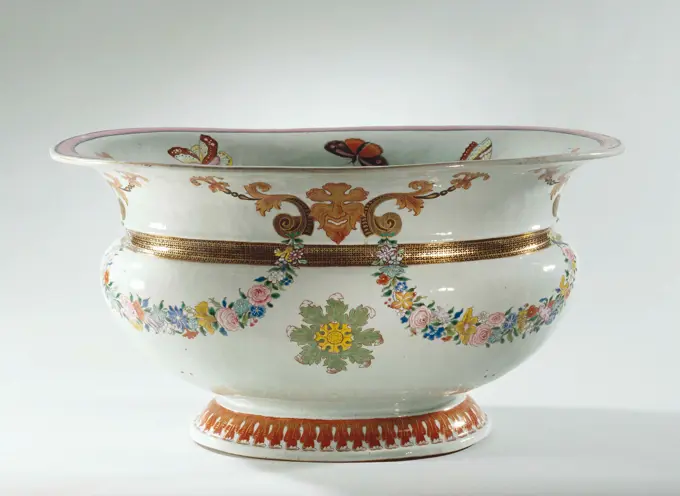
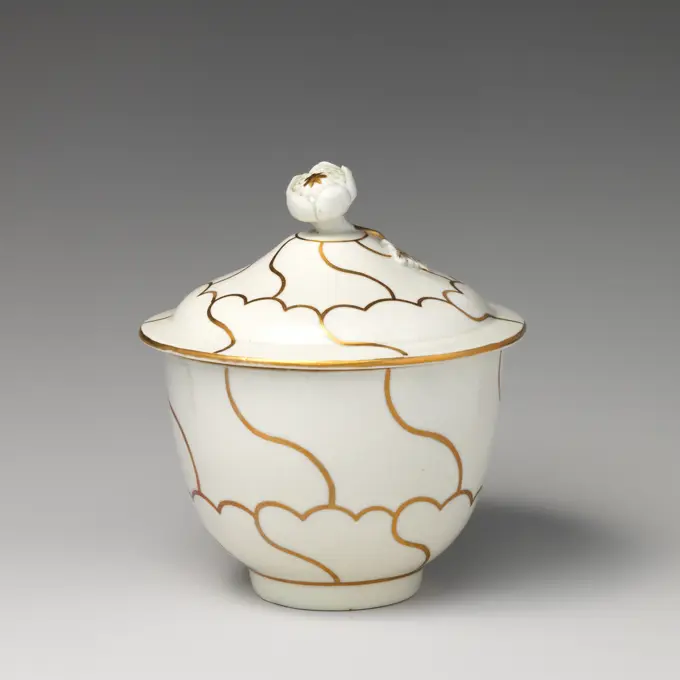
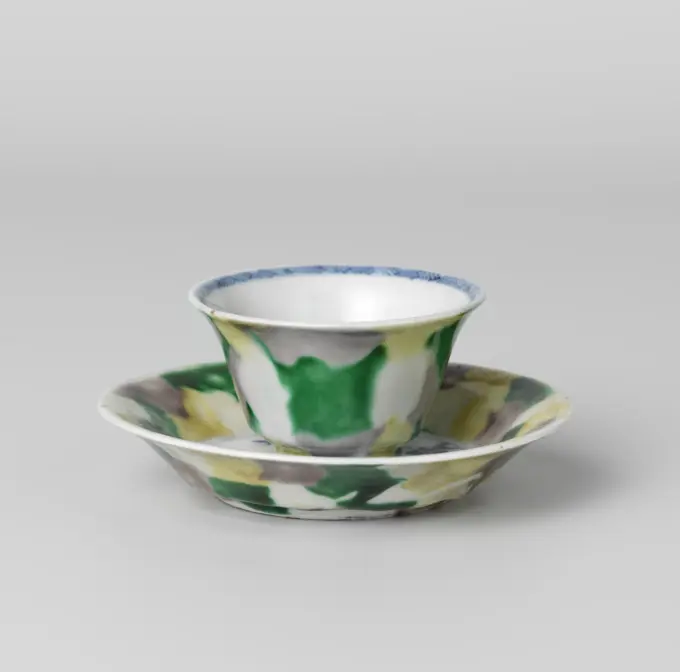
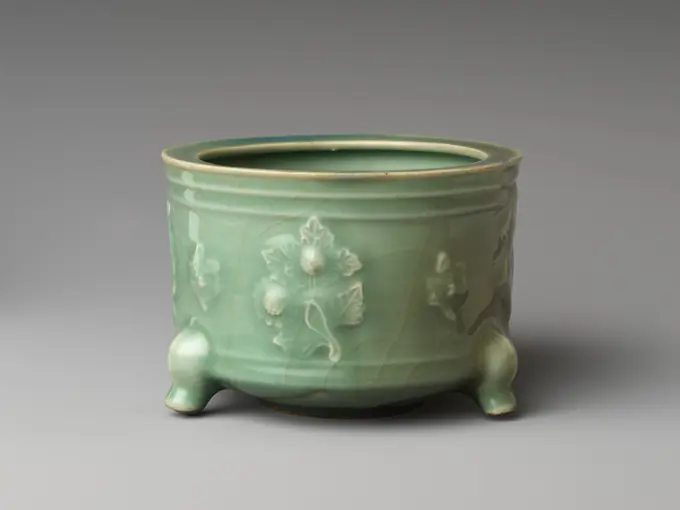
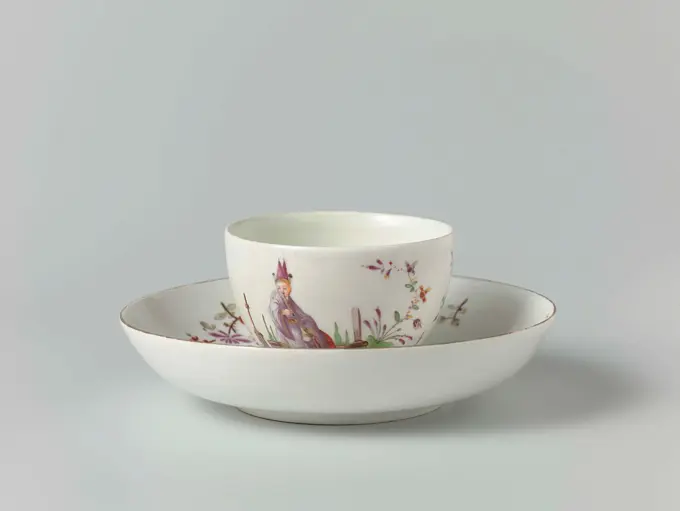
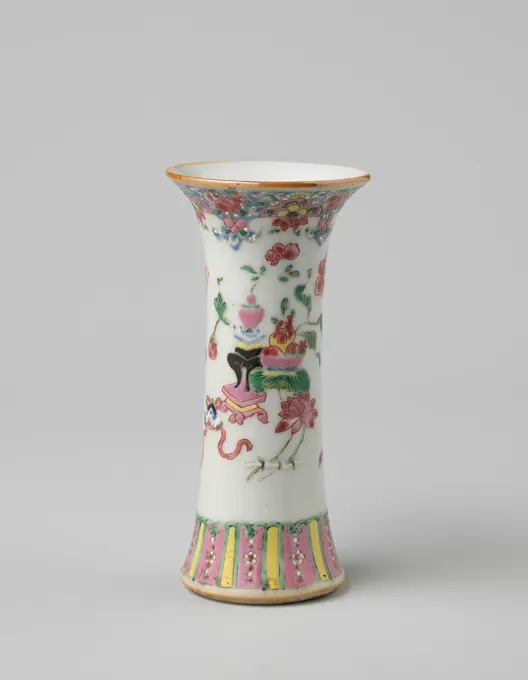
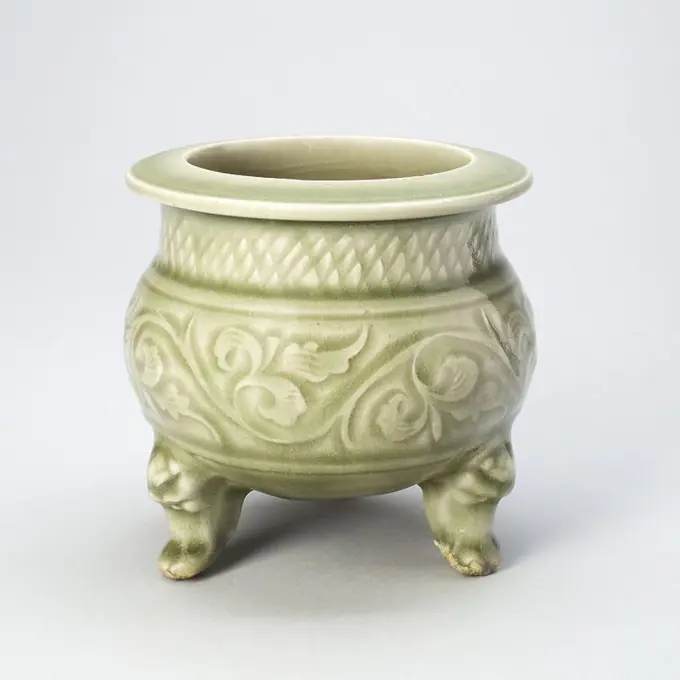
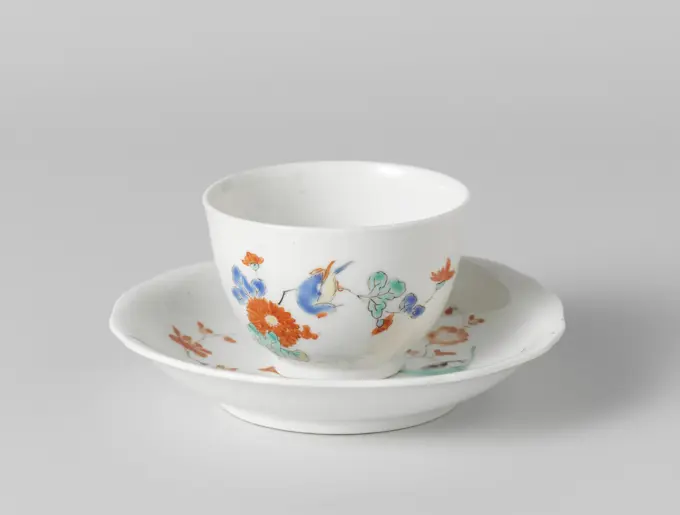
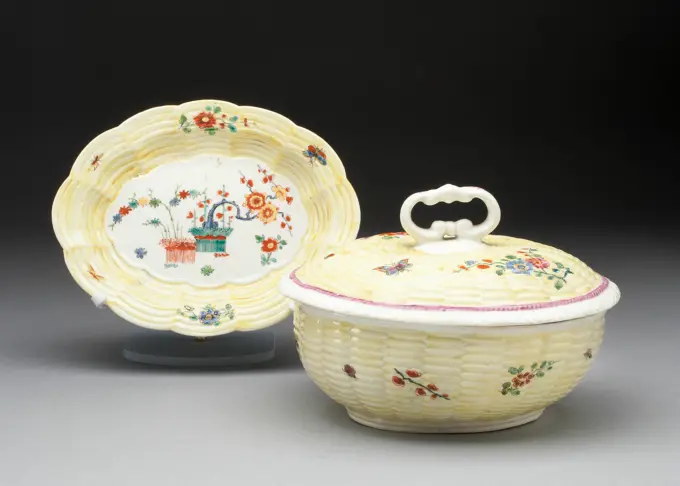
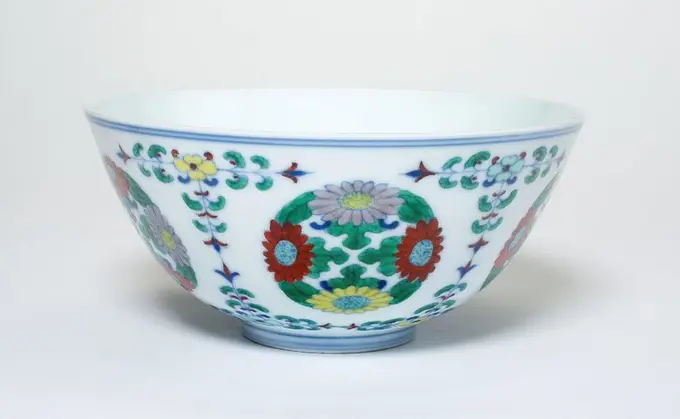
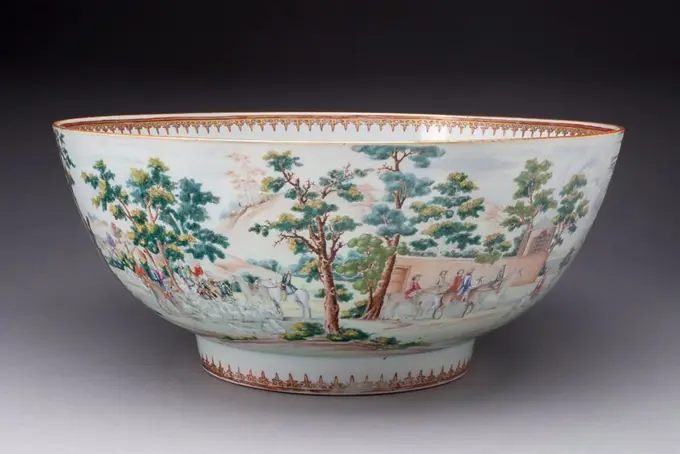
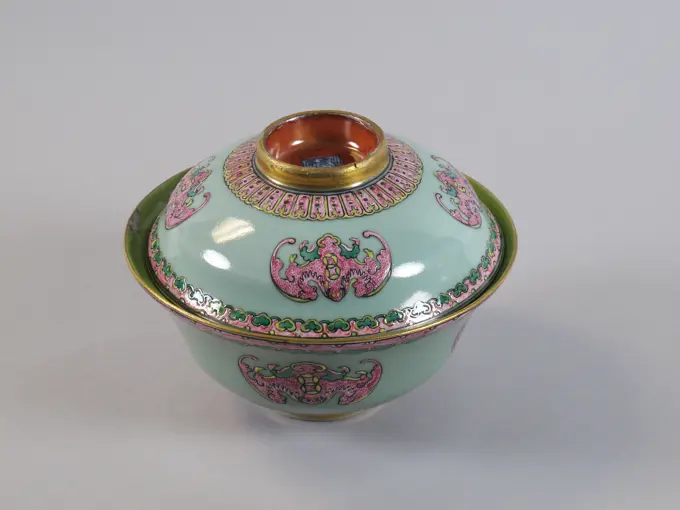
Bowl, 1910-1999, Unknown Korean, 3 1/4 x 7 1/4 x 7 1/4 in. (8.26 x 18.42 x 18.42 cm), Stoneware, Korea, 20th centuryTea Cup, c. 1730. Chantilly Porcelain Factory (French). Soft-paste porcelain; overall: 5.3 x 7.4 cm (2 1/16 x 2 15/16 in.).Lid of a nuts basket of English hard-baked pottery, boch. Open-worked lid of hard-baked pottery. The lid has a button in the form of a fruit. The lid is painted in blue. The lid belongs to a nut basket (BK-1978-1-a to BK-1978-1-c).Fluted bowl with a boy among peony scrolls, anonymous, c. 1700 - c. 1724 Ribbed bowl of porcelain with a lobed edge, painted on the glaze in red, green, yellow, eggplant and black. On the outer wall three times a boy between peony drinks. A stylized flower on the bottom; The wall with three times a flower branch (Lotus, peony, aster). The inner edge with stylized flower branches. Marked on the bottom with a hare in a double circle. Famle Verte. China porcelain. glaze. painting / vitrification Ribbed bowl of porcelain with a lobed edge, painted on the glaze in red, green, yellow, eggplant and black. On the outer wall three times a boy between peony drinks. A stylized flower on the bottom; The wall with three times a flower branch (Lotus, peony, aster). The inner edge with stylized flower branches. Marked on the bottom with a hare in a double circle. Famle Verte. China porcelain. glaze. painting / vitrificationSmall faience tea bowl, come with blue decor in Oriental style with flowers branches and birds, bowl crockery holder soil find ceramic pottery glaze tin glaze h 4,0, hand turned baked decorated glazed fried Faience bowl on stand. Orange-yellow shard entirely covered with tin glaze. Blue decoration on blue tinted fond In the mirror an oval in blue along the outside flower branches and birds in Oriental style archeology Valckensteyn Poortugaal Albrandswaard indigenous pottery serving tea tea Soil discovery Valugaal Castle Valckensteyn.Hemispherical bowl. unknown, craftsmanDish, painted multi-colored with Deutsche Blumen, insects and fruits. Oval scale of painted porcelain. The dish has a vaulted lid and two angled ears. The lid has a button in the shape of a flower. The scale is decorated with Deutsche Blumen, insects and fruits. The scale belongs to a tableware (BK-17474-1 to BK-17474-253). The scale has been marked.Butter fleet with fowence lid, anonymous, c. 1740 - c. 1780 An oval butter fleet and lid painted with mountain landscapes. Delft . An oval butter fleet and lid painted with mountain landscapes. Delft .Cup with handle with European landscape in a medallion. Porcelain earhead painted on the glaze in black and gold. On the outside wall a European landscape with a person, buildings and trees in an oval medallion. Decorated in Europe in Encre Chine.Cup with women and flower sprays, anonymous, c. 1875 - c. 1899 Porcelain head, painted in underly glaze blue. On the wall of the head two women opposite each other with between them in a flower branch; On the bottom a sitting woman in front of a fence near a plant on a rock; The inner edge with ZIG-Zag pattern. Marked on the bottom with a one-character brand in a double circle. Blue White. China porcelain. glaze. cobalt (mineral) painting / vitrification Porcelain head, painted in underly glaze blue. On the wall of the head two women opposite each other with between them in a flower branch; On the bottom a sitting woman in front of a fence near a plant on a rock; The inner edge with ZIG-Zag pattern. Marked on the bottom with a one-character brand in a double circle. Blue White. China porcelain. glaze. cobalt (mineral) painting / vitrificationSaucer 1840 Japan. Saucer. Japan. 1840. White porcelain decorated with blue under the glaze. Edo period (1615-1868). CeramicsCovered Bowl 1725-1775 Venice. Tin-glazed earthenware decorated with iron red .Shallow bowl. Koenigliche Porcellain Fabrique, Meissen (1710-1763), factoryPharmacist, blue painted with checkered tires and band with fan -shaped leaf motifs., Anonymous, c. 1610 - c. 1640 Cylindrical pot of blue painted majolica, with torn neck and foot. The pot is painted with checkered tires and in the middle a band with fan -shaped leaf motifs. Holland earthenware. tin glaze. lead glaze majolica Cylindrical pot of blue painted majolica, with torn neck and foot. The pot is painted with checkered tires and in the middle a band with fan -shaped leaf motifs. Holland earthenware. tin glaze. lead glaze majolicaRuby-Ground Medallion Bowl 1821-1850 China. Porcelain painted in underglaze blue and overglaze enamels .Pair of Salt Cellars, Weesper Porcelain Factory, c. 1764 - c. 1768 Salt barrel on legs with rocaille foot edge and cartouches in relief. In the cartouches multicolored flower bouquets. Marked with two crossed swords and three bulbs in under -glaze blue. Weesp porcelain Salt barrel on legs with rocaille foot edge and cartouches in relief. In the cartouches multicolored flower bouquets. Marked with two crossed swords and three bulbs in under -glaze blue. Weesp porcelainCup And Saucer (France); Manufactured by Sèvres Porcelain Manufactory (France); porcelain with overglaze enameling and gildingBowl. Porcelain decorated with enamels, Ming. Provenance: China. Paris, Cernuschi museum. 78842-1 Asian art, Chinese art, living art, tableware, bowl, fine ceramic, ming dynasty, porcelainTiered Box Composed of Three Layers with Dragon and Precious Objects. Round stack box made of porcelain consisting of three layers and a lid, painted in underglaze blue. The walls of the boxes and the lid with cloud motifs and valuables (pearl, diamond, music stone); the top of the lid with a four-chewed dragon surrounded by clouds; A double circle on the bottom. Bottom box has been broken. Blue White.Antique Dutch bowl Antique Dutch bowl in Delfts blue Copyright: xZoonar.com/IvonnexWierinkx 7547085Tea Cup and Saucer, from a Tea Service, 1765-70, Worcester Porcelain Works (a.k.a. Royal Worcester Porcelain Company), Worcester, England, est. 1751, 1 3/4 x 3 3/16 x 3 7/8 in. (4.45 x 8.1 x 9.84 cm) (a) - (cup), Porcelain, England, 18th centuryBowl;  XVIII/19th century (1791-00-00-1810-00-00);Cup with two fighting cocks among flowering plants, anonymous, c. 1725 - c. 1749 Porcelain head with spreading wall, painted on the glaze in blue, red, pink, green, yellow and black. On the flat of the dish, two fighting roosters between large, flowering plants (including Prunus). The head with the same decoration. Famle Rose. China porcelain. glaze. painting / vitrification Porcelain head with spreading wall, painted on the glaze in blue, red, pink, green, yellow and black. On the flat of the dish, two fighting roosters between large, flowering plants (including Prunus). The head with the same decoration. Famle Rose. China porcelain. glaze. painting / vitrification. Porcelain incense burner in the shape of a round bowl with foot ring and a flat, ribbed edge, on three legs, with two rectangular ears, a bolle lid awarded a shishi (lion dog) with openings in the shape of a range, a cherry blossom (Prunus) and a single cherry blossom leaf. Painted on the glaze in blue, red, green and black with prunus branches and a border of triangles with lines on the lid. Kakiemon.Cup and saucer 18th century British. Cup and saucer. British. 18th century. Soft-paste porcelain. Ceramics-PorcelainCompote, Spode Ceramic Works, English, established 1776, hard paste porcelain, vitreous enamel, gold, On oval foot a rectangular dish with deeply scalloped edge, the scallops on the short ends extended to form handles that are pierced by two holes on each. Decoration same as on 1959-155-1., England, 1821-1833, ceramics, Decorative Arts, compote, compoteSugar Bowl, c. 1730. Chantilly Porcelain Factory (French). Soft-paste porcelain; diameter: 4.8 x 7.4 cm (1 7/8 x 2 15/16 in.). The pieces composing this individual tea set are entirely typical of Chantilly soft-paste porcelain in the Kakiemon style. Both the form and decoration of these pieces were inspired by Japanese prototypes. The use of knobs in the form of trumpet-shaped blossoms is characteristic of Chantilly wares.Shallow bowl. Koenigliche Porcellain Fabrique, Meissen (1710-1763), factoryTiered Box Composed of Three Layers with Dragons and Precious Objects. Round stack box made of porcelain consisting of three layers and a lid, painted in underglaze blue. The walls of the boxes and the lid with cloud motifs and valuables (pearl, diamond, music stone). Blue White.Covered bowl with powder blue and river landscapes. Lid with bowl of bowl of porcelain, painted in underglaze blue and on the glaze blue, red, green, yellow, eggplant, black and gold. Covered with bleu poudré (powder blue), with two fan-shaped compartments with a river landscape filled with people, pavilions and trees; In addition to the boxes a flower branch in gold. Three chips in the edge of the lid. Bleu poudré with famille verte.. Bell-shaped head of porcelain, painted on the glaze in red, pink, green, yellow, purple, black and gold. On the outside wall two cartouches with a European river landscape with a boat and a few working persons, a fort, sailing ship and houses in the background; to browse the cartouche in Meissen-style; The inner edge with flower drinks. A crack in the wall. European performance in email colors.Wandjardinière. Concave funnel-shaped wall jardinière of multicolored painted faience. The rear wall is flat, the upper wall is equipped with holes and the wall is ribbed. The top edge is scalloped and the rear wall is provided with two holes in which the Jardiniere can be hung. The wall is painted with flower bouquets. The Jardinière includes an identical copy.. Wine cooler from faienceCandyer with lid; Markgraeflich feine porcelain fabrique (ansbach); 2 after. XVIII (1751-00-00-1801-00-00);Bowl with Flowers on a Coral-Red Ground. China. Date: 1723-1735. Dimensions: H. 6.0 cm (2 3/8 in.); diam. 11.8 cm (4 5/8 in.). Porcelain painted in overglaze enamels. Origin: China. Museum: The Chicago Art Institute, Chicago, USA.BowlCover, Manufactuur Oud -Loosdrecht, 1774 - 1784 The lid are completely open. Loosdrecht porcelain The lid are completely open. Loosdrecht porcelainBox with carachters and auspicious symbols, anonymous, c. 1800 - c. 1830 Box of porcelain with lid, painted in underly glaze blue and on the glaze eggplant, turquoise, black and gold. The outside wall of the box with lucky symbols (hammer, pouch, coins) and two characters (happiness and prosperity, long life). Shells on the bottom. The lid with the same decoration; Deep in the center of the center with the lid button. Japan porcelain. glaze. cobalt (mineral). gold (metal) painting / gilding / vitrification Box of porcelain with lid, painted in underly glaze blue and on the glaze eggplant, turquoise, black and gold. The outside wall of the box with lucky symbols (hammer, pouch, coins) and two characters (happiness and prosperity, long life). Shells on the bottom. The lid with the same decoration; Deep in the center of the center with the lid button. Japan porcelain. glaze. cobalt (mineral). gold (metal) painting / gilding / vitrificationOctagonal Bowl 1820 Japan. Octagonal Bowl. Japan. 1820. Porcelain decorated with enamels (Arita ware, Imari type). Edo period (1615-1868). CeramicsBowl on Foot 1440-1460 Spanish. Bowl on Foot 471745Covered jar with peacocks and flowering plants in a fenced garden, anonymous, c. 1700 - c. 1724 Porcelain lid jar on a high base and with two raised ears, painted on the glaze in blue, red, green, yellow and black. The pot is covered with loose flowers on a background of 'crackled ice'; It saved two rectangular cartouches with flowering plants (peony, splendidanjer) and a butterfly or two peacocks and bamboo in a fenced garden. A band with flower vines on the foot. The lid with flowering plants with a rock. Chip in the lid button and one ear. Famle Verte. China porcelain. glaze. painting / vitrification Porcelain lid jar on a high base and with two raised ears, painted on the glaze in blue, red, green, yellow and black. The pot is covered with loose flowers on a background of 'crackled ice'; It saved two rectangular cartouches with flowering plants (peony, splendidanjer) and a butterfly or two peacocks and bamboo in a fenced garden. A band with flower vines on the foot. The lid with flTeacup and Saucer 1795-1805 Burslem. Stoneware (jasperware) . Wedgwood Manufactory (Manufacturer)Sugar bowl, painted with a river landscape with farms and figures, 1809 - in or before 1814 Vase -shaped sugar bowl of porcelain, painted with a river landscape with farms surrounded by trees, and some figures on the water. Also two sprinkling flowers. On the lid, with octagonal button, a landscape and three scatter flowers. The edges are deposited with gold. Marked under the glaze in blue: Amstel. Nieuwer-Amstel porcelain Vase -shaped sugar bowl of porcelain, painted with a river landscape with farms surrounded by trees, and some figures on the water. Also two sprinkling flowers. On the lid, with octagonal button, a landscape and three scatter flowers. The edges are deposited with gold. Marked under the glaze in blue: Amstel. Nieuwer-Amstel porcelainBowl with cover 1725-30 Meissen Manufactory German. Bowl with cover 205885Bowl. Culture: China. Dimensions: H. 2 3/8 in. (6 cm); Diam. 5 1/4 in. (13.3 cm). Museum: Metropolitan Museum of Art, New York, USA.Bowl; Korzec (Porcelain and faience manufacture; 1790-1832); 1815-1820 (1815-00-00-1820-00-00);Bell-Shaped Cup and Saucer with Lan Caihe in a Landscape with a Deer and Bat. Bell-shaped cup and saucer of porcelain, painted on the glaze in blue, red, pink, green, yellow and black. On the flat of the dish a representation of Lan Caihe (Lan Ts'ai Ho) with its fruit basket in a landscape at a rock and a prunus; Next to him is a deer with a mushroom (Lingzhi) in his mouth and flies a bat. The head with the same decoration. A crack and a chip in the edge of the dish. Famille Rose with famille verte.Bowl (part of a set) 19th century William Adams British. Bowl (part of a set). British, Staffordshire. 19th century. Lead-glazed earthenware. Ceramics-PotteryMeissen Manufacture. "Cup and saucer with floral decor (Meissen)". Saxony porcelain. Paris, Museum of Romantic Life. PORCELAINCup with Peonies 1522-1566 China. Porcelain painted in overglaze enamels and gold .Bowl. unknown, craftsmanFloral-shaped Cup Stand, 1100s-1200s. Korea, Goryeo period (918-1392). Celadon; diameter of rim: 13.9 cm (5 1/2 in.); overall: 5.6 cm (2 3/16 in.).Cup With Twisted Panels with Flower Sprays. Cup of porcelain with the wall landscaped in chanted compartments, painted in underglaze blue. The wall with grinders with flower branch; a medallion with flower branch on the bottom; The inside of the edge a bond with floral drinks. Marked on the bottom with the Chinese character 'Fú' in a double circle. A chip in the edge. Blue White.Chestnut Basket and Stand. Worcester Porcelain Factory; Worcester, England, founded 1751. Date: 1755-1765. Dimensions: Basket and lid: 14 x 20.2 x 14.6 cm (5 1/2 x 8 x 5 3/4 in.); Stand: 25 x 21.6 cm (9 7/8 x 8 1/2 in.). Soft-paste porcelain with polychrome enamels. Origin: Worcester. Museum: The Chicago Art Institute, Chicago, USA. Author: Worcester Royal Porcelain Company.Cup with river face. Cup of porcelain. Painted with a river face with two mans figures and a large tree in the foreground. All edges in gold.Wine cooler, the Greek A, c. 1700 Wine cooler from Faience Delft . Wine cooler from Faience Delft .Cup with fish between water plants, c. 1700 - c. 1724 Cup of porcelain with ribbed wall and lobed edge, painted in underly glaze blue and on the glaze blue, red, green, yellow, eggplant, black and gold. The outside of the head with four fish between aquatic plants, the edge with a band Ruyi motif; On the bottom a fish and the inside with four fish in iron red, the edge with a band Ruyi motif. Marked on the bottom with 'yù', Jade, in a double circle. Famle Verte. China porcelain. glaze. cobalt (mineral). gold (metal) painting / vitrification Cup of porcelain with ribbed wall and lobed edge, painted in underly glaze blue and on the glaze blue, red, green, yellow, eggplant, black and gold. The outside of the head with four fish between aquatic plants, the edge with a band Ruyi motif; On the bottom a fish and the inside with four fish in iron red, the edge with a band Ruyi motif. Marked on the bottom with 'yù', Jade, in a double circle. Famle Verte. China porcelain. glaze. cobalt (mineral)Bowl with 'Willow-tendril' motif, c.1200-1220, 3 1/2 x 8 1/4 in. (8.89 x 20.96 cm), Stonepaste with underglaze black decor, Kashan ware, Iran, Seljuk period (1038- c.1194), Numerous bowls decorated with radiating bands filled with Persian inscriptions similar to this one have been linked by excavation to the Kashan workshops. Most examples are painted with blue or black under either a clear or turquoise-blue glaze. The dated examples of this type fall between CE 1204 and 1215.. Bowl of porcelain with flour-shaped compartments and scalloped edge in the wall, painted in underglaze blue. Around the foot a bond with flower leaf-shaped compartments in which stylized lotus flowers, abroad, wide boxes with four playing boys (oceans) and narrow courses with a sitting lady (long lice); On the bottom a seated lady with a closed range; The inner edge with a decorative band. Marked on the underside with the six character mark of Emperor Chenghua in a double circle. A crack in the wall. Blue White.Tiered box composed of three layers with dragons en precious objects, anonymous, c. 1680 - c. 1720 Round stacking box of porcelain consisting of three layers and a lid, painted in underlaze blue. The walls of the boxes and the lid with cloud motifs and valuables (pearl, window, music stone); the top of the lid with a four-clawy dragon and a pearl surrounded by clouds; A double circle on the bottom. Blue White. China porcelain. glaze. cobalt (mineral) painting / vitrification Round stacking box of porcelain consisting of three layers and a lid, painted in underlaze blue. The walls of the boxes and the lid with cloud motifs and valuables (pearl, window, music stone); the top of the lid with a four-clawy dragon and a pearl surrounded by clouds; A double circle on the bottom. Blue White. China porcelain. glaze. cobalt (mineral) painting / vitrificationSalt vessel, multi -colored painted with Deutsche Blumen, Insekten and Fruits, Meissener Porzellan Manufaktur, c. 1750 - c. 1760 Oval salt barrel made of painted porcelain. The salt barrel has a constricted wall. The edge is decorated with the Neuozier pattern in relief and the painting consists of Deutsche Blumen, Insects and Fruits. The salt barrel is part of a service (BK-17474-1 to BK-17474-253). The salt barrel is marked. Float porcelain Oval salt barrel made of painted porcelain. The salt barrel has a constricted wall. The edge is decorated with the Neuozier pattern in relief and the painting consists of Deutsche Blumen, Insects and Fruits. The salt barrel is part of a service (BK-17474-1 to BK-17474-253). The salt barrel is marked. Float porcelainBowl. Culture: Japan. Dimensions: H. 3 1/8 in. (7.9 cm); Diam. 8 1/16 in. (20.5 cm). Date: 1680. Museum: Metropolitan Museum of Art, New York, USA.Vase with two landscapes, Fürstenberg, c. 1760 - c. 1770 vase Vase of porcelain on spreading foot and with an egg-shaped body, short, wide neck and two handles in rocaille style. Painted on the glaze in email colors and gold. Twice people on the belly in a landscape with a building in the background. Golden lines on the foot and neck. The handles are turned on with gold. Lid is missing. Marked on the inner edge with the f and on the bottom with no. 1. Fürstenberg porcelain. glaze. gold (metal) painting / gilding / vitrificationFlowerpot with Cranes, Shishi, Hoo-Bird and Lotur Scrolls. Flowerpot of porcelain, painted in underglaze blue and on the glaze red, green, black and gold. On the outside wall three scalloped cartouches with two cranes at a pine, a hay-bird above a tree and one with a shishi (lion dog) at a peony. For the cartouches of leaf refrices interrupted by two opposite compartments from the edge and the foot with lotus drinks and half a flower rosette. Around the foot a tire with flower leaf-shaped compartments with flower branch; On the outer edge a bond with lotus drinks. The inner edge with a bond with half floral rosettes. A hole in the soil. Pot has been broken, restored with three staples. Imari.Salt Cellar from the Sulkowsky Service (1 of 2), c. 1736. Meissen Porcelain Factory (German), Johann Friedrich Eberlein (German, 1696-1749). Hard-paste porcelain; overall: 9.6 cm (3 3/4 in.).Date - Cup. Carnavalet museum, history of Paris.Wine glass cooler ca. 1720-40 Saint-Cloud factory. Wine glass cooler. French, Saint-Cloud. ca. 1720-40. Soft-paste porcelain. Saint-Cloud factory (French, mid-1690s-1766). Ceramics-PorcelainFragment Kraaikop from V.O.C. ship De 'Witte Leeuw', Anonymous, Before 1613 bowl Fragment Kraaikop from V.O.C. ship De 'Witte Leeuw', 20 present. Jingdezhen bone china (material)   Sint-HelenaAnonymous. "Candy and lid with naturalistic decor". Earthenware. Paris, Museum of Romantic Life. BonboniererereSoup Plate 1750-1760 Bow. Soft-paste porcelain, polychrome enamels and gilding . Bow Porcelain Factory (Manufacturer)Cup. unknown, craftsman. Large oval basin of porcelain, painted on the glaze in blue, red, pink, green, yellow, black and gold. Four masks on the outer edge flanked by Volutes and Leaf Rank. The masks are interconnected by Guirlandes and under every mask is a stylized flower rosette on the belly. On the foot a bond with stylized leaf motifs. The inside with four large piping branches and butterflies. European performance in email colors. N.B. Also registered as BK-1957-45.Cream Pitcher, late 1700s. Spode Factory (British). overall: 11.2 x 13.4 cm (4 7/16 x 5 1/4 in.).Head and saucer with river view, manufacture Oud -Loosdrecht, 1774 - 1784 Porcelain's head and saucer. Painted with a river face with two man figures in the foreground and a large tree. All edges in gold. Loosdrecht porcelain Porcelain's head and saucer. Painted with a river face with two man figures in the foreground and a large tree. All edges in gold. Loosdrecht porcelainSugar bowl with cover (part of a service) ca. 1775 Worcester factory Listen to experts illuminate this artwork's story Listen Play or pause #407. Teapots Supported by Bloomberg Philanthropies We're sorry, the transcript for this audio track is not available at this time. We are working to make it available as soon as possible.. Sugar bowl with cover (part of a service). British, Worcester. ca. 1775. Soft-paste porcelain. Worcester factory (British, 1751-2008). Ceramics-PorcelainCup and saucer with 'egg and spinach' pattern and cock among plants, anonymous, c. 1700 - c. 1720 Porcelain's head and (deep dish), painted in underly glaze blue and on the glaze green, yellow and eggplant. On the flat of the dish a rooster next to bamboo and a flowering plant; The wall on the inside and outside covered with an 'Egg and Spinach' pattern. The head has the 'egg and spinach' pattern on the outside and a rooster on the inside. Both marked on the bottom with a mushroom (Lingzhi). Famle Verte. China porcelain. glaze. cobalt (mineral) painting / vitrification Porcelain's head and (deep dish), painted in underly glaze blue and on the glaze green, yellow and eggplant. On the flat of the dish a rooster next to bamboo and a flowering plant; The wall on the inside and outside covered with an 'Egg and Spinach' pattern. The head has the 'egg and spinach' pattern on the outside and a rooster on the inside. Both marked on the bottom with a mushroom (Lingzhi). Famle Verte. China porcelFragment Kraaikop from V.O.C. ship De 'Witte Leeuw', Anonymous, Before 1613 bowl Fragment Kraaikop from V.O.C. ship De 'Witte Leeuw', 40 present. Jingdezhen bone china (material)   Sint-HelenaWaste bowl (part of a service) ca. 1770 Worcester factory. Waste bowl (part of a service) 205451Incense Burner 13th century China. Incense Burner. China. 13th century. Stoneware with celadon glaze (Longquan ware). Southern Song (1127-1279) to Yuan (1271-1368) dynasty. CeramicsCup 1820 Japan. Cup. Japan. 1820. Clay covered with a crackled transparent glaze over decorations (Satsuma ware). Edo period (1615-1868). CeramicsCup and saucer. This cup and saucer are embellished with depictions of Chinese figures, a type of decoration called chinoiserie. The figure on the cup plays a wind instrument; the one on the saucer is situated in a landscape. Such decorations, combined with exotic flowers, were inspired by the painted decoration found on porcelain at Meissen from about 1725.Beaker vase with floral scrolls and auspicious Symbols. Bek tray of porcelain with a cavoidal body, painted on it in blue, red, pink, green, yellow and black. On the wall Two groups of lucky objects with valuables (musical stone), lotus drink, tripod, fruit basket and flower vases; around the edge a decorative bond with flower and lotus drinks; A decorative band around the foot. Family Rose.Kohl jar ca. 1800-1550 B.C. Middle Kingdom. Kohl jar 543983Basket 1750-1765 Staffordshire .Wine cup from V.O.C.-ship De 'Witte Leeuw', Anonymous, Before 1613 bowl Wine cup from V.O.C. ship De 'Witte Leeuw', 95  present. The bowl is made up of shards and restored with plaster. Jingdezhen porcelain  flowers ~ ornament - AA - stylized Sint-HelenaButter fleet with lid, anonymous, c. 1740 - c. 1765 Round butter fleet with lid, multicolored painted in Kakiemon decor. A cow as a button of the lid. Delft . Round butter fleet with lid, multicolored painted in Kakiemon decor. A cow as a button of the lid. Delft .Tripod Incense Burner (Censer) with Peony-Leaf Scrolls, Netlike Petals, and Masklike Legs. China. Date: 1100-1199. Dimensions: H. 11.0 cm (4 3/8 in.); diam. 10.7 cm (5 1/4 in.). Yaozhou ware; stoneware with underglaze carved and molded decoration. Origin: China. Museum: The Chicago Art Institute, Chicago, USA.Cup with chrysanthemum and birds, anonymous, c. 1670 - c. 1700 Round head of porcelain, painted on the glaze in blue, red, green, yellow and black, with two chrysanthemum branches and two birds, one in the air. Kakiemon style. Japan porcelain. glaze. painting / vitrification Round head of porcelain, painted on the glaze in blue, red, green, yellow and black, with two chrysanthemum branches and two birds, one in the air. Kakiemon style. Japan porcelain. glaze. painting / vitrificationSlop bowl. Weesper Porcelainfabriekweesp, c. 1759-1771Hard-Paste PorcelainFootbath - D'après Francis Morley, 1845-1850Sauce Tureen and Stand 1753-1754 Worcester. Soft-paste porcelain with polychrome enamels . Worcester Royal Porcelain Company (Manufacturer)Sugar bowl with flowering plants in panels, Wallendorf, c. 1765 - c. 1799 Oval sugar bowl of porcelain with a ribbed wall, painted in underlaze blue. The wall of the pot is divided into four courses with a stylized flowering plant in each. The lid with the same decoration and round lid button with a rosette. Marked on the underside with the W. Wallet porcelain. glaze. cobalt (mineral) painting / vitrification Oval sugar bowl of porcelain with a ribbed wall, painted in underlaze blue. The wall of the pot is divided into four courses with a stylized flowering plant in each. The lid with the same decoration and round lid button with a rosette. Marked on the underside with the W. Wallet porcelain. glaze. cobalt (mineral) painting / vitrificationCachepot or flowerpot with mask-shaped handles, anonymous, c. 1800 - c. 1824  Chachepot or porcelain flowerpot, painted on the glaze in gold. The pot has a cylindrical, slightly running belly, which runs around to the spreading foot. Profile under the straight edge. The two ears are modeled in the form of masks. Marked on the underside with two crossed swords of the Meissen Porseleinfabriek and BX. France porcelain. glaze. gold (metal) painting / gilding / vitrificationPunch Bowl. China, circa 1780. Furnishings; Serviceware. Porcelain, overglaze enamel, giltBowl with Floral Medallions and Stems. China. Date: 1723-1735. Dimensions: H. 6.7 cm (2 5/8 in.); diam. 14.5 cm (5 11/16 in.). Porcelain painted in underglaze blue and overglaze enamels. Origin: China. Museum: The Chicago Art Institute, Chicago, USA.Punch Bowl. China. Date: 1760-1770. Dimensions: 17.5 x 39.4 x 39.4 cm (6 7/8 x 15 1/2 x 15 1/2 in.). Hard-paste porcelain with polychrome enamels and gilding. Origin: Jingdezhen. Museum: The Chicago Art Institute, Chicago, USA.Covered bowl with bats late 18th-early 19th century China. Covered bowl with bats 47208Large Dish (Coupe). Chantilly Porcelain Manufactory, manufacturer (French, active about 1730 - 1805) 1730-1740 The large round dish, coupe in French, gently curves up at the perimeter and has molded ornament in the form of four leafy branches stretched out around the rim. The surface is decorated sparingly with two groups of stylized foliage flanked by small flying swallows - one a patch of peony leaves, poppies and bamboo shoots, the other a large branch of chrysanthemum - all colored in blue, turquoise green, orangish red, yellow, and black enamel. The ornamentation is inspired by Japanese Kakiemon ware, a distinctive style of porcelain decoration characterized by sparse asymmetrical designs rendered with a limited palette on a white ground. Of a particularly sophisticated design, this dish is the only known example of its type and was possibly based on a Japanese prototype. It would likely have been used during the dessert course to hold fruit or other delicacies.Cup with powder blue and cranes, c. 1700 - c. 1724 Tea head of porcelain, painted in under -glaze blue. With accompanying dish (AK-RBK-15855-B-2). Bleu Poudré. China porcelain. glaze. cobalt (mineral) painting / vitrification Tea head of porcelain, painted in under -glaze blue. With accompanying dish (AK-RBK-15855-B-2). Bleu Poudré. China porcelain. glaze. cobalt (mineral) painting / vitrificationChocolate head, the Greek A, c. 1701 - c. 1722 Head of faience. Multicolored painted with a rooster and flower branches. Delft . Head of faience. Multicolored painted with a rooster and flower branches. Delft .