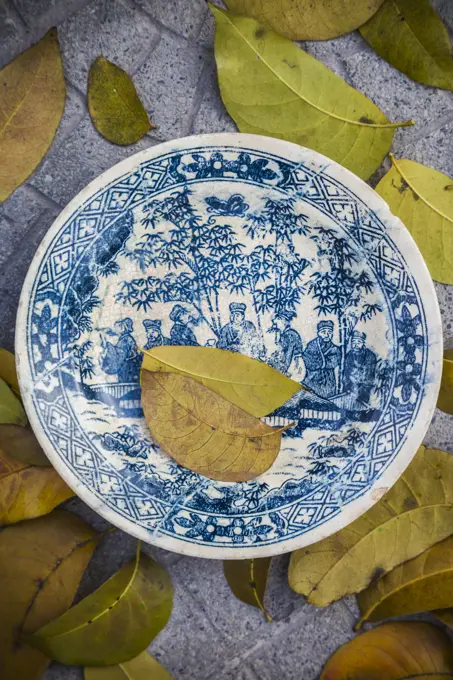
Painted Porcelain Dishes

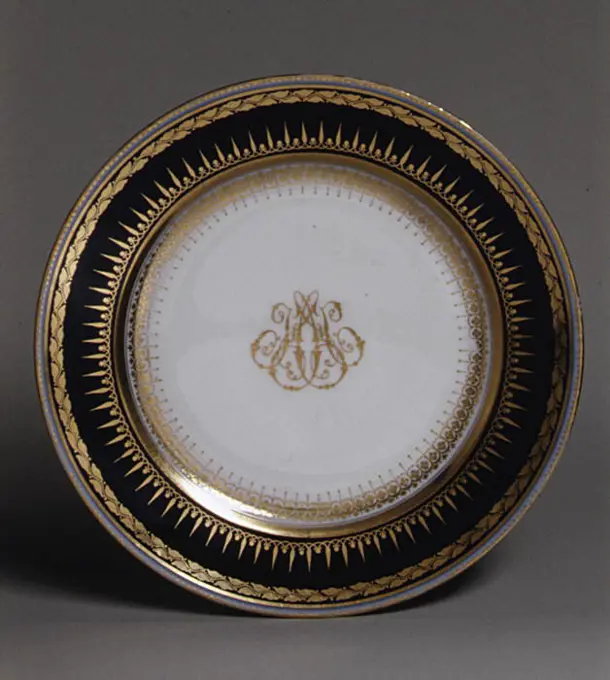
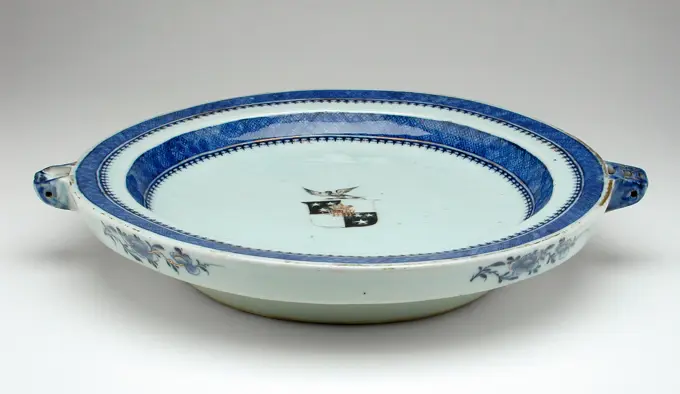
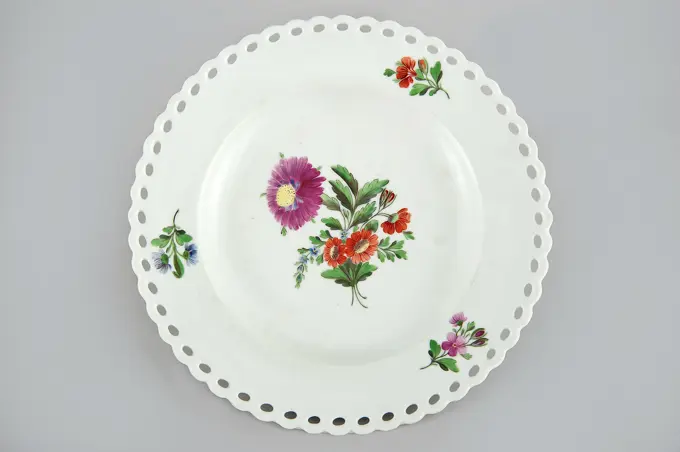
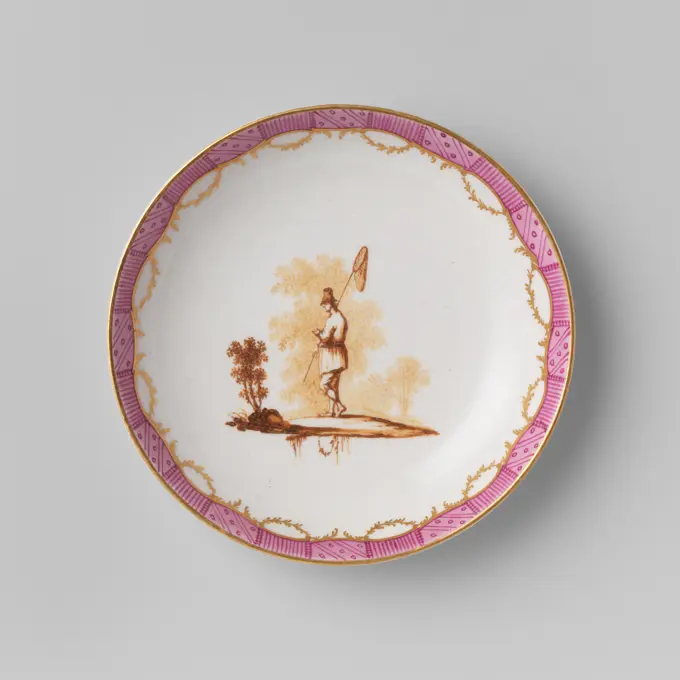
Elegant round porcelain dishes decorated with floral patterns and relief edges, showcasing craftsmanship from the Meissen porcelain manufactory.

Plate, multi -colored painted with Deutsche Blumen, Insekten and Fruits, Meissener Porzellan Manufaktur, c. 1750 - c. 1760 Round plate of painted porcelain. The board is painted with Deutsche Blumen, Insekten and Fruits. The edge is decorated in relief with the Neuozier pattern. The board is marked and belongs to a service (BK-17474-1 to BK-17474-253). Float porcelain Round plate of painted porcelain. The board is painted with Deutsche Blumen, Insekten and Fruits. The edge is decorated in relief with the Neuozier pattern. The board is marked and belongs to a service (BK-17474-1 to BK-17474-253). Float porcelain
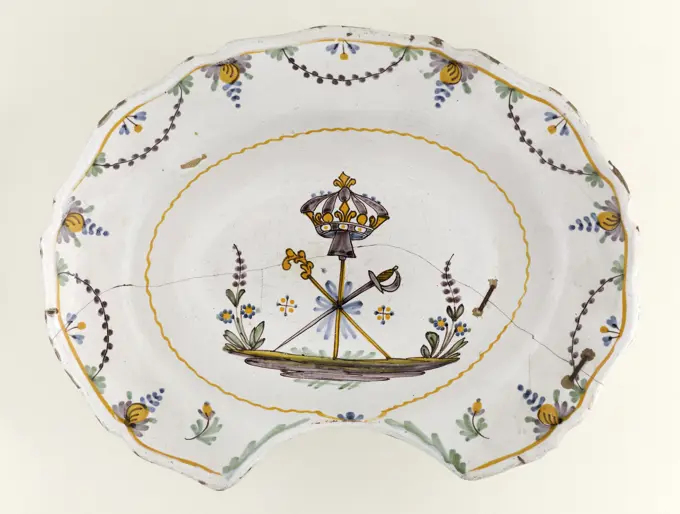
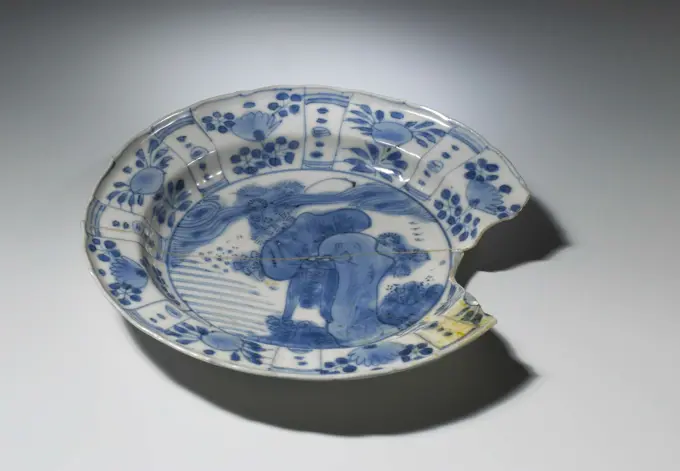
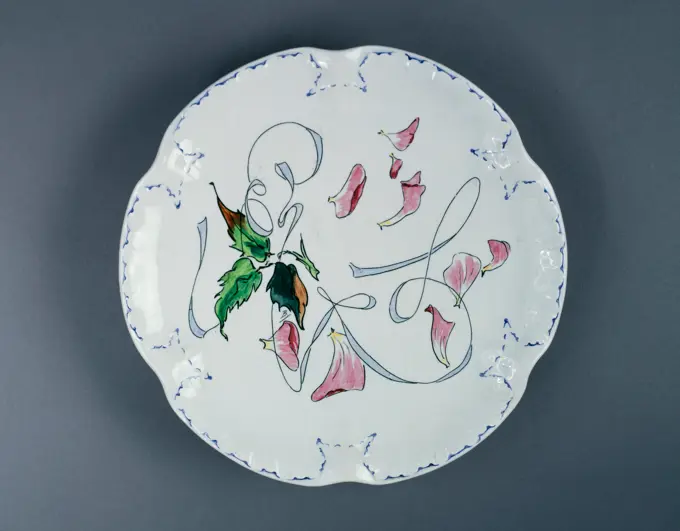
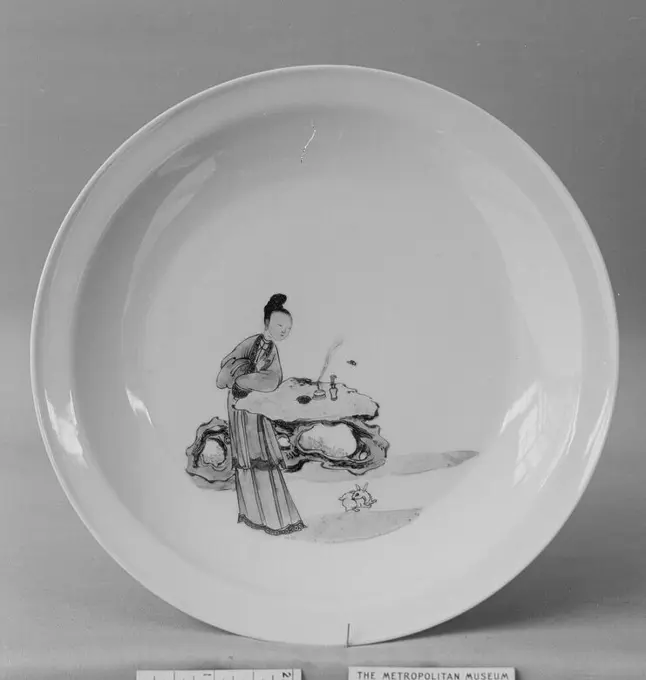
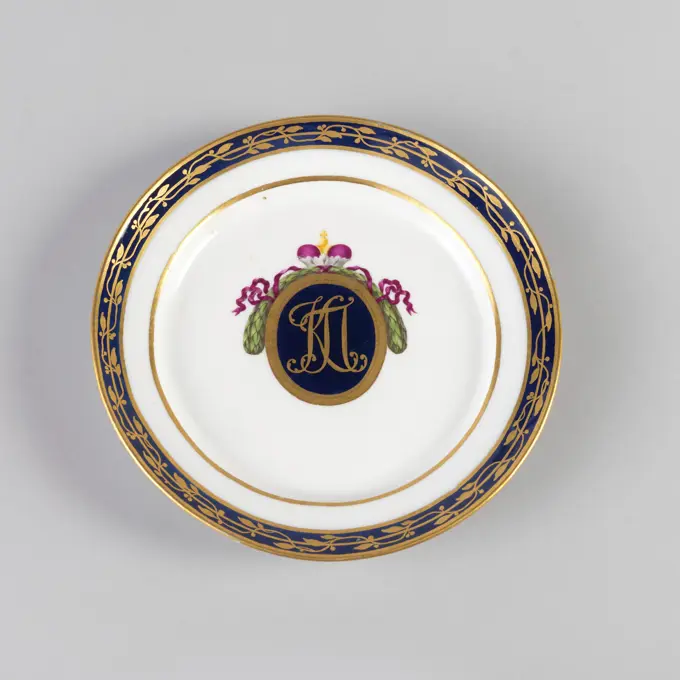
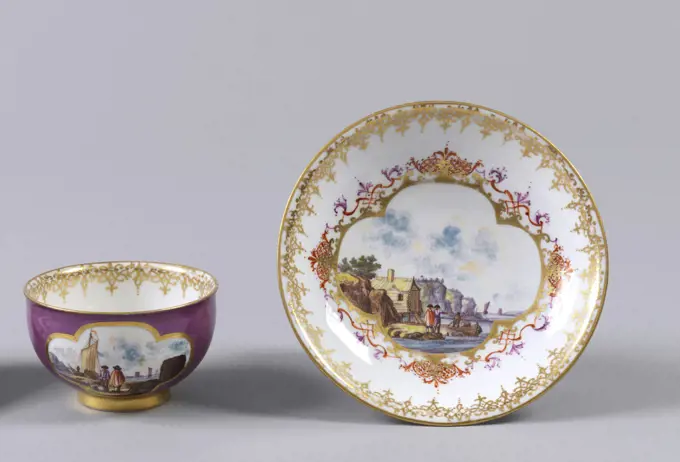
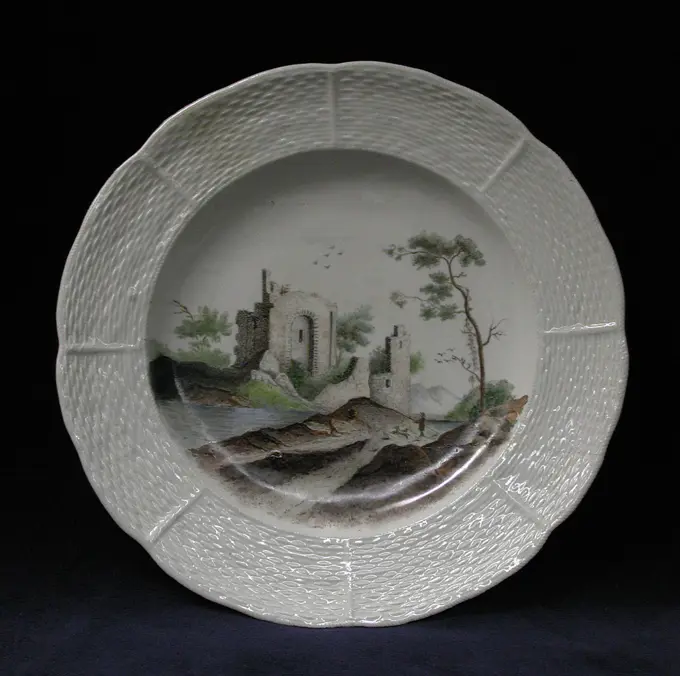
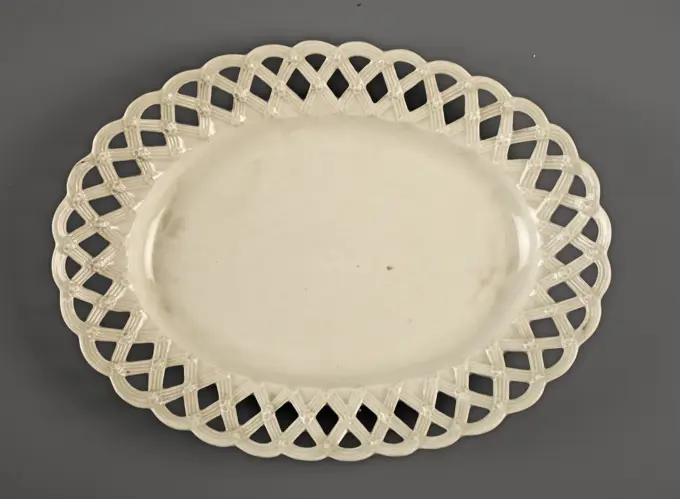
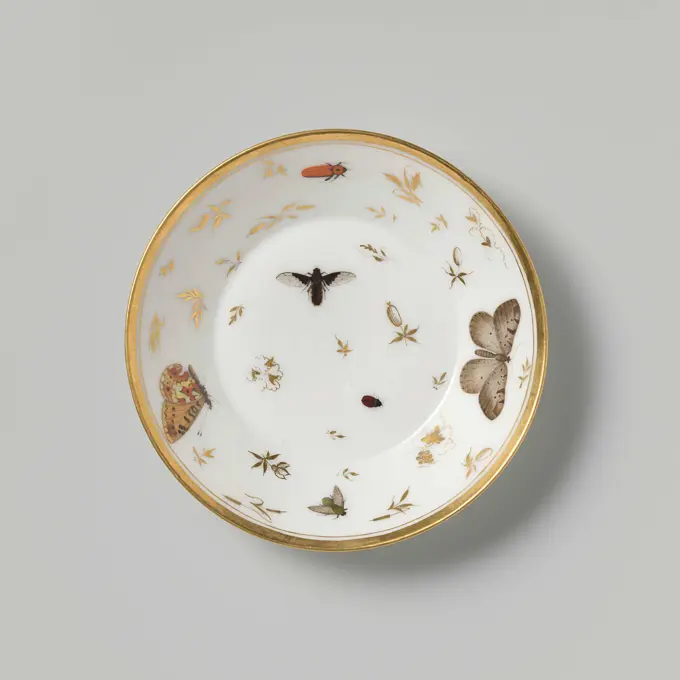
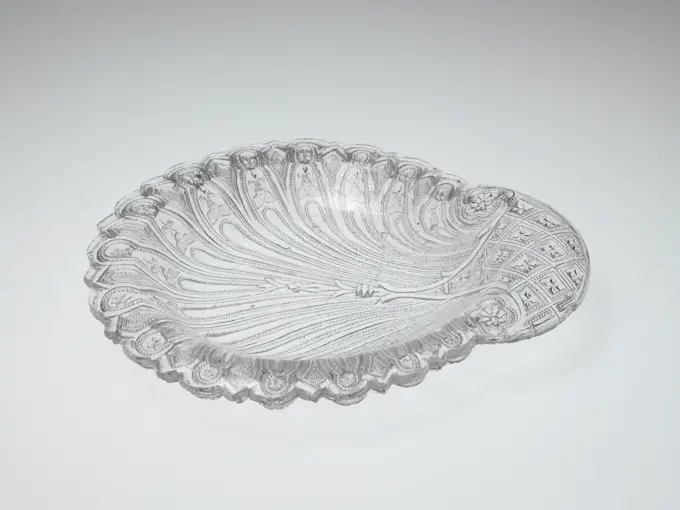
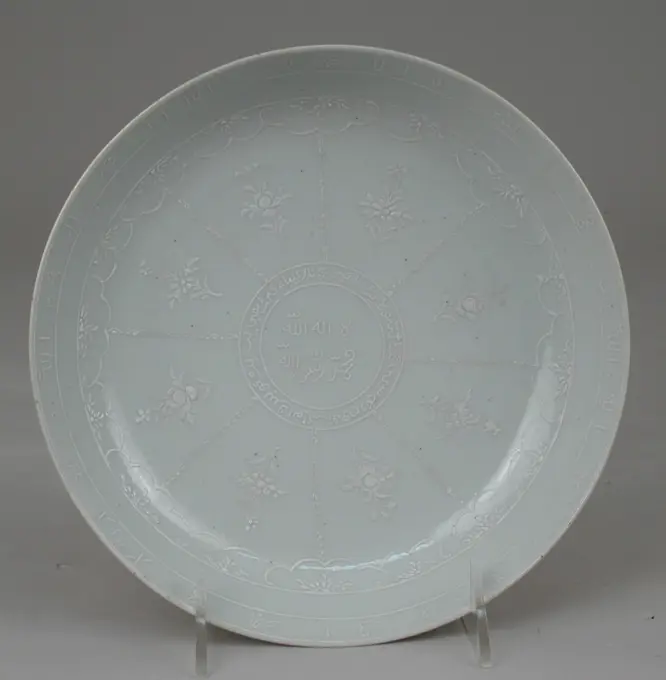
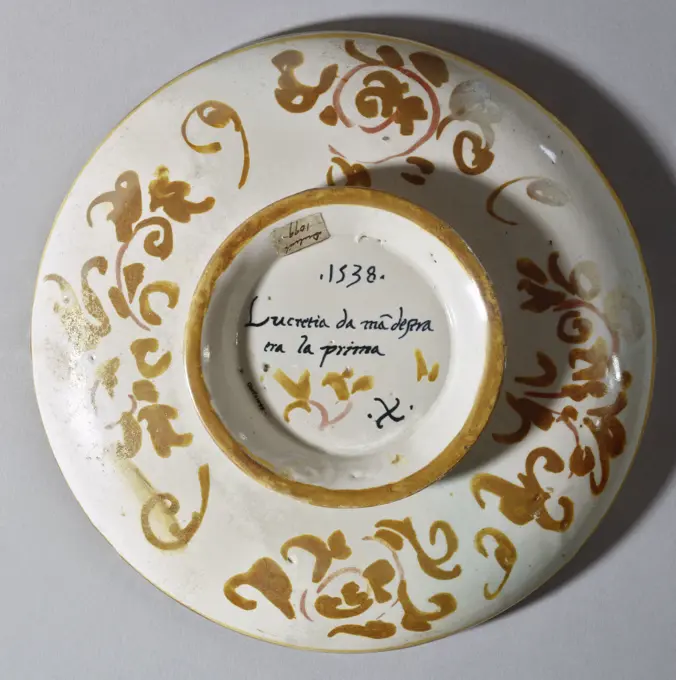
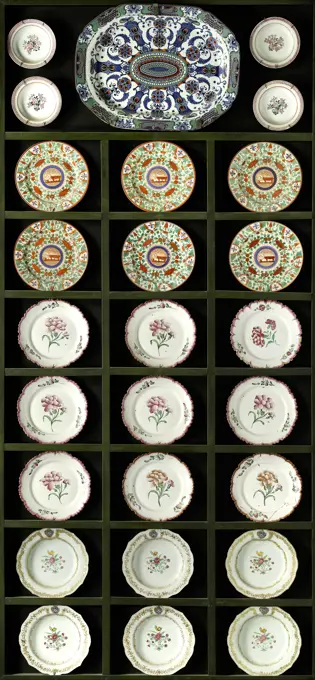
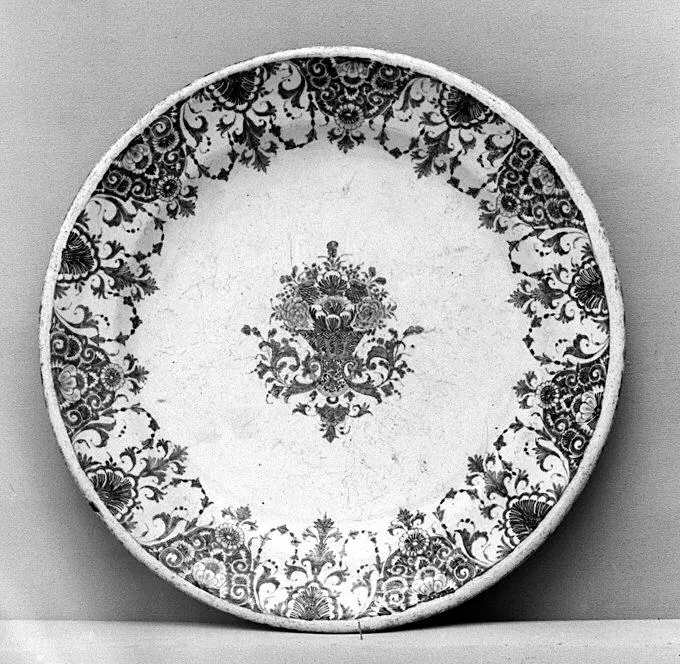
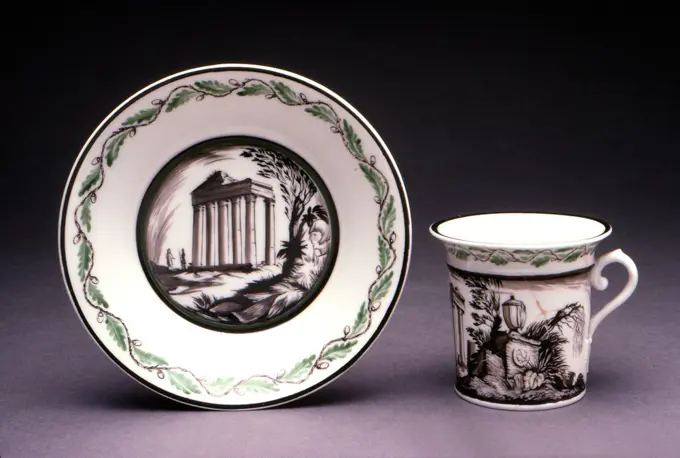
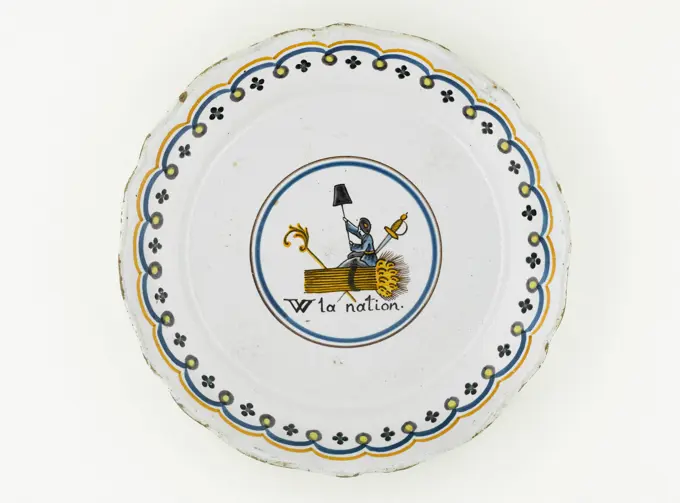
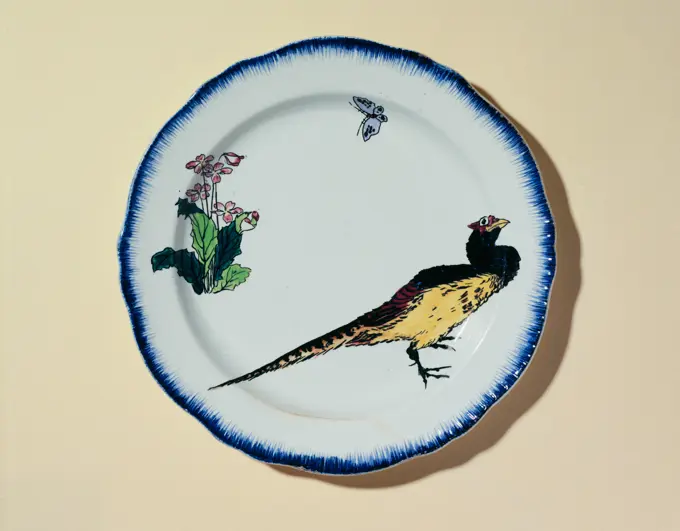
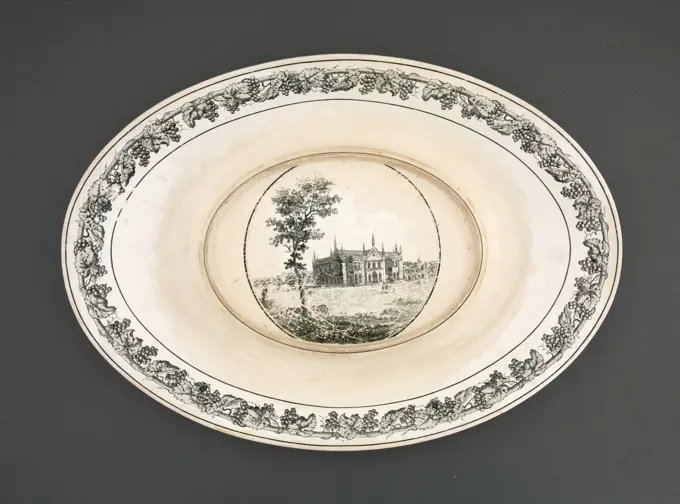
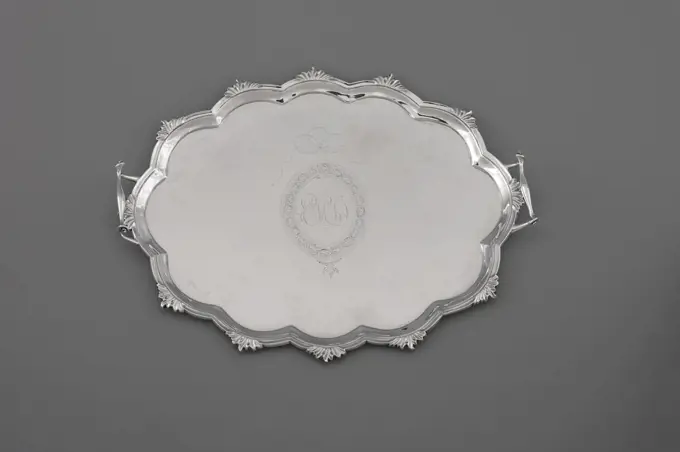
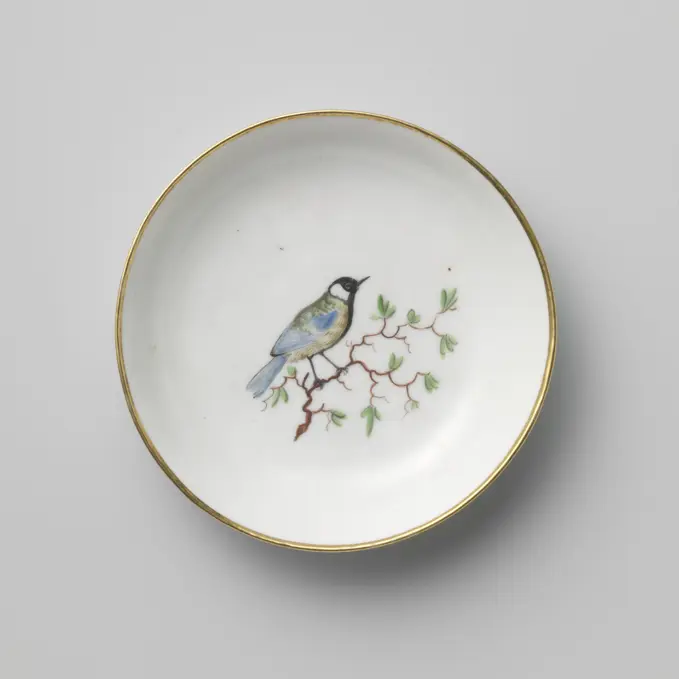
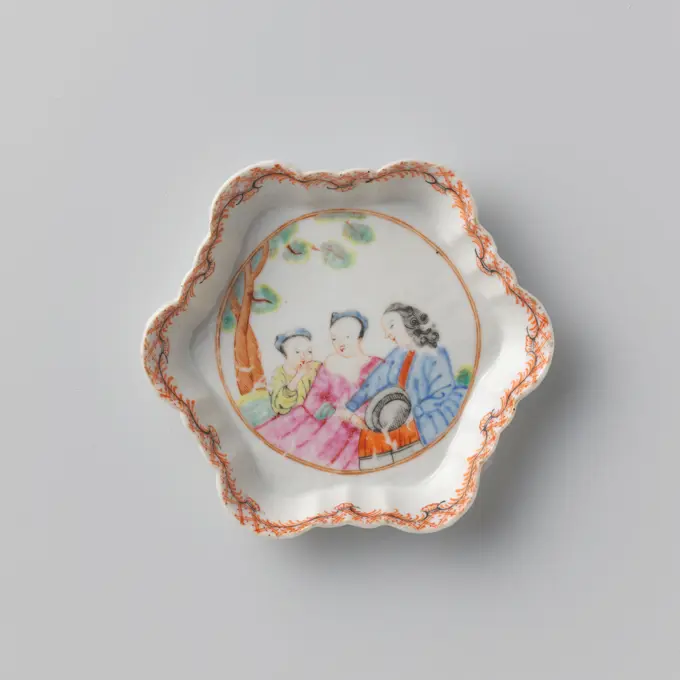
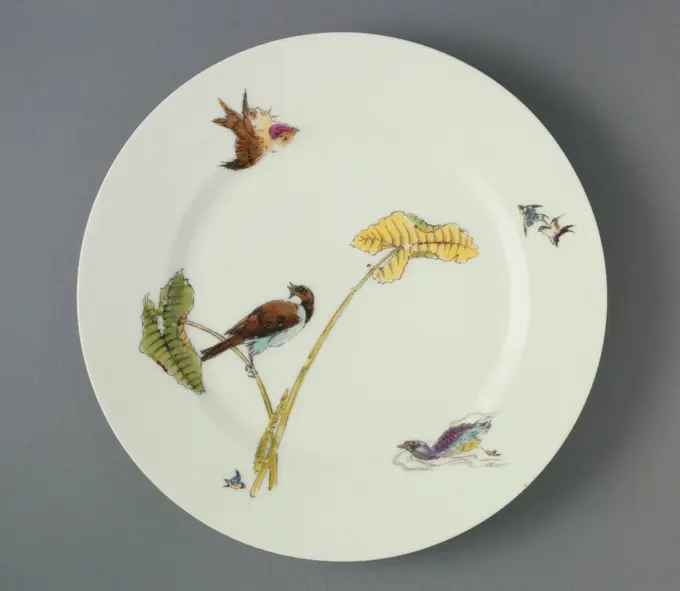
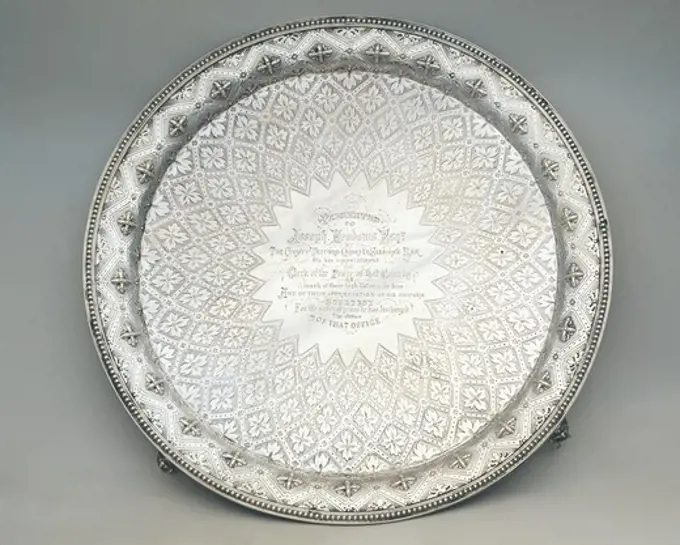
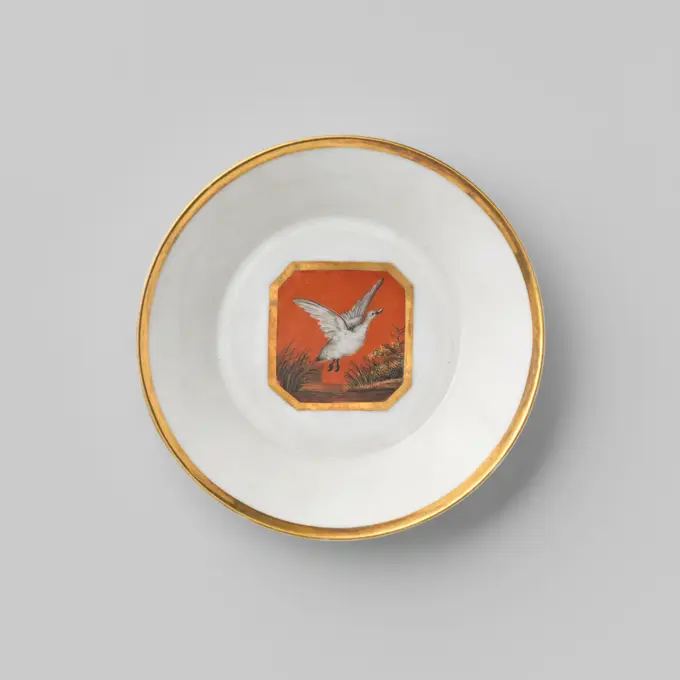
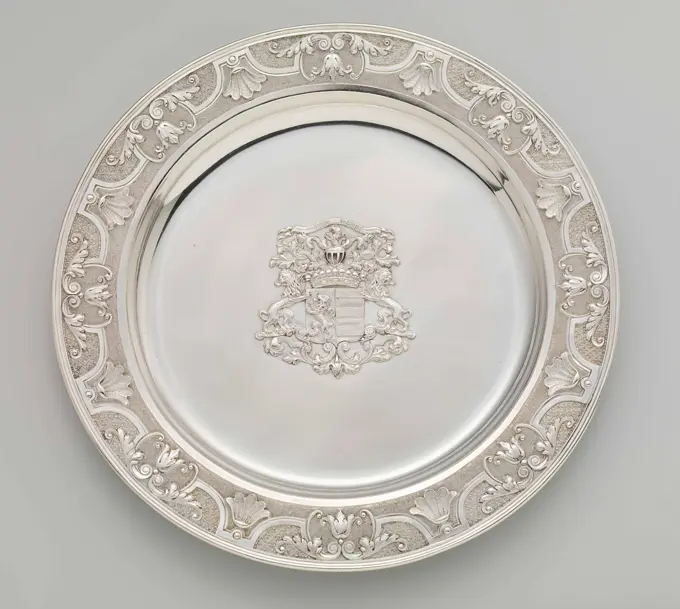
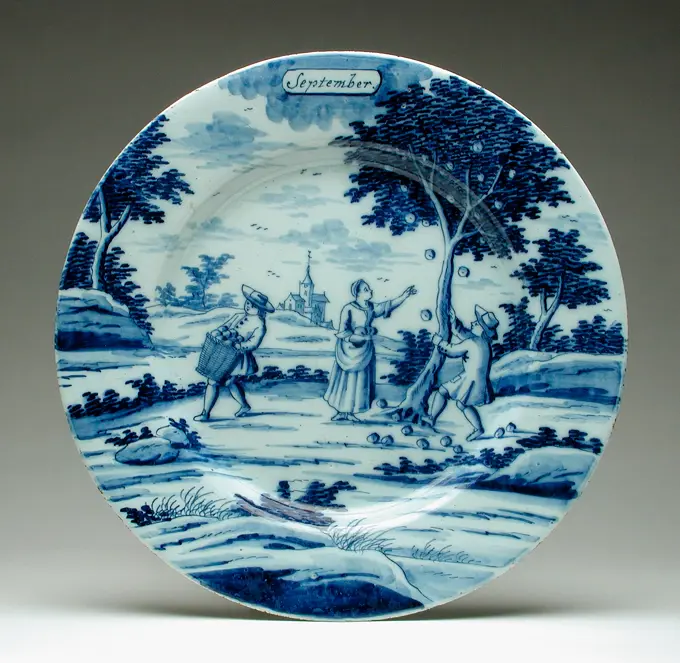
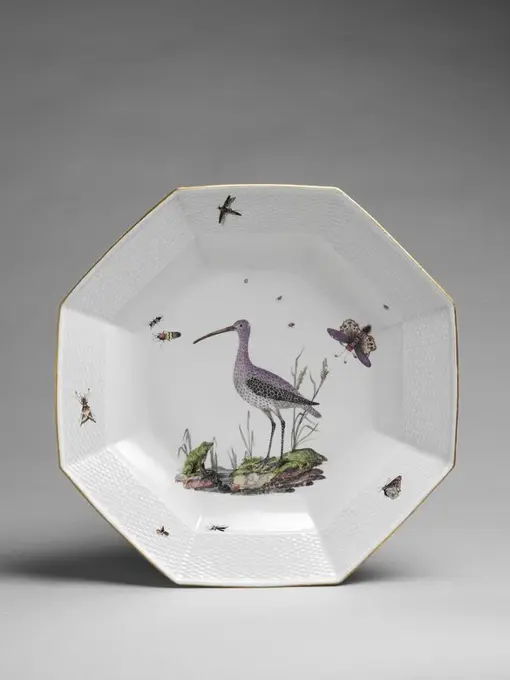
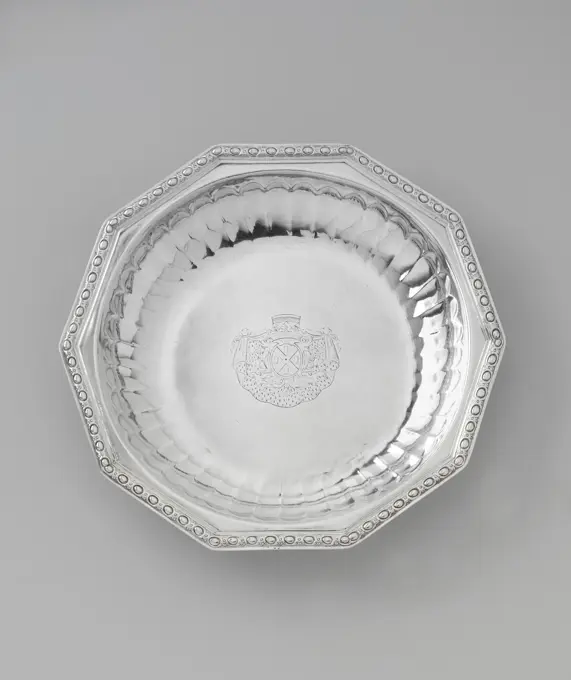
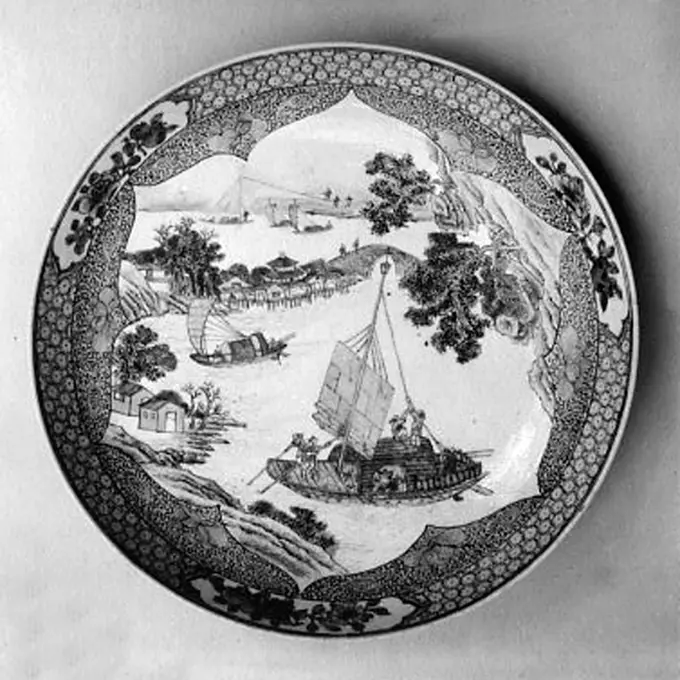
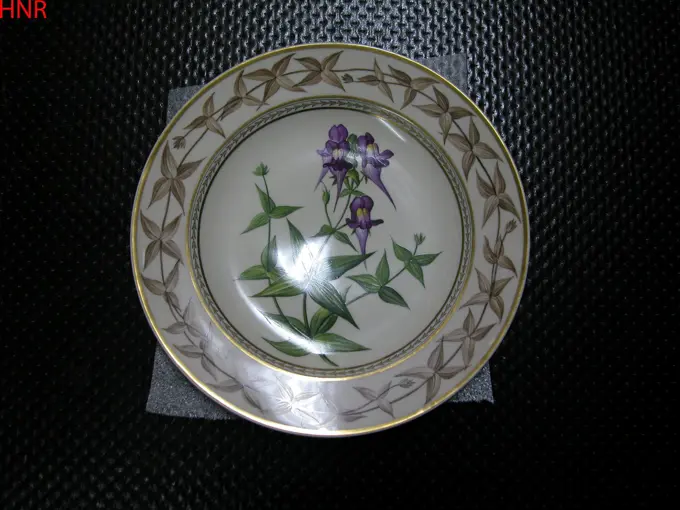
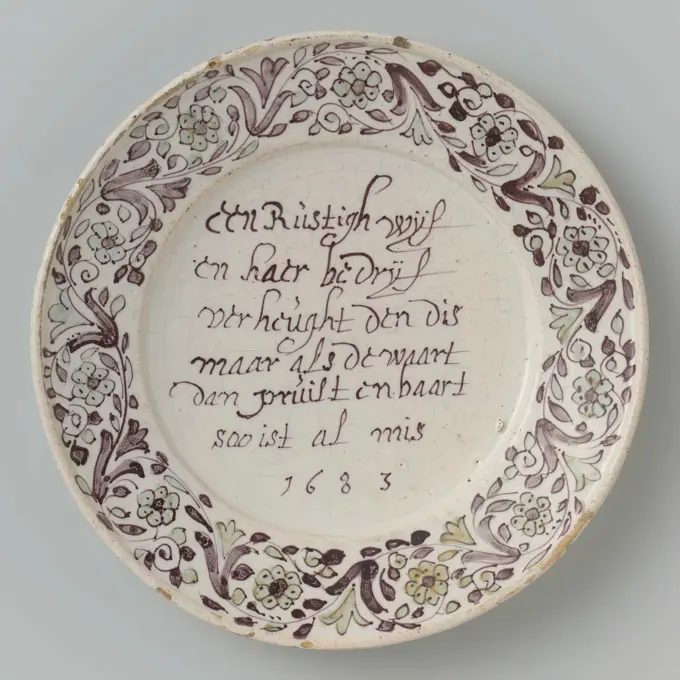
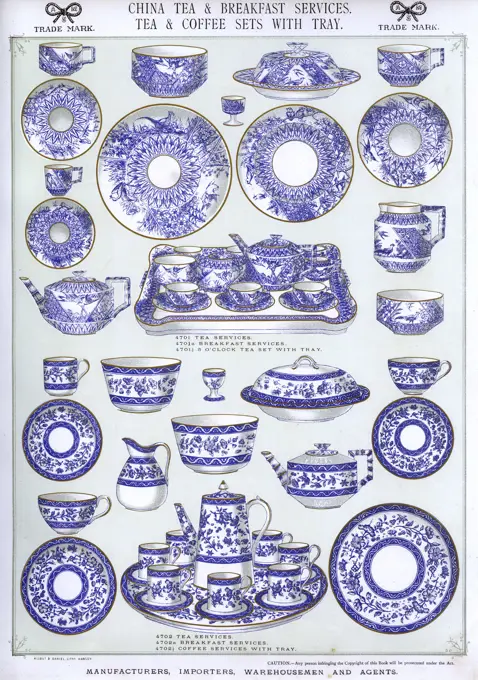
Dish with oriental landscape. Dish of pottery with liquefy transfer decor. On the flat an oriental landscape with buildings.Dessert plate - Davenport DavenportAnonymous. Beard dish with three orders. Earthenware. 1789-1792. Paris, Carnavalet museum. 72437-5 Clerge, crown, decoration, faience, nobility, revolutionary period, French revolution, third-party-state, three orderPlate from v.O.c.-ship the 'white lion'. Plate from v.o.c.-ship the 'white lion', 95%% present. Blackboard with a slightly lobed edge, decorated in underglaze blue. In the flat a grasshopper on a rock in a water landscape, seen from above. On the wall and edge narrow and wide fields with flowering plants and polka dot work. Type 1.1.5.Dessert plate - Davenport DavenportSaucer with an European couple sitting in a landscape, anonymous, c. 1775 - c. 1799 Porcelain dish, painted on the glaze in blue, red, pink, green, yellow, purple, black and gold. On the flat of the dish a medallion of flower vines with a representation of a sitting European pair in a landscape. They are watched by a third person behind them, reminiscent of a character from the Commedia dell'arte. Behind the couple a vase on a pedestal. A crack in the wall of the dish. European performance in email colors. China porcelain. glaze. gold (metal) painting / gilding / vitrification Porcelain dish, painted on the glaze in blue, red, pink, green, yellow, purple, black and gold. On the flat of the dish a medallion of flower vines with a representation of a sitting European pair in a landscape. They are watched by a third person behind them, reminiscent of a character from the Commedia dell'arte. Behind the couple a vase on a pedestal. A crack in the wall of the dish. European performance in emFruit scale of hard baked earthenware, with openwork edge, creamware., Anonymous, c. 1780 - c. 1820 Round fruit bowl of hard baked pottery, with an openwork edge. Garandes and festons run in relief between the openwork medallions. The scale belongs to three equal scales with invnrs. BK-NM-11010-A to BK-NM-11010-D. England earthenware Round fruit bowl of hard baked pottery, with an openwork edge. Garandes and festons run in relief between the openwork medallions. The scale belongs to three equal scales with invnrs. BK-NM-11010-A to BK-NM-11010-D. England earthenwarePlate. unknown, craftsmanFélix Henri Bracquemond, Haviland and Cie. "Cakes plate". Ceramics, earthenware. 1879. Museum of Fine Arts of the City of Paris, Petit Palais. 74386-2 Plate cake, ceramic, faience, flower, haviland and cie, petal, dishes, plateDish with Woman and Rock early 18th century China. Dish with Woman and Rock. China. early 18th century. Porcelain painted with colored enamels over transparent glaze (Jingdezhen ware). Qing dynasty (1644-1911), Yongzheng mark and period (1723-35). CeramicsDish with Woman and Rock. Culture: China. Dimensions: Diam. 7 7/8 in. (20 cm). Date: early 18th century. Museum: Metropolitan Museum of Art, New York, USA.Saucer ca. 1763-71 Tournai. Saucer 187774 Factory: Tournai, Belgian, established ca. 1750, Saucer, ca. 176371, Soft-paste porcelain, Diameter: 4 5/8 in. (11.7 cm). The Metropolitan Museum of Art, New York. Gift of Henry G. Marquand, 1894 (94.4.157)Scale, the young Moriaanshooft (Manner of), c. 1660 - c. 1680 FaaMence scale with a chinoiserie decoration. Delft . FaaMence scale with a chinoiserie decoration. Delft .Plate (Russia); Manufactured by Imperial Porcelain Manufactory (Russia); glazed porcelainCup and Saucer, Meissen Porcelain Manufactory, German, active from 1710 to the present, hard paste porcelain, vitreous enamel, gold, Cup hemispherical, with slight outcurving at edge; cylindrical foot; no handle. Saucer shallow, curved side, slight outcurving at edge. Outside of cup and saucer decorated with slightly mottled red-violet, in which on cup are two four-lobed reserve panels enclosing seaport scenes. Upper face of saucer decorated with seaport enclosed in framework of gilding and colored scrolls. Gilt 'lace' borders., Germany, 1735-1745, ceramics, Decorative Arts, cup and saucer, cup and saucerPlate ca. 1765 Zurich Pottery and Porcelain Factory The gift of the Hans Syz Collection in 1995 endowed the Museum with nearly three hundred examples of European and Asian ceramics meticulously acquired by Swiss-born collector Dr. Syz (1894-1991) to chart the migration of models and patterns from East to West. Documenting a continuous process of influence and adaptation, these pieces provide a discriminating review of the nuances of stylistic change resulting from three centuries of trade.. Plate 208492Plate 1876-88 Haviland & Co. American and French. Plate 207747Covered Cup and Hot-Water Plate. China, Qianlong period, circa 1790. Furnishings; Serviceware. PorcelainPlate - View of Niagara FallsSalaterkaPlate with openwork and flowers. Baranówka (manufaktura porcelany ; 1804-post 1900 ), manufactureDish. Dish of porcelain. Painted in sepia with figures in a landscape. Along the edge a lilac fries between golden piping.Hexagonal Saucer With Star-Shaped Panel with a Flying Crane. Hexagonal dish of porcelain, painted in underglaze blue. On the flat a flying crane against a ground of 'crackled ice' in a star-shaped cartouche; for the cartouche lotus drinks; the edge with a decorative tire; On the back five valuables (artemisia leaf, pearl, roller, diamond, music stone) and a lucky symbol (shell). Marked on the underside with the seal brand 'Fú' in a double circle. Blue White.Oval bowl; Korzec (Porcelain Manufaktura; 1790-1832); 1800-1805 (1800-00-00-1805-00-00);Ryszard, Stanisław Ryszard (1871-1955) - collection, openwork, purchase (provenance)Dish, decorated with insects. Dish of porcelain, part of a tea set, decorated with golden edges, insects in colors and golden spreading flowers. Note: Some parts of the tea set are marked with the letters GB, rue Thirou à Paris.Plate, one of five, 18th century, 7/8 x 5 5/8 in. (2.2 x 14.29 cm), Porcelain, China, 18th centuryDish 1835-40 American. Dish. American. 1835-40. Pressed glass. Probably made in New England, United States. Dish of porcelain, painted on the glaze in blue, red, pink, green, purple, black and gold. On the flat a crowned monogram 's.c.w.' Flanked by angels with a trumpet. Under the monogram the date '1776'. Four flower branches on the wall. The inner edge with a decorative band. Old label on the bottom with 's.c.w. (British Museum) '. Weapon porcelain with email colors.. Porcelain plate, painted on the glaze in blue, red, green, yellow, purple, black and gold. On the flat a representation of Jacob Bobart with an escula monkey for the Gate of the Botanical Garden in Oxford, England. He is accompanied by a goat and a dog. A 'Spearhead Border' on the wall; The edge with twelve loose flower groups. A chip in the edge. Two old labels on the bottom with 'F. Bodenham / Elmhurst, Hereford / 39 'and '19 / Oxford / M. Watkins ...'. The performance is based on a print attributed to Michael Burghers (1647 / 8-1727). European performance in Encre Chine and email colors.Communion set, Dirk Wor (attributed to), 1736 Supper dish of silver. The edge is decorated with Louis XIV ornament. The applian weapon of Philip Diodati is applied in the middle of the flat. Dordrecht silver (metal) Supper dish of silver. The edge is decorated with Louis XIV ornament. The applian weapon of Philip Diodati is applied in the middle of the flat. Dordrecht silver (metal)Dish early 19th century Chinese, for Near Eastern market. Dish. Chinese, for Near Eastern market. early 19th century. Hard-paste porcelain. Ceramics-Porcelain-ExportDish from v.O.c.-ship the 'white lion'. Dish from v.o.c.-ship the 'white lion', 80%% present; parts of the wall are missing. Large dish with a flat edge, a brace-shaped lip, and an unglazed bottom; Decorated in underglaze blue. In the flat a mytholgic animal at a pine in a water landscape with stylized clouds, while a large bird comes to fly. The representation is surrounded by a brace-shaped band with geometric motifs. On the wall and edge narrow and wide fields with - very carefully painted! - Lucky symbols and flowering plants. The shard is glassy white and has little ingrained dirt. The glaze is blue tinted. The foot ring is V-shaped, faceted and stands inside. Little oven sand has been found. The lip is scalloped.Francesco Xanto Avelli. Cup Tarquin and Lucrèce, Italian Majolic of Urbino, 1538 (setbacks on a gray background). Museum of Fine Arts of the City of Paris, Petit Palais. 27007-15 Cup, lucrece, Italian majolica, various object, Revers, Tarquin, UrbinoSepolcro di Cecilia Metella, Doccia Porcelain Factory, Italian, established 1735, Gilt and glazed porcelain, Circular plate of grayish porcelain with blue band between two gilt lines around rim; gilt-bordered circular medallion in center with polychrome ruins of Sepolcro di Cecilia Metella., ca. 1780, ceramics, Decorative Arts, Plate, PlatePlatter (part of a service) 1750-70 Chinese, for Continental European market. Platter (part of a service) 201214Plate 19th century Attributed to A. Stevenson, Cobridge. Plate 192971Dish with the coat of arms of Hendrik Peter Godfried Quack and Isabella Gertraud von Carnap, Etienne Blancheron, c. 1790 - c. 1799 Oval dish of a porcelain sauce bowl, where one side gives a striker. Painted on the glaze with gold. On the flat the alliance weapon of Hendrik Peter Godfried Quack and Isabella Gertraud von Carnap. The inner wall with a flower drink and a golden band on the edge. Two prenes on the bottom. Marked on the underside with X. porcelain company: Paris (possibly)Low Countries (possibly) porcelain. glaze. gold (metal) painting / gilding / vitrification Oval dish of a porcelain sauce bowl, where one side gives a striker. Painted on the glaze with gold. On the flat the alliance weapon of Hendrik Peter Godfried Quack and Isabella Gertraud von Carnap. The inner wall with a flower drink and a golden band on the edge. Two prenes on the bottom. Marked on the underside with X. porcelain company: Paris (possibly)Low Countries (possibly) porcelain. glaze. gold (metal) paintiVictor Hugo (1802-1885). Chinese decor from Juliette Drouet's house in Guernsey, West Wall. Green wooden record containing plates and dishes, composed of twenty-seven compartments (right side of the west wall). Painted wood. 1857-1864. Paris, house of Victor Hugo. 78171-18 Asian art, decorative arts, painted wood, green wood, Chinese cabinet, locker, chinoiserie, compartment, decor, faience, storage, Chinese living room, dishes, 19th XIX 19th 19th 19th 19th century, plate, dishPlate with Applied Flowers 1763-1774 Meissen. Hard-paste porcelain, polychrome enamels, and gilding . Meissen Porcelain Manufactory (Manufacturer)Plate ca. 1705-20 French, Rouen Faience, or tin-glazed and enameled earthenware, first emerged in France during the sixteenth century, reaching widespread usage among elite patrons during the seventeenth and early eighteenth centuries, prior to the establishment of soft-paste porcelain factories. Although characterized as more provincial in style than porcelain, French faience was used at the court of Louis XIV as part of elaborate meals and displays, with large-scale vessels incorporated into the Baroque garden designs of Versailles. Earlier examples of French faience attest to the strong influence of maiolica artists from Italy. Later works demonstrate the ways in which cities such as Nevers, Rouen, Lyon, Moustiers, and Marseille developed innovative vessel shapes and decorative motifs prized among collectors throughout Europe. While faience can be created from a wide mixture of clays, it is foremost distinguished by the milky opaque white color achieved by the addition of tin oxide Dish. Culture: China. Dimensions: Diam. 8 1/2 in. (21.6 cm). Date: late 17th-early 18th century. Museum: Metropolitan Museum of Art, New York, USA.Classical Scenes Cup And Saucer; Designed by Mikhail Mikhailovich Adamovich (1884); Manufactured by State Porcelain Factory (Russia); porcelain, enamelDessert plate - Davenport DavenportPlate 1730-1800 French, Varages Faience, or tin-glazed and enameled earthenware, first emerged in France during the sixteenth century, reaching widespread usage among elite patrons during the seventeenth and early eighteenth centuries, prior to the establishment of soft-paste porcelain factories. Although characterized as more provincial in style than porcelain, French faience was used at the court of Louis XIV as part of elaborate meals and displays, with large-scale vessels incorporated into the Baroque garden designs of Versailles. Earlier examples of French faience attest to the strong influence of maiolica artists from Italy. Later works demonstrate the ways in which cities such as Nevers, Rouen, Lyon, Moustiers, and Marseille developed innovative vessel shapes and decorative motifs prized among collectors throughout Europe. While faience can be created from a wide mixture of clays, it is foremost distinguished by the milky opaque white color achieved by the addition of tin oxide Saucer with a crowned, illegible monogram surrounded by two flower sprays, anonymous, c. 1750 - c. 1774 Porcelain dish, painted on the glaze in blue, red, pink, green, yellow, black and gold. On the flat a crowned, illegible monogram surrounded by two flower branches; The wall with flower vines with four cartouches with a landscape and four medallions with plants. European performance in email colors. China porcelain. glaze. gold (metal) painting / gilding / vitrification Porcelain dish, painted on the glaze in blue, red, pink, green, yellow, black and gold. On the flat a crowned, illegible monogram surrounded by two flower branches; The wall with flower vines with four cartouches with a landscape and four medallions with plants. European performance in email colors. China porcelain. glaze. gold (metal) painting / gilding / vitrificationDish with nine -lobe edge of blue painted faience, anonymous, c. 1690 - c. 1740 Dish of blue painted faience. The edge is nine -lobed. The lobes are outlined. Flowers and sprinkling flowers are painted on the flat and within the lobes. Delft earthenware. tin glaze. Dish of blue painted faience. The edge is nine -lobed. The lobes are outlined. Flowers and sprinkling flowers are painted on the flat and within the lobes. Delft earthenware. tin glaze.Saucer with a man, woman and two panels with characters, anonymous, c. 1825 - c. 1874 Porcelain dish with straight wall, painted on the glaze in blue, red, pink, green, yellow, black and gold. On the flat of the dish a man, woman and two cartouches with characters; A fan -shaped with 'crackled ice' and a cartouche formed by a bamboo branch. Famle Rose. China porcelain. glaze. gold (metal) painting / gilding / vitrification Porcelain dish with straight wall, painted on the glaze in blue, red, pink, green, yellow, black and gold. On the flat of the dish a man, woman and two cartouches with characters; A fan -shaped with 'crackled ice' and a cartouche formed by a bamboo branch. Famle Rose. China porcelain. glaze. gold (metal) painting / gilding / vitrification. Fragmentary octagonal plate of blue painted faience. On the flat is a landscape with a building with a tower painted and on the edge of four-leaved rosettes. The board is a soil find out of Leiden and consists of two pieces.Plate 1796-1800 Burslem. Creamware with polychrome enamel . Herculaneum Pottery Co.Plate with three orders. Earthenware. 1790-1792. Paris, Carnavalet museum. 76184-10 Former regime, seated, cereal, butt, epis, epis ble, re -skips, man, decorative motif, nation, shovel, French revolution, hold, three ordersCake plate with a floral decoration. Cup and saucer of porcelain, painted on the glaze in blue, red, pink, green, black and gold. On the Flat the weapon of Martinus Nolthenius (1766-1793), a VOC servant. The weapon is divided into four compartments with 1. a sea stod against a blue background; 2. Two dolphins ? Against a golden background; 3. Six squares against a silver background; 4. Six golden stars on a green background. The cover is in blue and gold with brushes; The helmet sign is a swan. To the weapon and on the inner edge decorative tires. The head with the same decoration with on the wall, except the weapon, a flower branch. Two cracks and two chips in the edge of the dish. Weapon porcelain with email colors.Dish belonging to head with a farmer's wedding. Dish of porcelain, decorated with three medallions, interspersed with fan-shaped craftsmanship. Belonging to cup with farmers wedding.Dessert plate - Maple Thomas Furnival & Sons Thomas Furnival & SonsSalaterka MieleówFélix Henri Bracquemond, Eugène Rousseau. "Flat plate". Ceramics, fine earthenware, printed decor and painted under cover. 1866-1875. Museum of Fine Arts of the City of Paris, Petit Palais. 74386-13 Flat, ceramic, prints, fine, fine flower, bird, butterfly, dishesJacob Hurd, Salver, c. 1740, silver.Soup Plate, Glazed, painted and gilded moulded porcelain, Circular form with scalloped rim; white ground decorated overall with molded and gilded trellis pattern with small pink blossoms with yellow centers at crossing points., Russia, 1756-early 1760s, ceramics, Decorative Arts, soup plate, soup plateCopper leaf, oval with scalloped corners, on four legs and decorated with flower vines, anonymous, 1730 - 1770 Leaf, copper with canton email, with scalloped corners and on four legs. The edge is decorated with grunts, interspersed with half rosettes, both in relief. The entire leaf is very rich and multi -colored: the grunts with boom vessels, saved in a blue, pink or green stock, the half rosettes in pink; The stock of this edge is yellow with green outer edge; On the wide edge between the grunt edge and the flat, a large continuous flower and leaf vend is painted between two edges, a green leaf edge and a pink edge in which a flower and leaf edge is saved; The flat is completely covered with flower and leaf vines around a central rosette in pink, yellow and blue. Between flat and edge a strap of flower and leaf vines saved in a blue distance. On the back four flower vines on the edge and a large flower vank with fruits in the middle Canton copper (metal). Leaf, copper with canton emToy bread plate - Georgeville D'après Francis Morley, 1845-1850plate, 16th century, Museu de Mallorca, Palma, Majorca, Spain.Plato azul, siglos XVII/XVIII. Colección privada.Base under the vaseMaker: Paul Revere, American, 1735-1818, Waiter, Silver, 13 1/4 × 17 in. (33.7 × 43.2cm), Paul Revere made this silver waiter for Elias Haskett Derby, a Salem, Massachusetts, merchant and owner of the trade ship The Grand Turk. Derby’s role as a merchant in the China trade enabled him to buy such an expensive item, which bears his monogram. The maker, goldsmith, and patriot Paul Revere trained with his father, Apollos Rivoire, who had emigrated from France and changed his name to Paul Revere. While Paul Revere II worked in the Rococo style earlier in his career, this waiter exemplifies the Neoclassical style, popular after the American Revolution, in both form and ornament. Characteristic design elements include the elliptical shape, scalloped rim with applied shells, and central medallion, suspended from abow-knot. , Made in Boston, Massachusetts, American, 18thcentury, Containers -MetalsDish, Royal Porcelain Factory Dommer & Co., 1809 - 1814 Dishes multicolored painted with a bird on a branch. Marked: Amstel in black. Nieuwer-Amstel porcelain Dishes multicolored painted with a bird on a branch. Marked: Amstel in black. Nieuwer-Amstel porcelainDish with Scholar in a Landscape. Culture: China. Dimensions: Diam. 6 1/8 in. (15.6 cm). Date: ca. 1655-70.Landscape imagery was particularly popular in Chinese ceramics of the mid-seventeenth century, a period often described as transitional, when imperial control of the great kiln complex at Jingdezhen faltered and the lack of oversight allowed potters to develop new shapes and styles of decoration. Museum: Metropolitan Museum of Art, New York, USA.Saucer ca. 1725-30 Meissen Manufactory German. Saucer 197670Hexagonal teapot stand with two women and a man under a tree, anonymous, c. 1775 - c. 1799 Hexagonal pattipan of porcelain with lobed wall, painted on the glaze in blue, red, pink, green, yellow and black. On the flat two European women and a man under a tree; The man has one of the women by her arm; The inner edge with a decorative band. Underside unglazed. European form and representation in email colors. China porcelain. glaze. painting / vitrification Hexagonal pattipan of porcelain with lobed wall, painted on the glaze in blue, red, pink, green, yellow and black. On the flat two European women and a man under a tree; The man has one of the women by her arm; The inner edge with a decorative band. Underside unglazed. European form and representation in email colors. China porcelain. glaze. painting / vitrificationPlate, one of five, 18th century, 7/8 x 5 5/8 in. (2.2 x 14.29 cm), Porcelain, China, 18th centuryFélix Bracquemond (1833-1914). "Japanese flowers and birds service 123". Flat plate. Porcelain. Museum of Fine Arts of the City of Paris, Petit Palais. Art Menager, flat plate, flower, flowers and Japanese birds, bird, porcelain, service, dishes, plateDish. Culture: China. Dimensions: Diam. 4 1/2 in. (11.4 cm). Date: 19th century. Museum: Metropolitan Museum of Art, New York, USA.Silversmith's Art, Great Britain 19th century. Engraved silver tray with dedication.Field of tiles with animals and hunter, anonymous, c. 1630 - c. 1650 Field of four tiles (2 x 2) each with a multicolored (blue, orange, purple and green) painted animal (one with a hunter) on a ground within a circle with scalloped edge. In the corners, a meander ornament. Netherlands earthenware. tin glaze majolica Field of four tiles (2 x 2) each with a multicolored (blue, orange, purple and green) painted animal (one with a hunter) on a ground within a circle with scalloped edge. In the corners, a meander ornament. Netherlands earthenware. tin glaze majolicaSaucer with two birds in a landscape, anonymous, c. 1790 - c. 1800  Porcelain saucer with a straight wall, painted on the glaze in email colors and gold. On the flat an octagonal compartment with two white birds in a landscape with a red air. A golden band on the edge. France porcelain. glaze. gold (metal) painting / gilding / vitrificationAnonymous. Plate "Law and justice". Earthenware. Paris, Carnavalet museum. 71683-49 Balance, decoration, faience, justice, law, revolutionary period, French revolution, plateFan Design with Flower Motifs 19th century Anonymous, French, 19th century French. Fan Design with Flower Motifs 392408Decafoil salver 1722 David Willaume I British. Decafoil salver 205217Square Dish with Rock and Tree Design: Arita Ware, 1700s. Japan, Edo period (1615-1868). Porcelain with underglaze blue and overglaze iron decoration; diameter: 11.8 cm (4 5/8 in.).Communion set. Central to the Protestant celebration of the Holy Communion is the remembrance of the Last Supper, when Christ and his disciples gathered for the last time. Christ asked that his suffering and death be commemorated with a communal meal. This is why wine is poured into cups and bread is placed on plates during religious services. This communion set from Dordrecht ranks among the most richly decorated altar plate.Saucer (part of a service) 1785-1800 Chinese, for British market. Saucer (part of a service) 201164Plate from a Calendar Set. 'de Porceleijne Bijl' Shop (Holland, 1679-1803)Hugo or Justus Brouwer (Holland, 1739-1775). Holland, 1739-1775. Furnishings; Serviceware. Earthenware with tin glaze and enamel (Delft)Charger. Culture: German, Meissen. Dimensions: Overall: 2 3/8 x 13 5/8 x 13 1/2 in. (6 x 34.6 x 34.3 cm). Factory: Meissen Manufactory (German, 1710-present). Date: ca. 1745.This large dish and another acquired with it were most likely produced as part of an extensive dinner service, although the service has not yet been identified. Their ornithological decoration suggests a date of manufacture in the mid- to late 1740s. In 1745 the Meissen factory acquired the first volume of Eleazer Albin's "Natural History of Birds," and the decoration on a number of vases and other wares produced shortly thereafter was based on Albin's prints. The accuracy and specificity of the birds portrayed on these wares set them apart from the much less detailed and more generic birds on porcelain produced in the following decades. The skill of the Meissen painters is also reflected in the rendering of the insects on the molded basket work pattern executed in low relief on the rim. Museum: Metropolitan MuseuDish (one of a pair) 1726-28 Jean-Baptiste I Buchet. Dish (one of a pair). French, Rennes. 1726-28. Silver. Metalwork-SilverRemoval Dutch overseas Trust Maatschappij, De Porceleijne bottle, 1919 plate (dishes) Blue glazed plate. Front inscription: NOT / 1915 - 1919 / Van Aalst / OTN, H, V.V, V.H.N., V.D.G, V, MP, R. marked back: Delft Z AG. 683. The letters are the initials of the members of the NOT board: Op Ten Noort, Hintzen, Van Vollenhoven, Van der Goes, Valstar, Maclaine Pont, Roelvink. Van Aalst was President of the Not. Delft earthenware vitrification  NetherlandsPlate China. Plate 52948Plate with a flower spray, royal porcelain manufactory, c. 1825 - c. 1835 Porcelain plate, painted on the glaze in green, yellow, purple, brown, black and gold. On the flat a flower branch on a cream -colored background. The wall with a narrow decorative tire and on the edge a continuous leaf vank with gold lines. On the bottom the inscription 'Antirrhinum Triornithophorum/Amérique Mérdionale'. Marked on the underside with the scepter, the red eagle, a scepter and a globe in his claws, with K.P.M underneath. and the number 32 III. Berlin porcelain. glaze. gold (metal) painting / gilding / vitrification Porcelain plate, painted on the glaze in green, yellow, purple, brown, black and gold. On the flat a flower branch on a cream -colored background. The wall with a narrow decorative tire and on the edge a continuous leaf vank with gold lines. On the bottom the inscription 'Antirrhinum Triornithophorum/Amérique Mérdionale'. Marked on the underside with the scepter, the red eagle, a scepterPaperweight 1843-1860 Baccarat. Technological improvements to optical scientific instruments in the mid-nineteenth century spurred a veritable obsession across Europe with identifying and classifying the natural world. Amateur botanists were eager to collect and preserve floral specimens, which they intently researched and catalogued. In response to this broad appeal, French glassmakers made paperweights that portrayed the very botanical subjects that were so enthusiastically sought. Many weights represented specimens with horticultural correctness, but others were entirely fanciful creations. Paperweights like this example speak to the periodís fascination with taxonomic systems.From the late 1840s to early 1860s, French manufacturers of fine glass and crystalósuch as Baccarat (Alsace), Clichy (Paris), and Saint-Louis (Lorraine)ócatered to the vast public enthusiasm for beautiful yet functional desk accessories. Paperweights, which were designed to secure loose papers against drafts, . Porcelain plate, painted in underglaze blue and on the glaze green, black and gold. On the flat a harlequin with the text: "Who at Uijtrecht or New Amsterdam"; The edge with a decorative pattern. Action board. European performance in blue-white with email colors.. Plate of faience. Multicolor painted with a text. A quiet woman / and haer DISI / LOVE DIS / but when the Waart // then Pout and Baart / Soo is already wrong / 1683.China Tea and Breakfast Services, Tea and Coffee Sets with Tray, Plate 33, showing blue and white patterned plates, cups and saucers, covered dishes, teapots, coffee pots, sugar bowls and milk jugs.      Date: circa 1880sAbstract ornamental nature vintage frame. Modern volumetric floral elements. Trendy craft style illustration. Abstract ornamental nature vintage frame.One from a Set of Dishes with Orchid Designs. Japan, Edo period (1615-1868), mid-18th century. Ceramics. Porcelain with celadon glaze and blue underglazeWhite House China. Plate from the state service of President John Quincy Adams in the White House china collection.Cheese Dish, Doccia Porcelain Factory, Italian, established 1735, hard paste porcelain, vitreous enamel, gold, Dish with pierced lattice rim and polychromed scene of Roman ruins in center., Italy, ca. 1780, ceramics, Decorative Arts, dish, dishSamuel Philpot, Valentine, c 1940 ValentineFélix Henri Bracquemond, Eugène Rousseau. "Rousseau" service "" hollow plates ". Earthenware. 1866-1875. Museum of Fine Arts of the City of Paris, Petit Palais. 74386-9 Hollow plate, faience, butterfly, rousseau service, dishesCup and saucer ca. 1790 German, Rudolphstadt. Cup and saucer 210322Wine Cup mid-19th century Japan. Wine Cup 57727Plate, with a soldier with a bull on the flat. Plate of pottery with multicolor transfer decor. On the flat a soldier with a bull on a leash. Some soldiers are seated for a house and watch, busy, ready. The edge of the board is deposited with green piping.Vietnam, Hue. Souvenir plates in outdoor market