My Boards
View Pictures
  • My Boards

Persian Manuscripts and Texts

Collection of vintage Persian manuscript pages featuring intricate calligraphy and decorative elements, highlighting the art of storytelling and craftsmanship in historical texts from the Safavid peri

Qisas al-Anbiyâ, fol. 94v, 1580, Qazvin
290 assets in this story
6145-29085724
Page from Tales of a Parrot (Tuti-nama): text page, c. 1560. Mughal India, court of Akbar (reigned 1556-1605). Ink and gold on paper; overall: 20.3 x 14 cm (8 x 5 1/2 in.).
6145-29174091
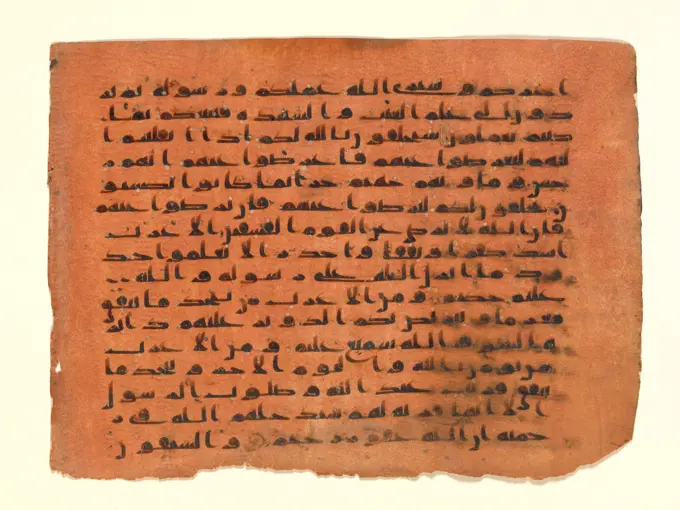
Folio from a Qur'an Manuscript probably 9th century The tradition of dyed manuscripts developed in Byzantium for making valuable books, such as the Gospels. The technique continued into the early Islamic period, with the Blue Quran as its most spectacular manifestation. Tinted pages were used only in the most luxurious manuscripts, for they required extra work in preparing the already expensive parchment with precious pigments. Here, pages dyed red support a dense, regular script completed in a plain ink. This folio can be dated to the early Islamic period thanks to its simple kufic calligraphy. This script lacks the vowels or diacritical marks typical of the later, more developed written form of Arabic.. Folio from a Qur'an Manuscript 455067
6145-43616503
Ostracon with Text in Arabic. unknown, calligrapher
1899-18713350
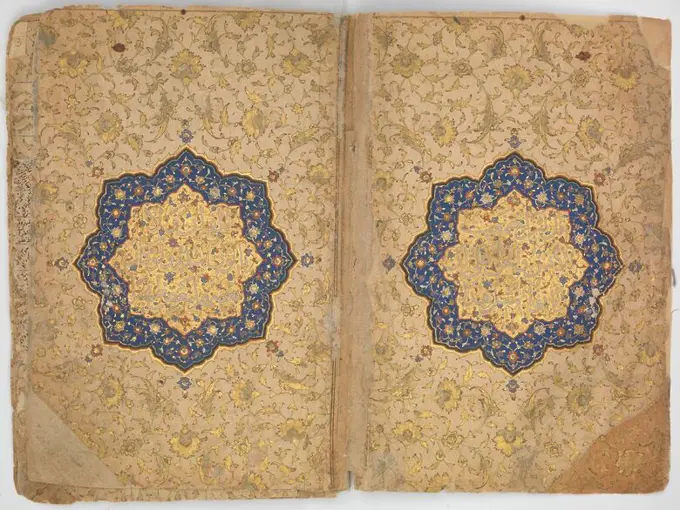
This manuscript of Persian poems is written in nastaliq script. The page-borders represent birds and animals in various colours outlined in gold. The manuscript was produced in 1604 by Shah Qasim and is a copy of the original collection of poetry by Khaqani, Afzal al-Din Shirvani from the end of the 12th century.
6145-51817285
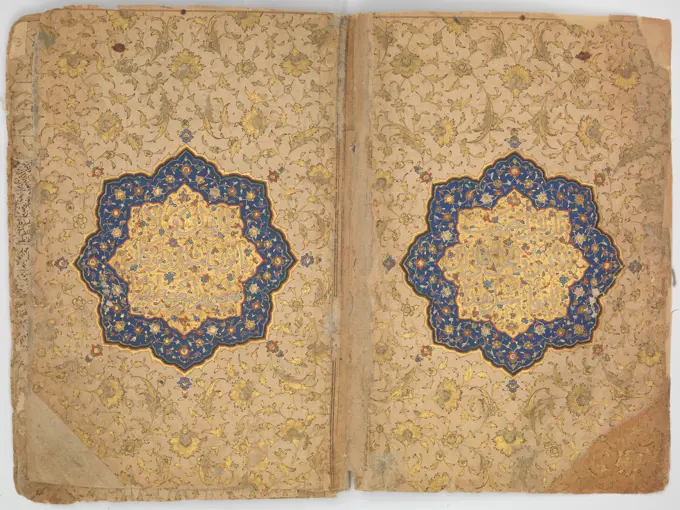
Double Page from a Manuscript of the Tuhfat al-Iraqain by al-Khaqani (c. 1127-1186/7 or 1189) Double Page from a Manuscript of the Tuhfat al-Iraqain by al-Khaqani (c. 1127-1186/7 or 1189), 17th century. Ink and gold on paper, 6 7/8 x 11 3/16 in. (17.5 x 28.4 cm).   Arts of the Islamic World 17th century
4443-75463892
Materia medica. Arabic, fol. 227, Mîrzâ Bâqir (fl. 19th c.), 1889 - 1890, Tehran or Mashhad
4409-17509269
A manual containing suras from the Qur'an and prayers. Date/Period: 1779. Ink, colours and gold on paper. Height: 161 mm (6.33 in); Width: 110 mm (4.33 in). Author: Copied by Abdullah Edirnevi.
6145-48827853
Koran handwriting. Beginning of the 4th Sure ("the women"). Leaf 38
1899-18713338
This manuscript of Persian poems is written in nastaliq script. The page-borders represent birds and animals in various colours outlined in gold. The manuscript was produced in 1604 by Shah Qasim and is a copy of the original collection of poetry by Khaqani, Afzal al-Din Shirvani from the end of the 12th century.
1525-56162145
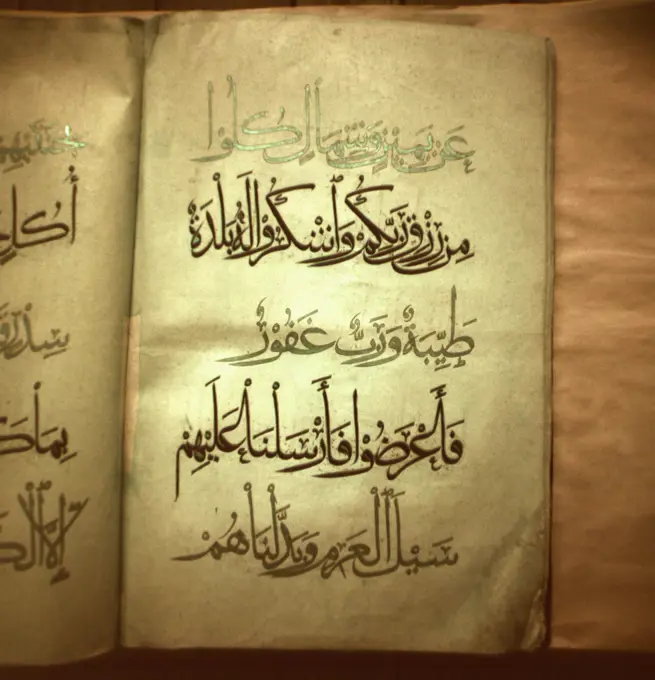
Ancient open book in arabic. Old arabic manuscripts and texts. ancient arabic book
1899-18711788
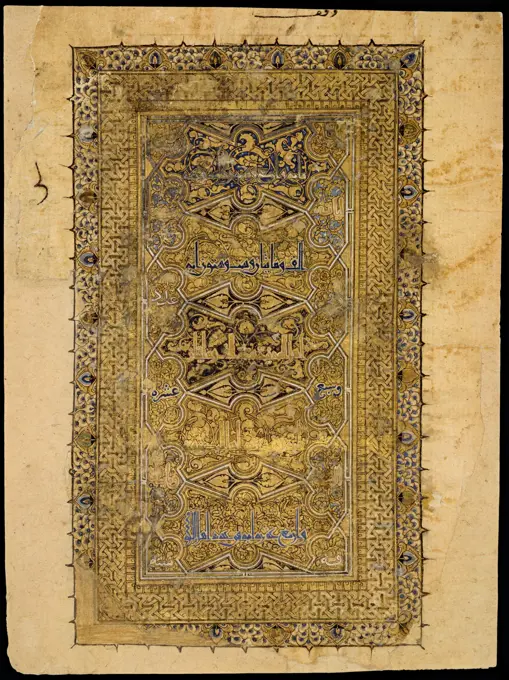
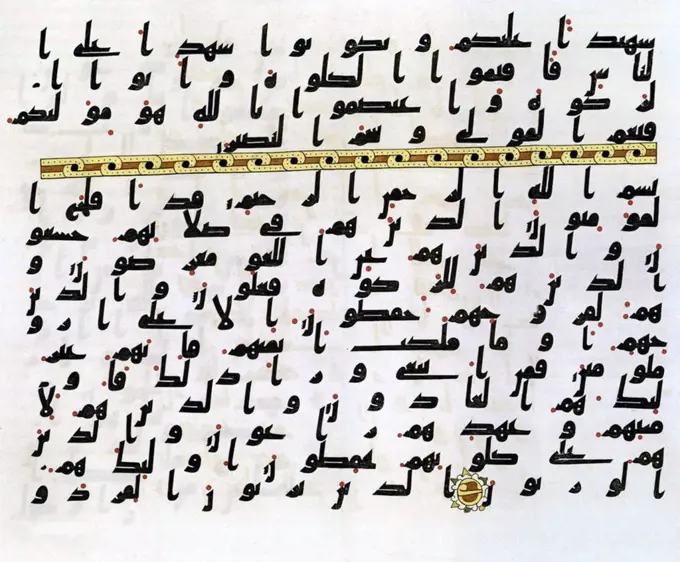
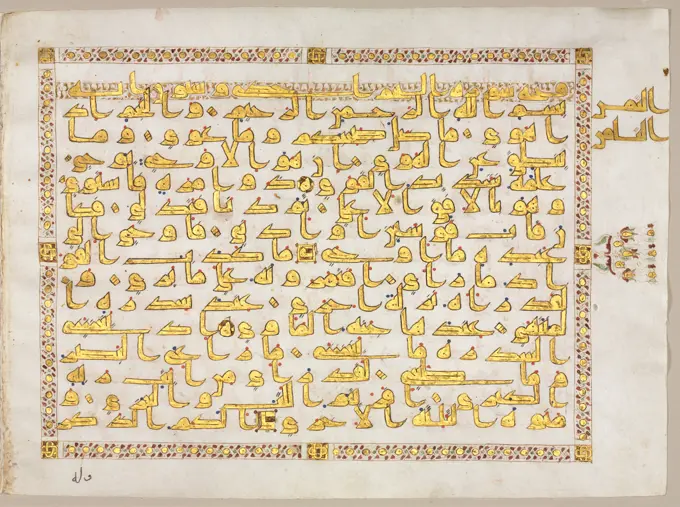
Eastern Kufic script is distinguished by tall upstrokes that often have left-facing serifs and curved downstrokes. The various diacritical marks that facilitate reading are carefully marked with red, blue, and black. Eastern Kufi was introduced in the 10th century at the same time as paper became the preferred material for Korans in the eastern Islamic world.
4443-75477198
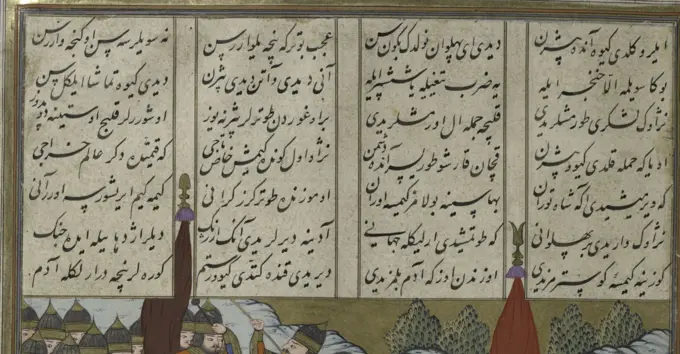
Tazhâv comes to fight with the Iranian army., 1616 - 1620 (Inferred), Istanbul, Manuscripts, Turkish, 25.4 x 18.4 cm
6145-29742307
Qur'an of Ibrahim Sultan dated A.H. 830/A.D. 1427 Ibrahim Sultan Ibrahim Sultan (1394-1435), grandson of Timur and governor of Shiraz, was a patron of the book arts and an accomplished calligrapher in his own right. This Qur'an manuscript, executed in an elegant naskh script, was written by the ruler himself, signed and dated to June 1427. Ibrahim Sultan is said to have copied at least five manuscripts of the Qur'an and to have composed the calligraphic inscriptions for two schools he established in Shiraz.. Qur'an of Ibrahim Sultan 446540
1788-34201
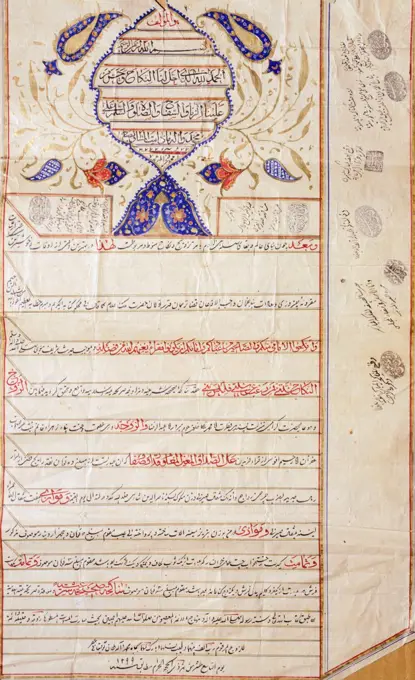
Marriage Contract from Afghanistan, Arabic manuscripts, 19th Century.
1899-68920496
Islamic Arts Museum. Quran in arabic. Daghestan. 19th century.  Kuala Lumpur. Malaysia.
6145-48830048
Bifolium from a Fragmentary Qur'an (fols. 3 and 10). Unknown
6188-61002852
Medieval Coran. Interpretation Centre of Muslim Ibiza Madina Yabisa.Casa de la Cúria 16th century.Eivissa.Ibiza.Islas Pitiusas.Baleares.Spain. Medieval Coran. Interpretation Centre of Muslim Ibiza Madina Yabisa.Casa de la Cúria 16th century.Eivissa.Ibiza.Islas Pitiusas.Baleares.Spain. Copyright: xZoonar.com/Tolox 21723828
1746-19701231
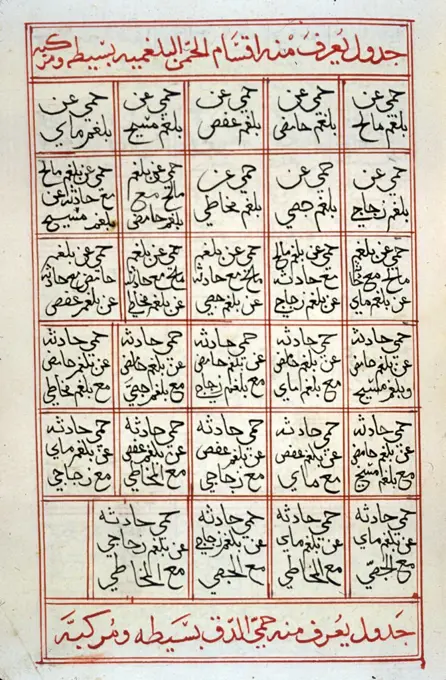
A chart from an anonymous treatise on fevers titled Kitb Ghayht al-umniyt f ma‘rifat al-ummayt (The Most That Could be Desired Concerning the Knowledge of Fevers). The copy is undated, probably 16th century.
4443-75466630
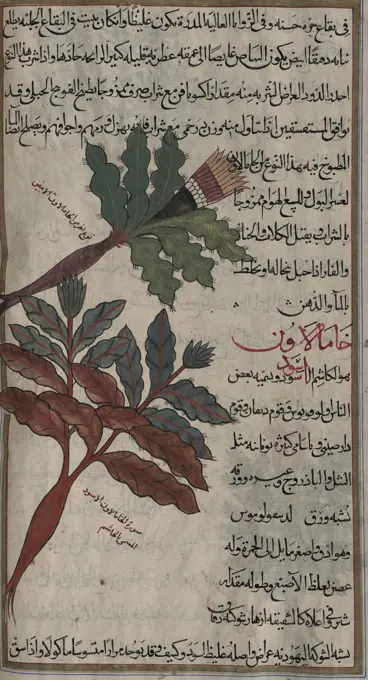
Two varieties of pine thistle (Atractylis gullifera) khâmâlâwun abyâd, fol. 124v, Mîrzâ Bâqir (fl. 19th c.), 1889 - 1890, Tehran or Mashhad, 17.8 x 9.5 cm bottom; 20 x 12 cm top
4435-7614
Huntington Manuscript. Surgical techniques by Albucasis. UNITED KINGDOM. ENGLAND. SOUTH EAST ENGLAND. Oxford. Bodleian Library.
6145-29220950
Manuscript pages showing battle scenes early 17th century Turkish. Manuscript pages showing battle scenes. Turkish. early 17th century. Ink and pigments on paper. Works on Paper
4409-20918076
MANUSC-CORAN CON COMENTARIOS INTERLINEADOS EN PERSA-S XVIII. Location: BIBLIOTECA NACIONAL-COLECCION. MADRID. SPAIN.
6145-51822103
Sixty-seven Folios Containing Manuscript and Miniature Paintings, The Story of Khosrow and Shirin and Laila and Majnun , 19th century. Black ink in nastaliq, paper, Page: 9 13/16 x 6 5/16 in. (25 x 16 cm).   Arts of the Islamic World 19th century
6145-29183257
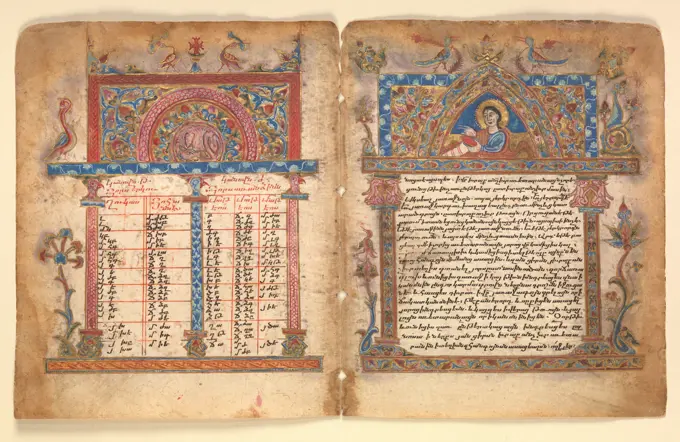
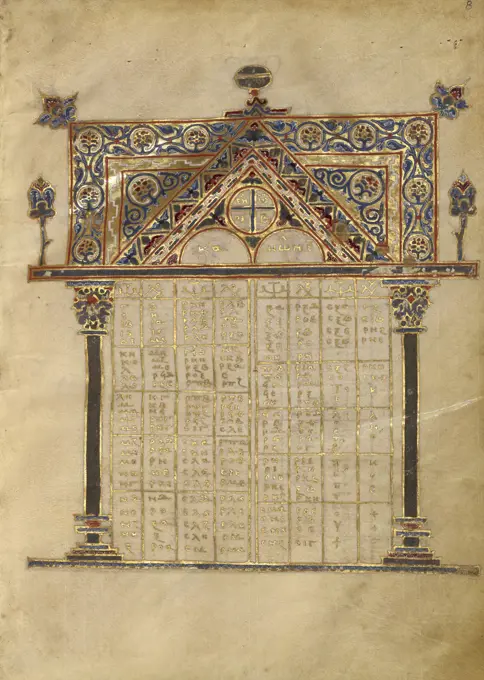
Armenian Manuscript Bifolium 15th century Illuminator Minas () Canon tables, a widely used comparative index to the gospels, were developed by Eusebius of Caesarea for his pupil Carpianus who appears in the headpiece of the explanatory page on the right. When bound, the tables on the left would have been one of the following index pages.. Armenian Manuscript Bifolium 662941
4443-21194424
Decorated Text Page; Unknown; probably Tunisia, Africa; 9th century; Pen and ink, gold paint, and tempera colors on parchment; Leaf: 14.4 x 20.8 cm (5 11/16 x 8 3/16 in.)
4409-17500469
Qur'an of Ibrahim Sultan. Calligrapher: Ibrahim Sultan. Dimensions: H. 8 in. (20.3)W. 5 1/2 in. (14 cm). Date: dated A.H. 830/A.D. 1427.Ibrahim Sultan (1394-1435), grandson of Timur and governor of Shiraz, was a patron of the book arts and an accomplished calligrapher in his own right. This Qur'an manuscript, executed in an elegant naskh script, was written by the ruler himself, signed and dated to June 1427. Ibrahim Sultan is said to have copied at least five manuscripts of the Qur'an and to have composed the calligraphic inscriptions for two schools he established in Shiraz. Museum: Metropolitan Museum of Art, New York, USA.
6145-29127553
Page from a Manuscript of the Qur'an (2:175-76; 2:176-77)
6145-51835135
Folio of Poetry From the Divan of Sultan Husayn Mirza Attributed to Sultan 'Ali Mashhadi (Persian, 1442-1519). Folio of Poetry From the Divan of Sultan Husayn Mirza, ca. 1490. Ink, opaque watercolors, and gold on indigo blue ground, with découpage and gold-flecked border, 8 7/8 x 5 1/4 in. (22.5 x 13.3 cm).  The most highly revered artistic form in the Islamic world is calligraphy. The high regard for it stems from the great significance of the word in Islam, specifically from the central importance of the Qur'an, which for Muslims is the direct word of God revealed to mankind. From the earliest times, calligraphers in the Islamic world strove to create beautiful forms, and this often led to great inventiveness in displaying the art of the word. This page is from one of the best-known compendia of calligraphed verses from the medieval Islamic world: the Diwan (Anthology) of poems by the Timurid prince Sultan-Husayn Bayqara of Khorasan (northeastern Iran and Afghanistan, reigned 1470-15
6145-30086622
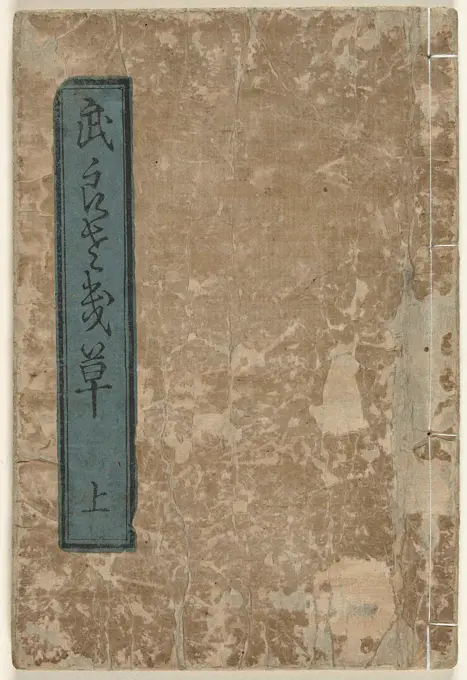
Paars gras, deel één; Murasaki gusa - jo.Part one (of two); light brown cover; Above blue-black title strip; 30 sheets, numbered: 1-2, introduction; 1-28, text pages and six images of women outdoors.
4443-75478621
Two images of Vervain (Verbena sp.) are displayed on one page to illustrate iyihrâbûtânî. Additionally, another variety of iyihrâbûtânî is labeled. The images are found on folio 196v of a manuscript by Mîrzâ Bâqir, who was active in the 19th century. The page dimensions are 27 x 14.7 cm, with a margin measuring 17 x 7.4 cm., 1889 - 1890, Tehran or Mashhad
4409-17485821
Koran Page. Date/Period: 9th century. Folio. Pen and ink, gold paint, and tempera colors on parchment. Height: 144 mm (5.66 in); Width: 208 mm (8.18 in). Author: UNKNOWN.
866-5676
Qur'an, Ottoman Turkey, AH 1190 1776 AD Islamic Art
1899-18792817
Abu Yahya Zakariya' ibn Muhammad al-Qazwini (     ) (born 1203 - died 1283), was a Persian physician, astronomer, geographer and proto-science fiction writer. Born in the Persian town of Qazvin, he was descended from Anas ibn Malik, Zakariya' ibn Muhammad al-Qazwini served as legal expert and judge (qadhi) in several localities in Persia and at Baghdad. He travelled around in Mesopotamia and Syria, and finally entered the circle patronized by the governor of Baghdad, ‘Ata-Malik Juwayni (d. 1283 CE). It was to the latter that al-Qazwini dedicated his famous Arabic-language cosmography titled 'Aja'ib al-makhluqat wa-ghara'ib al-mawjudat      ('Marvels of Creatures and Strange Things Existing'). This treatise, frequently illustrated, was immensely popular and is preserved today in many copies. It was translated into Persian and Turkish. Qazwini was also well-known for his geographical dictionary, Athar al-bilad wa-akhbar al-‘ibad
6145-48894059
Decorated Incipit Page. Unknown
4443-22003988
Canon Table Page; Constantinople, Turkey; late 13th century; Tempera colors, gold leaf, gold ink, and ink on parchment; Leaf: 21 x 14.9 cm (8 1,4 x 5 7,8 in.)
1746-57661930
Shah-nameh by Firdausi. Published 17th or 18th century. Manuscripts, Persian. Written in India on Eastern laid paper; black ink with with highly decorated major ʻunwāns; minor ʻunwāns in gold ink, now very faded; four columns enclosed in a thin red-blue-yellow border; text begins on folio 1b with rubrication and gold interlinear decoration up to folio 3a; folios 1b and 2a have elaobroate border of grape decoration in various shades of green and gold; catchwords on rectos
6145-52335269
Musizierender Knabe, persische Miniatur; I. Blatt aus einem Hafiz; II. Blatt aus einem Hafiz.. Prints. 1912. The Miriam and Ira D. Wallach Division of Art, Prints and Photographs: Art & Architecture Collection
4409-17367758
Fotografía de una página de un manuscrito árabe, con texto, decoración geométrica y figurativa en los márgenes.
6145-51818727
Manuscript of Al-Amulnasrah, a manual on reading the Qur'an according to the teachings of al-Basrah Ibn al-Qasim. Manuscript of Al-Amulnasrah, a manual on reading the Qur'an according to the teachings of al-Basrah, 1701-1702. Ink and colors on paper, bound manuscript , Page: 5 7/8 x 8 1/16 in. (15 x 20.4 cm).   Arts of the Islamic World 1701-1702
1746-19629804
Koran. North Indian manuscript, 1838. Private collection.
6145-29127549
Page from a Manuscript of the Qur'an (45:21-22; 45:22-23)
6145-29747996
Folio from a Qur'an Manuscript dated A.H. 531/ A.D. 1137 Muhammad al-Zanjani Eight folios of this dispersed Qur'an are held in the Museum collection. Among these folios is the colophon page, with the signature of the scribe Muhammad alZanjani from the town of Zanjan, in northwestern Iran, and the date of completion, A.H. 531/A.D. 1137. The text is written in the script known as eastern kufic with some elements in cursive (naskh), and is lavishly illuminated with designs of foliate scrolls and geometric interlace.. Folio from a Qur'an Manuscript 453368
6137-28690626
Asian Civlisations Museum.  Old Quran. Java, 1822.  Singapore.
1899-30031384
Asian Civlisations Museum.  Old Quran. Java, 1822.  Singapore.
4443-75476915
Corn Poppy (Papaver rhoeus) right; Opium Poppy (Papaver somniferum) left, fol. 197v, Mîrzâ Bâqir (fl. 19th c.), 1889 - 1890, Tehran or Mashhad, Two images on one page. 22.8 x 14 cm right; 23 x 14 cm left
6145-45398638
Arabic Manuscript, Illustrated with Miniatures of Various Formats unknown
1746-21105968
Illustration depicting Peacock and bird native to the Middle East, from 1538 edition, of 'Kitb-I ajyb al-makhlqt va gharib al-mawjdt'. (Marvels of Things Created and Miraculous Aspects of Things Existing) a 12th century, Islamic, Persian scientific book by Zakary ibn Muammad Qazwn
6145-51818617
Two folios from a Manuscript of Yusuf and Zulaykha by Jami Baba Shah Isfahani. Two folios from a Manuscript of Yusuf and Zulaykha by Jami, 16th century. Ink, color, and gold on paper, 5 1/2 x 8 11/16 in. (14 x 22 cm).   Arts of the Islamic World 16th century
6145-29127341
35mm original
1899-18716994
The 6 year expedition to Egypt and Yemen funded by the King of Denmark in 1761 was the stuff of romantic legend. Filled with death, womanising and general intrigue, Carsten Niebuhr - the only survivor - recorded a dispassionate account of the journey in 'Beschreibung von Arabien' in 1772 - an historical classic in terms of informinnng Europe about the Middle East.
6145-48828324
Text page and illustration from a Koran handwriting, page 423V
6145-51821786
Folio from a Manuscript of the Qur'an Folio from a Manuscript of the Qur'an, 9th-10th century. Ink and gold on parchment, 4 3/4 x 7 1/16 in. (12 x 18 cm).   Arts of the Islamic World 9th-10th century
4443-75464136
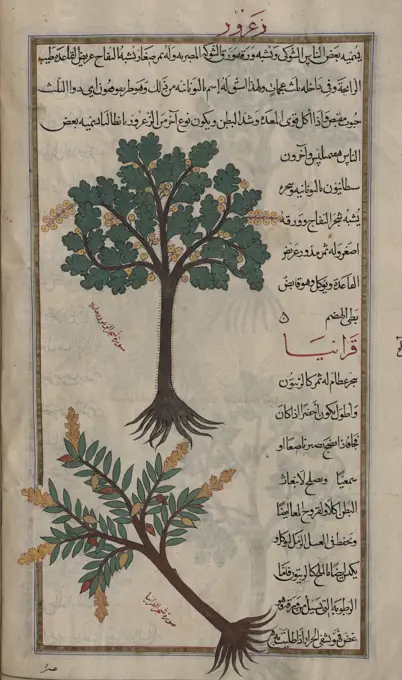
Two botanical illustrations on one page. The top illustration features Medlar (Mespilus germanica), labeled as 'za'rûr'. The bottom illustration depicts Dogwood (Cornus mas), labeled as 'qarâniyâ'. The page measures 21.4 x 16.1 cm at the top and 21 x 13.5 cm at the bottom. Created between 1889 and 1890, possibly in Tehran or Mashhad
1889-60415060
Illustration of plant varieties using for medicinal purposes in the 1st century AD
1899-18719181
Xiao'erjing or Xiao'erjin or Xiaor jin or in its shortened form, Xiaojing, is a form of writing Chinese in Arabic script. It is used on occasion by many ethnic minorities who adhere to the Islamic faith in China (mostly the Hui, but also the Dongxiang, and the Salar), and formerly by their Dungan descendants in Central Asia. Xiao'erjing is written from right to left, as with other writing systems based on the Arabic alphabet. (Photo by: Olga Zavyalova/Pictures From History via Getty Images)
6145-51836209
Manuscript of the Qur'an Manuscript of the Qur'an, A.H. 889/1484 C.E. Ink, opaque watercolors, and gold on paper, Paper: 3 3/4 x 3 3/4 in. (9.5 x 9.5 cm).  The patron who commissioned this manuscript of the Quran spared no expense—from the first few folios, replete with lush illumination, to the binding, elaborately engraved with the Chinese-inspired lotus blossoms and cloud bands common to the art of the Timurid dynasty in Iran and Central Asia. The second and third pages displayed here feature intricate vegetal ornamentation in gold on a background of cobalt blue, both materials prized for their value and beauty. The right-hand page contains the Arabic text of the Qurans first sura, or chapter, which plays a part in many Muslims daily lives; the following chapter begins on the left. The script is known as ghubar, which literally means “dust,” because the letters were thought to be as minute as grains of powder. The small overall size of the codex suggests that it was meant for tr
6145-29062494
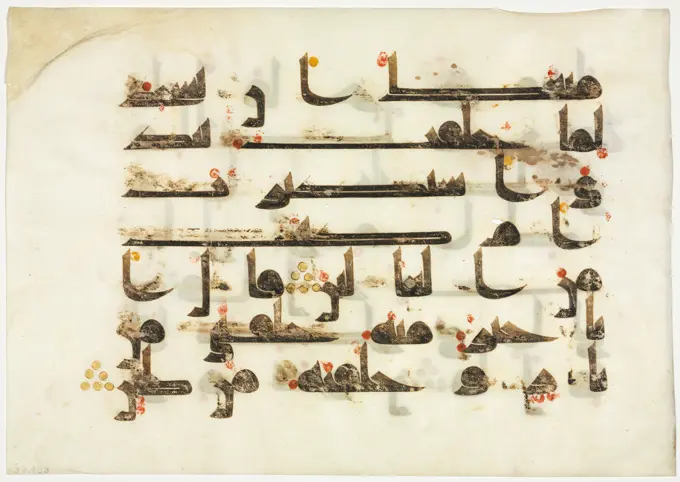
Folio from a Qur'an, 800s. Probably Egypt, Abbasid period (750-1258). Opaque watercolor, ink, and gold on parchment; sheet: 23.7 x 33.7 cm (9 5/16 x 13 1/4 in.). The sacred book of Islam, the Qur'an is believed by Muslims to be a literal transcription of the word of God, spoken in Arabic to the Prophet Muhammad (died 632). In order to convey the importance of the divine word, Arabic calligraphysometimes highly elaborate and embellished with goldwas used to create copies of the Qur'an.This folio was written in the oldest style of Arabic calligraphy, called Kufic script, used in earliest surviving copies of the Qur'an. The wide format of the page is well suited to this style of Kufic that has elongated, horizontal strokes. Vowels are indicated by red dots, and the triangles of gold dots mark the end of each verse.The text on the recto recounts an argument between God and Lucifer. Proud Lucifer declares himself superior to humans because he was formed from fire, while humans were molde
6145-45431500
Banknote at 50 Kurush, Turkey Ottoma; Ah 1277/1861
1746-21100783
The Dresden Codex, also known as the Codex Dresdensis, is a pre-Columbian Maya book of the eleventh or twelfth century of the Yucatecan Maya in Chichén Itzá. Dated 16th Century
1890-67634999
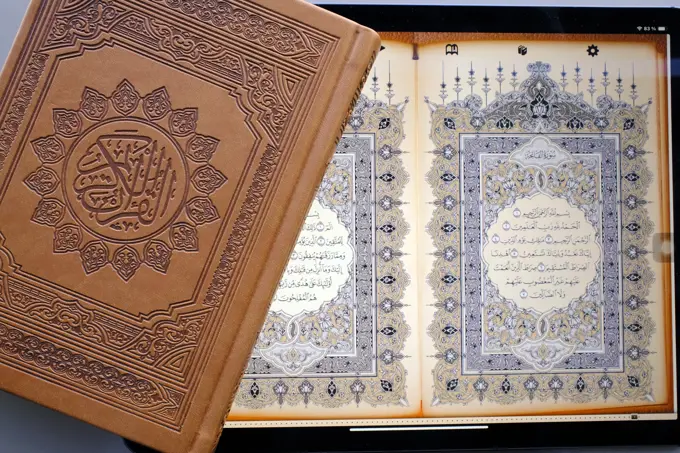
Religious Islamic text, The Quran, over 6000 verses in 114 capters called Surahs, paper and digital Quran, Vietnam
1848-49758943
Islamic Holy Book Quran with open pages
4409-17281986
POEMA DE ALJAFIZ - COD 400 - FOL 85 - CACERIA. Author: AL JAFIZ. Location: MONASTERIO-BIBLIOTECA-COLECCION. SAN LORENZO DEL ESCORIAL. MADRID. SPAIN.
6145-29771353
Decorated Folio with Kufic Inscription 18th-19th century The decorative motifs on this section of a folio were most likely created using a stencil, which the artist then embellished by adding pigments and very minute and fine details. Pages like this would originally have framed paintings, drawings, or samples of calligraphy, which would have been included in an album or manuscript. This part of the page illustrates how folios from Islamic manuscripts were built up with layers of paper, pasted upon one another.. Decorated Folio with Kufic Inscription 827578
1890-16213405
Quran, copied by Mustafa Hilmi Efendi, Ottoman Turkey 1840 AD, Islamic Arts Museum, Kuala Lumpur, Malaysia, Southeast Asia, Asia
6145-29729825
Page of Calligraphy from the Kulliyat of Sa'di 18th century. Page of Calligraphy from the Kulliyat of Sa'di 453168
6145-29131389
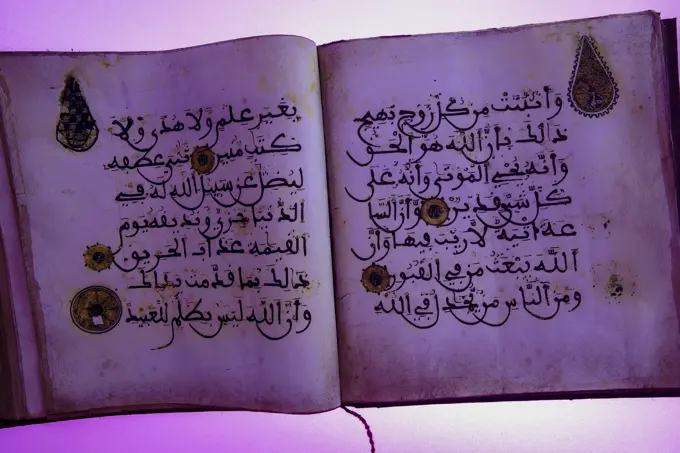
Page from a Manuscript of the Qur'an (34:38-43; 34:43-50). Arabia, second half 8th-early 9th century. Manuscripts; folios. Ink, colors and gold on parchment
4409-11988
POEMA DE YUSUF - F 18V - 19 - CUADERNA VIA - S XIII S XIV - HISTORIA DE JOSE - DOCUMENTO ROMANCE -ARAGONES CON CARACTERES ARABIGOS. Location: BIBLIOTECA NACIONAL-COLECCION. MADRID. SPAIN.
6145-29820598
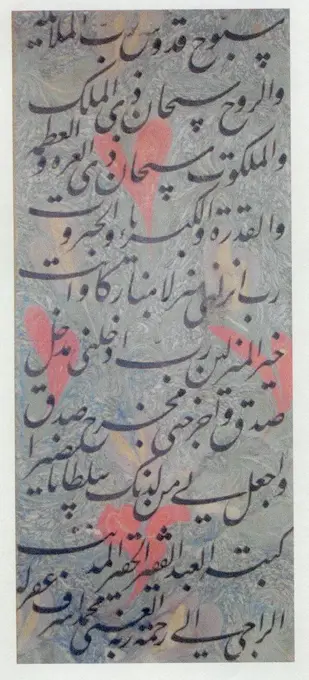
Page of Calligraphy dated A.H. Rabi' al-Awwal 1069/ A.D. December 1658 Muhammad Ashraf Al-Radhawi This page comes from a book copied by Muhammad Ashraf al-Radhawi, who wrote it in 1658 while serving as the Mughal governor of Kashmir. The text is in Arabic and Persian, and consists of prayers and supplications (called munajat) dedicated to Ali (d. 661), the fourth caliph and first Shi'i Imam. They are written in nasta'liq, a cursive script that developed in the ninth century and used most often in Iran and India for writing Persian.. Page of Calligraphy 454139
6145-51819452
Page of Calligraphy Page of Calligraphy, 19th century. Ink on cardboard, 4 1/2 x 7 5/16 in. (11.4 x 18.6 cm).   Arts of the Islamic World 19th century
1899-18711754
Known as the 'Nurse's Qur'an', this work was commissioned by Fatima, who had cared for the Zirid prince al-Muizz ibn Badis. The Qur'an was completed in January 1020 and according to the colophon was created in its entirety by Ali ibn Ahmad al-Warraq, then donated by Fatima to the Great Mosque in Kairouan.
1899-18788097
The Blue Qur'an is a late 9th - early 10th century Tunisian Qur'an manuscript in Kufic calligraphy. It is written in gold (chrysography) on parchment died with indigo, a unique aspect. It is among the most famous works of Islamic art, and has been called 'one of the most extraordinary luxury manuscripts ever created'. The manuscript was dispersed during the Ottoman period; today most of it is located in the National Institute of Art and Archaeology in Tunis, with detached folios in museums worldwide.
7208-70657425
Egypt, Al Azhar Library, detail of 13th century Koran
6145-45398635
Arabic Manuscript, Illustrated with Miniatures of Various Formats unknown
6145-30283722
State banknote, Piatres, Ministry of Finance of the Ottoman Empire, MINT Authority
5513-72507444
***** the establishment of Pakistan are obtainable today from the Trade Commissioner for Pakistan in Australia. The commemorative series consists four stamps. June 10, 1948.
6145-51836208
Manuscript of the Qur'an Manuscript of the Qur'an, A.H. 889/1484 C.E. Ink, opaque watercolors, and gold on paper, Paper: 3 3/4 x 3 3/4 in. (9.5 x 9.5 cm).  The patron who commissioned this manuscript of the Quran spared no expense—from the first few folios, replete with lush illumination, to the binding, elaborately engraved with the Chinese-inspired lotus blossoms and cloud bands common to the art of the Timurid dynasty in Iran and Central Asia. The second and third pages displayed here feature intricate vegetal ornamentation in gold on a background of cobalt blue, both materials prized for their value and beauty. The right-hand page contains the Arabic text of the Qurans first sura, or chapter, which plays a part in many Muslims daily lives; the following chapter begins on the left. The script is known as ghubar, which literally means “dust,” because the letters were thought to be as minute as grains of powder. The small overall size of the codex suggests that it was meant for tr
6145-29072096
Page from a Qur'an (verso), 800s. North Africa, Aghlabid or Abbasid. Gold, ink and colors on parchment; overall: 26.7 x 73 cm (10 1/2 x 28 3/4 in.); folio: 36.3 cm (14 5/16 in.); text area: 22.8 x 30 cm (9 x 11 13/16 in.).
1899-68920507
Islamic Arts Museum. Royal Quran in Arabic. Maly Peninsula. 1871.  Kuala Lumpur. Malaysia.
6145-45398741
Arabic Manuscript, Illustrated with Miniatures of Various Formats unknown
1890-106164
Koran in a Bektachi turbe, Tirana, Albania, Europe
7155-70383106
Page from Koran. Sarajevo. Bosnia. Ghazi Hustar Library.
1899-68920530
Islam. Religious text. The Quran consists of over 6000 verses organized in 114 capters, so called Surahs. Chinese translation. Kuala Lumpur. Malaysia.
4409-17240839
libro de coro, catedral de Santa María de Calahorra, Calahorra, La Rioja , Spain, Europe.
1899-68919246
Torah scrolls in Hebrew and quran in Arabic. Relationship between Muslims and Jews. Interfaith and peace concept.
6145-48525250
Envelope with liberation slogans and image of sultan Abdülhamid II on horseback. unknown, graphic artist
1848-55320066
Heart, love in Arabic, historic centre of San a , Unesco World Heritage Site, Yemen, Middle East, Asia
1848-50953435
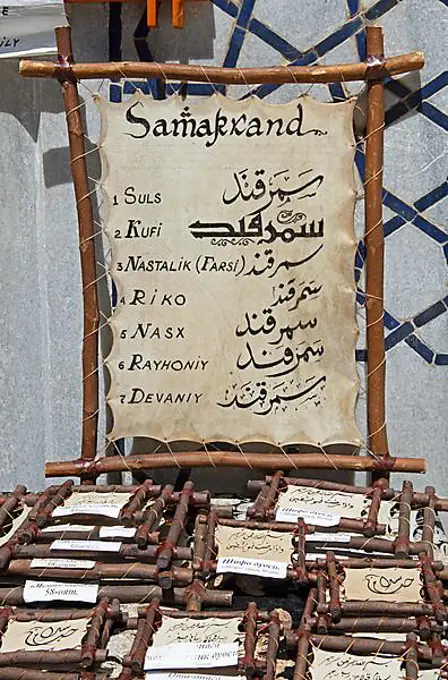
Ancient oriental languages written on leather, Ulug'Bek-Medrese, Registan Square, Samarkand, Samarqand Province, Uzbekistan, Asia
1899-77936355
Quran in Arabic and its translation into English. Ho Chi Minh city. Vietnam.
6145-52340640
Sufi interpretations of the quatrains of Omar Khayyam and Fitzgerald. Bjerregaard, C. H. A. (Carl Henrik Andreas), 1845-1922. Illustrations, Title pages. 1902. General Research Division. Omar Khayyam, Sufism in literature
1899-18787759
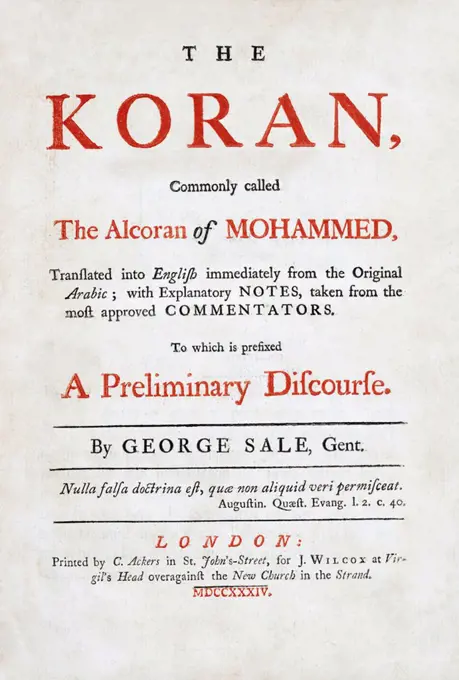
George Sale (1697, Canterbury, Kent, England-1736, London, England) was an Orientalist and practising solicitor, best known for his 1734 translation of the Qur'an into English. Sale reputedly spent 25 years in Arabia, thus acquiring his knowledge of the Arabic language and customs.
PREVIOUS
of 3
NEXT
2401 S. Ervay, Suite 206
Dallas, Texas 75215
United States
Get Started
Free ResearchMy BoardsMy Cart
For Creators
How To License Your ContentContributor PortalFrame of Mind
Resources
API accessPricing
Contact
+1 866 236 0087help@viewpictures.co.uk Contact form
©2026 View Pictures. All Rights Reserved. -A
This site is protected by reCAPTCHA and Google Privacy Policy and Terms of Service apply.