My Boards
View Pictures
  • My Boards

Planetary Images

Stunning illustrations of planets, primarily Saturn and Jupiter, highlighting their rings, moons, and comparative sizes against Earth.

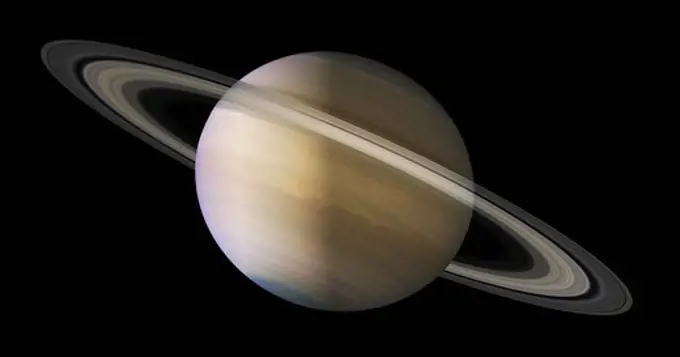
Digital Illustration of the Planet Saturn
152 assets in this story
4239R-587
Artist's concept of how Saturn and Titan might look from a position in orbit around Titan
6145-44628020
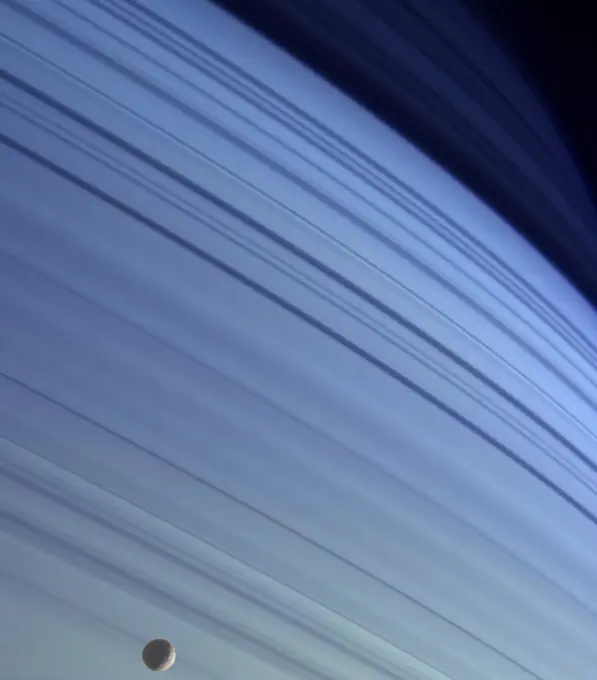
Mimas drifts along in its orbit against the azure backdrop of Saturn's northern latitudes in this true color view. The long, dark lines on the atmosphere are shadows cast by the planet's rings.
6145-44527113
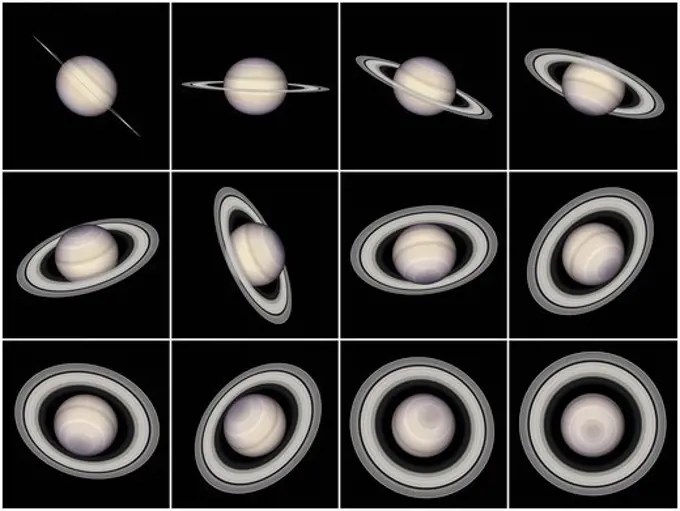
A Change of Seasons on Saturn - October, 2000
4389-1090
Rings and Shadows of Saturn, as Seen by Cassini
6145-44671737
Full Jupiter Mosaic
6145-44496204
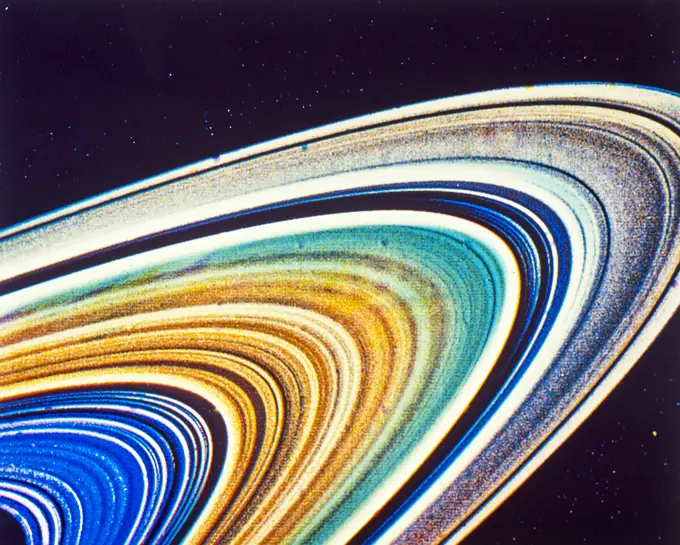
Saturn's A-Ring
6145-45243072
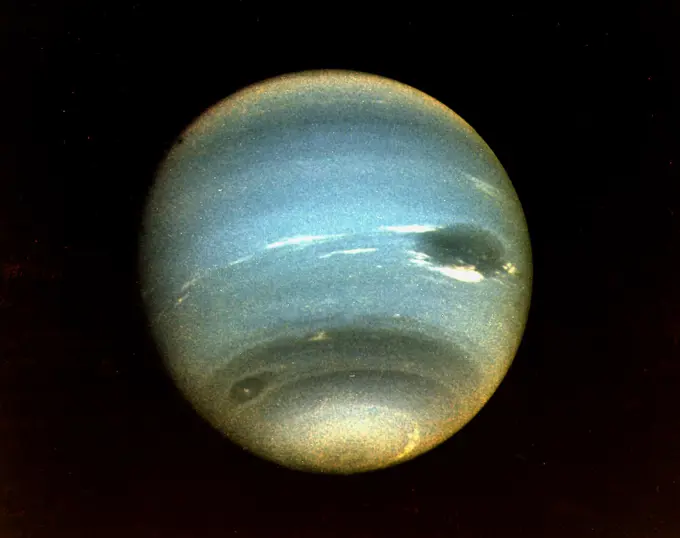
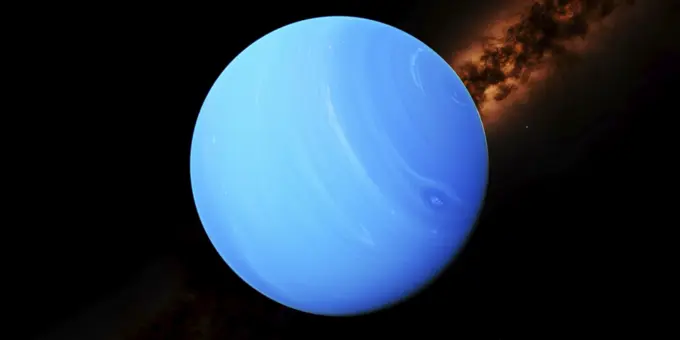
Voyager 2 was the first spacecraft to observe the planet Neptune and its two satellites Triton, the largest, and Nereid. The most obvious feature of the planet is its blue color, the result of methane in the atmosphere. Research continues on Neptune's two largest satellites and the additional six that were discovered by Voyager 2's investigation. These images represent the most complete set of full disk Neptune images that the spacecraft will acquire.
6145-44575395
Saturn and its Ring System
6145-44767881
From Rings to Planet
1746-19671677
This photo of Jupiter was taken by Voyager 1 on March 1, 1979.
1746-19671736
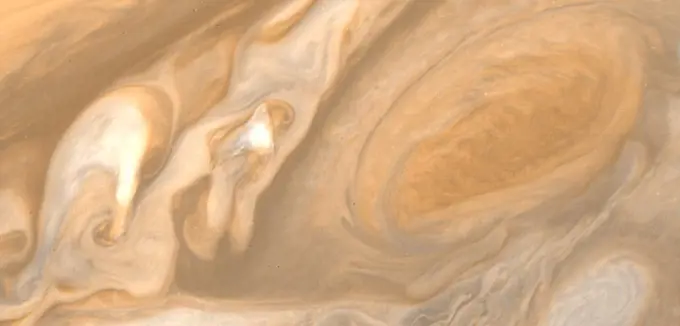
The Red Spot is the largest known storm in the Solar System. With a diameter of 15,400 miles, it is almost twice the size of the entire Earth and one-sixth the diameter of Jupiter itself.
6188-67188105
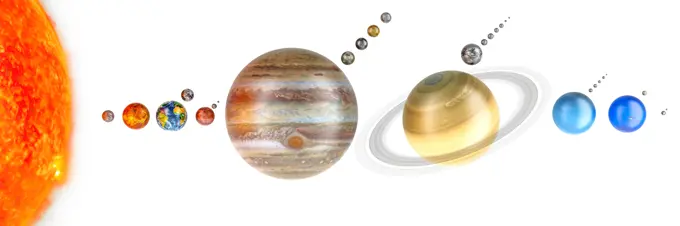
Planets of Solar system with satellites. 3D rendering Planets of Solar system with satellites. 3D rendering isolated on white background Copyright: xZoonar.com/natatravelx 22902091
6145-44630600
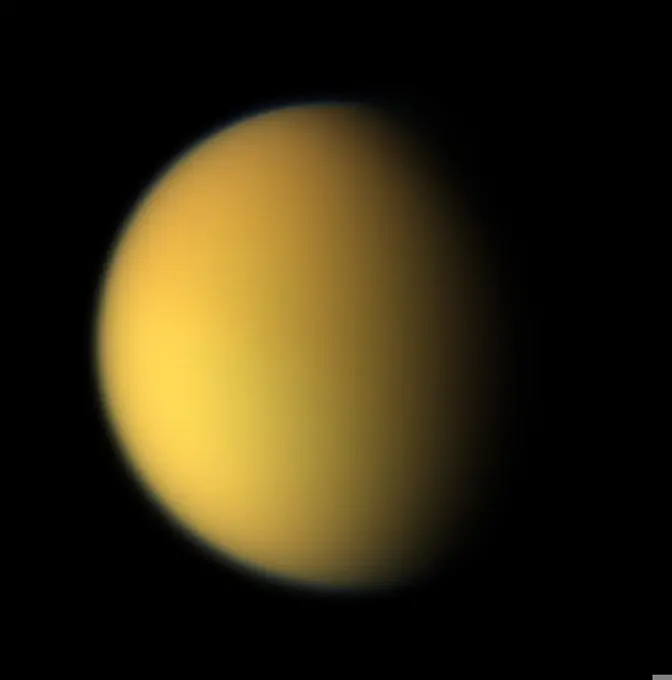
Cassini's View of Titan: Natural Color Composite
6145-45259411
This video shows Jupiter as revealed by a powerful telescope and a mid-infrared filter sensitive to the giant planet's tropospheric temperatures and cloud thickness. It combines observations made on Jan. 14, 2017, using the Subaru Telescope in Hawaii. The filter used admits infrared light centered on a wavelength of 8.8 microns. The video includes interpolated frames for smoother apparent motion. The instrument used to take this image is Cooled Mid-Infrared Camera and Spectrometer (COMICS) of the National Astronomical Observatory of Japan's Subaru Telescope on the Maunakea volcano. Animations are available at
6145-44562287
These images, taken on February 19, 1997 by NASA's Galileo orbiter, show two of the three long-lived White Ovals that formed to the south of the Jupiter's Great Red Spot.
4239R-5502
Illustration of Saturn, the sixth planet of our solar system. Famous mostly because of impressive set of rings around it. There are also 5 of it's satellites visible.
1525-28066712
Planets in the first phase of their development, vintage engraved illustration. From the Universe and Humanity, 1910.
4128R-13370631
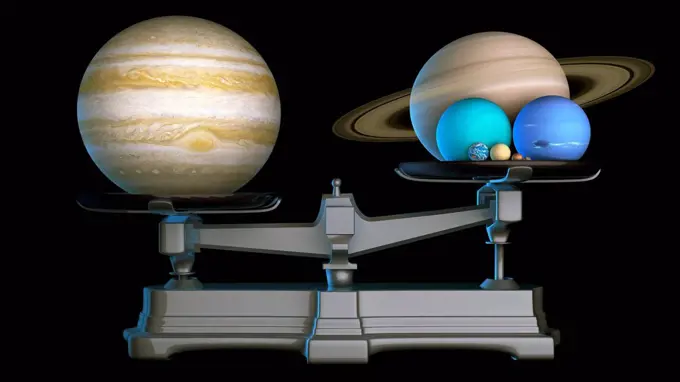
Jupiter's mass. Illustration of the planets of the Solar System on a weighing scale, with Jupiter outweighing all the other planets put together. Jupi...
1525-27039925
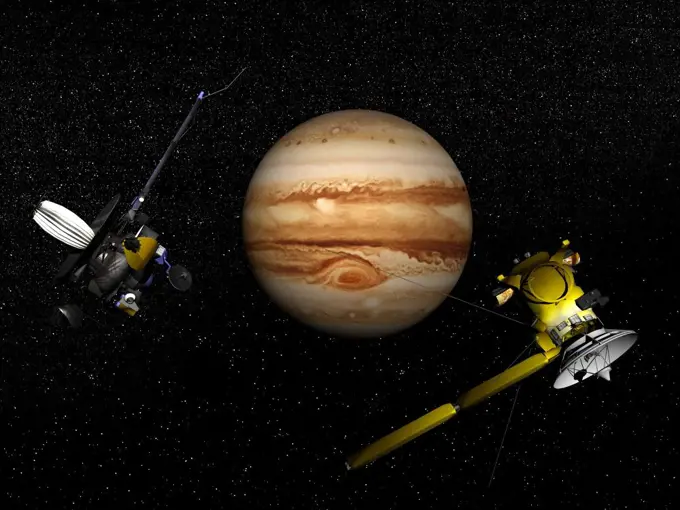
Galileo and Cassini spacecrafts next to Jupiter in the universe - Elements of this image furnished by NASA
6145-45264903
Jupiter's northern circumpolar cyclones are captured in this color-enhanced image from NASA's Juno spacecraft. The image was taken at 5 42 p.m. PDT (8 42 p.m. EDT) on Sept. 6, 2018, as the spacecraft performed its 15th close flyby of Jupiter. Citizen scientist Gerald Eichstädt created this image using data from the spacecraft's JunoCam imager.
6145-44566165
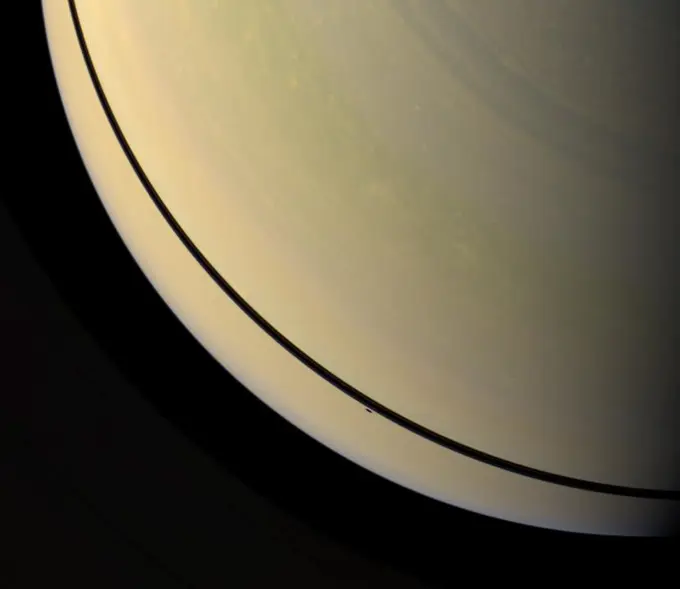
Sunset on Saturn's Rings
4389-1497
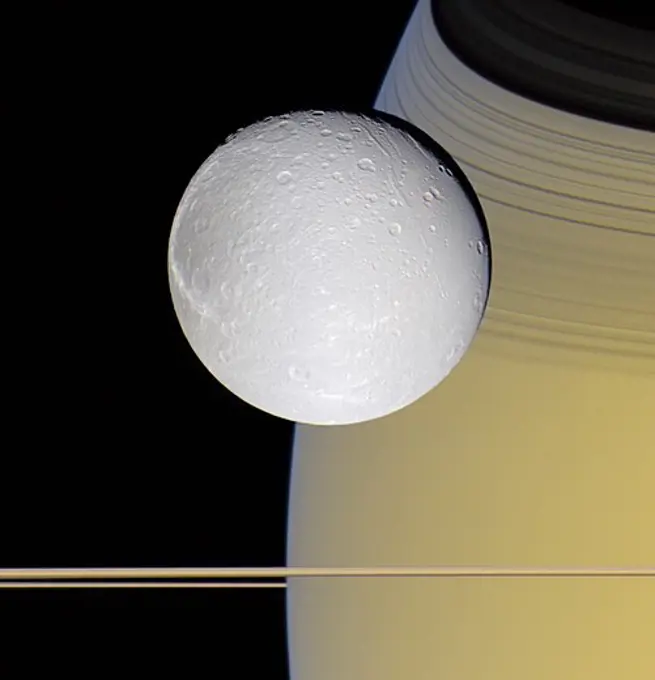
Dione and the Rings of Saturn
6145-44562273
Clouds and hazes at various altitudes within the dynamic Jovian atmosphere are revealed by multi-color imaging taken during the second orbit (G2) on September 5, 1996 by Galileo spacecraft.
6145-45260164
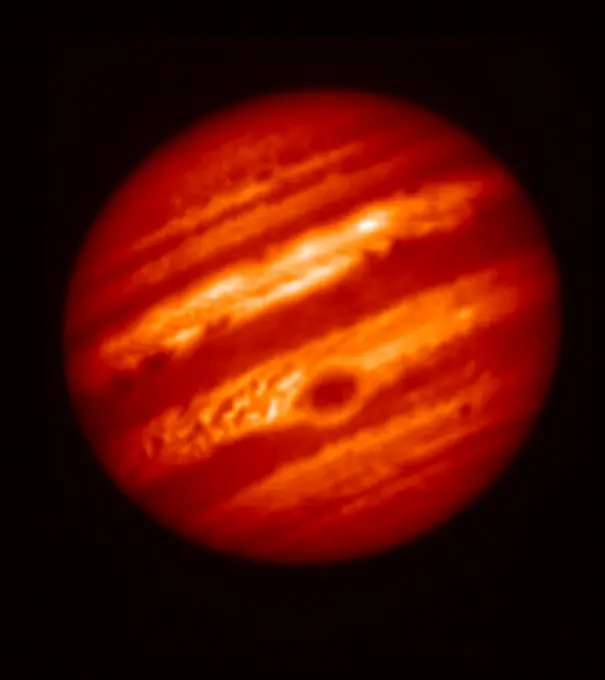
This false-color image of Jupiter was taken on May 18, 2017, with a mid-infrared filter centered at a wavelength of 8.8 microns, at the Subaru Telescope in Hawaii, in collaboration with observations of Jupiter by NASA's Juno mission. The selected wavelength is sensitive to Jupiter's tropospheric temperatures and the thickness of a cloud near the condensation level of ammonia gas. The Great Red Spot appears distinctively at the lower center of the planet as a cold region with a thick cloud layer. It is surrounded by a warm and relatively clear periphery. To its northwest is a turbulent and chaotic region where bands of gas that is warm and dry alternate with bands of gas that is cold and moist. This image, taken a few hours before Juno's sixth close approach to Jupiter, shows the detailed atmospheric structure of the Great Red Spot and its surroundings that the Juno mission will encounter on its seventh closest approach to Jupiter on July 10, 2017, Pacific Time (July 11, Universal Time)
4389-1501
False Color Image of Saturn's Rings
6145-58971773
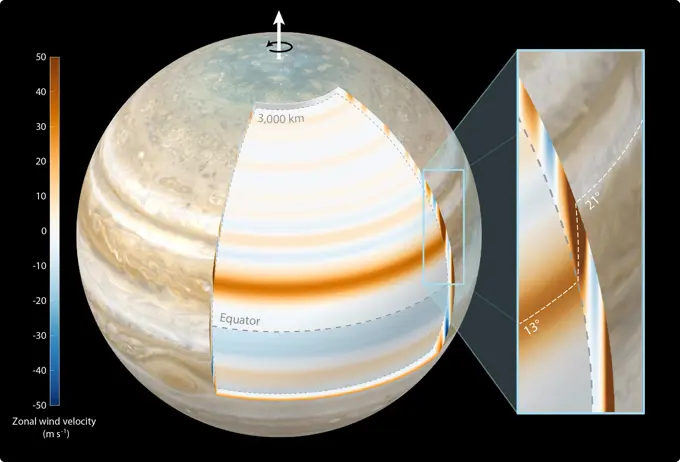
This composite illustration depicts scientists' findings that Jupiter's atmospheric winds penetrate the planet in a cylindrical manner and parallel to the planet's spin axis. The study, published in Nature Astronomy in October 2023, used gravity data from NASA's Juno mission. The top layer of Jupiter's atmosphere - the cloud level - was generated for this illustration using a combination of visible light images from Juno and NASA's Cassini mission. The annotated cutout reveals the gas giant's zonal winds at a depth of 1,800 miles (3,000 kilometers) below cloud level. In the cutout, Jupiter's belts are depicted with blue bands, the zones with reddish bands. The annotated close-up view at right shows the most dominant jet recorded by Juno. At cloud level, the jet is located at 21 degrees north latitude, above the planet's equator. However, at 1,800 miles (3,000 kilometers) below cloud level the jet is positioned at 13 degrees north latitude. The dashed white line represents the location
6145-44627992
Saturn's Hot Spot
6145-44546895
This picture of Venus was taken by the NASA's Galileo spacecraft's Solid State Imaging System on February 14, 1990, at a range of almost 1.7 million miles from the planet.
4239-69143528
Illustration of planet Neptune.
6145-44659751
In this image captured by NASA's Cassini spacecraft, Saturn's fascinating meteorology manifests itself in a 'string of pearls' formation, spanning over 60,000 kilometers (37,000 miles).
6145-44570982
These two pictures of Uranus were compiled from images recorded by NASA's Voyager 2 on Jan. 1O, 1986. This view is toward the planet's pole of rotation, which lies just left of center. The image on the right is a false-color image.
6145-44736411
Artist Rick Guidice Pioneer Venus Mission Artwork An artist concept of the multiprobe approaching Venus is shown here shortly after the probes release - Top to bottom - night probe, day probe sounder probe, North probe, followed by the bus (Note this original painting's orientation is upside- down)
1746-28978539
Cast of geometric shape used in the design of Sagrada Familia; Cathedral, Barcelona used by the architect Antoni Gaudi 1883
4389-1583
Bright Clouds on Uranus
6145-44675900
Mapping Clumps in Saturn's Rings
6145-44736931
P-21737 C This picture shows a region of the southern hemisphere extending from the Great Red Spot to the south pole. The white oval is seen beneath the Great Red Spot, and several small scale spots are visible farther to the south. Some of these organized cloud spots have similiar morphologies, such as anticyclonic rotations and cyclonic regions to their west. The presence of the white oval causes the streamlines of the flow to bunch up between it and the Great Red Spot.
1849-66209675
Futuristic orbiting surveillance technology with antennae
4239R-367
A schematic showing the layers of Titan: an icy crust beneath which may lie liquid water and a solid core
4186-73096358
Vintage Photograph. Vibrant colors of Saturn's rings captured in a stunning space image.
6145-44563845
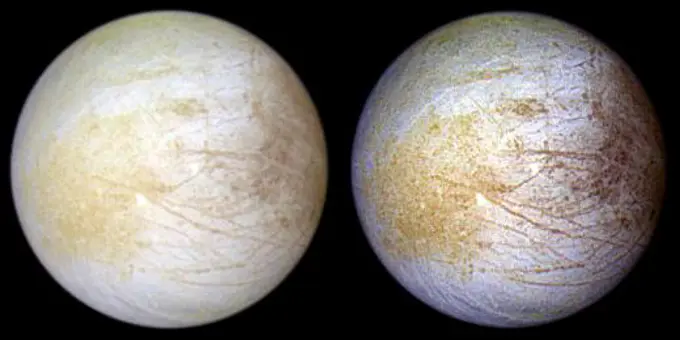
This color composite view combines violet, green, and infrared images of Jupiter's intriguing moon, Europa, for a view of the moon in natural color (left) and in enhanced color designed to bring out subtle color differences in the surface (right).
4128-18680628
Moons of the eight major planets
4353-297
Digital Illustration of Saturn's Appearance From Different Angles
6145-44734556
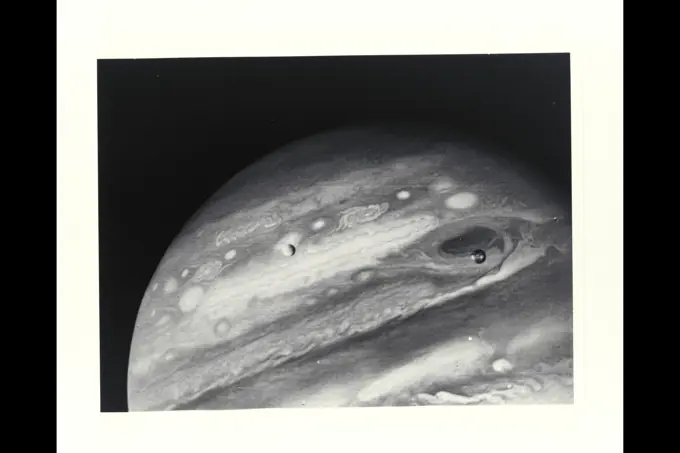
Voyager 1 Image of Jupiter and two of its satellites (Io, left, and Europa). Io is about 350,000 kilometers (220,000 miles) above Jupiter's Great Red Spot; Europa is about 600,000 kilometers (375,000 miles) above Jupiter's clouds. Although both satellites have about the same brightness, Io's color is very different from Europa's. Io's equatorial region show two types of material -- dark orange, broken by several bright spots -- producing a mottled appearance. The poles are darker and reddish. Preliminary evidence suggests color variations within and between the polar regions. Io's surface composition is unknown, but scientists believe it may be a mixture of salts and sulfur. Erupoa is less strongly colored, although still relatively dark at short wavelengths. Markings on Eruopa are less evident that on the other satellites, although this picture shows darker regions toward the trailing half of the visible disk. Jupiter at this point is about 20 million kilometers (12.4 million miles) f
255-67102679
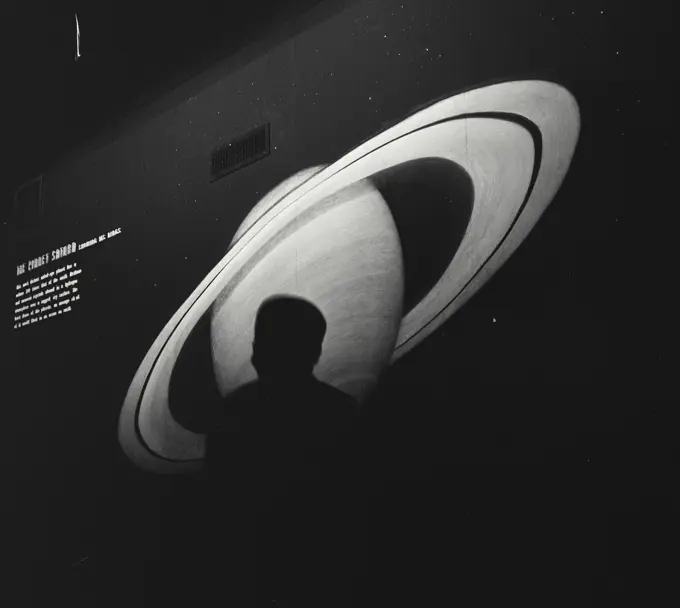
Vintage Photograph. Person looking at Saturn Exhibit in Hayden Planetarium in New York City.
4353-308
Digital Illustration of Venus' Rotation
4128R-12577447
Planet with rings, computer illustration.
6145-45260691
These turbulent clouds are on top of the world at Saturn. NASA's Cassini spacecraft captured this view of Saturn's north pole on April 26, 2017 - the day it began its Grand Finale -- as it approached the planet for its first daring dive through the gap between the planet and its rings. Although the pole is still bathed in sunlight at present, northern summer solstice on Saturn occurred on May 24, 2017, bringing the maximum solar illumination to the north polar region. Now the Sun begins its slow descent in the northern sky, which eventually will plunge the north pole into Earth-years of darkness. Cassini's long mission at Saturn enabled the spacecraft to see the Sun rise over the north, revealing that region in great detail for the first time. This view looks toward the sunlit side of the rings from about 44 degrees above the ring plane. The image was taken with the Cassini spacecraft wide-angle camera using a spectral filter which preferentially admits wavelengths of near-infrared lig
6145-44878645
This artist's conception based on data from NASA's Wide-field Infrared Survey Explorer illustrates what brown dwarfs of different types might look like to a hypothetical interstellar traveler who has flown a spaceship to each one.
1746-19663328
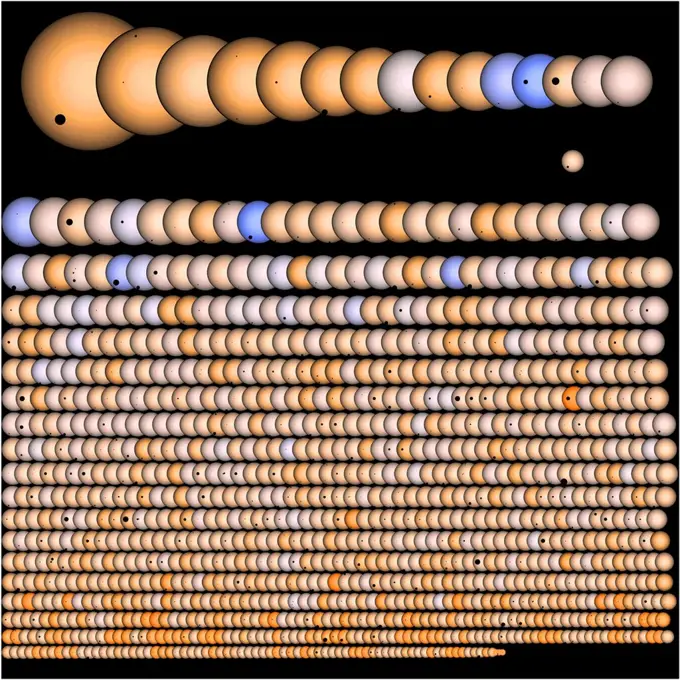
Using the prolific planet hunting Kepler spacecraft, astronomers have discovered 1,235 candidate planets orbiting other suns since the Kepler missions search for Earth-like worlds began in 2009. To find them, Kepler monitors a rich star field to identify planetary transits by the slight dimming of starlight caused by a planet crossing the face of its parent star. In this illustration, all of Keplers planet candidates are shown in transit with their parent stars ordered by size from top left to bottom right. Simulated stellar disks and the silhouettes of transiting planets are all shown at the same relative scale, with saturated star colours. Of course, some stars show more than one planet in transit. In silhouette against the Suns disk, both Jupiter and Earth are in transit.
6145-44761226
Here we see two different views of the spiral galaxy, Messier 81. On the left is an image taken in blue light, while on the right is a specially-processed version of an image taken with NASA's Spitzer's infrared array camera at 4.5 microns.
1788-20760682
The orbits of the planets of the solar system, illustration.
6145-44734554
Photograph by Pioneer Venus Venus image 7540
PREVIOUS
of 2
NEXT
2401 S. Ervay, Suite 206
Dallas, Texas 75215
United States
Get Started
Free ResearchMy BoardsMy Cart
For Creators
How To License Your ContentContributor PortalFrame of Mind
Resources
API accessPricing
Contact
+1 866 236 0087help@viewpictures.co.uk Contact form
©2026 View Pictures. All Rights Reserved. -A
This site is protected by reCAPTCHA and Google Privacy Policy and Terms of Service apply.