My Boards
View Pictures
  • My Boards

Plant Growth Research

Laboratory scenes showcasing plant growth experiments in microgravity, focusing on preparation and studies of crops grown in space.
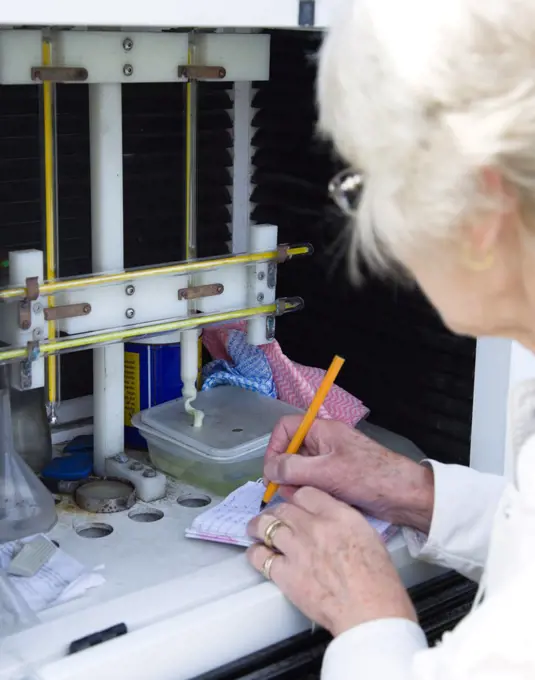
Climate, Weather, Measurements, Female weather observer recording readings from the two thermometers which measure minumum and maximum tempertures in the Stevensons Screen cabinet at Bognor Regis weather station.
159 assets in this story
1990-12326411
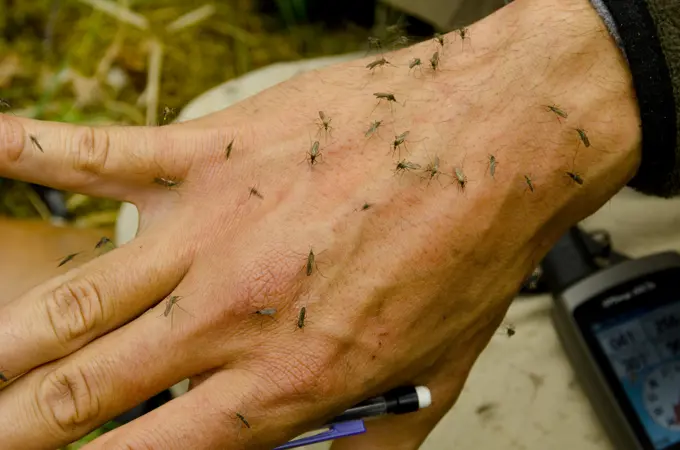
A biologist makes notes while being attacked by hordes of mosquitos on his hand, northern British Columbia
6145-44505825
Research technician Lisa Ruffa works with a wheat sample that is part of ground testing for the first International Space Station plant experiment, scheduled to fly in October 2001. The payload process testing is one of many studies being performed at the Biological Sciences Branch in the Spaceport Engineering and Technology Directorate at Kennedy Space Center. The branch's operations and research areas include life sciences Space Shuttle payloads, bioregenerative life-support for long-duration spaceflight and environmental/ecological stewardship
6177-V68165245
6145-44740935
Life Sceince Division Facilities, Labs and Personnel (Code-SL) Li-Chun Wu and Merylee Corcoran
6145-44539489
STS009-126-456 (28 Nov 1983)  --- Water and coffee in beverage container during STS-9 flight. An extra amount of hydrogen in the H2O is believed to be the reason for the bubbling, distended effect in the container.
6145-44638184
KENNEDY SPACE CENTER, FLA. - Jamie Gurney makes a zero adjustment of a personal dosimeter for officials handling the  radioisotope thermoelectric generator (RTG) before its move to the RTG facility at Kennedy Space Center.  The RTG is the baseline power supply for the NASAs New Horizons spacecraft, scheduled to launch in January 2006 on a journey to Pluto and its moon, Charon.  As it approaches Pluto, the spacecraft will look for ultraviolet emission from Pluto's atmosphere and make the best global maps of Pluto and Charon in green, blue, red and a special wavelength that is sensitive to methane frost on the surface. It will also take spectral maps in the near infrared, telling the science team about Pluto's and Charon's surface compositions and locations and temperatures of these materials. When the spacecraft is closest to Pluto or its moon, it will take close-up pictures in both visible and near-infrared wavelengths.  It is expected to reach Pluto in July 2015.
7066-70139963
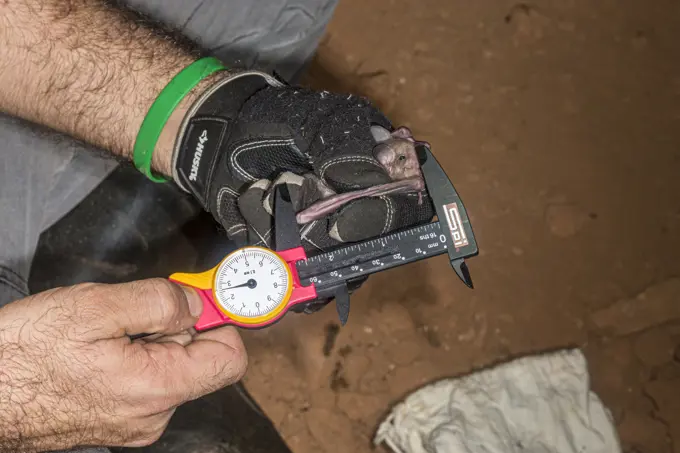
Captured bats are safely examined for a research project in Guanahacabibes National Park.
5514-72807851
Mounted carbon samples at a radiocarbon laboratory in Boulder, Colorado.
1848-51351016
Larvae, Bushman arrow-poison beetle (Diamphidia nigroornata) in the hands of a Bushman, for the production of arrow poison, Tsumkwe, Otjozondjupa region, Namibia, Africa
4413-28975945
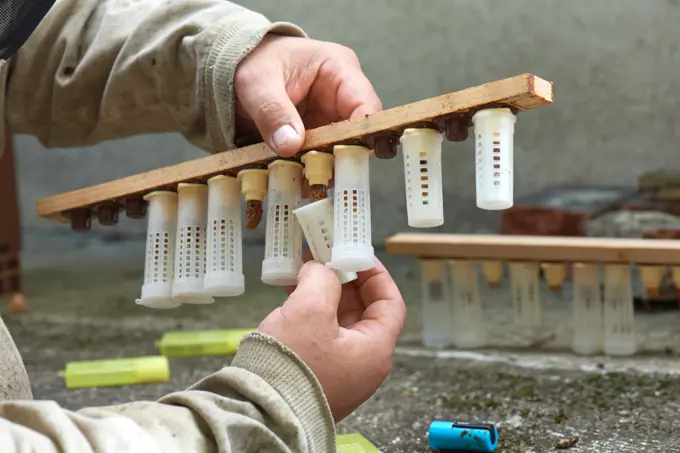
Buckfast bee, Royal cells at the end of the incubator, Centre region, France
6145-54093861
Aviation Electrician's Mate Timmothy Hart, from Lawrenceville, Georgia, assigned to the Tridents of Helicopter Sea Combat Squadron (HSC) 9, inspects fuel samples in an MH-60S Nighthawk in USS Gerald R. Fords (CVN 78) hangar bay, March 30, 2022. Ford is underway in the Atlantic Ocean conducting flight deck certification and air wing carrier qualifications as part of the ships tailored basic phase prior operational deployment.
4450R-21233715
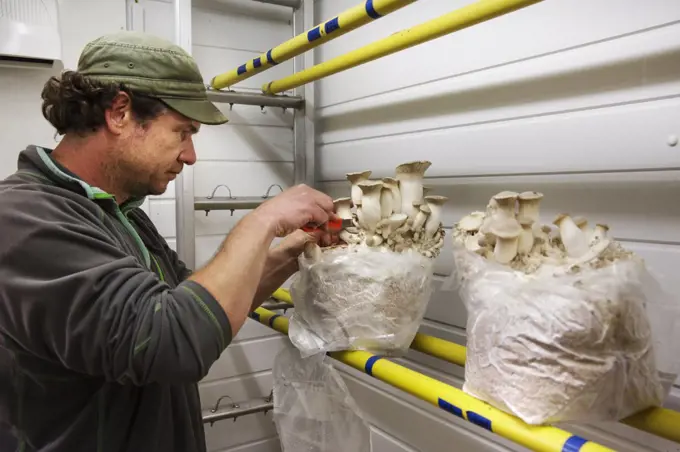
Man standing in front of a shelf with two bags of white mushrooms.
6145-54228787
220913-N-ML137-1034 KEKAHA, Hawai`i (Sept. 8, 2022)  Carolyn Doyle, an avian technician at Save Our Shearwaters (SOS), practices banding techniques on a wedge-tailed shearwater carcass during a volunteer event at Waiokapua (commonly known as Majors Bay) at Pacific Missile Range Facility (PMRF), Barking Sands. This event is a training opportunity for members from both PMRFs and SOSs environmental teams in preparation for the Dark Skies program. PMRF is the worlds largest instrumented multi-environment range capable of supporting surface, subsurface, air and space operations simultaneously.
6145-44671437
Spaceward Bound event in the Mojave Deser , CA (an outreach exercise) with Dr Chris McKay and Ames Education department personnel Brian Day, Barbara Bazar and a accompaning (learning for the the classroom) team of teachers will be studying side-by-side with NASA scientists who search for life in extreme environments, closely approximating what they expect to find on other planets. Why the Mojave -- an inhospitable, sun-drenched spot in the California Desert This natural setting presents scientists with opportunities to study environments that are analogous to what explorers will find on the Moon and Mars. Teachers and scientists will perform scientific fieldwork in lunar geology, Mars astrobiology, Mars geology, and issues of temperature and solar inundation and radiation. for additional information and Outreach projects see http //quest.arc.nasa.gov/
6145-44787504
ISS021-E-006267 (13 Oct. 2009) --- NASA astronaut Nicole Stott, Expedition 21 flight engineer, works with the Cell Biology Experiment Facility (CBEF) SPACE SEED experiment in the Kibo laboratory of the International Space Station.
6145-50597953
A800631 U12G RS-12 & RS-13 LOADING & ARMING DETS CARL SMITH (Project Engineer) APR 30 80 EG&G/NTS PHOTO LAB Publication Date: 4/30/1980  ARMING DETS; EDGERTON, GERMESHAUSEN & GRIER; EG&G; G-TUNNEL; INSTRUMENTS; INSTRUMENTS & EQUIPMENT; INSTRUMENTS AND EQUIPMENT; LOADING & ARMING DETS; LOADING DETS; NEVADA; NEVADA TEST SITE; NTS; NUCLEAR ENERGY TECHNOLOGY; NUCLEAR EXPLOSIONS; RS-12; RS-12 & RS-13; RS-13; TEST SITES; UGT; UNDERGROUND; UNDERGROUND TESTING; WIRE & CABLES  historical images. 1972 - 2012. Department of Energy. National Nuclear Security Administration. Photographs Related to Nuclear Weapons Testing at the Nevada Test Site.
7228-71246556
Insect Collection held by the Entomology Department. CDRS, Charles Darwin Research Station. Puerto Ayora, Santa Cruz Island, Galapagos Islands, Ecuador.
4413-193175
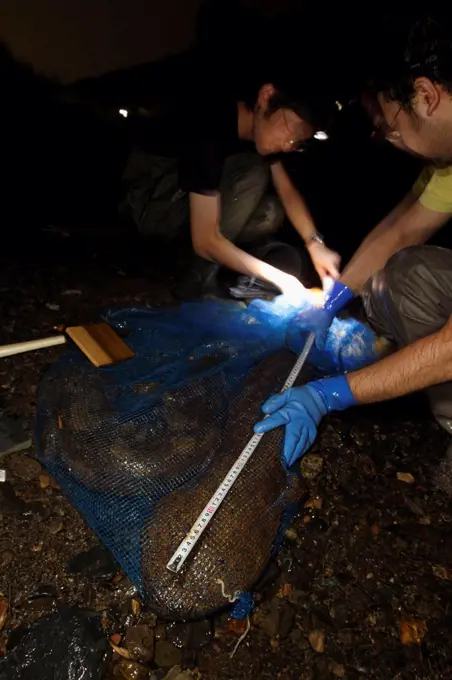
Observation of a Japanese Giant Salamander Honshu island
4409-135692
PROCESO DE ESCANEADO TRIDIMENSIONAL DE LA PLACA GRABADA DE VILLALBA, EN EL MUSEO NUMANTINO. RETRATOS DE BAQUEDANO CON LA PIEZA.
6145-45182534
X-RAY MIRROR REPLICATION AND SHELL SEPARATION PROCESS: CHET SPEEGLE, JOHN HOOD, KEITH BOWEN, CARL WIDRIG, RATANA MEEKHAM, AMY MEEKHAM
4070-111114956
Samantha Pickering showing a Noctule bat (Nyctalus noctula) to members of the public at an outreach event, Boscastle, Cornwall, UK, October.  Model released.
1889-60420262
Mollusk specialist handles specimens of freshwater mussels; Knoxville, Tennessee, United States of America
4201-15011
Scientist Tom Prentice milks venom from desert Tarantula for study, University of California at Riverside, California
1899-76348279
Waco, Texas, Forensic scientist Dr. Lori Baker and her students at Baylor University work to identify the remains of unidentified migrants who died trying to enter the United States without legal documents. Most perished in a long, hot walk as they tried to evade a Border Patrol checkpoint 70 miles north of the border. One student uses a tablet to photograph what was found of one body.
4413-28971739
Researcher measuring the beak of a Rufous-tailed hummingbird as part of a pollination study, rainforest at the "La Selva" research station in Puerto Viejo de Sarapiqui, Costa Rica
1848-54943978
Model of the upper jaw is cast
6145-44601946
KENNEDY SPACE CENTER, FLA. -  United Space Alliance employee Anthony Simmons prepares to electroweld a crack formed in the insulator inside a Reinforced Carbon Carbon panel.   The gray carbon composite RCC panels are attached to the leading edge of the wing of the orbiters to withstand the aerodynamic forces experienced during launch and reentry, which can reach as high as 800 pounds per square foot.  The operating range of RCC is from minus 250º F to about 3,000º F, the temperature produced by friction with the atmosphere during reentry.
4421-23650
Socotra Giant Gecko (Haemodracon riebeckii) adult, being measured by herpetologist, Socotra, Yemen
1525-28460066
The scientist looking and stone samples in lab. Scientist looking and stone samples in lab
6145-45214733
Kennedy Space Center employees assemble the flight hardware of NASAs Orbital Syngas Commodity Augmentation Reactor, or OSCAR - an Early Career Initiative project at the Florida spaceport that studies technology to convert trash and human waste into useful gasses such as methane, hydrogen and carbon dioxide. By processing small pieces of trash in a high-temperature reactor, OSCAR is advancing new and innovative technology for managing waste in space. OSCAR would reduce the amount of space needed for waste storage within a spacecraft, turn some waste into gasses that have energy storage and life support applications and ensure waste is no longer biologically active. A prototype has already been developed, and a team of Kennedy employees are in the process of constructing a new rig for suborbital flight testing.
6145-44624318
KENNEDY SPACE CENTER, FLA.  - During an installation demonstration the Orbiter Processing Facility, United Space Alliance technician Lisa Campbell handles components of the sensor system being placed on the wing leading edge of orbiter Discovery.  The sensors are part of the Wing Leading Edge Impact Detection System, a new safety measure added for all future Space Shuttle missions. The system also includes accelerometers that monitor the orbiter's wings for debris impacts during launch and while in orbit. There are 22 temperature sensors and 66 accelerometers on each wing. Sensor data will flow from the wing to the crew compartment, where it will be transmitted to Earth.
6145-45114505
Russian Sokol suit gloves are seen as Expedition 49 NASA astronaut Shane Kimbrough, and Russian cosmonauta Sergei Ryzhikov of Roscosmos and Andrey Borisenko of Roscosmos don their Russian Sokol suits ahead of their Soyuz qualification exams, Wednesday, Aug. 31, 2016, at the Gagarin Cosmonaut Training Center (GCTC) in Star City, Russia.
6145-45105761
Inside a laboratory in the Space Station Processing Facility at NASAs Kennedy Space Center in Florida, 18 plant pillows for the Veg-03 experiment have been prepared for delivery to the International Space Station aboard the eighth SpaceX Dragon commercial resupply mission. The Veg-03 plant pillows will contain ‘Tokyo Bekana cabbage seeds and lettuce seeds for NASAs third Veggie plant growth system experiment. The experiment will continue NASAs deep space plant growth research to benefit the Earth and the agencys journey to Mars.
6145-45283442
Jaime Toro, a mechanical engineer supporting the Gaseous Lunar Oxygen from Regolith Electrolysis (GaLORE) project at NASAs Kennedy Space Center in Florida, checks the hardware that will be used to melt lunar regolith - dirt and dust on the Moon made from crushed rock - simulants during a test inside a laboratory at Kennedys Neil Armstrong Operations and Checkout Building on Oct. 29, 2020. GaLORE was selected as an Early Career Initiative project by the agencys Space Technology Mission directorate, and the team was tasked with developing a device that could melt lunar regolith and turn it into oxygen. As NASA prepares to land the first woman and the next man on the Moon in 2024 as part of the Artemis program, technology such as this can assist with sustainable human lunar exploration and long-duration missions to Mars.
1848-51685562
Biologist studying the black shimmer, rhynchops niger, Los Lianos in Venezuela
6145-44589217
KENNEDY SPACE CENTER, FLA. -- A Columbia Reconstruction Project Team member examines debris from the Space Shuttle Columbia in the RLV Hangar.  The debris is being shipped to KSC from the collection point at Barksdale Air Force Base, Shreveport, La. As part of the ongoing investigation into the tragic accident that claimed Columbia and her crew of seven, workers will attempt to reconstruct the orbiter inside the hangar.
1815R-13443317
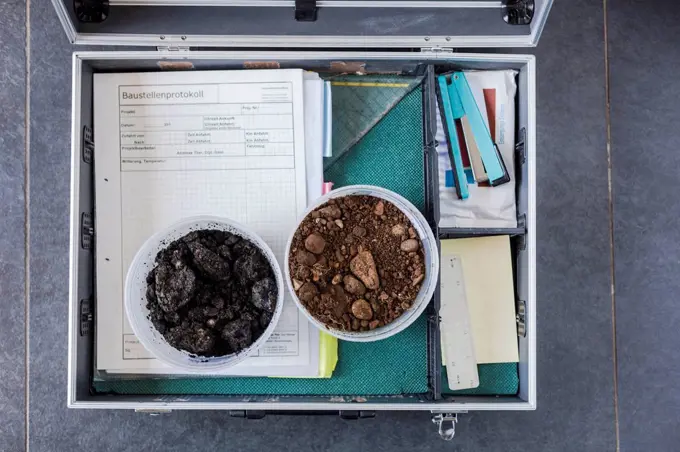
Case of geotechnical expert with soil samples and documents
6145-52549862
Nikon CoolPix 990 digital camera (3.34 megapixels) with a San Disk. Descriptive Note: Jay Bigelow with Lahontan cutthroat trout at the Lahontan National Fish Hatchery in Nevada. Photo taken March 25, 2003 by Robert H. Pos, Fishery Biologist ELECTRONIC IMAGE ONLY. Subjects: Fishes; fishes; Fisheries management; Lahontan National Fishes Hatchery; Nevada; electronic.  . 1998 - 2011.
4201-90936
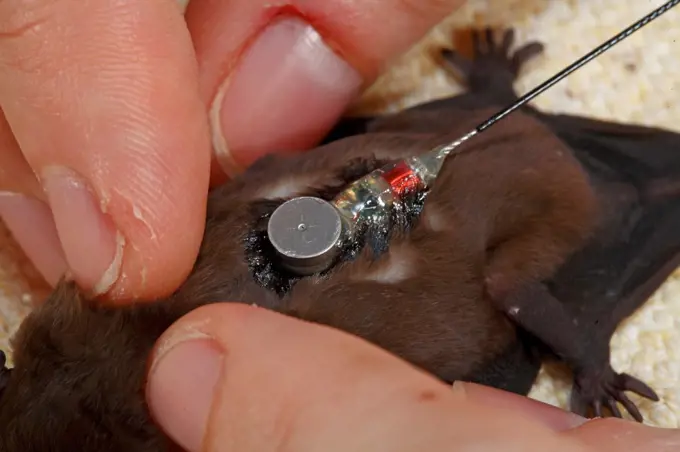
Radio transmitter on the back of a bat used by scientists to record its movements, Smithsonian Tropical Research Station, Barro Colorado Island, Panama
1558-14105700
Chemist searches drug in chemist cupboard
4201-15004
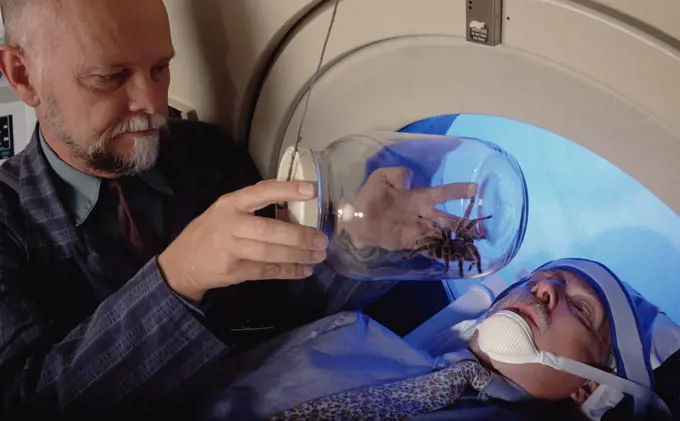
Tarantula (Theraposidae) shown to Stanford professor and arachnophobia expert, C Barr Taylor, by Dr Gunnar Gotestam while a pet scanner records his fear response, Norway
6145-44806871
STS-132 ATLANTIS WCCS MANIFOLD FOR WINDOW PERGE BUILDUP
4413-64153
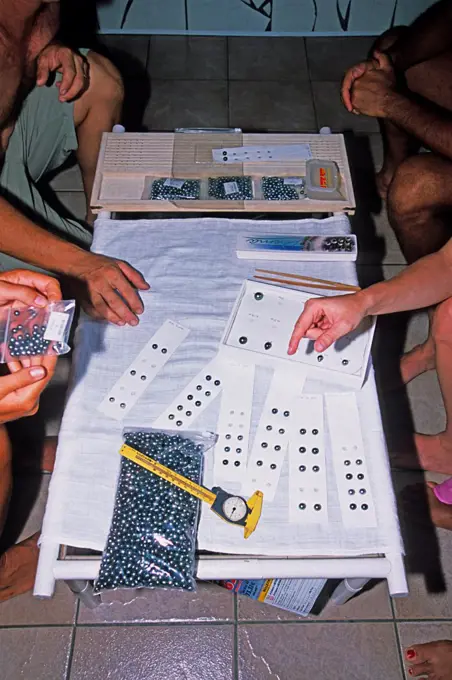
Measurement and calibration of pearls Fakarava Atoll Tuamotu
6145-44650838
KENNEDY SPACE CENTER, FLA. -    In the Operations and Checkout Building, Michele Perchonok stows packages of food that the STS-121 crew will eat on the 12-day mission. Perchonok is a NASA Subsystem manager for Shuttle Food Systems from Johnson Space Center.  Astronauts select their own menus from a large array of food items. Astronauts are supplied with three balanced meals, plus snacks. Diets are designed to supply each astronaut with 100 percent of the daily value of vitamins and minerals necessary for the environment of space.  Foods flown on space missions are researched and developed at the Space Food Systems Laboratory at the Johnson Space Center (JSC) in Houston, which is staffed by food scientists, dietitians and engineers. Foods are analyzed through nutritional analysis, sensory evaluation, storage studies, packaging evaluations and many other methods.   Each astronauts food is stored aboard the space shuttle and is identified by a colored dot affixed to each package. A suppl
4421-37125
using a spectrometer to measure sugar levels
6145-55900120
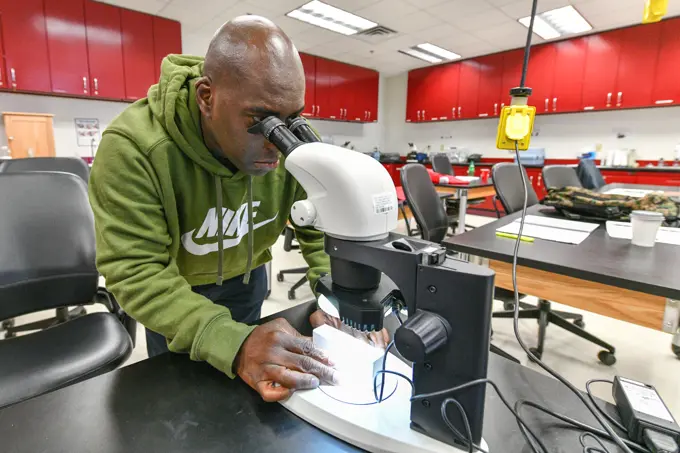
Environmental Health Technician Kevin Williams, from the Kenner Army Health Clinic in Fort Lee, Virginia, looks at different insects through a microscope while attending the DOD Pesticide Applicator Certification Course at the U.S. Army Medical Center of Excellence, Joint Base San Antonio-Fort Sam Houston, Texas, on September 1, 2022. Williams attended the three-week course to obtain certification to apply and/or supervise the application of pesticides.
7228-71246490
Finch Specimens in CDRS or Charles Darwin Research Station. Puerto Ayora, Santa Cruz Island, Galapagos Islands, Ecuador.
4413-10726
Researcher of the National Museum of Natural History Paris
6188-54834231
ichthyology of a salmon icthyological researches of a salmon on a table at the scientist Copyright: xZoonar.com/max5128x 4507686
1899-19512770
A U.S. Department of Agriculture (USDA) Grain Inspection, Packers and Stockyards Administration (GIPSA) Federal Grain Inspection Service (FGIS) scientist tests wheat at the FGIS inspection laboratory in New Orleans, LA on Monday, Nov. 18, 2013.
7228-71246557
Insect Collection held by the Entomology Department. CDRS, Charles Darwin Research Station. Puerto Ayora, Santa Cruz Island, Galapagos Islands, Ecuador.
4421-37787
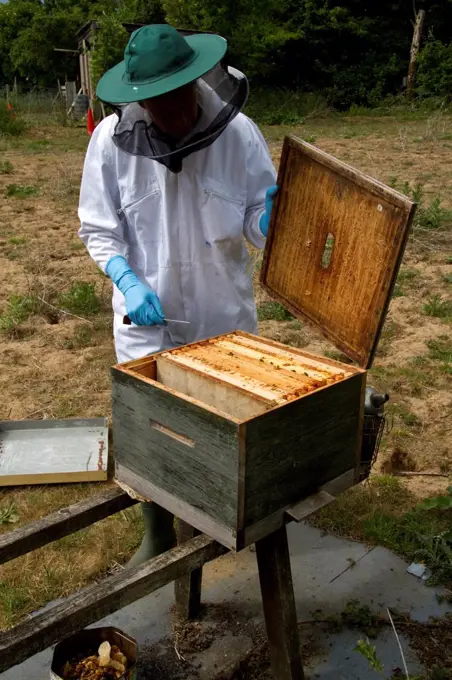
Beekeeper opening brood box part of the hive to expose the wax frames.
1848-50163040
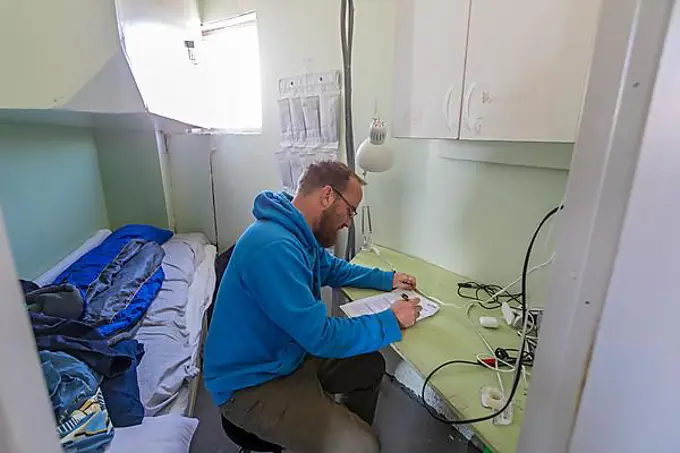
Hanksville, Utah, Researchers simulate living on Mars at the Mars Desert Research Station. 'Expedition Boomerang' brought Australian researchers to the station. Guy Murphy works in his tiny stateroom
6145-52148915
MASTER SGT. Jocelyn Nixon measures a radiation level at the Armstrong Laboratory Occupational and Health Directorate where she is the superintendent of the instrument calibration facility. She is wearing a collar badge to gauge doses of radiation to the thyroid. Nixon works primarily with the air Force Dosimetry Program which distributes, collects, and reads radiation badges worn by Air Force X-ray workers in the medical, dental, and industrial fields. Published in AIRMAN Magazine October 1996. Base: Brooks Air Force Base State: Texas (TX) Country: United States Of America (USA)
6145-44793771
CAPE CANAVERAL, Fla. - A newly designed glove is submitted to a burst test to determine how much internal pressure it can withstand at the 2009 Astronaut Glove Challenge, part of NASAs Centennial Challenges Program, at the Astronaut Hall of Fame near NASAs Kennedy Space Center in Florida.The nationwide competition focused on developing improved pressure suit gloves for astronauts to use while working in space.  During the challenge, the gloves were submitted to burst tests, joint force tests and tests to measure their dexterity and strength during operation in a glove box which simulates the vacuum of space.  Centennial Challenges is NASAs program of technology prizes for the citizen-inventor. The winning prize for the Glove Challenge is $250,000 provided by the Centennial Challenges Program.
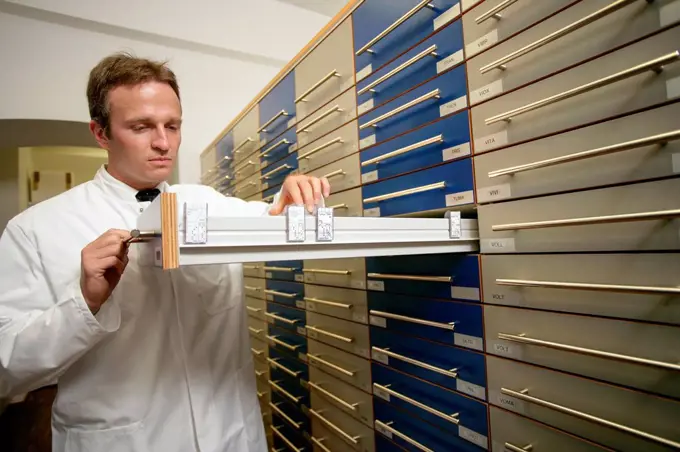
6145-45253353
Communications, Navigation, and Networking Reconfigurable Test-bed, CoNNeCT; Silver Teflon Foil Installation
7137-70494912
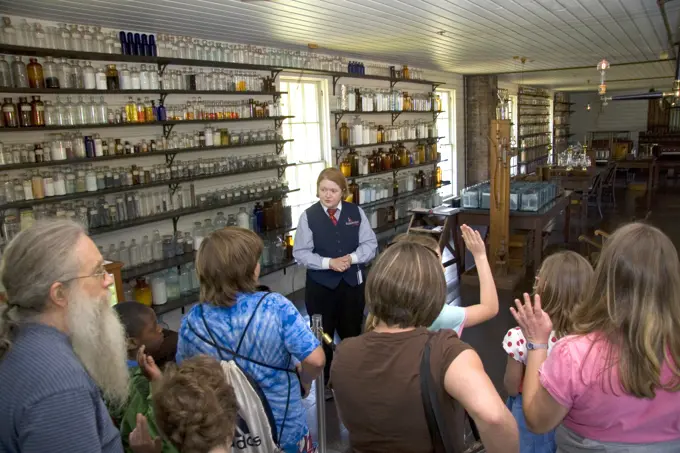
Guided tour of Thomas Edison's Menlo Park laboratory in Greenfield Village at The Henry Ford in Dearborn, Michigan.
6145-45185546
NASA Earth & Space Air Prize Demonstration Event
6145-45171854
Deborah Jackson integrates a pressure system she and other students developed for the subscale Prandtl 3C glider.
PREVIOUS
of 2
NEXT
2401 S. Ervay, Suite 206
Dallas, Texas 75215
United States
Get Started
Free ResearchMy BoardsMy Cart
For Creators
How To License Your ContentContributor PortalFrame of Mind
Resources
API accessPricing
Contact
+1 866 236 0087help@viewpictures.co.uk Contact form
©2026 View Pictures. All Rights Reserved. -A
This site is protected by reCAPTCHA and Google Privacy Policy and Terms of Service apply.