Porcelain Plate Designs

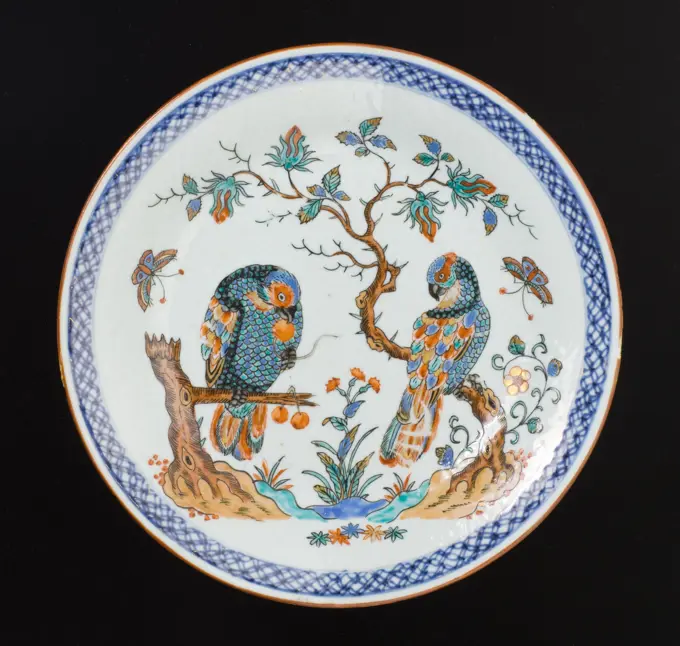
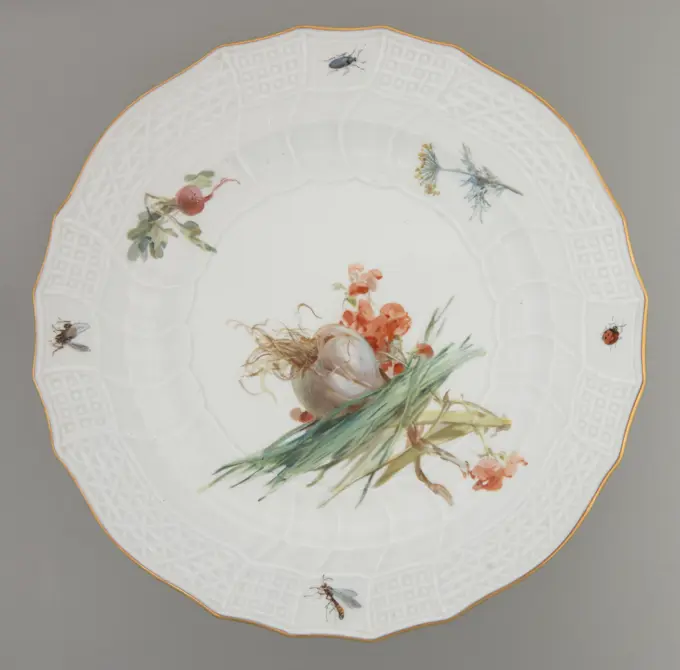
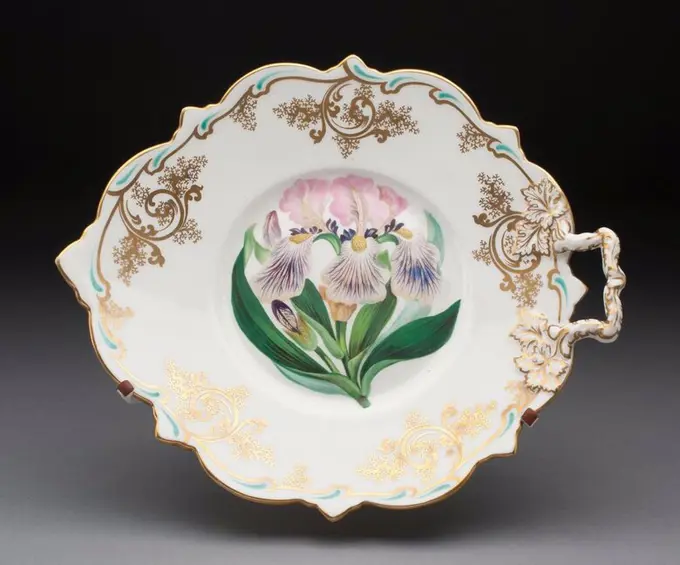
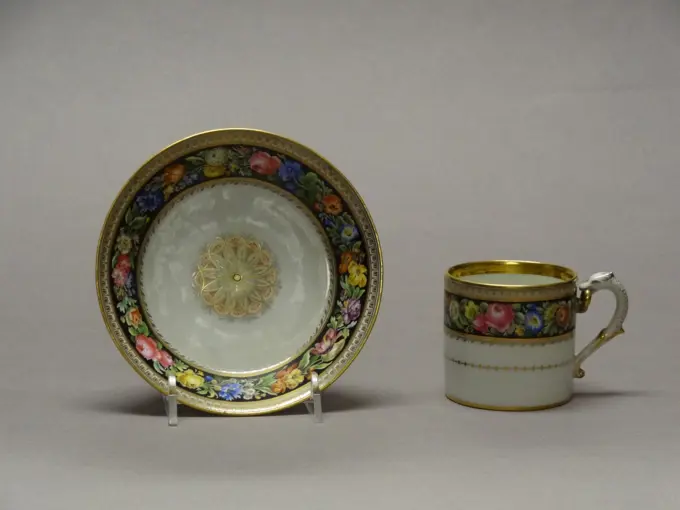
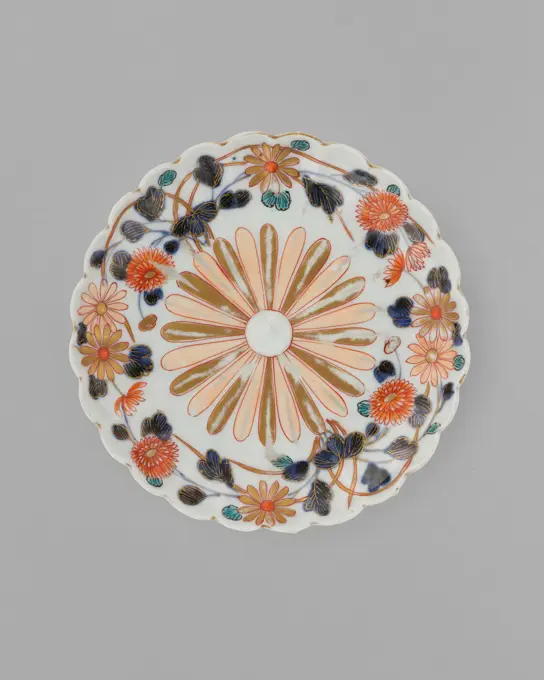
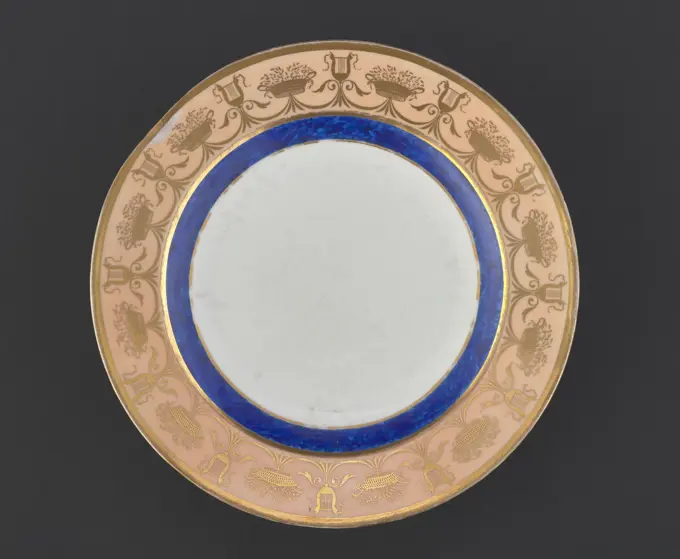
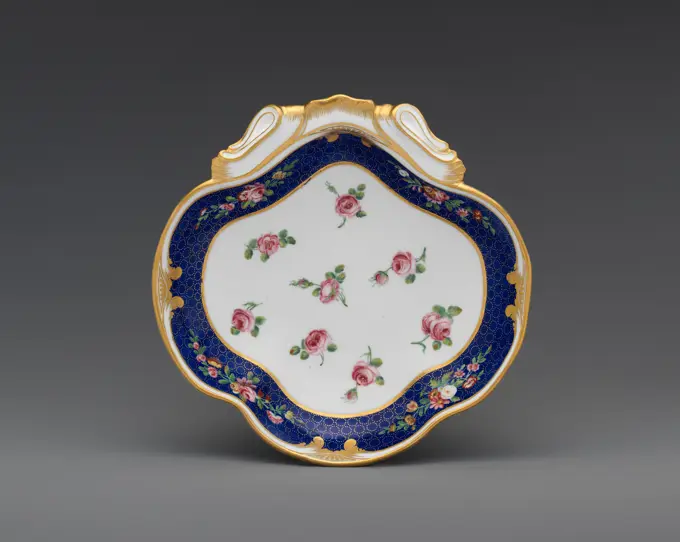
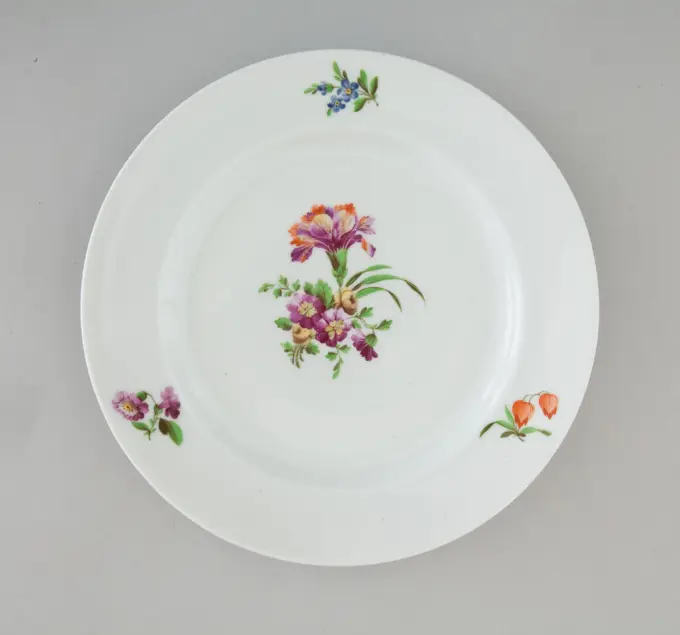
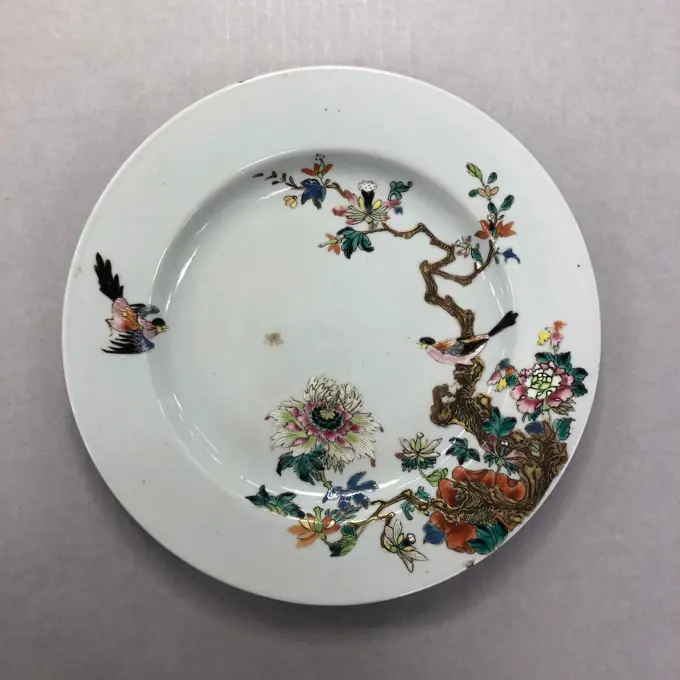
Elegant porcelain plates featuring colorful decorations of flowering plants and animals. The collection showcases rich colors and intricate designs typical of fine china.

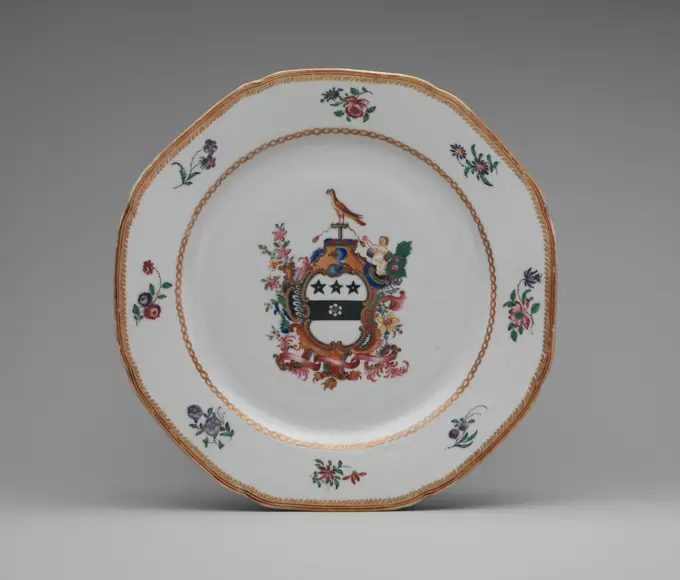
Plate with bouquets and flower sprays, Fabriek Dominique Denuelle, c. 1839 Plate (dessert board) of porcelain with a lobed edge, painted on the glaze in blue, red, pink, green, yellow, purple, black and gold. On the flat bouquets of different flowers and sprinkling flowers. From the lobed, golden edge, modeled leaf vines in relief, with gold. In between bouquets. Three prenes on the bottom. Marked on the bottom with 'Denuelle/ Boulevard St. Denis 18/ à Paris'. Paris porcelain. glaze. gold (metal) painting / gilding / vitrification Plate (dessert board) of porcelain with a lobed edge, painted on the glaze in blue, red, pink, green, yellow, purple, black and gold. On the flat bouquets of different flowers and sprinkling flowers. From the lobed, golden edge, modeled leaf vines in relief, with gold. In between bouquets. Three prenes on the bottom. Marked on the bottom with 'Denuelle/ Boulevard St. Denis 18/ à Paris'. Paris porcelain. glaze. gold (metal) painting / gilding / vitrification
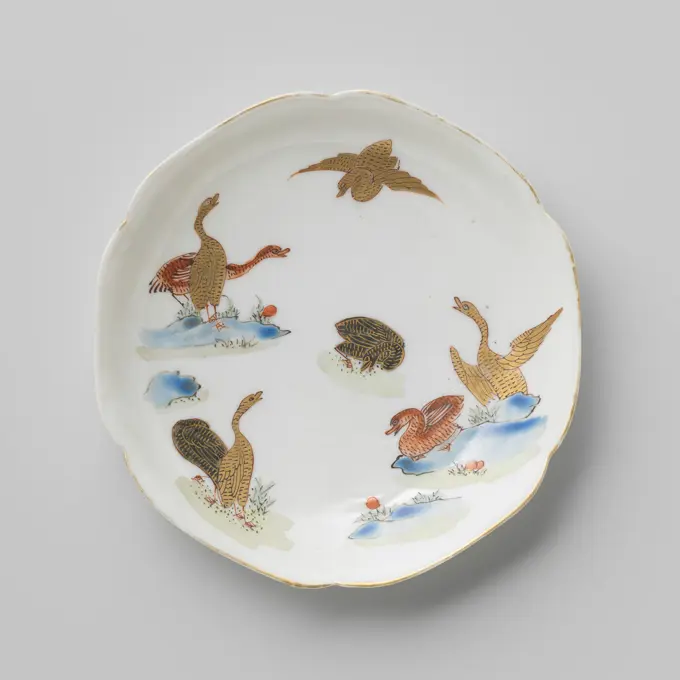
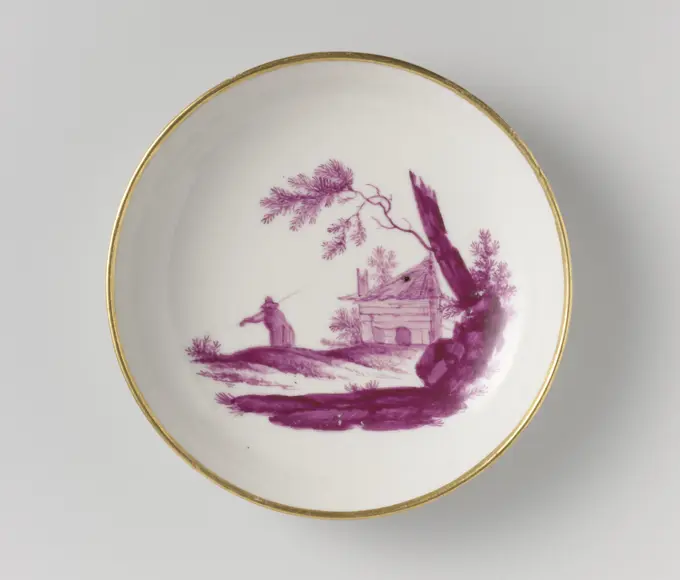
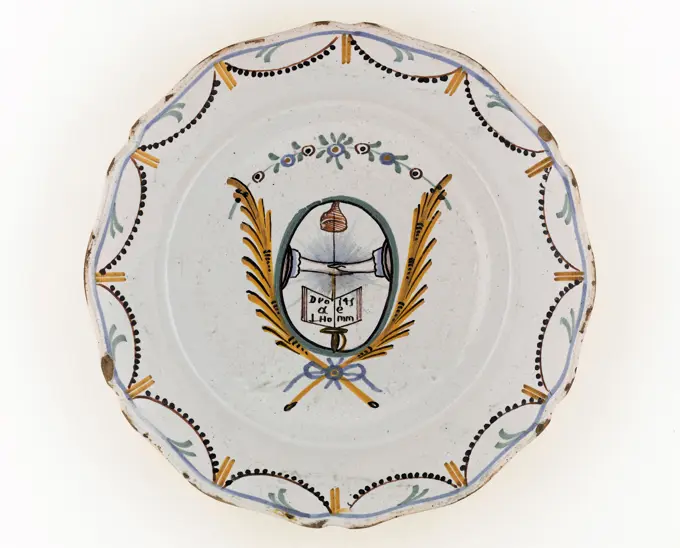
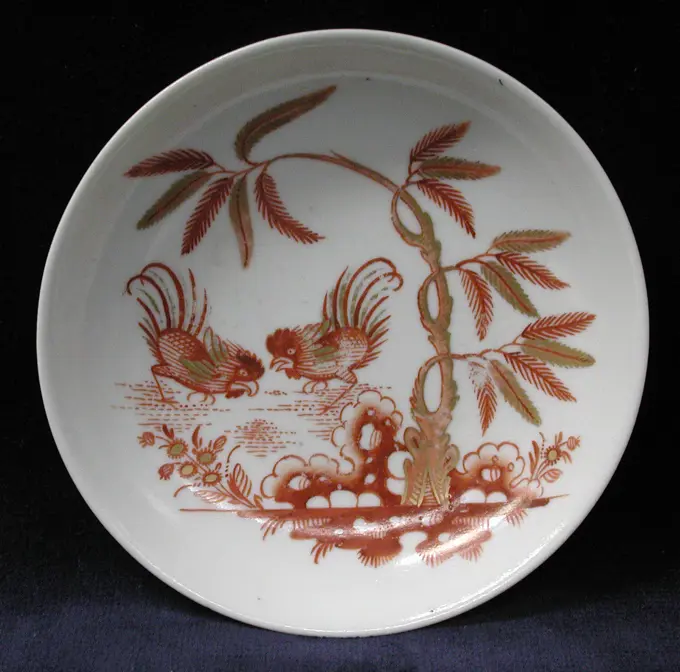
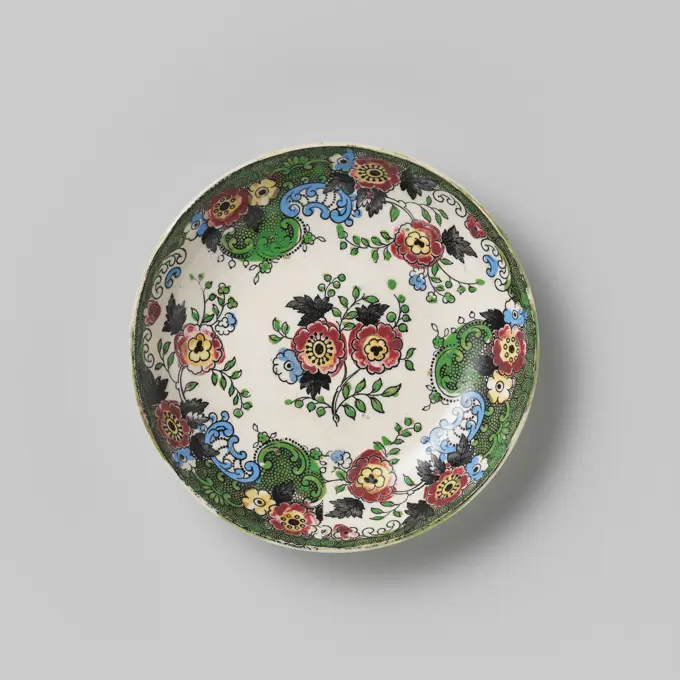
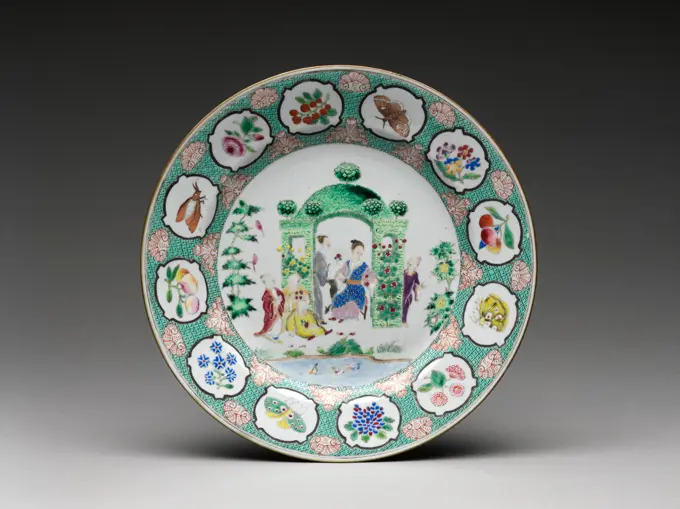
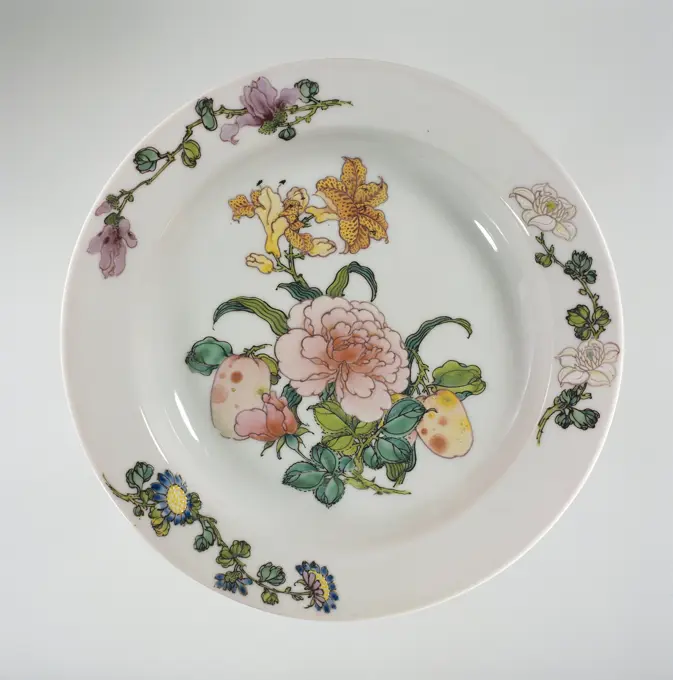
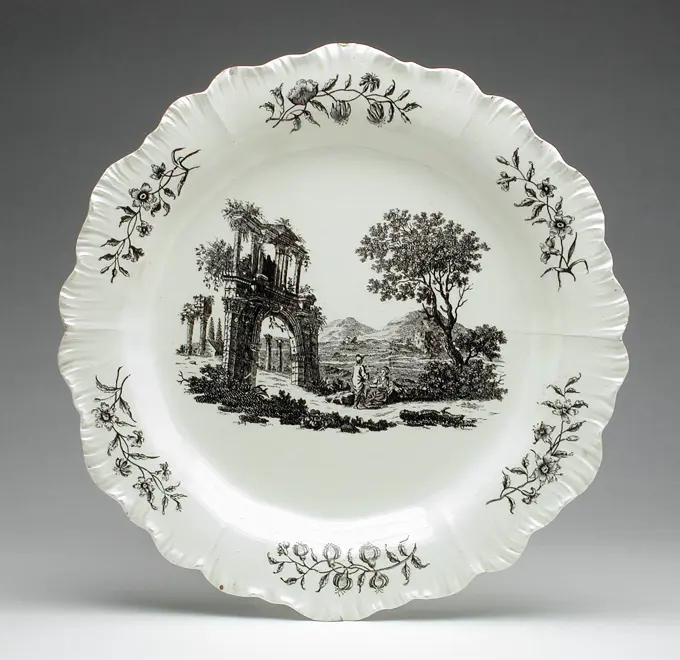
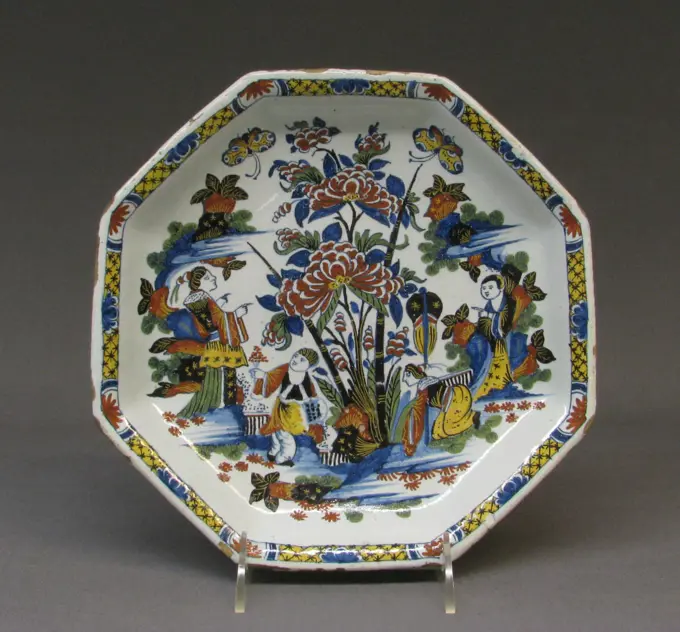
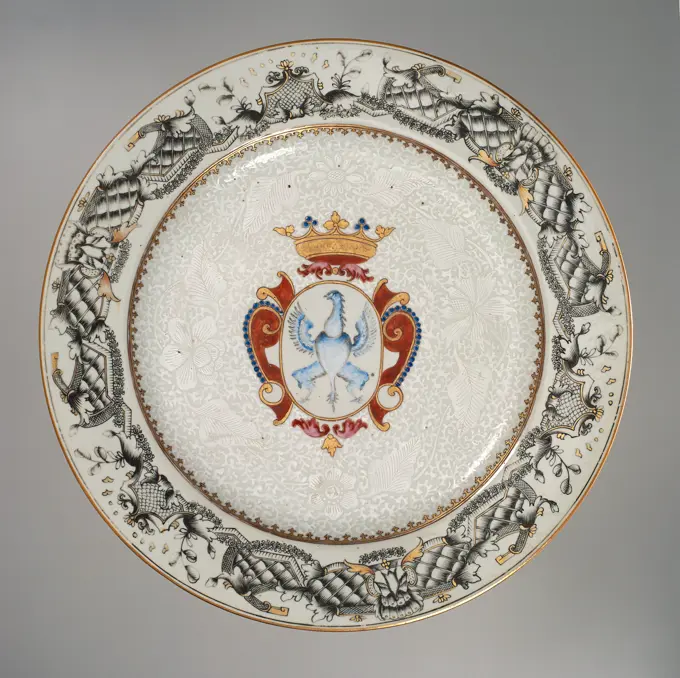
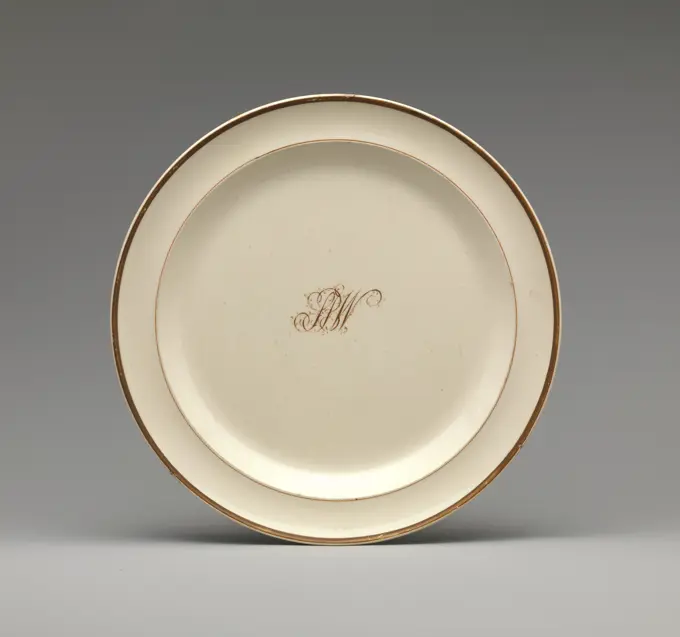
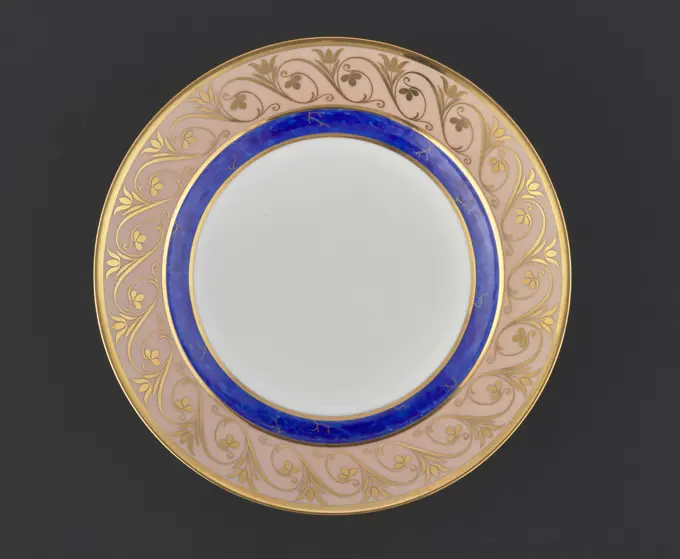
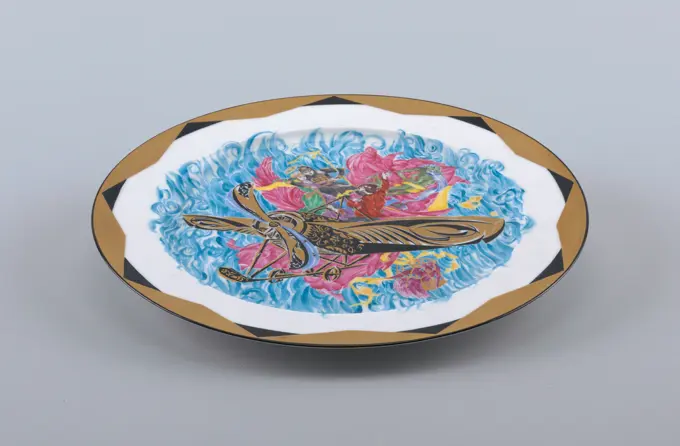
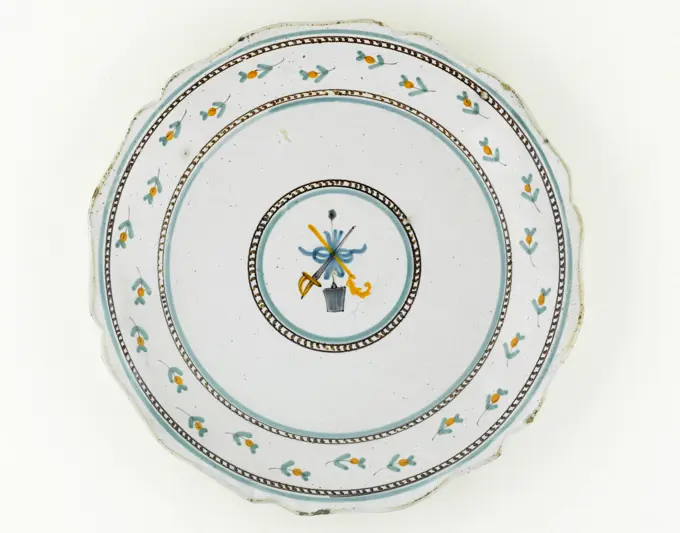
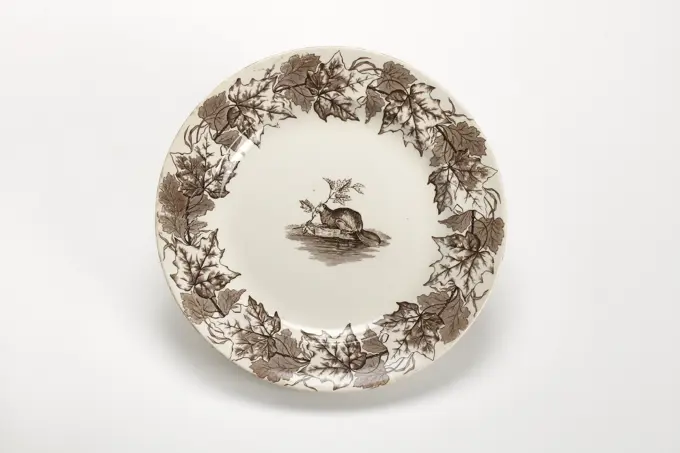
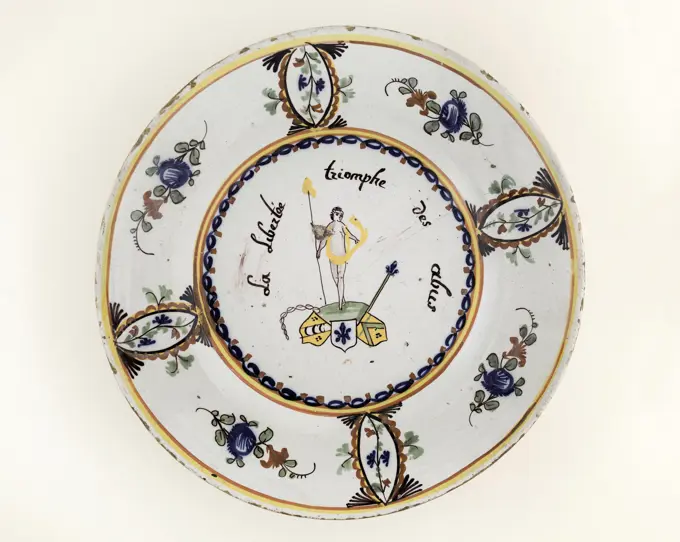
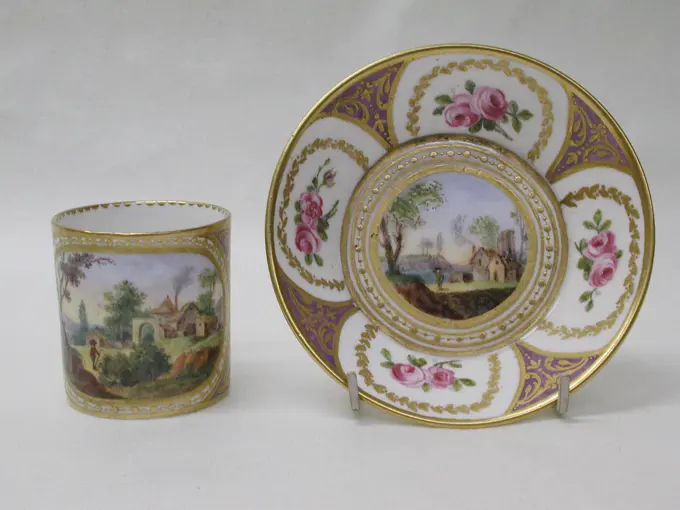
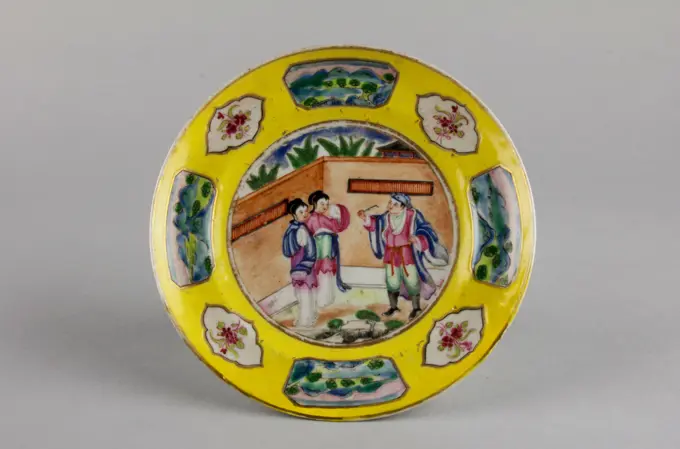
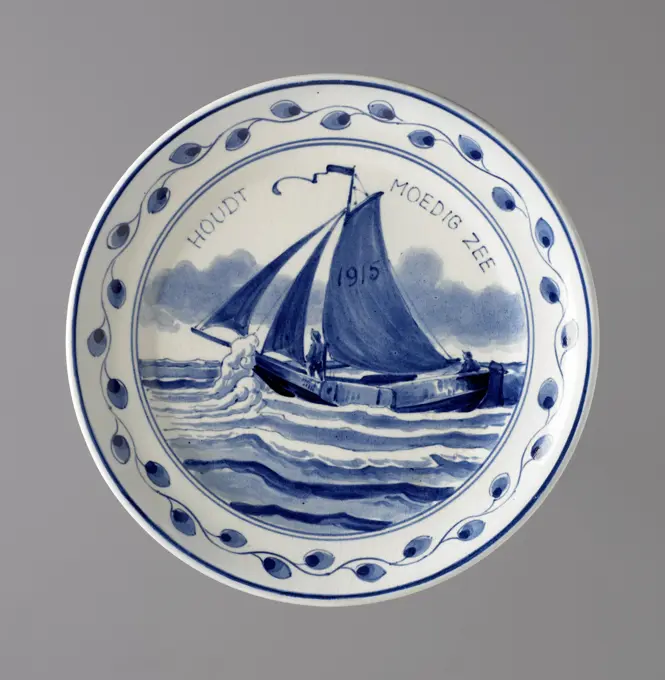
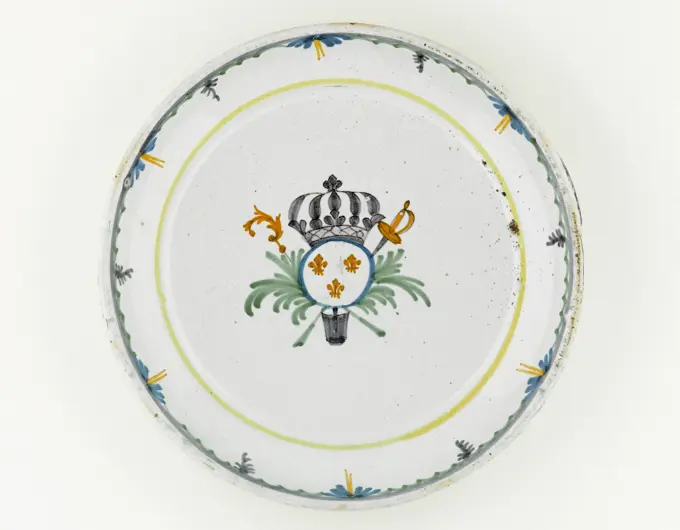
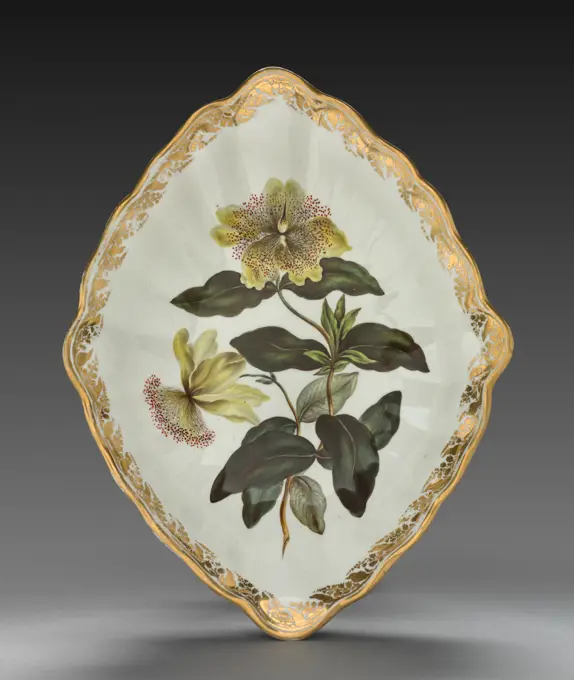
Plate 1785-90 Chinese, for American market This object belongs to a large dinner service (10.149.1-.248) bearing the Townley family coat-of-arms. The service, probably ordered by Justice Samuel Chase (1741-1811) of Annapolis, Maryland, displays the enamel-painted arms of Margaret Townley, Chase's aunt.. Plate 6264Dish 1750-1760 StaffordshireDinner plate - Heritage D'après Ridgways Potteries Limited, 1955-1964Plate with the arms of the Stocker or Tatham family and floral scrolls, anonymous, c. 1775 - c. 1799 Porcelain plate, painted on the glaze in blue, red, pink, green, black and gold. On the flat the coat of arms of the Stocker or Tatham family consisting of three blue triangles and three filled with a bird, the weapon is surrounded by leaf vines with an arm with an arrow at the top. A decorative band on the wall; The edge with flower and fruit vines against a golden soil. Some chips in the edge. Weapon porcelain with email colors. China porcelain. glaze. gold (metal) painting / gilding / vitrification Porcelain plate, painted on the glaze in blue, red, pink, green, black and gold. On the flat the coat of arms of the Stocker or Tatham family consisting of three blue triangles and three filled with a bird, the weapon is surrounded by leaf vines with an arm with an arrow at the top. A decorative band on the wall; The edge with flower and fruit vines against a golden soil. Some chips in thePair of Plates. China, circa 1725. Furnishings; Serviceware. Porcelain with glaze, enameledDinner service, incomplete  plate plate Mi Nia (Meissen)Plate;  1775 (1775-00-00-1775-00-00);Sèvres Porcelain Manufactory, Cup and Saucer, 1851, hard-paste porcelain.Plate; Chamberlain & Co (England; Porcelain Factory; 1788-1852); 1811-40 (1840-00-00-1845-00-00);Soup plate - L. Bernardaud & Company L. Bernardaud & CompanyOval platter.. Korzec (manufaktura porcelany ; 1790-1832), factoryMoscow Porcelain Manufactory, Popoff Factory, Cup and Saucer, 1800-1872, hard-paste porcelain.Cup and saucer ca. 1780 Worcester factory. Cup and saucer 198537Meissen Porcelain Manufactory, Cup and Saucer, 1735-40, hard-paste porcelain.Dish 1735 World's End Pottery. Dish. Irish, Dublin. 1735. Delftware. Ceramics-PotteryDish. Spode Pottery & Porcelain Factory; English, founded 1776. Date: 1820-1830. Dimensions: 5.7 x 22.5 x 26.4 cm (2 1/4 x 8 7/8 x 10 3/8 in.). Porcelain, polychrome enamels and gilding. Origin: Stoke on Trent. Museum: The Chicago Art Institute, Chicago, USA. Author: Spode Limited.Dish, multi -colored painted with a landscape with figures., Meissener Porzellan Manufaktur, 1777 Round dish of painted porcelain. The dish is painted with landscapes in which figures and along the edge a wide strip of green braid. The dish is marked. Float porcelain Round dish of painted porcelain. The dish is painted with landscapes in which figures and along the edge a wide strip of green braid. The dish is marked. Float porcelainMeissen Porcelain Manufactory, Cup and Saucer, after 1814, possibly 1816-20, hard-paste porcelain.Scalloped dish or plate of painted porcelain. Blackboard () From porcelain with corrugated edge. Painted with spreading flowers.Saucer With Eight Geese. Dish with lobed edge, painted on the glaze in blue, red, green, black and gold. On the front of the dish eight geese at rocks, grazing or flying. Porcelain with email colors.Dish, Manufactuur Oud-Loosdrecht, 1775 Porcelain dish. Part of a series of Twaafl pieces. Painted with figures in a landscape in beet red and gold piping. Loosdrecht porcelain Porcelain dish. Part of a series of Twaafl pieces. Painted with figures in a landscape in beet red and gold piping. Loosdrecht porcelainArita (ceramic production center), saucer of canned bowl with imari decor (usage name). Porcelain, polychrome enamels: cobalt blue under glaze, iron and green red on glaze, gilding. Petit Palais, Museum of Fine Arts of the City of Paris.Plate with View of 'Bredalbane', Scotland, Cauldon Ltd., Staffordshire, England, 1904 - 1920, earthenware, vitreous enamel, Plate with brown transfer print. Center shows figures in a landscape, within a ring of thistles. Border shows tartan with dots., England, 1904-1920, ceramics, Decorative Arts, plate, plateBread plate - L. Bernardaud & Company L. Bernardaud & Company. Dish of Faïence, painted multi-colored with a fruit basket.Dish, painted with water landscapes, Anonymous, 1756 Dish of Faïence, multi -colored painted with water landscapes. Delft . Dish of Faïence, multi -colored painted with water landscapes. Delft .. Porcelain plate, painted on the glaze in blue, red, pink, green, black and gold. On the Flat The Arm of the Family Stocker or Tatham consisting of three blue triangles and three filled with a bird, the weapon is surrounded by leaf refinters with an arm with an arrow at the top. A decorative band on the wall; The edge with flower and fruit drinks against a golden ground. Some chips in the edge. Weapon porcelain with email colors.Plate; Koenigliche Porzellan Manufaktur (KPM; Berlin; 1763-1918); approx. 1800 (1823-00-00-1832-00-00);Plate with a bouquet and flower sprays, imperial porcelain factory, c. 1800 - c. 1849 Porcelain plate with a lobed edge, painted on the glaze in red, pink, green and yellow. On the flat a bouquet of different flowers (including peony) surrounded by loose twigs and five flower branches on the edge. Marked on the underside with the shield, the letters P and S and the numbers 32, 40 and 89. In a few places the email has released. Vienna porcelain. glaze. painting / vitrification Porcelain plate with a lobed edge, painted on the glaze in red, pink, green and yellow. On the flat a bouquet of different flowers (including peony) surrounded by loose twigs and five flower branches on the edge. Marked on the underside with the shield, the letters P and S and the numbers 32, 40 and 89. In a few places the email has released. Vienna porcelain. glaze. painting / vitrification. These dishes belong to a so-called confituurster, or star-shaped sweetmeat set. It was so named because the sweetmeat dishes were arranged in a star pattern around a piece at centre. The painted decoration in various colours was based onAsian porcelain. The Moriaanshooft pottery factory was renowned for its technically advanced and artistically refined tin-glazed earthenware.Sèvres Porcelain Manufactory, Plate, c. 1814-16, hard-paste porcelain.Anonymous. Plate. Earthenware. 1790. Paris, Carnavalet museum. 70955-59 Weapon, Crown, Epee, Faience, Decorative Pattern, knot, shovel, revolutionary period, dishes, plateAnonymous. "Human Rights" plate. Earthenware. Paris, Carnavalet museum. 71683-50 Phrygian cap, decoration, man right, faience, revolutionary period, French revolution, union, plateSaucer 1760-70 Doccia Porcelain Manufactory Italian The gift of the Hans Syz Collection in 1995 endowed the Museum with nearly three hundred examples of European and Asian ceramics meticulously acquired by Swiss-born collector Dr. Syz (1894-1991) to chart the migration of models and patterns from East to West. Documenting a continuous process of influence and adaptation, these pieces provide a discriminating review of the nuances of stylistic change resulting from three centuries of trade.. Saucer 208364Dish 19th century, imitation of early 17th century. Dish 444874Plate with the arms of the Bijnkershoek family, anonymous, c. 1735 - c. 1740 Porcelain plate, painted on the glaze in red, black and gold. On the flat the weapon of the Bijnkershoek family. The weapon and helmet sign consist of a golden sword and spring or paving pin with stars. The cover consists of leaves in black or silver and gold. On the wall a band with flower vines; The edge with four flower branches (aster, peony, beautiful anjer). Old label on the bottom with 'Van Bynkershoek'. A crack and a chip in the edge. Weapon porcelain Min Encre de Chine. China porcelain. glaze. gold (metal) painting / gilding / vitrification Porcelain plate, painted on the glaze in red, black and gold. On the flat the weapon of the Bijnkershoek family. The weapon and helmet sign consist of a golden sword and spring or paving pin with stars. The cover consists of leaves in black or silver and gold. On the wall a band with flower vines; The edge with four flower branches (aster, peony, beautiful anjer). Plate with the arms of Oranje Nassau and Prussia, anonymous, c. 1790 Porcelain plate, painted on the glaze in blue, red, pink, green, yellow, purple, black and gold. On the flat the alliance weapon of Prince Willem V, stadholder of the Netherlands (1748-1806) and his wife Princess Wilhelmina van Pruissen (1751-1820) on a purple cloud. The helmet sign is a crown. Decorative tires on the wall and edge. Rand restored. Weapon porcelain with email colors. China porcelain. glaze. gold (metal) painting / gilding / vitrification Porcelain plate, painted on the glaze in blue, red, pink, green, yellow, purple, black and gold. On the flat the alliance weapon of Prince Willem V, stadholder of the Netherlands (1748-1806) and his wife Princess Wilhelmina van Pruissen (1751-1820) on a purple cloud. The helmet sign is a crown. Decorative tires on the wall and edge. Rand restored. Weapon porcelain with email colors. China porcelain. glaze. gold (metal) painting / gilding / vitrificationDish, decorated with multicolored flowers and volutes. Dish of pottery with black transfer decor and mobbles. It's flat decorated with multicolored flowers and volutes.Dish (part of a set) ca. 1752-55 Chelsea Porcelain Manufactory. Dish (part of a set). British, Chelsea. ca. 1752-55. Soft-paste porcelain. Chelsea Porcelain Manufactory (British, 1744-1784). Ceramics-PorcelainSaucer with a Crowned, illegible monogram surrounded by two Flower sprays. Dish of porcelain, painted on the glaze in blue, red, pink, green, yellow, black and gold. On the flat a crowned, unreadable monogram surrounded by two flower branches; The wall with flower refines with four cartouches with a landscape and four medallions with plants. Two chips and two cracks in the wall. European performance in email colors.Plate with figures in arbor ca. 1740 Design attributed to Cornelis Pronk Dutch It is probable that the composition decorating this plate derives from a drawing by the Dutch artist Cornelis Pronk (1691-1759), who is known to have furnished designs to the Dutch East India Company. Pronks drawings were widely employed by Chinese porcelain painters as sources of decoration for porcelain intended for export to Europe.. Plate with figures in arbor. Chinese, for Dutch market. ca. 1740. Hard-paste porcelain painted with colored enamels over transparent glaze (Jingdezhen ware). Ceramics-Porcelain-ExportBlackboard with a presentation of dancers on the flat. Pottery plate with red transfer decor. On the flat a representation of dancers, accompanied by a guitar player and some spectators. The edge is decorated with flowers, garlands and leaf motifs.Saucer with a border of grapevines and flowers, La Courtille Parijs, c. 1800 - c. 1824 Porcelain dish with a straight wall, painted on the glaze in green, black and gold. A golden circle in the center. On the wall a band with vines on one side and flowers and leaves on the other. Golden Rand. Marked on the underside with the crossed arrows. Paris porcelain. glaze. gold (metal) painting / gilding / vitrification Porcelain dish with a straight wall, painted on the glaze in green, black and gold. A golden circle in the center. On the wall a band with vines on one side and flowers and leaves on the other. Golden Rand. Marked on the underside with the crossed arrows. Paris porcelain. glaze. gold (metal) painting / gilding / vitrificationPlate with flowering plants, flower and fruit sprays, anonymous, c. 1725 - c. 1749 Porcelain plate, the rear is covered with a pink glaze and painted on the glaze in pink, green, yellow, purple and black. On the flat a group of flowering plants and fruit branches; Three flower branches on the edge. Famle Rose with a Ruby Back. China porcelain. glaze. painting / vitrification Porcelain plate, the rear is covered with a pink glaze and painted on the glaze in pink, green, yellow, purple and black. On the flat a group of flowering plants and fruit branches; Three flower branches on the edge. Famle Rose with a Ruby Back. China porcelain. glaze. painting / vitrificationPair of Plates. John Sadler (England, 1720-1789)Guy Green (England, 1750-1799)Josiah Wedgwood & Sons, Ltd. (England, Staffordshire, established 1759). England, circa 1780. Furnishings; Serviceware. Earthenware (creamware)Dish ca. 1740-45 French, Rouen Faience, or tin-glazed and enameled earthenware, first emerged in France during the sixteenth century, reaching widespread usage among elite patrons during the seventeenth and early eighteenth centuries, prior to the establishment of soft-paste porcelain factories. Although characterized as more provincial in style than porcelain, French faience was used at the court of Louis XIV as part of elaborate meals and displays, with large-scale vessels incorporated into the Baroque garden designs of Versailles. Earlier examples of French faience attest to the strong influence of maiolica artists from Italy. Later works demonstrate the ways in which cities such as Nevers, Rouen, Lyon, Moustiers, and Marseille developed innovative vessel shapes and decorative motifs prized among collectors throughout Europe. While faience can be created from a wide mixture of clays, it is foremost distinguished by the milky opaque white color achieved by the addition of tin oxide tDish with the arms of the Van der Broek of Dierkens family, anonymous, c. 1725 - c. 1749 Porcelain dish, painted on the glaze in blue, red, pink, black and gold. On the flat the coat of arms of the Van den Broek or Dierkens family. A blue eagle is depicted on the oval coat of arms. The helmet sign is a golden crown and a cover in red, gold and blue in Louix XIV style. In the flat a pattern of flowers and tendrils in Bianco-Sopra-Bianco. A Speahead border on the wall. On the edge a decoration in the Viennese du Paquier style with cartouches in a geometric pattern, flowers, garlands and peacocks. Old label on the bottom with 'Hasselaer'. Weapon porcelain with email colors. China porcelain. glaze. gold (metal) painting / gilding / vitrification Porcelain dish, painted on the glaze in blue, red, pink, black and gold. On the flat the coat of arms of the Van den Broek or Dierkens family. A blue eagle is depicted on the oval coat of arms. The helmet sign is a golden crown and a cover in red, Plate 1750-75 British Creamware, so-called for its cream-colored body, is a refined earthenware with a lead-based glaze that was developed in Staffordshire, England around 1750. Due to its light color and glossy glaze, it was ideal for dinnerware. Economically affordable to produce, creamware was imported to America in large quantities. Although much creamware was used in America, it is rare to find pieces associated with a particular family. This dinner service (36.22.1 -.38) bears the initials SBW” for Samuel Blachley Webb. The set was imported from England in 1774 by Webb, who was an aide-de-camp and military secretary to General George Washington.. Plate 6401Plate; Koenigliche Porzellan Manufaktur (KPM; Berlin; 1763-1918); 1870-82 (1823-00-00-1832-00-00);Toy dinner plate - Hampton Ridgways, 1879-1920 Ridgways, 1879-1920Airplane Plate; Designed by Lebedeva; Manufactured by State Porcelain Factory (Russia); porcelain, enamel, gilding; Diameter: 30.5 cm (12 in.); The Henry and Ludmilla Shapiro Collection; Partial gift and partial purchase through the Decorative Arts Association Acquisition and Smithsonian Collections Acquisition Program Funds; 1989-41-12Cup and saucer (one of a pair) ca. 1865 Chinese, for European market. Cup and saucer (one of a pair) 204836Rectangular dish with the arms of the Falck family, anonymous, c. 1745 - c. 1755 Elongated porcelain dish with scalloped edge, painted on the glaze with blue, red, pink, green, brown, black and gold. On the flat the coat of arms of the Falck family. The weapon has a red background with a falcon. The helmet sign is also a falcon and the cover consists of leaf vines in red and gold. On the wall a decoration in the Viennese du Paquier style with cartouches, flowers, garlands and falcons. On the edge a decoration of flower and leaf vines. A chip in the edge. Weapon porcelain with email colors. China porcelain. glaze. gold (metal) painting / gilding / vitrification Elongated porcelain dish with scalloped edge, painted on the glaze with blue, red, pink, green, brown, black and gold. On the flat the coat of arms of the Falck family. The weapon has a red background with a falcon. The helmet sign is also a falcon and the cover consists of leaf vines in red and gold. On the wall a decoration in Pair ofPlates.   Maker: UnknownPlate 12th-13th century Chinese. Plate 461492Plate (USA); creamware with underglaze transfer printing and paintingBotanical plate with a flowering eggplant. Culture: British, Chelsea. Dimensions: Overall (confirmed): 1 3/8 × 9 1/16 × 9 1/16 in., 1 lb. (3.5 × 23 × 23 cm, 0.5 kg). Maker: Chelsea Porcelain Manufactory (British, 1745-1784, Red Anchor Period, ca. 1753-58). Date: ca. 1755.These botanical plates (2016.217-.226) were produced by the Chelsea factory around 1755 and are often referred to as Chelsea "Hans Sloane" wares, in reference to the royal physician, traveler, and natural historian who helped transform the Chelsea Physik Garden into a center of botanical knowledge during the British Enlightenment. Several subjects depicted on these plates were taken from botanical illustrations published by Philip Miller, curator of Chelsea Physik Garden. Although flowers and fruits could typically be found on earlier porcelain wares from Meissen, the lively naturalism of the Chelsea botanical plates reflects a broadening public interest in the natural world, and evidence the forms of global commerce . Porcelain plate. The edge has slightly deepened at regular distances. Painted in green, yellow, blue and wine red with stylized flowers and leaves.9 Plates of Americanviews.  After: William Henry Bartlett, British, 1809-1854Fruit dish (compotier à coquille) ca. 1771 Sèvres Manufactory French. Fruit dish (compotier à coquille). French, Sèvres. ca. 1771. Soft-paste porcelain. Ceramics-PorcelainPlate. England, circa 1810-1820. Furnishings; Serviceware. PorcelainDish with the Kruipin Inn, anonymous, 1675  Delft pottery with blue decor. On the flat an inn with the signboard, on which it is written: this is the crawl. In the doorway there is a man with a glass in his hand, next to him on three shelves, some dishes, and above him the name: van der Burgh. For the inn a rider who takes on a glass from a standing man with a jug in his right hand. In the landscape with a ship, a group of two people and the caption: "Sy Rot Plet Poverrter" and a barking dog, above which is written: "Mars". At the top of the flat the following poem is written: Comes want to go to Koewraet 't Hoen. In the crawl in Getrou, there drink wine 't Saem vrolick sijn. Ter Eeren 't Huis van Nasou, 1675. On the edge of the dish, the Heraldic Wapen of William III, and the inscription: Vyva Orania and an edge of French points. No brands. Cracked and cramed in various places. Delft .  inn, coffee-house, public house, etc.. riding a horse, ass, or mule; rider, horsemanPlate KorzecSoup plate - St. Louis Gate. Porte St. Louis, Quebec Views Cochran & Fleming, 1896-1920 Cochran & Fleming, 1896-1920Plate, octagonal, painted on the flat with two birds and a branch. Rand with braid in relief, painted with insects, manufacture Oud-Loosdrecht, c. 1784 Plate, octagonal with a multi -colored branch with two birds on the flat. Walking in relief on the edge with insects. Marked: Amstel and M.O.L. In underlaze blue. Loosdrecht porcelain Plate, octagonal with a multi -colored branch with two birds on the flat. Walking in relief on the edge with insects. Marked: Amstel and M.O.L. In underlaze blue. Loosdrecht porcelainAnonymous. "Plate with three orders". Earthenware. Paris, Carnavalet museum. 70956-12 Crosse, Epee, Faience, knot, shovel, revolutionary period, three orders, dishes, plateDish, painted with two folk playing children. Round dish of painted porcelain. The dish has a profiled and scalloped edge and is painted in underglazing blue with two folk playing on a ground on the mirror, so-called. Spieling children's à la Raphael and on the edge festans. The dish has been marked.Terrine lid, painted with butterflies and insects, manufacture Oud-Loosdrecht, c. 1778 - c. 1782 Porcelain terrine. The lid button consists of a green branch with leaf. Loosdrecht porcelain Porcelain terrine. The lid button consists of a green branch with leaf. Loosdrecht porcelainLuncheon plate - Maple Thomas Furnival & Sons Thomas Furnival & SonsDish with Rooster, Hen, and Chickens. Culture: China. Dimensions: Diam. 8 in. (20.3 cm). Date: 18th century. Museum: Metropolitan Museum of Art, New York, USA.Anonymous. High dish to the genius of freedom "freedom triumphs of abuses". Earthenware. Around 1793. Paris, Carnavalet museum. 72430-31 Faience, genius, freedom, revolutionary period, hollow dish, French revolution, triumphLid for a Jar, c. 1775. Faubourg Saint-Denis (French). Porcelain; diameter: 9.6 cm (3 3/4 in.); overall: 14 cm (5 1/2 in.).. Plate with blue painting of tree-rich landscapes in which some figures: a loaded mule preceded and followed by a man with a stick. Upstairs in the middle a coat of arms with the spies of canan, a grinding tray bearing and a grape tray as a helmet sign, at the bottom of a banderole with the initials SB.Dish with rebus in medallion. Dish of porcelain, decorated in blue, yellow, purple and gold and with rebus in medallion.Plaque. Netherlands, Delft. Date: 1775-1799. Dimensions: 24.1 × 25.4 × 1.2 cm (9 1/2 × 10 × 1/2 in.). Tin-glazed earthenware (Delftware). Origin: Delft. Museum: The Chicago Art Institute, Chicago, USA.Cup and saucer (gobelet litron et soucoupe) probably 1784 Sèvres Manufactory French. Cup and saucer (gobelet litron et soucoupe) 191146Dish with figures 19th century China. Dish with figures. China. 19th century. Porcelain painted in overglaze polychrome enamels (Jingdezhen ware), enamels painted in Canton. Qing dynasty (1644-1911). CeramicsPlate with image of a rider in a landscape with bridge, church and farm, Frederik van Frytom (Manner of), c. 1670 - c. 1700 FaaMence plate, the flat painted in blue on the white tinglaze with a landscape: a rider and a running figure behind him on a bridge; On the right a church tower and a farm. Delft . FaaMence plate, the flat painted in blue on the white tinglaze with a landscape: a rider and a running figure behind him on a bridge; On the right a church tower and a farm. Delft .Salver c 1850 Boston. Silver . Haddock, Lincoln & Foss (Maker)Pair ofPlates. Cup of porcelain, painted on the glaze in blue, red, pink, green, purple, black and gold. On the wall a crowned monogram 's.c.w.' Flanked by angels with a trumpet. Under the monogram the date '1776'. The inner edge with a decorative band. Old label on the bottom with 's.c.w. (British Museum) '. A crack in the wall of the head. Weapon porcelain with email colors.. Dish of porcelain, painted on the glaze in pink (and camaïeu) and gold. On the front of the dish a presentation of a loving couple in a landscape with trees and shrubs, above them flies a putto, hymen, with its torch and floral wreath. On the underside two old labels with 'F. Bodenham / Elmhurst, Hereford / 69 'and '61 Saucer Dish / Decorated in Monochrome with European Design - Hymmen Hovering Above a Pair of Lovers'. A chip in the edge; Two cracks in the wall. European performance in email colors.Ruby-Back Famille-Rose Dish 1723-1735 China. Porcelain with overglaze famille rose enamel decoration .Scale, painted multily with a kakiemon decor. Round scale of painted porcelain. The dish has a small mirror and a ribbed edge. The scale is painted with a roaring lion and on the right-bound hedges with bamboo and prunus. The scale has been marked.Plate, Chinese Fountian” Pattern.  Manufacturer: Elkin Knight & Bridgwood, British, 1822-1846Holds courageous Sea, the Porceleijne bottle, 1915  Plate, blue painted with image of a sailing boat at sea. With inscription. Back v.z.v. Two holes and iron wire to hang the plate. Marked. Delft earthenware. glaze vitrificationPlate Berlin (KPM)Dessert plate - The Chaudière Bridge John Rose & Company John Rose & CompanyPlate with the arms of Saldanha for the Portuguese market, c. 1760-1770, 1 x 9 3/16 in. (2.54 x 23.34 cm), Porcelain, China, 18th century, This plate formed part of a large dinner service commissioned by the Saldanha de Albuquerque family of Portugal. This service is one of the most unusual Chinese Export services to have been produced during the eighteenth century. Typical services were decorated with family coats of arms, designs copied from European prints, Chinese-style figures or floral motifs. Rather than emphasizing the family's coat of arms, the service celebrates food: a large ham appears in the center, surrounded by fruits, fowl, and vegetables.Plate, with a harned knight on the flat in a landscape with a castle, Petrus Regout, c. 1860 - c. 1890 Plate of pottery with multicolored transfer decor. On the flat a harness knight in a landscape with a castle. Under the show the text: "Beaufort". The edge of the board is deposited with two green piping. Maastricht . Plate of pottery with multicolored transfer decor. On the flat a harness knight in a landscape with a castle. Under the show the text: "Beaufort". The edge of the board is deposited with two green piping. Maastricht .Cover; Copeland & Garret (England; Ceramics; 1833-1847); 1833-46 (1833-00-00-1846-00-00);Bread plate - Huron-Wendat woman sitting. Quebec Views D'après Robert Cochran & Company, 1846-1896Saucer ca. 1790 Chinese. Saucer 7233Saucer with a Chinese junk and the arms of Amsterdam, anonymous, c. 1800 - c. 1899 Porcelain dish, painted on the glaze in blue, red, pink, green, yellow, black and gold. On the front of the dish a Chinese junction with a crew on the waves, above the weapon of Amsterdam. Weapon porcelain. China porcelain. glaze. gold (metal) painting / gilding / vitrification Porcelain dish, painted on the glaze in blue, red, pink, green, yellow, black and gold. On the front of the dish a Chinese junction with a crew on the waves, above the weapon of Amsterdam. Weapon porcelain. China porcelain. glaze. gold (metal) painting / gilding / vitrificationDish ca. 1725 Chinese, for British market It is likely that this dish was made as part of a large service ordered to commemorate the marriage of Townshend to Audrey Harrison in 1723, the year that he was created Baron Townshend de Lynn Regis.. Dish. Chinese, for British market. ca. 1725. Hard-paste porcelain. Ceramics-Porcelain-ExportAnonymous. Plate. Earthenware. Around 1789. Paris, Carnavalet museum. 70955-52 Canon, Crown, Epee, Faience, Lys, Decorative Pattern, Revolutionary Periode, Crockery, Plate. Plate of faïence, diamond-shaped, painted multi-colored with a Arrenslee in a hilly landscape.Lozenge Shaped Dish from Dessert Service: Large Flowered St. John's Wort, c. 1800. Derby (Crown Derby Period) (British). Porcelain; overall: 5.6 x 30.5 x 23.7 cm (2 3/16 x 12 x 9 5/16 in.). Each dish is decorated with recognizable plants, the names of which are inscribed on the base in both Latin and English. Identifying the blossoms only became customary in the late 18th century when a single piece of porcelain was decorated with one species, and flowers were represented along with leaves, stems, seed pods, and roots. All of this reflects Carolus Linnaeuss recent invention of a scientific method to categorize all known flora. The decorations on the Derby factorys products derive from contemporary English botanical publications. For instance, illustrations in William Curtiss The Botanical Magazine served as models for the French marigold and nettle-leaved bell flower on the dessert service.Meissen Porcelain Manufactory, Cup and Saucer, c. 1740-45, hard-paste porcelain.Saucer with the arms of the Nolthenius family, anonymous, c. 1787 - c. 1790 Porcelain dish, painted on the glaze in blue, red, pink, green, black and gold. On the flat Het Wapen van Martinus Nolthenius (1766-1793), a VOC servant. The weapon is divided into four subjects with a sea god against a blue background; 2. Two dolphins  Against a golden background; 3. Six squares against a silver background; 4. Six golden stars on a green background. The cover is in blue and gold with brushes; The helmet sign is a swan. To the weapon and on the inner edge decorative tires. Two cracks and two chips in the edge of the dish. Weapon porcelain with email colors. China porcelain. glaze. gold (metal) painting / gilding / vitrification Porcelain dish, painted on the glaze in blue, red, pink, green, black and gold. On the flat Het Wapen van Martinus Nolthenius (1766-1793), a VOC servant. The weapon is divided into four subjects with a sea god against a blue background; 2. Two dolphins  Against a golden