Porcelain Plate Designs

Elegant porcelain plates featuring colorful decorations of flowering plants and animals. The collection showcases rich colors and intricate designs typical of fine china.

Plate with bouquets and flower sprays, Fabriek Dominique Denuelle, c. 1839 Plate (dessert board) of porcelain with a lobed edge, painted on the glaze in blue, red, pink, green, yellow, purple, black and gold. On the flat bouquets of different flowers and sprinkling flowers. From the lobed, golden edge, modeled leaf vines in relief, with gold. In between bouquets. Three prenes on the bottom. Marked on the bottom with 'Denuelle/ Boulevard St. Denis 18/ à Paris'. Paris porcelain. glaze. gold (metal) painting / gilding / vitrification Plate (dessert board) of porcelain with a lobed edge, painted on the glaze in blue, red, pink, green, yellow, purple, black and gold. On the flat bouquets of different flowers and sprinkling flowers. From the lobed, golden edge, modeled leaf vines in relief, with gold. In between bouquets. Three prenes on the bottom. Marked on the bottom with 'Denuelle/ Boulevard St. Denis 18/ à Paris'. Paris porcelain. glaze. gold (metal) painting / gilding / vitrification
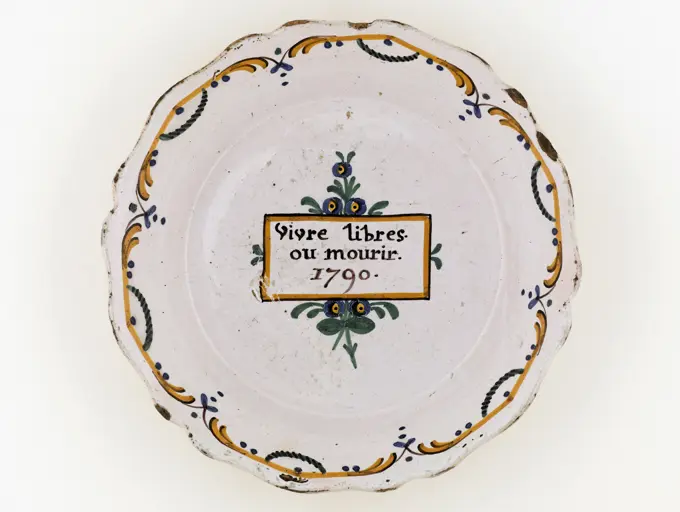
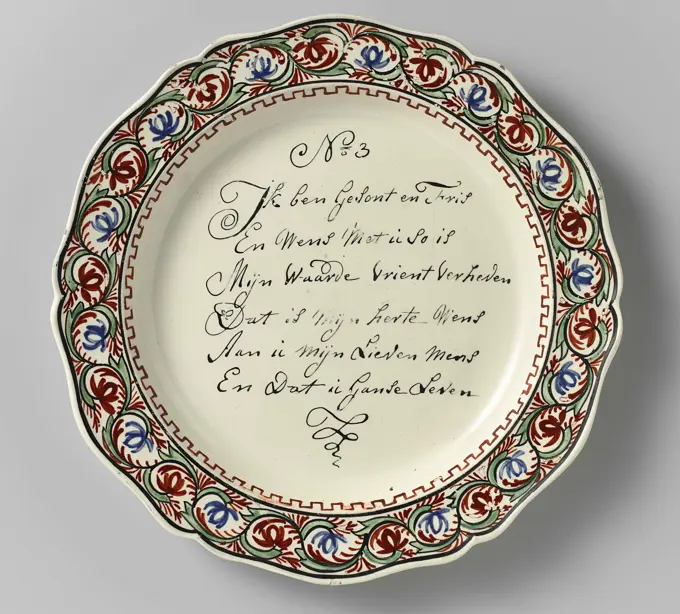
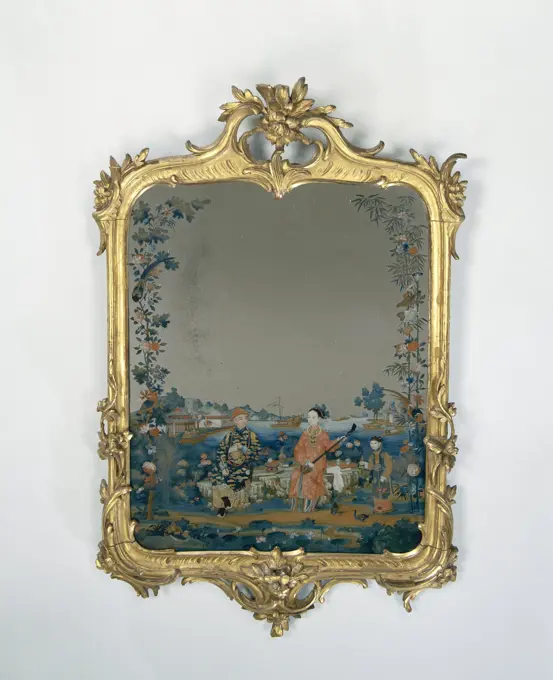
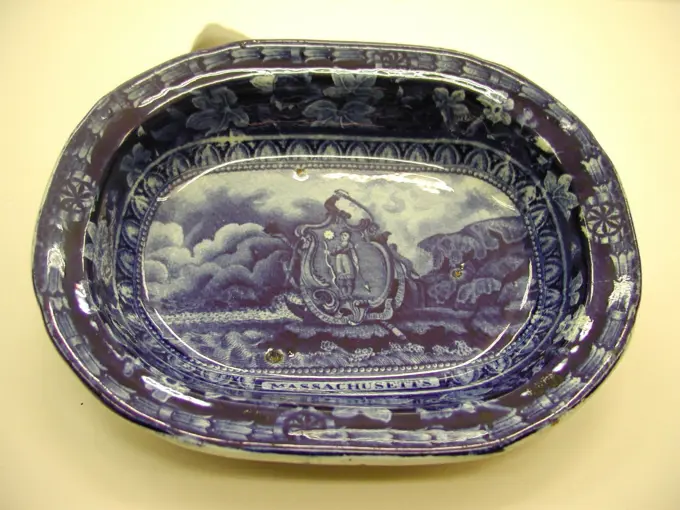
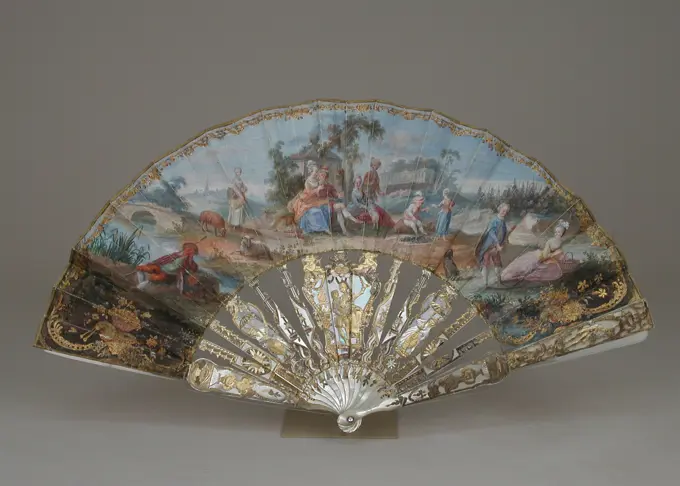
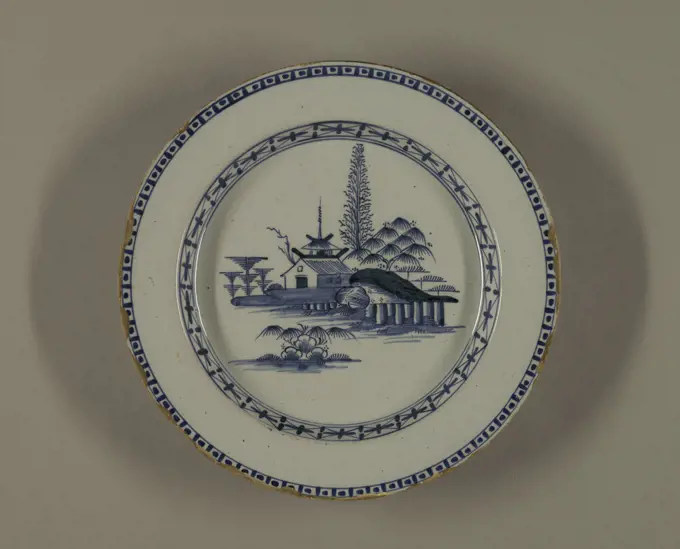
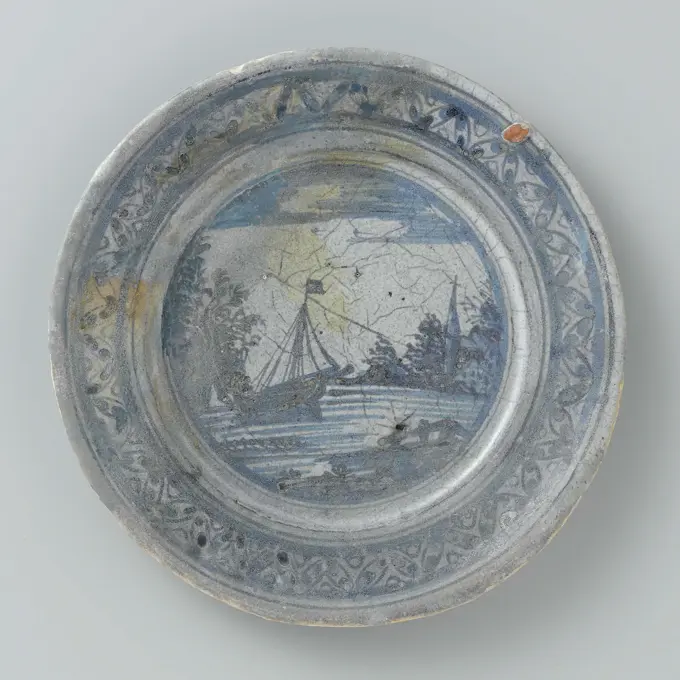
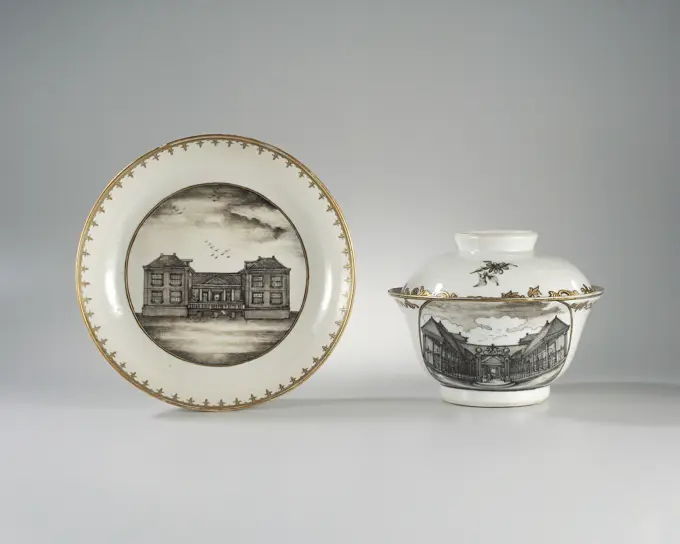
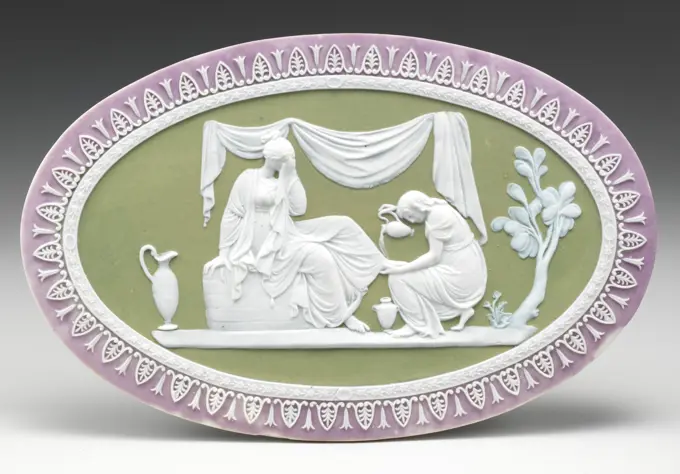
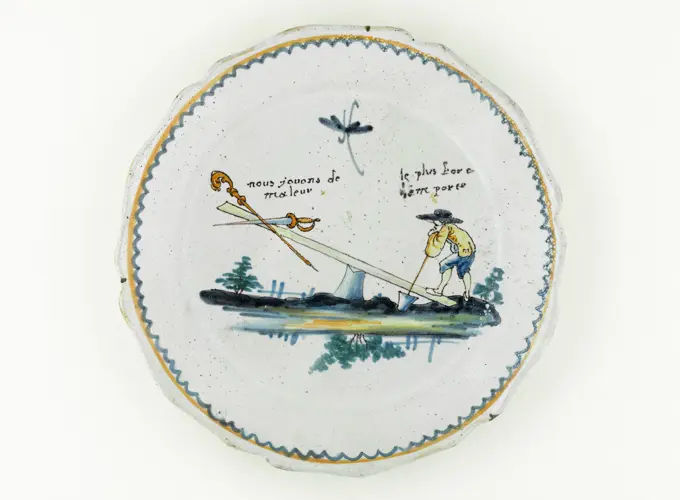
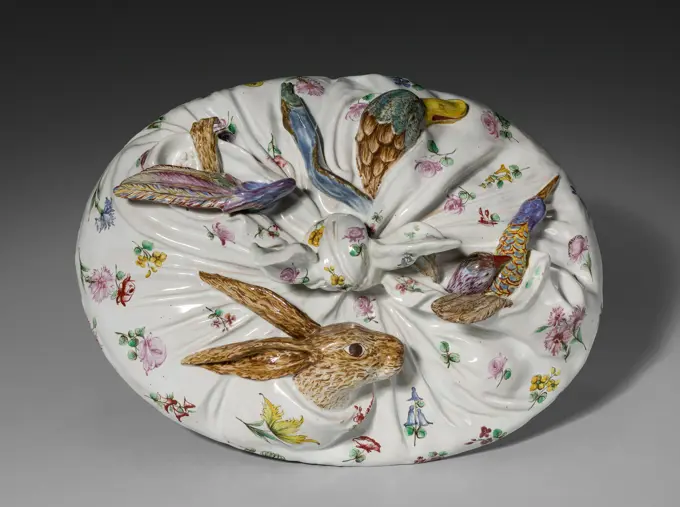
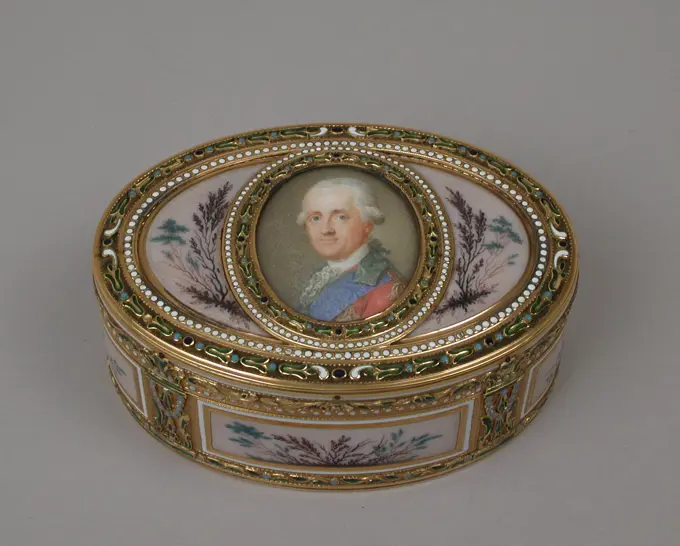
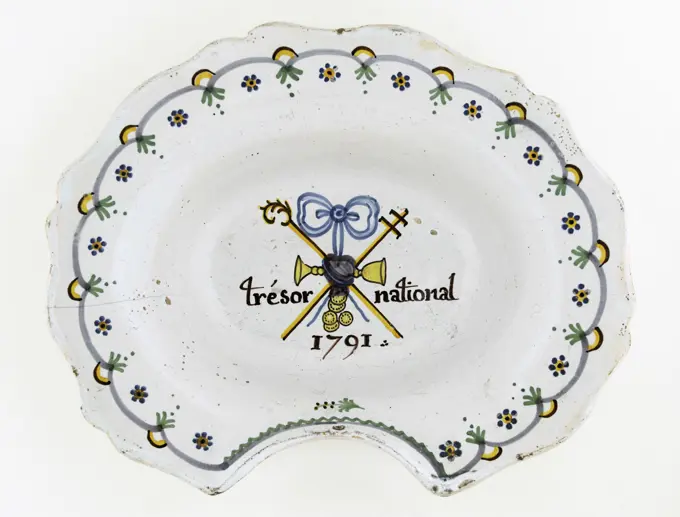
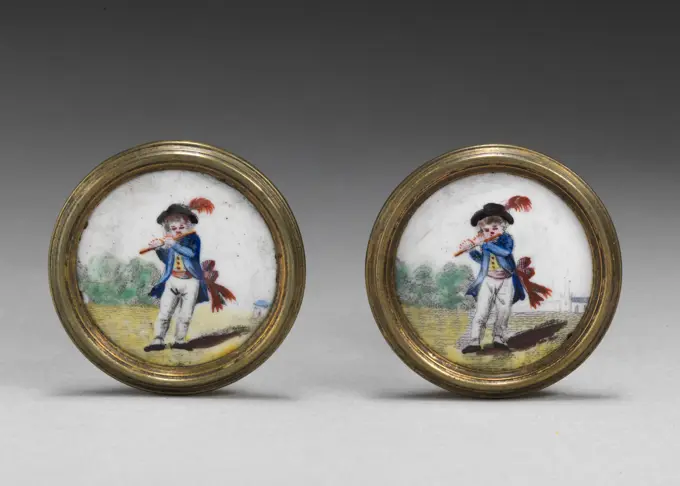
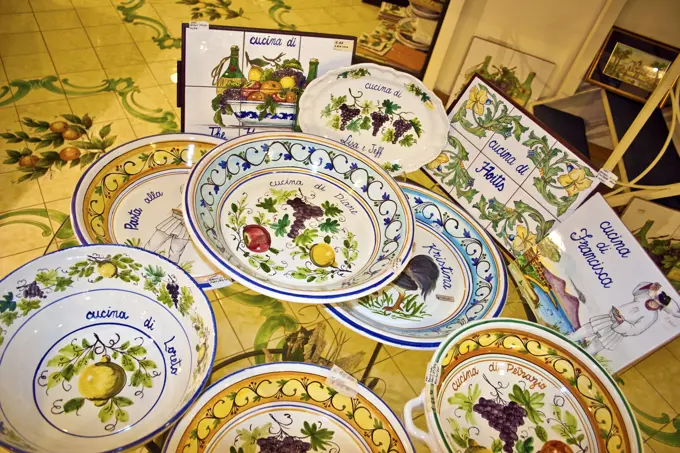
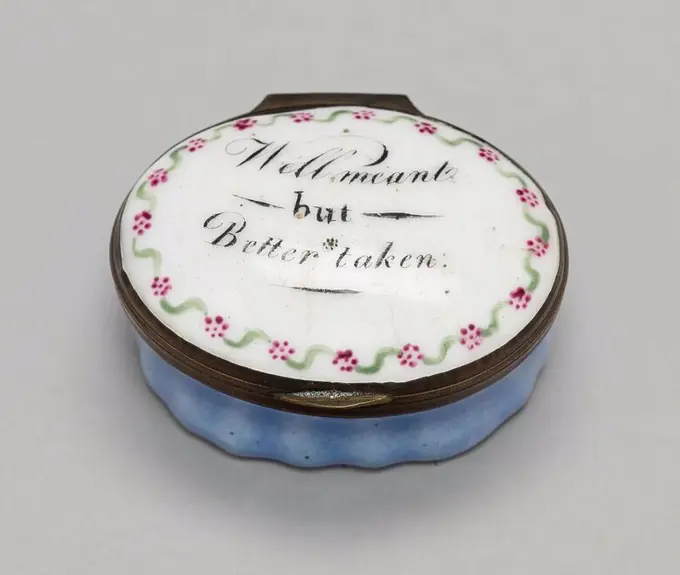
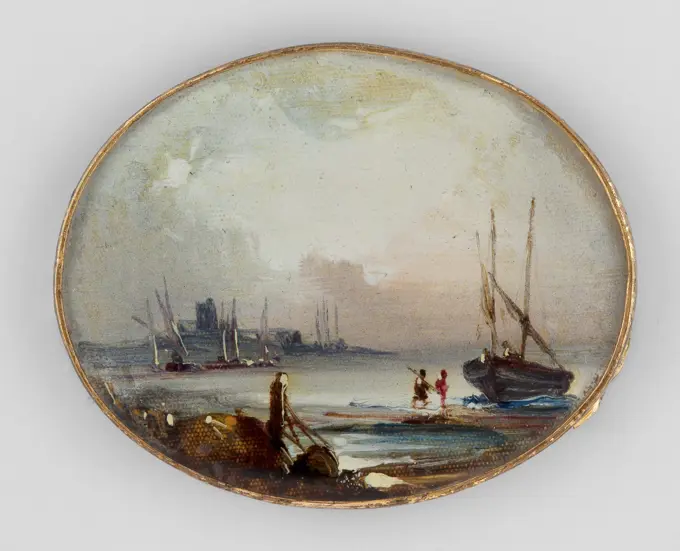
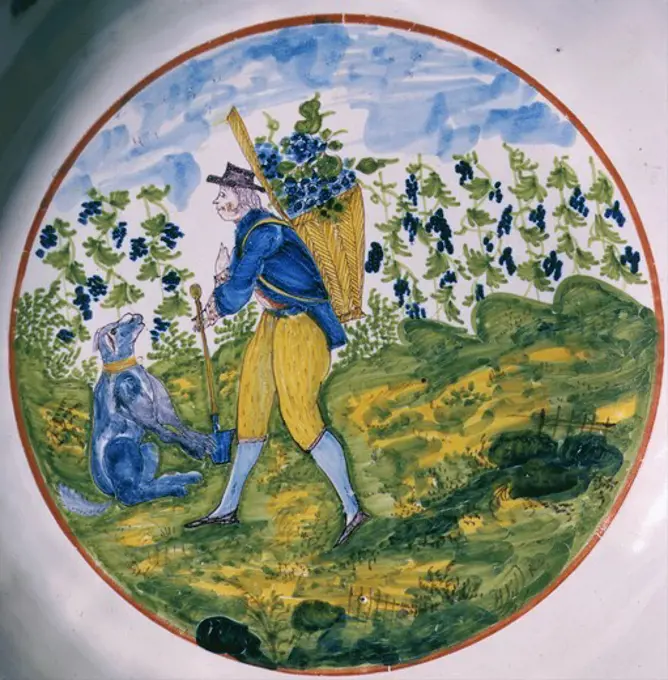
Saucer-dish with a kingfisher on a branch and flowering plants, anonymous, c. 1730 - c. 1740 Porcelain dish, covered with a pink glaze and painted on the glaze in blue, red, pink, green, yellow, brown and black. On the front an asymmetrical representation with flowering plants (including peony, aster) from the edge over the flat, a kingfisher on a branch; The back is covered with a pink glaze. A crack in the wall. Famle Rose with a Ruby Back. China porcelain. glaze. painting / vitrification Porcelain dish, covered with a pink glaze and painted on the glaze in blue, red, pink, green, yellow, brown and black. On the front an asymmetrical representation with flowering plants (including peony, aster) from the edge over the flat, a kingfisher on a branch; The back is covered with a pink glaze. A crack in the wall. Famle Rose with a Ruby Back. China porcelain. glaze. painting / vitrificationDish 19th century MG Faience, or tin-glazed and enameled earthenware, first emerged in France during the sixteenth century, reaching widespread usage among elite patrons during the seventeenth and early eighteenth centuries, prior to the establishment of soft-paste porcelain factories. Although characterized as more provincial in style than porcelain, French faience was used at the court of Louis XIV as part of elaborate meals and displays, with large-scale vessels incorporated into the Baroque garden designs of Versailles. Earlier examples of French faience attest to the strong influence of maiolica artists from Italy. Later works demonstrate the ways in which cities such as Nevers, Rouen, Lyon, Moustiers, and Marseille developed innovative vessel shapes and decorative motifs prized among collectors throughout Europe. While faience can be created from a wide mixture of clays, it is foremost distinguished by the milky opaque white color achieved by the addition of tin oxide to the glazSet of six small heart-shaped dishes, c. 1735 - c. 1755 Heart -shaped dish, multi -colored painted with figures around a tree. Delft . Heart -shaped dish, multi -colored painted with figures around a tree. Delft .The Dawn starts to shine, the Porceleijne bottle, 1918  Plate, blue painted with image of a mill on the land, on the left a house with haystack. A person on the Molengang. With inscription. Back v.z.v. Two holes and iron wire to hang the plate. Marked. Delft earthenware. glaze vitrification  NetherlandsShowcase with three-storey crockery of Petrus Regout; Maastrichts ceramics. In the middle below is a plate with flowers.Anonymous. "Live free or die" plate. Earthenware. Paris, Carnavalet museum. 71680-28 Decoration, earthenware, die, revolutionary period, French revolution, free living, plateDish (one of two) ca. 1775 Chinese, for Russian market. Dish (one of two) 202278Plate, with a red rod cruiser on the flat. Plate of pottery with multicolor transfer decor. On the flat a rod crisp. Left on a chair is a soldier with his left leg in the bandage. He is provided by a sister. On the right in the background, a second sister supports another soldier, who tries to walk with a stick.. These mirrors, painted in Canton (China), were specially made for export. They were later framed in the Netherlands in the then-current Rococo style. Thus were exotic mirrors adapted to suit Dutch interiors. Originally there would have been a metal arm at lower centre to hold two candles. The mirrors belonged to Jean Theodore Royer, a well-known collector of Chinese objects in The Hague.Round plate of hard-baked pottery; Liverpool creamware. Round plate of hard-baked pottery; Creamware with decoration on the glaze. On the flat is a Dutch text painted: No 3 I am Gissont and fresh ... and that you are all the life. The edge is painted with a winding leaf drink. The sign was marked: Herculaneum. The board hears a same plate but with a different text (BK-NM-4394-A).Two mirror sconces, anonymous, c. 1755 - c. 1770 Mirror in frame of gilded Lindehout, which is decorated with sliced rocaille motifs and C-Voluten. The glass is painted at the rear with Chinese performances of music -making figures, seated on a terrace on the banks of a bay. The mirror may be made in China. Some pieces of the list are missing. Pendant of BK-16726-B. Netherlands wood (plant material). linden. gilding (material). glass. paint (coating). looking glasses. amalgam gilding Mirror in frame of gilded Lindehout, which is decorated with sliced rocaille motifs and C-Voluten. The glass is painted at the rear with Chinese performances of music -making figures, seated on a terrace on the banks of a bay. The mirror may be made in China. Some pieces of the list are missing. Pendant of BK-16726-B. Netherlands wood (plant material). linden. gilding (material). glass. paint (coating). looking glasses. amalgam gildingVegetable Dishes (a. & b.) with the Arms ofMassachusetts.  Manufacturer: Thomas Mayer, British, active 1826-38After Source material drawn by: Thomas Sully, American, born England, 1783-1872Engraver Source material by: George Murray, American, died 1822Publisher source material by: John Binns, American, born Ireland, 1772-1860Folding fan mid-18th century French. Folding fan. French. mid-18th century. Paper, mother-of-pearl, ivory. FansPlate - Thomas & Richard Boote Thomas & Richard BootePlate, Tin-glazed earthenware, Circular plate with wide rim; painted in underglaze blue on white with brick-red outer border; center has chinoiserie scene of bird, flowers; cavetto has diaper pattern with 5 floral reserves; outer rim has 5 floral sprays; back painted with 4 evenly-spaced squiggles., Delft, Netherlands, 17th century, ceramics, Decorative Arts, Plate. Round plate of blue painted faience. A ship has been painted on the flat and a landscape with a church tower. The plate is a soil find.Anonymous. Plate. Earthenware. Paris, Carnavalet museum. 70955-53 A CA IRA, weapon, crown, pristine, earthenware, decorative motif, revolutionary period, peak, dishes, plateHandscreen (France); engraved, hand-colored and painted paper leaf, turned wood handle. Subdated from porcelain sugar bowl, painted on the glaze in black and gold. On the flat of the dish a representation of the new grain fair in Amsterdam in a medallion; The edge with a narrow 'Spearhed Border'. Old label on the bottom with 'F. Bodenham / Elmhurst, Hereford / 17 '. European performance in Encre de Chine.Plate (France); Manufactured by Pillivuyt & Cie; enameled porcelainPlaque probably ca. 1790 Josiah Wedgwood British. Plaque. British, Etruria, Staffordshire. probably ca. 1790. Jasperware, back green. Josiah Wedgwood (British, Burslem, Stoke-on-Trent 1730-1795 Burslem, Stoke-on-Trent). Ceramics-PotteryAnonymous. Plate. Earthenware. Paris, Carnavalet museum. 71478-23 Attribut, pendulum, beched, butt, emblem, prickly, revolutionary time, faience, man, board, French revolution, three orders, trunk, dishes, plateTea Bowl and Dish. China, Qianlong reign; Chinese, made for the American market. Date: 1779-1800. Dimensions: Cup: 4.5 × 8.6 cm (1 3/4 × 3 3/8 in.)Saucer: 3 × 14.1 cm (1 3/16 × 5 9/16 in.). Porcelain. Origin: United States. Museum: The Chicago Art Institute, Chicago, USA. Author: Chinese export porcelain.A French faience plate with aeronauts with flags, 1785. Artist: UnknownSchotel Met Twee Portretten 'to remind Mr. Wimbichner'. .Cover for a Tureen in the Form of a Basket of Game, c. 1755. Sceaux Factory (French, active 1748-66). Tin- glazed earthenware (faience) wth enamel decoration; overall: 20 x 42.3 x 27.5 cm (7 7/8 x 16 5/8 x 10 13/16 in.).Tray 19th century Japan. Tray 57691La Dame au Parasol' plate, c. 1736-1738, Cornelius Pronk, Dutch, 1691-1759, 1 1/4 x 8 13/16 x 8 13/16 in. (3.18 x 22.38 x 22.38 cm), Porcelain, China, Chinese exportSaucer 1822-23 Sèvres Manufactory French The portrait is of Louis, Dauphin of France (1729-65), father of Louis XVI, Louis XVIII, and Charles X, and is based on a painting of 1767 by Alexandre Roslin (1718-1793).. Saucer 209066Fire Screen 1835-55. Fire Screen. 1835-55. embroideredSnuffbox with portrait of a man, probably Prinz Karl von Sachsen (1733-1796) 1778-79 Jean-Joseph Barrière In eighteenth-century Europe, Paris led the production of high-quality luxury goods. Parisian goldsmiths made a wide range of small, personal articles such as snuffboxes; étuis to hold sealing wax, tweezers, or utensils for sewing; souvenirs, which contained thin ivory tablets for note taking; and shuttles for knotting lace. Gold snuffboxes and boxes decorated with portrait miniatures were prized and frequently given as royal gifts, often to ambassadors or members of the court in lieu of cash payments for their services. Coveted and admired, these boxes were produced from a variety of materials. The best were skillfully made of gold and embellished with diamonds, enameled decoration, lacquer, and other luxurious materials. By the middle of the century, the taking of snuff had become an entrenched social ritual, and the snuffbox, too, had become an important social prop. Snuffboxes Anonymous. "National treasure" beard dish. Earthenware. 1791. Paris, Carnavalet museum. 72429-56 Beard, Phrygian Bonnet, Faience, Beam, Revolutionary Periode, Reunion, French Revolution, National Tresor, Three Orders, dishPlate; Feuillet, Jean-Pierre (Fl. 1820-); 1817-1834 (1815-00-00-1834-00-00);Empire (style), Dutch painting, miniatures, ornaments, genre scenes, purchase (provenance)Box with lid on which decor: I see you my boy. Earthenware box consisting of a container and a pot lid. Pot lid with multicolored transfer decor, with a representation of a man who pretends to sleep, while a boy tries to steal something from his knapsack. A girl is watching from behind a tree stump. White bowl.Buckle 1775-1799 Burslem. Stoneware (jasperware) . Wedgwood Manufactory (Manufacturer)Through wisdom, power, speech, she preserved peace. Blackboard, blue painted with image of a crowned r by w with the inscription below. Rear v.z.v. Two holes and iron wire to hang plate. Signature.Pair of mirror knobs late 18th century British. Pair of mirror knobs. British. late 18th century. Enamel on copper, brass. Enamels-PaintedSorrento, Italy, a collection of hand painted ceramic dishes and tiles for the kitchenPair of mirror knobs ca. 1783 French or British. Pair of mirror knobs. French or British. ca. 1783. Enamel on copper, brass. Enamels-PaintedBox. Bilston, England. Date: 1770-1790. Dimensions: 2.5 × 4.1 × 3.5 cm (1 × 1 5/8 × 1 3/8 in.). Polychrome enamel on copper with metal mounts and mirror glass. Origin: Bilston. Museum: The Chicago Art Institute, Chicago, USA.Port view of the fishing rods;  1850 (1850-00-00-1850-00-00);Foreign miniatures, sea, heaven, ships, fishermen, genre scenes against the background of the landscape, inDutes, boatsGrape picker, salad bowl made by Keller of Lunville, French. Plate of faience, painter in blue with two unknown monograms, SNDH and MLs, under a fantasized king wreath.