Porcelain Tea Cups

Elegant porcelain cups and saucers featuring intricate floral patterns and historical designs, emphasizing delicate craftsmanship.
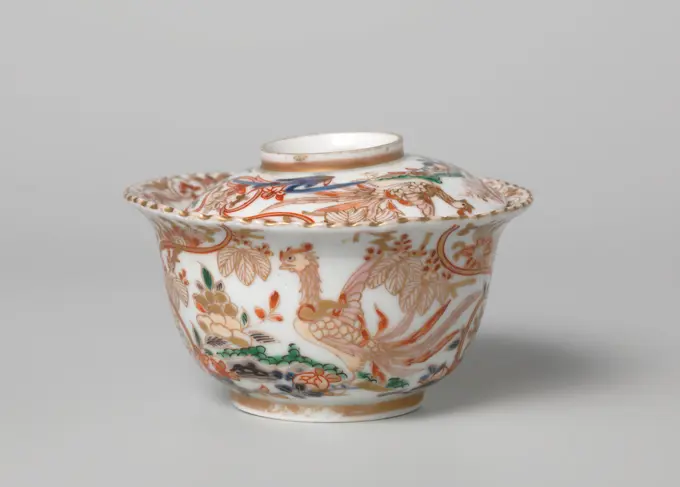
Covered bowl with hoo-birds, flowering plants and floral scrolls, anonymous, c. 1700 - c. 1724 Porcelain lid bowl with ribbed wall and lobed edge, painted in undermglaze blue and on the glaze red, green and gold. The outer wall of the bowl is divided into four courses with a flying or standing Hoo-Vogel and Bloemranken alternately; Around the foot a flower or fruit branch four times. A fenced garden on the bottom; The inner wall with three flower or fruit branches (fingercitroen, peach). On the inner edge a band with flower vines. The lid with the same decoration; With a ring -shaped button and lobed edge. Gold Imari. Japan porcelain. glaze. cobalt (mineral). gold (metal) painting / gilding / vitrification Porcelain lid bowl with ribbed wall and lobed edge, painted in undermglaze blue and on the glaze red, green and gold. The outer wall of the bowl is divided into four courses with a flying or standing Hoo-Vogel and Bloemranken alternately; Around the foot a flower or fruit branch four
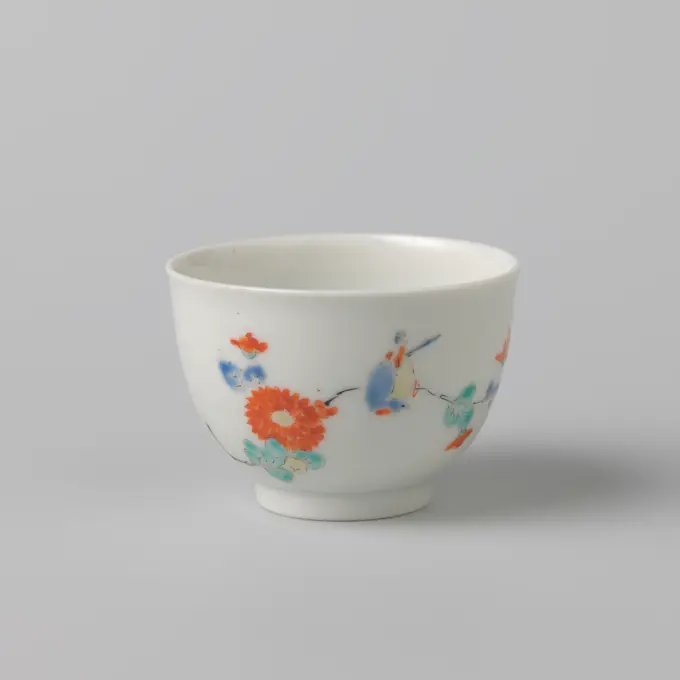
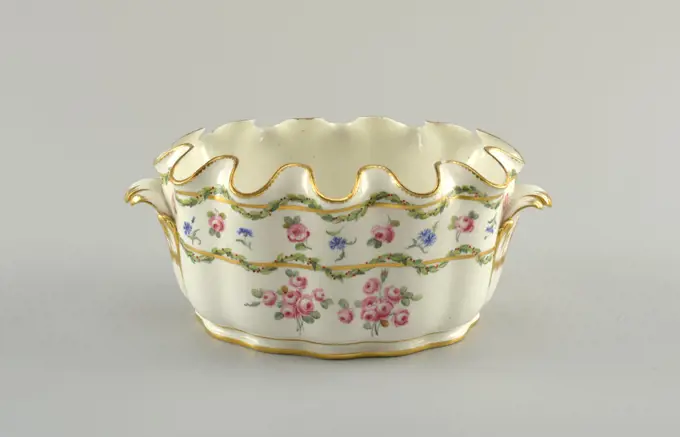
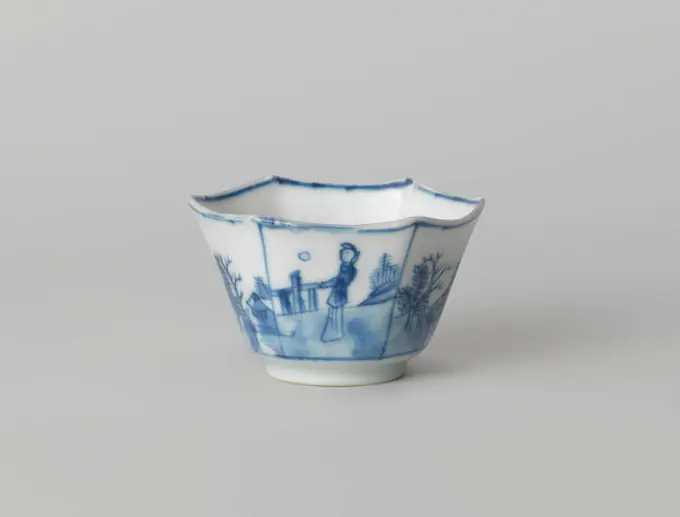
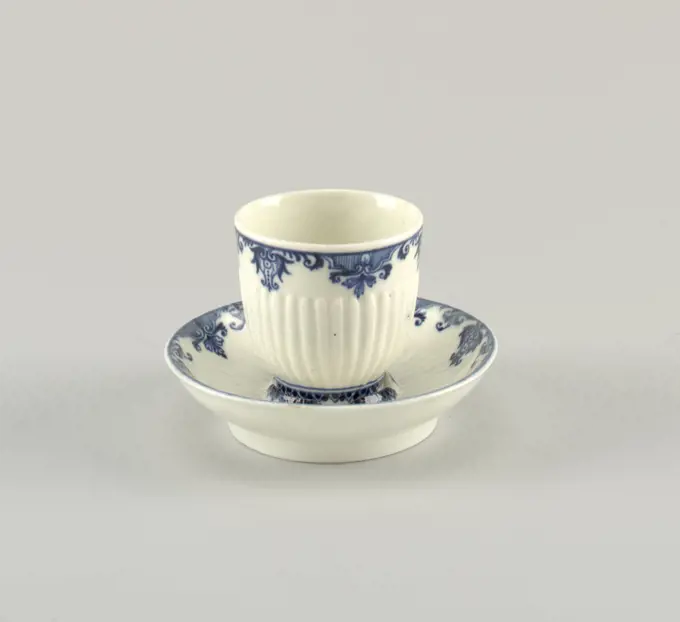
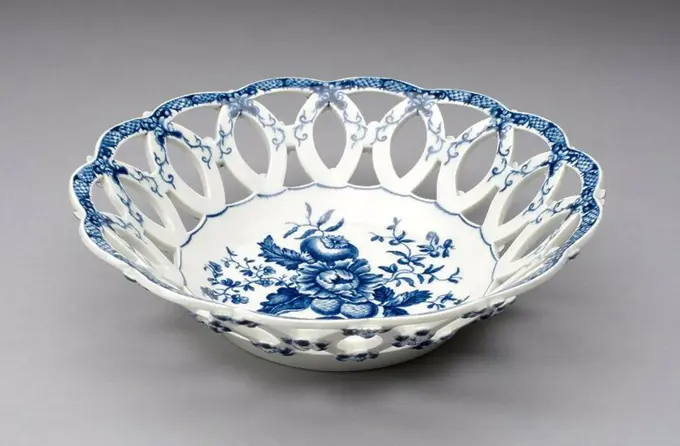
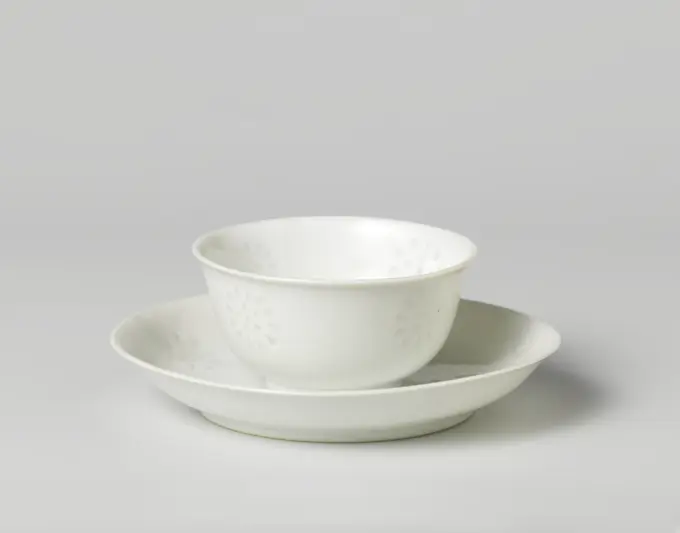
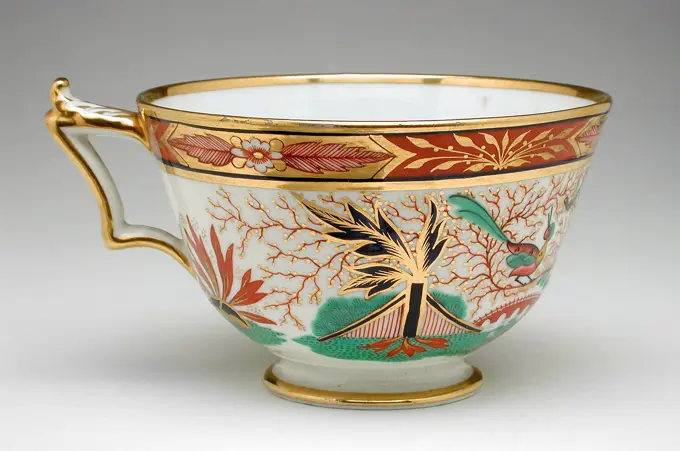
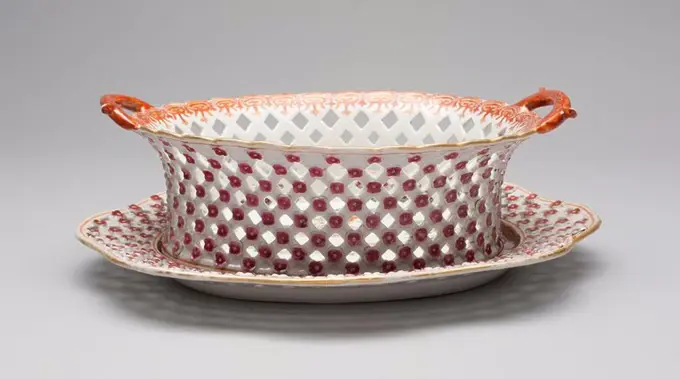
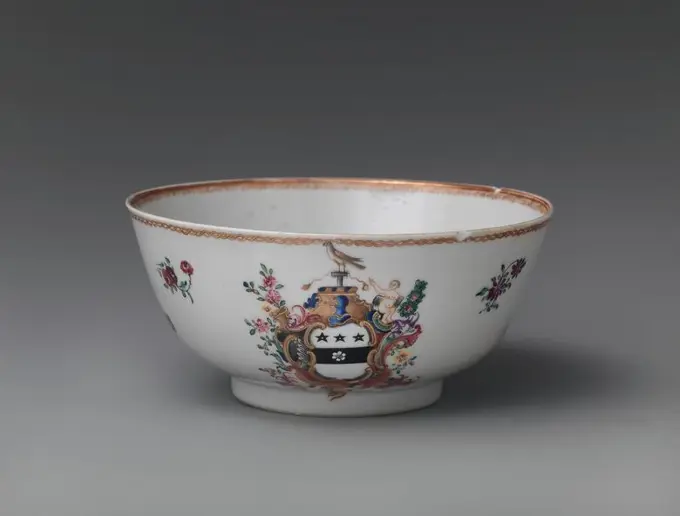
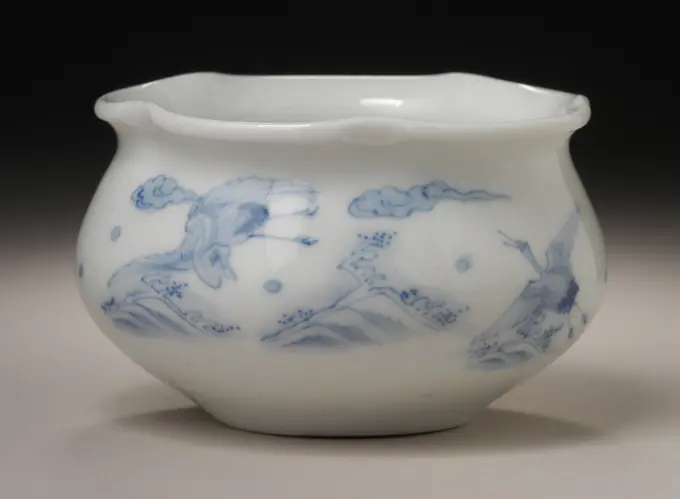
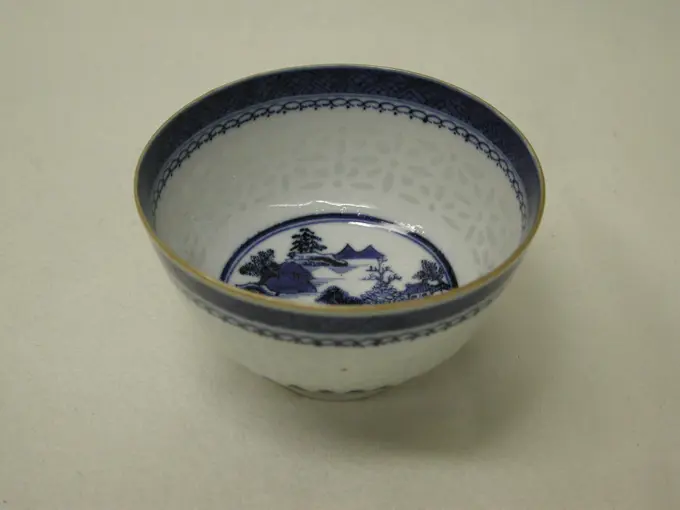
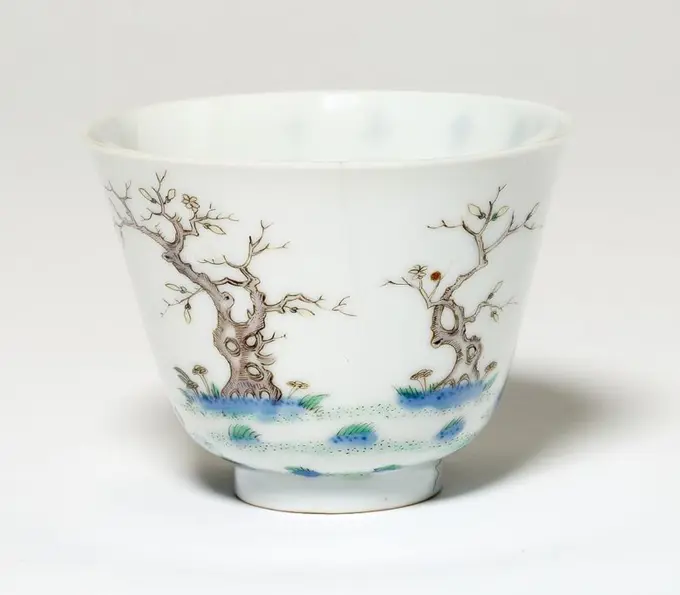
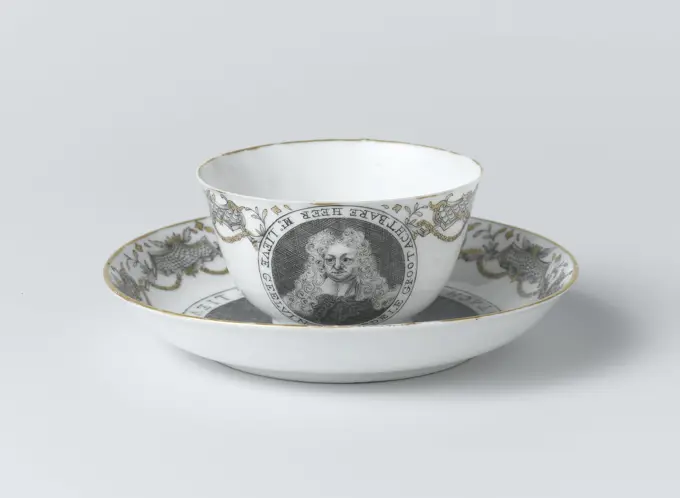
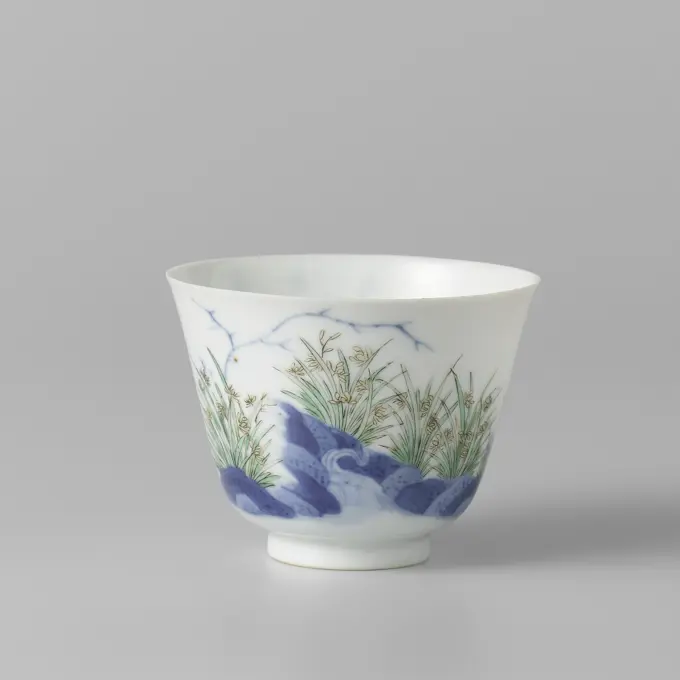
Bowl with Medallions of Flowers 1665-1735 China. Porcelain painted in underglaze blue, red, and green .Cup with hoo birds, anonymous, c. 1670 - c. 1700 Round head of porcelain, painted on the glaze in blue, red, green, yellow, black and gold with a pair of Hoo birds, one in the sky and one on a rock with a flower branch. Inside the bottom a rosette within a double circle in red and gold. Kakiemon style. Japan porcelain. glaze. gold (metal) painting / gilding / vitrification Round head of porcelain, painted on the glaze in blue, red, green, yellow, black and gold with a pair of Hoo birds, one in the sky and one on a rock with a flower branch. Inside the bottom a rosette within a double circle in red and gold. Kakiemon style. Japan porcelain. glaze. gold (metal) painting / gilding / vitrificationRound Cup and Lobde Saucer With Flower Spray and Bird. Round cup and lobed dish of porcelain, painted on the glaze in blue, red, green, yellow, eggplant and black, with a bird with chrysyette branches, on the dish a bird in a prunus branch at rocks and water. Baking tear in head ring from the head. Head probably doesn't belong to dish, given the difference in the colors red and yellow. Kakiemon style.Cup With a Willow Tree, Oxheerd and Three Oxen. Cup of porcelain with flared wall, painted in underglaze blue. On the wall a shepherd with his three oxen next to a willow tree, the rear ox loves a rope; A mushroom on the bottom. Blue White.Monteith (Verrière), porcelain, vitreous enamel, gold, Oval, with wavy sides and incurving scalloped edge. Curved foliate handle at either end. Decorated with horizontal gold bands twined about with laurel cables, and scattered roses and bunches of roses., France, ca. 1770, ceramics, Decorative Arts, monteith, monteithA bowl with decorations cobalt and colorful; Koenigliche Porcellain Fabrique, Meissen (1710-1763), Hausmaler (home painter), Ferner, J.F. (ca 1750, or workshop); approx. 1745 (1740-00-00-1750-00-00);Terrine, painted with flowers and flower bouquets. Oval soup tartrine of multicolored painted faience, on a foot. The terrine is painted with flowers and flower bouquets and has two ears against the dish.Come with three women at a well and a plowing company, Petrus Regout, c. 1801 - c. 1879 Come of earthenware with a flow -blue transfer decor. On the outside of the wall three women at a well and a man, a woman and a child on a field with a team. On the inside of the bowl of flowers and leaves against a striped background. Maastricht earthenware Come of earthenware with a flow -blue transfer decor. On the outside of the wall three women at a well and a man, a woman and a child on a field with a team. On the inside of the bowl of flowers and leaves against a striped background. Maastricht earthenwareBell-shaped cup modelled in the shape of a flower, anonymous, c. 1740 - c. 1760 Bell -shaped head of porcelain with scalloped edge, painted on the glaze with blue, red, pink, green and gold. The wall is modeled in the form of three rows of petals; A flower branch on the bottom; the inner wall with lines and three flower branches; A flower on the bottom. Famle Rose. China porcelain. glaze. gold (metal) painting / gilding / vitrification Bell -shaped head of porcelain with scalloped edge, painted on the glaze with blue, red, pink, green and gold. The wall is modeled in the form of three rows of petals; A flower branch on the bottom; the inner wall with lines and three flower branches; A flower on the bottom. Famle Rose. China porcelain. glaze. gold (metal) painting / gilding / vitrificationCup And Saucer With Three Fans With Flower Sprays. Cup and saucer of porcelain with spreading wall, painted on the glaze in blue, pink, green and black. On the flat of the dish a flower; to the flower three ranges with flower branches (O.A. Prunus, chrysanthemum); between the fees of napkin. The head with the same decay. Two cracks in the wall of the dish. Family Rose.Two Wine Coolers and stands, Manufactuur Oud-Loosdrecht, c. 1778 - c. 1782 Wine cooler from porcelain. The lower part of the wine cooler on the top is painted in gold with scaled godrons, between which kelk motifs. Along the mouth edge a wide band in relief, which is multicolored decorated with a pink winding ribbon, with flower and leaf vines. From this band, on the body of the wine cooler, multicolored each other-cut flower and leaf garlands. Golden piping along the edges. Loosdrecht porcelain Wine cooler from porcelain. The lower part of the wine cooler on the top is painted in gold with scaled godrons, between which kelk motifs. Along the mouth edge a wide band in relief, which is multicolored decorated with a pink winding ribbon, with flower and leaf vines. From this band, on the body of the wine cooler, multicolored each other-cut flower and leaf garlands. Golden piping along the edges. Loosdrecht porcelainHexagonal Cup With Landscapes and Figures. Hexagonal head of porcelain, painted in underglaze blue. On the bottom a river landscape with pavilions, trees and a person; The outer wall wall is divided into six compartments with alternating a person at a fence and a river landscape with a pavilion and trees. Blue White.Tiered Box Composed of Three Layers with Dragon and Precious Objects. Round stack box made of porcelain consisting of three layers and a lid, painted in underglaze blue. The walls of the boxes and the lid with cloud motifs and valuables (pearl, diamond, music stone); The top of the lid with a four-chewed dragon surrounded by clouds. Blue White.Covered Jar With Floral Scrolls. Porcelain lid pot, painted in underglaze blue and on the glaze brown. On the outside wall a bond with flower drinks, below three horizontal lines. Blue White.Cup and Trembleuse Saucer, Saint-Cloud Porcelain Manufactory, French, active by 1693 - 1766, soft paste porcelain, vitreous enamel, Cup circular, without handle; tall, with raised ribbing two- thirds of the way up its side. Saucer has curved sides, raised circular rim at centre with four breaks, and radiating raised ribs half way towards edges. Decorated with blue conventional pattern of foliage and scrolls about edges., France, ca. 1730, ceramics, Decorative Arts, cup and saucer, cup and saucerSubtotel of English hard baked earthenware, Boch, Boch, c. 1775 - c. 1810 Round Subsier of hard baked pottery. The dish is painted in blue and has an openwork edge. The dish belongs to a nut basket (BK-1978-1-A to BK-1978-1-C). NEW arch (country) earthenware Round Subsier of hard baked pottery. The dish is painted in blue and has an openwork edge. The dish belongs to a nut basket (BK-1978-1-A to BK-1978-1-C). NEW arch (country) earthenware. attributed to the Drie Posteleyne Astonne (Zacharias Dextra) Delft, c. 1720-1735tin-glazed earthenware (faience)Bowl with Flowers on a Coral-Red Ground 1723-1735 China. Porcelain painted in overglaze enamels .Tea head with figures in landscape in beet red with Golden Biezen, Manufactuur Oud-Loosdrecht, 1775 Tea head of porcelain, without an ear. Painted with figures in a landscape in beet red and gold piping. Loosdrecht porcelain Tea head of porcelain, without an ear. Painted with figures in a landscape in beet red and gold piping. Loosdrecht porcelainBowl - Portneuf potteryMeissen Manufacture. "Cup and saucer with floral decor (Meissen)". Saxony porcelain. Paris, Museum of Romantic Life. PORCELAINTeacup, Coffee Cup, and Saucer 1765-1775 Worcester. Soft-paste porcelain with purple enamel and gilding . Worcester Royal Porcelain Company (Manufacturer). Half-ball-shaped head of painted porcelain. The gold-plated mouth edge is decorated on the inside with a lace-like ornament in gold. Indian Blumen has been painted on the bottom. Two four-passes are painted on the outside in which Höroltt chinoiseries. The head has been marked and belongs to a tea set (BK-17420-A to BK-17420-O). The crockery is on a chassis or statement (BK-17017).Basket. Worcester Porcelain Factory; Worcester, England, founded 1751. Date: 1765-1775. Dimensions: H. 5.8 cm (2 1/4 in.); diam. 21.3 cm (8 3/8 in.). Soft-paste porcelain with underglaze blue decoration. Origin: Worcester. Museum: The Chicago Art Institute, Chicago, USA. Author: Worcester Royal Porcelain Company.A small dish for spices;  19th century (1801-00-00-1900-00-00);Tureen, c. 1760-70. France, Marseilles. Faience; overall: 29.7 x 41.1 x 29.9 cm (11 11/16 x 16 3/16 x 11 3/4 in.).Sugar bowl Korzec. Large bowl of porcelain, painted on the glaze in blue, red, pink, green, yellow, turquoise, black and gold. The outside of the bowl is covered with a red glaze with flower drinks in gold; Stopping four scalloped cartouches with playing boys in a landscape with rocks and trees; around the foot a bond with flower drinks; On the inside and within the foot ring, the bowl is covered with a turquoise glaze. Family Rose.Jar 1810-1820 Staffordshire. Lead-glazed earthenware with lustre decoration .Bowl; glazed porcelain, goldHand heater. unknown, craftsmanCup with cock and three fans with flower sprays, anonymous, c. 1725 - c. 1749 Porcelain head with sloping wall, painted on the glaze in blue, red, pink, green, yellow, black and gold. A medallion with a rooster depicted; around the medallion three fans with flowering plants against a pink soil; Three elongated compartments with servetwork between the fans. Famle Rose. China porcelain. glaze. gold (metal) painting / gilding / vitrification Porcelain head with sloping wall, painted on the glaze in blue, red, pink, green, yellow, black and gold. A medallion with a rooster depicted; around the medallion three fans with flowering plants against a pink soil; Three elongated compartments with servetwork between the fans. Famle Rose. China porcelain. glaze. gold (metal) painting / gilding / vitrificationCup with a Chinese junk and the arms of Amsterdam, anonymous, c. 1800 - c. 1899 Porcelain head, painted on the glaze in blue, red, pink, green, yellow, black and gold. On the wall a Chinese youngsters with crew on the waves, above that the Wapen van Amsterdam. Three cracks in the wall of the head. Weapon porcelain. China porcelain. glaze. gold (metal) painting / gilding / vitrification Porcelain head, painted on the glaze in blue, red, pink, green, yellow, black and gold. On the wall a Chinese youngsters with crew on the waves, above that the Wapen van Amsterdam. Three cracks in the wall of the head. Weapon porcelain. China porcelain. glaze. gold (metal) painting / gilding / vitrificationFirepot with Kirin (Mythical Chimera) amid Flowers. Culture: Japan. Dimensions: H. 4 in. (10.2 cm); Diam. 4 3/8 in. (11.1 cm). Date: 18th century. Museum: Metropolitan Museum of Art, New York, USA.Footbath -Head without ear, multicolored painted with chinoiseries and loose flower branches along the edges, Weesper Porcelain factory, c. 1765 - c. 1770 Head, multi -colored painted with chinoiseries and loose flower branches along the edges. Marked with two crossed swords and three bulbs in under -glaze blue. Weesp porcelain Head, multi -colored painted with chinoiseries and loose flower branches along the edges. Marked with two crossed swords and three bulbs in under -glaze blue. Weesp porcelainTea Bowl and Saucer with "Hausmaler" Decor Tea Bowl And Saucer; Manufactured by Meissen Porcelain Factory (Germany), Meissen Porcelain Manufactory (Germany); Workshop of Bartholomäus Seuter (German, 1676 - 1754); porcelain, goldFlowerpot and bottom dish of porcelain. Painted in beet red with landscapes, on the flowerpot with a man with dog.Hexagonal, Covered Cup with Flower Sprays, Birds and Insects. High, hexagonal lid head of porcelain, painted on the glaze in blue, red, pink, green, yellow, black and gold. A flower rosette shown in a medallion; around six compartments with flowering plants (O.A. Lotus, chrysanthemum, peony) with bird or insect; The back with a flower branch with six times. Family Rose.Cover Chinese first quarter 18th century The gift of the Hans Syz Collection in 1995 endowed the Museum with nearly three hundred examples of European and Asian ceramics meticulously acquired by Swiss-born collector Dr. Syz (1894-1991) to chart the migration of models and patterns from East to West. Documenting a continuous process of influence and adaptation, these pieces provide a discriminating review of the nuances of stylistic change resulting from three centuries of trade.Cup and Saucer 1767-1799 Germany. Hard-paste porcelain and gilding .Lidded cup. unknown, craftsmanHexagonal cup with landscapes and figures, anonymous, c. 1750 - c. 1774 Hexagonal head of porcelain, painted in under -glaze blue. On the bottom a river landscape with pavilions, trees and a person; The outside wall is divided into six courses with alternately a person by a fence and a river landscape with a pavilion and trees. Blue White. China porcelain. glaze. cobalt (mineral) painting / vitrification Hexagonal head of porcelain, painted in under -glaze blue. On the bottom a river landscape with pavilions, trees and a person; The outside wall is divided into six courses with alternately a person by a fence and a river landscape with a pavilion and trees. Blue White. China porcelain. glaze. cobalt (mineral) painting / vitrificationFaïence ink set of multicolored painted faïence. Faïence well. Painted multi-colored.Sugar bowl with lid. Sugar bowl with porcelain lid.Cup and saucer with translucents rice-grain roundels, anonymous, c. 1700 - c. 1724 Klock -shaped head and dish of porcelain, covered with a translucent white glaze. The walls of both the head and saucer are open worked (ajour work) in five rosettes of rice work. White porcelain, monochromes. Jingdezhen porcelain. glaze vitrification Klock -shaped head and dish of porcelain, covered with a translucent white glaze. The walls of both the head and saucer are open worked (ajour work) in five rosettes of rice work. White porcelain, monochromes. Jingdezhen porcelain. glaze vitrification. Porcelain fish bowl, painted on the glaze in blue, red, pink, green, yellow, black and gold. The wall is covered with a spiral pattern with flower drinks on it. Two large cartouches with a pheasant on a rock with a fence and flowering plants (Prunus, Peony, Magnolia, Aster). On the wall, two modeled lion's heads in biscuit with a ring; There is a smaller, around cartouche with floral drinks. Above and below this decoration a band with a Meander pattern. On the neck and above the foot loose flower branches and butterflies. The foot with a band with flower drinks. On the edge napkin interrupted by alternately large and small cartouches. The big cartouches with a landscape with pavilions, mountains and trees. The small cartouches with a butterfly and flower branch. Different fish and aquatic plants in the bowl. Family Rose.Colander with two ears, painted in blue and dated: Anno 1745, Anonymous, 1745 Around gappateel of blue painted faience, with two ears. In the middle of the Pateel, an eight -pointed star is painted with between points: Anno 1745. Around the star are concentric circles painted within which leaf ornaments and along the edge are eight compartments in which flowers painted. Friesland earthenware. tin glaze. Around gappateel of blue painted faience, with two ears. In the middle of the Pateel, an eight -pointed star is painted with between points: Anno 1745. Around the star are concentric circles painted within which leaf ornaments and along the edge are eight compartments in which flowers painted. Friesland earthenware. tin glaze.Saltcellar. Culture: British, Staffordshire. Dimensions: 2 × 3 3/4 in. (5.1 × 9.5 cm). Date: ca. 1750. Museum: Metropolitan Museum of Art, New York, USA.Cup with different figures in a landscape, anonymous, c. 1850 - c. 1899 Porcelain head on high, spreading foot and with a high ear, painted on the glaze in black and gold. On the outer wall a landscape with different people: a man and a woman in a gondola on a river, looking at a second woman on the shore. The foot, edge and the ear are covered with gold. Europe porcelain. glaze. gold (metal) painting / gilding / vitrification Porcelain head on high, spreading foot and with a high ear, painted on the glaze in black and gold. On the outer wall a landscape with different people: a man and a woman in a gondola on a river, looking at a second woman on the shore. The foot, edge and the ear are covered with gold. Europe porcelain. glaze. gold (metal) painting / gilding / vitrificationBell-shaped bowl with feng huangs. Bell-shaped bowl of porcelain, painted in underglaze blue. On the outside, flying Feng Huangs and around the foot eight a decorative bond with Ruyi motifs; On the bottom a flying feng Huang in a double circle; On the edge a decorative bond with flower drinks. Marked on the underside with the six character mark of Emperor Chenghua in a double circle. Two cracks in the edge; A crack in the foot. Blue White.Censer 1800 Hozan. Censer 62835Bowl with Dragons amid Clouds. China. Date: 1820-1850. Dimensions: H. 8.2 cm (3 1/4 in.); diam. 17.3 cm (6 13/16 in.). Porcelain painted in underglaze blue. Origin: China. Museum: The Chicago Art Institute, Chicago, USA.Come from v.o.c.-ship the 'white lion'. Come from v.O.c.-ship the 'white lion', 95%% present. Folding bowl with a scalloped lip, decorated in underglaze blue. In the flat a rooster in a water landscape with flowering chrysanthemums and bamboo plants. Four lobed fields in the wall with lucky symbols and fruits; On the edge geometric motifs with four fields with fruits. Type 1.3.1b.Melon Box. China, Qing Dynasty, Qianlong Period, 1760-1780. Furnishings; Accessories. Porcelain with glaze and enamelScale. Fruit shell in leaf shape with a branch like ear. Marked with a stork in blue.Sugar Box, Meissen Porcelain Manufactory, German, active from 1710 to the present, hard paste porcelain, vitreous enamel, gold, Round box and low domed lid with floral finial. Painted with naturalistic flowers. Worn gilding at lids rim., Germany, 1774-1814, ceramics, Decorative Arts, box, boxOil and vinegar set with lion heads in relief, painted with garlands and flowers. Oude, elongated oil and vinegar set of multicolored painted faience. Lion heads are attached to the narrow ends. The couple is painted with garlands and stylized flowers. The bottles are missing. The couple has been marked: G.C.Cup of cup and saucer with lying woman and in bushes hidden man in landscape, cup and saucer drinking utensils tableware holder ceramics porcelain glaze, baked glazed painted enamelled, wide bowl-shaped cup on stand ring famille verte Cephalus Procris mythology chine de commande drinkReal Fábrica de Loza y Porcelana de Alcora / 'Sugar Bowl'. 1749 - 1798. Soft-paste. Museum: Museo del Prado, Madrid, España.Kwispoor van Delft Pottery. Kwispoor van Faience. Many color painted with floral branches, and with a green snake as a handle.Bowl;  2nd half 19th century (1851-00-00-1900-00-00);Sugar bowl, with landscape in which a hunter on a couch. Sugar bowl of pottery with lilac transfer decor. The ears in the form of lion's heads with a ring in the mouth. On the abdomen a representation of a hunter on a sofa, left is a boy, right is a woman with a child and a dog. The fell foot is unfromed.Holder, part of an oil and vinegar, anonymous, c. 1705 - c. 1725 Holder for Faïence oil and vinegar. Multicolored painted. The holder is part of an oil and vinegar set. Delft . Holder for Faïence oil and vinegar. Multicolored painted. The holder is part of an oil and vinegar set. Delft .Vase with a lid. Baranówka (manufaktura porcelany ; 1804-post 1900 ). Bell-shaped head of porcelain, painted on the glaze in blue, red, pink, green, yellow, gardenquoise, black and gold. On the Buitnwand the coat of arms of the families of Reed of Oudtshoorn and Boesses. In the center the weapon whose shield is divided into two. Left The weapon of Van Oudtshoorn Reed in Gray, right the coat of arms of Boesses in red and blue. There is a griffin on either side of the weapon. The helmet mark consists of a crown and wings. On the wall loose flower branches in European style and a decorative band on the inner edge. Weapon porcelain with email colors.This tea set with idyllic lakeside Chinese landscapes has a side-handled pot called a kysu, used for steeping, straining, and serving tea. Unlike some others, this set also has a yuzamashi, a container used to cool boiled water to just the right temperature for the best flavor when steeping. Seif Yohei III’s painting teacher, Tanomura Chokuny (1814-1907), made a visual record of famous sencha events that shows how these kinds of porcelains fit with objects such as a stove and kettle to form a complete set of utensils for tea preparation, and with ensembles of decorative objects meant to inspire creativity Teacup from Tea Set with Chinese Landscape, c. 1893-1914. Seifū Yohei III (Japanese, 1851-1914). Porcelain with underglaze blue; 5 x 8.2 cm (1 15/16 x 3 1/4 in.).Saucer with flower sprays and birds, anonymous, c. 1670 - c. 1700 Porcelain dish with a ribbed wall and lobed edge, painted on the glaze in blue, red, green, black and gold. On the front of the dish flower branches (aster) and flying birds. A proen on the underside of the dish. Arita, Kakiemon style. Japan porcelain. glaze. gold (metal) painting / gilding / vitrification Porcelain dish with a ribbed wall and lobed edge, painted on the glaze in blue, red, green, black and gold. On the front of the dish flower branches (aster) and flying birds. A proen on the underside of the dish. Arita, Kakiemon style. Japan porcelain. glaze. gold (metal) painting / gilding / vitrificationSugar Bowl British 1750-75 Creamware, so-called for its cream-colored body, is a refined earthenware with a lead-based glaze that was developed in Staffordshire, England around 1750. Due to its light color and glossy glaze, it was ideal for dinnerware. Economically affordable to produce, creamware was imported to America in large quantities. Although much creamware was used in America, it is rare to find pieces associated with a particular family. This dinner service (36.22.1 -.38) bears the initials SBW” for Samuel Blachley Webb. The set was imported from England in 1774 by Webb, who was an aide-de-camp and military secretary to General George Washington.Coffee Cup. Flight, Barr & Barr (England, Worcester, 1813-1840). England, 1813. Furnishings; Serviceware. PorcleainCylindrical covered jar with flower-heads in reserve, anonymous, c. 1680 - c. 1720 Porcelain cylindrical lid jar, painted in underlaze blue. Covered with a 'crackled ice' blue soil with plum blossoms in reserve. A crack in the wall. Blue White. China porcelain. glaze. cobalt (mineral) painting / vitrification Porcelain cylindrical lid jar, painted in underlaze blue. Covered with a 'crackled ice' blue soil with plum blossoms in reserve. A crack in the wall. Blue White. China porcelain. glaze. cobalt (mineral) painting / vitrificationBowl China. Bowl. China. Porcelain painted in overglaze enamels and gilt. Qing dynasty (1644-1911), Guangxu period (1875-1908). CeramicsBasket and Stand. China; Chinese, made for the American market. Date: 1785-1795. Dimensions: Basket: 7.9 × 22.9 × 17.1 cm (3 1/8 × 9 × 6 3/4 in.)Tray: 2.5 × 26.2 × 22.2 cm (1 × 10 5/16 × 8 3/4 in.). Porcelain, enamel, and gilding. Origin: China. Museum: The Chicago Art Institute, Chicago, USA.Butter filled, painted with river landscapes with figures and monuments. Butterfish from porcelain. Shell-shaped ears, fruit with leaf on the lid as a button. On both sides and on the lid painted with river landscapes with figures and monuments in beet red. Ornament in gold on the ears and lid bud. Golden trim along mouth and lid edge.Covered jar with three women in a garden and playing boys, anonymous, c. 1680 - c. 1720 Porcelain lid jar, the lid with ring -shaped button, painted in underlaze blue. On the pot a continuous scene with two women at a table 'go' playing in front of a screen and a third standing with an object in her hand; The lid with five boys playing in a landscape with rocks and plants, in the ring -shaped button an artemisia leaf. Marked on the underside with the four-character brand of Keizer Chenghua. Blue White. China porcelain. glaze. cobalt (mineral) painting / vitrification Porcelain lid jar, the lid with ring -shaped button, painted in underlaze blue. On the pot a continuous scene with two women at a table 'go' playing in front of a screen and a third standing with an object in her hand; The lid with five boys playing in a landscape with rocks and plants, in the ring -shaped button an artemisia leaf. Marked on the underside with the four-character brand of Keizer Chenghua. Blue White. China Fragment from v.o.c.-ship the 'white lion'. Fragment come from v.o.c.-ship the 'white lion', 90%% present: a part of the edge is missing. The bowl is made up of shards and restored with plaster. The shard is glassy white and hardly knows barked dirt. The glaze is blue tinted. The bottom is glazed, has tilted radial ridges and the foot ring is inside and is faceted. Little oven sand has been found.Bowl. Culture: Chinese, for American market. Dimensions: H. 2 1/2 in. (6.4 cm); Diam. 5 1/2 in. (14 cm). Date: 1785-90.This object belongs to a large dinner service (10.149.1-.248) bearing the Townley family coat-of-arms. The service, probably ordered by Justice Samuel Chase (1741-1811) of Annapolis, Maryland, displays the enamel-painted arms of Margaret Townley, Chase's aunt. Museum: Metropolitan Museum of Art, New York, USA.Unknown, decor terrine said to the tobacco leaf (main title). Ceramics, porcelain: polychrome enamels of the pink family. Petit Palais, Museum of Fine Arts of the City of Paris.Small Bag-Shaped Cup with Cranes and Waves DecorTeabowl 19th century Chinese, for British or American market. Teabowl 185927Cup with Orchid Tree. China. Date: 1662-1722. Dimensions: H. 5.0 cm (2 in.); diam. 6.4 cm (2 1/2 in.). Porcelain with underglaze blue and overglaze enamel decoration. Origin: China. Museum: The Chicago Art Institute, Chicago, USA.Bell-shaped cup with a portrait of Lieve Geelvinck, anonymous, c. 1760 Bell -shaped head of porcelain, painted on the glaze in black and gold. On the wall of the head, a medallion with a portrait of Lieve Geelvinck (176-1743), mayor of Amsterdam and one of the directors of the V.O.C., for the portrait an inscription 'The noble great-powered Mr. Mr. Dear Geelvinck ', the inscription is interrupted by his coat of arms; The inner edge with a decorative band in the Viennese du Paquier style. Head has been broken. European performance in Encre de Chine. ChinaNetherlandspainter: Netherlands porcelain. glaze. gold (metal) painting / gilding / vitrification  Amsterdam Bell -shaped head of porcelain, painted on the glaze in black and gold. On the wall of the head, a medallion with a portrait of Lieve Geelvinck (176-1743), mayor of Amsterdam and one of the directors of the V.O.C., for the portrait an inscription 'The noble great-powered Mr. Mr. Dear Geelvinck ', the inscription is interrupted bySet of Twelve Month Cups, anonymous, c. 1700 - c. 1724 Klock -shaped head of porcelain, painted in underly glaze blue and on the glaze blue, red, green, yellow, eggplant and black. Monthly head of the tenth month with an orchid on the outside wall and a two -way poem closed by the seal brand 'Shang', appreciation. Marked on the underside with the six-character brand of Kangxi in a double circle. Porcelain with email colors. China porcelain. glaze. cobalt (mineral) painting / vitrification Klock -shaped head of porcelain, painted in underly glaze blue and on the glaze blue, red, green, yellow, eggplant and black. Monthly head of the tenth month with an orchid on the outside wall and a two -way poem closed by the seal brand 'Shang', appreciation. Marked on the underside with the six-character brand of Kangxi in a double circle. Porcelain with email colors. China porcelain. glaze. cobalt (mineral) painting / vitrificationSweetmeat Stand 1765-1775 Worcester. Soft-paste porcelain with polychrome enamels . Worcester Royal Porcelain Company (Manufacturer)Bowl with a crane among lotus plants, anonymous, c. 1500 - c. 1599 Come from porcelain, painted in under -glaze blue. On the bottom a crane between lotus plants; the inner wall with flower vines in a white sludge; A decorative tire around the foot ring. A crack in the wall. Ming porcelain in blue and white. China porcelain. glaze. cobalt (mineral) painting / vitrification Come from porcelain, painted in under -glaze blue. On the bottom a crane between lotus plants; the inner wall with flower vines in a white sludge; A decorative tire around the foot ring. A crack in the wall. Ming porcelain in blue and white. China porcelain. glaze. cobalt (mineral) painting / vitrificationHead, belonging to a series of twelve heads and dishes decorated with printing decor. Cup of porcelain, high foot and with question mark-up ear. Belongs to a series of twelve cups and saucers. Along the mouth edge a wide golden trim, the ear is plated. The head is decorated with a printing decor in black, representing children's playing or adults in a landscape.. Salt barrel of faience with flowers inspired by chinese porcelainCopper-Red 'Dragon' Bowl 1900-1950 China. Porcelain painted in underglaze copper red .Sauce bowl with floral bowl, Etienne Blancheron, c. 1790 - c. 1800 Oval sauce bowl of porcelain on the standing surface with a wide gase and a high ear on one side. Painted on the glaze with gold. The outer edge with a flower drink and a golden band on the edge and foot. Ear is missing. porcelain company: Paris (possibly)Low Countries (possibly) porcelain. glaze. gold (metal) painting / gilding / vitrification Oval sauce bowl of porcelain on the standing surface with a wide gase and a high ear on one side. Painted on the glaze with gold. The outer edge with a flower drink and a golden band on the edge and foot. Ear is missing. porcelain company: Paris (possibly)Low Countries (possibly) porcelain. glaze. gold (metal) painting / gilding / vitrificationSauce bowl with dish with the coat of arms of Hendrik Peter Godfried Quack and Isabella Gertraud von Carnap, Etienne Blancheron, c. 1790 - c. 1800 Oval sauce bowl with porcelain dish, painted on the glaze with gold. On the flat of the dish the alliance weapon of Hendrik Peter Godfried Quack and Isabella Gertraud von Carnap. The inner wall with a flower drink and a golden band on the edge. Three prenes on the bottom. The outer edge of the bowl with a flower drink and a golden band on the edge and foot. Edge of the dish damaged; Ear of the sauce bowl is missing. porcelain company: Paris (possibly)Low Countries (possibly) porcelain. glaze. gold (metal) painting / gilding / vitrification Oval sauce bowl with porcelain dish, painted on the glaze with gold. On the flat of the dish the alliance weapon of Hendrik Peter Godfried Quack and Isabella Gertraud von Carnap. The inner wall with a flower drink and a golden band on the edge. Three prenes on the bottom. The outer edge of the bowl with a Basket. The oval, flat bottom is caught in the profiled bottom edge, interrupted in the four corners through the legs in the form of cast flowers and in the middle of both long sides through a flower branch. The vaulted wall is completely open with engraved motifs. A grid of vertical tires is overwhens along top and bottom with double ribbons; A flower garland is over the middle. In the middle of both long sides there is an oval medallion with a laurel wreath as an edge within which a seated angel; In the middle of both short sides, the same medallion, now with a vase, is suspended from a bow. The molded upper edge is made up of flower branches. The cast ears, formed by C-voluten, are decorated with flowers. Engraved on the bottom of the soil: IVH.Cup with stylized floral motifs, Parthénon (possibly), c. 1900 - c. 1905 Porcelain head with a C-shaped ear, painted on the glaze in green and red. Stylized flower branches on the outer wall, continuously on the ear. Designed by Maurice Dufrêne, manufactured for La Maison Moderne, possibly by Le Parthénon, Paris. Paris porcelain. glaze. painting / vitrification Porcelain head with a C-shaped ear, painted on the glaze in green and red. Stylized flower branches on the outer wall, continuously on the ear. Designed by Maurice Dufrêne, manufactured for La Maison Moderne, possibly by Le Parthénon, Paris. Paris porcelain. glaze. painting / vitrificationDragon Bowl 1895 Kurokawa Eish This large, double-walled silver bowl features a textured, masterfully hammered ground with a dragon coiled around the vessel executed in high repoussé relief. The dragon’s scales, ridges, facial features are depicted with fine chasing and the undecorated interior is burnished to a high shine. The date “1st October 1895” is inscribed on the foot of the bowl in the center of the front. A raised, rectangular seal-shaped signature on the bottom of the work reads “Made by Knoike and Eish” indicating a collaboration between Kurokawa Eish, a well-known specialist of hammering and the Knoike Company, a producer and dealer of Japanese silver ware, based in Yokohama. The elegant bowl might have been a special order to commemorate an important event. The sweeping reforms in Meiji society brought far-reaching changes to the production and display of art. With the dissolution of the samurai class, traditional patterns of patronage gave way to new outlets. MetalwSalt. England, Sunderland. Date: 1810-1820. Dimensions: 5.4 x 7.5 cm (2 1/8 x 2 15/16 in.). Earthenware with purple lustre decoration. Origin: Sunderland. Museum: The Chicago Art Institute, Chicago, USA.. Cup of porcelain with straight wall, painted on the glaze in black and gold. On the head two cartouches with European landscapes and on the bottom a building behind a covered hill. Decorated in Europe in Encre Chine.Rinse bowl, painted with poultry in a landscape. Speelbowl of porcelain. Multicolored painted with birds on a landscape soil, and spreader flowers.Jean, Georges. Petit Palais, Museum of Fine Arts of the City of Paris.Jardinière with a sunflower and eight putti, baccarat (Possible), c. 1850 - c. 1875  Flat, oval underside. Egg-shaped body covered with thin flamed pink-red glass, sharpened and by radgraing; On the bottom a sunflower, on the side eight putti between foliage and birds, which retain wreaths, grapes and roses. Paris glass glassblowing / grindingCup With Twisted Panels with Flower Sprays. Cup of porcelain with the wall landscaped in chanted compartments, painted in underglaze blue. The wall with grinders with flower branch; a medallion with flower branch on the bottom; The inside of the edge with flower drinks. Marked on the bottom with the Chinese character 'Fú' in a double circle. Blue White.Bowl, 1736-95. China, Qing dynasty (1644-1911), Qianlong mark and reign (1736-95). Porcelain with overglaze red and underglaze blue enamel; diameter: 14 cm (5 1/2 in.); overall: 6.6 cm (2 5/8 in.).