Porcelain Tea Cups

Elegant porcelain cups and saucers featuring intricate floral patterns and historical designs, emphasizing delicate craftsmanship.
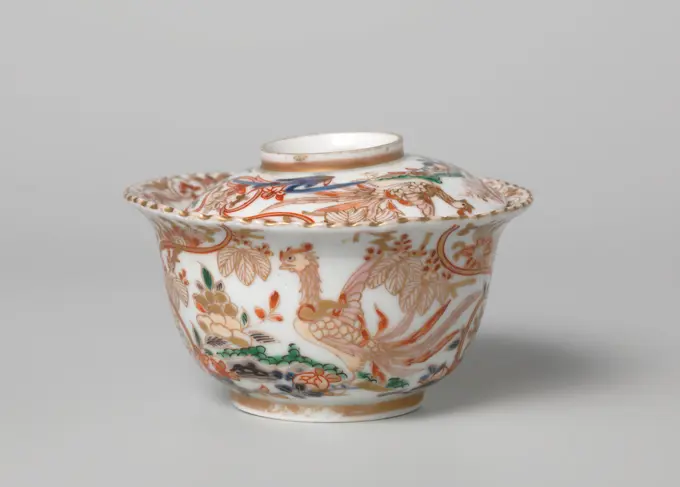
Covered bowl with hoo-birds, flowering plants and floral scrolls, anonymous, c. 1700 - c. 1724 Porcelain lid bowl with ribbed wall and lobed edge, painted in undermglaze blue and on the glaze red, green and gold. The outer wall of the bowl is divided into four courses with a flying or standing Hoo-Vogel and Bloemranken alternately; Around the foot a flower or fruit branch four times. A fenced garden on the bottom; The inner wall with three flower or fruit branches (fingercitroen, peach). On the inner edge a band with flower vines. The lid with the same decoration; With a ring -shaped button and lobed edge. Gold Imari. Japan porcelain. glaze. cobalt (mineral). gold (metal) painting / gilding / vitrification Porcelain lid bowl with ribbed wall and lobed edge, painted in undermglaze blue and on the glaze red, green and gold. The outer wall of the bowl is divided into four courses with a flying or standing Hoo-Vogel and Bloemranken alternately; Around the foot a flower or fruit branch four
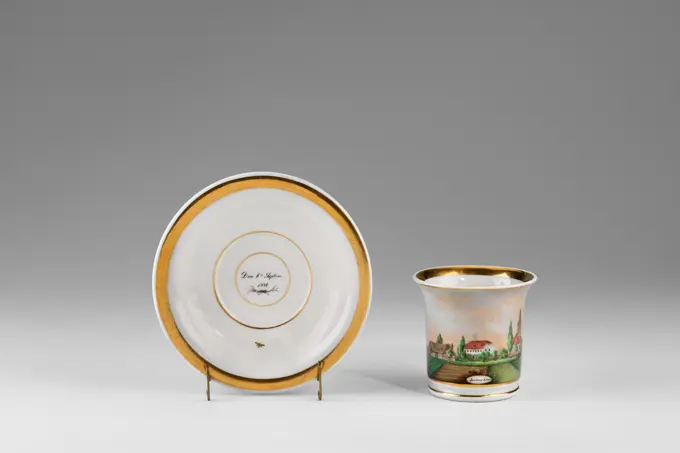
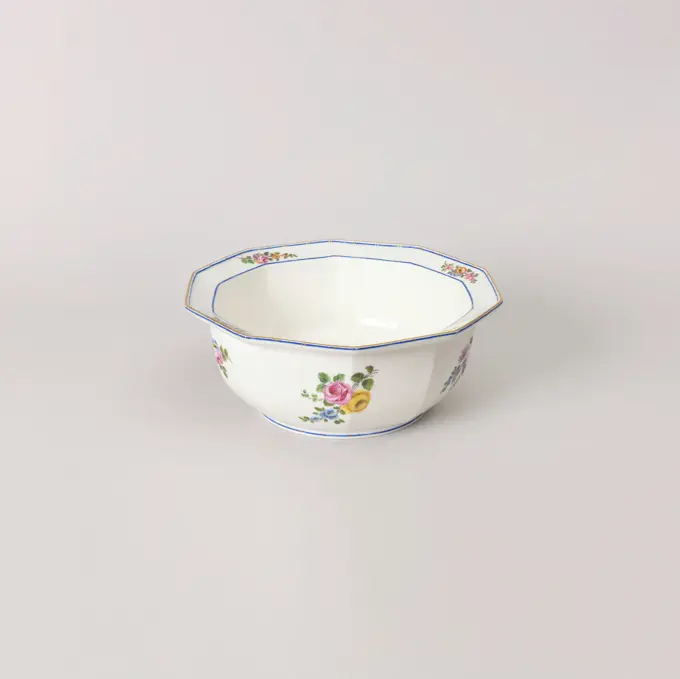
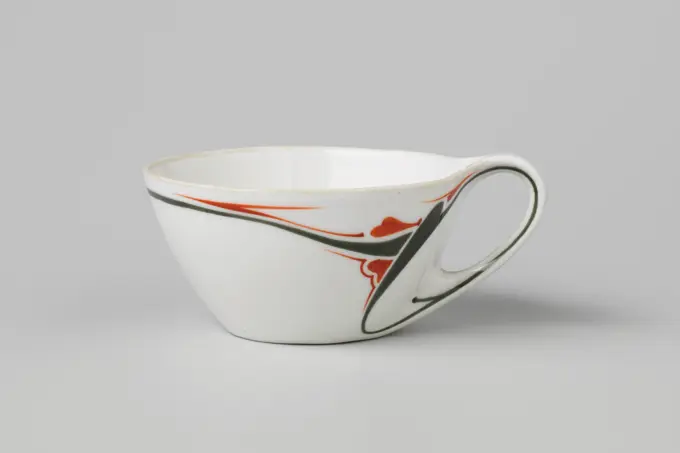
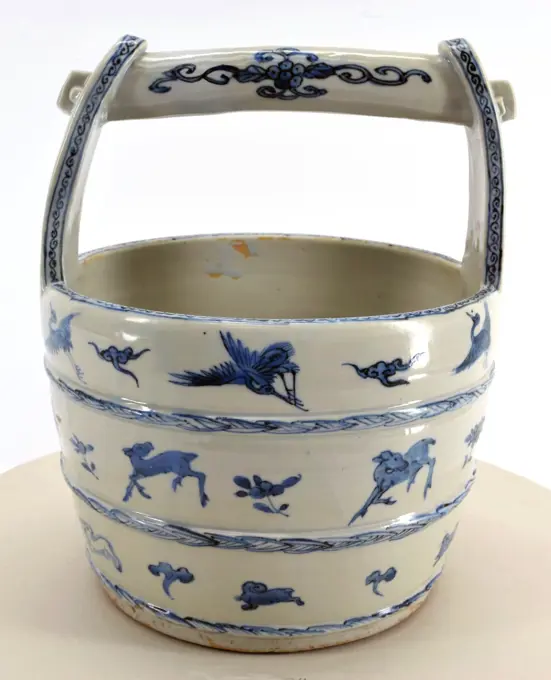
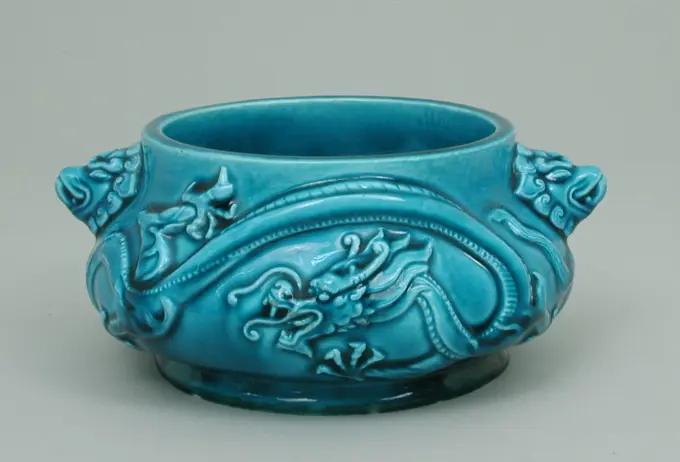
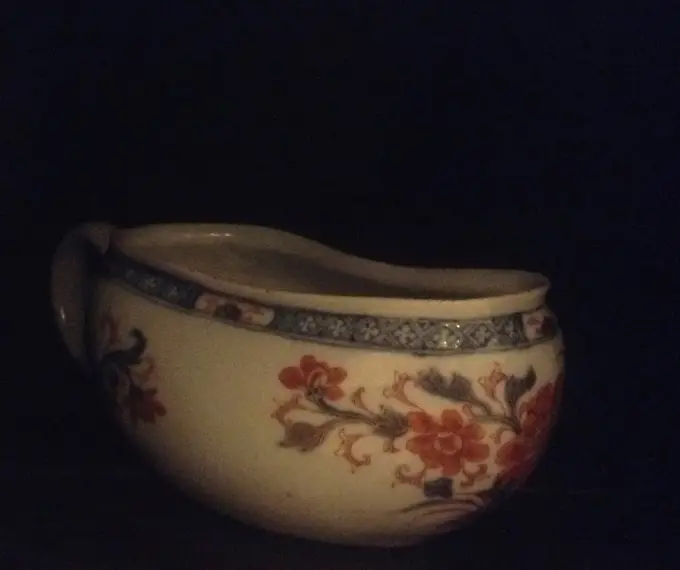
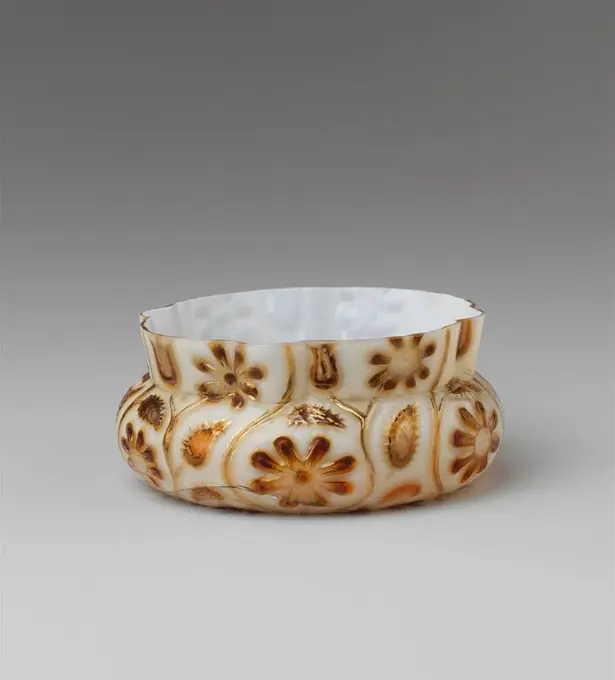
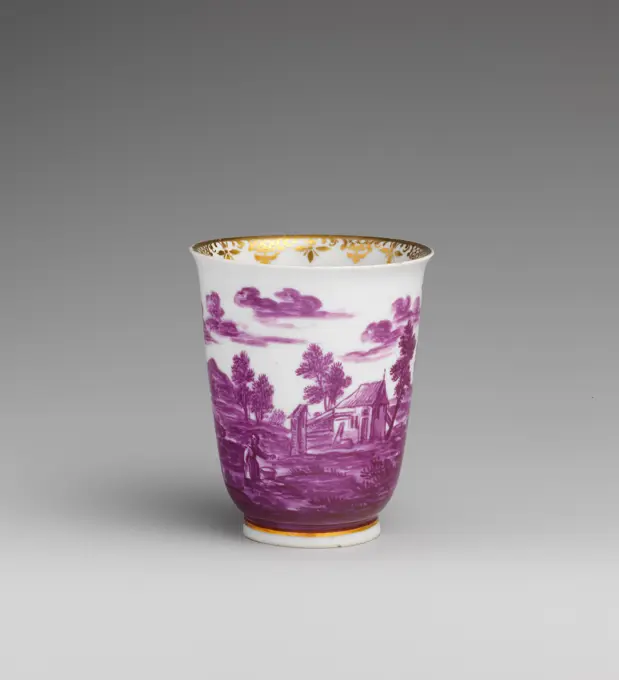
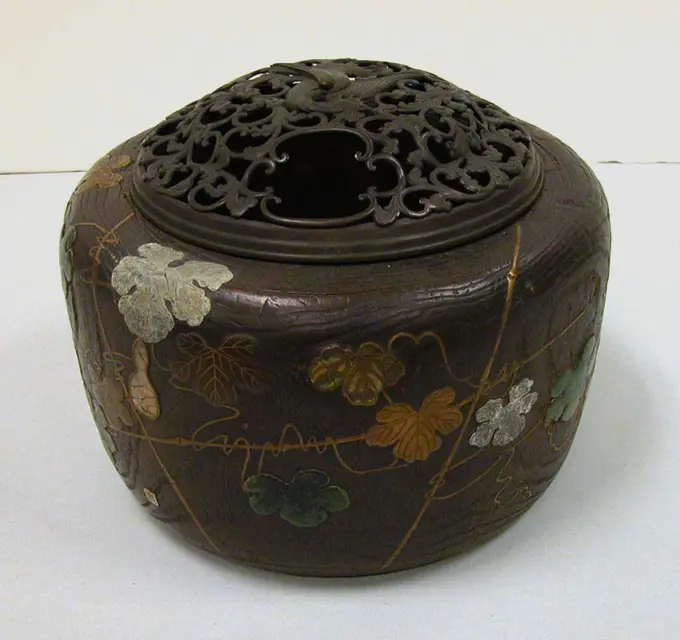
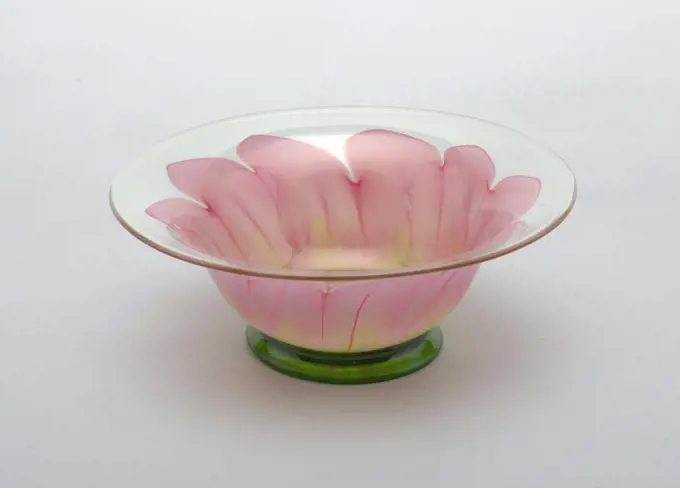
Bowl (part of a service) ca. 1780-90 Caughley Factory. Bowl (part of a service). British, Caughley. ca. 1780-90. Soft-paste porcelain with enamel decoration and gilding. Caughley Factory (British, ca. 1772-1799). Ceramics-Porcelain. Bin of porcelain, with openwork and scalloped edge. Painted in blue, red, green, black and gold with two quail on the bottom between a prunus right and a smaller plant on the left. Along the inner edge a flower and leaf garland in red and gold. A single flower and insect on the inner and outdoor wall. KakieMon DecorClose-up of bowlTeacup with a saucer. Wałbrzych (Waldenburg; Krister Porzellanmanufaktur; ok.1820-1945- ), unknown, painterSalad Bowl Bowl; Probably Jacques-François Micaud (French, ca.1732-1811); Manufactured by Sèvres Porcelain Manufactory (France); France; soft paste porcelain, vitreous enamel, goldCup with stylized floral motifs, Parthénon, c. 1900 - c. 1905 Porcelain head with a C-shaped ear, painted on the glaze in green and red. Stylized flower branches on the outer wall, continuously on the ear. Designed by Maurice Dufrêne, manufactured for La Maison Moderne, possibly by Le Parthénon, Paris. Paris porcelain. glaze. painting / vitrification Porcelain head with a C-shaped ear, painted on the glaze in green and red. Stylized flower branches on the outer wall, continuously on the ear. Designed by Maurice Dufrêne, manufactured for La Maison Moderne, possibly by Le Parthénon, Paris. Paris porcelain. glaze. painting / vitrificationFresh water jar early 17th century China During the seventeenth century, as imperial patronage waned, potters at the Chinese kilns of Jingdezhen sought other markets. One of these was Japan, where the popularity of the tea ceremony contributed to growing demand for Chinese ceramics. This porcelain jar, made to hold water during the tea ceremony, was fashioned in the form of a humble wooden bucket, a combination of high and low that appealed to Japanese patrons. The uneven thickness of the glaze and occasional exposure of the clay beneath would have been considered defects in China, but they were prized in Japan for capturing a sense of authenticity.. Fresh water jar. China. early 17th century. Porcelain painted with cobalt blue under a transparent glaze (Jingdezhen ware for Japanese market). Ming dynasty (1368-1644). Ceramics"Bleu de Deck" bowl ca. 1870-80 Joseph-Théodore Deck French In 1859 Deck invented the turquoise glaze that came to be known as "bleu de Deck," first applying it to his Iznik-inspired pottery. He eventually used it to emulate Chinese monochrome wares, making the turquoise glaze itself the primary focus. This bowl also features Chinese-inspired relief decoration in the form of dragons.. "Bleu de Deck" bowl. French, Paris. ca. 1870-80. Glazed earthenware. Ceramics-PotteryPair of Teabowls with Bamboo 1723-1735 China. These eggshell-thin bowls represent an exquisite example of the technique known as doucai (dovetailing or contending colors), in which underglaze-blue outlines are partly filled with overglaze enamel colors. Outlines of bamboo were painted in cobalt and covered with a transparent glaze before firing. The leaves were then colored with pale green, yellow, and red enamels, and the bowls refired at a lower temperature.Bamboo, which remains green throughout the year and whose hollow stems bend without breaking, has traditionally been viewed in China as a poignant image of human resilience. The elegant depiction of nature on these teabowls was undoubtedly inspired by Chinaís long tradition of bamboo paintings on silk and paper.. Porcelain painted in underglaze blue and overglaze enamels (doucai) .Bourdaloue (oval chamber pot), first half of the 18th century, 3 3/4 x 9 1/8 x 4 1/4 in. (9.53 x 23.18 x 10.8 cm), Porcelain, China, Chinese export, A bourdaloue is a kidney-shaped chamber pot with a handle, named for Louis Bourdaloue, one of the most celebrated orators of 17th century France. Sermons given by Bourdaloue were so lengthy, women in the congregation felt the need to bring along a bourdaloue, also called a 'coach pot.' European factories produced them as well.Tae Caddy with Flower Sprays, Royal Porcelain Manufaktur, c. 1790 - c. 1800  Porcelain tea, painted on the glaze in blue, red, pink, green, yellow, purple and black. The Teabus has modeled a flattened egg -shaped body in four sides, with a compartment formed on each side by flower vines in relief. Flower branches in every box. Marked on the underside with the scepter and the letter K. lid is missing. Berlin porcelain. glaze. painting / vitrificationBowl. Culture: American. Dimensions: H. 1 7/8 in. (4.8 cm); Diam. 4 3/8 in. (11.1 cm). Maker: Dalzell, Gilmore and Leighton (1885-1898). Date: 1889-90. Museum: Metropolitan Museum of Art, New York, USA.Cup ca. 1735 German, Meissen. Cup 205943Coal container 18th century Ogawa Haritsu (Ritsu) Japanese. Coal container. Ogawa Haritsu (Ritsu) (Japanese, 1663-1747). Japan. 18th century. Wood, metal, mother-of-pearl. WoodworkHouse cap, anonymous, c. 1725 - c. 1750 Hat, maternity hats or groommut, of white cotton decorated with 'Point de Marseille'. Model: Bol consisting of four pattes. Returned scalloped edge. A cotton brush on the sphere. Bol and edge lined with cotton. Decoration: The whole is slanted on the wire and filled with wire. On every pattern a pattern with pomegranate, leaf voltues and a palm with stitching, edge, satin, cordon, tension and waffle stitch. On the edge, the pattern has a pomegranate twice between the plots with palm flowers. In the middle or behind in the edge marked with pink side: HM (Hendrik Martini, 1693-1776). Regce. Netherlands whole: Cotton (textile). lining: cotton (textile). Brush: cotton (textile). Embroidery: Cotton (textile). Filling: Cotton (textile) embroidering Hat, maternity hats or groommut, of white cotton decorated with 'Point de Marseille'. Model: Bol consisting of four pattes. Returned scalloped edge. A cotton brush on the sphere. Bol and edge lined with cottToilet box. Culture: German, Meissen. Dimensions: Overall (confirmed): 1 5/8 x 2 9/16 x 2 9/16 in. (4.1 x 6.5 x 6.5 cm). Factory: Meissen Manufactory (German, 1710-present). Date: ca. 1730.Boxes from Meissen toilet services do not survive in great numbers, and the decoration of the box is typical of Kakiemon-inspired painting on Meissen of the 1730s. The box relates in form and decoration to two boxes from the Sheafer Collection (see 1974.356.490a, b and 1974.356.491a, b). Museum: Metropolitan Museum of Art, New York, USA.Bowl, Louis Comfort Tiffany, (American, 1848-1933), Mold-blown favrile glass, Clear glass bowl with flared rim showing ten pink petals with green at base, green foot., New York, New York, USA, ca. 1900, glasswares, Decorative Arts, BowlSet of Dishes, 1736-95. China, Qing Dynasty (1644-1911), Qianlong reign (1736-95). Porcelain with famille rose overglaze enamel decoration; diameter: 16 cm (6 5/16 in.); overall: 3.2 cm (1 1/4 in.).Piasecznica; Koenigliche Porcellain Fabrique, Meissen (1710-1763); around 1750 (1745-00-00-1750-00-00);Bronisław Krystall. Testament (Warsaw - Exhibition - 2015/2016), Krystall, Bronisław (1887-1983) - collection, Far Eastern decorations, writing utensils, purchase (provenance)Patterned Easter Eggs