Porcelain Vases Collection

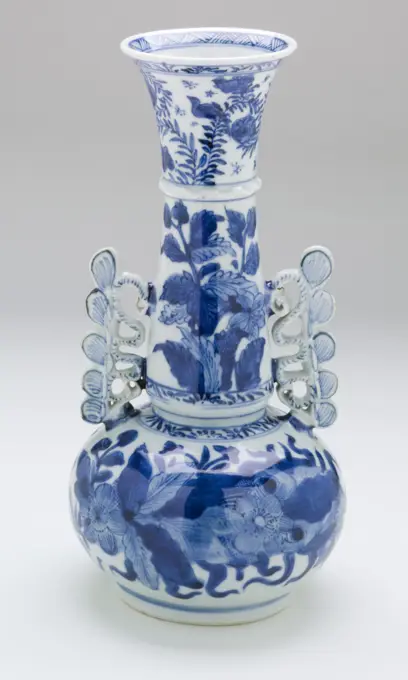
An assortment of antique vases made of porcelain, featuring intricate blue and white designs with floral and animal motifs.
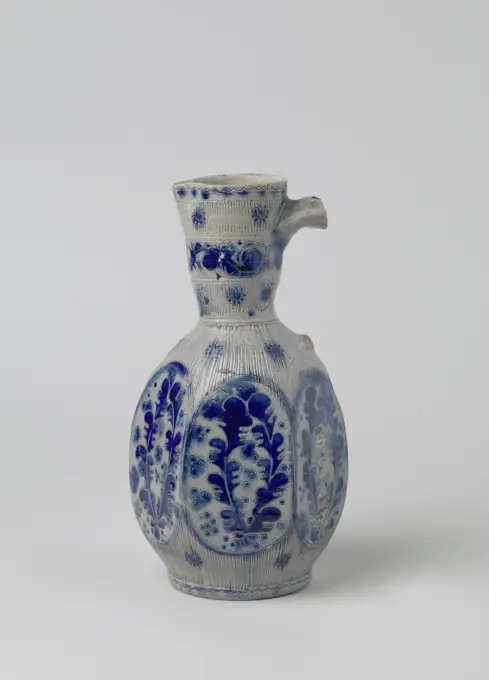
Jug with foliate scrolls in panels, anonymous, c. 1750 - c. 1799 Can be made of stoneware on the stand ring with a hexagonal, egg -shaped belly and narrow neck with a pinched spout. The C-shaped (broken) ear is attached to the neck and shoulder. Partly covered with cobalt blue. The belly is covered with pressed zigzag lines (knibis) with small, stamped flowers. Six courses with entered leaf vines and dots in blue. On the neck twice a band with zigzag lines and flowers and one with a continuous leaf vank. Westerwald. Westerwald stoneware. glaze. cobalt (mineral) vitrification Can be made of stoneware on the stand ring with a hexagonal, egg -shaped belly and narrow neck with a pinched spout. The C-shaped (broken) ear is attached to the neck and shoulder. Partly covered with cobalt blue. The belly is covered with pressed zigzag lines (knibis) with small, stamped flowers. Six courses with entered leaf vines and dots in blue. On the neck twice a band with zigzag lines and flowers and one wi
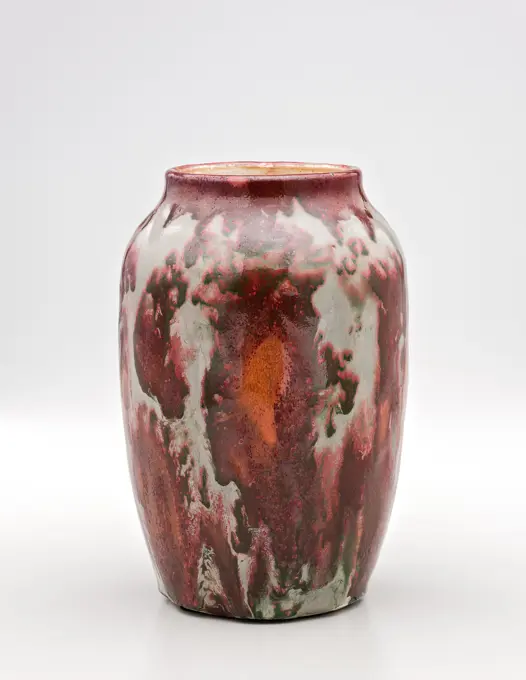
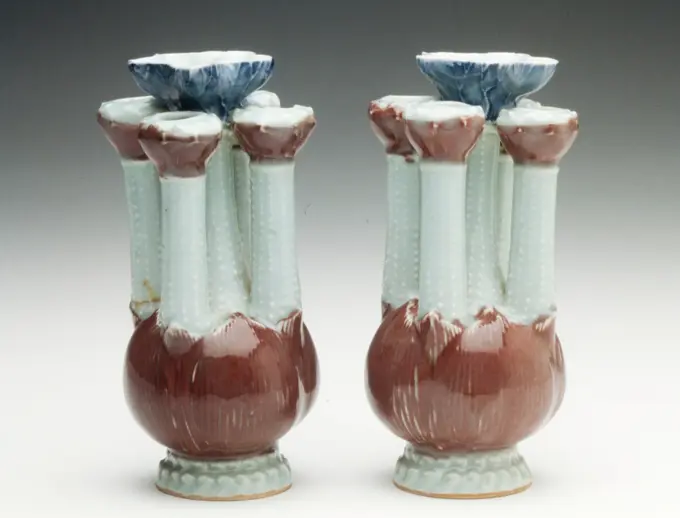
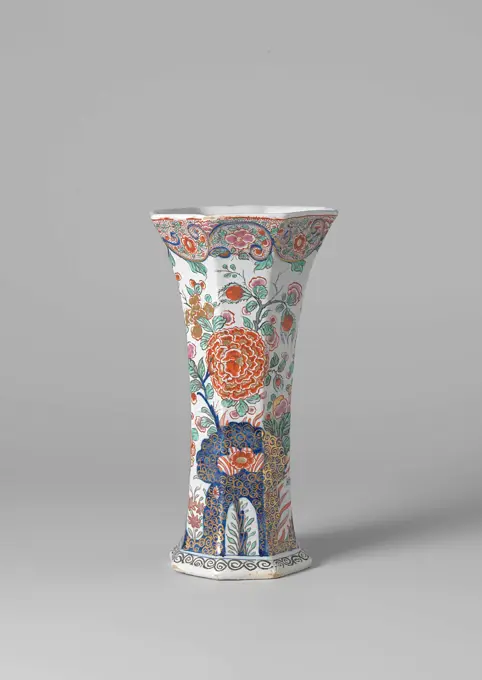
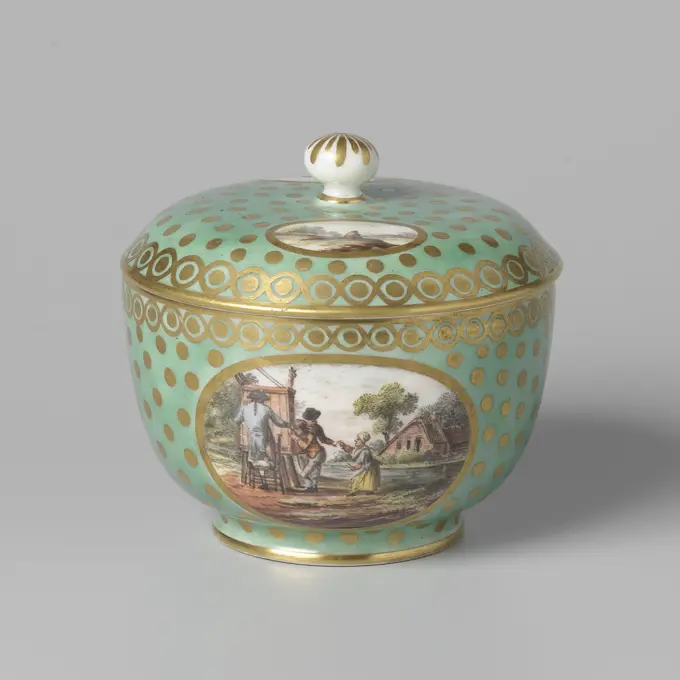
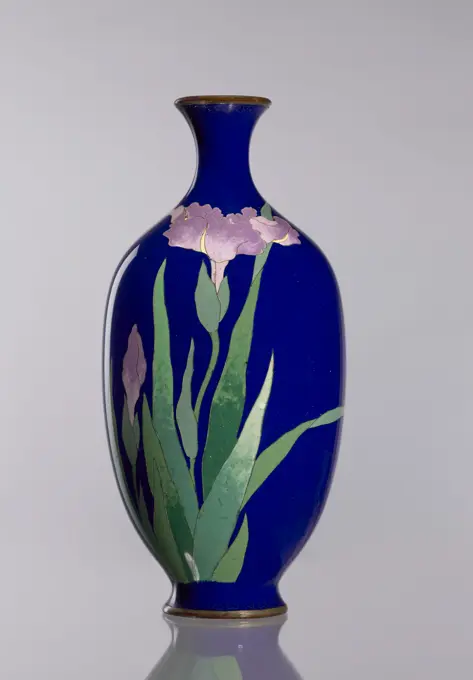
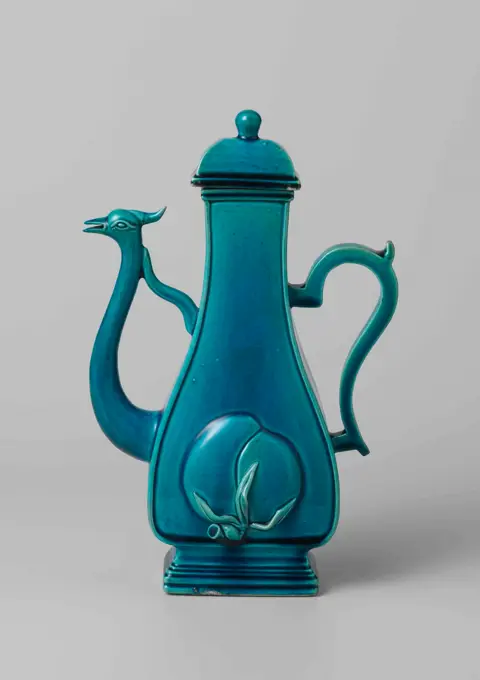
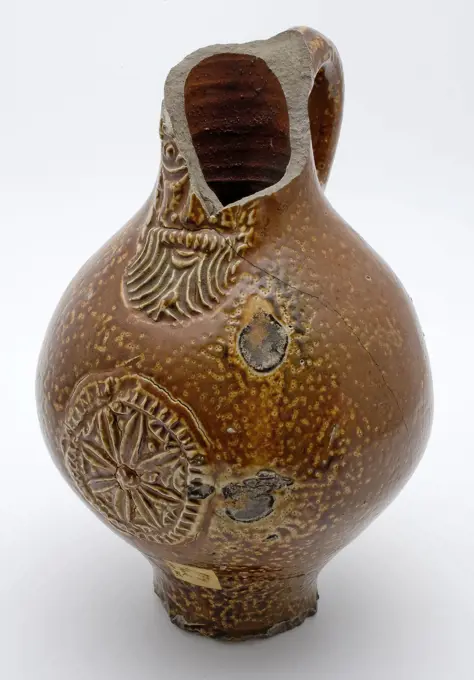
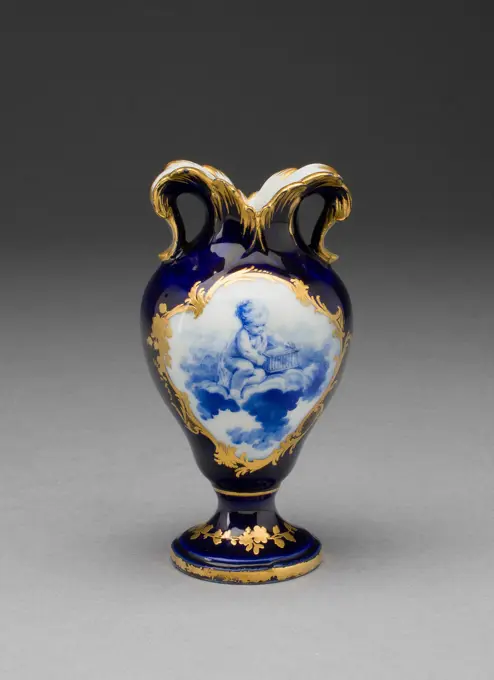
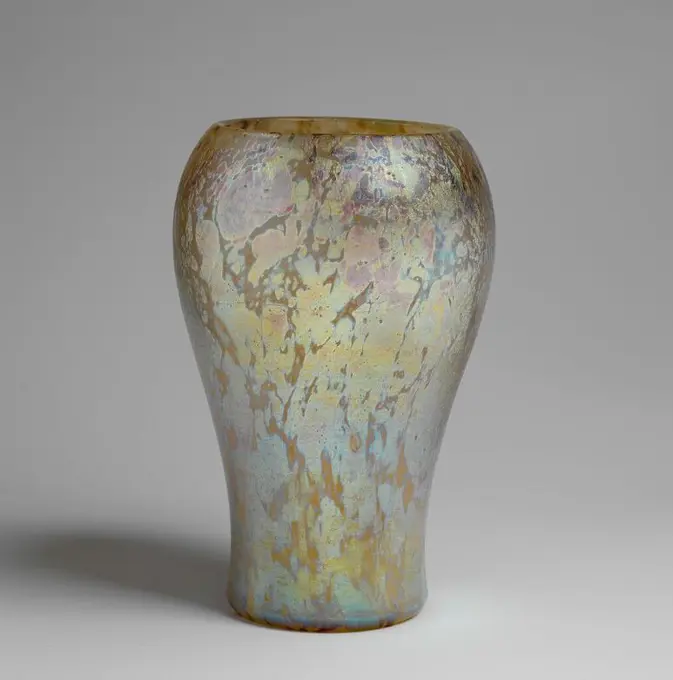
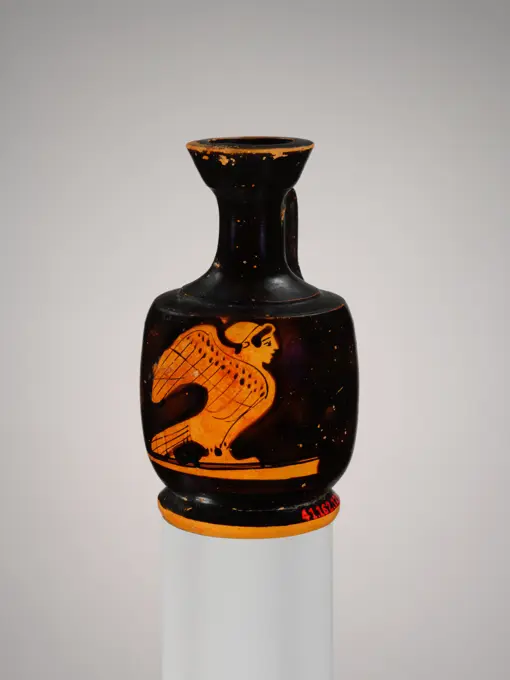
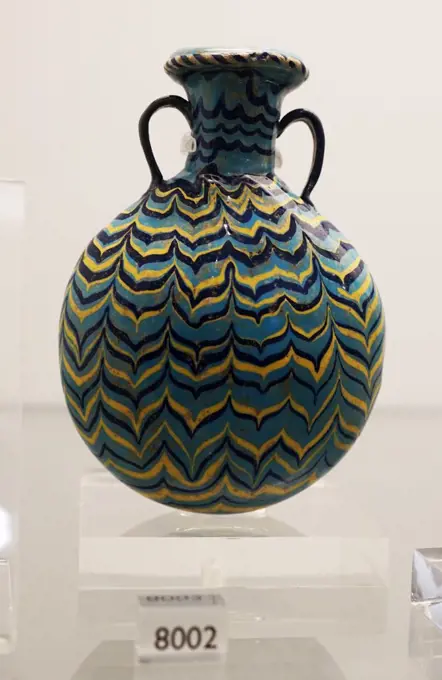
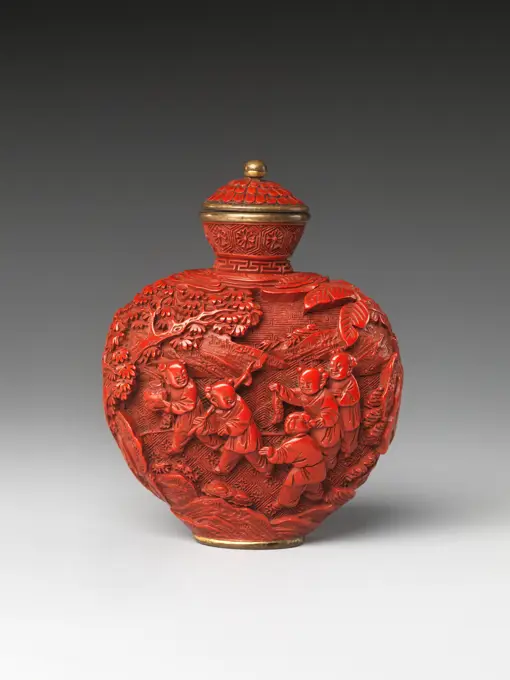
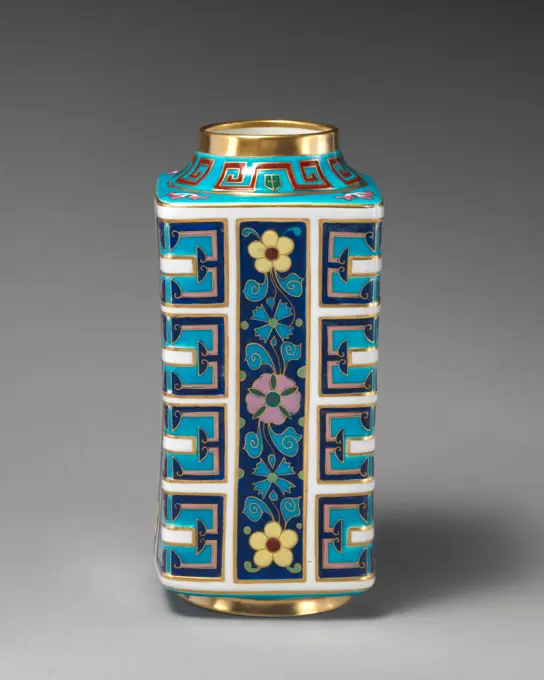
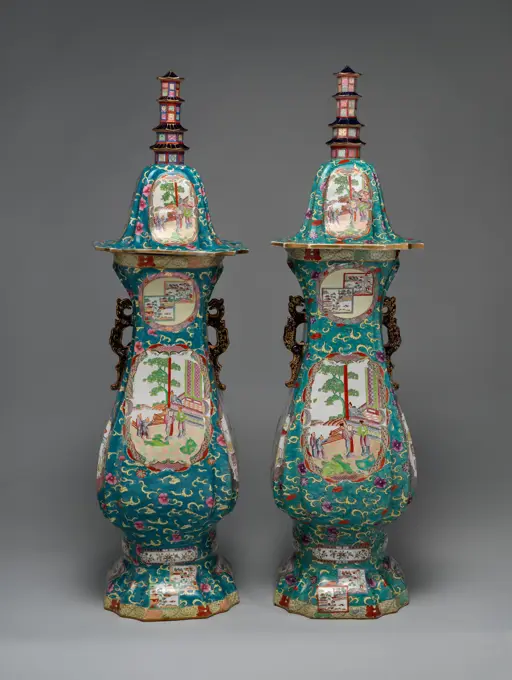
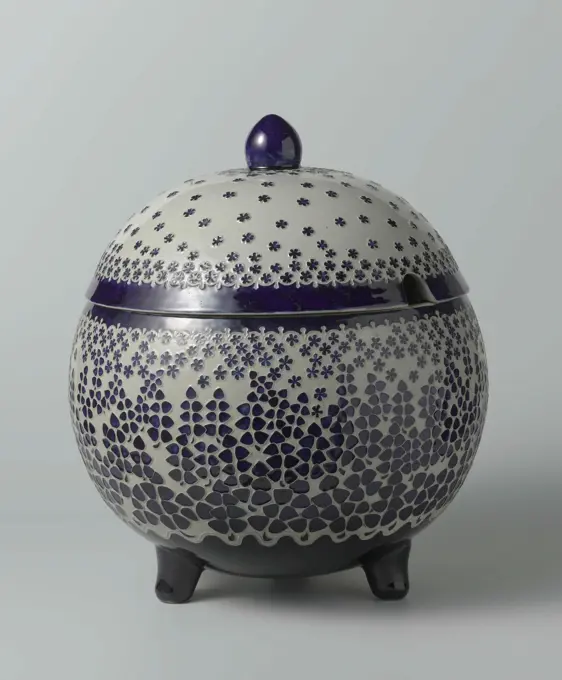
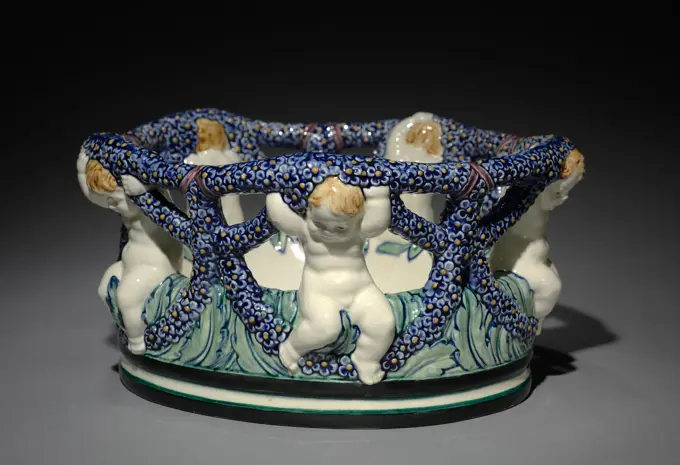
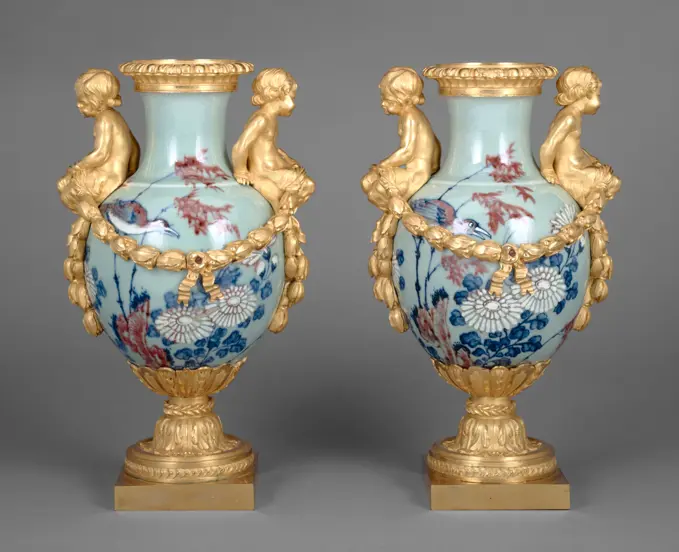
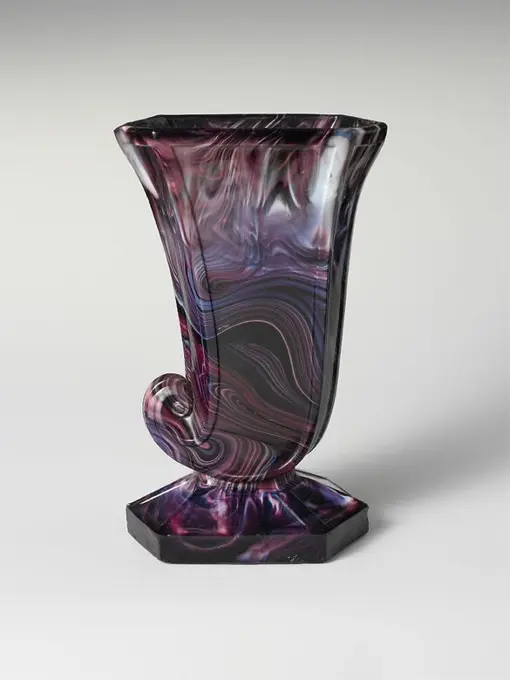
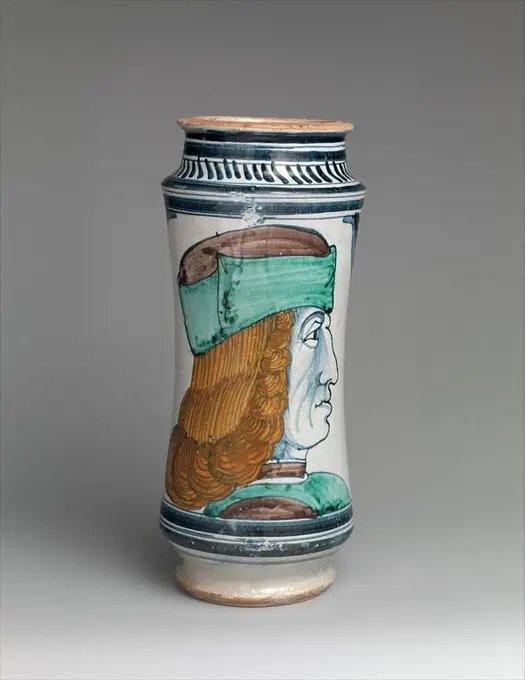
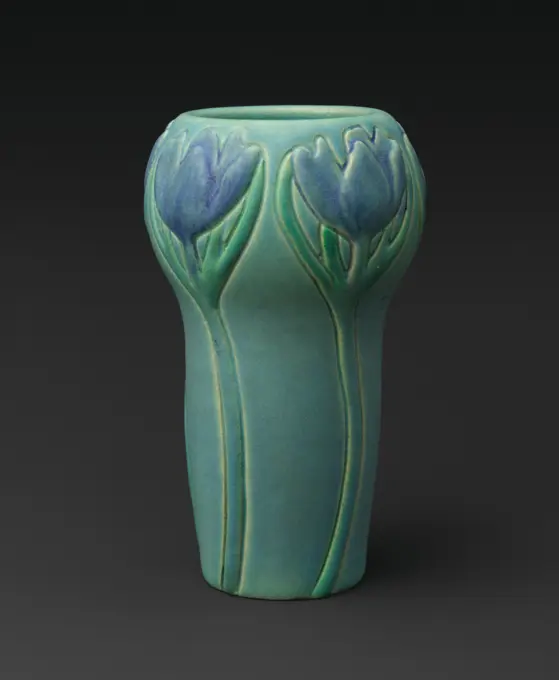
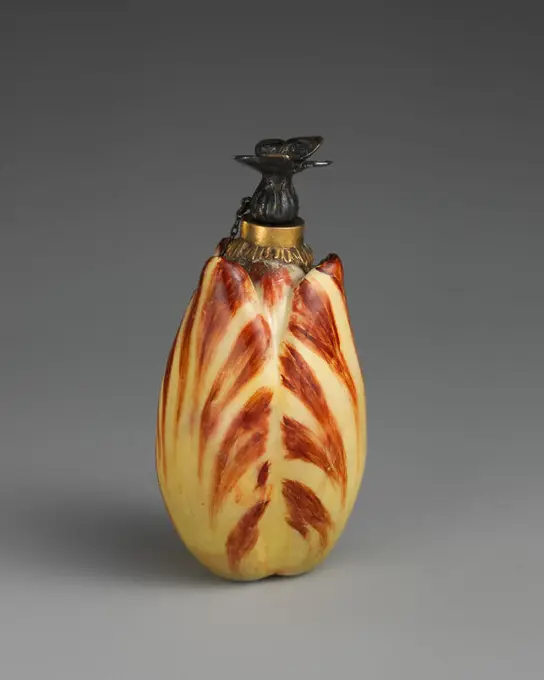
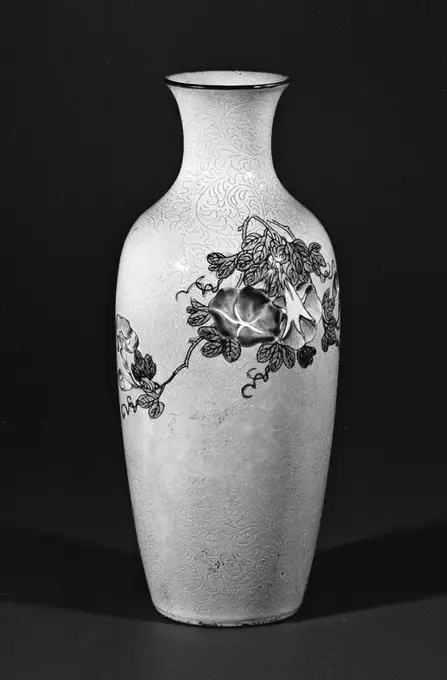
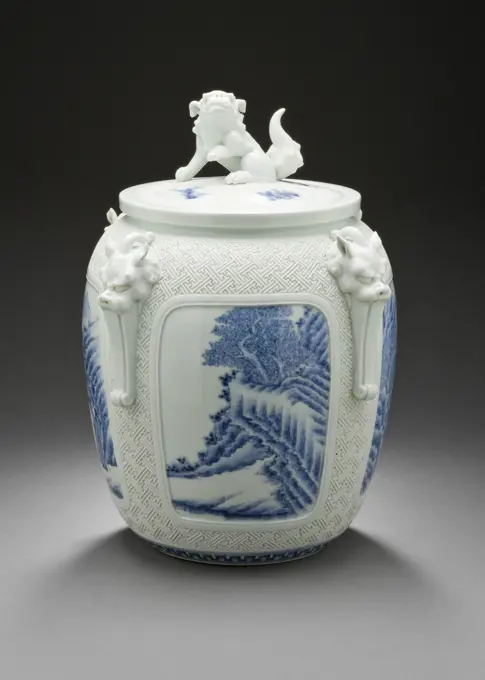
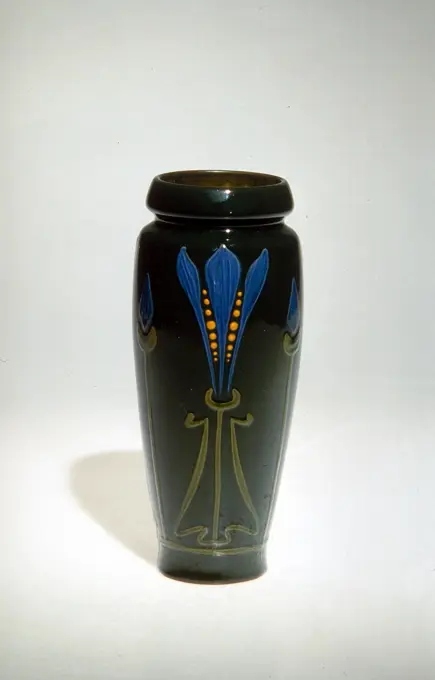
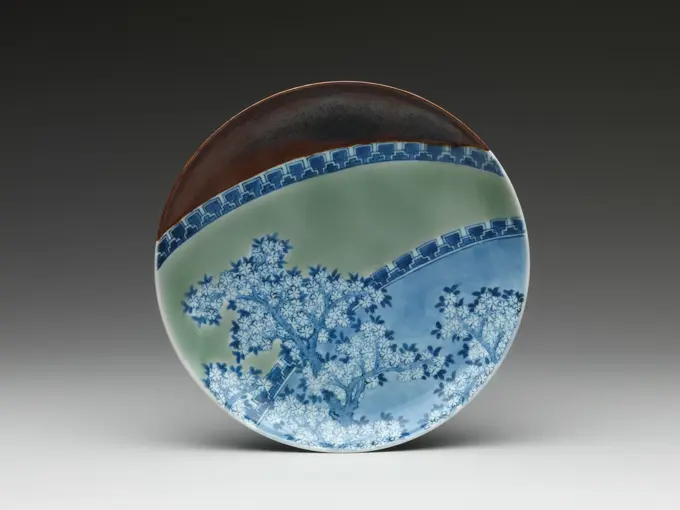
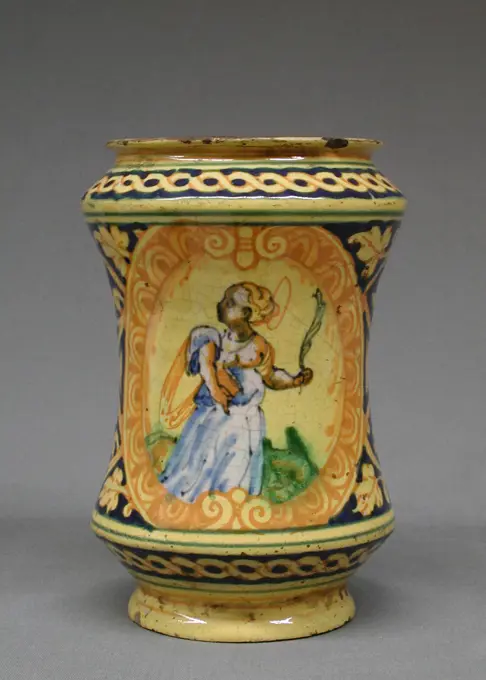
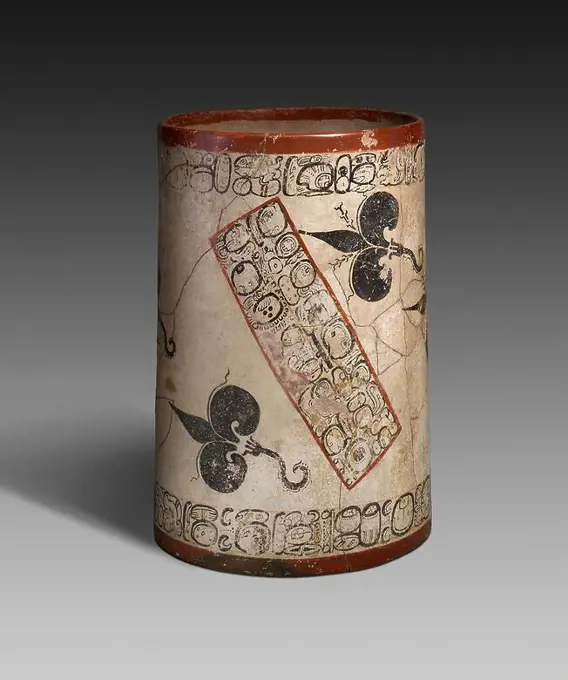
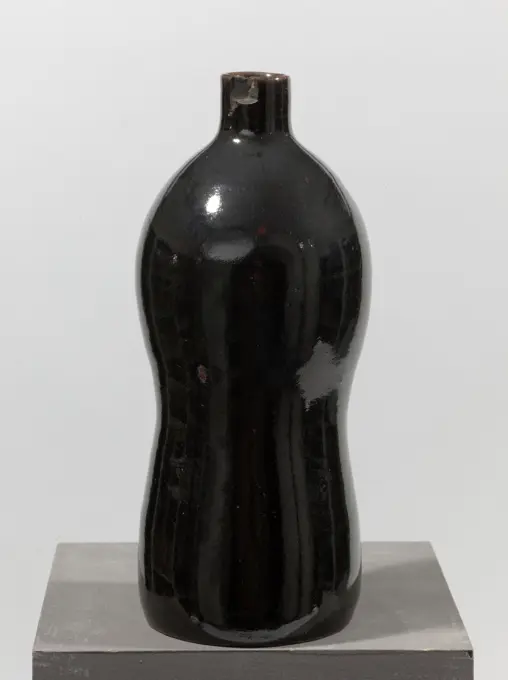
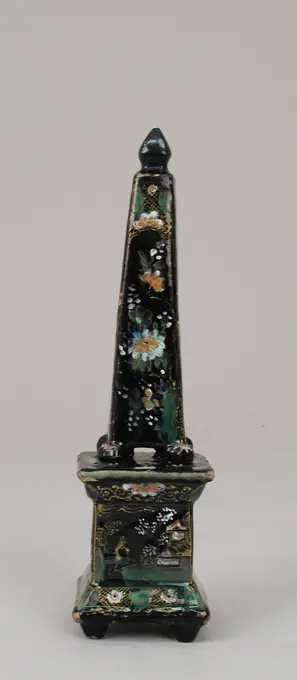
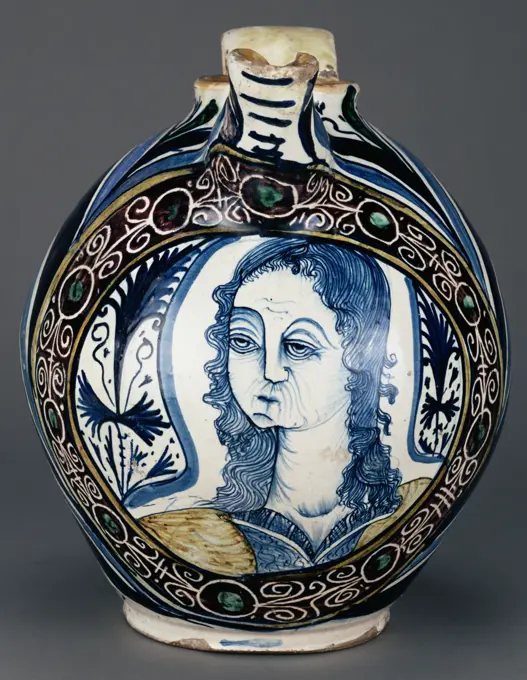
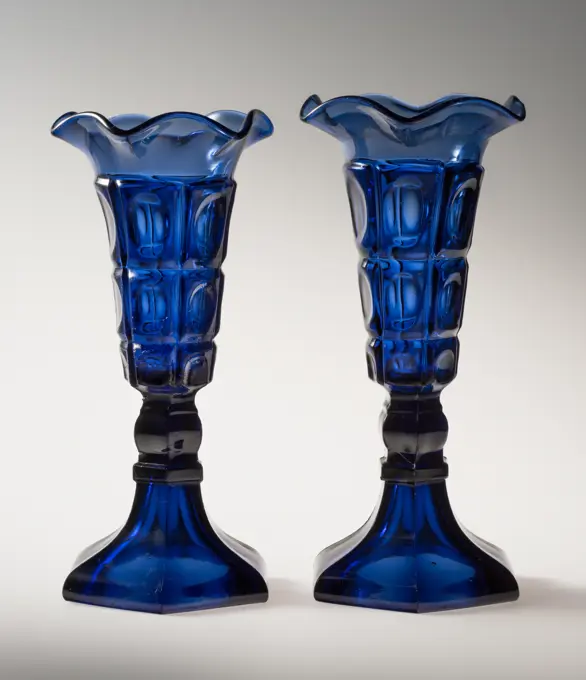
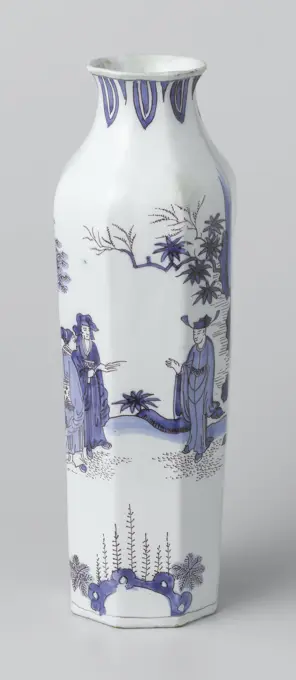
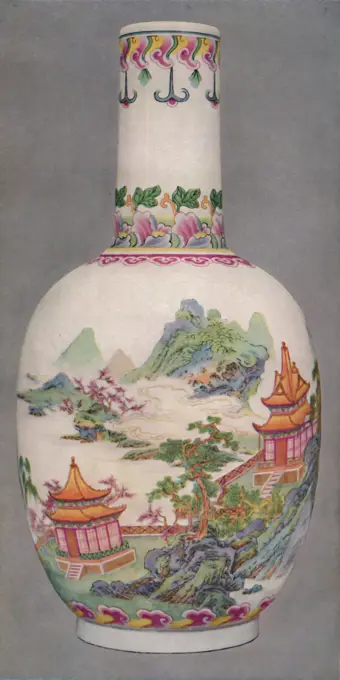
Crock. Dated: 1935/1942. Dimensions: overall: 41.8 x 30.6 cm (16 7/16 x 12 1/16 in.) Original IAD Object: 12 1/4" High 6 5/8" Dia(top) 6 1/2" Dia(base). Medium: watercolor, and graphite on paperboard. Museum: National Gallery of Art, Washington DC. Author: I. Domskoy Kallman.Pitcher 1852-58 United States Pottery Company. Pitcher 5856Vase of multicolored painted faïence. Beaker from Faïence. Multicolor painted with flower decorations. The vase is part of a cabinet set.Tea Service for Two People (Tête-à-Tête), Manufactuur Oud-Loosdrecht, c. 1782 - c. 1784 Porcelain sugar bowl. The sugar bowl is decorated with a gold dipped green stock, which is closed on the edge with a chain motif in gold with gold dots. In this stock, an oval has always been saved with the Dutch with a viewing box on the banks of a river with a farm. On the lid landscapes with one or two figures. Golden piping along the edges. A rosette in gold on the lid button. Loosdrecht porcelain Porcelain sugar bowl. The sugar bowl is decorated with a gold dipped green stock, which is closed on the edge with a chain motif in gold with gold dots. In this stock, an oval has always been saved with the Dutch with a viewing box on the banks of a river with a farm. On the lid landscapes with one or two figures. Golden piping along the edges. A rosette in gold on the lid button. Loosdrecht porcelainVase;  End of the 19th century (1891-00-00-1900-00-00);Block, Julius Henry (1858-1934) - collection, cloisonné, gift (provenance), irises, Japanese (culture), Japanese artVase "model agen". Acquired from the manufacturer at the 1900 World Expo in ParisPear-Shaped Wine Ewer With Peach and Spout Ending in A Bird's Head. Lid of porcelain wine jug, covered with a turquoise glaze. Monochromes.Vase of multicolored painted faïence, anonymous, c. 1730 - c. 1760 Faïence cup. Multicolored painted with flower decorations. The vase is part of a cupboard set. Delft . Faïence cup. Multicolored painted with flower decorations. The vase is part of a cupboard set. Delft .Tulip vase with decor "speechig" in black, tan and brown. Tulip vase of pottery, chaloid-shaped round foot, polychrow painted in the colors yellow-brown, black and brown with the decor "SpanNig". The interior edge has a wide yellow bies between black lines.Brown speckled beard man, with beard mask medallion with star motif, Bartmann juggeware tableware holder soil find ceramic stoneware clay engobe glaze salt glaze, hand turned stamped glazed glazed baked stoneware jug gray shard brown engobe and salt glaze partially brindled profiled sausage ear with flat tail. Small foot with remains of stuck foreign pottery archeology Rotterdam City Triangle Zandstraat Town Hall City Hall import pottery drink transport packing ground Rotterdam: excavated on the site intended for the Raadhuisbouw on the Coolvest former Zandstraat (1915).Vase (Vase à Oreilles) 1749-1759 Vincennes. Soft-paste porcelain, underglaze and overglaze blue, and gilding . Manufacture de porcelaine de Vincennes (Manufacturer)Vase. Culture: American. Designer: Designed by Louis Comfort Tiffany (American, New York 1848-1933 New York). Dimensions: H. 6 5/8 in. (16.8 cm). Maker: Tiffany Studios (1902-32). Date: 1912-15. Museum: Metropolitan Museum of Art, New York, USA.Miniature Double-Gourd-Shaped Vase With Flowering Plants. Miniature vase of porcelain with balebass-shaped body, painted in underglaze blue. On the belly and neck twice a flowering plant; The edge with a brown glaze. Blue White.Miniature terracotta squat lekythos (oil flask) with siren mid-5th century B.C. Attributed to the Seireniske Painter In Greek mythology, sirens, human-headed birds known for their beautiful voices, were offen associated with the afterlife, and they appear frequently in Classical Greek funerary art. In addition to their mournful depictions on grave stelai, sirens were also an appropriate decoration for a lekythos, a type of vase often connected with death and burial ritual.. Miniature terracotta squat lekythos (oil flask) with siren 254295Snuff Bottle with Stopper (stopper), 1736-95. China, Qing Dynasty (1644-1911), Qianlong reign (1736-95). Porcelain; overall: 7.2 cm (2 13/16 in.).Wase with decoration Imari, cover for a vase with decoration Imari; Kaiserliche Porzellanmanufaktur in Wien (1744-1864); PO .XVIII century (1745-00-00-1755-00-00);Ancient Egyptian pottery from the 21st Dynasty.Bowl China. Bowl 52625Snuff Bottle with Children at Play 18th century China. Snuff Bottle with Children at Play 41238. Manufacturing Oud-Loosdrecht Sugar Bowl: Manufacturing Oud-Loosdrecht or Porcelainfabriek aan den Amstelelessrecht and Ouder-Amstel, c. 1782-1784Hard-Paste PorcelainCuboid vase 1870 Minton(s) Minton was the most important ceramics factory during the Victorian period and began exhibiting products at the first Great Exhibition of 1851. Founded in 1793 by Thomas Minton at Stoke-on-Trent, the firm initially specialized in transferware pottery before expanding under the ownership of Thomass son Herbert Minton, beginning in 1836. Under the ownership of Colin Minton Campbell, who succeeded his uncle in 1858, the factory became recognized as a specialist producer of Aesthetics movement porcelain, which were inspired by a rich array of exotic and eclectic decorative motifs.. Cuboid vase. British, Stoke-on-Trent, Staffordshire. 1870. Bone china. Ceramics-PorcelainUnknown, covered vase (main title). Ceramics, porcelain, moufle fire enamels (small lights). Petit Palais, Museum of Fine Arts of the City of Paris.Figure of a woman holding a flower, anonymous, c. 1700 - c. 1724 Image of a woman on a pedestal of porcelain, painted on biscuit in green, yellow, eggplant and black. The image shows a standing woman with a flower in her right hand. Email sur Biscuit. China porcelain. glaze. painting / vitrification Image of a woman on a pedestal of porcelain, painted on biscuit in green, yellow, eggplant and black. The image shows a standing woman with a flower in her right hand. Email sur Biscuit. China porcelain. glaze. painting / vitrificationWater cooler 1850-59 Julius and Edward Norton During the 1850s, Julius and Edward Norton, like their upstate New York competitors, produced stoneware with designs in cobalt blue slip. Typical of the motifs found on their wares are birds, flowers, stags, dogs, and eagles, executed with little regard to relative scale.. Water cooler 9756Vase with lid (one of a pair) ca. 1826-45 C. J. Mason and Co. These two vases are made of a ceramic body introduced in the early nineteenth century that was called by the factory "Masons Ironstone China". In fact, a fine white earthenware was employed for "ironstone", but the name given by the firm implied both durability and the elegance of Chinese porcelain. Ironstone could be inexpensively made, and works in this medium were enormously popular throughout the nineteenth century. In addition, the decoration involved painting over transfer-printed designs which was far less expensive that applying decoration entirely by hand. Thus works such as these, despite their imposing size, were much more affordable than comparable porcelain vases with traditional painted decoration.. Vase with lid (one of a pair). British, Fenton, Staffordshire. ca. 1826-45. Earthenware with transfer-printed and enamel decoration. Ceramics-PotteryPair of Vases. China, Kangxi period, 1662-1722. Furnishings; Accessories. Hard-paste porcelain with underglaze blue decorationVase with Figural and Floral Decoration. China. Date: 1300-1368. Dimensions: H. 31.2 cm (12 1/4 in.); diam. 32.4 cm (12 3/4 in.). Cizhou ware; stoneware, slip-coated with overglaze painted decoration in iron brown. Origin: China. Museum: The Chicago Art Institute, Chicago, USA.. Cylindrical vase of painted porcelain. The vase is decorated with a boy in green and blue standing on a checkered blue ground, a bouquet of flowers in blue and violet tied together with a blue ribbon and a green kylin. The bottom is unglazed. The vase has not been marked.Flask. UnknownUNGUENTARIUM; unknown eastern workshop; End of the first century BC. half. 1st century (-10-00-00-50-00-00);ViolinFlaskGlass perfume bottle 1st-2nd century A.D. Roman Very slender unguentarium.Translucent blue green.Fine rim folded out, over, and in; flaring mouth; cylindrical neck with tooled indent around base; elongated ovoid body; small, concave bottom with traces of pontil scar.Intact; pinprick bubbles and blowing striations; dulling, pitting, and patches of iridescent weathering on exterior, soil encrustation and whitish enamel-like weathering on interior of neck.. Glass perfume bottle 244680They weigh; Deruta (ceramic family; Ca 1500-); beginning of the 16th century (1500-00-00-1510-00-00);Alla Porcellana" decoration, plant decorations, pine conesJar. Culture: China. Dimensions: H. 6 5/8 in. (16.8 cm); W. 4 1/2 in. (11.4 cm). Museum: Metropolitan Museum of Art, New York, USA.Belly bottle, cat's head, belly bottle bottle holder soil find glass, neck with imposed wrap around spherical glass wire and flattened lip wrapping archeologyDish with Chrysanthemums and Marigolds, 1700s. Japan, Edo period (1615-1868). Imari ware porcelain with underglaze blue and overglaze enamel and gold decoration; diameter: 21.1 cm (8 5/16 in.); overall: 3.2 cm (1 1/4 in.).Vase 1895-1908 Dedham Pottery. Vase. American. 1895-1908. Stoneware. Made in Dedham, Massachusetts, United StatesCrocus Pot, one of a pair, Kangxi period, 1621-1722, 6in. (15.2cm), Porcelain, China, 17th-18th centuryPunch goblet, 1867, Cristalleries de Baccarat, Baccarat, France, est. 1764, 4 3/4 x 2 7/16 in. (12.07 x 6.19 cm), Cased lead glass, France, 19th centuryJar, 1736-1795. China, Qing dynasty (1644-1911), Qianlong reign (1736-1795). Porcelain; overall: 10.4 cm (4 1/8 in.).Snuff bottle 19th century China. Snuff bottle 41201. Spherical punchkom with lid on three legs.Bottle 17th century. Bottle 451740ApothecaryJarSmall vase. unknown, craftsmanPocket flask 1800-1860 American. Pocket flask. American. 1800-1860. Blown pattern-molded glass. Made in United StatesFruit Bowl, 1911. Grossherzogliche Majolika-Manifaktur (German, 1901-), Wilhelm Süs (German, 1861-1933). Earthenware; overall: 15 x 29 x 24.5 cm (5 7/8 x 11 7/16 x 9 5/8 in.).Pair of Vases. Unknown"Rock Crystal" Vase. Thomas Webb & Sons; Stourbridge, England, founded 1837. Date: 1889. Dimensions: H. 30.5 cm (12 in.). Glass. Origin: Stourbridge. Museum: The Chicago Art Institute, Chicago, USA.Bowl with cover late 18th century probably Spanish. Bowl with cover. probably Spanish. late 18th century. Glass. Glass. Long egg shaped vase of porcelain, painted on the glaze on the glaze in blue, red, pink, green, yellow, brown, black and gold. The wall is covered with flower drinks with two large cartouches with curl work in it; One cartouche with a European lady in a landscape with stripped sleeves a basket full of fruit wearing, the other cartouche with a piping European man in an interior at a table with a servant next to him who gives a glass full; On the edge a decorative band in Meissen-style. Vase has been broken. European performance in email colors.Bottle 17th century French. Bottle 186477Vase. Designer: Adelaide Alsop Robineau (American, Middletown, Connecticut, 1865-1929 Syracuse, New York). Dimensions: H. 7-1/4 in. (18.4 cm.). Date: 1927. Museum: Metropolitan Museum of Art, New York, USA.Vase. Dimensions: H. 7 in. (17.8 cm). Date: 1880-90. Museum: Metropolitan Museum of Art, New York, USA.Pharmacy jar (albarello). Culture: Italian, probably Naples or environs. Dimensions: Overall (confirmed): 12 13/16 × 5 5/8 × 5 5/8 in. (32.5 × 14.3 × 14.3 cm). Date: ca. 1475-1500.Male busts in profile--one youthful, one mature--appear on the front of these two albarelli (see also 46.85.14), while the backs are painted with a graceful floriated design. Given their close similarity, it seems likely that the jars belonged to a single pharmacy set, which might originally have included dozens, if not hundreds, of vessels. In the absence of labels, the different physiognomies could help the merchant distinguish one jar from the next. Museum: Metropolitan Museum of Art, New York, USA.Snuff Bottle late 18th-early 19th century China. Snuff Bottle. China. late 18th-early 19th century. Agate with glass stopper. Qing dynasty (1644-1911). Snuff BottlesVase with crocuses 1902 Designed by Artus Van Briggle Artus Van Briggle began his career in ceramics at the Rookwood Pottery, but because of respiratory issues, moved to Colorado, where, with his wife Anna Van Briggle, he established his own pottery in Colorado Springs in 1901. The Van Briggles and some other designers produced models from which molds were made, and the vases were then slip-cast in multiple forms. They were particularly noteworthy for their glazes in satiny soft textures in unusual colors, sometimes one or more combine on a single piece. Like many American artists, Artus Van Briggle had traveled to and studied in Paris in the late 1890s and was much influenced by not only the artistic ceramics he saw there, but much of the French art that was on exhibition. Van Briggles early work often exhibits the stylistic characteristics of the Art Nouveau, especially in the sinuous curves of the stems on his floral-decorative vases. As seen in this vase, he kept the botanic identBlue background piece of pottery of the Mamluk periodCylindrical stitch (n ° not readable). Porcelain. Cernuschi Museum, Asia Museum of Asia in the city of Paris.Glassware at the Glass Museum in Passau, Germany.Square bottle with birds, flowering plants and pavilions, anonymous, c. 1700 - c. 1724 Bronze cap of square bottle of porcelain, in the form of a braided ring, ending in a Hoo-Vogelkop on a flower rosette. The edge has been ground. Arita, decorated in Europe  In the Japanese Kakiemon style. Japanpainter: Europe (possibly) bronze (metal). cork (bark) Bronze cap of square bottle of porcelain, in the form of a braided ring, ending in a Hoo-Vogelkop on a flower rosette. The edge has been ground. Arita, decorated in Europe  In the Japanese Kakiemon style. Japanpainter: Europe (possibly) bronze (metal). cork (bark)Armorial flask. Culture: Venetian or façon de Venise, possibly Saxony. Dimensions: H. 18.1 cm. Date: mid-16th century. Museum: Metropolitan Museum of Art, New York, USA.Vase 1830-70 American. Vase 9543JARRA - SIGLO XVII - CERAMICA DE ARAGON. Location: MUSEO DEL PUEBLO ESPAÑOL. MADRID. SPAIN.Vase (Meiping) with Waves, 1200s-1300s. China, Jiangxi province, Yonghezhen, Yuan dynasty (1271-1368). Glazed stoneware with slip painted decoration, Jizhou ware; diameter: 16.7 cm (6 9/16 in.); overall: 26.3 cm (10 3/8 in.).Seif Yohei III (1851-1914) was a son of the Maruyama school painter Okada Ryhei (dates unknown). Though he studied painting, he ultimately succeeded his ceramics mentor, Seif Yohei II (1845-1878), in Kyoto. He distinguished himself as a remarkable porcelain artist, taking Qing dynasty Chinese wares as his inspiration. He experimented widely with new glazing techniques. In 1893, he became the first ceramicist to be appointed as an Imperial Household Artist under a system introduced by the Japanese government in 1890. He produced many works for use in Chinese-style tea gatherings called sencha. Vase with Cracked-Ice Design, c. 1887. Seifū Yohei III (Japanese, 1851-1914). Porcelain or stoneware with crackling in the glaze; height: 30 cm (11 13/16 in.); diameter: 15.5 cm (6 1/8 in.).Jar (one of a pair). Culture: China. Dimensions: H. 13 1/2 in. (34.3 cm). Museum: Metropolitan Museum of Art, New York, USA.Square Bottle With Figures in a Landscape, A Flower Vase and a Flowering Plant Near a Rock. Square bottle of porcelain, painted in underglaze blue. On the wall Four different performances: one with two ladies with a range in a landscape for a large tree with two birds, a flower vase with a lady with a range, a flowering chrysanthemum at rocks and a water carrier at a house and a large tree With a bird. The shoulder with flower drinks. The lid with three branches is not matching. Arita, blue-white.Tulip. Culture: British, Chelsea. Dimensions: Overall: 2 3/4 × 1 1/2 in. (7 × 3.8 cm). Factory: Chelsea Porcelain Manufactory (British, 1745-1784, Gold Anchor Period, 1759-69). Date: ca. 1760. Museum: Metropolitan Museum of Art, New York, USA.Terracotta vase in the form of a mouse mid-5th century B.C. Attributed to the Randazzo Group Once localized in Campania, the group of works to which this example belongs has been reattributed to Sicily. They may have been used as feeding bottles.. Terracotta vase in the form of a mouse. Greek, Sicilian. mid-5th century B.C.. Terracotta; silhouette. Classical. VasesScent bottle 19th century Italian, Venice, Murano or Near Eastern. Scent bottle. Italian, Venice, Murano or Near Eastern. 19th century. Glass. GlassIncense Burner in the Form of a Duck 1100-1200 China. In its subtle elegance, this incense burner reflects the refined sensibility of Song dynasty Chinaís cultural eliteómembers of the imperial court as well as newly affluent and well-educated classes of merchants and government officials. The basin of this incense burner, elevated on a lobed foot, contains an artichokelike lotus that opens into two tiers of small, pointed petals and supports a delicately carved waterfowl. Fragrant smoke would have wafted gently from the birdís mouth and from two holes perforated between its feet. As Song poets and painters praised incense for its efficacy in dissipating gloom and stimulating artistic creativity, connoisseurs treasured its accoutrements as luxurious domestic furnishings. Pieces displaying the extraordinary quality of this incense burner are attributed to the kilns at Jingdezhen in southeastern Jiangxi province, which later became Chinaís preeminent center for ceramic production.. QingbJar. Culture: China. Dimensions: 7 5/8 x 3 1/8 in. (19.4 x 7.9 cm). Museum: Metropolitan Museum of Art, New York, USA.Lidded Vessel (Mizusashi) with Four Landscape Panels, Monster-mask Design. Japan, first half 19th century. Ceramics. Hirado ware; porcelain with underglaze blueRectangular vase with tubular handles late 18th-early 19th century China. Rectangular vase with tubular handles 46459Vase ca. 1877-79 Charles Volkmar. Vase. American. ca. 1877-79. Earthenware. Made in Paris, FranceVase.  Designer Harry Rhead Manufacturer: Roseville Pottery, American, 1890-1954Dish with Cherry Blossoms and Textile Curtains ca. 1670-90 Japan The design on this dish is painted in the classic tricolor palette of polychrome Nabeshima ware: cobalt blue, light green celadon, and a rust-red iron glaze. This almost abstract image shows a spray of cherry blossoms, a flower closely associated with Japan, against the backdrop of a multicolored curtain. Nabeshima ware was a specialty product reserved for the military rulers and nobles of Japan, so it was expected to be distinct from the porcelain sold to the general public, as well as more sophisticated. Therefore, the production of this type of porcelain was carried out at a separate kiln from those making commercial porcelain, in order to keep the techniques and designs secret.. Dish with Cherry Blossoms and Textile Curtains 50197Sweetmeat dish (one of a pair) ca. 1760 Bow Porcelain Factory. Sweetmeat dish (one of a pair). British, Bow, London. ca. 1760. Soft-paste porcelain. Bow Porcelain Factory (British, 1747-1776). Ceramics-PorcelainVase in the form of a camel 1870 Worcester factory. Vase in the form of a camel. British. 1870. Porcelain. Ceramics-PorcelainAlbarello second half 16th century Probably by Vincenzo di Marco Storage vessels were among the most frequently produced maiolica wares in late medieval and Renaissance Italy. Made in fairly standard shapes, they were designed to fit with dozens of others on a shelf, often in a pharmacy or shop. Their handles therefore tend to fit within the vessels profile, and the cylindrical albarello type is generally narrower at the middle than at the top or bottom, making it easy to grip. Other common features include inscriptions indicating contents and flanged lips to help secure cloth or paper seals. The decoration, usually more elaborate on one side than the other, can sometimes link pieces to a known dispensary or specific workshop or artist.. Albarello. Italian, Sicily or Faenza. second half 16th century. Maiolica (tin-glazed earthenware). Ceramics-PotteryPlaque (one of two) second half 18th century Micault. Plaque (one of two). French. second half 18th century. Enamel on copper. Enamels-PaintedSnuff Bottle late 18th century China. Snuff Bottle. China. late 18th century. Jade (jadeite) with agate stopper. Qing dynasty (1644-1911). Snuff BottlesWater-Lily Vessel, "Vase of the Water Lilies". Ah Maxam (active mid-/late eighth century); Late Classic Maya; Vicinity of Naranjo, Petén region, Guatemala. Date: 700 AD-850 AD. Dimensions: 24 × 15 cm (9.5 × 6 in.). Ceramic and pigment. Origin: . Museum: The Chicago Art Institute, Chicago, USA.Lentoid Aryballos (Container for Oil). Eastern Mediterranean or Italian. Date: 400 BC-201 BC. Dimensions: 10.6 × 8.3 × 3.8 cm (4 1/8 × 3 1/4 × 1 1/2 in.). Glass, core-formed technique. Origin: Eastern Mediterranean Region. Museum: The Chicago Art Institute, Chicago, USA. Author: Ancient Eastern Mediterranean.VaseFlower Pot and Flowers, 1811-1848. Derby Porcelain Factory (Bloor Period) (British). Artificial porcelain; overall: 16.9 x 10.8 x 10.7 cm (6 5/8 x 4 1/4 x 4 3/16 in.).Bottle. Sandstone, dark brown covered. Paris, Cernuschi museum. Japanese art, bottle, dark brown, Japanese ceramic, gres, terracottaVase 1903 Artus Van Briggle Artus Van Briggle began his career in ceramics at the Rookwood Pottery, but because of respiratory issues, moved to Colorado, where, with his wife Anna Van Briggle, he established his own pottery in Colorado Springs in 1901. The Van Briggles and some other designers produced models from which molds were made, and the vases were then slip-cast in multiple forms. They were particularly noteworthy for their glazes in satiny soft textures in unusual colors, sometimes one or more combine on a single piece. Like many American artists, Artus Van Briggle had traveled to and studied in Paris in the late 1890s and was much influenced by not only the artistic ceramics he saw there, but much of the French art that was on exhibition. Van Briggles early work often exhibits the stylistic characteristics of the Art Nouveau, especially in the sinuous curves of the stems on his floral-decorative vases. A vase of this form was exhibited at the Paris Salon of 1903. As seen in JugFlakon with a stopper Galle, EmileObelisk ca. 1700-1725 Dutch, Delft. Obelisk 200754Vase. unknown, craftsmanSnuff Bottle China. Snuff Bottle 41466Jug with Bust Medallion. UnknownPair of Vases, 1870s, cobalt-blue glass.china ware porcelain on white background. Chinaware porcelainPair ofCarafes. Maker, probably by: New England Glass Company, American, 1818-1878Maker, possibly by: Boston and Sandwich Glass Works, American, 1826-88Two vases (rolwagens or sleeve vases), anonymous, c. 1660 - c. 1685 vase Vase van Faience with a decoration to Chinese porcelain from the transition period Delft .  Chinese (+ other cultural aspects)'Porcelain Bottle in the Ku Yueh Hsuan Style. Ch'Ien Long Period, 1736-1796', (1928). Artist: Unknown.