My Boards
View Pictures
  • My Boards

Rocket Launch at Sunset

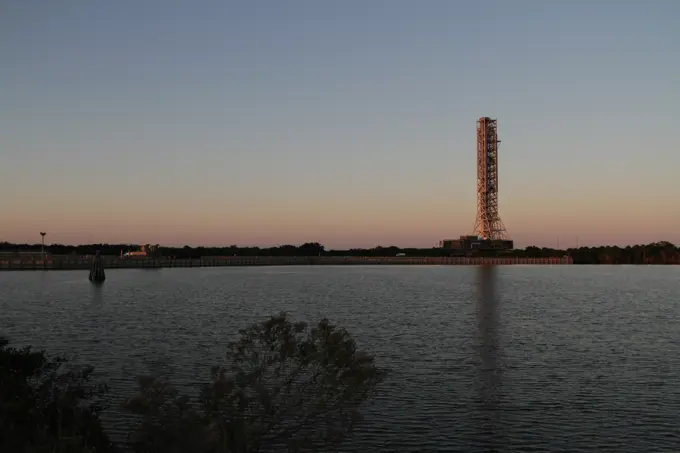
A stunning silhouette of the Ares I-X rocket at NASA's Kennedy Space Center, framed by sunset hues and launch towers, evoking excitement for space exploration.

ML is rolled to Pad 39B
117 assets in this story
6145-58961795
KENNEDY SPACE CENTER, FLA. - Storm clouds roll across the sky above and beyond Space Shuttle Discovery on Launch Pad 39B. The Shuttle remains on the pad the day after the Shuttles launch on Return to Flight mission STS-114 was scrubbed. The July 13 mission was scrubbed when a low-level fuel cut-off sensor for the liquid hydrogen tank inside the External Tank failed a routine prelaunch check during the countdown July 13, causing mission managers to scrub Discovery's first launch attempt. The sensor protects the Shuttle's main engines by triggering their shutdown in the event fuel runs unexpectedly low. The sensor is one of four inside the liquid hydrogen section of the External Tank (ET).
1525-25504520
Telecommunications cell phone tower. Telecommunications cell phone tower with antennas in a mountain location.
6145-55974367
Mobile Launcher 1 (ML-1) Rolls to Launch Pad 39B for Artemis ll Testing. The mobile launcher, carried by the crawler-transporter 2, rolls out from its park site location to Launch Pad 39B at NASAs Kennedy Space Center in Florida on Aug. 16, 2023. While at the pad, it will undergo testing for the agencys Artemis II mission. Under Artemis, the mobile launcher will transport NASAs Space Launch System rocket and Orion spacecraft to pad 39B for liftoff.
6145-45029555
CAPE CANAVERAL, Fla. - The mobile launcher, or ML, makes its way past the turn basin as dusk descends on NASA's Kennedy Space Center in Florida. The ML is nearing the end of its 4.2-mile trek from Launch Pad 39B to the park site near the Vehicle Assembly Building. Data on the ML collected from structural and functional engineering tests during its two-week stay on the pad will be used in the next phases of construction. The 355-foot-tall ML structure, which took about two years to construct, will be modified by NASAs 21st Century Ground Systems Program to support NASAs Space Launch System, the heavy-lift rocket that will launch astronauts into deep space on future exploration missions.
1525-22567216
Telecommunications cell phone tower. Telecommunications cell phone tower with antennas in a mountain location.
6145-45278978
NASAs Pegasus barge, carrying the launch vehicle stage adapter (LVSA) for the agencys Space Launch System (SLS) rocket, arrives at the Kennedy Space Center Launch Complex 39 turn basin wharf on July 29, 2020. Traveling to Florida from NASAs Marshall Space Flight Center in Huntsville, Alabama, the LVSA will connect the SLS core stage to the rockets upper stage for the Artemis I launch. Once the LVSA is offloaded, it will be moved to High Bay 4 in the Vehicle Assembly Building for processing ahead of launch. The first launch under the agencys Artemis program, Artemis I will test SLS and the Orion spacecraft as an integrated system prior to crewed flights to the Moon.
6145-45079590
At NASA's Kennedy Space Center in Florida, the agency's Orion is transported to Launch Complex 37 at Cape Canaveral Air Force Station. After arrival at the launch pad, United Launch Alliance engineers and technicians will lift Orion and mount it atop its Delta IV Heavy rocket. Orion is the exploration spacecraft designed to carry astronauts to destinations not yet explored by humans, including an asteroid and Mars. It will have emergency abort capability, sustain the crew during space travel and provide safe re-entry from deep space return velocities. The first unpiloted flight test of Orion is scheduled to launch Dec. 4, 2014 atop a United Launch Alliance Delta IV Heavy rocket, and in 2018 on NASAs Space Launch System rocket.
6145-44714214
CAPE CANAVERAL, Fla. -   On Launch Pad 39B at NASA's Kennedy Space Center, lightning towers are being constructed to hold centenary wires as part of the new lightning protection system for the Constellation Program and Ares/Orion launches.  Pad B will be the site of the first Ares vehicle launch, including Ares I-X which is scheduled for April 2009.
4316-5290
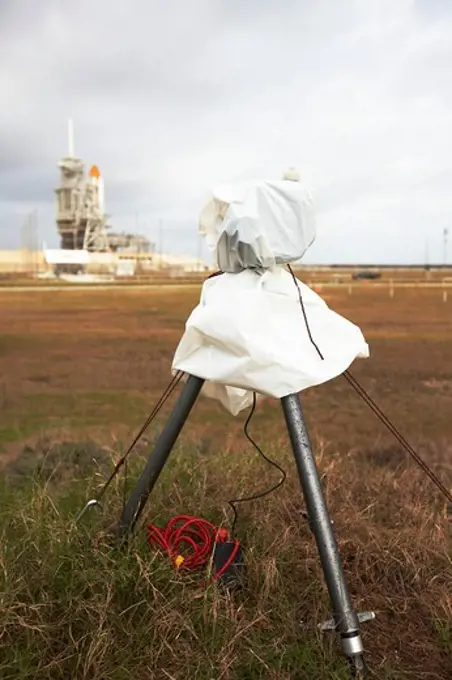
Protective enclosure housing camera for capturing still images of the launch of Space Shuttle Endeavour on STS-130, NASA Kennedy Space Center, Merritt Island, Florida, USA
6145-58963297
KENNEDY SPACE CENTER, FLA. - A Boeing Delta II expendable launch vehicle stands ready to launch NASAs Swift spacecraft following tower rollback at Complex 17A, Cape Canaveral Air Force Station. Swift is a first-of-its-kind multi-wavelength observatory dedicated to the study of gamma-ray burst science. Its three instruments will work together to observe GRBs and afterglows in the gamma ray, X-ray, ultraviolet and optical wavebands. Swift is scheduled to launch Nov. 20 at 12 10 p.m. EST.
6145-44482115
NASAs Space Launch System (SLS) rocket with the Orion spacecraft aboard is seen atop the mobile launcher at Launch Pad 39B as preparations for launch continue, Friday, Sept. 2, 2022, at NASAs Kennedy Space Center in Florida. NASAs Artemis I flight test is the first integrated test of the agencys deep space exploration systems: the Orion spacecraft, SLS rocket, and supporting ground systems. Launch of the uncrewed flight test is targeted for Sept. 3 at 2:17 p.m. EDT.
6145-55187097
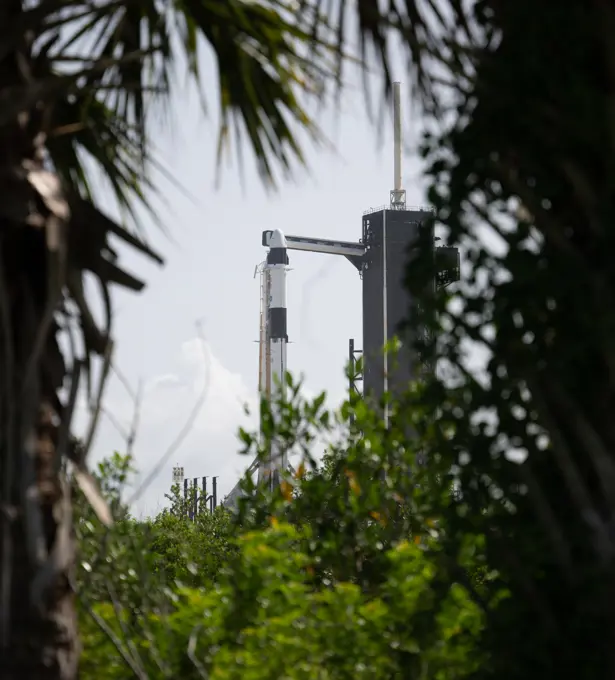
NASAs SpaceX Crew-7 Preflight. A SpaceX Falcon 9 rocket with the company's Dragon spacecraft on top is seen on the launch pad at Launch Complex 39A as preparations continue for the Crew-7 mission, Monday, Aug. 21, 2023, at NASAs Kennedy Space Center in Florida. NASAs SpaceX Crew-7 mission is the seventh crew rotation mission of the SpaceX Crew Dragon spacecraft and Falcon 9 rocket to the International Space Station as part of the agencys Commercial Crew Program. NASA astronaut Jasmin Moghbeli, ESA (European Space Agency) astronaut Andreas Mogensen, Japan Aerospace Exploration Agency (JAXA) astronaut Satoshi Furukawa, and Roscosmos cosmonaut Konstantin Borisov are scheduled to launch at 3:49 a.m. EDT on Friday, August 25, from Launch Complex 39A at the Kennedy Space Center.
6145-44678075
KENNEDY SPACE CENTER, FLA. --   The 209-foot-tall mobile service tower on Pad 39-A of Space Launch Complex 36 on Cape Canaveral Air Force Station careens to the left after 122 pounds of explosives eliminated the base.  The tower is one of two that were identified for demolition. The old towers are being toppled as part of the ongoing project to demolish the historic site to prevent corrosion from becoming a safety concern.   A majority of the steel will be recycled and the rest will be taken to the landfill at CCAFS.  Complex 36 was the birthplace of NASA's planetary launch program.  It was built for the Atlas/Centaur development program and was operated under NASA's sponsorship until the late 1980s. Complex 36 hosted many historic missions over the years including Surveyor that landed on the moon and Mariner that orbited Mars and included one to Mercury.  Two of the most historic launches were the Pioneer 10 and 11 space probes that were launched to Jupiter and are now outside of the
6145-45182811
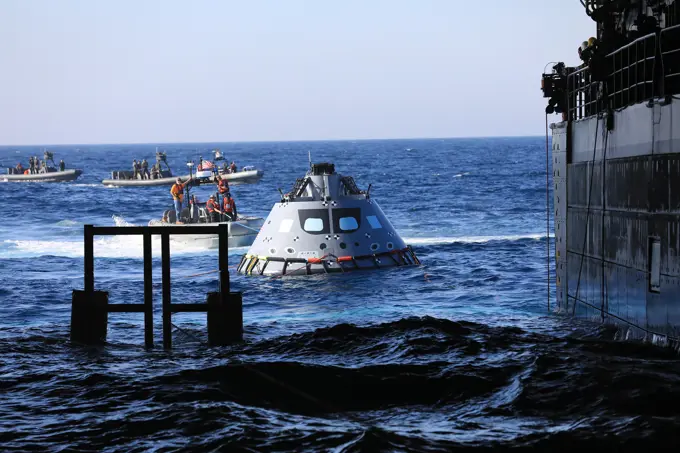
The Exploration Ground Systems Recovery Team, along with the U.S. Navy, practice recovering a test version of the Orion capsule and bringing it inside the well deck of the USS John P. Murtha during Underway Recovery Test-7 (URT-7) on Oct. 31, 2018, in the Pacific Ocean. URT-7 is one in a series of tests to verify and validate procedures and hardware that will be used to recover the Orion spacecraft after it splashes down in the Pacific Ocean following deep space exploration missions. Orion will have emergency abort capability, sustain the crew during space travel and provide safe re-entry from deep space return velocities.
6145-44893289
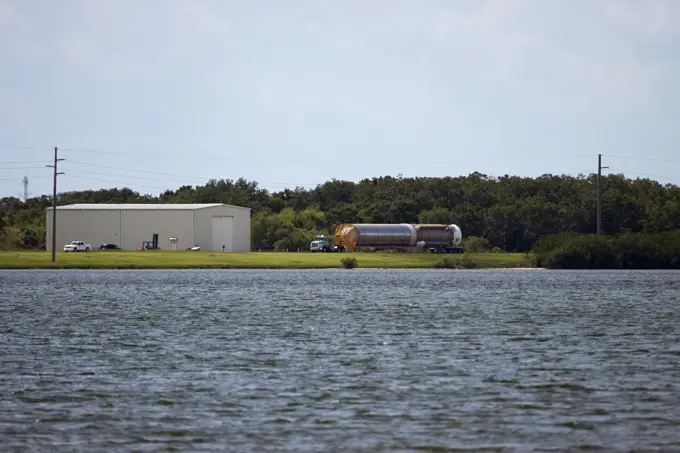
CAPE CANAVERAL, Fla. - The United Launch Alliance Atlas V first stage booster for NASA's Radiation Belt Storm Probes mission travels through Cape Canaveral Air Force Station in Florida en route to the Atlas Spaceflight Operations Center, or ASOC.The Radiation Belt Storm Probes, or RBSP, mission will help us understand the suns influence on Earth and near-Earth space by studying the Earths radiation belts on various scales of space and time.
6145-45008334
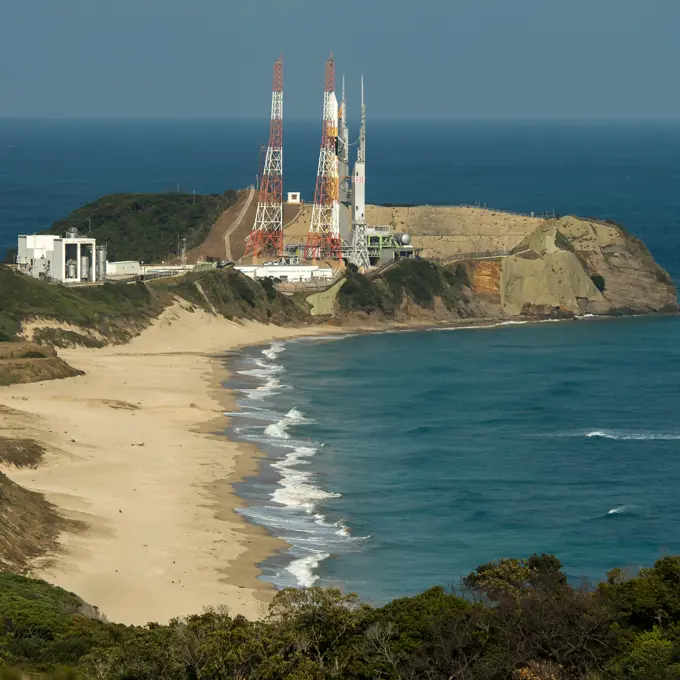
A Japanese H-IIA rocket with the NASA-Japan Aerospace Exploration Agency (JAXA), Global Precipitation Measurement (GPM) Core Observatory onboard is seen on launch pad 1 of the Tanegashima Space Center, Thursday, Feb. 27, 2014, Tanegashima, Japan. Once launched, the GPM spacecraft will collect information that unifies data from an international network of existing and future satellites to map global rainfall and snowfall every three hours.
6145-44467742
NASAs SpaceX Crew-4 flag is raised near the News Center countdown clock at NASAs Kennedy Space Center in Florida on April 19, 2022. The SpaceX Falcon 9 with Crew Dragon, named Freedom by the Crew-4 crew, atop is scheduled to lift off Saturday, April 23, 2002, at 5:26 p.m. EDT, from Launch Complex 39A at Kennedy. Dragon will carry NASA astronauts Kjell Lindgren, Bob Hines, and Jessica Watkins, and ESA (European Space Agency) astronaut Samantha Cristoforetti to the International Space Station as part of NASAs Commercial Crew Program.
PREVIOUS
of 2
NEXT
2401 S. Ervay, Suite 206
Dallas, Texas 75215
United States
Get Started
Free ResearchMy BoardsMy Cart
For Creators
How To License Your ContentContributor PortalFrame of Mind
Resources
API accessPricing
Contact
+1 866 236 0087help@viewpictures.co.uk Contact form
©2026 View Pictures. All Rights Reserved. -A
This site is protected by reCAPTCHA and Google Privacy Policy and Terms of Service apply.