Roman Mosaics and Frescoes

A collection of intricate Roman mosaics and frescoes depicting mythological scenes, figures, and historical narratives from various archaeological sites.
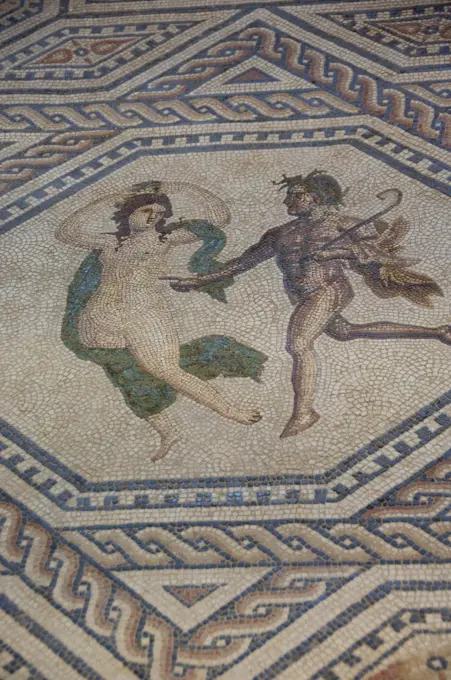
Germany, Cologne. Roman Germanic Museum. Dionysos Mosaic, 2nd century masterpiece Roman mosaic floor.
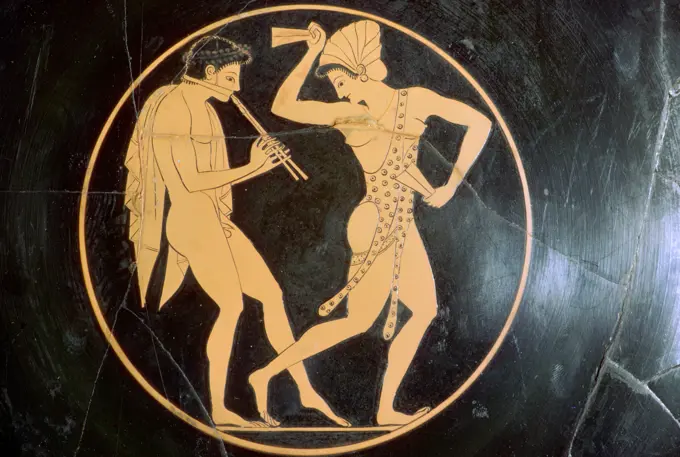
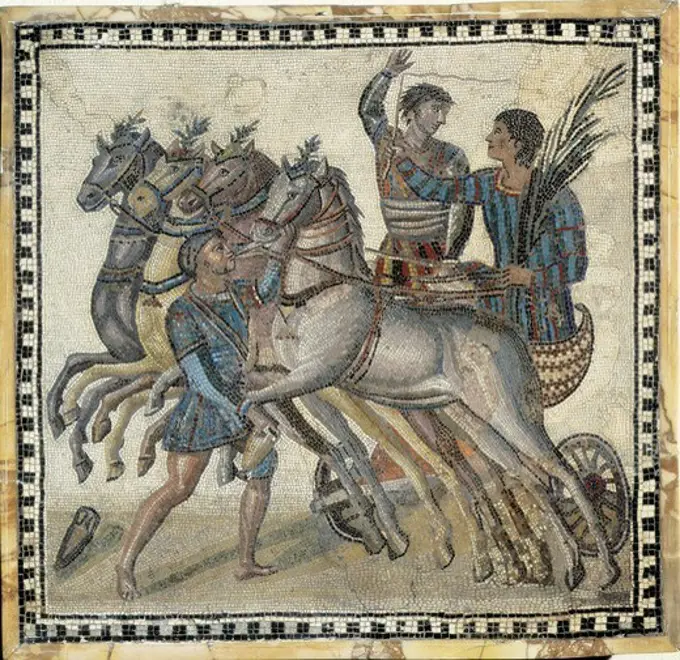
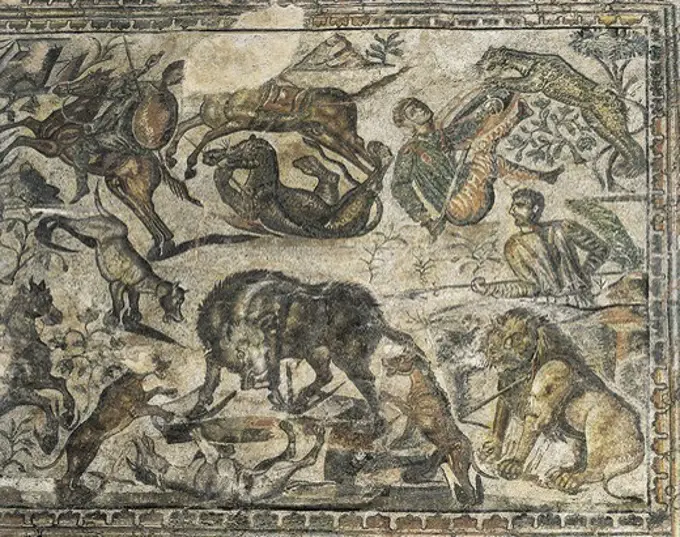
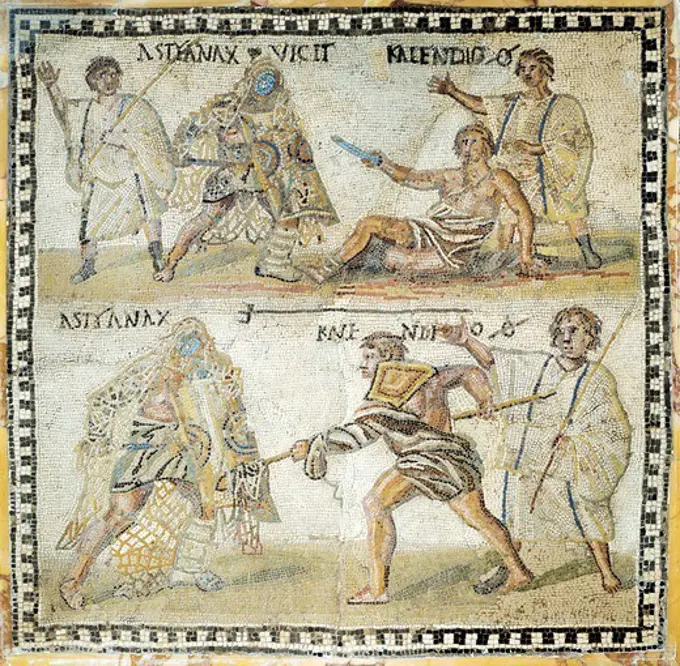
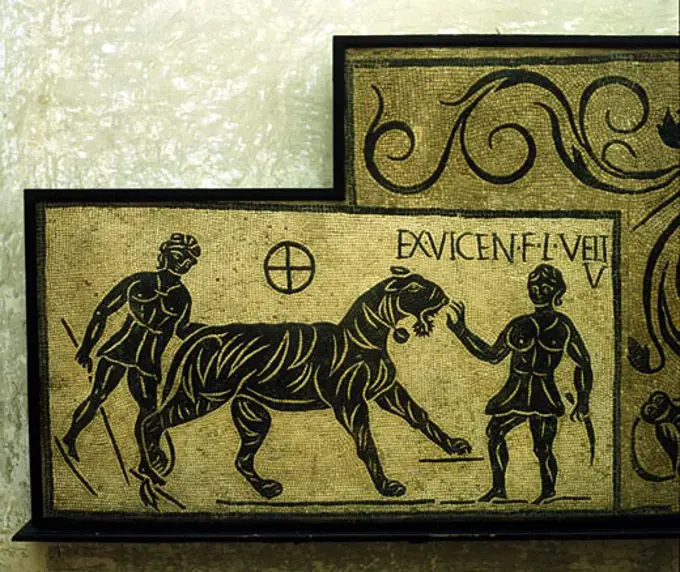
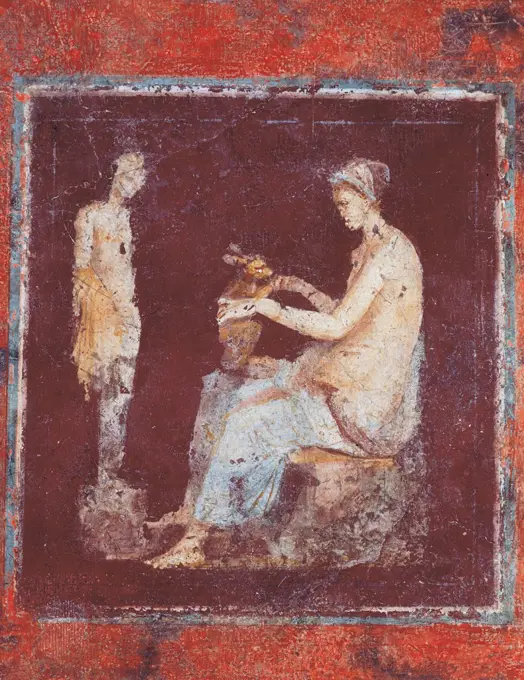
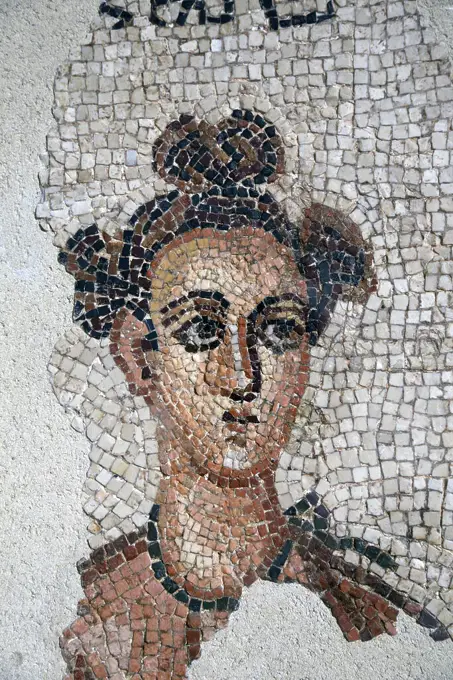
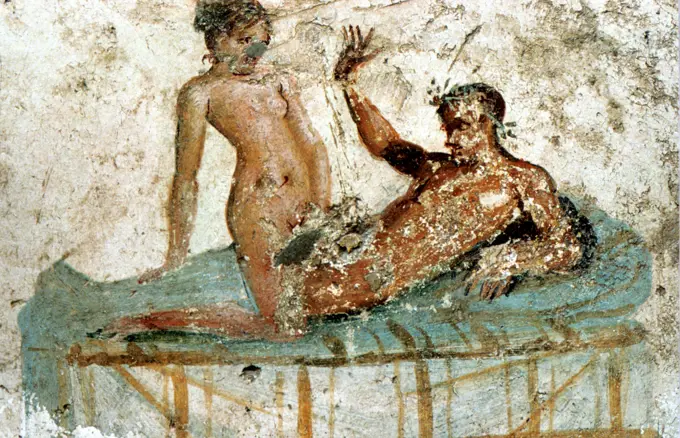
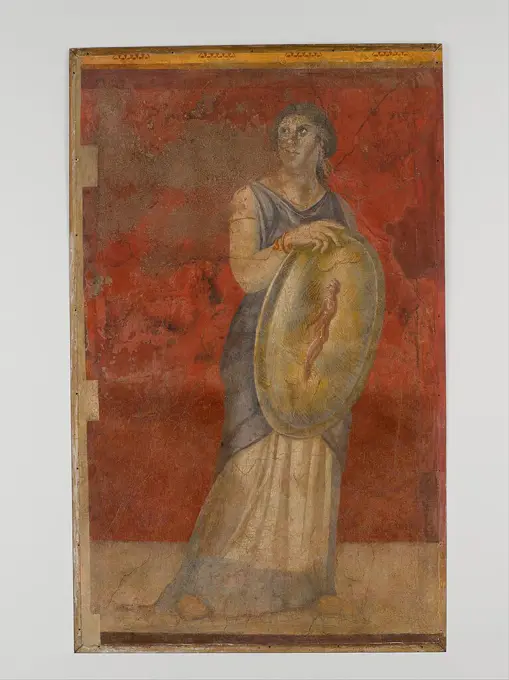
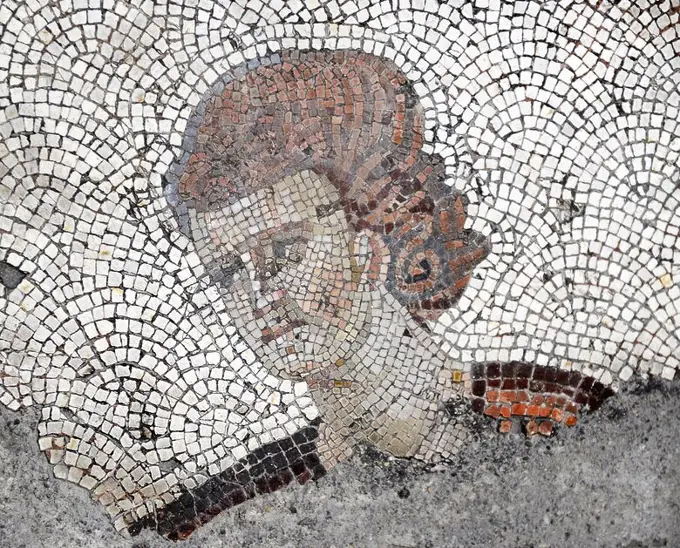
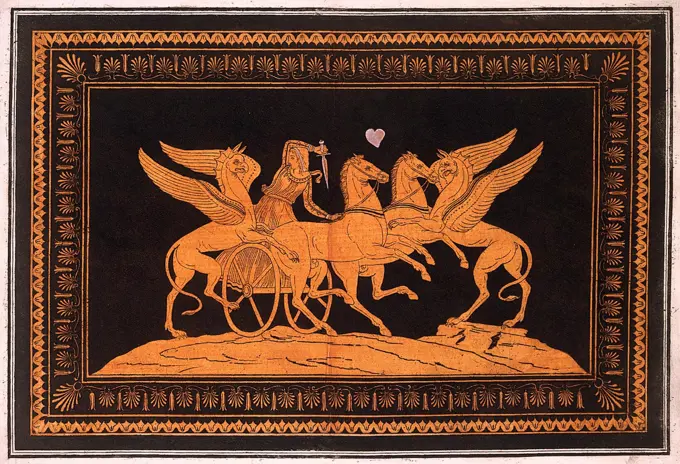
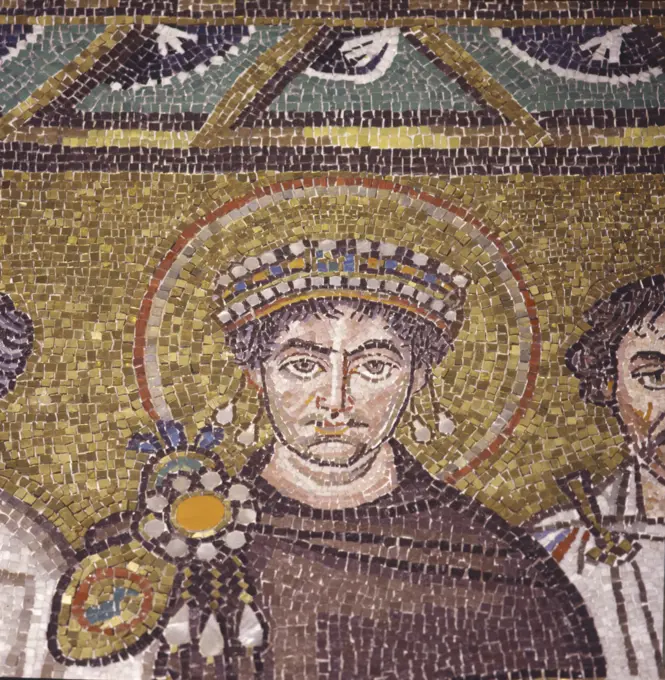
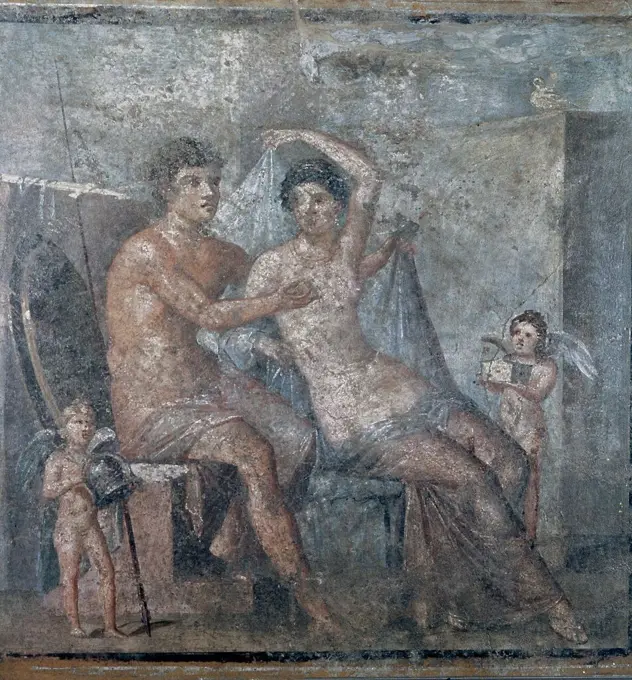
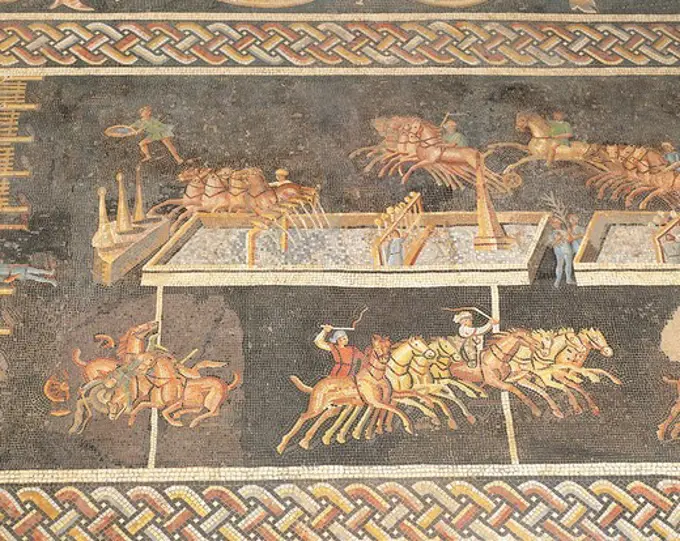
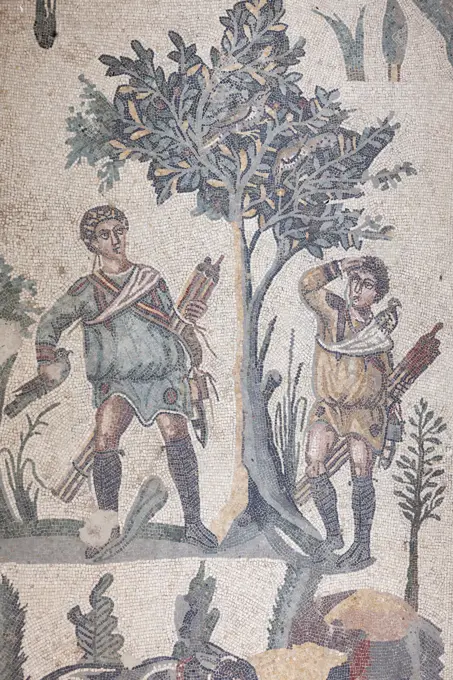
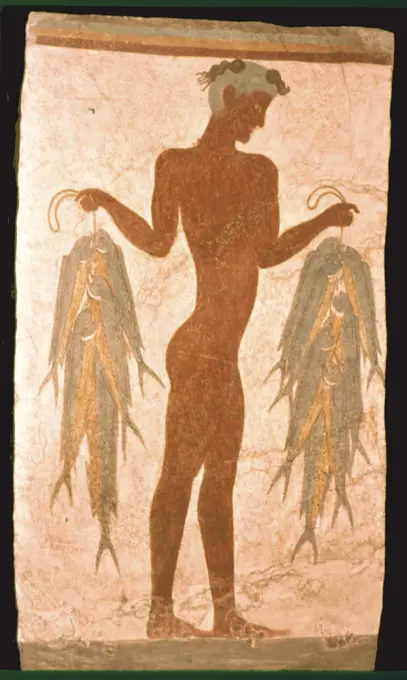
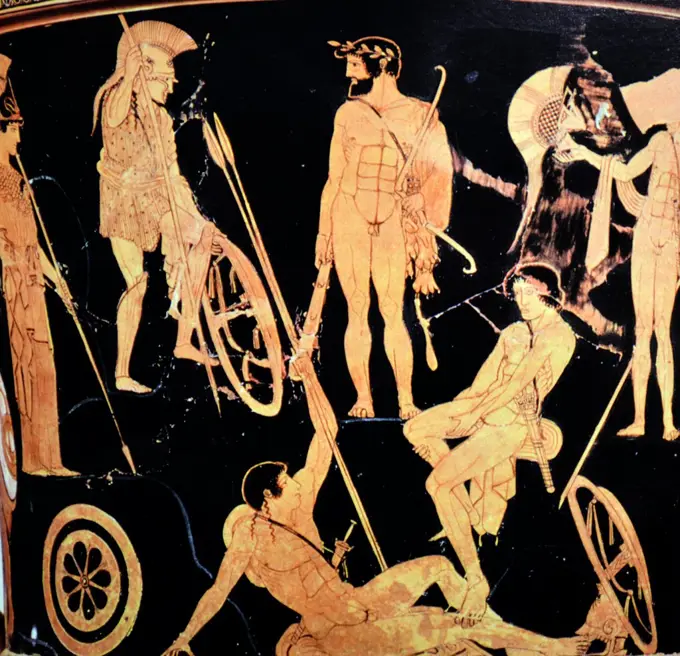
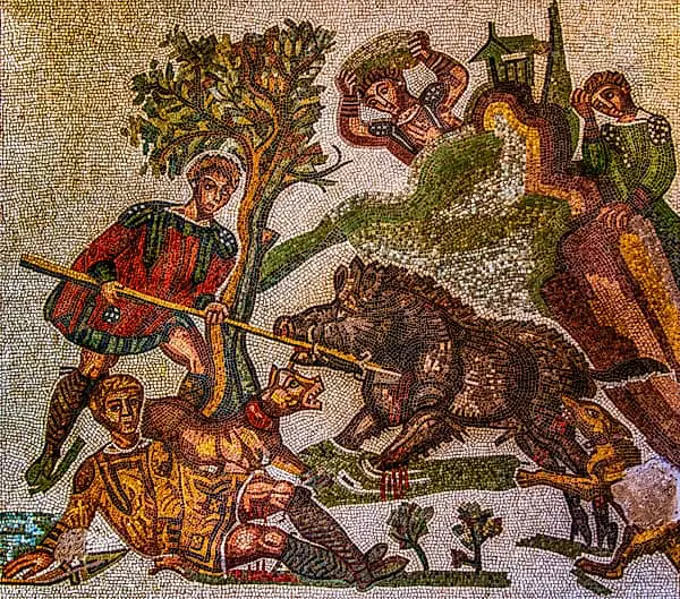
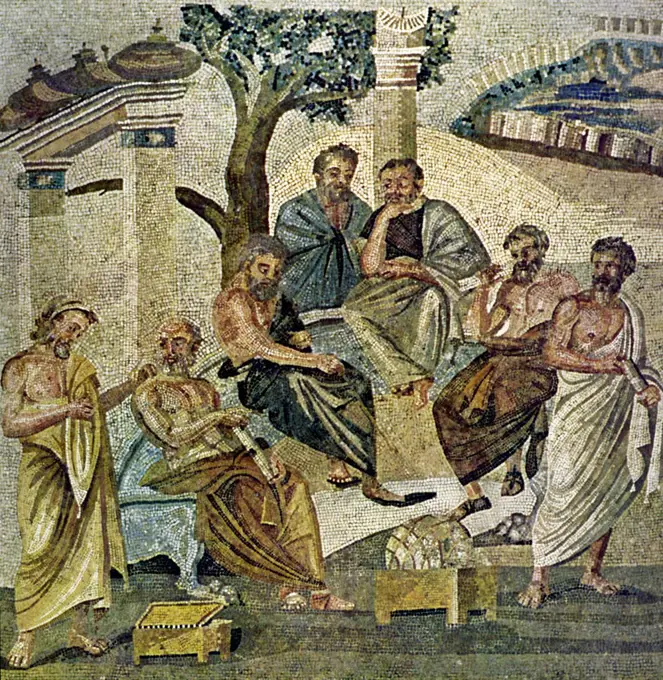
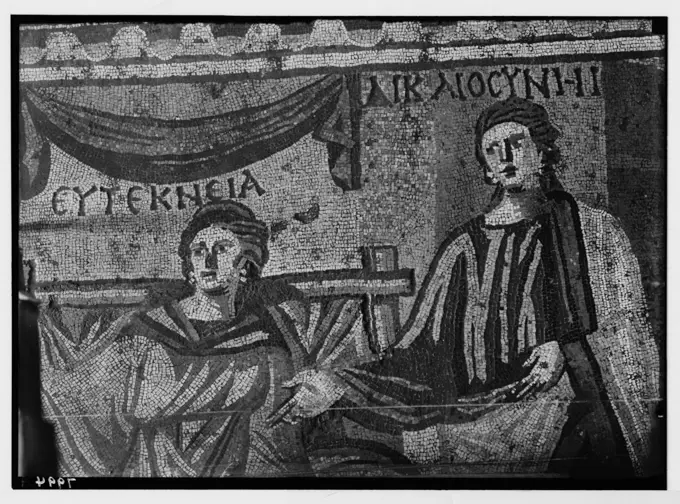
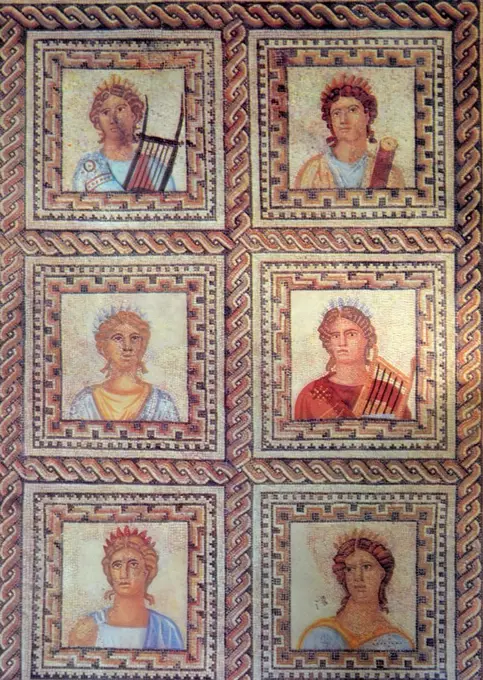
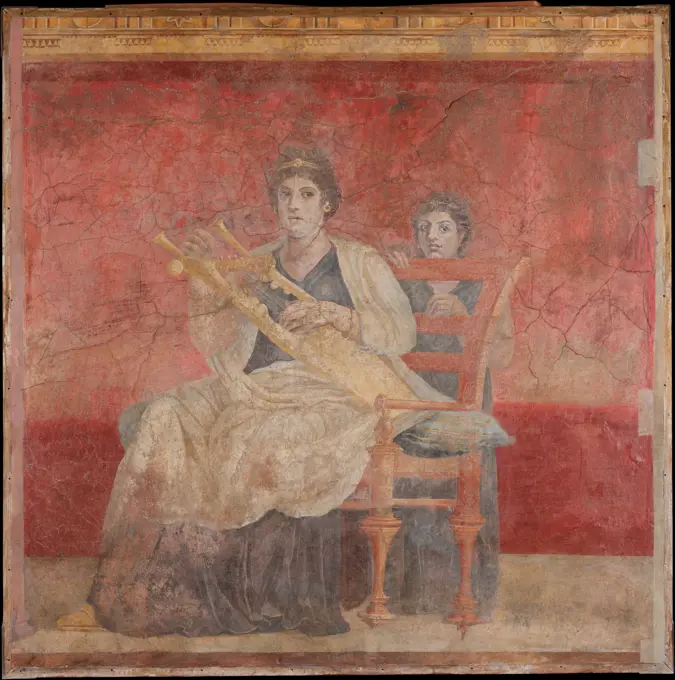
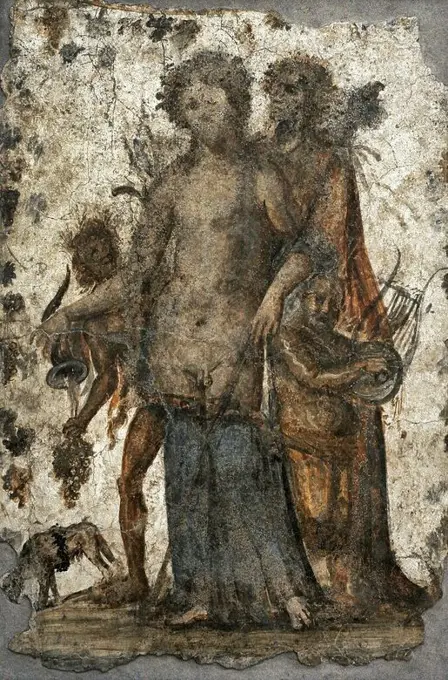
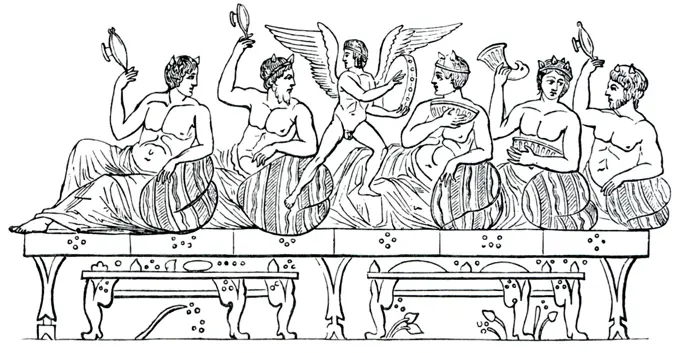
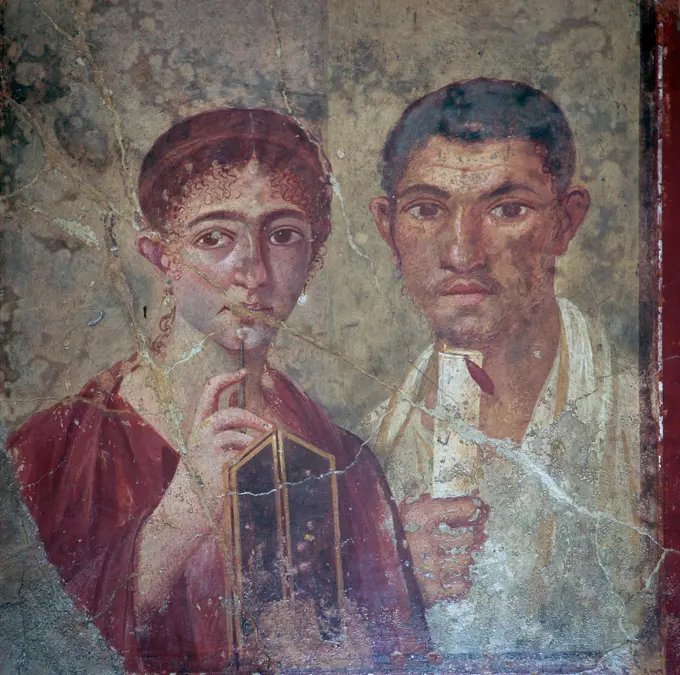
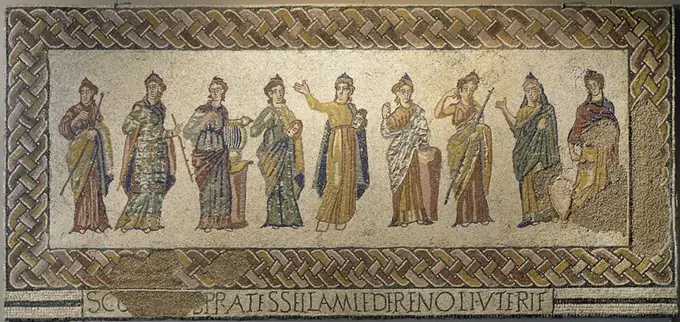
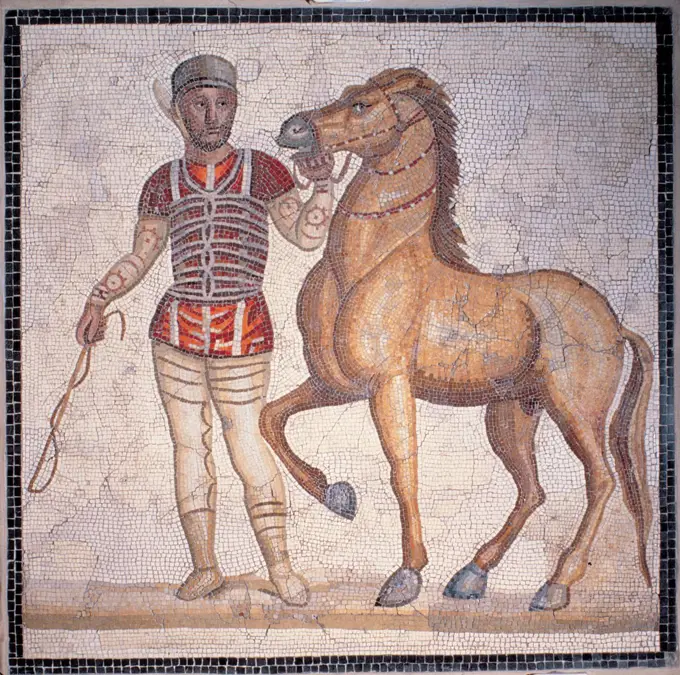
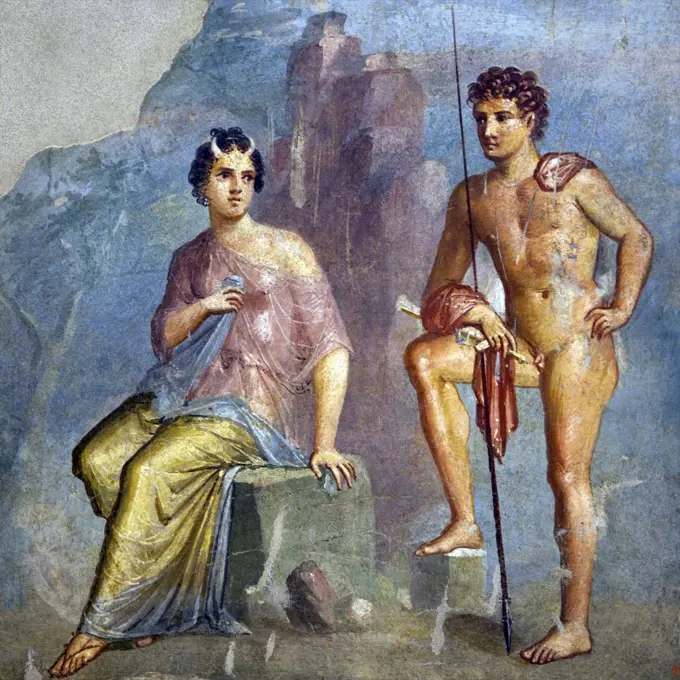
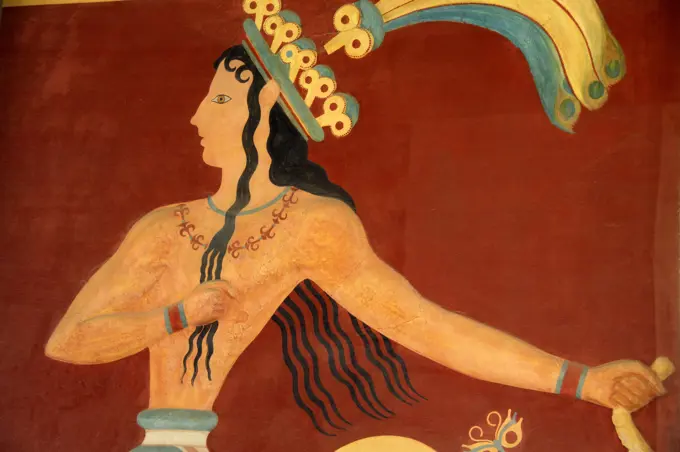
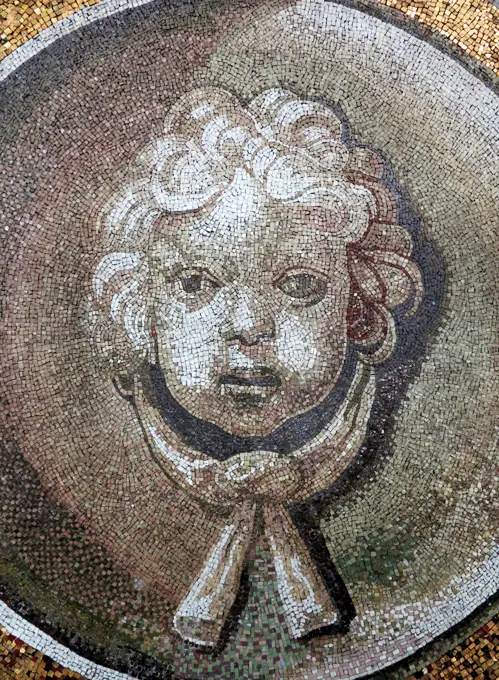
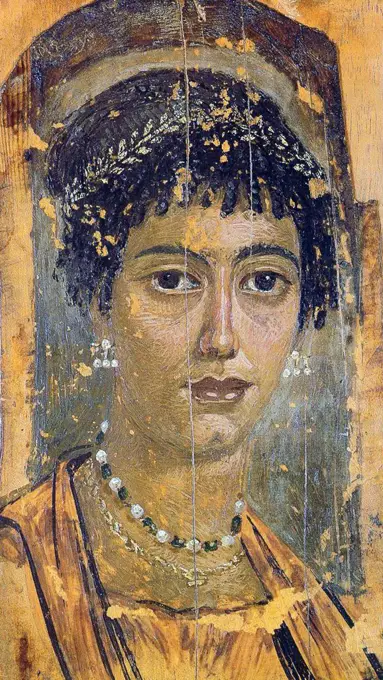
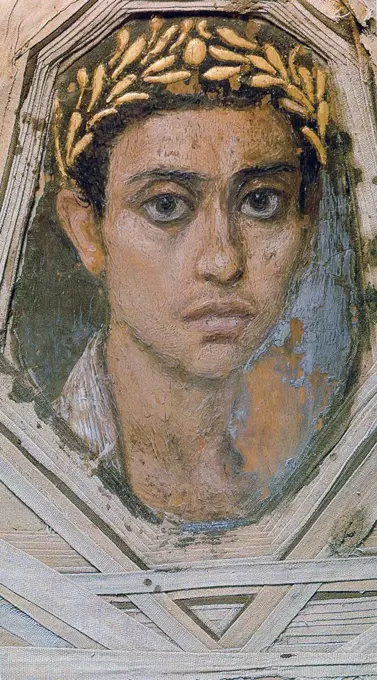
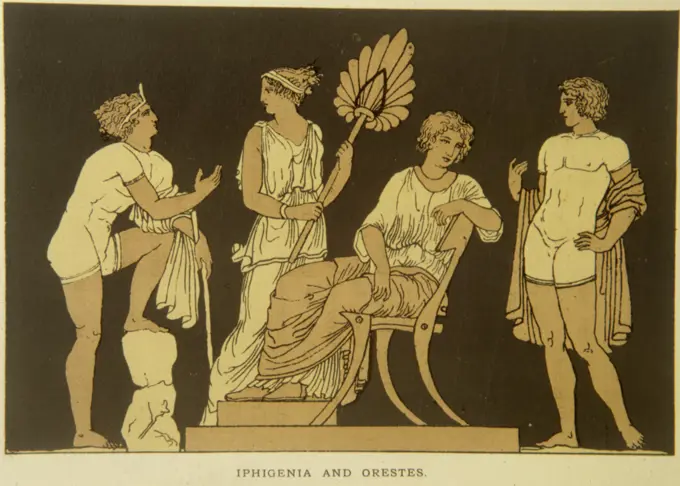
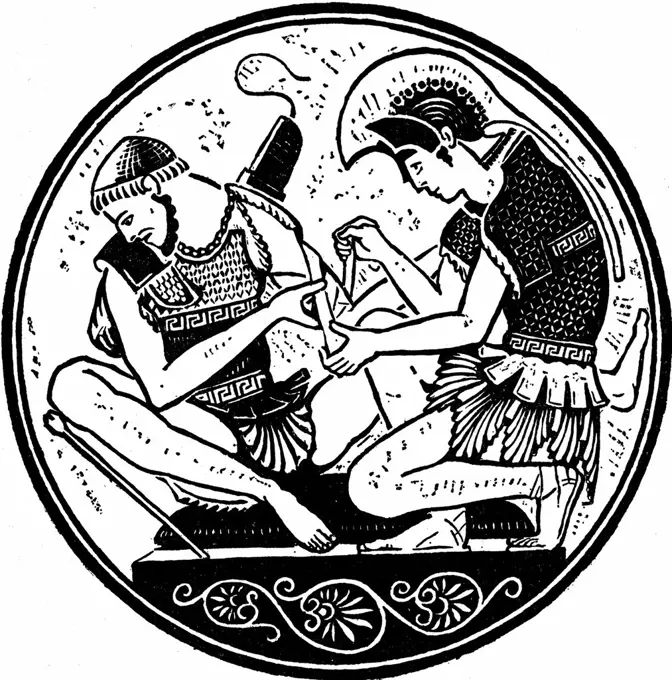
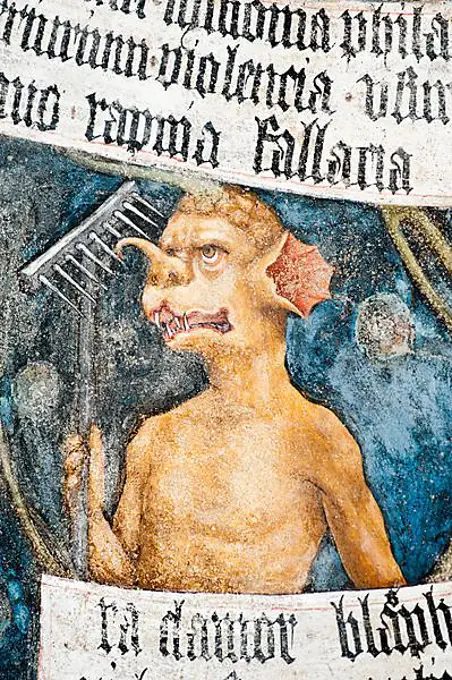
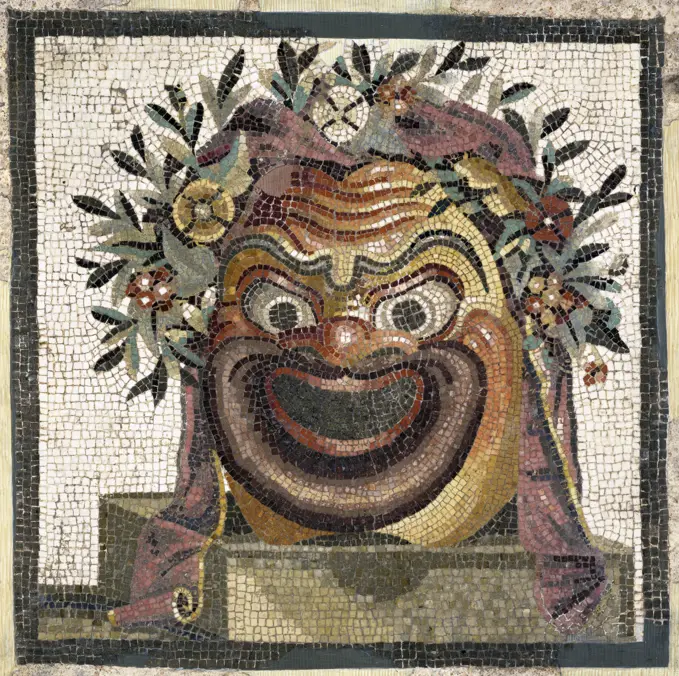
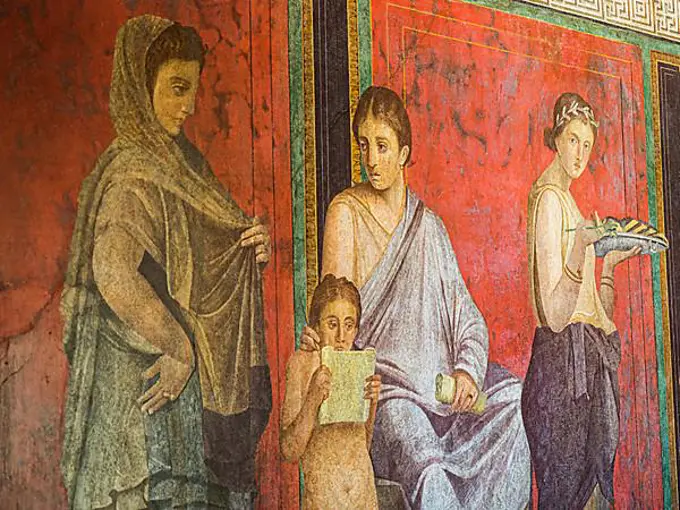
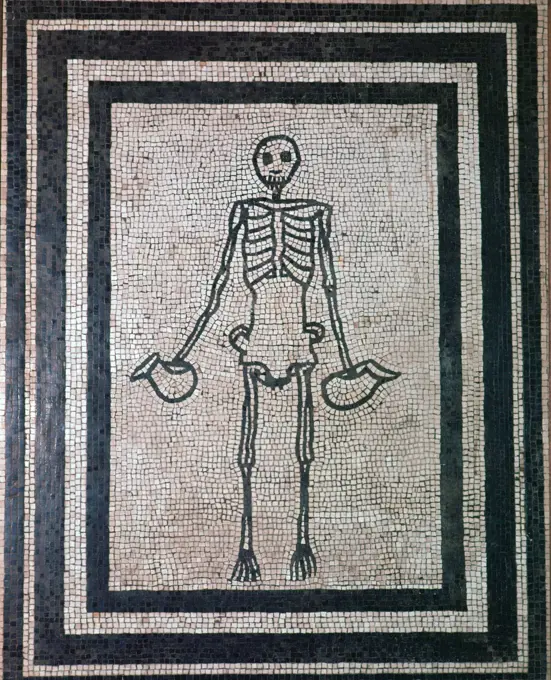
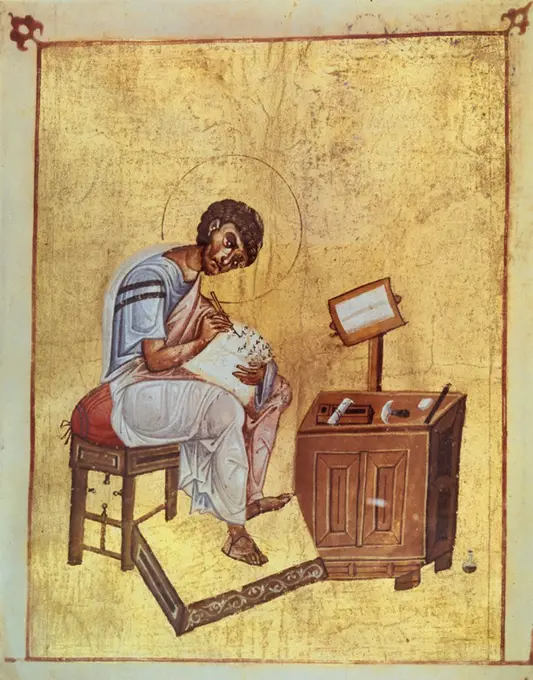
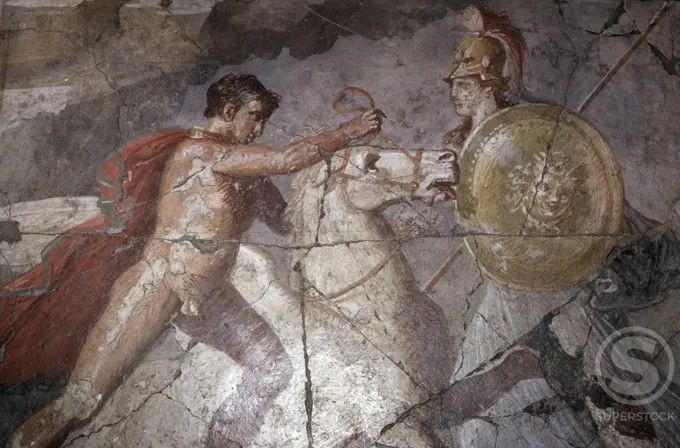
Perseus and the Gladiator63-79 A.D.FrescoPompeii, ItalyGallant conversation. 5th c. BC. Red-figure ceramic. Classical Greek art. Ceramics. ITALY. LAZIO. Rome. Capitoline Museums.Vase-painting of a youth playing the flute and a woman dancing, 6th century BC. Artist: EpikektosChariot race (3rd c.). Roman art. Early Empire. Mosaic. SPAIN. MADRID (AUTONOMOUS COMMUNITY). Madrid. National Museum of Archaeology. Proc: ITALY. LAZIO. ROME. Rome.SPAIN. Pedrosa de la Vega. Roman Villa La Olmeda. Mosaic. The Hunt. Roman Art. 4th c. A.D. Roman art. Late Empire. Mosaic.Mosaic depicting scenes from the amphitheater from Rome, Lazio. Roman Civilization, 4th Century.Mosaic with Tiger and Gladiators. 2nd centuryAD. National Museum, Rome. Photo: A LorenziniSmall picture depicting female figure playing with a leveret in front of an herm of Pan, by Unknown artist, 25,1st Century, mural. Italy: Lazio: Rome: Palazzo Massimo alle Terme: Cubicolo D parete destra dell'anticamera. Whole artwork. Red panel/square woman hare statue Pan hermFuneray mosaics from Edessa Region (Urfa, Turkey). Family portraits adorned the interior tombs. Roman Times. Woman's head. 2nd-3rd AD. century Louvre Museum. Paris. France.House of the Centenary, was the house of a wealthy resident of Pompeii, preserved by the eruption of Mount Vesuvius in 79 AD. The house was discovered in 1879. Built in the mid-2nd century BC, it is among the largest houses in the city. Among the varied paintings preserved in the House are explicit erotic scenes in a room that may have been designed as a private 'sex club'.Wall painting from Room H of the Villa of P. Fannius Synistor at Boscoreale. Culture: Roman. Dimensions: Overall: 70 x 40 1/4in. (177.8 x 102.2cm). Date: ca. 50-40 B.C..Standing woman holding a shield: from the grand triclinium. She is probably a seer predicting the birth of a male heir and future king. The image of a nude man wearing the white band that served as crown for Hellenistic rulers appears as a reflection in her shield. Museum: Metropolitan Museum of Art, New York, USA.Skeleton pleading, detail from the marble floor, Cornaro Chapel, Church of Santa Maria della Vittoria, Rome. Italy, 17th century.Roman mosaic showing Daniel, one of four great Hebrew prophets,  cast into the Lions' den by Nebuchadnezzar (Nebuchadrezzar) king of Babylon. Bible Daniel 6:20.  Daniel's survival demonstrated power of his true God Jehovah and insignificance of the Assyrio-Babylonian god Bel (Baal).  5th century AD. Bardo Museum, TunisGreat Palace Mosaic Museum. Mosaics of pavement of a peristyle court (Great Palace of Constantinople). 4th-6th centuries. Byzantine period. Detail. Woman's head. South-western hall. Istanbul. Turkey.A vase-painting: two gryphons attack a charioteer who defends with a sword. Coloured engraving, 17--.Theseus and the Minotaur. Red Figure Classical Greel vase GREECE.Justinian. Mosaic from Ravenna, San Vitale. 6th cent. AD. ITALY.DET DE MOSAICO. Location: MUSEO ERMITAGE-COLECCION. ST. PETERSBURG. RUSSIA.PINTURA PARIETAL POMPEYANA - MARTE Y VENUS - SIGLO I. Location: NATIONAL MUSEUM OF ARCHAEOLOGY. NEAPEL. ITALIA. MARS. VENUS DIOSA ROMANA.Wall tile 17th century probably Spanish, Seville In the early sixteenth century, the Italian artist Niculoso Pisano introduced in Seville the flat, pictorial style that enabled tile makers employing enamel colors to produce more painterly images, such as the decoration on this wall tile. Strapwork cartouches in the Flemish manner surround the head, which probably represents a Roman emperor.. Wall tile 187900 probably Spanish, Seville, Wall tile, 17th century, Tin-glazed earthenware, 5 1/2  5 3/16 in. (14  13.2 cm). The Metropolitan Museum of Art, New York. Gift of Henry G. Marquand, 1894 (94.4.413a)Mars and Venus, by Unknown artist, 1st Century b.C., 1st Century, detached painted plaster (mural). Italy: Campania: Naples: National Archaeological Museum. Detail. Crouched slave reordering a box. She wears a draped robe/cloth around her body and her hair is gathered into a chignonFrance, Lyon, Mosaic work depicting the games of the circus, Quadriga raceHunting scene mosaic, The Roman Villa del Casale (Villa Romana del Casale), UNESCO World Heritage Site, Piazza Armerina, Enna, Sicily, ItalyWall freize from Pompeii, Naples, Italy. Pompeii was an ancient city located in what is now the comune of Pompei near Naples in the Campania region of Italy. Pompeii, along with Herculaneum and many villas in the surrounding area (e.g. at Boscoreale, Stabiae), was buried under 4 to 6 m (13 to 20 ft) of volcanic ash and pumice in the eruption of Mount Vesuvius in AD 79Mosaic Museum, Bueyueksaray Mozaikleri Muzesi, Great Palace Mosaic Museum, Altstadt Sultanahmet, Istanbul, European side, Istanbul Province, Turkey, European side, EuropeThera, The Fisherman. 16th cent. BC. from West House. Minoan fresco. Bronze Age. Crete. GREECE.Mummy portrait of an Egyptian woman, c1st-3rd century. Artist: UnknownGreek attic krater depicting Heracles and Argonauts from Orvieto, Italy, 475 B.C.Italy - Emilia Romagna Region - Ravenna - St. Apollinaris New - King Magi - MelchiorEtrsucan Banquet. from wall painting in Corneto (ancient Tarquinii) - fifth century BC. Two couches, a man and woman on each, and a table with two cups and three dishes on each. Beside the couch to the right a boy holds a wine-jug and a curiouslyshaped ladle for filling it from the mixing bowl. Between the two couches stands a woman holding a jar of perfume, and at the foot of the couch to the left isds a young man playing a double-flute. Underneath the couches is a cat stalking a cock and a quyail, all three presumably being domestic pets. On the wall hang five wreaths. Only in one point doesAncient Greece: game of Mora          Date: 1849Four Greek women stand in the floor of the bath half up to their knees in water, and take a cold shower from the spouts above.Small hunting trip, mosaic copy, Piazza Armerina, 4th century, mosaic school producing mosaic masters, Spilimbergo, city of mosaic art, Friuli, Italy, Spilimbergo, Friuli, Italy, EuropeRoman mosaic showing Plato seated (2nd from left) amongst students and other philosophers.Jebel el-Druze & Hauran. Shahbah (ancient Philippopolis founded by Philip the Arab, 232 A.D.). Mosaics in the emperors feasting hall. Represent Philosophy & Justice beside Fecundity (marriage)Mosaic of the Greek goddess of the arts, history, music and poetry. Dated 1st Century B.C.Mosaic depicting theatrical masks and lyreTile with blue part of Roman: skirt, legs, hand, tile picture footage fragment ceramics pottery glaze, RomanWall painting from Room H of the Villa of P. Fannius Synistor at Boscoreale ca. 50-40 B.C. Roman This painting of a seated woman playing a kithara is from Room H, either a dining room (triclinium) or a room for social gatherings (oecus), in the villa at Boscoreale. Each of the paintings that originally adorned this room derives from the Greek tradition of megalographia, or large-scale painting, about which so much was written in antiquity; Apollinaris of Sidonius, Petronius in the Satyricon, and Vitruvius all shed light on the use of megalographia in Roman villas.In this fresco, the kithara player is depicted as a plump young woman clothed in a purple chiton and white himation. She is adorned with a bracelet, earrings, and headband with a central medallion, all of gold. A small figure of Atlas supports the arm of her elaborately carved chair that originally was lacquered a deep lustrous red. The instrument she plays is not a simple lyre, but a gilded kithara, a large concert instrumentFresco decoration of the Hall of Tablino, the House of Marcus Lucretius Fronto, Pompeii (UNESCO World Heritage List, 1997), Campania. Roman Civilization, 1st Century.Roman painting. Dionysus, god of wine, aided by a Maenad and young satyr. At his feet, the panther. Fresco. National Archaeological Museum. Naples. Italy.Roman revelers at drinking party have little horns, reminiscent of satyrs, mythical followers of the Dionysus, the god of wine.Roman portrait of Terentius Neo and his wife, 1st century. Artist: UnknownMOSAICO COSMOLOGICO - MOSAICO ROMANO - SIGLO II. Location: CASA DEL MITREO. MERIDA. Badajoz. SPAIN.Justinian I (483-565), Byzantine Emperor and Husband of Theodora, Detail of Byzantine Mosaic, Basilica of San Vitale, Ravenna, ItalyMonreale, Sicily. Mosaic tileworkRoman mosaic of the Muses. From left to right: Calliope, Euterpe, Erato, Thalia, Melpomene, Clio, Polyhymnia, Urania, Terpsichore. 3rd-4th century AD. From Torre de Palma. National Archaeology Museum of Lisbon. Portugal.Mosaic with Orestes and Iphigenia, Capitoline Museums, Rome, ItalyNaples Campania Italy. The National Archaeological Museum of Naples (Museo Archeologico Nazionale di Napoli) is an important Italian archaeological museum, particularly for ancient Roman remains. Its collection includes works from Greek, Roman aAuriga of the Circus, by Unknown artist, 3rd Century, mosaic. Italy: Lazio: Rome: Palazzo Massimo alle Terme. Whole artwork. Mosaic horse auriga man whipORFEO TOCANDO LA LIRA PARA LOS ANIMALES- MOSAICO FECHADO EL SIGLO III DC - MITOLOGIA GRIEGA. Location: NATIONAL MUSEUM. DAMASKUS.Argos watching over the Nymph Io, House of Meleager from Pompeii, National Archaeological Museum, Naples, Campania, Italy, EuropeEurope, Greece, Crete (aka Kriti), Heraklion (aka Iraklion). Archaeological site of Knossos, c.1900 B.C., colorful wall art.Italy. Rome. The Vatican. St. Peter's Basilica. Mosaic at the base of the dome.Triumph of Neptune and Amphitrite, Detail of fishing cupids on sailing boat, from Constantine, MosaicKYLIX: CON JOVEN EN LA PALESTRA. GRIEGO CERAMICA. (DEPOSITO: MUSEO ARQUEOLOGICO NACIONAL).Mummy portraits or Fayum mummy portraits (also Faiyum mummy portraits) is the modern term given to a type of naturalistic painted portraits on wooden boards attached to mummies from the Coptic period. They belong to the tradition of panel painting, one of the most highly regarded forms of art in the Classical world. In fact, the Fayum portraits are the only large body of art from that tradition to have survived. Mummy portraits have been found across Egypt, but are most common in the Faiyum Basin, particularly from Hawara and Antinoopolis, hence the common name. 'Faiyum Portraits' is generally thought of as a stylistic, rather than a geographic, description. While painted Cartonnage mummy cases date back to pharaonic times, the Faiyum mummy portraits were an innovation dating to the Coptic period at the time of the Roman occupation of Egypt. They date to the Roman period, from the late 1st century BCE or the early 1st century CE onwards. It is not clear when their production ended, butItaly S-Tyrol Naturns St Prokulus Person left above the SCHAUKLER, St, Sankt, SaintMummy portraits or Fayum mummy portraits (also Faiyum mummy portraits) is the modern term given to a type of naturalistic painted portraits on wooden boards attached to mummies from the Coptic period. They belong to the tradition of panel painting, one of the most highly regarded forms of art in the Classical world. In fact, the Fayum portraits are the only large body of art from that tradition to have survived. Mummy portraits have been found across Egypt, but are most common in the Faiyum Basin, particularly from Hawara and Antinoopolis, hence the common name. 'Faiyum Portraits' is generally thought of as a stylistic, rather than a geographic, description. While painted Cartonnage mummy cases date back to pharaonic times, the Faiyum mummy portraits were an innovation dating to the Coptic period at the time of the Roman occupation of Egypt. They date to the Roman period, from the late 1st century BCE or the early 1st century CE onwards. It is not clear when their production ended, butRoman art. Fresco with the representation of a stay-dining room (triclinio) with Pompeian pygmies (dwarves) eating and performing sexual scenes. House of the Physician (VIII, 5,24). Pompeii. Peristyle. 50-79 d.C. National Archaeological Museum. Naples. Italy.Orestes comes to find his sister Iphegenia among the Taurians. 19 th cent. engraving in style of Classical vase painting. Greece.Achilles, hero of Homer's 'Iliad' bandaging the wound of his friend Patroclus. Drawing based on an antique vase. Trojan Wars 13th-12th century BCGothic fresco, demon, personification of sin, 8. Cloister, Cathedral, Brixen, South Tyrol, Italy, EuropeSwallow and Sparrow, Roman wall painting from Boscoreale near Pompeii, 1st century Artist: Unknown. Greek gymnastic activities.         Date: ancientJordan, Mount Nebo, Khirbet al-Mukhayyat. A panel of a bull (Bos indicus) from a beautiful 6th century mosaic in the church of Saints Lot and Procopius.Comic Mosaic Mask 1st C. A.D. Roman Art The Cummer Museum of Art and Gardens Roman mosaic. Fish and ducks. From Pompeii, Casa del Granduca di Toscana (IX, 2, 27). 1st century BC. National Archaeological Museum, Naples. Italy.Mural, fresco, Villa dei Misteri (Mystery Villa), excavation of the Roman city of Pompeii, Naples, Campania, Italy, EuropeJOROBADO DESNUDO - MOSAICO ROMANO - S II. Location: ARCHAEOLOGICAL MUSEUM. ANTIOQUIA. TURQUIA.Tunisia, El Alia, Mosaic depicting Nilotic landscape with fishermen, farmers and fortified dwelling, from ancient UzalisTheodora (500-548), Byzantine Empress and Wife of Emperor Justinian I, Detail of Byzantine Mosaic, Basilica of San Vitale, Ravenna, ItalyRoman mosaic of a skeleton, 1st century. Artist: UnknownTONDO CON EL BUSTO DEL EMPERADOR JUSTINIANO - MOSAICO SIGLO VI. Location: IGLESIA DE SAN VITALE. Ravena. ITALIA.Perseus Freeing Andromeda, by Unknown, 41 - 62, 1st Century, painted stucco. Italy, Campania, Naples, National Archaeological Museum. Whole artwork. Naked man woman Perseus Andromeda.MINIATURA-EVANGELISTA S XII. Location: BIBLIOTECA MARCIANA O DE SAN MARCOS. Venedig. ITALIA.Libya, Tripoli, Tripoli Museum, Roman mosaic