My Boards
View Pictures
  • My Boards

Satellites and Space Probes

3D renderings of various satellites and space probes orbiting Earth, exhibiting advanced technology amidst the backdrop of space.

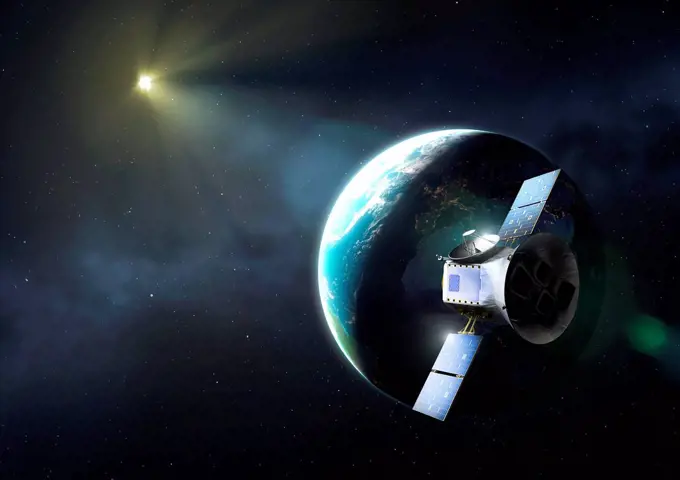
TESS Spacecraft, illustration
230 assets in this story
4239R-20480332
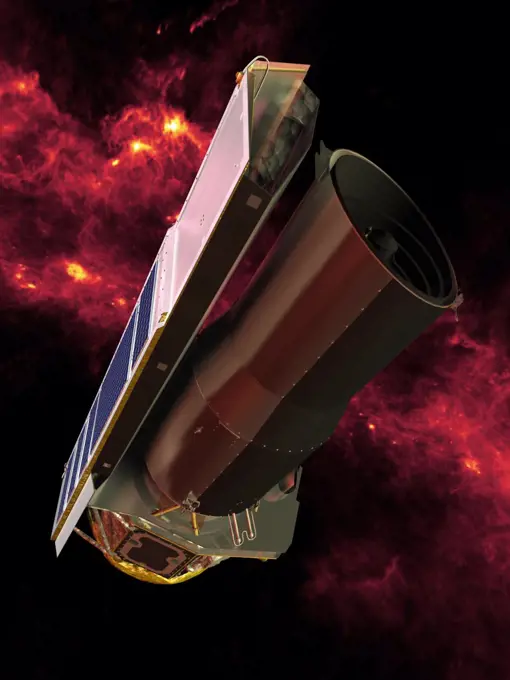
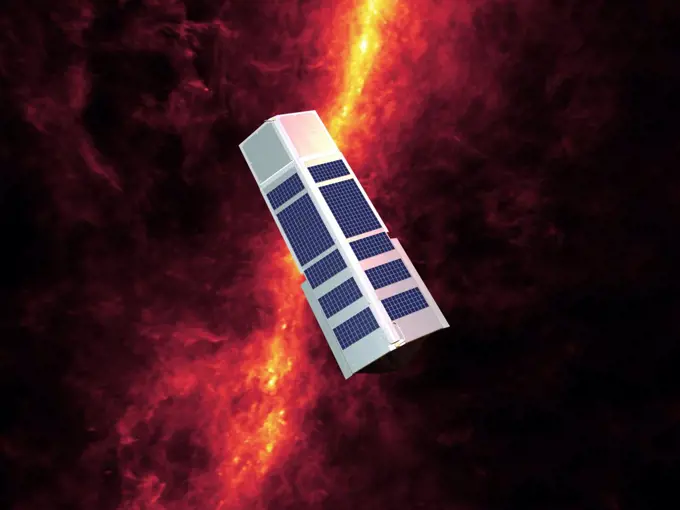
Spitzer seen against the infrared sky. The band of light is the glowing dust emission from the Milky Way galaxy seen at 100 microns (as seen by the IRAS/COBE missions).  The cloud complexes around Orion and the disk of the Milky Way are seen behind the observatory.
4239R-539
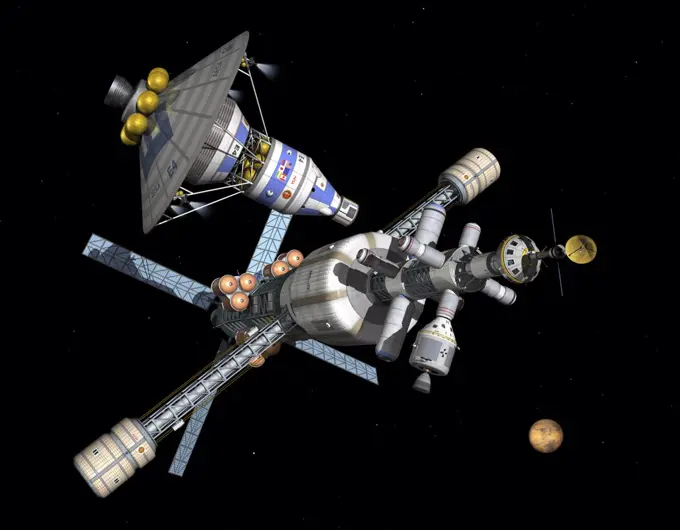
A manned Mars lander/return vehicle, upper left, disembarks from a Mars cycler for the surface of Mars
4389-1055
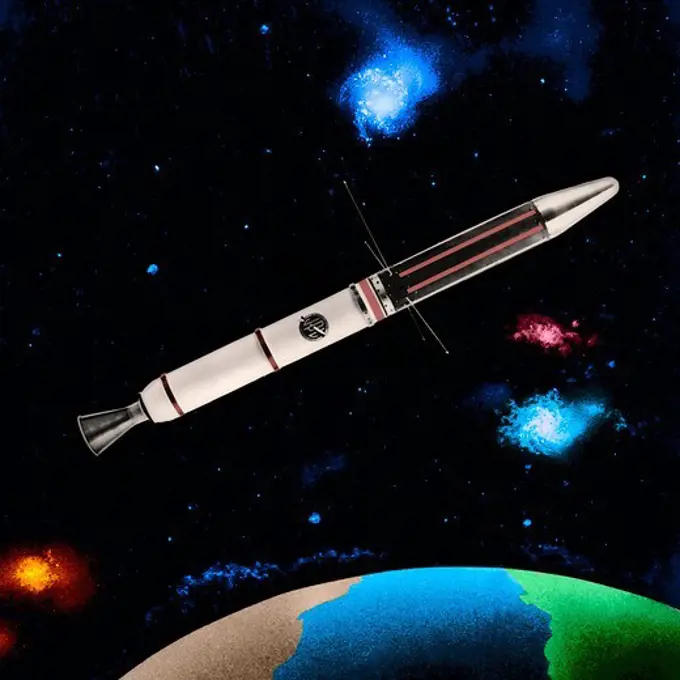
Explorer 1, America's First Satellite
6145-44521602
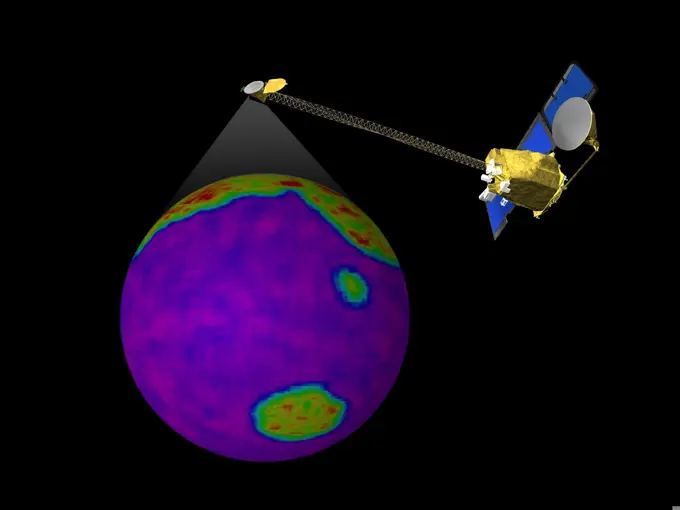
This image is a single frame from a computer animation, which begins with a global view of the planet Mars compiled with images from NASA's Mars Odyssey spacecraft.
6188-58104324
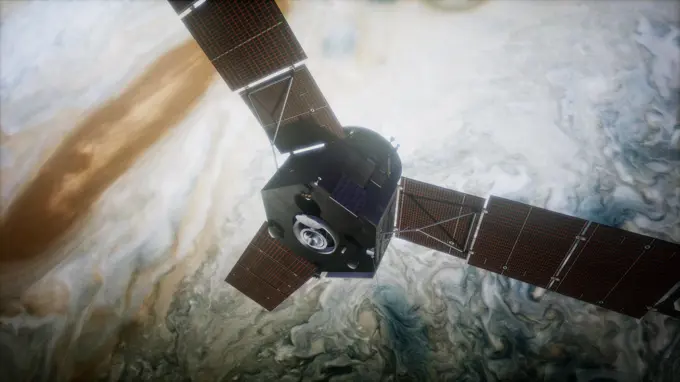
Juno sattelite orbiting Jupiter Juno sattelite orbiting Jupiter Copyright: xZoonar.com/StanislavxRishnyakx 14171479
6145-45242316
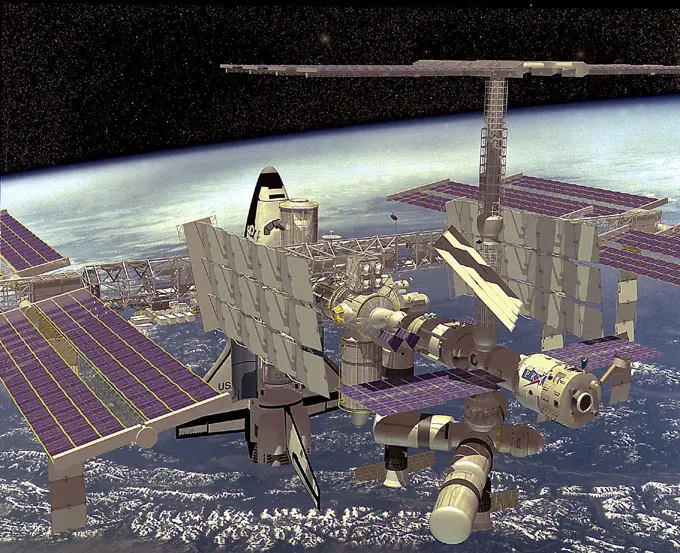
Artist's concept for Phase III of the International Space Station (ISS) as shown here in its completed and fully operational state with elements from the United States, Europe, Canada, Japan, and Russia. Sixteen countries are cooperating to provide a multidisciplinary laboratory, technology test bed, and observatory that will provide an unprecedented undertaking in scientific, technological, and international experimentation.
4128R-31400
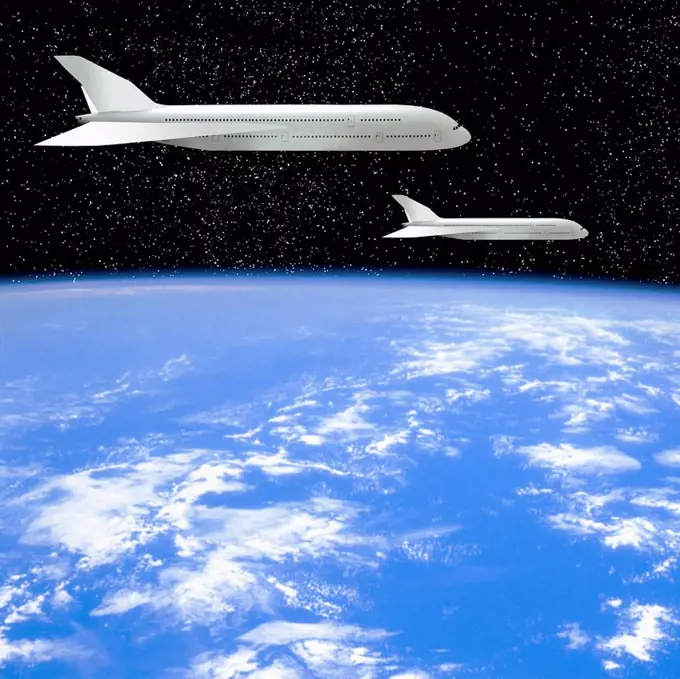
Space tourism, computer artwork.
6145-44752833
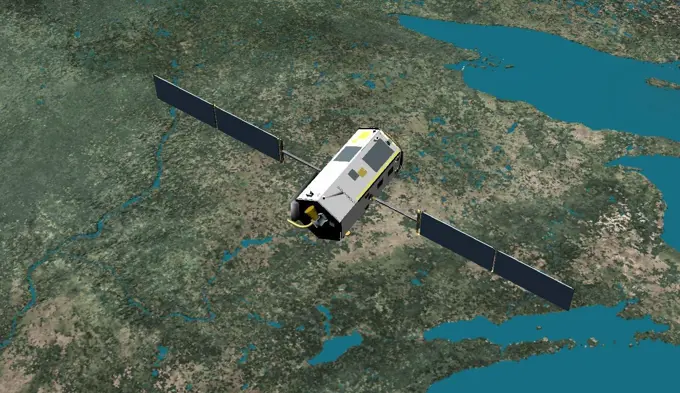
This artist's concept shows NASA's Kepler spacecraft.
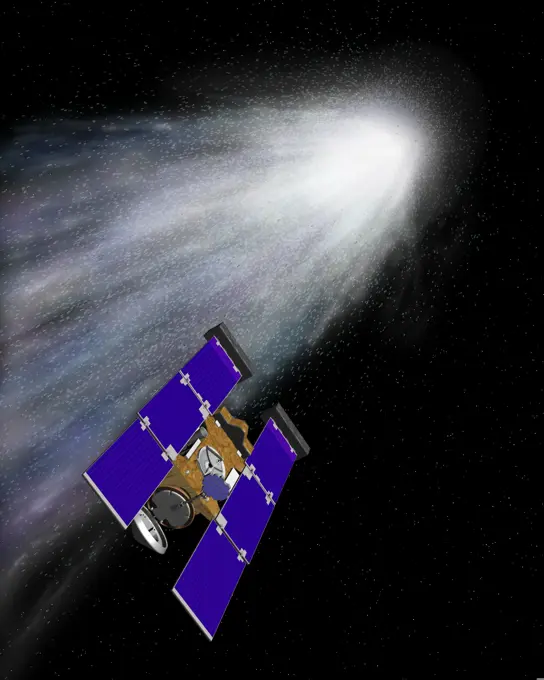
6145-44638165
Artist's rendering of NASA's Stardust spacecraft. The spacecraft was launched on February 7, 1999, from Cape Canaveral Air Station, Florida, aboard a Delta II rocket.
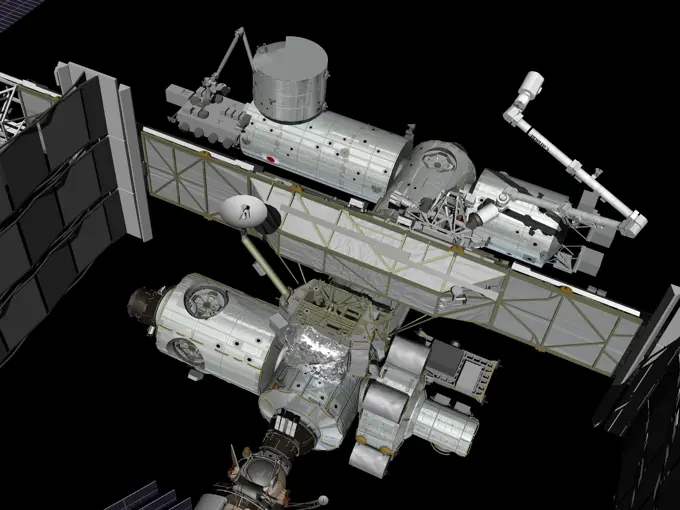
6145-44806880
JSC2010-E-036838 (February 2010) --- A computer-generated artists rendering of the International Space Station as of February 2010 features a close-up top view of the ISS after the STS-130/20A installation of the Tranquility module, with its Cupola, to the Unity nodes port side.
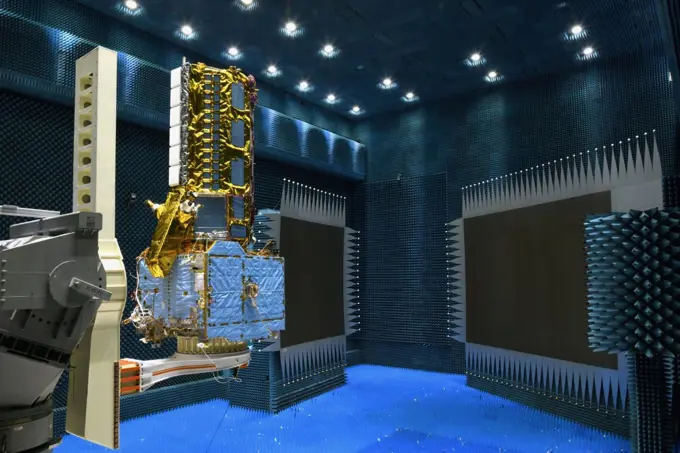
6145-58971803
The NISAR satellite, partially covered in gold-hued thermal blanketing, is seen at the Indian Space Research Organisation's compact antenna test facility in Bengaluru, India, in September 2023. Short for NASA-ISRO Synthetic Aperture Radar, NISAR completed 20 days of testing in the chamber, where engineers found that the radio signals from the two radar systems' antennas passed requirements. The blue foam spikes lining the walls, floor, and ceiling prevent radio waves from bouncing around the room and interfering with measurement. The test was followed by a 21-day trial in a thermal vacuum chamber that showed the spacecraft can function in the extreme temperatures and the vacuum of space. After further tests, the satellite will be transported about 220 miles (350 kilometers) eastward to Satish Dhawan Space Centre, where it will be inserted into its launch faring, mounted atop ISRO's Geosynchronous Satellite Launch Vehicle Mark II rocket, and sent into low-Earth orbit. NISAR is the first
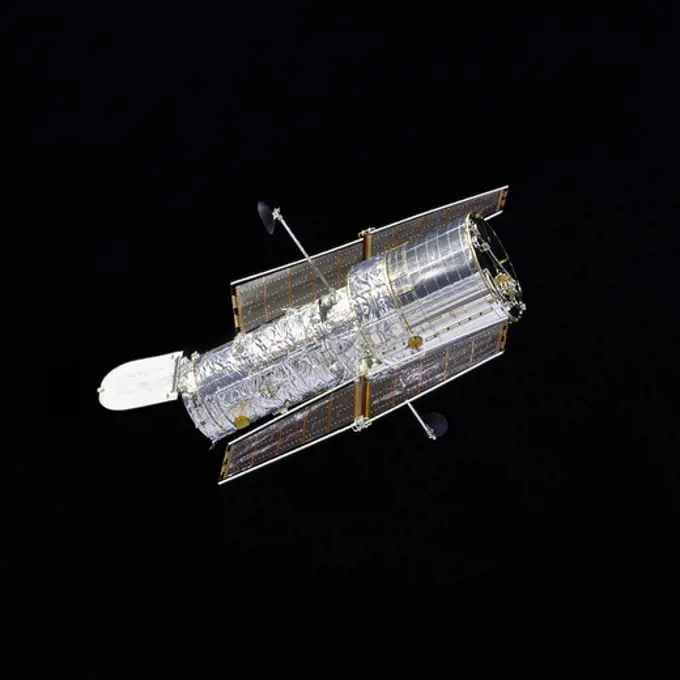
6145-44828820
STS061-73-040 (4 Dec 1993) --- Backdropped against the blackness of space, the Hubble Space Telescope (HST) nears the Space Shuttle Endeavour. With the aid of the Remote Manipulator System (RMS), the STS-61 crew members later grappled the spacecraft and berthed it in the cargo bay for five-days of servicing chores by four space walkers.
6145-44517644
STS98-E-5032 (9 February 2001) --- International Space Station (ISS) is backdropped against the blackness of space as Space Shuttle Atlantis approaches.  The scene was recorded with a digital still camera by one of the STS-98 astronauts aboard the shuttle.
4389-2333
Hubble Space Telescope
6145-44728727
This image is an artist's concept of the Orbiting Carbon Observatory (OCO).
6145-45247668
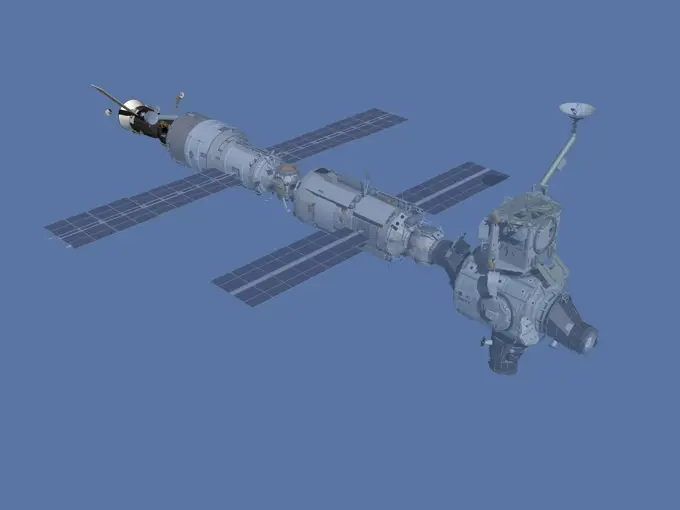
JSC2006-E-43483 (October 2000) --- Computer-generated artist's rendering of the International Space Station after flight 2R/1S. Expedition One, the first crew to live and work aboard the station arrived in a Soyuz spacecraft.
6145-45253126
JSC2006-E-43506 (October 2006) --- Computer-generated artist's rendering of the International Space Station after flight 1J. Kibo Japanese Experiment Module Pressurized Module (JEM-PM) and Japanese Remote Manipulator System (JEM-RMS) are installed. JEM Pressurized Section is moved from Node 2 onto the JEM Pressurized Module.
4239R-20480334
Spitzer seen against the infrared sky. The band of light is the glowing dust emission from the Milky Way galaxy seen at 100 microns (as seen by the IRAS/COBE missions).  The Spitzer solar panels also double as a solar shield that always faces the sun, protecting the cold observatory from the sun's heat.
6145-45239017
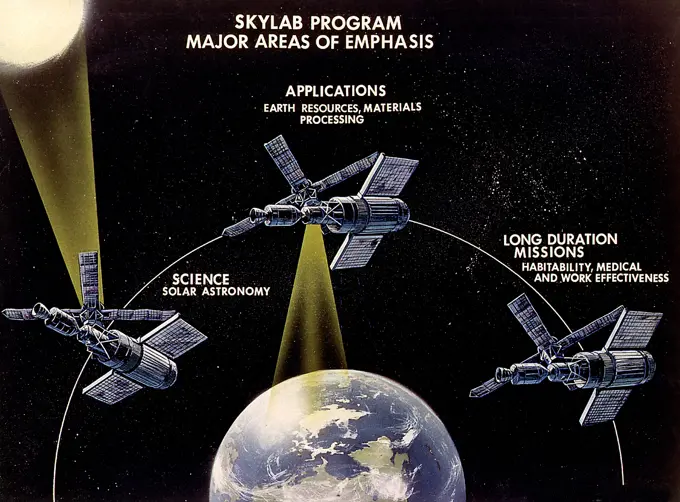
This image illustrates major areas of emphasis of the Skylab Program. In an early effort to extend the use of Apollo for further applications, NASA established the Apollo Applications Program (AAP) in August of 1965. The AAP was to include long duration Earth orbital missions during which astronauts would carry out scientific, technological, and engineering experiments in space by utilizing modified Saturn launch vehicles and the Apollo spacecraft. Established in 1970, the Skylab Program was the forerurner of the AAP. The goals of the Skylab were to enrich our scientific knowledge of the Earth, the Sun, the stars, and cosmic space; to study the effects of weightlessness on living organisms, including man; to study the effects of the processing and manufacturing of materials utilizing the absence of gravity; and to conduct Earth resource observations. The Skylab also conducted 19 selected experiments submitted by high school students. Skylab's 3 different 3-man crews spent up to 84 days
1525-22683013
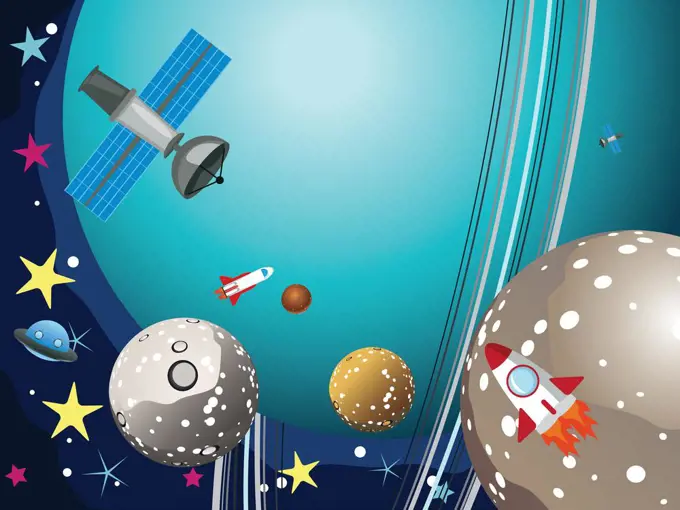
Uranus Planet in the Space. Cartoon planet Uranus in the space with stars and shuttles.
4128R-11288293
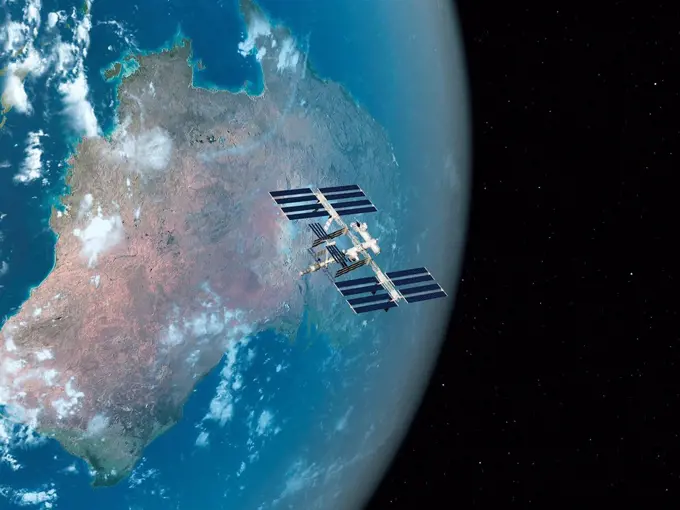
International Space Station (ISS), computer artwork.
6145-44825995
CAPE CANAVERAL, Fla. -- This orbiter tribute of space shuttle Endeavour, or OV-105, hangs in Firing Room 4 of the Launch Control Center at NASA's Kennedy Space Center in Florida. It features Endeavour soaring into orbit above the sailing vessel HMS Endeavour for which it was named. The Cupola, delivered to the International Space Station by Endeavour on STS-130, frames various images that represent the processing and execution of the Space Shuttle Program. Clockwise from top, are the first-ever use of a drag chute during the STS-49 landing, rollout to a launch pad, a ferry flight return to Kennedy, rolling into an orbiter processing facility, docking to the International Space Station, and lifting operations before being mated to an external fuel tank and solid rocket boosters in the Vehicle Assembly Building. The background image was captured by the Hubble Space Telescope and signifies the first shuttle servicing mission, which was performed by Endeavour's STS-61 crew. Crew-designed p
4404-1681
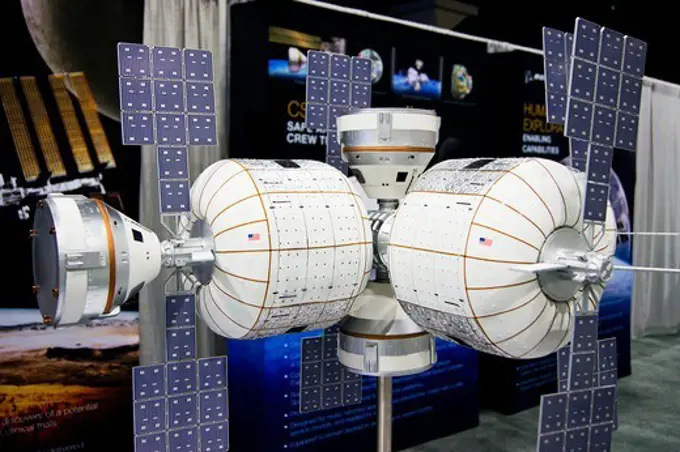
USA, California, Los Angeles, Bigelow space station model
6145-45235913
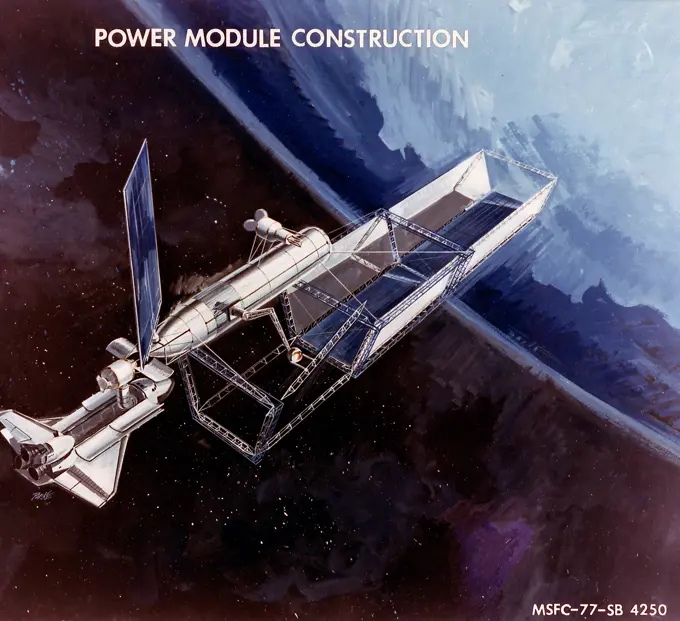
The Marshall Space Flight Center (MSFC) and the Johnson Space Center (JSC) were each awarded 16-month contracts in April 1976 for the Space Station Systems Analysis Study (SSSAS). Grumman Aerospace Corporation was MSFC's contractor and McDornell Douglas Aerospace Company was JSC's contractor. The goal of this study was to formulate plans for a permanent operational base and laboratory facility in Earth orbit in addition to developing a space construction base design for implementing the program. An expended Space Shuttle external tank was to be the central core platform of the base, and additional pressurized modules could be added to provide laboratory facilities. This artist's concept depicts a space construction base design for implementing the SSSAS.
6145-54684048
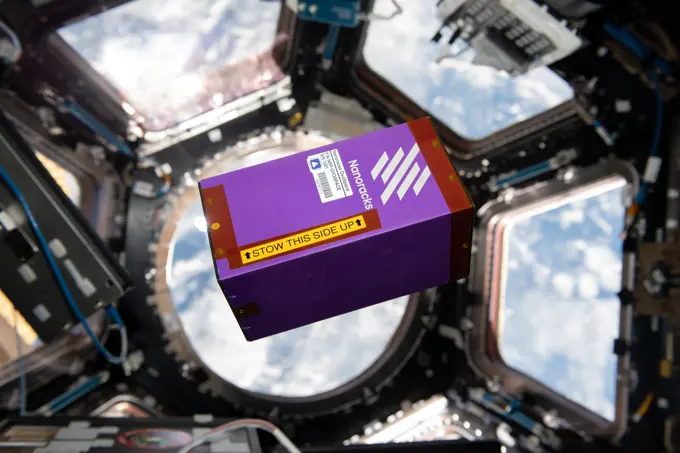
Nanoracks Module in the Cupola. iss068e022275 (11/14/2022) ---  A view of the OVOSPACE payload in the cupola module aboard the international Space Station (ISS). The Modulation of Granulosa and Theca Cells Activity in Microgravity: Consequences for Human Health and Reproduction (OVOSPACE) investigation studies how the microgravity environment can impair ovary function and the physiological development of living beings.
6145-44710828
Apollo CM, Transfer to Lunar Module (LM). MSC, HOUSTON, TX CN/BW 12/01/1966 - 06/01/1966
6145-45233897
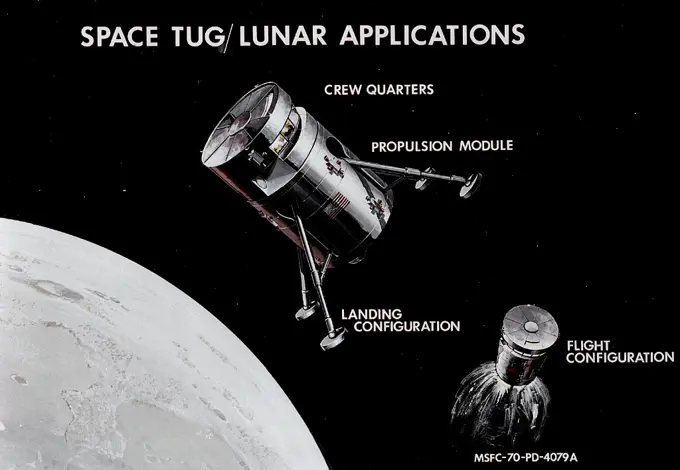
Managed by Marshall Space Flight Center, the Space Tug concept was intended to be a reusable multipurpose space vehicle designed to transport payloads to different orbital inclinations. Utilizing mission-specific combinations of its three primary modules (crew, propulsion, and cargo) and a variety of supplementary kits, the Space Tug was capable of numerous space applications. This 1970 artist's concept illustrates a Space Tug with an attached landing configuration kit as it prepares for a lunar application. The Space Tug program was cancelled and did not become a reality.
1525-20791333
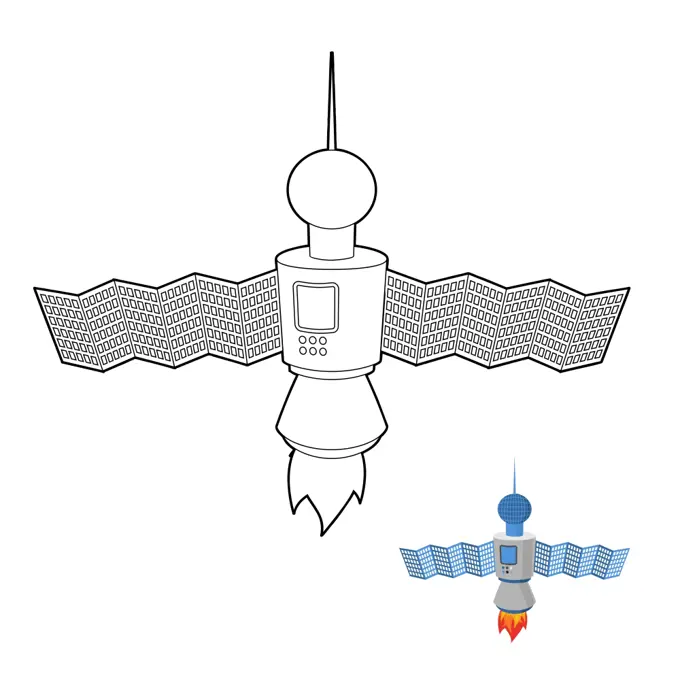
Space satellite coloring book. Space station. Vector illustration.

1525-24718011
Planet colonization compositions with astronaut base module solar green house and space rover isolated flat vector illustration
6145-44752834
This artist's concept shows NASA's Kepler spacecraft.
PREVIOUS
of 3
NEXT
2401 S. Ervay, Suite 206
Dallas, Texas 75215
United States
Get Started
Free ResearchMy BoardsMy Cart
For Creators
How To License Your ContentContributor PortalFrame of Mind
Resources
API accessPricing
Contact
+1 866 236 0087help@viewpictures.co.uk Contact form
©2026 View Pictures. All Rights Reserved. -A
This site is protected by reCAPTCHA and Google Privacy Policy and Terms of Service apply.