My Boards
View Pictures
  • My Boards

Saturn's Icy Moons

Images of Saturn's moons Rhea and Tethys, showcasing cratered surfaces and geological features in a stark, dark space backdrop.

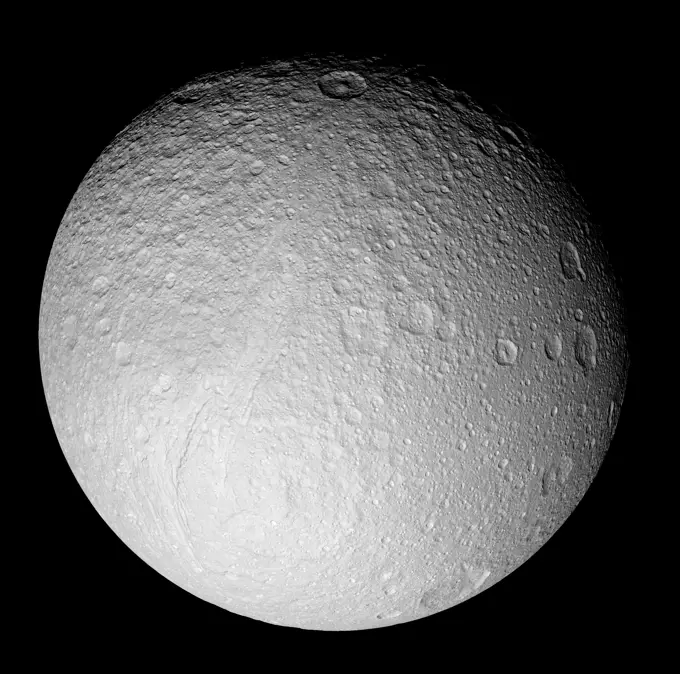
Tethys in Full View
Tethys in Full View
128 assets in this story
6145-44680476
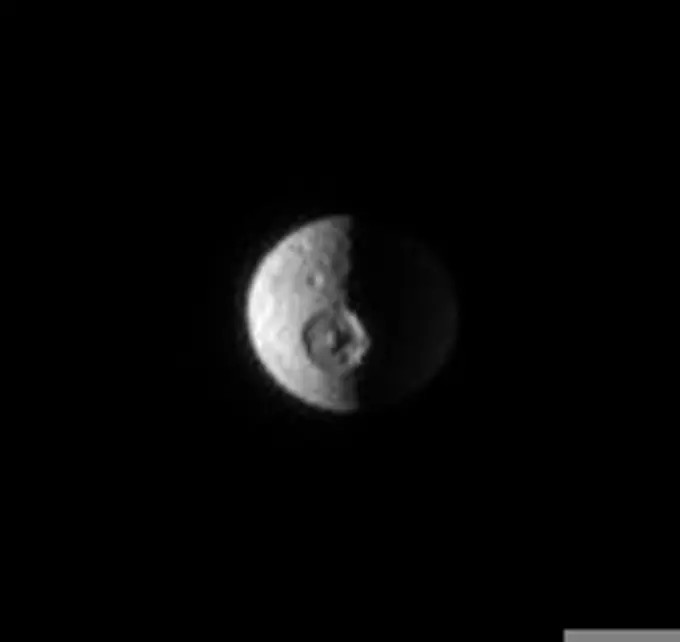
The Cassini spacecraft snaps an excellent view of the leading side of Mimas and its distinguishing crater, Herschel. The moon's night side is partly lit by reflected light from Saturn
6145-44997098
Titan's atmosphere puts on a display with the detached haze to the north (top of image) and the polar vortex to the south as seen by NASA's Cassini spacecraft.
6145-44820240
Saturn's moon Dione dwarfs the moon Telesto in this image captured by NASA's Cassini spacecraft image. Dione is the fourth largest of Saturn's moons, and it dominates this view. Tiny Telesto can be seen below and to the left of Dione.
6145-44626162
Second Titan Targeted Flyby #2
6145-44873603
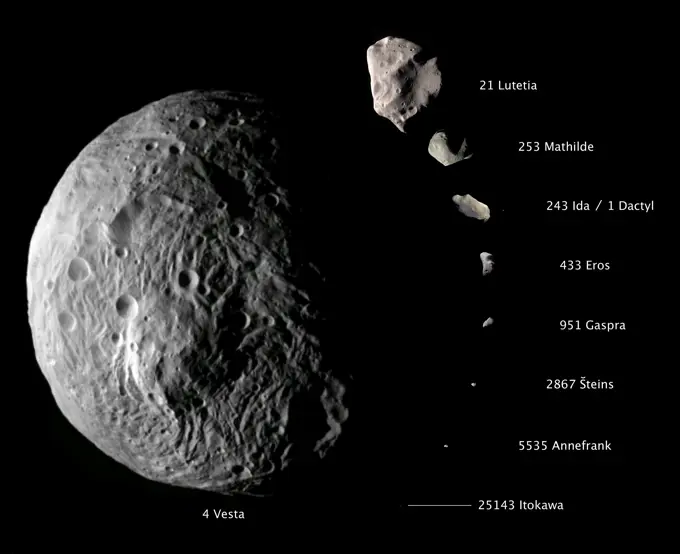
Vesta is the largest asteroid visited by a spacecraft. It is currently being observed by NASA's Dawn spacecraft, which has entered orbit around Vesta.
6145-45260149
NASA's Dawn spacecraft took this image of Ceres' south polar region on May 17, 2017, from an altitude of about 26,400 miles (42,500 kilometers). The image scale is about 2.5 miles (4 kilometers) per pixel. Dawn took this image to help navigators refine their measurements of the spacecraft's position in orbit. Ceres appears as a crescent as Dawn is on the night side of the dwarf planet. Zadeni Crater, which is 80 miles (128 kilometers) wide, is recognizable on the bottom left side of the crescent. The large crater seen on the right side is Urvara Crater, which is 101 miles (163 kilometers) wide. Large fractures scarring Ceres' surface can also be distinguished here. Dawn captured a similar scene (Figure 1) at higher resolution, although with a slightly different geometry, on April 26, 2015, from its RC3 orbit at an altitude of about 8,450 miles (13,600 kilometers) and an image scale of about 0.81 miles (1.3 kilometers) per pixel. The geology of Ceres' polar regions is very rough in comp
6145-44564635
Saturn's outermost large moon, Iapetus, has a bright, heavily cratered icy terrain and a dark terrain, as shown in this NASA Voyager 2 image taken on Aug. 22, 1981.
6145-44634303
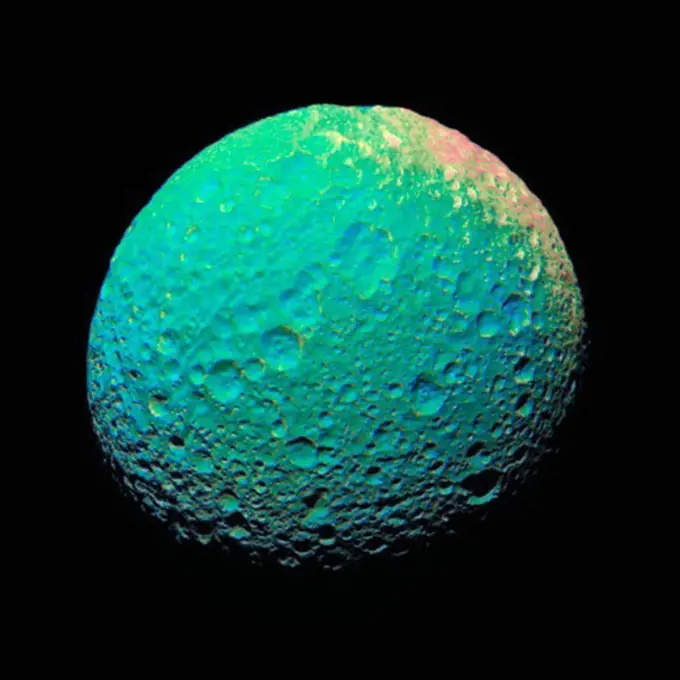
Mimas Showing False Colors #2
6176-66917272
Enceladus from Voyager
6145-44625106
Eyes on Xanadu
6145-58960279
CAPE CANAVERAL, Fla. - The International Space Station approaches the moon over NASA's Kennedy Space Center in Florida approximately 15 minutes before the launch of space shuttle Discovery on the STS-131 mission. If Discovery successfully lifts off at 6 21 a.m. EDT April 5 as planned, the shuttle will dock with the station in two days time. The seven-member crew will deliver the multi-purpose logistics module Leonardo, filled with supplies, a new crew sleeping quarters and science racks that will be transferred to the International Space Station's laboratories. The crew also will switch out a gyroscope on the stations truss, install a spare ammonia storage tank and retrieve a Japanese experiment from the stations exterior. STS-131 is the 33rd shuttle mission to the station and the 131st shuttle mission overall.
4389-629
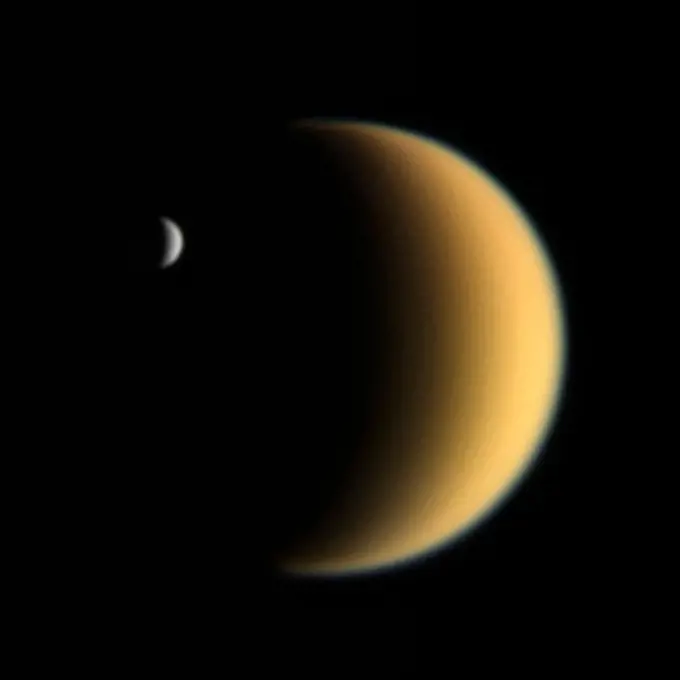
Two Moons of Saturn
6145-44606460
This image was taken during the close approach phase of NASA's Stardust's Jan 2, 2004 flyby of comet Wild 2. It is a distant side view of the roughly spherical comet nucleus.
6145-44642548
A false color look reveals subtle details on Enceladus that are not visible in natural color views
4389-638
Moons of Saturn
4389-529
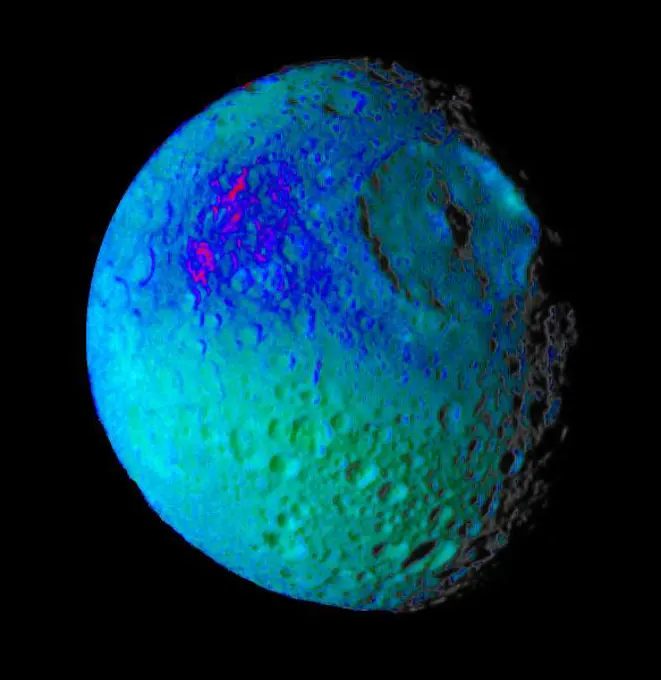
False Color Image of Saturn's Moon Mimas
6145-44502202
Features as small as 100 km (62 miles) across can be seen in this color image of Neptune's satellite Triton, photographed by NASA's Voyager 2 on Aug. 20, 1989, while it was still 5.4 million km (3.3 million miles) from Neptune.
1746-19670959
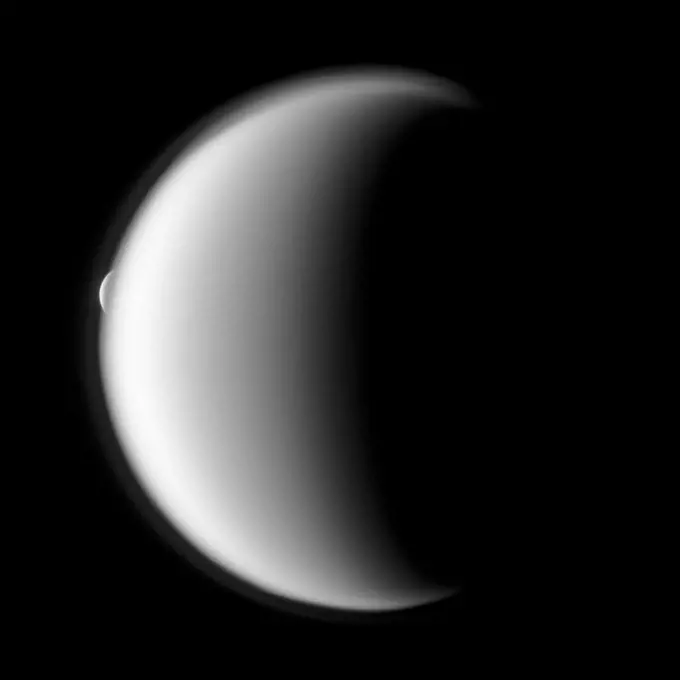
Rhea emerges after being occulted by the larger moon Titan. Cassini.
6145-44503344
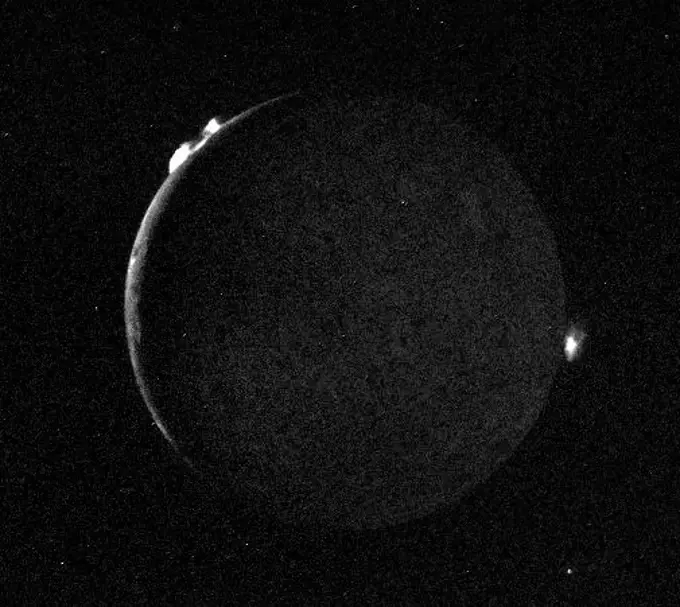
Io - Crescent with Plumes
4389-2220
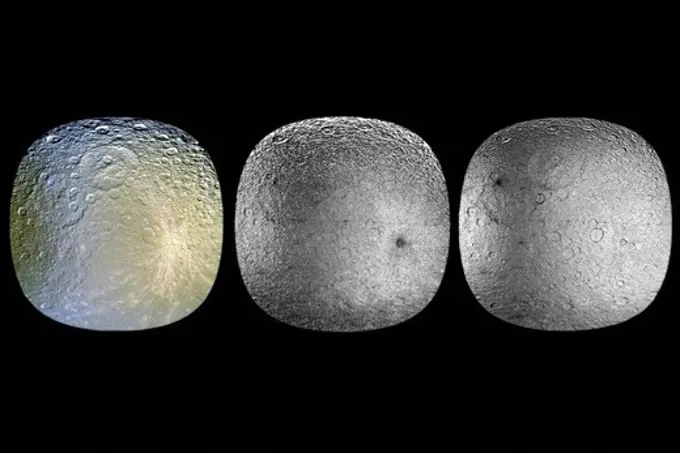
Three Views of Rhea
6145-45265716
This series of images shows the Martian moon Deimos as it crossed in front of the Sun, as seen by NASA's Curiosity Mars rover on Sunday, March 17, 2019 (the 2,350th Martian day, or sol, of the mission). The images were captured by Curiosity's telephoto-lens camera, called its Mast Camera pair (right Mastcam). The images have been sped up by a factor of 10. Deimos is small enough that scientists consider it a transit rather than an eclipse. The Deimos transit lasted several minutes. Movie available at
6145-45099528
NASA's New Horizons spacecraft is returning images, such as this one of Pluto's 'Broken Heart,' to improve maps of other regions.
6145-44899804
NASA's Cassini spacecraft monitors Titan's developing south polar vortex, which is a mass of swirling gas around the pole in the atmosphere of the moon.
6145-44663081
A ghostly view of Enceladus reveals the specter of the moon's icy plume of fine particles. Scientists continue to monitor the plume, where mission planning allows, using the Cassini spacecraft's imaging cameras
6145-44628519
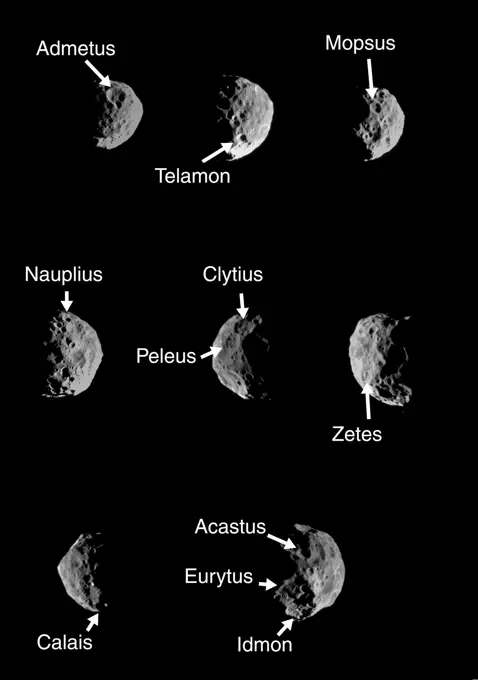
Phoebian Explorers 2
6145-45263547
Bi-static radar images of the binary asteroid 2017 YE5 from the Arecibo Observatory and the Green Bank Observatory on June 25. The observations show that the asteroid consists of two separate objects in orbit around each other. A movie is available at
6145-44610205
The panoramic camera on NASA's Opportunity combines the first photographs of solar eclipses by Mars' two moons, Deimos and Phobos. Deimos appears as a speck in front of the Sun and Phobos grazes its edge.
6145-44505081
Eros: The First Look from Orbit
PREVIOUS
of 2
NEXT
2401 S. Ervay, Suite 206
Dallas, Texas 75215
United States
Get Started
Free ResearchMy BoardsMy Cart
For Creators
How To License Your ContentContributor PortalFrame of Mind
Resources
API accessPricing
Contact
+1 866 236 0087help@viewpictures.co.uk Contact form
©2026 View Pictures. All Rights Reserved. -A
This site is protected by reCAPTCHA and Google Privacy Policy and Terms of Service apply.