My Boards
View Pictures
  • My Boards

Saturn's Moons Imagery

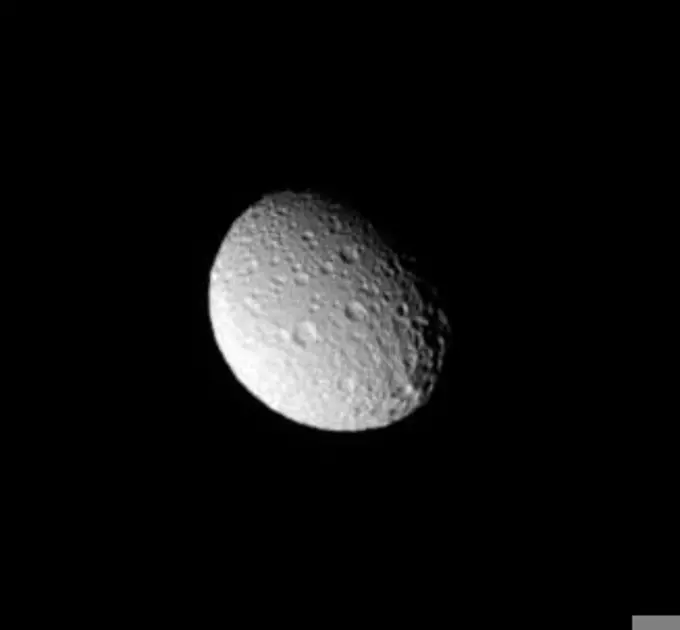
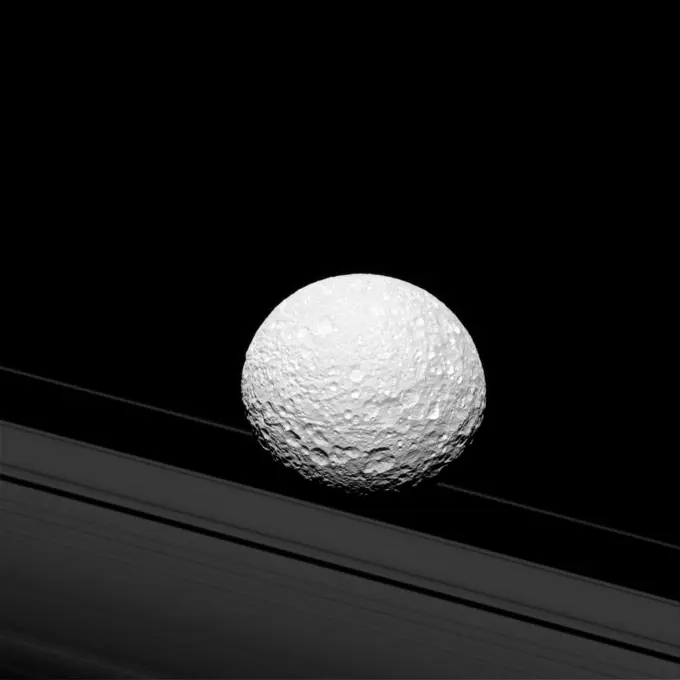
Stunning monochrome images of Saturn's moons Iapetus, Rhea, and Mimas, highlighting their surface features and impact craters.

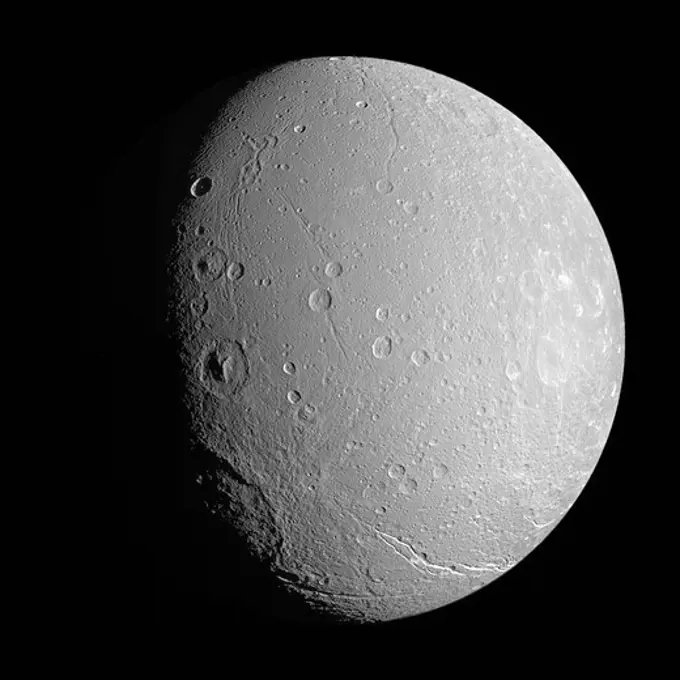
Saturn's Moon Dione
Saturn's Moon Dione
166 assets in this story
6145-44855576
First Image Ever Obtained from Mercury Orbit
6145-44655549
Few large craters are to be found in the wrinkled terrain of Enceladus, where the surface has been reworked by geologic processes presumably resulting from the moon's inner warmth
6145-44558388
Galileo's First Image of Amalthea
6145-45089084
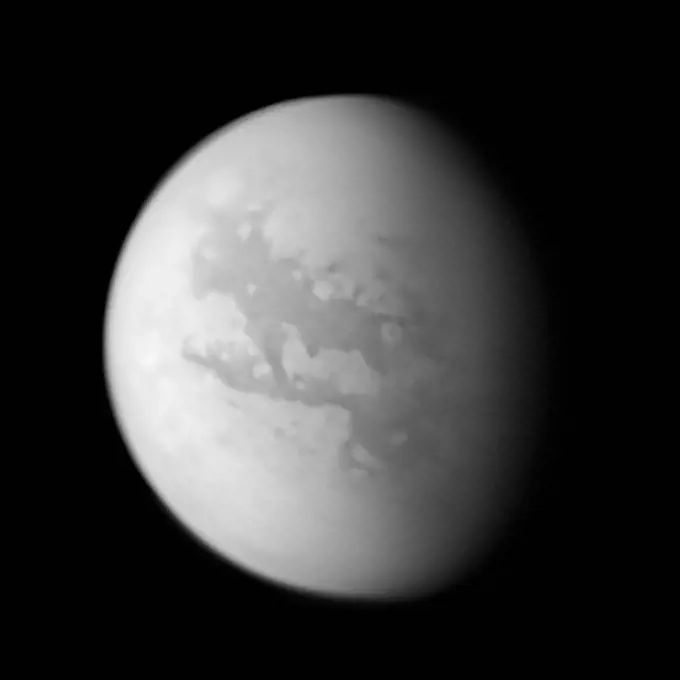
Named after a Japanese paradise, NASA's Cassini spacecraft spies the Senkyo region of Titan), a bit less welcoming than its namesake with a very inhospitable average temperature of approximately 290 degrees below zero Fahrenheit (-180 degrees Celsius).
6145-44549461
These time-lapse images of Uranus. taken by NASA's Voyager 2 on Jan. 14, 1986, show the movement of two small, bright, streaky clouds -- the first such features ever seen on the planet.
6145-44892283
This image of asteroid Vesta is one of many images taken by NASA's Dawn spacecraft to create an animation showing the diversity of minerals through color representation.
6145-44732484
Titan's Northern Streaks
6145-44846301
Saturn's moon Enceladus reflects sunlight brightly while the planet and its rings fill the background in this view from NASA's Cassini spacecraft. Enceladus is one of the most reflective bodies in the solar system.
6145-44632970
Clues in the Bright and Dark
6145-44679936
Dione appears small and far off in this Cassini view, which nonetheless manages to capture a detailed look at the moon's beautiful bright streaks, or linea. The linea are a system of braided canyons that cut across the moon's face
6145-44984144
The sunlit edge of Titan's south polar vortex stands out distinctly against the darkness of the moon's unilluminated hazy atmosphere as seen by NASA's Cassini spacecraft.
6145-44621193
Iapetus: Light and Dark
1746-19670815
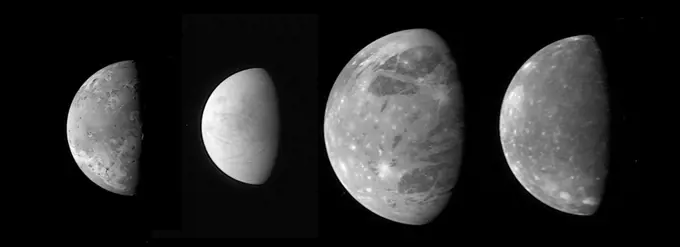
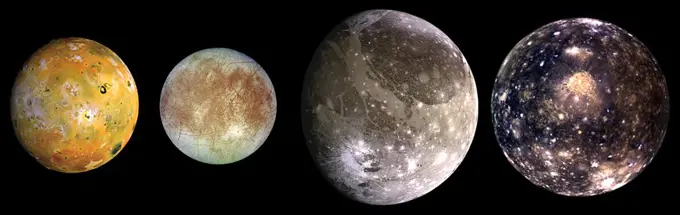
This montage shows the best views of Jupiter's four large and diverse 'Galilean' satellites as seen by the Long Range Reconnaissance Imager (LORRI)
6145-44630853
Epimetheus: Up-Close and Colorful
6145-44632718
This image shows comet Tempel 1 approximately 90 seconds before NASA's Deep Impact's probe smashed into its surface. It was taken by the probe's impactor targeting sensor.
6145-44662022
This color view of Hyperion shows off the dark pits that cover this strangely shaped moon
4353-270
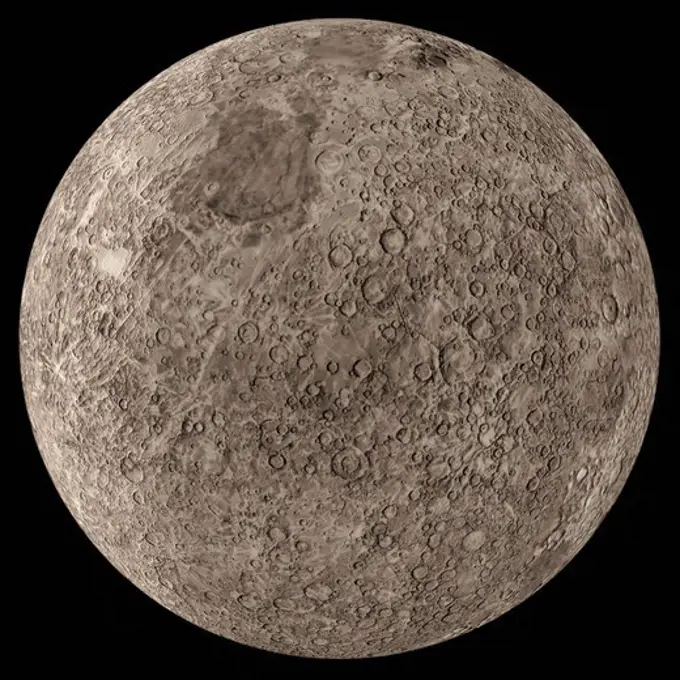
Digital Illustration of the Planet Mercury
4389-594
Near-Infrared View of Titan
6145-44629552
Titan's Mask
6145-44670746
Darkness sweeps over Iapetus as the Cassini spacecraft watches the shadow of Saturn's B ring engulf the dichotomous moon. The image at left shows the unshaded moon, while at right, Iapetus sits in the shadow of the densest of Saturn's rings
6177-V53836875
6145-44783683
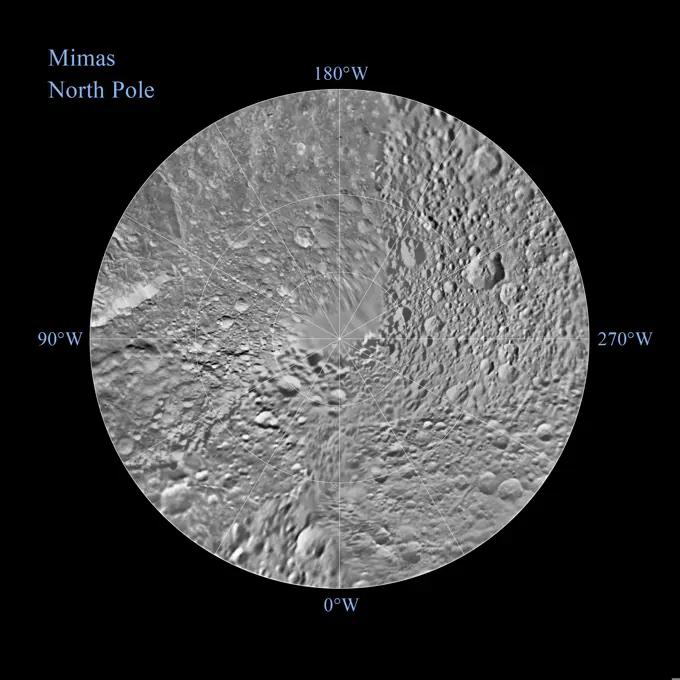
The Cassini spacecraft looks down on the north pole of Mimas and sees the moon's cratered trailing hemisphere.
6145-44564591
Farside View of Earth's Moon as Seen by the Clementine Spacecraft
6145-45124227
It may look as though Saturn's moon Mimas is crashing through the rings in this image taken by NASA's Cassini spacecraft, but Mimas is actually 28,000 mi (45,000 km) away from the rings. There is a strong connection between the icy moon and Saturn's rings
4128-28968491
Asteroid 16 Psyche, illustration
6145-44918197
This map of one side of the moon shows the location of some of the giant dikes identified by NASA's GRAIL mission.
6145-44632713
This frame from a movie shows NASA's Deep Impact's impactor probe approaching comet Tempel 1. It is made up of images taken by the probe's impactor targeting sensor in 2005.
6145-44779535
The Cassini spacecraft charts a quartet of dark albedo features on the moon Titan. From upper left to lower right of the image are Fenzal, Aztlan, Aaru and Senkyo.
6145-45257412
In this image, Mercury's horizon cuts a striking edge against the stark blackness of space. On the right, sunlight harshly brings the landscape into relief while on the left, the surface is shrouded in the darkness of night. This image was acquired as part of MDIS's limb imaging campaign. Once per week, MDIS captures images of Mercury's limb, with an emphasis on imaging the southern hemisphere limb. These limb images provide information about Mercury's shape and complement measurements of topography made by the Mercury Laser Altimeter (MLA) of Mercury's northern hemisphere. The MESSENGER spacecraft is the first ever to orbit the planet Mercury, and the spacecraft's seven scientific instruments and radio science investigation are unraveling the history and evolution of the Solar System's innermost planet. In the mission's more than three years of orbital operations, MESSENGER has acquired over 250,000 images and extensive other data sets. MESSENGER is capable of continuing orbital opera
6145-45232125
. Lunar Satellite Snaps Image of Earth
6145-45013295
Saturn's rings lie in the distance as NASA's Cassini spacecraft looks toward Titan and its dark region called Shangri-La, east of the landing site of the Huygens Probe.
6145-45030116
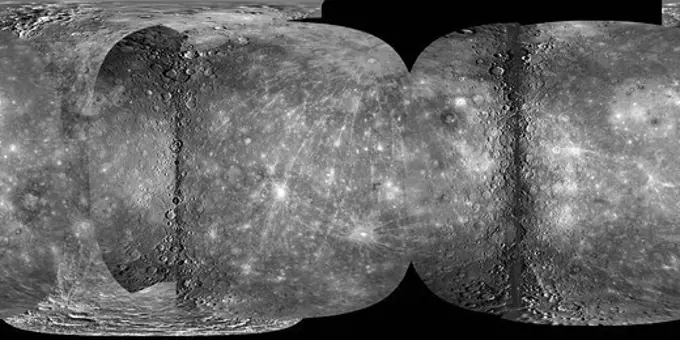
Mercury Globe: 0N, 180E
6145-44688321
Iapetan Geography
6145-44619362
Dark Side of Dione
6145-45247670
The bumpy exterior of the turnip yellow mosaic virus (TYMV) protein coat, or capsid, was defined in detail by Dr. Alexander McPherson of the University of California, Irvin using proteins crystallized in space for analysis on Earth. TYMV is an icosahedral virus constructed from 180 copies of the same protein arranged into 12 clusters of five proteins (pentamers), and 20 clusters of six proteins (hexamers). The final TYMV structure led to the unexpected hypothesis that the virus releases its RNA by essentially chemical-mechanical means. Most viruses have fairly flat coats, but in TYNV, the fold in each protein, called the jellyroll, is clustered at the points where the protein pentamers and hexamers join. The jellyrolls are almost standing on end, producing a bumpy surface with knobs at all of the pentamers and hexamers. At the inside surface of the pentamers is a void that is not present at the hexamers. The coating had been seen in early stuties of TYMV, but McPherson's atomic structu
6145-44633253
Enceladus In False Color
6145-45029337
Mercury Globe: 0N, 0E
6145-44621241
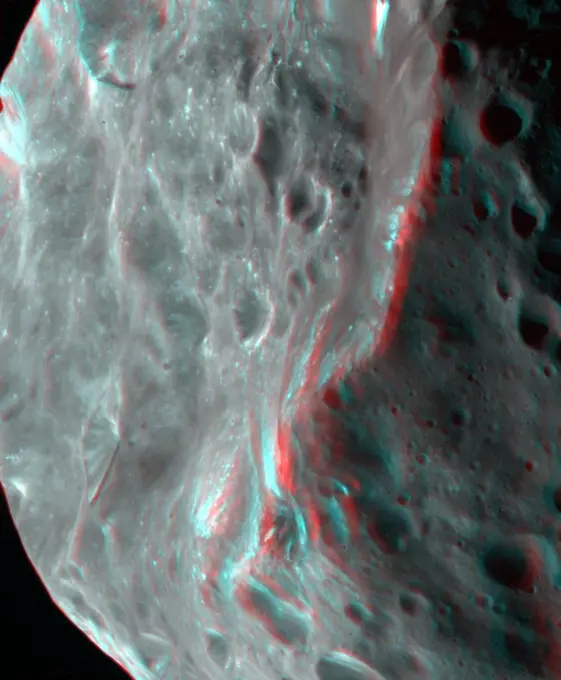
Phoebe's violent, cratered past is evident in this 3D image of the tiny moon captured by NASA's Cassini spacecraft. 3D glasses are necessary to view this image.
6145-45257888
After a 9.5-year voyage covering more than three billion miles, NASA's New Horizons flew through the Pluto system on July 14, 2015, coming within 7,800 miles (12,500 kilometers) of Pluto itself.
6145-44888355
This global, colorized image of the giant asteroid Vesta from NASA's Dawn mission reveals how the minerals are distributed on the surface.
6145-44818929
The northern hemisphere of Saturn's moon Mimas is seen in these polar stereographic maps, mosaicked from the best-available NASA's Cassini and Voyager images.
6145-44512967
Dust storm in the Thaumasia region of Mars
4389-2539
Map of Mercury
6145-44617347
Wild 2 Close Look
1746-19671703
This composite includes the four largest moons of Jupiter which are known as the Galilean satellites. Shown from left to right in order of increasing distance from Jupiter, Io is closest, followed by Europa, Ganymede, and Callisto. Galileo.
6145-44611259
Comet Wild 2 - Stereo Image Pair
6145-45123997
This frame from an animation shows dwarf planet Ceres overlaid with the concentration of hydrogen determined from data acquired by the gamma ray and neutron detector (GRaND) instrument aboard NASA's Dawn spacecraft.
4239R-20480704
View of the surface of Mercury, taken in orbit from the MESSENGER spacecraft.
6145-44503297
Ganymede
6145-44798735
Titan's seasonal hemispheric dichotomy is chronicled in black and white, with the moon's northern half appearing slightly lighter than the dark southern half in this image taken by NASA's Cassini spacecraft.
6145-44572813
Europa's Fractured Surface
6145-44639100
Color Variation Across Rhea and Dione
6145-44642011
NASA's Cassini spacecraft passed within a cosmic stone's throw of Telesto in October, 2005 capturing this shot of the tiny Trojan moon
6145-44496729
Satellite 1989N2
6145-44569600
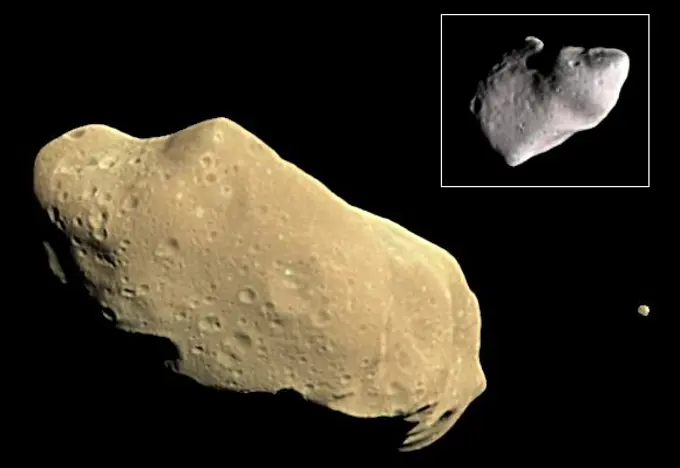
During its examination of the asteroid Ida, NASA's Galileo spacecraft returned images of a second object, Dactyl--the first confirmed satellite or moon of an asteroid; the much smaller moon is visible to the right of Ida.
6145-44764948
Streaking Through the South
6145-44730861
Enceladus Oct. 9, 2008 Flyby - Posted Image #1
6145-44841530
These two views of Tethys show the high-resolution color (left) and the topography (right) of the leading, or forward-facing, hemisphere of this ice-rich satellite. Data for these images is from NASA's Cassini spacecraft.
6145-45112648
This artist's concept shows a diagram of how the inside of Ceres could be structured, based on data about the dwarf planet's gravity field from NASA's Dawn mission.
1889R-26388
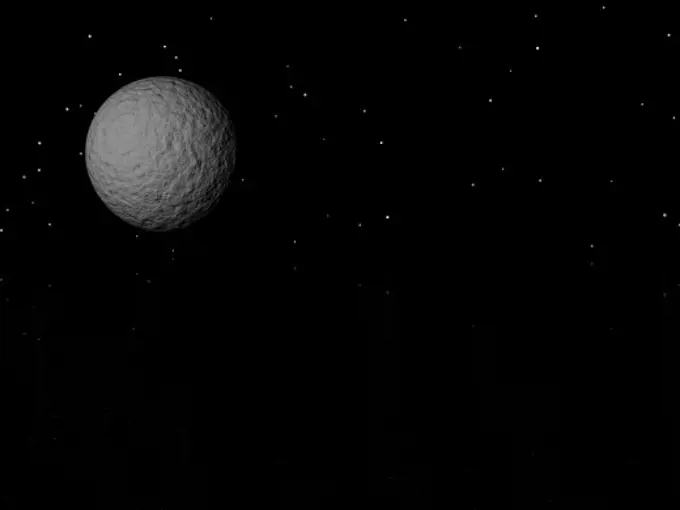
Moon and stars
6145-44643829
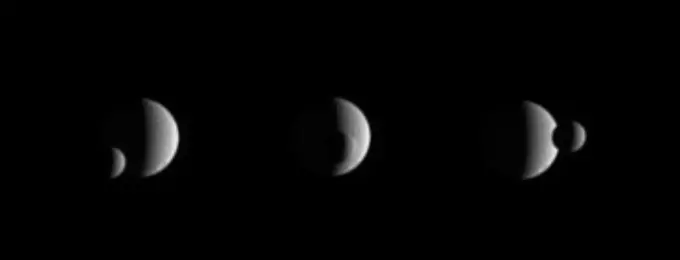
Mimas briefly slipped in front of Tethys while the Cassini spacecraft looked on and captured the event in this series of images
6145-44562268
Sulfur dioxide, normally a gas at room temperatures, is known to exist on Io's surface as a frost, condensing there from the hot gases emanating from the Io volcanoes. This image was taken in 1996 by NASA's Galileo spacecraft.
6145-44918190
These maps of the moon show the 'Bouguer' gravity anomalies as measured by NASA's GRAIL mission. Red areas have stronger gravity, while blue areas have weaker gravity.
6145-44546913
This false-color mosaic was constructed from a series of 53 images taken through three spectral filters by NASA's Galileo's imaging system as the spacecraft flew over the northern regions of the Moon on December 7, 1992.
6145-44665743
This global digital map of Saturn's moon Rhea was created using data taken during NASA's Cassini and Voyager spacecraft flybys
6145-44494866
This 'family portrait' of Uranus' five largest moons was compiled from images sent back Jan. 20, 1986, by NASA's Voyager 2 spacecraft. Even in these distant views, the satellites exhibit distinct differences in appearance.
PREVIOUS
of 2
NEXT
2401 S. Ervay, Suite 206
Dallas, Texas 75215
United States
Get Started
Free ResearchMy BoardsMy Cart
For Creators
How To License Your ContentContributor PortalFrame of Mind
Resources
API accessPricing
Contact
+1 866 236 0087help@viewpictures.co.uk Contact form
©2026 View Pictures. All Rights Reserved. -A
This site is protected by reCAPTCHA and Google Privacy Policy and Terms of Service apply.