My Boards
View Pictures
  • My Boards
← Artworks

Sculptural Representations of Care

Various sculptures embodying maternal figures holding children, crafted in different materials and styles, celebrating themes of love and charity in art.

A woman with a child in her arms; Bohdanowicz, Jadwiga (1887-1943); 1850-1943 (1850-00-00-1943-00-00);
175 assets in this story
6145-29060337
Bacchus, c. 1800. England, Staffordshire, Pratt ware, late 18th-early 19th Century. Earthenware; overall: 21.9 cm (8 5/8 in.).
6145-46637566
. .
6145-46649996
. One of the guards of the four corners of the world.
1788-27016
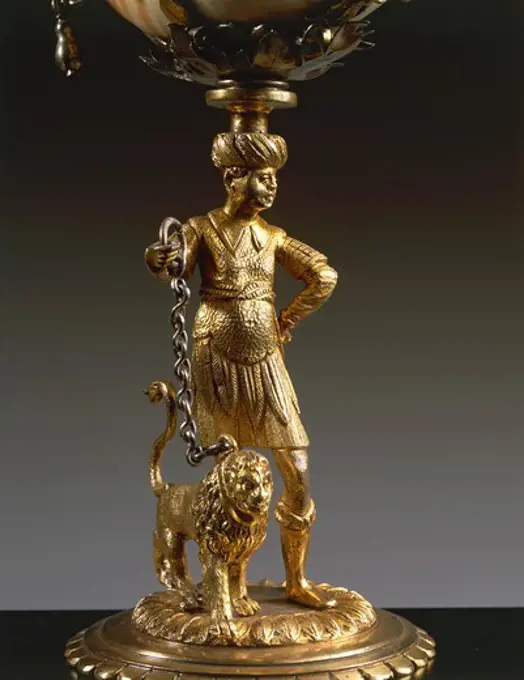
Goldsmith's art, Germany, 17th century. Nautilus vase with gilded silver and bronze mount, around 1600. Height 33.5 cm. Detail of the stand: exotic figure with a lion with a snake's tail on a leash.
6145-58865115
Oak korbeel on which in relief the truth (veritas), anonymous, c. 1550 - c. 1600 Korbeel van Oakhout, on which the truth (Veritas), a woman with a mirror, standing on Acanthus leaf is depicted under a canopy. Coming from the broken house Warmoesstraat 145 in Amsterdam. Northern Netherlands oak (wood) Korbeel van Oakhout, on which the truth (Veritas), a woman with a mirror, standing on Acanthus leaf is depicted under a canopy. Coming from the broken house Warmoesstraat 145 in Amsterdam. Northern Netherlands oak (wood)
4409-17582299
'Bear-Tamer'. France, Mid-18th century. Dimensions: height 35 cm. Museum: State Hermitage, St. Petersburg.
6145-29141064
Maiden 1585-94 Barthélemy Prieur French These are the most widely replicated of Prieurs statuettes. There is an implicit contrast between social types, that of the fashionable gentleman holding gloves (see 64.101.1565) and that of the simple but chic countrywoman lifting her skirt while offering an apple (in some cases a basket is slung over her same left arm). The dancing forms as well as the red translucent lacquer patination were generically inspired by Giambologna and his followers in Florence.. Maiden 203984
6176-67044264
'Cupid and Psyche', (1912).Artist: Eberlein
4409-17439237
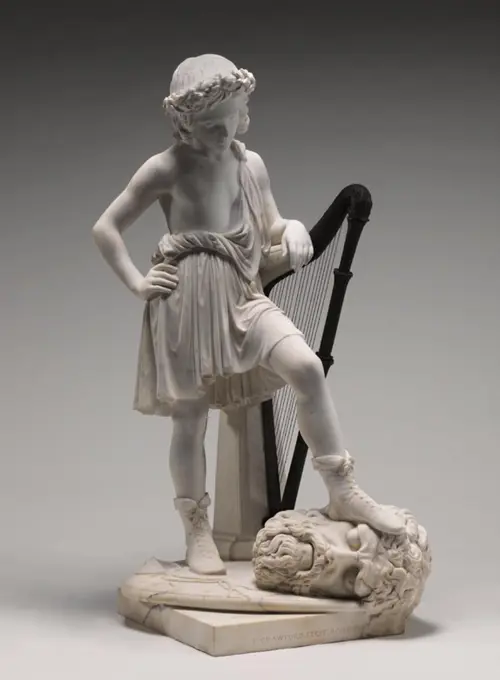
David Triumphant. Dated: model 1845/1846, carved 1848. Dimensions: height: 114.3 cm (45 in.). Medium: marble and bronze. Museum: National Gallery of Art, Washington DC. Author: Thomas Crawford.
6145-43609502
Bust of a child. unknown, author
6145-59148495
Patera Handle in the Form of Lasa. Unknown 350-300 B.C. A handle for a bronze patera takes the form of Lasa, a generic Etruscan deity or spirit with the power of prophecy. Lasas often appear on engraved mirrors in the company of other gods or as companions of Turan (Aphrodite). This winged female stands on a low triangular base, the edges of which are decorated with a tongue design between beaded moldings. Her left leg is relaxed in an easy contrapposto pose, causing her right hip to project and creating a sinuous S-curve within her body. She is nude except for a pair of tongued slippers and elaborate jewelry: a necklace made up of cylindrical beads, with three large bulla-shaped pendants that frame her breasts, a bracelet with three pendants on her upper left arm, and a flat rectangular object above, the nature of which is uncertain. A pair of large outspread wings are attached to her back with a bronze pin. The feathers on the wings are detailed with modeling and incision on the fron
6145-29822391
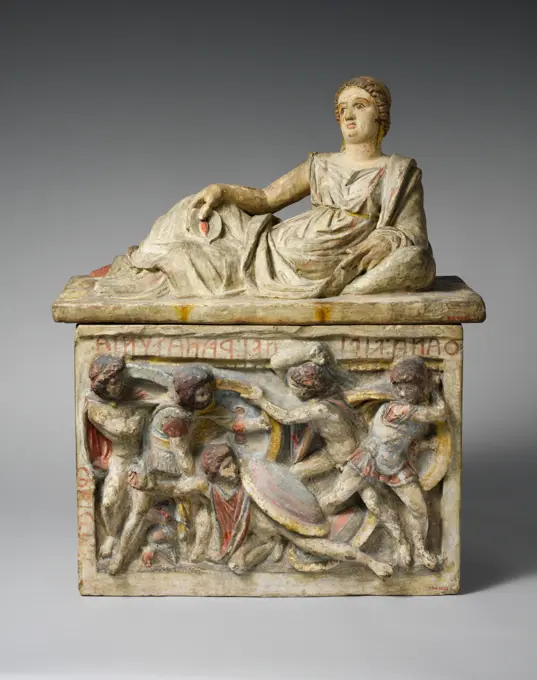
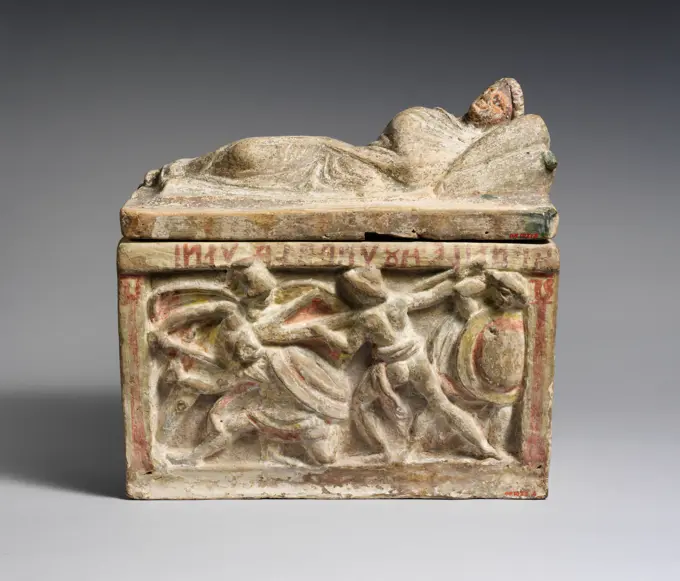
Terracotta cinerary urn 2nd century B.C. Etruscan The inscription, THANA : VIPINEI : RANAZUNIA : CREICESA, attests that this is the ash urn of Thana Vipinei Ranazunia, wife of Creice. The last word, CREICESA, is written vertically on the lower left frame of the main panel. The standardized battle scene on the container demonstrates that the subject on that part of the urn often has no apparent connection with the gender of the deceased.. Terracotta cinerary urn. Etruscan. 2nd century B.C.. Terracotta. Hellenistic. Terracottas
6145-58850434
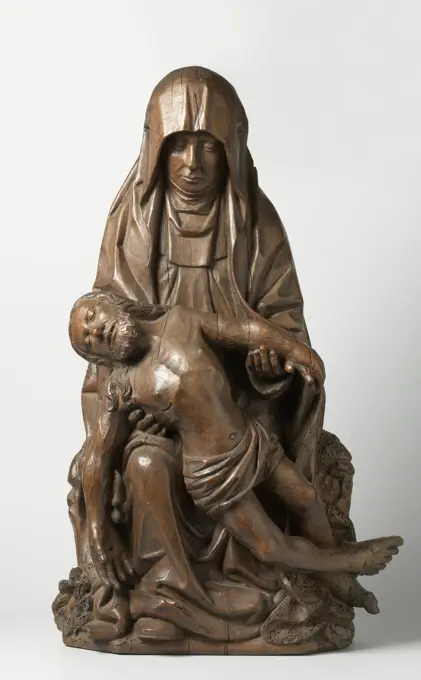
Pietà, anonymous, c. 1500  Northern Brabant (possibly) walnut (hardwood)  Northern Brabant (possibly) walnut (hardwood)
4409-17582702
'Blessed Ludovica Albertoni'. Italy, 17th century. Dimensions: height: 18,0 cm, length: 44,0 cm. Museum: State Hermitage, St. Petersburg.
4409-17423289
Alice. Artist: Janet Scudder (American, Terre Haute, Indiana 1869-1940 Rockport, Massachusetts). Dimensions: 4 3/8 x 3 3/8 in. (11.1 x 8.6 cm). Date: 1906. Museum: Metropolitan Museum of Art, New York, USA.
4443-22015044
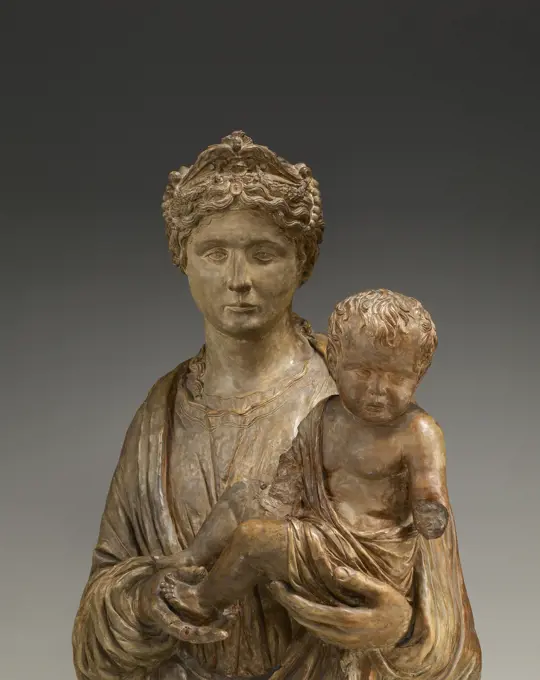
Virgin and Child; Riccio (Andrea Briosco) (Italian, 1470 - 1532); Italy; about 1520 - 1525; Terracotta with traces of polychromy; 64.4 x 58 x 31.5 cm, 38.1022 kg (25 3,8 x 22 13,16 x 12 3,8 in., 84 lb.)
4443-21946347
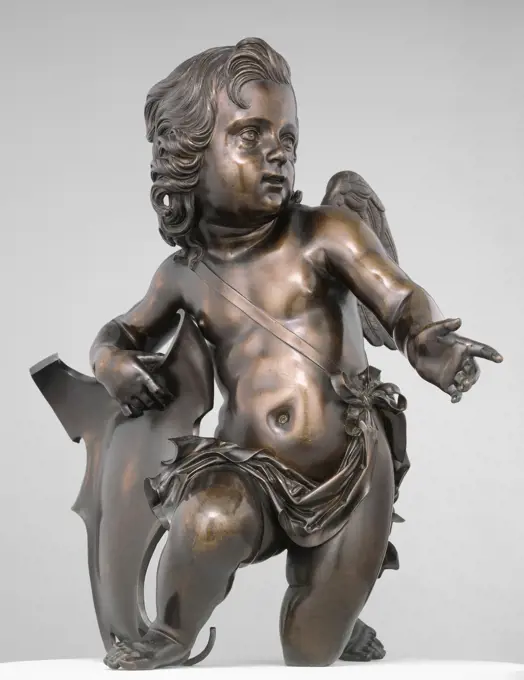
Putto Holding Shield to His Right; Ferdinando Tacca (Italian, 1619 - 1686); Florence, Tuscany, Italy; about 1650 - 1655; Bronze; 64.5 x 53.3 x 45.7 cm (25 3,8 x 21 x 18 in.)
4409-17475379
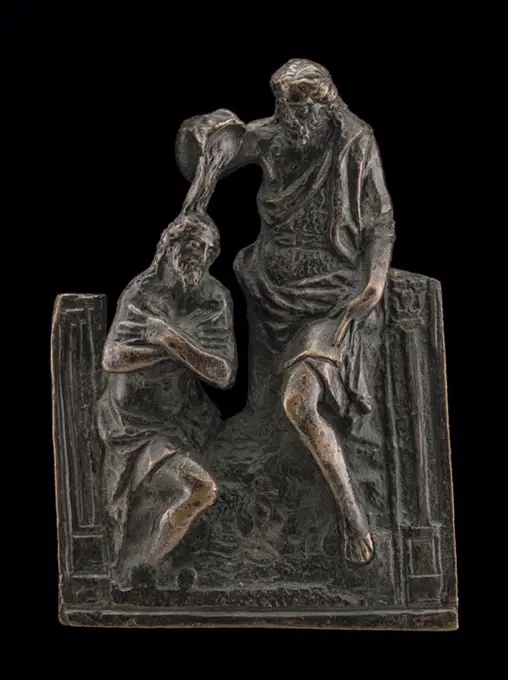
The Baptism in the Jordan. Dated: 16th century. Dimensions: overall (silhouetted upper section): 9.5 x 6.7 cm (3 3/4 x 2 5/8 in.) gross weight: 168 gr. Medium: bronze//Dark brown patina. Museum: National Gallery of Art, Washington DC. Author: Florentine 16th Century.
6145-58860889
Chimney piece with putti and cat, Jan Baptist Xavery, 1742 Chimney piece with three putti and a cat. The image is a design for image number BK-1974-109. The image is signed and dated: J.B. XAVY 1742. The statue is in a wooden frame stating: J.B. Xavery (1697-1742), 1742. The Hague terracotta (clay material). wood (plant material) Chimney piece with three putti and a cat. The image is a design for image number BK-1974-109. The image is signed and dated: J.B. XAVY 1742. The statue is in a wooden frame stating: J.B. Xavery (1697-1742), 1742. The Hague terracotta (clay material). wood (plant material)
4409-17390968
Standing female figurine. Culture: Cypriot. Dimensions: H. 3 5/8 in. (9.2 cm). Date: Early 5th century B.C..The figurine is mold-made and solid. The back is handmade and flattened; the figurine is shallow, almost a plaque. Museum: Metropolitan Museum of Art, New York, USA.
6145-46630667
. These are Boizots earliest known sculptures. He made them in Rome, where he worked and studied after having in 1762 won the Prix de Rome (a prize for artists that came with a travel stipend). The sacrificial scenes are conceived as antique reliefs, with simple scenes of draped women in profile. These works are early examples of Neoclassicism in sculpture.
4409-62621352
Jerónimo Suñol y Pujol / 'Dante in Thought'. 1864. Plaster. Museum: Museo del Prado, Madrid, España.
4409-17546279
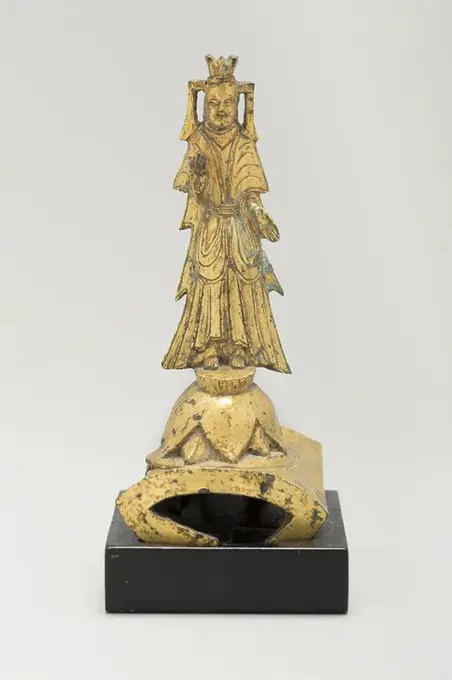
Bodhisattava. China. Date: 524 AD. Dimensions: 13.3 × 5.2 × 7.1 cm (5 1/4 × 2 1/8 × 2 3/4 in.). Gilt bronze. Origin: China. Museum: The Chicago Art Institute, Chicago, USA.
6145-29187003
Base for a Statuette 1470-80 South Netherlandish The figures of Eve and the serpent appear on either side of the Tree of Knowledge in the Garden of Eden. The woman-headed serpent may represent Lilith, the legendary first wife of Adam, who rebelled against her husband and disappeared from Paradise. God then created Eve from Adams rib, leading the jealous Lilith to tempt Eve with the forbidden fruit. The common medieval association of Eve, mother of humankind, with Mary, mother of Jesus, suggests that this base may have supported a statuette of the Virgin.. Base for a Statuette. South Netherlandish. 1470-80. Boxwood. Sculpture-Miniature-Wood
1788-19622
Bronze statuette of seated Hygieia holding cornucopia or horn of plenty, From Volubilis (Morocco)
6145-29074978
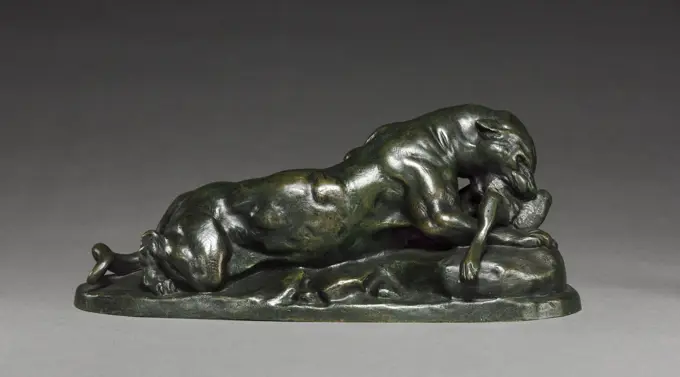
Jaguar, c. 1850. Antoine-Louis Barye (French, 1796-1875). Bronze; overall: 9.4 x 24.1 x 9.4 cm (3 11/16 x 9 1/2 x 3 11/16 in.).
6145-46640480
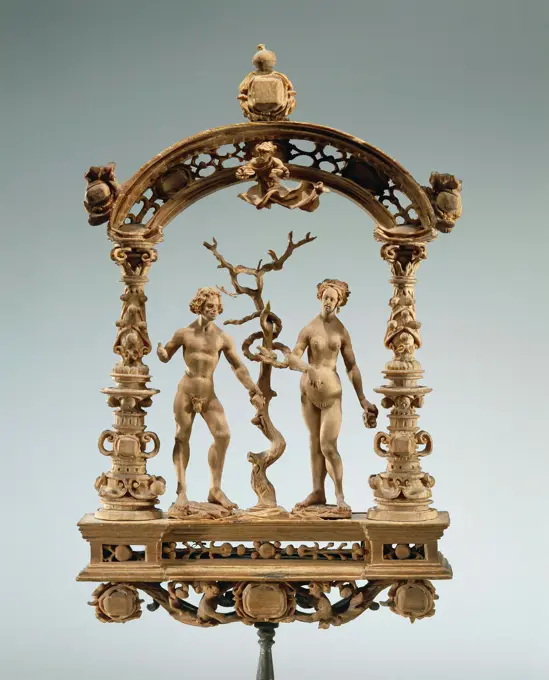
. An as yet unidentified South-German sculptor carved this model as the design for a goldsmith to execute in precious metals and gems. The central scene depicts the fall of man: Adam has already taken a bite from the apple that Eve had given him. The delicate framework surrounding the scene is decorated with further apples playfully arranged.
6145-30189123
Bust of Jesus as a Youth 1620-1643 Flanders. Gilt bronze . François Duquesnoy
6145-30149763
Venus and Cupid Made 1775-1800 Burslem. Bronze, marble, stoneware . Wedgwood Manufactory (Manufacturer)
6145-29156912
Saint Paul ca. 1450-70 Southern Netherlands Southern Netherlands. Saint Paul 460916
1848-50992806
Naples Campania Italy. The National Archaeological Museum of Naples (Museo Archeologico Nazionale di Napoli) is an important Italian archaeological museum, particularly for ancient Roman remains. Its collection includes works from Greek, Roman a
6145-29811658
Terracotta cinerary urn 2nd century B.C. Etruscan The frieze depicts a hero fighting with a plow, a subject found quite frequently on Etruscan cinerary urns (see 96.9.219a, b nearby) but whose specific meaning remains uncertain. The inscription reads: ARNTILE. AFUNAS. LAUTNI (Arntile, freedman of the Afuna family).. Terracotta cinerary urn. Etruscan. 2nd century B.C.. Terracotta. Hellenistic. Terracottas
6145-58863707
Hercules Freeing Prometheus, c. 1745 - c. 1749  Paris bronze (metal). brass (alloy). lacquer (coating) gilding  Paris bronze (metal). brass (alloy). lacquer (coating) gilding
6145-59045245
Antoine-Louis Bare (1795-1875). "Lion and snake". Museum of Fine Arts of the City of Paris, Petit Palais. Confrontation, fight, sculpt, lion, scene combat, snake
6145-46530460
Marble sculpture. White marble group of two images, without heads.
6145-29758255
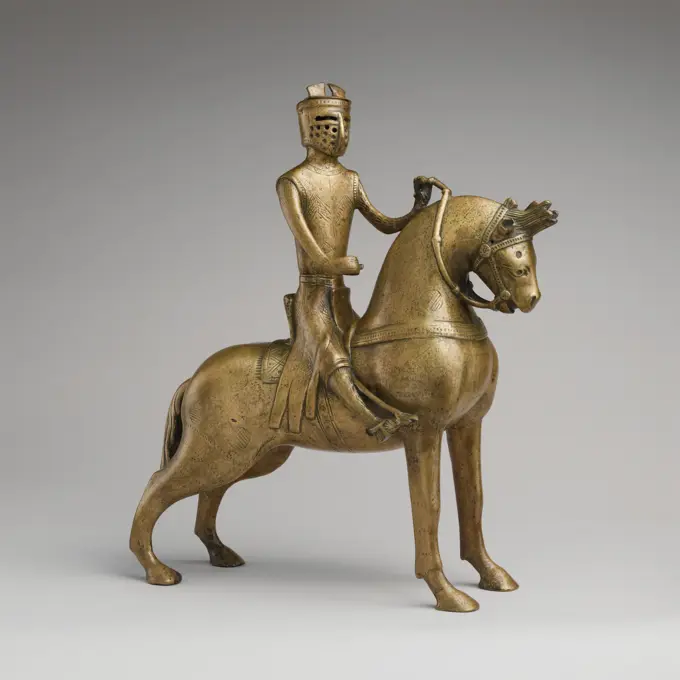
Aquamanile in the Form of a Mounted Knight ca. 1250 German Aquamanilia, from the Latin words meaning "water" and "hands," served to pour water over the hands of priests before celebrating Mass and of diners at table. This aquamanile, in the form of a horse and rider, exemplifies the courtly ideals of knighthood that pervaded Western medieval culture and influenced objects intended for daily use. It depicts a type of armor that disappeared toward the third quarter of the thirteenth century. Unfortunately, the shieldwhich probably displayed the arms of the ownerand the lance are no longer extant.. Aquamanile in the Form of a Mounted Knight. German. ca. 1250. Copper alloy. Made in probably Hildesheim, Lower Saxony, Germany. Metalwork-Copper alloy
6145-58996449
Jean-Baptiste Carpeaux (1827-1875). Monument to Marshal Moncey. Tinted plaster model. 1864. Museum of Fine Arts of the City of Paris, Petit Palais. 78930-1 Cavalier, model, monument, plaster shade, equestrian statue, 19th 19th 19th 19th 19th 19th century
4443-21957827
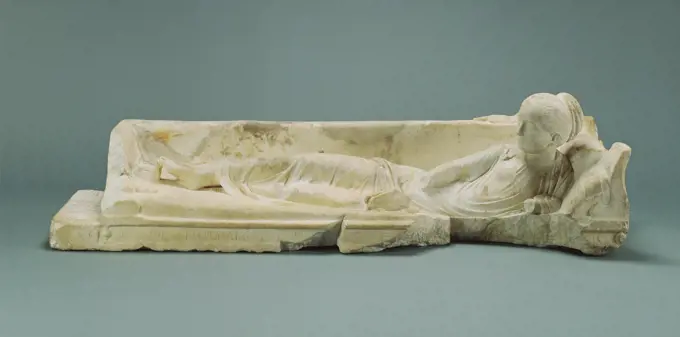
Grave Monument of a Girl; Roman Empire; 120 - 140; Marble; 38 × 47 × 141 cm (14 15,16 × 18 1,2 × 55 1,2 in.)
1788-19846
Ludovisi Throne, Thasos marble, detail of relief, Woman placing incense in Thymiaterion, right panel detail
6145-29135796
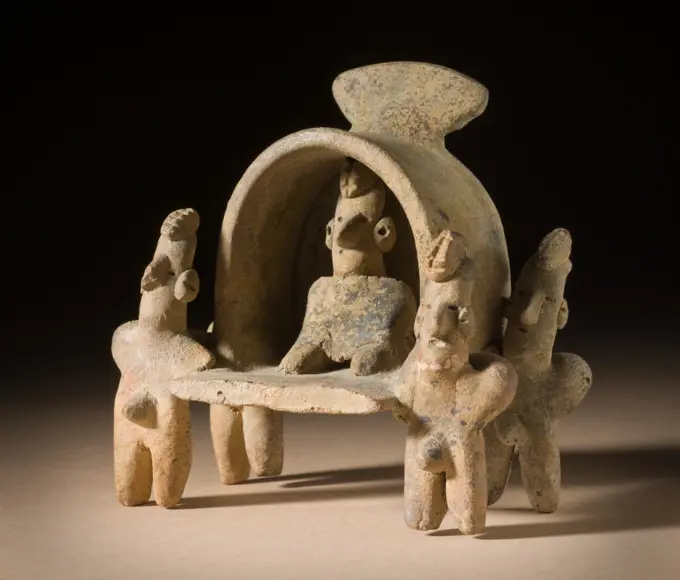
Figure Seated in Palanquin. Mexico, Colima, 200 BCE-500 CE. Ceramics. Buff ceramic
6145-46640731
. .
6145-45860981
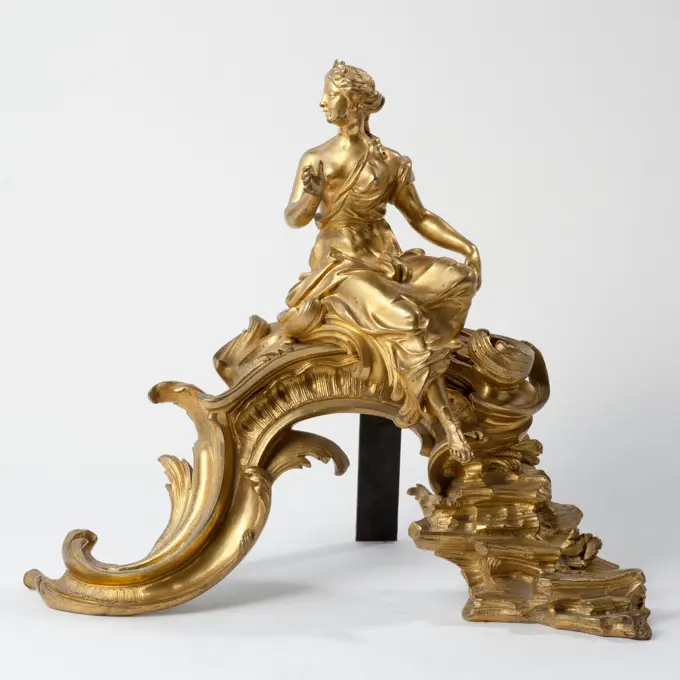
Fire buck of gold-plated bronze on base with leaf volutes, with a man in fluttering robe and a woman with a fragment of an instrument in her left hand, the trident lacking. Cisellated and gold-plated bronze firebox. The base consists of leaf volutes, partially opened in a cartouche-like motif. This motif is continued in a closed kidney shape under the place where a man is seated, surrounded by a fluttering robe; He used to have a trident in his right hand raised, who is now missing. On the corresponding firebok is a woman with an instrument fragment in her left hand. See also: BK-14853-b.
4409-17425215
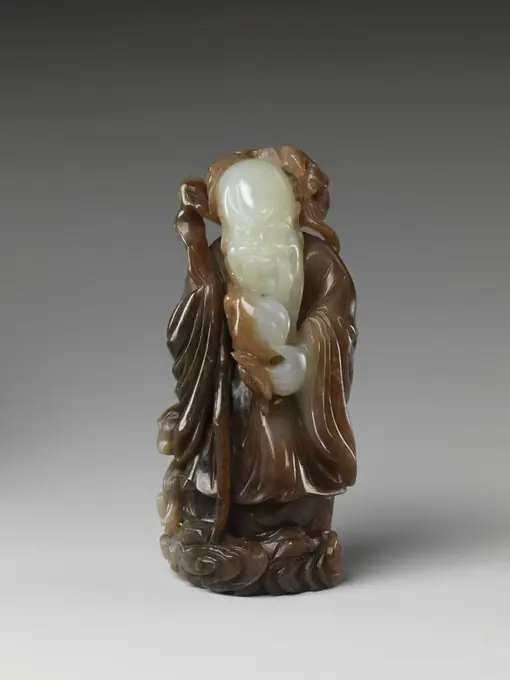
God of longevity. Culture: China. Dimensions: H. 3 5/8 in. (9.2 cm); W. 1 11/16 in. (4.3 cm); D. 1 3/8 in. (3.5 cm). Date: 18th century. Museum: Metropolitan Museum of Art, New York, USA.
4409-22839
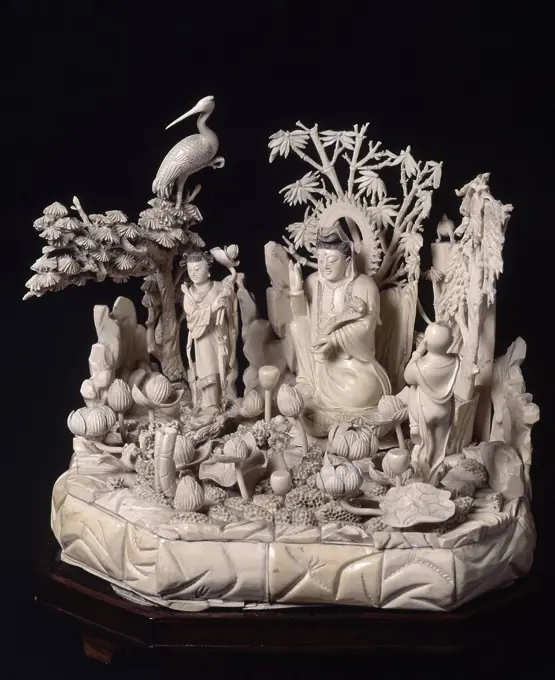
DIOSA DE MARFIL HINDU. Location: PRIVATE COLLECTION. MADRID. SPAIN.
4443-21956553
Pair of Busts: Louis XV and Marie Leczinska; Rue de Charenton Manufactory (Paris), or Chambrette Manufactory (Lunéville); Lunéville, France; about 1745 - 1755; Glazed earthenware (faience);
6145-58858861
River God with Hippocamp, Pieter Xaveri, c. 1760 - c. 1770 Neptunus is on a pedestal. His right arm rests on a cave from which water flows. There is a sea horse next to him. On the pedestal ships at sea, washed -up tons and crates are depicted. The image is signed with the initials PX. The pedestal is not signed and was later made by an unknown sculptor. Leiden Image: Terracotta (Clay Material). Pedimate: Wood (Plant Material) Neptunus is on a pedestal. His right arm rests on a cave from which water flows. There is a sea horse next to him. On the pedestal ships at sea, washed -up tons and crates are depicted. The image is signed with the initials PX. The pedestal is not signed and was later made by an unknown sculptor. Leiden Image: Terracotta (Clay Material). Pedimate: Wood (Plant Material)
6145-29066559
Vessel Ornament of Reclining Lyre-player, probably 400-375 BC. Italy, Etruscan, early 4th Century BC. Bronze with gilding traces; overall: 5.2 cm (2 1/16 in.).
6145-29830620
Terracotta relief probably from a funnel vase late 3rd-early 2nd century B.C. Greek, South Italian, Apulian, Canosan This is one of four reliefs with two-figure compositions depicting a combat, likely between a Gaul and a Greek. Here the victor is binding the fallen enemy. Several reliefs probably decorated a large funerary jar. They rested on a shelf-like projection from the body of the vase and were secured by dowels through the holes in the plaque. This example came from a different vase than the others in the case because the curve at the base is tighter.. Terracotta relief probably from a funnel vase. Greek, South Italian, Apulian, Canosan. late 3rd-early 2nd century B.C.. Terracotta. Early Hellenistic. Vases
4409-17557491
The Peep Show, or the Magic Lantern (La Curiosité ou La Lanterne Magique). Sèvres Porcelain Manufactory; French, founded 1740; Modeled by Etienne-Maurice Falconet (French, 1716-1791). Date: 1752-1762. Dimensions: 15.6 x 16.8 cm (6 1/8 x 6 5/8 in.). Soft-paste unglazed porcelain (biscuit). Origin: Sèvres. Museum: The Chicago Art Institute, Chicago, USA.
4409-17483899
Horseman in a Storm. Dated: model c. 1878, cast after 1894. Dimensions: overall (including self-base): 47.2 x 59.3 x 23.9 cm (18 9/16 x 23 3/8 x 9 7/16 in.). Medium: bronze. Museum: National Gallery of Art, Washington DC. Author: JEAN-LOUIS-ERNEST MEISSONIER.
4409-17397465
Saint Alexius. 17th century. Workshop in Southern Germany. Carved wood in original colour. Detail. Museum of Pilgrimage and Santiago. Santiago de Compostela, Galicia, Spain.
6145-46445207
Christuskop, fragment. .
6145-29067475
Vesperbild (Pietà), c. 1420. Master of Grosslobming (Austrian). Painted cast stone; overall: 94 x 92.7 x 39.4 cm (37 x 36 1/2 x 15 1/2 in.).
6145-29192983
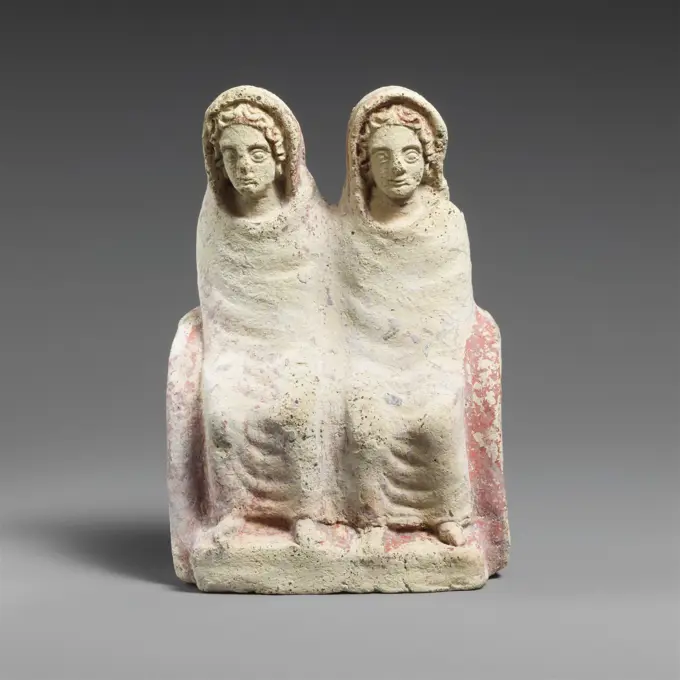
Terracotta votive statuette of two draped females 4th-3rd century B.C. Etruscan Two seated, cloaked women.. Terracotta votive statuette of two draped females 250577 Etruscan, Terracotta votive statuette of two draped females, 4th3rd century B.C., Terracotta, H. 5 7/16 in. (13.8 cm). The Metropolitan Museum of Art, New York. Rogers Fund, 1917 (17.230.44)
6145-45904886
Man with ladder. On an elongated plate is a man with a stitch and outstretched left hand. On his right shoulder, the man carries a ladder, behind him is on the plate a dog. A diamond pattern is engraved in the plate. The image is marked with a dolphin and a master sign.
6145-29070583
Adam and Eve, 1518. Ludwig Krug (German, 1490-1532). Bronze; overall: 12.7 x 10.8 cm (5 x 4 1/4 in.).
6145-29873242
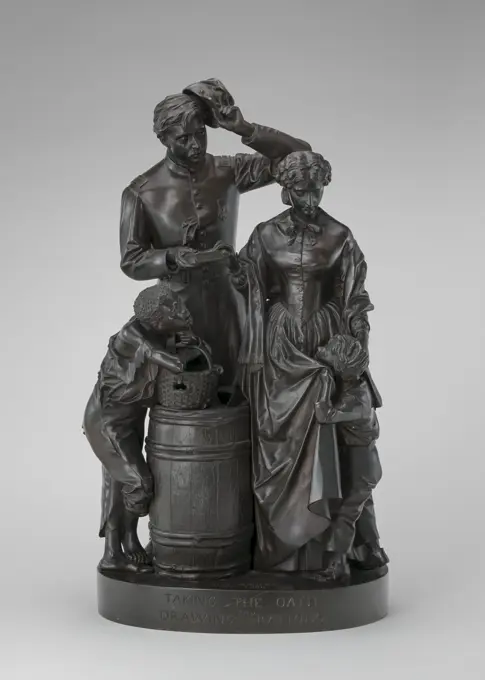
John Rogers, Taking the Oath and Drawing Rations, model 1865, cast 1866 Taking the Oath and Drawing Rations
4409-17371620
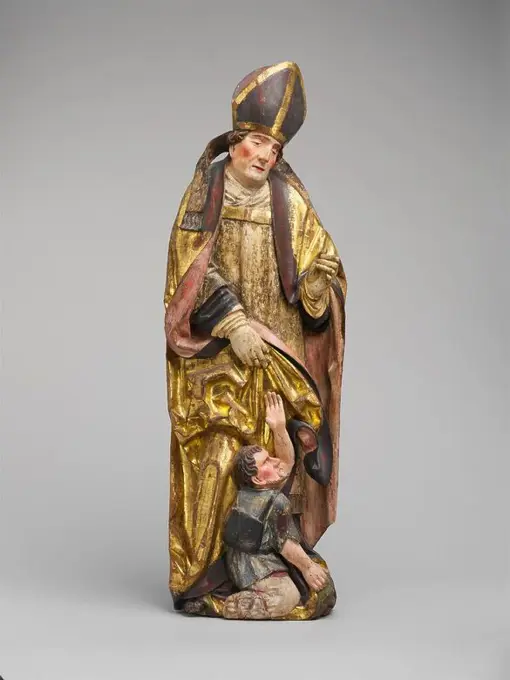
Saint Martin of Tours. Culture: German. Dimensions: 44 3/4 × 15 1/2 × 6 1/4 in., 18.2 lb. (113.7 × 39.4 × 15.9 cm, 8.2 kg). Date: late 15th-early 16th century. Museum: Metropolitan Museum of Art, New York, USA.
4409-17408243
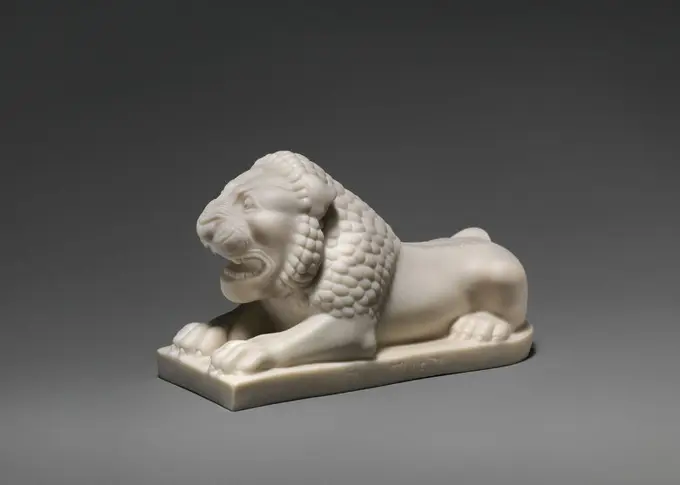
Figure of a Lion. Culture: British. Designer: Aaron Hays (British, active 1845-76). Dimensions: Overall: 2 7/8 × 4 7/8 × 2 1/16 in. (7.3 × 12.4 × 5.2 cm). Manufacturer: Copeland & Garrett. Date: 1878.This specific ceramic body--an unglazed porcelain resembling white marble--was introduced in the 1840s by the firm of Copeland in England, and it was used extensively for the production of small scale sculpture intended to be affordable to the middle classes. Famous Ancient and modern sculptures were reproduced in greatly reduced scale in this new medium, and Parian statuary by the Copeland firm achieved a great success at the Great Exhibition of 1851. Museum: Metropolitan Museum of Art, New York, USA.
1788-27057
Goldsmith's art, Germany, 16th century. Enamelled gold set with pearls, diamonds and rubies pendant representing a Siren, 1580-1590, mm. 108x57.
6145-29115554
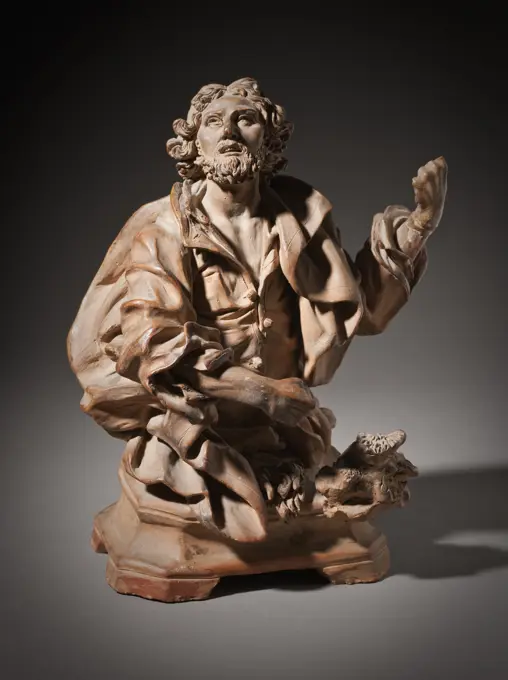
Bust of a Saint (Possibly Saint Longinus), Model for a Reliquary. Giuseppe Sanmartino (Italy, Naples, 1720-1793). late 18th century. Sculpture. Earthenware
1788-27045
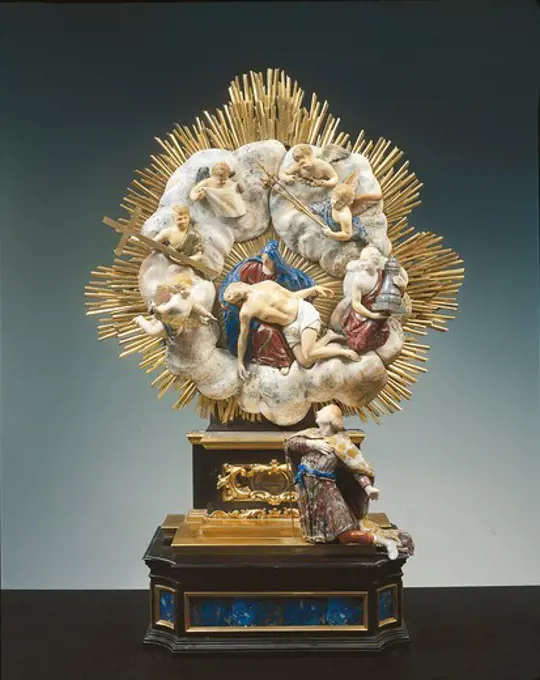
Goldsmith's art, Italy, 18th century. Giuseppe Antonio Torricelli (1662-1719), Reliquary of Saint Emeric in gilded bronze, ebony, pietre dure and precious stones, 1717. Height 75 cm.
6145-29161482
Mirror frame fragment 18th century French. Mirror frame fragment 189652 French, Mirror frame fragment, 18th century, Carved and gilded wood, 19 3/4  23 3/4 in. (50.2  60.3 cm). The Metropolitan Museum of Art, New York. Gift of J. Pierpont Morgan, 1906 (07.225.389)
6145-29787299
The Bather ca. 1780 or 19th-early 20th century By or after Jean Antoine Houdon French The original composition of Houdon's fountain at the Parc Monceau is believed to be preserved in this patinated terracotta sketch. It fails, however, to capture the striking impact of the lost group in which the lead figure of the black servant stood in vivid contrast to the white marble of the basin and the seated bather herself.. The Bather 197037
6145-59008313
Anonymous. Fire. Chiseled and gilded bronze. 1701-1800. Paris, Carnavalet museum. Furniture, furniture
6145-29171364
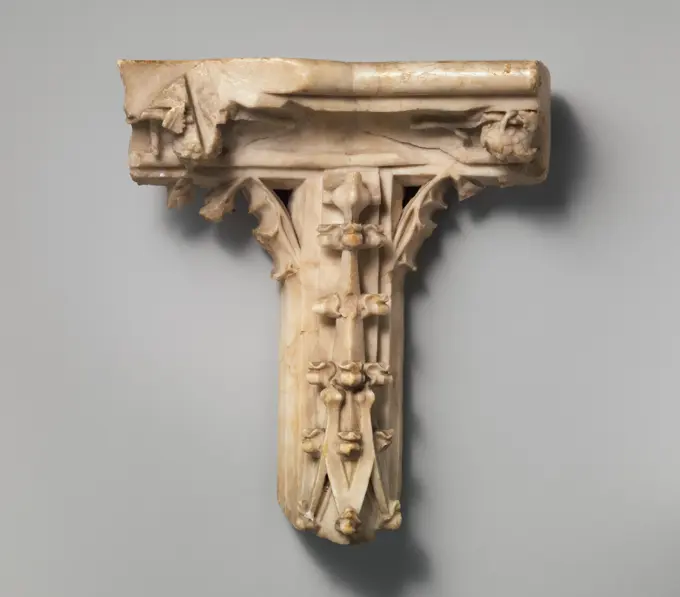
Fragment from the Tomb of John the Fearless and Margaret of Austria ca. 1443-55 Jean de la Huerta Spanish This delicately carved fragment comes from the tomb of Duke, John the Fearless and Margaret of Austria, one of the most important sculptural monuments of the middle ages. It belongs to the architectural decoration that surmounts the mourner figures which form the principle decoration of the sides of the tomb. Made originally for the Chartreuse de la Sainte-Trinité de Champmol, the Carthusian monastery on the outskirts of Dijon, the tomb has been reconstructed in the Musée des Beaux-Arts in Dijon where it is exhibited today.. Fragment from the Tomb of John the Fearless and Margaret of Austria 479788
4292-142959
Europe, Portugal, Lisbon, Museu Nacional de Arte Antiga
6145-52952673
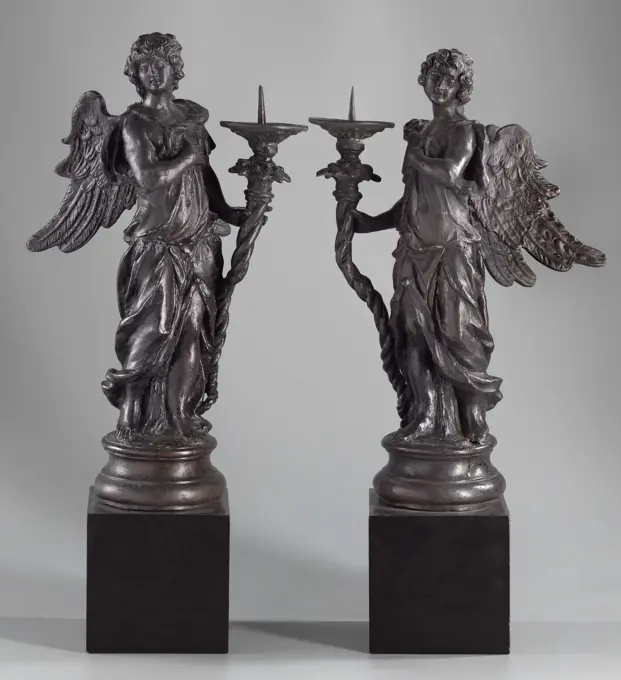
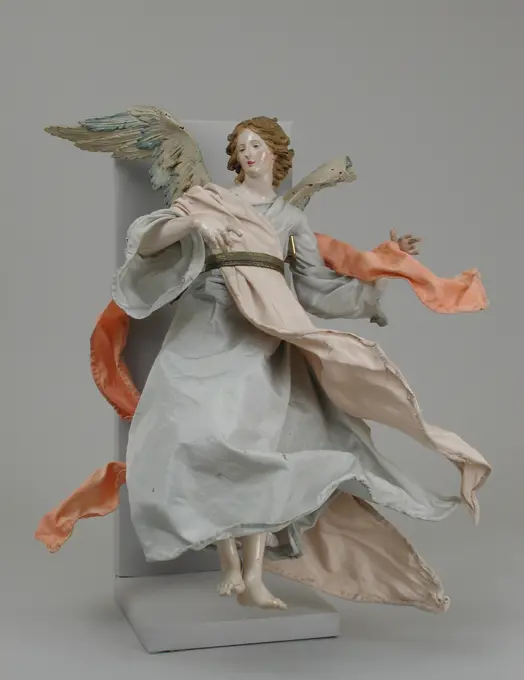
Angel Italian, Naples 18th-19th century In 1964, Loretta Hines Howard generously presented to the Museum over 140 Neapolitan crèche figures, dating from the second half of the eighteenth century. The varied assortment includes figures from the three traditional scenes of a complete Neapolitan presepio: the Nativity, with angels, shepherds, and sheep; the procession of the three Magi, with their colorful retinue of attendants; and the varied and gay crowd of country and town people thronging the tavern, or inn, of Bethlehem  the diversorium mentioned by St. Luke, where on the Holy Night there was no place for Mary and Joseph. Averaging between twelve and fifteen inches in height, according to the position they were to take in perspective in the stage set, the figures are pliable and can be given poses at will, according to their facial expressions. Their bodies are made of tow and wire, their arms and legs are finely carved of wood, and their heads and shoulders are modeled of terracot
4443-21196827
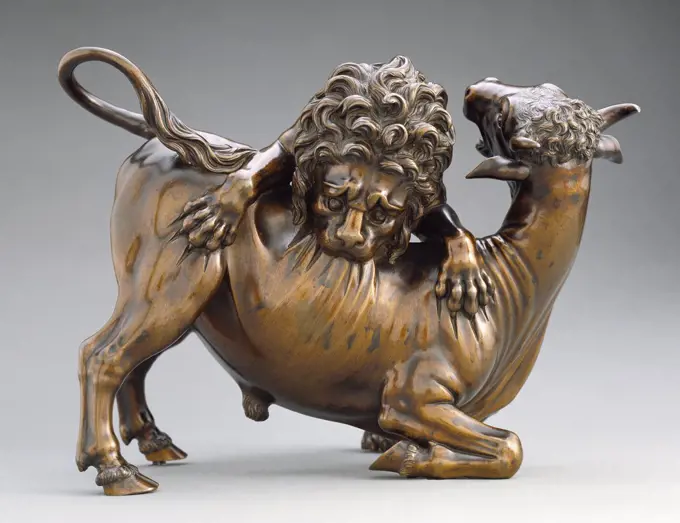
Lion Attacking a Bull; Antonio Susini, Italian, active 1572 - 1624, or Giovanni Francesco Susini, Italian, 1585 - 1653, after models by Giambologna (Giovanni da Bologna or Jean de Boulogne), Italo-Flemish, 1529 - 1608; Italy, Europe; first quarter of 17th century; Bronze; Object: 20.3 x 27.3 cm (8 x 10 3/4 in.)
6145-29083459
Medallion (obverse). Jules Dupré (French, 1811-1889). Bronze; overall: 6.4 x 5.1 cm (2 1/2 x 2 in.).
1746-29010306
Sculpture titled 'St Joseph with the Christ Child' by Jose Risueño (1665-1721) a Spanish painter and sculptor of the Baroque period. Dated 18th Century
6145-29145924
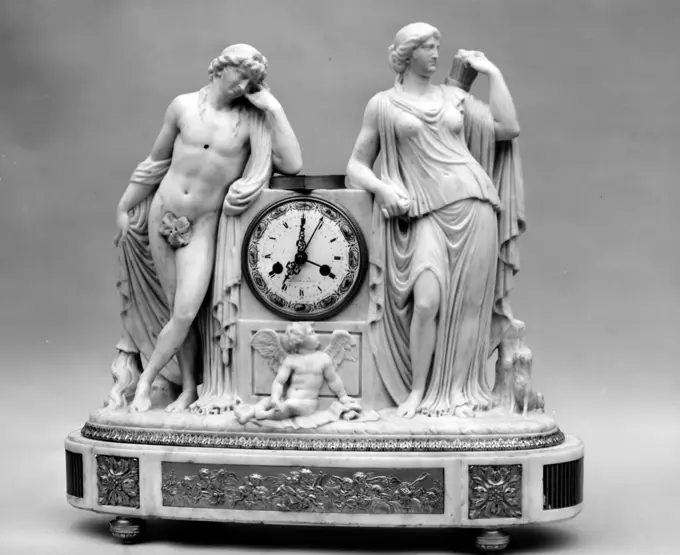
Clock first quarter 19th century Clockmaker: Drouot. Clock. French, Paris. first quarter 19th century. Marble, gilt bronze. Horology
4409-19322035
Relicario de la Santa Espina, Marc Canyes hijo, 1453. Catedral de Barcelona.
4266-10925
Sculpture with fighting warriors by unknown artist, gold, circa 400 BC, Russia, St Petersburg, State Hermitage, 12, 6x10, 2
4409-17371554
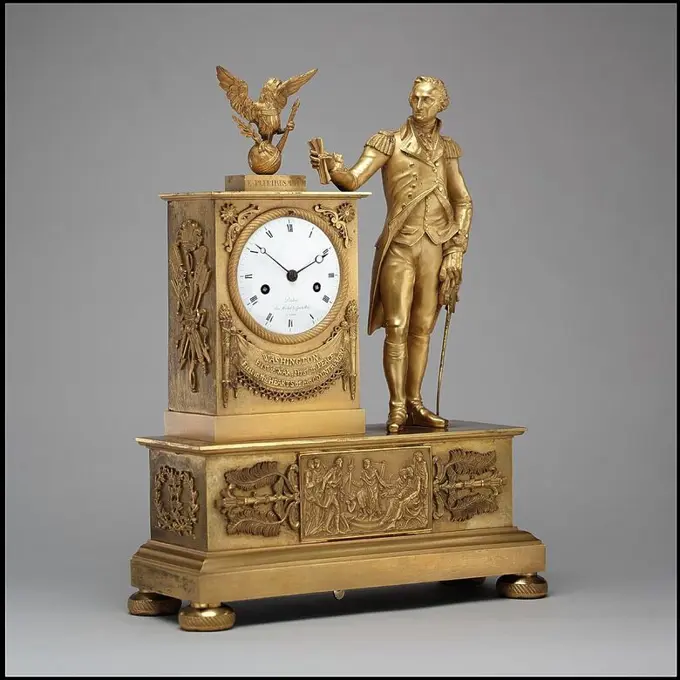
Clock. Dimensions: 19 x 14 1/8 in. (48.3 x 35.9 cm). Maker: Dubuc (active ca. 1780-1819). Date: 1815-20.After the War of 1812 imported French clocks in gilt-bronze cases depicting allegorical subjects were marketed extensively in America, especially in New York. The standing figure of Washington is based on John Trumbull's painting "George Washington before the Battle of Trenton" (22.45.9), which was well known in Europe through engravings. The clock is replete with patriotic symbolism, including the seal of the United States and the eulogy under the dial taken from Major General Henry Lee's Funeral Oration on the Death of General Washington (1800). Museum: Metropolitan Museum of Art, New York, USA.
PREVIOUS
of 2
NEXT
2401 S. Ervay, Suite 206
Dallas, Texas 75215
United States
Get Started
Free ResearchMy BoardsMy Cart
For Creators
How To License Your ContentContributor PortalFrame of Mind
Resources
API accessPricing
Contact
+1 866 236 0087help@viewpictures.co.uk Contact form
©2026 View Pictures. All Rights Reserved. -A
This site is protected by reCAPTCHA and Google Privacy Policy and Terms of Service apply.