My Boards
View Pictures
  • My Boards

Space Shuttle Launch Events

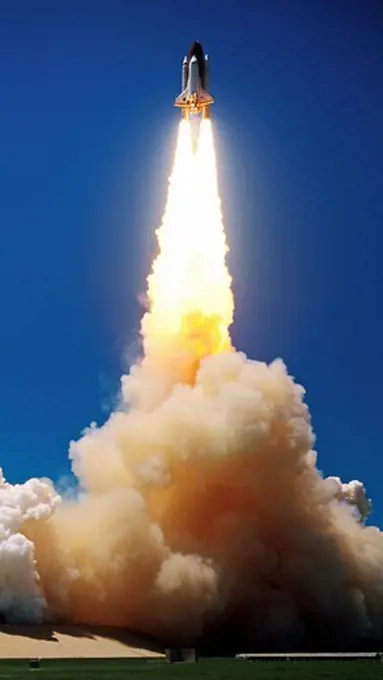
Dynamic images of rocket launches including Space Shuttles and Falcon Heavy. The visuals capture the intensity and excitement of liftoffs against dramatic skies.

Launch of Space Shuttle Discovery on STS-121
236 assets in this story
6145-44597182
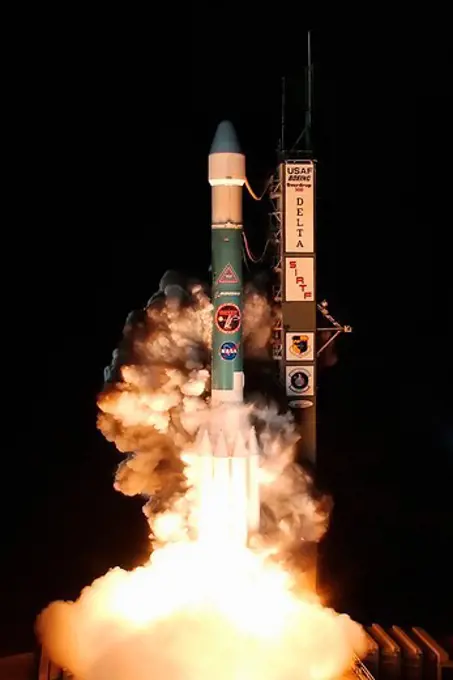
A trail of smoke is all that identifies the Delta II rocket with its Mars Exploration Rover (MER-A) payload as it hurtles into space. Liftoff occurred on time at 1:58 p.m. EDT from Launch Complex 17-A, Cape Canaveral Air Force Station. MER-A, known as "Spirit," is the first of two rovers being launched to Mars. When the two rovers arrive at the red planet in 2004, they will bounce to airbag-cushioned landings at sites offering a balance of favorable conditions for safe landings and interesting science. The rovers see sharper images, can explore farther and examine rocks better than anything that has ever landed on Mars. The designated site for the MER-A mission is Gusev Crater, which appears to have been a crater lake. The second rover, MER-B, is scheduled to launch June 25.
4389-1461
Launch of Spitzer Space Telescope
6145-45027608
CAPE CANAVERAL, Fla. - At NASA Kennedy Space Center's Press Site in Florida, participants in NASA's Tweetup photograph the launch of the agency's Mars Science Laboratory (MSL) from the turn basin. The tweeters will share their experiences with followers through the social networking site Twitter.  The 197-foot-tall United Launch Alliance Atlas V rocket lifted off Space Launch Complex-41 on neighboring Cape Canaveral Air Force Station at 10:02 a.m. EST at the opening of the launch window.MSL's components include a car-sized rover, Curiosity, which has 10 science instruments designed to search for signs of life, including methane, and help determine if the gas is from a biological or geological source.
6145-45218763
The Soyuz MS-15 spacecraft is launched with Expedition 61 crewmembers Jessica Meir of NASA and Oleg Skripochka of Roscosmos, and spaceflight participant Hazzaa Ali Almansoori of the United Arab Emirates, Wednesday, Sept. 25, 2019 from the Baikonur Cosmodrome in Kazakhstan.
6145-44624599
The Soyuz TMA-5 spacecraft blasts off from the Baikonur Cosmodrome in Kazakhstan, Thursday, October 14, 2004, carrying Expedition 10 Commander Leroy Chiao, Flight Engineer and Soyuz Commander Salizhan Sharipov and Russian Space Forces cosmonaut Yuri Shargin to the International Space Station.  The crew will dock to the Station on October 16, and Chiao and Sharipov will replace the current Station crew members, Gennady Padalka and Mike Fincke, who will return to Earth October 24 with Shargin.
6145-45212225
The Soyuz MS-13 rocket is launched with Expedition 60 Soyuz Commander Alexander Skvortsov of Roscosmos, flight engineer Andrew Morgan of NASA, and flight engineer Luca Parmitano of ESA (European Space Agency), Saturday, July 20, 2019 at the Baikonur Cosmodrome in Kazakhstan. Skvortsov, Morgan, and Parmitano launched at 12:28 p.m. Eastern time (9:28 p.m. Baikonur time) to begin their mission to the International Space Station.
4397-112
Smokey Sam Rocket Launching
6145-44982410
DATE: 11-20-13LOCATION: Van Horn, TxSUBJECT: Blue Origin Milestone 3.6 BE-3 Engine Test Fire
6145-45212432
The Soyuz MS-13 rocket is launched with Expedition 60 Soyuz Commander Alexander Skvortsov of Roscosmos, flight engineer Andrew Morgan of NASA, and flight engineer Luca Parmitano of ESA (European Space Agency), Saturday, July 20, 2019 at the Baikonur Cosmodrome in Kazakhstan. Skvortsov, Morgan, and Parmitano will join fellow Expedition 60 crew members Commander Alexey Ovchinin of Roscosmos and NASA flight engineers Nick Hague and Christina Koch, who have been aboard the International Space Station since March.
6145-45163068
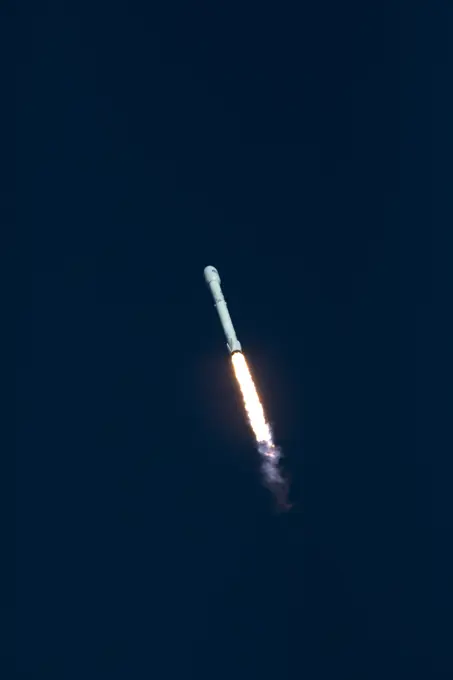
A SpaceX Falcon 9 rocket soars upward after lifting off from Space Launch Complex 40 at Cape Canaveral Air Force Station in Florida, carrying NASA's Transiting Exoplanet Survey Satellite (TESS). Liftoff was at 6:51 p.m. EDT. TESS will search for planets outside of our solar system. The mission will find exoplanets that periodically block part of the light from their host stars, events called transits. The satellite will survey the nearest and brightest stars for two years to search for transiting exoplanets.
4356-205
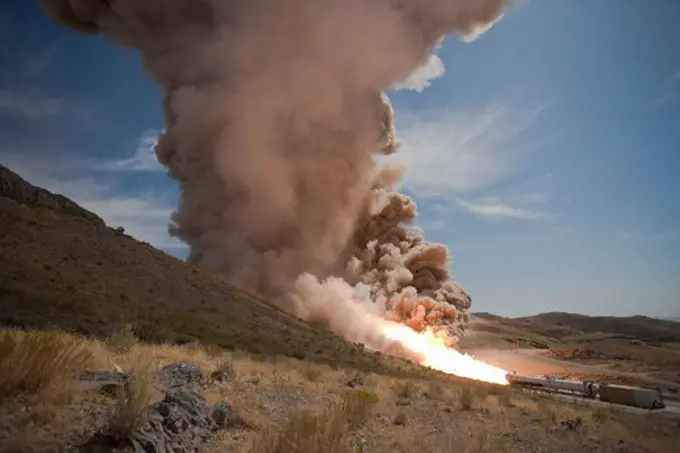
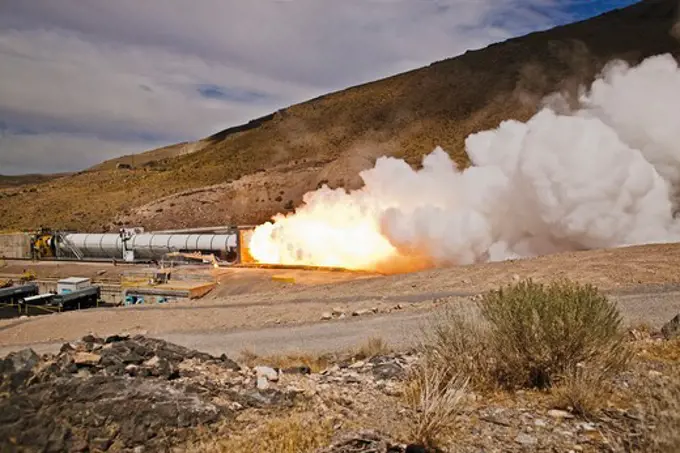
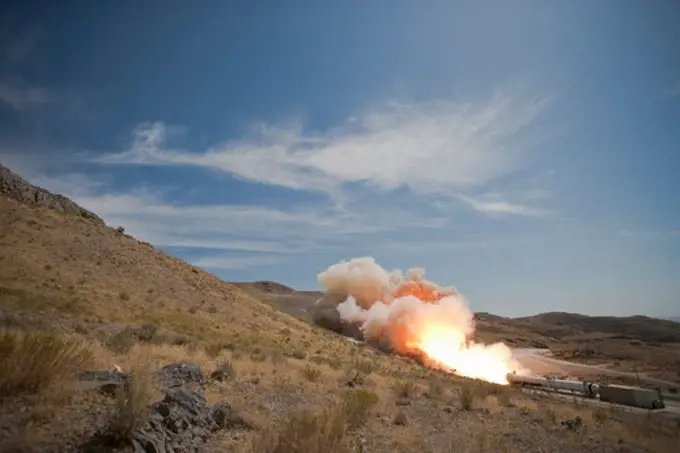
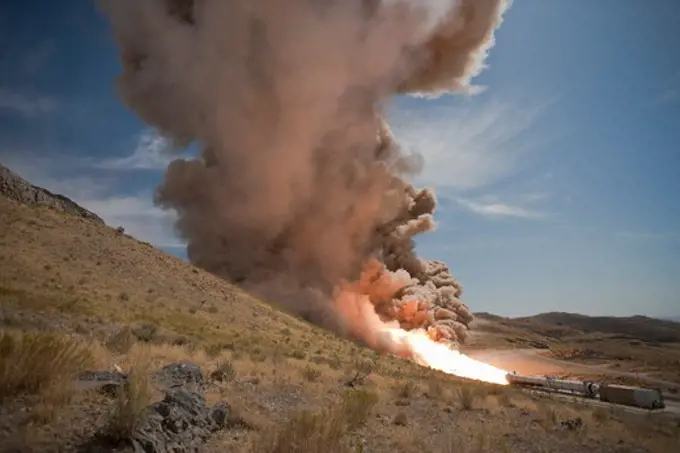
Largest Rocket in the World Successfully Test Fired, Seen From Remote Camera Angle About 200 Yards Away
4356-192
Flameout After Two Minute Burn, the End of the First Test Firing of the World's Largest Rocket Motor, as Seen From Only 225 Feet Away
6145-45075313
The Soyuz TMA-14M rocket launches from the Baikonur Cosmodrome in Kazakhstan on Friday, Sept. 26, 2014 carrying Expedition 41 Soyuz Commander Alexander Samokutyaev of the Russian Federal Space Agency (Roscosmos), Flight Engineer Barry Wilmore of NASA, and Flight Engineer Elena Serova of Roscosmos into orbit to begin their five and a half month mission on the International Space Station.  (
6145-44711058
S66-34064 (3 June 1966) -- The Gemini-9 spacecraft, carrying astronauts Thomas P. Stafford, command pilot, and Eugene A. Cernan, pilot, was successfully launched by the National Aeronautics and Space Administration from the Kennedy Space Center s Launch Complex 19 at 8 39 a.m. (EST), June 3, 1966.
6145-44603299
The Soyuz TMA-3 vehicle launches from the Baikonur Cosmodrome in Kazakhstan, Saturday, Oct. 18, 2003, carrying Expedition 8 Commander and NASA Science Officer Michael Foale, Expedition 8 Soyuz Commander Alexander Kaleri and European Space Agency astronaut Pedro Duque of Spain to the International Space Station. The trio will arrive at the ISS Oct. 20, as Foale and Kaleri take over command of Station operations for the next 6-1/2 months. Duque will return to Earth Oct. 28 with Expedition 7 Commander Yuri Malenchenko and NASA Science Officer Ed Lu in another Soyuz capsule already docked to the ISS.
6145-44523220
KENNEDY SPACE CENTER, FLA. -- Trailing a plume of smoke, Space Shuttle Endeavour pierces a small cloud, briefly lighting it from within, during launch on mission STS-100. Liftoff of the ninth flight to the International Space Station occurred at 2:40:42 p.m. EDT. The 11-day mission will deliver and integrate the Spacelab Logistics Pallet/Launch Deployment Assembly, which includes the Space Station Remote Manipulator System and the UHF Antenna. The mission includes two planned spacewalks for installation of the SSRMS on the Station. Also onboard is the Multi-Purpose Logistics Module Raffaello, carrying resupply stowage racks and resupply/return stowage platforms
5507-49091369
a rocket launching into the sky over a city
1889-49004911
Geysir, or also known as 'the great geysir', was the first geyser described in a printed source and the first known to modern Europeans; Blaskogabyggo, Southern Region, Iceland
6145-45218767
The Soyuz MS-15 spacecraft is launched with Expedition 61 crewmembers Jessica Meir of NASA and Oleg Skripochka of Roscosmos, and spaceflight participant Hazzaa Ali Almansoori of the United Arab Emirates  Wednesday, Sept. 25, 2019 from the Baikonur Cosmodrome in Kazakhstan.
6145-44593967
April 26, 2003, Baikonur Cosmodrome, Kazakhstan.  Astronaut Edward T. Lu, NASA ISS science officer and flight engineer for Expedition Seven and Cosmonaut Yuri I. Malenchenko, Commander were launched onboard a Soyuz rocket at 9:53aam from Baikonur, Kazakhstan.
4367-106
Rocket Launching
4356-201
Largest Rocket in the World Successfully Test Fired, Seen From Remote Camera Angle About 200 Yards Away
6145-52084886
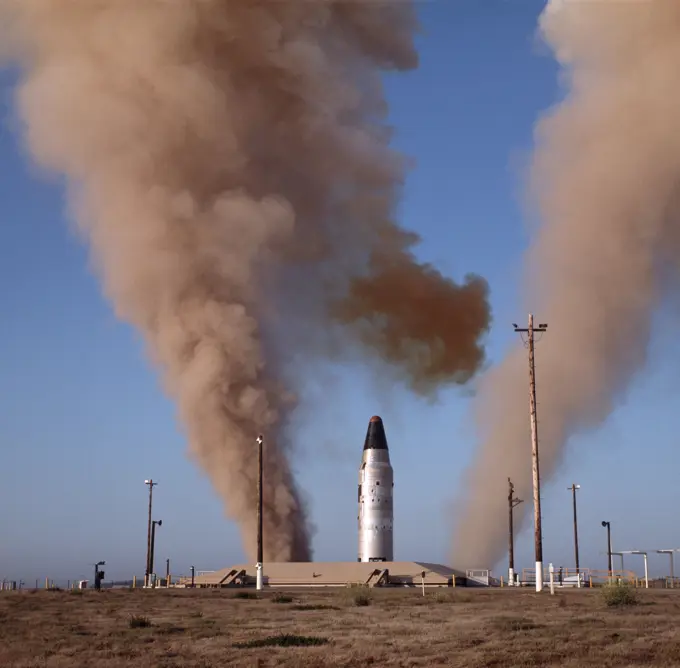
A Titan II missile is launched. Base: Vandenberg Air Force Base State: California (CA) Country: United States Of America (USA)
6145-44781344
STS128-S-035 (28 Aug. 2009) --- Against a black night sky, Space Shuttle Discovery and its seven-member STS-128 crew head toward Earth orbit and rendezvous with the International Space Station (ISS). Liftoff was on time at 11:59 p.m. (EDT) on Aug. 28, 2009 from launch pad 39A at NASAs Kennedy Space Center. Onboard are astronauts Rick Sturckow, commander; Kevin Ford, pilot; John Danny Olivas, European Space Agency astronaut Christer Fuglesang, Patrick Forrester, Jose Hernandez and Nicole Stott, all mission specialists. Stott will join Expedition 20 in progress to serve as a flight engineer aboard the ISS. The 13-day mission will deliver more than seven tons of supplies, science racks and equipment, as well as additional environmental hardware to sustain six crew members on the space station. The equipment includes a freezer to store research samples, a new sleeping compartment and the COLBERT treadmill. The mission is the 128th in the Space Shuttle Program, the 37th flight of Discove
4356-204
Largest Rocket in the World Successfully Test Fired, Seen From Remote Camera Angle About 200 Yards Away
6145-44488734
A lightning strike was recorded at Launch Complex 39B at NASAs Kennedy Space Center in Florida during the evening of April 2, 2022. NASAs Space Launch System (SLS) and Orion spacecraft were undergoing a prelaunch test called a wet dress rehearsal at the pad for the Artemis I mission. The lightning strike was recorded by cameras stationed at the pad and mobile launcher using a special filter called a “clear day frame,” which provides an overlay of the raw frame on a reference image. Artemis I will be the first integrated test of the SLS and Orion spacecraft. In later missions, NASA will land the first woman and the first woman of color on the surface of the Moon, paving the way for a long-term lunar presence and serving as a steppingstone on the way to Mars.
4316-257
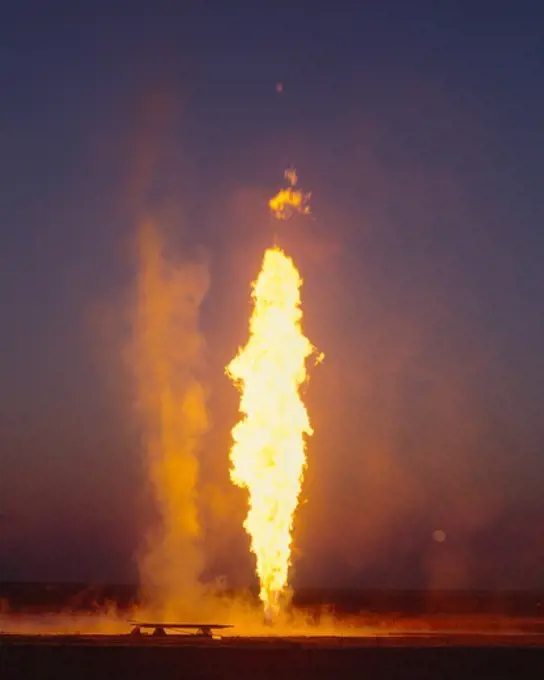
Fierce Updrafts From a Natural Gas Well Fire Lifts a Dust Devil into the Night Sky as a Full Moon Rises in the Distance
6145-45097971
THE GAS GENERATOR TO AN F-1 ENGINE, THE MOST POWERFUL ROCKET ENGINE EVER BUILT, IS TEST-FIRED AT NASA'S MARSHALL SPACE FLIGHT CENTER IN HUNTSVILLE, ALABAMA, ON SEPT. 3. ALTHOUGH THE ENGINE WAS ORIGINALLY BUILT TO POWER THE SATURN V ROCKETS DURING AMERICA'S MISSIONS TO THE MOON, THIS TEST ARTICLE HAD NEW PARTS CREATED USING ADDITIVE MANUFACTURING, OR 3-D PRINTING, TO TEST THE VIABILITY OF THE TECHNOLOGY FOR BUILDING NEW ENGINE DESIGNS.
6145-45160816
After eight months of designing, building and testing, the middle school, high school and college and university teams launched their rockets as part of NASA Student Launch on Sunday, April 8. The rockets and their payloads are designed to fly to 1-mile in altitude before deploying recovery systems that brings them safely to the ground.
6145-44965446
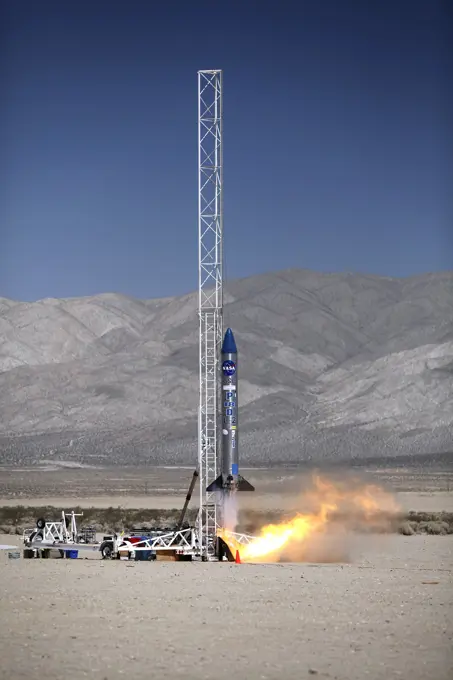
MOJAVE DESERT, Calif. - In the Mojave Desert in California, the Garvey Spacecraft Corporation's Prospector P-18D rocket lifts off at 10:52 a.m. PDT carrying the RUBICS-1 payload on a high-altitude, suborbital flight. The rocket carried four satellites made from four-inch cube sections.The rocket reached a peak altitude of about 9,000 feet, however the parachute deployed prematurely and the vehicle continued on its trajectory, coasting and tumbling to a hard landing on its side. In spite of the rough ride, all four CubeSats were recovered. PhoneSat and RUBICS received data in flight, but sustained structural damage. CP-9 and StangSat fared better, and their teams are working to recover as much information as possible. Collectively known as CubeSats, the satellites were designed to record shock, vibrations and heat inside the rocket. The results will be used to prove or strengthen their designs before they are carried into orbit in 2014 on a much larger rocket. Built by several differ
6145-45131448
2017 Student Launch activities at the Bragg Farm in Toney, Alabama
1525-25685235
3d illustration of a nuclear rocket bomb flying over a landscape field
5507-49038058
launching and flying space rocket to a cosmos
6145-45233421
Marshall Space Flight Center's rocket development has always included component testing. Pictured here is a Cell 114-B burn stack. The C114-B is part of the gas generators used to test heat exchanges for the F-1 engine. On the initial firing of the C114-B the spark ignition would not light. The rocket propellant mixed with the liquid oxygen gelled creating a bomb. After several attempts at ignition, the spark ignited and blew up the stand. Subsequent testings were completed on newly constructed stands and no further mishaps were reported.
6145-45160563
After eight months of designing, building and testing, the middle school, high school and college and university teams launched their rockets as part of NASA Student Launch on Sunday, April 8. The rockets and their payloads are designed to fly to 1-mile in altitude before deploying recovery systems that brings them safely to the ground.
6145-45160347
After eight months of designing, building and testing, the middle school, high school and college and university teams launched their rockets as part of NASA Student Launch on Sunday, April 8. The rockets and their payloads are designed to fly to 1-mile in altitude before deploying recovery systems that brings them safely to the ground.
PREVIOUS
of 3
NEXT
2401 S. Ervay, Suite 206
Dallas, Texas 75215
United States
Get Started
Free ResearchMy BoardsMy Cart
For Creators
How To License Your ContentContributor PortalFrame of Mind
Resources
API accessPricing
Contact
+1 866 236 0087help@viewpictures.co.uk Contact form
©2026 View Pictures. All Rights Reserved. -A
This site is protected by reCAPTCHA and Google Privacy Policy and Terms of Service apply.