My Boards
View Pictures
  • My Boards
← Artworks

Tapestries and Historical Scenes

Fragments of tapestries and frescoes illustrating historical and mythical narratives, showcasing intricate designs, vibrant colors, and detailed characters.
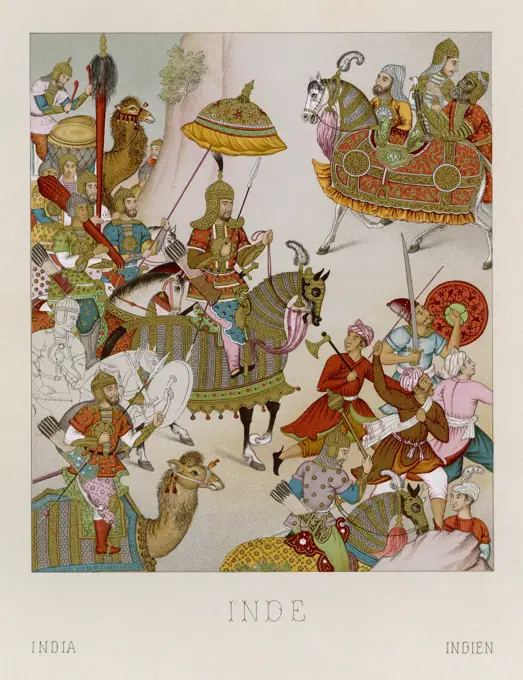
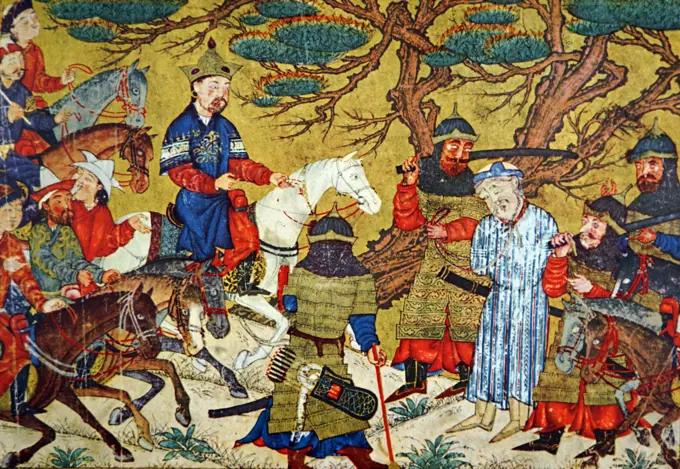
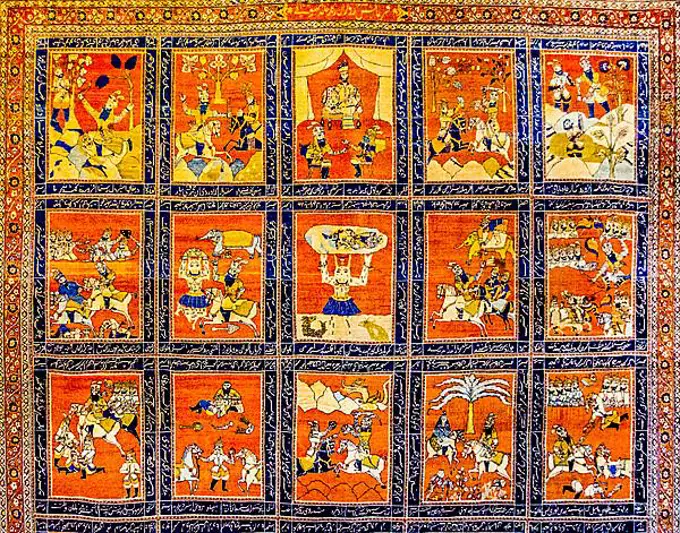
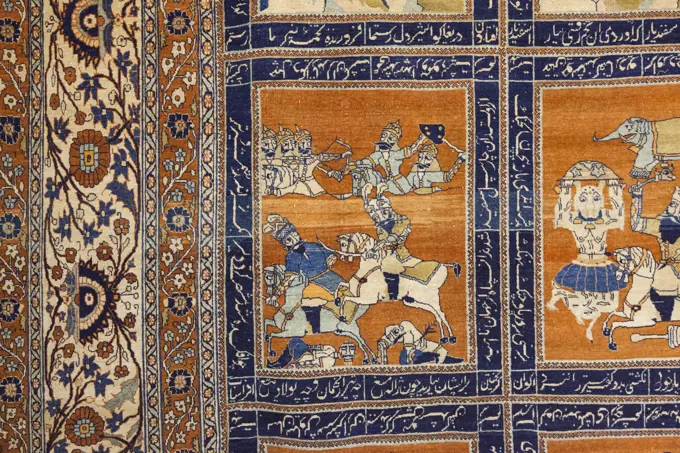
Babur (1483-1531), Mughal Emperor of India (ruled 1526-1530), depicted with his army invading Persia.      Date: circa 1526
Babur (1483-1531), Mughal Emperor of India (ruled 1526-1530), depicted with his army invading Persia. Date: circa 1526
172 assets in this story
6145-59058795
Serenade; Makowski, Tadeusz (1882-1932); 1908 (1908-00-00-1908-00-00);
4430-3595
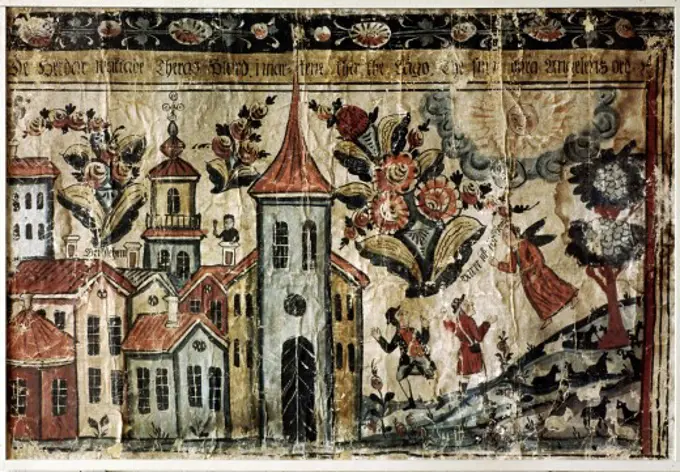
fine arts, religious art, biblical scenes, annunciation to the shepherds, painting, Dalecarlian rustic painting, 19th century, Dalarnas museum, Falun,
6145-51836126
Battle Scene from a Bhagavata Purana Series Indian. Battle Scene from a Bhagavata Purana Series, ca. 1625-1650. Opaque watercolor and gold on thin paper, sheet: 4 3/4 x 8 3/4 in. (12.1 x 22.2 cm).   Asian Art ca. 1625-1650
4443-75468811
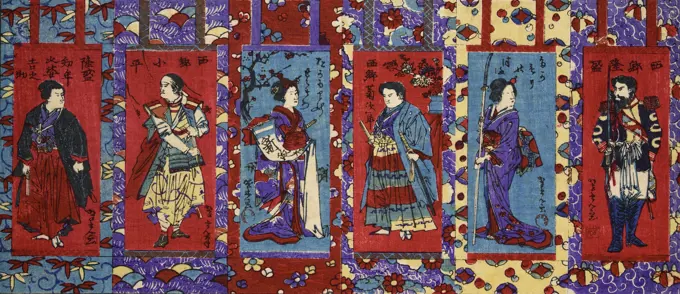
Short biographies from the Kyushu War, 1877, Woodcuts, Color; bound in booklet, Paper / Sheet 14 3/4 x 6 9/16 in. (37.5 x 16.7 cm)
4409-156619
AZULEJO PERSA DE CABALLERO CON PAJARO. Location: MUSEE D'ARTS DECORATIFS. MADRID. SPAIN.
1746-30020137
Persian painting. Colour plates
1788-30743
St George slaying the Dragon, from the Borgia Collection, by an anonymous Slavic artist, oil on canvas, 18th Century, 22,4 x17,8cm.
6145-29076469
Section of an Embroidered Frieze: Ahasuerus and Esther, The Pope Chiding the Emperor, Henry VIII treading on the Pope's Neck, 1625-1649. England, Period of Charles I (1625-1649), 17th century. Petit-point embroidery; wool and silk; overall: 43.7 x 164.4 cm (17 3/16 x 64 3/4 in.).
1746-21128737
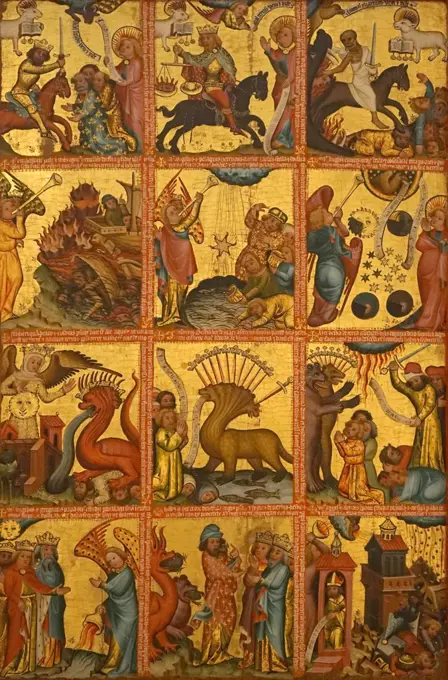
Oil and gold leaf triptych with scenes from the apocalypse by Master Betram (active 1367-1414)  a German International Gothic painter. Dated 14th Century
6145-51833633
Nata Ragini, Page from a Ragamala Series Indian. Nata Ragini, Page from a Ragamala Series, ca. 1675. Opaque watercolor and gold on paper, 12 3/8 x 8 7/8in. (31.4 x 22.5cm).  In the fifteenth or sixteenth century, a new genre of painting developed that attempted to capture in imagery the moods of famous passages of classical music. The music, known as ragas or raginis, inspired artists to create little scenarioshappy or sad, fierce or quiet, taking place in the daytime or nighttime, the summer or winterthat were illustrated over and over again. The Nata musical theme is always depicted with warriors fighting. The hero, in a sumptuous golden coat and riding a fine (but strangely small) steed, easily overcomes his unmounted opponents, one of whom he has already decapitated. One of the most striking features of this painting is the highly dynamic treatment of the rocks in the background and foreground, which create a lively frame for the action. The convention of depicting rocks as swell
1848-54750323
Azulejos, Blazons Hall, Sintra National Palace, Sintra, Unesco World Heritage Site, Lisbon, Portugal, Europe
6145-45847655
Willem Ysbrantsz. Spotted cow. Sheet with 8 performances of the adventures of Willem Ysbrantsz. Bontekoe and his ship. Under every image a caption.
4435-8077
Codex Osuna (Cdice Osuna). 16th c. Manuscrit written in nauhtl and spanish, that compiles the acusations against the Viceroy de Mexico Luis Velasco, gathered by Jernimo de Valderrama in 1563-1565. Indigenous hunter-warriors. Miniature Painting. SPAIN. MADRID (AUTONOMOUS COMMUNITY). Madrid. National Library.
4409-17534426
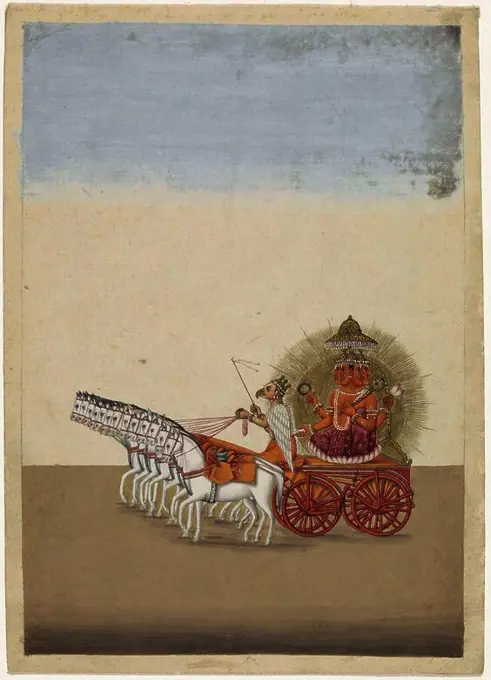
Solar car. Draughtsman: anonymous. Dating: 1820 - 1840. Place: India. Measurements: h 202 mm × w 145 mm. Museum: Rijksmuseum, Amsterdam.
4445R-16094
Paper-cutting
7153-70517086
Russia. Sergiev Posad. Folk art.
6145-51834358
Mantle ("The Paracas Textile") Nasca. Mantle ("The Paracas Textile"), 100-300 C.E. Cotton, camelid fiber, 24 5/8 × 58 11/16 in. (62.5 × 149 cm).  This extraordinarily complex mantle, or cloak, is one of the most renowned Andean textiles in the world. It was most likely used as a ceremonial object. The ninety figures decorating the border, created by needle knitting, have been interpreted as a microcosm of life on Perus South Coast two thousand years ago, with a particular focus on agriculture. Many of the images illustrate native flora and fauna as well as cultivated plants. Costumed figures may represent humans impersonating gods and acting as intermediaries between the real and supernatural worlds. Severed human trophy heads are shown as germinating seeds, suggesting the practice of ritual sacrifice and the interconnected cycles of birth and death. Este extraordinariamente complejo manto, o capa, es uno de los textiles andinos más conocidos en el mundo. Fue usado probablemente como
6145-29741805
Wall hanging with scene from an opera 19th century China This wall hanging depicts a battle scene from an opera. A tangle of arms, legs, weapons, and costumes fills the visual space, bringing the drama of the battle to life, and the figures, enlarged to heroic scale, tower over the viewer. The textile makers used animal hair for the middle figures beard to add texture and three-dimensionality to the work. This banner might have hung on a stage to provide a background setting for an opera production, or perhaps it decorated another part of a theater.. Wall hanging with scene from an opera. China. 19th century. Silk and metallic thread embroidery on plain-weave wool with animal fibers. Qing dynasty (1644-1911). Textiles-Embroidered
4443-21770535
A frost sits under a canopy against a brown background. Next to him five men, a goat and a horse. One of the men is holding a hawk. On the right half of the drawing a palace. A prince surrounded by a group of men in front of a palace., paper, brush, h 220 mm × w 280 mm
1848-61479031
Tabriz 1805, Book of the King, Carpet Museum, Tehran, Tehran, Iran, Asia
4409-109543
Utagawa Yoshikazu / 'Juego de dados: Cincuenta y tres estaciones de Tôkaidô (Tôkaidô gojûsan tsugi - Sengyokudôchû sugoroku - Shiba senichiban)', 1852, Japanese School, Paper, 340 mm x 500 mm, G05666. Museum: MUSEO DEL PRADO, MADRID, SPAIN.
6145-59277559
A prince surrounded by group men for a palace, anonymous Indian miniature. drawing A frost is under a canopy against a brown background. Next to him five men, a goat and a horse. One of the men holds a hawk. A palace on the right half of the drawing. No edge.  paper brush
6145-29199568
New Year Picture of Two Images of Zhong Kui, the Demon-queller early 20th century Unidentified artist(s). New Year Picture of Two Images of Zhong Kui, the Demon-queller. Unidentified artist(s) , early 20th century. China. early 20th century. Polychrome woodblock print; ink and color on paper. Republic period (191249). Prints
6145-51818701
Illustration of the Fall of the Castle of Pyongyang (Heijō rakujō no zu) Utagawa Kokunimasa (Japanese, 1874-1944). , 1894. Color and mica on paper, Each Panel: 14 5/8 x 9 3/4 in. (37.1 x 24.8 cm).   Asian Art 1894
1788-31096
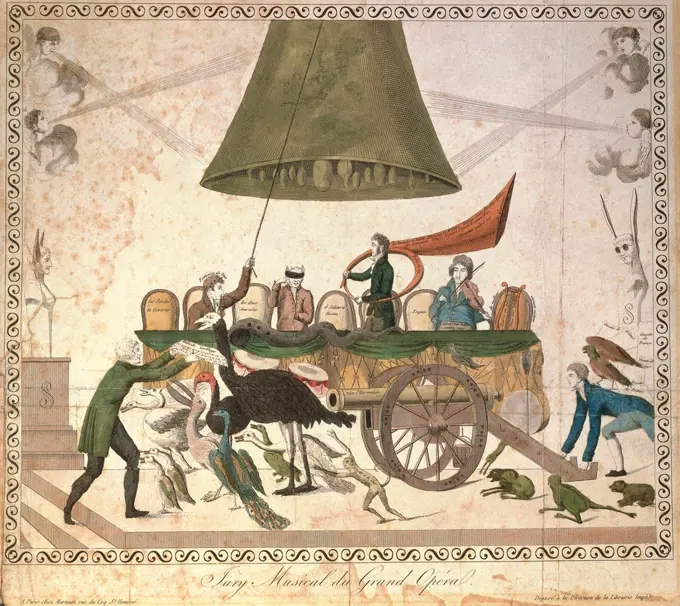
Francia, 19th century. The musical jury of the Opera (Jury Musical du Grand Opera). Print.
4409-17412962
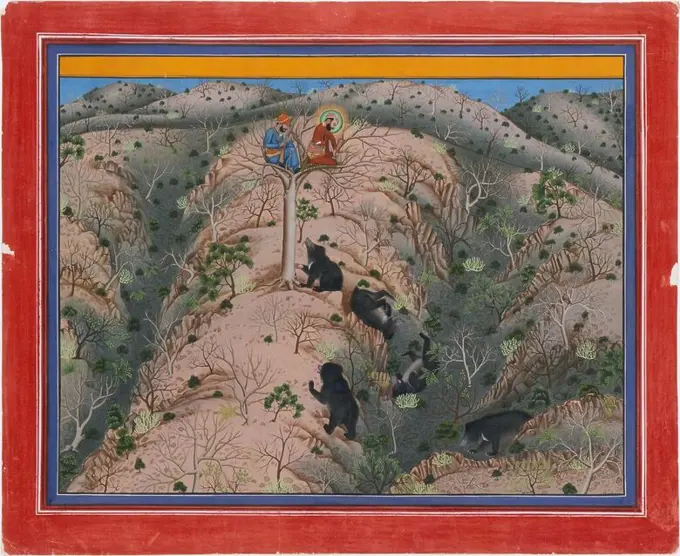
Maharaja Fateh Singh Hunting Female Bears. Artist: Attributed to Pannalai. Culture: Western India, Rajasthan, Udaipur. Dimensions: Image: 13 3/8 x 18 1/4 in. (34 x 46.4 cm); Page: 21 7/8 x 17 15/16 in. (55.6 x 45.6 cm). Date: dated 1917.The painting traditions of the princely state of Mewar, in Rajasthan, remained vital even into the early part of the twentieth century. Hunting and palace scenes were still the most popular subject, but artists began to employ more shading and perspective, likely in response to the increasing presence of photography at court. Numerous hunting scenes were painted during the reign of Fateh Singh (1884-1930), often radically unconventional compositions marked by large tracts of harsh landscape. Here the ruler, concealed in a treetop, shoots his rifle downward from point-blank range after having likely lured in the unfortunate bear with scented bait. The bear is depicted five times, creating a compelling narrative of the event. Skeletal trees and deep ravi
4443-21770404
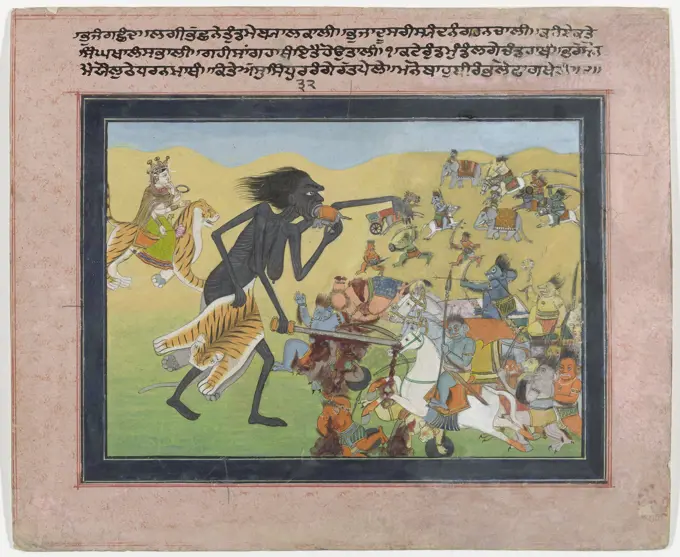
The goddess with two pairs of arms and sitting on a tiger fighting with all kinds of demons in desperate forms. The representation is framed by a wide black border with white frame lines and around it a pink and red dotted wide border with an inscription at the top and red frame lines, Kali fights the demons Chanda and Munda., draughtsman: anonymous, Guler, c. 1825 - c. 1835, paper, brush, h 277 mm × w 334 mm, h 170 mm × w 241 mm
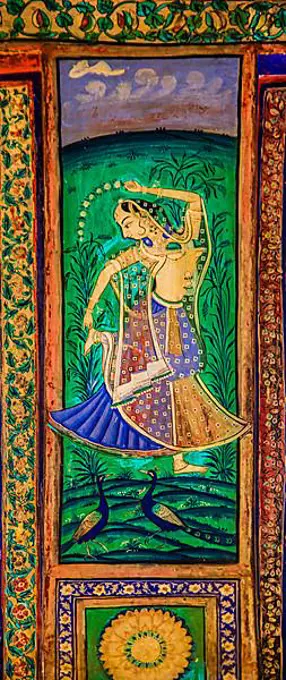
1848-50730238
Chittra Shala courtyard with virtuoso fine paintings, Taragarh Fort, Bundi, Bundi, Rajasthan, India, Asia
6145-52342482
Besy iskushaiut prepodobnago Antoniia.. Rovinski, D. A. (Dmitri Aleksandrovich), 1824-1895. Prints. 1881. Rare Book Division. Folk art , Russia (Federation), Russia , Social life and customs, Engraving, Russian
1746-30004580
Silk Persian rug with animal detail from the Safavid period.
1746-19676225
Tapestry depicting the Maximilian I Holy Roman Emperor hunting. 1660.
1899-18858573
Jaipur is the capital and largest city of the Indian state of Rajasthan. It was founded on 18 November 1727 by Maharaja Sawai Jai Singh II, the ruler of Amber, after whom the city was named. The city today has a population of 3.1 million. Jaipur is known as the Pink City of India. The city is remarkable among pre-modern Indian cities for the width and regularity of its streets which are laid out into six sectors separated by broad streets 34 m (111 ft) wide. The urban quarters are further divided by networks of gridded streets. Five quarters wrap around the east, south, and west sides of a central palace quarter, with a sixth quarter immediately to the east. The Palace quarter encloses the sprawling Hawa Mahal palace complex, formal gardens, and a small lake. Nahargarh Fort, which was the residence of the King Sawai Jai Singh II, crowns the hill in the northwest corner of the old city. The observatory, Jantar Mantar, is a World Heritage Site.
6145-54598835
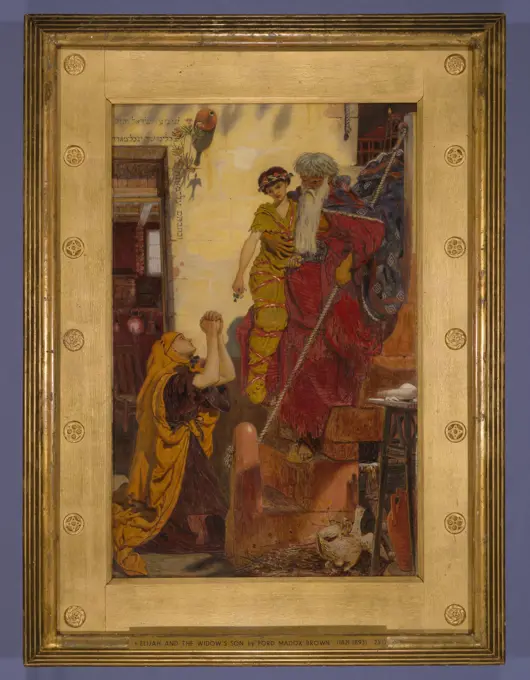
in Frame. Elijah and the Widow's Son, 1864. Artist: Ford Madox Brown.  The Prophet Elijah descends down a flight of stairs on carrying a boy brought back to life from death. The boy's mother kneels with her arms held up in prayer.. .
1848-50730025
Mural painting in the old town, Udaipur, Udaipur, Rajasthan, India, Asia
4443-19594963
Vishnu Riding a Horse Composed of Female Attendants, unknown artist, undated, Watercolor, gouache, and graphite on medium, slightly textured, cream laid paper, Sheet: 7 1/4 × 10 3/4 inches (18.4 × 27.3 cm)
1788-111209661
Tristan fighting the Dragon, fresco, Room of Tristan and Iseult, Summer-House, Castel Roncolo, Renon, near Bolzano, Trentino-Alto Adige, Italy, 14th-16th century.
6145-52358180
Red draped litter with female passenger, 2 carriers, and female attendant in yellow sari. 1780 - 1858. Drawings. The Miriam and Ira D. Wallach Division of Art, Prints and Photographs: Art & Architecture Collection. Transportation , India
1848-50730246
Chittra Shala courtyard with virtuoso fine paintings, Taragarh Fort, Bundi, Bundi, Rajasthan, India, Asia
4266-15956
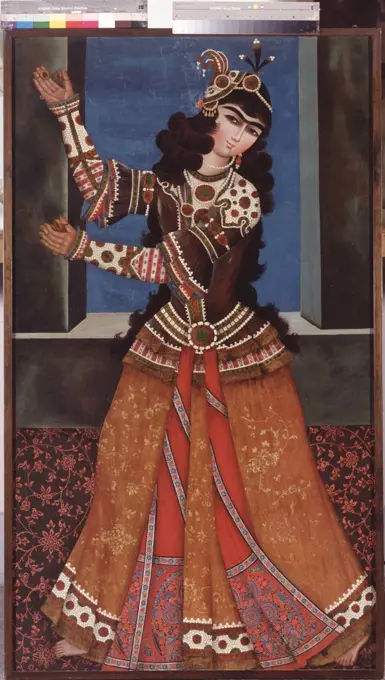
Iranian master   State Hermitage, St. Petersburg Painting 158x90 Music, Dance  Dancing Girl with Castanets
4266-5201
Amorous couple by Gustav Klimt, oil on canvas, 1905-1909, 1862-1918, Austria, Vienna, Austrian Museum for Applied Art, 194, 5x120
1899-18788193
Orientalism is a term used by art historians, literary and cultural studies scholars for the imitation or depiction of aspects of Middle Eastern, and East Asian cultures (Eastern cultures) by American and European writers, designers and artists. In particular, Orientalist painting, depicting more specifically 'the Middle East', was one of the many specialisms of 19th century Academic art. Since the publication of Edward Said's Orientalism, the term has arguably acquired a negative connotation.
4430-3123
fine arts, religious art, Jesus Christ, Flight to Egypt, glass painting, Alsace, circa 1820, private collection,
6188-64532538
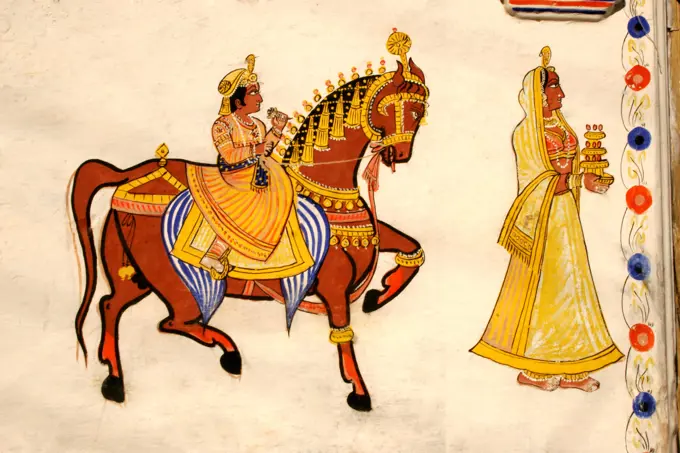
Wall painting depicting the King on horse back coming to meet queen, Nathdwara, Rajasthan, India Copyright: xSunilxKapadia/DinodiaxPhotox
6145-51832625
Poncho or Tunic Nasca. Poncho or Tunic, 100-200 C.E. Camelid fiber, 74 7/16 x 27 9/16 in. (189.1 x 70 cm).  This large panel is the most elaborate example of the discontinuous warp and weft technique in the Museums collection. With this technique, the warps and wefts on the textile change with every color and weaving session, rather than being continuous along the length and width of the fabric (see diagram). The bold designs on the red background include three large, colorful supernatural beings connected to several smaller figures. The largest figure wears a green and yellow feline pelt and is associated with two mythological animals devouring humans: an anthropomorphic bird and a shark depicted with a human arm. These composite beings combine animals of the natural world with Nasca supernatural deities who keep the world in order. The panel was converted into a poncho in antiquity, when a head opening was made at the center and long tassels were added at the shoulders. ___________
7155-70375955
Nader Shah, taking of Delhi, Chehel Soton Palace,Isfahan, Iran.
4409-17266228
Panoramas. Lámina escolar para trabajos manuales. Torneos medievales. Editada por G. Seix y Barral Hermanos, Barcelona. Años 1920.
1606-170308
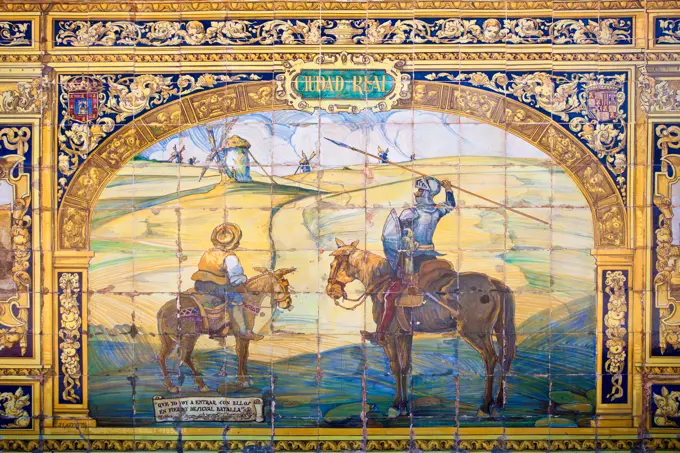
Spain-Spring 2011, Andalucia region , Sevilla City, Spain Square, detail , mosaic
6145-29083214
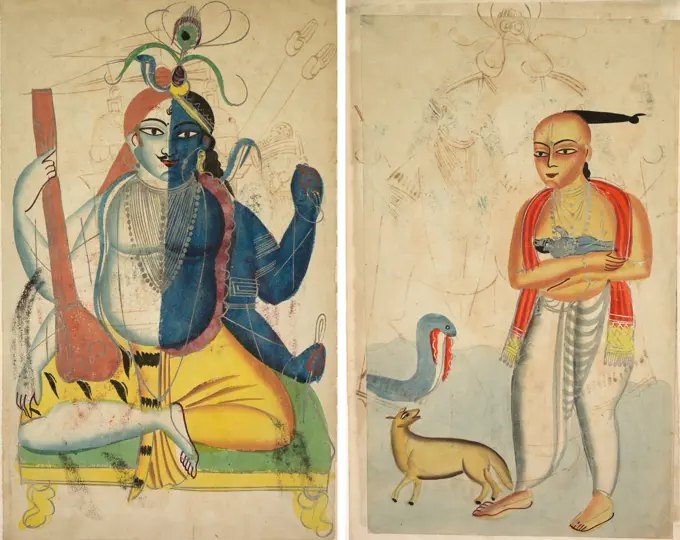
Hari-Hara (recto); Vasudeva (Krishna's Father) Fleeing with Krishna Encounters a Cobra and a Jackal (verso), c. 1890. Eastern India, Bengal, Kolkata, Kalighat. Watercolor, graphite, ink, and tin on paper; secondary support: 49.9 x 29.8 cm (19 5/8 x 11 3/4 in.); painting only: 45.5 x 28.2 cm (17 15/16 x 11 1/8 in.).
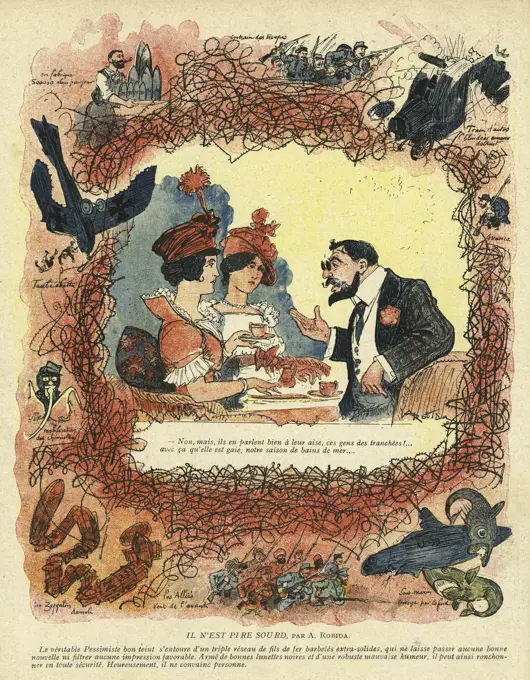
4220-21930801
Cartoon, There are none so deaf, showing a typical pessimist talking about the war to two women in a restaurant.  Surrounding them is a border of barbed wire, keeping out any item of good news.     Date: 1915
7012-69862768
Thailand, Bangkok. The Grand Palace, established in 1782. The Galleries of the Royal Monastery, detail of wall mural with hand painted historic scenes from the story of Ramakien.
4409-17342241
House of Marcus Lucretius, Reg IX, Ins 3, 5, 24, Pompeii. View of the courtyard with impluvium, tablinum with mosaic floor, and raised garden with statue of Sylenus fountain, and figures of satyrs and cupids. Naked servant girl bringing a box to her mistress. Chromolithograph by D. Capri after an illustration by A. Magliano from Antonio Niccolinis Pompeii: Views and Restorations (Pompeii: Essaies et Restaurations), published by Zucchi & De Luca, Naples, 1898. Antonio was grandson of the architect Antonio Niccolini Sr.
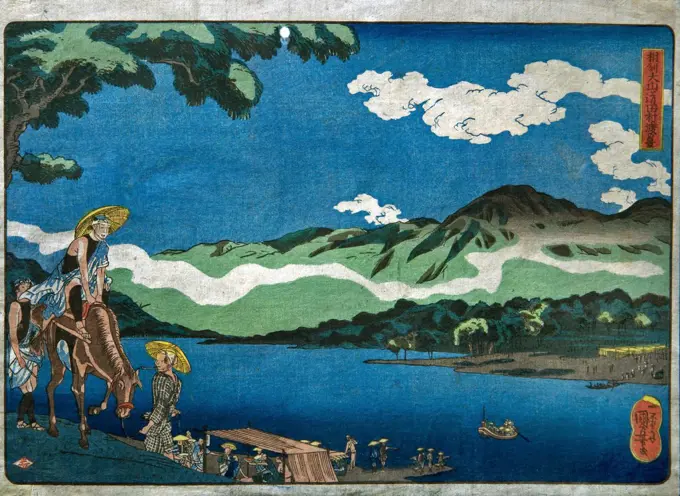
1899-17834895
Utagawa Kuniyoshi 1798-1861. View of Tamura Ferry on the Oyama Road  in Sagami Province  (Soshu Oyama-do Tamura no watashi no kei). 1843. Oban horizontal cm 25.2 x 35.4.
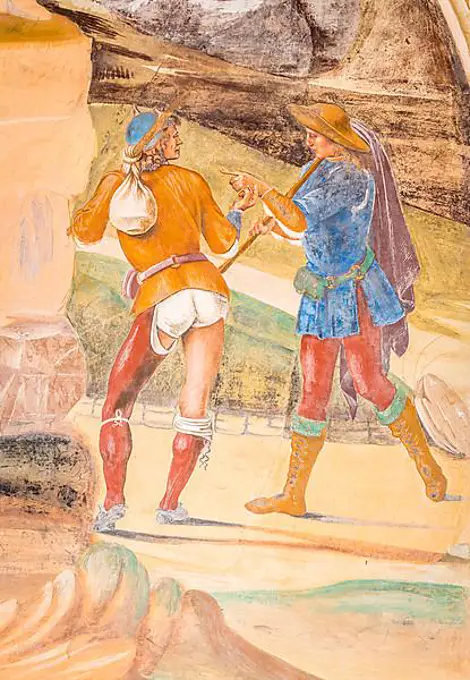
1848-53534157
Fresco depicting the life of St. Benedict, by Signorelli, detail from scene 27, Cloister of Abbazia di Monte Oliveto Maggiore Abbey, Tuscany, Italy, Europe
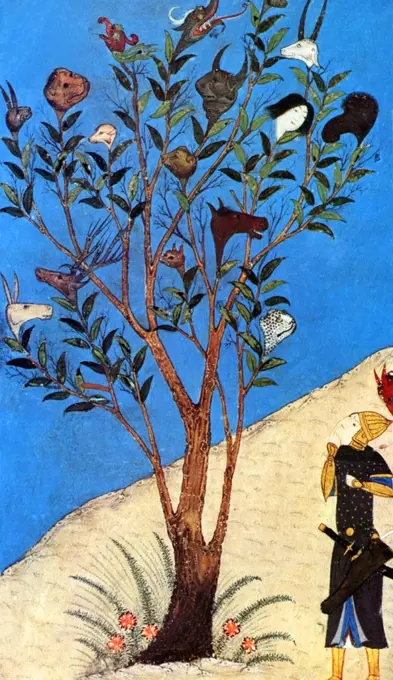
1899-18791905
Towards the end of his travels, Eskandar, or Alexander the Great, came to a town at the edge of the world. The local curiosity was a tree with two trunks of talking heads; the male trunk spoke by day and the female at night. Intrigued, Eskandar visited the tree and heard a voice prophesying his death. He is shown here standing before the tree in bewilderment, his finger to his lips. The trees mystical qualities are emphasized by the assortment of human and animal heads.
7003-71250526
Iran, Tehran, Laleh Park, Carpet Museum of Iran, traditional Iranian carpet detail
6145-46860847
The Vision of Ezekiel and the Murder ofJoab.  Artist: Herbert J. Gute, American, 1908-1977
1746-29960210
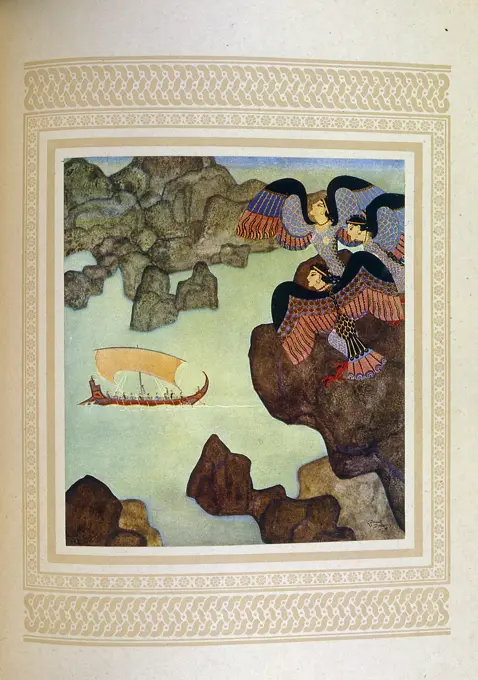
Coloured illustration of the three sirens calling Odysseus on his way back from Troy. Illustrated by Edmund Dulac (1882-1953), a French British naturalised magazine and book illustrator.
6145-29320121
Anefo photo collection. Embroidery old No. 13. December 12, 1945
1783-40956
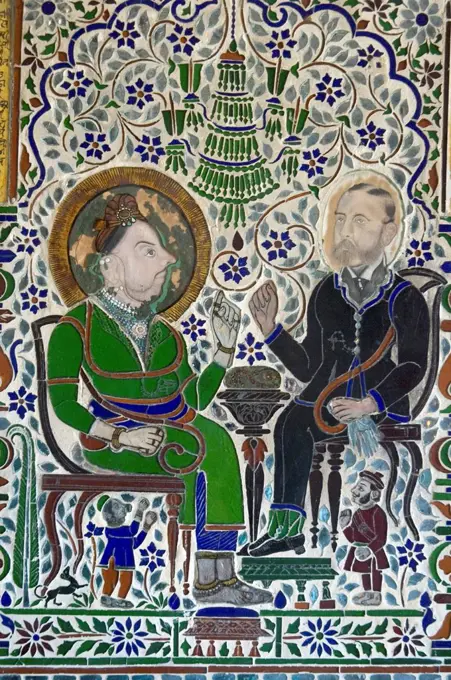
India, Rajasthan, Dungarpur, Glass inlay work with inset miniature paintings depicting historic Maharaja and British Raj official; Juna Mahal
7055-70075237
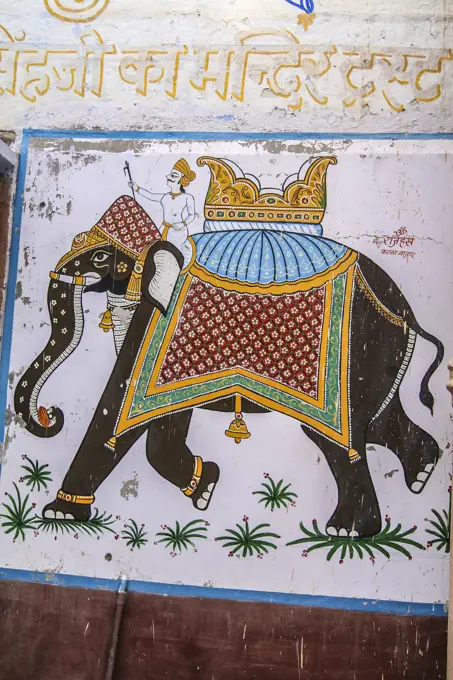
Jodhpur, Rajasthan, India. Wall fresco of a painted elephant with a Howdah seat and a Mughal Emperor
6145-30191931
Valance or Frieze (Unfinished) Made 1601-1625 England. Linen, plain weave; embroidered with wool and silk in tent and outline stitches .
4266-13295
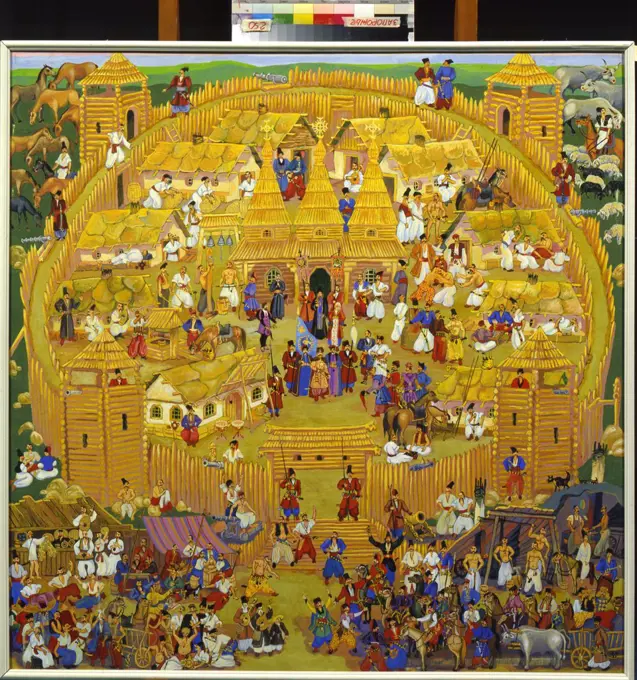
Narbut, Dmitri Georgievitch Regional Art Museum, Zaporozhye 1988 120x120 Tempera on canvas Modern Ukraine History
1746-21102764
watercolour a second village, called, Secoton, by John White (created 1585-1586).
1746-29962834
Reproduction of a fresco painting from Knossos ('The Grandstand Fresco'). Original dated to 1450BC-1375BC; from the Palace of Minos
6188-64562644
Painting of marriage Copyright: xHimalayanxAcademy/DinodiaxPhotox
6145-29122318
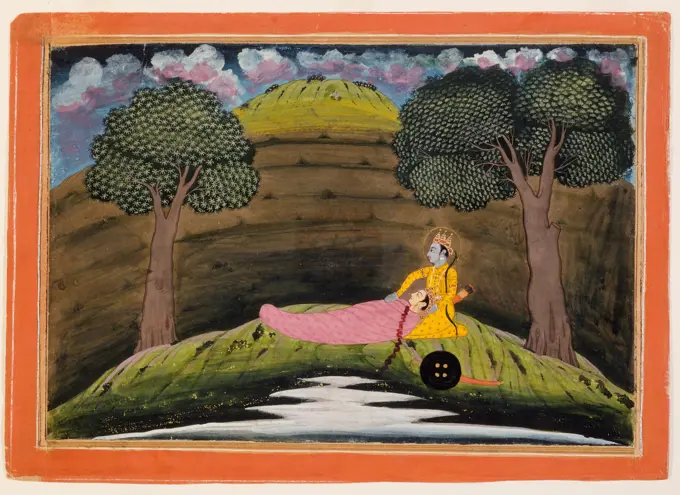
The Swooning of Lakshmana, Folio from a Ramayana (Adventures of Rama). India, Himachal Pradesh, Bilaspur, circa 1775. Drawings; watercolors. Opaque watercolor and gold on paper
6188-64575642
Painting on wall, Raghurajpur called artist village, famous for making Patta Chitras, Jagannathpuri, Bhubaneswar, Orissa, India Copyright: xRxModi/DinodiaxPhotox
1788-23900
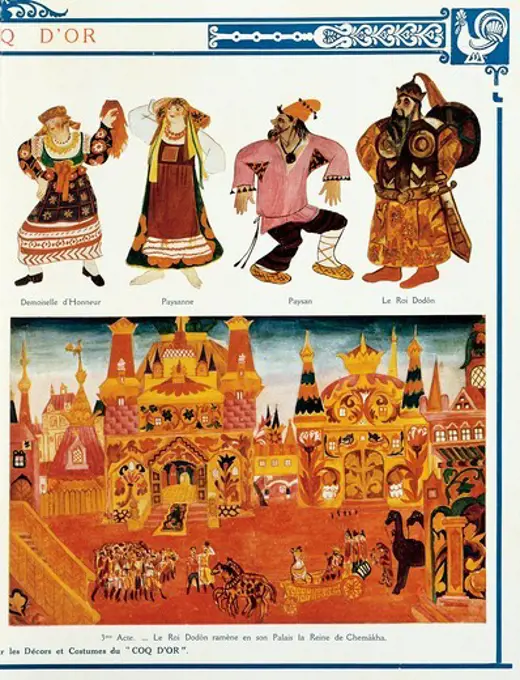
France, Paris, Nikolaj Andreevic Rimsky-Korsakov (1844-1908), The Golden Cockerel (Zolotoy Petushok), Set design sketch for act III by Natalia Gontcharova, 1914
1206-229
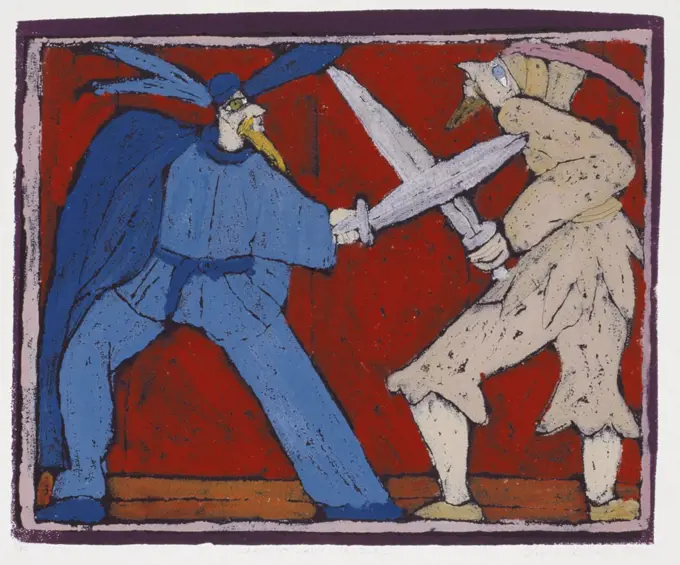
The Duel 2001  Leslie  Xuereb (b.1959/French)
1848-50730243
Chittra Shala courtyard with virtuoso fine paintings, Taragarh Fort, Bundi, Bundi, Rajasthan, India, Asia
6145-54591976
A colored woodcut by an anonymous artist from around 1460 depicting a man with three crawling animals, showing figures, composition, and mid-15th-century Northern European printmaking techniques.
4163-13110
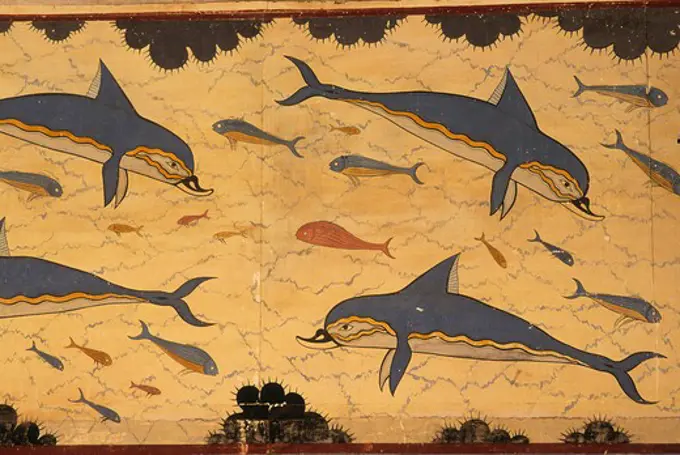
GREECE, CRETE, HERAKLEON, PALACE OF KNOSSOS, THE QUEEN'S MEGARON AND DOLPHIN FRESCO
PREVIOUS
of 2
NEXT
2401 S. Ervay, Suite 206
Dallas, Texas 75215
United States
Get Started
Free ResearchMy BoardsMy Cart
For Creators
How To License Your ContentContributor PortalFrame of Mind
Resources
API accessPricing
Contact
+1 866 236 0087help@viewpictures.co.uk Contact form
©2026 View Pictures. All Rights Reserved. -B
This site is protected by reCAPTCHA and Google Privacy Policy and Terms of Service apply.