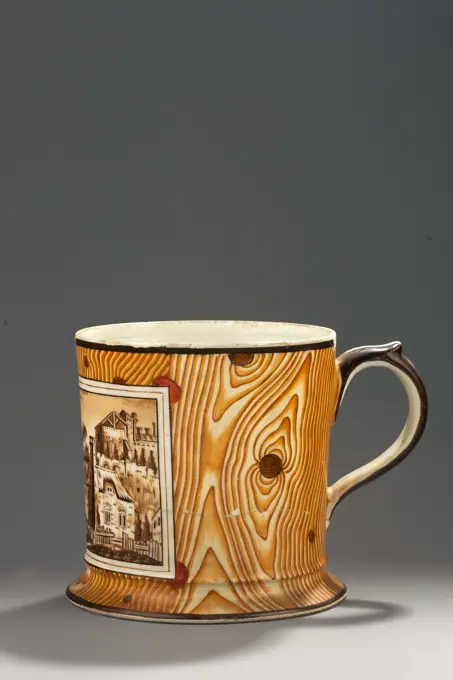
Teapots And Jugs

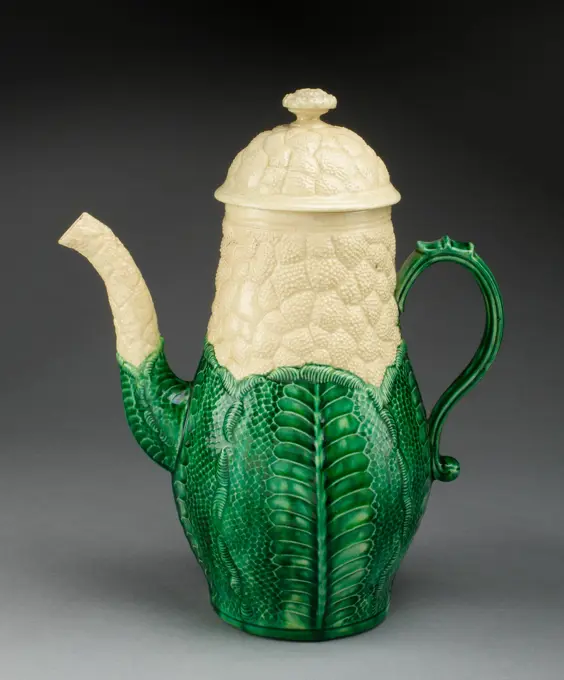
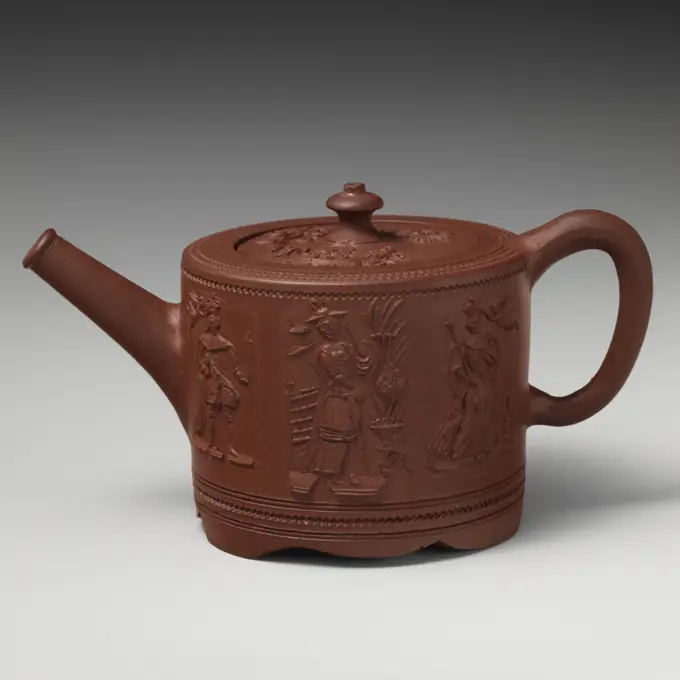
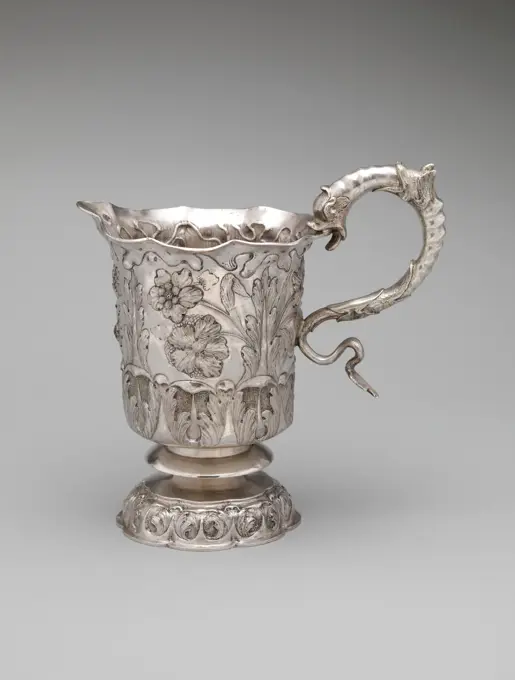
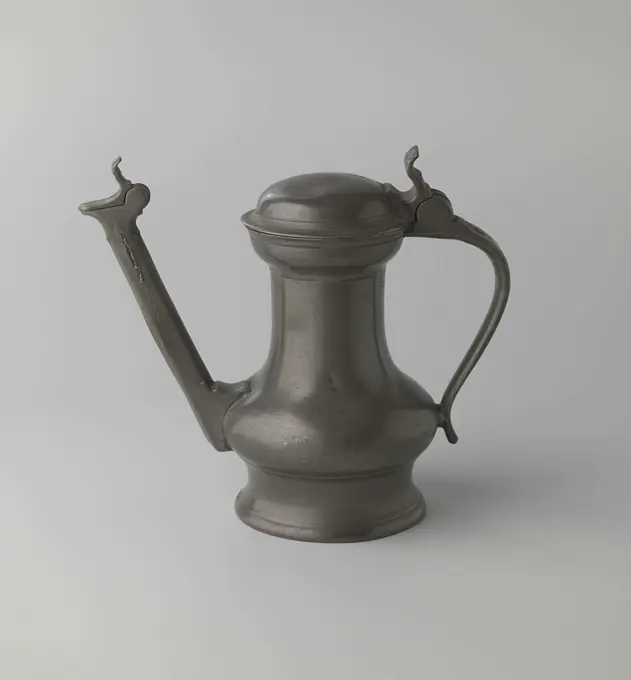
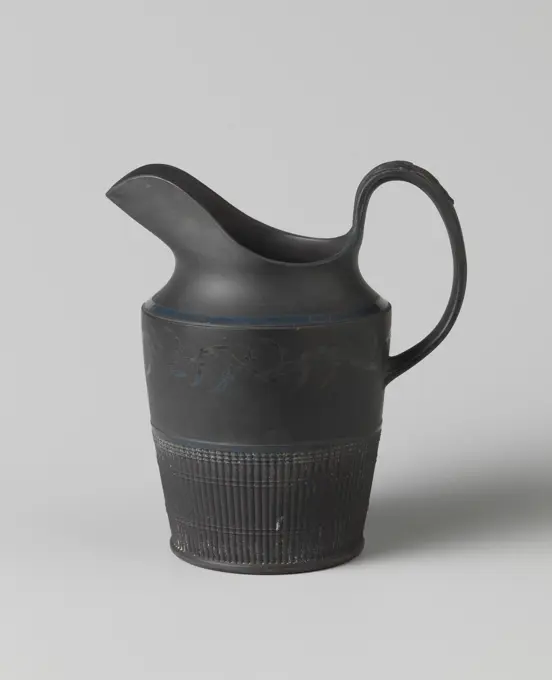
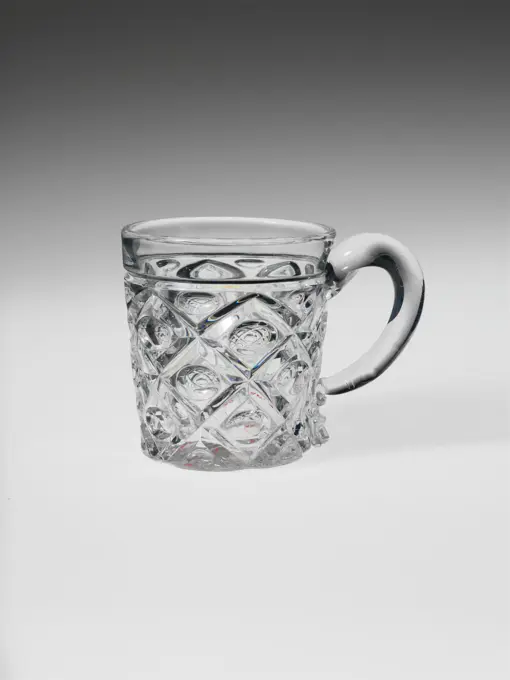
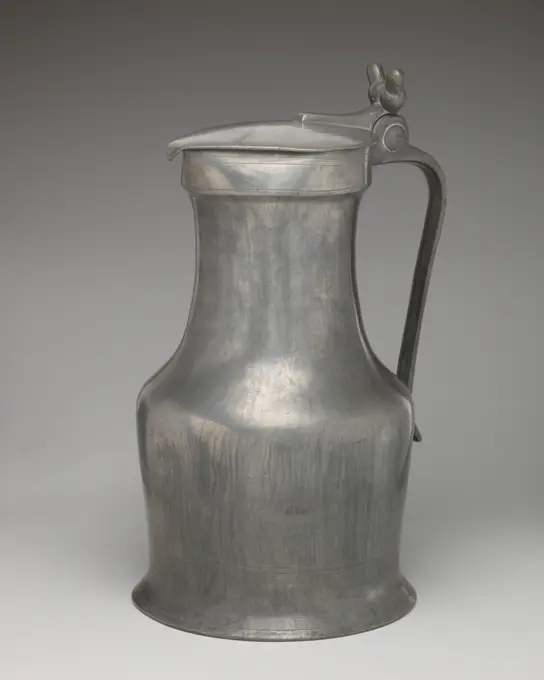
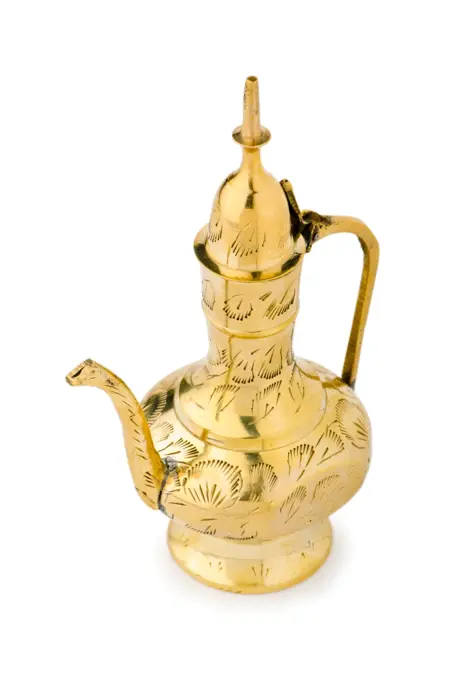
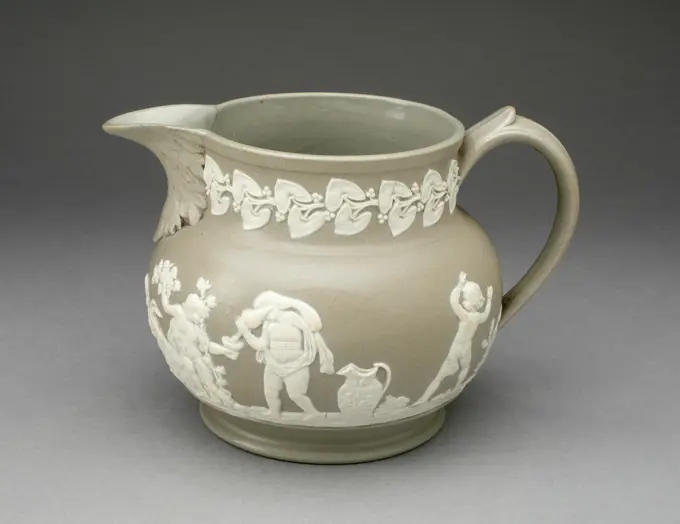
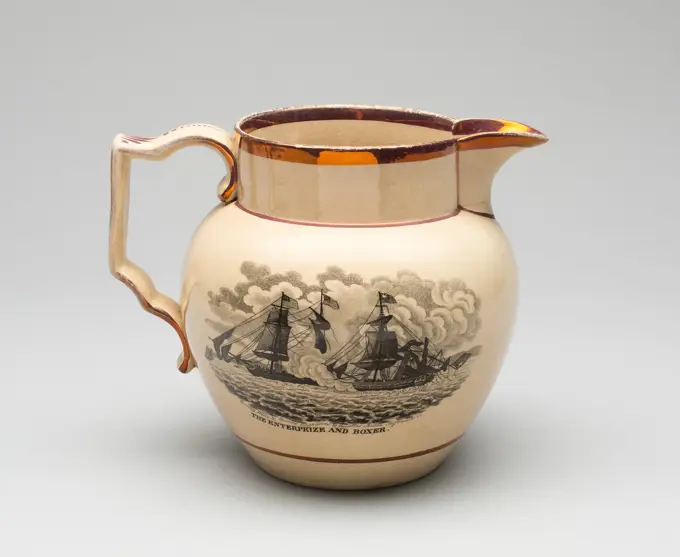
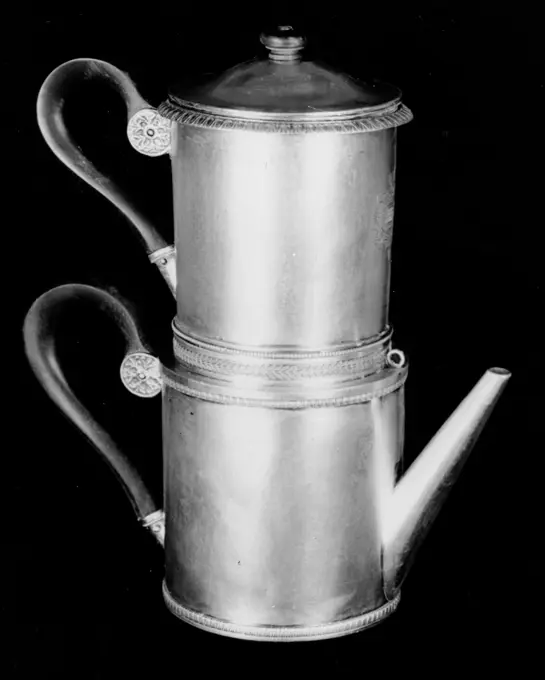
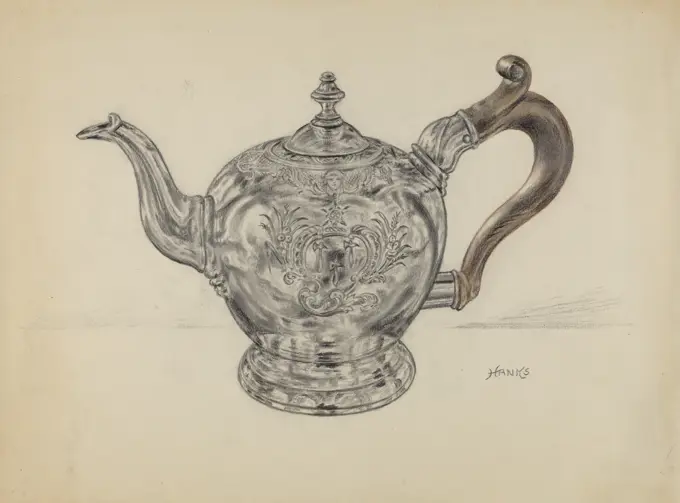
An assortment of decorative teapots and jugs made from different materials, showcasing intricate designs and craftsmanship.

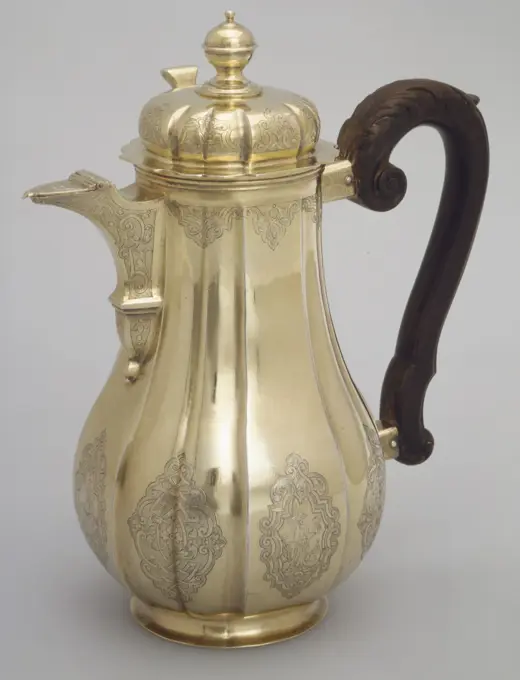
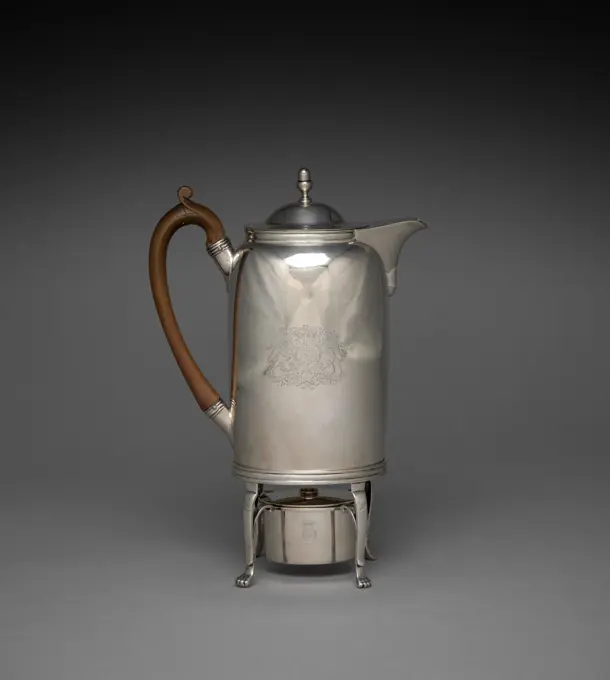
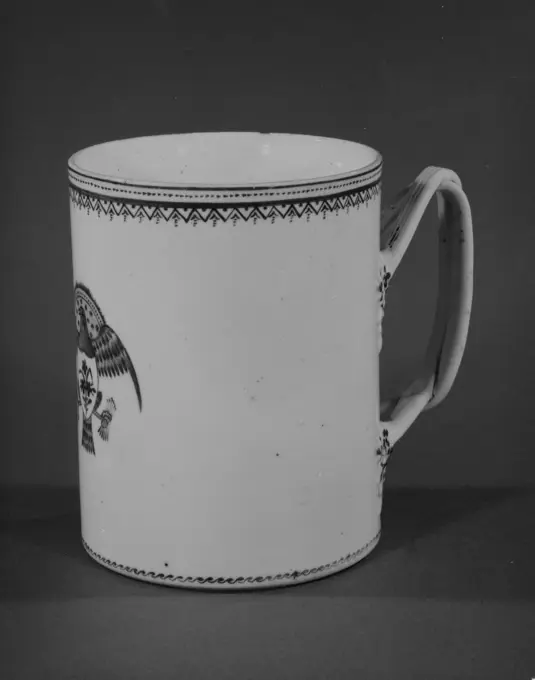
Coffeepot, pewter, knob, On shaped, flaring foot of a gadrooned pyriform body with attached spout twisted into scroll and knob. Domed, hinged cover. Strap handle, wound with cane, and wooden knob., 1750-1800, metalwork, Decorative Arts, coffeepot, coffeepot
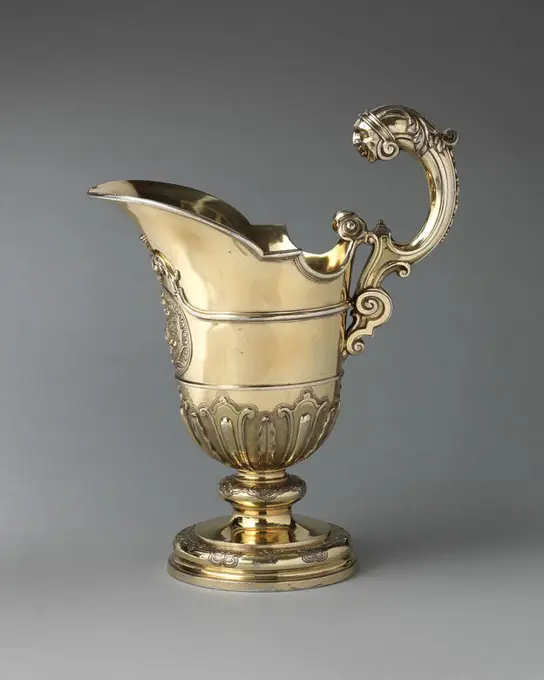
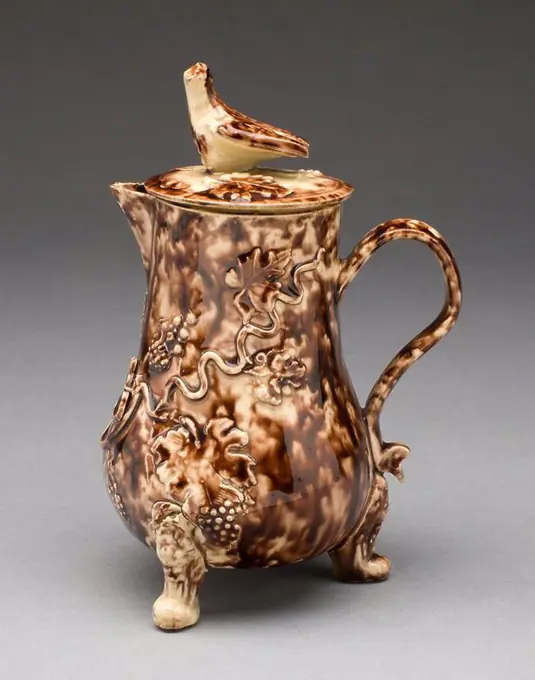
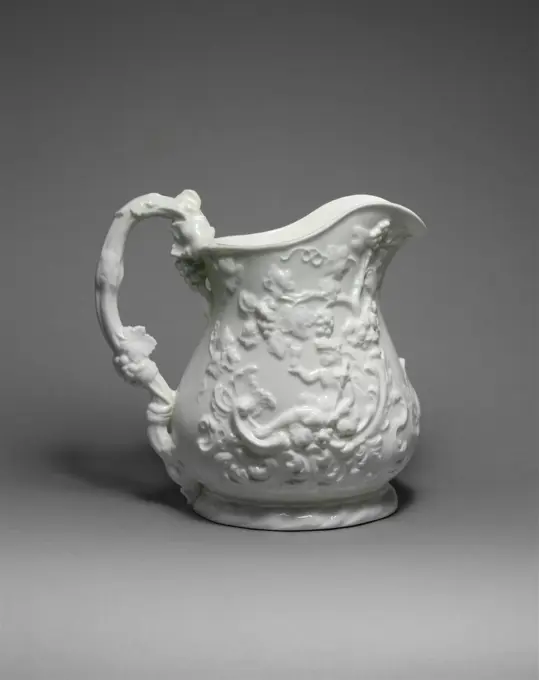
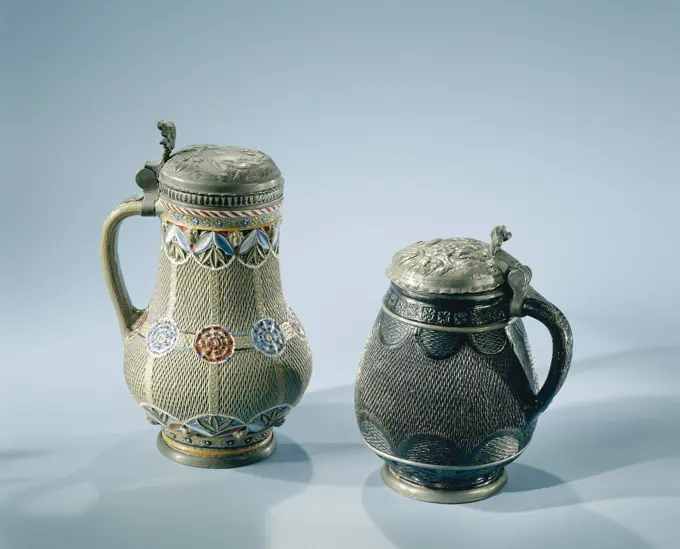
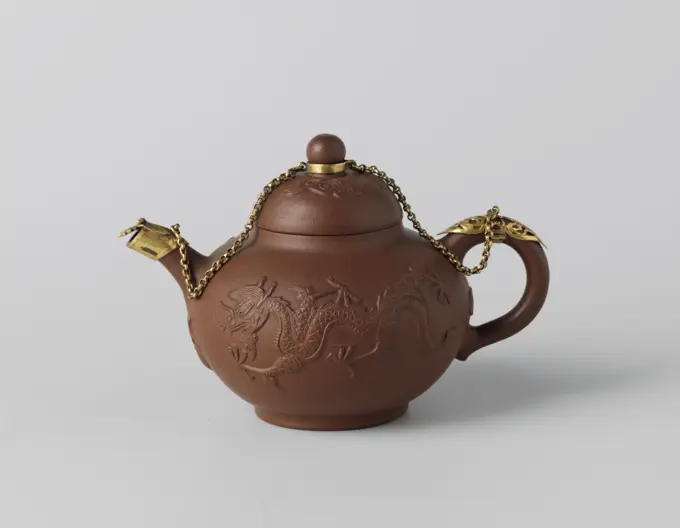
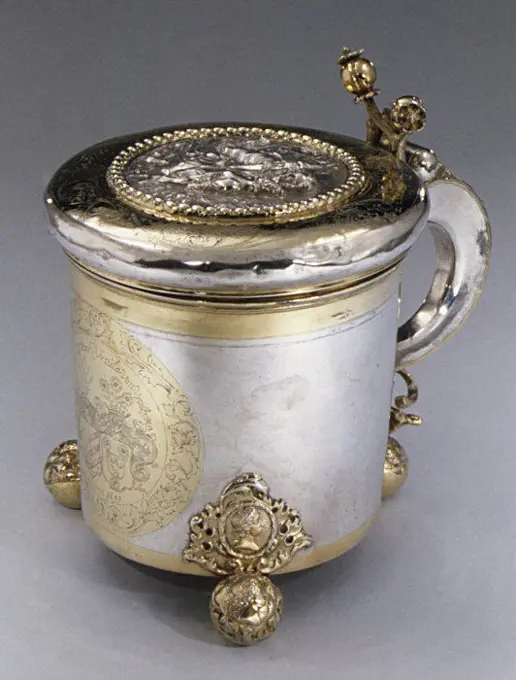
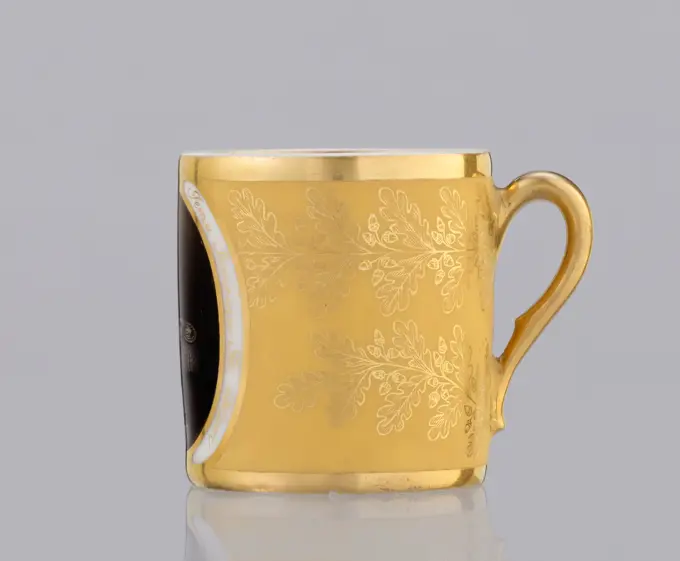
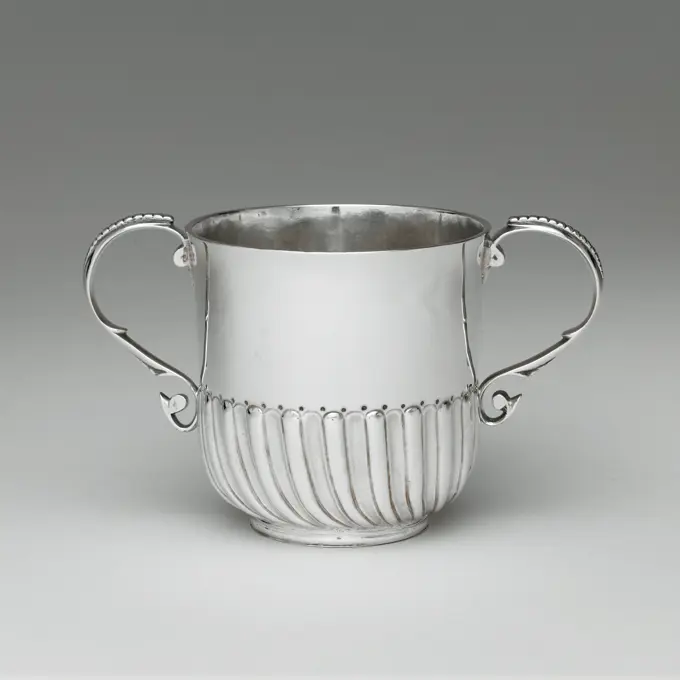
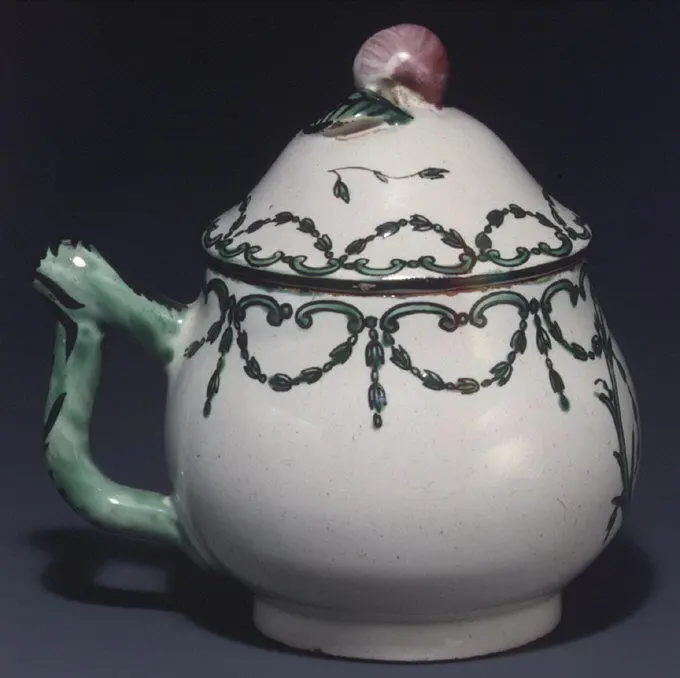
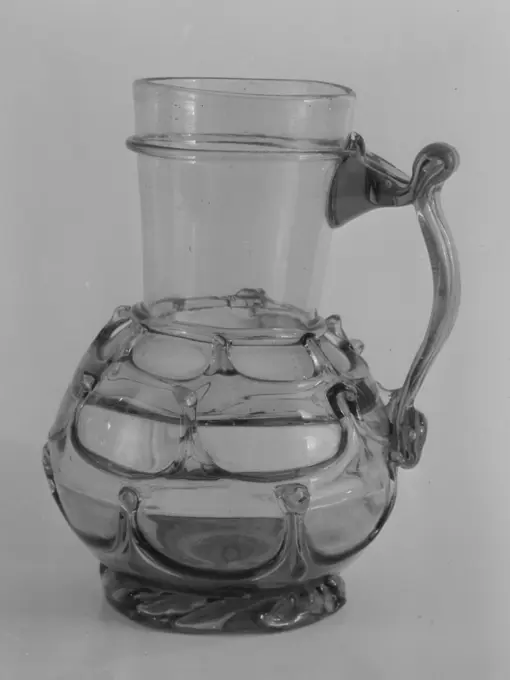
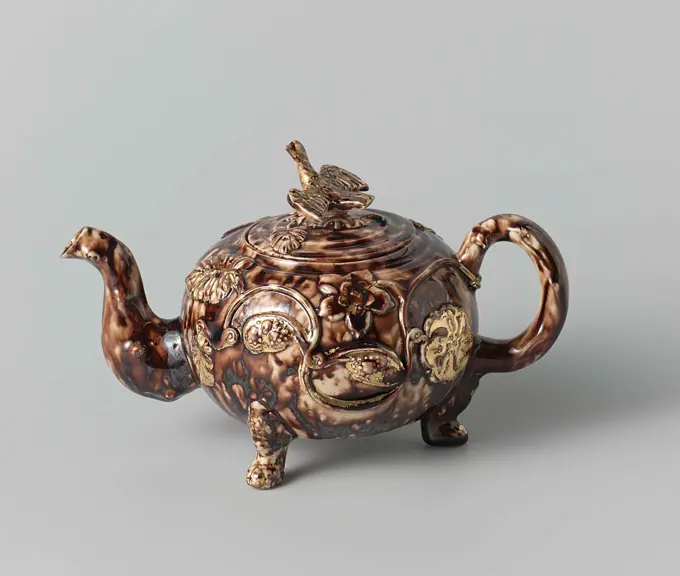
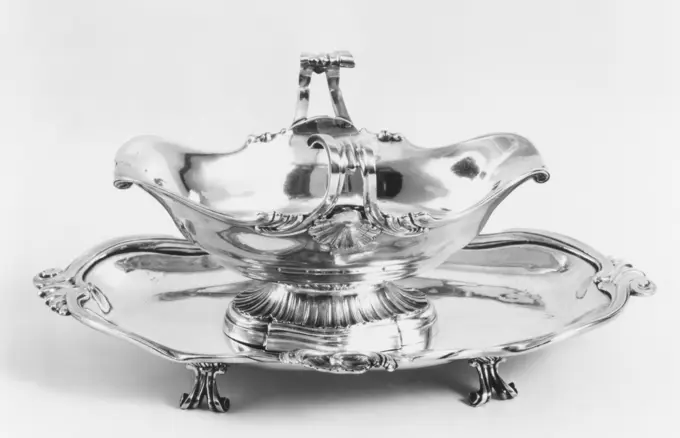
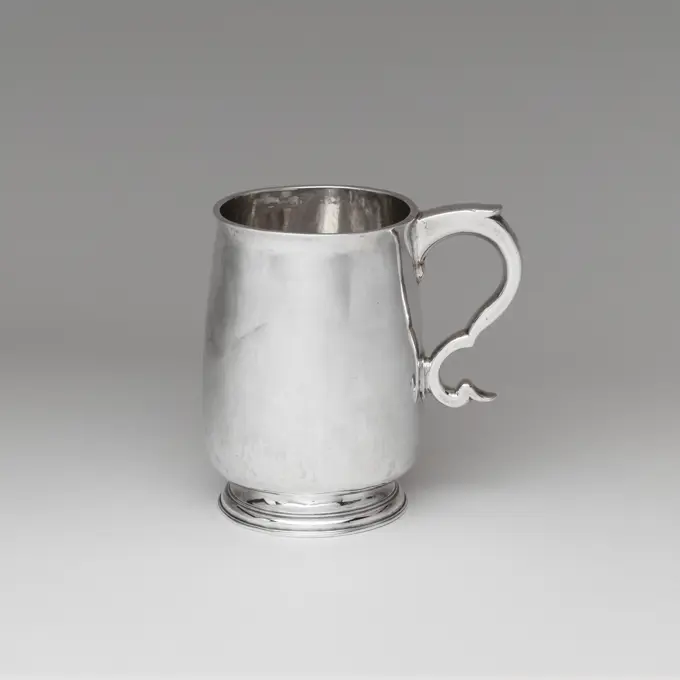
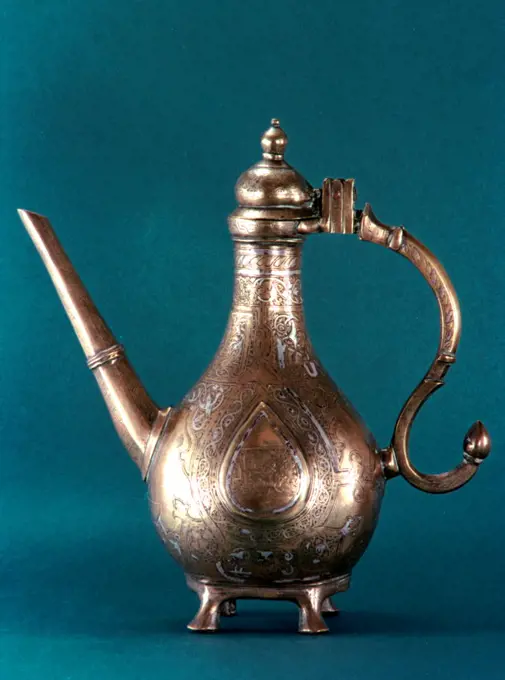
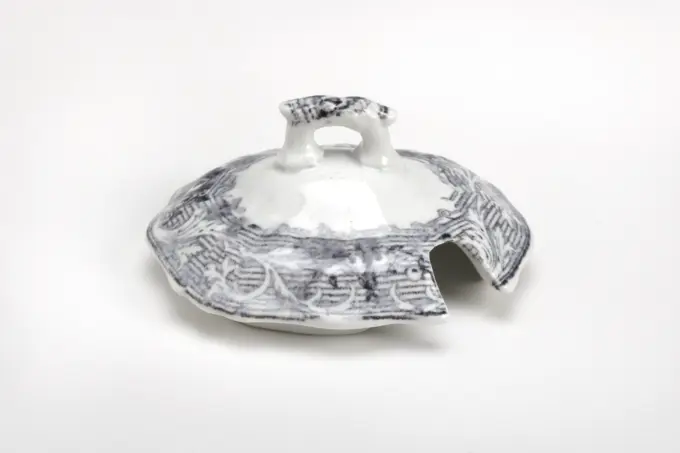
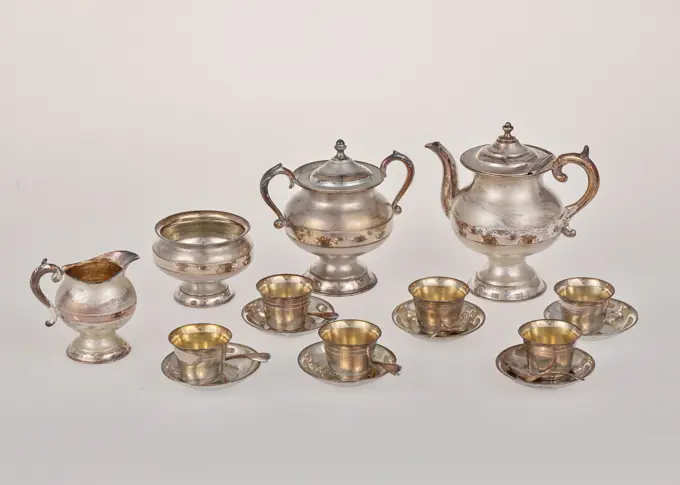
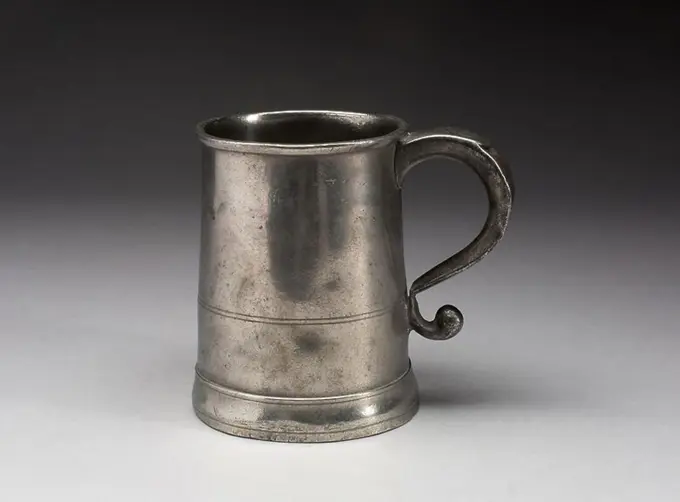
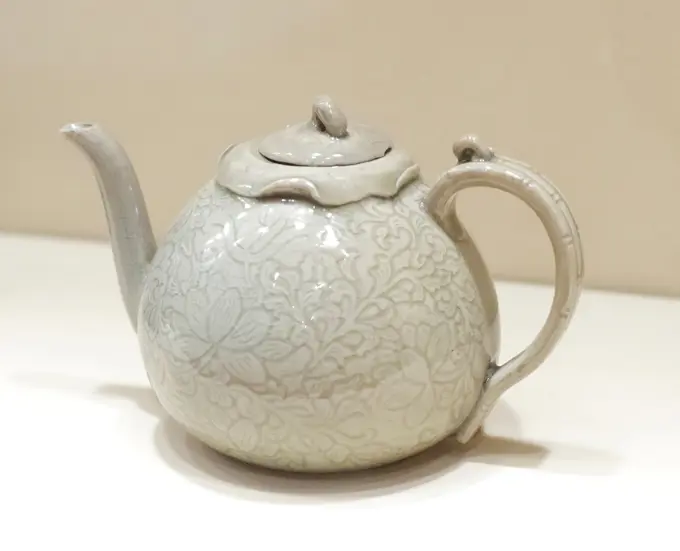
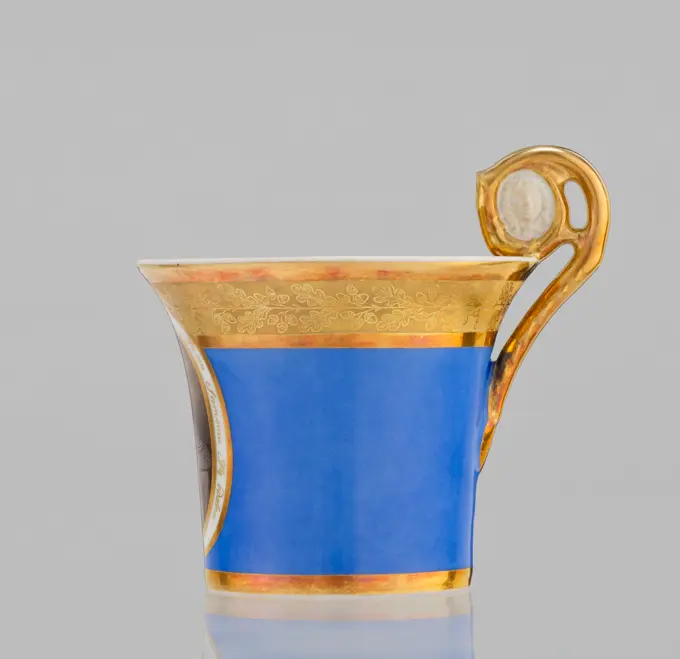
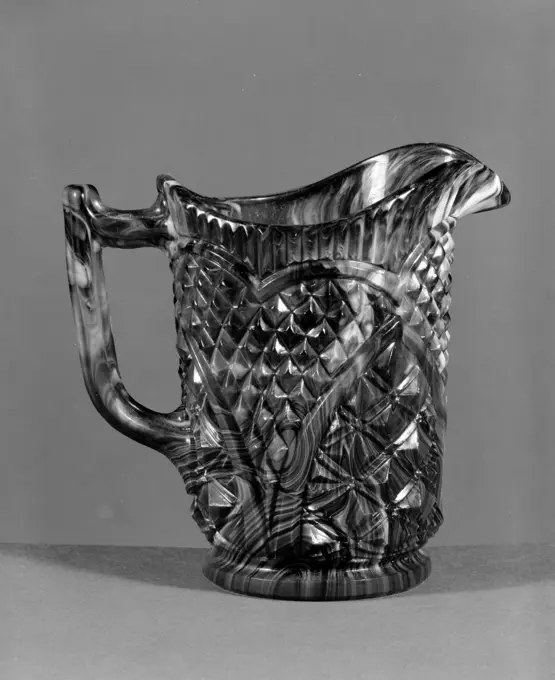
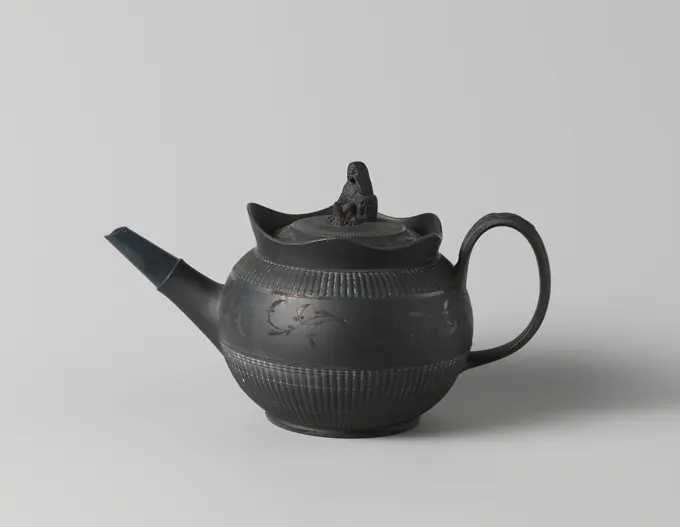
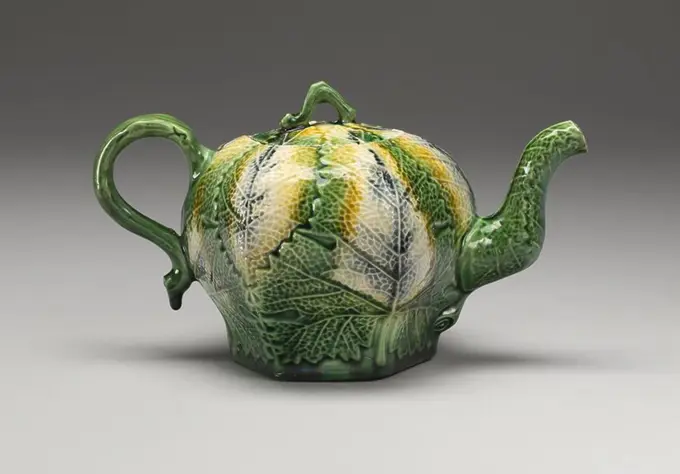
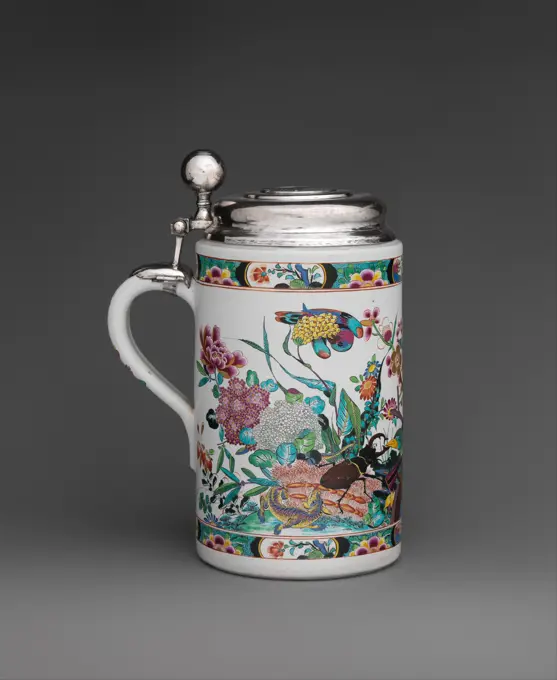
Tankard 1741-44 Adam Friedrich von Löwenfinck. Tankard. German, Fulda. 1741-44. Tin-glazed earthenware, silver mounts. Ceramics-PotteryEwer. Culture: British, London. Dimensions: Overall (confirmed): 14 1/4 x 7 3/8 x 11 1/2 in., 103 oz. 15 dwg. (36.2 x 18.7 x 29.2 cm, 3.2265kg). Maker: Samuel Margas Jr. (British, active 1714-33). Date: ca. 1721.This massive ewer and dish was made in London for shipment to St. Petersburg. It was part of a large order placed by Empress Catherine I, who ambitiously sought to bring fashionable western-style furnishings to her court. The ewer and dish would have been displayed on a tiered buffet for banquets and court dinners. London's silversmiths in the eighteenth century attracted international buyers, and a small subset of them seem to have had good connections in prosperous centers like Lisbon and St. Petersburg. This set is much larger and heavier than a typical ewer and dish made for an English client, and it may be that Samuel Margas was working to his patron's specifications. He marked only the ewer with his own punch, and, presumably to save the cost of duty, did not have the pPitcher British 19th centuryMilk Jug. England, Staffordshire. Date: 1760-1770. Dimensions: H. 14.3 cm (5 5/8 in.). Lead-glazed earthenware (creamware). Origin: Staffordshire. Museum: The Chicago Art Institute, Chicago, USA.Pitcher 1844-57 Probably William Boch and Brothers. Pitcher 5769Jug with chip carving and medallions, anonymous, c. 1650 - c. 1674 Jug of stoneware on high foot with a pear -shaped body and wide neck. The C-shaped ear is attached to the neck and shoulder. Profile on the edge. Painted with the enamel colors blue, red, black, white and gold. On the abdomen components with notch cut separated by a thin band with stamped circles. On the shoulder, above the foot and just below the edge a bond with medallions and printed and imposed angel heads in relief. On the edge, the foot and the ear a band with stamped flowers. Attached to the ear a pewter frame with lid; The foot is also caught in a frame. The lid has a wavy edge and beaten flowers. The thumb lever is in the form of an angel's head. Freiberg. Freiberg Stoneware. Glaze. Gold (Metal). frame: tin (metal) gilding / vitrification Jug of stoneware on high foot with a pear -shaped body and wide neck. The C-shaped ear is attached to the neck and shoulder. Profile on the edge. Painted with the enamel colorSmall jug of tin. Small jug of tin. At the high stand ring is an unforded, baluster-shaped jug. The handle through the lip edge at the bottom of the lip edge to the most convex part of the abdomen, after which the light curls outside.Coffee Pot Made 1765-1780 Staffordshire .Cup with gold borders on a red ground, anonymous, c. 1800 - c. 1824 Porcelain head on spreading foot and with a high, curled ear, covered on the glaze with red and gold. The outer wall is covered with red and the foot, edge, ear and part of the inner wall with gold. On the outer edge a flower vank in one of the golden tires. Empire. France (possibly) porcelain. glaze. gold (metal) painting / gilding / vitrification Porcelain head on spreading foot and with a high, curled ear, covered on the glaze with red and gold. The outer wall is covered with red and the foot, edge, ear and part of the inner wall with gold. On the outer edge a flower vank in one of the golden tires. Empire. France (possibly) porcelain. glaze. gold (metal) painting / gilding / vitrificationTankard, Meissener porcelain manufactory, 1732 - 1733 Cylindrian beer mug from Red Böttger-SteenGoed, with a gilded silver lid. The cylindrical pul is completely covered with a dark brown to black enamel, with the exception of the underside and the inside. The foot and mouth edge are profiled. The multi -colored painting, executed in cold paint and gold, consists of a Chinese woman with three children standing in a landscape. One of the children wears a fourth on the back. To the left of the ear houses on stilts between rocks and shrubs, including two cranes; To the right of the ear flowering shrub and under the ear leaf vines in a vase and a couch between flowers. A strict chalice on the Russian of the ear. Traces of gold ornament tires on foot and mouth edge. The faces and hands are painted incarnate; The other colors are white, blue, green, red, brown, gray, purple and black. The gold -plated silver lid is decorated with driven band work and has a grape voucher as a button. The thumTeapot with King George III (1738-1820) and Queen Charlotte (1744-1818) ca. 1761 British, Staffordshire Listen to experts illuminate this artwork's story Listen Play or pause #407. Teapots Supported by Bloomberg Philanthropies We're sorry, the transcript for this audio track is not available at this time. We are working to make it available as soon as possible.. Teapot with King George III (1738-1820) and Queen Charlotte (1744-1818). British, Staffordshire. ca. 1761. Red stoneware. Ceramics-PotteryGalvanoplastic reproduction of a drinking jug with rolling and leaf work, fa. Elkington & Co., after 1865 - Before 1880 Galvanoplastic reproduction of a drinking jug driven, hammered and engraved with rolling and leaf work. Gilded. London copper (metal). silver (metal) gilding Galvanoplastic reproduction of a drinking jug driven, hammered and engraved with rolling and leaf work. Gilded. London copper (metal). silver (metal) gildingEwer 19th century, after 17th century original Elkington & Co. British This electrotype is after a 1659 original at the treasure of the Kremlin, Moscow. It was given by the Dutch ambassador to Tsar Alexis in 1677.. Ewer 186584Silversmith's Art, Italy 19th century. Giovanni Zanetti,  Silver coffeepot, Imperial style. Bologna, 1827-33.Samuel Pancoast, Mug, c. 1790, silver.Tuitkan from tin with lid. Tangkan from tin. The stand ring is over in a wide, flat belly, which overflows into a cylinder-shaped neck. At the top is a wide lip edge that excludes outside. The can be closed with a vaulted lid. The profiled thumb trust runs over in the handle via a double-dinner hinge, which is stuck at the bottom of the widest point of the belly and then slightly outwards. The straight spout is sloping upwards from the widest point of the belly and is closed with a small flap with a profiled thumb trust.Thepot with two pearl chasing dragons, anonymous, c. 1700 - c. 1799 Teapot of red stoneware with a printed, spherical body, slightly bent spout, C-shaped ear and a gilt, bronze frame and chain. On the wall two four -clawy, pearl pearls after relief. On the lid a cloud motif in relief. Marked on the bottom with two seal brands. Yixing. China Porcelain. Glaze. frame: Bronze (metal). frame: Gold (Metal) gilding Teapot of red stoneware with a printed, spherical body, slightly bent spout, C-shaped ear and a gilt, bronze frame and chain. On the wall two four -clawy, pearl pearls after relief. On the lid a cloud motif in relief. Marked on the bottom with two seal brands. Yixing. China Porcelain. Glaze. frame: Bronze (metal). frame: Gold (Metal) gildingTeapot of earthenware, et al. Birch Black Basalt. With lid .. spherical teapot with lid of pottery, black basalt. The pot has a c-shaped ear, a straight spout and a raised, corrugated edge. The lid has a knob in the form of a sitting woman with her left arm resting on a barrel. The stomach of the pot is embossed with allegorical women and musical children.Mug. Culture: American. Designer: Designed by Karl L. H. Müller (ca. 1820-1887). Dimensions: H. 5 5/8 in. (14.3 cm). Manufacturer: Manufactured by Union Porcelain Works (1863-ca. 1922). Date: ca. 1863. Museum: Metropolitan Museum of Art, New York, USA.Pitcher. Maker, attributed to: United States Pottery Company, 1849-1858Tankard ca. 1700 Johann Berend Most tankards were made in the beer-drinking countries of Northern Europe. They were usually made of pewter, ceramic, or sometimes of stone or wood, but as early as the sixteenth century a growing class of wealthy burghers created a demand for a more luxurious variety in silver. Tankards could be cylindrical or cone-shaped, low and broad or tall and slender, and were usually quite capacious. They were fitted with hinged lids, and supported on molded, circular feet. The silver ones were often richly ornamented by engraved, repoussé, or cast elements. Toward the mid-seventeenth century, Scandinavian tankards evolved into a distinctive Baroque variety, with a low, broad, cylindrical body supported by three ball feet, an S-shaped handle, and a hinged lid that was often ornamented with engraved or repoussé decoration. Swedish examples were often fitted with ornamental disks screwed to the exterior of the lid. The Swedish type prevailed also in the Baltic land Coffee Pot (part of a Coffee Service). Vienna State Porcelain Manufactory; Austrian, 1744-1864. Date: 1765-1775. Dimensions: H. 12.1 cm (4 3/4 in.); diam. 10.2 cm (4 in.). Hard-paste porcelain, monochrome black (Schwartzlot), polychrome enamels, and gilding. Origin: Vienna. Museum: The Chicago Art Institute, Chicago, USA. Author: Du Paquier Porcelain Manufactory.Covered Ewer with Lizard-Shaped Handle Made 1700-1799 China. Crystal with carved decoration .Tankard. Potsdam, Germany. Date: 1705-1715. Dimensions: H. 15.2 cm (6 in.). Ruby glass with silver-gilt mounts. Origin: Southern Germany. Museum: The Chicago Art Institute, Chicago, USA.Milk jug. Malcz, Karol (1797-1867), goldsmithPitcher. England, Staffordshire. Date: 1825-1835. Dimensions: 11 × 11.4 cm (4 5/16 × 4 1/2 in.). Earthenware with copper lustre decoration. Origin: Staffordshire. Museum: The Chicago Art Institute, Chicago, USA.Galvanoplastic reproduction of a can with the triumph of Bacchus. Galvanoplastic reproduction of a can with lid with the triumph of Bacchus. Partially plated.Cup. Baranówka (manufaktura porcelany ; 1804-post 1900 )Coffeepot ca. 1778 Baden-Baden Pottery and Porcelain Manufactory. Coffeepot. German, Baden-Baden. ca. 1778. Hard-paste porcelain. Ceramics-PorcelainCoffeepot 1780-90 Ephraim Brasher American. Coffeepot. American. 1780-90. Silver. Made in New York, New York, United StatesTwo-handled Cup 1705-15 William Cowell Sr.. Two-handled Cup 2786Broth bowl with cover ca. 1725 Meissen Manufactory German. Broth bowl with cover 200747Chocolate pot 1718-20 Esaias Busch III This gilt-silver chocolate pot reflects the high quality of goldsmith's work in Augsburg in the early eighteenth century. The engraved decoration is particularly fine, consisting of interlaced ornamental bands on a matte ground. On three of the lower cartouches, the scrollwork bands form a frame that encloses fanciful depictions of Far Eastern natives in exotic dress. This type of engraved decoration is typical of Augsburg silver at this time, as are the ribbed sides and the application of overall gilding to the silver surface.. Chocolate pot. German, Augsburg. 1718-20. Gilt silver, wood. Metalwork-SilverCream pot ca. 1760-70 Veuve Perrin Factory Faience, or tin-glazed and enameled earthenware, first emerged in France during the sixteenth century, reaching widespread usage among elite patrons during the seventeenth and early eighteenth centuries, prior to the establishment of soft-paste porcelain factories. Although characterized as more provincial in style than porcelain, French faience was used at the court of Louis XIV as part of elaborate meals and displays, with large-scale vessels incorporated into the Baroque garden designs of Versailles. Earlier examples of French faience attest to the strong influence of maiolica artists from Italy. Later works demonstrate the ways in which cities such as Nevers, Rouen, Lyon, Moustiers, and Marseille developed innovative vessel shapes and decorative motifs prized among collectors throughout Europe. While faience can be created from a wide mixture of clays, it is foremost distinguished by the milky opaque white color achieved by the addition ofPitcher; Manufactured by John Wilson & Sons (United Kingdom); glazed earthenware, sprig-molded decoration, overglaze lustreUnknown, Teapot, c. 1880, silver plated.Pitcher 1830-50 American. Pitcher 5665Jug 18th century Spanish. Jug. Spanish. 18th century. Glass. GlassTeapot with lid of hard-baked pottery; Staffordshire .. teapot with lid of hard-baked pottery. The teapot is covered with a brown-marbled lead glaze and decorated embossed with partly gold-plated vines with leaves and grape fees. The lid has a bird as a button. The teapot belongs to a milk jug (BK-1977-245-B) and a flush bowl (BK-1977-245-C).Mustard pot and stand (moutardier ordinaire) ca. 1752-53 Vincennes Manufactory French The yellow ground color may have been developed as early as 1749 at Vincennes. Its use was probably inspired by similarly-decorated Meissen pieces of the 1730s and 40s, or by Chinese porcelains of the late 17th/early 18th century.. Mustard pot and stand (moutardier ordinaire) 201733Coffeepot, porcelain, gold, China, late 18th century, ceramics, Decorative Arts, coffeepot, coffeepotTeapot.   Maker: Ashbil Griswold, American, 1784-1853Pottery milk jug, Neale & Palmer Black Basalt. Cup shaped milk jug, Black Basalt. The can have a wide lip and a C-shaped ear. The lower half of the can be ribbed. A silver-colored leaf drink runs along the top edge.Sauceboat ca. 1818-ca. 1846 Enoch Wood & Sons British. Sauceboat. British (American market). ca. 1818-ca. 1846. Earthenware, transfer-printed. Made in Staffordshire, Stoke-on-Trent, EnglandChrysanthemum, Tiffany & Company, American, established 1853, Raised, cast, chased, and engraved silver, Teapot of squat globular form with reeding, wavy rim, curved handle with ivory insulators, spout with chrysanthemums and foliage; base with four foliate feet; domed and reeded hinged lid with flower bud knop., New York, New York, USA, 1891-1902, metalwork, Decorative Arts, Teapot, TeapotAnonymous, teapot (usual name), 1800. Light beige sandstone with darker speckles imitating the nodes of the bamboo. Cernuschi Museum, Asia Museum of Asia in the city of Paris.Whiskey Mug 1850-60 American With the development of new formulas and techniques, glass-pressing technology had improved markedly by the late 1840s. By this time, pressed tablewares were being produced in large matching sets and innumerable forms. During the mid-1850s, colorless glass and simple geometric patterns dominated. Catering to the demand for moderately-priced dining wares, the glass industry in the United States expanded widely, and numerous factories supplied less expensive pressed glassware to the growing market. At the Exhibition of the Industry of All Nations at New Yorks Crystal Palace in 1853, for example, the New England Glass Company exhibited 130 pieces of one design, "consisting of bowls, tumblers, champagnes, wines, and jelly glasses." This object belongs to one such service. Although the glass manufactory is not known, the glassware is very typical of the large services that were very popular with Americas middle class in the nineteenth century.. Whiskey Mug 97Teapot with lid, yelled. Teapot made of yellow albast. The pot is hollow with a not entirely suitable lid with twisted profile edges and a high button. The pot stands on three legs and has a handle and spout.Measure early 18th century French, Normandy. Measure. French, Normandy. early 18th century. Pewter. Metalwork-PewterTeapot ca. 1765 British, Staffordshire. Teapot. British, Staffordshire. ca. 1765. Salt-glazed stoneware. Ceramics-PotteryAncient lamp isolated on the whiteCovered Jug 1580-1585 Bohemia. Blue glass, enamel, and pewter .Cup ca. 1815-20 German, Wambrunn. Cup. German, Wambrunn. ca. 1815-20. Glass. GlassAntike Teekanne in Pfirsichform - Chinesisches Porzellan - Dekorative Kunst Elegant, antique Chinese porcelain tea pot shaped like a peach with delicate branch and leaf details. Rich green glaze with brown accents. Symbol of longevity and prosperity. LicenseRF Copyright: xZoonar.com/GallóxGusztávx 23406700Sauceboat and stand 1769-71 Jean François Thiébaud. Sauceboat and stand 200074Hot Water Jug with Hinged Cover, 1800. John (British) Edwards (British). Silver; average: 17.2 cm (6 3/4 in.); container: 21.3 x 20 cm (8 3/8 x 7 7/8 in.); stand: 8.4 x 10.9 cm (3 5/16 x 4 5/16 in.).Cann 1750-70 Richard Van Dyck. Cann 5333Silver and bronze coffee jug, Egyptian, 14th century.Toy candy dish lid - Francis Morley, 1845-1850 Francis Morley, 1845-1850Creampitcher.   Maker: James Howell, active ca. 1801 - 1813Tureen with Cover 1783-1784 London. Silver . Wakelin and Taylor (Maker)Teapot with a portrait and a monogram, Fürstenberg, c. 1775 - c. 1785  Porcelain teapot with a cylindrical body, bent spout and C-shaped ear, painted with email colors and gold. On the abdomen a medallion with a portrait of a man and profil, the other side with the monogram in a medallion. On the shoulder a band with connected circles with a dot. The spout with a modeled leaf motif, turned on with gold in relief. The ear is modeled in the form of two leaf vines, also turned on with gold. The lid with a strap of half gold bulbs and a round lid button. Lid is not part of the pot. Marked on the underside with the F and 3. Fürstenberg porcelain. glaze. gold (metal) painting / gilding / vitrificationTea Kettle On Stand (Netherlands); Designed by Johannes Blinxma; brass, copper, rattan; Overall: 28 x 23 x 15 cm (11 x 9 1/16 x 5 7/8 in.)Cup KorzecTeapot, from a children's tea service, c. 1875, James Tuff, 4 1/8 x 4 1/4 x 2 3/4 in. (10.48 x 10.8 x 6.99 cm), Silver plated pewter, United States, 19th centuryPitcherTankard. Thomas Danforth Boardman; American, 1784-1873; Sherman Boardman; American, 1787-1861; Hartford, Connecticut. Date: 1810-1830. Dimensions: 10.8 × 9.4 cm (4 1/4 × 3 11/16 in.). Pewter. Origin: United States. Museum: The Chicago Art Institute, Chicago, USA.Pint Mug ca. 1770 American. Pint Mug. American. ca. 1770. Pewter. Made in New England, United StatesEwer in the Shape of a Melon, 12th century, Unknown Korean, 5 3/4 in. (14.61 cm), Porcelaneous stoneware with celadon glaze, Korea, 12th centuryJohannes Roseboom, Pepper Box, c. 1765, silver.Teapot with fixed handle Worcester factory British 1880 After the end of the Flight, Barr & Barr ownership of the Worcester factory in 1840, the firm went through a succession of owners and mergers before falling under the ownership of Kerr & Binns in 1852. During the partnership, the factory sought to rebuild its former eighteenth-century reputation in porcelain and known for Renaissance-inspired designs. With the establishment of the Royal Worcester Porcelain Company in 1862, the company gradually gained recognition for its Japanese-inspired designs, which formed part of Japonisme, a collective fascination with Japan that took place in Europe and the United States following the opening of Japanese markets to the West by Commodore Perry in 1853. View more. Teapot with fixed handle. British, Worcester. 1880. Bone china. Ceramics-PorcelainMug ca. 1800 Chinese, for American market. Mug. Chinese, for American market. ca. 1800. Porcelain. Made in ChinaTeakettle 1800-1830 J. Dunn. Teakettle. 1800-1830. CopperSeven -sided jug from Tin, Anonymous, c. 1800 - c. 1850 Seven -sided jug from Tin. The three legs are formed by lions, on which the jug rests. There are slender and flower motifs on the jug and five female saints. The light vaulted lid runs fairly straight up and is profiled. The button is formed by an angel head with wings. The simple thumb rest passes into the handle via a double -covered, tanded hinge. The handle curls up at the bottom and ends in an animal head. On the inside, the lid and the bottom are decorated with a rosette surrounded by a pearl edge. Germany tin (metal) casting Seven -sided jug from Tin. The three legs are formed by lions, on which the jug rests. There are slender and flower motifs on the jug and five female saints. The light vaulted lid runs fairly straight up and is profiled. The button is formed by an angel head with wings. The simple thumb rest passes into the handle via a double -covered, tanded hinge. The handle curls up at the bottom and ends in an animCoffeepot ca. 1750 British, Staffordshire. Coffeepot 199566Teapot with cover. Culture: probably British, Staffordshire. Dimensions: Overall: 3 5/8 × 6 in. (9.2 × 15.2 cm). Maker: Style of Whieldon type. Date: ca. 1750-70. Museum: Metropolitan Museum of Art, New York, USA.Pitcher 1870-90 Challinor, Taylor and Company. Pitcher. American. 1870-90. Pressed purple marble glass. Made in Tarentum, Pennsylvania, United StatesJARRO DE TALAVERA DEL SIGLO XIX. Location: CONVENTO DE LAS CARMELITAS. Toledo. SPAIN.Cup. Baranówka (manufaktura porcelany ; 1804-post 1900 )Creamer 1880-90. Creamer. 1880-90. Pressed purple marble glass. Made in EnglandTeapot of pottery. Spherical teapot of pottery. The teapot has raised edge with a wavy top edge, a C-shaped ear, a straight spout. The teapot is decorated with two ribbed tires between which a bond with a silver-colored leaf drink.Teapot. England, Staffordshire. Date: 1760-1775. Dimensions: 17.2 × 10.2 cm (6 3/4 × 4 in.). Lead-glazed earthenware (creamware). Origin: Staffordshire. Museum: The Chicago Art Institute, Chicago, USA.BrandywineBowl.  Maker: Bartholomew Le Roux, American, ca. 1665-1713Teapot - "Baltimore Almshouse". Dated: c. 1936. Dimensions: overall: 20.3 x 25.4 cm (8 x 10 in.). Medium: black and white photograph. Museum: National Gallery of Art, Washington DC. Author: Helmut Hiatt.Mustard pot from tin, smooth model, c. 1700 - c. 1800 Mustard pot from tin, smooth model. The foot runs narrow up to the baluster -shaped pot. The set handle run from the widest point of the abdomen to the opening on the top of the pot. On top is a lid with a canaly thumb rest. Low Countries tin (metal) casting Mustard pot from tin, smooth model. The foot runs narrow up to the baluster -shaped pot. The set handle run from the widest point of the abdomen to the opening on the top of the pot. On top is a lid with a canaly thumb rest. Low Countries tin (metal) castingJug 1795-1805 Staffordshire. Stoneware (jasperware) . Staffordshire PotteriesPitcher c 1800-1825 Shelton. Earthenware .Jean-Nicolas Boulanger, Coffee Pot (Drip), c. 1810, silver.Melkkan, Arnoldus van Geffen, 1742 Pear -shaped milk can on three legs bent out. The S-shaped handle has been processed. An engraved line runs along the serrated top edge with a pour. The milk jug is marked: stk. = Amsterdam, Jrl. = H (1742), Mt. = Arnoldus van Geffen, an ax and a letter N. Amsterdam silver (metal) Pear -shaped milk can on three legs bent out. The S-shaped handle has been processed. An engraved line runs along the serrated top edge with a pour. The milk jug is marked: stk. = Amsterdam, Jrl. = H (1742), Mt. = Arnoldus van Geffen, an ax and a letter N. Amsterdam silver (metal)450-440 B.C;Hot Water Kettle, part of Tea and Coffee Set. Rogers, Smith, and Company; American, 1862-c. 1900; Meriden, Connecticut. Date: 1878. Dimensions: H. 21 cm (8 1/4 in.). Silver. Origin: Connecticut. Museum: The Chicago Art Institute, Chicago, USA.Cream Jug, c. 1760. America, 18th century. Silver; overall: 9.5 cm (3 3/4 in.); with handle: 8.9 cm (3 1/2 in.); without handle: 6.6 cm (2 5/8 in.).Water Pot with Chinese Figures in a Landscape Design late 18th century Japan. Water Pot with Chinese Figures in a Landscape Design 45557Teapot. Dated: c. 1937. Dimensions: overall: 36.3 x 28.6 cm (14 5/16 x 11 1/4 in.) Original IAD Object: 8 1/4" High 8 1/2" Wide(handle over spout). Medium: watercolor, graphite, and gouache on paper. Museum: National Gallery of Art, Washington DC. Author: Robert Stewart.Fletcher Hanks, Silver Teapot, c 1936 Silver TeapotJeremiah Dummer, Cup, c. 1690, silver.Beautiful ancient tin coffee pot isolated on white backgroundTeapot ca. 1725-30, decorated ca. 1735 Meissen Manufactory German. Teapot. German, Meissen with German, Augsburg decoration. ca. 1725-30, decorated ca. 1735. Hard-paste porcelain. Ceramics-PorcelainMug with woodgrain and sepia miniature. Korzec (manufaktura porcelany ; 1790-1832), factory Antique copper coffee pot on white background