Teapots And Jugs

An assortment of decorative teapots and jugs made from different materials, showcasing intricate designs and craftsmanship.

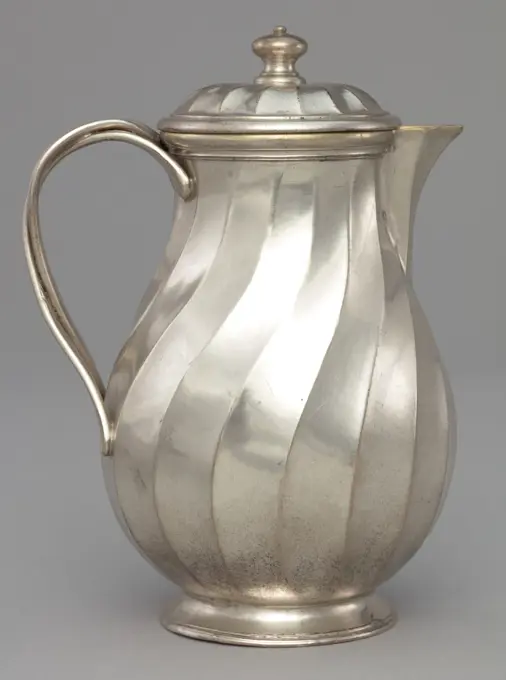
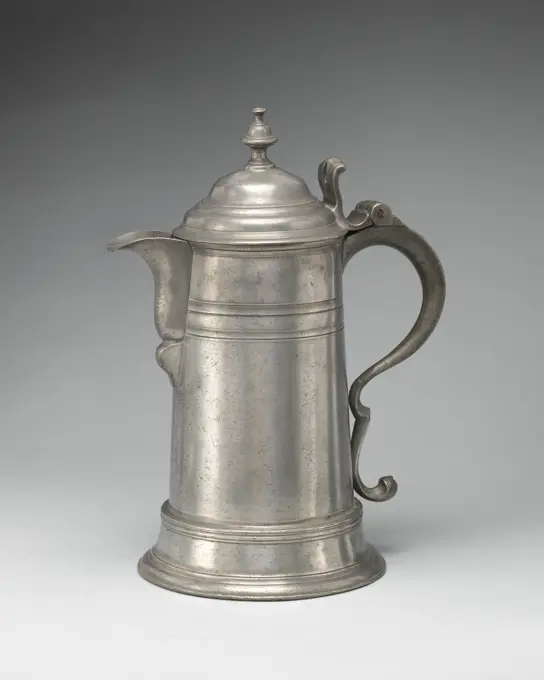
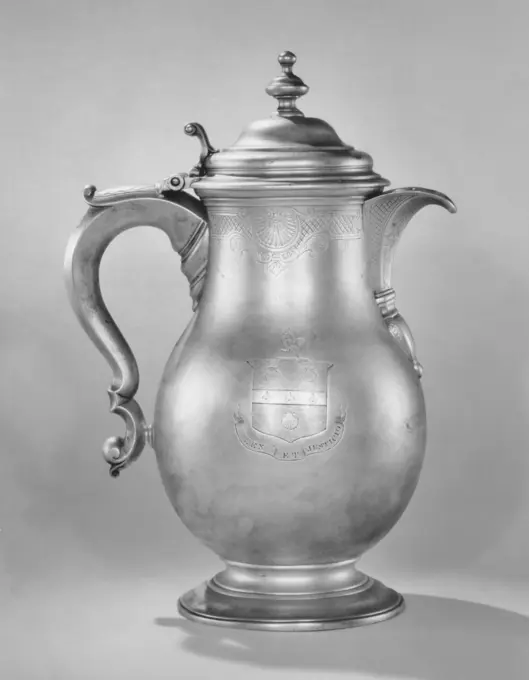
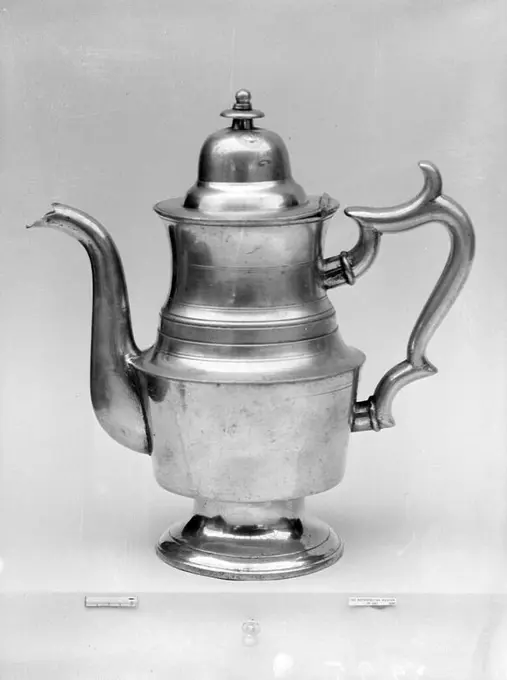
Coffeepot, pewter, knob, On shaped, flaring foot of a gadrooned pyriform body with attached spout twisted into scroll and knob. Domed, hinged cover. Strap handle, wound with cane, and wooden knob., 1750-1800, metalwork, Decorative Arts, coffeepot, coffeepot
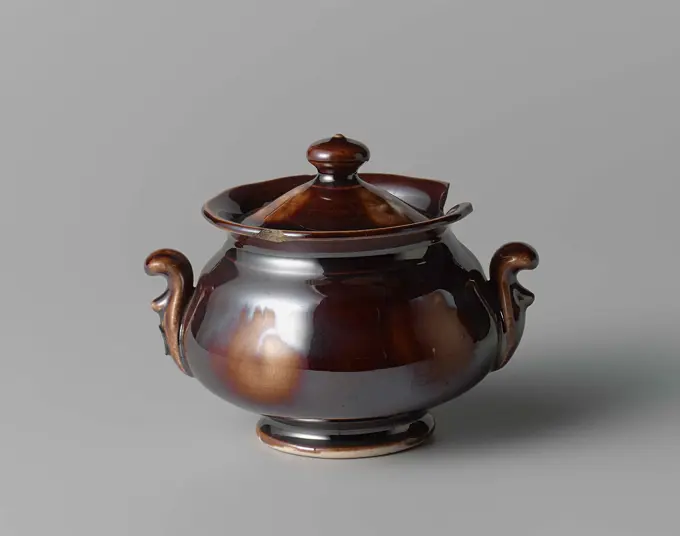
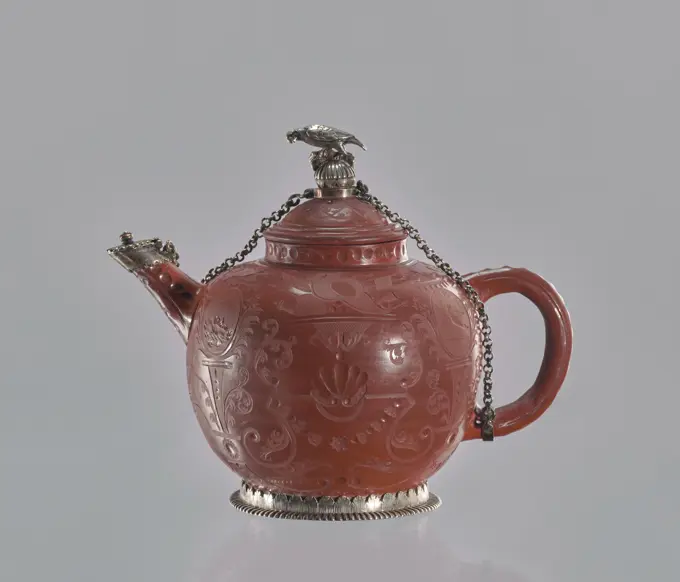
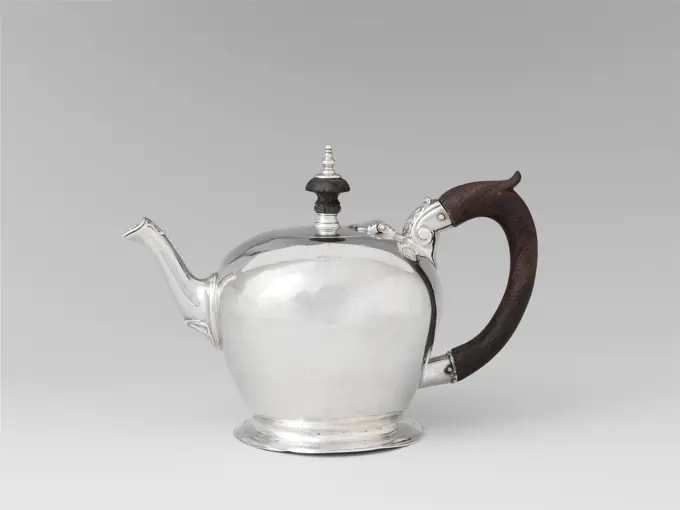
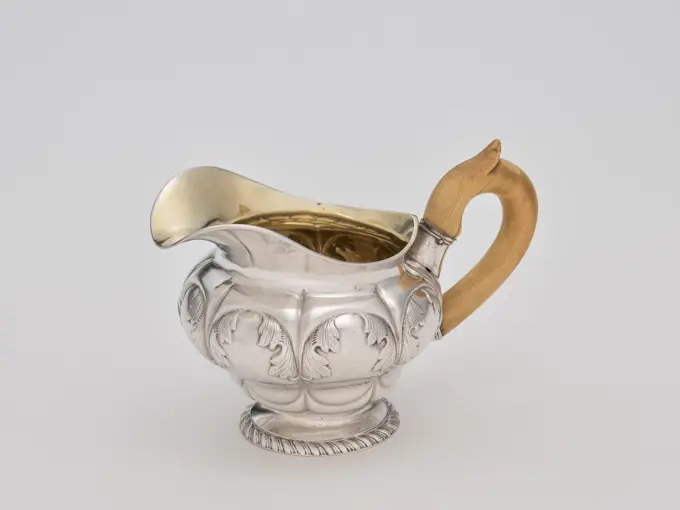
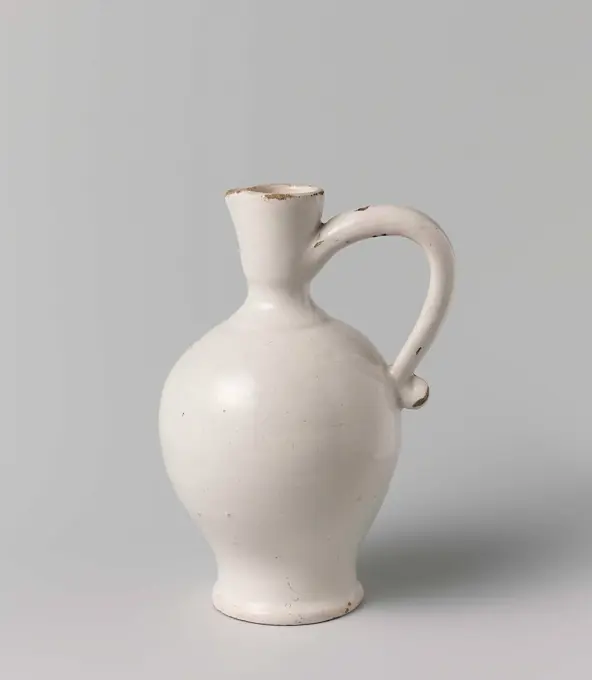
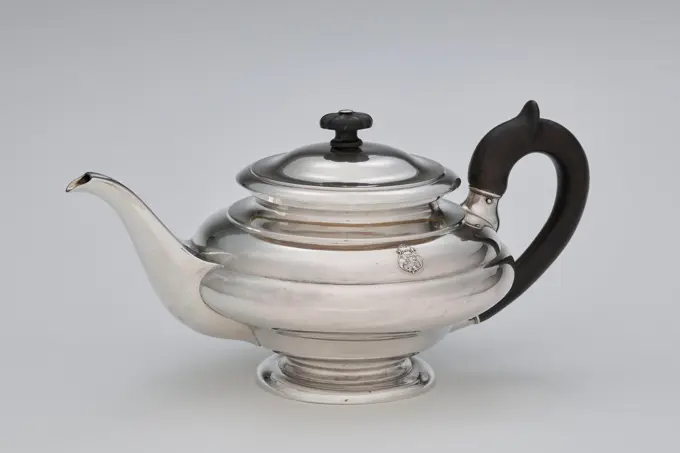
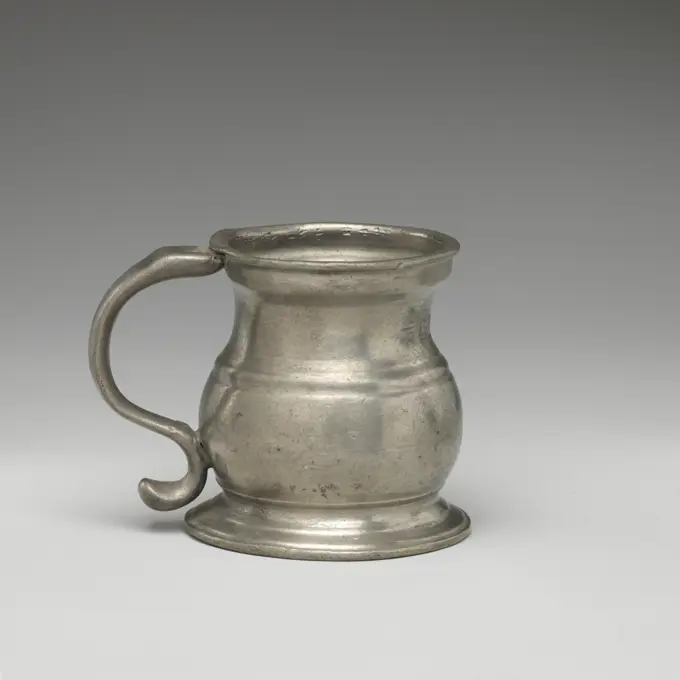
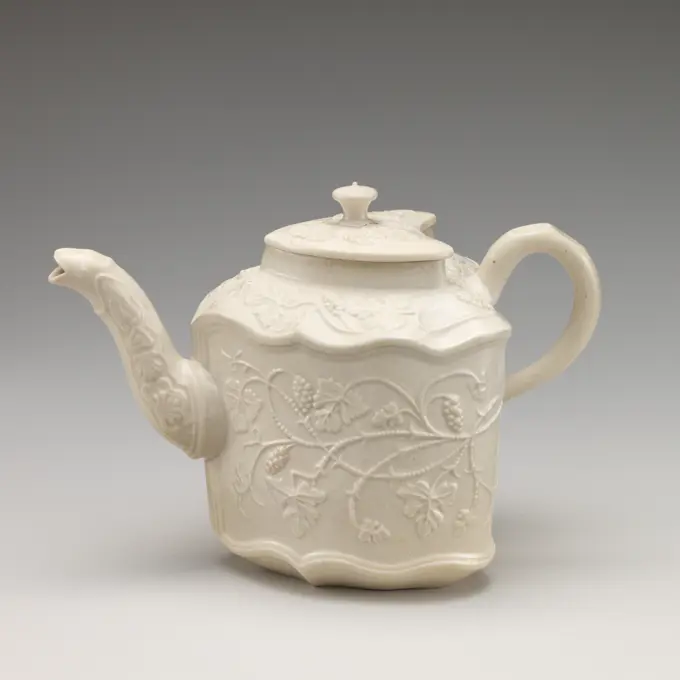
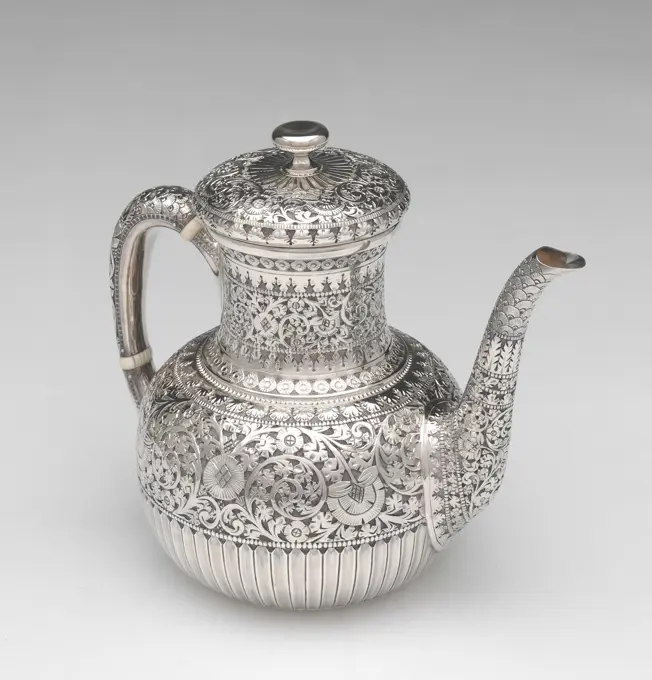
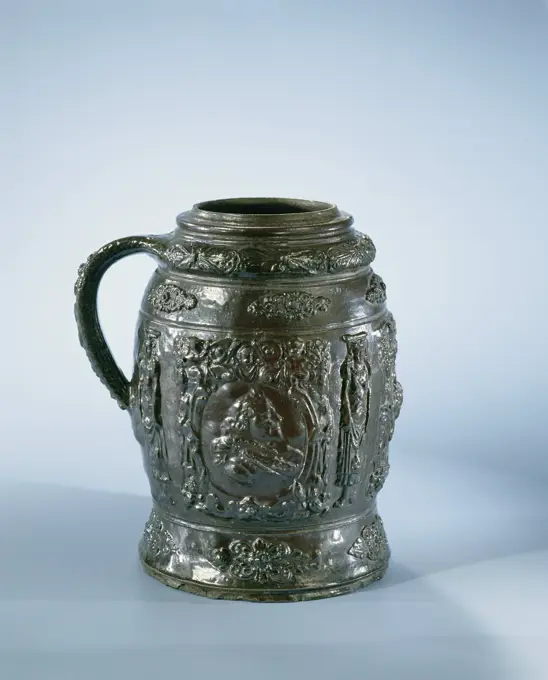
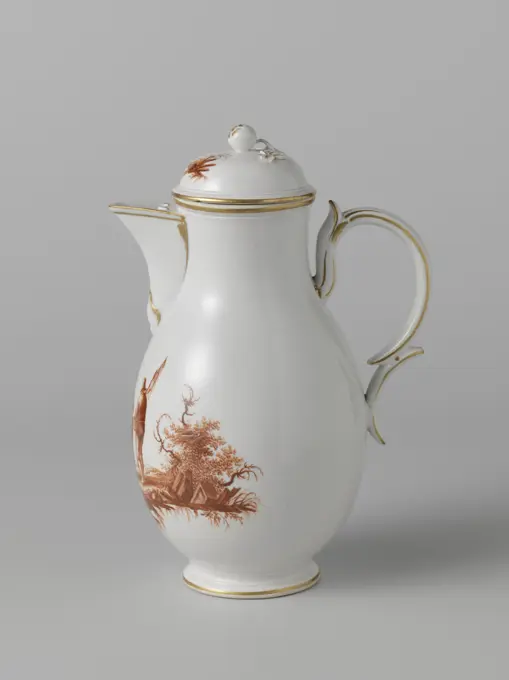
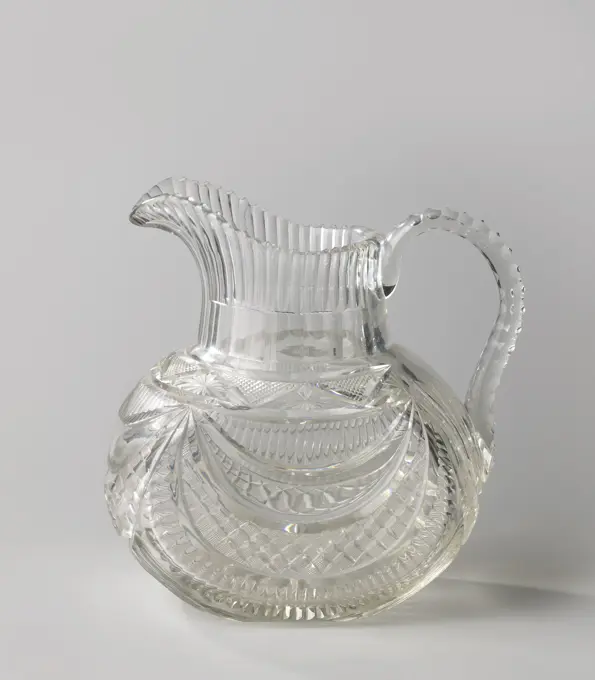
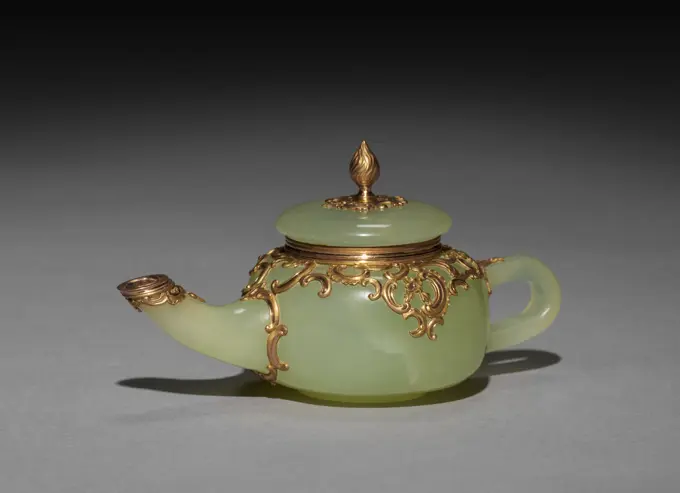
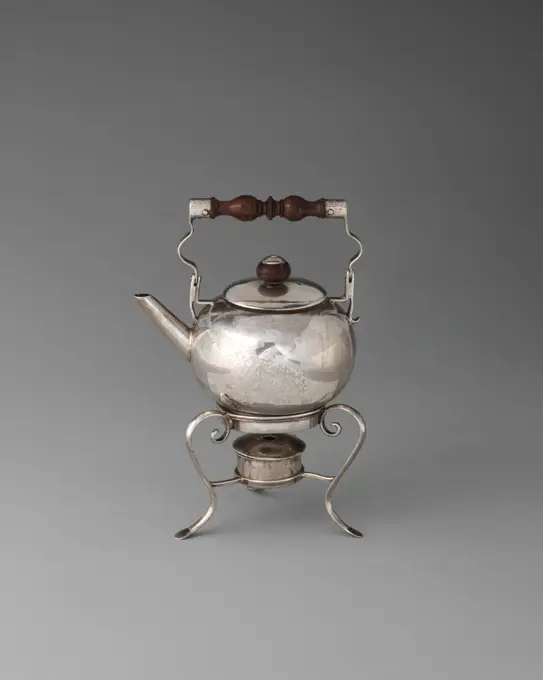
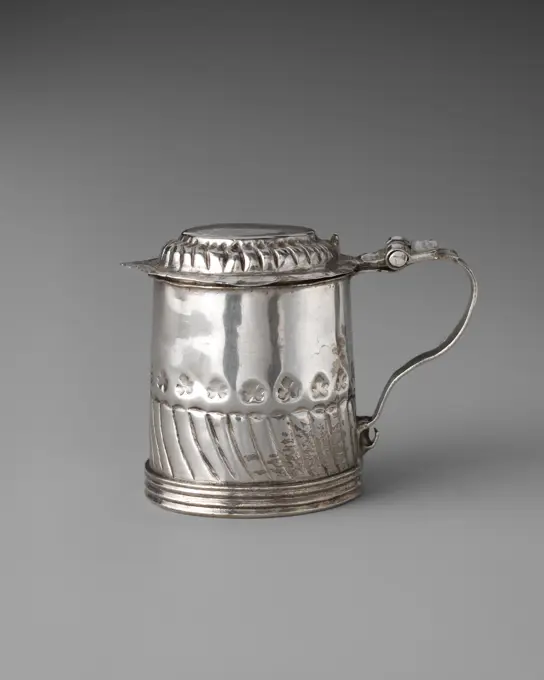
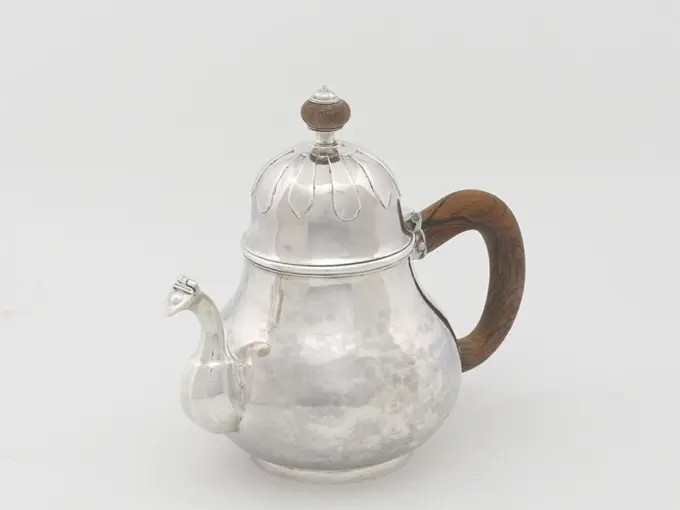
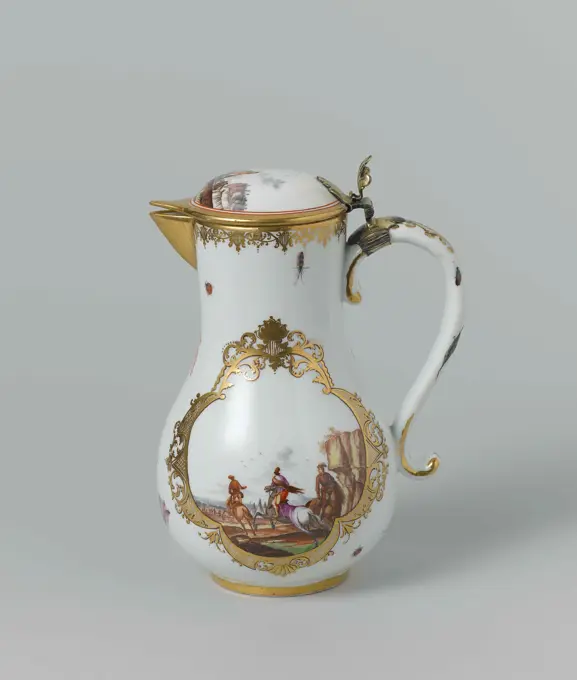
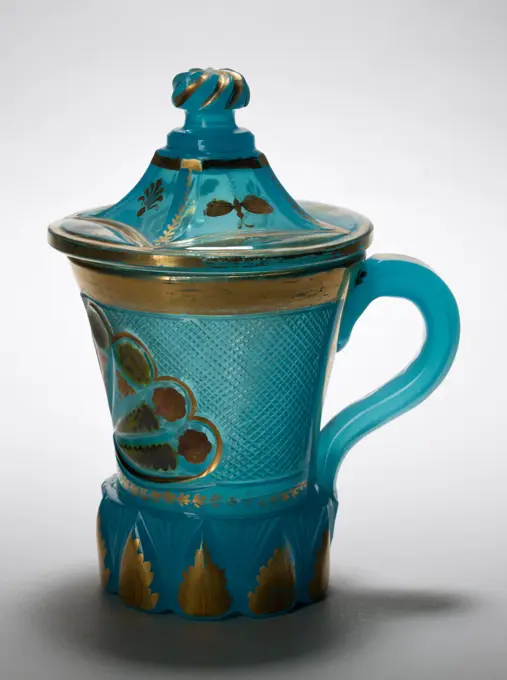
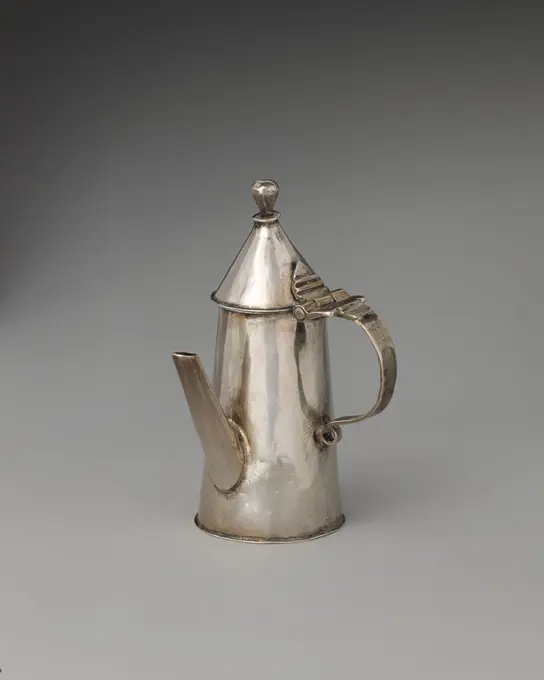
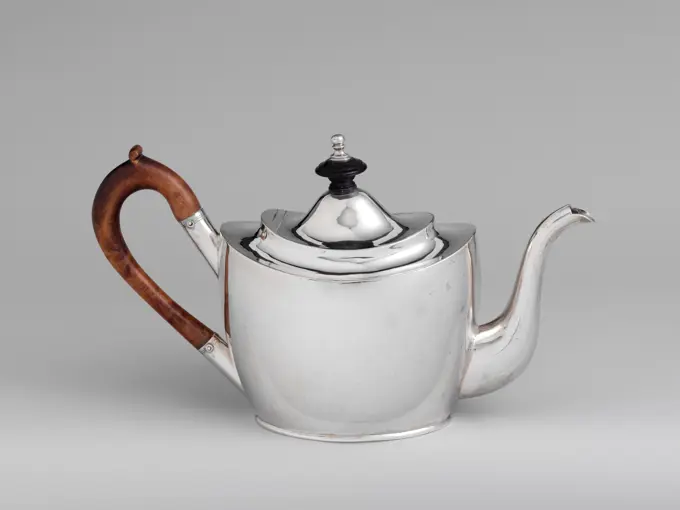
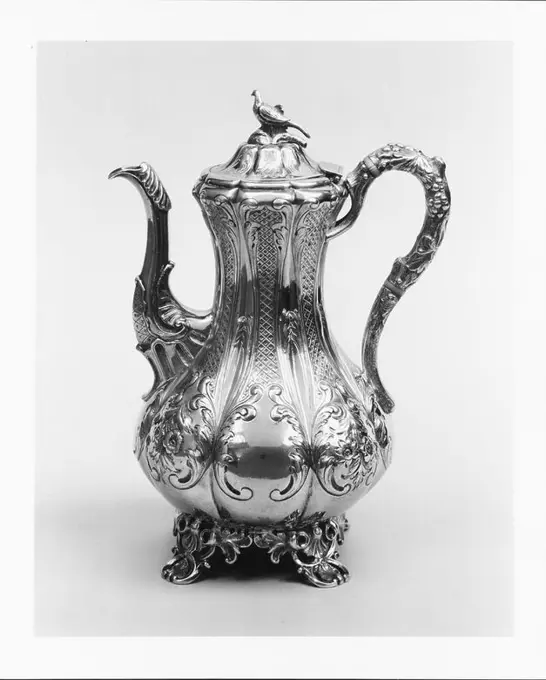
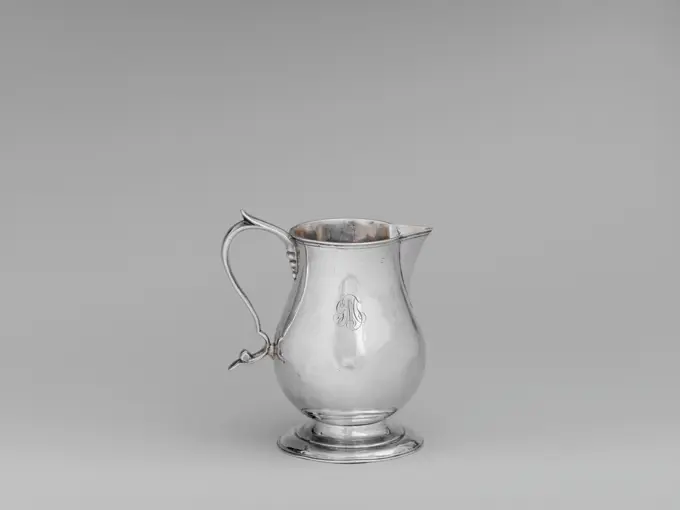
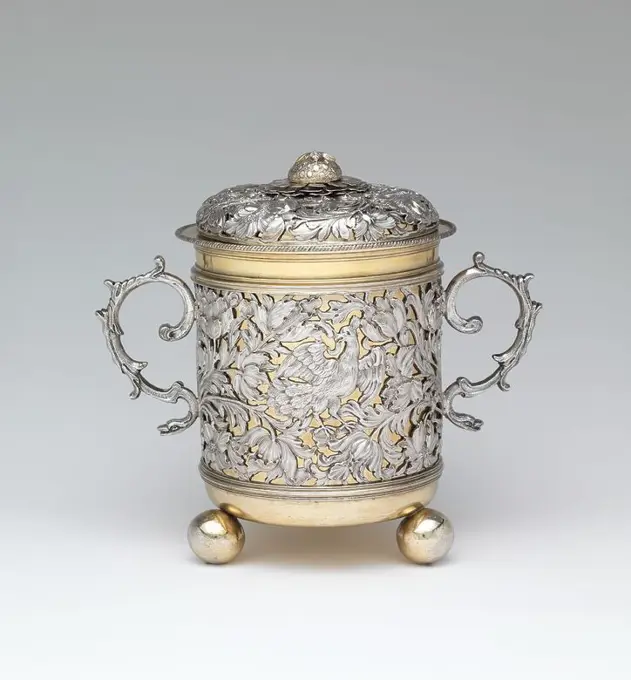
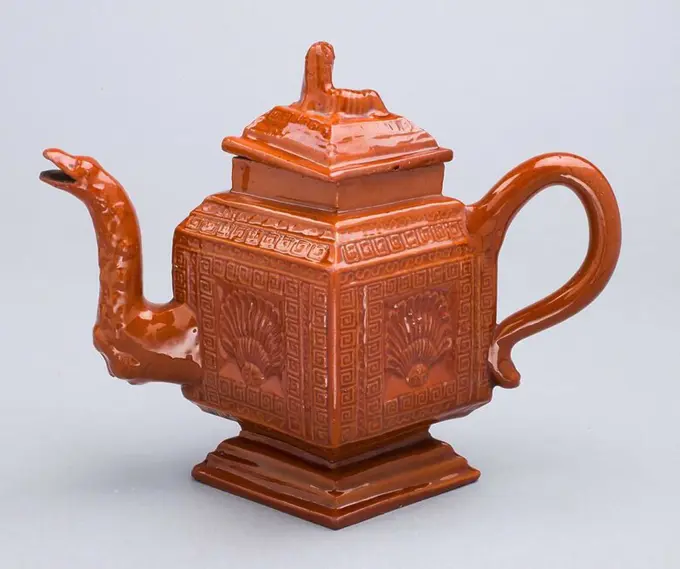
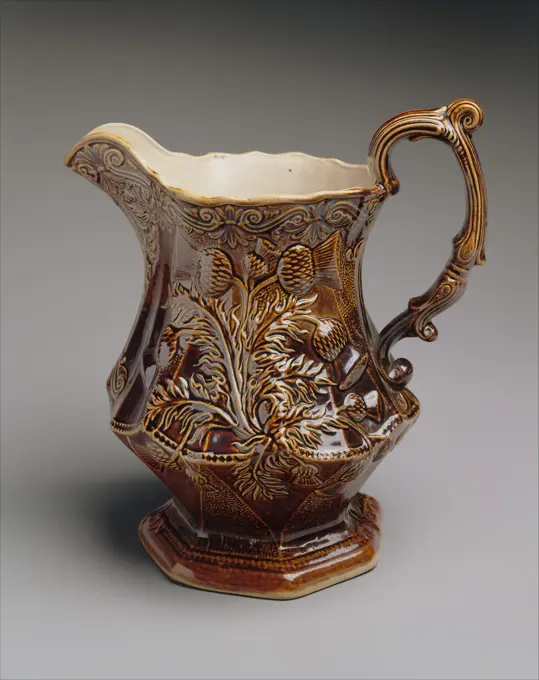
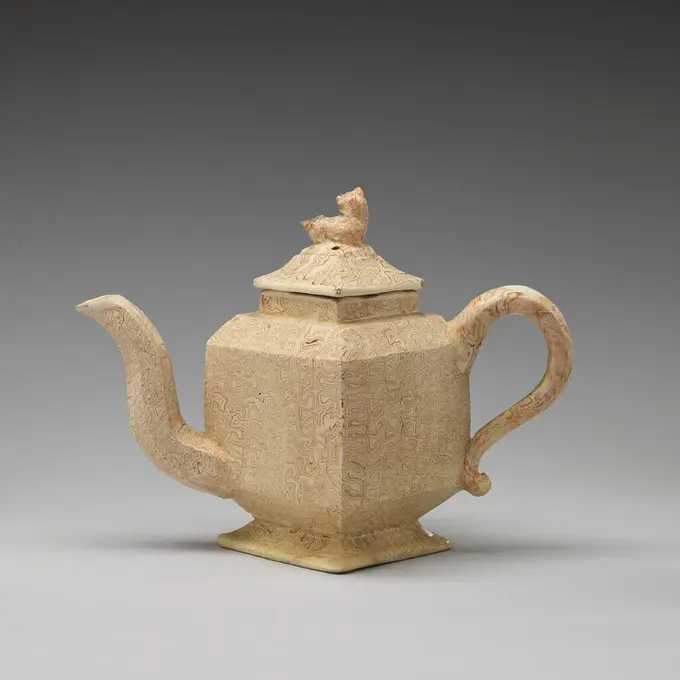
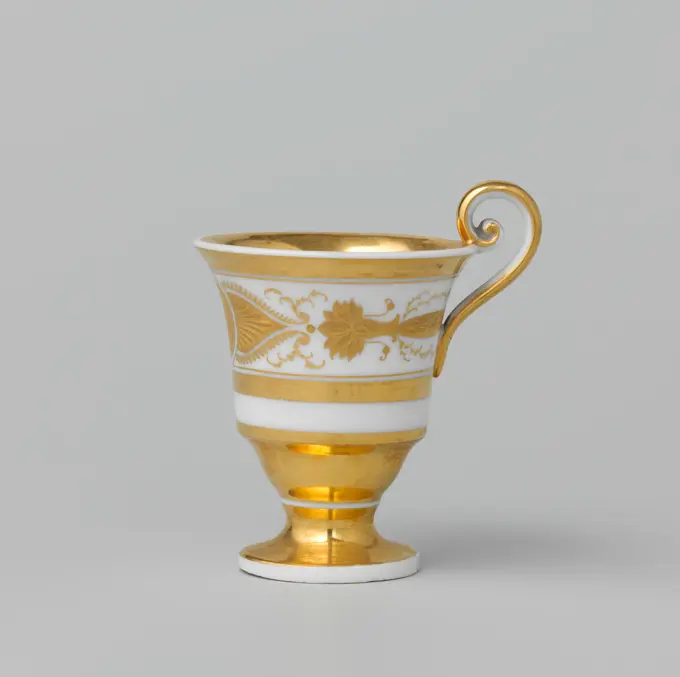
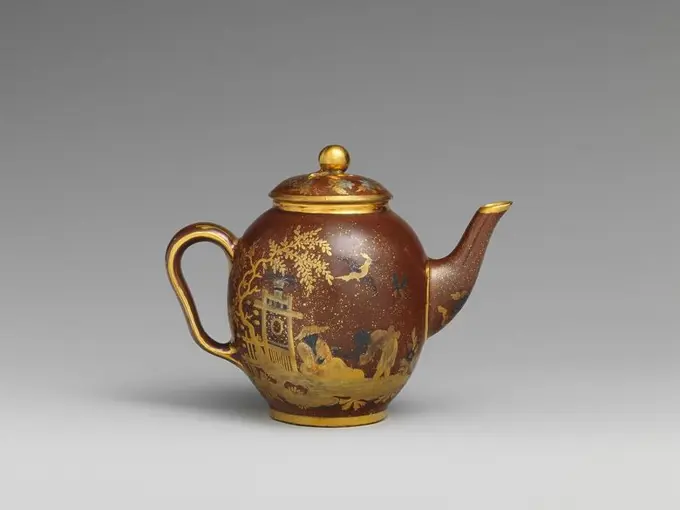
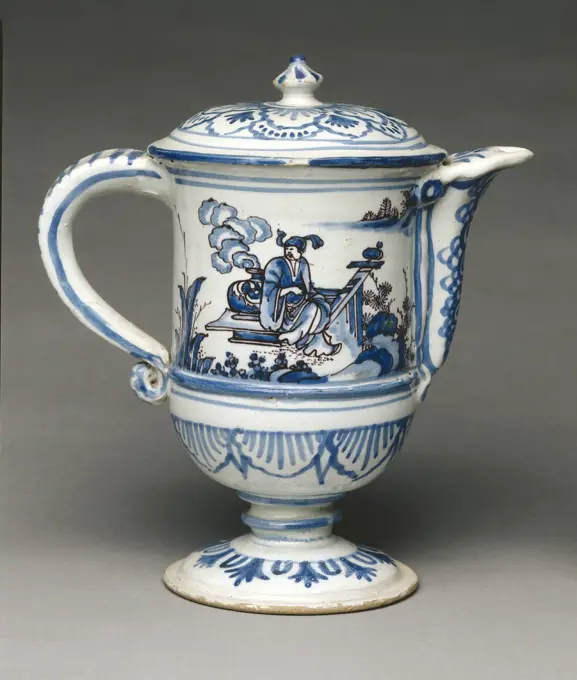
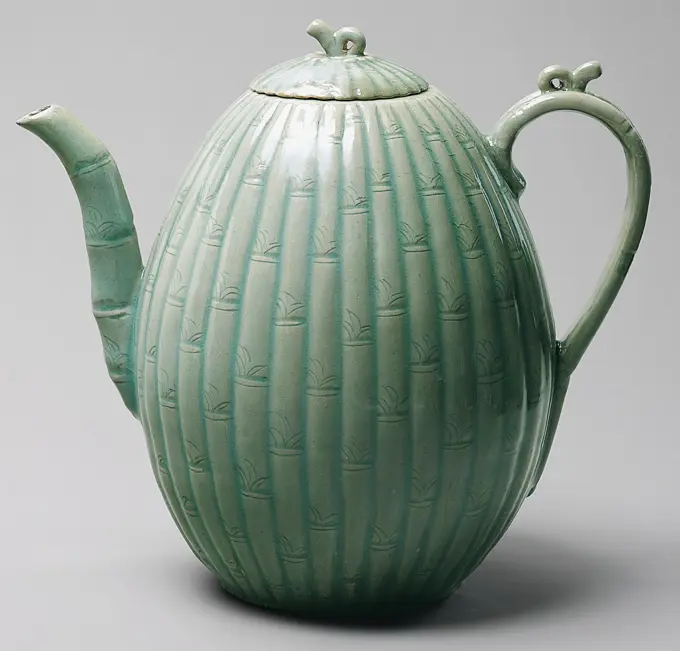
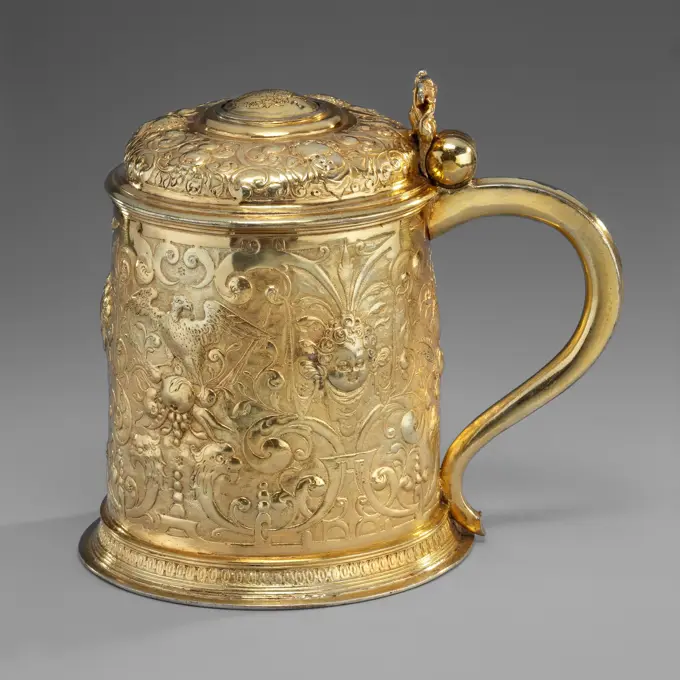
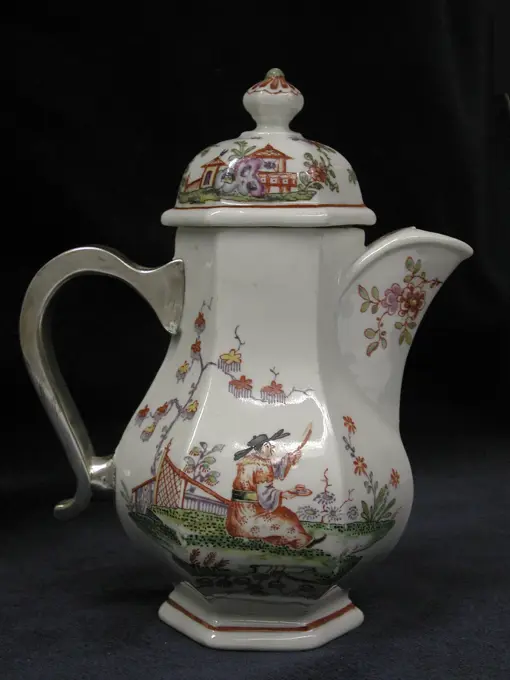
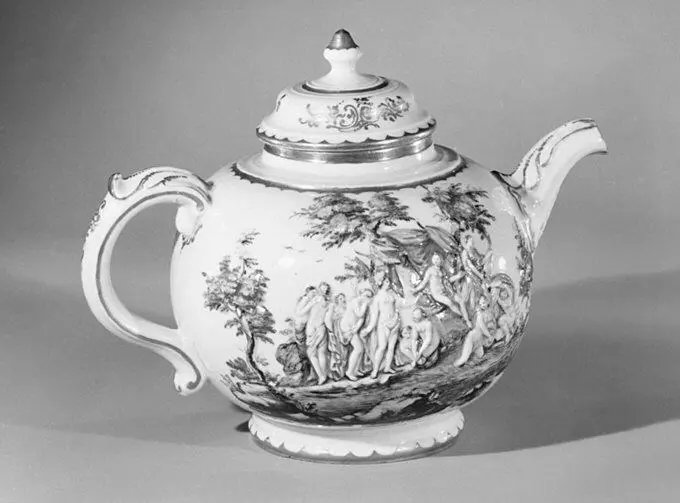
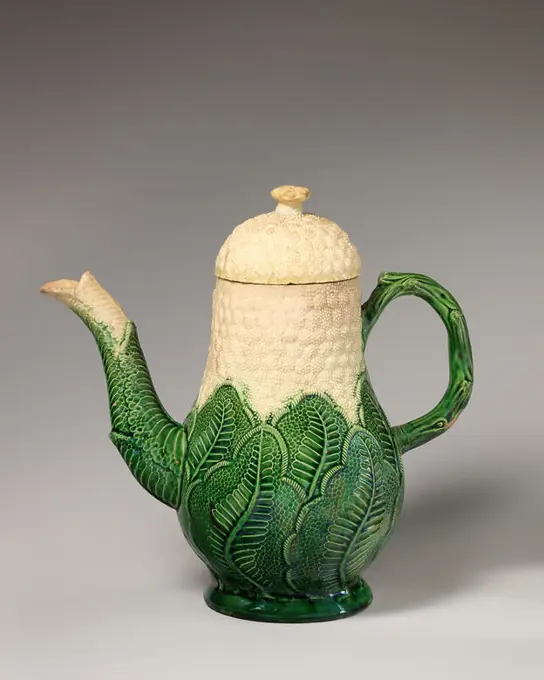
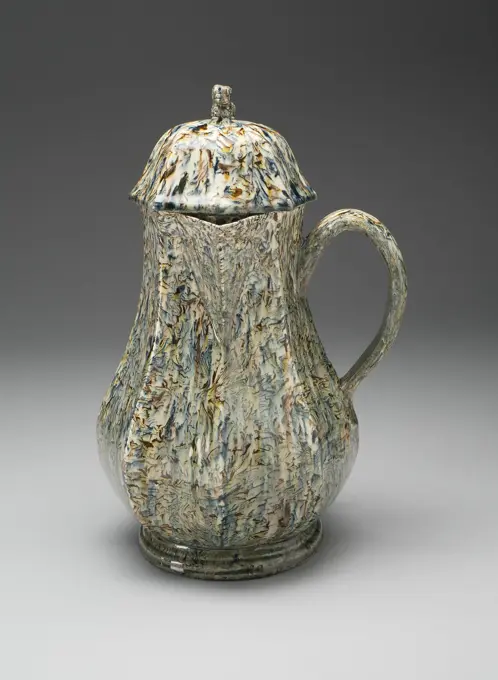
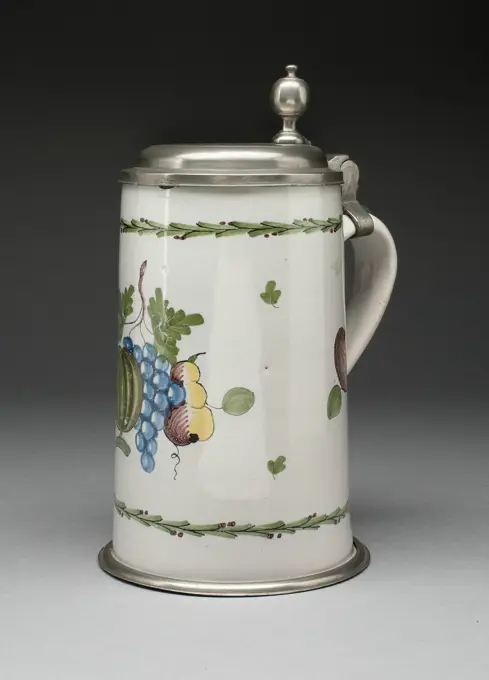
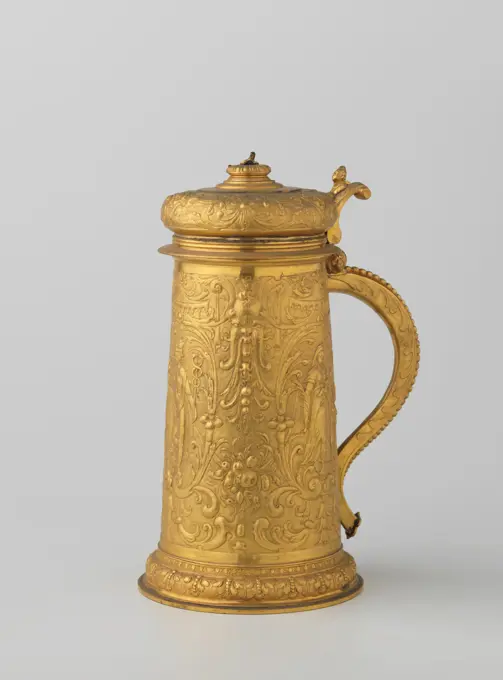
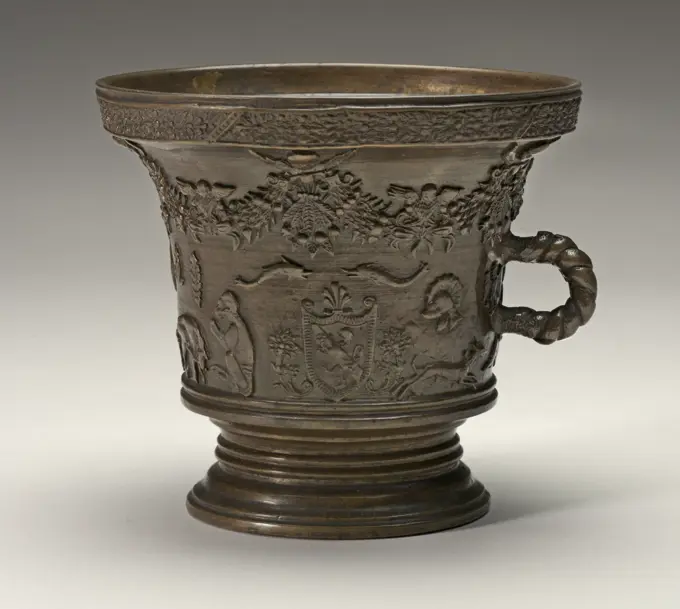
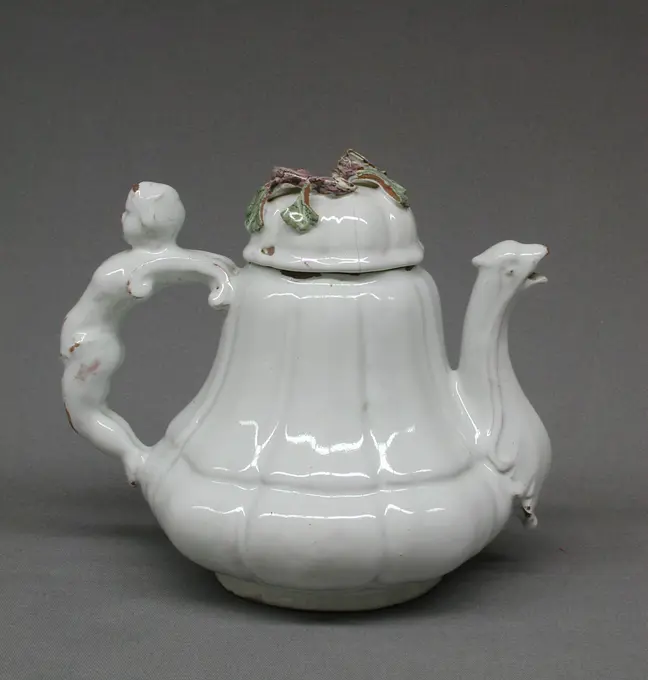
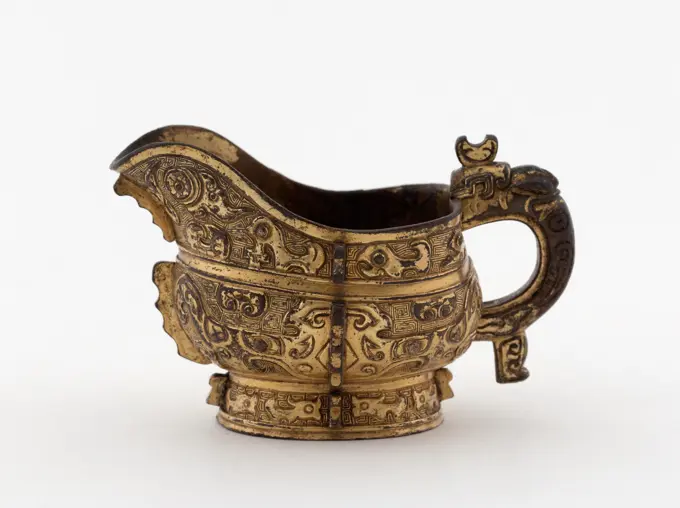
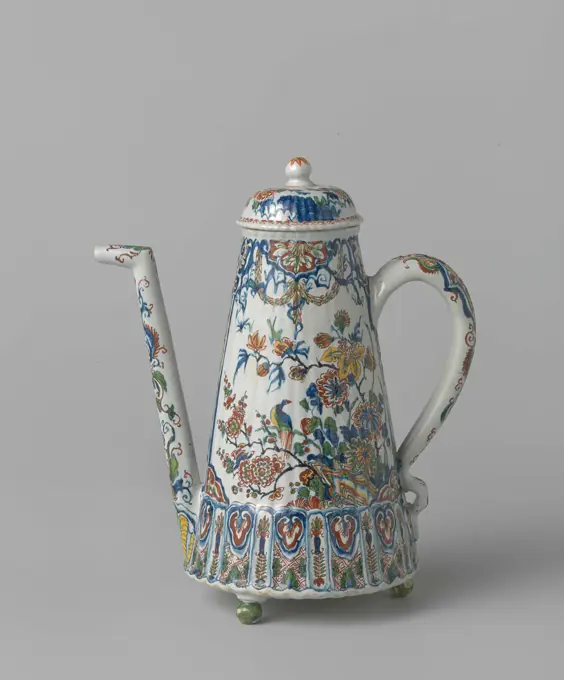
Can of faience. Round can of unforded faience, with a lid. The can have a stand ring, a round belly and a cylindrical neck. The ear is C-shaped and between the spout and the neck of the can be a S-shaped connector attached.Milk Jug With Cover With Undergleed Relief Decoration With Flowers. Porcelain pear-shaped milk jug with C-shaped ear, small, triangular spout and lid with button, painted on the glaze in red, green, yellow, eggplant, black and gold. On the wall of the canal, a relief decoration is applied with prunuses; To the foot and around the neck a decorative border with flowers alternately in cartouches and against a green surface with black dots; On the ear and on the spout a flower branch. The lid with relief decoration, around it a decorative tire with flowers alternately in cartouches and against a green surface with black dots. A crack in the neck; broken and broken in two parts, glued again; Six chips in the lid. Famille Verte.Coffeepot, pewter, knob, On shaped, flaring foot of a gadrooned pyriform body with attached spout twisted into scroll and knob. Domed, hinged cover. Strap handle, wound with cane, and wooden knob., 1750-1800, metalwork, Decorative Arts, coffeepot, coffeepotTeapot with a lid. Koenigliche Porcellain Fabrique, Meissen (1710-1763), factoryTeapot ca. 1740 Joseph Richardson Sr.. Teapot 8383Milk with a coated ear; Malcz, Karol (1797-1867); around 1840 (1835-00-00-1845-00-00);Tea teapot; Stokes & Ireland Ltd (Birmingham; Company Z 1900/01 (1900-00-00-1901-00-00);Can of filigraanglas. Can with inserted bottom. Smooth stand ring. Spherical body passing into a neck with pinched spout of clear glass with white spiral-wise lattimo wires. There is a corrugated thread around the neck. C-shaped ear.Mustard Pot 1780-1790 Yorkshire .Teapot from the Kirkhill Teaservice,  c. 1730Przeszo Przyszoci Sponholtz, Friedrich Wilhelm (1730 1789)Can, baluster-shaped with cup-shaped neck and a C-shaped ear. Undocorated .. Baluster-shaped can of unforded faience, with a cup-shaped neck and a C-shaped ear.Cream Jug, c. 1800. John McMullin (American, 1765-1843). Silver; overall: 15.2 x 12.3 x 7 cm (6 x 4 13/16 x 2 3/4 in.).Covered Milk Jug, c. 1770. Pont-aux-Choux Factory (French). Lead- glazed earthenware (faience fine); pewter; overall: 23.3 x 15.3 x 12.1 cm (9 3/16 x 6 x 4 3/4 in.).Classicist teaph; Malcz, Karol (1797-1867); 1930s (1830-00-00-1839-00-00);Pitcher British 19th centuryMeasure 18th century British. Measure. British. 18th century. Pewter. Metalwork-PewterTeapot ca. 1745 British, Staffordshire Listen to experts illuminate this artwork's story Listen Play or pause #407. Teapots Supported by Bloomberg Philanthropies We're sorry, the transcript for this audio track is not available at this time. We are working to make it available as soon as possible.. Teapot. British, Staffordshire. ca. 1745. Salt-glazed stoneware. Ceramics-PotteryPitcher c 1880-1900 Providence. Silver . Gorham Manufacturing CompanyMilk jug. Malcz, Karol (1797-1867), creatorTeapot, c. 1750-1770. China, Chinese Export -- European Market, 18th century. Porcelain; overall: 14 x 10.9 cm (5 1/2 x 4 5/16 in.).Coffeepot ca. 1782 Central European. Coffeepot 207854Teapot Made 1815-1825 Staffordshire. Earthenware with silver lustre decoration .Teapot c 1875-1890 New York City. Silver and ivory . Whiting Manufacturing CompanyJug (Pot à l'eau tourné) 1763 Sèvres. Soft-paste porcelain, polychrome enamels, gilding, and gilt-metal mounts . Manufacture nationale de Sèvres (Manufacturer)Jacob Margas, Teapot, 1711/12, silver.Teapot of white stoneware with relief figures; Crouch true. Octagonal, spherical teaspot of white stoneware. The pot has a curved spout, a C-shaped ear, an octagonal stand ring and an octagonal lid. The pot has eight oval medallions in relation to a figure in relief.Teapot, Model No.14.  Designer Frederick Carder, American, born England, 1863-1963 Manufacturer: Corning Glass Works, American, 1878-1990Can. Can with inserted bottom. The body, optically blown with vertical ribs, runs out in a funnel-shaped neck. Bent, ribbed spout. Bough C-shaped, ribbed ear with a pinch comb. At the start of the spout a swirled wire, on which mascarons and studs are arranged. A mascaron on the attack of the spout. Remnants of gildings on the mascarons, the studs and the smooth thread around the neckTankard with portraits, scrolls and foliate ornaments, anonymous, c. 1620 Beer mug of stoneware on a slightly spreading foot and with a slightly egg -shaped body. The C-shaped ear is attached to a profile under the edge and on the abdomen. Covered with a brown Engobe. On the belly in relief three printed and imposed courses of rolling and putti, separated by karyatids. In the courses in a medallion a winged angel's head and a lady and gentleman and Profil. On the foot shoulder and edge a strap with curl and leaf motifs. Creusen. Creusen stoneware. glaze. engobe vitrification Beer mug of stoneware on a slightly spreading foot and with a slightly egg -shaped body. The C-shaped ear is attached to a profile under the edge and on the abdomen. Covered with a brown Engobe. On the belly in relief three printed and imposed courses of rolling and putti, separated by karyatids. In the courses in a medallion a winged angel's head and a lady and gentleman and Profil. On the foot shoulder and edge a. Coffee pan from painted porcelain. The ear is c-shaped and the foot, mouth and tangrit are plated. The can be decorated on both sides on body and lid with a four-pass within which a höroldt chinoiserie. Indian Blumen are painted between the four passes of the lid and on the ear and the spout. Under the spout a letter fragment and trumpere l'oeuil has been applied with the text: "Votre Très Hu Mble Johann Martin Bottfridm ... Nebst 1. Balln MIT DEM Sigl: CZ Zur Fracht Ge ... 6 FEV". The can not noticed.Coffee pot; Radke, Emil (Fl. 1830-Ca 1867); 1930s (0-00-00-0-00-00);Coffee Pot, Manufactuur Oud-Loosdrecht, c. 1778 - c. 1782 Coffee pan of porcelain. The lid button consists of a partly gilded fruit on a twig with leaves. Painted in Sepia with a fisherman and fisherman with youngsters on a ground with bushes. Only a ground on the lid. Gold pisses along the edges, on ear and spout. Loosdrecht porcelain Coffee pan of porcelain. The lid button consists of a partly gilded fruit on a twig with leaves. Painted in Sepia with a fisherman and fisherman with youngsters on a ground with bushes. Only a ground on the lid. Gold pisses along the edges, on ear and spout. Loosdrecht porcelainTea-and-CoffeeService. Designer John A. Prip, American, 1922-2009 Manufacturer: Reed and Barton, American, founded 1840Milk Philip Ashberry & SonsCan with different sharpening motifs, anonymous, c. 1800 - c. 1830 Large can with oval, flat bottom, sideways flattened spherical body, wide, oval neck with bent spout. S-shaped ear. The can sharpened with different grinding motifs. Hals and ear faceted. Waterford glass glassblowing / grinding Large can with oval, flat bottom, sideways flattened spherical body, wide, oval neck with bent spout. S-shaped ear. The can sharpened with different grinding motifs. Hals and ear faceted. Waterford glass glassblowing / grindingMiniature Teapot, 1886-96. Mikhail Evlampievich Perkhin (Russian, 1860-1903), House of Fabergé (Russian, 1842-1918). Gold, bowenite; overall: 5.8 x 10.9 cm (2 5/16 x 4 5/16 in.). The House of Fabergé specialized in the creation of little treasures intended as opulent personal gifts. In creating luxurious accessories for a desk or tabletop, Fabergé often used native hardstones such as multicolored agate and quartz, green nephrite, pink rhodonite, rock crystal, and pale green bowenite found in the Ural Mountains of western Russia. Fabergé's designers often paired hardstones with gold mounts, particularly in the St. Petersburg workshop where the goldsmiths were concentrated.Ewer in the Form of a Melon with Bamboo Spout 1100-1199 Korea. Celadon-glazed stoneware with underglaze molded decoration .Sugar bowl with lid, brown with light spots. Sugar bowl with lid of pottery with brown feather mast. Light spots on the belly and on the lid.William Gamble, Teapot, 1711/12, silver.Miniature kettle with stand 18th century Joseph Collier. Miniature kettle with stand. British, Exeter. 18th century. Silver, wood. Metalwork-Silver-MiniatureEwer with Cover 12th century China. Ewer with Cover 50547Miniature tankard 1707-8 George Manjoy British. Miniature tankard. British, London. 1707-8. Silver. Metalwork-Silver-Miniature. Milk jug with lid of stoneware with salt glaze, part of a crockery.Measure late 18th century possibly Scottish. Measure. possibly Scottish. late 18th century. Pewter. Metalwork-PewterTeapot. Attributed to Jacob Marius Groen; American, c. 1679-c. 1750; New York, New York. Date: 1715-1725. Dimensions: 16.5 × 19.1 × 10.2 cm (6 1/2 × 7 1/2 × 4 3/8 in.); 543.8 grams. Silver. Origin: New York. Museum: The Chicago Art Institute, Chicago, USA.Coffee or watercan, painted multi-colored with landscapes with riders. Pear-shaped can with a sneb, an S-shaped ear and a slap cover. Lid and can be connected to each other by a gold-plated silver frame. On the side two four passes have been painted within which a show to a print. On the one hand a landscape in which riders, men and tents and on the other side riders at a rock with tents in the background. The lid is painted with a circle in which a landscape with a rider and four men. The can and the frame are marked.A cup with a coverJug 18th century British. Jug. British. 18th century. Soft-paste porcelain. Ceramics-PorcelainMiniature coffeepot with hinged cover. Culture: British, London. Dimensions: 2 1/2 × 1 1/2 in. (6.4 × 3.8 cm). Maker: George Manjoy (British, active 1685-ca. 1720). Date: 1705-6.The production of miniature silver furniture and tea, coffee, and chocolate equipment was a specialty of goldsmiths known as "toy men." The miniatures were probably intended for dollhouses. From the mid-eighteenth century in England until the present, porcelain and fine earthenware miniatures have been made as well. Museum: Metropolitan Museum of Art, New York, USA.Teapot ca. 1800 Ebenezer Moulton. Teapot 8377Milk Pot. Culture: American. Dimensions: 9 1/16 x 6 7/16 x 5 in. (23 x 16.4 x 12.7 cm); 23 oz. 2 dwt. (718.5 g). Maker: Charters, Cann & Dunn (active 1848-1854). Retailer: Ball, Tompkins and Black (active 1839-51). Date: 1848-51. Museum: Metropolitan Museum of Art, New York, USA.Church flagon 18th century British. Church flagon. British. 18th century. Pewter. Metalwork-PewterCreamer ca. 1760 Jonathan Otis. Creamer 2697Lobed Teapot with Floral Design late 17th century Japan. Lobed Teapot with Floral Design. Japan. late 17th century. Porcelain with overglaze enamels (Arita ware, Ko Imari type); European replacement spout and handle. Edo period (1615-1868). CeramicsTwo-handled cup with cover. Culture: British, London. Dimensions: Overall (confirmed): 7 13/16 × 8 3/4 × 5 1/2 in., 39 oz. 3 dwt. (19.8 × 22.2 × 14 cm, 1218.004g). Date: ca. 1680.The construction of this loving cup--meant to be passed around among a group of friends, family, or members of a corporate entity-is unusual but achieved by simple means. A circular sleeve was slipped over a plain cylindrical tankard shape, with the addition of handles. The decoration in relief consists of flower sprays, beautifully realized in their suggestion of volume and delicately textured to suggest petals of different species. The intervening spaces were cut away in a technique known as ajouré--which means "letting in the light" or "open to the daylight." The decoration is on a silver blank, whereas the body of the piece is in silver gilt, and shadows are created where the ground of the outer layer is cut away. The same technique is used on the cover, highly wrought on the outer layer and plain on the Cup with gold borders on a red ground, anonymous, c. 1800 - c. 1824 Porcelain head on spreading foot and with a high, curled ear, covered on the glaze with red and gold. The outer wall is covered with red and the foot, edge, ear and part of the inner wall with gold. On the outer edge a flower vank in one of the golden tires. Empire. France (possibly) porcelain. glaze. gold (metal) painting / gilding / vitrification Porcelain head on spreading foot and with a high, curled ear, covered on the glaze with red and gold. The outer wall is covered with red and the foot, edge, ear and part of the inner wall with gold. On the outer edge a flower vank in one of the golden tires. Empire. France (possibly) porcelain. glaze. gold (metal) painting / gilding / vitrificationMiniature kettle with stand. Culture: British, Exeter. Dimensions: Overall: 4 x 2 11/16 in. (10.2 x 6.8 cm). Maker: Joseph Collier. Date: 18th century. Museum: Metropolitan Museum of Art, New York, USA.Pitcher 1849-54 Probably Congress Pottery. Pitcher 5784Teapot with cover (part of a set) 1808 Danish, Copenhagen. Teapot with cover (part of a set) 198846Teapot. Staffordshire, England. Date: 1735-1745. Dimensions: 14.3 x 17.8 x 8.9 cm (5 5/8 x 7 x 3 1/2 in.). Lead-glazed earthenware (redware). Origin: Staffordshire. Museum: The Chicago Art Institute, Chicago, USA.Pitcher 1833-50 American Pottery Manufacturing Company In 1828 two Scotsmen David and James Henderson took over the defunct Jersey Porcelain and Earthenware Company in Jersey City, New Jersey, to fabricate fine stonewares that resembled those made in England. Such mid-range wares were imported into America in large quantities. The Jersey City factory relied heavily on English workers, designs and factory practices. Many of the firm's products, pitchers, in particular, virtually replicate their Staffordshire counterparts. The Hendersons reorganized in 1833, renaming their firm the American Pottery manufacturing company, whose mark appears on the underside of this pitcher. The overall form of the pitcher is based on English models, yet the relief decoration of thistles appears to be uniquely American, the motif perhaps a reference to the proprietors' native country. The stippled background calls to mind patterns in lacy pressed glass of the same time period.. Pitcher. American. 1833-50. Jug with cover 1729-30 Paul de Lamerie British. Jug with cover 205227Teapot. Culture: British, Staffordshire. Dimensions: Height: 5 in. (12.7 cm). Date: ca. 1750. Museum: Metropolitan Museum of Art, New York, USA.Cup with golden decoration. Cup of porcelain with mat and glossy golden ornament.Tankard, De Greek A, 1709 Pul van Faience with a lid of silver. Multicolored painted with flower branches and palmets and two music -making men. DelftDelftsilversmith: Rotterdam silver (metal) Pul van Faience with a lid of silver. Multicolored painted with flower branches and palmets and two music -making men. DelftDelftsilversmith: Rotterdam silver (metal)Teapot with lotus scrolls and flower roundels, anonymous, c. 1775 - c. 1799 Teapot of porcelain with pear-shaped body, C-shaped ear and slightly bent spout, painted in underly glaze blue and on the glaze red, green, black and gold. On the wall twice a flower rosette surrounded by lotus vines. The ear and the spout comprises by a cartouche with leaf vines and 'frogs'. Around the foot a bond with lotus drinks in cartouches. Lid with the same decoration. Imari. Japan porcelain. glaze. cobalt (mineral). gold (metal) painting / gilding / vitrification Teapot of porcelain with pear-shaped body, C-shaped ear and slightly bent spout, painted in underly glaze blue and on the glaze red, green, black and gold. On the wall twice a flower rosette surrounded by lotus vines. The ear and the spout comprises by a cartouche with leaf vines and 'frogs'. Around the foot a bond with lotus drinks in cartouches. Lid with the same decoration. Imari. Japan porcelain. glaze. cobalt (mineral). gold (metal) paintCaster with Lid , c. 1720. Andrew Tyler (American, 1692-1741). Silver; with handle: 8.5 x 6.7 cm (3 3/8 x 2 5/8 in.). A caster was used to spread a finely ground substance, probably pepper.Teapot with lid; Korzec (Porcelain Manufaktura; 1790-1832); 1828 (1828-00-00-1828-00-00);AK" monogram, tea service, purchase (provenance), gilded beltCann.   Maker: Thomas Hammersley, 1727-1781Sugar Bowl 1848-51 Ball, Tompkins and Black. Sugar Bowl 7986Teapot with cover. Culture: French, Sèvres. Decorator: Louis-Antoine Le Grand (French, active 1776-1824). Dimensions: Height (with cover): 4 3/8 in. (11.1 cm). Factory: Sèvres Manufactory (French, 1740-present). Date: 1780. Museum: Metropolitan Museum of Art, New York, USA.Paul de Lamerie, Teakettle, Stand, and Lamp (altered), 1727/28, silver.Puzzle Pitcher, late 1600s. Saint-Jean-du-Desert Factory (French). Faience; overall: 22.6 x 21 x 12.7 cm (8 7/8 x 8 1/4 x 5 in.).Coffee pan with lid with painting in gold on royal blue fond with arcade pattern with gothic traces. Coffee pan of porcelain, part of a crockery, painted in gold on a royal blue fond with a arcade-downtown with gothic traces. The entire surface is plated outside this decor. Brands: See General Record.Tankard, Anonymous, c. 1704 - c. 1734Melon-shaped ewer with bamboo decoration first half of the 12th century Korea This elegant ewer demonstrates the Goryeo potters technical skill and conceptual sophistication in transforming everyday motifs from nature—in this case, a melon and bamboo—into a functional and aesthetically pleasing vessel. Listen to experts illuminate this artwork's story Listen Play or pause #8504. Melon-Shaped Ewer Supported by Bloomberg Philanthropies We're sorry, the transcript for this audio track is not available at this time. We are working to make it available as soon as possible.. Melon-shaped ewer with bamboo decoration 42268A porridge with a nine -Renaissance ornament; Sigmundt, Peter (fl. 1608-1624); around 1620 (1615-00-00-1625-00-00);Szwarc, Szymon (1884-197.) - collection, grotesque, coats of arms, mascarons, eagles, fruit, putta, renaissance (style), sirens, volutes, purchase (provenance)Coffee pan decorated with rocaille ribs, anonymous, 1787 Coffee pan of silver with wooden ear. The belly, barrel-rib-ribs tormented with rocauts on four volute legs with rocailles on the start. The cup -shaped spout runs in rocailles. The vaulted lid with the same motif has a flower rosette as a button. Double swivel ear. Brand: mutilated annual F. Tax brand no. 5440, ge. Keur no. 5442; Annual letter 87 with Kroon for 1787. Bergen (Belgium) silver (metal). wood (plant material) Coffee pan of silver with wooden ear. The belly, barrel-rib-ribs tormented with rocauts on four volute legs with rocailles on the start. The cup -shaped spout runs in rocailles. The vaulted lid with the same motif has a flower rosette as a button. Double swivel ear. Brand: mutilated annual F. Tax brand no. 5440, ge. Keur no. 5442; Annual letter 87 with Kroon for 1787. Bergen (Belgium) silver (metal). wood (plant material)Coffeepot ca. 1725 Vienna The gift of the Hans Syz Collection in 1995 endowed the Museum with nearly three hundred examples of European and Asian ceramics meticulously acquired by Swiss-born collector Dr. Syz (1894-1991) to chart the migration of models and patterns from East to West. Documenting a continuous process of influence and adaptation, these pieces provide a discriminating review of the nuances of stylistic change resulting from three centuries of trade.. Coffeepot. Austrian, Vienna. ca. 1725. Hard-paste porcelain, silver. Ceramics-PorcelainTeapot with cover ca. 1760-70 Doccia Porcelain Manufactory Italian Tea and coffee services decorated in this manner were among the Doccia factorys early productions and remained in favor far into the nineteenth century.. Teapot with cover 205700Chocolate pot with cover. Culture: British, Staffordshire. Dimensions: Height: 9 1/4 in. (23.5 cm). Date: ca. 1755-70. Museum: Metropolitan Museum of Art, New York, USA.Coffee Pot Made 1750-1765 Staffordshire .. The Dutch began buying porcelain in Japan soon after 1650. It had become difficult to order in China because of the political unrest and clashes that had erupted there. The VOC wanted to have porcelain in European forms and to this end sent European ceramics to Japan to be copied. This mustard pot and beer jug follow German stoneware models, which are comparably decorated.Creamer 1850-60 Possibly New England Glass Company. Creamer. American. 1850-60. Pressed glass, diamond point. Made in East Cambridge, Massachusetts, United StatesCreamer 1815-1825 Burslem. Porcelain and gilding . Wedgwood Manufactory (Manufacturer)Covered Toddy Jug 1792-96 Chinese. Covered Toddy Jug 2542Teapot 1843-45 Samuel Simpson. Teapot. American. 1843-45. Pewter, wood. Possibly made in Yalesville, Connecticut, United States; Possibly made in New York, New York, United StatesTankard 1700-1799 Salzburg. Tin-glazed earthenware (faience) and pewter .Galvanoplastic reproduction of a drinking jug with lid with representations of mythological figures, fa. Elkington & Co., after 1865 - Before 1880 Galvanoplastic reproduction of a drinking jug with lid with driven and hammered representation of Mercury and other mythological figures surrounded by leaf work and fruits. The button of the lid is formed by a bird (missing). Gilded. London copper (metal). silver (metal) gilding Galvanoplastic reproduction of a drinking jug with lid with driven and hammered representation of Mercury and other mythological figures surrounded by leaf work and fruits. The button of the lid is formed by a bird (missing). Gilded. London copper (metal). silver (metal) gildingMaker Unknown , possibly United States, Pitcher, c. 1830-c. 1850, sapphire blue glass.Pepper Box. Culture: American. Dimensions: Overall: 3 5/8 x 2 15/16 in. (9.2 x 7.5 cm); 2 oz. 14 dwt. (84 g)Base: Diam. 1 15/16 in. (4.9 cm)Body: H. 2 7/16 in. (6.2 cm); 1 oz. 19 dwt. (61 g)Cover: H. 1 3/8 in. (3.5 cm); Diam. 2 1/8 in. (5.4 cm); 15 dwt. (23 g). Maker: William Pollard (1690-1740). Date: ca. 1725. Museum: Metropolitan Museum of Art, New York, USA.Teapot, part of Tea and Coffee Service 1878 Connecticut. Silver . Rogers and Smith Company (Maker)Italian 16th Century, Mortar with Animals, Festoons, Shields of Arms, and Rope shaped Handle, early 16th century Mortar with Animals, Festoons, Shields of Arms, and Rope-shaped HandlePitcherTeapot ca. 1750 German, Dresden. Teapot. German, Dresden. ca. 1750. Faience (tin-glazed earthenware). Ceramics-PotteryTeapot. Culture: American. Dimensions: H. 10 1/2 in. (26.7 cm). Maker: George Richardson (1782-1848). Date: 1818-28. Museum: Metropolitan Museum of Art, New York, USA.Golden cut. Bronze. China. Paris, Cernuschi museum. 70002-52 Handle, Chinese art, bronze, doree cut, decorative motifMilkkan, oval, with Filetranden, Hyacinthe Pascal La Ruelle, 1804 The ovale can rest on a vaulted foot with an right -wing base. The body of the jug is convex vaulted. The vaulted, rejuvenating neck turns on one side into the high, broad pour. The neck and the body are connected by a high -rising, bent grooved ear. File traces run around the base, along the top edge of the foot and along the top edge of the body. Amsterdam silver (metal) The ovale can rest on a vaulted foot with an right -wing base. The body of the jug is convex vaulted. The vaulted, rejuvenating neck turns on one side into the high, broad pour. The neck and the body are connected by a high -rising, bent grooved ear. File traces run around the base, along the top edge of the foot and along the top edge of the body. Amsterdam silver (metal)Lid belonging to conical ribbed and multi-colored crushed coffee pot. Lid belonging to conical ribbed and multi-colored crushed coffee pot.