My Boards
View Pictures
  • My Boards

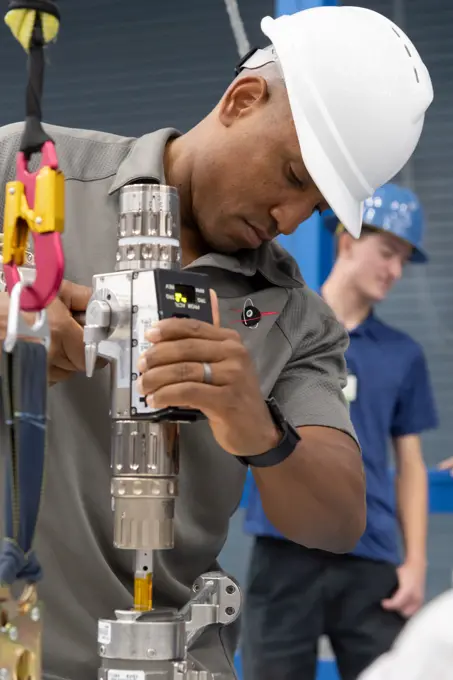
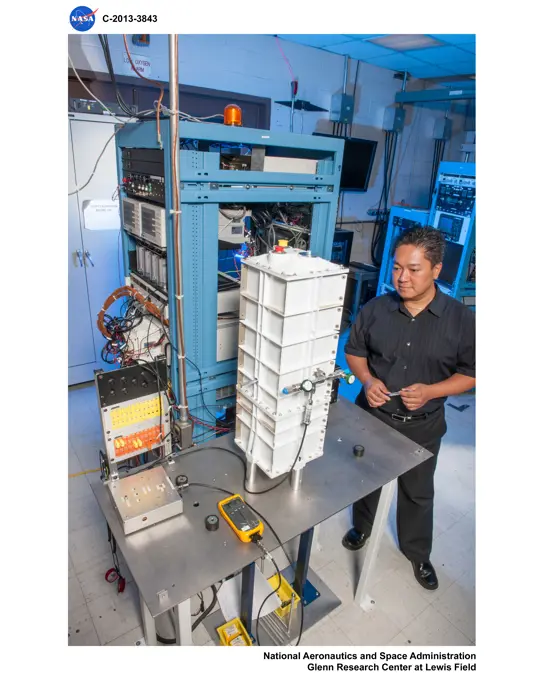
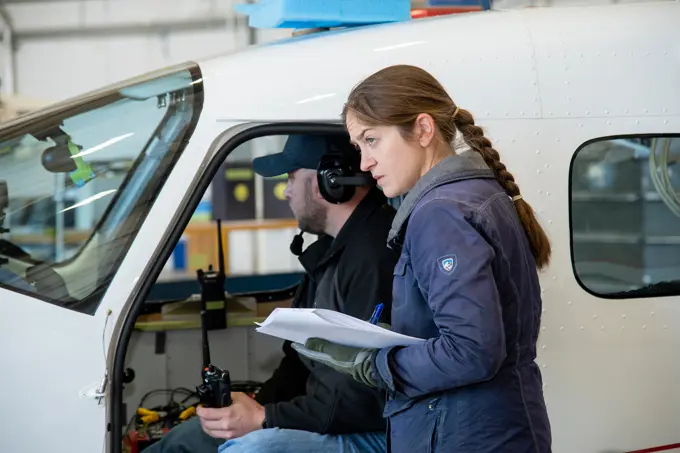
Technicians Working on Equipment

Technicians performing checks and repairs on complex equipment at a space agency, illustrating technical operations and maintenance in a high-tech environment.

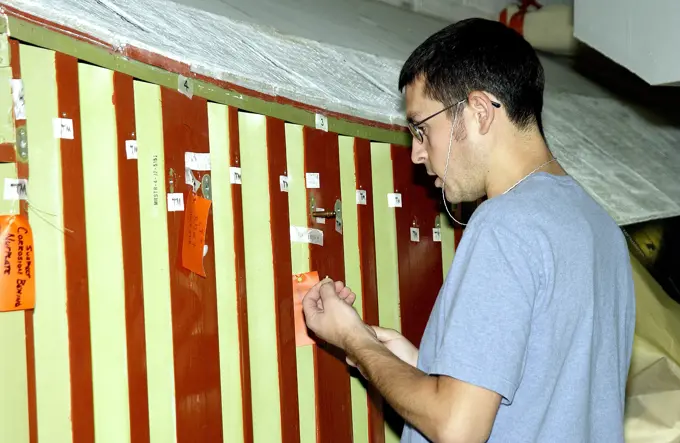
T&R Endeavour, OMS Pod Mate Test for Smithsonian Operations
133 assets in this story
6188-64538257
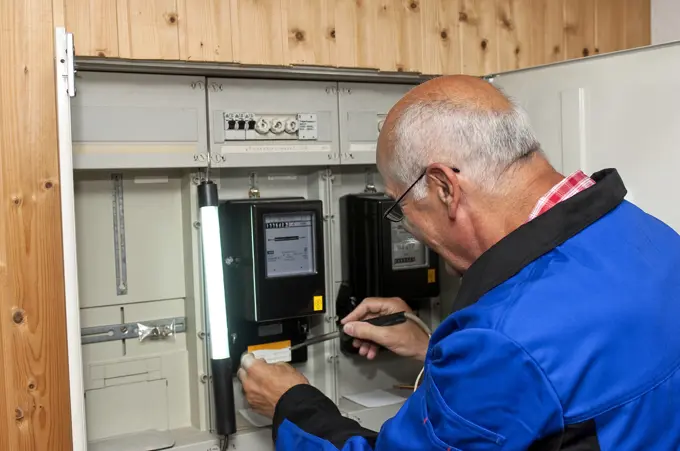
Elektriker Elektriker ,model released, Symbolfoto Copyright: xZoonar.com/BerndxLeitnerx 1973999 ,model released, Symbolfoto ,property released
6145-58970832
The first element machined for the Artemis III Orion crew module - a cone panel with openings for windows, designed by Orions lead contractor, Lockheed Martin, and manufactured by AMRO Fabricating Corp., of South El Monte, California, is shown here on Aug. 14, 2020. The completed panel is on its way to NASAs Michoud Assembly Facility near New Orleans, Louisiana, where engineers will weld it with other panels as part of Orions pressure vessel.
6145-54417008
A view of the controls that will give the B-1 bomber aircraft quick-start capabilities. Base: Edwards Air Force Base State: California (CA) Country: United States Of America (USA)
6145-45038995
CAPE CANAVERAL, Fla. -- Inside Orbiter Processing Facility-2 at NASAs Kennedy Space Center in Florida, technicians inspect the top emergency escape window that was removed from space shuttle Atlantis.The window is being removed in order to gain access to remove hazardous pyrotechnics from the shuttle. The window will be shipped to Johnson Space Center in Houston for inspections and a replacement outer pane will be installed in its place. The work is part of the Space Shuttle Programs transition and retirement processing of shuttle Atlantis. The shuttle is being prepared for display at the Kennedy Space Center Visitor Complex in Florida.
6145-44593143
KENNEDY SPACE CENTER, FLA. -- In the Orbiter Processing Facility, an employee from The Boeing Co., Huntington Beach, Calif., installs a strain gauge on a test panel prior to installation of Thermal Protection System tile on the panel.  The test panel and sections of Space Shuttle orbiter Enterprise (OV-101) will be transferred to the Southwest Research Institute for testing after the tile installation is complete.  The testing has been requested by the Columbia Accident Investigation Board.  Sections of Enterprise were borrowed from the Smithsonian Institution's Air and Space Museum where the orbiter is being stored at the Washington Dulles International Airport.  Enterprise was the first orbiter built in the Shuttle fleet and was used to conduct the Approach and Landing Test Program before the first powered Shuttle flight.
6145-58963085
KENNEDY SPACE CENTER, FLA. - In Orbiter Processing Facility bay 1 at NASAs Kennedy Space Center, United Space Alliance technician Butch Lato uses a laser tool to take step and gap measurements on Thermal Protection System tiles on the underside of orbiter Atlantis. Other processing continues on Atlantis for its mission, designated STS-121, to the International Space Station. The launch planning window is Sept. 9 - 24.
6145-44600902
KENNEDY SPACE CENTER, FLA. -In the Orbiter Processing Facility (OPF), a United Space Alliance technician examines the attachment points for the spars on the exterior of a wing of Space Shuttle Atlantis. Reinforced Carbon Carbon (RCC) panels are mechanically attached to the wing with a series of floating joints - spars - to reduce loading on the panels caused by wing deflections. The aluminum and the metallic attachments are protected from exceeding temperature limits by internal insulation.  The next launch of Atlantis will be on mission STS-114, a utilization and logistics flight to the International Space Station.
6145-45182543
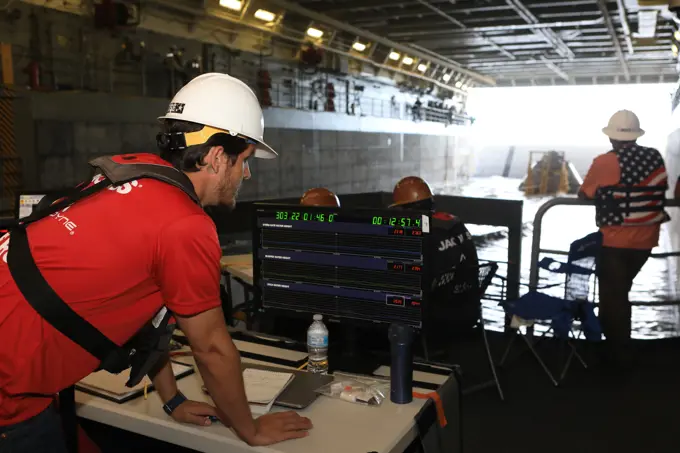
Inside a U.S. Navy ship, Jose Martinez, with Jacobs, monitors the well deck's water depth during Underway Recovery Test-7 (URT-7) on Oct. 30, 2018, in the Pacific Ocean. During URT-7, the Exploration Ground Systems recovery team and the U.S. Navy will use a test version of the Orion crew module, several rigid hull inflatable boats and support equipment to verify and validate processes, procedures, hardware and personnel during recovery of Orion in open waters. The test is one in a series of tests to verify and validate procedures and hardware that will be used to recover the Orion spacecraft aft it splashes down in the Pacific Ocean following deep space exploration missions. Orion will have emergency abort capability, sustain the crew during space travel and provide safe re-entry from deep space return velocities.
6145-58900174
Daniel Jacobson, 325th Communications Squadron radio frequency transmissions technician, installs a bolt onto a radio tower at Tyndall Air Force Base, Florida, Feb. 1, 2024. The Cognitive Radio Frequency Systems enable the 325th CS to proactively detect and deter radio interference threats in real-time.  Air Force
6145-55974588
NASAs SpaceX Crew-6 Splashdown. Support teams onboard the SpaceX recovery ship MEGAN work around the SpaceX Dragon Endeavour spacecraft after the hatch was opened shortly after it landed with NASA astronauts Stephen Bowen and Warren "Woody" Hoburg, UAE (United Arab Emirates) astronaut Sultan Alneyadi, and Roscosmos cosmonaut Andrey Fedyaev aboard in the Atlantic Ocean off the coast of Jacksonville, Florida, Monday, Sept. 4, 2023. Bowen, Hoburg, Alneyadi, and Fedyaev are returning after nearly six-months in space as part of Expedition 69 aboard the International Space Station.
6145-45119475
A member of the recovery team watches as a test version of the Orion crew module is secured in the flooded well deck of the USS San Diego for the start of Underway Recovery Test 5 in the Pacific Ocean off the coast of California. NASA's Ground Systems Development and Operations Program and the U.S. Navy are conducting a series of tests to prepare for recovery of Orion on its return from deep space missions. The testing will allow the team to demonstrate and evaluate recovery processes, procedures, hardware and personnel in open waters. Orion is the exploration spacecraft designed to carry astronauts to destinations not yet explored by humans, including an asteroid and NASA's Journey to Mars. It will have emergency abort capability, sustain the crew during space travel and provide safe re-entry from deep space return velocities. Orion is scheduled to launch on NASA's Space Launch System in late 2018.
6145-54117048
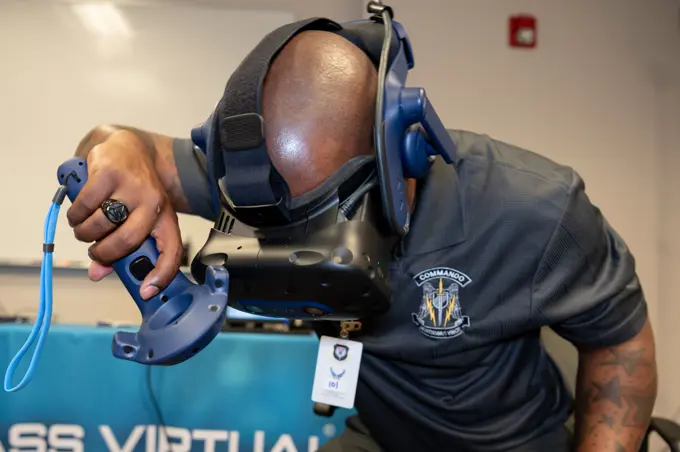
U.S. Air Force Chief Master Sgt. Mark Moore, 492d Special Operations Training Group senior enlisted advisor, simulates using a flashlight as part of an Air Force Integrated Technology Platform Virtual Reality demonstration, April 5-6, at Hurlburt Field, Florida. The Air Force ITP provides access to realistic 3D virtualized aircraft when access to mission aircraft is not available. It has also helped to improve the effectiveness of operational and maintenance training, and reduces the cost of training, while increasing the skills and improved knowledge retention of Airmen.
6145-45176294
NASA commercial crew astronaut Victor Glover learns about the tools and hardware he will use in spacewalk training at NASAs Space Vehicle Mockup Facility in Houston. Glover will fly to the International Space Station on the second flight of SpaceXs Crew Dragon.
6145-45277774
Inside the Rotation, Processing and Surge Facility at NASAs Kennedy Space Center in Florida, the first of many pins that will secure the right-hand motor segment - one of five segments that make up one of two solid rocket boosters for the agencys Space Launch System (SLS) - to the rockets right-hand aft skirt is inserted on June 24, 2020. Once the aft segments are mated to the two aft skirts, they will be moved to the Vehicle Assembly Building for stacking on the mobile launcher. Manufactured by Northrop Grumman in Utah, the twin boosters provide more than 75 percent of the total SLS thrust at launch. Under the Artemis program, NASA will land the first woman and the next man on the Moon by 2024. The first in a series of increasingly complex missions, Artemis I will test the Orion spacecraft and SLS as an integrated system ahead of crewed flights to the Moon.
6145-44967913
The Advanced Stirling Convertor (ASC) is being developed by Sunpower, Inc. for NASA's Glenn Research Center (GRC) with critical technology support tasks led by GRC. The goal of the ASC project is to develop a highly efficient, low mass, reliable power convertor for future Radioisotope Power Systems (RPS), NASA's Science Mission Directorate; Stirling Lab
6145-45271588
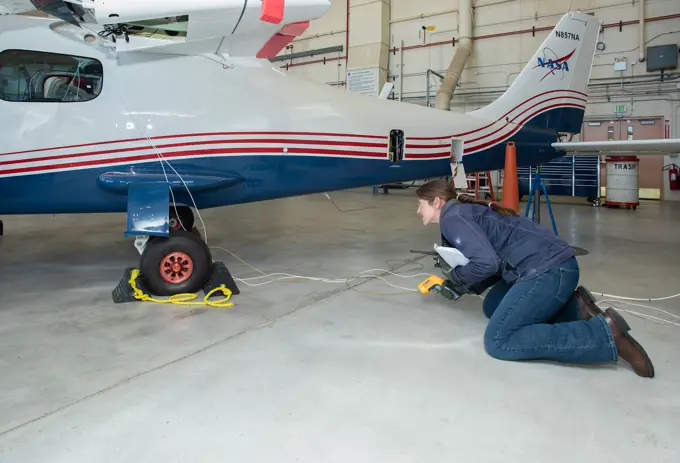
Telemetry testing begins on the X-57 Maxwell, NASAs first all-electric X-plane, as the operations crew at NASAs Armstrong Flight Research Center records the results. Telemetry testing is a critical phase in X-57s functional test series. In addition to confirming the ability of the X-57 aircraft to transmit speed, altitude, direction, and location to teams on the ground, telemetry testing also confirms the ability to transmit mission-critical-data, such as voltage, power consumption, and structural integrity. X-57s goal is to help set certification standards for emerging electric aircraft markets.
6145-44969314
Edwards, Calif. - ED13-0266-046- Sierra Nevada Corporation, or SNC, team members prepare for 60 mph tow tests of the company's Dream Chaser flight vehicle on taxi and runways at NASA's Dryden Flight Research Center at Edwards Air Force Base in California. Ground testing at 10, 20, 40 and 60 miles per hour is helping the company validate the performance of the spacecraft's braking and landing systems prior to captive-carry and free-flight tests scheduled for later this year.SNC is continuing the development of its Dream Chaser spacecraft under the agency's Commercial Crew Development Round 2, or CCDev2, and Commercial Crew Integrated Capability, or CCiCap, phases, which are intended to lead to the availability of commercial human spaceflight services for government and commercial customers.
6145-45000768
CAPE CANAVERAL, Fla. -- At NASA's Kennedy Space Center in Florida, social media participants were given an up-close look at the interior of one of the spaceport's mammoth crawler-transporters. Recent work has included preparations to install upgraded components that will enable the crawler to carry the greater loads anticipated with the agency's new rocket designed to take astronauts beyond low-Earth orbit for the first time since the early 1970s. The social media participants gathered at the Florida spaceport for the launch of the Tracking and Data Relay Satellite, or TDRS-L spacecraft. Their visit included tours of key facilities and participating in presentations by key NASA leaders who updated the space agency's current efforts.
6145-44744093
CAPE CANAVERAL, Fla. -   In the Vehicle Assembly Building high bay 4 at NASA's Kennedy Space Center in Florida, a worker begins adhering the final Ares I-X logo on one of the Ares I-X upper stage simulator segments.  The decal identifies the Ares I-X as a development test flight, which is targeted to launch in 2009. Ares I is the essential core of a safe, reliable, cost-effective space transportation system that eventually will carry crewed missions back to the moon, on to Mars and out into the solar system. Ares I may also use its 25-ton payload capacity to deliver resources and supplies to the International Space Station, or to "park" payloads in orbit for retrieval by other spacecraft bound for the moon or other destinations.
6145-58970241
NASA engineers put the X-57 Maxwell, NASAs first all-electric X-plane, through its initial telemetry tests at NASAs Armstrong Flight Research Center in California, testing the aircrafts ability to transmit data to teams on the ground. The data is packaged and transmitted down to ground assets, where its decoded into a format that can be presented to a flight control team to look at screens in real time for flight operations. X-57s goal is to help set certification standards for emerging electric aircraft markets.
6145-58958430
CAPE CANAVERAL, Fla. - At the Aerospace and Defense Manufacturing Center in Cape Canaveral, Fla., Craig Technologies Electrical Technician Joey Charvet checks an electrical cable in the Avionics Laboratory of the 161,000-square-foot facility. In June of last year, NASA signed a partnership agreement with Craig Technologies to maintain an inventory of unique processing and manufacturing equipment for future mission support at the agency's Kennedy Space Center. The Cape Canaveral, Fla., facility, formerly known as the NASA Shuttle Logistics Depot NSLD, is now the Aerospace and Defense Manufacturing Center ADMC.
1848-49470467
Laser Traffic Speed Meter RIEGL FG21-P, laser gun, radar gun for speed monitoring, speed camera, radar trap, police exhibition stand, f.re.e, trade fair for leisure travel experience, Munich, Upper Bavaria, Bavaria, Germany, Europe
824-63207840
The first Cybathlon will be held in Switzerland in October 2016. It is a competition for athletes equipped with bionic devices (robotized prosthetic legs and arms, motorized wheelchairs, exoskeletons, bikes using electrical muscle stimulation and brain-computer interface races). This competition helps raise public awareness on the evolution of work on robotic assistive technology and strengthens exchanges between research teams. Michel Fornasier will be one of the presenters of the Cybathlon. He has a bionic hand prosthesis and demonstrates one of the Cybathlon disciplines for the media. It took Michel more than a year to master the use of his bionic hand.
4055-5965
Installation of a residential wind turbine is filmed for an episode of the DIY network show ""This New House"". Bob Hayes of Prevailing Winds and his crew install a Dyocore SolAir 800 I wind turbine which integrates two small solar panels into its design and is capable of producing up to 800 Watts at 12 mph. The two solar panels produce up to 45watts. Redondo Beach, Ca, USA
6145-45222753
Virtual Intelligent Planetary Exploration Rover, VIPER Mobility Platform Testing
6145-44938595
CAPE CANAVERAL, Fla. - In the Space Station Processing Facility at NASA's Kennedy Space Center in Florida, engineers prepare experiments for loading aboard the SpaceX Dragon capsule for launch to the International Space Station. Once the packaging is complete, the samples will be transported to Space Launch Complex-40 on Cape Canaveral Air Force Station where they will be loaded aboard the Dragon.Scheduled for launch March 1 atop a Falcon 9 rocket, Dragon will be making its third trip to the space station. The mission is the second of 12 SpaceX flights contracted by NASA to resupply the orbiting laboratory.
6145-44407996
120825-N-ED900-075SAN DIEGO (Aug. 25, 2012) Cyril Poissonnet, program manager at SeaBotix, operates the SeaBotix underwater reconnaissance vehicle, as it searches for trash and debris in San Diego Bay during Operation Clean Sweep. This event was started by the San Diego Port Tenants Association in 1990 and since then nearly 42 sites have been cleaned, more than 10, 000 people have volunteered and more than 360 boats have been donated to help improve the cleanliness of the San Diego Bay and shoreline.
6145-55970171
NASA/SpaceX Crew-6 Dry Dress Rehearsal. Andrei Fedyaev, Roscosmos cosmonaut and mission specialist for Crew-6, checks his SpaceX spacesuit inside the crew suit-up room in the Neil Armstrong Operations and Checkout Building at NASAs Kennedy Space Center in Florida during a countdown dress rehearsal on Feb. 23, 2023, to prepare for the upcoming Crew-6 launch. The Crew-6 astronauts will launch to the International Space Station aboard the Crew Dragon Endeavour on a SpaceX Falcon 9. Launch is targeted for 1:45 a.m. EST on Feb. 27 from Launch Complex 39A. Crew-6 is the sixth crew rotation mission with SpaceX to the station, and the seventh flight of Dragon with people as part of the agencys Commercial Crew Program.
6145-44593139
KENNEDY SPACE CENTER, FLA. -- In the Orbiter Processing Facility, United Space Alliance employee Mike Cote installs Thermal Protection System tiles on a test panel.  The test panel and sections of Space Shuttle orbiter Enterprise (OV-101) will be transferred to the Southwest Research Institute for testing after the tile installation is complete. The testing has been requested by the Columbia Accident Investigation Board. Sections of Enterprise were borrowed from the Smithsonian Institution's Air and Space Museum where the orbiter is being stored at the Washington Dulles International Airport. Enterprise was the first orbiter built in the Shuttle fleet and was used to conduct the Approach and Landing Test Program before the first powered Shuttle flight.
6145-44504242
KENNEDY SPACE CENTER, FLA. -- United Space Alliance technicians (left to right) Tod Biddle, Bob Wright and Mark Noel (hidden) remove the coverings from a site near the tail of Space Shuttle Atlantis to reveal the power drive unit (PDU) inside. The PDU controls the rudder/speed brake on the orbiter. Shuttle managers decided to replace the faulty PDU, about the size of an office copy machine, at the launch pad. If successful, launch preparations will continue as planned, with liftoff targeted for April 24 at 4:15 p.m. on mission STS-101. The mission is the third assembly flight for the International Space Station, carrying logistics and supplies to the Space Station, plus the crew will be preparing the Station for the arrival of the Zvezda Service Module, expected to be launched by Russia in July 2000. The crew will conduct one space walk to perform maintenance on the Space Station
5514-60762815
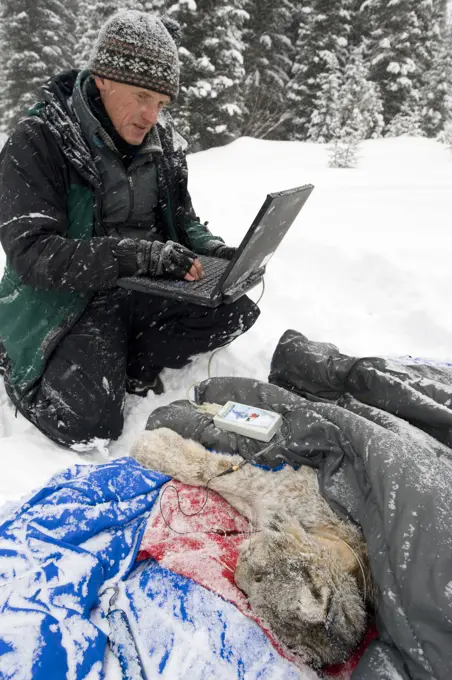
A research wildlife biologist  hooks his computer tho the GPS collar on the female lynx, and downloads the data.
824-63207809
The first Cybathlon will be held in Switzerland in October 2016. It is a competition for athletes equipped with bionic devices (robotized prosthetic legs and arms, motorized wheelchairs, exoskeletons, bikes using electrical muscle stimulation and brain-computer interface races). This competition helps raise public awareness on the evolution of work on robotic assistive technology and strengthens exchanges between research teams. Michel Fornasier will be one of the presenters of the Cybathlon. He has a bionic hand prosthesis and demonstrates one of the Cybathlon disciplines for the media. It took Michel more than a year to master the use of his bionic hand.
6145-44556800
Boeing technicians John Pearce Jr., at left, and Mike Vawter prepare a Russian replacement computer for stowage aboard the Space Shuttle Atlantis shortly before the scheduled launch of Mission STS-86, slated to be the seventh docking of the Space Shuttle with the Russian Space Station Mir. The preparations are being made at the SPACEHAB Payload Processing Facility in Cape Canaveral. The last-minute cargo addition requested by the Russians will be mounted on the aft bulkhead of the SPACEHAB Double Module, which is being used as a pressurized cargo container for science/logistical equipment and supplies that will be exchanged between Atlantis and the Mir. Using the Module Vertical Access Kit (MVAC), technicians will be lowered inside the module to install the computer for flight. Liftoff of STS-86 is scheduled Sept. 25 at 10:34 p.m. from Launch Pad 39A
PREVIOUS
of 2
NEXT
2401 S. Ervay, Suite 206
Dallas, Texas 75215
United States
Get Started
Free ResearchMy BoardsMy Cart
For Creators
How To License Your ContentContributor PortalFrame of Mind
Resources
API accessPricing
Contact
+1 866 236 0087help@viewpictures.co.uk Contact form
©2026 View Pictures. All Rights Reserved. -A
This site is protected by reCAPTCHA and Google Privacy Policy and Terms of Service apply.