Terracotta Fragments

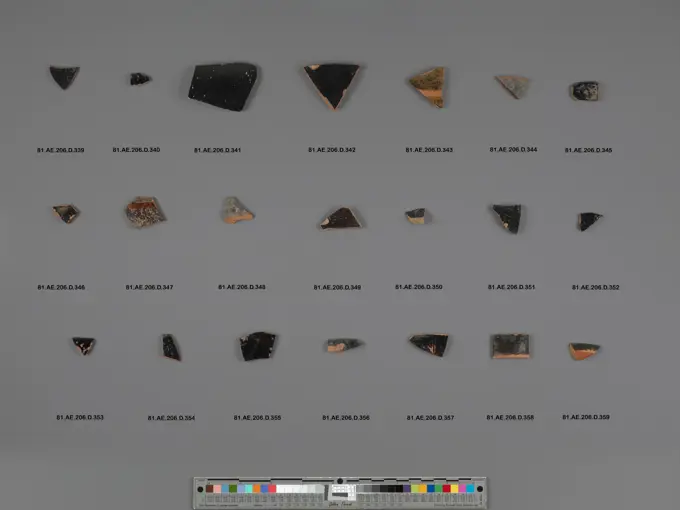
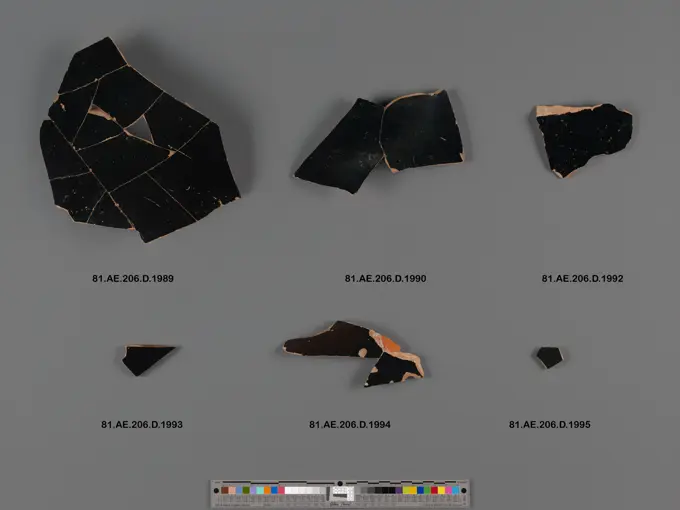
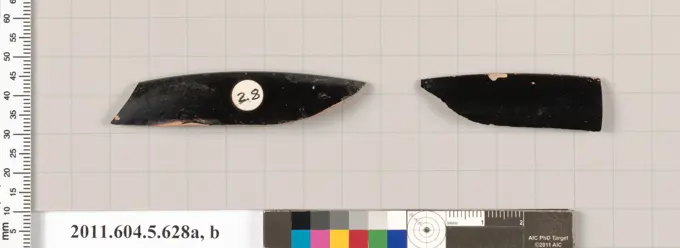
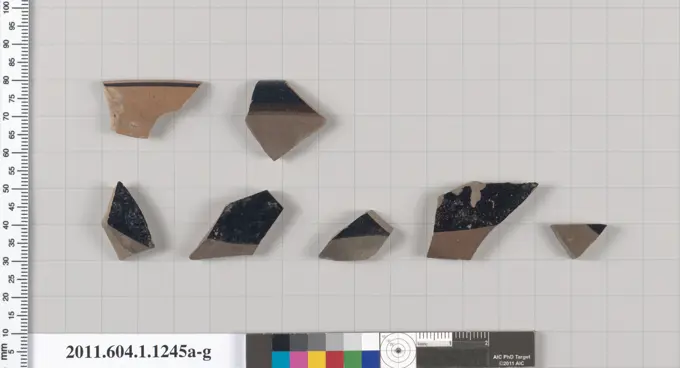
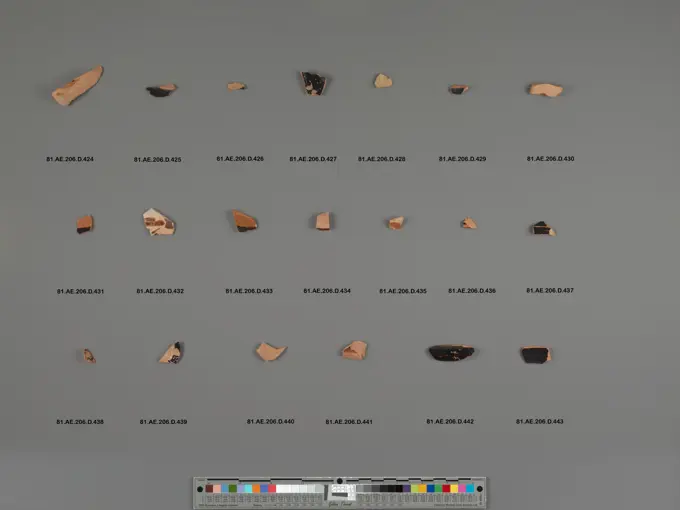
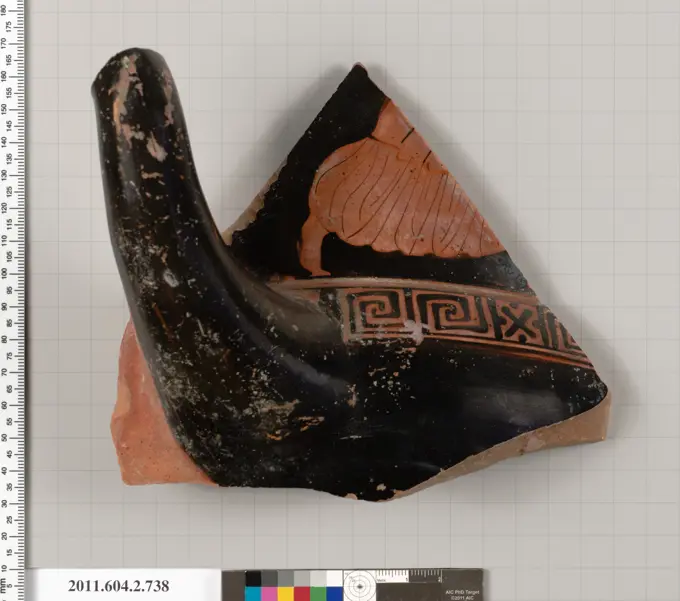
Pieces of ancient Greek terracotta drinking vessels, showcasing remnants of kylikes and bell-kraters from the 5th century B.C. in faded colors.

Terracotta fragments of kylikes (drinking cups) second quarter 5th century B.C. Greek, Attic Exterior, six fragments with drapery. Terracotta fragments of kylikes (drinking cups) 668568
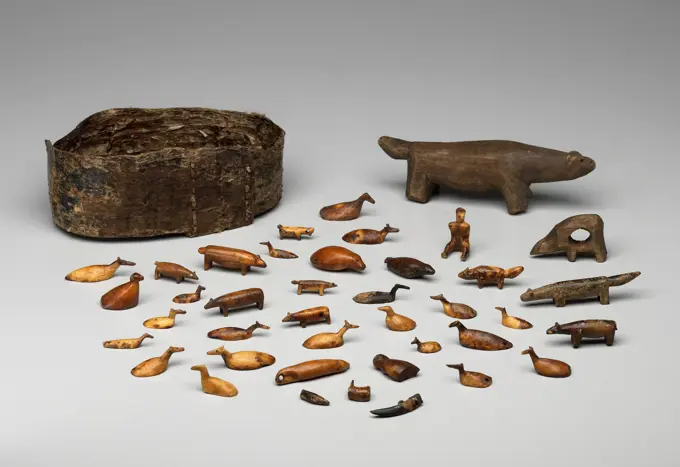
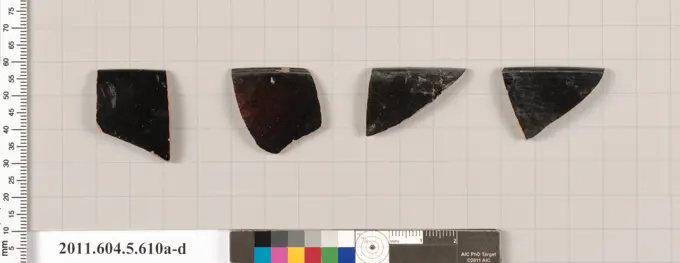
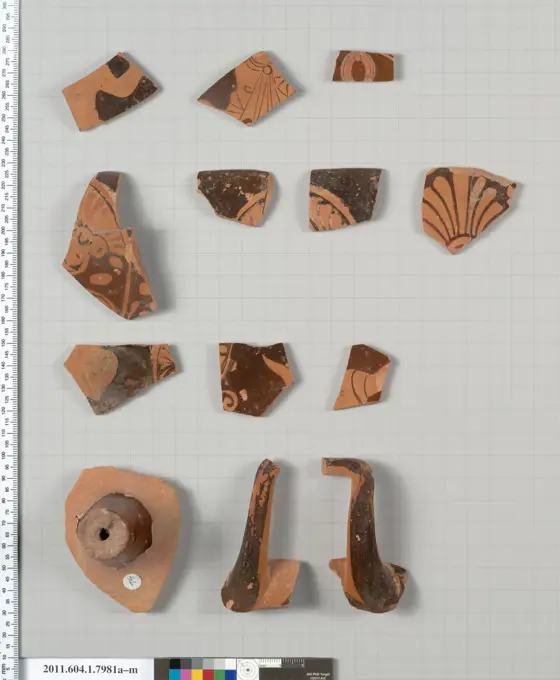
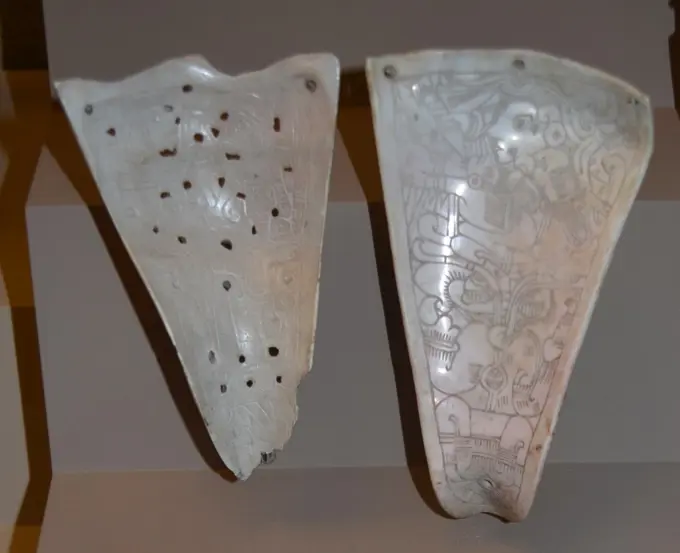
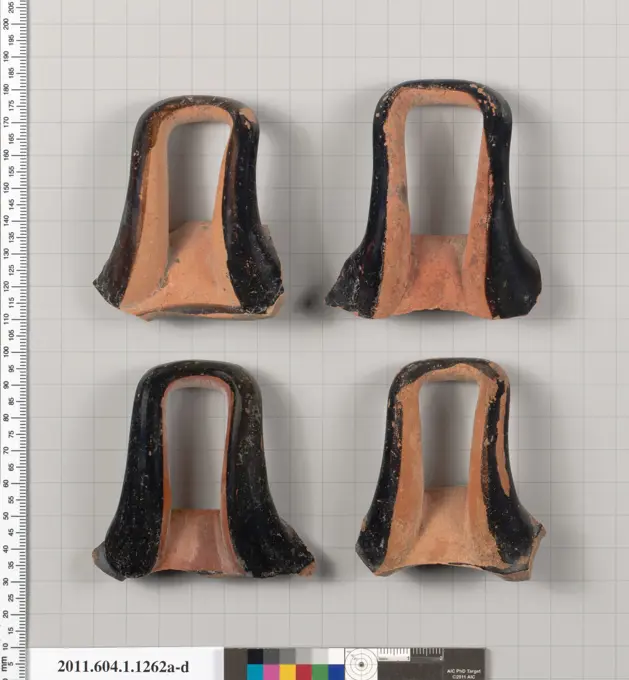
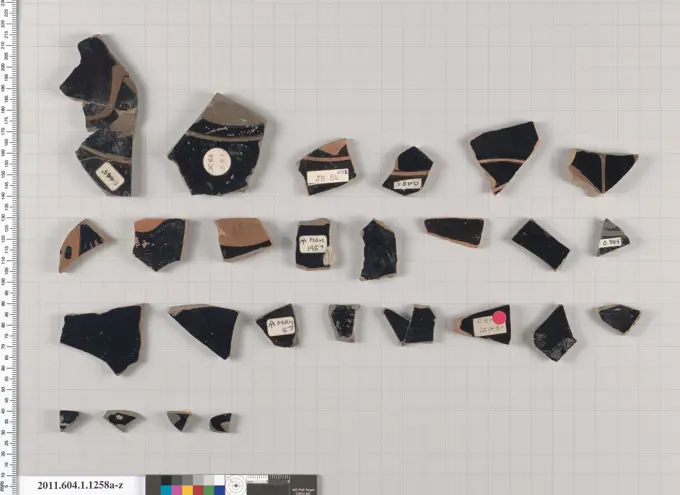
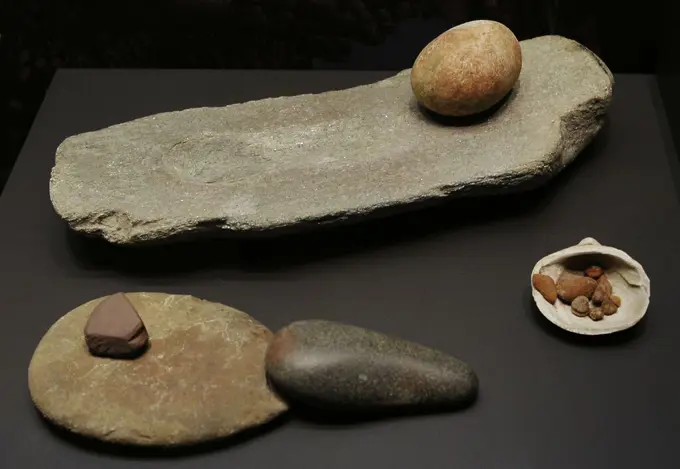
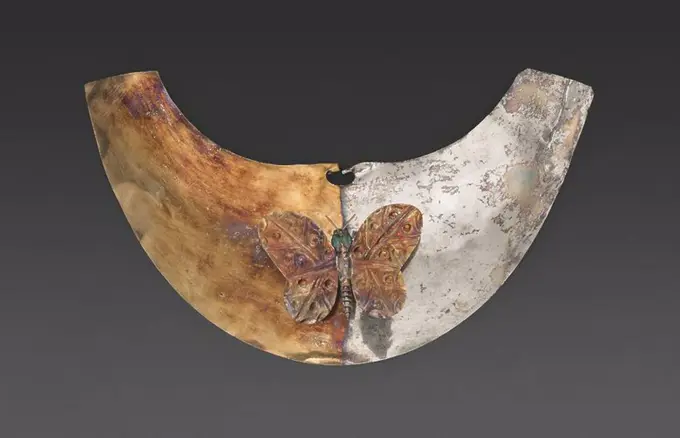
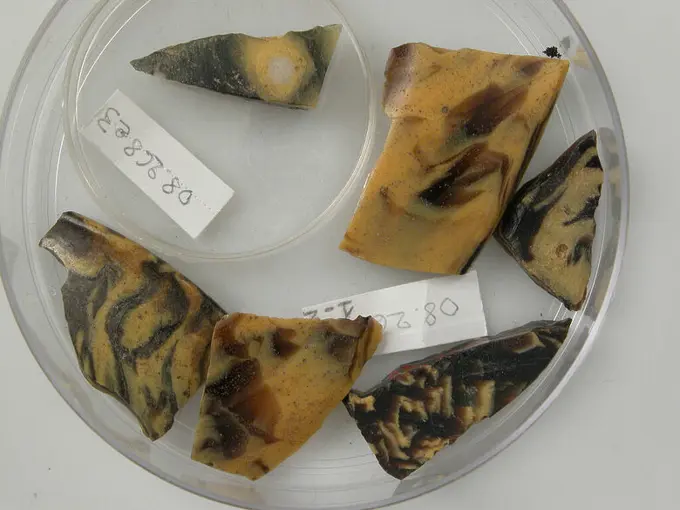
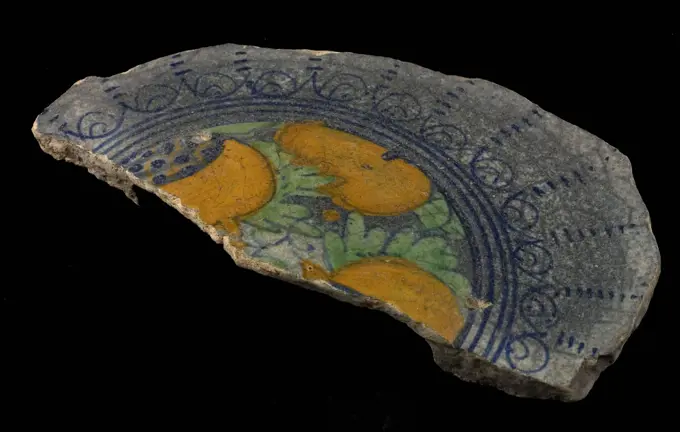
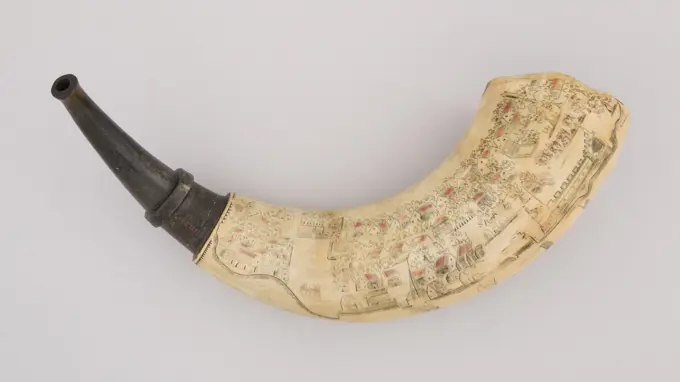
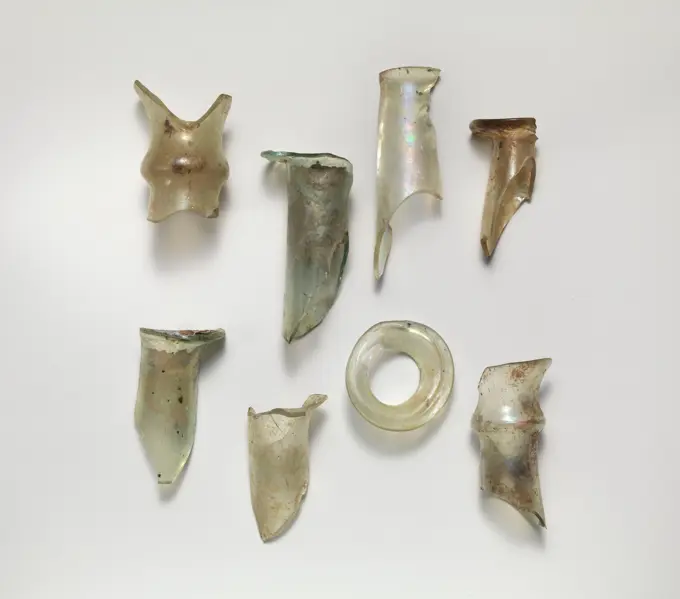
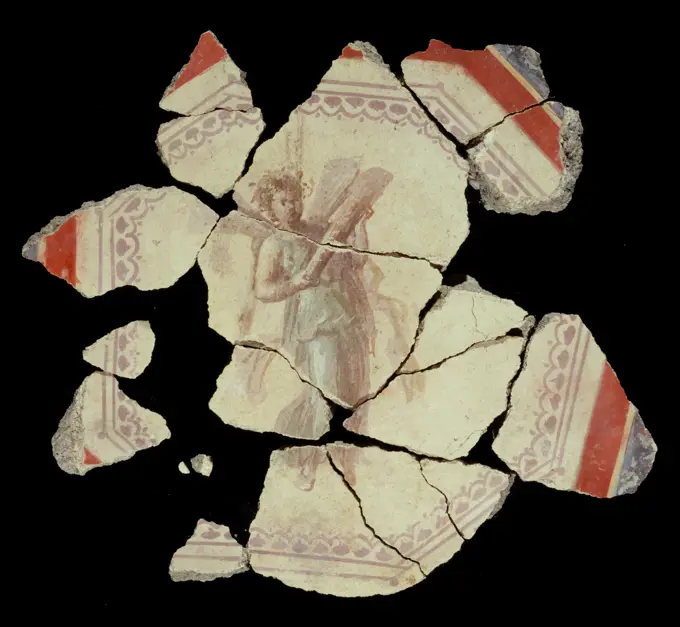
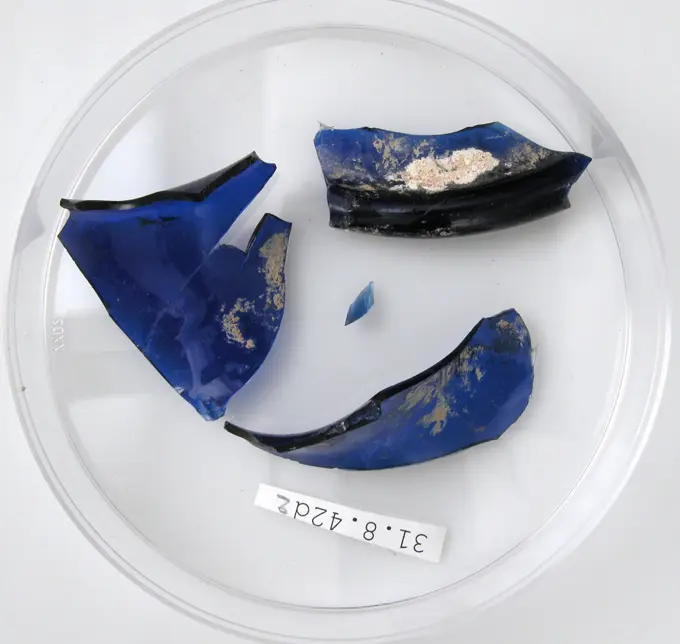
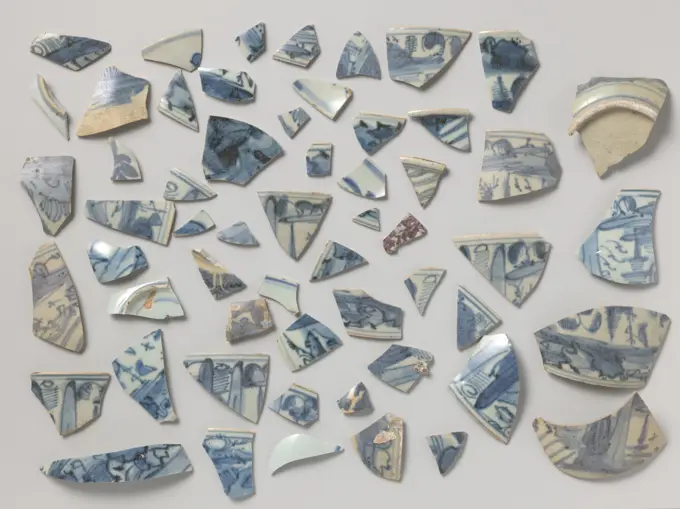
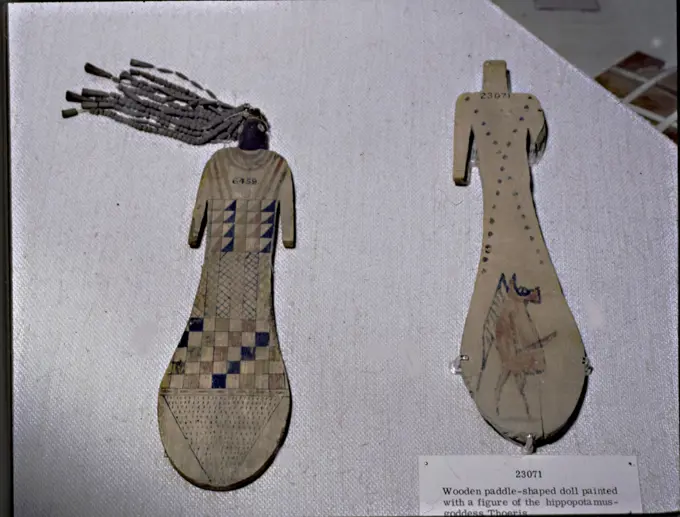
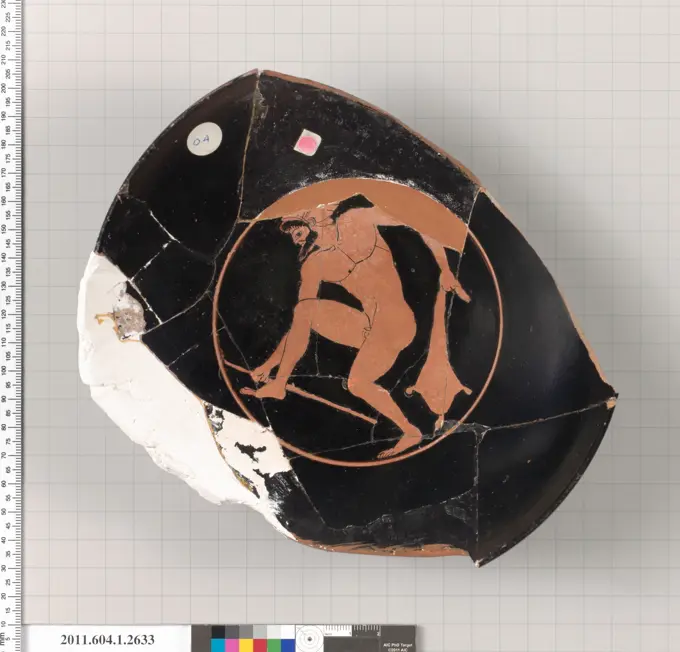
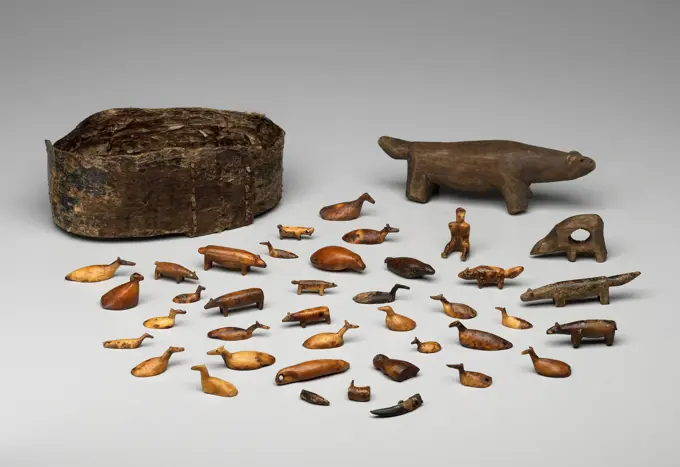
Figures, before 1500, 3 x 5 3/16 x 7 9/16 in. (7.62 x 13.18 x 19.21 cm), Baleen, wood, ivory, United States, 15th century, Ivory carving is an ancient tradition among the Inuit. Used for a variety of purposes, miniature sculptures express the creativity and innovation of Inuit artists. These two groups of carvings were created for different purposes in opposing areas of the Arctic. The Thule culture, located on the west coast of Alaska, created the set with the birds and caribou primarily for ceremonial purposes around 500 years ago. Many were probably worn as amulets, insuring that the people who owned them would gain the spiritual power of these animals for protection and good health. In some cases, objects would be used to assist the hunters to locate game. A ceremony would be performed where the shaman would toss the figures down until they all faced the same way, which would tell the hunters which direction to go for game.Quadruped, before 1500, 3/4 x 1 1/4 x 9/16 in. (1.91 x 3.18 x 1.43 cm), Ivory, United States, 15th centuryCarving Fragment, before 1500, 9/16 x 5/8 x 5/16 in. (1.43 x 1.59 x 0.79 cm), Ivory, United States, 15th centuryQuadruped, before 1500, 1 1/2 x 2 1/4 x 9/16 in. (3.81 x 5.72 x 1.43 cm), Wood, United States, 15th centuryFurniture element ca. 18th century B.C. Old Assyrian Trading Colony. Furniture element. Old Assyrian Trading Colony. ca. 18th century B.C.. Ivory. Middle Bronze Age-Old Assyrian Trading Colony. Anatolia, probably from AcemhöyükAttic Red-Figure Kylix Fragment. UnknownSample (Dress Trimming). England or France. Date: 1815-1835. Dimensions: 33.34 × 43.18 cm (13 1/8 × 17 in.). Silk, plain weaves and silk, satin weaves; pieced; backed with linen(), plain weaves; sized; mounted to cotton, plain weave; sized. Origin: France. Museum: The Chicago Art Institute, Chicago, USA.Terracotta rim fragments of kylikes (drinking cups) second quarter of 5th century B.C. Greek, Attic Three black glazed rim fragments from kylikes. Terracotta rim fragments of kylikes (drinking cups). Greek, Attic. second quarter of 5th century B.C.. Terracotta; black glaze. Classical. VasesTerracotta fragment of a skyphos (deep drinking cup) second quarter of the 5th century B.C. Greek, Attic Reclining, ithyphallic satyr with his right arm extended and his bent left arm resting on two cushions; part of the lower torso, left hip, genitals, and left thigh of a symposiast reclining on two cushions. Terracotta fragment of a skyphos (deep drinking cup). Greek, Attic. second quarter of the 5th century B.C.. Terracotta; red-figure. Classical. VasesFragmento de pez. Villa romana de Cambre. Fechada entre los siglos II y IV. Museo Arqueológico de Cambre. Provincia de La Coruña. Galicia. España.Terracotta rim fragments of kylikes (drinking cups) 6th/5th centuries B.C. Greek, Attic Four black glazed rim fragments from kylikes. Terracotta rim fragments of kylikes (drinking cups). Greek, Attic. 6th/5th centuries B.C.. Terracotta; black glaze. Archaic/Classical. VasesTerracotta fragments of kylikes (drinking cups) 5th century B.C. Greek, Attic Two parts of feet type C. Terracotta fragments of kylikes (drinking cups) 678449Fragment 18th century Italian. Fragment. Italian. 18th century. Silk, metal thread. Textiles-WovenBrucite. minerals. Asia; AfghanistanTerracotta fragment of a column-krater (bowl for mixing wine and water) second quarter of the 5th century B.C. Greek, Attic On the neck, a band of pendant, linked lotus buds with dots in the interstices. Terracotta fragment of a column-krater (bowl for mixing wine and water). Greek, Attic. second quarter of the 5th century B.C.. Terracotta; red-figure. Classical. VasesShards of box bottles from V.O.C. ship De 'Witte Leeuw', Before 1613  Shards of box bottles from V.O.C. ship the 'Witte Leeuw', from green glass. Concretion, coral -like attack and brown attack present.  .   Sint-HelenaTerracotta fragment of a kylix (drinking cup) 460-450 B.C. Greek, Attic Interior, on the wall, a basket; Exterior, platform with leg of kline; feet of male to left; part of a table; the two fragments that have been glued together, may not join. Terracotta fragment of a kylix (drinking cup). Greek, Attic. 460-450 B.C.. Terracotta; red-figure. Classical. VasesTextile Fragment 4th-5th century. Textile Fragment 443937Terracotta fragments of a kylix (drinking cup) mid-5th century B.C. Greek, Attic Interior, knobby stick; kantharos with fillets or tassels; part of a draped figure; a separate fragment shows, on the interior, a round object (fillet) hanging on the wall; Exterior, one fragment has part of a draped male, wearing a chlamys; a second fragment depicts the shoulder, elbow, and extended arm of a draped figure, with an eye on the garment; a third fragment shows part of the torso of a draped figure with a bent arm; three rim fragments have parts of circumscribed palmettes; another fragment depicts eight fronds of a palmette; one fragment has the handle root and part of a circumscribed palmette; one fragment has a bit of a circumscribed palmette and tendril; there is a fragment with the left half of a handle with part of the handle patch; there is a fragment with the right half of the handle and a bit of the handle patch is the right half of the handle with a bit of the handle patch. TerracotShell Pendant 900 A.D. Huaxtec. The scenes on the surfaces depicts a sacrifice by means of decapitation. Scandinavia. Middle ages. Upper of a shoe, ca. 1200 to be laced on the side. Historical Museum. Oslo. Norway.Terracotta rim fragment of a kylix (drinking cup) 490-480 B.C. Greek, Attic Exterior, top of basket with fillets; to the left, start of handle root. Terracotta rim fragment of a kylix (drinking cup) 683757Terracotta fragments of kylikes (drinking cups) Greek, Attic 500-475 BCE Interior, five kylix fragments with part of meanderTerracotta fragments of kylikes (drinking cups) 5th century B.C. Greek, Attic Four complete kylix handles with handle patch. Terracotta fragments of kylikes (drinking cups). Greek, Attic. 5th century B.C.. Terracotta; red-figure. Archaic/Classical. VasesTerracotta fragments of kylikes (drinking cups) 500-470 B.C. Greek, Attic Interior, two kylix fragments with part of meander. Terracotta fragments of kylikes (drinking cups) 692060Attic Black-Figure Column Krater Fragment. UnknownTerracotta fragments of kylikes (drinking cups) 5th century B.C. Greek, Attic Twenty-six miscellaneous kylix fragments from DvB 9.2. Terracotta fragments of kylikes (drinking cups) 671330Attic White-Ground Lekythos Fragment. UnknownFrom left to right and from back to front: Grindstone. El Garcel (Antas, Almeria province, Andalusia) and El Higueron Cave (Rincon de la Victoria, Malaga province, Andalusia); Grindstone, pestle and dye. El Higueron Cave (Rincon de la Victoria, Malaga province, Andalusia) and Ochre pot with traces of dye. La Encantada (Almanzora Caves, Almeria province, Andalusia). National Archaeological Museum. Madrid. Spain.Nose Ornament. Moche; Vicus, north coast, Peru. Date: 100 AD-500 AD. Dimensions: 12.1 × 21 × 2.5 cm (4 3/4 × 8 1/4 × 1 in.). Silver and gold. Origin: Peru. Museum: The Chicago Art Institute, Chicago, USA.Glass Fragments. Culture: Coptic. Dimensions: Storage (petri dish diam.): 3 7/16 in. (8.8 cm). Date: 4th-early 5th century. Museum: Metropolitan Museum of Art, New York, USA.Terracotta fragment of a kylix (drinking cup) 560-550 B.C. Greek, Attic Interior, the tondo border consists of a band of tongues, alternating with red and black; bent right leg of a male to right (Zeus); part of the wing, left wrist and hand, upper body, and tail of Typhon; Exterior, three black glazed lines; below, rays; red glazed line. Terracotta fragment of a kylix (drinking cup). Greek, Attic. 560-550 B.C.. Terracotta; black-figure. Archaic. VasesAttic Red-Figure Hydria Fragment. Berlin Painter (Greek (Attic), active about 500 - about 460 B.C.)Artifacts retrieved from the ruins of Elliot Plantation on NASAs Kennedy Space Center in Florida include Spanish majolica fragments, likely produced between the 1730s to the 1750s and imported to the plantation from England. Ceramic fragments of majolica, delftware, and other high-status domestic wares were retrieved from ruins determined to be the dwelling of the plantation overseer. The ruins of Elliot Plantation date from the 1760s and represent the largest, earliest, and southernmost British period sugar plantation in the U.S., as well as one of the most intact and best examples of a completely preserved enslaved landscape. In interagency cooperation between the National Park Service, the U.S. Fish and Wildlife Service, and NASA, and with the assistance of volunteers from the Indian River Anthropological Society, and historic preservation offices of Brevard and Volusia counties, approximately 200 shovel tests and 20 excavation units were completed in three areas of the plantation Arizona Anasazi pottery shards, ancient Native American Indian artifacts, several fragments of a bowl,  on a sandstone backgroundTerracotta fragments of kylikes (drinking cups) 5th century B.C. Greek, Attic Three parts of kylix handles, right half. Terracotta fragments of kylikes (drinking cups) 676755Ground fragment majolica dish with hollowed soul, polychrome fruit decor, dish plate crockery holder soil find ceramic earthenware glaze tin glaze lead glaze, hand-turned baked decorated glazed fried Polychrome fruit decor in the colors green orange blue pomegranates. Vaulted soul of the pancake dish. Orange-yellow shard. Scraped earthenware Bottom glazing darkened by staying in the soil archeology City triangle Rotterdam Town hall indigenous pottery adornment serving food serving Bottomvondst Raadhuisterrein Rotterdam 1914.Terracotta fragments of a kylix (drinking cup( 6th/5th centuries B.C. Greek, Attic Three black glazed rim fragments and one black glazed fragment from the center of the kylix, with part of the stem. Terracotta fragments of a kylix (drinking cup( 768628Fragments of a Male Head. Culture: Coptic. Dimensions: Overall (a): 2 3/4 x 6 1/2 x 4 3/4 in. (7 x 16.5 x 12 cm)Overall (b): 3 3/4 x 4 1/4 x 1/16 in. (9.6 x 10.8 x 0.1 cm)Overall (c): 2 1/2 x 1 13/16 x 7/8 in. (6.4 x 4.6 x 2.2 cm)Overall (d): 2 1/2 x 1 13/16 x 13/16 in. (6.3 x 4.6 x 2 cm). Date: 4th-7th century. Museum: Metropolitan Museum of Art, New York, USA.Terracotta fragments of kylikes (drinking cups) first half of the 5th century B.C. Greek, Attic Exterior, five fragments with parts of palmette fronds and palmette hearts. Terracotta fragments of kylikes (drinking cups) 695786Attic Red-Figure Cup or Skyphos Fragment. UnknownAttic Red-Figure Cup or Skyphos Fragment. UnknownEgyptian Winged scarab made of faience, funerary trousseau, New Kingdom, 1540, Huesca museum, Aragon community, Spain.Attic Red-Figure Hydria Fragment. Berlin Painter (Greek (Attic), active about 500 - about 460 B.C.)lid with horse protome, necropolis of Castejon Castle, first iron age, Museum of Navarra, Pamplona, Navarra,Spain.Medieval history. Scandinavia. Different objects with the mark of owner. In the background, dice and backgammon pieces. Medieval Museum. Stockholm. Sweden.Textile Fragment 3rd-4th century. Textile Fragment 443862Lead Role from the wreck of the East Indies' t Vliegend Hart ,, 1700 - 1735 lead Tubes rolled plates. Black-gray to silver gray in color. Roll of Lead. Middelburg lead (metal)Terracotta rim fragment of a kylix (drinking cup) 460-450 B.C. Greek, Attic Exterior, complete handle with handle patch; below, three fronds of a palmette; tendril loop and part of palmette. Terracotta rim fragment of a kylix (drinking cup). Greek, Attic. 460-450 B.C.. Terracotta; red-figure. Classical. VasesAttic Red-Figure Neck Amphora Fragment. Attributed to Berlin Painter (Greek (Attic), active about 500 - about 460 B.C.)Terracotta rim fragments of kylikes (drinking cups) 6th/5th centuries B.C. Greek, Attic Two black glazed rim fragments from kylikes. Terracotta rim fragments of kylikes (drinking cups). Greek, Attic. 6th/5th centuries B.C.. Terracotta; black glaze. Archaic/Classical. VasesTerracotta fragments of kylikes (drinking cups) 5th century B.C. Greek, Attic Seven kylix fragments from DvB 9.2. Terracotta fragments of kylikes (drinking cups) 671318Powder Horn 1762 Colonial American, St. Augustine, Florida This powder horn is engraved with a view of the town of St. Augustine, Florida. It is also decorated with the royal arms of Great Britain.. Powder Horn 29577Italic Lamp Fragment. UnknownUK, England, Somerset, Weston-Super-Mare, Weston-Super-Mare Museum, Display of Bronze Age ToolsFragment European or Middle Eastern ca. 1150-ca. 1250 View more. Fragment. European or Middle Eastern. ca. 1150-ca. 1250. Glass, ceramic. Glass-VesselsFragment European or Middle Eastern ca. 1150-ca. 1250 View more. Fragment. European or Middle Eastern. ca. 1150-ca. 1250. Glass, ceramic. Glass-VesselsAttic Black-Figure Column Krater Fragment (part of 81.AE.207.408.3.1). UnknownAttic Red-Figure Vase Fragment. UnknownStudy for Alexander Grinager's Boys Bathing, c. 1894, A. L. Eidemiller, 4 15/16 x 7 13/16 in. (12.54 x 19.84 cm) (image, sheet), Albumen print, United States, 19th centuryAttic Red-Figure Vase Fragment. UnknownFresco Fragment. UnknownLeft muzzle, size 35.5, decorated with a row of diagonally placed short inserts over the instef arch, anonymous, c. 1590 - c. 1596 mule (shoe) Left muzzle, size 35.5. The hood is decorated with a row of diagonally placed, short inserts over the instep arch and the roof edge is trimmed with a sewn leather sculprand. There is no reinforcement rope.  . cutting / sewing  Nova Zembla. Saving HuysGlass Fragments 4th century Coptic. Glass Fragments 479157Attic Red-Figure Kylix Fragment. UnknownShards of bowls and lids of porcelain from V.O.C. ship De 'Witte Leeuw', Anonymous, Before 1613 bowl. lid Shards of bowls and lids of porcelain from V.O.C. ship the 'Witte Leeuw'. Jingdezhen porcelain   Sint-HelenaPlate with embossed decoration Plate with embossed decoration, 4th century, Roman villa of Carranque, Museum of the Councils and the Visigoth Culture, Church of San Román, Toledo, Castilla-La Mancha, Spain Copyright: xZoonar.com/TOLOxBALAGUERx 21985930Quartz. mineralsAttic Red-Figure Vase Fragment. UnknownTerracotta fragment of a calyx-krater (bowl for mixing wine and water) mid-5th century B.C. Greek, Attic Lower drapery and foot of a woman to right; below, on the cul, a meander and saltire square pattern; part of the handle and handle patch. Terracotta fragment of a calyx-krater (bowl for mixing wine and water). Greek, Attic. mid-5th century B.C.. Terracotta; red-figure. Classical. Vasespuntas de lanza Necrópolis de Carratiermes, siglo III-II a.C. museo del Yacimiento arqueológico de Tiermes, Soria, comunidad autónoma de Castilla y León, Spain, Europe.Fragment. Culture: Japan. Dimensions: Frame: 10 × 17 in. (25.4 × 43.2 cm)a: 2 1/2 × 1 3/4 in. (6.4 × 4.4 cm)b: 1 3/4 × 1 3/4 in. (4.4 × 4.4 cm)c: 1/2 in. × 1 in. (1.3 × 2.5 cm)d: 1 × 2 in. (2.5 × 5.1 cm)e: 3/4 × 3/4 in. (1.9 × 1.9 cm)f: 1/4 × 1/2 in. (0.6 × 1.3 cm)g: 2 3/4 × 2 1/4 in. (7 × 5.7 cm)h: 3/4 × 1/2 in. (1.9 × 1.3 cm)i: 2 1/4 × 2 1/2 in. (5.7 × 6.4 cm)j: 1 in. × 3 1/4 in. (2.5 × 8.3 cm)k: 1/4 × 1 3/4 in. (0.6 × 4.4 cm)l: 1/2 × 3/4 in. (1.3 × 1.9 cm)m: 1 in. × 2 1/4 in. (2.5 × 5.7 cm)n: 1/2 in. × 1 in. (1.3 × 2.5 cm)o: 1/4 in. × 1 in. (0.6 × 2.5 cm)p: 1/4 × 1/2 in. (0.6 × 1.3 cm)q: 1 1/2 × 2 1/2 in. (3.8 × 6.4 cm)r: 1 1/4 × 2 1/2 in. (3.2 × 6.4 cm)s: 1 3/4 × 1 1/4 in. (4.4 × 3.2 cm)t: 1/2 × 2 3/4 in. (1.3 × 7 cm)u: 1/2 × 2 3/4 in. (1.3 × 7 cm)v: 1 3/4 in. × 1 in. (4.4 × 2.5 cm)w: 1/4 × 1 1/4 in. (0.6 × 3.2 cm)x: 1/2 × 1/2 in. (1.3 × 1.3 cm)y: 1/2 in. × 2 in. (1.3 × 5.1 cm)z: 1 1/4 × 2 1/4 in. (3.2 × 5.7 cm)aa: 1/2 × 1 1/4 in. (1.3 . Date: 8th centuryMuiltje with cover of leather on which flowers are embroidered with white and blue silk, heel with white glacé leather, c. 1750 Mile with cover sheet of leather on which flowers are embroidered with white and blue silk, chop with white glacé leather. Netherlands whole: Leather. Decoration: Silk. embroidering Mile with cover sheet of leather on which flowers are embroidered with white and blue silk, chop with white glacé leather. Netherlands whole: Leather. Decoration: Silk. embroideringGlass Fragments 4th century Coptic. Glass Fragments 479160Glass Fragments 4th-early 5th century Coptic. Glass Fragments. Coptic. 4th-early 5th century. Glass (clear). Made in Kharga Oasis, Byzantine Egypt. GlassQuartz. mineralsAttic Red-Figure Hydria Fragment (comprised of 2 joined fragments). Berlin Painter (Greek (Attic), active about 500 - about 460 B.C.)Wooden paddle shaped dolls. Left with face and hair made of mud beads. Right with figure of hippo goddess, Theoris. 1900 BC. Middle Kingdom.Attic Black-Figure Plate Fragment (comprised of 2 joined fragments). UnknownTerracotta rim fragments of kylikes(drinking cups) 5th century B.C. Greek, Attic Eighteen rim fragments from handle patch. Terracotta rim fragments of kylikes(drinking cups) 683432Eskimo artefacts including a clay pipe and bear's canine teeth.Punta de Ses Talaies, bullets used in center of the battlefield, Son Carrio, location of the battle of mallorca, Son Servera, Majorca, Balearic Islands, Spain.Terracotta fragment of a kylix (drinking cup) 520-500 B.C. Greek, Attic Interior, bearded male wearing a sakkos, holding a stick in his right hand and a wineskin in his left. Terracotta fragment of a kylix (drinking cup) 687012