Textile Artifacts

A collection of antique textile artifacts, including bags, trims, and baby carriers, showcasing intricate craftsmanship and historical style.

Jianhe-style Loincloth, Cotton, tin, China
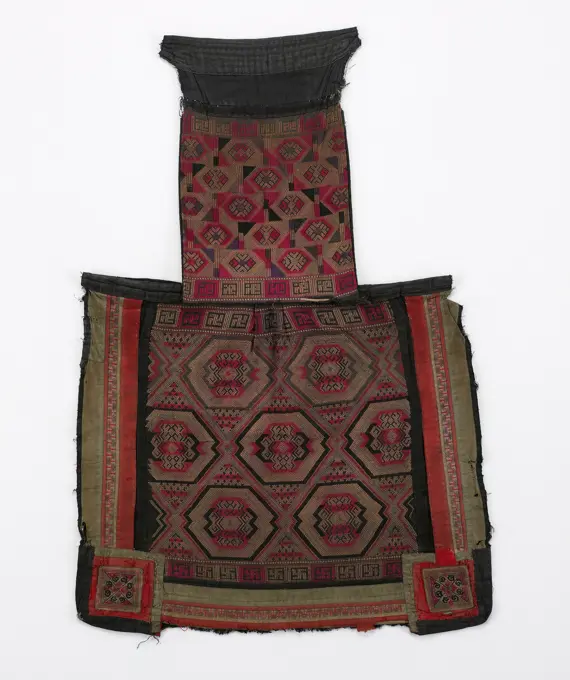
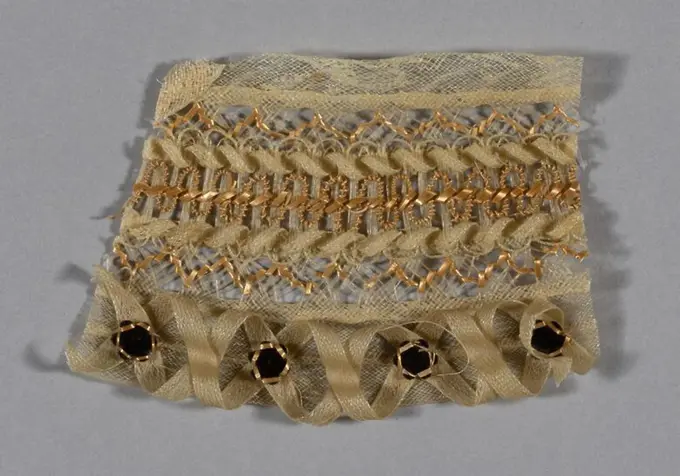
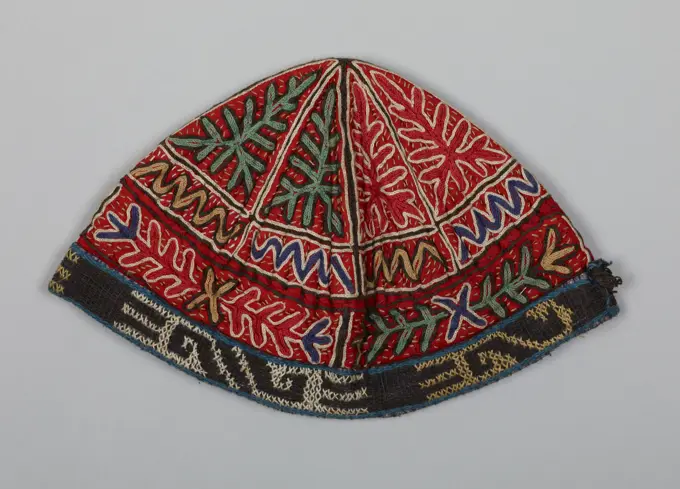
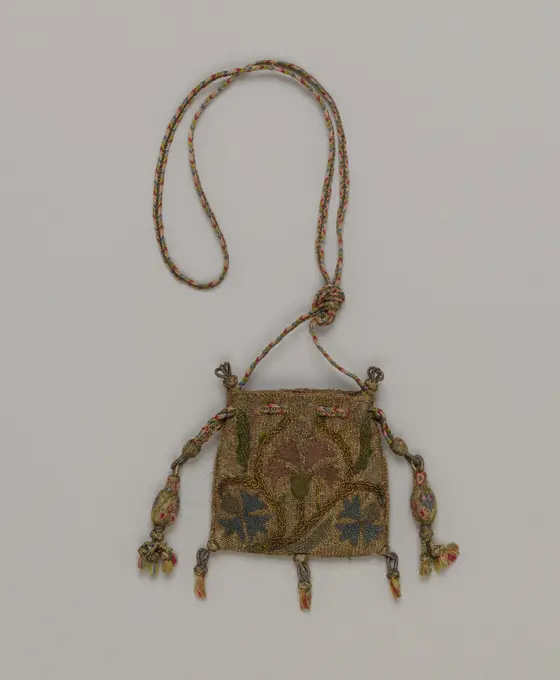
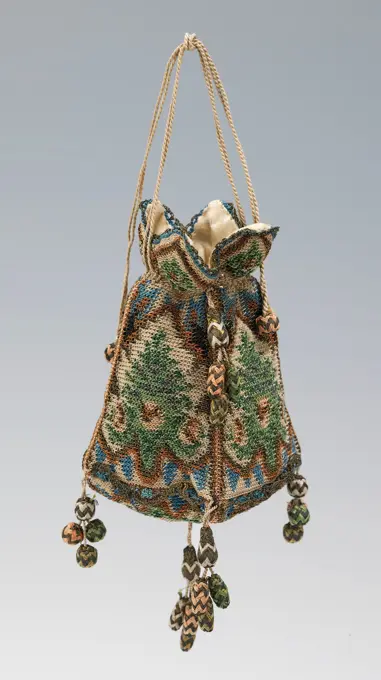
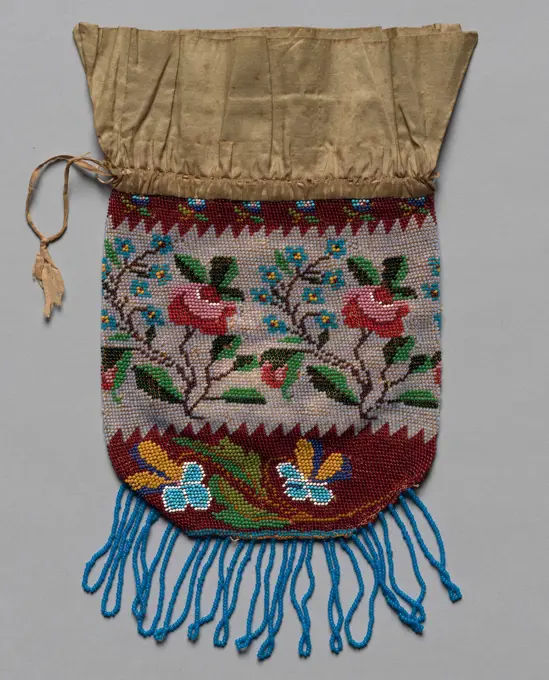
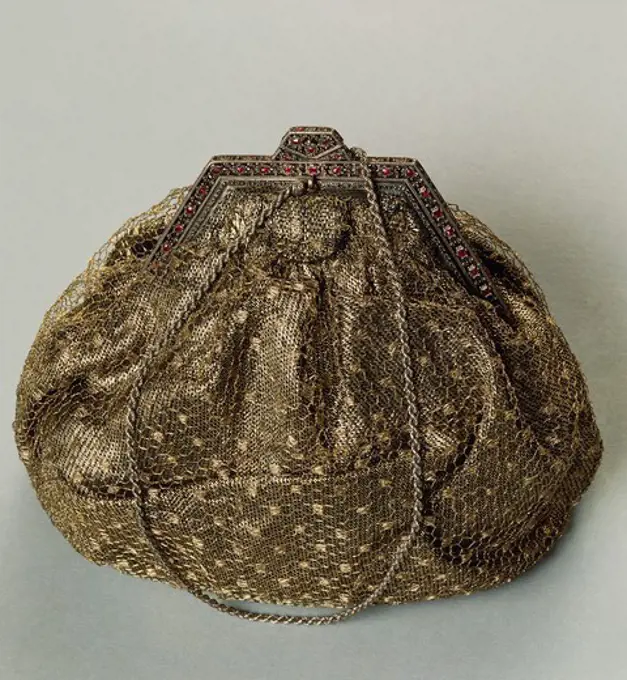
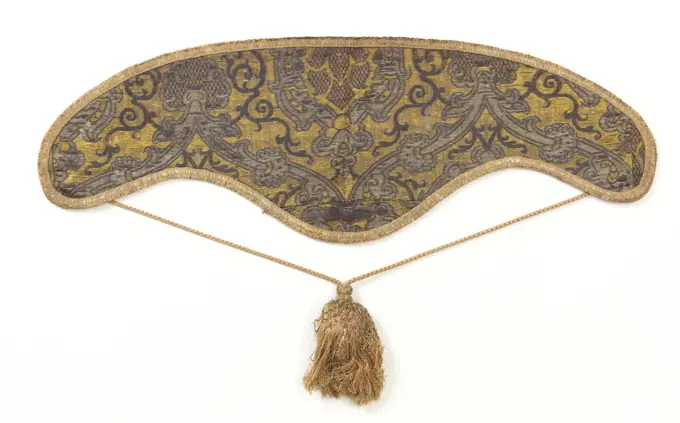
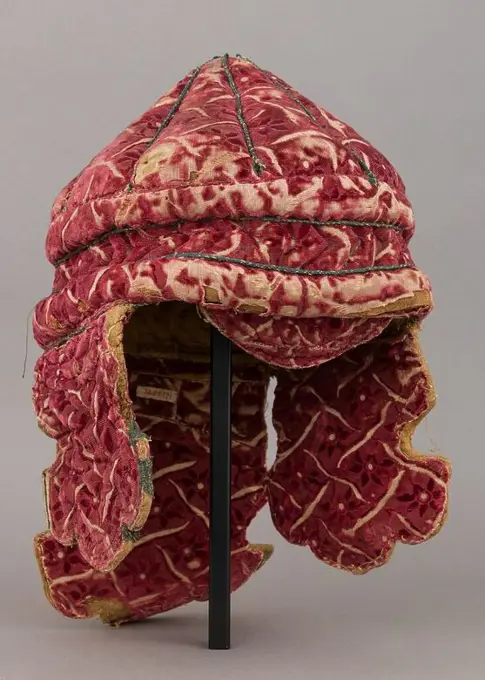
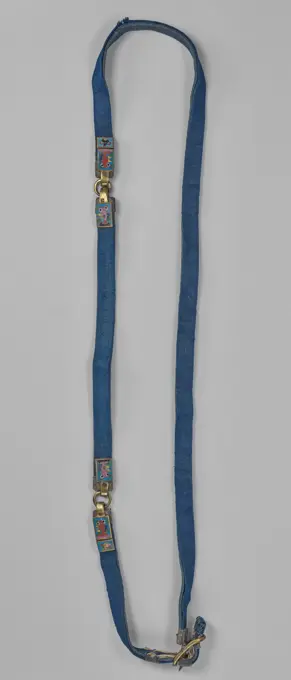
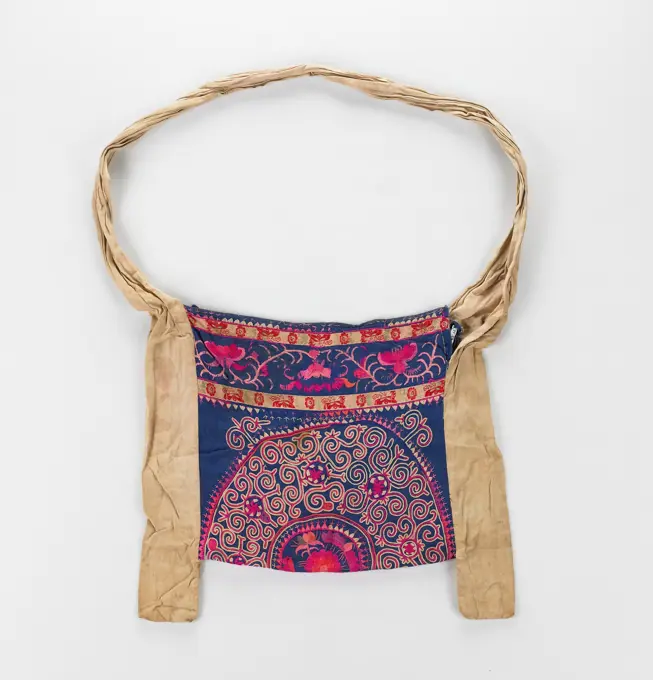
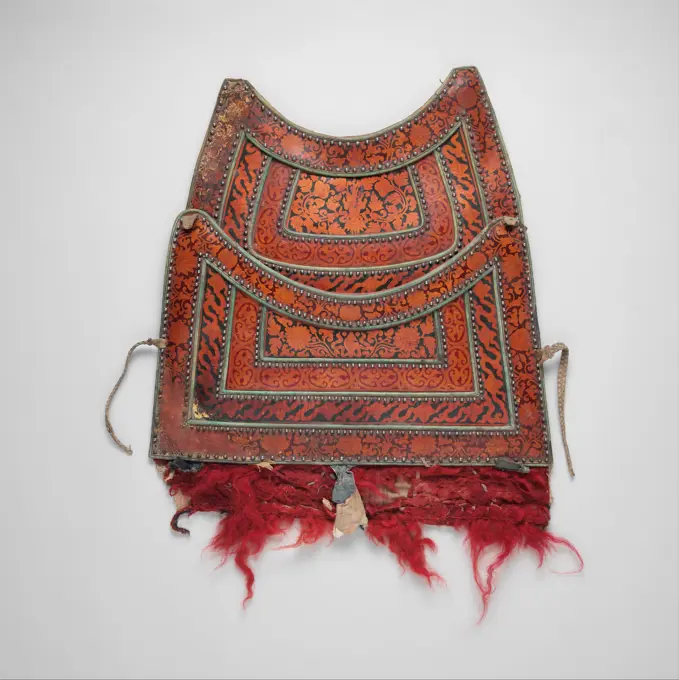
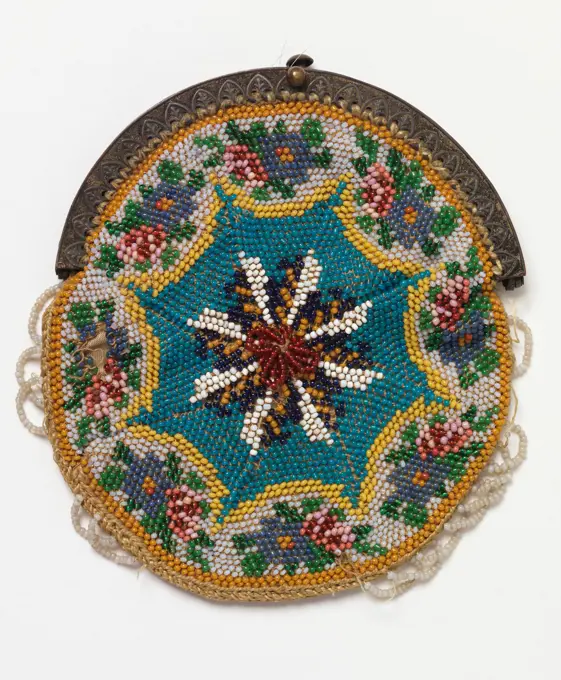
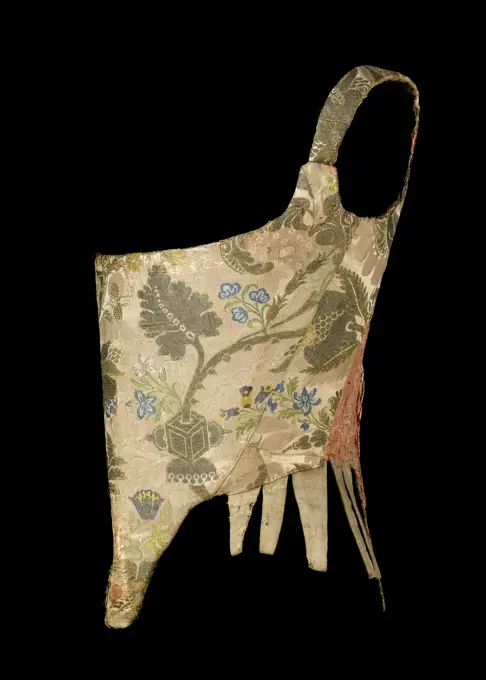
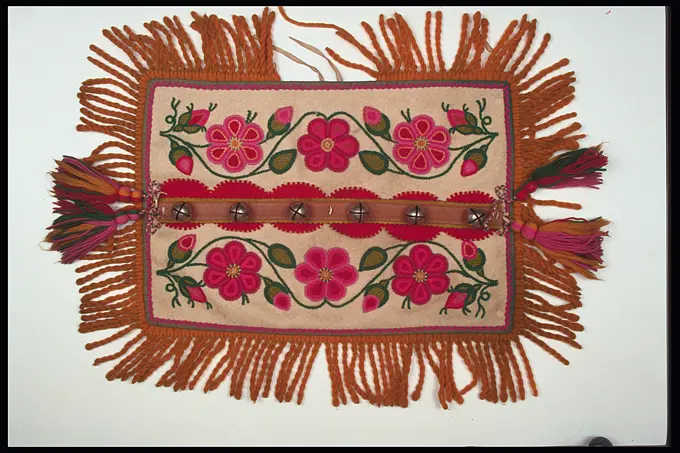
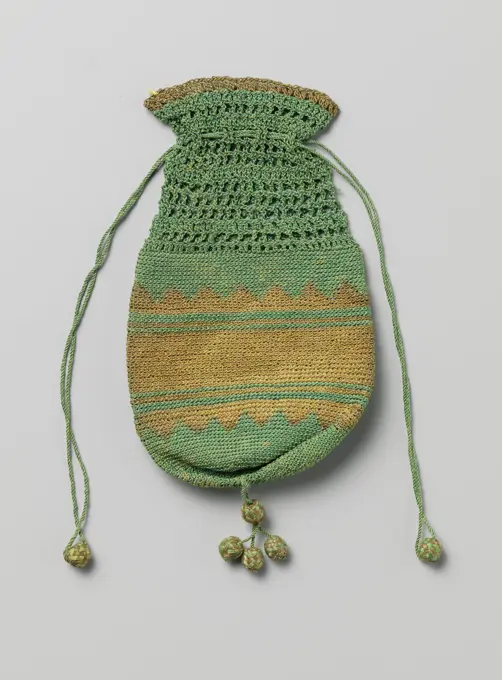
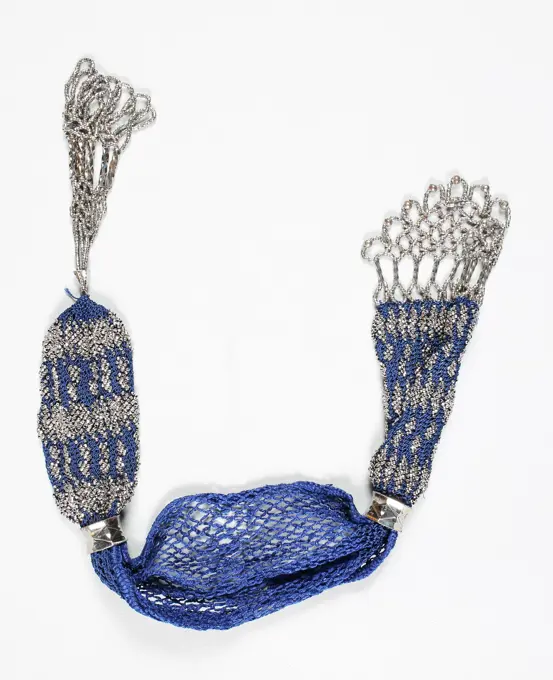
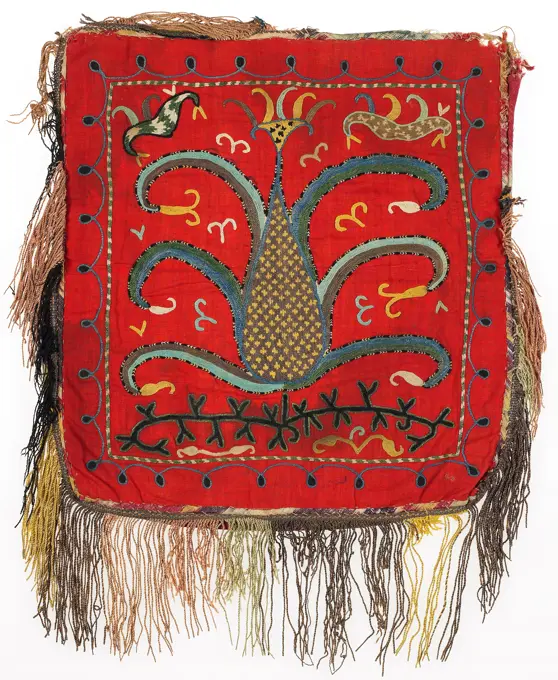
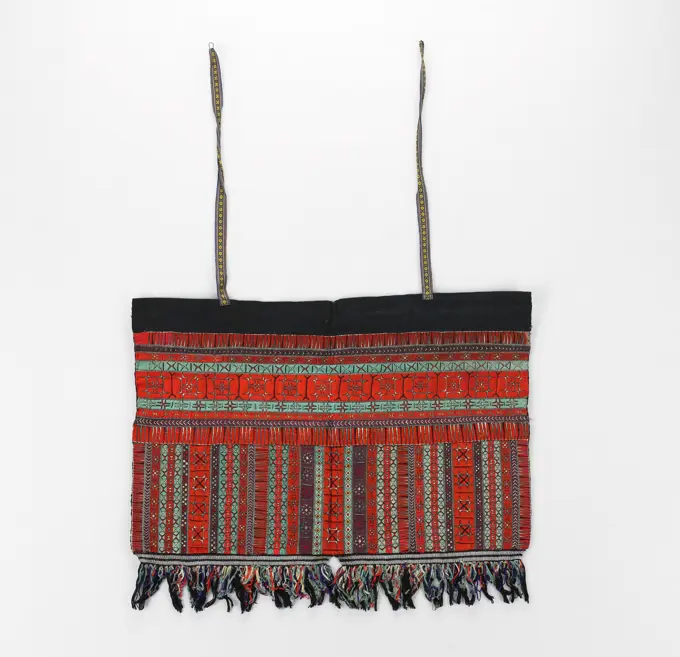
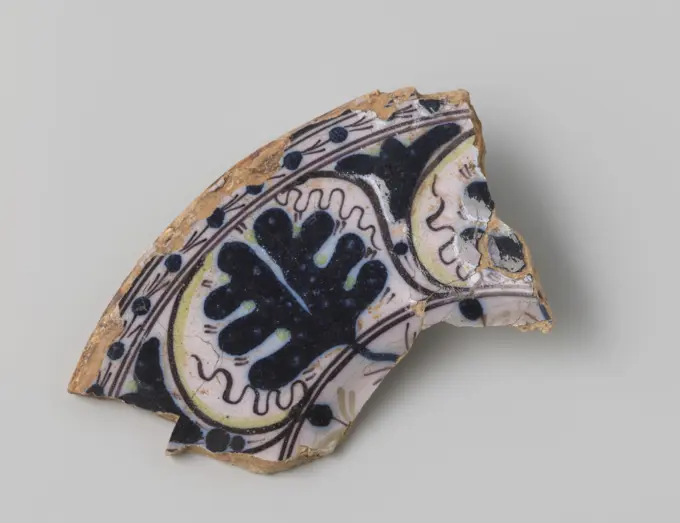
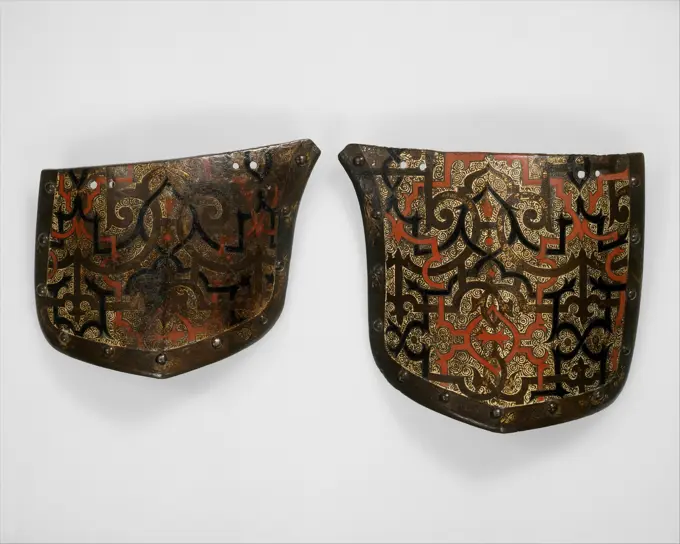
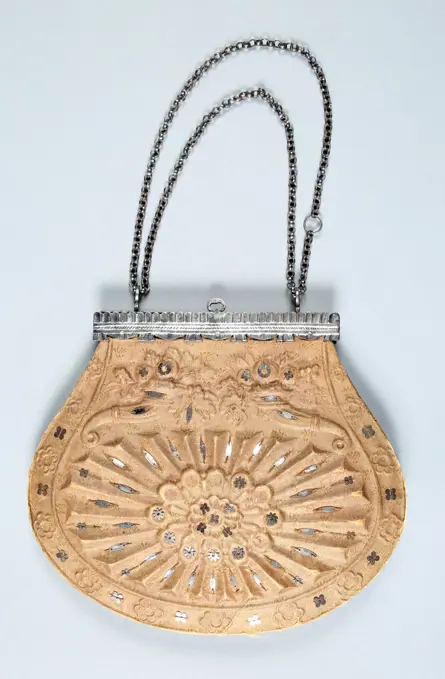
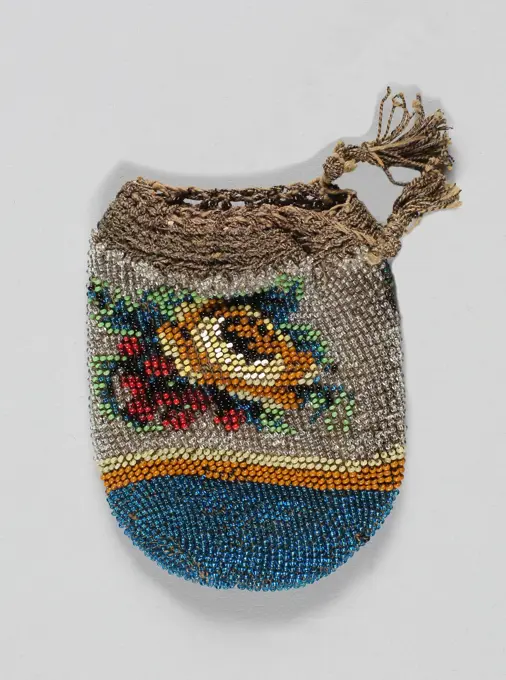
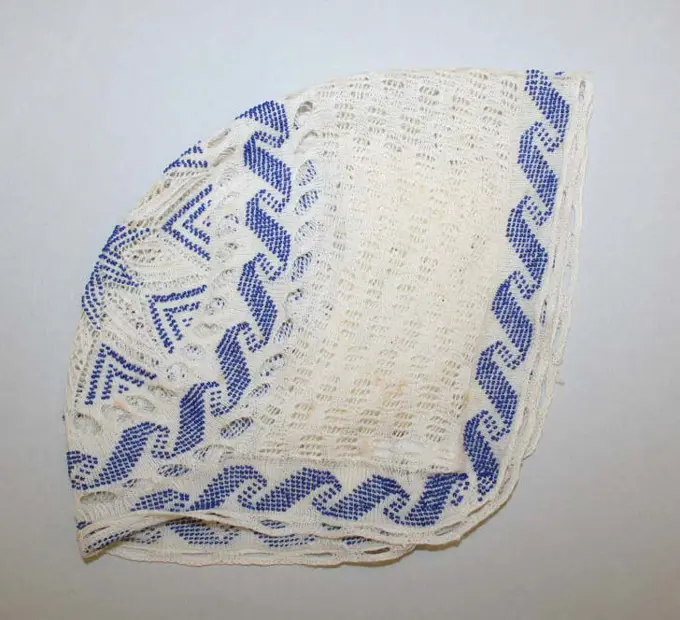
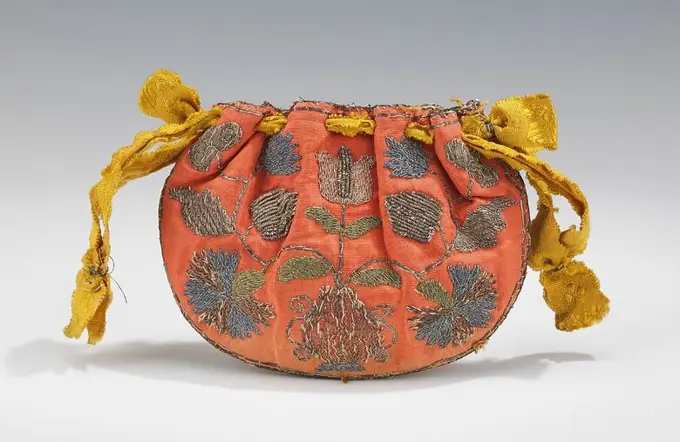
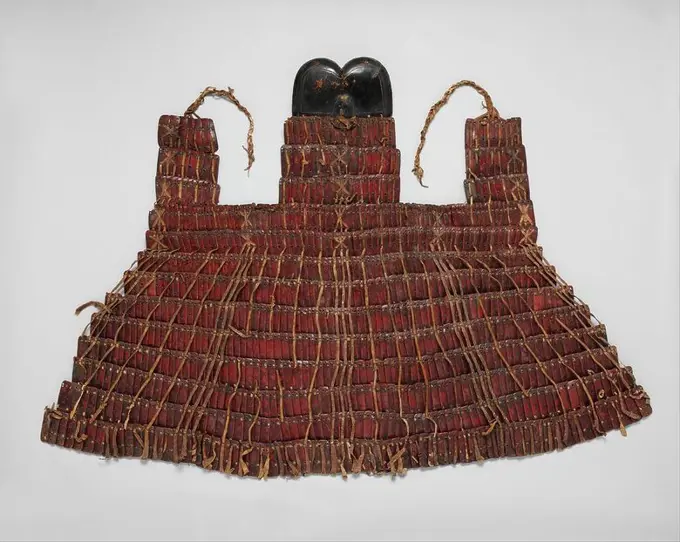
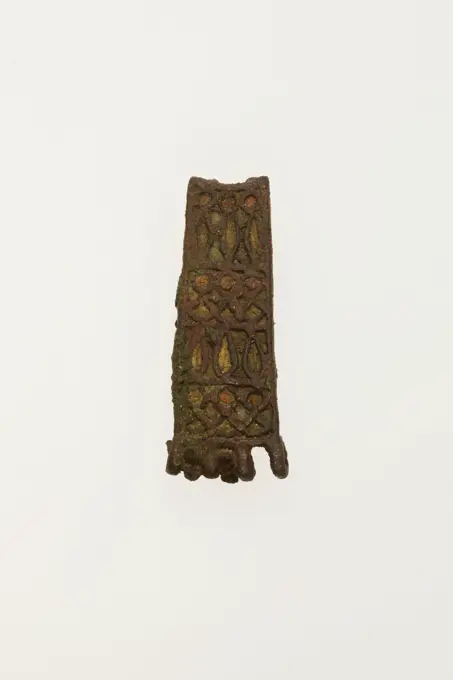
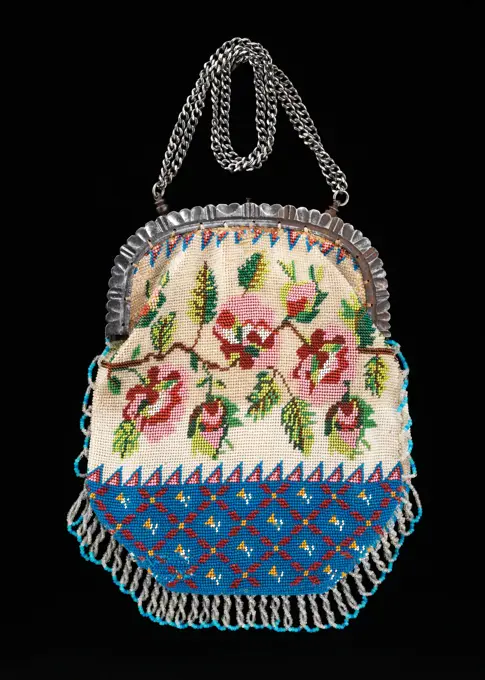
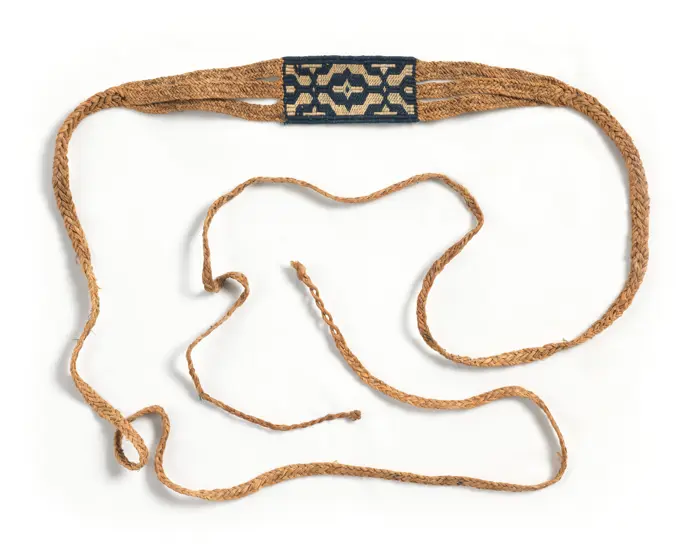
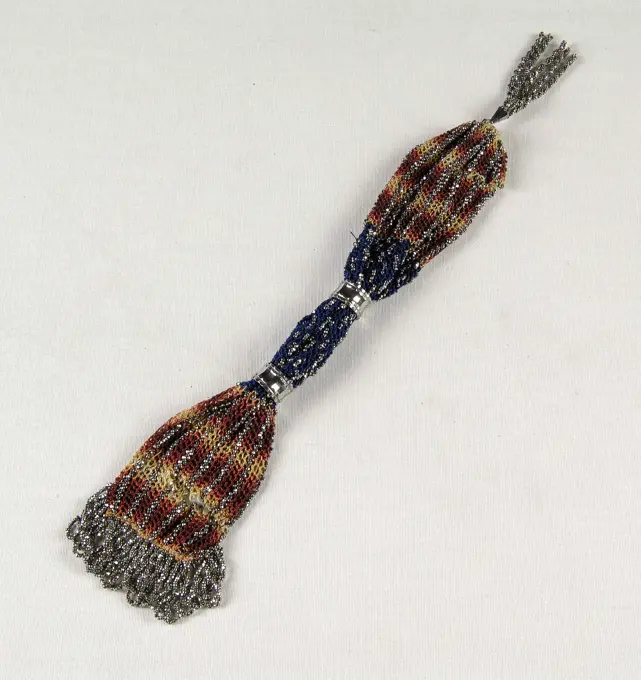
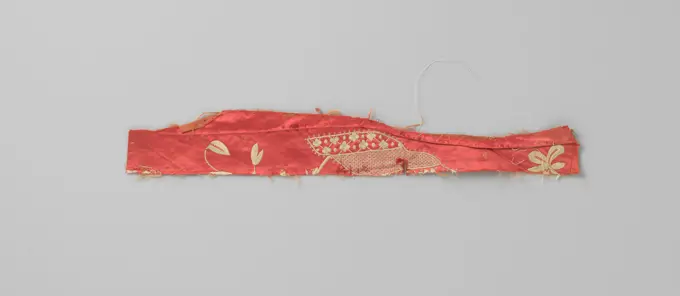
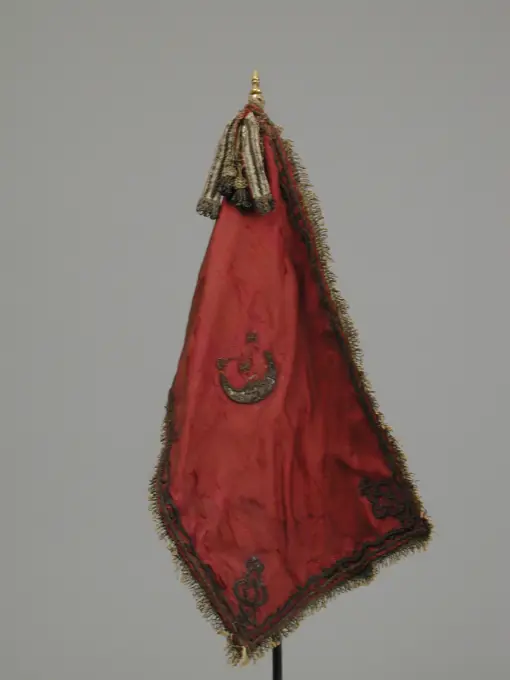
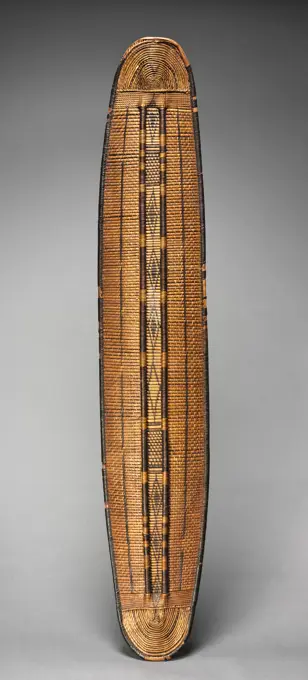
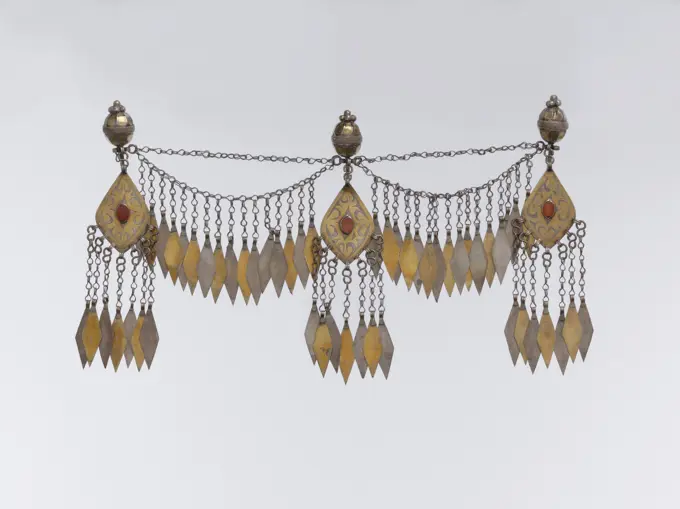
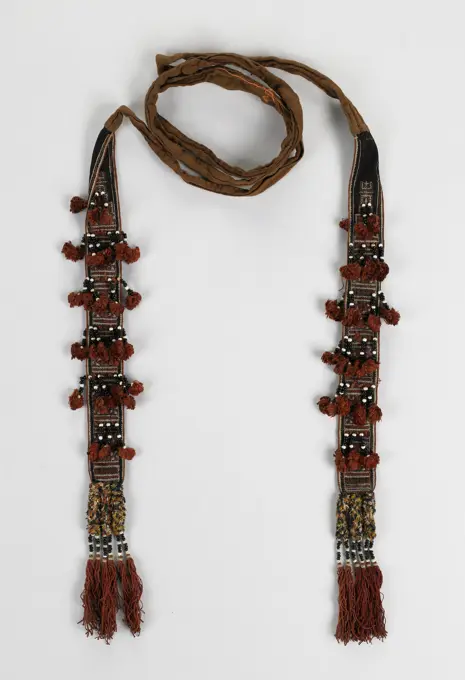
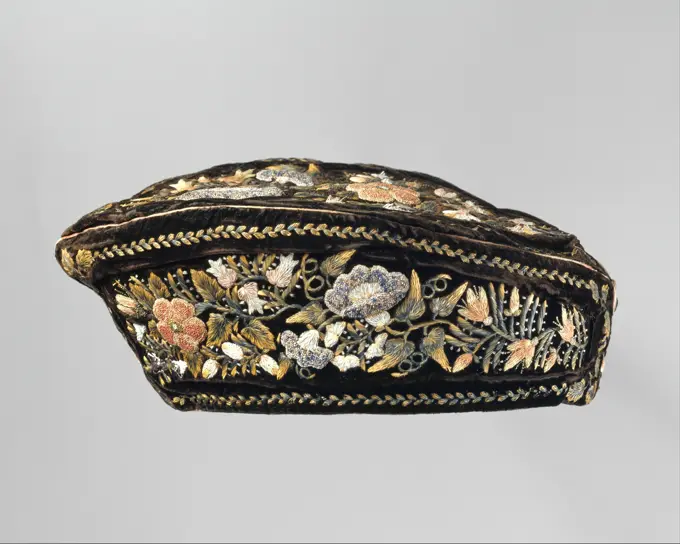
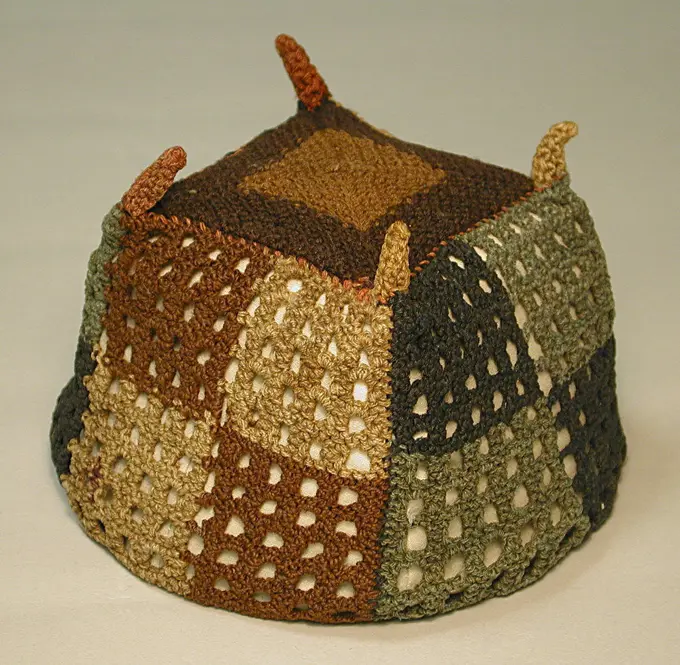
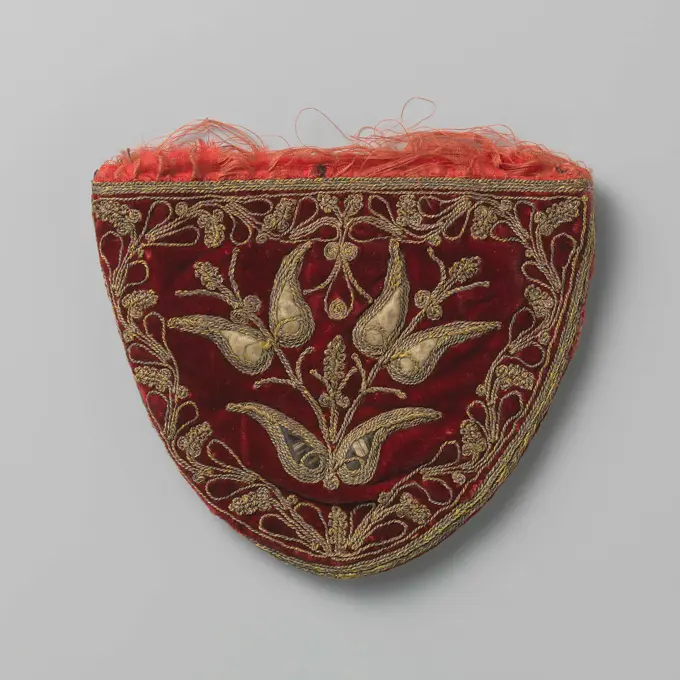
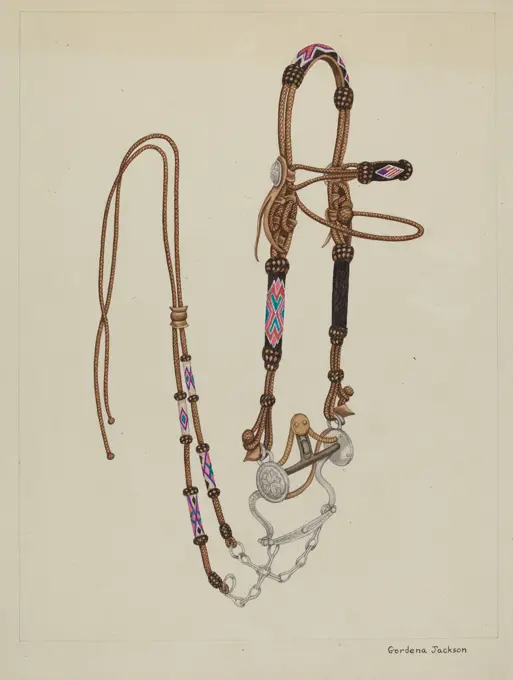
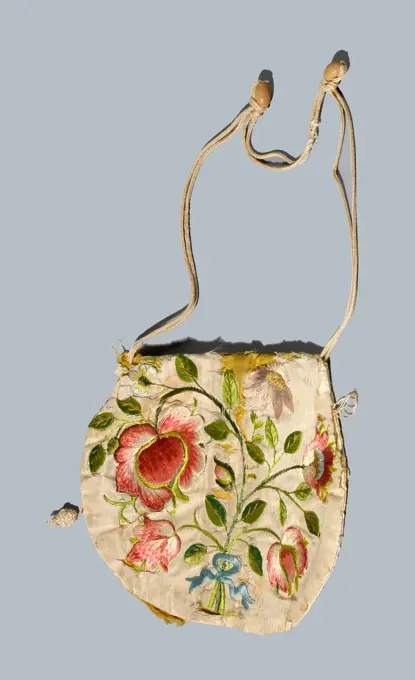
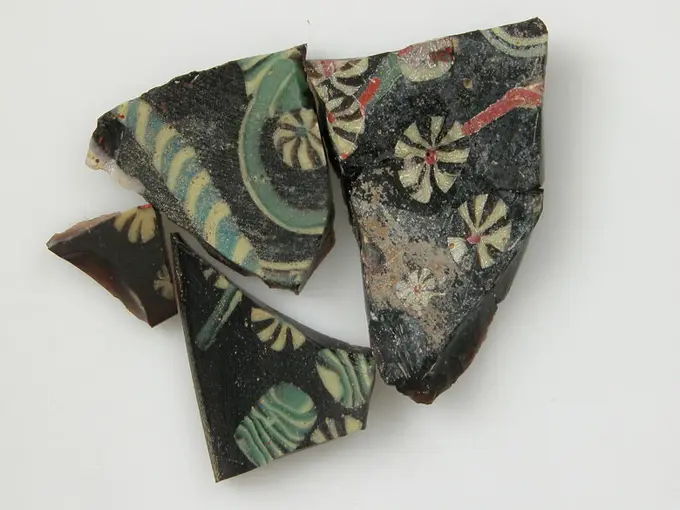
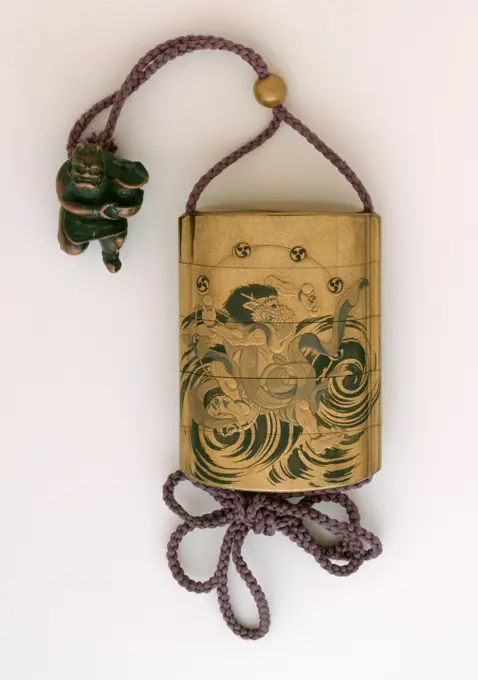
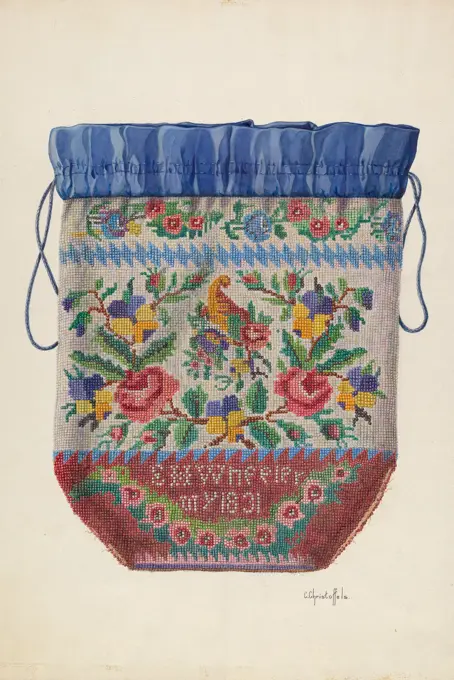
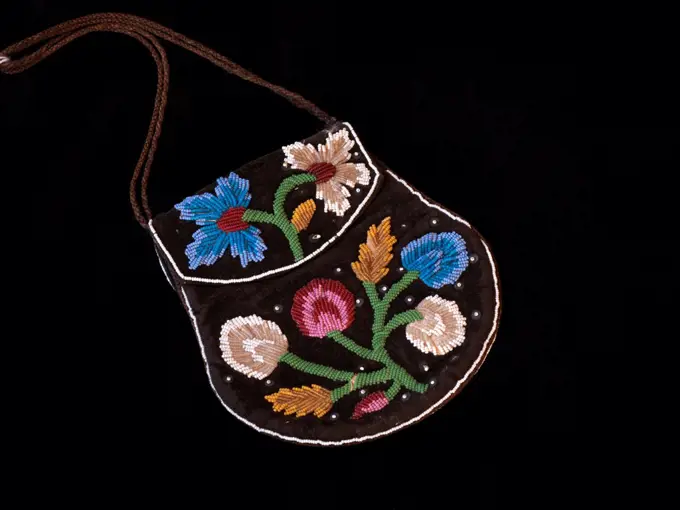
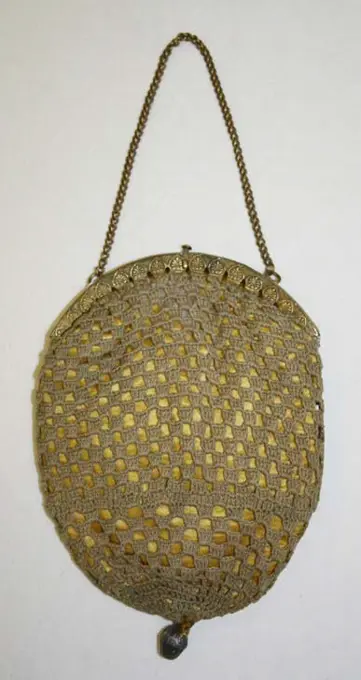
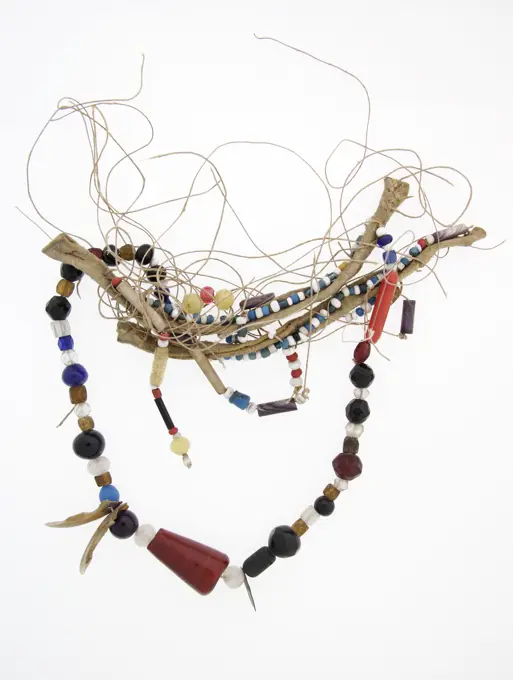
Bourse. GAL2004.284.XBourse. GAL1971.52.4Baby Carrier, 29 1/2 x 21 in. (74.93 x 53.34 cm), Cotton; needlework, ChinaFragment (Bonnet Trim). Probably Europe. Date: 1850. Dimensions: 7.3 × 10 cm (2 7/8 × 4 in.). Three tapes of horsehair, twill oblique interlacing; two tapes of horsehair and straw, twill oblique interlacing, openwork with supplementary wrapping elements; one tape of horsehair and straw, plain weave, openwork with raised profile formed by extended wrapped and twill oblique interlaced wefts; embellished with horsehair, cotton, and straw in twined tapes of twill oblique interlacing and florets of cotton plain weave with supplementary pile wefts forming cut solid "velvet" (velveteen); embroidered with straw in back stitches. Origin: Europe. Museum: The Chicago Art Institute, Chicago, USA.Mans cap unknownPurse (France); silk, metallicPurse early 17th century British This elaborately embroidered purse probably corresponds to the "sweet bags" recorded in a number of sixteenth- and seventeenth-century inventories. The purse appears to have been worn around the person and to have carried scented herbs and essences to ward off the evil smells of daily life.. Purse 222246Jianhe-style Loincloth, Cotton, tin, ChinaReticule 1800-1810 probably German. Reticule. probably German. 1800-1810. silk, metalFragment of printed fabric unknownBeaded Bag, 19th century. America, 19th century. Beads and silk; overall: 26 x 15 cm (10 1/4 x 5 7/8 in.).Bliżej Kultury unknownXmas Decoration Christmas Decoration Copyright: xZoonar.com/rgbx 852725Goldsmith's art, Italy, 20th century. Mario Buccellati, night purse in gold fabric with gold and silver clasp set with rubies, 1930s.Apparel from a dalmatic, Medium: silk Technique: brocatelle, Apparel showing pomegranates in an ogival framework in mauve and white on a lemon-yellow ground., 16th century, costume & accessories, Apparel from a dalmaticBandSewing bag 1750-60 French. Sewing bag 229286Helmet. Culture: Central Indian. Dimensions: H. including nape defense 13 in. (33 cm); H. excluding nape defense 8 in. (20.3 cm); W. 8 in. (20.3 cm); D. 8 1/2 in. (21.6 cm); Wt. 1 lb. 5.1 oz. (598.2 g). Date: 18th century. Museum: Metropolitan Museum of Art, New York, USA.Reins from Owia (fragment of the OGII);  18th century (1701-00-00-1800-00-00);Bourse. GAL1988.110.12Bag, 20th century, 35 1/2 x 18 3/4 in. (90.2 x 47.6 cm), Cotton, China, 20th centuryHat, 20th century, 18 1/2 x 7 3/4 in. (46.99 x 19.69 cm) (including flaps and ties), Wool, knitted, Bolivia, 20th centuryBreast Defense (Peytral) from a Horse Armor 15th-17th century Tibetan or Mongolian In terms of its decoration, this peytral displays a far greater variety of motifs, executed in a more fluid and accomplished style, than any other comparable example of Tibetan horse armor. At the center of the upper section there is a Wish-Granting Jewel on a lotus throne flanked by symmetrical sprays of lush leafy stems and blossoms, and in the center of the lower section there is a Right-turning Conch Shell. The borders of the central sections are edged with silver wire, while the other sections have copper wire, both sewn in a fine chain stitch. Carbon 14 tests of the leather resulted in a date range of 1402 to 1626.. Breast Defense (Peytral) from a Horse Armor 26626Purse (USA); glass beads, silk, metal frame; Diameter: 9 cm (3 9/16 in.)Whale body. Damaschered, silk. 1700-1750. Galliera, fashion museum of the city of Paris. 60568-7 Whale body, Damascus brooch, flower decor, woman, female mode, silkFragment seat cover in red and white velvet. Seat of a chair covering of hammered silk velvet.Front apron (), ChinaDog blanket -Sash -Fob 18th century French. Fob 102456Pouch of crocheted green silk, interspersed with lanes of crocheted gold thread, anonymous, c. 1840 - c. 1850 Pouch of crocheted green silk, interspersed with lanes of crocheted gold thread. The upper half of the fair is in an open hooking technique in the green side, with an edge of gold thread at the top. The lower part is closed and has a tire in gold thread in which a single and double row of green silk, enclosed by two lanes of triangular points in gold thread. At the bottom of the fair a cord with a ball of green silk and gold silence, with three cords with three similar balls. Also two similar balls on the twisted green side. The stock exchange in unlocked. Netherlands (possibly) whole: Silk. whole: crocheting / braiding Pouch of crocheted green silk, interspersed with lanes of crocheted gold thread. The upper half of the fair is in an open hooking technique in the green side, with an edge of gold thread at the top. The lower part is closed and has a tire in gold thread in whichBorder Fragment 10th-15th century Peruvian; central coast (). Border Fragment 307457Two -flowing scholarships. 11th century. Gal1972.2.18Bag, Medium: silk Technique: knitted, Small bag knitted in blue silk, interlaced with vertical bands of coral ribbon, also used for draw-string., USA, early 19th century, costume & accessories, BagSmall bag in an envelope model, completely woven from fine green -gray beads, with a mother -of -pearl knot as a closure, anonymous, c. 1920 Small bag in an envelope model, folded double with a seam along the two sides. The bag is completely woven from fine green-gray beads, with the motif on the front and back a golden-yellow basket with pink flowers, within a list of golden-yellow beads. In the unsure valve a narrow notch, through which the mother -of -pearl knot can be inserted to close the bag. Lining of ecrukligo moiré linen. In the bag a double powder cushion of wandered satin and velvet, on which powder (see B). France whole: Glass. Closure: Mother of Pearl. Lining: Linen (Material). powder cushion: Silk. powder cushion: Velvet (Fabric Weave) blow molding / cutting / cutting Small bag in an envelope model, folded double with a seam along the two sides. The bag is completely woven from fine green-gray beads, with the motif on the front and back a golden-yellow basket with pink flCap ca. 1862 American. Cap 103316Bone claw of sits with a white stock, on which colored, vertical long wandering flower and leaf vines and red stitching, anonymous Bear claw of sits with a white stock, on which colored, vertical long wandering flower and leaf vines and red stitching. Label with No. 691 ().  cotton (textile). chintz. linen (material) chintz Bear claw of sits with a white stock, on which colored, vertical long wandering flower and leaf vines and red stitching. Label with No. 691 ().  cotton (textile). chintz. linen (material) chintzEdge fragment of majolica dish with blue and white checkerplate decor, dish plate board plate soil find ceramic earthenware glaze tin glaze lead glaze, majolica baked 2x painted glazed Border fragment of majolica dish. Checker decor rope decor over the board edge. Cooked on prunes. underside covered with bright lead glaze Yellow orange shard scraped earthenware archeology Rotterdam City triangle indigenous pottery serving serve serving decorate Schielandshuis Soil discovery: Schielandshuis 1982.Ainak push, late 19th-early 20th century, 19 1/2 x 22 in. (49.53 x 55.88 cm) (includes fringe), Silk, cotton; hook-and-needle chain stitch, Uzbekistan, 19th-20th centuryFestival Apron, 20th century, 23 x 18 in. (58.42 x 45.72 cm), Cotton, silk, felt, metallic threads and metallic beads, China, 20th centuryExcerpt of a dish with yellow -baking shard, with light pink glaze at the front and back, on which floral shapes are painted at the front in purple, dark blue and yellow glaze, anonymous, 1200 - 1899  Italy earthenware  Italy earthenwareHeaddress late 19th century European This unique piece of headwear, with its serpent form, may have been some kind of talisman to ward off evil spirits. It is notable for its intentionally representational design.. Headdress 158755Collar ca. 1870 American or European. Collar. American or European. ca. 1870. silk, glass beadsMan's Apron, 18 9/16 x 13 15/16 in. (47.15 x 35.4 cm) (without seed fringe or ties), Cotton, seeds, bells, ChinaSilkFringe (Greece); silkPair of Tassets (Thigh Defenses) Belonging to an Armor for Field and Tournament Made for Duke Nikolaus "The Black" Radziwill (1515-1565), Duke of Nesvizh and Olyka, Prince of the Empire, Grand Chancellor and Marshal of Lithuania ca. 1555; probably repainted later Kunz Lochner German. Pair of Tassets (Thigh Defenses) Belonging to an Armor for Field and Tournament Made for Duke Nikolaus "The Black" Radziwill (1515-1565), Duke of Nesvizh and Olyka, Prince of the Empire, Grand Chancellor and Marshal of Lithuania 684262Chasuble;  1 exercise of the 18th century (1700-00-00-1725-00-00);Brisé fan, Carved and drilled horn sticks with applied metal spangles, mother-of-pearl washer at rivet, cast metal bail, silk tassel and ribbon, Brisé fan. Elaborately carved and drilled horn sticks appliquéd with metal spangles. Orange-colored silk connecting ribbon. Mother-of-pearl washer at rivet. Cast metal bail with decorative form. Cream-colored silk tassel., France, 19th century, costume & accessories, Brisé fanSemi-round, flat pouch from ceriserated satin embroidered with symmetrical flower and leaf motif in gold thread, with drawstring and silk brushes, anonymous, c. 1600 - c. 1699 Semi-round, flat pouch of ceriserated satin embroidered with symmetrical flower and leaf motif in gold thread, with drawstring and silk brushes. Model: Two pattes with eight festunned holes each. On the seams trimmed with cord of gold thread. Twisted silk cord with vloszijde brushes. Lined with ceriserode silk. Decoration: In the middle a tulip surrounded by thin side branches from a leaf rosette and acanthus drinks. Decoration on the front and back is the same. Low Countries (possibly) whole: Silk. Gold wire: Gold Leaf. Gold Wrap: embroidering Semi-round, flat pouch of ceriserated satin embroidered with symmetrical flower and leaf motif in gold thread, with drawstring and silk brushes. Model: Two pattes with eight festunned holes each. On the seams trimmed with cord of gold thread. Twisted silk cord with vloszijSac. 1820. Gal1972.5.3Dish And Cover (England); Manufactured by George Jones & Sons, Ltd.; glazed earthenware; 19 x 27 x 20 cm (7 1/2 x 10 5/8 x 7 7/8 in.)Bourse. GAL1958.68.12Christening cap early 19th century European. Christening cap 98160Pouch. Culture: Russian. Date: early 18th century.This object is from the collection of Natalia de Shabelsky (1841-1905), a Russian noblewoman compelled to preserve what she perceived as the vanishing folk art traditions of her native country. Traveling extensively throughout Great Russia, she collected many fine examples of textile art of the wealthy peasant class. From the 1870s until moving to France in 1902, Shabelsky amassed a large collection of intricately embroidered hand-woven household textiles and opulent festival garments with rich decoration and elaborate motifs. The Brooklyn Museum holdings include many fine examples including the majority of the garments. Portions of Shabelsky's collection are also housed at the Museum of Fine Arts, Boston, the Cleveland Art Museum, and the Russian Museum of Ethnography in St. Petersburg. This is a particularly high-quality accessory for both its materials and execution. The embroidery in precious metal threads as well as the quality sLeather Lamellar Armor. Culture: Eastern Tibetan, probably Kham. Dimensions: laid out flat, H. 33 5/8 in. (85.4 cm); W. 55 1/2 in. (141 cm). Date: 15th-17th century. Museum: Metropolitan Museum of Art, New York, USA.Headdress that hangs over face 19th century Mongolia. Headdress that hangs over face. Mongolia. 19th century. Cloth, metal and various stones. JewelryFlail attachment 304 B.C.-A.D. 364 Ptolemaic or Roman Period This fragment is probably from a flail, perhaps part of a large Osiris statuette or statue. The statue itself was probably made out of wood but then incorporated bronze elements like this fragment, a common technique for high prestige, large, and costly cult images. Because this type of mixed media construction was commonly used, pieces such as these, even in their fragmented state, provide excellent clues about the appearance of large-scale temple statuary made from organic materials, much of which is now degraded and lost. Traces of multi-colored glass inlay speak to the quality and craftsmanship of the original piece.. Flail attachment 552074Fish Net Fragment 580-640 Coptic. Fish Net Fragment 475024Bag third quarter 19th century American. Bag 156871Carrying strap (tara), late 18th-early 19th century, Unknown Ainu, 97 × 2 in. (246.38 × 5.08 cm), Cloth: elm-bark fiber, cotton; braiding, twining, Japan, 18th-19th centuryBag, Medium: wool Technique: doublecloth, Large brown and tan shoulder bag with a star surrounded by smaller stars. Top of bag is braided., Mexico, 19th century, woven textiles, BagTassel, Medium: silk, wooden core, Skirt of pink, white and green silk threads, twisted and looped, and each supporting a tassel of its own color. Head is vase-shaped and wrapped in pink, white and green threads in a chevron pattern. Collars are formed by looped threads at the top and bottom. Cord of braided silk threads., Spain, 19th century, trimmings, TasselPurse (USA); silk, steel beads, steel frameMitts 1875 American. Mitts 156558BoxMiser's purse late 19th century American. Miser's purse 170519Embroidered Interior Textile, anonymous, c. 1750 - c. 1760  France (possibly) silk embroidering  France (possibly) silk embroideringPurse (or Sash), 60 1/2 x 5 in. (153.67 x 12.7 cm) (including ties), Cotton, zipper, gold colored wrapped cord, ChinaBanner with staff 18th century Italian, Naples In 1964, Loretta Hines Howard generously presented to the Museum over 140 Neapolitan crèche figures, dating from the second half of the eighteenth century. The varied assortment includes figures from the three traditional scenes of a complete Neapolitan presepio: the Nativity, with angels, shepherds, and sheep; the procession of the three Magi, with their colorful retinue of attendants; and the varied and gay crowd of country and town people thronging the tavern, or inn, of Bethlehem  the diversorium mentioned by St. Luke, where on the Holy Night there was no place for Mary and Joseph. Averaging between twelve and fifteen inches in height, according to the position they were to take in perspective in the stage set, the figures are pliable and can be given poses at will, according to their facial expressions. Their bodies are made of tow and wire, their arms and legs are finely carved of wood, and their heads and shoulders are modeled of tFair in a flat, shield -shaped model, of purple red velvet, in relief embroidered with gold thread, anonymous, c. 1500 - c. 1700 Purple red velvet fair, embroidered in relief with gold thread. Two shield -shaped pattes sewn flat together. Pattern on both sides. Disposed of two lancet leaves in gray with golden edges, two symmetrical branches grow, each with two ditto leaves in white. Running of a running rank with bunch and leaves in gold. Italy (possibly) whole: velvet (fabric weave). embroidery: embroidering Purple red velvet fair, embroidered in relief with gold thread. Two shield -shaped pattes sewn flat together. Pattern on both sides. Disposed of two lancet leaves in gray with golden edges, two symmetrical branches grow, each with two ditto leaves in white. Running of a running rank with bunch and leaves in gold. Italy (possibly) whole: velvet (fabric weave). embroidery: embroideringShield, c. 1900. Central Africa, Democratic Republic of the Congo, early 20th century. Bamboo, wood, and plant fibers; overall: 134.6 cm (53 in.).Headband late 19th-early 20th century Group of Turkman Ornaments, nos. 2018.922.1-.6a, .6bThese bold silver ornaments come from the world of the Turkman tribes of Central Asia. Some of the forms such as the lozenge shaped amulet holder or Quran box relate to the styles of jeweled arts of the courts and urban centers. But most of these large and vibrant ornaments are a final expression of the unique sensibility of the Turkman people as their nomadic life gives way to modernity.. Headband. late 19th-early 20th century. Silver; fire gilded, with silver shot, pins, stamped beading evoking granulation, loop-in-loop chains, pendants, and table-cut carnelians. Attributed to Central Asia or Iran. JewelryStole, embroidered, pinkFragment silk velvet with a pattern of geometric braid in blue on yellow fond. Fragment wide flared silk velvet with a pattern of geometric braid in blue on yellow fond. Italy, 16th century.Ceremonial Belt, 116 x 1 3/4 in. (294.64 x 4.45 cm), ChinaConciliate belt; Laboratory Besza (Bescha), Manufaktura P.C. Salzhüber (Gdańsk; Pasów label; Ca 1775-1800); before 1793 (1790-00-00-1793-00-00);Glengarry-Style Cap ca. 1840 Huron. Glengarry-Style Cap. Huron. ca. 1840. Wool, silk, moosehair. Canada, Quebec. Textiles-WovenBead, control Cypriot. Bead, control 242619Aker of kwast, anonymous, 1625 - 1700 Aker or decorative brush, belonging to fifteen akers or decorative brushes, including three pairs of sewn or tied to cords with round flat binding. The brushes are different in size and made of linen wire that is tied in countless strands of buttons and is reinforced with a starch porridge. The brushes are composed of several layers of "bundles" with strands of buttons. BK-NM-5448-5-A to O.  linen (material) Aker or decorative brush, belonging to fifteen akers or decorative brushes, including three pairs of sewn or tied to cords with round flat binding. The brushes are different in size and made of linen wire that is tied in countless strands of buttons and is reinforced with a starch porridge. The brushes are composed of several layers of "bundles" with strands of buttons. BK-NM-5448-5-A to O.  linen (material)Four-Cornered Hat 7th-9th century Tiwanaku Finely woven, brightly colored hats, customarily featuring a square crown, four sides, and four pointed tips, are most frequently associated with two ancient cultures of the Andes: the Wari and the Tiwanaku. The Wari Empire dominated the south-central highlands and the west coastal regions of what is now Peru from 500-1000 A.D. The Tiwanaku occupied the altiplano (high plain) directly south of Wari-populated areas around the same time, including territory now part of the modern country of Bolivia. The cultures not only developed and flourished as contemporaries, but also occupied adjacent lands for nearly four centuries. A Wari ceremonial center called Cerro Baúl was located a mere five miles from Tiwanaku-settled fields in the Moquegua Valley of Peru. The two cultures likely encountered each other at Cerro Baúl and elsewhere, but the nature of these interactions remains largely unknown. Four-cornered hats from both the Wari and the Tiwanaku wFair in a flat, shielded model, of purple red velvet, embroidal embroidered with gold thread. Fair of purple red velvet, embroided embroidered with gold thread. Two shield-shaped pattes sewn flat together. Pattern equal to both sides. Stegnown to two lancet leaves in gray with golden edges two symmetrical branches, each with two ditto leaves in white. Bordering running rank with bunch and leaves in gold.Gordena Jackson, Bridle, c 1937 BridleMitaine of black, white -striped silk, anonymous, c. 1800 - c. 1820 Mitaine of black, white -striped silk. Disappeared with stuffed tulle and lub decorations of silk and black and white ribbon. Zaanstreek whole: Silk. Mitaine of black, white -striped silk. Disappeared with stuffed tulle and lub decorations of silk and black and white ribbon. Zaanstreek whole: Silk.Reticle. XVIII. Back. Gal1986.199.2_2Glass Fragments from a Vessel. Culture: Coptic. Dimensions: Storage (petri dish diam.): 2 1/8 in. (5.4 cm). Date: 4th-early 5th century. Museum: Metropolitan Museum of Art, New York, USA.The Storm Gods Raiden and Futen (Inrō/Ojime/Netsuke Ensemble). Japan, mid-late 18th century. Costumes; Accessories. inrō Gold and gray takamakie on gold fundame lacquer ground; ojime gold lacquer(?); netsuke woodFour fragments red velvet with two embroidered flowers, anonymous, c. 1400 - c. 1950 Four fragments of elongated red silk flaw with traces of sewing work. The excerpts are fixed over each other with two embroidered flowers. The largest flower has nine leaves, at the ends they are green and they go via white to a light pink. There is a yellow with white heart in the middle. The other flower has six petals, these are white at the ends and blue around the heart, the heart is yellow. At the back of the fragments are there remnants of glue (). Europe silk velvet (fabric weave) / embroidering Four fragments of elongated red silk flaw with traces of sewing work. The excerpts are fixed over each other with two embroidered flowers. The largest flower has nine leaves, at the ends they are green and they go via white to a light pink. There is a yellow with white heart in the middle. The other flower has six petals, these are white at the ends and blue around the heart, the heart is yellow. At theCornelius Christoffels, Bag, c 1940 BagCrimson;  19th century (1801-00-00-1900-00-00);Antique Native American Iroquois Floral Beaded BagPainted Plume with Sun Disk Containing Winged Kheper Beetle. Egypt, Late Period, 24th - 30th Dynasty (724 - 343 BCE). Sculpture. WoodCornelius Christoffels, Bag, c 1937 BagPurse, Medium: silk, metal, ivory/bone Technique: beaded, crochet, Rose color silk net, crocheted; ornamented with cut steal beads. Steel ring to slide and close. Fitted at top with small ivory or bone bars to open. Cut steel pendant; steel chain to carry., France, early 19th century, costume & accessories, PurseNecklace -Purse, Medium: sillk, metal Technique: beaded crochet, Small flat bag of crocheted blue silk with cut steel beads in a diamond pattern, fringed with cut steel beads. Set into frame of cut steel with catch, and chain of cut steel beads., Europe, 1830-50, costume & accessories, PursePair of Shoes from a Complete Child's Outfit, 20th century, 6 1/8 x 1 x 6 3/8 in. (15.6 x 2.5 x 16.2 cm), Silk, China, 20th centuryReticule early 19th century European. Reticule 117299Headcovering, Medium: silk Technique: bobbin lace, Chantilly style, Black lace headcovering with a cap streamer at either side. Chantilly-style design showing a stylized floral pattern., Chantilly, France, late 18th-early 19th century, lace, HeadcoveringNecklace  -