Textile Fragments

Pieces of ornate textiles showcasing intricate patterns and historical craftsmanship, including silk and decorative elements from various cultures.

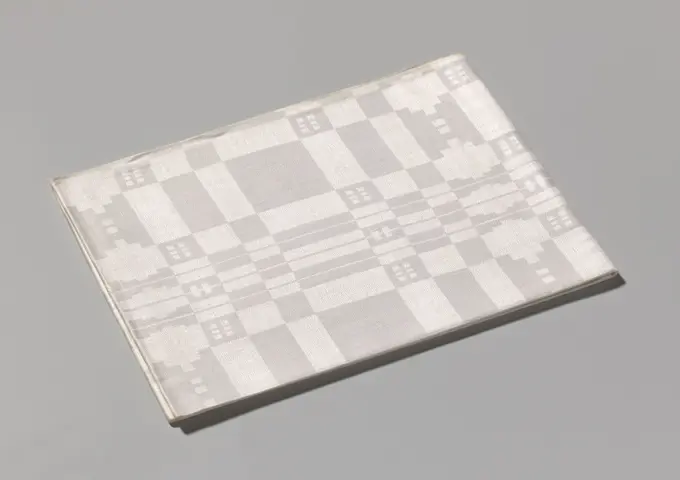
Tablecloth with a flower pattern, anonymous, c. 1700 - c. 1749 Table fakes from Linnamast with a flower pattern based on a console. Next to each other repeated wavy feed line of thin branches ending in large flowers, fruits and leaves. At the bottom right part of a console with a speckled filling. A narrow intermediate zoom with a zigzag line and Drieblad forms the separation to the standing edges with a variant of the wavy flower drink; Outside of that: blocking edge. Netherlands (possibly) linen (material) damask Table fakes from Linnamast with a flower pattern based on a console. Next to each other repeated wavy feed line of thin branches ending in large flowers, fruits and leaves. At the bottom right part of a console with a speckled filling. A narrow intermediate zoom with a zigzag line and Drieblad forms the separation to the standing edges with a variant of the wavy flower drink; Outside of that: blocking edge. Netherlands (possibly) linen (material) damask
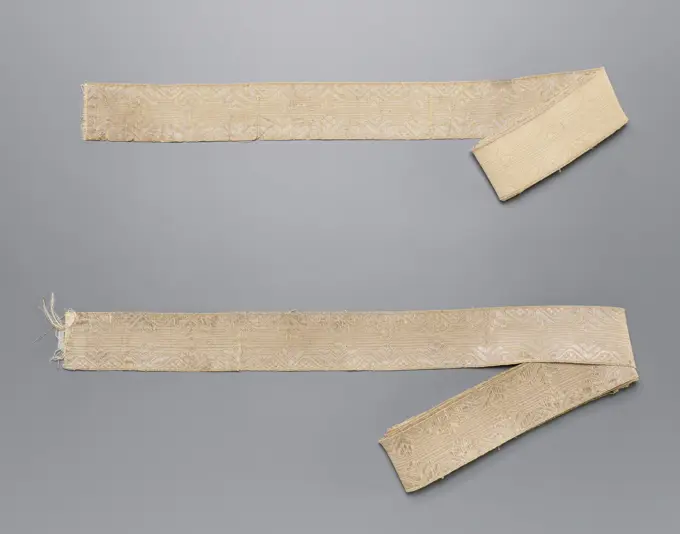
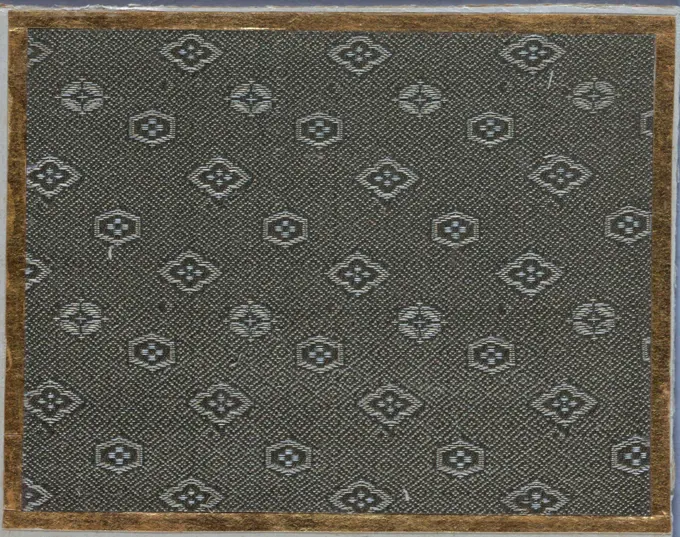
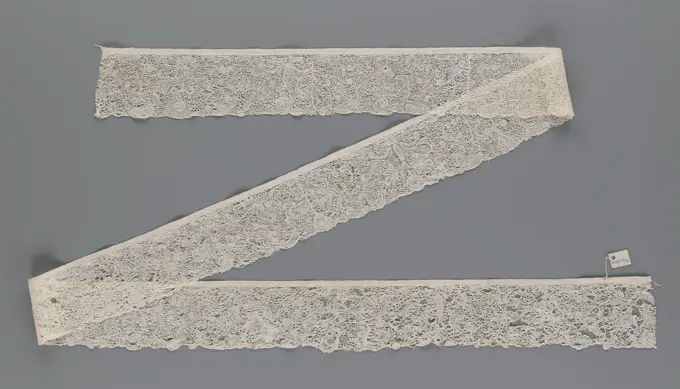
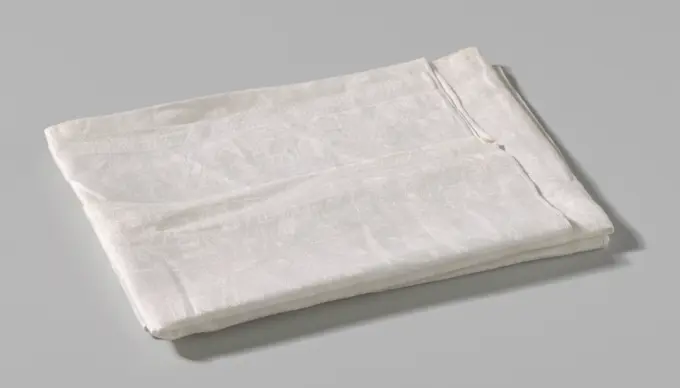
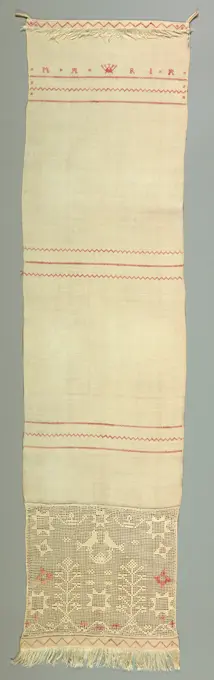
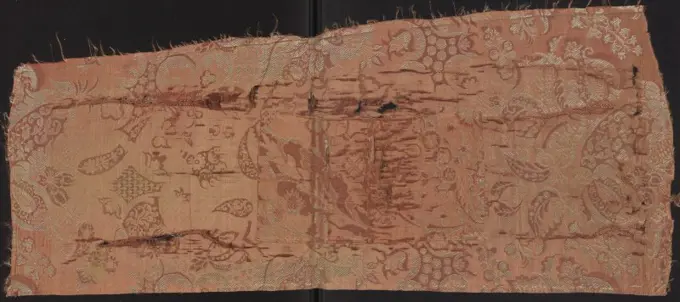
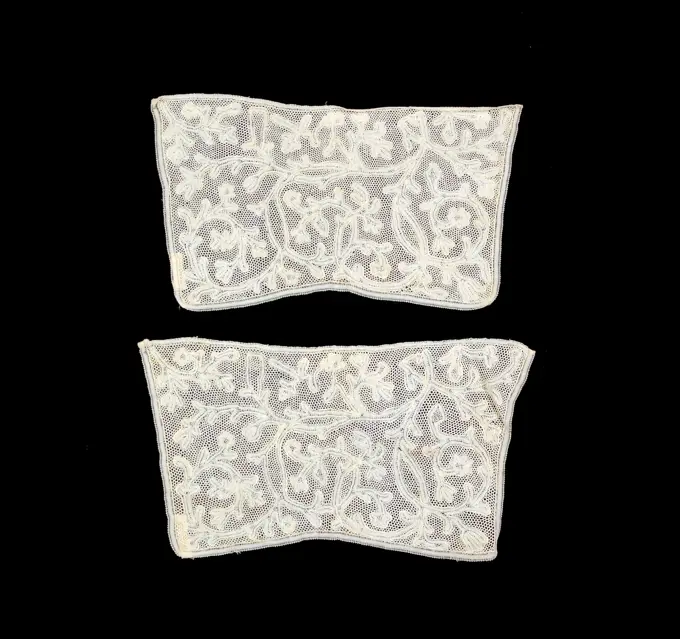
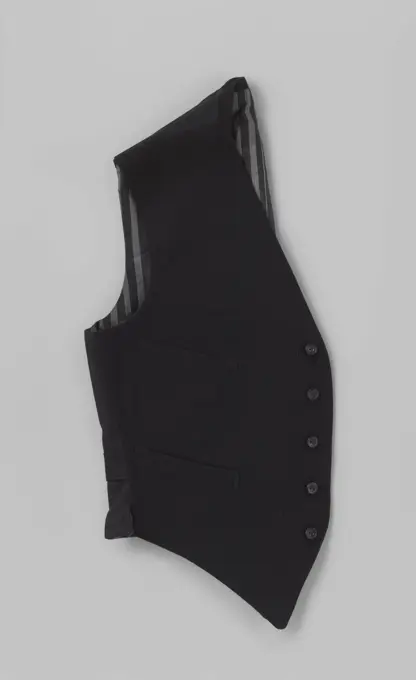
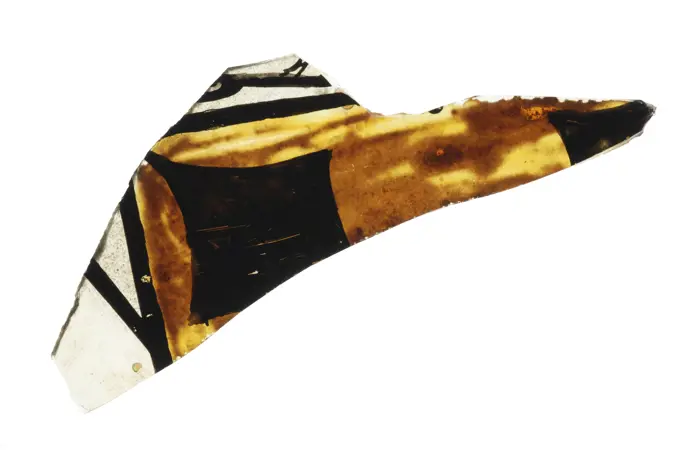
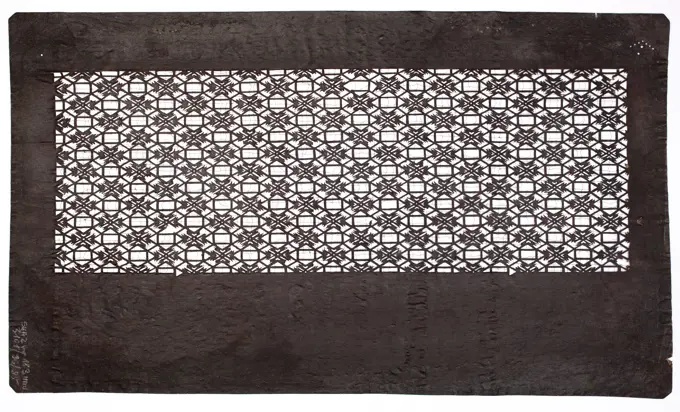
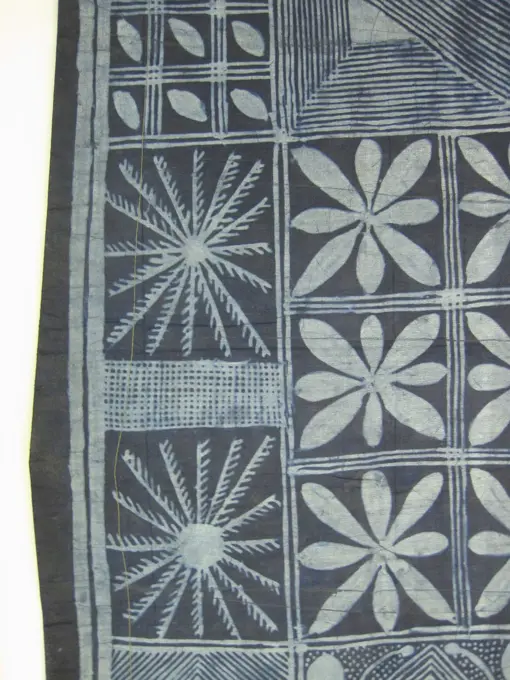
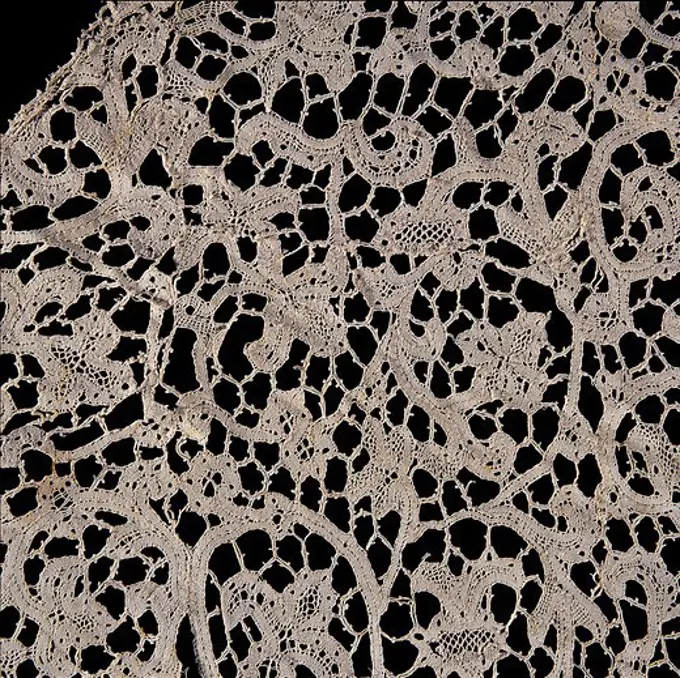
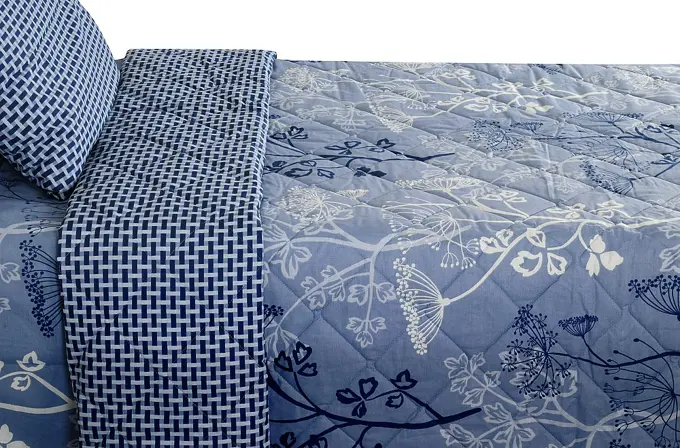
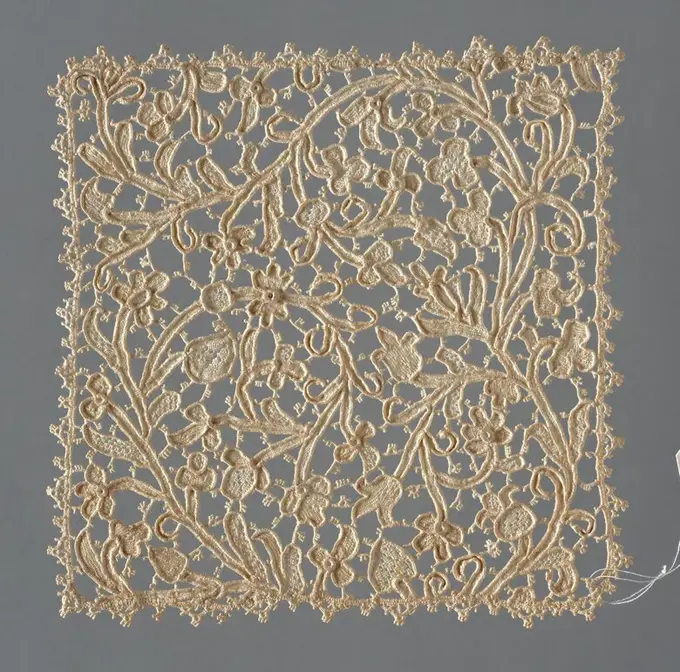
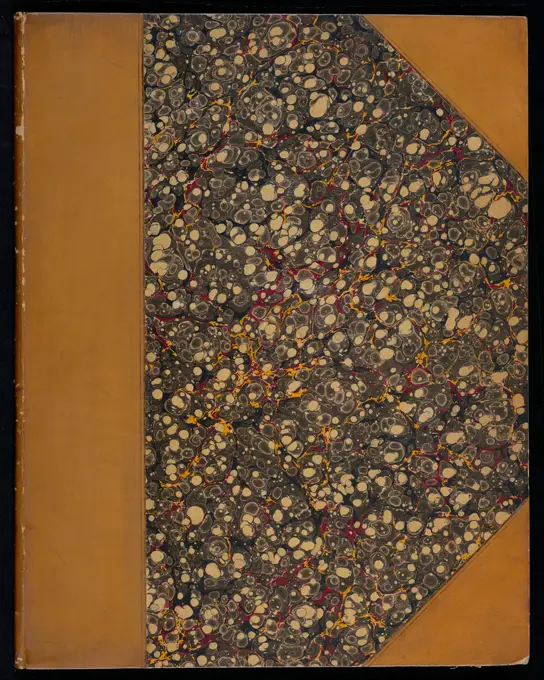
Napkin of linen with pellet pattern ,, 1742 White Linnamasten napkin with peel pattern, called "tower work". Brand Kroon WG 44 1742. Northern Netherlands (Possible) linen (material) White Linnamasten napkin with peel pattern, called "tower work". Brand Kroon WG 44 1742. Northern Netherlands (Possible) linen (material)Fragment; silkNapkin from white Linnamast ,, 1874 White linen Damas napkin with volutes and the weapon of Boelens van der Haer. North Brabant (Possibly) linen (material) damask White linen Damas napkin with volutes and the weapon of Boelens van der Haer. North Brabant (Possibly) linen (material) damaskTextile Fragment 17th century. Textile Fragment. 17th century. Silk. Made in Iran. TextilesOld denim japan jean texture. Jeans torn denim texture. Denim jeans ripped destroyed. Jeans torn denim texture. Denim jeans rippedElongated scarf of white cotton with woven sides stripes and decorated with an edge of light and dark green branches, each with six beige and red-rande silver flowers, anonymous, c. 1800 - c. 1900 Elongated scarf of white cotton with woven sides stripes and decorated with a border of light and dark green branches, each with six beige and red-rande silver flowers. Franjes on the short side. Possibly bridal clothing, a bridal head towel. Turkey (Possible) whole: Cotton (textile). whole: Silk. Decoration: Silver thread. Decoration: embroidering Elongated scarf of white cotton with woven sides stripes and decorated with a border of light and dark green branches, each with six beige and red-rande silver flowers. Franjes on the short side. Possibly bridal clothing, a bridal head towel. Turkey (Possible) whole: Cotton (textile). whole: Silk. Decoration: Silver thread. Decoration: embroideringFront wrapper. Photographs, Photograms, Book covers. 1843-10. Spencer Collection. Algae , Great Britain, Plants in artTwo glaces;  19th century (1801-00-00-1900-00-00);Roll cushion at the so-called Rosendaelbed. Roll cushion at the so-called Rosendaelbed.Fragment (Japan)Orange microfiber-cover cloth orange microfiber-waschlappen-clothArm Ornament 13th-16th century Colombia. Arm Ornament 307510Napkin of linen with pellet pattern ,, 1734 Napkin of white linen with peel pattern "Oranjeboom", brand WG 60 1734. Northern Netherlands (Possible) linen (material) Napkin of white linen with peel pattern "Oranjeboom", brand WG 60 1734. Northern Netherlands (Possible) linen (material)Textile, Medium: silk Technique: warp printed, Chiné silk fragment with narrow black stripes between two vertical columns of pinkish flowers on a grey ground., France, ca. 1840, printed, dyed & painted textiles, TextileFragment of the lace;  around 1700 (1690-00-00-1710-00-00);Textile Swatch , 1950-1960. Silk, 19 1/4 x 9 1/4 in. (48.9 x 23.5 cm).    1950-1960bag clip isolated on a white backgroundRibbon of side brokaat; On a silver -colored background with diamond pattern, a repeat pattern of a colored bouquet is applied, anonymous, c. 1700 - c. 1725 Ribbon of side brokaat; A repeat pattern of a colored bouquet has been applied to a silver -colored background with diamond pattern. The edges are trimmed with decorative band. West-Europa geheel: silk. brocade (textile). silver thread Ribbon of side brokaat; A repeat pattern of a colored bouquet has been applied to a silver -colored background with diamond pattern. The edges are trimmed with decorative band. West-Europa geheel: silk. brocade (textile). silver threadLinnamast napkin with putti and flowers, c. 1660 Linnamast napkin. The pattern has flowers and fruits between which putti that wear horns of abundance and putti that wear a flower basket. The running edge has a wavy line between which birds and flowers and a block edge. The napkin is general cargo, so it has no horizontal edges and corners. The napkin belongs to a tablecloth (BK-KOG-227-A).  linen (material) damask Linnamast napkin. The pattern has flowers and fruits between which putti that wear horns of abundance and putti that wear a flower basket. The running edge has a wavy line between which birds and flowers and a block edge. The napkin is general cargo, so it has no horizontal edges and corners. The napkin belongs to a tablecloth (BK-KOG-227-A).  linen (material) damaskBlank paper tag labelThe Flower Seller Julian Alden Weir (American, 1852-1919). The Flower Seller, ca. 1879. Oil on canvas, 40 3/8 x 22 1/8 in. (102.5 x 56.2 cm).   American Art ca. 1879Towel Cover; cotton on linenBlack satin ribbon, anonymous, c. 1400 - c. 1950 Black satin ribbon. West-Europa silk Black satin ribbon. West-Europa silkNapkin of linen with pellet pattern ,, 1737 White linen napkin with peel pattern, called "Oostindische Caracters". Brand Kroon WG 36 1737. Northern Netherlands (Possible) linen (material) White linen napkin with peel pattern, called "Oostindische Caracters". Brand Kroon WG 36 1737. Northern Netherlands (Possible) linen (material)Barkcloth Fragment (Kapa) 19th century Hawai'i. Barkcloth Fragment (Kapa) 310426Strook applicatiekant met bloesemtakjes.Strip natural colored application side, climbing side applicated on machine tulle. Three quarters of the fond is unfromed. An open edge consists of lying blossom branches, which are used to the left. Only blossoms and a 'rose' form the scivels.Stack of four canvases, tied together with band, anonymous, c. 1750 - c. 1800 A pile of four folded and with linen band -tied cloths of linen with damask pattern. Netherlands linen (material) A pile of four folded and with linen band -tied cloths of linen with damask pattern. Netherlands linen (material)Fragment 16th century Italian, Florence. Fragment 230098Piece 18th century China. Piece 72045Textile Swatches Onondaga Silk Company, Inc. (1925-1981). Textile Swatches, 1948-1959. 72 silk; 28 metal, a-h: 11 x 3 1/2 in. (27.9 x 8.9 cm).    1948-1959Mitaine of white knitted cotton, c. 1800 - c. 1820 Right mitaine of white knitted cotton with an open thumb, decorated with a pattern of ajour checks. West-Europa whole: Cotton (textile) knitting Right mitaine of white knitted cotton with an open thumb, decorated with a pattern of ajour checks. West-Europa whole: Cotton (textile) knittingPiece late 17th-early 18th century Japan. Piece 67889Still life with grapes and pears .. wood block for the woodcut 'Still life with grapes and pears'. "Towel, 19th century, 18 1/2 x 30 in. (46.99 x 76.2 cm), Silk, linen, tinsel; needlework, Turkey, 19th centuryFragment (Border) Made 1625-1650 Italy. Linen, bobbin straight lace .SOÑE QUE REVELABAS XI (AIRPORT) 2002 - 274x203 CM. Author: JUAN USLE. Location: GALERIA SOLEDAD LORENZO. MADRID. SPAIN.Half Model of A Tjalk, Anonymous, 1780 - 1820 ship model. half model. builder's model Polychromed mold model (starboard) of a one -mast flat bottom. The skin above the barwood is closed and has four long spots. Round stern, wide rudder. The Zeeg runs up to both ends, a bark wood. Netherlands wood (plant material)sack burlap napkin at cutting board black backgroundExcerpt blue silk fluble, anonymous, 1500 - 1599 A fragment of a velvet, on a blue soil in dark blue velvet, horizontal, alternately used, ripped double palmets and beams. Italy silk. velvet (fabric weave). ciselé velvet A fragment of a velvet, on a blue soil in dark blue velvet, horizontal, alternately used, ripped double palmets and beams. Italy silk. velvet (fabric weave). ciselé velvetFragment; silk; L: 76.2 cm (30 in.); 1933-1-194Fragrance in Neo Lodewijk-XVI style, with copper rings .. Vitrage in neo Lodewijk-Xvie style, with copper rings.Fragment, Medium: silk, cotton() Technique: two integrated fabric structures (brocatelle), Fragment from a chasuble. Strapwork containing spaces filled with flowering urns alternate with flowering plants. The interstices of the strapwork have an oval space with the letter 'M' on a checkerboard background. Leaf shapes on the strapwork contain snakes and salamanders. Yellow, ivory and reddish purple., Spain, 17th century, woven textiles, FragmentFlow leaf of the Bureau of Willem Drees. Red leather flow leaf in which a green insert. Bottom with brown felt.Fragment (USA)Piece of fabric. unknown, authorSlippers 1840s American. Slippers 102347Sidewall (Japan); fiber composition impregnated with tung oil, embossed and painted; 44 x 33 cm (17 5/16 x 13 in.)Cuffs late 17th century Italian. Cuffs 168845Cardigan of black sheet, anonymous Vest of black sheet.  cloth Vest of black sheet.  clothTextile (France); silk; Warp x Weft: 129.5 × 107.6 cm (51 in. × 42 3/8 in.); Anonymous bequest in memory of Albert and Rebecca Elsberg; 1938-82-63-aPiece 18th century Japan. Piece 71899Cloth with the name Lucille, Anonymous, c. 1890 - c. 1910 Cloth with two corresponding demolition (B, C), embroidered in white with the name Lucille and with a border of bobbin, type Valenciennes. Netherlands yarn. Bobbi lace / embroidering / valenciennes lace Cloth with two corresponding demolition (B, C), embroidered in white with the name Lucille and with a border of bobbin, type Valenciennes. Netherlands yarn. Bobbi lace / embroidering / valenciennes laceHandkerchief (France); silk; Warp x Weft: 51 x 54 cm (20 1/16 x 21 1/4 in.)Fabric Swatch Fab-Tex Inc.. , 1963-1966. Wool, sheet: 8 1/4 x 10 1/2 in. (21 x 26.7 cm).    1963-1966Border, Machine-printed, Striped in white and various shades of gray, forming a rounded column or architectural molding., USA, 1900-10, Wallcoverings, Borderhigh angle zipperFragment of green window glass with stained-glass decor, window glass building material soil find glass, cast drawn cut painted baked Fragment of greenish tinted window glass. Stained glass Image shows number of lines part of an image in dark green and golden brown shades Too fragmentary for detailed description archeology Landpoortstraat Geervliet Bernisse indigenous glasswork adorn living building glasier hof van Putten archaeological find in the soil Geervliet pit Landpoortstraat 1 September 1983.Embroidery patch of linen. Embroidery patch of white yarn on linen. The embroidery has monograms, French embroidery and in the middle of the initials JMR.Job yellow silk with narrow lane Orange in self-side.loan Solid Yellow Silk Woven Into Satin Bond, in the Hopper a Narrow Lane Orange woven. Oriental Textile.Edging 17th century Italian, Genoa. Edging 221125Textile Swatches Textile Swatches, 1950s to 1960s. Silk, a: 24 1/2 x 23 1/2 in. (62.2 x 59.7 cm).    1950s to 1960sCollar 1700-1943 American. Collar 119235Dying template katagami cut out in the desend Syokko type;  19th/20th century (1868-00-00-1912-00-00);ise-catagami, Japanese (culture), templates, Japanese art, purchase (provenance)Shawl, 21st century, 52 1/4 x 16 3/4 in. (132.72 x 42.55 cm) (without fringe), Cotton, wool, Myanmar (Burma), 21st centuryTextile Swatch Textile Swatch, 1950s to 1960s. Silk, 22 1/4 x 18 1/4 in. (56.5 x 46.4 cm).    1950s to 1960sWoman's wrapper (àdìrẹ ẹlé̩kọ) Yorùbá , unknown maker's mark. Woman's wrapper (àdìrẹ ẹlé̩kọ), 20th century. Commercial cotton cloth, synthetic indigo dye, 68 5/8 × 78 × 1/16 in. (174.3 × 198.1 × 0.1 cm).  Àdìrẹ is a Yorùbá textile whose patterns are made through resist dyeing. The àdìrẹ technique used to make this wrapper is àdìrẹ ẹlé̩kọ, wherein female artists paint cassava flour paste on fabric, preventing certain areas from soaking in blue indigo dye. This cloths name is Olókun, identifiable in part by the motif of a circular “stool” surrounded by “leaves.” As goddess of the sea, Olókuns domain is the source of wealth, lending the cloth the associated meaning “life is sweet.” Other àdìrẹ employ tie-and-dye techniques (àdìrẹ oníko), where raffia ties hold small stones or seeds in place to cover areas of the fabric during dyeing, resulting in àdìrẹ eléso patterns. One such àdìrẹ oníko was incorporated underneath a panel in the featured egúngún (see photograph). Arts of Africa 20th cFlat lay bouquet paper roses with copy spaceBerthe Van Naaldant, Anonymous, c. 1750 - c. 1775 Berthe Van Naaldant. The pattern has garlands of rosettes and leaves along the scalloped bottom, interrupted by oval medallions with various fillings. Wavy tracks run over the width of the Berthe. The spaces that are created in this way are filled with flower branches. Alençon . Alençon Lace Berthe Van Naaldant. The pattern has garlands of rosettes and leaves along the scalloped bottom, interrupted by oval medallions with various fillings. Wavy tracks run over the width of the Berthe. The spaces that are created in this way are filled with flower branches. Alençon . Alençon LaceFragment 17th century Italian. Fragment. Italian. 17th century. Silk. Textiles-VelvetsLaces, 17th century. Bobbin lace shawl with floral and vegetable motifs, approximately 1650. Detail.Bed and pillowsFragment van een veelkleurig zijdedamast.Two fragments of a silk tissue. On a red satin ground a symmetrical branch gold or silver interwoven leaves, two blue carnations and a light-salmon-colored rose.Textile Swatches Onondaga Silk Company, Inc. (1925-1981). Textile Swatches, 1948-1959. 46 Nylon; 25 Acetate; 16 Rayon, 13 metal, (a) - (e): 9 x 5 in. (22.9 x 12.7 cm).    1948-1959tumbled Kunzite Spodumene gemstone isolated closeup of sample of natural mineral from geological collection - tumbled Kunzite lilac Spodumene gemstone isolated on white background Copyright: xZoonar.com/ValeryxVoennyyx 14986892Sampler (England); linen; Warp x Weft: 41.5 x 19.5 cm (16 5/16 x 7 11/16 in.); Bequest of Mrs. Henry E. Coe; 1941-69-262A sash from the funeral of Adam Mickiewicz in Krakow on July 4, 1890Scrapbook (France); silk; Closed book: 37 x 23.5 x 2 cm (14 9/16 x 9 1/4 x 13/16 in. ); Bequest of Benjamin E. Marks; 1967-54-2Glove from white clothes leather. Right glove from white clothes leather. A split with three mother-of-pearl knots at the wrist.Textile Swatches Onondaga Silk Company, Inc. (1925-1981). , 1948-1959. Silk, a: 22 1/2 x 18 in. (57.2 x 45.7 cm).    1948-1959burnt frame burnt frame isolated on white ,model released, Symbolfoto Copyright: xZoonar.com/RuslanxNassyrovx 1995980 ,model released, Symbolfoto ,property releasedPiece French 19th centuryHandkerchief (France); linen, cottonChalice Cover. Possibly Italy. Date: 1667-1700. Dimensions: 15.3 x 15.3 cm (6 x 6 in.). Linen, needle lace with woven tapes. Origin: Italy. Museum: The Chicago Art Institute, Chicago, USA.Album, Album of Prints Containing Sheets from the Collection of Vases Designed by A. Panier (Books 1-3), the Collection of Vases or Fountains Designed by A. Panier, and from the Collection of Different Ornaments Useful for Goldsmiths and Founders; Designed by A. Panier (French, active 18th century); Print Maker: Jean-François Janinet (French, 1752 - 1814), Louis-Marin Bonnet (French, 1736 - 1793)Textile Swatches Onondaga Silk Company, Inc. (1925-1981). , 1948-1959. 52 silk; 32 polyamide; 16 metal, 21 x 19 in. (53.3 x 48.3 cm).    1948-1959gear wheels on yellow background gear wheels on yellow background Copyright: xZoonar.com/OxanaxRishnyakx 4692499feder,federn,homonym ** feather,feathers 07k-fxsPiece 17th century Japan. Piece 71927Fabric Swatch Fab-Tex Inc.. , 1963-1966. Silk, sheet: 8 1/4 x 10 1/2 in. (21 x 26.7 cm).    1963-1966Fragment 16th century Italian. Fragment 230265Handkerchief probably French late 19th centuryPaper pieces with space for your messageBand.  Artist: UnknownFan case, early 19th century, 9 1/2 × 2 1/2 × 3/4 in. (24.13 × 6.35 × 1.91 cm), Silk, metallic threads, cardboard, China, 19th centurySample ca. 1881 Designed by Tiffany & Wheeler. Sample 14019White House china and crystal. Plate from the White House china collection. The design of this plate is similar to one acquired during President Grover Cleveland's second administration; plate has a scalloped border decorated with blue and white palmettes.Textile Swatches Onondaga Silk Company, Inc. (1925-1981). , 1948-1959. 60 acetate, 27 nylon, 13 metal, a: 37 1/4 x 18 1/2 in. (94.6 x 47 cm).    1948-1959Panel (From a Bed Tent) Made 1700-1900 Greece. Linen, plain weave; embroidered with silk in cross and feather stitches .in  australia the concept of navigation  whit  vassel rope like backgroundStockings 19th century French. Stockings 105043