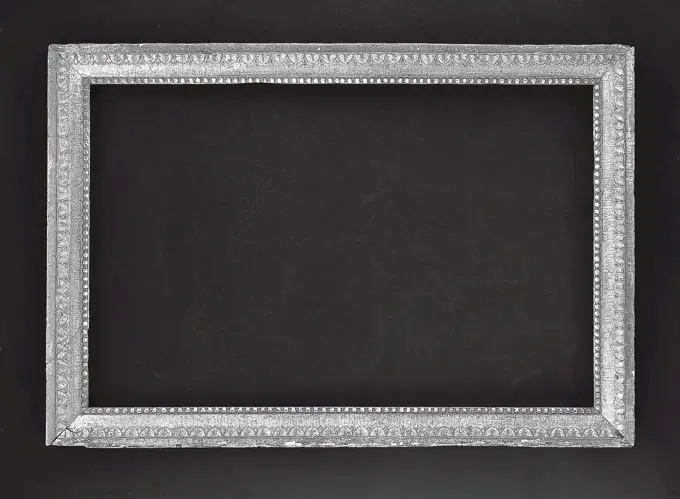
Textile Fragments

Pieces of ornate textiles showcasing intricate patterns and historical craftsmanship, including silk and decorative elements from various cultures.

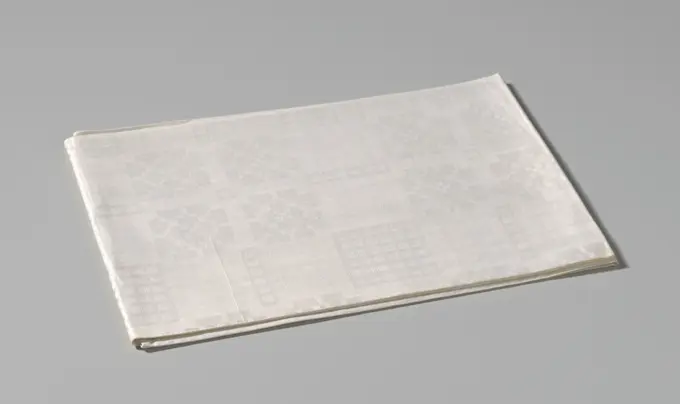
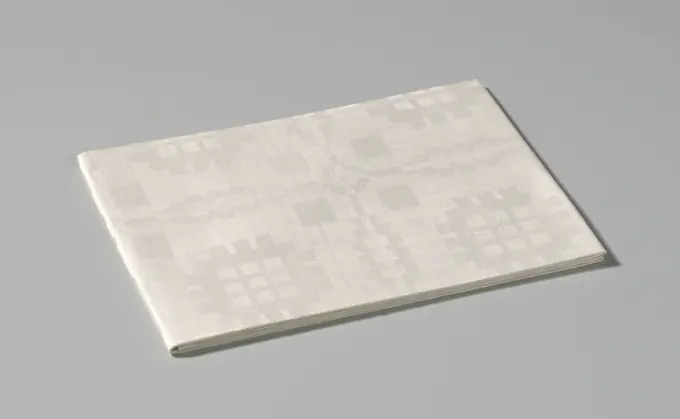
Tablecloth with a flower pattern, anonymous, c. 1700 - c. 1749 Table fakes from Linnamast with a flower pattern based on a console. Next to each other repeated wavy feed line of thin branches ending in large flowers, fruits and leaves. At the bottom right part of a console with a speckled filling. A narrow intermediate zoom with a zigzag line and Drieblad forms the separation to the standing edges with a variant of the wavy flower drink; Outside of that: blocking edge. Netherlands (possibly) linen (material) damask Table fakes from Linnamast with a flower pattern based on a console. Next to each other repeated wavy feed line of thin branches ending in large flowers, fruits and leaves. At the bottom right part of a console with a speckled filling. A narrow intermediate zoom with a zigzag line and Drieblad forms the separation to the standing edges with a variant of the wavy flower drink; Outside of that: blocking edge. Netherlands (possibly) linen (material) damask
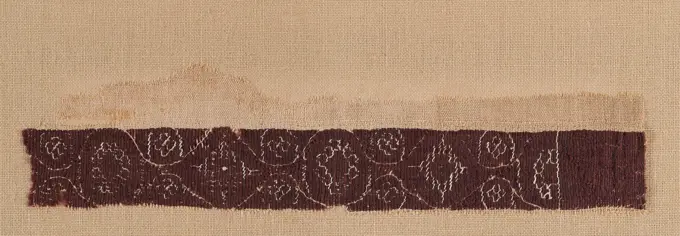
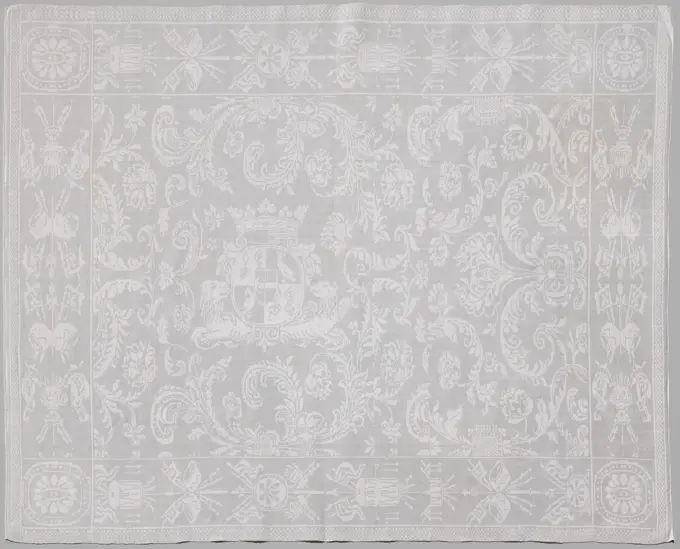
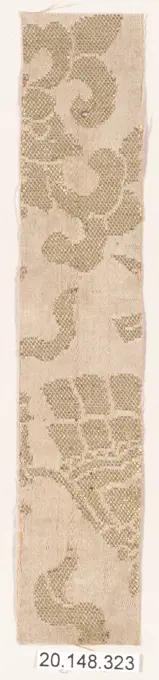
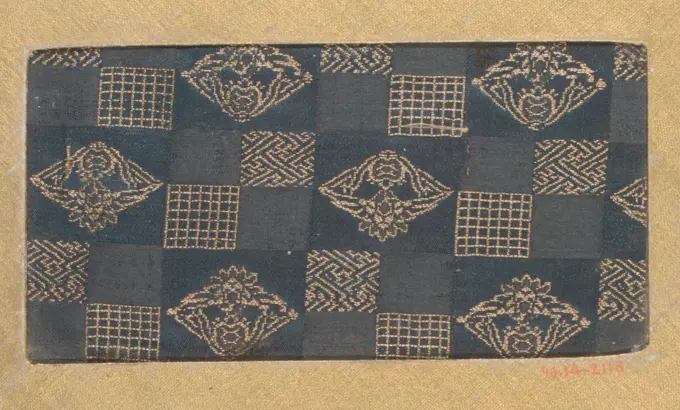
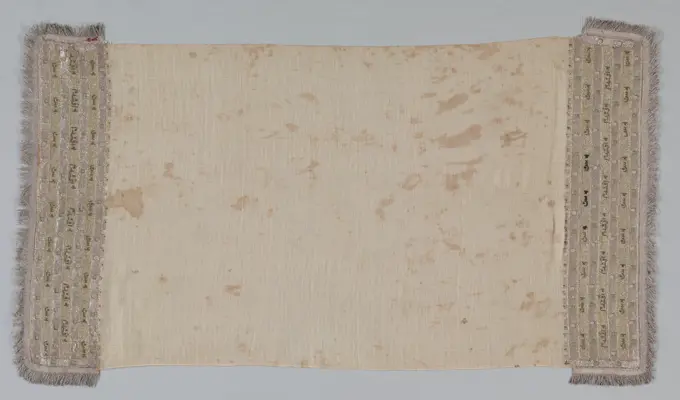
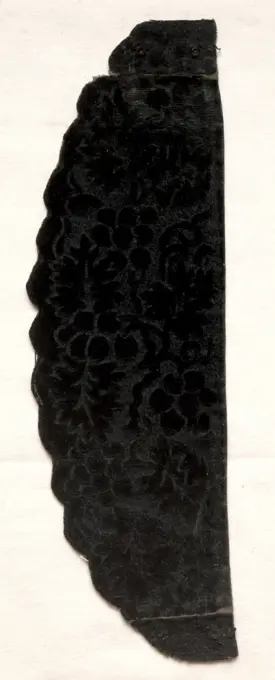
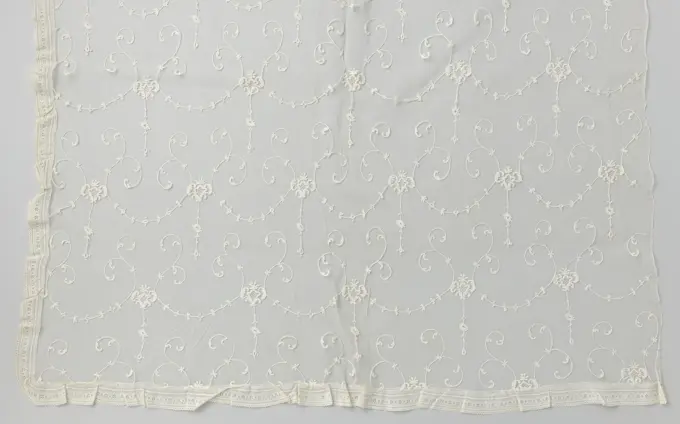
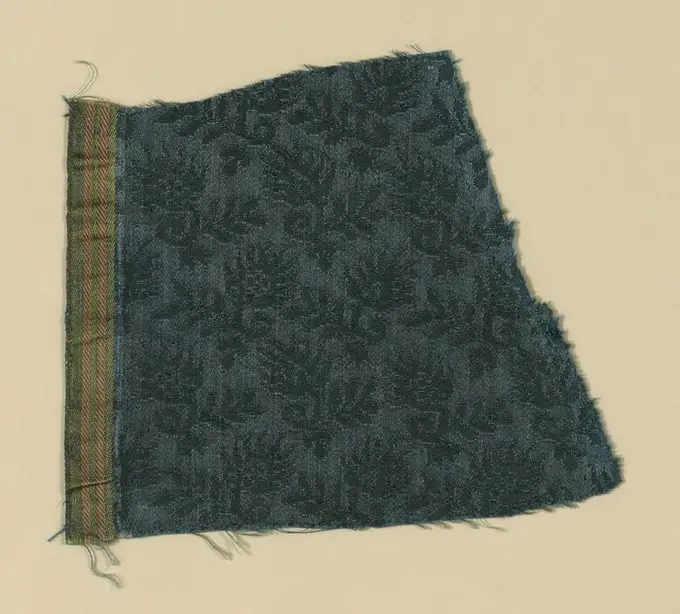
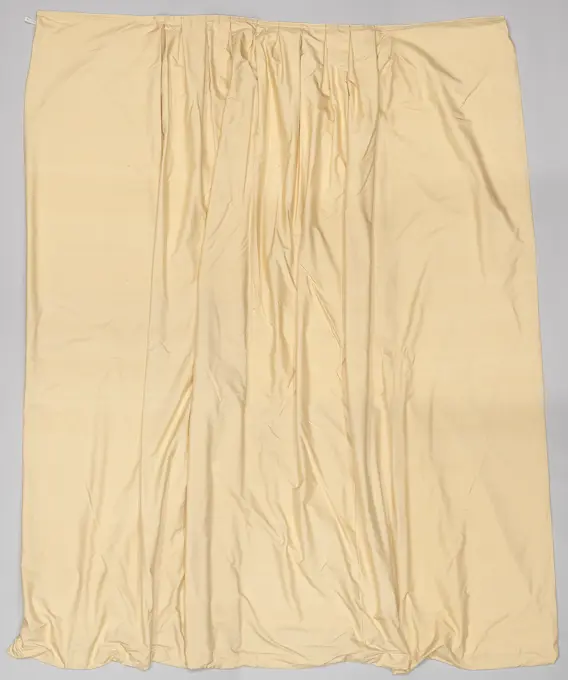
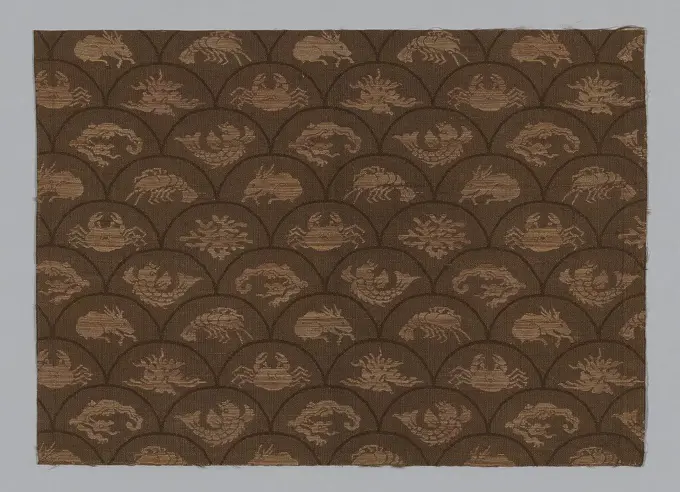
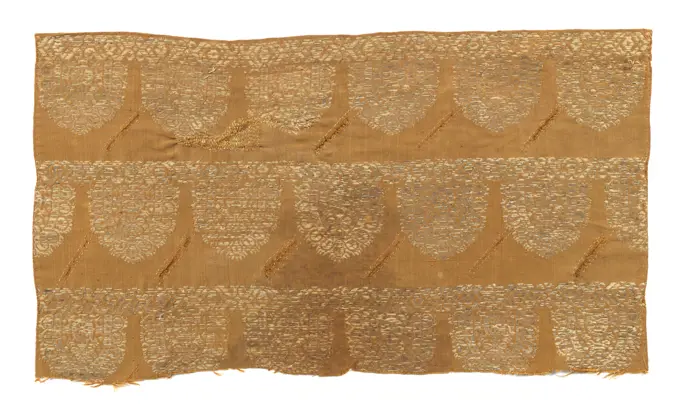
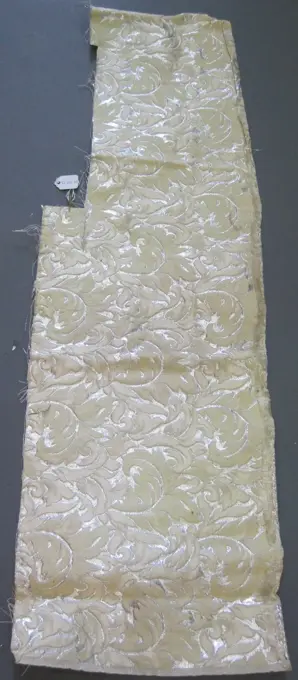
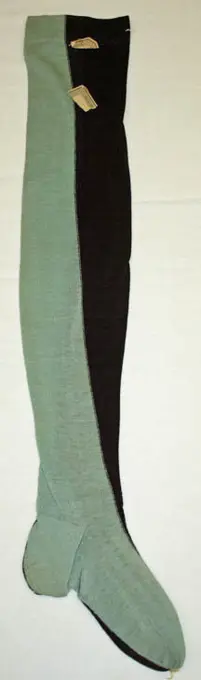
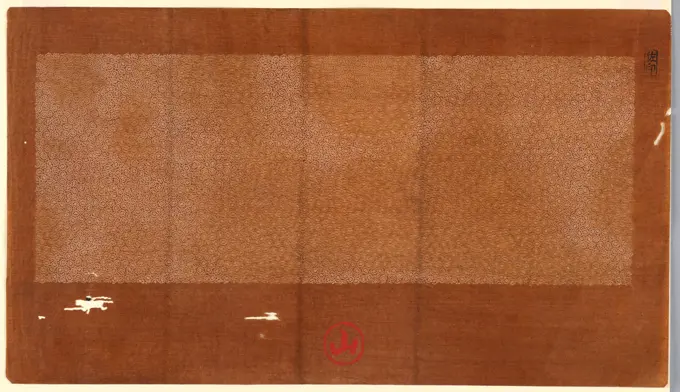
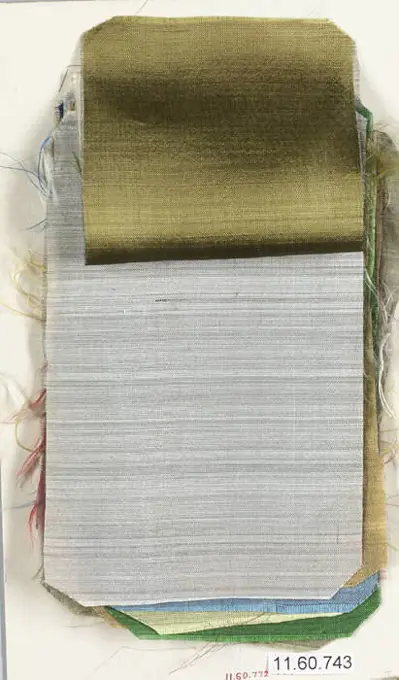
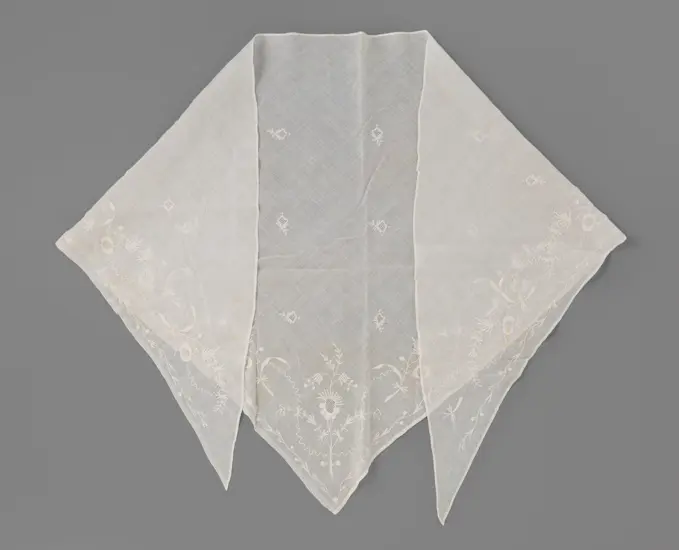
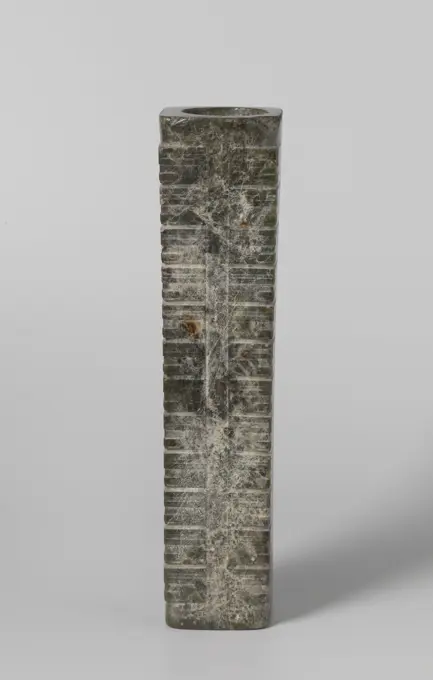
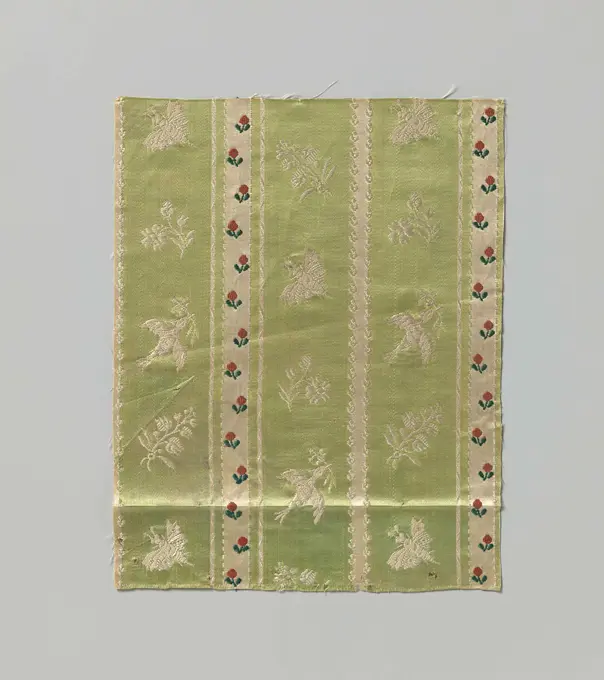
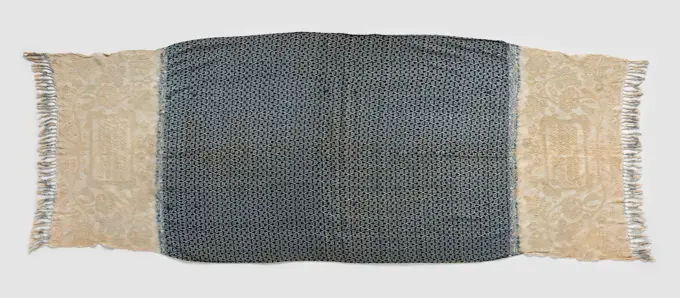
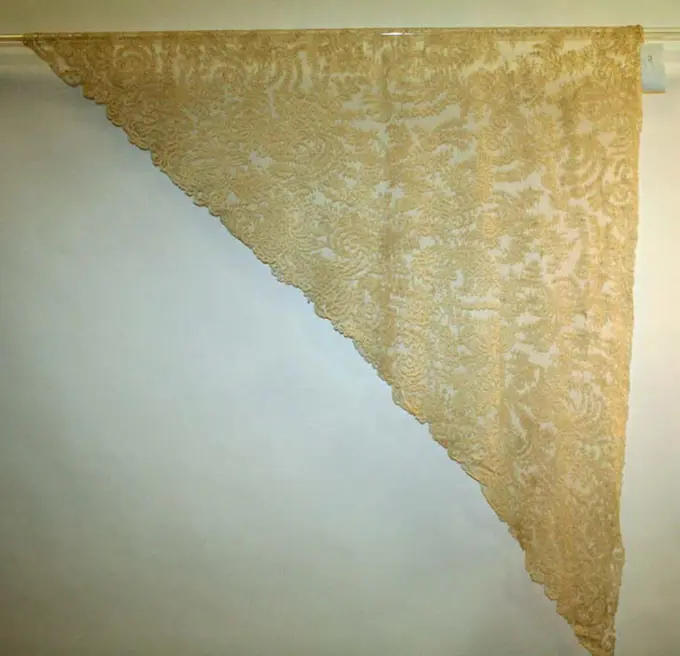
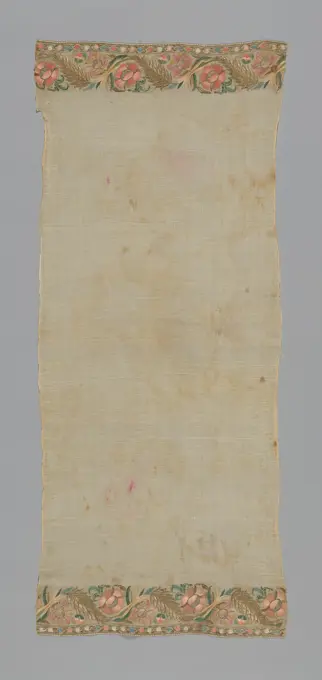
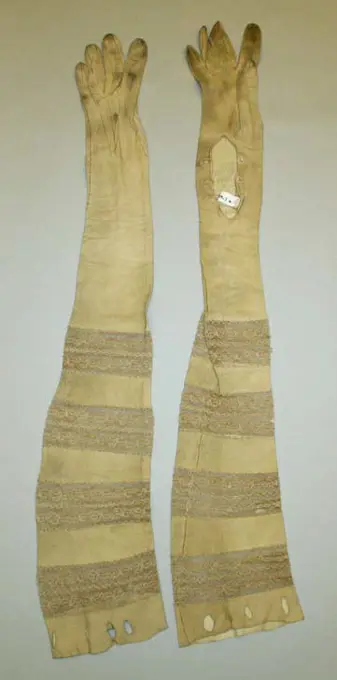
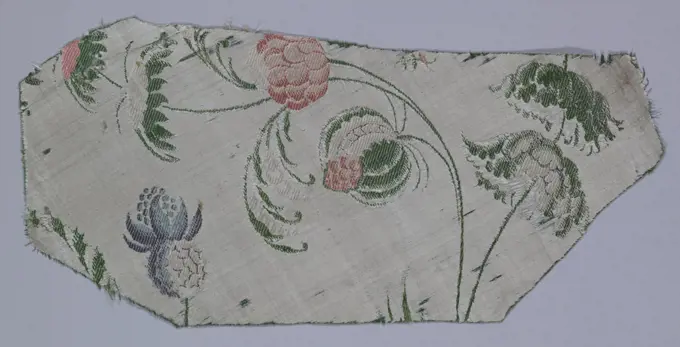
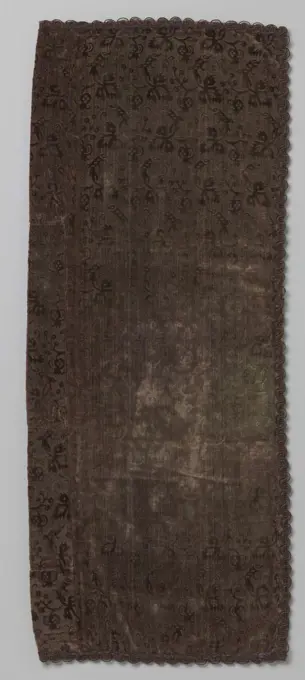
Kleed van paarse zijden fluweel.A dark purple silk dress, composed of six pieces. A scattering pattern of a twig of one leaf, one flower and a button. On three sides lined by gold galon in the same shade as the velvet. Purple satin lining. Cf. BK-NM-11903-52.Fragment of the decorative belt; Egyptian workshop; 4th century (301-00-00-400-00-00);Fragment; silk, metallic yarns, cottonNapkin with the coat of arms of Cornelis Hop, Anonymous, c. 1700 - c. 1724 Napkin van Linnamast with the coat of arms of Cornelis Hop. Midfield: Symmetrical pattern of multifaceted volutes with blocked thickenings at the junctions. In between a lying oval shield with a weapon of Cornelis Hop (1685-1762), ambassador at the court of King Louis XV of France: celebrated, 1 and 4 header standing on Bol (the bird of 1, that of 4 surrounding); 2 and three two lined wings. Heart shield shared: 1 a crossbar, 2 on the right a five -pointed star, on the left a desired Wassenaar. The shield covered with five -sized crown. Shield holders: On the right an eagle, on the left an aligned lion. Edges: weapon trophies. Corners: a round axle. All around blocks. Southern Netherlands linen (material) damask Napkin van Linnamast with the coat of arms of Cornelis Hop. Midfield: Symmetrical pattern of multifaceted volutes with blocked thickenings at the junctions. In between a lying oval shield with a weapon oTextile FragmentTablecloth with a flower pattern, anonymous, c. 1700 - c. 1749 Table fakes from Linnamast with a flower pattern based on a console. Next to each other repeated wavy feed line of thin branches ending in large flowers, fruits and leaves. At the bottom right part of a console with a speckled filling. A narrow intermediate zoom with a zigzag line and Drieblad forms the separation to the standing edges with a variant of the wavy flower drink; Outside of that: blocking edge. Netherlands (possibly) linen (material) damask Table fakes from Linnamast with a flower pattern based on a console. Next to each other repeated wavy feed line of thin branches ending in large flowers, fruits and leaves. At the bottom right part of a console with a speckled filling. A narrow intermediate zoom with a zigzag line and Drieblad forms the separation to the standing edges with a variant of the wavy flower drink; Outside of that: blocking edge. Netherlands (possibly) linen (material) damaskThis jade imitation of a bronze dagger-axe was too fragile for use in combat, suggesting that such weapons may have been intended to serve as symbols of military might and status. It is also possible that they were designed for ceremonial use. They were often included in grave goods and may have been specially made for this purpose.Piece 17th century Japan. Piece 71314Strip of needle side with chalice flowers, anonymous, c. 1800 - c. 1899 Strip of natural-colored needle side: Alençon side. Spread motif with an oval flower on a branch on a fine hexagonal mesh ground. The pattern at the bottom of the strip consists of a winding branch, on which facing outward -facing chalice, filled with decorative land with a fine diamond stitch, among other things. Furthermore branches with rosette flowers and small round leaves. The top is finished with a straight edge. The underside is finished with an almost straight edge with delicate picots. Restorations were carried out in the 19th century. France linen (material) Alençon Lace Strip of natural-colored needle side: Alençon side. Spread motif with an oval flower on a branch on a fine hexagonal mesh ground. The pattern at the bottom of the strip consists of a winding branch, on which facing outward -facing chalice, filled with decorative land with a fine diamond stitch, among other things. Furthermore branches wiPiece 18th-19th century Japan. Piece. Japan. 18th-19th century. Silk. Textiles-WovenLinnamast napkin with peel pattern, c. 1800 - c. 1899 Linnamast napkin with peel pattern (type of ball rose), wide tire - enclosed edges, marked LVH 24.  linen (material) damask Linnamast napkin with peel pattern (type of ball rose), wide tire - enclosed edges, marked LVH 24.  linen (material) damaskFragment, Medium: silk Technique: plain weave patterned with supplementary warp floats, All-over repeat of palmettes and circular shapes in tan on blue. left selvage present., 17th century, woven textiles, FragmentNapkin with a flower pattern, anonymous, c. 1700 - c. 1749 Linnamast napkin with a flower pattern supporting a console. Next to each other repeated wavy feed line of thin branches ending in large flowers, fruits and leaves. At the bottom right part of a console with a speckled filling. A narrow intermediate zoom with a zigzag line and Drieblad forms the separation to the standing edges with a variant of the wavy flower drink; Outside of that: blocking edge. Netherlands (possibly) linen (material) damask Linnamast napkin with a flower pattern supporting a console. Next to each other repeated wavy feed line of thin branches ending in large flowers, fruits and leaves. At the bottom right part of a console with a speckled filling. A narrow intermediate zoom with a zigzag line and Drieblad forms the separation to the standing edges with a variant of the wavy flower drink; Outside of that: blocking edge. Netherlands (possibly) linen (material) damaskPiece 18th-19th century Japan. Piece 66448Pellen pattern, so -called 'Fine Molenwiek'. Brand: CH 42., Anonymous, 1600 - 1699 Napkin of white linen with a peel pattern so -called 'fine millwiek', brand CH 42. Northern Netherlands (Possible) linen (material) Napkin of white linen with a peel pattern so -called 'fine millwiek', brand CH 42. Northern Netherlands (Possible) linen (material)Length of LaceShawl; wovenEmbroidered Towel (Peshkir), 19th century. Turkey, 19th century. Embroidery: silk and gold and silver filé on cotton tabby ground; overall: 127 x 71 cm (50 x 27 15/16 in.).Ottoman Towel, mid to late 19th century, L.55 x W.19-1/2 in., Silk, cotton; needlework, Syria, 19th centuryNapkin made of linen with peel pattern, c. 1400 - c. 1950 White linen napkin with peel pattern, brand is and 47 Northern Netherlands (Possible) linen (material) White linen napkin with peel pattern, brand is and 47 Northern Netherlands (Possible) linen (material)Lumbar ,, 1820 - 1870 Lucken's Loop van Linen, brand HW10. Northern Netherlands linen (material) Lucken's Loop van Linen, brand HW10. Northern Netherlands linen (material)Velvet Cuffs, 1800s. France, 19th century. Velvet; overall: 18.4 x 5.7 cm (7 1/4 x 2 1/4 in.).Curtain of Tulle, with tumbles, anonymous, c. 1700 - c. 1899 Tulen curtain with embroidered tiflines for a boudoir.  . embroidering Tulen curtain with embroidered tiflines for a boudoir.  . embroideringStrip of needle side in L-shaped model with tongued flower, anonymous, c. 1890 - c. 1899 Strip of natural -colored needle side: Venetian relief side. L-shaped model. Against an open bar of land is an ongoing pattern of tendrils with pomegranates and a tongened flower. A list of doubled arches along three sides. Belgium cotton (textile) Venetian raised work Strip of natural -colored needle side: Venetian relief side. L-shaped model. Against an open bar of land is an ongoing pattern of tendrils with pomegranates and a tongened flower. A list of doubled arches along three sides. Belgium cotton (textile) Venetian raised workJabot of needle side with spiral ranks, anonymous, c. 1675 - c. 1699 Jabot of natural -colored needle side: flat Venetian side. Spiral vines are symmetrical on an open bar of land in relation to a standing central axis. Button -shaped flowers grow on any side followers. Straight outside list with alternate triangles and single arches. Venice linen (material) flat Venetian (needle point) Jabot of natural -colored needle side: flat Venetian side. Spiral vines are symmetrical on an open bar of land in relation to a standing central axis. Button -shaped flowers grow on any side followers. Straight outside list with alternate triangles and single arches. Venice linen (material) flat Venetian (needle point)Textile, Medium: silk Technique: double-faced satin weave, Light green satin ribbon with cord edge., USA, late 19th century, woven textiles, TextileWoman's under wrap, c. 1950, 47 3/8 x 15 5/8 in. (120.33 x 39.69 cm), Cotton, India, 20th centuryFragment. Italy. Date: 1601-1650. Dimensions: 13.1 x 15.6 cm (5 1/8 x 6 1/8 in.). Silk, warp-float faced satin weave self-patterned by reversing of faces (satin damask). Origin: Italy. Museum: The Chicago Art Institute, Chicago, USA.Curtain of cream-colored textile (silk). Curtain of solid cream textile (silk) On the back of a four-poster bed. This curtain belongs to the so-called Rosendaelbed. Not original.Fragment. Japan. Date: 1675-1725. Dimensions: 23.2 x 32.1 cm (9 1/8 x 12 5/8 in). Fancy compound cloth, silk and gilt paper; 3 strips to m.m. Origin: Japan. Museum: The Chicago Art Institute, USA.Velvet Fragment, c. 1700. Italy, early 18th century. Velvet; overall: 22.5 x 18.5 cm (8 7/8 x 7 5/16 in.).Textile, Medium: cotton, silk, metallic thread Technique: plain weave, Fabric, possibly for a man's garment, of sheer white cotton with narrow side border stripes in black silk and gold metallic thread. Ends have broader stripes in black and red silk and gold metallic thread., India, 19th century, woven textiles, TextileScarf collar with edge of Kloskant, M. Schutten-Putters, c. 1920 - c. 1929 Scarf collar with a border of natural-colored bobbin side: Cluny side. A tuler center piece is entirely on three sides and partially trimmed on one side with a strip. This shows a symmetrical pattern of matte triangles with ovals hanging on numerous, long braids and a four -leaf clock flower in the points. Hoorn (North Holland) Hellevoetsluis linen (material) bobbin lace / Cluny lace Scarf collar with a border of natural-colored bobbin side: Cluny side. A tuler center piece is entirely on three sides and partially trimmed on one side with a strip. This shows a symmetrical pattern of matte triangles with ovals hanging on numerous, long braids and a four -leaf clock flower in the points. Hoorn (North Holland) Hellevoetsluis linen (material) bobbin lace / Cluny laceLength first half 20th century Japan. Length 70399Tablecloth with a flower pattern, anonymous, c. 1650 Tablecloth from Linnamast with a flower pattern. Midfield: The symmetrical pattern shows loose branches with roses or tulips, and lapwing or rosette-shaped flowers. Standing edges: symmetrical drawing of winding tendrils and birds; Outside of that: blocking edge. Netherlands linen (material) damask Tablecloth from Linnamast with a flower pattern. Midfield: The symmetrical pattern shows loose branches with roses or tulips, and lapwing or rosette-shaped flowers. Standing edges: symmetrical drawing of winding tendrils and birds; Outside of that: blocking edge. Netherlands linen (material) damaskTextile Swatches Onondaga Silk Company, Inc. (1925-1981). , 1948-1959. Acetate and rayon, 41 1/4 x 23 1/2 in. (104.8 x 59.7 cm).    1948-1959Model of a Topsail, anonymous, c. 1861 demonstration model Model of a mars sail of twenty -twenty sailing rugs above and one and one downstairs, with crotch tires, four revenues, three pop strips, bowel sprouts and lap horns, reinforced with leather. The revenues consist of reef leaders instead of rifse seasing: the rifleighers are over the reef tires that are stitched on the reef holes; Through this rope, knevels are brought to the revenues, which are attached to the RA on a rope or iron rod. Six vertical ropes, which, where they cross the reef tires, are stitched stitched to pick up the sail when revening. Scale 1:10 (derived). Netherlands textile materials. rope. brass (alloy). leatherFragment veelkleurige gebrocheerde zijde.Fragment multicolor silk tissue. A white ground has a pattern of white leaf drinks between which sprinkled, multicolored flower branches. Three pieces assembled.Front wrapper. Photographs, Photograms, Book covers. 1848-11 - 1849-06. Spencer Collection. Plants in artFragment Made 1701-1800 Japan. Satin, silk and gilt paper; 1-2 strips to m.m. .Dyeing template katagami cut into a miniature ornament (komon) from groups of minor bamboo lines;  19th century (1800-00-00-1900-00-00);Drabik, Cezary (Fl. Ca 1960 - 1980) - collection, geometric and plain patterns, Japanese (culture), katagami, templates, Japanese art, purchase (provenance)Fragment; silk, metallicKitchen Towel, late 19th century, 21 x 37 1/2 in. (53.34 x 95.2 cm), Natural linen, United States, 19th centuryNapkin van Linen with peel pattern ,, 1730 - 1786 White linen napkin with peel pattern, Brand Kroon iavg 12 Northern Netherlands (Possible) linen (material) White linen napkin with peel pattern, Brand Kroon iavg 12 Northern Netherlands (Possible) linen (material)Textile Swatches Onondaga Silk Company, Inc. (1925-1981). , 1948-1959. silk; metal, 33 x 10 in. (83.8 x 25.4 cm).    1948-1959Textile Swatches Onondaga Silk Company, Inc. (1925-1981). , 1948-1959. Silk, 47 x 18 in. (119.4 x 45.7 cm).    1948-1959Lumbar ,, 1800 - 1866 Lumbar break of cotton, brand HP18 Northern Netherlands cotton (textile) Lumbar break of cotton, brand HP18 Northern Netherlands cotton (textile)Stockings ca. 1885 French. Stockings 80764Stencil, Scattered Little Flowers; 1979-26-18Fragment (Italy); silkPiece 19th century Japan. Piece 65031Coverlet. Italy or Spain, late 16th-early 17th century. Textiles; covers. Silk plain weave, quiltedFragment of embroidery unknownFragment (Spain); silk, metallicLappet (one of a pair) 18th century Flemish, Brussels. Lappet (one of a pair) 222788Sample early 19th century French. Sample 219318Cassetta frame 1780-85 (provincial Louis XVI style) French. Cassetta frame. French. 1780-85 (provincial Louis XVI style). Pine. FramesMetal wrench on the table. On a gray background. High quality photo. Metal wrench on the table.Trimming, Medium: linen Technique: needle lace, six-sided reworked grounds., Serpentine floral pattern., France, 18th century, lace, TrimmingChasuble (Italy); linen; 1910-22-1Dress of red sides velvet with a satin lining., 1600 - 1699 A rug of red silk velvet, composed of three pieces. In three sides surrounded by gold galon. Red Satin lining. Italy silk. satin. cotton (textile). velvet (fabric weave) A rug of red silk velvet, composed of three pieces. In three sides surrounded by gold galon. Red Satin lining. Italy silk. satin. cotton (textile). velvet (fabric weave)Textile Swatch , 1950s to 1960s. Silk, 22 x 11 3/4 in. (55.9 x 29.8 cm).    1950s to 1960sDress pieces, 1700s, England, maker unknown. Gift of Anne Burnett, 1982.Textile Swatch Textile Swatch, 1950s to 1960s. Silk, 19 3/4 x 14 in. (50.2 x 35.6 cm).    1950s to 1960sFichu made of cotton cheese cloth, triangular, tagged with floral border and sprinkling flowers in white cotton, anonymous, c. 1750 - c. 1800 Fichu made of cotton cheese cloth, triangular, tagged with floral border and sprinkling flowers in white cotton. Model: Triangular, on one side self -sided, the other three a narrow hem. Processed diagonally on the wire. Decoration: In the tip a handle with leaves and flour with heart side heart. From here on either side a pendulum with stems on which a passion-fruit-like flower with a heart of needle side. A thin leaf garland just above the hem. Netherlands (possibly) whole: Cotton (textile). Embroidery: Cotton (textile). Fichu made of cotton cheese cloth, triangular, tagged with floral border and sprinkling flowers in white cotton. Model: Triangular, on one side self -sided, the other three a narrow hem. Processed diagonally on the wire. Decoration: In the tip a handle with leaves and flour with heart side heart. From here on either side a pendSheet, doll's clothes, 1920s, New Zealand, by Florence Hall, Miss Margaret Hall. Gift of Betty McFadgen on behalf of Rori Hall, 2004.Flower vases, baskets and fruits, Volutes., Anonymous, 1650 - 1675 Tablecloth of white linen with a pattern of flower vases, flower baskets and fruits inside frame of volutes Flanders (Possible) linen (material) Tablecloth of white linen with a pattern of flower vases, flower baskets and fruits inside frame of volutes Flanders (Possible) linen (material)Blue Silk Scarf. Dated: c. 1937. Dimensions: overall: 35.1 x 24.5 cm (13 13/16 x 9 5/8 in.) Original IAD Object: 20" square. Medium: watercolor, gouache, and graphite on paperboard. Museum: National Gallery of Art, Washington DC. Author: Samuel Faigin.Cong, anonymous, c. -3300 - c. -2200 Congg of dark green and dark brown jade, divided into twelve tires. China jade (rock) Congg of dark green and dark brown jade, divided into twelve tires. China jade (rock)Noh costume (mizugoromo), first half 20th century, Unknown Japanese, 43 5/8 × 66 1/2 in. (110.81 × 168.91 cm), Silk, Japan, 20th centuryFragment multicolor, striped brochet side. A fragment of green silk tissue with white stripes. A row of small red flower branches is running on the white stripes. On the green stripes a pattern of white flower branches, birds and butterflies runs.Tablecloth ,, 1800 - 1899 White linen tablecloth with peel pattern 'carved stone or corner star' and edges Wh 2oonl. Netherlands (possibly) linen (material) White linen tablecloth with peel pattern 'carved stone or corner star' and edges Wh 2oonl. Netherlands (possibly) linen (material)Batisten underwear strip with machine embroidery ...Fragment Made 1801-1825 United States. Sample of stripe and check patterns of blue, white and tan .Embroidered Handkerchief, 19th century. Spain, Teneriffe, 19th century. Embroidery: linen; average: 48.9 x 47.4 cm (19 1/4 x 18 11/16 in.).Effen wit servet, anonymous, c. 1800 - c. 1930  Europe textile materials  Europe textile materialsWrapper, late 19th century, 70 5/16 × 42 7/16 in. (178.59 × 107.79 cm), Cotton, silk, Nigeria, 19th centuryDoek, Anonymous, 1900 - 1999 Cloth with geometric motifs. Sumatra Cotton (textile). Craums: Glass Cloth with geometric motifs. Sumatra Cotton (textile). Craums: GlassTextile Swatches Onondaga Silk Company, Inc. (1925-1981). , 1948-1959. Silk, 47 1/2 x 17 3/4 in. (120.7 x 45.1 cm).    1948-1959Shawl, 19th century, 110 x 57 in. (279.4 x 144.78 cm), Wool; woven fabric, Scotland, 19th centuryLinen cloth with fringe 304 B.C.-A.D. 364 Ptolemaic or Roman Period. Linen cloth with fringe 557667Piece 16th-17th century Italian. Piece 216971Piece 18th-19th century Japan. Piece 67345Woman's Skirt Length, 20th century, 59 x 28.5 in. (149.9 x 72.4 cm), Cotton, indigo; dyed, Mali, 20th centuryHeadcloth Made 1000-1476 Peru. With its delicacy of thread and complex construction, this extraordinary head cloth exemplifies Chancay gauze weaving, often considered the finest among all of the ancient Peruvian textile traditions. The repeated off-set rows of fish motifsóeach outlined with softly spun cotton stitchingóstrongly evoke a school of fish caught within a fishermanís net. Coastal cultures such as the Chancay embraced marine life in many forms, especially the bounty it provided as a source of food.. Cotton, plain gauze weave; embroidered in knotted couching . ChancayTextile Swatches Onondaga Silk Company, Inc. (1925-1981). , 1948-1959. Silk, 45 3/4 x 17 1/4 in. (116.2 x 43.8 cm).    1948-1959Baby cover of crepe -colored satin with strip of the same fabric, anonymous, c. 1700 - c. 1750 Baby cover of crepe -colored satin with strip of the same fabric. Netherlands silk Baby cover of crepe -colored satin with strip of the same fabric. Netherlands silkNames names by Willem III, Anonymous, 1695 Napkin from white Linnamast with crowned weapons of Stadholder-king Willem III and Maximilian van Bavaria, feature with the ribbon of the Order of the Garter Band and the chain of the Order of the Golden Fleece; Furthermore, a face on the besieged city took the river, with the high on the mountain, and the equestrian figures of the two field lords. Southern Netherlands linen (material) damask Napkin from white Linnamast with crowned weapons of Stadholder-king Willem III and Maximilian van Bavaria, feature with the ribbon of the Order of the Garter Band and the chain of the Order of the Golden Fleece; Furthermore, a face on the besieged city took the river, with the high on the mountain, and the equestrian figures of the two field lords. Southern Netherlands linen (material) damaskShawl 18th century Peruvian. Shawl 21676Napkin with rural scenes, marked BDW and 24, Anonymous, 1830 - 1860 White half -linen Damas napkin with rural scenes, marked BDW and 24. Germany Ketting: Cotton (Textile). Elements: Linen (material). damask White half -linen Damas napkin with rural scenes, marked BDW and 24. Germany Ketting: Cotton (Textile). Elements: Linen (material). damaskTextile Swatches Onondaga Silk Company, Inc. (1925-1981). , 1948-1959. 90 worsted wool, 10 silk, 48 1/2 x 17 in. (123.2 x 43.2 cm).    1948-1959Scarf 1860 Belgian. Scarf 118951slate stone tray isolated on white backgroundHandkerchief 1893 German. Handkerchief 122415Pillowcase, 1650 - 1700 Pillowcase of linen with bobbin side one on one end. Remnant of brand (unreadable). North Netherlands linen (material). bobbin lace Pillowcase of linen with bobbin side one on one end. Remnant of brand (unreadable). North Netherlands linen (material). bobbin laceFragment; silk; Warp x Weft: 20.5 x 27 cm (8 1/16 x 10 5/8 in.); 1953-162-52Carpet Fragment 17th century. Carpet Fragment 451060Towel or Napkin Made 1801-1900 Turkey. Towel, embroidered in design of flowers and leaves . AnonymousGloves ca. 1900 Bon Marché French. Gloves 119796Fragment, Medium: silk Technique: compound satin weave with discontinuous supplementary weft patterning (brocade), White satin ground with slender curving stems with exotic foliage, flowers and fruits. Some of the design is figured in supplementary green wefts; other details brocaded in white, rose, blue and black., France, 1750-1800, woven textiles, Fragment