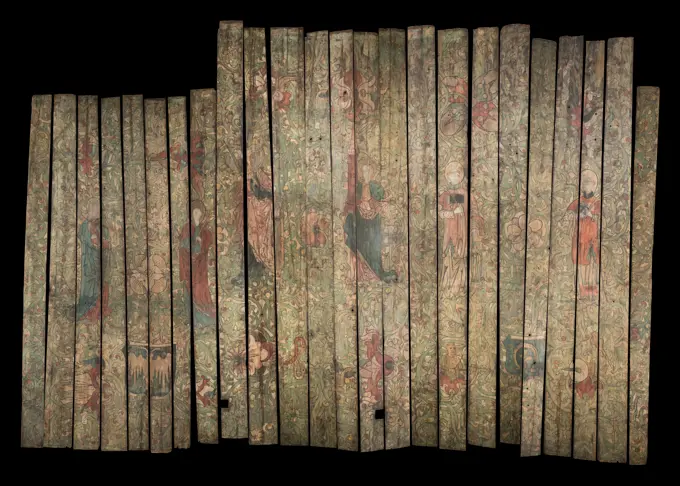
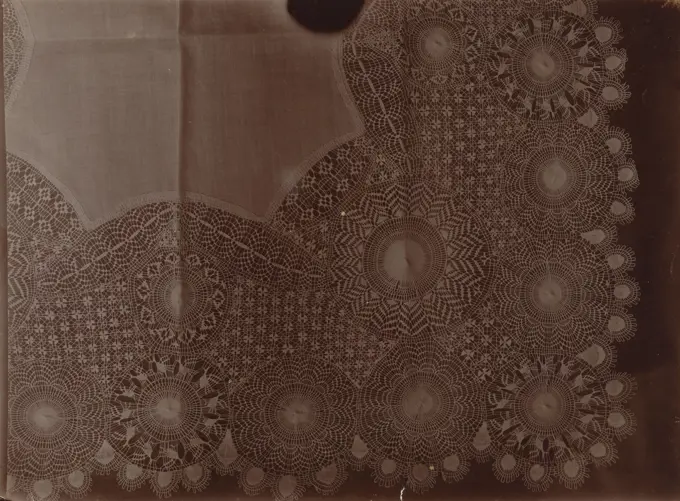
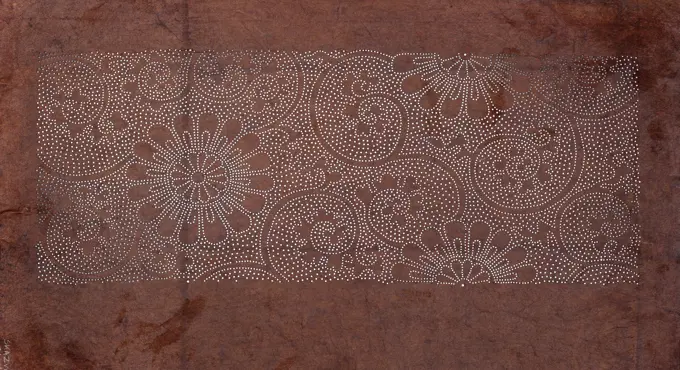
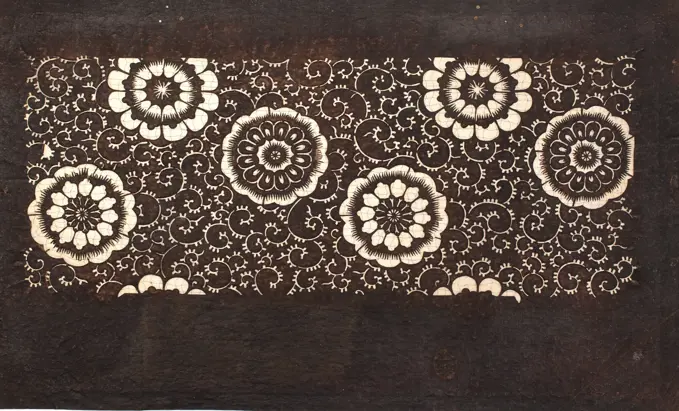
Textile Fragments

Historical fabric fragments displaying intricate patterns and textures, highlighting craftsmanship from different centuries and cultures.
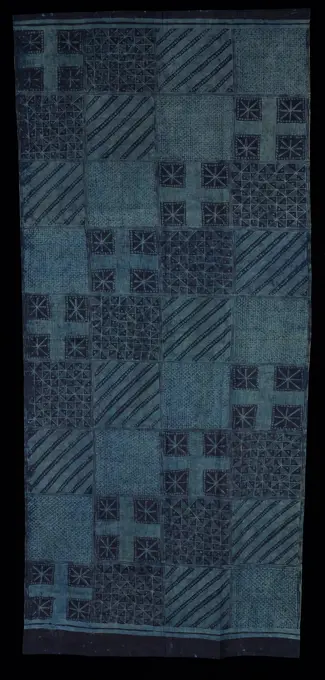
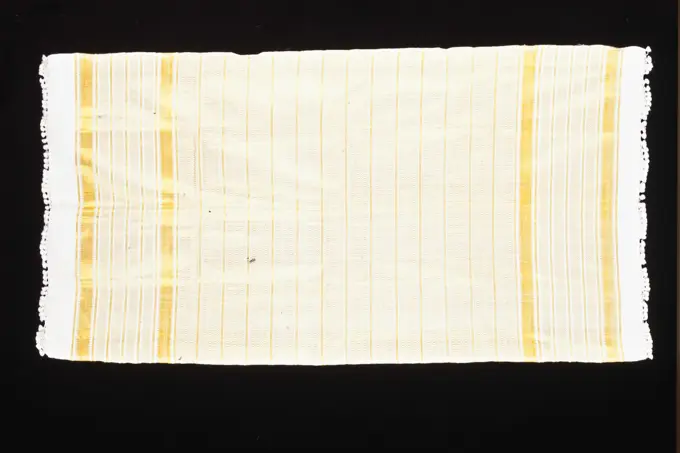
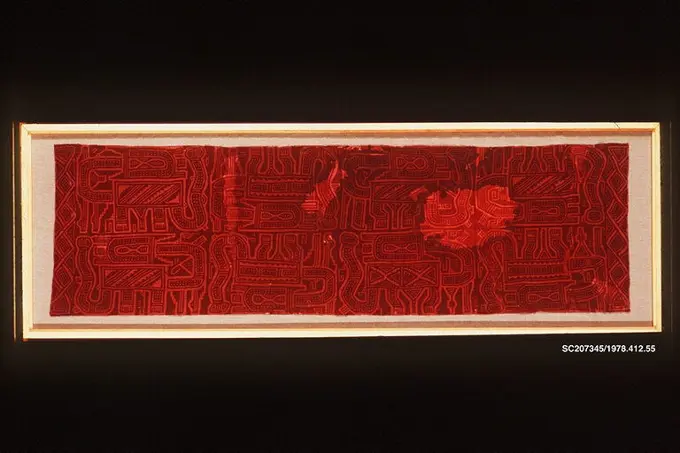
Oremerin, 20th century, 78 7/8 x 35 1/2 in. (200.34 x 90.17 cm), Cotton; dyed, Nigeria, 20th century
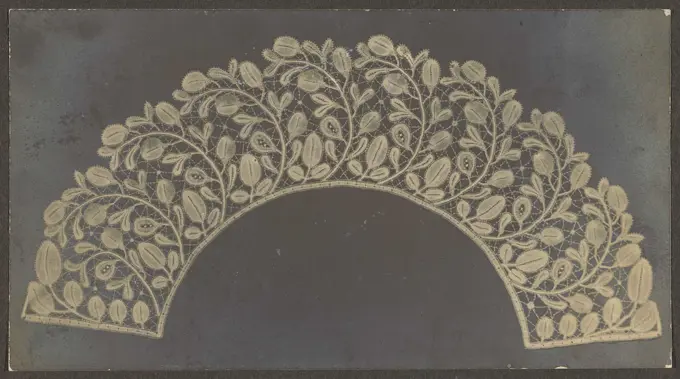
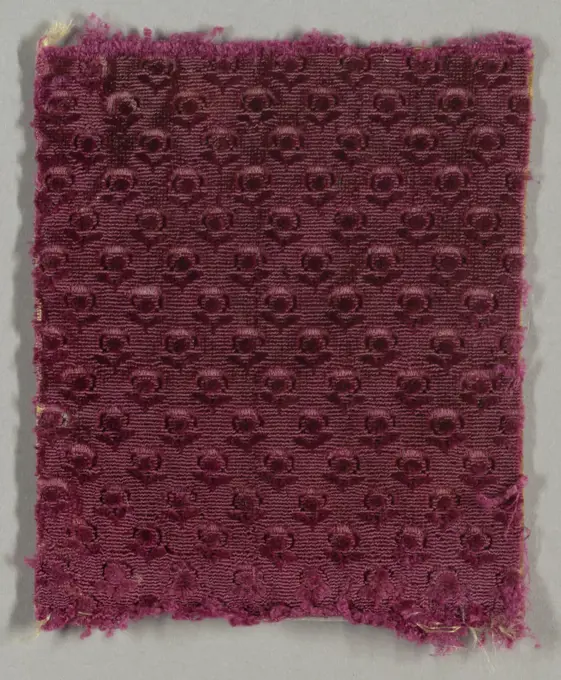
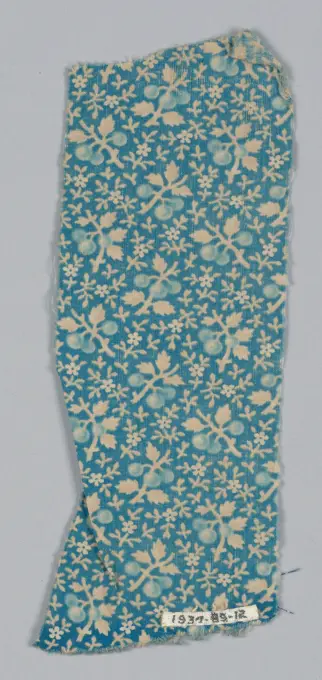
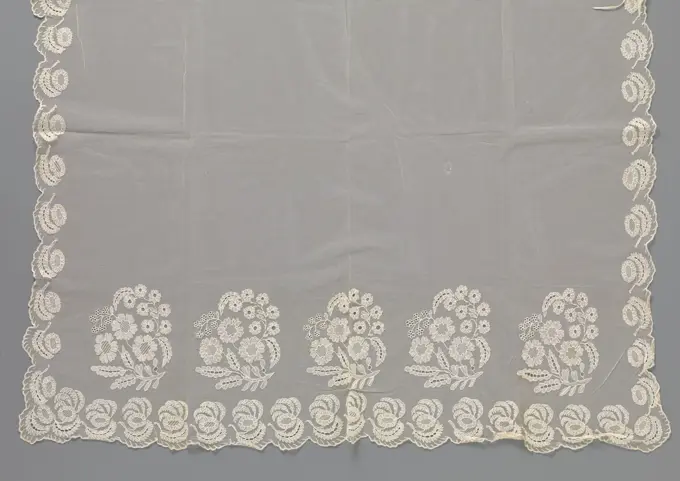
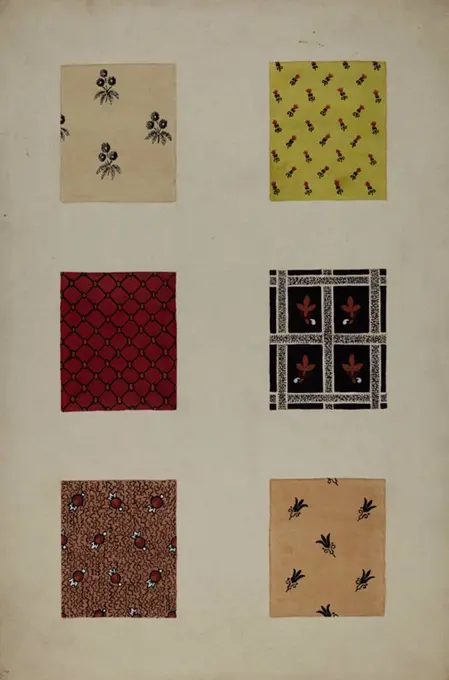
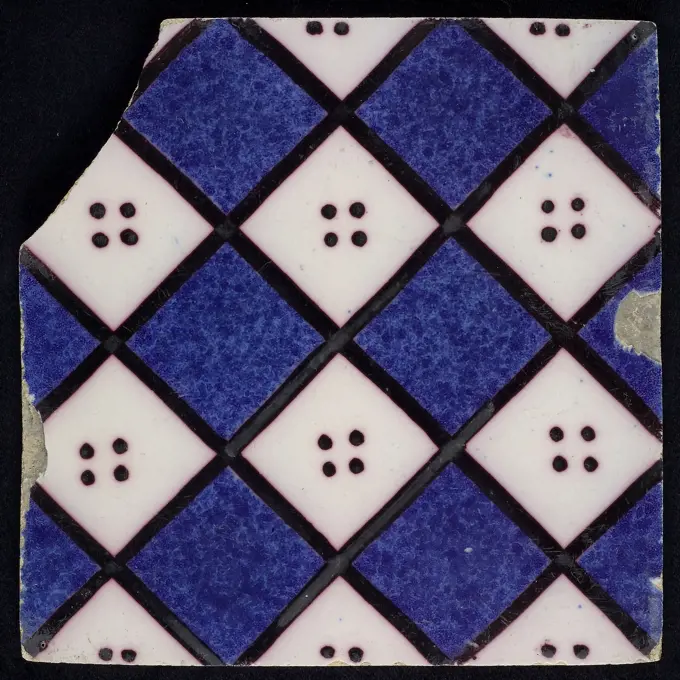
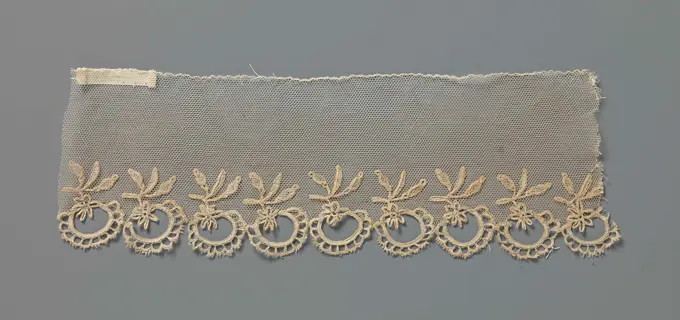
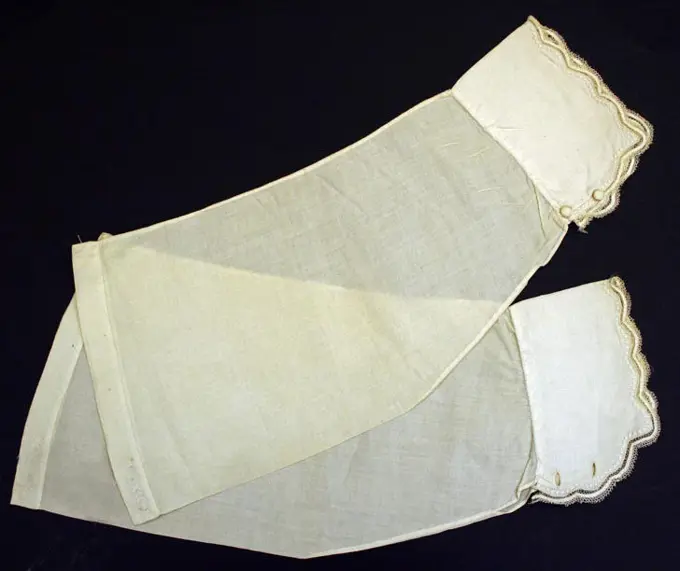
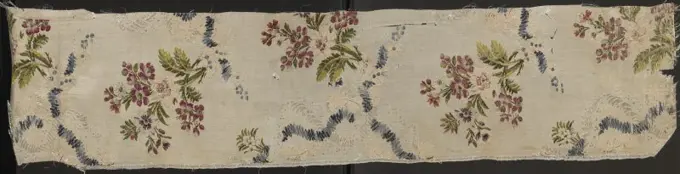
Siercraft for an evening mantle of mixed side with rose hedge, Martha Berkers, 1915 Ornamental piece (cuff) for an evening mantle of natural -colored mixed side - bobbin in combination with needle side - Brussels Duchesse. There are roses on a wide -spread braid that usually support on two leaves. An intermediate ornament consists of single and double volutes and many small flowers. With natural fabric buttons and button loops on the short sides. Lock linen (material) mixed lace / mixed Brussels Ornamental piece (cuff) for an evening mantle of natural -colored mixed side - bobbin in combination with needle side - Brussels Duchesse. There are roses on a wide -spread braid that usually support on two leaves. An intermediate ornament consists of single and double volutes and many small flowers. With natural fabric buttons and button loops on the short sides. Lock linen (material) mixed lace / mixed BrusselsNapkin (possibly Germany); linen; Warp x Weft: 95 x 81.5 cm (37 3/8 x 32 1/16 in.); 1937-44-1Foto van een waaierblad van kant met een rij in één richting gebogen takken.Photo of a fountain sheet of lace with a row in one direction curved branches. The photo belongs to five other photos from side with inventory numbers: BK-1979-33-B-1 to B-6. The photo described here has been stuck together with photo BK-1979-33-B-6 on a black cardboard, BK-1979-33-B-3 and BK-1979-33-B-4 are stuck on the back. It concerns lace objects made by L.W. Van Der Meulen-Nulle and J.H. PLITING FABER. They worked as a lace teacher at the national academy of craftsmanship.Square men's scarf of white silk, with a solid mirror, around which a border with diagonally woven stripes, anonymous, c. 1915 - c. 1935 Square men's scarf from white silk. Middle piece in fine twill binding woven, the narrow edge in coarser and opposite targeted twig. Netherlands (possibly) whole: Silk twill Square men's scarf from white silk. Middle piece in fine twill binding woven, the narrow edge in coarser and opposite targeted twig. Netherlands (possibly) whole: Silk twillFragment, Medium: silk Technique: cut and uncut supplementary warp pile (velvet) in a woven foundation, Fragment of tiny sprigs of red cut velvet against a background of uncut loops in the same color., France, 18th century, woven textiles, FragmentFragment; cottonCan Palauet, calle Palau. Mataró.Fragment; silkFragment zijdeweefsel, anonymous, 1750 A fragment silk tissue with a purple soil on which in white winding flower vines between which flower bouquets. Germany silk A fragment silk tissue with a purple soil on which in white winding flower vines between which flower bouquets. Germany silkApron of tuledoor stop work on machine tulle, anonymous, c. 1830 Apron of natural -colored lace: tuldoor stop work on mechanical tulle. Rectangular model, with sculpting edges along the long sides and the underside. Along the straight top a zoom has been made in the tulle, through which a ribbon has been strung. The pattern consists above each shell of a lying fed leaf above which a daisy crowned by four curved feathered leaves. Along the bottom edge stands above this edge pattern a row with five the same large flower branches with three Margrites and forgets, among other things. Friesland linen (material) Apron of natural -colored lace: tuldoor stop work on mechanical tulle. Rectangular model, with sculpting edges along the long sides and the underside. Along the straight top a zoom has been made in the tulle, through which a ribbon has been strung. The pattern consists above each shell of a lying fed leaf above which a daisy crowned by four curved feathered leaves. Along the bottom eFragment 16th century Italian. Fragment 230555Piece 18th-19th century Japan. Piece 67843Strip bobbin with two lions and the letters W and V, Anonymous, c. 1700 - c. 1799 Strip of natural -colored bobbin, Lille side. The repeating and symmetrical pattern consists of two lions as coat of arms of a shield with a "V" on it, from which a tree originates. Among the tails of the lions in the successive patterns, there is a loose fruit (a rich apple) In which the letter "w" stands for Willem V (). The motifs are connected by a fine Maas soil, a tuler floor, with a spray pattern of moesjes, made in form. The motifs are made in linen and/or with a decorative land, both with thicker and shiny contour threads. Along the top is a narrow strip of other tulle with mushes. At the top and bottom are straight finished, with the bottom with picots. Netherlands linen (material) bobbin lace / Lille lace Strip of natural -colored bobbin, Lille side. The repeating and symmetrical pattern consists of two lions as coat of arms of a shield with a "V" on it, from which a tree originates. Among the Panel, possibly the Lid of ToolBoxFragment, Medium: silk Technique: 5-harness satin damask, Red silk damask with a design of checkered bands forming ogives with a crown as the point of each ogive. Conventionalized palmette in center of each ogive., Spain, 16th-17th century, woven textiles, FragmentBelt, late 18th-early 19th century, 217 1/2 x 12 in. (552.45 x 30.5 cm), Silk and metallic threads; lampas weave, Morocco, 18th-19th centuryFragment, Medium: silk Technique: damask, Nineteenth-century copy of a sixteenth-century Italian damask with a green satin ground with yellow silk weft twill patterning. Design consists of large, circular medallions with pearl roundels and S-shaped forms. Medallions connected by shorts bars containing three dots. Quatrefoil motifs between the medallions. Both selvedges present., France, 19th century, woven textiles, FragmentNeedlepoint Lace (Reticella) Top of Linen Sheet, 17th century. Italy, Genoa, 17th century. Lace, needlepoint: linen; average: 87.7 x 246.4 cm (34 1/2 x 97 in.).Rolsloop, , 1845 - 1852 Rolloop van Linen, brand IS6. Northern Netherlands linen (material) Rolloop van Linen, brand IS6. Northern Netherlands linen (material)Fragment, Medium: silk on linen Technique: brocading using silk on a plain weave linen fabric., Two squares broceded in a geometric pattern in blue silk. fragment has been cut on the bias., Near East, 10th-14th century, woven textiles, FragmentFragment of green window glass with stained-glass decor, lines of building construction, window glass building material soil find glass, w 2.5 cast drawn cut painted baked Fragment of glass of green tinted window glass. Stained glass border fragment. Picture shows part of building structure with archaeology Landpoortstraat Geervliet Bernisse indigenous glasswork adorn living building glasier hof van Putten archaeological find in the soil Geervliet pit Landpoortstraat 1 September 1983.Woven carpet piece. Culture: American. Dimensions: 35 1/2 x 75 5/8 in. (90.2 x 192.1 cm). Date: ca. 1885. Museum: Metropolitan Museum of Art, New York, USA.Herring scale, painted with radishes and fruits, manufacture Oud -Loosdrecht, 1774 - 1778 Porcelain herring scale. In the form of a fish, with rocailles in relief along the edges. The gray -blue porcelain is multicolored painted with radishes and fruits. The edge is painted in blue and gold. Loosdrecht porcelain Porcelain herring scale. In the form of a fish, with rocailles in relief along the edges. The gray -blue porcelain is multicolored painted with radishes and fruits. The edge is painted in blue and gold. Loosdrecht porcelainbedcover (Unfinished in three sections) Made 1701-1800 France. Cotton, plain weave, quilted in parts, design stamped in ink, lined with cotton, plain weave .Purse 1780-90 French. Purse 116945Textile Swatches Onondaga Silk Company, Inc. (1925-1981). , 1948-1959. cotton; wool, largest component (a): 23 x 17 1/2 in. (58.4 x 44.5 cm).    1948-1959Piece China 18th centuryApron 1850-60 American. Apron 116026Fragment, Medium: cotton Technique: printed on plain weave, Flowers and leaves printed in browns, yellows, green and white on ground of tan and white. Incomplete trade label on back of fabric reads '. . .UESTON & CO PREMIUM FURNITURE PRINTS', USA, ca. 1870, printed, dyed & painted textiles, FragmentCloth, 1997 (), L.69-1/2 x W.35-1/2 in., Silk, cotton, 20th centuryTextile Swatch , 1950s to 1960s. Silk, 18 1/2 x 14 in. (47 x 35.6 cm).    1950s to 1960sTextile Swatches Onondaga Silk Company, Inc. (1925-1981). , 1948-1959. Silk, 47 1/4 x 17 1/2 in. (120 x 44.5 cm).    1948-1959Towel-scarf, 19th century, L.64-1/2 x W.19-1/4 in., linen; needlework, Turkey, 19th centuryThe casket from the 18th century from the collections of the National Museum in Warsaw in 1917 - views at the front and in advance in a scale of 1: 2; Maszyński, Mariusz (1888-1944); 1917 (not after 10.04.1917) (1917-00-00-1917-00-00);Embroidery sample for a mans suit ca. 1785 French. Embroidery sample for a mans suit 224740Strip 16th century Italian. Strip 212286Fragment, Medium: linen Technique: needlework on twined net, Fragment of a border with embroidery on twined net., France, 18th century, embroidery & stitching, FragmentChandos. Culture: British, Braintree, Essex. Designer: Owen Jones (British, London 1809-1874 London). Dimensions: Overall: 69 x 26 in. (175.3 x 66 cm). Maker: Woven by Sam Watson. Manufacturer: Warner, Sillett & Ramm. Date: ca. 1873.Owen Jones' design for this textile was purchased by Benjamin Warner in about 1868, prior to the founding of the Warner manufactory in 1870. The fabric was first ordered from Warner's by a London upholsterer in 1873. Museum: Metropolitan Museum of Art, New York, USA.Rug Made 1801-1900 United States. Variety of fibers, plain weave with variety of fibers, yarns, felted, knitted, oblique interlaced and/or woven strips, forming hooked pile .Fragment (France); Made for Emperor Maximilian; silk; Warp x Weft: 49.5 x 60.2 cm (19 1/2 x 23 11/16 in.)Fragment; linenBertha 1700-1942 American. Bertha 119211Breast Wrapper(Kemben)Fragment Veelkleurig Droguet Liseré ,, 1750 Fragment multicolored silk tissue. The fragment has a light green network with white intertwined garlands with a flower branch on the intersections. The garlands form fields in which a flower branch in white, brown and green. Germany silk Fragment multicolored silk tissue. The fragment has a light green network with white intertwined garlands with a flower branch on the intersections. The garlands form fields in which a flower branch in white, brown and green. Germany silkQuilt Patches. Dated: c. 1938. Dimensions: overall: 38.4 x 25.3 cm (15 1/8 x 9 15/16 in.). Medium: watercolor, gouache, and graphite on paperboard. Museum: National Gallery of Art, Washington DC. Author: Katherine Hastings.F.J. Kleyn, Ornament tile with checkerplate motif, wall tile tile footage ceramic earthenware glaze, baked 2x painted glazed sprinkled Square yellow shard two nail holes Two-color: purple and blue on white fond tile bakery Piet HeijnTextile; Manufactured by Schwartz-Huguenin; cottonEmbroidered Cuff. Dated: 1939. Dimensions: overall: 27.7 x 36.8 cm (10 7/8 x 14 1/2 in.). Medium: pen and ink and watercolor on paperboard. Museum: National Gallery of Art, Washington DC. Author: Marie Famularo.Design for Domed Ornament 19th century Anonymous, British, 19th century British. Design for Domed Ornament 386514VeilExample of Ottoman art patterns applied on metalsFragments of a Bowl 9th-10th century. Fragments of a Bowl 449342Ceiling Boards from the Church in Kozy unknownMentah, 20th century, 99 x 48 1/4 in. (251.46 x 122.6 cm), Cotton, Bhutan, 20th centuryDress, handkerchief or fuchu (detail) of lace, photograph, photo, photos, height 178 mm, width 238 mm, photographerDying template katagami with stylized Wici Flowers (Karakus);  XIXW. (1701-00-00-1900-00-00);ISE-CATAGAMI, templates, flower wrap, purchase (provenance)Textile Swatch Textile Swatch, 1950s to 1960s. Silk, 20 x 7 in. (50.8 x 17.8 cm).    1950s to 1960sPatchwork Quilt. Dated: c. 1938. Dimensions: overall: 37.8 x 45.5 cm (14 7/8 x 17 15/16 in.) Original IAD Object: 96" long; 84" wide. Medium: watercolor and graphite on paper. Museum: National Gallery of Art, Washington DC. Author: A. Zimet.Dying template katagami cut into the ornament of stylized plastic (karakus) with large floral rosettes;  19th/20th century (1868-00-00-1912-00-00);Drabik, Cezary (Fl. Ca 1960 - 1980) - collection, Japanese (culture), katagami, floral pattern, templates, Japanese art, purchase (provenance)Dying template katagami with a pattern of stylized bristant rosettes;  1868-1912 (1868-00-00-1912-00-00);ISE-CATAGAMI, templates, purchase (provenance)Textile Swatches Onondaga Silk Company, Inc. (1925-1981). , 1948-1959. Silk, 47 x 18 in. (119.4 x 45.7 cm).    1948-1959Textile Swatches Onondaga Silk Company, Inc. (1925-1981). , 1948-1959. Silk, 23 x 22 in. (58.4 x 55.9 cm).    1948-1959Crinet and Shoulder Defense for a Horse. Culture: Western Tibetan. Dimensions: L. 36 5/8 in (93 cm); W. 54 3/4 in (139.1 cm). Date: 17th century. Museum: Metropolitan Museum of Art, New York, USA.Fragment. Probably central coast, Peru. Date: 1000-1476. Dimensions: 43.8 x 44.5 cm (17 1/4 x 17 1/2 in.). Cotton and wool; tabby and compound weave. Origin: Peru. Museum: The Chicago Art Institute, Chicago, USA.Brush Holder, 1573-1620, 1 1/4 x 10 5/8 x 4 3/4 in. (3.18 x 26.99 x 12.07 cm), Porcelain with underglaze blue decor, China, 16th-17th century, This moulded tray would have been used as a receptacle to hold brushes during the writing or painting process. The shape of the vessel and its cobalt blue design elements, which appear to be stylized cloud motifs, are typical of the late 16th century, and the bottom bears a six-character Wanli reign (1573-1620) mark in underglaze blue. Most likely made at Jingdezhen, this tray is typical of a variety of porcelain writing implements including brush handles and brush rests that were made in both underglaze and overglaze enamels.Strook applicatiekant met hangende bloemen langs de onderrand.Strip natural application side: dick side applicated appliqued on machine tulle. A row of contiguous, uniform flowers depends from the fine hexagonal mesh soil and thus forms the bottom edge. The stems with leaves are attached to the tulle, as well as the rosette heart of the flour. The frame of the flower heart consists of an open circle shape, deposited with picoted arcs. The frames are largely separate from the tulle. The top is finished with a straight edge.Old grunge postage stamp. Clean postage stamp template. Postage stamp border. Mockup postage stamp with shadow. Blank postage stamp. Vector illustrationWhite side intermediate side with wavy line, Gustav Schnitzler, c. 1920 White edge with a wavy line. NijmegenFrance (possibly) . White edge with a wavy line. NijmegenFrance (possibly) .Fragment. Dimensions: 9 3/4 in. high 3 7/8 in. wide (24.7 cm high 9.8 cm wide). Date: 3rd-4th century. Museum: Metropolitan Museum of Art, New York, USA.Fragment of embroidery  carnation motifs unknownPiece 18th-19th century Japan. Piece 67188Fragment of embroidery  l’habit” pocket flap unknownUndersleeves 1850-79 American. Undersleeves 120060Mantle Fragment 6th-5th century B.C. Paracas. Mantle Fragment. Paracas. 6th-5th century B.C.. Cotton, pigment. Peru, Ica Valley. Textiles-WovenPiece of fabric. unknown, authorPiece 16th-17th century Italian. Piece 215551Tapestry-woven Yoke from a Tunic, 800-1200. Central Andes, North Central Coast, Moche-Wari Style. Camelid fiber and cotton, tapestry weave; overall: 64.8 x 102.8 cm (25 1/2 x 40 1/2 in.); mounted: 69.2 x 108 cm (27 1/4 x 42 1/2 in.). This fragment comes from the neck area of a tunic; the shoulder fold would have divided the diamond in half horizontally and thick embroidery defines remnants of the neck opening. In the rectangular area on the chest are two similar, long-tailed creatures rendered in a highly geometric style. Each is rotated 90 degrees so its tail is parallel to the bottom edge; the two-toed paws at the top may identify the creatures as deer or Andean camelids, such as llamas or alpacas.Scarf of night blue wool on both ends with a row multicolored palm motifs and frills of knotted chain wires, anonymous, c. 1775 - c. 1800 Scarf of night blue wool on both ends with a row of multicolored palm motifs and frills of knotted chain wires. Pattern: A solid night blue center strip shows a row of left -noding palm motifs standing at the ends of a small flat dish on a foot. They are made up of small flowers in red, peony, pink, purple, corn yellow, green and white without clear stems or indoor boundary. The largest two flowers are fan -shaped and are in the middle and in the top. Furthermore, ao -shaped flowers. Intermediate filling only next to the foot and at the top; The latter consists of a long and a short sickle -shaped flower stem. Two narrow crossing lists of white show a running slender with rosette flowers. Two identical length frames show clearer white soil, because the chain threads have also been taken from white here. Knotted frills of the chain wires. Technology: Ottoman marble carving art in detailFragment (Japan)Coat Panels (France); cotton; 78.0 x 133.0 cm (30 11/16 x 52 3/8 in. )Skirt panel ca. 1740 British, London, Spitalfields. Skirt panel. British, London, Spitalfields. ca. 1740. Silk. Textiles-WovenFragment of a Tunic 3rd-4th century. Fragment of a Tunic 443353Panel (Possibly Valence) Made 1880-1900 France. Velvet brocaded satin .Binders. Daphnis and Chloe Binders. Daphnis and Chloe. Black and white projection plate. 1900-1930. Photograph of Jacques-Ernest Bulloz (1858-1942).Fragment; silkThomas Holloway, Wallet, c 1936 WalletFragment of the lace;  XVIII-XIX century (1701-00-00-1900-00-00);Two fabric fragments. unknown, authorFragment, Medium: silk Technique: warp-faced plain weave foundation with discontinuous supplementary wefts bound on the front in 3/1 twill and free-floating on the back., Square repeat of a branch with curving leaves and large blossoms one red, one blue growing out of a shell-shaped mound. The background is brown., France, 18th century, woven textiles, FragmentTextile 19th century Japan. Textile. Japan. 19th century. Textiles-WovenTextile; Manufactured by Schwartz-Huguenin; cottonTextile Swatch Textile Swatch, 1950s to 1960s. Silk, 27 x 16 1/4 in. (68.6 x 41.3 cm).    1950s to 1960sNorth America, USA, Arizona, Navajo Indian Reservation, Chinle, Canyon de Chelly National Monument. South Rim road, Visitor Center. Detail of ancient Anasazi pottery. (Editorial Usage Only)Textile Swatch Textile Swatch, 1950s to 1960s. Silk, 11 1/2 x 7 1/2 in. (29.2 x 19.1 cm).    1950s to 1960sFragment 16th century Italian. Fragment 230100Cricket cage 18th-19th century China. Cricket cage 60715Linnamast napkin with ivy, Chris Lebeau, c. 1904 Linnamast's napkin with ivy: Motif Klimop, Dessin No. 513. The napkin belongs to eleven napkins (BK-1979-262-A to BK-1979-262-L) and two tablecloths (BK-1979-261-A and BK-1979-261-B). Eindhoven linen (material) damask Linnamast's napkin with ivy: Motif Klimop, Dessin No. 513. The napkin belongs to eleven napkins (BK-1979-262-A to BK-1979-262-L) and two tablecloths (BK-1979-261-A and BK-1979-261-B). Eindhoven linen (material) damaskStole 1820-35 Spanish. Stole 119048Embroided tablecloth with flowers hanging in outdoor market shop