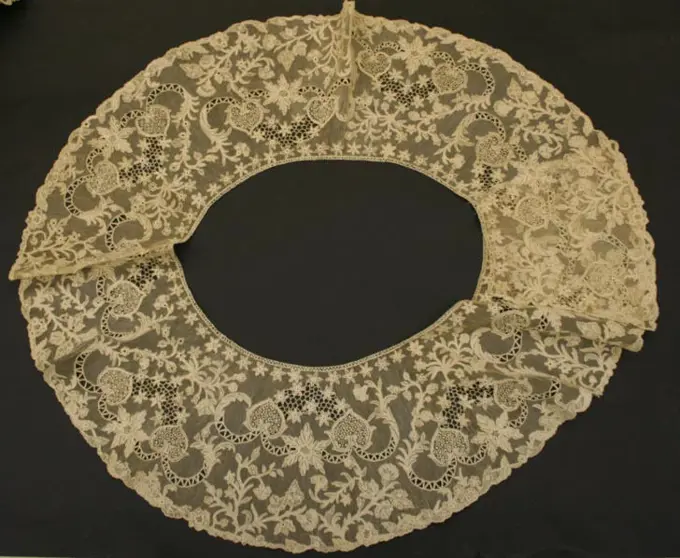
Textile Fragments

Historical fabric fragments displaying intricate patterns and textures, highlighting craftsmanship from different centuries and cultures.
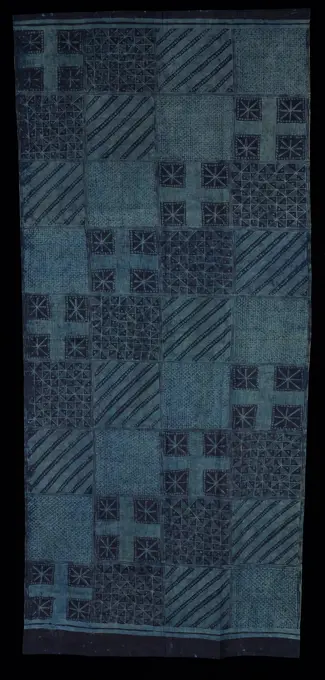
Oremerin, 20th century, 78 7/8 x 35 1/2 in. (200.34 x 90.17 cm), Cotton; dyed, Nigeria, 20th century
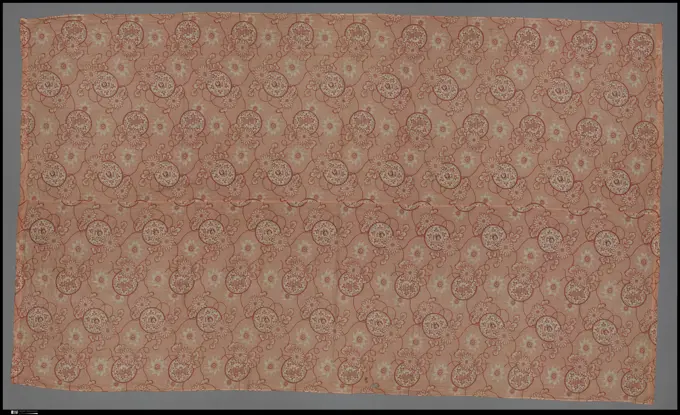
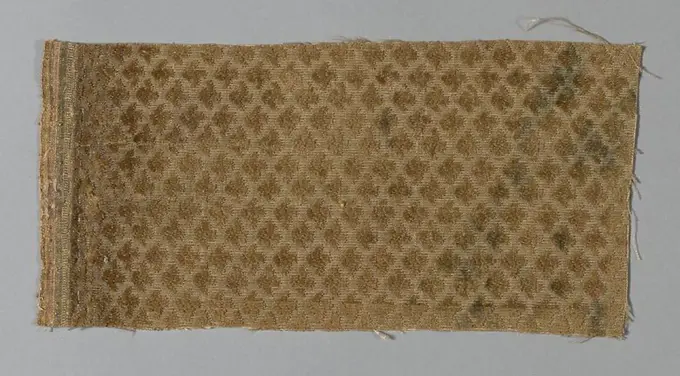
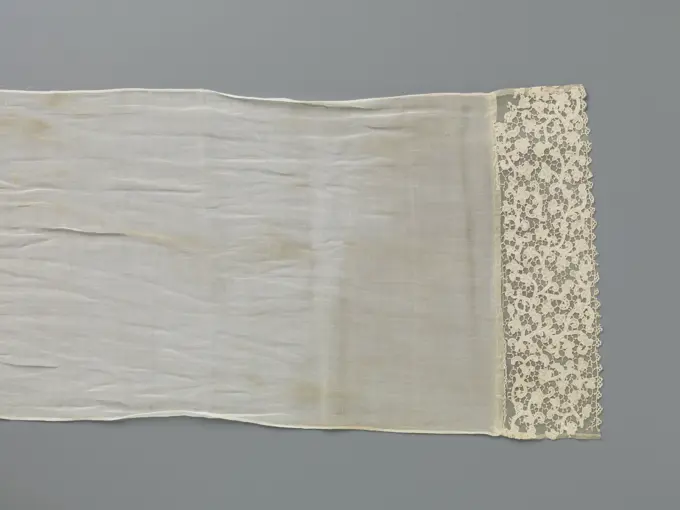
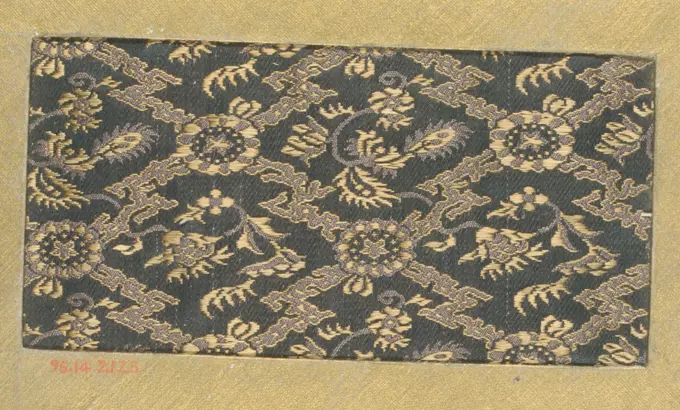
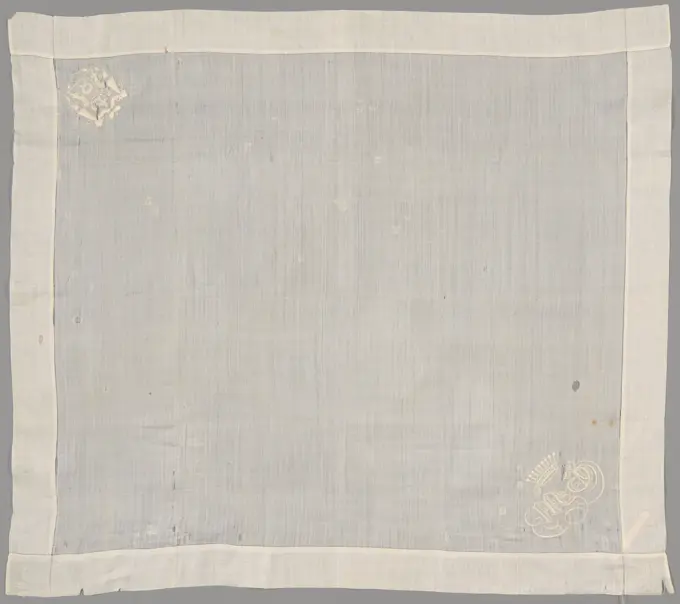
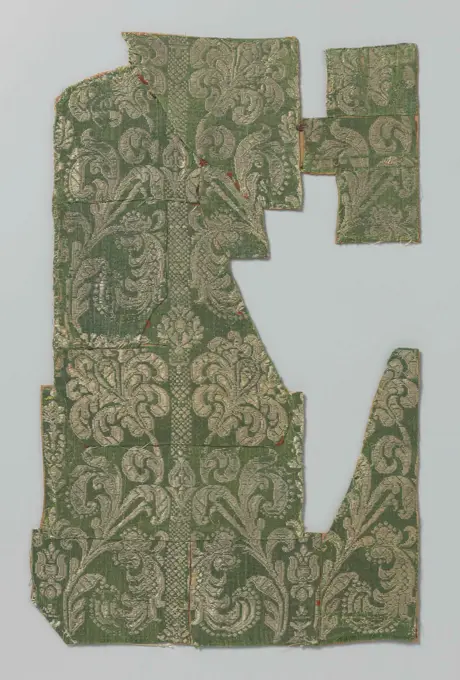
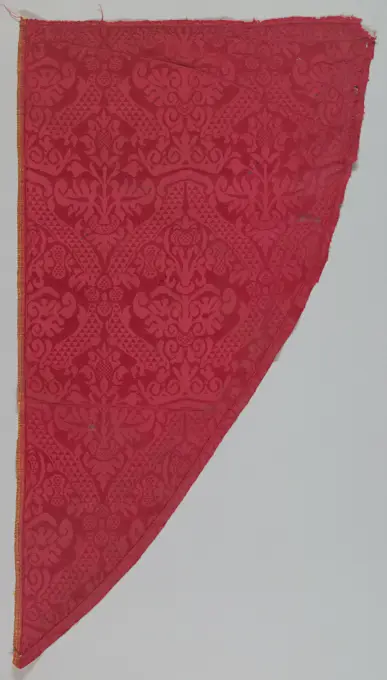
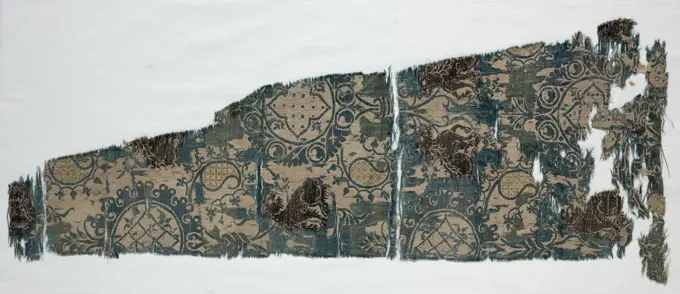
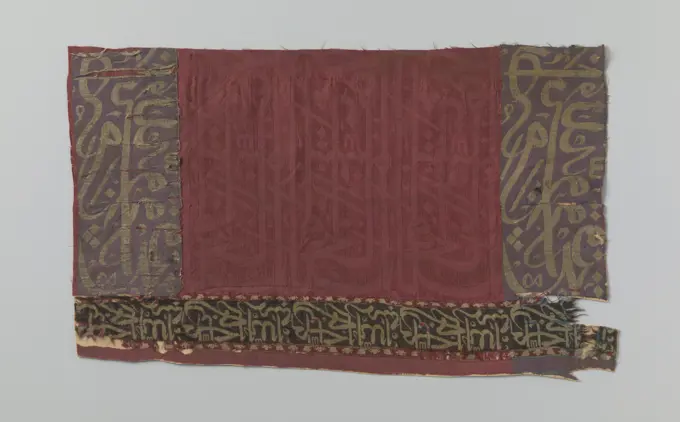
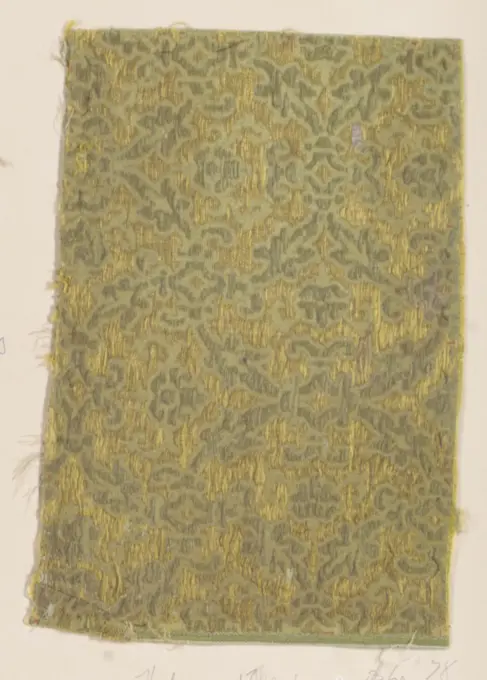
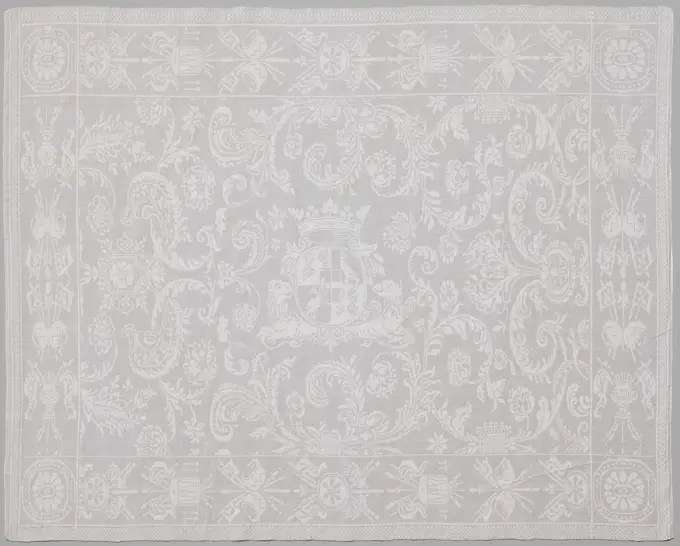
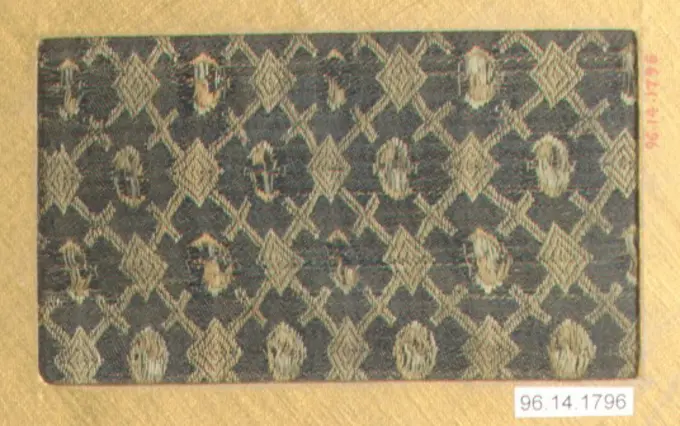
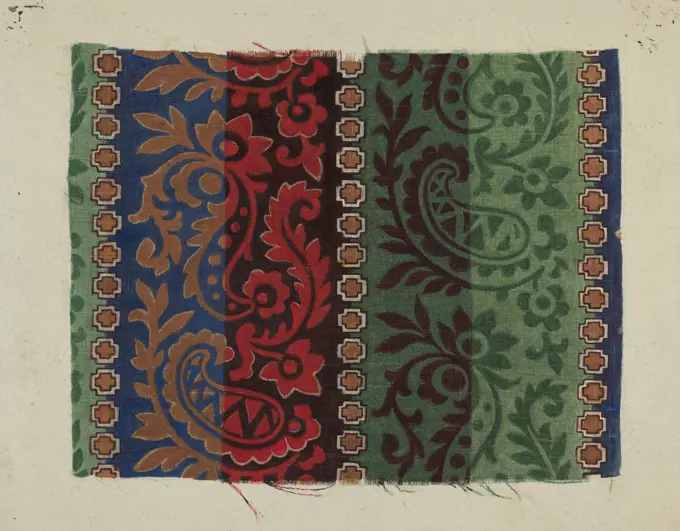
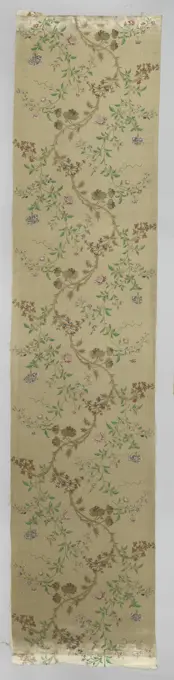
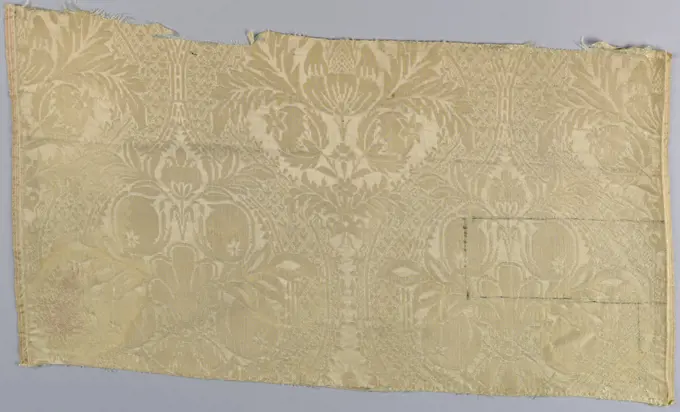
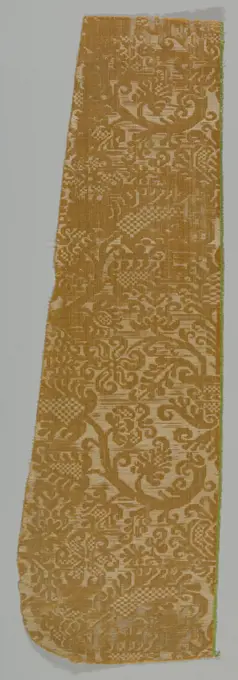
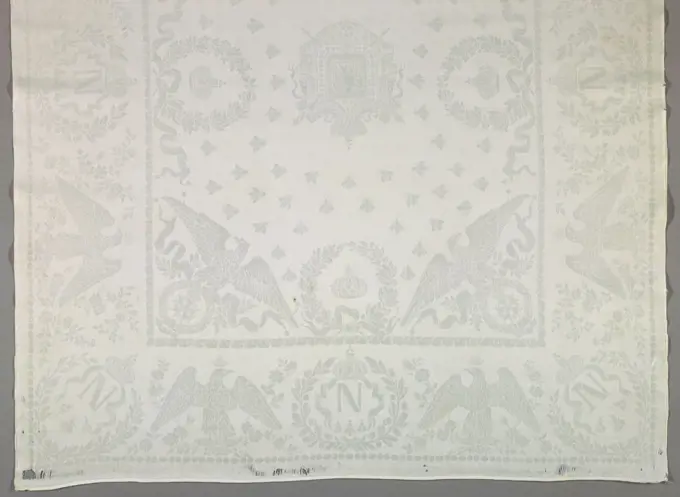
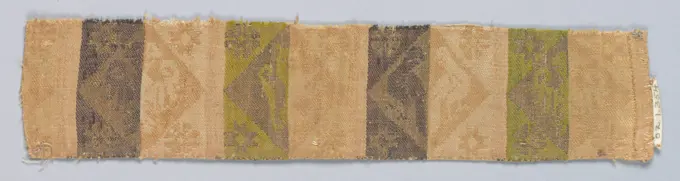
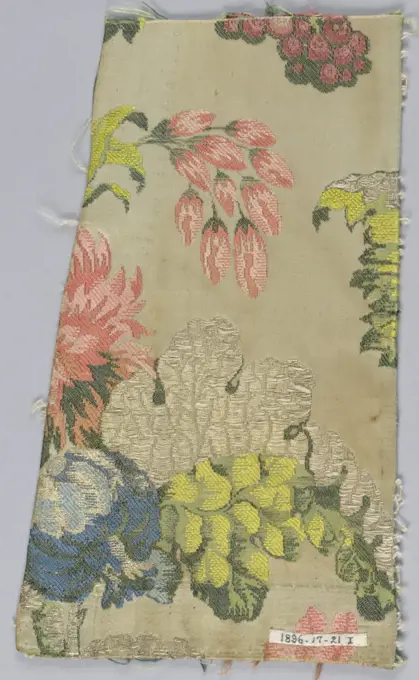
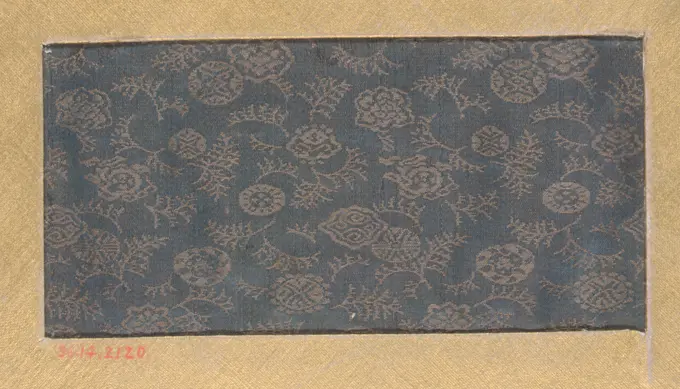
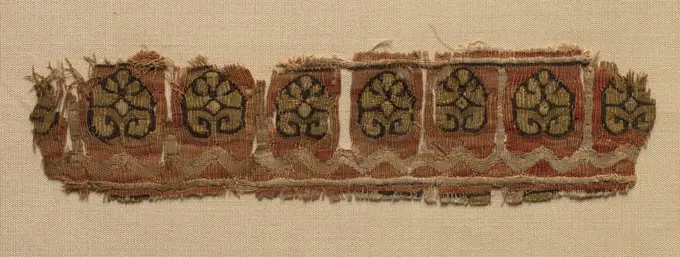
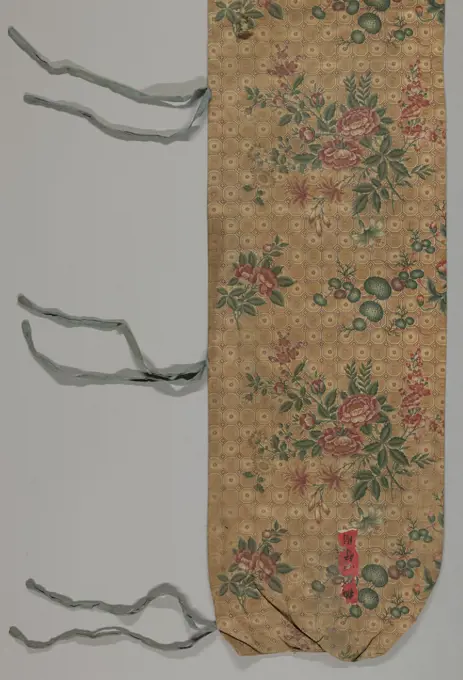
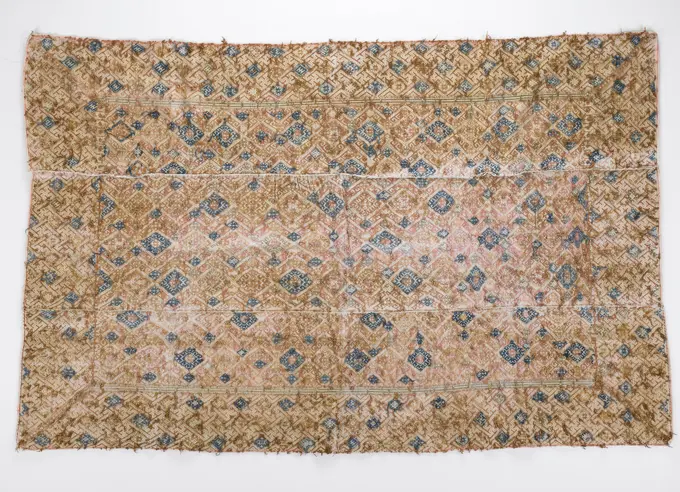
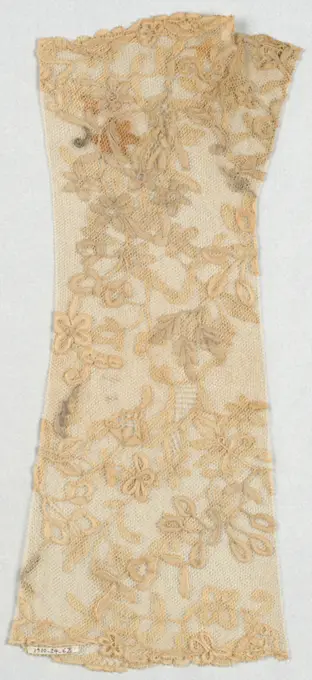
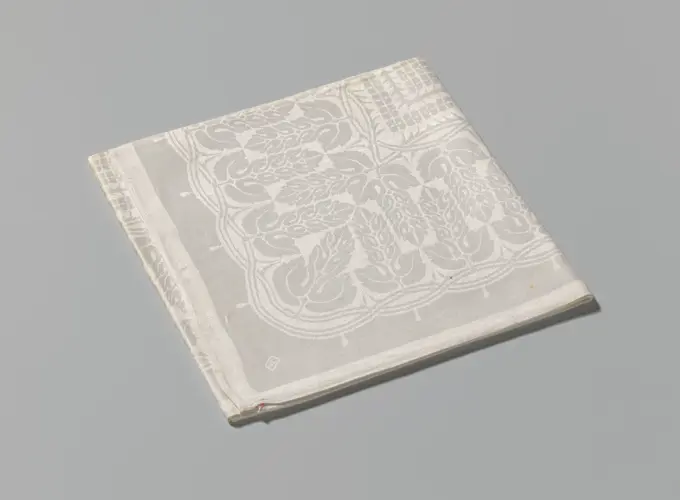
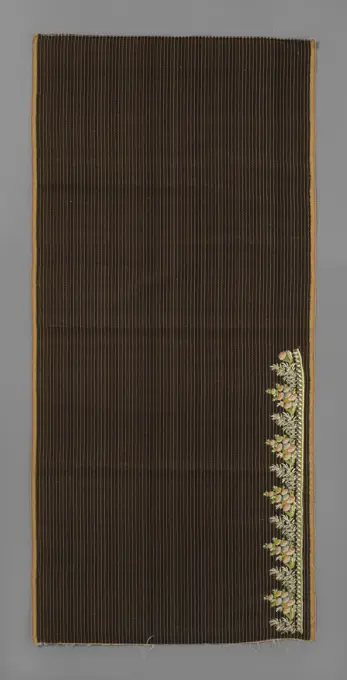
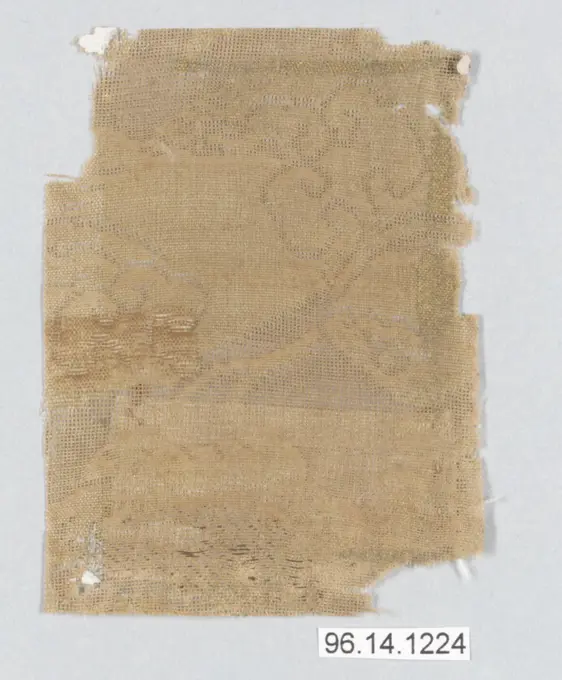
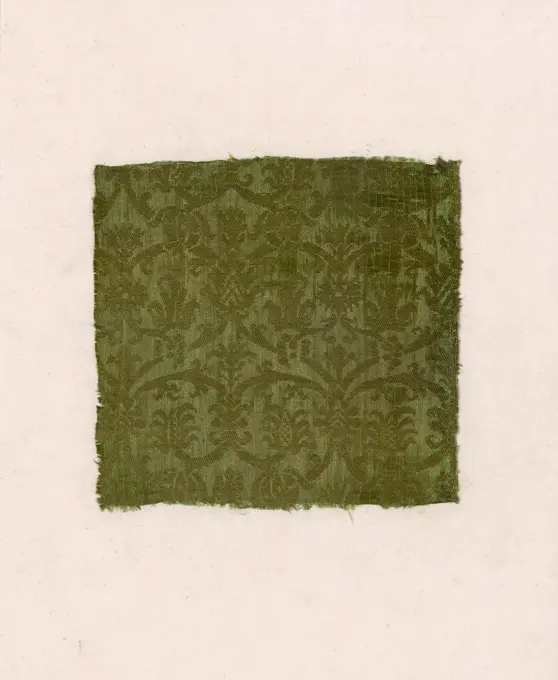
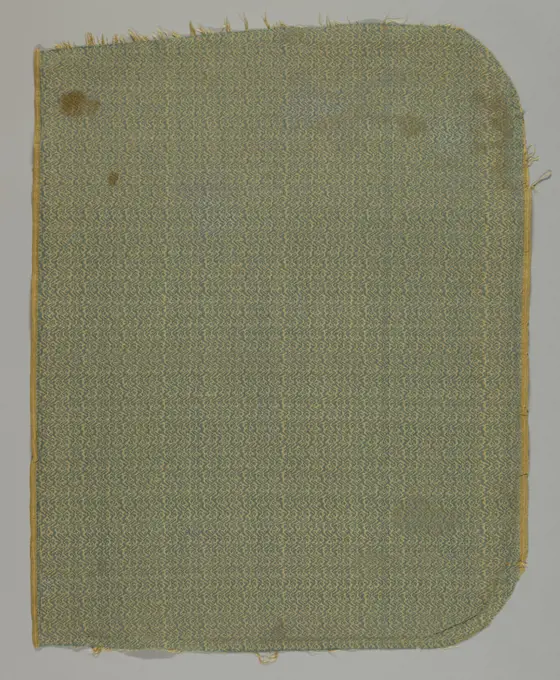
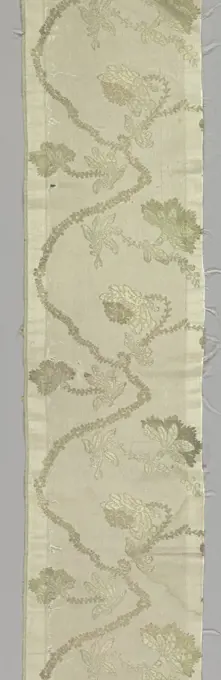
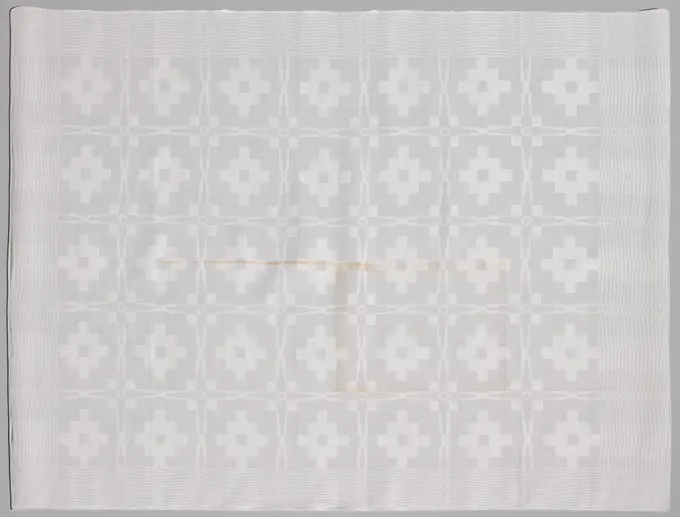
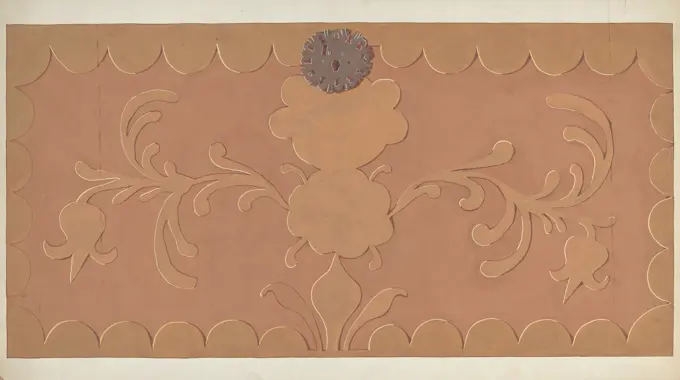
Fragment, Medium: silk, cotton () Technique: plain weave with supplementary wefts, 17th century, woven textiles, FragmentFragment, Medium: Warp: S-spun linen. Weft: S-spun linen; S-spun wool Technique: Slit tapestry, Pair of bands with a serpentine pattern of leaves. Monochrome type, dark purple wool and undyed linen., Egypt, 5th-7th century, woven textiles, FragmentFragment of garment with bands, Medium: Warp; S-spun linen. Wefts; Z-spun linen, Z-spun wool. Technique: Plain woven linen with in-woven wool slit tapestry and supplementary weft wrapping, Fragment with pair of bands showing twining cords making interlaced spirals., Egypt, 4th-6th century, woven textiles, Fragment of garment with bandsFragment of the fabric;  2. PO. 18th century (1750-00-00-1800-00-00);fabricsOremerin, 20th century, 78 7/8 x 35 1/2 in. (200.34 x 90.17 cm), Cotton; dyed, Nigeria, 20th centuryFragment of a Shawl, 1800s. India, Punjab, 19th century. Tapestry twill; wool; overall: 25.4 x 80 cm (10 x 31 1/2 in.).Curtain panel ca. 1880-1910 American. Curtain panel 20474Fragment, Medium: silk, metallic Technique: plain weave with supplementary wefts, Diagonal arrangement of detached metallic ornaments in gold on green., 17th century, woven textiles, FragmentFragment (Dress Fabric). Italy. Date: 1601-1700. Dimensions: 13.3 x 26 cm (5 1/4 x 10 1/4 in.). Faded green rep ground; allover fleur-de-leys design in green cut velvet. Origin: Italy. Museum: The Chicago Art Institute, Chicago, USA.Scarf of mesh -like fabric with strips of needle side at the ends, anonymous, c. 1700 Scarf of a fine natural mesh -like fabric. A strip of natural needle side, venise flat at both ends. Side pattern with richly branched curly tendrils with small flowers on an irregular open soil with one -sided potented bars. Volwerk with twisted feston stitches with various motifs in it through recesses. The top is trimmed with a border bobbin. The underside is finished with a straight picot edge with arcs. The lace strip is stuck on the scarf. Venice Side: Linen (Material). shawl: flat Venetian (needle point) Scarf of a fine natural mesh -like fabric. A strip of natural needle side, venise flat at both ends. Side pattern with richly branched curly tendrils with small flowers on an irregular open soil with one -sided potented bars. Volwerk with twisted feston stitches with various motifs in it through recesses. The top is trimmed with a border bobbin. The underside is finished with a straight picot ePiece 18th-19th century Japan. Piece. Japan. 18th-19th century. Silk. Textiles-WovenWomen's nasal scarf unknownFragments of silk fabric unknownFragment 17th century Spanish or Italian. Fragment 230294Samples (6) first half 19th century French. Samples (6). French. first half 19th century. Silk. Textiles-WovenFragment late 16th century Italian. Fragment 230187Piece 19th century Japan. Piece 67887Textile (Spain)Fragment civilian with flower within SpitsOval, Theo Nieuwenhuis, 1900 - 1925 Fragment stress with flour within Spitsovalen. Olive -green impact on beige chain. At the top left a piece of 9.5 x 24.5 cm cut out. Design number 244. Netherlands cotton (textile) Fragment stress with flour within Spitsovalen. Olive -green impact on beige chain. At the top left a piece of 9.5 x 24.5 cm cut out. Design number 244. Netherlands cotton (textile)Fragment silk tissue. Fragment, composed of 12 peoped pieces, from green silk with pattern of large flower and leaf garlands interspersed with vertical tracks.Fragment zijdeweefsel, anonymous, c. 1900 Fragment of Oranje-Rode Silk with repeating pattern in green of paws of paws in Spitsovalen. The Spitsovalen are interconnected with small medallions in which stylized animal figures. The ground around has a network pattern. Pattern is signed. AzendaRAchtsman: Krefeld Ketting an element: Silk Fragment of Oranje-Rode Silk with repeating pattern in green of paws of paws in Spitsovalen. The Spitsovalen are interconnected with small medallions in which stylized animal figures. The ground around has a network pattern. Pattern is signed. AzendaRAchtsman: Krefeld Ketting an element: SilkPiece of gold silk, 19th-20th century, Silk, silver threads; needlework, Egypt, 19th-20th centuryCarpet fragment Made 1850-1900 China. Solid cut and uncut velvet .Fragment; silk; Warp x Weft: 70.4 x 50 cm (27 11/16 x 19 11/16 in.)Towel, Medium: linen Technique: withdrawn element with darned motifs on plain weave, Long vertical panel with three broad bands of symmetrical decoration in drawn work: birds, flowers, star-in-medallions, flowering vase and confronted lions, bird and flower guard strips. Untwisted fringe with deep macramé heading attached by hand stitching at one end. One plain selvage. Tiny initials 'M.O.S.' in red cross-stitch in center of towel., Denmark, 19th century, embroidery & stitching, TowelTablecloth of silk velvet. Tablecloth of silk velvet, solid purple purple, finished with gold gallon, the contours of which are corrugated.Silk Fragment, 1360-1399. Italy, last third of 14th century. Lampas weave, brocaded; silk and Cyprian gold; overall: 53.2 x 20.6 cm (20 15/16 x 8 1/8 in.).Ritual Textile (PuaKumbu)Fragment Zijddamast with woven Arabic text and decorative tires with text, anonymous, c. 1400 - c. 1499 Fragment red silk with three sides tires with characters on dark soil. A band is sewn. Middle East silk damask Fragment red silk with three sides tires with characters on dark soil. A band is sewn. Middle East silk damaskTextile Swatches Onondaga Silk Company, Inc. (1925-1981). , 1948-1959. 46 silk, 32 metal, 22 acrylic, 42 1/2 x 18 in. (108 x 45.7 cm).    1948-1959Fragment 17th century Italian. Fragment. Italian. 17th century. Silk, metal thread. Textiles-WovenSuspension of lace pledger on tulle with medallions for a Zaans costume, anonymous, c. 1800 - c. 1824 Apron of natural-colored lace: Lierse Kant or Limerick side (Tamboerwork on Machine Tulle). Rectangular model with a spray pattern of twigs. Along the bottom edge a wide pattern of a repeating composition with rising and sloping lines. The partly symmetrical composition consists of three flattened oval flowers or consoles, from which rising thin leaves rise. Under the middle console hangs a circular medallion, filled with a diamond pattern and surrounded by a laurel wreath. The two other consoles are diagonally under the middle one with which they are connected with a flower vank with rosette flowers. Between the successive compositions, a rosette flower is sandwiched between two separate round medallions. Along the silly outskirts, a pattern of lying S-Voluten of pearl necklace and feathered leaves, which enclose round medallions filled with a pattern of sloping lines. Ivy (possibly) Waistcoat pocket, Medium: silk Technique: cut supplementary warp pile (velvet) in a satin foundation, Pocket flap with a black brocaded design of a floral garland on an off-white ground. Shape of pocket flap is outlined with a wavy line of cut black pile., France, 18th century, woven textiles, Waistcoat pocketPiece 17th century Japan. Piece 71221Table Scarf; linenTextile (USA); Designed by Harvey Smith (American, 1906-1994); cottonNapkin with the coat of arms of Cornelis Hop, Anonymous, c. 1700 - c. 1724 Napkin van Linnamast with the coat of arms of Cornelis Hop. Midfield: Symmetrical pattern of multifaceted volutes with blocked thickenings at the junctions. In between a lying oval shield with a weapon of Cornelis Hop (1685-1762), ambassador at the court of King Louis XV of France: celebrated, 1 and 4 header standing on Bol (the bird of 1, that of 4 surrounding); 2 and three two lined wings. Heart shield shared: 1 a crossbar, 2 on the right a five -pointed star, on the left a desired Wassenaar. The shield covered with five -sized crown. Shield holders: On the right an eagle, on the left an aligned lion. Edges: weapon trophies. Corners: a round axle. All around blocks. Southern Netherlands linen (material) damask Napkin van Linnamast with the coat of arms of Cornelis Hop. Midfield: Symmetrical pattern of multifaceted volutes with blocked thickenings at the junctions. In between a lying oval shield with a weapon oFragment (France); silk, metallicCarpet fragment, Medium: worsted wool, jute Technique: uncut warp loops on compound cloth ground, Length of 'Tapestry Brussels' carpeting with rich, large-scale floral and leaf pattern with very long repeat, in shades of red, pink, blue, green, mauve, brown, grey, and beige in blurred impressionistic style., USA, ca. 1832, woven textiles, Carpet fragmentPiece 18th-19th century Japan. Piece. Japan. 18th-19th century. Silk. Textiles-WovenTowel, Medium: cotton, silk, metallic thread Technique: embroidered, Towel of dark red cotton in a crêpe weave. Ends embroidered in simple detached flower sprays of blossoms surmounted by curving leaf form. Center of flower, drawn and embroidered in gold; outlined in gold. Simple border design and buttonhole edge., Near East, late 19th century, embroidery & stitching, TowelLucille Lacoursiere, Printed Textile, c 1938 Printed TextileSpanning fabric with backdrop of branches, leaves, flowers and fruits, anonymous, c. 1750 - c. 1790 A lane multicolored painted cream spancing material from silk. See Description A. China silk printing / painting A lane multicolored painted cream spancing material from silk. See Description A. China silk printing / paintingFragment, Medium: silk Technique: 4&1 satin (interruption of 2) damask, White damask with a design of large medallions containing pomegranates in a patterned ground., Spain, 18th century, woven textiles, FragmentNapkin with a victory in the Turkish wars, anonymous, c. 1700 - c. 1724 Linnamast napkin with a victory in the Turkish wars. The symmetrically doubled pattern shows four scenes: 1 a city with towers on which crosses are surrounded by a round cartouche, flanked by a female figure with a key in the lifted hand. 2 A soldier with helmet and buckle shoes piercas with a lance a man's pouring man with turban and crooked sword. 3 A marshal on horseback gallopes to the middle. He is booted and traced, has a bandelier for the Justaucorps, wears a wig and a wide -rigid hat. Caption: Carolus Triumph. 4 (halved) a fortified city at the foot of a high hill. Standing edges: a surrounded trunk between which trophies. Lying edges: a city on which guns are targeted. Kortrijk linen (material) damask Linnamast napkin with a victory in the Turkish wars. The symmetrically doubled pattern shows four scenes: 1 a city with towers on which crosses are surrounded by a round cartouche, flanked by a female figure Fragment red brochureed silk with a multi -colored pattern with bouquet and flower garlands and so -called lace edge, c. 1740 - c. 1760 Fragment of red sides of soil with ditto darker figures, weaving with multicolored bouquets and flowers and so -called lace edge. Netherlands (possibly) silk Fragment of red sides of soil with ditto darker figures, weaving with multicolored bouquets and flowers and so -called lace edge. Netherlands (possibly) silkFragment; silk; Bequest of Richard Cranch Greenleaf in memory of his mother, Adeline Emma Greenleaf; 1962-56-40Sampler (Mexico); cotton, glass beadsPiece 18th-19th century Japan. Piece 66346Piece 18th-19th century Japan. Piece 67418Textile, Medium: silk Technique: plain weave (purple) patterned by floats of a continuous supplementary weft (black). The two wefts exchange functions allowing the foundation weft (purple) to float on the front, France, 1860s, woven textiles, TextileFragment, Medium: silk Technique: cut and uncut voided supplementary warp pile (velvet) in a satin foundation, Black cut and uncut velvet has a design of horizontal running bands of two types of stylized radiating palmettes altnernating with each other. The larger palmette has a space of checkerboard motif in its center., Italy, 17th century, woven textiles, FragmentTable cover or chalice cover, Medium: silk Technique: white bobbin lace, possibly Spain, 19th century, lace, Table cover or chalice coverFragment; silk, linen(), metallicFragments, Medium: silk, linen() Technique: combination of two structures, Probably fragments from a chasuble. Green selvage on A and B. Design of diagonal branches in yellow and tan., 17th century, woven textiles, FragmentsTextile Sample from Sample Book 19th century Japan. Textile Sample from Sample Book 68263Fragment, Medium: silk Technique: plain weave, Lightweight silk in vertical stripes of pink, white, green and black., France, 19th century, woven textiles, FragmentFragments, Medium: silk, metallic thread Technique: supplementary warp pile (velvet), cut and voided, Probably 19th century reproduction velvet with a pattern of small floral branches, lions rampant and eagles. Four pieces joined., Italy or Spain, 19th century, woven textiles, FragmentsNapkin, Napoleon III, Medium: linen Technique: damask, Coat of arms in center. Several eagles with spread wings. Several crowns 'N's' within laurel wreaths. Pendant crown and five-pointed cross (Legion of Honor) within wreath., ca. 1850, woven textiles, NapkinFragment early 18th century Italian, Venice or Russian. Fragment 230330Band; silk, linen, metallicBorder 18th century Flemish. Border 212838Fragment, Medium: silk, metallic Technique: woven, Polychrome design of broken branches with large fruits and flowers., France, ca. 1835, woven textiles, FragmentNapkin with the intake of Aire and Douai, Anonymous, 1710 Linnamast napkin with the intake of Aire and Douai (and Béthune). Midfield: The symmetrically doubled pattern shows three scenes from bottom to top: 1 -prancing horse, to the middle, directed to the middle and drenched by a general in Justaucorps, wide -raced hat with spring. 2 shelling of a city by two gunners and an officer. Aside the caption Arien 1710. 3 Crowned weapon of Habsburg on a wreath of flags and weapons, flanked by the weapon of Great Britain and Ireland. In the middle of Douay. The and lying edges: oval coats of arms interspersed with cityscapes in lobed medallions with inscriptions: Tournay, Lille, Meenen and Ostenende. Round: Blocking edge. Kortrijk linen (material) damask  Aire-sur-la-Lys. Douai Linnamast napkin with the intake of Aire and Douai (and Béthune). Midfield: The symmetrically doubled pattern shows three scenes from bottom to top: 1 -prancing horse, to the middle, directed to the middle and drenched Ribbon, Medium: silk Technique: plain weave, Green ribbon with picot edge., USA, mid-19th century, woven textiles, RibbonFragment Zijderips, Anonymous, 1650 A fragment of white silk tissue with salmon -colored and white flowers and stripes. Italy silk A fragment of white silk tissue with salmon -colored and white flowers and stripes. Italy silkTextile Swatch; Manufactured by Deerfield Society of Blue and White Needlework (American, 1896-1926) (United States)Fragment Made 1700-1800 Japan. .Towel scarf, 19th century, 18 1/2 x 66 1/2 in. (47.0 x 168.9 cm), Cotton, 19th centuryPiece 18th-19th century Japan. Piece. Japan. 18th-19th century. Silk. Textiles-WovenFragment, Medium: cotton Technique: block-printed on plain weave, Two small horizontal panels joined by vertical seam. Left panel: Islamic inscription framed top and bottom by plait border, guilloche on right side - reserved on blackish ground. Right panel: rosette interlacing with lotus fillings and narrow interlacing boarder - reddish outlined on undyed ground. Seemingly part of a cap-band with coarse undyed cotton lining and inner lining., Translation of Islamic inscription: Glory to our Lord the Sultan., India, 13th-14th century, printed, dyed & painted textiles, FragmentFragment of a Tiraz-Style Textile, 1130 - 1169. Egypt, Fatimid period, Caliphate of al-Hafiz or later, AH 524-565, 12th Century. Tapestry (originally inwoven in a tabby ground); linen and silk; overall: 3.5 x 13.7 cm (1 3/8 x 5 3/8 in.).Textile, Medium: cotton and silk Technique: printed by engraved roller on plain weave mordant painted and dyed and resist dyed (chintz) on plain weave, Scroll (sutra) cover of printed cotton lined with yellow Chinese silk. Chintz (European) printed in geometric pattern with sprays of roses. Chinese silk lining has floral pattern as well., late 19th century, printed, dyed & painted textiles, TextileFragment, Medium: silk, metallic Technique: two interconnected structures (plain weave plus plain weave) plus brocading, Large circles with vines with brocaded peacocks, birds and animals in gold on maroon., Italy, 14th century, woven textiles, FragmentFragment, 1800s. India, Benares , 19th century. Brocade; silk, gold and silver threads; overall: 21.3 x 60.2 cm (8 3/8 x 23 11/16 in.).Bed cover, ChinaAltar Frontal. Italy. Date: 1501-1600. Dimensions: 100.6 x 124.1 cm (39 5/8 x 88 1/4 in.)Repeat: 56 x 28.2 cm (22 x 11 1/8 in.). Silk and gilt-metal-strip-wrapped silk, 4:1 satin damask weave with supplementary brocading wefts bound by main warps in weft-float faced 1:4 's' interlacing; edged with gilt-metal-strip-wrapped silk, plain weave with supplementary patterning warps and extended ground weft uncut fringe and silk, gilt-metal-strip and gilt-metal-strip-wrapped silk, stripes of plain weave with supplementary patterning warps and of 2:2 'z' twill weave with extended ground weft, wrapped, knotted uncut fringe; lining: silk, plain weave. Origin: Italy. Museum: The Chicago Art Institute, Chicago, USA.Digger with delighted stripe pattern. A body of cotton with bridged stripe pattern; Rectangular piece with two horizontal half moon shaped holes.Pair Of Mitts; 1910-24-6-a,bLinnamast napkin with hawthorns, Chris Lebeau, 1900 - 1925 White linen Damas napkin with a hawthorns design. Eindhoven linen (material) White linen Damas napkin with a hawthorns design. Eindhoven linen (material)Panel belonging to an uncut freak of silk velvs, anonymous, c. 1780 - c. 1790  France (possibly)Netherlands (possibly) silk. embroidering  France (possibly)Netherlands (possibly) silk. embroideringLower body with window and stripe motif, anonymous, c. 1750 - c. 1800 A body of cotton with window and stripe pattern; Rectangular piece with two horizontal crescent holes. Netherlands cotton (textile) A body of cotton with window and stripe pattern; Rectangular piece with two horizontal crescent holes. Netherlands cotton (textile)Piece 19th century Japan. Piece 66943Textile Fragment 4th-5th century. Textile Fragment 456916ShoulderClothPiece 18th-19th century Japan. Piece. Japan. 18th-19th century. Silk. Edo (1615-1868). Textiles-WovenFragment Made 1575-1600 Italy. silk .Panel, Medium: raffia Technique: plain weave embroidered with stem stitches, Panel of woven undyed raffia embroidered in stem stitch in inrregular interlacing and grid patterns. All edges hemmed., Democratic Republic of the Congo, late 19th century, embroidery & stitching, PanelHeaddress Made 1801-1900 Greece. Linen, plain weave; embroidered with silk floss, gilt- and silvered-metal-strip-wrapped silk, and gilt-metal-strip in double running, twined double running, and satin stitches .Fragments, Medium: silk Technique: 5-harness satin damask, Gold and green damask with a small-scale allover design in a stylized pattern. Formerly a chasuble. Selvages present., Spain, 16th century, woven textiles, FragmentsTextile Swatches Onondaga Silk Company, Inc. (1925-1981). Textile Swatches, 1948-1959. 72 silk; 28 metal, (a) - (c): 11 x 4 in. (27.9 x 10.2 cm).    1948-1959Textile Swatches Onondaga Silk Company, Inc. (1925-1981). , 1948-1959. Silk, 47 3/4 x 18 in. (121.3 x 45.7 cm).    1948-1959Fragment, Medium: silk Technique: 6&1 satin plus 16 twill, Star motif in green and gold. Selvage at one side., 17th century, woven textiles, FragmentStrip bobbin with triangular field with splitting branch, anonymous, c. 1700 - c. 1724 Strip of natural -colored bobbin: Mechelse side. The repeating pattern consists of a triangular field, based on the underside of the strip and a top that ends slightly below the top of the strip. The sides of the triangle are formed by a line with nods in it. A splitting branch hangs down from the top, with whimsical leaves and rosette flowers. The pattern along the underside is formed by the flowers and leaves at the end of these branches and by more or less oval cartouches. Between the successive triangular fields you can see a loose flower with a handle and leaf, which is a bit slanted from top to bottom. The motifs are connected by a Maas soil, the Mechelen soil. The motifs are made in linen battle with few recesses and thicker and shiny contour threads. Two different decorative lands have been used in the triangular field and two others in the cartouches along the underside, including a snowflakFan leaf with grapes and vines, Tani Buncho, c. 1800 - c. 1900 Fan leaf, ink on silver stock on paper. Seal of the artist in red. Japan paper. paint (coating) brush Fan leaf, ink on silver stock on paper. Seal of the artist in red. Japan paper. paint (coating) brushSilk fragment, Medium: silk Technique: woven, Undulating vine pattern with floral sprigs on an ivory-colored ground., France, 18th century, woven textiles, Silk fragmentPeel with pattern 'carved stone or corner star', anonymous, 1800 - 1899 Napkin made of white linen with peel pattern 'carved stone or corner star' and edges, brand H 13. Netherlands (possibly) linen (material) Napkin made of white linen with peel pattern 'carved stone or corner star' and edges, brand H 13. Netherlands (possibly) linen (material)DP Jones, Chest, 1942 ChestServet met acanthusvoluten, anonymous, c. 1690 - c. 1699 Linnamast napkin with Acanthusvoluten. Midfield: Two rising feed lines of wide wavy tifles are symmetrical. The tenders are branched with countless volutes and end up in large fatasia flows with different christened inner drawing. Standing and lying edges, separated by a line, show a single slender with large leaf and floral motifs. In the corners a fleur-de-lys-shaped leaf palm. Along the Negen a block edge. Southern Netherlands (possibly) linen (material) damask Linnamast napkin with Acanthusvoluten. Midfield: Two rising feed lines of wide wavy tifles are symmetrical. The tenders are branched with countless volutes and end up in large fatasia flows with different christened inner drawing. Standing and lying edges, separated by a line, show a single slender with large leaf and floral motifs. In the corners a fleur-de-lys-shaped leaf palm. Along the Negen a block edge. Southern Netherlands (possibly) linen (material) damaskBertha 19th century Italian. Bertha 102594