Textile Fragments

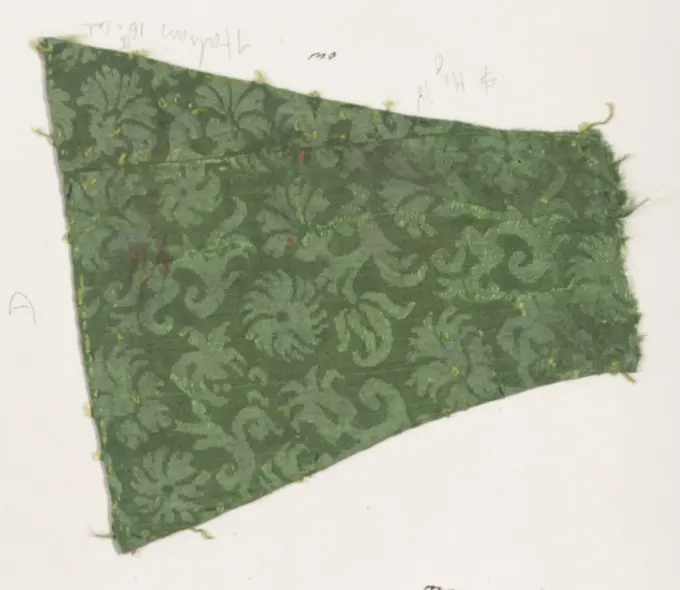
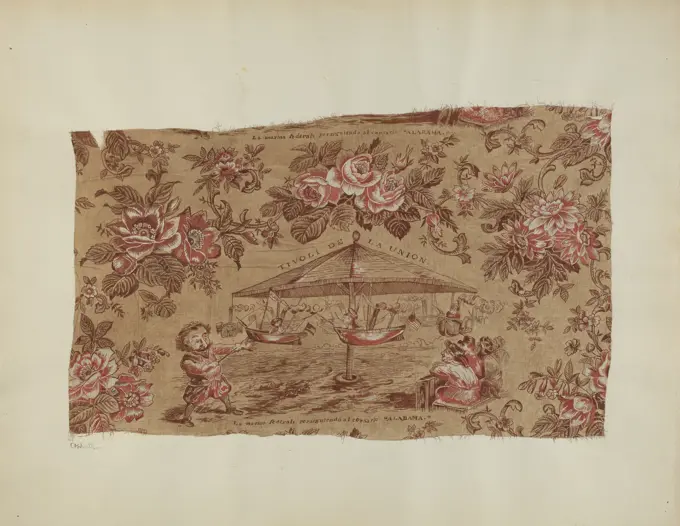
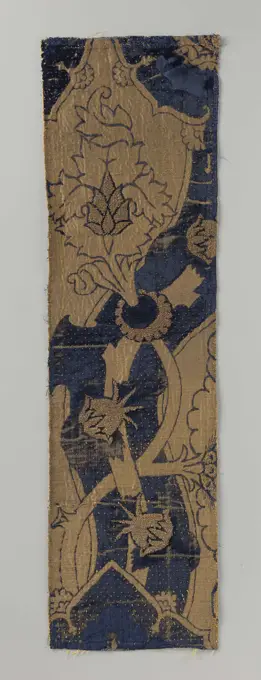
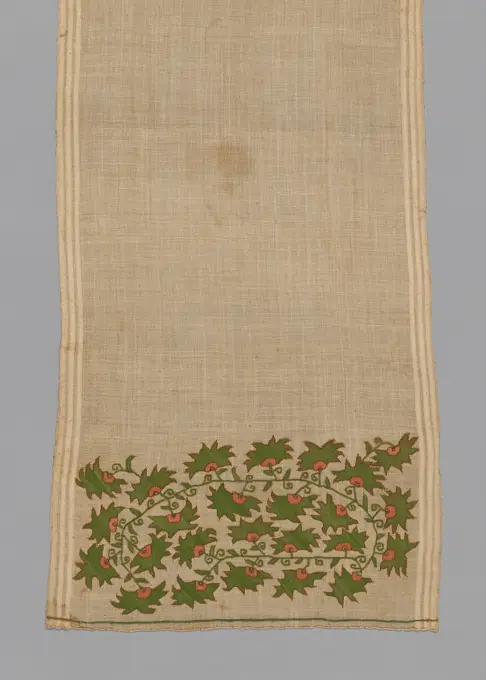
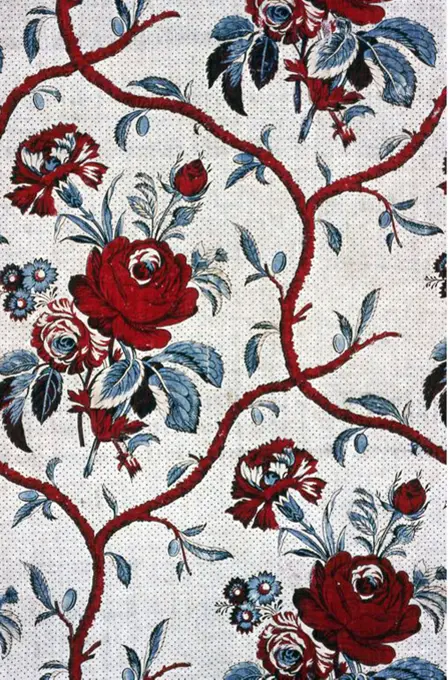
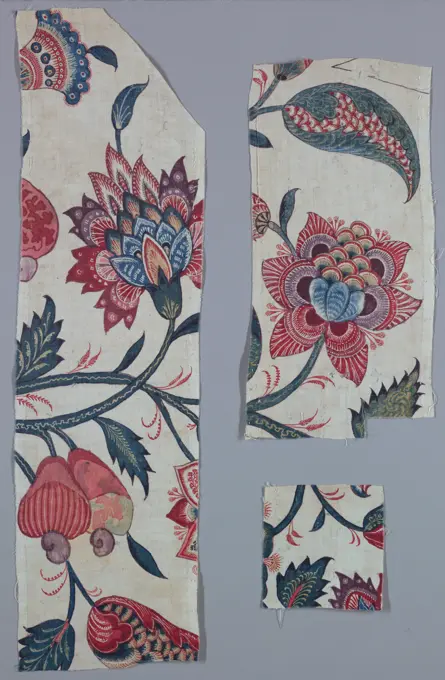
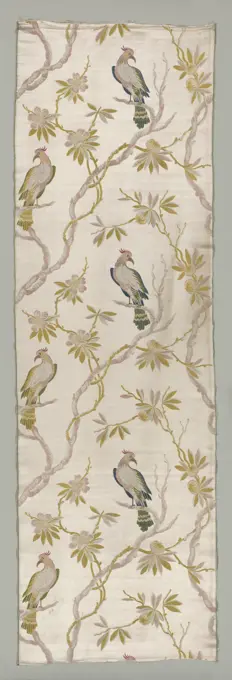
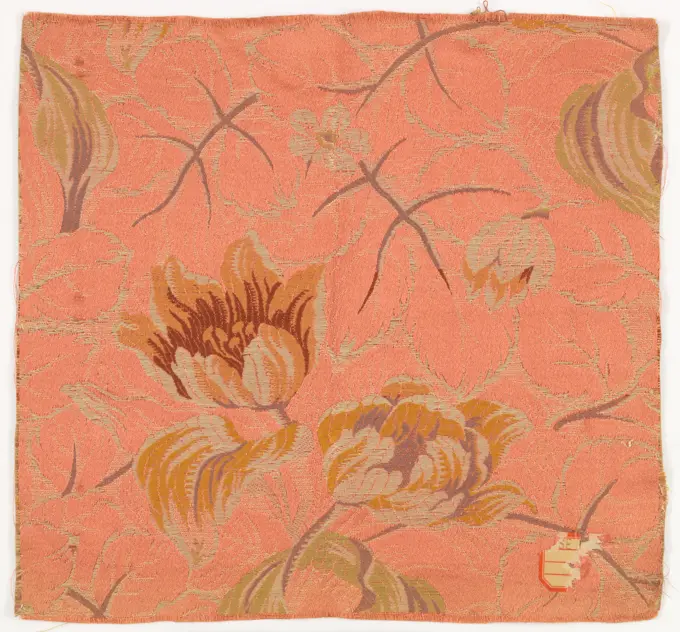
Historical fragments of silk and fabric featuring floral patterns, showcasing rich colors and intricate designs from different European periods.

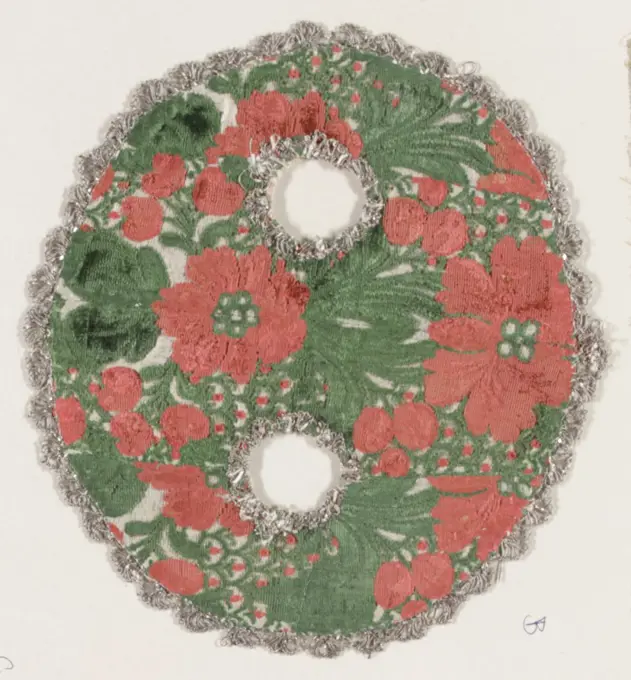
Excerpt multi -colored silk tissue, anonymous, 1500 - 1599 Fragment with repeating pattern of 4 flowers in stems with leaf work formed windows. Multicolor. Turkey (Possible) silk Fragment with repeating pattern of 4 flowers in stems with leaf work formed windows. Multicolor. Turkey (Possible) silk
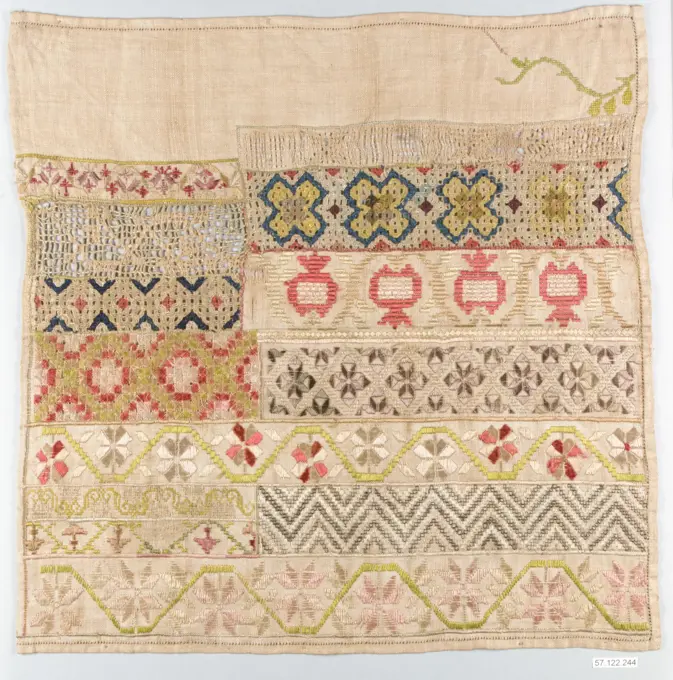
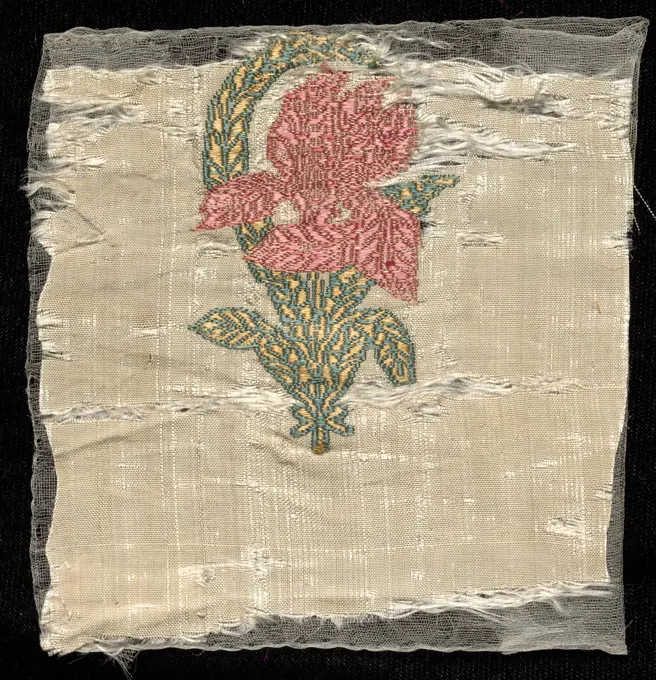
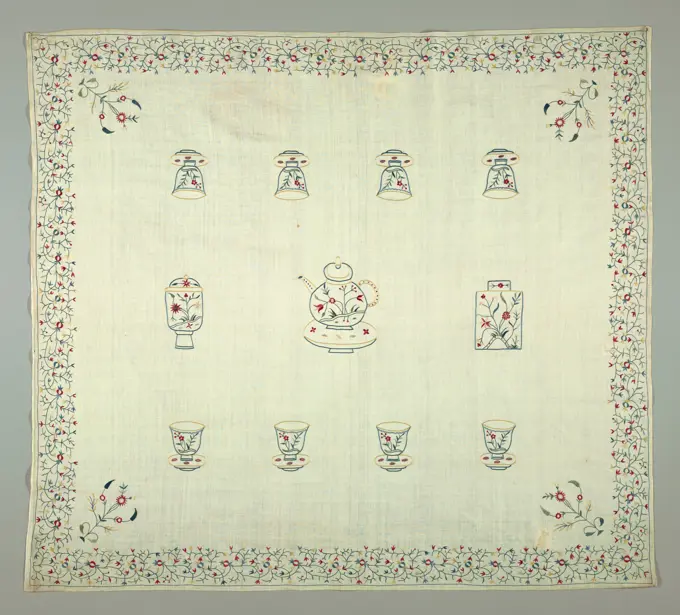
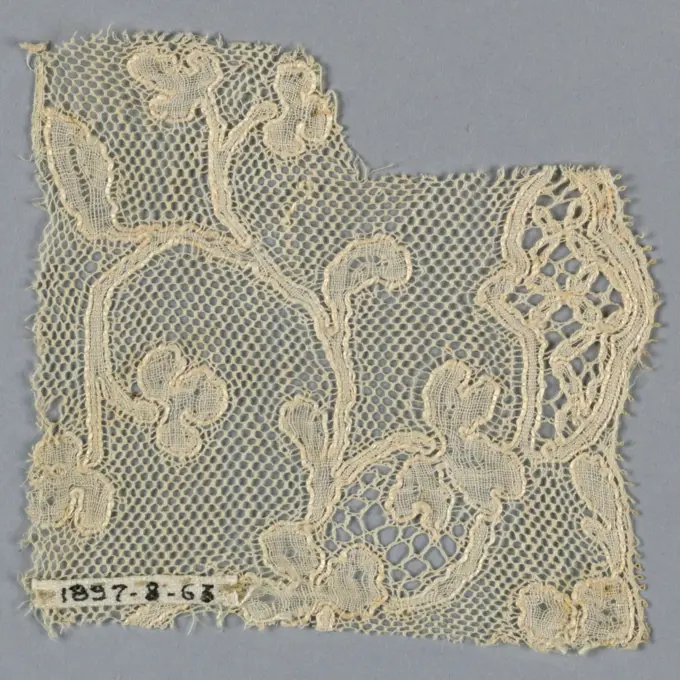
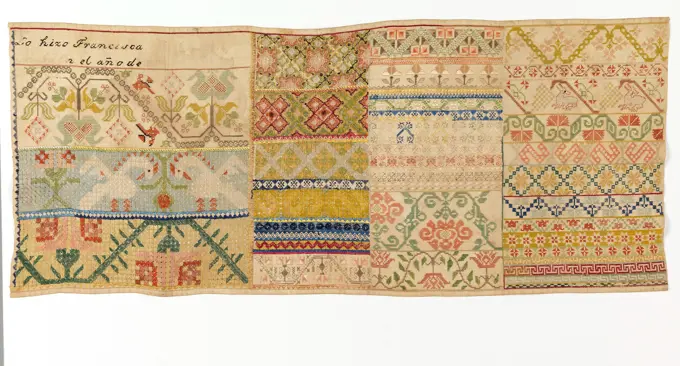
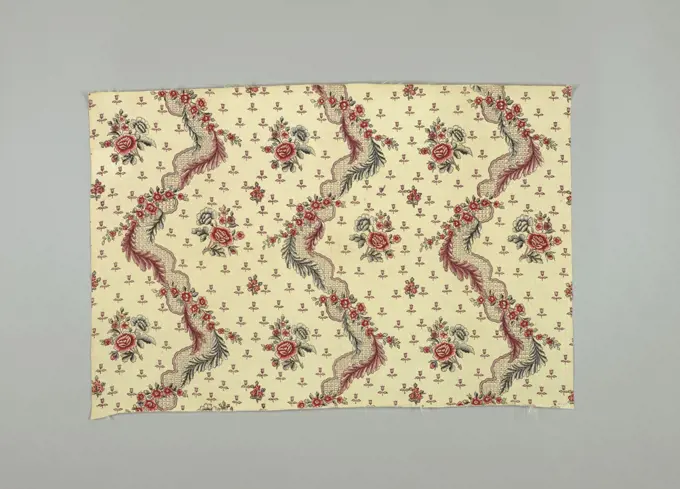
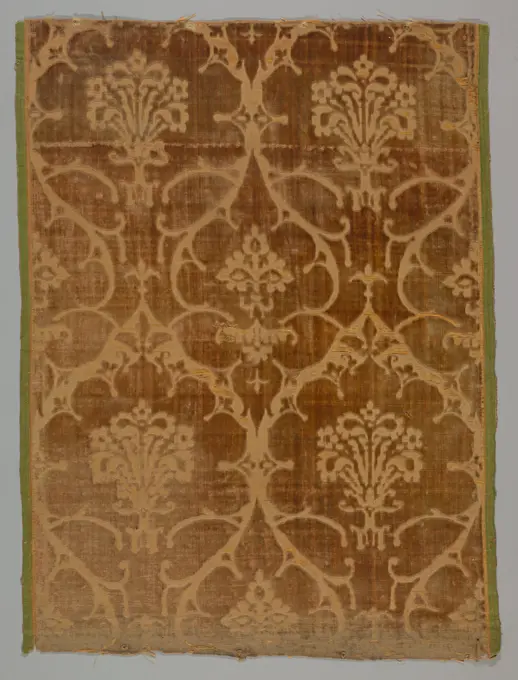
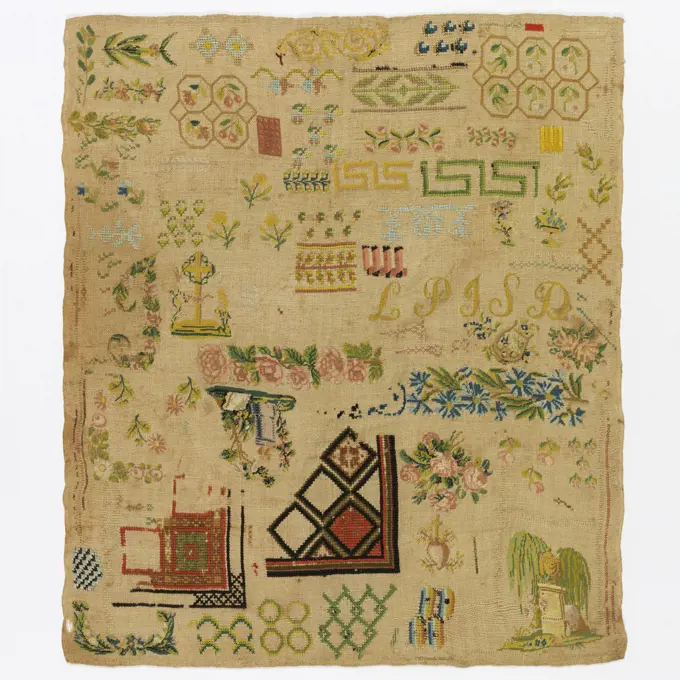
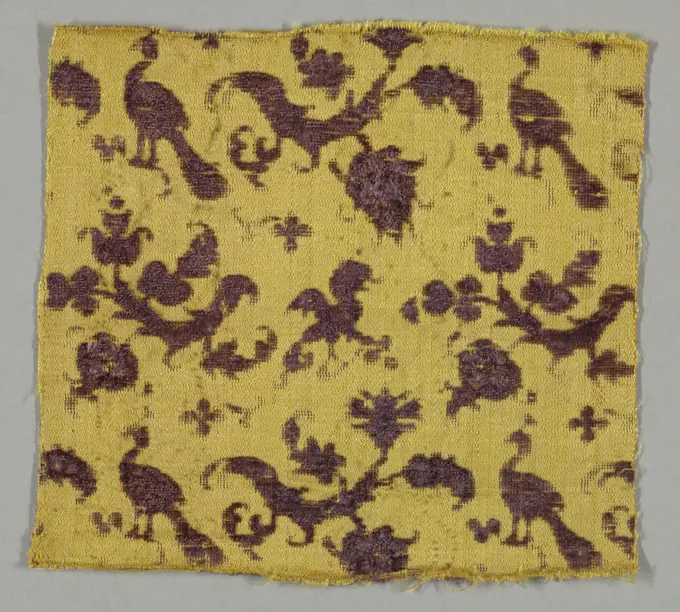
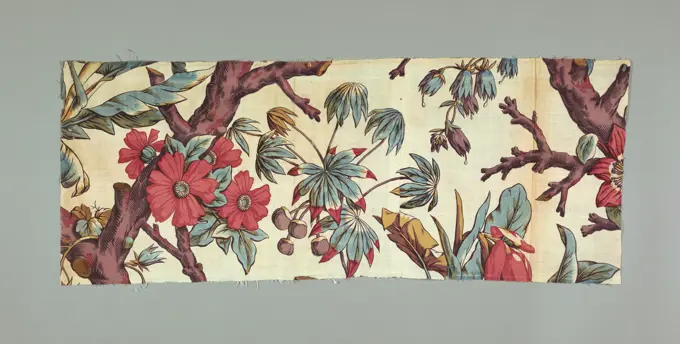
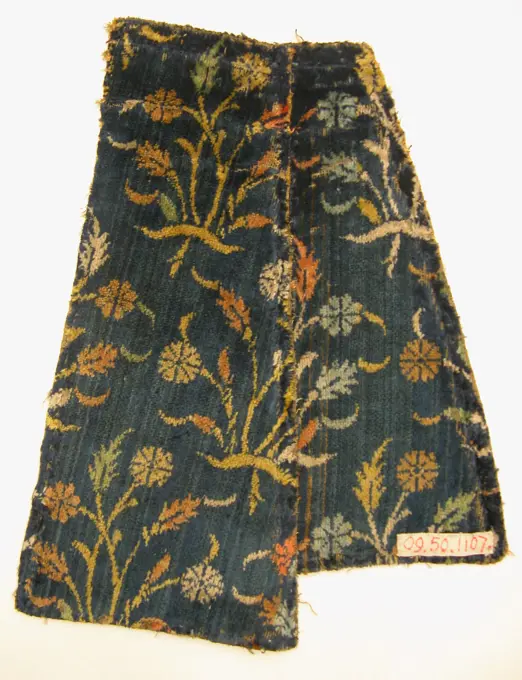
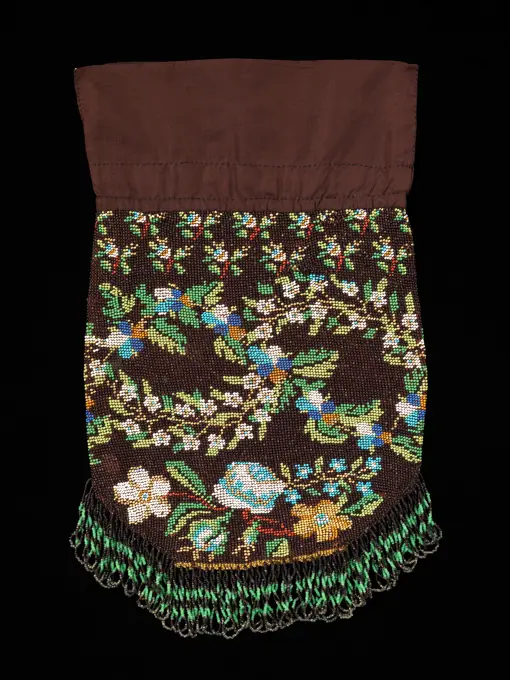
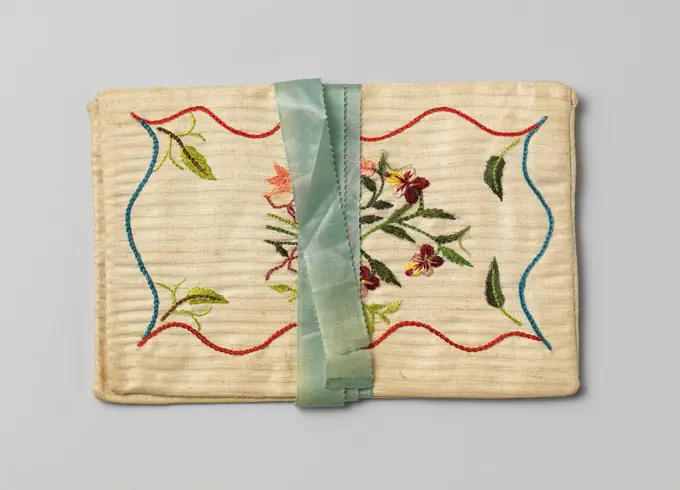
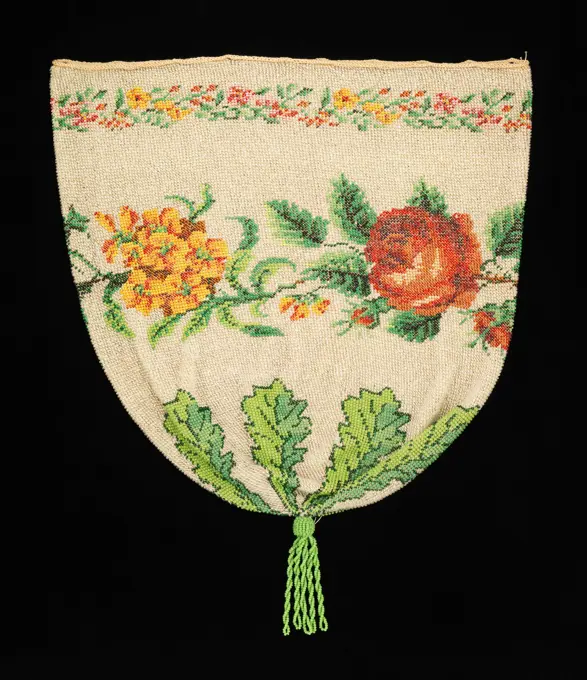
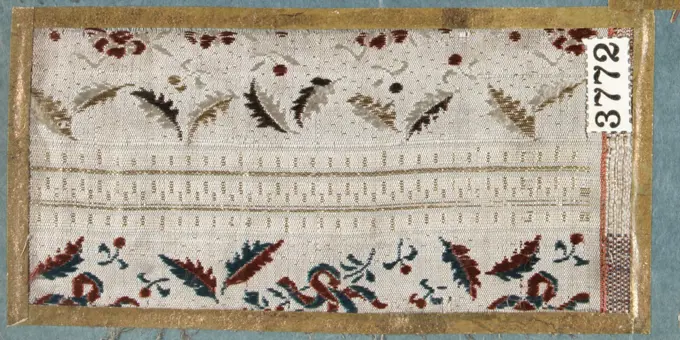
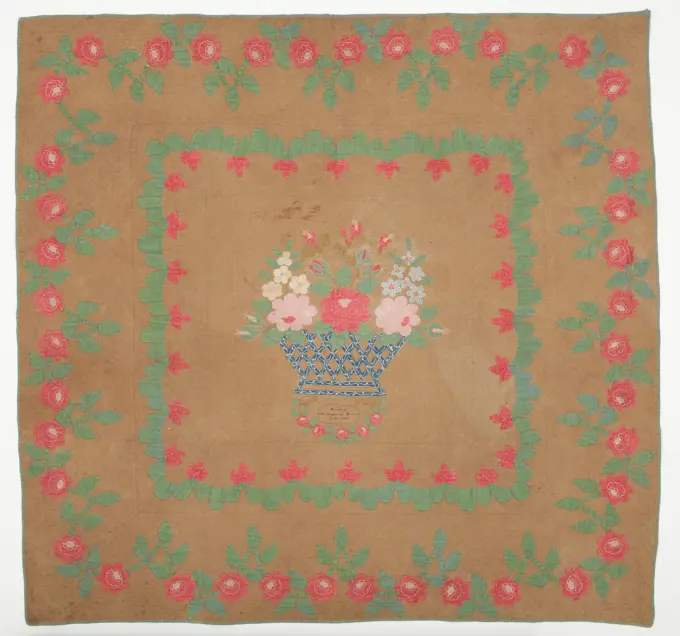
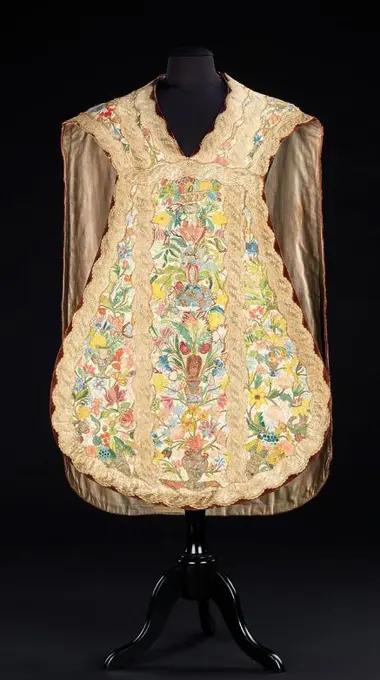
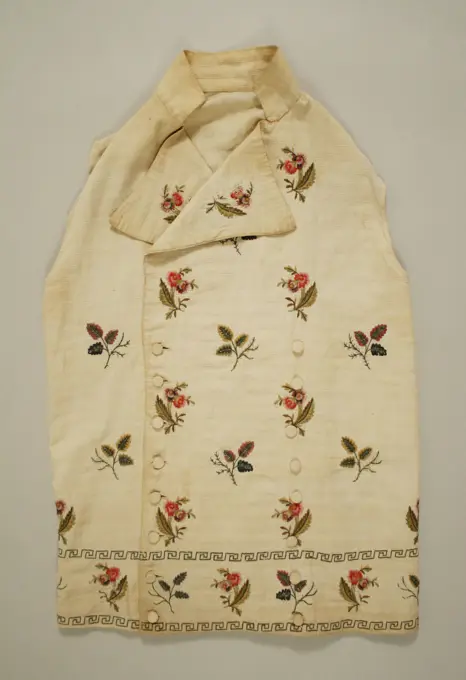
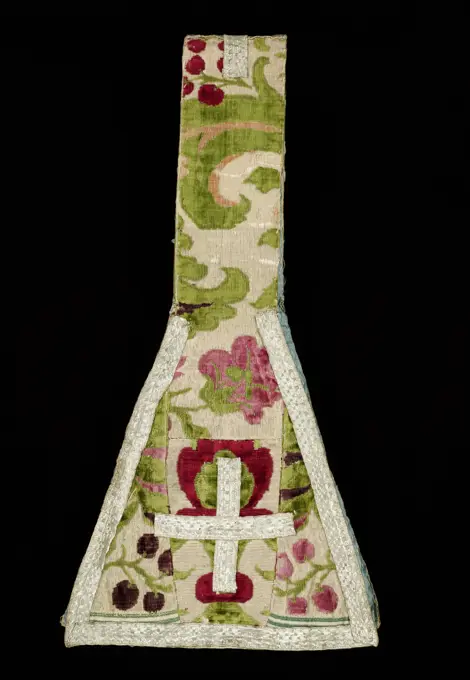
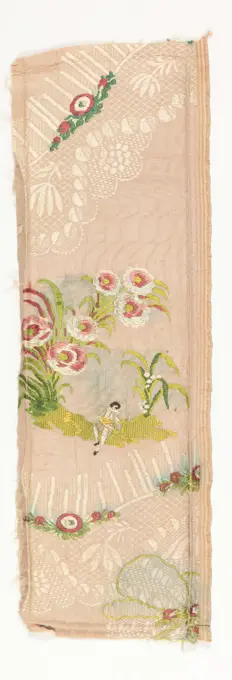
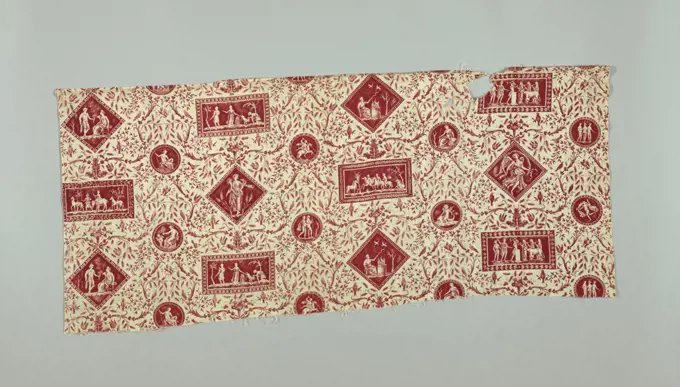
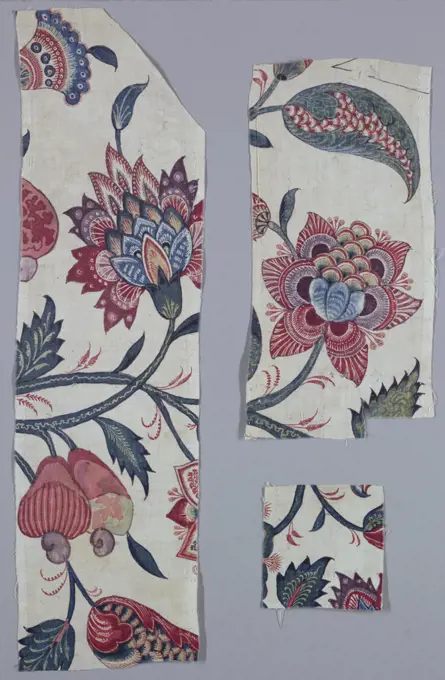
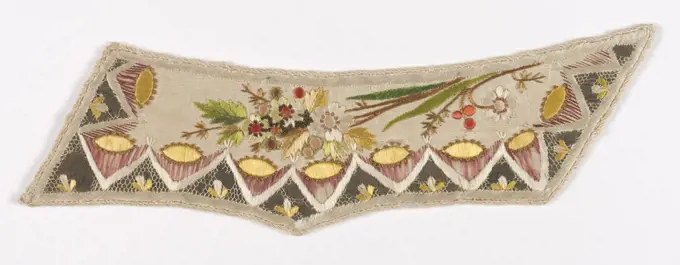
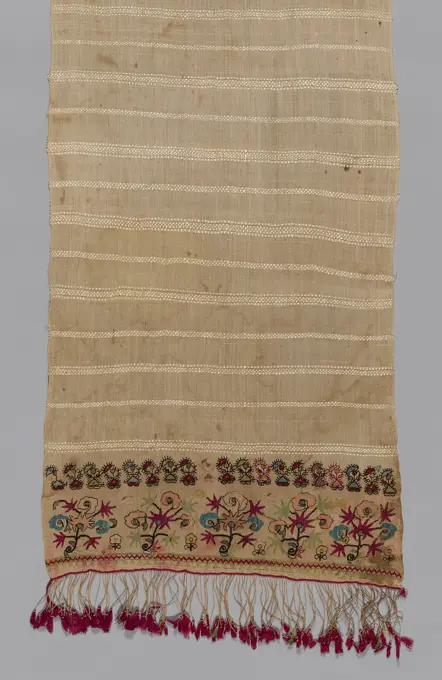
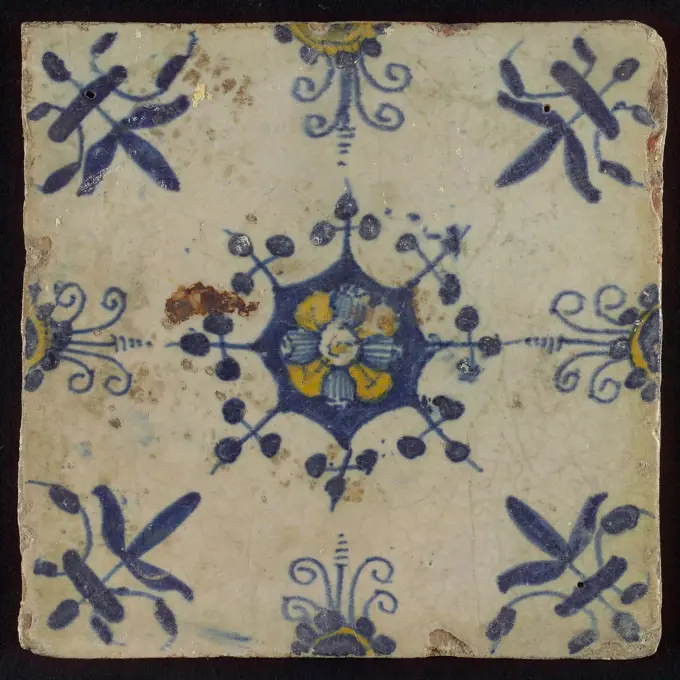
Fragments, Medium: silk, metallic Technique: plain weave with supplementary weft, Fragments of a polychrome pattern that includes exotic plants and bands of lace., ca. 1730, woven textiles, FragmentsPiece 18th-19th century Japan. Piece. Japan. 18th-19th century. Silk. Textiles-WovenBorder (France); block-printed and flocked on joined sheets; Overall: 24 x 49 cm (9 7/16 x 19 5/16 in.)Sampler 19th century Mexican. Sampler 228171Fragment, 1800s. India, 19th century. Brocade; silk and metal; overall: 9.5 x 10.2 cm (3 3/4 x 4 in.).Cover (England); silk embroidery; linen groundSampler. Germany or Netherlands. Date: 1827. Dimensions: 30.5 x 36 cm (12 x 14 1/8 in.). Linen, plain weave; embroidered in cross and darning stitches. Origin: Germany. Museum: The Chicago Art Institute, Chicago, USA.Textile (England); cottonFragment; linenFragment 16th century Italian. Fragment 230264Seat cladding of red, pressed relief veluweel. Seat cladding of red, pressed relief veluweel. The pattern has a large flower with small flower branches and leaves along the lower edge. The upholstery is made for a back () Or a seat () From a chair.Charlotte Winter, Printed Cotton, c 1940 Printed CottonFragment blauw fluweelbrokaat met granaatappelmotieven.Fragment blue silk velvet brocade with a pattern of wavy tendrils, rose hips and large pomegranates. For comparable fragments, see B TM F.Textile; Manufactured by Arthur Sanderson & Sons, Ltd. (United Kingdom); cottonTowel Made 1801-1900 Turkey. embroidered .Towel 19th century. Towel 444417Textile, Medium: wool Technique: block printed on the warp face of 5-harness 4x1 satin, All-over pattern of regularly spaced roses of various sizes in reds, yellows, and greens on a deep maroon background. Half-drop repeat., England, ca. 1860, printed, dyed & painted textiles, TextileSampler (Mexico); silk embroidery on linen foundationTextile, Medium: cotton Technique: printed on plain weave, Undulating columns of diaper pattern with flowers and leaves, alternating with white areas dotted with floral spars and small stylized tulips., France, late 19th-early 20th century, printed, dyed & painted textiles, TextileFragment (probably Spain); silkPiece of fabric. unknown, authorHandkerchief; cotton on linenTextile (France); silk, metallic threadFragment silk tissue. Fragment of blue-yellow silk with pattern of hexagons including styled floral motifs. Pattern is signed in part.Sampler, Medium: silk and cotton embroidery on linen foundation Technique: embroidered in eyelet, cross, tent, satin, and back stitches on plain weave foundation, Spot sampler with cattered floral, geometric, and religious motifs. Floral initial J, other initials L, P, J, S, D., Italy or Austria, late 19th century, embroidery & stitching, SamplerLluís Masriera / Abanico, 1902. Colección privada. Author: LLUÍS MASRIERA I ROSÉS.Fragment. Italy. Date: 1650-1700. Dimensions: 20.3 x 29.6 cm (8 x 11 5/8 in.). Silk, silvered-metal strip, and gilt-metal-strip-wrapped silk, plain weave with supplementary facing and brocading wefts. Origin: Italy. Museum: The Chicago Art Institute, Chicago, USA.Fragments, 1700-1720. China, Qing dynasty (1644-1911). Silk, diaper weave; satin ground; overall: 18 x 18.5 cm (7 1/16 x 7 5/16 in.).Fragment Made 1601-1700 Italy. Silk, gold and silver gilt strips wound around silk fiber core, plain weave with supplementary patterning and brocading weft tied in twill interlacing polychrome .Textile fragment, Anonymous, 1764 - 1772 Textile fragment, pressure from chrysanthemums and other plants on blue stock. Japan silk Textile fragment, pressure from chrysanthemums and other plants on blue stock. Japan silkLinen Towel - Flower Design. Dated: c. 1936. Dimensions: overall: 35.9 x 27.9 cm (14 1/8 x 11 in.) Original IAD Object: 18" wide; 36" long. Medium: watercolor and graphite on paper. Museum: National Gallery of Art, Washington DC. Author: Eva Wilson.Sidewall - Fragment (possibly France); machine-printed; 23.5 x 19 cm (9 1/4 x 7 1/2 in.)chef de piece, Medium: plain weave cotton Technique: block printed with blocks for two reds, black, two purples, brown and mustard. Edges of blocks visible in picotage areas., Two fragments of the same piece, one with a factory stamp. Design of stems, leaves and exotic flowers on a picotage background of oval shapes., Olivet, France, 1782-99, printed, dyed & painted textiles, chef de pieceEmbroidered and sequined red and metallicsilk and beadwork cushionSampler, Medium: silk and metallic on linen Technique: cross, stem and satin on plain weave foundation; counted stitches., Two alphabets (no letter J) and two sets of numbers in a formal arrangement at the top half. The bottom is devoted to individual motifs including Adam and Eve with the tree, a spinning monkey, buildings, the spies of Eskol, birds and flowers. At the top center are crowned initials in frames and the date 1783. Two flowers at either side, in stem and satin stitch, may have been added later., Netherlands, 1783, embroidery & stitching, SamplerMitre, Medium: silk, metal Technique: satin and knot stitch embroidery on satin weave, Front and back from a mitre; white satin, embroidered in polychrome silks and gold thread. Design, which is same front and back, shows, in left and right spaces, and ascending vine with various flowers, rose, etc. ; in blue, shades of rose, white, light green; long tailed bird perched on upper stem is stooping toward a flower, and is embroidered in blue, pink and with black ends to tail and feathers. Center, as smaller ascending vine, with various birds and border (1-1/4' wide) of similar vine with birds. Design outlined with gold thread. Stitches mostly satin with some knot stitch. Trimmed at pointed top with gold tassels. Sides of mitre are on stiff linen, interlined with linen, and with remains of white taffeta lining., 18th century, embroidery & stitching, MitreLeaf with lanes pattern of leaf vines and jobs, anonymous, c. 1700 - c. 1850  Leaf with vertical job pattern of swinging leaf and lane with lines and leaf edges. Half of a cover. According to a label included in: 'Museum Willem-Twee', 1873.  paper.  ornament derived from plant formsCoverlet, Medium: wool, cotton Technique: double cloth, Large complete coverlet in navy blue wool and white cotton with two central wreaths enclosing an eight-pointed star. Surrounding these are an array of floral and bird motifs including eagles with wings spread and clutching banners, scrolling acanthus leaves, a small building with cupola, and pairs of reindeer. Date on coverlet appears to read 1855., USA, 1855, woven textiles, CoverletTextile (France); linen warp, cotton weft; Warp x Weft (two pieces joined): 38 x 20 cm (14 15/16 x 7 7/8 in.) Repeat H x W: 24.8 x 17.8 cm (9 3/4 x 7 in.)Fragment, Medium: silk, linen hand knotted net Technique: needlework on hand knotted net, Design of scrolling stem with leaves and flowers in pink, blue, green and yellow silk., Italy, 17th century, lace, FragmentFragment, Medium: silk Technique: raised pile of cut and uncut loops in a satin foundation (velvet), Peacocks, creatures and diagonal branches in purple on yellow background., 17th century, woven textiles, FragmentField of sixteen tiles with tulips. Field of sixteen tiles (4 x 4) each with a multicolored (blue, green and orange) tulip in a flowerpot or globe. In the corners, a lily.Sampler, Medium: silk and linen embroidery, linen foundation Technique: satin, stem and split stitches with drawnwork on plain weave, Flowers growing out of a scroll with cross borders in floral pattern. Hemstitched on three sides; edged with narrow needlepoint lace on three sides., Mexico, 18th century, embroidery & stitching, SamplerTextile (probably France); cottonChintz Fragments (India); cottonVelvet Fragment with Floral Pattern 16th century Silk velvets were produced in Iran in the sixteenth and seventeenth centuries for export to Europe as luxury goods. They were often used as garments and household furnishings and cherished by Iranian and European consumers alike for their supple texture. These fragments feature staggered rows of flowering plants in yellow, orange and pink against a dark blue ground. Similar floral motifs appear on textiles, tile work and other decorative media during the Safavid era, attesting to the popularity of the garden as a favorite theme.. Velvet Fragment with Floral Pattern 445692Evening pouch third quarter 19th century American The unusual garland pattern seen here highlights an attractive color combination. The inclusion of faceted black beads add texture and light-catching sparkle.Margaret S. Bedell (1861-1932) donated, by gift or bequest, over 500 objects to the Brooklyn Museum, including furniture, quilts, samplers, costume and Native American beadwork. Her collection of American and European beaded bags includes examples from Philadelphia and the Catskill Mountain region of New York State, as well as Italy, Austria, Germany, and Holland.. Evening pouch 156444Sampler, Medium: silk, metallic, beads and shell Technique: embroidered in satin, stem, and knot stitches with couching and applique of woven ribbon on plain weave foundation, Raised work flowers and beads., Germany, 1836, embroidery & stitching, SamplerLetter bag in a flat, rectangular model, made of white cotton with woven stripes, decorated with multicolor floral silk embroidery, with the initials 'GMH', 'souvenir d'Amitie' and '1799' on the inside. Letter bag in a flat, rectangular model, of white cotton with woven stripes, decorated with multicolor floral silk embroidery. On a side a bouquet with violins and pink tulips within a swinging path of red and blue silk, on the other side five different branches with flowers, four in the corners and a central in the middle. Inside two embroidered medallions to pink bows and green branches. In the left medallion the initials 'GMH', in the edge of the right medallion 'souvenir d'Amition' with in the 'Aja' circle and below the year '1799'. In the middle an opening to two rectangular compartments, which are lined with white glossy linen. The bag is double folded and wound with a blue gray ribbon of synthetic silk.Fragment, 19th century, 7 7/8 x 6 1/4 in. (20.02 x 15.88 cm), Cotton; embroidery, Czechoslovakia, 19th centuryFragment Made 1590-1610 Italy. Silk, cut, uncut, and voided velvet with additional patterning wefts of gold foil against plain weave foundation .Piece of fabric. unknown, authorTextile (England)Sampler (England); linen, silkTrimming, Medium: silk, Red and white trimming fragment in a design of leaves arranged to from scrolls., France, early 19th century, trimmings, TrimmingFragment (France); cottonBlue letter case, anonymous, 1728  Letter bag (portfolio) with different types of embroidered colored flowers on a blue stock. At the rear is 'Constantinopoli 1728'. Istanbul silk. silver thread embroideringFragment silk tissue with embroidery. Fragment blue silk tissue with white embroidery. The pattern has ripened flower branches. The fragment has white, silk frills on two silk.Fragment 18th century Italian. Fragment. Italian. 18th century. Needle lace. Textiles-LacesEvening pouch 1840-60 German This pouch bag from Dresden reflects the differences and manner of shading and outlining of conventional flower forms and leaves between American and German pieces. The motifs seen here have more angularity. There is a stark contrast in the depiction of veins and outlines of leaves.Margaret S. Bedell (1861-1932) donated, by gift or bequest, over 500 objects to the Brooklyn Museum, including furniture, quilts, samplers, costume and Native American beadwork. Her collection of American and European beaded bags includes examples from Philadelphia and the Catskill Mountain region of New York State, as well as Italy, Austria, Germany, and Holland.. Evening pouch 156434Textile Sample from Sample Book 19th century Japan. Textile Sample from Sample Book 68249Child's Quilt, 'Lattice Basket'. United States, circa 1850. Textiles; quilts. Appliquéd, embroidered and quilted cotton and linenChasuble made of silk fabrics unknownSampler (Germany); silk and metal; Bequest of Emily Coe Stowell from the Coe Collection; 1970-28-9Statue robe Italian, Sicily 18th-19th centuryBorder, 25 3/8 x 8 in. (64.45 x 20.3 cm), ChinaFragment late 17th century Italian. Fragment 230367Valance Made 1778-1798 Nantes. Cotton, plain weave; block printed .Conciliate belt;  18th century (1701-00-00-1800-00-00);Textile (USA); cottonChintz Fragments (India); cottonField of four tiles with flower pots. Four tiles (2 x 2) each with a multi-colored (blue, green, yellow and orange) painted flowerpot. Along the edges half a rosette and in the corners, a lily.Cape. Culture: Spanish. Date: late 16th century. Museum: Metropolitan Museum of Art, New York, USA.Fragment multicolor silk mexicainian. Two fragments multicolor silk tissue. A purple ground has purple stripes on which a white lace garland and scattered multicolored flower bouquets.Cockatoos, late 1700s - early 1800s. France, late 18th - early 19th century. Brocade and weft-patterned weave with complementary wefts; silk; overall: 218.8 x 69.3 cm (86 1/8 x 27 5/16 in.).Chasuble. Culture: probably Portuguese. Dimensions: Length at CB: 41 in. (104.1 cm). Date: late 18th century.The extensive appliqué work almost completely covers the substrate of the chasuble. A great deal of attention was paid to creating the lively color combination; the lavish use of primary colors lends a certain naive quality. The gleaming braid, with its serpentine scallop, adds to the overall decorative appearance. Museum: Metropolitan Museum of Art, New York, USA.Waistcoat ca. 1800 French. Waistcoat 91894Valance Made 1600-1644 China. Gold Ko'ssu strip. .Maniple, 17th century. Italy, Genoa, 17th century. Cut and uncut silk velvet, metal thread lace; overall: 87.6 x 22.2 cm (34 1/2 x 8 3/4 in.).Valentine - Happy HoursFragment (France); silkFragment, Medium: cotton Technique: printed by engraved roller on plain weave foundation, Small cartouches (circle, horizontal rectangle, and diamond) on an elaborate foliate background. In red on white., Jouy, France, ca. 1800, printed, dyed & painted textiles, FragmentChintz fragments, Medium: cotton Technique: mordants for 2 reds, 2 purples and black applied over resist by brush and pen; madder dyed; blue applied by immersion over resist; yellow applied by brush; chintz on plain weave, Three fragments of flowers and stems on a white ground., India, mid-18th century, printed, dyed & painted textiles, Chintz fragmentsFragment silk tissue with pattern of red pineapple and purple fruit on yellow soil, anonymous, c. 1725 - c. 1735 Fragment silk tissue with an incomplete, asymmetrical pattern: a white branch with white leaves grows from a white volute, which almost disappear behind two guitant fruits. On the left is, upright, a pineapple with green leaf crown and old pink and brick red scales, which are shadowed green. On the right a hanging pepper-shaped fruit or flower in three nuances violet with white seeds in the top. Furthermore, small flowers, fruits and berries. France (possibly) silk. twill / lampas (textile material) Fragment silk tissue with an incomplete, asymmetrical pattern: a white branch with white leaves grows from a white volute, which almost disappear behind two guitant fruits. On the left is, upright, a pineapple with green leaf crown and old pink and brick red scales, which are shadowed green. On the right a hanging pepper-shaped fruit or flower in three nuances violet with white sWaistcoat fragments, Medium: silk Technique: embroidered, White silk waistcoat fragments embroidered in multicolored silks in the style of Jean-François Bony., France, late 18th century, costume & accessories, Waistcoat fragmentsDevant-de-Gorge or triangular brisket from silver tulle, on which multicolored, embroidered silk floral appliques and bows of sheet silver, dropped all around with silver side. A devant-de-gorge or triangular brisket of silver tulle, on which multicolored, embroidered silk flower appliques and bows of sheet silver, dropped off with silver side. Model: Long triangle ending in a heart-shaped ornament. The circumference is marked by a parchment border wound with sheet silver. Lined with cream-colored silk and equipped with six black metal press studs. Decoration: a small rosette shalt-shaped bow from parchment with sheet silver on every corner. The decoration in it is symmetrically constructed with a rosette-shaped bow of parchment parchment with sheet silver on either side a floral appleque of red silk. Below two clover-three-like ornaments of blue silk wound up with canetile from silver. Furthermore, two rosette-shaped bows of sheet silver. Below two appliques of apples in yellow / oranSampler Made 1843 Netherlands. Embroidered in multicolored silks on canvas .., Hobbs, Benton & Heath, Hoboken, New Jersey, Machine-printed paper, Floral swag, with a large blue rose at bottom of swag. Swag is suspended from a yellow ribbon with a bow knot .Printed on blue background that shades from light to dark. Printed two across., Hoboken, New Jersey, USA, 1905-1915, Wallcoverings, Frieze, FriezeTowel Made 1701-1800 Mytilene. Linen and silk, plain weave with supplementary patterning wefts; embroidered with silk, silvered-metal-strip-wrapped silk, and gilt-metal strip in double running, running (pattern darning), whipped stem, satin, and stem stitches; main warp plied fringe with silk tassels .Fragment, Medium: silk, metallic thread, gold paint Technique: embroidered using satin, stem, couching and French knot stiches on satin weave; painted, Small fragment with a bouquet of multicolored flowers, leaves and buds tied with a ribbon. Satin weave ground is painted gold., France, early 18th century, embroidery & stitching, FragmentDress panels. Culture: probably British, London, Spitalfields. Dimensions: a) L. 75 x W. 20 inches (loom width) (190.5 x 50.8 cm);b) L. 19 1/2 x W. 10 1/8 inches (49.5 x 25.7 cm). Date: possibly 1775-78. Museum: Metropolitan Museum of Art, New York, USA.Towel End, c. 1800-1825. Russia, Nizhny-Novgorod province, early 19th century. Linen: plain weave ground; wool; metal thread: embroidery, chain stitch; silk: ribbon; overall: 37 x 43 cm (14 9/16 x 16 15/16 in.). This Russian embroidered panel was likely used to embellish the end of a bathing towel. Textiles of this type are valuable for their fine embroidery of ancient folk motifs, ritual significance, exemplification of the role of textiles in their society, and in this case, connection to a prominent woman collector, Natalia de Shabelsky, without whom this textile and others like it might have been lost.Sampler (Germany); silk embroidery, linen foundation; Warp x Weft: 35 x 25 cm (13 3/4 x 9 13/16 in.); Bequest of Mrs. Henry E. Coe; 1941-69-94Bedcover (Japan); cottonSamples (USA); Manufactured by Orinoka Mills (United States); Warp x Weft (a): 28 × 30.2 cm (11 in. × 11 7/8 in.) Warp x Weft (b): 17.8 cm (7 in.)Trimming fragment, Medium: silk Technique: woven, Curving scroll with flower in white on red., France, ca. 1830, woven textiles, Trimming fragmentDarning Sampler (Germany); linen, wool, silkTile, blue draft and yellow on white, central flower within star shape, three-spot around, half rosette, corner motif lily, wall tile tile sculpture ceramic earthenware glaze, baked 2x glazed painted 'Haarlem tile' reddish yellow red shard square Three nail holes. AIb3.Textile fragment second half 15th century Italian. Textile fragment. Italian. second half 15th century. Silk and metal thread. Textiles-VelvetsKelkvelum by silk embroidered with rays in gold thread within which in gold -colored Paillettes IHS, Anonymous, c. 1800 - c. 1899 Chalice skin of cream -colored silk with embroidery. In the middle a rays of gold thread within which, with gold -colored sequins, the letters IHS. Along the edges Multicolored sides embroidery: each other overcuting flower branches with a flower bouquet diagonally in the corners (also gold thread). Omboard with bobbin: gold side. Lining.  silk. linen (material). twill embroidering Chalice skin of cream -colored silk with embroidery. In the middle a rays of gold thread within which, with gold -colored sequins, the letters IHS. Along the edges Multicolored sides embroidery: each other overcuting flower branches with a flower bouquet diagonally in the corners (also gold thread). Omboard with bobbin: gold side. Lining.  silk. linen (material). twill embroidering