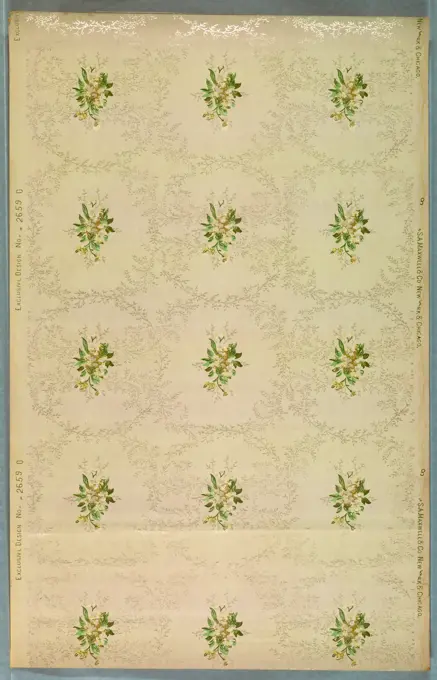
Textile Fragments

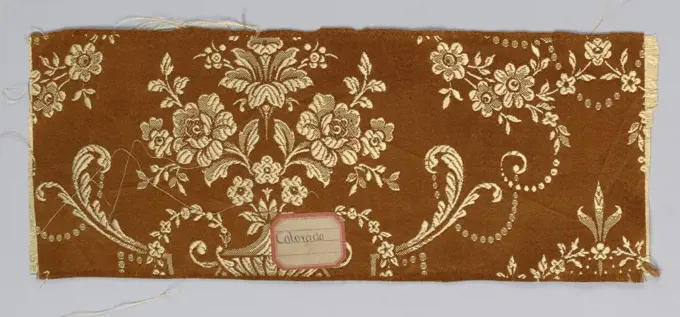
Historical fragments of silk and fabric featuring floral patterns, showcasing rich colors and intricate designs from different European periods.

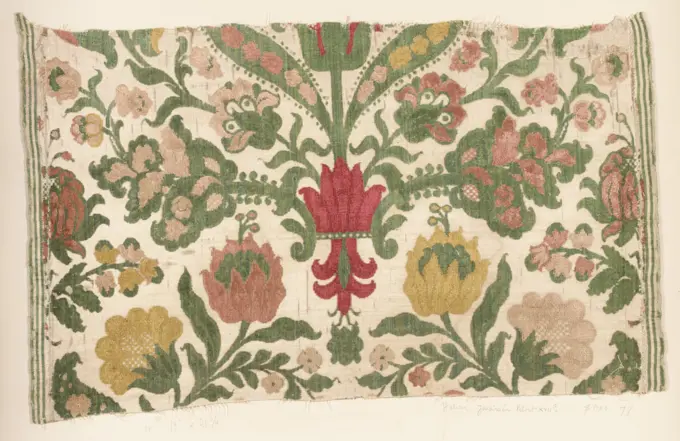
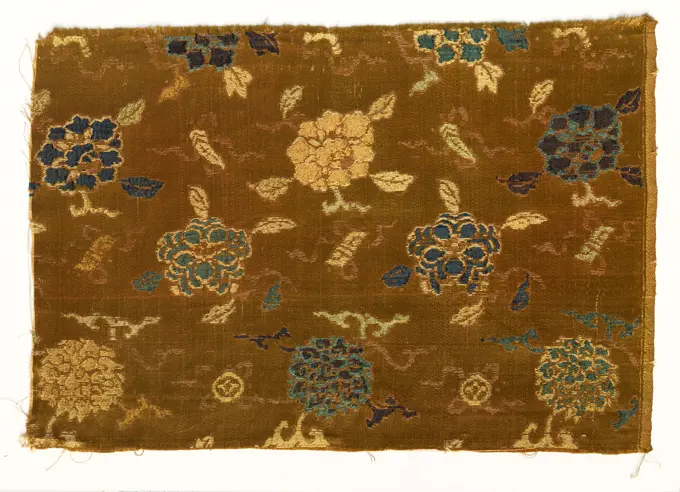
Excerpt multi -colored silk tissue, anonymous, 1500 - 1599 Fragment with repeating pattern of 4 flowers in stems with leaf work formed windows. Multicolor. Turkey (Possible) silk Fragment with repeating pattern of 4 flowers in stems with leaf work formed windows. Multicolor. Turkey (Possible) silk
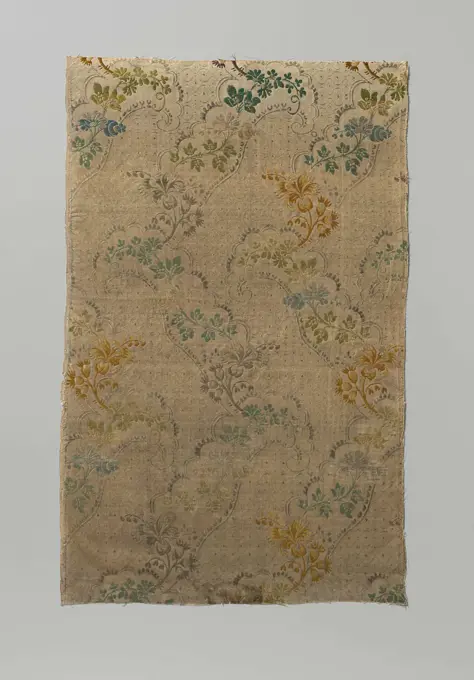
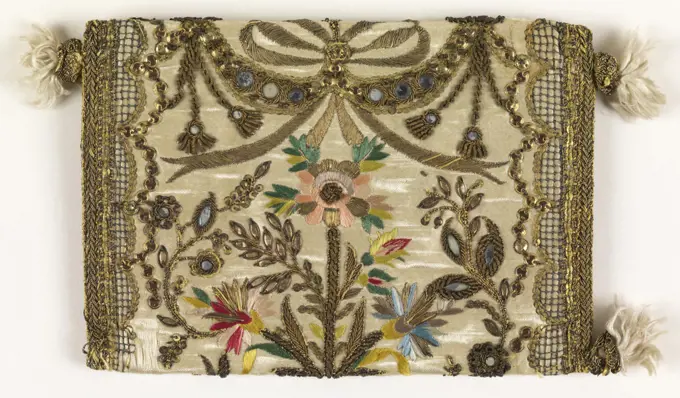
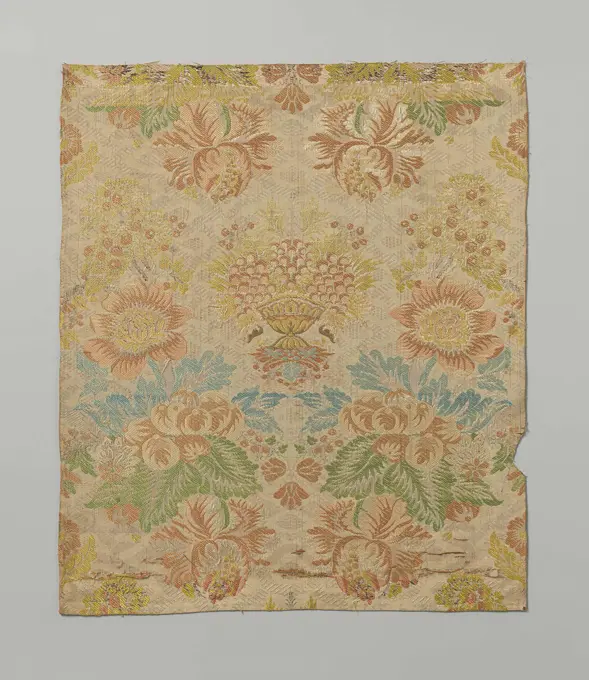
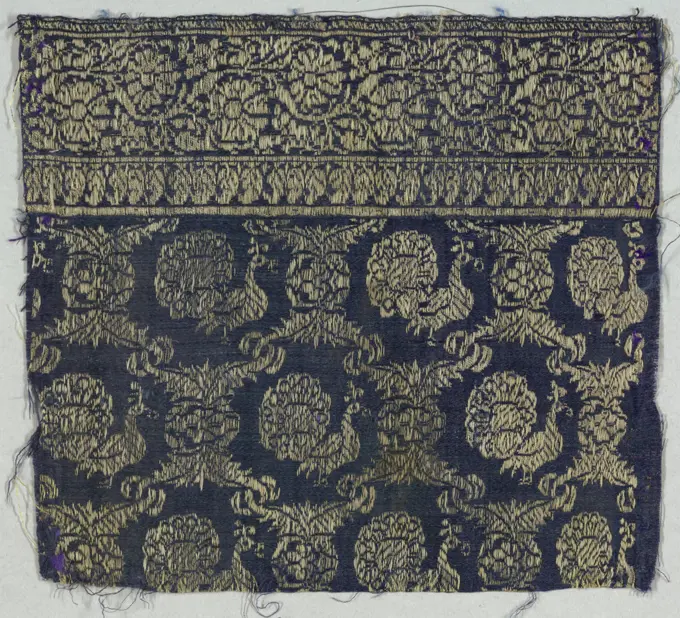
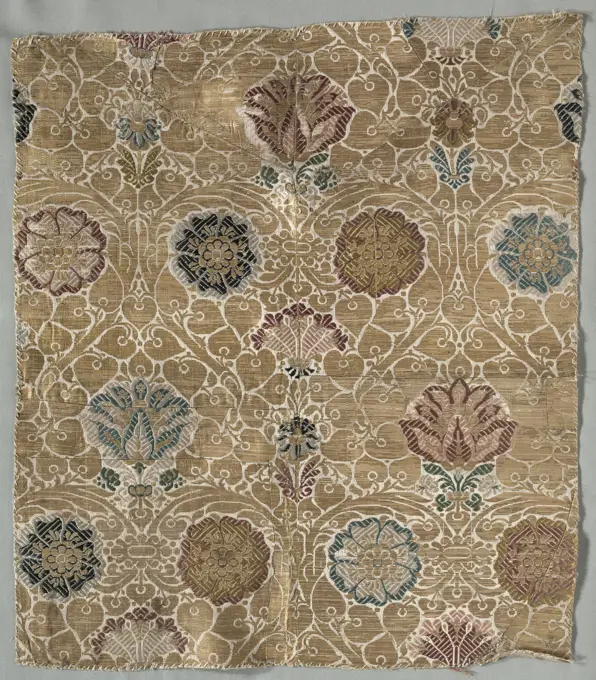
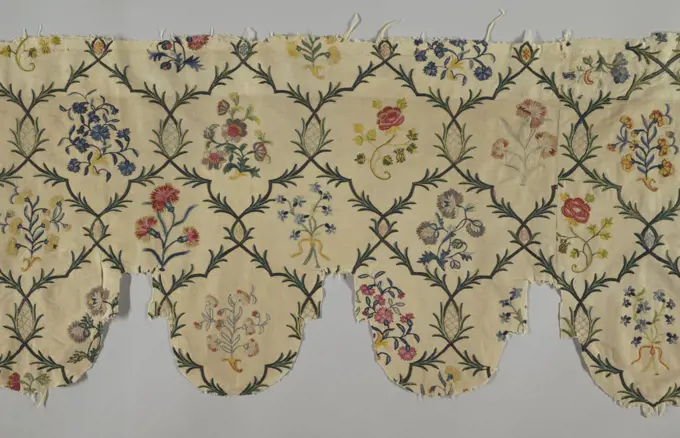
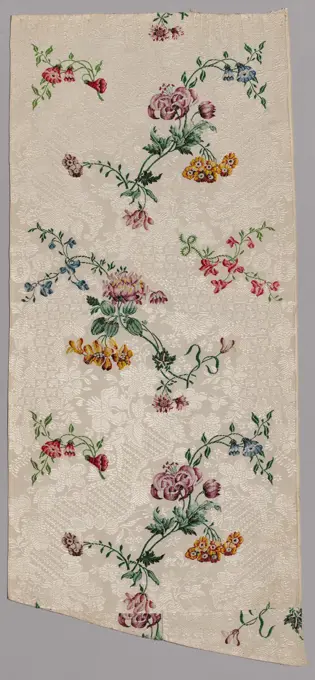
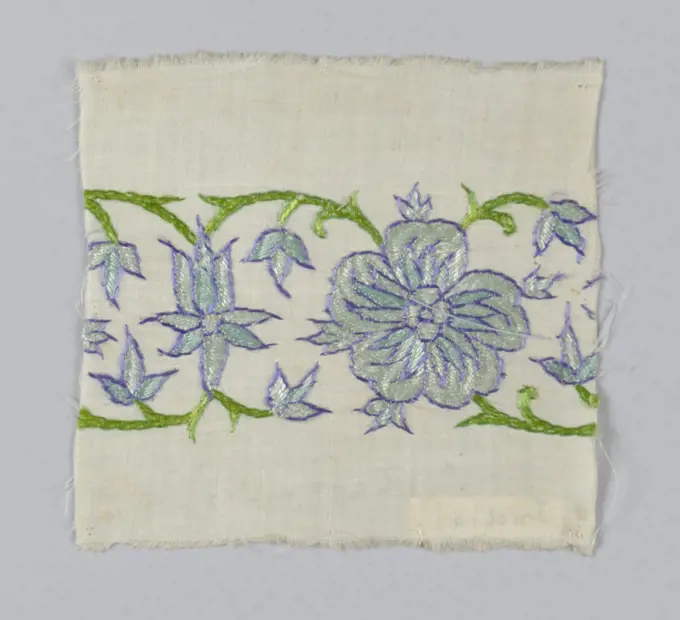
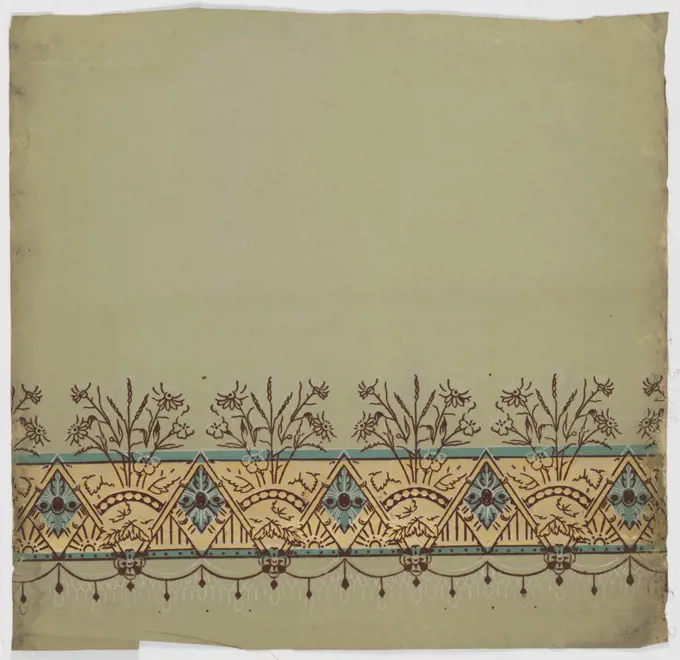
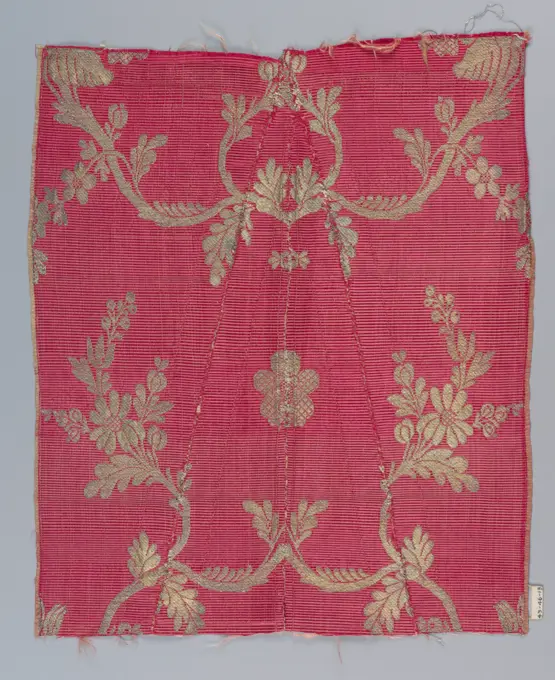
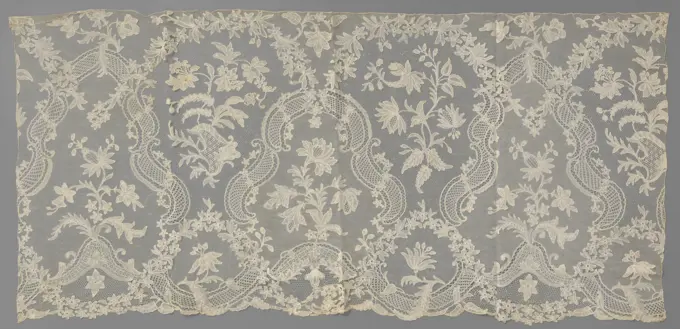
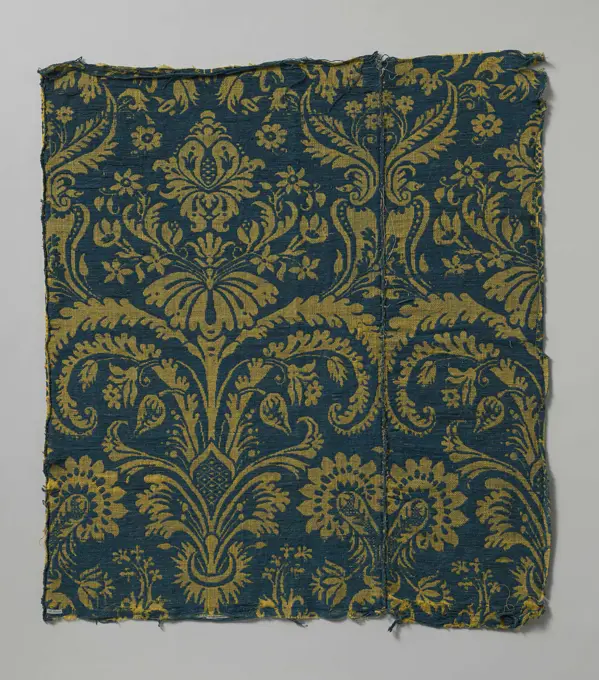
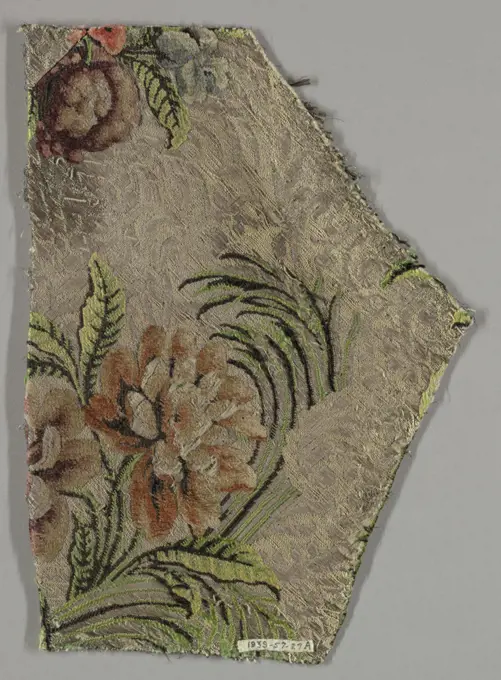
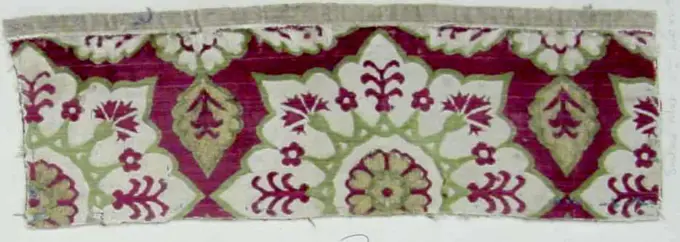
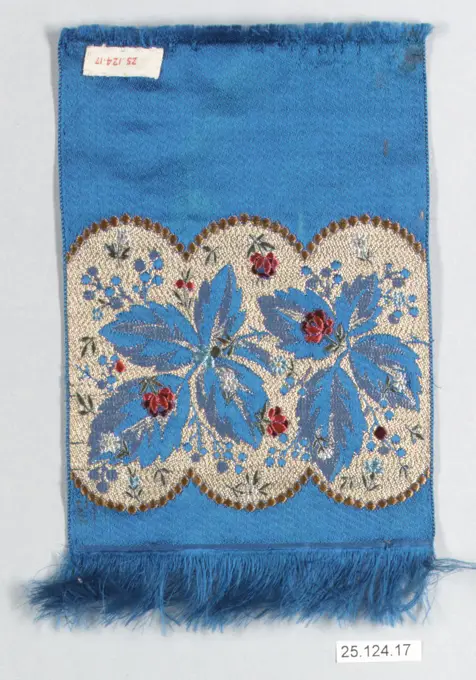
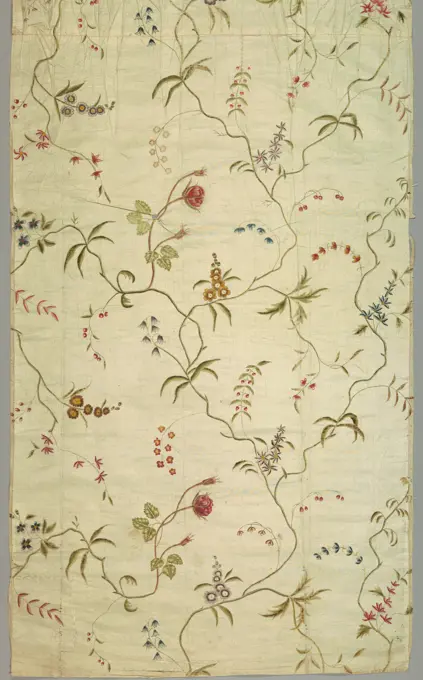
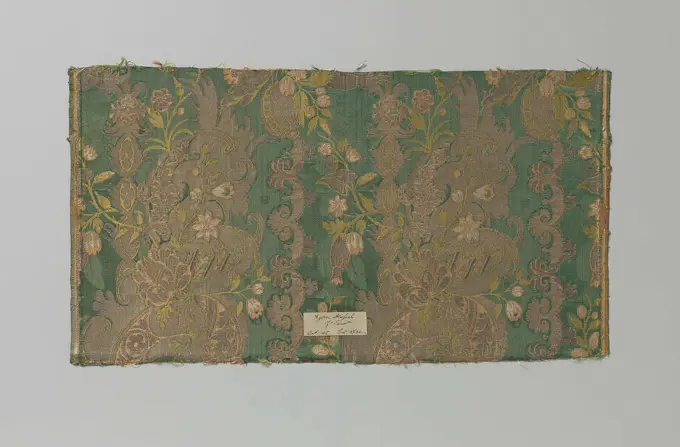
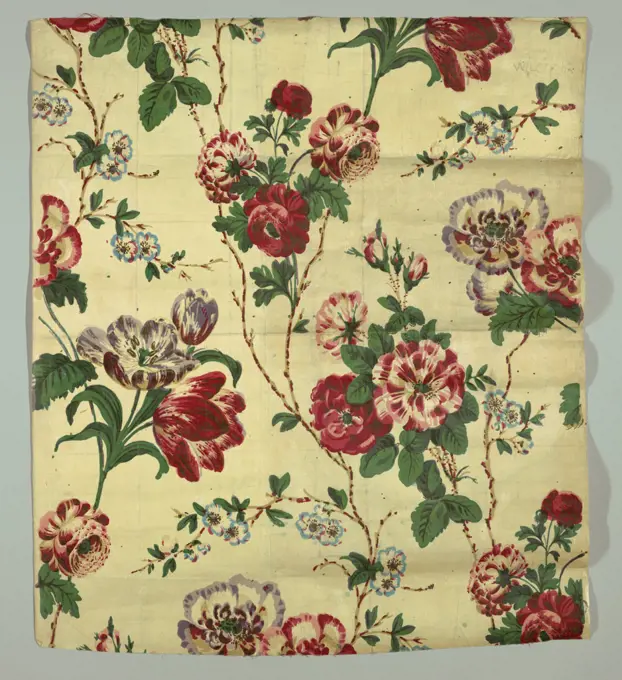
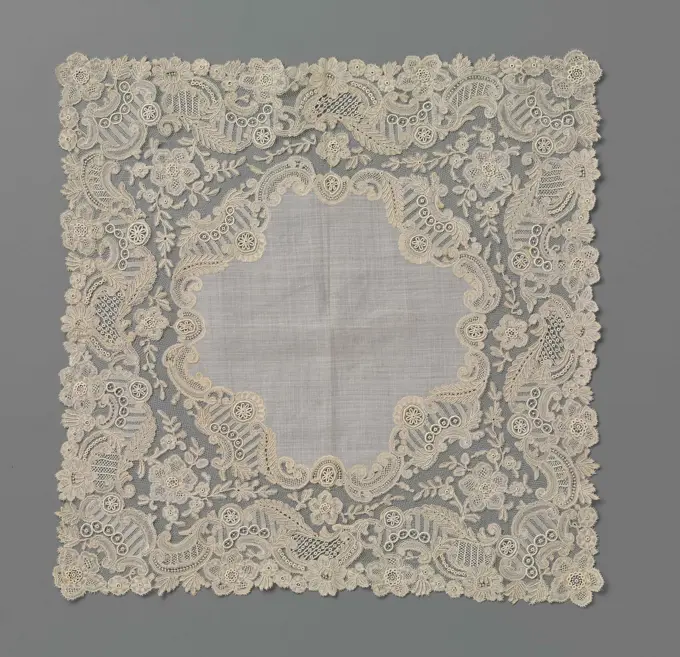
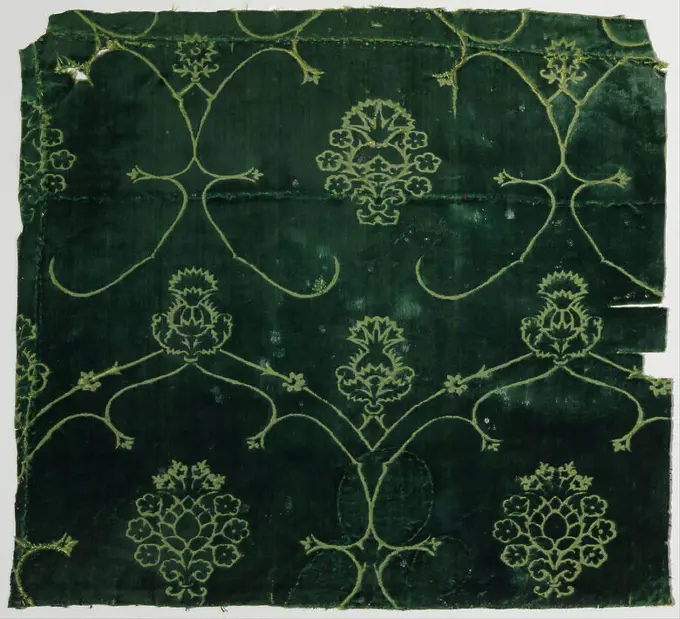
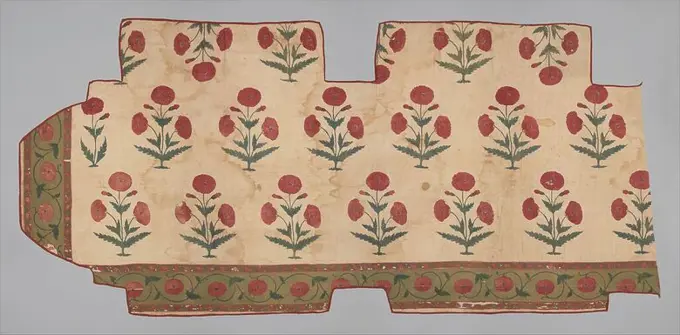
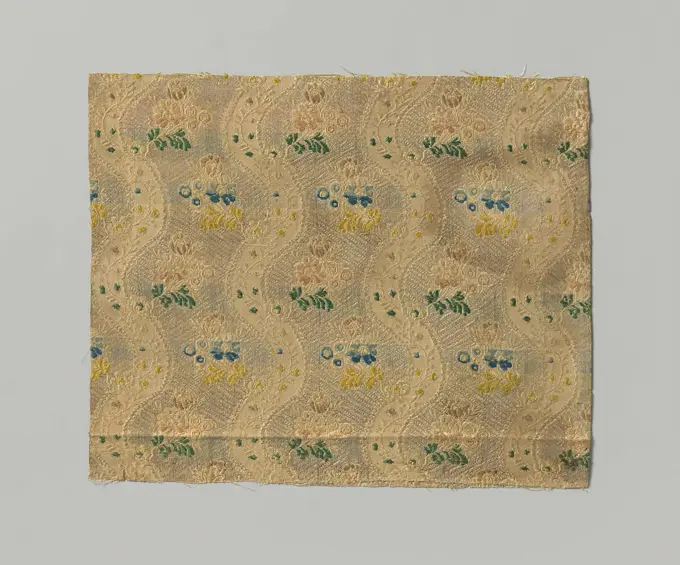
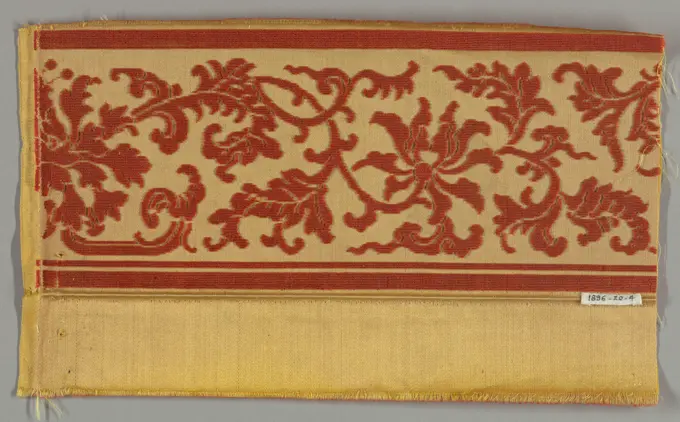
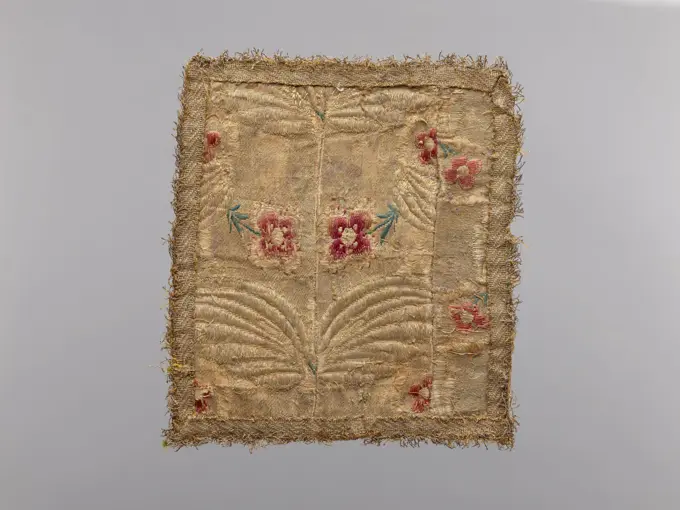
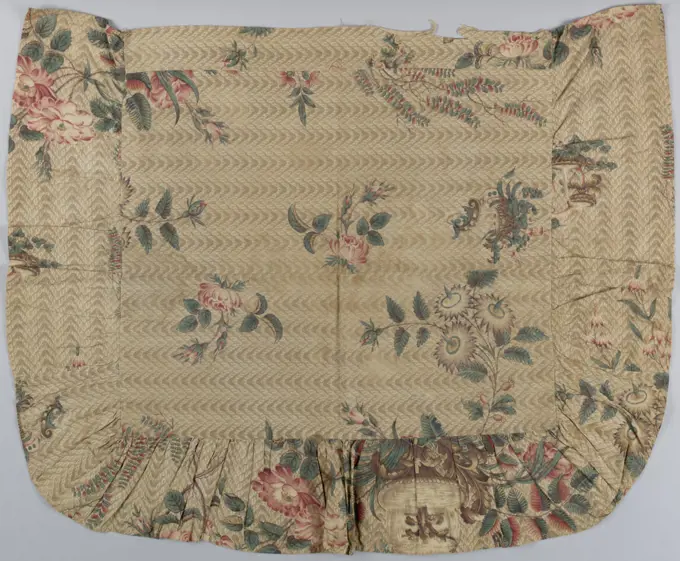
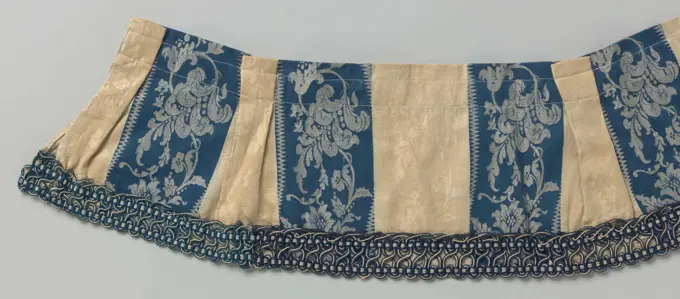
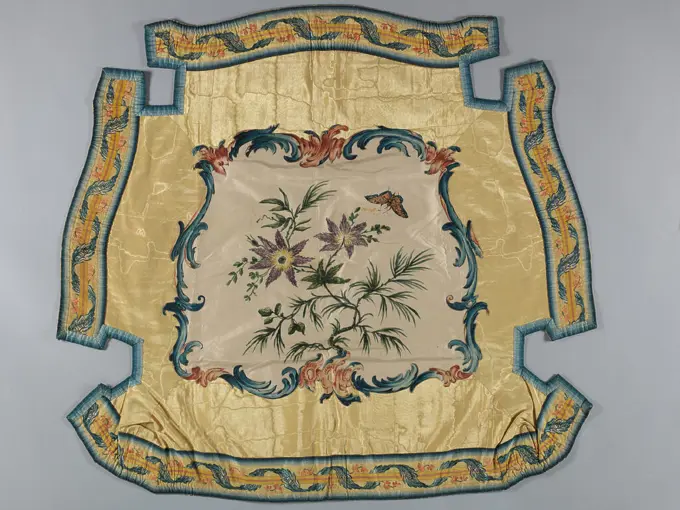
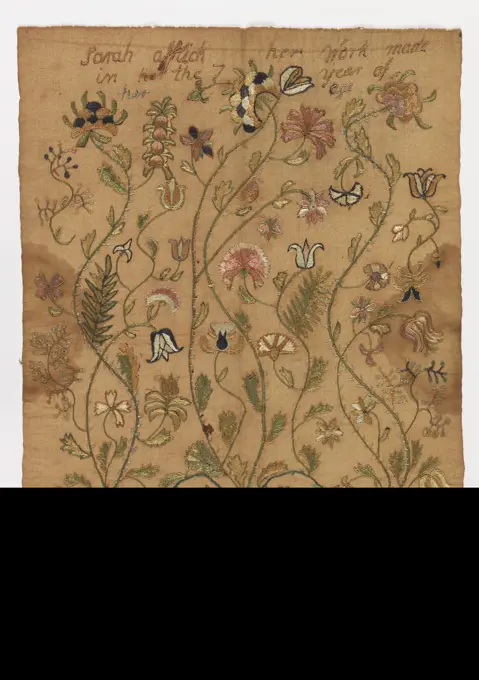
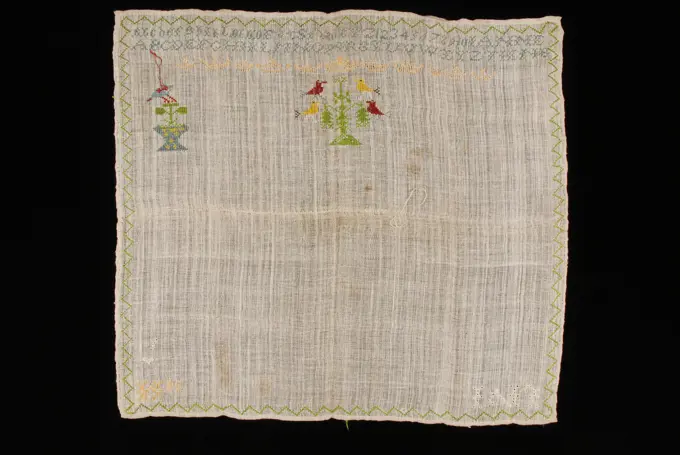
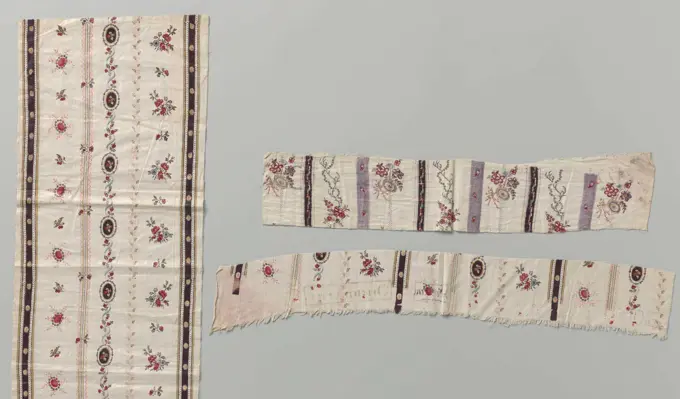
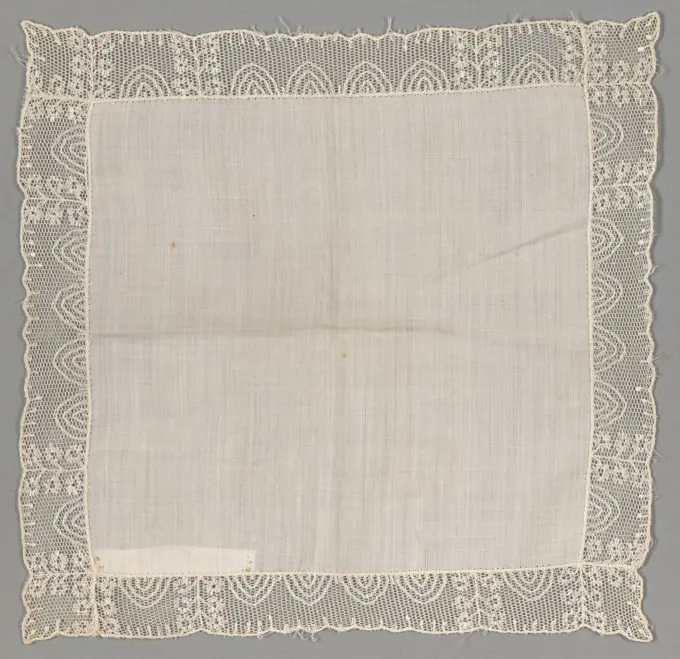
Fragment 18th century Italian, Venice. Fragment 230407Fragment multicolored brochure side. Fragment multicolor silk tissue. The pattern has a gray soil on which wavy, scalyed edges with saved spaces in which a multicolored flower branch.Fragments; silk and metal; Repeat H x W: 25 x 26.5 cm (9 13/16 x 10 7/16 in.)Fragment 17th century Italian. Fragment 230205Excerpt multi -colored silk tissue, anonymous, 1500 - 1599 Fragment with repeating pattern of 4 flowers in stems with leaf work formed windows. Multicolor. Turkey (Possible) silk Fragment with repeating pattern of 4 flowers in stems with leaf work formed windows. Multicolor. Turkey (Possible) silkLetter case, Medium: silk, gilt foil-wrapped silk, paste jewels, gilt foil spangles on silk foundation Technique: embroidered in satin, stem and couching stitches on satin weave foundation, Letter case, made as a singel panel and folded, embroidered in silk and metal threads with paste jewels and spangles on a white satin ground, with yellow silk lining and silk tassels at corners (one missing). Embroidered with an urn with a flowering tree, surrounded by swags, bow-knots and an ornamental border., France, late 18th century, costume & accessories, Letter caseFragment of silk fabric  lace pattern unknownFragment of silk fabric  colourful flower pattern unknownFragment 17th century Italian. Fragment. Italian. 17th century. Silk. Textiles-VelvetsFragment multicolored brochure side. A fragment. Ground of white silk tissue with colored flowers and fruits. Note: Self side; 0.5 cm Plain bond, (weft 4 colors).Textile; silkFragment, Medium: silk, metallic thread Technique: woven with continuous supplementary weft, Dark blue fragment with a floral border and a field with peacocks and leafy forms., India, 19th century, woven textiles, FragmentBrocaded Textile, late 1500s. Italy, late 16th century. Brocade; silk and metal; overall: 52.1 x 46.3 cm (20 1/2 x 18 1/4 in.).Valance, Medium: cotton, wool Technique: chain stitch embroidery on plain weave, Textile cut and pieced to form a valence with deep rounded scallops. Branches interlace to form a rounded lattice design, each ogive framing a small naturalistic spray of roses, forget-me-nots, carnations, etc. Colors are bright and with many variations of blue, green, yellow, pink and violet on an off-white ground., France, late 18th century, embroidery & stitching, ValanceSkirt Panel Made 1749 England (Object made in), Spitalfields (Object made in). Anna Maria Garthwaite is one of only a handful of 18th-century designers of woven silks whose names we know today. Her carefully annotated drawings reveal her intimate understanding of weaving technology, though we know little of how she became a professional designer. Her naturalistic and delicate floral fabrics have come to epitomize English taste of the mid-18th century.. Silk, plain weave foundation with supplementary patterning warps and supplementary brocading wefts . Anna Maria Garthwaite (Designer) , Daniel Vautier (Weaver)Samples, Orinoka Mills, (Philadelphia, Pennsylvania, USA), a. floral with ribbons on bright pink, b. floral with ribbons on gold color, USA, ca. 1910, woven textiles, SamplesHandkerchief, Medium: cotton Technique: block printed on plain weave, Red, black and off-white handkerchief has a central design contained within a lobed frame. Each corner has black oval medallions with floral clusters and grapes. Between these medallions are smaller black circles with flowers and grapes. Single flower heads and small dots are scattered over the field., France, 1850-1899, printed, dyed & painted textiles, HandkerchiefFragment, Medium: cotton Technique: satin and stem stitch embroidery on plain weave, White muslin with band of embroidery in a floral design of blue, green and purple., India, 19th century, embroidery & stitching, FragmentFragment silk pekin, anonymous, c. 1740 - c. 1760 A fragment of white moiré with blue satin stripes, on which colored bouquets. Netherlands silk A fragment of white moiré with blue satin stripes, on which colored bouquets. Netherlands silkAltar Frontal (), 1600s. Italy, 17th century. Embroidery; silk on linen; overall: 160.8 x 36 cm (63 5/16 x 14 3/16 in.).Velvet Fragment, 1600s. Italy, 17th century. Velvet; overall: 23.7 x 26.5 cm (9 5/16 x 10 7/16 in.).Fragment Made 1775-1800 France. Cotton, plain weave; block printed .Ribbon, Medium: silk Technique: woven, Empire-style ribbon fragment has light blue borders with a wavy line pattern. Central portion is white with a curling sprig pattern in dark yellow., France, early 19th century, woven textiles, RibbonWindow shade, Block printed and flocked on canvaa, Wide central band of Anglo-Japanesque in gold, with flowers and wheat above, and swags with tassels below. Burgundy flock with metallic gold, silver and green on light green fabric support., USA, 1875-1900, Wallcoverings, Window shadeEmbroidered chasuble unknownTextile (France); silk and metallic threadEmbroidered kerchief trimming unknownFragment, Medium: linen warp, cotton weft Technique: plain weave foundation. Mordants for black and red block-printed. Yellow and blue (combined for green) applied by brush., Thorny rose stems and flowers on a picottage background. Black, red and green on white., Jouy, France, 1750-1800, printed, dyed & painted textiles, FragmentAlbesto smoke Van Kloskant with wide Rivière, Anonymous, c. 1750 - c. 1760 Albesto smoke of natural -colored Brussels bobbin side. Four different loose branches of ecclesiastical flowers (lily, pomegranate, grapesros) fill triangular and shield-shaped fields, which are bordered by a rivière of wide C-Voluten. The triangles are alternately high and narrow and short and thick and show a fine mesh network, while the shield -shaped fields are filled with a rough grid. Along the scalloped edge, a mountain and valley line runs again from C-Voluten, which are cut over by a fine closed flowerguirle, which repeats itself at the top of the strip. The C-Voluten are filled with gridwork and wound with a fine flower garland or cut by a feathered leaf. Southern Netherlands linen (material) bobbin lace / Brussels bobbin lace Albesto smoke of natural -colored Brussels bobbin side. Four different loose branches of ecclesiastical flowers (lily, pomegranate, grapesros) fill triangular and shield-shaped fFragment yellow and blue silk tissue. Two tissue fragments assembled. Blue pattern is a symmetrical renaissance ornament, stylized tendrils, flowers and blades on a fond of flottenant yellow silk threads.Fragments, Medium: silk, silver thread Technique: plain compound twill with supplementary weft, White silk foundation fabric entirely covered in ground with secondary silver weft thread and silver frisé brocading forming elaborate decorative foliate motifs. Over this large-scale floral sprays in secondary areas, black and dark brown silk wefts and brocading in green silk and multicolored chenille., France, mid-18th century, woven textiles, FragmentsTowel border 1800-1850 Russian. Towel border 173347Fragment of a Cushion Cover (Yastik) 16th-17th century This fragment once belonged to a large rectangular cushion cover with a characteristic repeating floral medallion covering the center field against a dominant red velvet background. A quarter and a half of the repeat-medallion survive in this fragment. Such yastiks were costly velvet furnishing fabrics with glittering metal-wrapped thread used by the Ottoman elite to adorn the interiors of the royal palaces and the homes of the wealthy elite.. Fragment of a Cushion Cover (Yastik) 454566Woman's necktie 1870-80 French. Woman's necktie 221672Length of Brocaded Silk, 1700s. Italy, 18th century. Brocade; silk and metal; average: 89.2 x 57.2 cm (35 1/8 x 22 1/2 in.).Medallion Quilt Elizabeth Welsh (American, active early 19th century). Medallion Quilt, ca. 1830. Cotton, 110 1/2 x 109 in. (280.7 x 276.9 cm).  Elizabeth Welshs use of reverse appliqué, in which the fabric that provides the ground for a design is meticulously cut away from the decorative elements that lie below, shows the care that went into creating this patriotic medallion quilt. Since several nearly identical quilts have been attributed to the Baltimore area, it is likely that Welsh had a connection to this region through friends or relatives. In advance of the national Bicentennial in 1976, this pattern was translated into a popular kit, titled “American Eagle.”  ca. 1830Fragment; silkFragment Made 1601-1700 Spain. brocaded silk .Spanning fabric with backdrop of branches, leaves, flowers and fruits, anonymous, c. 1750 - c. 1790 A lane multicolored painted cream spancing material from silk. Description See A. China silk printing / painting A lane multicolored painted cream spancing material from silk. Description See A. China silk printing / paintingTextile (England); cotton; Warp x Weft: 290 x 120.1 cm (9 ft. 6 3/16 in. x 47 5/16 in.)Fragment multicolored brochure side. A fragment of green silk tissue, with different colored figures of silk and gold and silver wire. Note: Selling; 0.8 cm, 4 mm plain bond, 4 mm satin.Leaf with pattern of flowers and fruits, anonymous, c. 1760 - c. 1800 brocade paper Leaf with pattern of flowers and fruits. At the top right three pomegranates and daffodils. Used as a cover for a publication from 1781.  paper. paint (coating) relief printing ornament derived from plant formsTextile, Medium: cotton Technique: block printed on plain weave, glazed, Sample of printed cotton, heavily glazed, showing a large floral design of tulips and roses with curving leafy stems on a white ground. In red, blue, green, violet and brown. Later printing from older blocks with visible block marks., England, 1840-60, printed, dyed & painted textiles, TextileHandkerchief with a border of mixed side with shaded seed beads. Handkerchief with an edge of natural-colored mixed side, Brussels climbing side and needle side with needle lace ground. A scalloped batist center piece is surrounded by a lace edge with asymetric pattern. The closed, wavy interior and outer edges consist of small seed beads with a filling of open arces, from C-voluten with wheels edge, with relief contours and raster filling and spring leaves. In the corners there is always a large Christmas rose inside and out of these edges. The Christmas roses come for three times on the sides.Fragment; linen, silk; Bequest of Marian Hague; 1971-50-78Fragment. Date/Period: 15th century. Fragment. Medium: silk. Technique: supplementary warp pile in a 4&1 satin foundation (velvet). Height: 610 mm (24.01 in); Width: 500 mm (19.68 in). Author: UNKNOWN.Leaf with spreading pattern of flowers on points stock, anonymous, c. 1700 - c. 1850  Leaf with spreading pattern of flowers on points stock. Used as a cover.  paper. block printing (relief printing process) ornament derived from plant formsChintz Fragment (India); cotton; Warp x Weft: 24.5 x 11.5 cm (9 5/8 x 4 1/2 in.)Fragment brochureed yellow side with multicolored patterns of bouquets from, among others, Popavers, Hyacinthen, Asters, C. 1740 - c. 1760 Fragment yellow silk with multicolored pattern in silver, white, red, purple, brown and blue of bouquets of poppies, hyacinthen, asters etc., surrounded by leaf work. Object is composed of two excerpts sewn together. Lyon silk. Fragment yellow silk with multicolored pattern in silver, white, red, purple, brown and blue of bouquets of poppies, hyacinthen, asters etc., surrounded by leaf work. Object is composed of two excerpts sewn together. Lyon silk.Panel (From a Dress). England, Spitalfields. Date: 1740-1750. Dimensions: 111 × 50.6 cm (43 3/4 × 19 7/8 in.)Warp repeat: 47.5-48.4 cm (18 3/4-19 in.). Silk, plain weave with patterning and brocading wefts. Origin: England. Museum: The Chicago Art Institute, Chicago, USA.Leaf with flower branches between winding lines and point stock, anonymous, c. 1700 - c. 1850  Leaf with flower branches between winding lines and point stock. Used as a cover.  paper. block printing (relief printing process) ornament derived from plant formsTextile (England); cottonSampler (Mexico); silk and linen embroidery, linen foundation; 24 x 51.5 cm (9 7/16 x 20 1/4 in.); Bequest of Mrs. Henry E. Coe; 1941-69-129Fragment of a Floorspread. Dimensions: L. 66 3/4 in. (169.5 cm)W. 142 in. (360.7 cm). Date: late 17th century.On this fragment from what was once a magnificent floorspread, later cut and hemmed for a different purpose, stately rows of poppies line the central field. Like several Mughal-period pile carpets, the main motif changes direction in some areas; here, alternate poppy plants appear upside down in the top row. The spread was made through the laborious dyeing process known as kalamkari; remarkably, the usually fugitive green is very well preserved. In this process, green was achieved by painting a yellow dye over areas already tinted with indigo, but the yellow often faded, leaving only the undercoat of blue on historic kalamkaris. Museum: Metropolitan Museum of Art, New York, USA.Sampler, Medium: silk embroidery on linen foundation Technique: cross stitches on plain weave, Narrow conventionalized border surrounding the alphabet, floral cross border and detached motifs including a woman at a well with flowers., Italy, 1800-1850, embroidery & stitching, SamplerSidewall, Marshmallow; Manufactured by Nevius & Haviland; possibly England; machine-printed; 120.5 x 50.5 cm (47 7/16 x 19 7/8 in.)Textile; silkPiece 18th century Japan. Piece 71618Band sampler, Medium: silk on linen, glass beads Technique: embroidered on plain weave, Drawnwork sampler with beadwork edge showing pairs of animals with flowers, and bands of multicolored silk embroidery on linen., Mexico, 19th century, embroidery & stitching, Band samplerFragment multi-colored side lamps. A fragment silk tissue with a ground on which swinging courses in which snowy flower drinks. The soil is striped between the winding lanes on which multicolored flower branches.Bear claw of sits with a white stock, on which a scattering motif of dotted red windows and stars and floral multi -colored motifs; red stitching, white linen lining, anonymous Bear claw of sits with a white stock, on which a scattering motif of dotted red windows and stars and floral multi -colored motifs; Red stitching, white linen lining.  cotton (textile). linen (material). chintz chintz Bear claw of sits with a white stock, on which a scattering motif of dotted red windows and stars and floral multi -colored motifs; Red stitching, white linen lining.  cotton (textile). linen (material). chintz chintzBand (China); silkTextile Fragment, 1800s. Japan, 19th century. Silk, metallic thread; average: 43.2 x 30.5 cm (17 x 12 in.).Fragment, Medium: silk Technique: plain compound cloth brocaded with silks, White ground. Very imcomplete symmetrical floral design, partly in secondary green silk weft partly brocaded in coral, yellow, tan, beige and ivory. Right selvage present., Italy or Spain, 1700-1750, woven textiles, FragmentPanel, Medium: sik embroidery on linen foundation Technique: embroidered in brick and ouline stitches, Small hanging or shawl of fine, loosely woven linen, embroidered in silk in blue, violet, red, olive green, pink and white. Design symmetrically arranged, of stylized plants with spiky, angular outlines. At ends, narrow border of white embroidery, fringe. Pieced in center., Algeria, 18th-19th century, embroidery & stitching, PanelCeiling Paper (USA); Manufactured by Maxwell & Co., S.A. (United States); machine-printed paper, liquid mica; 77 x 49.5 cm (30 5/16 x 19 1/2 in.)Sample (USA); Manufactured by Orinoka Mills (United States); 1989-80-70Application fragments unknownAltar-cloth. unknown, authorFragment 18th century Italian, Venice. Fragment 230408Shawl, mid 19th century, 62 1/8 x 126 in. (157.8 x 320.04 cm), Wool; woven fabric, France, 19th centurySamples, Orinoka Mills, (Philadelphia, Pennsylvania, USA), a: rust color ground with gold color pattern, b: pink ground with white pattern, USA, ca. 1910, woven textiles, SamplesStick;  18th century (1701-00-00-1800-00-00);Design for a Cushion or Chair Seat Cover Made 1804-1814 France. Design on paper .Fragment, Medium: silk Technique: cut and uncut supplementary warp pile (velvet) in a satin foundation, Small fragment of red cut and uncut velvet on a white satin ground in a pattern of flowers, rosettes, leafy sprigs and rampant animals., Italy, 16th-17th century, woven textiles, FragmentTextile (France); silk; a) Warp x Weft: 59.3 x 20 cm (23 3/8 x 7 7/8 in.) b) Warp x Weft: 18.5 x 19.8 cm (7 5/16 x 7 13/16 in.); 1943-22-3-a,bShawl Fragment; silk, cotton; Warp x Weft: 80 x 20 cm (31 1/2 x 7 7/8 in.); 1953-162-45Sample, Orinoka Mills, (Philadelphia, Pennsylvania, USA), Light green with pink, red, green, yellow, blue and white flowers and ribbons., USA, ca. 1910, woven textiles, SampleFragments; silkPillow cover, Medium: cotton Technique: printed, Pillow cover made from two pieces of cotton. For the top and ruffle, multicolored roses, other flowers and vase are on a light brown ground of wavy zigzags. For the back, hexagonal compartments are filled with flowers, red on a brown ground., USA, 19th century, printed, dyed & painted textiles, Pillow coverSampler Made 1778 Germany. Linen, plain weave; embroidered with silk .Fragment. Italy. Date: 1601-1625. Dimensions: 19 x 19.65 cm (7 1/2 x 7 3/4 in.)Repeat: 14.6 x 5.6 cm (5 3/4 x 2 5/8 in.). Silk, satin weave with supplementary warps forming cut, uncut, and voided velvet. Origin: Italy. Museum: The Chicago Art Institute, Chicago, USA.Textile (Switzerland); Made by Pourtales & Cie (France); cottonStrook van blauw en wit gestreept linnen damast.Strip of blue and white striped linen damask. The blue and w stripes both have an ongoing pattern of floral drinks; The blue in light blue, the white in white. The strip belongs to four curtains (BK-1992-26-A to BK-1992-26-D) and a strip (BK-1992-F).Fragment; silkPair of chair seat covers. Culture: probably French. Designer: Painted designs in the style of Jean Pillement (French, Lyons 1728-1808 Lyons). Dimensions: Overall (.1): 28 1/2 × 31 1/2 in. (72.4 × 80 cm);Overall (.2): 23 1/2 × 26 in. (59.7 × 66 cm). Date: third quarter 18th century.This is a rare surviving example of 18th century painted silk upholstery panels that were designed to be removable, presumably for the seasonal change of show covers which was a French tradition. The additional marking of the reverse connects these covers to the practice of marking furniture frames, no doubt the numbers on these covers corresponded to the frames on which they were used. Museum: Metropolitan Museum of Art, New York, USA.Chintz fragment, Medium: cotton Technique: mordants for 2 reds (over resist), purple and black applied by pen and brush; madder dyed; blue applied over resist; chintz on plain weave, Parts of floral garlands in reds and blue., India, 18th century, printed, dyed & painted textiles, Chintz fragmentSeat Cover; woolFragments Made 1801-1900 Europe. .Square 19th century. Square 445867Piece 18th century Japan. Piece. Japan. 18th century. Silk, metallic thread. Edo period (1615-1868). Textiles-WovenTextile (England); cotton, linen bindingPanel Made 1870-1890 Europe. Silk and cotton, plain weave with gilt-metal strip supplementary facing wefts and two-color supplementary pile warps forming cut and uncut voided velvet .Fragment silk tissue with lilies, anonymous, 1400 - 1499 Fragment of a fabric with white sides chain and impacts of yellow, white, red and with gold -sized side. Pattern of red flames raised golden lilies on white soil. Italy Ketting an element: Silk. Metal Thread double weave Fragment of a fabric with white sides chain and impacts of yellow, white, red and with gold -sized side. Pattern of red flames raised golden lilies on white soil. Italy Ketting an element: Silk. Metal Thread double weaveSampler (USA); Embroidered by Sarah Afflick (American); silk embroidery on cotton foundationUnfinished sampler or lettercloth worked in cross stitch in colored silk on loose woven unbleached linen, marked LNI, sampler embroidery needlework imagery silk linen, textile embroidery cross stitch locker stitch double star stitch Large piece of very loosely woven unbleached linen with left and right selvedge and under and above narrow hem of 0 , 4 cm. The patch is embroided with silk in the colors green greyish blue medium blue burgundy yellow salmon pink black and satin white The lap is not completed only the surrounding edge is complete and along the top of the piece is embroided. Description of the rag in horizontal bands from left to right and from top to bottom: embroided alphabet and number series and: IANNE and TIENB and embroided below: NN and INF or LNI needleworkFragmenten sits met streeppatroon op witte grond met auberginekleurige ovalen, gevat in verticale slingers.Fragments sits with stripe pattern on white ground with eggplant color ovals, caught in vertical garlands. Pattern: There are five different stripes on a wide white orbit between two equal eggplant tires. The middle of the five consists of light blue garlands with rosary branch, interrupted by eggplant-colored ovals. Marked on two loose fragments: E in ack-shaped frame in orange; Drincklerin in Geel; brands in aubergine rim; ... () In red; E. Malin in red; Dubvel o and (demolished) M.kr ... in black. On the second piece: MCl12, .16.15 and 1221. Fragment individually numbered as -A, -B and -C.Textile (England); cottonBliżej Kultury unknownBook Cover Made 1775-1800 France. Paper board, covered with silk and glass beads, beaded; edged with silk and gilt-metal-strip-wrapped silk, plain weave; lined with silk, plain weave . Style of Jean Baptiste Huet