Textile Fragments

Historic textile fragments showcasing intricate patterns and colors, representing fabric artistry from different periods and regions.

Fragment Printed Cretonne with pattern of Klaver with butterfly within Spitsovalen, Theo Nieuwenhuis, 1900 - 1925 Fragment printed cretonne with pattern of clover with butterfly within Spitsoval in the colors red, a decayed color, moss green and pink on natural stock. Netherlandsmaker: Helmond linen (material). printing Fragment printed cretonne with pattern of clover with butterfly within Spitsoval in the colors red, a decayed color, moss green and pink on natural stock. Netherlandsmaker: Helmond linen (material). printing
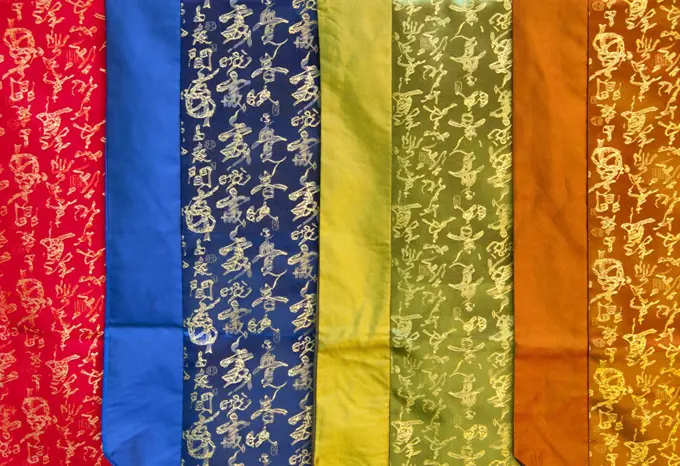
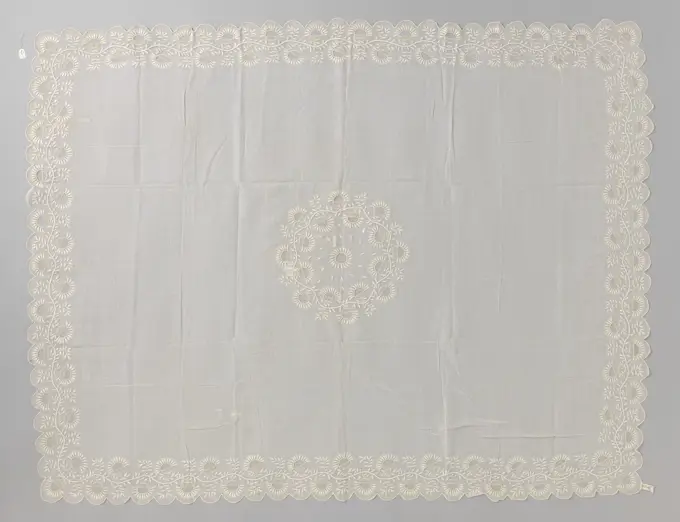
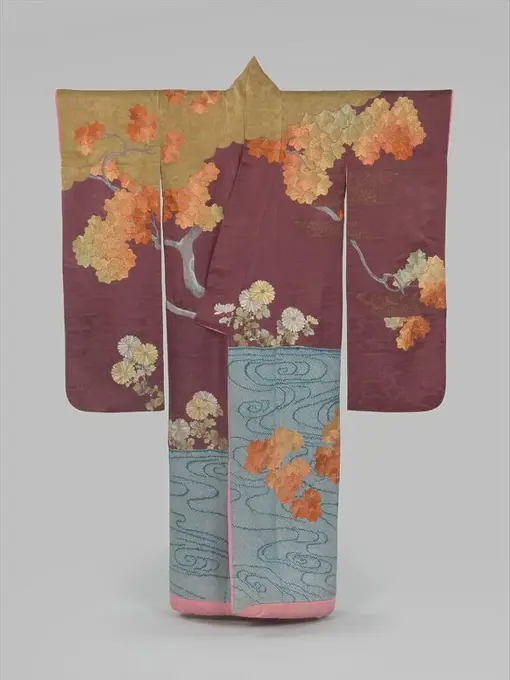
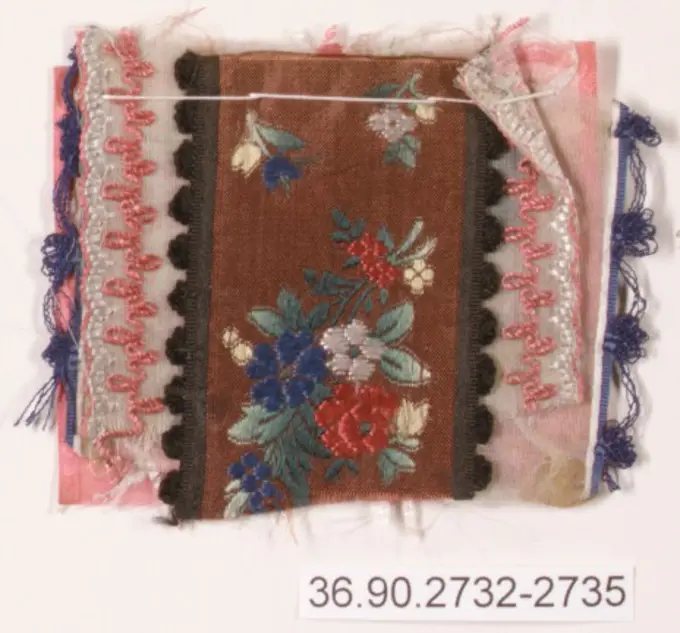
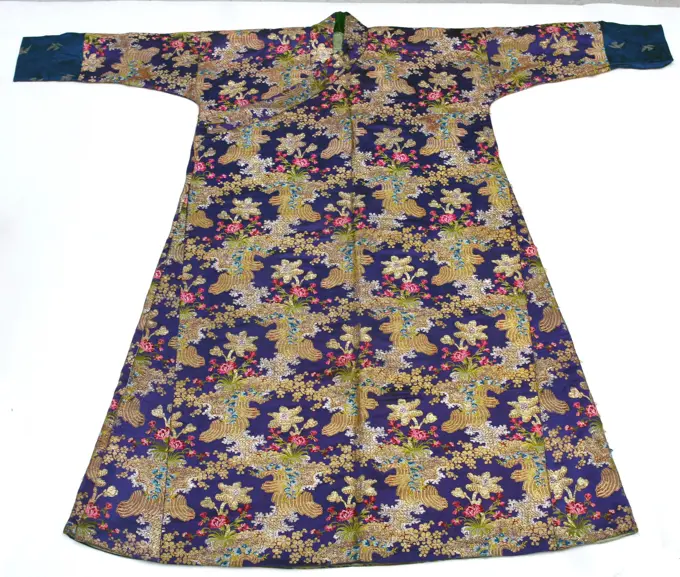
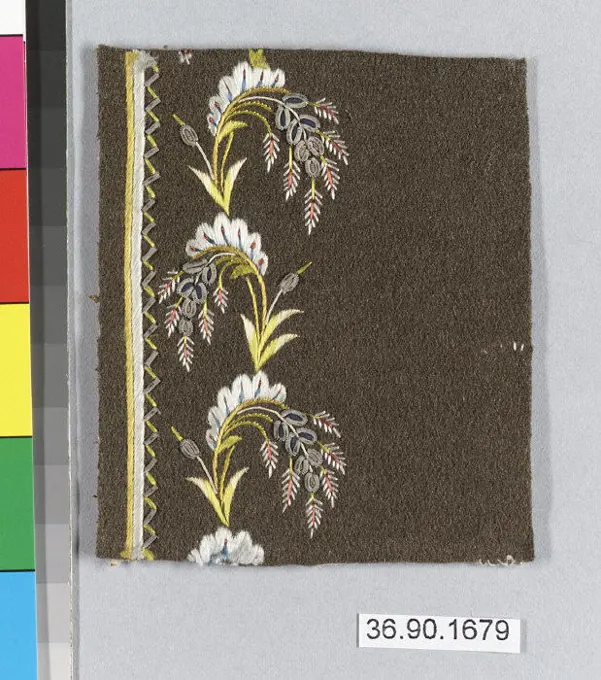
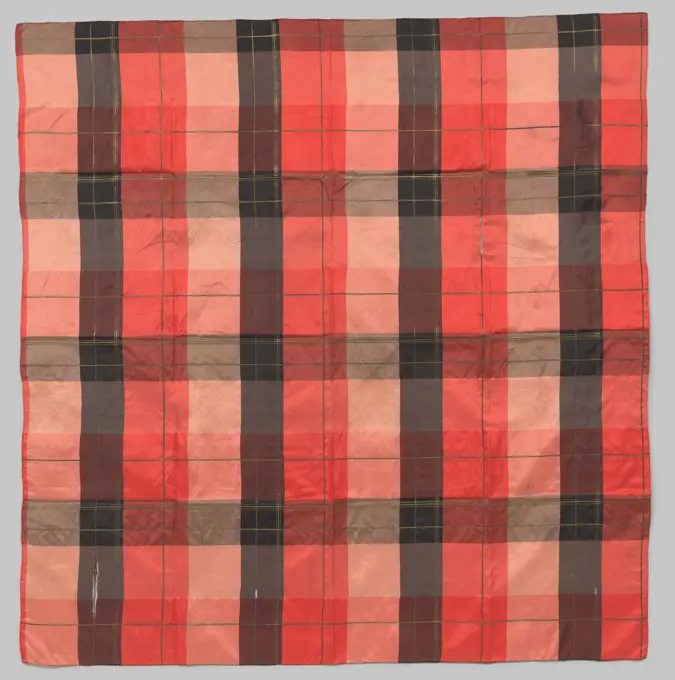
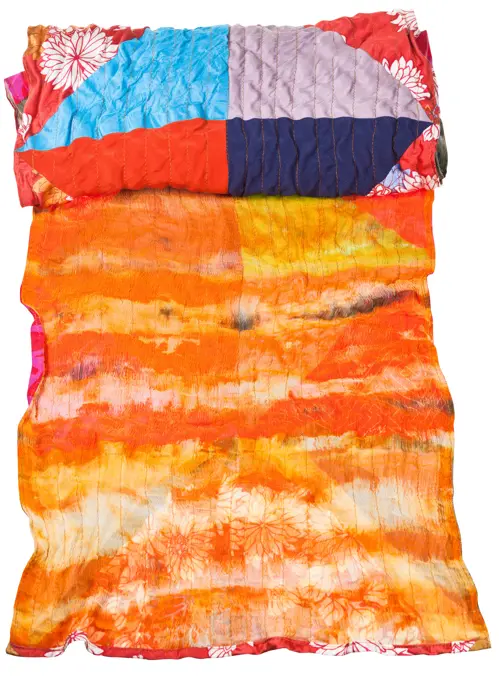
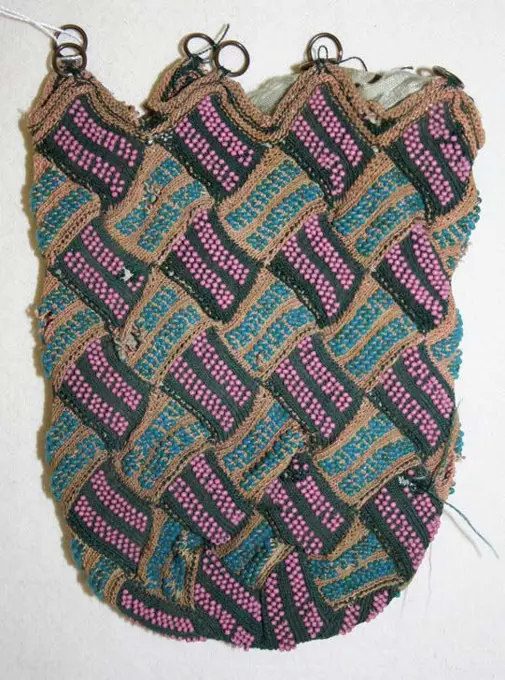
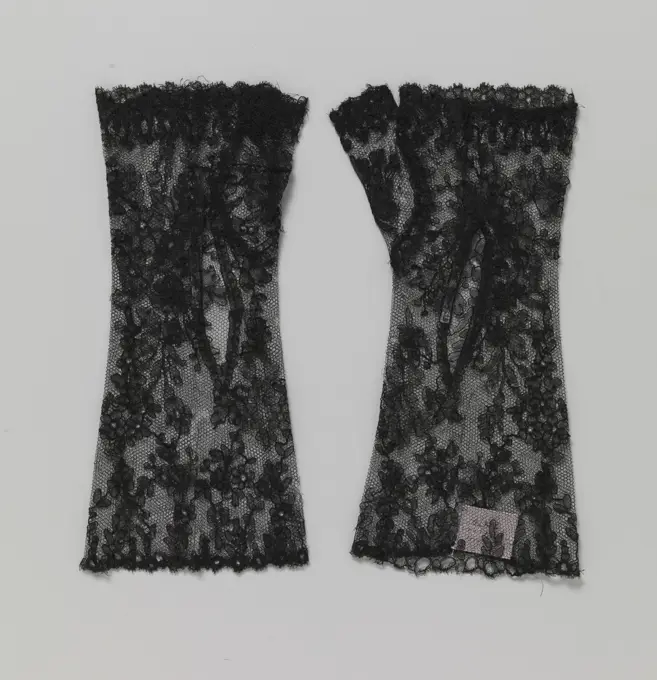
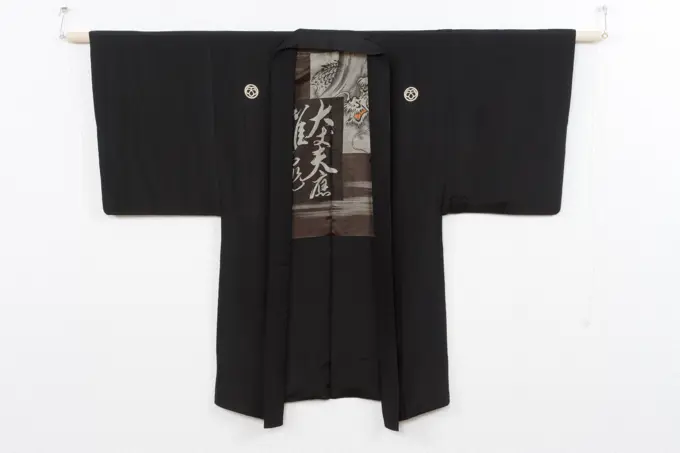
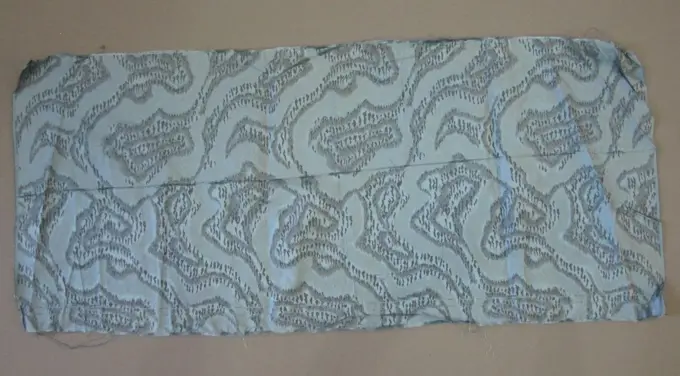
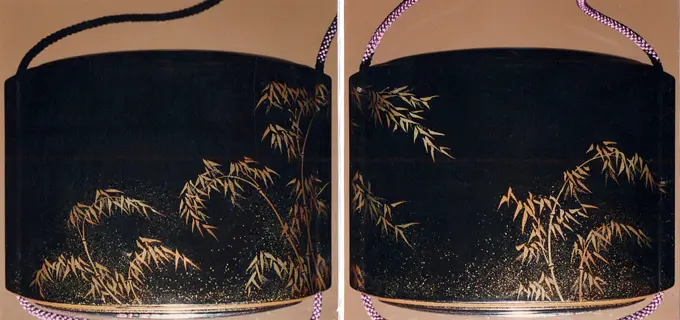
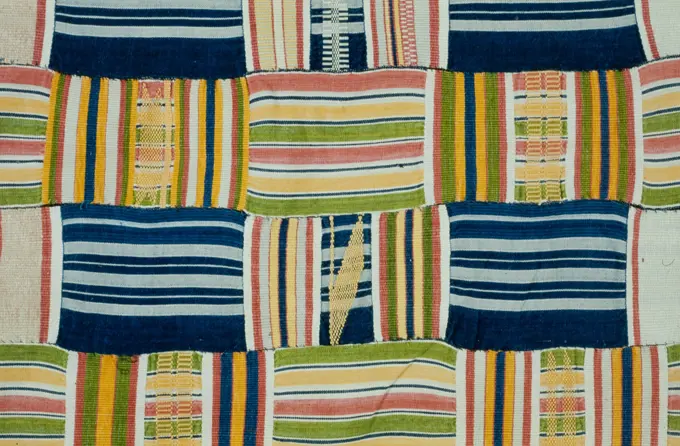
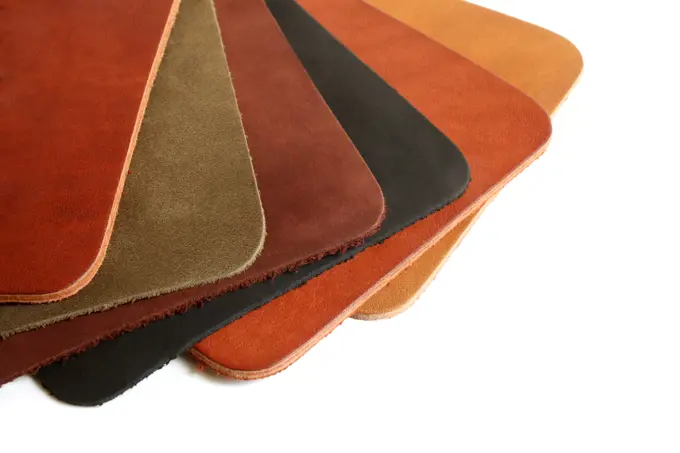
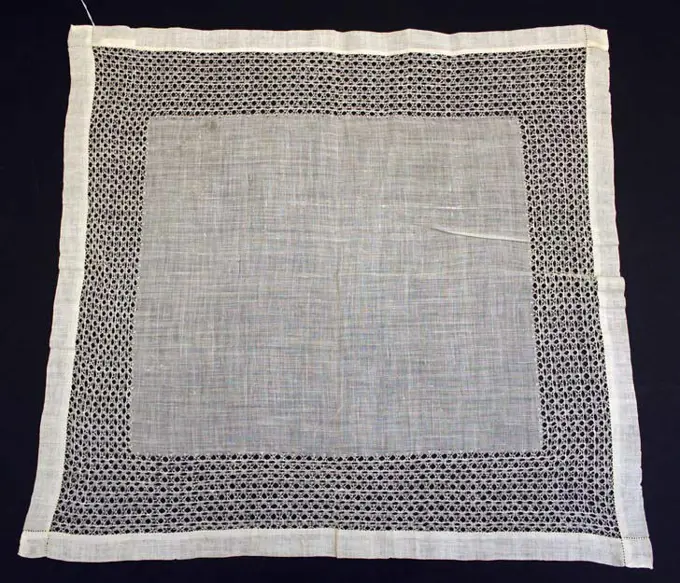
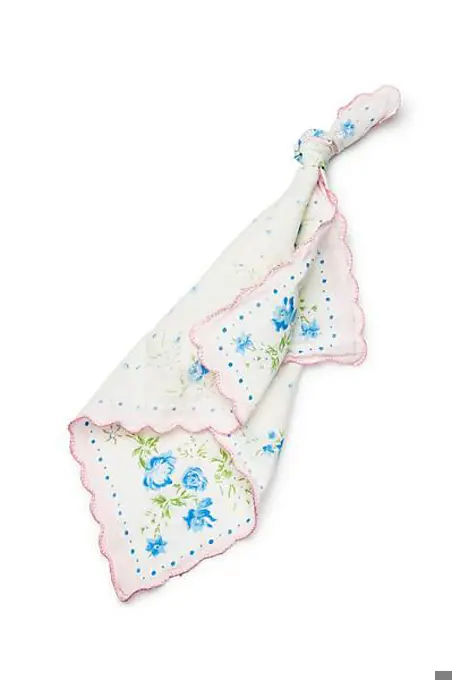
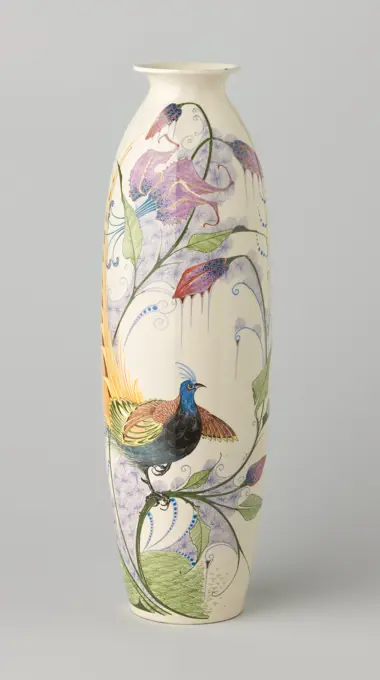
Piece 18th-19th century Japan. Piece 66712Yangshuo is rightly famous for its dramatic scenery. It lies on the west bank of the Li River (Lijiang) and is just 60 kilometres downstream from Guilin. Over recent years it has become a popular destination with tourists whilst also retaining its small river town feel. The name Guilin means Cassia Woods’ and is named after the osmanthus (cassia) blossoms that bloom throughout the autumn period. Guilin is the scene of China’s most famous landscapes, inspiring thousands of paintings over many centuries. The finest mountains and rivers under heaven’ are so inspiring that poets, artists and tourists have made this China’s number one natural attraction.Textile Swatch , 1950s to 1960s. Silk, 22 x 16 in. (55.9 x 40.6 cm).    1950s to 1960sSamples, Orinoka Mills, (Philadelphia, Pennsylvania, USA), a. rust color on rust color, b. lighter rust color on light rust color, USA, ca. 1910, woven textiles, SamplesFabric of a glass batist curtain, 1800 - 1874 Tissue of a glass batist curtain, decorated with tulle breathing bobbin (white on white). With note: 'These curtains were used for the windows of the dressing room of H.M. de Koningin July 16, 1874'.  Curtain: Batiste Tissue of a glass batist curtain, decorated with tulle breathing bobbin (white on white). With note: 'These curtains were used for the windows of the dressing room of H.M. de Koningin July 16, 1874'.  Curtain: BatisteBelt -Textile Swatch , 1950s to 1960s. Silk, 22 1/2 x 8 in. (57.2 x 20.3 cm).    1950s to 1960sTextile Swatches Onondaga Silk Company, Inc. (1925-1981). , 1948-1959. Silk, 23 1/4 x 17 in. (59.1 x 43.2 cm).    1948-1959Textile Swatches Onondaga Silk Company, Inc. (1925-1981). , 1948-1959. Wool blend, a: 20 1/4 x 17 1/2 in. (51.4 x 44.5 cm).    1948-1959Textile; cottonDoopkleed, , c. 1835 - c. 1840 A baptismal rug with scallops and a mid -motif. Corning with a baptismal dress: inv. No. BK-1980-1-A. Netherlands cotton (textile) A baptismal rug with scallops and a mid -motif. Corning with a baptismal dress: inv. No. BK-1980-1-A. Netherlands cotton (textile)Close-up of patterned pale green fabric swatchesSlip bag. End XIXth. GAL2001.181.XFragment, 1800s. India, 19th century. Brocade; satin ground with silk and gold thread; overall: 22.2 x 7.6 cm (8 3/4 x 3 in.).Piece 13th-14th century German. Piece 216325Fragment; silkCoverlet 1846 United States. Cotton and wool, plain weave double cloth; woven on loom with Jacquard attachment; cotton, machine-knit fringe; two loom widths joined; all selvages present . Abram William Van Doren (Weaver)Fragment red brochureed silk with a multi -colored pattern with bouquet and flower garlands and so -called lace edge, c. 1740 - c. 1760 Fragment of red sides of soil with ditto darker figures, weaving with multicolored bouquets and flowers and so -called lace edge. Netherlands (possibly) silk Fragment of red sides of soil with ditto darker figures, weaving with multicolored bouquets and flowers and so -called lace edge. Netherlands (possibly) silkSaddle cover, 16th century. The Arts of the Middle Ages and at the Period of the Renaissance by Paul Lacroix, 1874Outer Robe (Uchikake) with Maple Tree and River. Culture: Japan. Dimensions: 65 1/4 x 49 3/4 in. (165.7 x 126.4 cm). Date: first half of the 20th century.The colorful leaves of a maple tree with a river beneath its branches are an allusion to the Tatsuta River in Nara prefecture, famous in classical literature as a place for viewing autumn foliage, and familiar to pilgrims traveling to the Tatsuta Shrine. Chrysanthemums, besides being the representative seasonal flower, might also refer to the legend of the Chrysanthemum Boy (Kikujido), who achieved immortality by drinking dewdrops from the flowers. This robe was prepared for a young upper-class woman. The satin damask fabric features a complex woven design of bridges, pines, and mist, while the white-spotted pattern of the water in the lower part of the textile was created by means of a technique called kanoko shibori, literally "fawn-spot tie dyeing." The maple leaves and chrysanthemums were embroidered with silk and metallic threaFragment, Medium: silk Technique: compound twill weave, Rose and white silk with wefts tied town in twill forming a floral design., France, early 18th century, woven textiles, FragmentTextile, Cheney Brothers, (South Manchester, Connecticut, USA), Medium: silk, metallic thread Technique: compound satin weave, Reproduction textile inspired by French eighteenth century fabric in the Cooper Union Museum collection. Design has figures in Chinese costume fishing in a small boat with water lilies and other plants on a black ground., USA, ca. 1915, woven textiles, TextileRibbon French 19th century View more. Ribbon. French. 19th century. Textiles-TrimmingsCOBERTOR MURCIANO. Location: MUSEO DE LA HUERTA. ALCANTARILLA. MURCIA. SPANIEN.Chuba made from Russian Silks 19th century Tibet. Chuba made from Russian Silks 44695BoxSample early 19th century French. Sample 224767Bead, control Cypriot. Bead, control 242620Fragment of silk fabric  wavy river” and flower twig pattern with vertical stripes in the background unknownTextile Swatches Onondaga Silk Company, Inc. (1925-1981). , 1948-1959. cotton; wool, largest component (a): 22 x 18 in. (55.9 x 45.7 cm).    1948-1959Textile Swatches Onondaga Silk Company, Inc. (1925-1981). , 1948-1959. Wool blend, a: 20 3/4 x 17 in. (52.7 x 43.2 cm).    1948-1959Fragments; silk, metallic threadTextile Swatches Onondaga Silk Company, Inc. (1925-1981). , 1948-1959. Silk, a: 42 1/2 x 22 in. (108 x 55.9 cm).    1948-1959Close-up of a zipperSan Juan La Laguna, Solola, Guatemala. Colorful traditional woven cloth for sale at a market near Lake Atitlan.Souvenir handkerchief handkerchiefs, souvenirsSquare scarf made of red-black and golden taf side, anonymous, c. 1925 - c. 1950 Square scarf made of red-black and golden taf side. Block pattern by jobs Black, pink and red silk, cut by golden lines. West-Europa (possibly) whole: Silk. taffeta Square scarf made of red-black and golden taf side. Block pattern by jobs Black, pink and red silk, cut by golden lines. West-Europa (possibly) whole: Silk. taffetaBed Cover. 18th century Turkish bed cover embroidered in large flower and leaf motif, surrounded by a border. Floss silks on linen. Darning stitch. Repeats of a large flower and leaf motif, surrounded by a border containing a similar design on a smaller scale. Red, blue, yellow and cream... From the collection of William Morris. Bequeathed by May Morris, 1939.Curtain panel, 19th century, 31 7/16 x 106 11/16 in. (79.9 x 271.0 cm) (without fringe), Cotton, silk; embroidery, Morocco, 19th centuryNapkin van Wit Linnamast ,, 1831 - 1850 White linen Damstic napkin with flower branches and flower edge. Brand HW 12 North Netherlands linen (material) damask White linen Damstic napkin with flower branches and flower edge. Brand HW 12 North Netherlands linen (material) damaskrolled silk batik and patchwork scarf isolated rolled silk batik and patchwork scarf isolated on white background ,property released Copyright: xZoonar.com/ValeryxVoennyyx 6556325 ,model released, Symbolfoto ,property releasedBamboo place mat on wooden deck table.Chair backs, Medium: wool Technique: printed (stamped) by heated roller on wool velvet (plain weave with wool supplementary warp), Pair of chair backs with a stamped design of a floral bouquet on a field of twisted shapes. Design is in relief above the flattened background., France, early 19th century, printed, dyed & painted textiles, Chair backsBeach towelColourful curtain at the entrace of a house, Yawnghwe, Shan State, Myanmar, Burma, AsiaBed isolatedBack pocket denim jeansFlip flops on coloured bagcolorful elastic band for hair on white background top view. hair band on a white backgroundPillows corner Indian style decorative pillows isolated on white Copyright: xZoonar.com/Baloncicix 15115611Stack of money isolated on the whiteBag late 18th-early 19th century American or European. Bag 117315Mitaine van zwarte kloskant met rozenboeket en bloemslingers.Mitaine from black climbing side: Chantilly side. The pattern consists on the back of a bouquet with roses, rose buds, berries and leaves. Around the bouquet of flower garlands with smaller flowers. There is a large leaf on the thumb piece. The edge along the top consists of a row of jointed rosette flowers, with a corn under each flower. The edge along the underside consists of a row of connected open-worked circles. All edges are finished with picots. The motifs are made in a cut-off and are accentuated by contour wires. The motifs are connected by a tuland.Cloths of linen with embroidered letters, AV, the year 1698 and in a corner MC, Anonymous, 1698 Cloths of linen with embroidered letters AV and year 1698. Model: of two lanes, with an intermediate brush sewn together. Narrow hand hosts. Kant: 'Dutch' side, - attributed to Antwerp - in the mid -17th century, with lobed floats on a reinforced Mazenfond. Marked: Bindgat: AV and in satin stitch 16/98; Bindgat MC in Hoek. Netherlands linen (material). bobbin lace Cloths of linen with embroidered letters AV and year 1698. Model: of two lanes, with an intermediate brush sewn together. Narrow hand hosts. Kant: 'Dutch' side, - attributed to Antwerp - in the mid -17th century, with lobed floats on a reinforced Mazenfond. Marked: Bindgat: AV and in satin stitch 16/98; Bindgat MC in Hoek. Netherlands linen (material). bobbin laceFragments of a Dish. Dimensions: L. 2.2 cm (7/8 in), w. 0.7 cm (1/4 in), original diam. 7 cm (2 3/4 in). Dynasty: Dynasty 18. Reign: reign of Amenhotep III. Date: ca. 1390-1353 B.C.. Museum: Metropolitan Museum of Art, New York, USA.Textile Swatch , 1950s to 1960s. Silk, 20 x 16 3/4 in. (50.8 x 42.5 cm).    1950s to 1960sKarton puts Zwarte between the steps, Gustav Schnitzler, c. 1920 Karton puts zwarte between a boone. NijmegenBelgium (possibly) cardboard Karton puts zwarte between a boone. NijmegenBelgium (possibly) cardboardHigh angle view blue chequered table cloth forming framedistressed boho rug cartoon. kilim vintage, geometric abstract, floral decor distressed boho rug sign. isolated symbol vector illustration. distressed boho rug cartoon vector illustrationKloskant cuff with ivy leaf, anonymous, c. 1910 - c. 1920 Cuff made of natural-colored bobbin: Valenciennes side. Repetitive motif of ivy leaves on a fine square Valenciennes ground, with a row above it with slightly staggered mouses. The top is finished with a straight edge. At the underside, silly scallops, formed by connected cogs. The cuff at the height of the row of leaves is a piece of double folded and sewn, so that the pattern is partly disappeared. Netherlands (possibly) linen (material) Bobbi Lace / Valenciennes Lace Cuff made of natural-colored bobbin: Valenciennes side. Repetitive motif of ivy leaves on a fine square Valenciennes ground, with a row above it with slightly staggered mouses. The top is finished with a straight edge. At the underside, silly scallops, formed by connected cogs. The cuff at the height of the row of leaves is a piece of double folded and sewn, so that the pattern is partly disappeared. Netherlands (possibly) linen (material) Bobbi Lace / ValenciennJacket, ChinaBlotter Handle. Designed by René Lalique (French, 1860-1945); Manufactured by Lalique et Cie (French, founded 1885). Date: 1920. Dimensions: 3 x 16.8 x 8.6 cm (1 3/16 x 6 5/8 x 3 3/8 in.). Glass; colorless, mold pressed and acid etched. Origin: Paris. Museum: The Chicago Art Institute, Chicago, USA.Fragment pink checkered silkedamast. Fragment pink checkered silk tissue with flower branches in white, blue and green.Beautiful textileTassel French 19th century View more. Tassel. French. 19th century. Silk and metal thread. Textiles-TrimmingsTextile Swatches Onondaga Silk Company, Inc. (1925-1981). Textile Swatches, 1948-1959. silk; metal, (a) - (d): 9 x 5 in. (22.9 x 12.7 cm).    1948-1959Piece first half 16th century Spanish. Piece 221829Curtain paper, Block-printed paper, embossed, distemper paints,, Called Anglo-Chinese. Birds, butterflies and bees among various blossoms: magnolia, gardenia, chrysanthemum and pomegranate. The black outline is printed from a key block with metal raised design. Two thicknesses of paper. Top layer of rice paper on a layer of thicker paper. Each curtain made of three widths of paper. All flowers grow from the same curving and continuous vine. Printed in rose, orange, green, yellow, blue, mauve, tan and black on ivory ground. Entire paper embossed in small diamond pattern. (b) is the main body of the curtain., England, 1850-60, Wallcoverings, Curtain paperSample (Dress Trimming). England or France. Date: 1815-1835. Dimensions: 55.25 × 58.1 cm (21 3/4 × 22 7/8 in.). Silk, plain weaves and silk, satin weaves; pieced; lined with cotton, plain weave, sized; padded with cotton batting; mounted to cotton, plain weave, sized. Origin: France. Museum: The Chicago Art Institute, Chicago, USA.Quilt Patches. Dated: c. 1937. Dimensions: overall: 22.9 x 27.9 cm (9 x 11 in.). Medium: watercolor, gouache, and graphite on paperboard. Museum: National Gallery of Art, Washington DC. Author: Edward White.Detail of down sleeping bag.Gloves late 18th-early 19th century Italian. Gloves 96178Fragment (England); wool, cottonMen Haori with dragon, 1920 - 1940 Haori for a man with a decoration on the lining of a rectangular image of a dragon between clouds, partly overlaps at the bottom left by a square with a calligraphy text: 'Daijobu kotae yuhi' (literally: 'with confidence answering the big leap'; forward for The big leap with certainly mind), signature 'nanshu', seal: 'Takamori'. Saigo Takamori (1828-1877) was a high-ranking samurai who played an influential role in the early Meiji period, as an opponent of far-reaching Western influences. The text here may refer to Takamori's wish to invade Korea; In that nationalist sense, the dragon could be a symbol for the Keizershuis. Black shiny silk (habutae) with decoration in stenciled yuzen. Five family weapons (Mon) of three folding fans (OGI). Japan silk Haori for a man with a decoration on the lining of a rectangular image of a dragon between clouds, partly overlaps at the bottom left by a square with a calligraphy text: 'Daijobu kotae yuhi' (literally: 'Textile Swatches Onondaga Silk Company, Inc. (1925-1981). , 1948-1959. Silk, 20 x 46 3/4 in. (50.8 x 118.7 cm).    1948-1959Saya Inrō with Bamboo Grove (exterior) and Rooster with Hen (interior) second half of the 18th century Koma Sadahide. Saya Inrō with Bamboo Grove (exterior) and Rooster with Hen (interior) 58640Woman's sash (faja), 20th century, 2 1/4 x 139 in. (5.7 x 353.1 cm), Wool; embroidered, Guatemala, 20th centuryNatürliches Leder Natürliches Leder LicenseRF Copyright: xZoonar.com/OlgaxPopovax 23297711Textile Swatches Onondaga Silk Company, Inc. (1925-1981). , 1948-1959. 83 wool, 17 silk, 23 1/2 x 17 1/2 in. (59.7 x 44.5 cm).    1948-1959Steelboek Wiener Werkstätte.Stalenboek Viennese workshop.Handkerchief 1880 French. Handkerchief 122463Textile Swatches Onondaga Silk Company, Inc. (1925-1981). , 1948-1959. Silk, 47 x 40 in. (119.4 x 101.6 cm).    1948-1959Textile Swatches Onondaga Silk Company, Inc. (1925-1981). Textile Swatches, 1948-1959. silk; metal, (a): 4 1/2 x 3 1/2 in. (11.4 x 8.9 cm).    1948-1959Textile Swatch Textile Swatch, 1950s to 1960s. Silk, 58 1/2 x 21 1/2 in. (148.6 x 54.6 cm).    1950s to 1960sembroided tablecloth with flowers hanging in outdoor market shopA weaving made from wool dyed with natural dyes at a weavers home in Teotitlan del Valle, a small town in the Valles Centrales Region near Oaxaca, southern Mexico.Scotland, Shetland Islands, Lerwick.fabric embroidery tablecloths  mediterranean in a rowRibbon French 19th centuryRibbon French 19th centuryJeans pocketA handkerchief with a knot, to remember something to not forget, isolated on white backgroundSleeve of Mail. Culture: German. Dimensions: L. 15 1/2 in. (39.37 cm); W. 15 1/2 in. (39.37 cm); Wt. 3 lb. 12 oz. (1701 g). Date: 16th century. Museum: Metropolitan Museum of Art, New York, USA.Mandala pattern paper sleeve templateTextile Swatches Onondaga Silk Company, Inc. (1925-1981). , 1948-1959. Silk, 47 1/2 x 17 1/2 in. (120.7 x 44.5 cm).    1948-1959JeansNapkin (France); Designed by Hector Guimard ((French, 1867-1942)); linenVase of earthenware, painted with a peacock on lily branches, Th. Verstraaten, c. 1910 Vase of earthenware, painted in blue, green, yellow, purple, brown, red and black with a peacock on lily branches. Oegstgeest earthenware Vase of earthenware, painted in blue, green, yellow, purple, brown, red and black with a peacock on lily branches. Oegstgeest earthenwareEmbroidered message on a wall hanging, Sweden.Textile Swatch Textile Swatch, 1950s to 1960s. Silk, 22 3/4 x 8 in. (57.8 x 20.3 cm).    1950s to 1960s