Textile Fragments and Decorative Fabrics

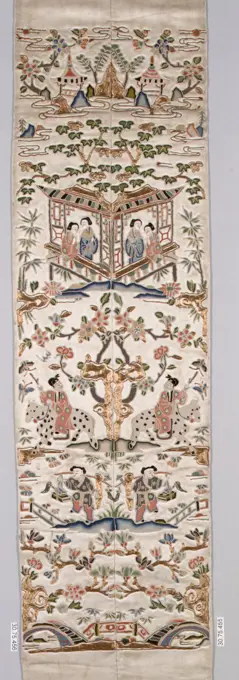
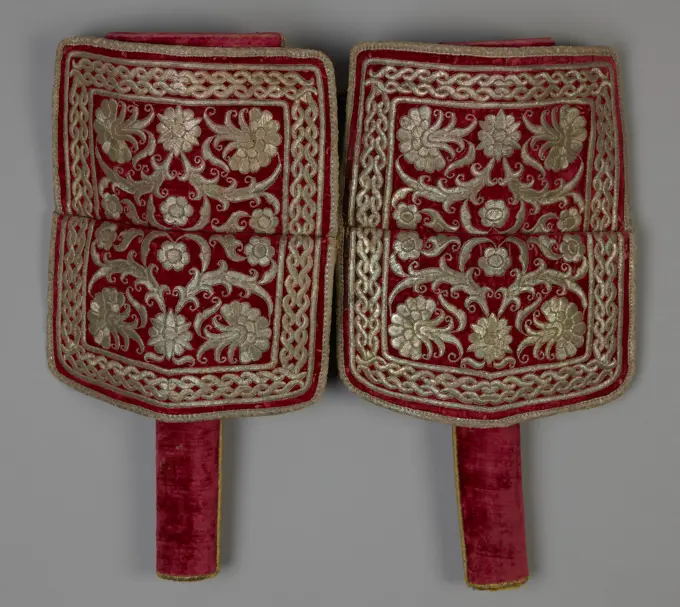
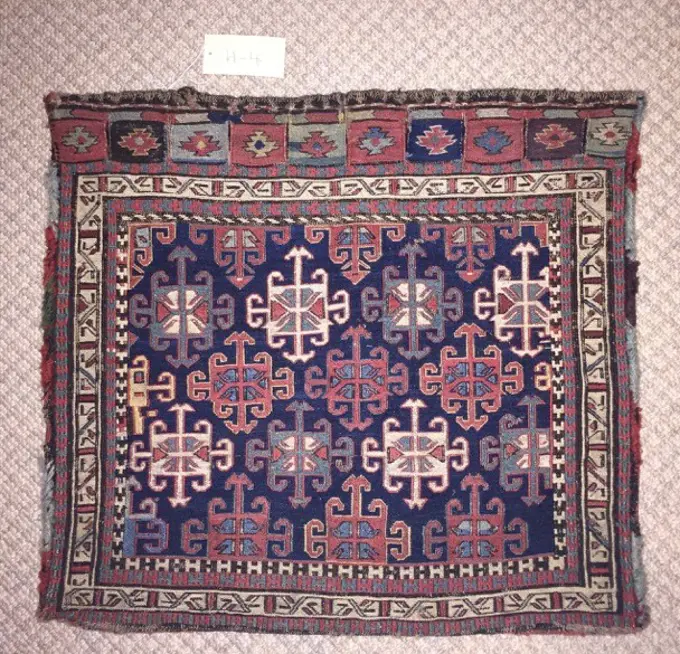
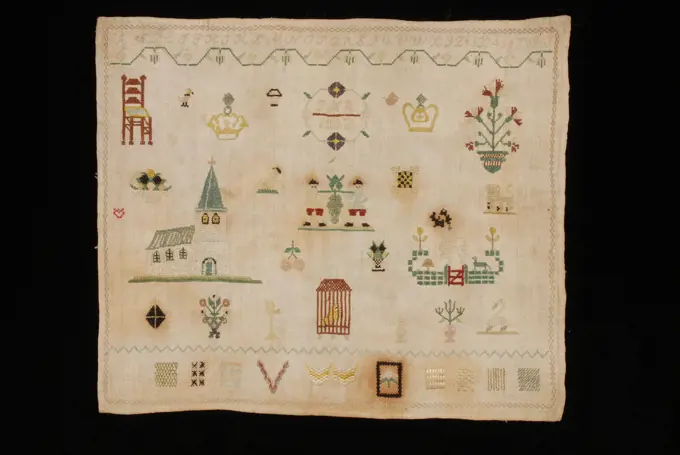
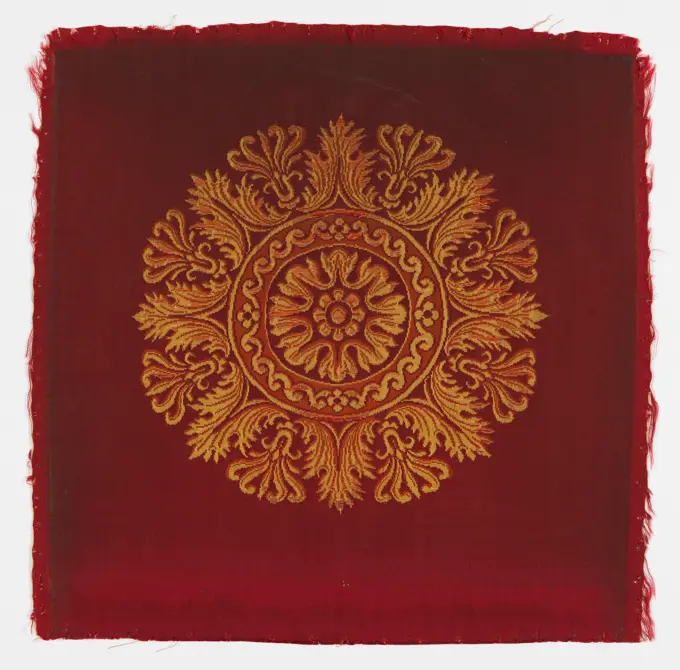
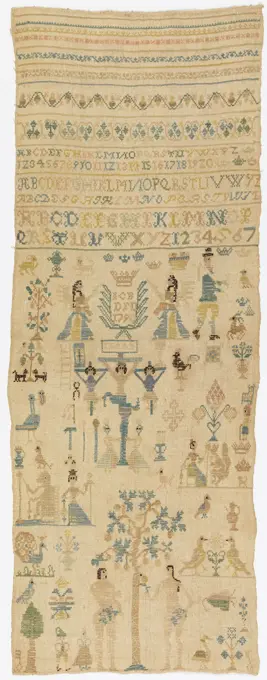
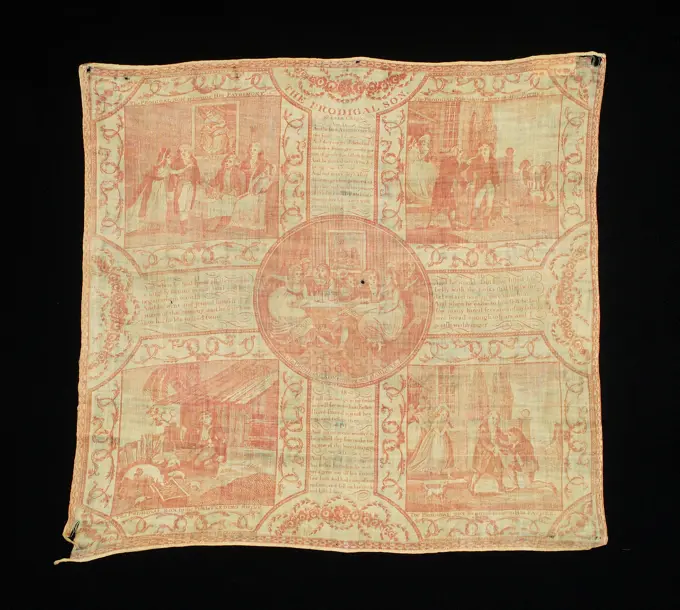
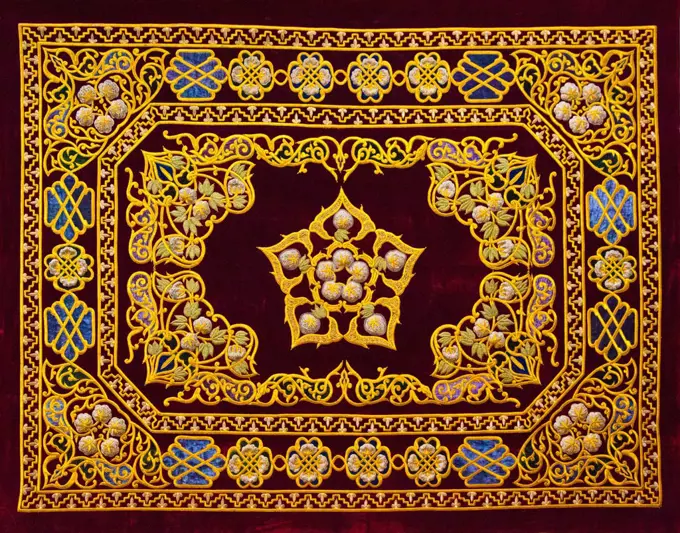
A variety of textile fragments, showcasing intricate designs and rich colors from different cultures and centuries, characterized by geometric and floral motifs.
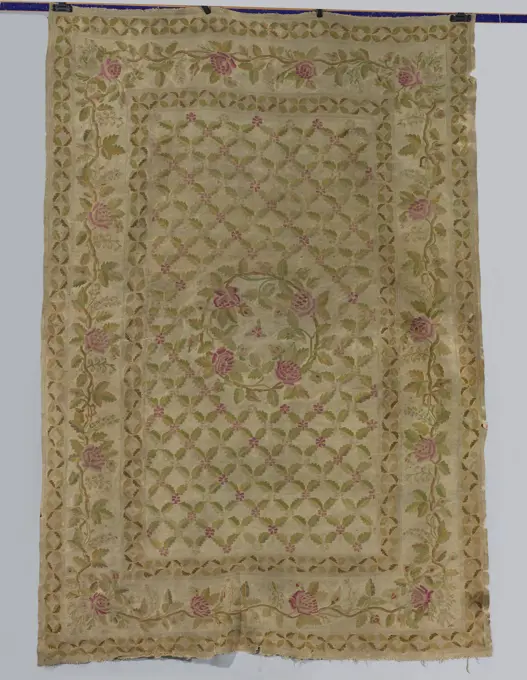
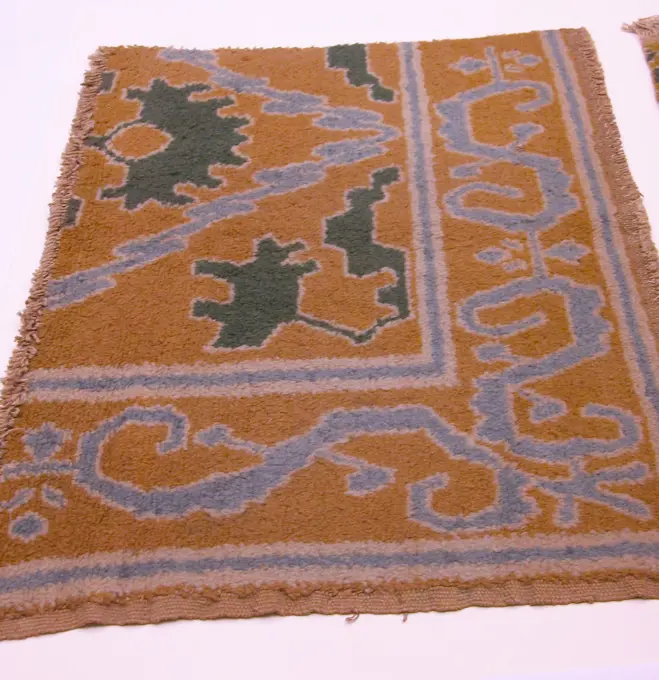
Dworski Kilim;  1. PO. 19th century (1801-00-00-1850-00-00);Wierzejski, Tadeusz (1892-1974) - collection, gift (provenance), Kilimy
Dworski Kilim; 1. PO. 19th century (1801-00-00-1850-00-00);Wierzejski, Tadeusz (1892-1974) - collection, gift (provenance), Kilimy
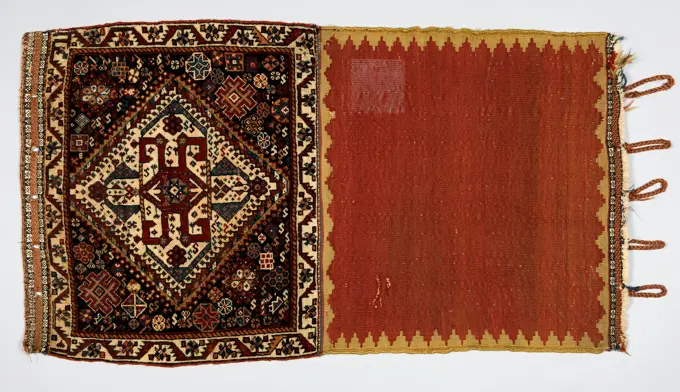
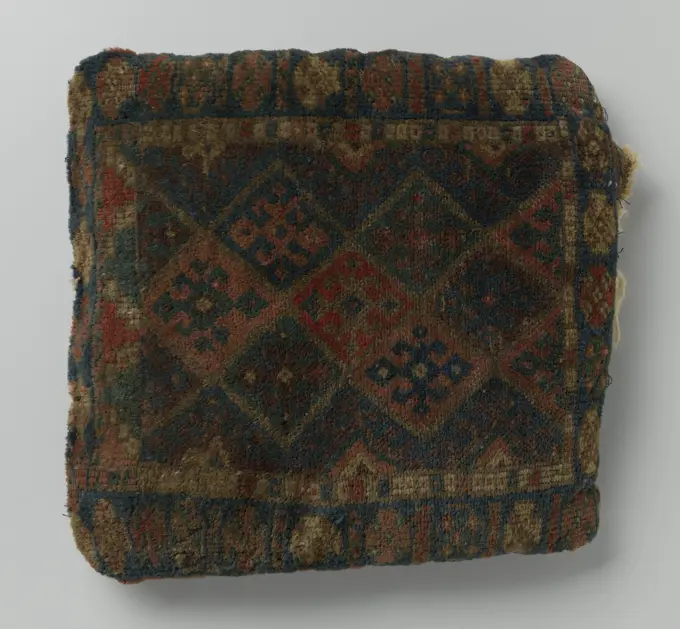
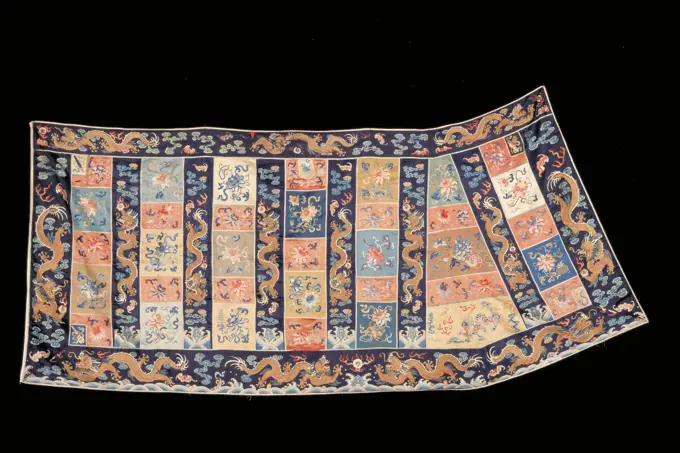
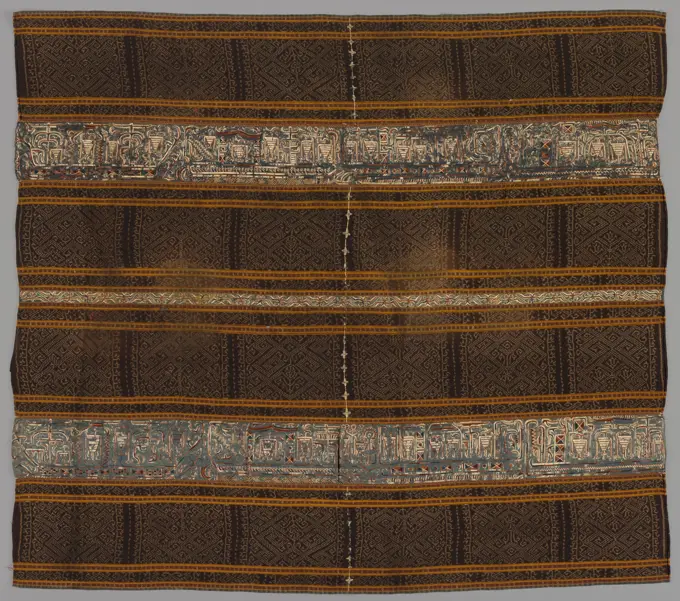
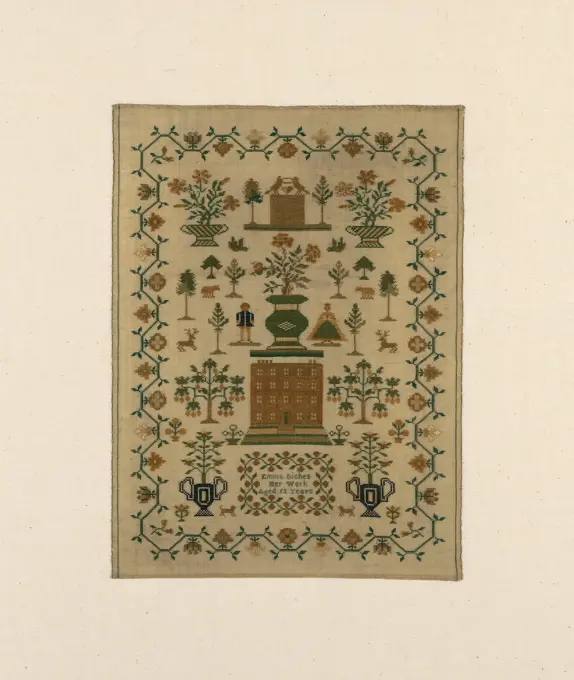
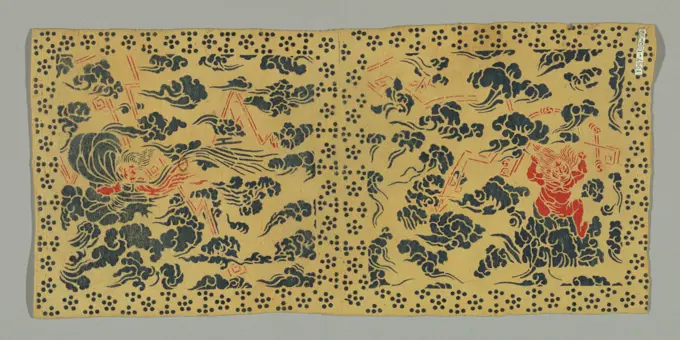
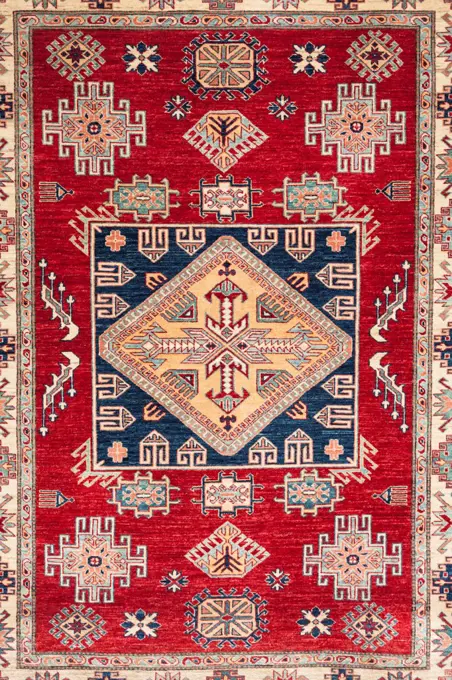
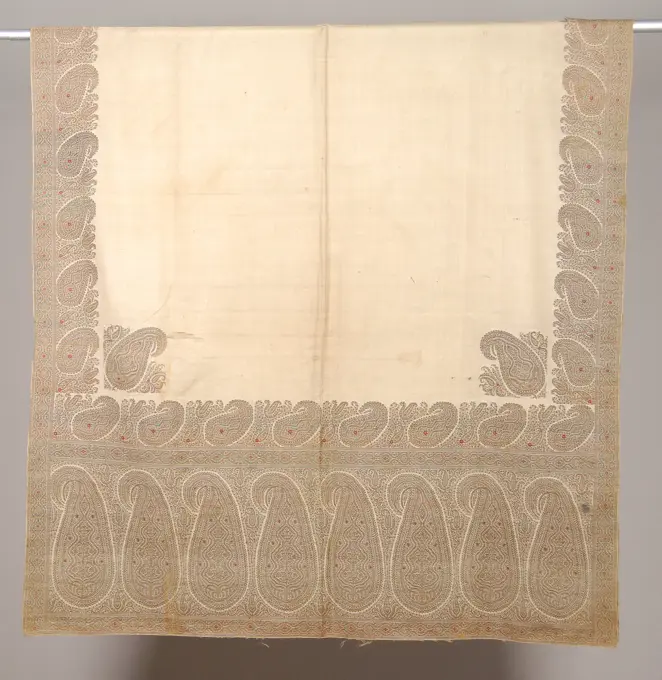
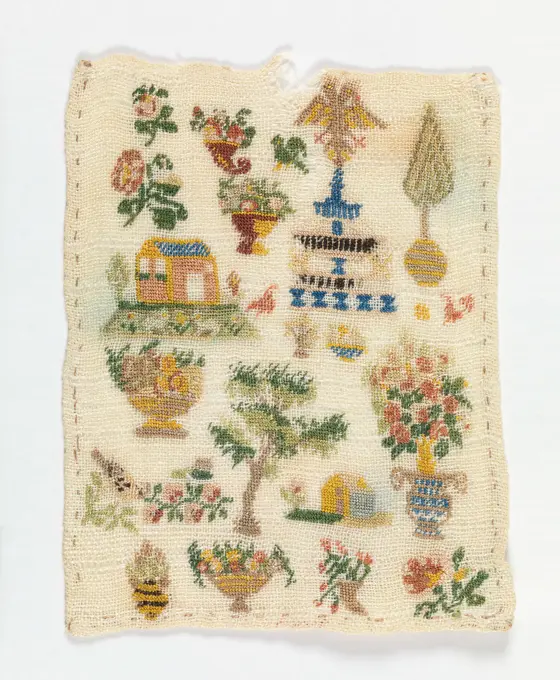
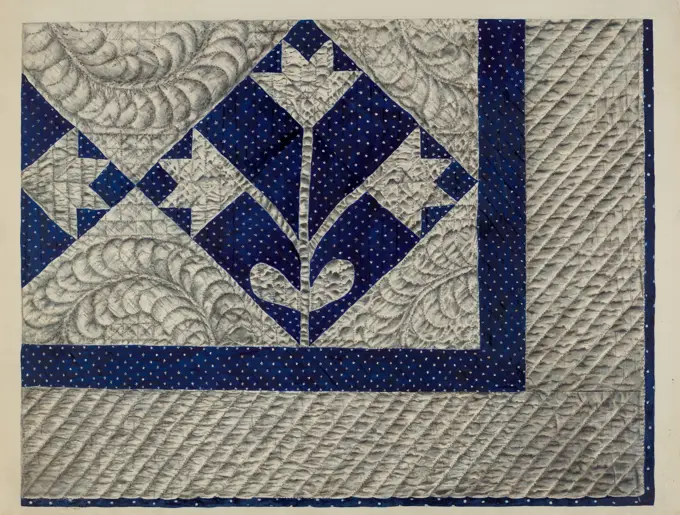
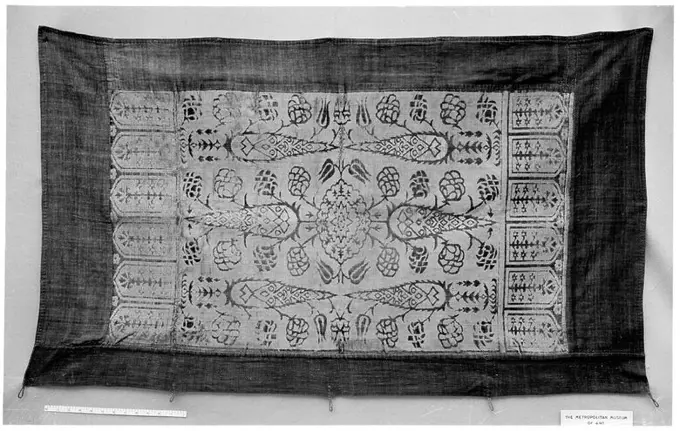
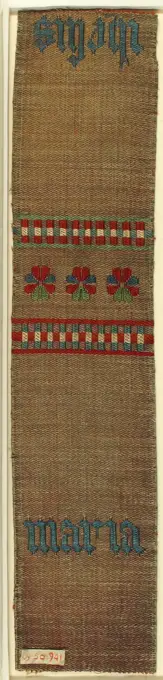
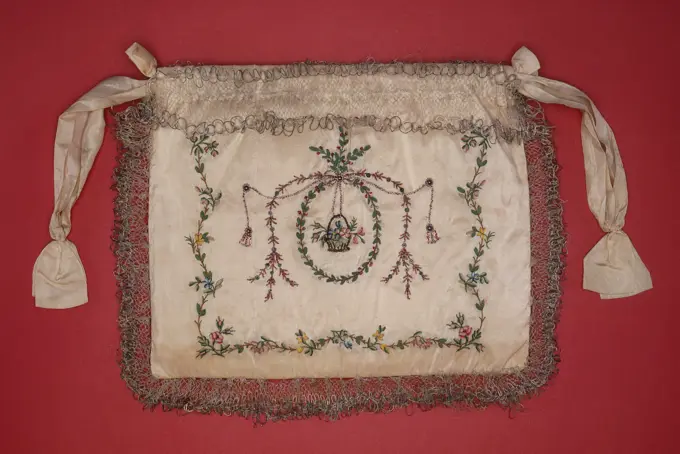
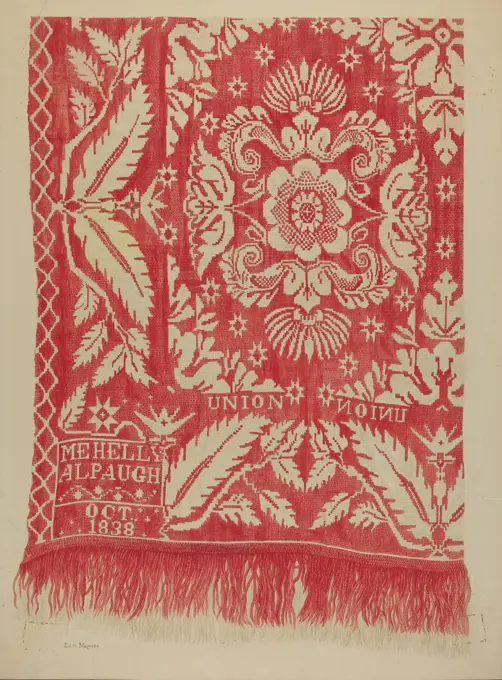
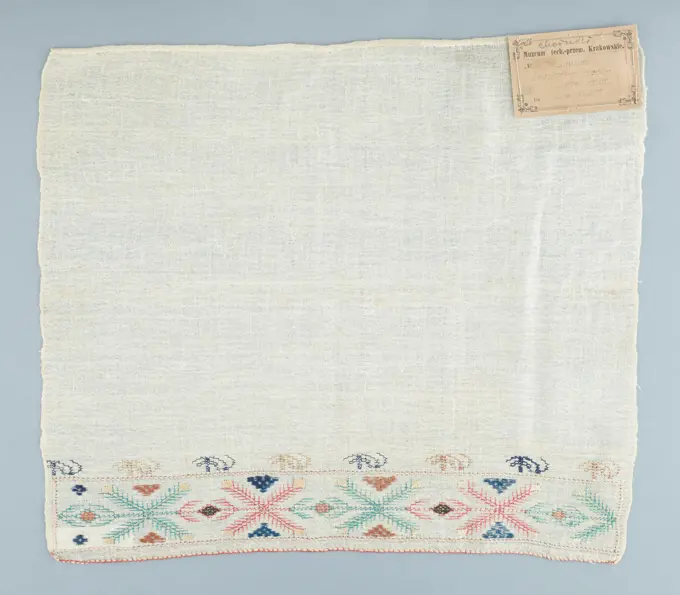
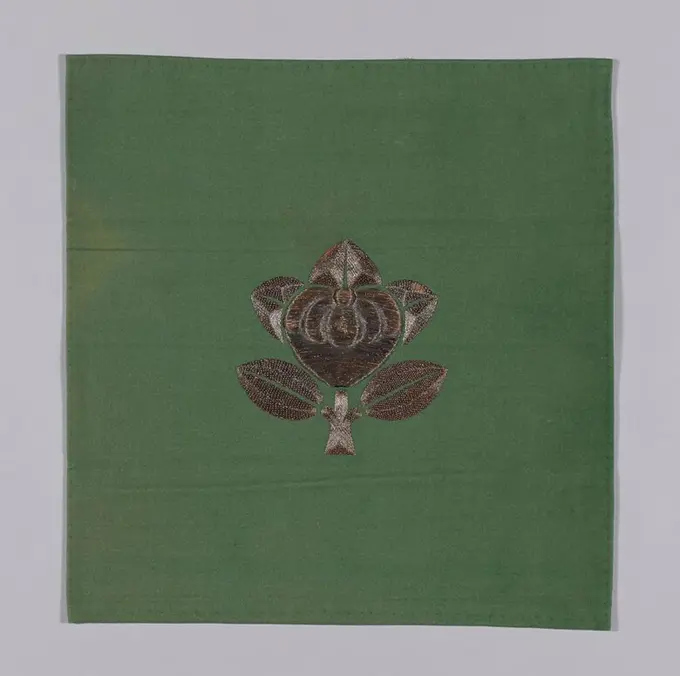
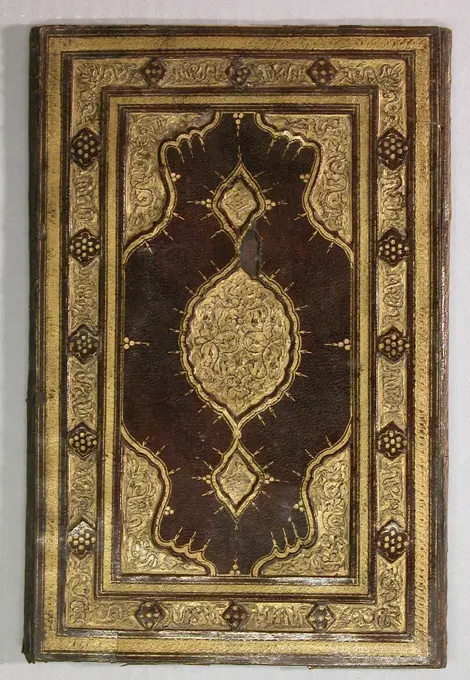
Carpet Fragment 15th-16th century. Carpet Fragment 451458Sampler (Austria); Embroidered by Karoline Berger (Austrian); Student at Kunstgewerbeschule; cotton embroidery on cotton foundationSampler; Embroidered by Isabell Lawry; silk and linen embroidery on linen foundationHalf a Double Saddlebag (Khorjin) ca. 1875 Dense pile makes up the composition, with a central lozenge, geometric patterns, and floral rosettes. A few stylized birds almost blend into the ornamental motifs. As is typical of tribal bags, the closure is made with loops on the back that are inserted and interlaced through slits on the front. The two narrow horizontal strips with repeating lozenges in a checkerboard pattern, woven in complementary weft weave in blue and white, are a distinct feature of Qashqai weavings.. Half a Double Saddlebag (Khorjin). ca. 1875. Wool (warp, ground weft, and pile); asymmetrically knotted pile and closure border in complementary weft weave (front); slit tapestry (kilim) with border pattern in complementary weft weave, and twined and braided loop closures (back). From Southwestern Iran, Qashqa'i tribe, Fars. Textiles-WovenPurse (France); silk, silver-wrapped silk, silver wireBand fragment, Medium: silk Technique: velvet, Fragments of coach lace in dark red, gold, green, and white with floral and geometric patterning., France, 18th-19th century, woven textiles, Band fragmentBorder (China); silkPillow or bag with grid divided into windows and cross flowers with hooks. Back woven in wide stripes., Jaffi Volk, c. 1800 - c. 1900 Cushion, originally bag, Jaffi Kurdistan-Mosul. The midfield is divided by a grid into windows and cross flowers with hooks. The back is made of flat tissue and shows wide stripes. Kurdistan Necklace and impact: Wool Cushion, originally bag, Jaffi Kurdistan-Mosul. The midfield is divided by a grid into windows and cross flowers with hooks. The back is made of flat tissue and shows wide stripes. Kurdistan Necklace and impact: Wool. PalemPore or canvas from Sits with in the middle and in the four corners the arms of the families swearts and the country shaft. The canvas is fully decorated with flour drinks in mainly blue and red. Oriental textile.Shawl mid-19th century Indian. Shawl. Indian. mid-19th century. woolPiece 18th-19th century Japan. Piece 66960Buddhist Priest's Robe, Qianlong period, 1736-1795, L.84 x W.42-5/8 in., silk, China, 18th centuryFragment (Japan)Womans Ceremonial Skirt (Tapis)Sampler Made 1800-1850 United States. Wool, balanced plain weave; embroidered with silk in back, cross, satin and single satin stitches; laid work and couching . Emma RichesCover Made 1801-1900 Turkey. .Cover, 19th century, 45 x 44 1/2 in. (114.3 x 113 cm), Linen, silk; needlework, Turkey, 19th centuryBuddhist priest's robe (kesa), 19th century, Unknown Japanese, L.69 x W.39-1/2 in., Brocade, woven fabrics, Japan, 19th centuryCap, Medium: silk, linen, metallic thread Technique: embroidered, Cap with metallic embroidery on red velvet with a symmetrical plant motif, confronted birds and a double-headed eagle in the center of the crown. Simple floral vine pattern on the brim. Brim very broad in the front and narrow in the back. Inside lined with printed linen, possibly from the first half of the eighteenth century, in a brown and blue floral pattern on a red ground., Russia, 18th-19th century, costume & accessories, CapFragment (China); woolKontusz sash/belt. Manufaktura Paschalisa Jakubowicza (Warszawa ; wytwórnia pasów ; 1788-1794), manufactureCarpet fragment, Medium: wool on linen and cotton Technique: warp pile on plain weave foundation, Floral rug design showing Persian influence in bold colors on a dark red ground. Wide plain weave selvage on left side., Wilton, England, ca. 1885, woven textiles, Carpet fragmentTurkish carpet for sale, TurkeySampler. Date/Period: 18th century. Sampler. Medium: silk embroidery on linen foundation. Technique: satin stitch and drawnwork on plain weave. Author: UNKNOWN.Shawl 1860-80 Scottish. Shawl 168295Fragment, before 1975. Iran or Iraq, in the style of the Buyid period (945-1055) or Seljuq period (1037-1194). Silk: lampas weave; overall: 38.5 x 67 cm (15 3/16 x 26 3/8 in.).Oriental carpet with the hundred antiques. Oriental carpet with the hundred antiques. Midfield: A blue background is covered with rows of the so-called one hundred antiques in beige, gray blue and brown, including a table, a blossom branch in square pot, a brush pot, a range, a checkerboard, a bubble, two together sprinks, a spherical vase and a standing brush. Edge is solid beige. China, 17th century Ming periodCairene Carpet. Date/Period: 950/1000. Silk, wool and cotton. Width: 125 cm. Height: 172 cm. Author: UNKNOWN.Embroidery pattern unknownHead Scarf, 28 1/4 x 9 7/8 in. (71.76 x 25.08 cm) (without fringe), Cotton, ChinaSampler, 1886. Czechoslovakia, late 19th century. Embroidery; coarse linen ground, wool cross stitch; overall: 28.6 x 25.4 cm (11 1/4 x 10 in.).Field of twenty tiles with flower pots. Field of twenty tiles (4 x 5) each with a multicolored (blue, orange, green and yellow) flowerpot within a square frame. In the corners, ornament in filling technology.Piece of fabric. unknown, authorHanging Made 1701-1800 Uzbekistan. embroidery .Kontusz sash/belt. Pracownia Daniela Chmielewskiego (Kraków ; wytwórnia pasów ; 1796-1825), atelierSampler 18th century Dutch. Sampler 228107Band 16th century Italian. Band 228871A Zimet, Quilted Coverlet, c 1938 Quilted CoverletApron, 26 1/2 x 16 1/4 in. (67.31 x 41.28 cm), Cotton, ChinaEmbroided Chairice Voli unknownSampler (Austria); silk on linenPillow Sham Made 1710-1730 England. Cotton, plain weave, underlaid with linen, plain weave; embroidered with silk floss and silk yarns in back, herringbone, individual satin, and satin stitches; laid work, couching, and French knots .Band, Medium: silk on linen Technique: embroidered on plain weave, Strip of embroidered linen embroidered in red silk. Detached motives similar to Aegean Island ornament. Possibly worked in Egypt., Europe, 17th-18th century, embroidery & stitching, BandTop of embroidered pall unknownBand, Medium: linen and silk Technique: damask weave, Narrow band of linen, twill weave with pattern in red silk of confronted stags on either side of a fountain., 16th century, woven textiles, BandHandicraft with embroidered water lilies. Handicraft with diamond shape red water lilies and gold threads in art nouveau on a white satin rectangle in laid tide (unfinished). Belonging to series of eight white and ten colored needlework, manufactured by Aagje tapp for obtaining the deed beautiful and / or useful needlework to the industrial school, BK-1974-105-A to R.Foot blanket of flannel with edge and medallion in Richelieu Embroidery ,, 1877 Foot blanket of flannel (wool) with edge and medallion in the middle in Richelieu embroidery. In the medallion there is a monogram of the letters E.V.N. embroidered. The blue silk lining is visible under the openwork drawing. Netherlands wool. flannel embroidering Foot blanket of flannel (wool) with edge and medallion in the middle in Richelieu embroidery. In the medallion there is a monogram of the letters E.V.N. embroidered. The blue silk lining is visible under the openwork drawing. Netherlands wool. flannel embroideringPiece 18th-19th century Japan. Piece 67048Kosode (Kimono) Fragment with Bamboo. Japan, late Edo period (1615-1868), early 19th century. Textiles. Silk figured satin (rinzu), tie-dyed (kanako shibori), with silk and gilt-paper-wrapped-silk thread embroideryFragment, Medium: cotton Technique: printed by engraved plate on plain weave, Stripe of wreaths of leaves containing circular medallions of rosettes. In red on white., England or France, ca. 1795, printed, dyed & painted textiles, FragmentFace from Half of Double Saddle Bag (Khorjin). Dimensions: H. 17 in. (43.2 cm)W. 22 in. (55.9 cm). Date: ca. 1800. Museum: Metropolitan Museum of Art, New York, USA.Katherine Hastings, Cotton Quilt, 1935 1942 Cotton QuiltStopplap with different stops., 1801 Stop patch with embroidery. The embroidery has the crowned initials LGM, MMF, the crowned year 1801 and various stops.   embroidering Stop patch with embroidery. The embroidery has the crowned initials LGM, MMF, the crowned year 1801 and various stops.   embroideringTrimming Fragment; silkMary Berner, Woven Jacquard Coverlet, c 1939 Woven Jacquard CoverletConciliate belt; Daniel Chmielewski's studio (Kraków; Pasów label; 1796-1825); 1794-1796 (1794-00-00-1794-00-00);Woman's necktie 1870-80 French. Woman's necktie 221670Jenny Almgren, Patchwork Quilt, c 1938 Patchwork QuiltCushion Cover. Dimensions: H. 53 1/2 in. (135.9 cm)W. 31 1/2 in. (80 cm). Date: 18th century. Museum: Metropolitan Museum of Art, New York, USA.Carpet 16th century. Carpet 448660Textile Band 15th century German. Textile Band 463287Woman's Indispensable or Pocket. England, circa 1799. Costumes. Silk satin with silk thread embroidery, silk ribbon and foil bullion appliqué, sequins, and silk and metallic laceTile field, six ornament tiles, central decor without frame, orange, yellow, green and blue on white, rosette with inwardly directed tulips and grapes, corner motif quarter rosette, tiled field wall tile tile sculpture ceramic earthenware glaze, baked 2x glazed paintedFragment (China); pineapple fiber (warp); silk (weft); temperaSquare (Philippines); piña (pineapple) fiber, cottonEdith Magnette, Woven Coverlet, c 1939 Woven CoverletHandkerchief 1860-70 American. Handkerchief 168515Linen Fragment on which a soil of silk embroidered. White linen fragment, on which a floor of white silk tense. Colored silk flowers are embroidered on the side.Edith Towner, Quilt  Double Star, c 1940 Quilt - Double StarTextile. Culture: Japan. Dimensions: 3 1/4 × 3 5/8 in. (8.3 × 9.2 cm). Date: 19th century. Museum: Metropolitan Museum of Art, New York, USA.Textile Sample from Sample Book 19th century Japan. Textile Sample from Sample Book. Japan. 19th century. Silk / Tapestry. Textiles-WovenHalf of kerchief with embroidered trimming unknownTowel Cover; cotton on linenStop piece of multicolored silk on linen .. Stop stack of silk on linen. The embroidery has several stops.Bed curtain border. Culture: Russian. Dimensions: 78 in. (198.1 cm). Date: early 19th century.This object is from the collection of Natalia de Shabelsky (1841-1905), a Russian noblewoman compelled to preserve what she perceived as the vanishing folk art traditions of her native country. Traveling extensively throughout Great Russia, she collected many fine examples of textile art of the wealthy peasant class. From the 1870s until moving to France in 1902, Shabelsky amassed a large collection of intricately embroidered hand-woven household textiles and opulent festival garments with rich decoration and elaborate motifs. The Brooklyn Museum holdings include many fine examples including the majority of the garments. Portions of Shabelsky's collection are also housed at the Museum of Fine Arts, Boston, the Cleveland Art Museum, and the Russian Museum of Ethnography in St. Petersburg.Russian bed curtains and towels were not only used for decorative purposes, but also provided an importantSampler (Germany); silk and cotton embroidery on linen foundationTowel End with Beaded Borders, early 1800s. Mexico, early 19th century. Embroidery; cotton; overall: 47.2 x 42.9 cm (18 9/16 x 16 7/8 in.).Fragment of embroidery unknownFragment red brochet side with a multicolor pattern with bouquet and flower garlands and so-called lace edge. Fragment of red silk soil with ditto darker figures, interwoven with multicolored bouquets and flower garlands and so-called lace edge.Trimming Fragment (France); silkFukusa (Gift Cover). Japan. Date: 1801-1825. Dimensions: 67.7 x 65.8 cm (26 5/8 x 25 7/8 in.). Mon side: wool, plain weave; fulled (gorfukuren); embroidered with silk and silver-leaf-over-lacquered-paper-strip-wrapped cotton in laidwork, couching and paper padded couching; lined (recently) with silk, plain weave; sewn with front and lining matched in size (Tachikiri awase). Origin: Japan. Museum: The Chicago Art Institute, Chicago, USA.Sampler (Germany); silk and metal threads (flat metal and metal-wrapped silk) on silk foundationSleeve Band 19th century China. Sleeve Band 68709Festival badge with five-clawed dragon surrounded by chrysanthemums early 17th century China In this festival badge, worn by an official during court ceremonies, a dragon rises from a stylized primordial mountain landscape amid supernatural clouds. The inclusion of the fall-blooming chrysanthemum suggests that the badge was to be used for one of the autumn festivals.. Festival badge with five-clawed dragon surrounded by chrysanthemums. China. early 17th century. Embroidered silk gauze. Ming dynasty (1368-1644). Textiles-EmbroideredPrzeszo Przyszoci unknownFragment. Dimensions: 2 3/8 in. high 2 3/16 in. wide (6.1 cm high 5.5 cm wide). Date: 3rd-4th century. Museum: Metropolitan Museum of Art, New York, USA.Ralph Atkinson, Beaded Bag, c 1938 Beaded BagShahsevan Saddle Bag ca. 1860 While the term "carpet" evokes a heavy, large rectangular textile (either knotted pile or flat-woven tapestry, called kilim) that covers a floor, a vast array of rug genres and techniques can be found in the Islamic world, where they serve various functions in nomadic encampments, villages, cities, and palaces. Flat-woven and richly embroidered textiles, such as this one, belong to the kinds of smaller tribal weavings that were common in the Middle East from Anatolia to Iran; it was generously given to The Met by Inger G. and William B. Ginsberg of New York. Such textiles were woven by nomadic tribes as containers for everyday items. Some were designed specifically to transport or store bedding, flour, salt, and wooden spindles used to make the woolen yarns from which these works were woven. Others were of smaller size, comparable to cross-body women's handbags, or çanta, or also possibly used by children. Most notable is the ubiquitous double saddlebag, ksampler embroidery needlework imagery silk cotton, textile embroidery cross stitch taped stitching Rectangular cotton cloth with linen effect in the spun thread. Around hem edge of 0.5 cm brand patch embroided with silk in the colors beige golden brown red brown black light blue purple mustard yellow fresh green gray green yellow green pink gray blue olive green and ivory colored embroided: I M R 1807 or P M R 1807 needlework spy Canaan Dutch gardenTextile; wool; Bequest of Mrs. John Innes Kane; 1926-22-352-a/fDarning sampler. Date/Period: 1824. Darning sampler. Medium: silk embroidery on cotton foundation. Technique: embroidered in running and satin stitches on plain weave foundation. Height: 310 mm (12.20 in); Width: 330 mm (12.99 in). Author: UNKNOWN.Darning Sampler; silk embroidery on cotton foundationSampler (Southern Germany); silk embroidery on linen foundationHandkerchief ca. 1800 possibly British. Handkerchief 169324Bookbinding 17th century. Bookbinding 452703Medicine bag with floral design , Bags, Ojibwa Indians, Peabody Museum of Archaeology and Ethnology, Tichnor Brothers Collection, postcards of the United StatesCarpet , Bhadohi , Banaras , Uttar Pradesh , India India Copyright: xAnilxDave/DinodiaxPhotox NAUzbekistan, Tashkent, Central Asian Carpet at State Museum of Applied Arts, Traditional carpetMagistrate cushion with the weapon of West-Friesland, Anonymous, 1767 Magistrate cushion of dark green sheet with the crowned coat of arms of West-Friesland and as shield holders two lions, the whole in silk embroidery. Under the coat of arms, a banderol has been applied with the inscription "the hr. Nicolaas.bruyn.gecommit.teerd.raad.1767". The pillow is finished with a short dark green sides frills and lined with ocher yellow satinet. West-Friesland wool. silk embroidering Magistrate cushion of dark green sheet with the crowned coat of arms of West-Friesland and as shield holders two lions, the whole in silk embroidery. Under the coat of arms, a banderol has been applied with the inscription "the hr. Nicolaas.bruyn.gecommit.teerd.raad.1767". The pillow is finished with a short dark green sides frills and lined with ocher yellow satinet. West-Friesland wool. silk embroideringTop covering from miIItary kettledrum unknown