Textile Fragments and Decorative Fabrics

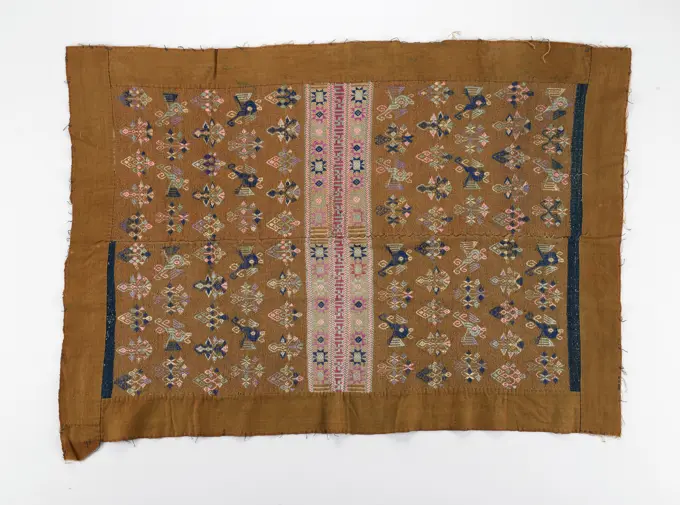
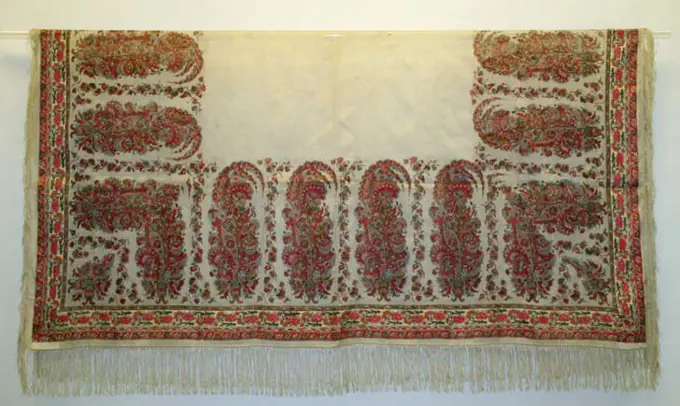
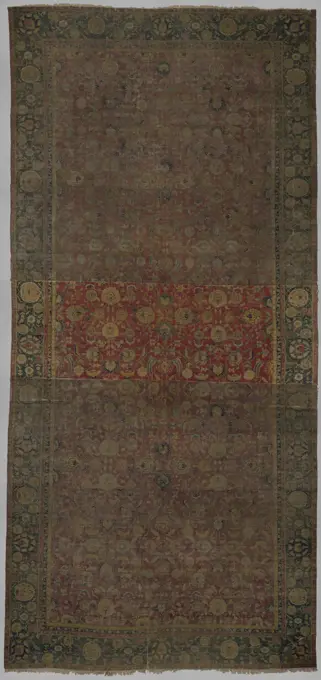
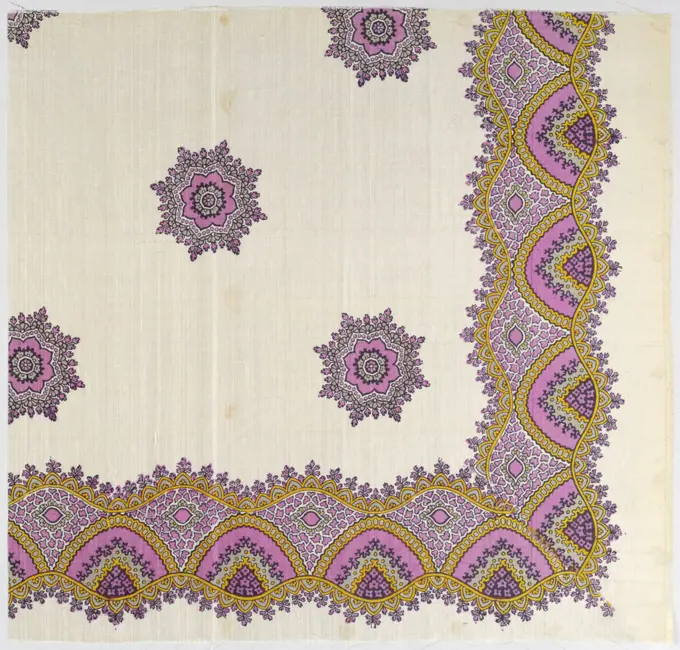
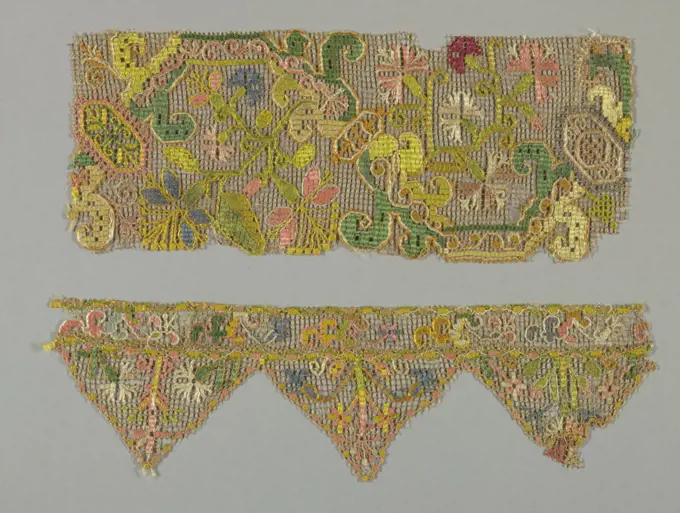
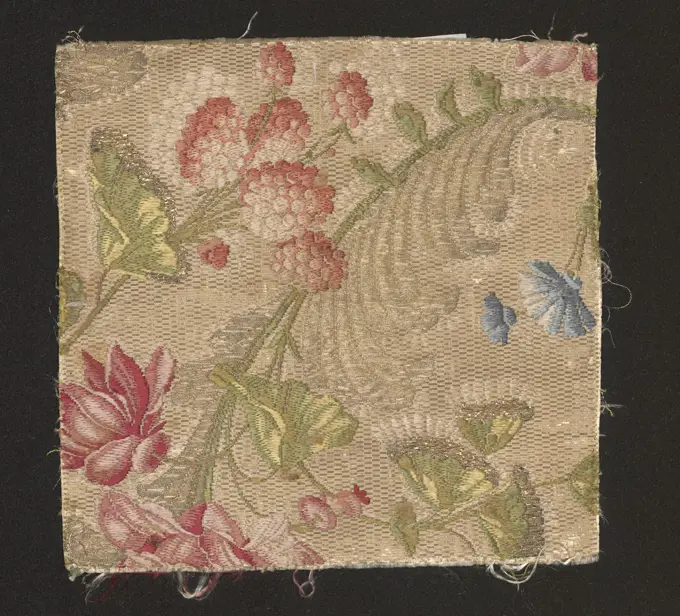
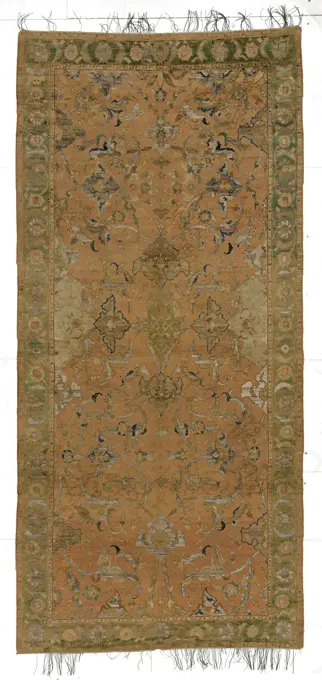
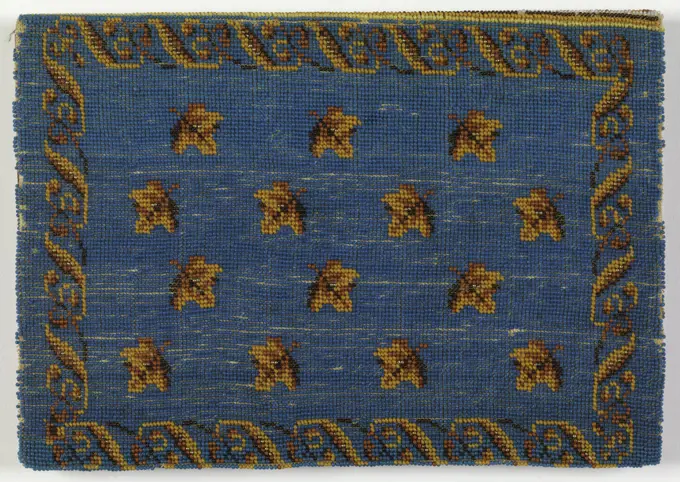
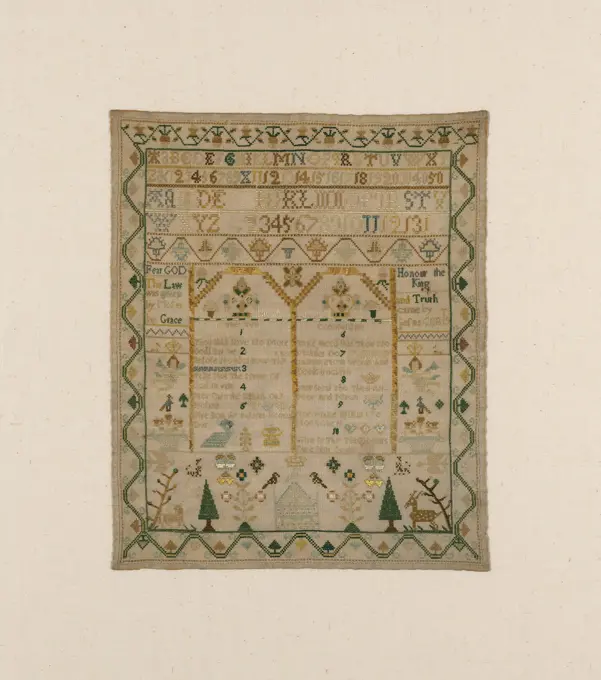
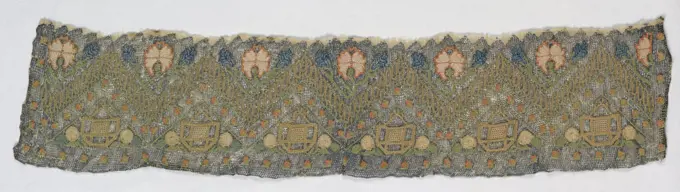
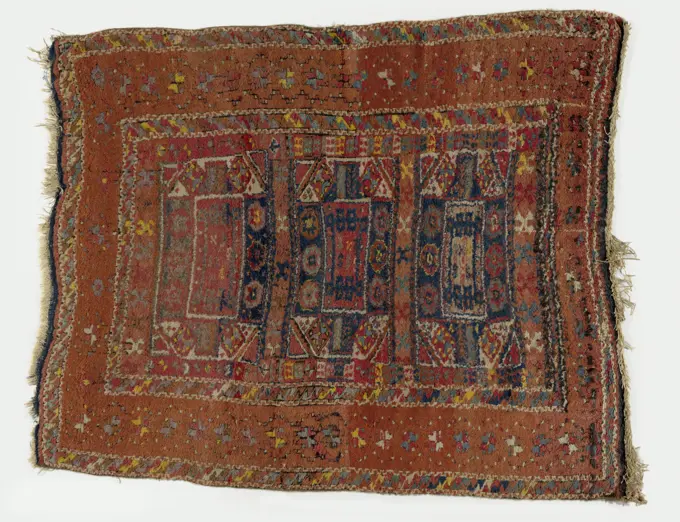
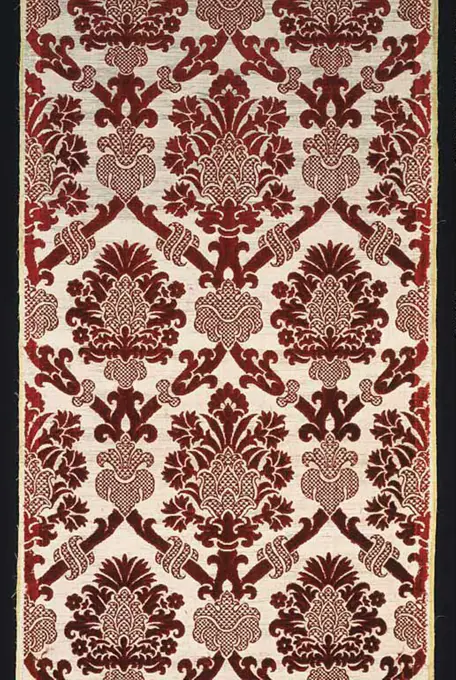
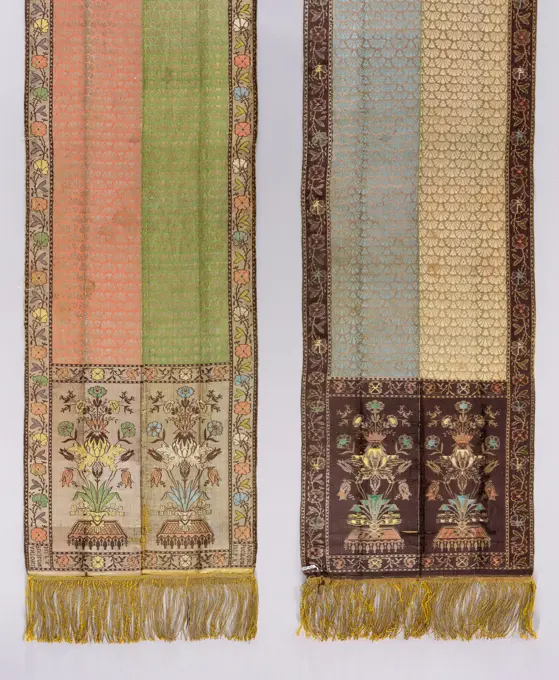
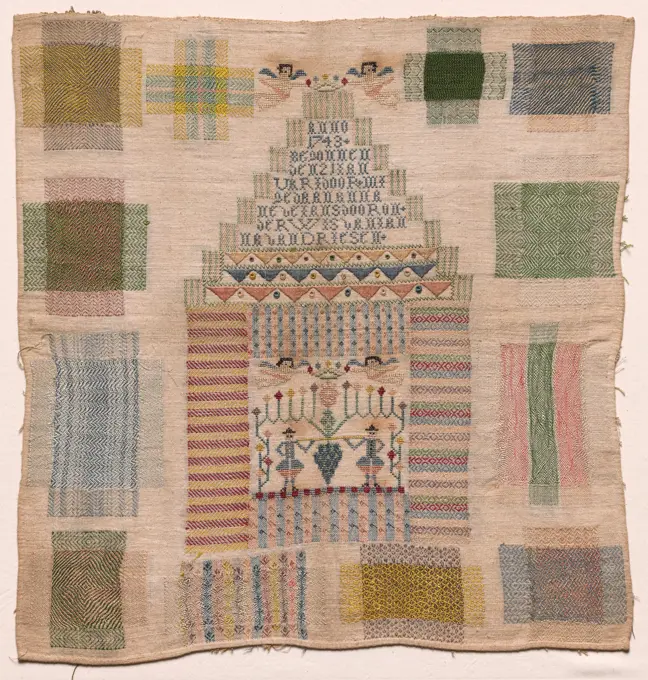
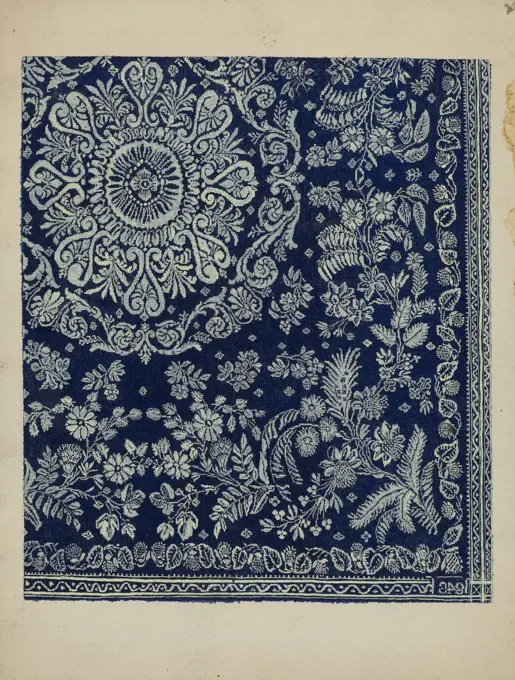
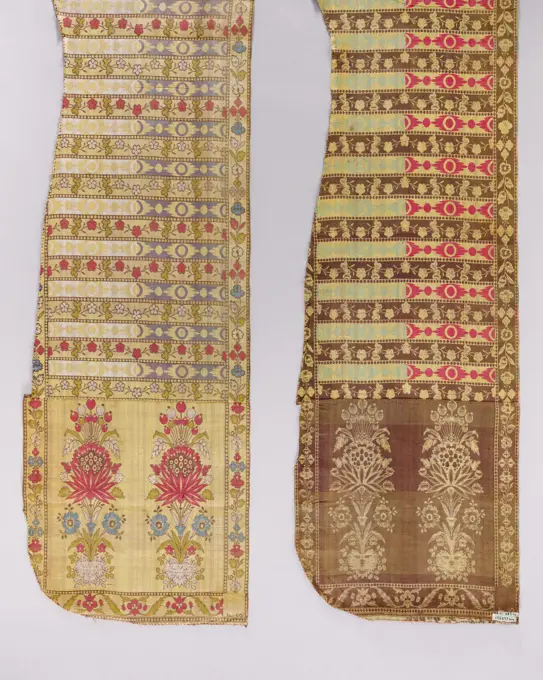
A variety of textile fragments, showcasing intricate designs and rich colors from different cultures and centuries, characterized by geometric and floral motifs.
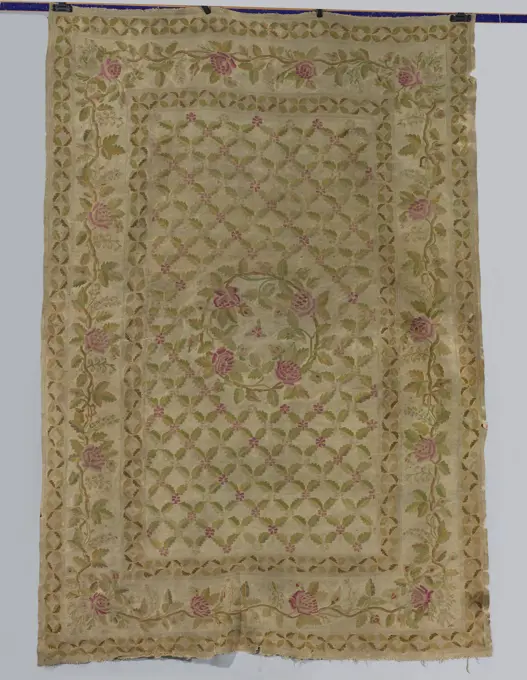
Dworski Kilim;  1. PO. 19th century (1801-00-00-1850-00-00);Wierzejski, Tadeusz (1892-1974) - collection, gift (provenance), Kilimy
Dworski Kilim; 1. PO. 19th century (1801-00-00-1850-00-00);Wierzejski, Tadeusz (1892-1974) - collection, gift (provenance), Kilimy
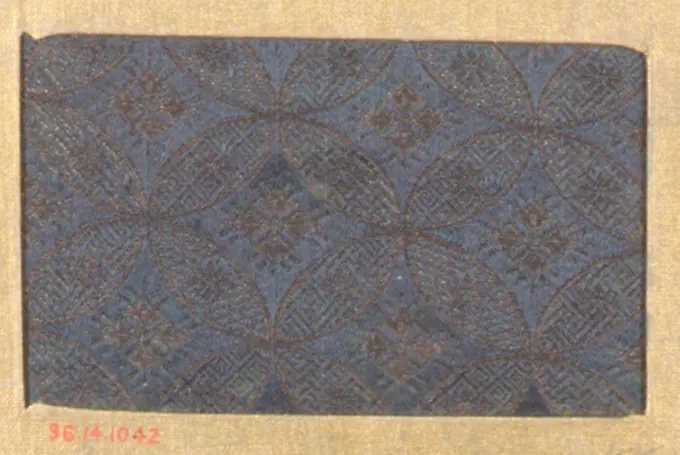
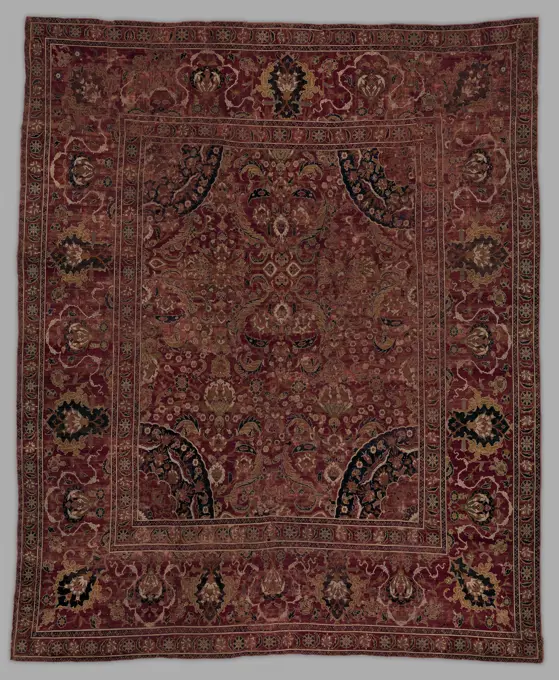
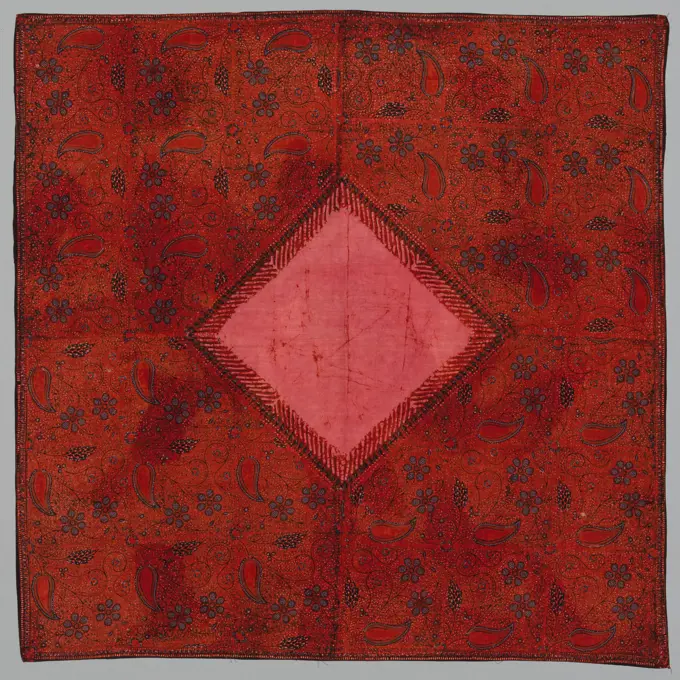
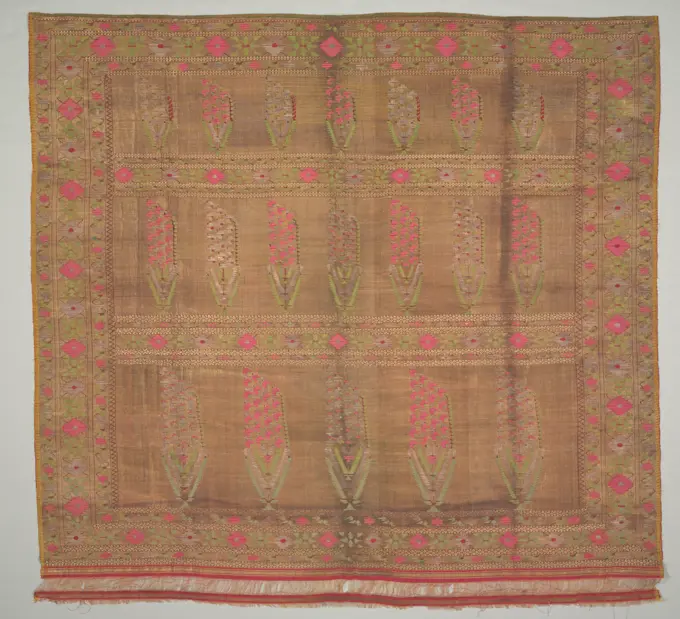
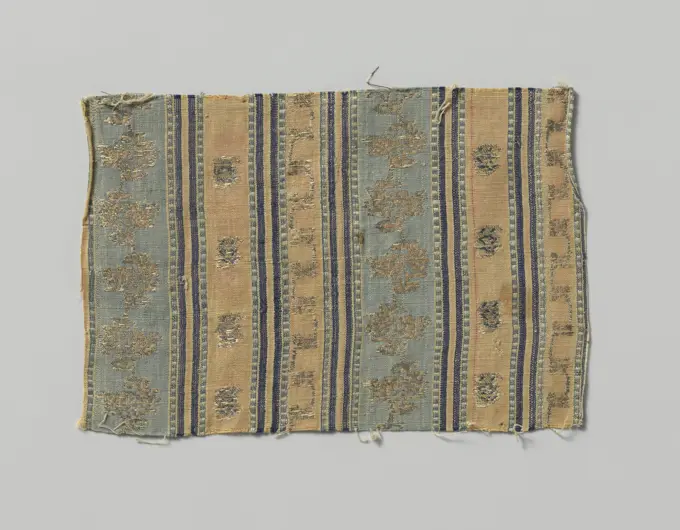
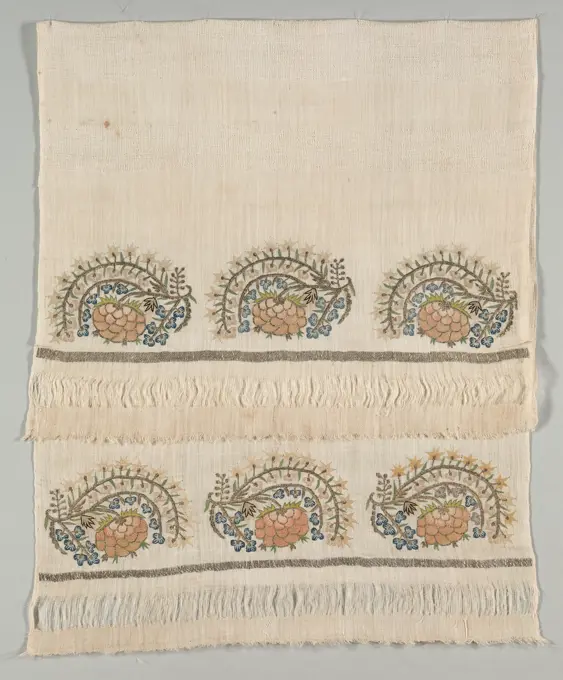
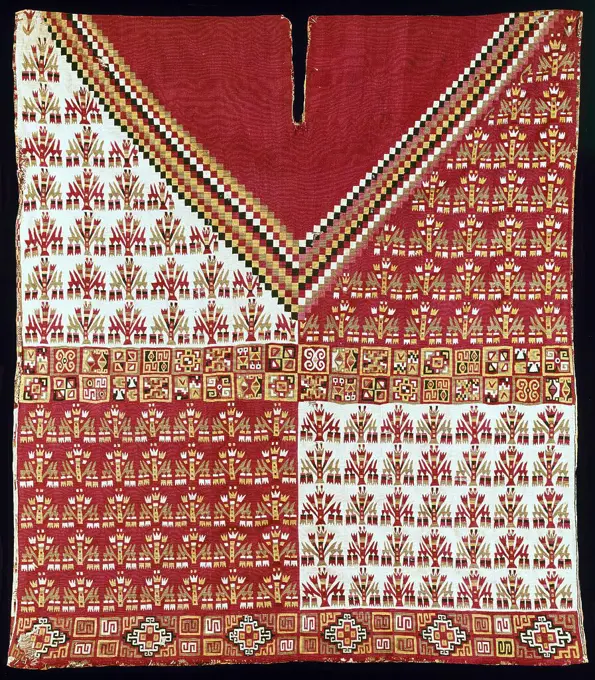
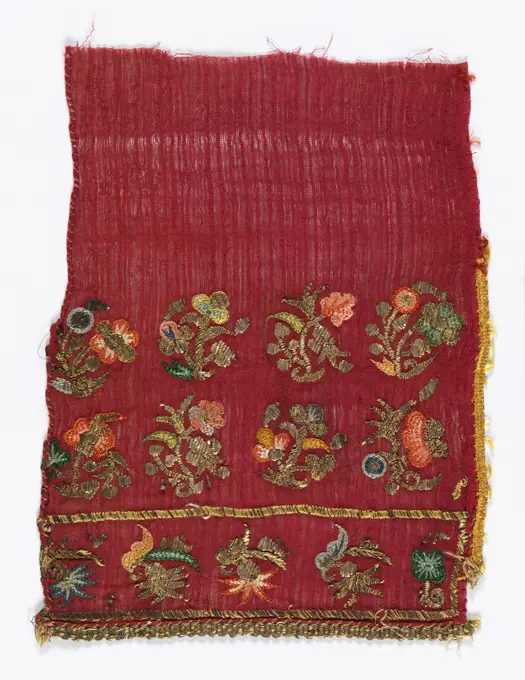
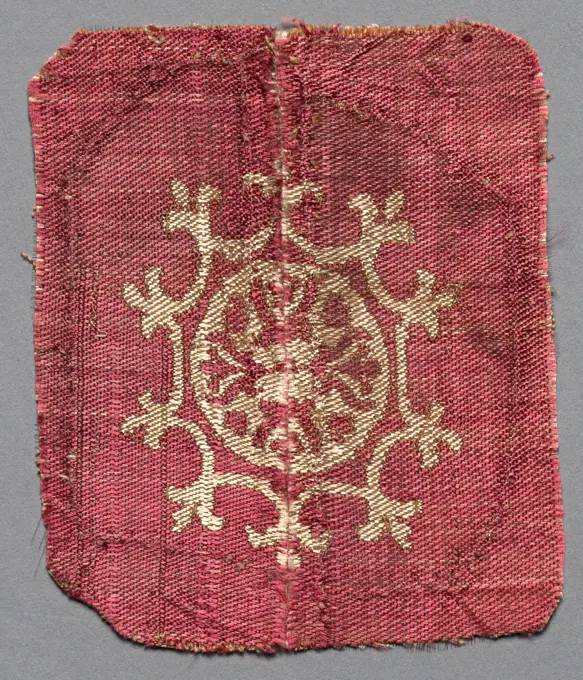
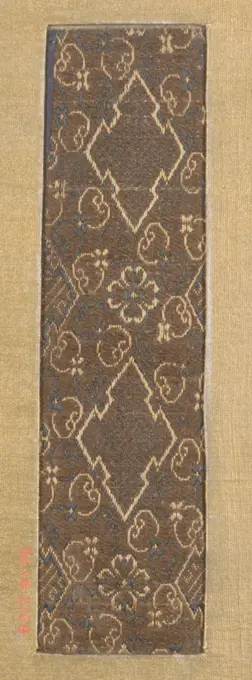
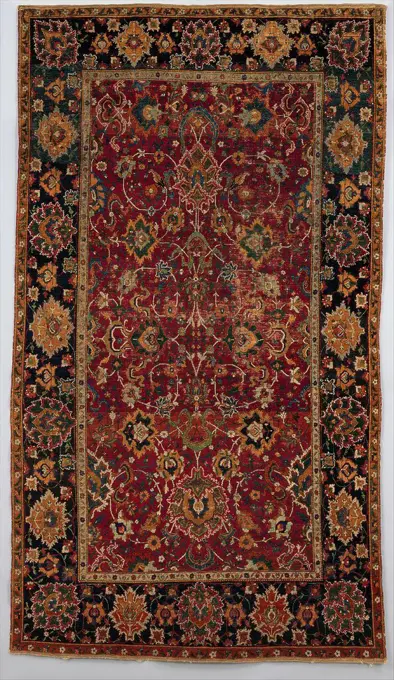
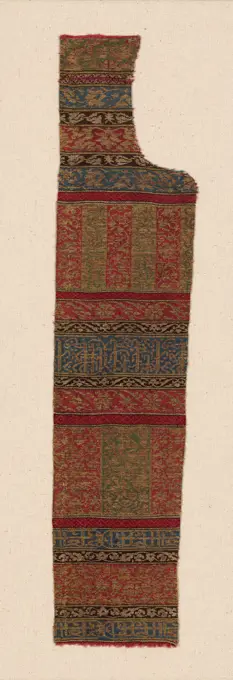
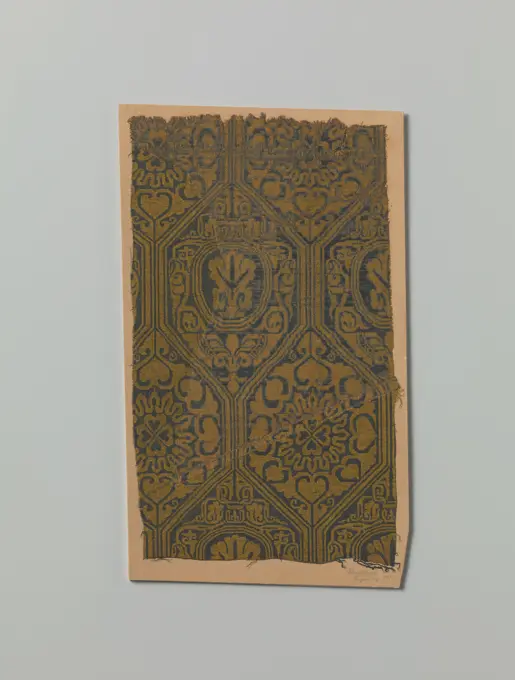
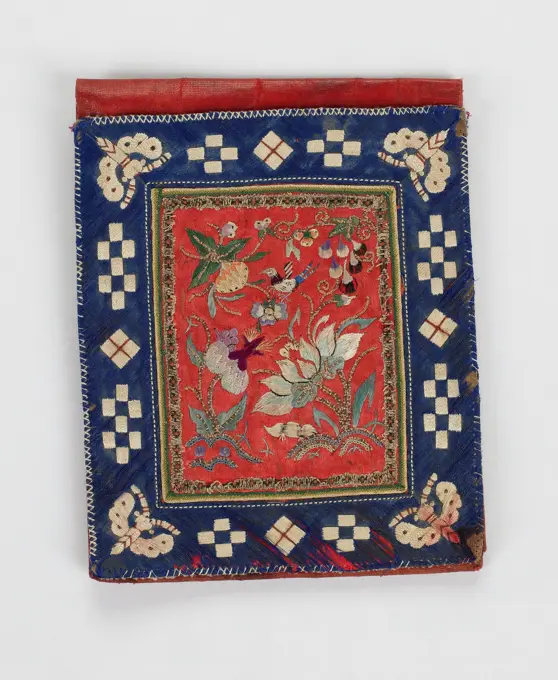
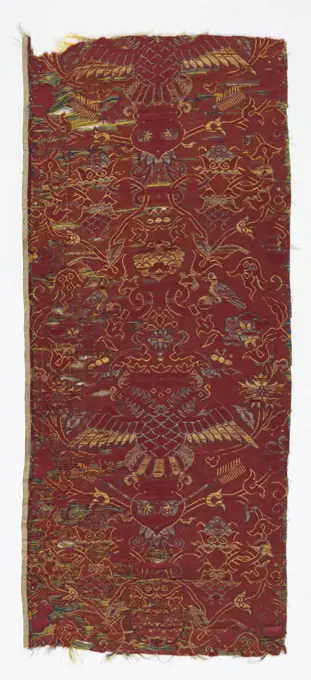
Piece 17th century Japan. Piece 71095Floor carpet of tapisserie decorated with flowers and leaves, anonymous, c. 1800 - c. 1825 Floor carpet of coarse woven tapisserie. Midfield: On a green stock with rows of two similar rosettes of lighter green, there is a round medallion with light blue stock, on which flying bees and a rosette with palm filling in beige-brown-rose. Band: on a dark brown stock spring from round corner medallions branches with two red bunches and two leaves each. Plain intermediate frames of gray white and yellow. Housing out of dark brown and fragmentary orange. The carpet has been restored for the most part. Aubusson wool Floor carpet of coarse woven tapisserie. Midfield: On a green stock with rows of two similar rosettes of lighter green, there is a round medallion with light blue stock, on which flying bees and a rosette with palm filling in beige-brown-rose. Band: on a dark brown stock spring from round corner medallions branches with two red bunches and two leaves each. Plain intermediate frames oPiece 18th-19th century Japan. Piece 66764Fragment red silk tissue with embroidery in yellow and light green, c. 1750 Fragment red silk tissue, damask, with embroidery. The Damast has a symmetrical pattern of large flowers and leaves. A chain is embroidered on a long side and a garland from which grape vines spring from the other long side. A short side has been cut around and has a grain with a wine rank along the curve. The fragment consists of two sewing fragments. Netherlands silk. linen (material) embroidering / damask Fragment red silk tissue, damask, with embroidery. The Damast has a symmetrical pattern of large flowers and leaves. A chain is embroidered on a long side and a garland from which grape vines spring from the other long side. A short side has been cut around and has a grain with a wine rank along the curve. The fragment consists of two sewing fragments. Netherlands silk. linen (material) embroidering / damaskFragment (India); silk, cotton, mirrored glassCarpet 17th century. Carpet. 17th century. Wool (warp, weft and pile); asymmetrically knotted pile. Attributed to Egypt. Textiles-RugsFragment of the fabric;  16th century (1501-00-00-1600-00-00);clothFragment. Turkey. Date: 1601-1700. Dimensions: 40 x 50.3 cm (16 1/4 x 19 3/4 in.). Embroidered. Origin: Turkey. Museum: The Chicago Art Institute, USA.Piece 18th-19th century Japan. Piece 66073Head Cloth, early 1900s. Indonesia, Java, North Coast, early 20th century. Batik; cotton; overall: 102.9 x 102.9 cm (40 1/2 x 40 1/2 in.).Fragment of a Sari, 1700s - 1800s. India, Aurangabad , 18th-19th century. Brocade; overall: 99.1 x 105.4 cm (39 x 41 1/2 in.).Blanket, 47 1/2 x 33 3/4 in. (120.65 x 85.73 cm), Cotton; needlework, ChinaOriental carpet. Oriental carpet, medalleled. In midfield two diamond-shaped medallions against a red fond. The middle edge is decorated with octagonal rosettes. On the top and bottom triple-knotted frills.Shawl 1845-50 British. Shawl 84626Medalleled, Yuruk or "Sultan". Medalleled, Yuruk or "Sultan". Midfield: Ice blue with large cardinal savings medallion with protrusions upper and top; Both last filled with spreading. Edge: Triple. The middle hard orange with four-part flowers in brown / beige, red, blue, purple, green and white. The indoor zoom is purple, the outside zoom light brown with equal flowers.Towel/Napkin Made 1850-1900 Turkey. Linen, plain weave; embroidered with silk and gilt and silvered-metal-strip-wrapped-silk in darning, fishbone, double running, and turned double running stitches; main warp knotted fringe .ALFOMBRA DE CUENCA. Location: MUSEO ARQUEOLOGICO NACIONAL-COLECCION. MADRID. SPANIEN.Comforter cover, 19th century, 47 5/8 x 32 5/8 in. (120.97 x 82.87 cm), Cotton, China, 19th centuryUchishiki (Altar Cloth). Japan. Date: 1775-1800. Dimensions: 66 x 67.3 cm (26 x 26 1/2 in.). Square piece of Kinran; fancy compound satin of silk threads and gilded paper strips finely cut. Origin: Japan. Museum: The Chicago Art Institute, Chicago, USA.Yomut Main Carpet probably mid-19th century. Yomut Main Carpet. probably mid-19th century. Wool (warp, weft and pile). Attributed to Western Turkmenistan, Central Asia. Textiles-RugsHeadscarf made of percale unknownFragment (For a Curtain) Made 1700-1900 Cyclades. Linen, plain weave; embroidered with silk in satin stitches; edged with linen and silk, needle lace with attached silk tassels .Indo-Persian carpet with repeat pattern of vine scrolls and palmettes. second half of the 17th century Indo-Persian. Indo-Persian carpet with repeat pattern of vine scrolls and palmettes. 461004Hanging 17th-18th century. Hanging 450978Needlepoint (Drawnwork) Lace Band, 16th-17th century. Italy, 16th-17th century. Lace, needlepoint: linen; average: 15.3 x 45.8 cm (6 x 18 1/16 in.).Rug 18th century Portuguese. Rug. Portuguese. 18th century. WoolBorder 17th-18th century Spanish. Border. Spanish. 17th-18th century. Linen, drawnwork. Textiles-LacesFragment brocatel with pomegranate motifs. Fragment, composed of two-joined (not on pattern) pieces of brown silk with pattern in gold from stylized flower and leaf work surrounded by rosettes assembled from icoades and more stretched shapes.Piece 18th-19th century Japan. Piece 67085Scarf sample, Medium: silk Technique: block printed on plain weave, Quarter of a printed scarf with wavy lace-like patterned border and field with widely spaced floral medallions in magenta, yellow, grey, and black., France, mid-19th century, printed, dyed & painted textiles, Scarf sampleFloor carpet of tapestry decorated with flowers and leaves. Floor carpet of coarse woven tapestry. Midfield: On a green fond with rows Two specific rosettes of lighter green, is a round middle medallion with a light blue fond, on which flying bees and rosette with palm-filling in beige-brown-rose. Edge: Yesle on a dark brown fond of round corner medallions branches with two red bunch flowers and two leaves each. Plain intermediate lists of gray white and yellow. Exterior of dark brown and fragmentary orange. The carpet has been largely restored.Excerpt Eastern textile, c. 1800 - c. 1850 Light blue stripes are interspersed by light brown stripes with large or small motifs with silver. In the silk. cotton (textile). Light blue stripes are interspersed by light brown stripes with large or small motifs with silver. In the silk. cotton (textile).Textile (Spain); silk; Warp x Weft (selvedge to selvedge): 91.4 x 54 cm (36 x 21 1/4 in.)Sleeve; cotton, wool, metalEmbroidered Towel (Havlu), 19th century. Turkey, 19th century. Embroidery; silk and gold filé on linen; average: 155.6 x 78.8 cm (61 1/4 x 31 in.).Fragments, Medium: silk, linen hand knotted net Technique: needlework on hand knotted net, Border of embroidered net in linen and multi-colored silk. Border edged on one side by three pendants. All areas filled by bold floral forms., Italy, late 16th-early 17th century, lace, FragmentsSampler (England); Embroidered by Sarah Grundy; silk embroidery on linen foundationTowel or Napkin Made 1701-1800 Turkey. Embroidered .Sampler, Miss Charlotte Louise Rasche, Medium: silk embroidery on linen foundation Technique: embroidered in darning stitches, In the center, C.G.C.L.R 1821 and a floral wreath, surrounded by darning crosses in stitches useful in mending damask. Narrow border with floral sprays in the corners., Germany, 1821, embroidery & stitching, SamplerElizabeth Valentine, Hooked Rug, c 1936 Hooked RugFragment of the fabric;  18th century (1701-00-00-1800-00-00);Fabrics, purchase (provenance)Carpet Fragment; wool, bast fiberBorder; linen; Bequest of Marian Hague; 1971-50-57Salor Main Carpet late 18th-early 19th century The largest carpets created by Turkmen nomadic weavers, known as "main" carpets, were used on the floors of Turkmen tent dwellings. They usually employed a series of small repeating medallions, known as gul, that varied in form according to the tribe of the weaver. Rare and of unusual beauty, and often incorporating a small amount of magenta silk pile in their designs, Salor main carpets such as this appear to be the archetypes from which other Turkmen tribes derived their own characteristic main carpets.. Salor Main Carpet 452598Silk carpet, anonymous, c. 1600 Carpet, a so-called polent carpet, made of knotted silk and with gold and silver wire. In midfield a tifle with lotuses transformed into cartouche-like palmets and various small ornaments. Background has a discontinuous field color, predominantly red, partly green and white. The middle edge is decorated with a pattern of lotuses caught in sickle -shaped leaves on a running slender. Isfahan cotton (textile). silk. silver thread Carpet, a so-called polent carpet, made of knotted silk and with gold and silver wire. In midfield a tifle with lotuses transformed into cartouche-like palmets and various small ornaments. Background has a discontinuous field color, predominantly red, partly green and white. The middle edge is decorated with a pattern of lotuses caught in sickle -shaped leaves on a running slender. Isfahan cotton (textile). silk. silver threadNotebook cover, Medium: glass beads, linen, paper Technique: embroidered with beads, Beaded fabric used to cover paper notebook. Image of a guitar, book, bowl and flowers on a white ground with a border on one side and a leaf pattern in repeat on a blue background on the other side. Loops at edge to hold pencil; a pouch inside each cover. German script on papers inside, with date 1831., Germany, 1831, embroidery & stitching, Notebook coverTowel 17th century Spanish. Towel 228757Cotton shirt with flowers associated to the Inca monarchy. Discovered in Pachacamac. 1400-1533. Madrid, America museum. Location: MUSEO DE AMERICA-COLECCION. MADRID. SPAIN.Scarf Sample (France); silkAltar Frontal. Italy, Florence or Venice. Date: 1450-1500. Dimensions: 100.8 × 203.4 cm (39 3/4 × 80 1/8 in.)Repeat: 84.4 × 56.5 cm (33 1/4 × 22 1/4 in.). Silk, warp-float faced 3:1 'Z' twill weave with supplementary discontinuous facing brocading wefts forming areas of weft loops (known as bouclé) tied by secondary binding warps in weft-float faced 3:1 twill interlacing and supplementary pile warps forming cut, pile on pile, voided velvet. Origin: Florence. Museum: The Chicago Art Institute, Chicago, USA.Table cover, Medium: linen Technique: grid of withdrawn element work with needle lace, reticella style, plain weave cloth, Linen plain weave table cover with a needle lace border. An acorn pattern on the diagonal fits into squares. Acorn changes direction in each square. Deeply scalloped border with a knotted tassel in each corner., Europe, 17th century, lace, Table coverTextile; cotton, silk and metalFragment (From a Sampler). Charlotte M. Berge (Swedish, active c. 1821); Sweden, Fort Carlsberg. Date: 1821. Dimensions: 10.9 x 16.2 cm (4 1/4 x 6 3/8 in.). Cotton, plain weave; cut and drawn work in back, cross, crossed back, double hem, Greek cross filling, honeycomb filling, interlocking lace, overcast, satin, and twisted buttonhole stitches; embroidered in overcast and padded satin stitches. Origin: Sweden. Museum: The Chicago Art Institute, Chicago, USA.Ornament from a Tunic, Two Fragments Joined as One, 8th century. Syria, 8th century. Compound twill, silk; overall: 9.5 x 7.8 cm (3 3/4 x 3 1/16 in.).Carpet.Textile fragment with repeating pattern of scattered oval medallions and diaper patterns 18th-19th century Japan. Textile fragment with repeating pattern of scattered oval medallions and diaper patterns 65885Trimming Fragment (France); silkPiece 18th-19th century Japan. Piece 67816Textile Sample from Sample Book 19th century Japan. Textile Sample from Sample Book 68219Medalleled, type Ushak. Medalleled, type Ushak. Midfield: On a bright red fond, four large half hexagonal medallions are close to each other in ultramarine blue with valley yellow contours. The side medallions are filled with a light blue diamond and salmon palmets in the tops. The lower and upper medallions are halved windows in red with sloping lines and stems. Palm-white and rosette flowers are in red, white and black on the fond. Edge: Multiple. The middle of blue with quarter objects in red, white, light blue, salmon color and yellow. Indoor zoom in blue and outdoor zoom in red, with equal s-sen in reported colors. Note: Presumably England, Axminster or Wilton Or small Asia, Ushak.Piece 18th-19th century Japan. Piece. Japan. 18th-19th century. Silk. Textiles-WovenSampler Made 1775-1825 England. Linen, plain weave, embroidered with silk floss in Algerian eye, antique hem, cross, outline, satin and stem stitches .. Saddle bag, Kurdistan. Middle splash is decorated with crossed tendrils with leaves shaping a diamond. Four rosette flowers come from the midruit. Rand with roses and leaves. On one side a beard with splits, against which goat hair closing loops on the back. Backside of flat tissue with cross stripes.End of a towel, Medium: silk and metallic threads on cotton foundation Technique: embroidered on plain weave, Strip of embroidery, probably a towel end, with a zigzag design, has pink carnations and small blue flowers above and stylized basket shapes below., Turkey, 19th century, embroidery & stitching, End of a towelChurch tablecover. unknown, authorFragment, Medium: silk Technique: plain compound satin, Allover geometric latticework design in blue, purple, green and light gray on a tan ground., China, 19th century, woven textiles, FragmentBemskleed, Yuruk -Nomadenkleed ,, 1850 - 1900 Bemskleed, Yuruk-Nomadenkleed, also called "Sultan". Midfield: raspberry red field with three lying rectangles in red, halfway in dark blue. Inside each bed is a octagon with a cross and a second rectangle in red and dark blue with flowers in Mauve, yellow, orange, light blue et al. Rand: triple. The main edge is orange with loosely drawn flowers in speckled wreaths, also in meat colors. Inner and outdoor hiding, with sloping stocks in light shades. Walking wool Bemskleed, Yuruk-Nomadenkleed, also called "Sultan". Midfield: raspberry red field with three lying rectangles in red, halfway in dark blue. Inside each bed is a octagon with a cross and a second rectangle in red and dark blue with flowers in Mauve, yellow, orange, light blue et al. Rand: triple. The main edge is orange with loosely drawn flowers in speckled wreaths, also in meat colors. Inner and outdoor hiding, with sloping stocks in light shades. Walking woolPiece 18th-19th century Japan. Piece 66554Sampler (England); silk embroidery, linen foundation; Warp x Weft: 59 x 23 cm (23 1/4 x 9 1/16 in.); Bequest of Mrs. Henry E. Coe; 1941-69-179Valance Made 1690-1710 China. Cotton, plain weave; embroidered with silk and gold-leaf-over-lacquered-paper-strip-wrapped linen in laidwork and couching edged with silk, plain weave with extended weft cut fringe; lined with silk and cotton, satin weave .Quilt, Medium: cotton Technique: block printed on plain weave; three reds, blue, yellow, lavender and black, Two triangular pieces cut from what was once two different square quilt centers. Placing one piece on top of the other will give three-quarters of the original pattern., England, ca. 1800, printed, dyed & painted textiles, QuiltPanel Made 1801-1900 Turkey. .Sari Made 1801-1900 India. Grey with leaf cluster design in gold and silver .Sampler Made 1825-1875 México. Linen, plain weave; cut and drawn-work embroidered with linen and silk floss in Aztec, hem, interlaced loop, Russian overcast, and a variation of the Roman stitch; and embroidered with linen and silk floss in back, cross, double running, long-armed cross, and satin stitches .Border 17th century Italian. Border 214791Fragment (Italy); silk, metallic threadTextile Sample from Sample Book 19th century Japan. Textile Sample from Sample Book 68188Panel Made 1550-1600 Italy. Silk, plain weave with silvered-metal strip supplementary facing wefts bound by secondary binding warps and supplementary pile warps forming cut and uncut voided velvet ."Floral and Cloudband" Carpet. Dimensions: L. 97.5 x W. 56.25 in. (247.65 x 142.87 cm). Date: 17th century.This type of carpet is characterized by a weft structure with four plies and a dense knot count, which explain the tightness and heaviness of the rug. Common Persian motifs are usually knotted in a rich palette with two to three different tones per color. Starting from the center, cloudbands, peonies, lotuses, and other flowers develop in spiral-like movements and are arranged following vertical and horizontal symmetrical axes. Contrasting ground colors--rich red and dark blue--accentuate the vibrancy of the rug and help distinguishing the border from the field. Museum: Metropolitan Museum of Art, New York, USA.Sampler, Bernabela Gonzalez, Medium: silk embroidery on linen foundation Technique: embroidered in satin, back, eyelet, detached chain, herring bone, running, cross, stem, and button hole stitches on plain weave foundation, Central square containing crowned double-headed eagle, surrounded by bands of geometric pattern in concentric squares. Trimmed with four red tassels., Toledo, Spain, 1797, embroidery & stitching, SamplerLeather (Holland); stamped leather, silvered, varnished, and painted; L x W: 33.3 × 57.2 cm (13 1/8 × 22 1/2 in.); 1913-34-15Fragment Made 1401-1500 Andalucia. Silk and gilt-metal-strip-wrapped silk; satin weave with secondary binding warps and supplementary patterning wefts . IslamicCarpet 18th century. Carpet 452376Fragment zijdeweefsel, anonymous, 1903 Fragment of blue-yellow silk with pattern of hexagons in which stylized floral motifs. In part, pattern is signed. ByzantiumDrachtsman: Krefeld Necklace and impact: Silk. samite Fragment of blue-yellow silk with pattern of hexagons in which stylized floral motifs. In part, pattern is signed. ByzantiumDrachtsman: Krefeld Necklace and impact: Silk. samiteFragment. Probably central coast, Peru. Date: 1000-1476. Dimensions: 30.5 x 31.4 cm (12 x 12 3/8 in.). Cotton, plain weave with band of cotton and wool (camelid), slit and single interlocking tapestry weave with supplementary weft slit closure. Origin: Peru. Museum: The Chicago Art Institute, Chicago, USA.Dress of linen in filet work and with climbing side, with representation of the Sickinge and Jongema weapons. Dress of linen in filet work with a border of dick side, with the representation of the Sickinge and Jongema weapons. Initial ovs perhaps from Groningen Oedt van Sickinge, who in that case would have made the dress for her parents. Dated 1623.Merklap van Woolen mousseline .. Merklap van Wol. The LAP is unfinished. The embroidery has two vases with flowers and on three sides an edge of grape roses.Baby Carrier, 26-3/4 x 22-1/4 in. (67.9 x 56.5 cm), Cotton, silk, glass beads, metal bell; needlework, ChinaPiece 18th-19th century Japan. Piece. Japan. 18th-19th century. Silk. Textiles-WovenPurse, 12 1/2 x 5 5/8 in. (31.75 x 14.29 cm), Silk, cotton, ChinaConciliate belt; Laboratory of Antoni Pułiowski (Kraków; Pasów Factory; 1793-1800); 1796-1800 (1796-00-00-1800-00-00);Fragment. Italy. Date: 1650-1700. Dimensions: 24.8 x 24.9 cm (9 3/4 x 9 7/8 in.). Silk, plain weave with self-patterning ground wefts. Origin: Italy. Museum: The Chicago Art Institute, Chicago, USA.Sampler (Scotland); Embroidered by Bridget Rule (Scottish); silk embroidery on wool foundationSheet,, 1915 Sprei of needle and bobbin with Belgian weapon and spell: Union Fait La Force. Type Kant: War Lace. Belgium . bobbin lace Sprei of needle and bobbin with Belgian weapon and spell: Union Fait La Force. Type Kant: War Lace. Belgium . bobbin laceSampler, 1743. Netherlands, mid 18th century. Embroidery; silk on wool; overall: 48.9 x 47 cm (19 1/4 x 18 1/2 in.).Dorothy Lacey, Woven Coverlet, 1935 1942 Woven CoverletSampler (Dechado). M. Dolores Zea. Guatemala, 1841. Textiles; embroidery. Cotton plain weave with silk and metallic-thread embroidery and metal sequinsFragment of a Kontusz sash/belt. unknown, authorTable cover with fringe ca. 1890 American. Table cover with fringe 20174Fragment, Medium: silk Technique: 8-harness satin (red) patterned by weft floats (yellow), alternate shots of which are complementary (dark and light blue); floats were bound on the front in plain weave (now worn off), Fragment with vertically symmetrical pattern of rows of a double-headed bird with outspread wings and holding arrows in its talons. Floral vines make an ogee pattern., China, 17th century, woven textiles, Fragment