Textile Fragments and Patterns

Historical textile pieces featuring intricate floral and decorative motifs from various regions, showcasing artistry through time.

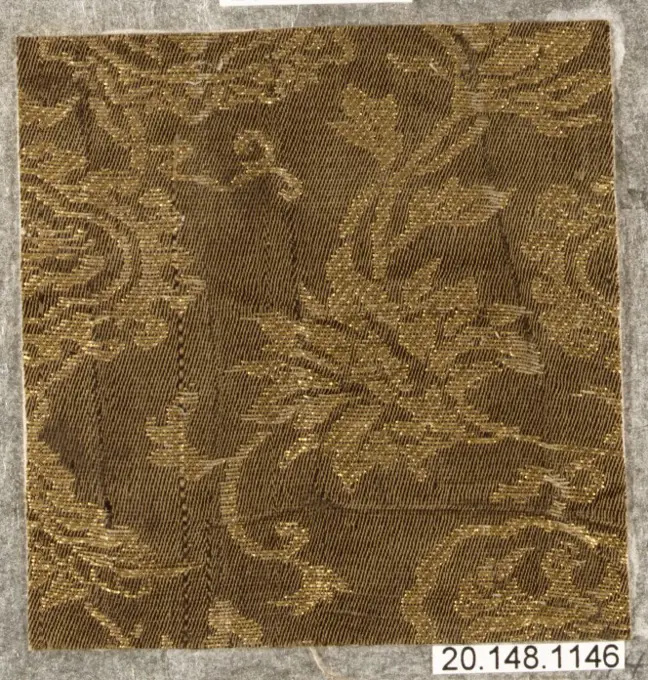
Fragment; medium, silk, metallic
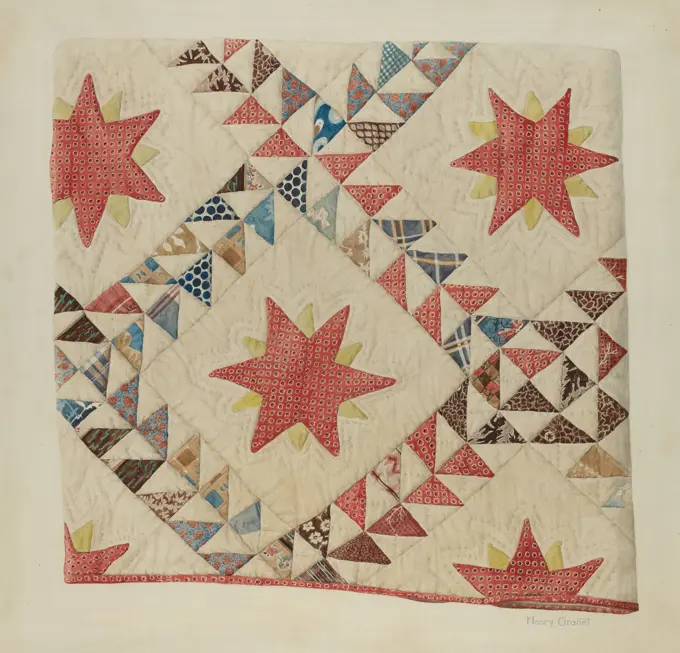
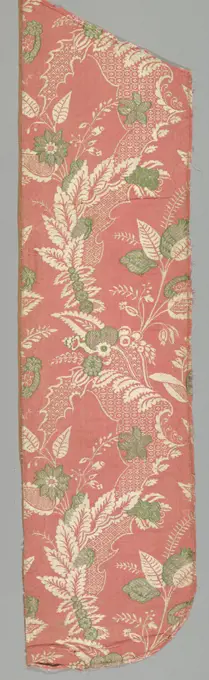
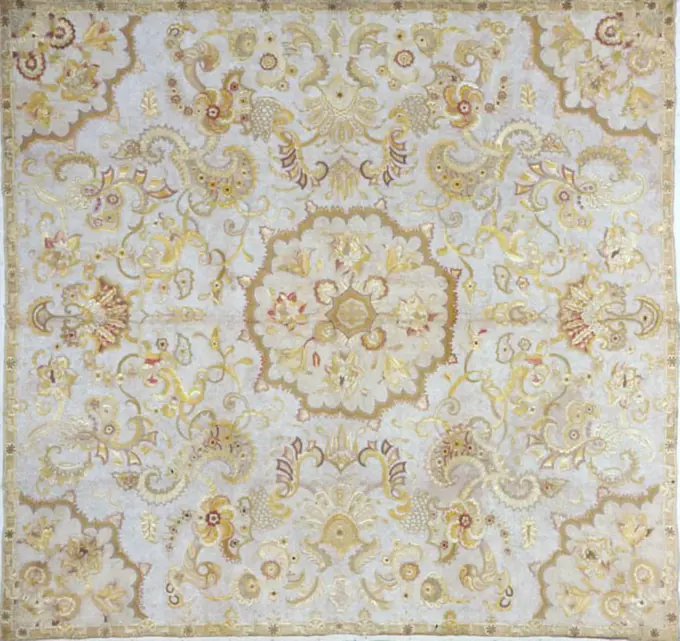
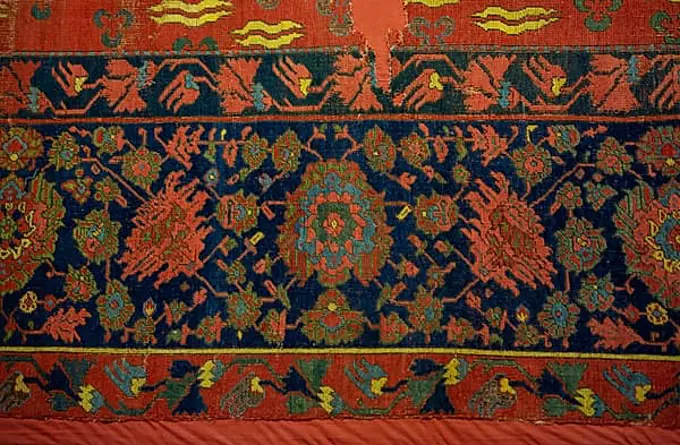
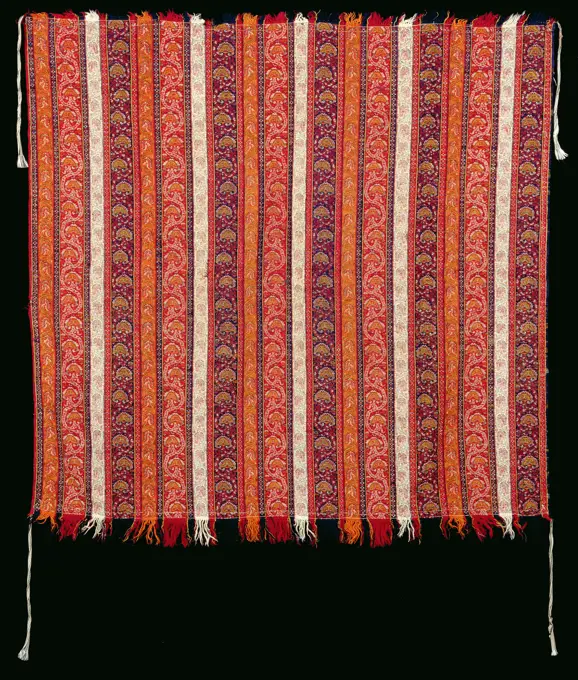
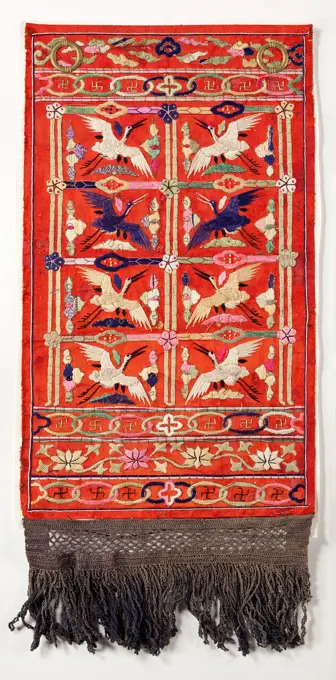
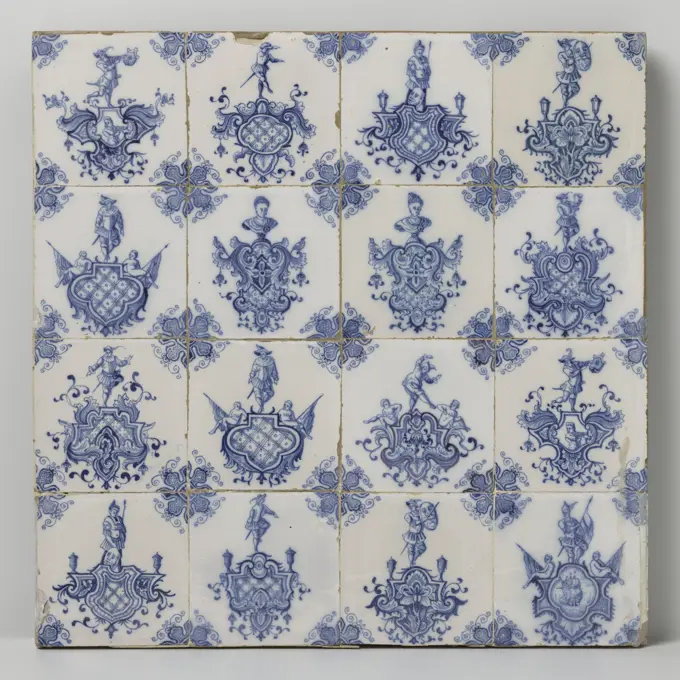
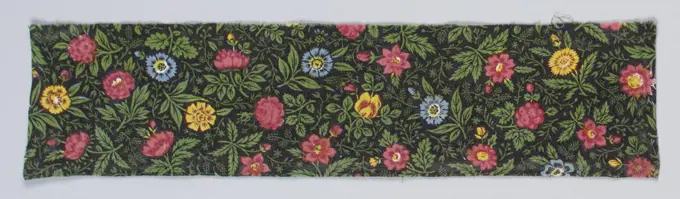
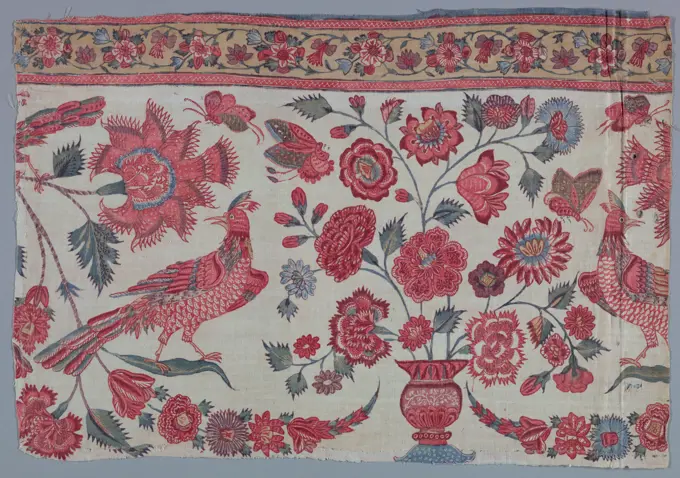
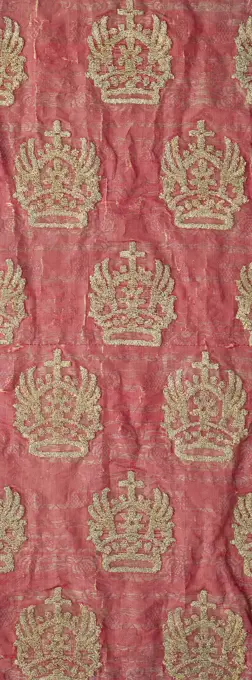
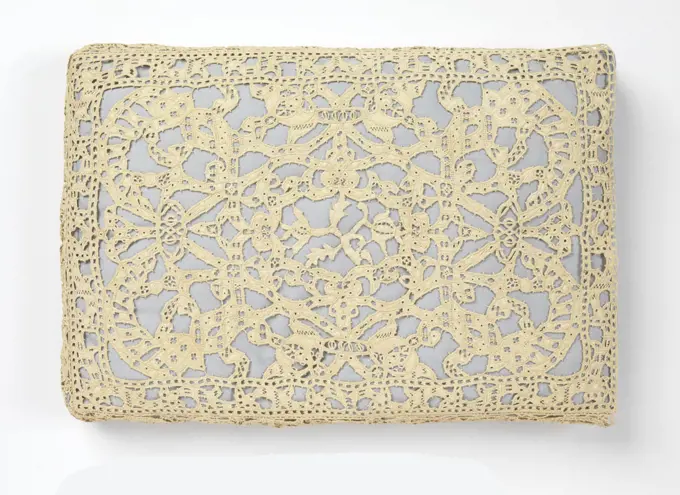
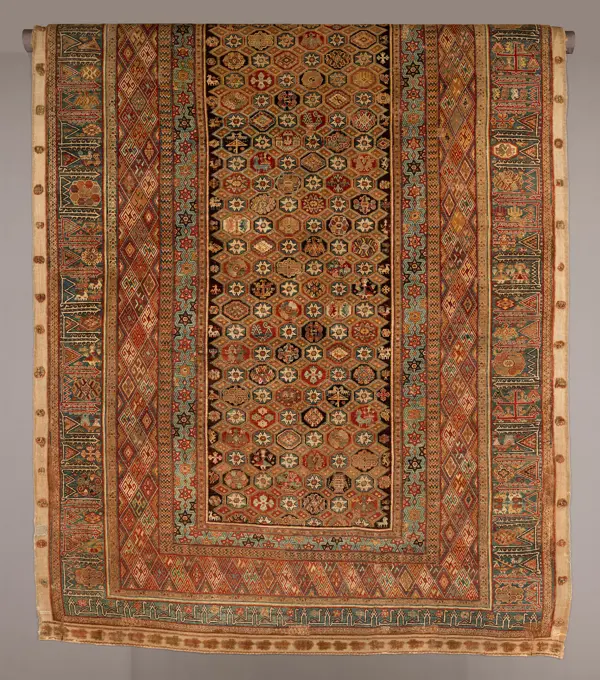
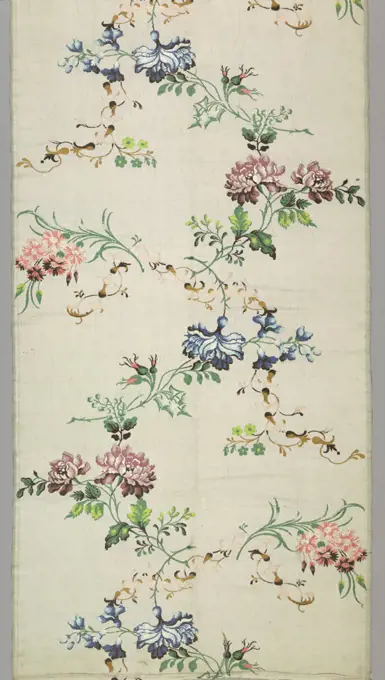
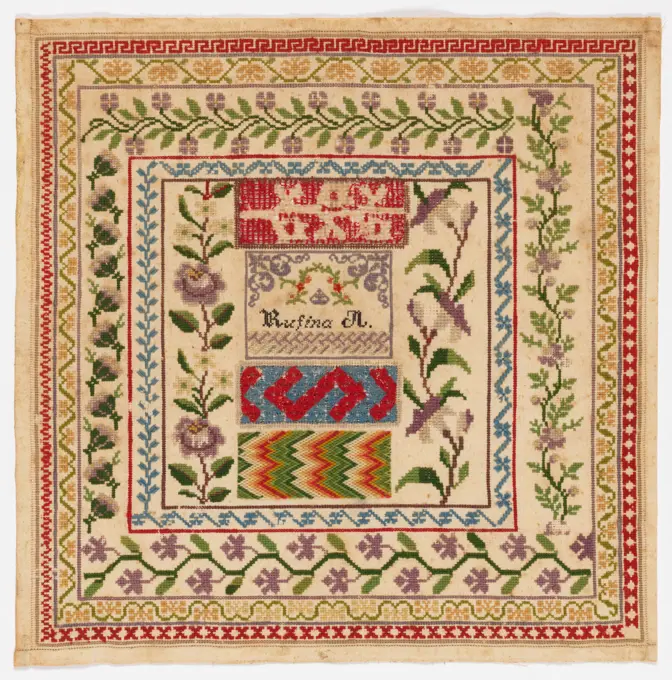
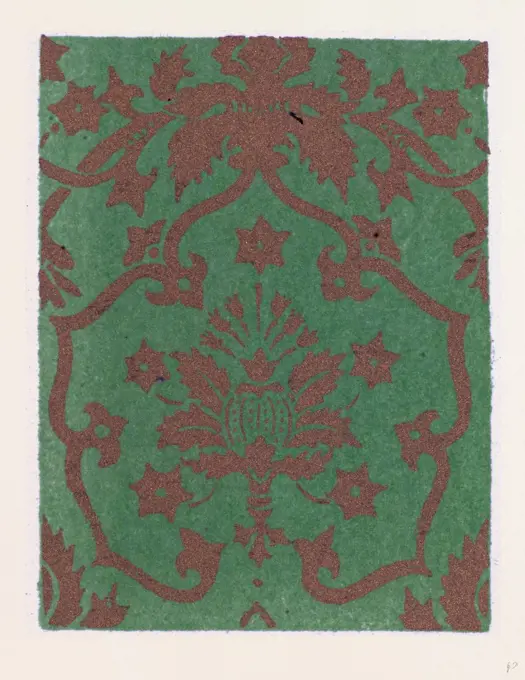
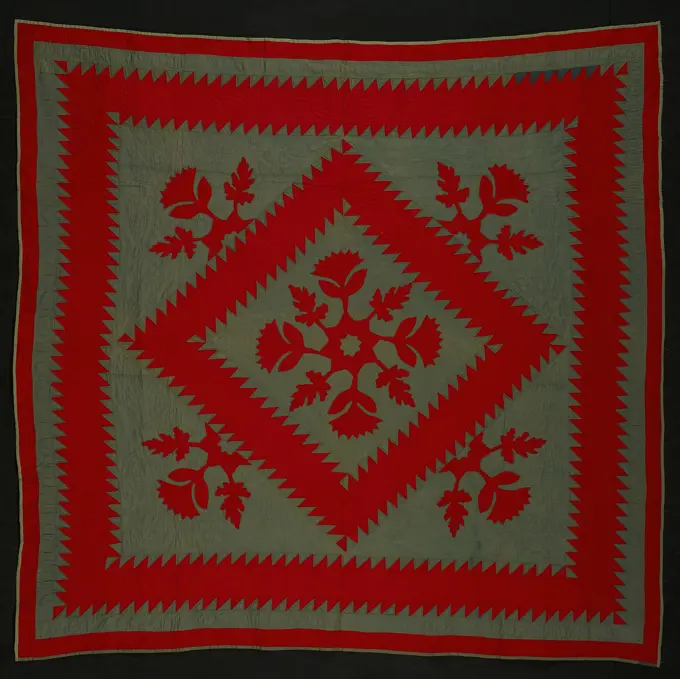
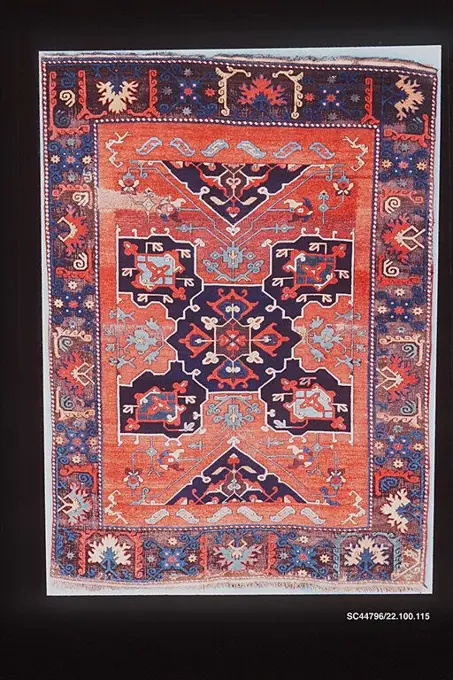
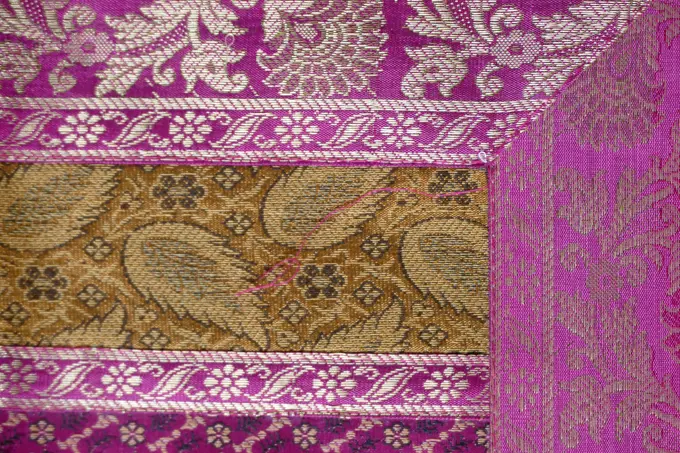
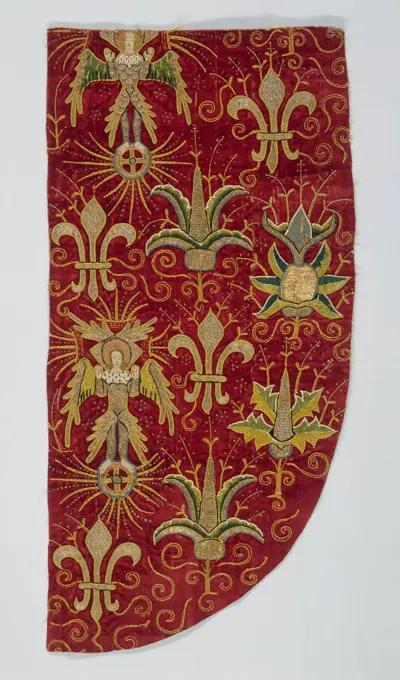
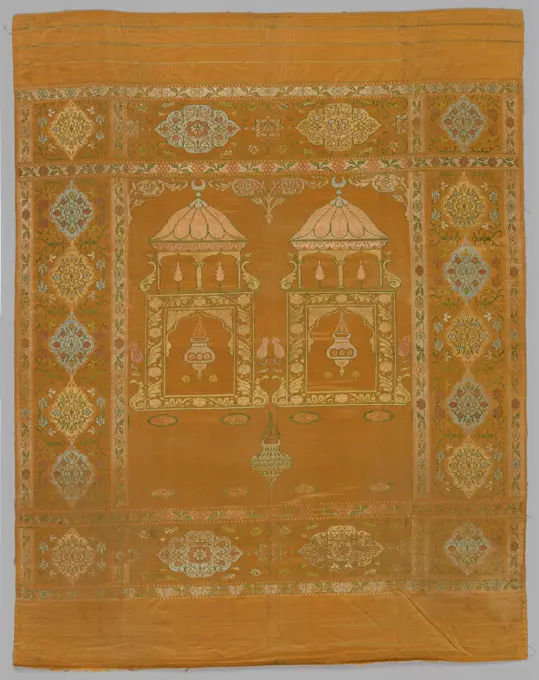
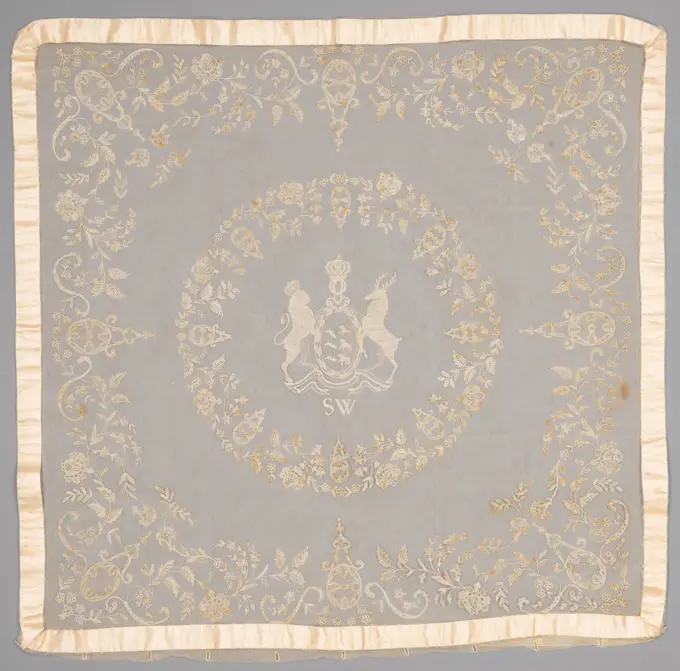
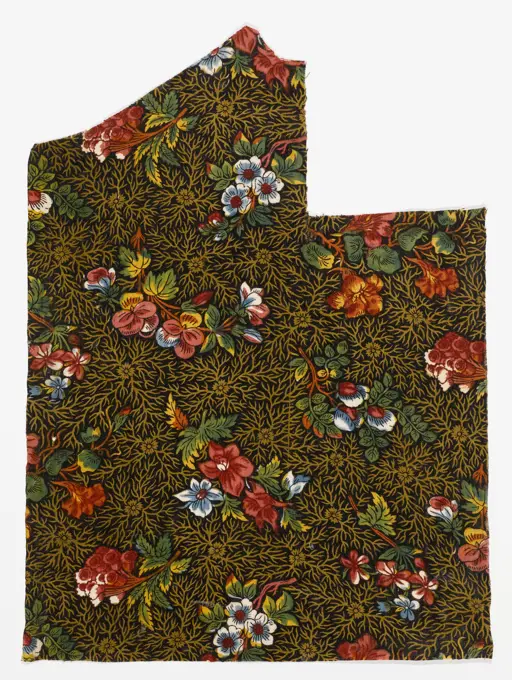
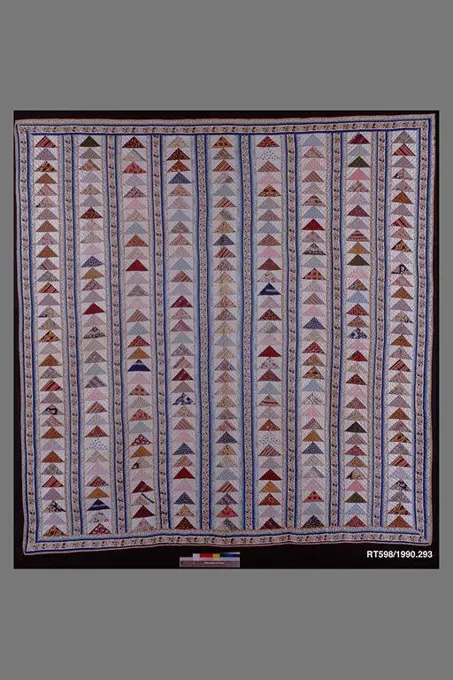
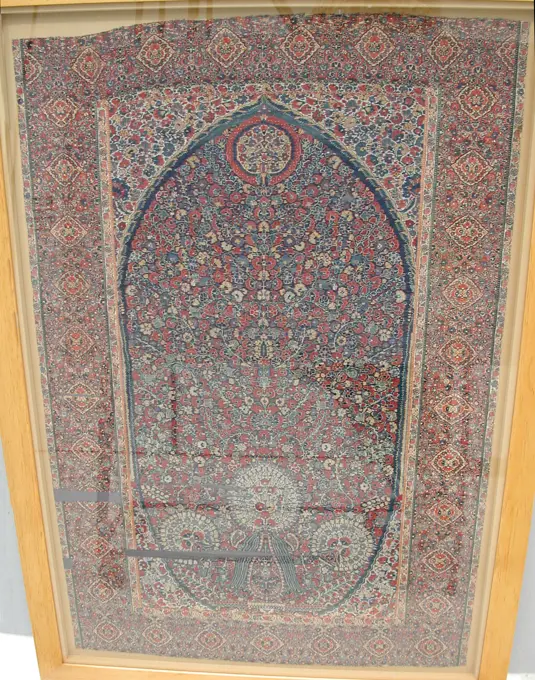
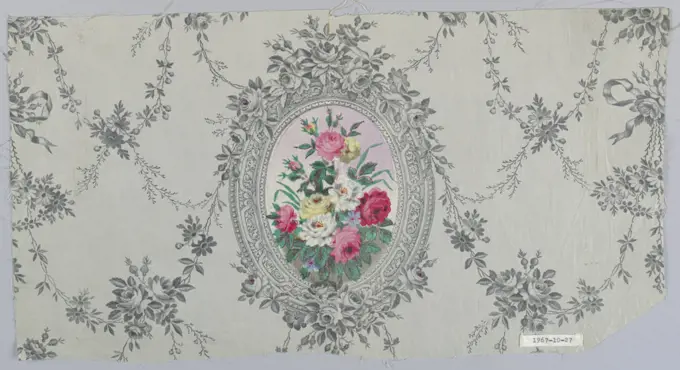
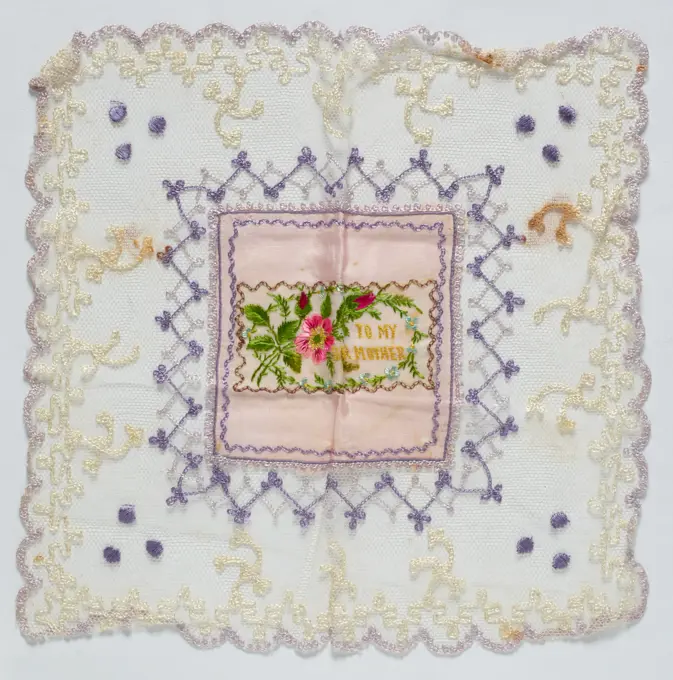
Cap crown, Medium: linen Technique: bobbin lace, Brussels style, Cap crown of Brussels-style lace. Symmetrical arrangement of bowl of flowers surrounded by leaf forms, Belgium, mid-18th century, lace, Cap crownHenry Granet, Quilt (Star and Triangle), 1935 1942 Quilt (Star and Triangle)Piece British 19th centuryFragment Made 1801-1900 Spain. .Vest, half, from white satin with embroidered silk flowers, anonymous, c. 1750 Vest, half, from white satin with embroidered sides flowers. The Netherlands.  silk. satin Vest, half, from white satin with embroidered sides flowers. The Netherlands.  silk. satinMan's Wrapper (hinggi) (Indonesia); cottonChasuble fragments, Medium: silk, metallic thread Technique: compound cloth with supplementary weft, Fragments of chasuble, brocaded with silver lace trimming with serpentining form with lacy filling and leaves, in white on coral ground. Flowers and buds in silver wound on white silk core, outlined in green. Silver trimming down each seam., Italy or France, mid-18th century, woven textiles, Chasuble fragmentsBedcover Made 1710-1730 England. Cotton, plain weave; embroidered with silk floss and silk yarns in back, cross, herringbone, individual satin, satin, star, and stem stitches; laid work, couching, and French knots; .Sidewall (USA); machine-printed; 57 x 50 cm (22 7/16 x 19 11/16 in.); Anonymous Gift; 1948-14-17-a/iCoverlet Made 1840-1860 United States. Cotton and wool, plain weave double cloth with main warp fringe; probably woven on loom with Jacquard attachment; two selvages present .White embroidery project for a napkin Birtusówna, ZofiaHandmade traditonal rugs in close-upPortuguese Goa Carpet ca. 1650-1700. Portuguese Goa Carpet 781487Ajemi (sash), 1895-1900, 45 3/4 x 42 3/4 in. (116.21 x 108.6 cm) (excluding fringe and cording), Wool; woven fabric, Iran, 19th-20th centuryPiece 19th century Japan. Piece. Japan. 19th century. Silk / Compound weave. Textiles-WovenWallow, painted on side with stripes, strict bouquets, interspersed with loose flowers and upright slender with leaves and flower variations, anonymous, c. 1750 - c. 1800 A wall compartment with painted wallpaper on the side. The cream-white soil in rip binding is per track by two gray-blue stripes in satin binding, divided into a wide middle section and narrower side sections. On the blue bouquets were painted with loose flowers painted, a raised slender with leaves and flower variations in pink, lilac and blue and a narrower slender with flowers on the sides. Northern Netherlands (possibly)Netherlands (possibly) silk. paint (coating) A wall compartment with painted wallpaper on the side. The cream-white soil in rip binding is per track by two gray-blue stripes in satin binding, divided into a wide middle section and narrower side sections. On the blue bouquets were painted with loose flowers painted, a raised slender with leaves and flower variations in pink, lilac and blue and a narTextile Swatches Onondaga Silk Company, Inc. (1925-1981). Textile Swatches, 1948-1959. 65 silk; 35 metal, (a) - (c): 11 1/2 x 5 in. (29.2 x 12.7 cm).    1948-1959Charlotte Winter, Patchwork Quilt, c 1937 Patchwork QuiltFragments; medium:silkDecorative hanging panel of an officials robe, 19th century, Unknown Korean, 10 1/4 × 21 11/16 in. (26.04 × 55.09 cm) (including fringe), Silk thread embroidery on silk, Korea, 19th century, This embroidered silk textile is an example of a decorative panel, called a husu, that would have decorated the back of an officials courtly or ceremonial garb. The motif and materials of husu were differentiated based on the officials position and rank. This late Joseon example featuring four pairs of facing cranes, in blue, yellow, and white, would have been reserved for a civil official. Husu were used from the end of the Goryeo period through the Joseon period.Field of sixteen tiles, Anonymous, c. 1750 - c. 1800 Field of sixteen tiles (4 x 4) each with a blue (one tile purple) painted potenger or image on a console. In the corners, a rainy motif. Rotterdam (possibly) earthenware. tin glaze majolica Field of sixteen tiles (4 x 4) each with a blue (one tile purple) painted potenger or image on a console. In the corners, a rainy motif. Rotterdam (possibly) earthenware. tin glaze majolicaFragments, Medium: cotton Technique: block printed (two reds, black) and yellow and blue applied by brush on plain weave, Two fragments of a non-directional pattern of small flowers in bright colors on a black background., France, ca. 1800, printed, dyed & painted textiles, FragmentsSerape (Interpretation of Mexican Saltillo Serape) Made 1875-1900 Germany. Cotton and wool, plain weave; painted; attached knotted fringe .Pocket 1750 American. Pocket 156892Bag 1860s American. Bag. American. 1860s. cottonBaby Carrier, 14 x 13 1/4 in. (35.56 x 33.66 cm), Cotton, metallic tape and ornaments, sequins; needlework, ChinaSampler 18th century possibly Swiss. Sampler 228577Piece 18th century Japan. Piece 71557Tapestry. unknown, authorTowel End, c 1700s- 1800s. Russia, Nizhny-Novgorod province, 18th-19th century. Plain weave linen (est.) with polychrome wool (est.) and metal thread chain stitch embroidery; applied silk (est.) ribbon and metal thread trim; overall: 38 x 43 cm (14 15/16 x 16 15/16 in.). This Russian embroidered panel was likely used to embellish the end of a bathing towel. Textiles of this type are valuable for their fine embroidery of ancient folk motifs, ritual significance, exemplification of the role of textiles in their society, and in this case, connection to a prominent woman collector, Natalia de Shabelsky, without whom this textile and others like it might have been lost.Frivolita bag in rectangular model of ivory-colored side, on which flowers, branches and bows embroidered with colorful ribbons, with silk clamping side. Bag in a flat and rectangular model of ivory-colored side, of which both sides with bows, flowers and branches in V shapes embroidered in colorful ribbons and floss silk. The construction of the embroidery is symmetrical and differs on both sides in color accents. The bag is bordered with silk clamping edge on silk tulle and lined with ivory silk. At the top is an opening that can be closed with yellow piping with ivory silk ribbons.Baby Carrier, 26 x 23 1/2 in. (66.04 x 59.69 cm), Cotton, silk, plastic buttons; needlework, ChinaChintz Fragments (India or Persia); cottonSilk Kashan Carpet. Dimensions: Mount Dimensions: L. 105 1/2 in. (268 cm)W. 76 1/2 in. (194.3 cm)Weight in mount: 555 lbs (251.7 kg). Date: second half 16th century.This carpet, possibly woven in the silk trade and carpet manufacturing center of Kashan, has a dark blue quatrefoil medallion at its center. Decorative elements on this and other related carpets from Kashan and Tabriz indicate that weavers may have used pattern books containing popular motifs to guide them in production. These designs are also present in other media, particularly in the arts of the book. The use of metal-wrapped thread in a silk Kashani carpet of this size is unusual, but the high knot count of about 600 knots per inch may have made this expensive material worth its cost given the fine quality of the work. Museum: Metropolitan Museum of Art, New York, USA.Mitre. Probably Italy. Date: 1751-1800. Dimensions: 84.7 x 32.7 cm (33 3/8 x 12 7/8 in.). Mitre: silk, plain weave; embroidered with silk floss and gilt-metal-strip-wrapped silk in bullion, running, satin, split, and stem stitches; laid work, couching, and French knots; edged in woven braid and fringe; case: leather. Origin: Italy. Museum: The Chicago Art Institute, Chicago, USA.Piece 18th-19th century Japan. Piece 66382Fragment of silk fabric  crown and pomegranate motifs unknownPillow cover, Medium: linen Technique: embroidery, cutwork, reticella, Rectangular pillow cover in reticella; central design of female figures with four-footed animal., Italy, 16th century, lace, Pillow coverPiece ca. 1830 British. Piece. British. ca. 1830. Cotton. Textiles-PrintedCircular Piece, 1700s. India, 18th century. Embroidery; velvet decorated with silver; overall: 81.5 x 82.6 cm (32 1/16 x 32 1/2 in.).George Loughridge, Patchwork Quilt, 1935 1942 Patchwork QuiltBatik panel, 20th century, 33 1/4 x 14in. (84.5 x 35.6cm), Cotton, China, 20th centuryAltar rug in Chinese Gobelin Techniek, Anonymous, 1600 - 1699 Medallions and floral motifs within a band with S-shaped figures. On the downstairs piece of dragons and cloud motifs. China linen (material). dye Medallions and floral motifs within a band with S-shaped figures. On the downstairs piece of dragons and cloud motifs. China linen (material). dyeFragments; medium cotton A formal arrangement of  flowers provides a surround.        Date: circa 1870Bliżej Kultury unknownCeiling Paper (USA); Manufactured by Wm. Campbell Wall Paper Company; machine-printed paper; 93.5 x 49 cm (36 13/16 x 19 5/16 in.)Sheet for cradle, made of fine linen (batist), with strip of bobbin, anonymous, c. 1690 - c. 1710 Cloth for cradle, of very fine linen (batist), narrow seams on three sides, at the head end wide hem with strip of bobbin. Sewn to bedspread. North Netherlands linen (material). bobbin lace Cloth for cradle, of very fine linen (batist), narrow seams on three sides, at the head end wide hem with strip of bobbin. Sewn to bedspread. North Netherlands linen (material). bobbin laceSprei or Palempore of Sits, decorated with a tree with large flowers and two horns of abundance, anonymous, c. 1750 - c. 1775 Sprei or Palempore of Sits, decorated with a tree with large flowers and two horns of abundance. Coromandelkust cotton (textile) Sprei or Palempore of Sits, decorated with a tree with large flowers and two horns of abundance. Coromandelkust cotton (textile)Chasuble, embroidered unknownEmbroidered Sampler 1835 Anna Denlinger Anna Denlinger, a Mennonite girl, stitched this sampler featuring the motif of a heart surrounded by flowers and letters that is common to many Pennsylvania German samplers. The letters surrounding the heart, O E H B D D E, stand for a motto in German, which warns: "Oh noble heart think on thine end.". Embroidered Sampler. American. 1835. Silk and wool on linen, embroidered. Made in Lancaster County, East Lampeter Township, Pennsylvania, United StatesFragment (France); wool embroidery on cotton foundationShawl ca. 1840 probably Russian. Shawl 123124Ceiling Paper (USA); Manufactured by Cresswell & Washburn Ltd; machine-printed paper, liquid mica; 91.5 x 49 cm (36 x 19 5/16 in.)Sampler (England); Embroidered by Charlotte Payne Lloyd; silk on woolCarpet Made 1450-1500 Spain. Even as the Christian kingdoms of Spain, led by Castile and Aragon, drove Muslimrulers from the Iberian Peninsula, the Spanish elite acquired a taste for the refined products of Muslim craftsmen, including splendid carpets. Rare surviving 15th-century examples, like this one, repeat small geometric shapes in their central field, sometimes also incorporating the coats of arms of their noble owners. Often of great sizeóthis one is almost 18 feet in lengthósuch carpets softened and enlivened the floors of palaces. Many survived as donations to Spanish convents, entering the art market and private collections around 1900.. Wool, Spanish knots on plain weave ground .Textile, Medium: Silk Technique: Predominantly warp-faced plain weave patterned by discontinuous supplementary wefts (brocading) bound on the front in 1/2 twill, Delicate curving stems of flowers in bright shades of pink and blue on a cream background., Spitalfields, England, 1740s, woven textiles, TextileFragments, Birds; Made by Bromley Hall (United Kingdom); England; cotton; Warp x Weft (a): 69.5 × 63.5 cm (27 3/8 in. × 25 in.) Warp x Weft (b): 39 × 33.5 cm (15 3/8 × 13 3/16 in.) Warp x Weft (c): 39.5 × 33.5 cm (15 9/16 × 13 3/16 in.) Warp x Weft (d): 34 × 30 cm (13 3/8 × 11 13/16 in.) Warp x Weft (f): 41 × 18.5 cm (16 1/8 × 7 5/16 in.) Warp x Weft (g): 40.5 × 6 cm (15 15/16 × 2 3/8 in.) Warp x Weft (h): 41 × 34 cm (16 1/8 × 13 3/8 in.) Warp x Weft (i): 41 × 34 cm (16 1/8 × 13 3/8 in.) Warp x Weft (j): 40 × 30 cm (15 3/4 × 11 13/16 in.) Warp x Weft (k): 39 × 39 cm (15 3/8 × 15 3/8 in.); Bequest of Elinor Merrell; 1995-50-128-a/kTextile (England); cottonTextile (England); cotton; Warp x Weft: 92 x 61.5 cm (36 1/4 x 24 3/16 in.) Repeat H: 34 cm (13 3/8 in.); 1976-65-10Border, Block-printed on paper, Floral arrangement set within a Greek Key framed oval, with anthemia between. Printed in colors on brown ground., H#615, France, 1810-25, Wallcoverings, BorderSampler (Mexico); wool embroidery on cotton foundationFragments (France); silkMedieval ornamentSidewall (USA); machine-printed paper; 17 x 18 cm (6 11/16 x 7 1/16 in.)Bedcover ( Sawtooth or Jagged Square Quilt) 1880-1900 United States. Cotton, plain weaves; pieced; appliquÈd; quilted; backed with cotton, plain weave; printed; edged with cotton plain weave .Carpet with Quatrefoil Design late 18th-early 19th century This small carpet has a distinct star-medallion pattern that dominates the center field and a wide border in which four-flower patterns alternate with palmette motifs inserted in hook-like arch-motifs. The quatrefoil design derives from the medallion star-pattern rugs. Both quatrefoil and star patterns were common in workshops of the Ushak district. However the dark colors used in the background of the outer border of this carpet and the pile of white and green made of three yarns (instead of the usual two yarn pile) rather point to Central or Eastern Anatolia as the production place. The small size of this rug suggests that it was woven in a village, where women are known rather than men to have established small workshops.. Carpet with Quatrefoil Design 447573Fragment (France); silkIndian silk textile with traditional woven pattern. 21st CenturyOpus Anglicanum (Chasuble) late 15th century British This fragment of "opus anglicanum" ("English work," as it was called in medieval inventories) is remarkable for the richness of its design and its superb state of preservation. The decoration consists of two cherubim, each atop a wheel from which rays of light emanate; four fleurs-de-lis; and four thistles in three different designs, each motif distributed along a vertical axis. These elements, all embroidered in vibrantly colored silk and silver-gilt threads, are appliquéd onto the red velvet foundation, on which the scrolls and other designsaccented with attached minute silver-gilt rings or shotare embroidered directly. The lay of the velvet, the vertical warp and design, and the outline of the fragment indicate that it formed the lower-right quadrant of a chasuble, worn by a priest during the celebration of Mass.Please note that this object is seen on a rotating basis, due to conservation requirements.. Opus Anglicanum (ChasubleCoverlet, 19th century. Turkey, 19th century. Silk; average: 152.5 x 124.5 cm (60 1/16 x 49 in.).Cushion cover of the application side of Queen Sophie, Anonymous, c. 1839 Cushion cover of natural -colored application side, needle side - Brussels mesh side - Applicated on mechanical tulle. In the middle of a tulle rectangle, within a wreath, the oval coat of arms of Wurtemberg, held by a crowned climbing lion and a climbing deer and covered by a crowned helmet. The large initials, S and W have been installed under an empty Banderolle. The wreath is made up of a swinging rose branch, interrupted by six standing oval medallions, covered by a dome with a dome, turned to the middle. A large oval center has been saved by the edge, which consists of larger umbrella ovals and symmetrical branches; Large roses, carnations, blossom branches and long, incised leaves grow on the branches. A Softrosis Satin Rand completes the cushion cover. The corresponding bedspread has almost the same pattern on a larger scale. However, the edge is cream -colored, with large crem bows. Belgium (possibly) liFragment; cotton; Warp x Weft: 32 x 23 cm (12 5/8 x 9 1/16 in.) Repeat (offset) H: 21.9 cm (8 5/8 in.)Burse; wool, linenPiece French 19th centuryQuilt, Flying Geese pattern ca. 1845 Possibly Mary Spingler Fonderden Van Beuren. Quilt, Flying Geese pattern 14199Conciliate belt; Manufaktura Paschalis Jakubowicz (Warsaw; label Pasów; 1788-1794); 1791-1794 (1791-00-00-1794-00-00);Gogolewski, P. (Fl. Ca 1918) - collection, flower bouquets (ornament), plant ornamentations, four -sided belts, Polish belts, Poland (culture), rosette (ornament), Polish clothing, purchase (provenance)Woven Hanging ca. 1820 Kashmir was famous for its beautiful shawls made of pashmina, a fine goat's wool, woven in the distinctive double interlocking tapestry weave style. Hangings, cushion covers and some articles of clothing were made in this technique, in which the piece is woven with bobbins or spools, with the weft colors inserted as required by the pattern, interlocking where two adjoining colors meet. Floral motifs are the most common decoration on the Kashmiri woven textiles, the most distinctive of which are the boteh, a cone-like design of a flower or shrub with a curving tip, and the flowering vase form, as seen here.. Woven Hanging 446967Pad For Workbox; silk, parchment, metal threadTextile, Medium: cotton Technique: printed by engraved roller and block printed, Grey ground printed in darker grey with pattern of floral garlands surrounding elaborate oval frame bedecked with roses; frame encloses floral bouquet, mostly roses, printed in pink, yellow, blue, red, grey, green and white., 1851-63, printed, dyed & painted textiles, TextileTextile, Medium: cotton Technique: button, chain, over-casting and drawnwork stitches, Basket with flowers., Mexico, 18th century, embroidery & stitching, TextileBorder, c 1800- 1825. Russia, Nizhny-Novgorod province, early 19th century. Plain weave silk (est.) ground with polychrome silk (est.) and metal thread chain stitch embroidery; applied silk (est.) ribbon and metal thread trims; overall: 28 x 93 cm (11 x 36 5/8 in.). This Russian embroidered panel was likely used to embellish the end of a bathing towel. Textiles of this type are valuable for their fine embroidery of ancient folk motifs, ritual significance, exemplification of the role of textiles in their society, and in this case, connection to a prominent woman collector, Natalia de Shabelsky, without whom this textile and others like it might have been lost.Souvenir handkerchief, circa 1918, France, maker unknown. Gift of Cathryn Riley, 2012.Fragment of wool fabric  red background with rose posies unknownSidewall, Robert Graves Co., New York, New York, Machine-printed paper, On silvery white ground large yellow roses on pale gray trellis. Straight repeat, drop match. Printed in right selvedge: '5882 D E E The Robert Graves Co.', New York, New York, USA, 1907, Wallcoverings, SidewallSwatches (France); silk; 1896-27-16-1/49Square (France); linenValentine - I Love YouTile. Four tiles of pottery, painted in blue, yellow, green, orange and manganese, leaf rosette whose center is formed by an eight-pointed star in blue and white. (In modern wooden table).Rug, 1880-1890, 99 x 148in. (251.5 x 375.9cm), Wool and flat woven (soumak), 19th centuryHandkerchief Irish, Carrickmacross 19th centuryGobelin cover;  PO PO. 18th century (1750-00-00-1780-00-00);Textile (England); cottonAn Isphahan carpet from the 16th century, 1910. Artist: UnknownTextile (England); Manufactured by Bromley Hall (United Kingdom); cottonUmbraculum made of silk fabric unknownSampler (England); Embroidered by Jane Yates; silk embroidery, wool foundationRomania, Wallachia, Sinaia. Traditional hand made Romanian embroidered textiles.Sampler. Date/Period: Early 19th century. Sampler. Medium: silk embroidery on linen foundation. Technique: embroidered in chain, satin, cross, four-sided and running stitches with withdrawn element work on plain weave foundation. Height: 390 mm (15.35 in); Width: 335 mm (13.18 in). Author: Teresa Sepeda.Border (USA); Made by Carey Bros. W.P. Mfg. Co.; machine-printed and embossed