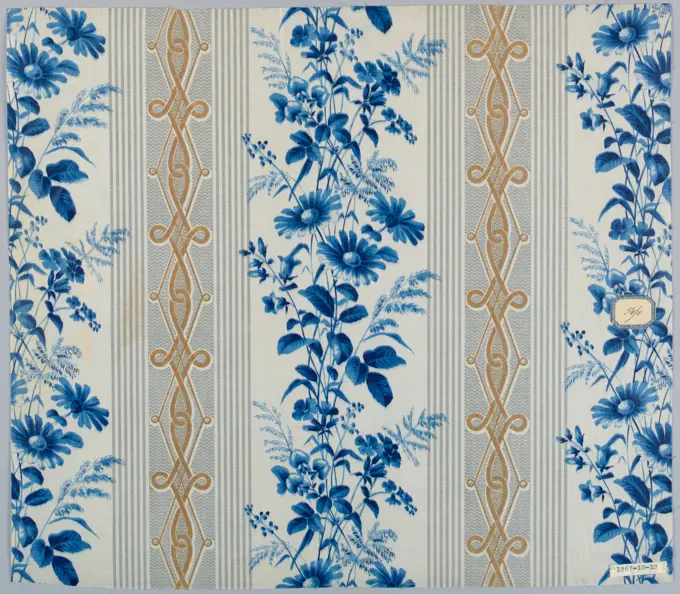
Textile Fragments and Patterns

Historical textile pieces featuring intricate floral and decorative motifs from various regions, showcasing artistry through time.

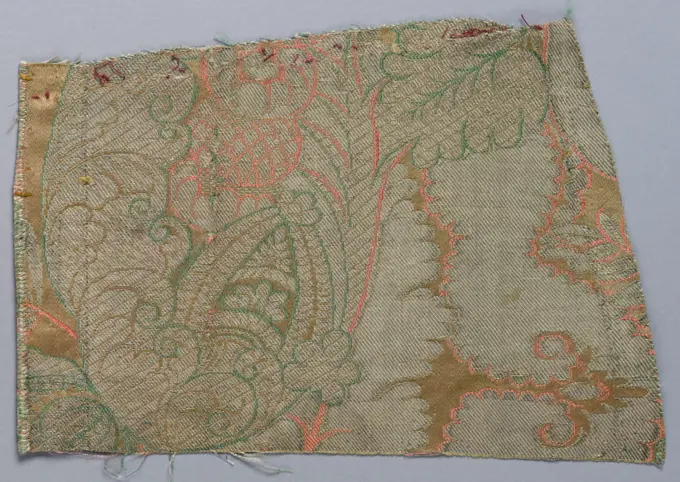
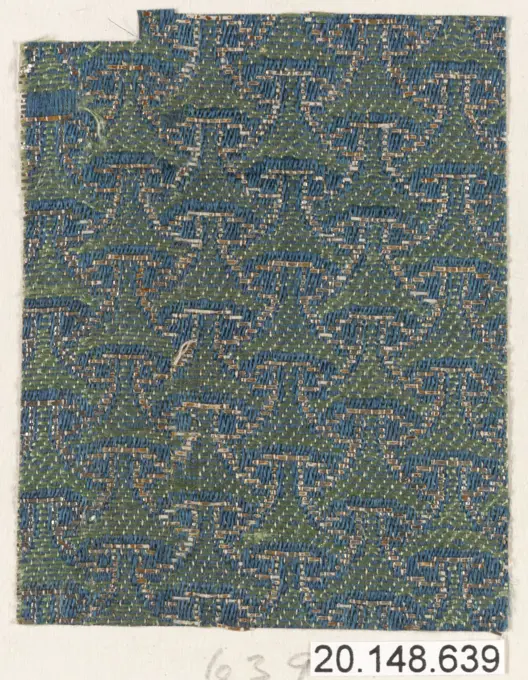
Fragment; medium, silk, metallic
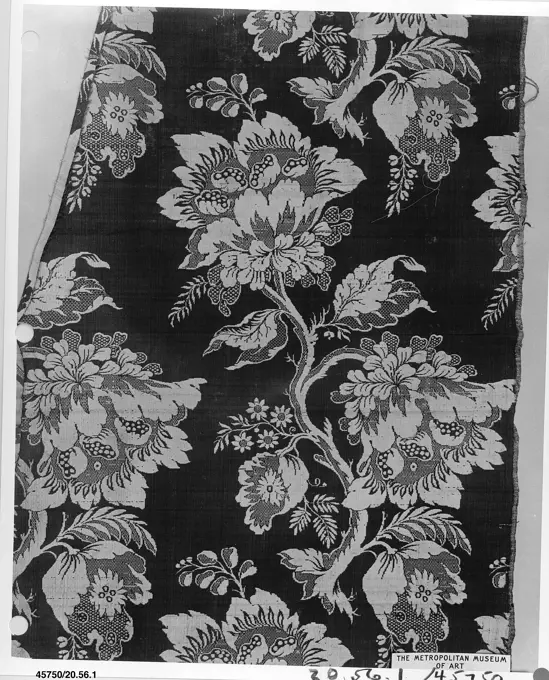
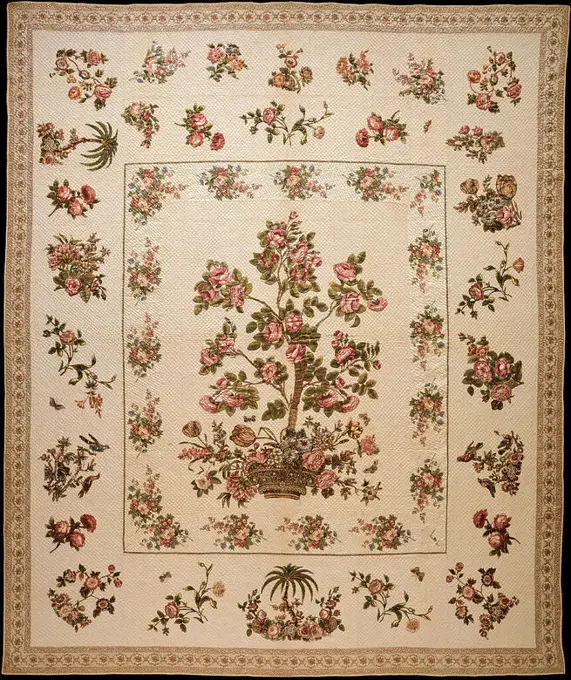
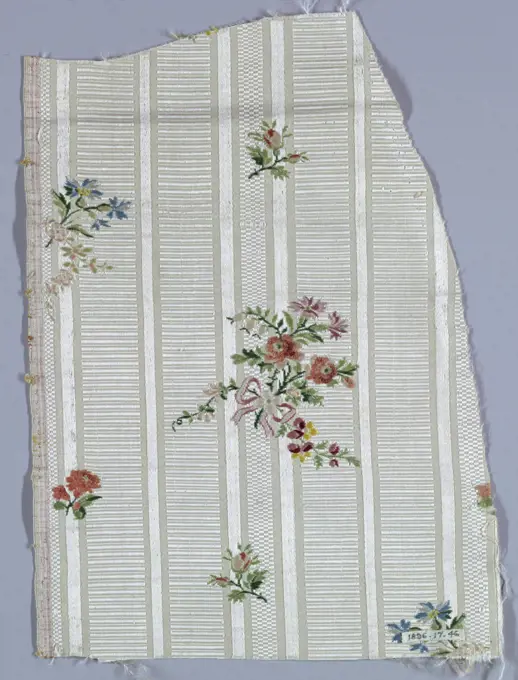
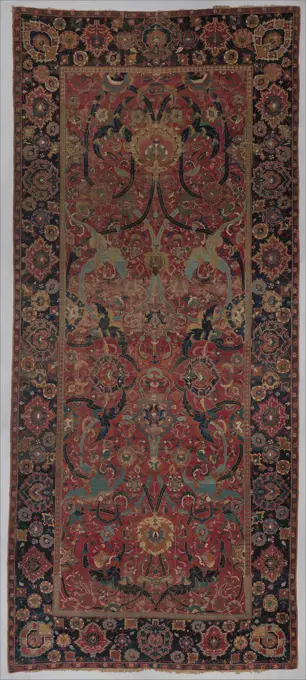
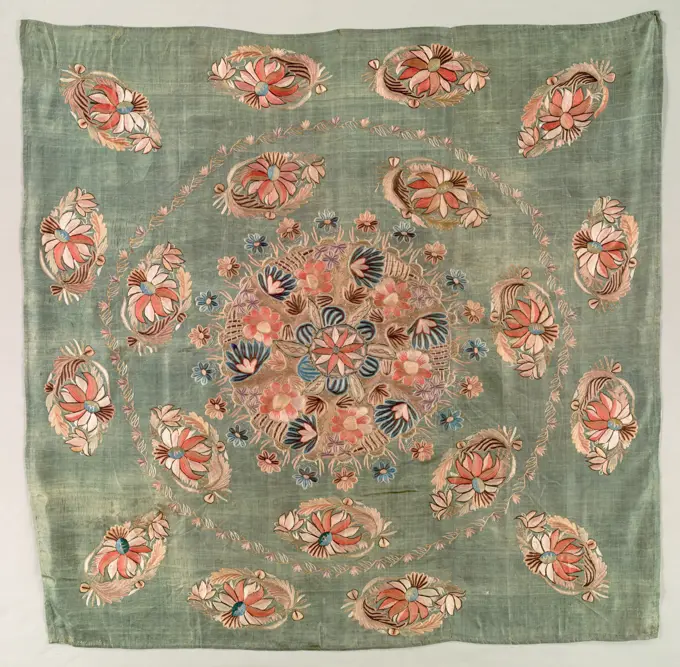
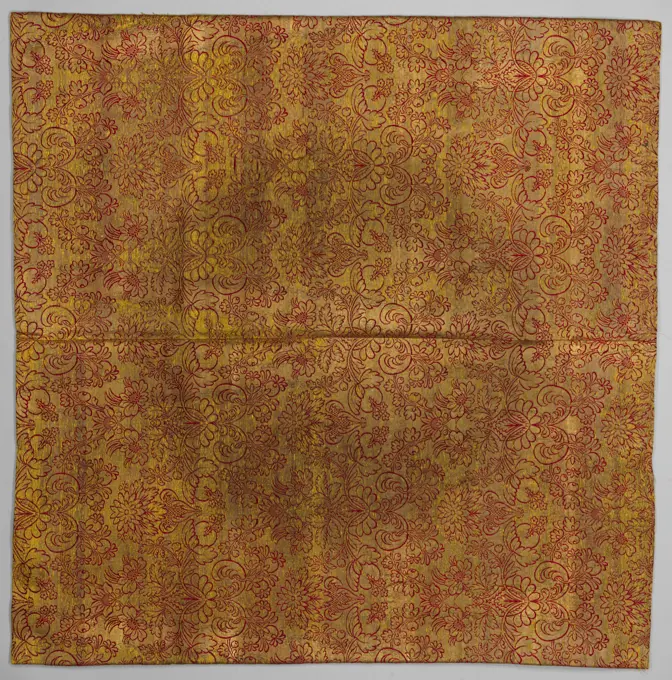
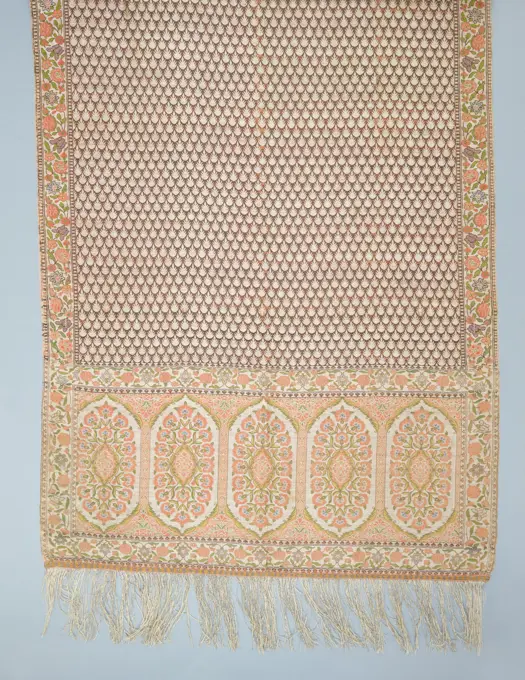
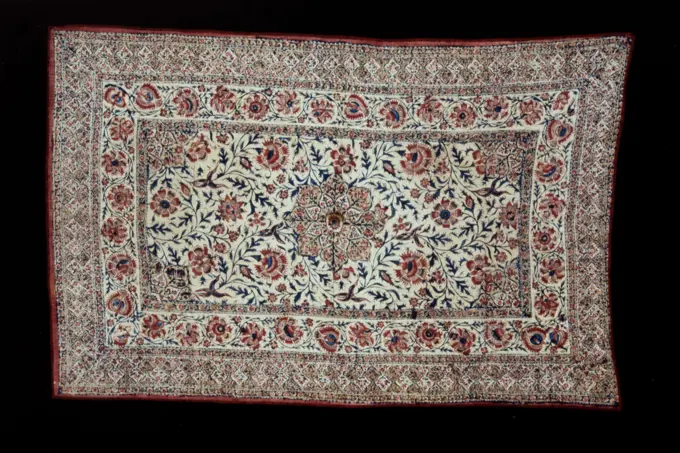
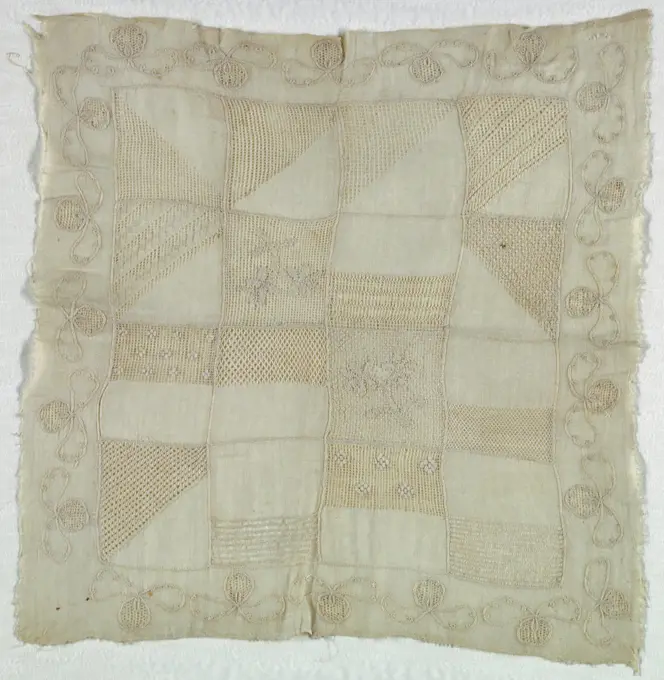
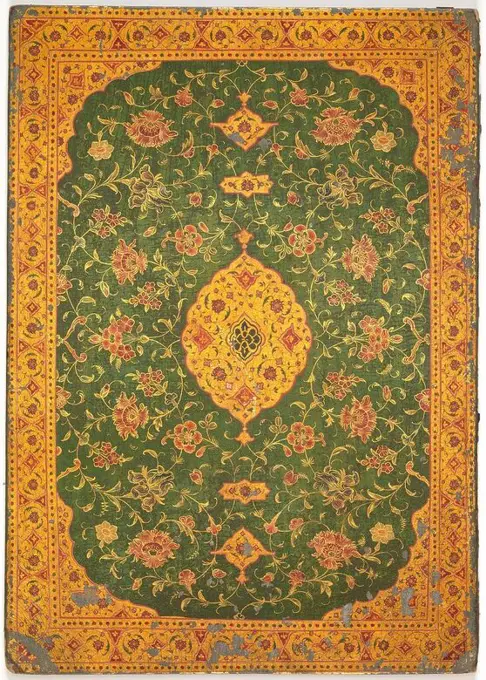
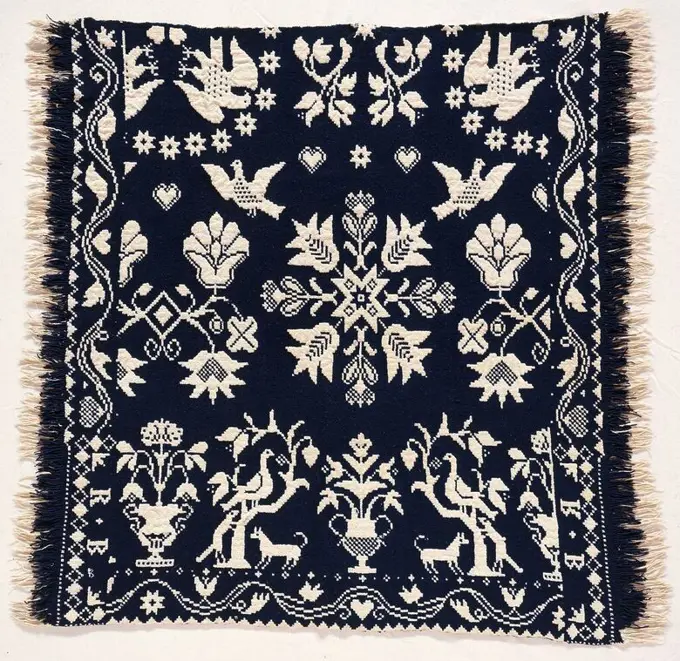
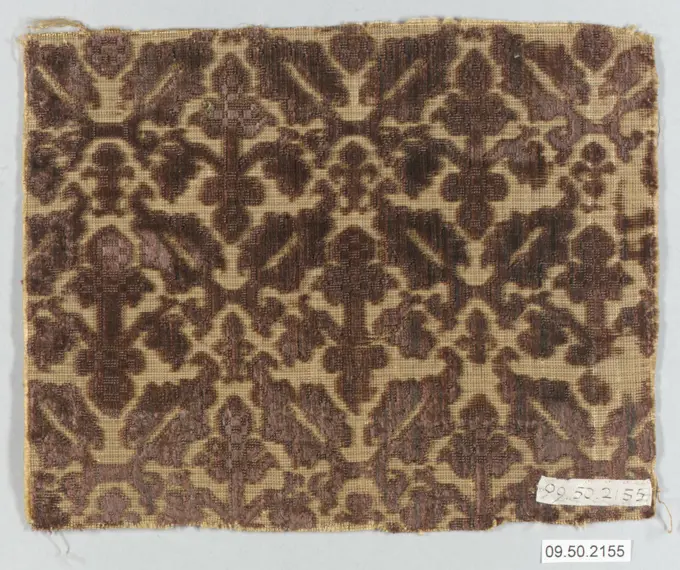
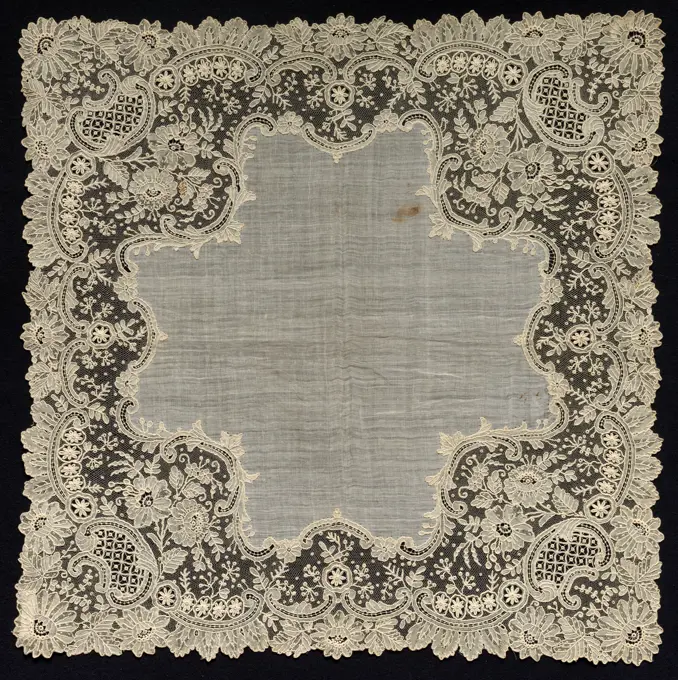
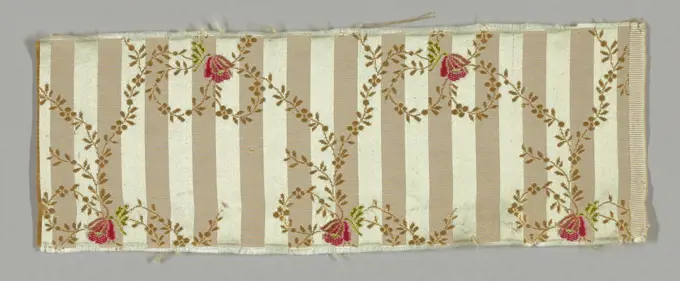
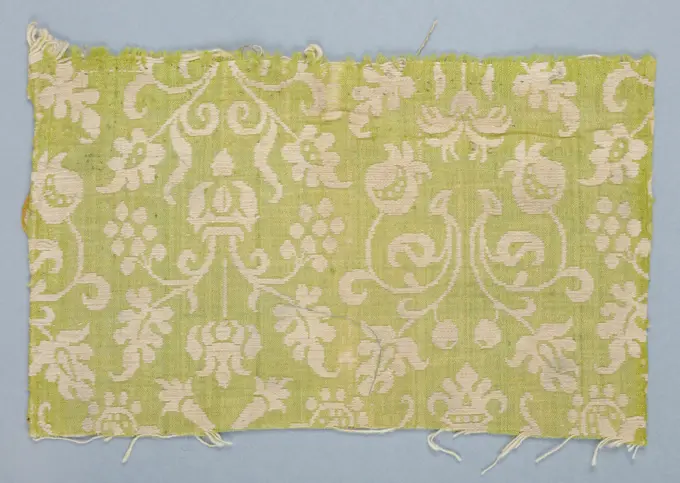
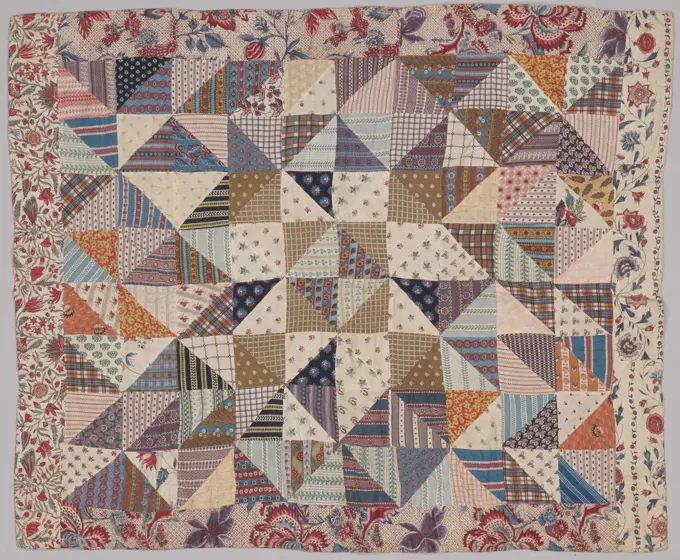
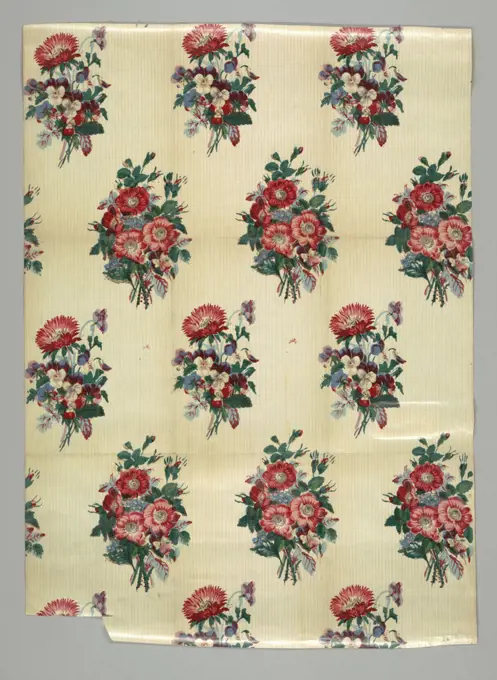
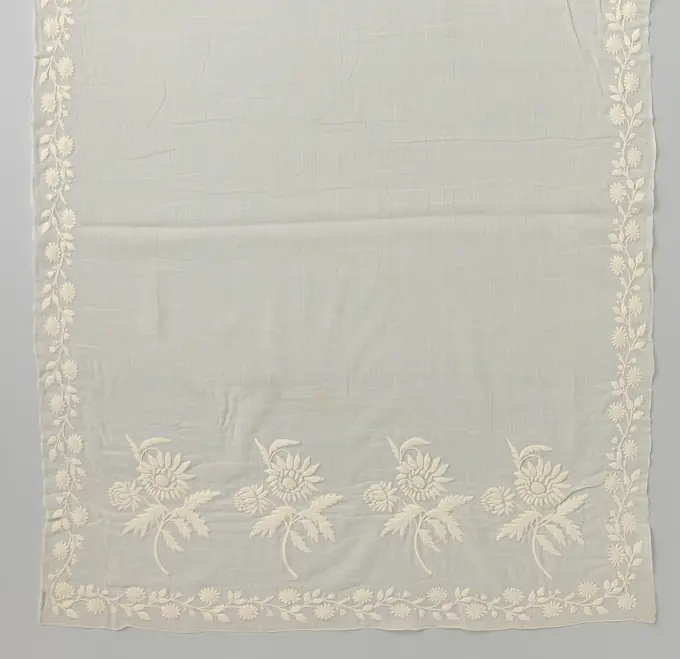
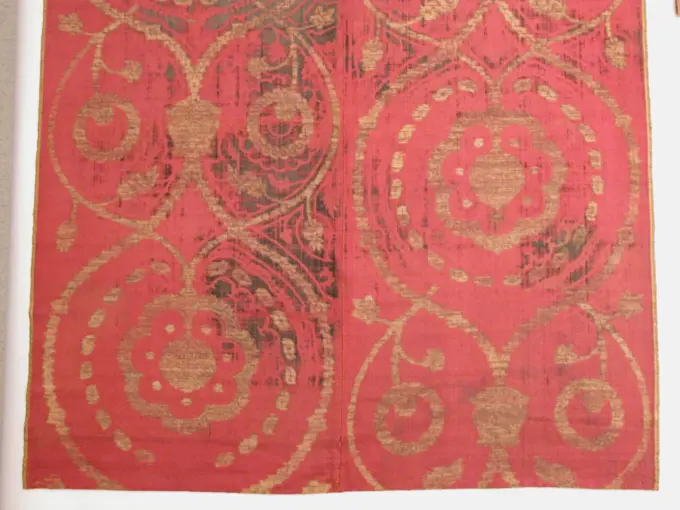
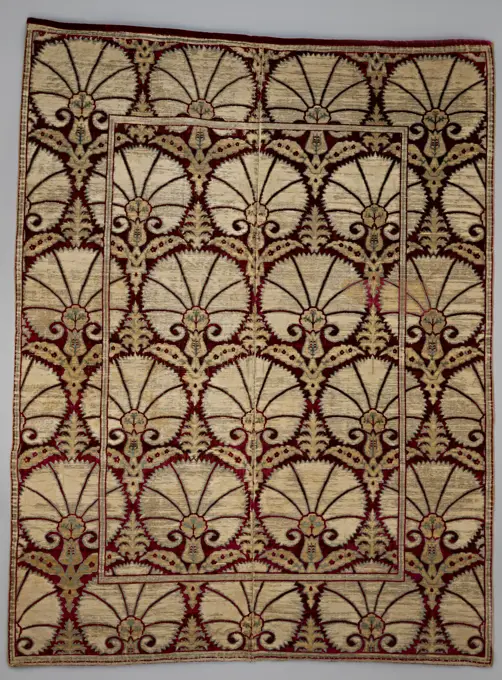
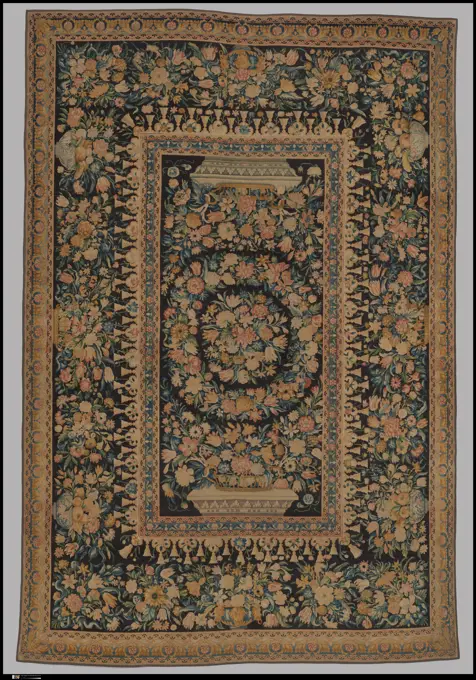
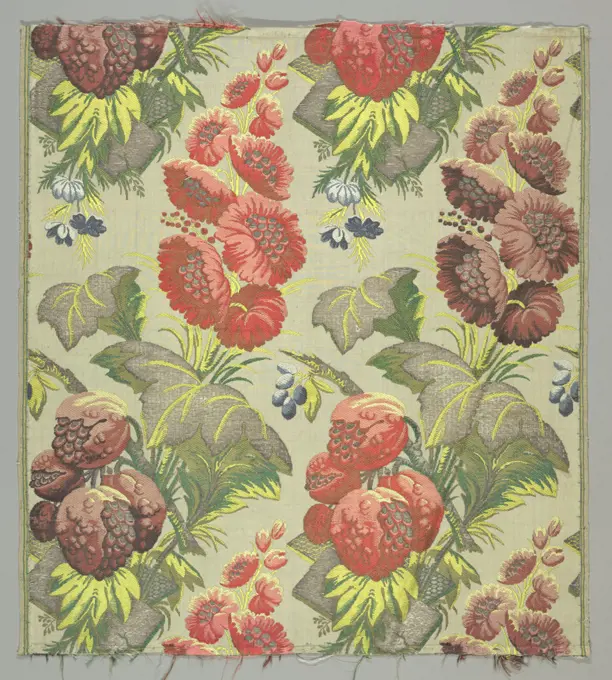
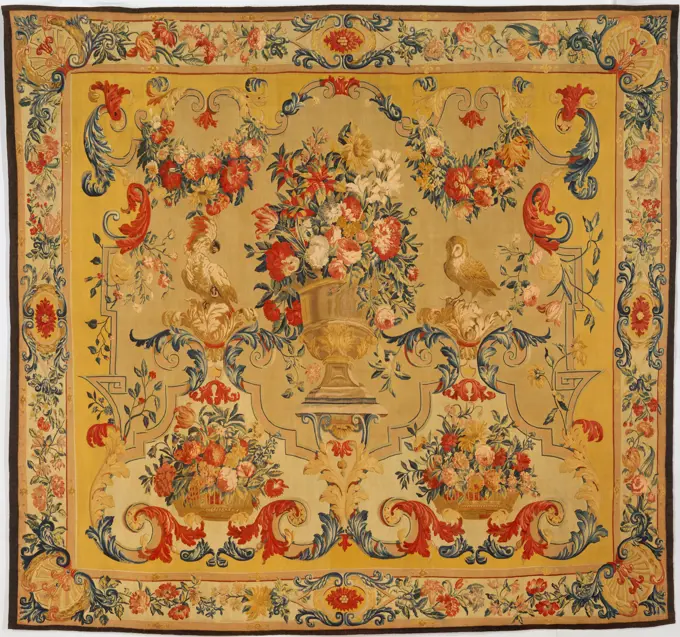
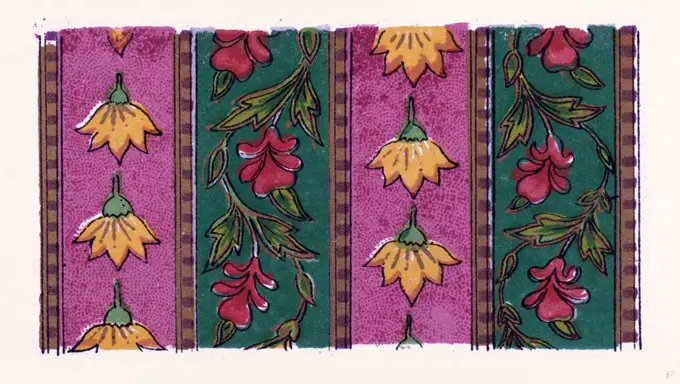
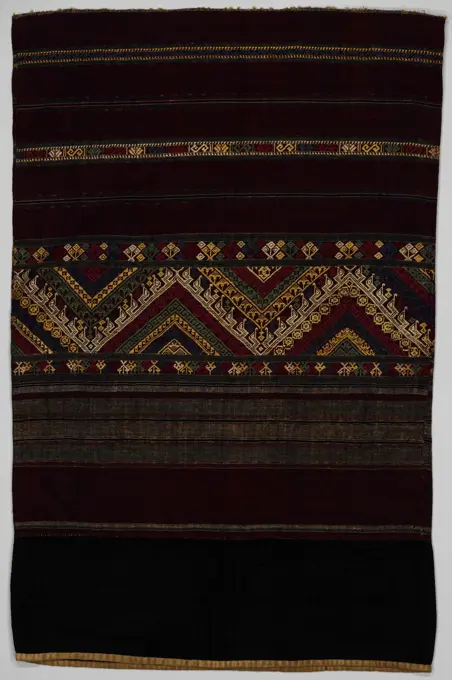
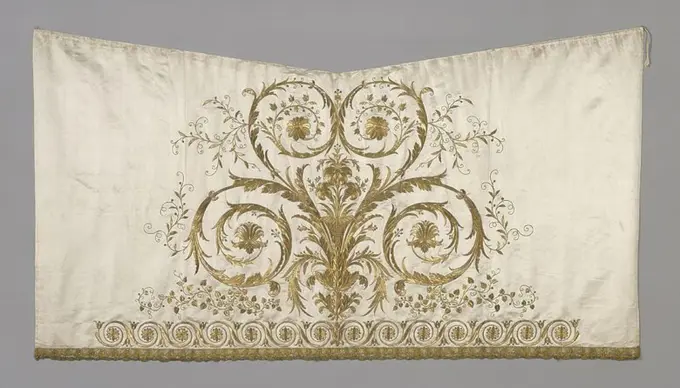
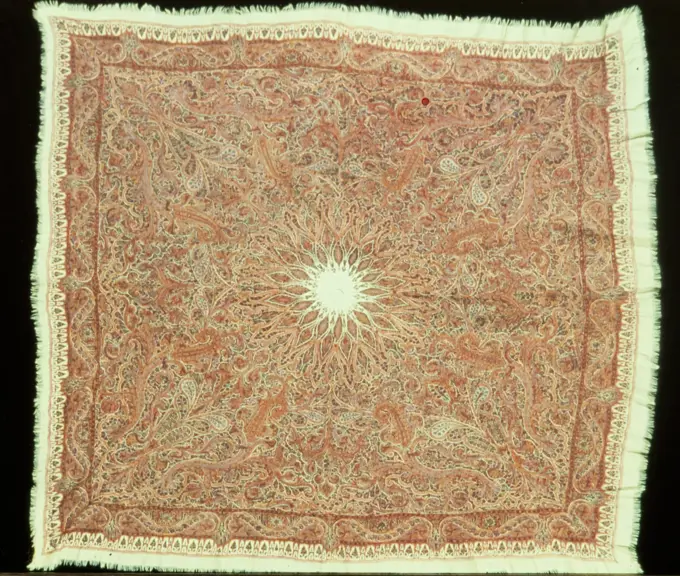
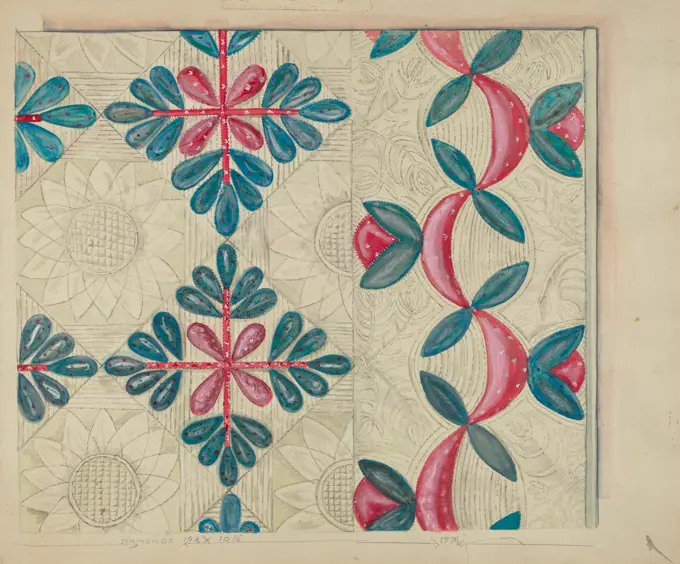
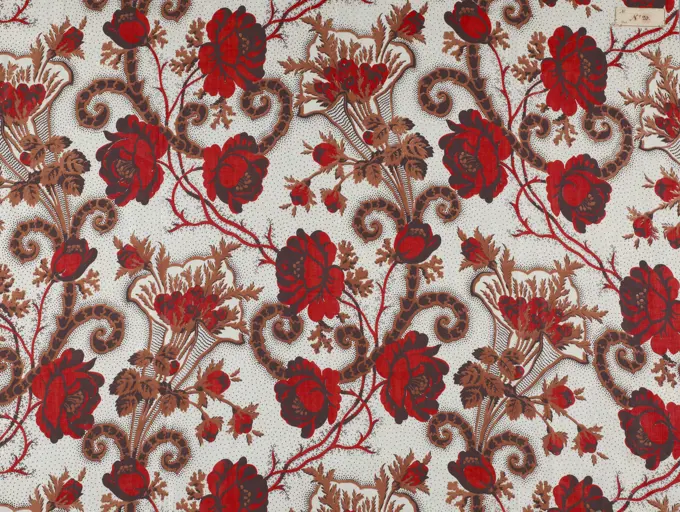
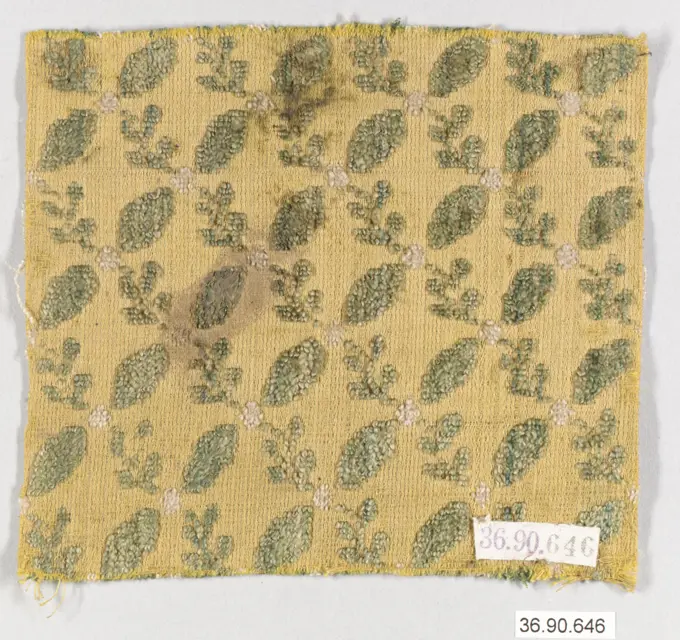
Fragments; silk, metallic thread; 1972-6-24-a/ePiece ca. 1730-35 French. Piece 220135Fragment (France); silk and metallicChintz appliquéd quilt. Culture: American. Dimensions: 110 1/4 x 92 1/2 in. (280 x 235 cm). Maker: Mary Malvina Cook Taft (1812-1905). Date: ca. 1835-40.This quilt is appliquéd with pieces of chintz to form a Tree of Life motif at its center, recalling the design of popular imported Indian bed hangings, called "palampores." Chintz-appliquéd quilts such as this one were most popular in the South during the first half of the nineteenth century. According to family history, Mary Malvina Cook Taft made the quilt for her trousseau. She probably made it about 1835, since she was born in 1812 and probably married in her twenties, as was common at the time. There is no documentation of where the piece was made, but stylistically it seems most closely related to documented bedcovers from Maryland, Virginia, and South Carolina. Museum: Metropolitan Museum of Art, New York, USA.Sampler, petit point embroidery on cotton with various examples of decorations. Mexico, 20th century.Textile; silk, metallic thread; Bequest of Richard Cranch Greenleaf in memory of his mother, Adeline Emma Greenleaf; 1962-56-18Sampler(Limar)Sample. France. Date: 1825-1850. Dimensions: 9.8 × 8.9 cm (3 7/8 × 3 1/2 in.)Repeat: 6.7 × 6 cm (2 5/8 × 2 3/8 in.). Silk and straw, bands of: complex gauze weave with supplementary facing wefts and self-patterned by main warp floats and bands of complex gauze weave self-patterned by areas of main warp floats over plain interlacing. Origin: France. Museum: The Chicago Art Institute, Chicago, USA.Handkerchief Made 1860-1880 France. Cotton, plain weave; printed .Fragments; silk, metallic threadFragment, silk woven, isolated floral sprigs on ribbed white background, 18th century, woven textiles, FragmentFloral Arabesque Carpet 17th century This floral arabesque carpet belongs to a group previously attributed to both Iran and India. The fourply warp points to Iran as the place of manufacture. Furthermore, such carpets were woven in large quantities and numerous examples survive. Few of these, however, possess the intensity, scale, and originality of this one. Light and dark blue arabesque bands run symmetrically through the field, creating a sense of flow. The design is further elaborated by the fine network of buds, rosettes, leaves, and palmettes in the background, as well as by the equally vibrant main border, set against a blue background.. Floral Arabesque Carpet 452066Textile Sample from Sample Book 19th century Japan. Textile Sample from Sample Book 68191Cushion Cover. Turkey. Date: 1601-1700. Dimensions: 104.2 x 53.4 cm (41 x 21 in.). Linen, plain weave; backed with cotton, plain weave; embroidered with silk floss and silk yarns in laid work and couching. Origin: Turkey. Museum: The Chicago Art Institute, Chicago, USA.Embroidered Square, 19th century. Turkey, 19th century. Embroidery, silk and metallic threads, on silk tabby ground; average: 99.3 x 102.2 cm (39 1/8 x 40 1/4 in.).Silk Brokaat Of Karmijn Rood On Gold, 1550 - 1599 Silk brokaat made of carmine red on gold. Texture: the gold thread that forms the impact of the stock is woven in keperbinding; The red silk in satin binding forms the chain. Pattern: The symmetrical pattern, which is only indicated in contour lines, is built on three staggered ashes, a leaf rosette with vase-shaped center, from which curved stems hurry for pure-wise, ending in composition flowers, in pomegranate-shaped flour and in cloud From berries and apples. This whole includes a chrysanthemum standing on checkered leaf palm. The fabric consists of two lanes sewn together, lined with modern red taf side. A layer of molton between tissue and lining. Italy (possibly) silk. Silk brokaat made of carmine red on gold. Texture: the gold thread that forms the impact of the stock is woven in keperbinding; The red silk in satin binding forms the chain. Pattern: The symmetrical pattern, which is only indicated in contour lines, is built on thShoulder Cloth(Limar)Textile (England); cottonCarpet Strip Made 1870-1900 United States. Wool, tied and free plain weave double cloth; woven on a loom with Jacquard attachment .Persian belt unknownWaist Wrapper (KainPanjang)Coverlet Made 1843 New York. Cotton and wool, plain weave double cloth; woven on loom with Jacquard attachment; two loom widths joined . James Cunningham (Weaver)Cover, 19th century, L.52 x W.34 in., cotton; printed, India, 19th centuryShawl ca. 1850 probably French. Shawl 84589Fragment (Spain); linen, woolSampler, Medium: cotton Technique: embroidered in deflected element work using chain, overcasting, and reverse herringbone stitches on plain weave foundation, Sixteen squares of deflected element work using chain, overcasting, reverse herring bone., Denmark or Northern Germany, early 19th century, embroidery & stitching, SamplerBag, Medium: cotton, glass and ceramic beads Technique: embroidered beadwork, Colored glass beads strung and stitched to cotton foundation, with a design of cornucopias of flowers, with twined-rope borders. Bound with ribbon at the top., USA, early 19th century, costume & accessories, BagLinen chalice cloth with a border bobbin with rosette flowers on wavy terres, anonymous, c. 1700 - c. 1724 Chalice cloth of natural linen with a border bobbin all around: Old Flemish bobbin with braid soil. Square model. The repeating pattern consists of a wavy slender with one rosette flower always under the wave tops and a curlinged leaf in the wave valleys. The motifs are made in linen battle with openwork edges and sparingly a single small recesses. The motifs are connected by a braid ground. A few leaves are made with a fairly closed decorative land under and above the tifles. The very silly outskirts of scales stems from the pattern and is finished with picots. Southern Netherlands linen (material) bobbin lace / Flemish lace with plaited ground Chalice cloth of natural linen with a border bobbin all around: Old Flemish bobbin with braid soil. Square model. The repeating pattern consists of a wavy slender with one rosette flower always under the wave tops and a curlinged leaf in tFragment of silk fabric  pink and white stripes and flower patterns unknownSampler, Medium: linen, silk Technique: embroidery including needle knotting called tenerife, Square sampler comprised of rectangular and square compartments containing circular motifs. Some circles are embellished with blue, green, dark yellow or red thread., Mexico, 18th century, knotted, knitted and crocheted textiles, SamplerHanging 17th-18th century. Hanging 448579Sidewall (USA); Manufactured by Maxwell & Co., S.A. (United States); machine-printed paper, liquid mica; 91 x 47.5 cm (35 13/16 x 18 11/16 in.)Bookbinding. Dimensions: H. 15 7/8 in. (40.3 cm)W. 11 1/4 in. (28.6 cm). Date: 17th century. Museum: Metropolitan Museum of Art, New York, USA.Sampler, Medium: silk embroidery on wool foundation Technique: embroidered in cross, half cross, tent, stem, and star stitches on plain weave foundation, Sixteen rectangles of pattern at the top. Field filled with bands of floral pattern, floral motifs at bottom., Austria, Italy, early 19th century, embroidery & stitching, SamplerFoodcover (Kain TutupDulang)Textile fragment, Medium: silk Technique: plain compound weave, Design of conventionalized birds and dragons and flowers in secondary gold silk wefts on a deep blue ground., Japan, 19th century, woven textiles, Textile fragmentFragment of silk fabric  colourful wavy river” pattern unknownCrib or Doll Coverlet. Culture: American. Dimensions: 39 1/4 x 30 1/2 in. (99.7 x 77.5 cm). Maker: Probably David Daniel Haring (1800-1889). Date: ca. 1836.This dark blue wool and undyed cotton double cloth crib or doll coverlet is woven in one panel. Although the piece is meant to be displayed with the two R + B blocks at the foot, it is woven sideways. The natural fringes on the left and right sides are the ends of the cut warp threads. The animal and floral motifs are typical of Haring's work. Museum: Metropolitan Museum of Art, New York, USA.Oriental carpet. Oriental carpet, windows, in runner format. In midfield repetitive diamond-shaped medallions, filled with four-stroke motifs against a dark blue fond. This runner has ever been shortened.Piece 16th-17th century Italian. Piece 216952Pattern of azulejo tiles on wall with birds and flowers Rectangular pattern of ceramic wall tiles or Azulejo with birds and plants from Portugal Copyright: xZoonar.com/StevenxHeapx 14831481Ribbon samples, Herman A. Elsberg, (American, 1869-1938), Medium: silk, metallic thread Technique: plain compound twill, Samples of wide ribbon with vertical stripes in two colors with a bold geometric design in a third color and gold thread. Component 'a' has turquoise and dark pink vertical stripes and a bold geometric design in black and gold., Lyon, France, 1919, woven textiles, Ribbon samplesWelum;  18th century (1701-00-00-1800-00-00);Shoulder Cloth(Limar)Needlepoint (Point de Gaze) Lace Handkerchief, 1850-1875. Belgium, Brussels, 19th century. Lace, needlepoint; average: 34.4 x 34.4 cm (13 9/16 x 13 9/16 in.).Fragment; medium; silk, metallicPictorial print ca. 1785 French. Pictorial print 221949Book with fabric samples unknownSidewall (USA); Manufactured by Robert Graves Co. (United States); machine-printedFragment, Medium: silk Technique: fancy compound satin with supplementary weft, Ground narrowly striped vertically light blue satin and pale pink plain cloth. Over this a minute trailing vine, in secondary cream silk weft, looping into bow form and holding in knot a small bell-shaped blossom, which is brocaded in cerise, pink and green. Right selvage present., France, late 19th century, woven textiles, FragmentAlbecesto smoke from needle side symmetrical pattern with flower vases and canopies, anonymous, c. 1700 - c. 1715 Albesto smoke of natural -colored needle side, Point de France. A repeating pattern of two alternating compositions on axles of symmetry with flower vases, flower baskets, canopies and volute vines. The motifs are connected to each other with picots by a hexagonal Maas soil. The fullwork is made with feston stitches with recesses, some motifs are filled with a decorative land. The scalloped bottom edge stems from the pattern. The top is trimmed with a border bobbin. The ends of the strip are sewn together. France . Albesto smoke of natural -colored needle side, Point de France. A repeating pattern of two alternating compositions on axles of symmetry with flower vases, flower baskets, canopies and volute vines. The motifs are connected to each other with picots by a hexagonal Maas soil. The fullwork is made with feston stitches with recesses, some motifs are filled with a deFragment of semi silk fabric  pattern made of symmetrically scattered flowers unknownPatchwork of adjacent triangles of colorful cotton, surround with eighteenth century sits. Lining of printed cotton with flowers in red and brown on dotted soil. Lap Blanket of assigned triangles of colorful cotton, surrounded with eighteenth century sits. Lining of printed cotton with flowers in red and brown on dotted soil. Manufactured by Nelligje Kok-Bosma.Textile, Medium: cotton Technique: printed on plain weave, glazed, Bouquets of pansies and asters in polychrome on an off-white ground with narrow stripes., England, late 19th century, printed, dyed & painted textiles, TextilePillow Cover (Italy); linenBatist scarf, embroidered in white with sunflowers along the edges. Scarf of batist with thick white embroidery; Edges of sunflowers.Textile Fragment 16th century. Textile Fragment 446875Velvet wall hanging unknownFragment (Russia)Sleeve cloth; Sarung. Cook cloth with geometric motifs and birds.Border fragment, Medium: silk Technique: supplementary warp forming raised pile in a satin foundation (velvet), Sharply curving red branch on yellow ground., 16th century, woven textiles, Border fragmentFragment of Chasuble. Dimensions: Max. dimension: H. 51 in. (129.5 cm) W. 31 1/4 in. (79.4 cm)Min. dimension: H. 47 1/2 in. (120.7 cm)W. 22 3/4 in. (57.8 cm)Mount: H. 54 1/2 in (138.4 cm)W. 35 1/4 in (89.5 cm)D. 4 in (10.2 cm). Date: 15th century.This silk textile fragment once functioned as the back of a chasuble, as is indicated by the shape of the piece. The textile is ornamented with pairs of confronting coroneted lions on either side of a stylized tree. The lions have been compared to a Granadine textile bearing Nasrid heraldic emblems and rampant lions, which possibly served as the model. Variants of this pattern, depicting slightly different plant forms or animals suggest that these textiles were mass-produced. For similar textiles in the museum's collection, see also 11.23, 25.120.453, and 1981.372. Museum: Metropolitan Museum of Art, New York, USA.Carpet (tapis) mid-17th century Savonnerie Manufactory Until 1671 the manufactory known as Savonnerie occupied workshops not only at the Louvre but also at the site of a former soap factory at Chaillothence the name Savonnerie, from the French savon, or soap. Textiles created at both locations during the first half of the seventeenth century are generally known as Louis XIII carpets. They are small in size and display a wealth of floral ornament against a black ground. Despite their name, however, many of these exquisite rugs were actually woven early in the reign of Louis XIV, who nominally became king in 1643, a few months before his fifth birthday.This well-preserved example in the Museum’s collection may originally have been intended as a table carpet. Almost serving as a carpet within a carpet, the central field has a border edged with trompe l’oeil tassels that seem to hang down on all sides when the rug is placed on a rectangular table the size of the field. Decorating the centLinnamast napkin with a edge pattern ,, 1725 - 1730 White Linnamasten napkin with so -called lace pattern, brand Kroon iavg 16. Northern Netherlands (Possible) linen (material) damask White Linnamasten napkin with so -called lace pattern, brand Kroon iavg 16. Northern Netherlands (Possible) linen (material) damaskTextile, Morris & Company, Decorators Ltd., 1875-1941, Medium: cotton Technique: printed on plain weave with doubled warps, Large-scale design of exotic flowers with curving stems and leaves, large flowerheads suggesting tree-peonies and lotus in pink, red, yellow, and white with brown outlining on a ground of dark greenish-blue with fine, small-scale all-over reserve pattern of scrolling stems, leaves and flowers., England, late 19th century, printed, dyed & painted textiles, TextileTextile, Medium: silk Technique: brocade, Polychrome silk brocade with silver metallic. Large red and and violet flowers with silvery leaves grownig from rocky mounds., France or Italy, 1730-35, woven textiles, TextileEmbroidered Linen Textile, early 20th century. Tunisia, early 20th century. Embroidery; silk and metallic threads on linen; average: 132.7 x 54 cm (52 1/4 x 21 1/4 in.).Burse (one of a set of five vestments) 18th century Italian, probably Sicily. Burse (one of a set of five vestments) 229862Piece 18th-19th century Japan. Piece 67700Napkin with Weapons Camminga-Ockinga En Grovestins-Jongema, Anonymous, 1645 White linen Damasts Damagens napkin with fishing pattern and weapons with the name Camminga-Ockinga and Grovestins-Jongema, brand FSVG and W 22. Northern Netherlands (Possible) linen (material) damask White linen Damasts Damagens napkin with fishing pattern and weapons with the name Camminga-Ockinga and Grovestins-Jongema, brand FSVG and W 22. Northern Netherlands (Possible) linen (material) damaskMary Berner, Applique Quilt, 1935 1942 Applique QuiltTextile; cotton, silkWoman's necktie 1870-80 French. Woman's necktie 221660Chasuble, embroidered  motifs of crowns and ribbon posies unknownOrnamental detail after 1750, goldsmithing and textile art from the 16th to the 20th century, St., Sankt, SaintShawl (Philippines); pineapple fiber (piña), cottonFragment salmon -colored silk with pattern of palmets, c. 1690 - c. 1710 Fragment salmon -colored silk with pattern of palmets, spring -shaped leaves and flower tun. Italy (possibly) silk lampas (textile material) Fragment salmon -colored silk with pattern of palmets, spring -shaped leaves and flower tun. Italy (possibly) silk lampas (textile material)Piece 18th century Japan. Piece 71634Letter Case; paper, silk, gold-wrapped silk, gold wire, foil, and spangles on silk foundationOriental carpet. Oriental carpet, octive rug. In Central Field Chuval Guls interspersed with cross-shaped motifs, Z.G. Chemche Guls. Edge subdivided into rectangular compartments with octagonal ornaments.Indian ornamentCarpet late 18th-early 19th century Carpets woven in the former silk road settlements of Kashgar, Yarkand, and Khotan, situated at the western end of the Taklamakan Desert, display a mixture of patterns and styles. Chinese influence can be seen in the palette-with emphasis on deep red, blue, and yellow-and in some patterns, particularly those of the borders. Field patterns typically draw from Iranian or Central Asian Turkic or even Mughal Indian traditions. The knot type is the asymmetrical knot favored in Iran. This rug bears one of the more popular patterns found in these carpets, the vase and pomegranate design, here arranged in four units repeated to fill the large field.. Carpet 447494Fragment (France); silkSidewall, Robert Graves Co., New York, New York, Machine-printed paper, Repeating pattern of stylized floral motif. Small white flower on four leaves, attached to short stem., New York, New York, USA, 1905-1915, Wallcoverings, SidewallArabesques from a set of three or more pieces 1720-30 Possibly designed by Andien de Clermont French. Arabesques from a set of three or more pieces. British, London. 1720-30. Wool, silk (20-22 warps per inch, 9-10 per cm.). Textiles-TapestriesPersian ornamentCloth; Not until. Cloth with geometric motifs.Panel (From a Skirt). France. Date: 1801-1850. Dimensions: 117.4 × 214.4 cm (46 1/4 × 84 1/2 in.). Silk, satin weave; embroidered with gold metal wrapped over a silk fibre core, gold frisé, silk, gold metal formed ornaments, "purl," spangles, gold metal strips; couching over paper core and silk padding, in pattern and backstitch; trimmed with bobbin lace made of gold metal strip wound around a silk fibre core. Origin: France. Museum: The Chicago Art Institute, Chicago, USA.Kashmir, Amli-rumal, 19th century, H.83-1/2 x W.72 in., India, 19th centuryHandkerchief, Medium: silk Technique: block printed on plain weave, Yellow silk handkerchief with printed border in brown and yellow on cream showing a flowering vine on a stippled ground. Hemmed on the two ends., France, late 19th century, printed, dyed & painted textiles, HandkerchiefKosode (Kimono) Fragment with Clematis Flowers. Japan, mid-Edo period (1615-1868), mid-18th century. Textiles. silk figured satin (rinzu), stenciled paste-resist dyed (...) and stenciled imitation tie-dyed (kata kanoko shibori), with silk and gilt-paper-wrapped-silk thread embroideryBorder (USA); Manufactured by Cresswell & Washburn Ltd; machine-printed paper, liquid mica; 92 x 49 cm (36 1/4 x 19 5/16 in.)Silk-weaving, Germany, 18th and 19th centuries, (1898). 'Figs 1-7: Silk from Specimens in the Royal Museum at Stuttgart...The silk industry, which flourished in France as early as the 14th century received a further impetus in the 17th and still more in the 18th century by the fashion of covering the walls, and upholstering the furniture, with valuable silk fabrics. This fashion was also helpful to the still older German silk trade...Apart from traces of Chinese influence we have here the graceful swags and floral festoons, the vases, cornucopiae and torches, the charming and dainty lightnessTextile (France); cottonBobbin Lace (Needle Lace Design) Tablecloth, second half of 16th century. Italy, Genoa, second half of 16th century. Lace, bobbin; average: 97.8 x 156.2 cm (38 1/2 x 61 1/2 in.).Ella Josephine Sterling, Patchwork Quilt, 1935 1942 Patchwork QuiltPercale sample  rose branch pattern unknownExcerpt of an embroidered tissue, anonymous, 1700 - 1799 Piece of white satin, on which are embroidered in lively colors with silk wire: an angel wing, flowers and two birds that bite in the direction of a worm. Consists of two pieces sewn together. Street of Taiwan (Possible) silk. metal thread embroidering Piece of white satin, on which are embroidered in lively colors with silk wire: an angel wing, flowers and two birds that bite in the direction of a worm. Consists of two pieces sewn together. Street of Taiwan (Possible) silk. metal thread embroideringPiece 16th-17th century Italian. Piece 223747Textile (France); Manufactured by Schwartz-Huguenin; cotton